
 Ask ChatGPT


 The Hidden 20%
20 Aug 2025 · 47m · 20 chapters
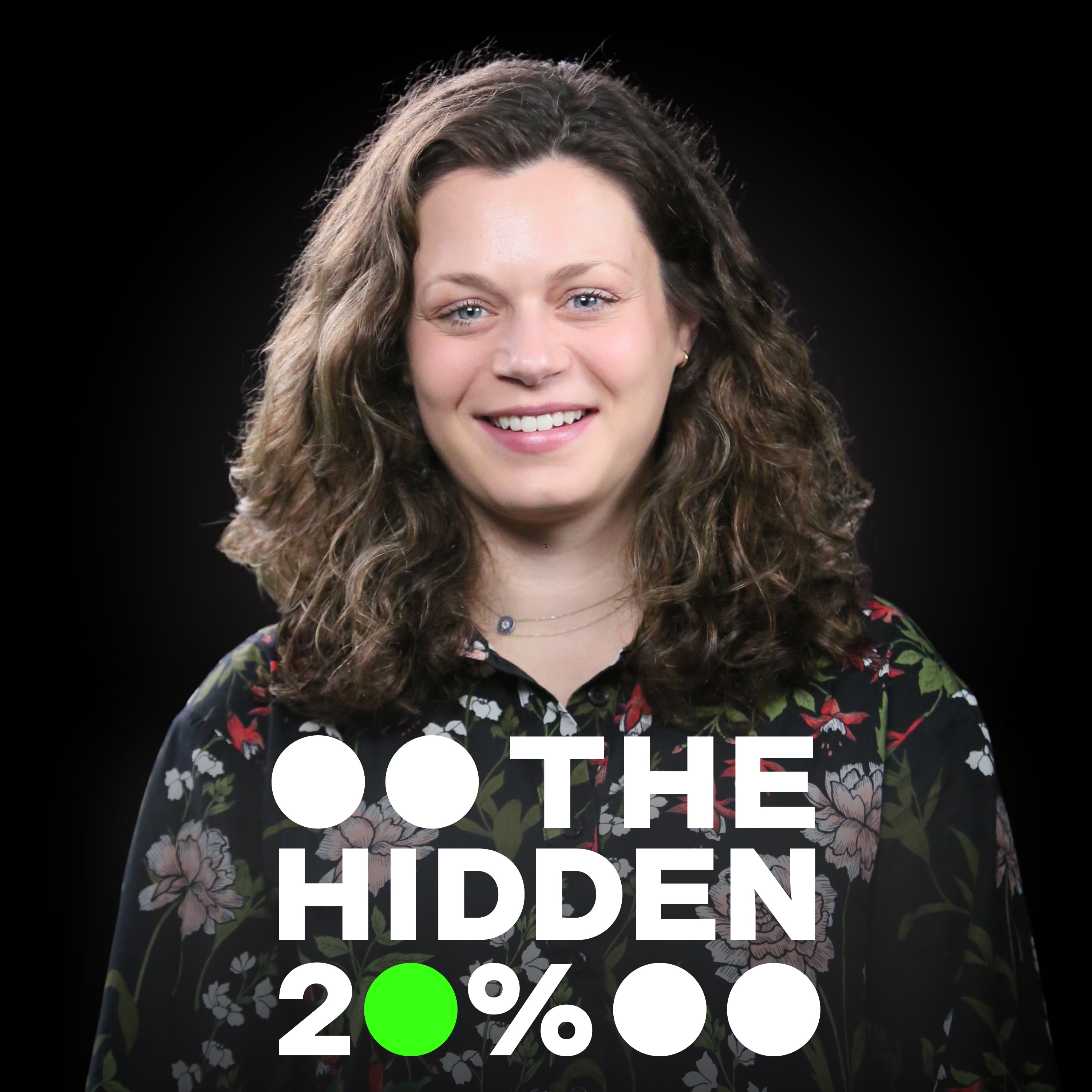
How autistic adults and children experience “nature,” and why nature isn’t universally beneficial; includes research on sensory-friendly schools, forest school practice, and “connection to nature” measures.
Dr. Samantha Friedman, Cambridge-trained psychologist (PhD) and autism researcher; leads forest school projects and outdoor learning for autistic children; has run a UK survey of autistic adults and is spearheading a study on sensory-friendly school environments.
Nature can feel peaceful and non-judgmental, letting people be authentic (less masking, less eye-contact pressure). But nature can also be stressful or harmful depending on conditions (crowds, weather like wind/sand/wetness, hunger/tiredness). “Connection to nature” is deeper than oneness-with-nature scales and can be fluid and inherent. The myth that autistic people lack empathy is rejected; empathy can be affective and justice-driven, sometimes leading to eco-anxiety/eco-grief.
A UK survey (~127 autistic adults); a forest school case study (9 children, 10 parents) using self-determination theory (competence, relatedness, autonomy); participants describing climbing without eye contact; COVID outdoor spaces turning from respite to trigger when crowded; autistic kids eating beans at forest school after low-demand exposure.
Written by AI. May contain mistakes.
Discussion on personal experiences with nature and its calming effects.
“Let's see how great minds think differently.”
Exploration of how nature provides an environment free from judgment for autistic people.
“So what does going out to the forest, What does that do for you?”
Insights on the varied experiences of autistic individuals in natural settings.
“They had to mask, which is so deeply exhausting.”
Discussion on factors that influence the positive or negative experiences of nature for autistic individuals.
“I can use this as a place where actually I as myself am perfectly valid in my authentic state, which is not something that autistic or otherwise neurodivergent people experience very often.”
Examining the concept of connection to nature in autistic individuals and its deeper implications.
“ranging and accessible way rather than just nature as being a beautiful remote wilderness, which is how it's kind of conceptualized a lot of the time.”
Discussion about empathy in autistic individuals, especially towards nature.
“And they're placing value on certain actions and beliefs that actually, you know, and again, when I did this work on how autistic adults conceptualize connection to nature, these things didn't really map.”
Explores misconceptions about empathy in autistic individuals, particularly regarding their connection to nature.
“It's deeply problematic and it is predicated on all sorts of misconceptions.”
Discusses the potential for neurodivergent individuals to be more attuned to climate justice and environmental issues.
“And also the kind of focused interest piece.”
Critiques the concept of Nature Deficit Disorder and its implications for understanding children's relationship with nature.
“Their feelings about nature is a reflection of that.”
Explores the benefits of forest schools for autistic children and the importance of supportive environments.
“I think I would really like to expand the work on connection to nature in autistic or broadly neurodivergent people more generally.”
Discussion on the negative effects of rigid classroom expectations on autistic kids.
“So to me, that's like the Scottish Highlands, you know, thinking about just gorgeous mountains.”
Exploration of how nature-based settings foster emotional connections in children.
“So if, you know, thinking about this case study in particular, if the children were, you know, kicking at a tree or, you know, as was often the case, they'd find a stick and they'd start whacking a tree.”
Reflections on parenting amidst climate anxiety and the importance of nurturing a relationship with nature.
“So what's going to happen in the next 30?”
Suggestions for connecting with nature in everyday contexts to improve well-being.
“I think that's the only way forward with this topic as far as research, as far as personal, you know, personally how I feel about it.”
Discussion on how nature impacts food preferences and sensory experiences in autistic individuals.
“And also understanding that all of those things are, in my view, valid and good.”
Overview of ongoing research related to sensory experiences in nature and neuroaffirming environments.
“Definitely don't want to paint this again as a thing of like go into nature and then all of a sudden these, you know, sensory sensitivities go away or whatever.”
Learn about ongoing research on sensory experiences in nature and its significance.
“And that's back to the sort of non-judgment being yourself.”
Discover the role of forest schools and programs for autistic individuals.
“I doubt it exists no you need to do it it's the B1 I think that's your next project oh my god All right, there we go.”
Hear a heartfelt tribute to personal strengths and passions in relation to nature.
“So yeah, he is really active in that kind of space as well.”
Engage in a thoughtful discussion about the complexities of nature for autistic individuals.

Get the gist, explore an idea or ask about something said.
 Claude
On The Hidden 20%, what are the key points of this episode?
Searching your listeningAutomatic transcript. May contain errors.
0:00There's some work from the 1990s talking about how autism is effectively a cause of human nature relationship breakdown. It seems so obvious to me that this is not a universal truth. With a master's in autism and a PhD in psychology from Cambridge, Dr. Samantha Friedman's career has been dedicated to researching the vital connection between autism, well-being and nature. She also translates her research into action, leading forest school projects, shaping outdoor learning for autistic children, and spearheading a large study about sensory-friendly school environments. Nature, autism, two of my favorite topics.
0:42I absolutely love talking to Sam. She shared loads of amazing work that's been going on over the last 10 years. Let's get into it. Let's see how great minds think differently.
1:00Today feels particularly special because I get to talk about two special interests with someone that also has the same special interests. My reflection on how I feel about nature and, you know, I think for me now, I get to a point where if I haven't seen like certain nature elements in a while, I get this like itch of like, OK, I need to go look at some hills. I need to go be in the forest. Luckily, I have a very understanding husband who will be like, OK, let's get in the car. We'll go drive somewhere. We'll go get you, you know, your immersion that you need. But it's really interesting because I don't think I really grew up that way.
1:39So it's been kind of a realization for me as I've, you know, embarked on this work. So what does going out to the forest, What does that do for you? I would say it just feels it's peace. I think that's the closest that I can find. And it's almost, yeah, the best I think I can describe it is like thinking about these particular landscapes in particular, like in Scotland, a lot of the hills. They really make my brain feel like all, you know, all the scratchiness and the pieces out of place. They make everything feel kind of like, OK, everything's in place now. Calm down a little bit. But it's not always like that.
2:11Right. You know, nature, in my conceptualization of that, of this forest by my house, that is really calming 90 % of the time. But nature can also be really scary. It can sometimes be upsetting, dangerous, right? So I think it is important to kind of keep that in mind of like, sometimes my encounters with nature are stressful. Yes. Or they're sensory-wise really uncomfortable. So there's that side of it as well. I was really interested in some of the research that you've done and the relationship of autism and nature. And one of the themes coming out of that being, I don't feel judged by nature.
2:53Tell me about that piece of work and just unpack this idea of not being judged by nature. Yeah, absolutely. So that was one of the themes that came from some work I did during my PhD. And so we did a survey study of autistic adults in the UK. I think we had around 127 respondents to that from across the UK. And there were a series of different questions. The responses that people shared, the experiences people shared were just brilliant. Some of them moved me to tears. Some of them made me laugh. Some of them were so brutally honest about the fact that nature is actually the worst environment that they could think of.
3:28And I love, like, I love that. I love that range of experiences. But a lot of people discussed this idea about nature being a space where they felt they could be themselves. So going into school, work, social settings, they felt that they had to act a certain way. They had to mask, which is so deeply exhausting. They had to put on this, like, what should I look like and act like right now? But when they went into nature, there wasn't any of that. So whether it was because there were fewer people around, which is always great, or perhaps, you know, some people talked about doing activities with other people in nature.
4:01And actually, like, there's one participant who described climbing, and they said, it's really great because I don't have to make eye contact with the person next to me. We're just chatting about something that we have an interest in, both of us. So there's less pressure on the kind of social side of things. I don't have to make eye contact. I don't have to think about the normative social skills. I can just go into that flow and be in my environment. And so there are a lot of different elements to this, but what really came out from that and the meaning that we developed from that was around people feeling like nature lets me be who I am and nature is broadly defined.
4:33So whether that's the environment, it's animals, people talked about that kind of unconditional acceptance from animals. They don't care if you make eye contact or if you don't know what to say sometimes or if you lose verbal ability sometimes. So, yeah, it was this really brilliant thing of like I can escape into nature. I can use this as a place where actually I as myself am perfectly valid in my authentic state, which is not something that autistic or otherwise neurodivergent people experience very often. Yeah, so powerful. And obviously, I'm incredibly biased to the impact that nature has on me.
5:10And lots of people live in cities. And so, you know, I think we have this maybe slightly extreme kind of, oh, you've got to skip in the meadows and you've got to go to the highlands or you've got to find the real extremes of space and the natural world. I sort of feel like the impact I have from, not at the moment because the grass is really dry and hard and it's really painful on your feet, but just taking my shoes and socks off and walking on the grass or touching a plant or the soil, so powerful. Yeah. So powerful. And when I hear that Japanese doctors are prescribing time in nature for people, just like, this is wonderful.
6:00What surprised you most about that study? I think what surprised me most about it, and again, this is over kind of a few different analyses, is A, the variability in the responses. So, of course, you know, I should have expected that, right? Autistic people are as varied as any other group of people. But I think at the beginning of my kind of career in my journey with this topic, I really had this idea of nature is like this inherently beneficial, wonderful, positive thing. So if we take kids outside at school to learn in nature, they will always cope better. That's not the case. And if we take people outside, they will always tell us that their well-being is better afterwards.
6:38And that's not the case. And so I think hearing from people and saying like, actually, under these conditions, nature is wonderful for my well-being. And under these ones, it's incredibly detrimental. Tell me about those conditions. So there's, you know, some people would say, especially like in the work we did around COVID, you know, I was in this crowded house. Everyone was at home. So I would go during our whatever we had an hour we could spend outside, whatever the restrictions were then. And I would go and I would, you know, just immerse myself in nature. And that was my respite. But then what happened was, especially as we moved into kind of less strict lockdown times and it was summertime and the weather was nicer, more and more people filled up those spaces.
7:15And so what people talked about was actually that became the opposite of my respite. That was a trigger. It was horrible for me because there were so many people. So just the presence of other people, that was a huge thing that could influence that. Weather is really a big factor. So some people talked about actually if it's really windy, the sensory experience of being out in the wind is horrific. Or being anywhere that has sand or getting wet or whatever it is. So, you know, those various different sensory things and kind of needing to control for that. If you're too hungry, if you're tired, if you maybe go for a walk and you don't quite realize until halfway through you've really exhausted yourself.
7:54All of these things could really influence it. So it really complicated that picture of what nature could do for people, but also what nature is. So people talked about, oh, well, I, you know, have plants in my house or I watch videos. I watch David Attenborough videos or I listen to birdsong. in my house, right? So not those traditional things of going into the highlands, going into that beautiful forest. But actually, you know, my dog is nature and people talking about nature in really different ways where I was like, oh yeah, we have to think about this in a much more wide ranging and accessible way rather than just nature as being a beautiful remote wilderness, which is how it's kind of conceptualized a lot of the time.
8:34Did anything come through for you, I guess, across your work around us separating ourselves from nature so i kind of in my view i am part of nature yeah right i am it's i am with it's not i i've not kind of i'm not here to just take i'm here to try and live in some sort of harmony and rhythm with the natural world because i'm part of it but i i do worry a lot that we see ourselves as separate from that. And I just wondered whether where autistics are concerned, yeah, whether any of that rings true. Yeah. So you've hit on a big kind of point of, I wouldn't say controversy, because I don't think there's, you know, quite that maybe fire underneath it.
9:23But a point of discussion within the kind of eco-psychology world is this question of like connection to nature. So that's why I wanted to do that project on how autistic adults conceptualize connection to nature. Because traditionally, the kind of definition of connection to nature is a psychological feeling of oneness with nature. And they did the kind of measure and they were like, I would score quite low on this because actually this person in particular had mobility needs and they sometimes don't know that they need to use the toilet until they need to use the toilet right then. So they need a toilet around.
9:53They needed access to Wi-Fi for various reasons and technology. And so actually a remote wilderness would be uncomfortable, dangerous. If we think about women, I guess maybe I'd need more things there of like if I was with other people and I had a satellite phone, but like actually being out in a remote wilderness probably isn't the safest place for some women and some men as well and, you know, other folks. So there's a lot of different reasons why that is not to me a measure of how someone feels about their relationship with nature. But a lot of these measures, you know, there's another one that's aimed at children that is about if you pick up rubbish off the ground.
10:27And I think that's wonderful to try to encourage children to pick up rubbish, but some kids are explicitly told we don't touch rubbish on the ground. That's not clean. Or some people live in a place where the quantity of rubbish is such that you wouldn't try to pick it up, right? So they capture very specific experiences that I don't think are, I mean, if I'm being perfectly honest, I think they're middle, upper class, white, able-bodied, primarily male experiences and neurotypical experiences. They sound very surface stereotypical. For sure. For sure. And they're placing value on certain actions and beliefs that actually, you know, and again, when I did this work on how autistic adults conceptualize connection to nature, these things didn't really map.
11:06And I didn't look at that formally, but the way that a lot of autistic people were talking about connection to nature, it was the way that you described it around, this isn't optional. This isn't like, what do you mean connection to nature? This is a fundamental part of me, you know, like nature, you know, and this, this was, that was my favorite piece of work that I've done is that piece on connection to nature, because the, it was one of those where usually when I'm naming themes, which is the kind of style of qualitative analysis I do is reflexive thematic analysis. So I develop themes. Sorry, as a what?
11:34Reflexive thematic analysis. Amazing. And so I develop meaning from what people have told me, right? So I'm very active. My co-researchers were very active in developing meaning alongside participants. And we acknowledge that. We acknowledge who we are as researchers and what we bring to this. Normally, I name themes based on like something clever that I try to come up with. But this was the type of work where I used participant quotes as the themes because I couldn't do anything better than the words that they'd given me. Can you give me some of those? The name of that paper is A Deep, Empathetic, Wondrous Connection, which is one of the quotes.
12:09It was amazing. One of the theme names was connecting to something ancient to which I nevertheless belong. And this was this idea of connection to nature being so firmly ingrained in someone's being that it connected them to their ancestry. It connected them to previous life cycles and seasons. And there's an element of spirituality in that. So people talking about that they, you know, feel something not necessarily religious, but spiritual from this. Some people talking about how they have devoted their entire life to protecting a woodland or whatever. So something, it was for a lot of people much deeper than like, yeah, I reckon I like nature sometimes.
12:45And some people it was that. Some people were like, this term doesn't mean anything to me. It's totally fair. So it was very varied. But for a lot of people, it was not this binary connected or disconnected, which is how it's talked about in the literature a lot. Yeah. And it was much more fluid, much messier, much more inherent than how it's typically conceptualized. One of the myths that I think we have around autism is that autistics are not empathetic. Yeah. And what you've just been talking about there is very feeling-y. 100%. Like deep. And so I just wondered, can we dispel that myth around autistics' empathy towards the natural world?
13:33Yes, we can. We can. I think, yeah, autism has been positioned. There's some work from the 1990s. Metzner, I think, is the name of the theorist, who talked about the psychopathology of human nature relationships and used autism as an example, but talking about how autism is effectively a cause of human nature relationship breakdown. And there has been additional work since then that has said that and other forms of neurodivergence, other neurominorities and other disabilities have been talked about in this way as being causes of environmental destruction or reasons for the climate crisis, which is.
14:12Oh, really? It is deeply problematic. It's deeply problematic and it is predicated on all sorts of misconceptions. But actually, when you look at this and you look at and again, there's so much variability. There are some autistic people who hate the environment, but there's like that's true of any neurominority or any neurotype or whatever. So we can't, you know, but to go back to your original question. Yes, we can we can absolutely dispel the idea that autistic people, as a rule, lack empathy, particularly for the natural world. Of course, the misconception that autistic people lack empathy comes from a misunderstanding between cognitive and affective empathy.
14:48and, you know, the belief that autistic people perform less well on theory of mind tasks and other tasks that measure cognitive empathy, which there's problems with that body of literature as well. But that's where that kind of initially comes from. But then I sometimes see autistic, you know, participants in my studies talking about nature and elements of nature in a way that reflects such sophisticated theory of mind and understanding of others and other minds that it boggles my own mind that we still have this misunderstanding because it seems it seems so obvious to me that this is not a universal truth yeah i do worry more about things like the grass and animals than i do about people and it's not because i necessarily see animals or grass as kind of defenseless and vulnerable i don't know i just i have a different feeling towards nature than I do humans.
15:51Yeah. A lot of participants have spoken about that, and I can relate to that as well. People talking about this empathy that is almost to a level that it is harmful to themselves because it is so upsetting to see environmental degradation or a hurt animal or harm being done. And also this idea of like, if we are nature, if humans and nature are impossible to be kind of separated and we're doing harm to nature, like, how does that make sense? Right. That kind of like sense of justice almost of like, how can we do that? Yes. Because we are part of this. And I think it is the flip side of it. We talk about connection to nature as being something to strive for.
16:31And certainly there's a range of wellbeing benefits associated with it. That's well evidenced. But there's also the flip side of it where actually having a stronger connection to nature means that you're more likely to feel eco-anxiety and eco-grief. I've been feeling that a lot lately, especially when it's so hot in the UK in the summer and feeling like I can't enjoy this because it's not... I'm being pregnant. Yeah, that's part of it too. Actually, maybe that's just like this. It's not... No, but it's this concern of like, it shouldn't be like this. You've done so much harm. And actually, are the animals going to be okay?
17:02And are the trees going to be okay and the plants? And so it is troubling. and it can be really distressing as well. So there's that side of it of like, you can care about nature and non-human living things and non-living things as well so much that actually it brings you harm as well. And we have to, I think we have to acknowledge that side of it too. And that's going to get more, I think, evident as we continue down this path. I can find it very overwhelming. You know, when you kind of think about, yeah, climate or species or different ecosystems. Do you think neurodivergent people, and I guess specifically autistic people, are more, just more tuned to the climate and justice?
17:51I think some people might be. And I think there's a few different things that might be kind of driving that, like a kind of sense of right and wrong, a sense of justice and that kind of vast capacity for empathy. And also the kind of focused interest piece. I think perhaps those things coming together could make some neurodivergent or autistic people more likely to kind of fit that profile of an advocate in that way. And who springs to mind? I mean, the obvious examples would be Greta Thunberg, Chris Packham, Dara McAnulty. There's tons. There's so many autistic naturalists that we see in this space.
18:26Why autism and nature are not another neurotype? I was kind of drawn to working with autistic people. I talk about autism and I write and research about autism, but we know that there's so much co-occurrence between autism and other neurominorities and other disabilities and other ways of being and thinking and doing. So when I'm talking about autism, I'm never kind of just talking about autism. And sometimes, you know, there is the temptation to use kind of neurodivergent as an alternative phrase. But then, you know, not all neurodivergent people are autistic. And you don't want to, you know, be kind of making generalizations about things.
19:00But actually, a lot of things that we're talking about in the kind of autistic experience that I've, you know, kind of found in my research are true of people of different neurotypes as well. So we know, you know, for instance, that there's a big overlap in kind of ADHD as well as far as how this looks. So that is something that I would like to do is explore this across other neurotypes as well. Has that been explored at all across other neurotypes? Not to my knowledge in any sort of depth. So in the kind of nature-based learning literature, there is a decent amount of work looking at nature-based learning for kids with ADHD.
19:34and how, but it's typically very, very much positioned as nature as something that helps kids with ADHD have fewer ADHD, very much in quotes there, but traits, characteristics, which I tend to feel very uncomfortable with the positioning of nature as an intervention. It doesn't sit right with me. Take the child outside. And they'll be less autistic. Yeah. We'll fix them. And they'll calm down. Yeah, I don't like it. If we're saying that actually nature is only valuable to, or not only valuable, but is valuable to make someone less of themselves or, you know, I don't love that. So I tend to not really love the literature that isn't very neuroaffirming and that looks at nature as having potential to kind of reduce whatever characteristics in people.
20:21But there is some of that, particularly around ADHD. It kind of makes me start thinking about, you know, the accessibility of nature and maybe nature can be fully accessible. But I, yeah, I kind of worry sometimes that we've sort of made it exclusive because we portray it in these very grandiose ways. Absolutely. And it's ableist. Yeah. It's really ableist. And I think this comes up a lot when we're talking about technology. Within the kind of nature-based learning space, there's a temptation a lot of times to say, well, going outside is a counterpoint. It's something that we can do to get kids off of screens.
21:01You know, kids these days aren't spending enough time outside. They have nature deficit disorder, which we could unpack that. Is that a thing? It is a thing. Nature deficit disorder. So talking about framing. NDD. Talking about framing neurodivergence as a cause or a problem. This is something that was developed, I think, 2008 by Richard Louvre. And, you know, there is some validity to the concept of the fact that this came from the fact that kids were spending less time outside. And there's a lot of issues with that. There's a real temptation, I think, in the literature, both empirically, so research based and kind of anecdotally to say, you know, well, back in my day, back in the 60s, 70s, 80s, we roamed around outside.
21:43We spent loads of time. We had complete freedom. We were so connected to nature. and then there you know we've had this kind of fall from that we need to recover it's a fall recovery narrative that first of all isn't necessarily true okay in a lot of cases there's this tendency to really idealize and i think that's true of anything right it's not just about nature relationships so then this this fact of like well kids are spending less time outside and yes that is true but there's a lot of reasons for that and so yeah there's this idea of kind of like nature deficit disorder kids these days are you know spending less time in nature their behavior is a reflection of that.
22:17Their feelings about nature is a reflection of that. All of this. And so we really need to remedy this. We need to get kids outside more. And look, I'm never going to be someone who's like, I don't know, let's keep the kids inside. Because I think if it's a supportive environment for someone, absolutely get them outside. But when we say that nature has to be kind of a direct, you know, the opposite of being inside and on screens, well, what if you use a screen to communicate? What if you feel more comfortable when you're listening to music because the natural stimuli outside is actually not that nice to you or deeply harmful.
22:49You know, what if actually taking photos of nature, whatever that might be, and then going back and posting them, you know, a participant in one of my studies talked about this of during COVID, they would take photos of their walks and then they would post them on Facebook. And they felt this deep sense of connection because people would comment and talk about what they took photos of. And they're like, in this way, even though it was a solitary activity. Like I was building connections with people. This helped me connect. And that's, you know, a social media platform, right? So when we say technology doesn't have a role here, we're saying that all of those experiences are invalid or they're not the right way to connect with nature, experience nature.
23:27And I find that really deeply ableist and problematic. Yeah. Because exactly what you said, we can be inside, we can be reading a book about nature, listening to birdsong. Yes. Watching a documentary. Watching a documentary, petting your dog. And that is a perfectly valid way to interact with nature. We have to redefine what nature is, I think. Yeah, there was that study done and I cannot remember the details other than the headline being in both prisons and hospitals, putting pictures up of the natural world, of natural kind of environments was immensely beneficial to people's recovery or their general sense of well-being.
24:07And that's not people going outside, right? That's looking a nice photo. Yeah. Well, it's funny because a few of the kind of fundamental theories that we talk about in eco-psychology around why nature might be beneficial to people, attention restoration theory and stress reduction theory, stress recovery theory, both of them, to my knowledge, a lot of the seminal work kind of establishing those theories were done with videos and pictures. So stress reduction theory suggests that exposure to natural stimuli after you've been exposed to a stressor results in a quicker recovery from that stress than non-natural stimuli.
24:43And how they tested this was through videos. That's literally how these things are being developed. And then we're saying, but that's not enough. Like if that's enough to, you know, kind of. And some of the empirical evidence there is a bit, you know, less developed perhaps than it should be. It's a very interesting thing that we invalidate that as an experience. But we love everything to be binary, don't we? We just are obsessed with it is or it isn't. Yeah, relationships and nature. And also not be someone who could live off the grid. It is really individual. It's completely. And it is, it's not complicated, but it's complex and it's nuanced and it's layered and it can change.
25:26What else is on your mind that we don't know about autism and nature that you want to know? Oh, how much time do you have? There's so much. And I think it's tricky because, and I've had this conversation with some collaborators around like how much should we be focusing on autistic experiences specifically and how much should we be focusing on neurodivergent experiences? I think I would really like to expand the work on connection to nature in autistic or broadly neurodivergent people more generally. And I've thought about maybe trying to develop a measure of connection to nature that is more reflective of varied experiences and divergent experiences.
26:10Let's talk about children. Can you tell me about the work that you've done around forest schools? Yeah. Yeah. So this was something that, you know, kind of started again in undergrad with Dr. Morrison. We first looked at just kind of outdoor learning with autistic children more generally and did a quite small scale study. But it is, I think, important to recognize as a researcher, particularly in this space, that my personal beliefs around autism have really evolved from being like something that we can manage to like actually autism doesn't need to be managed. And so I did some work during my PhD looking at a forest school on the grounds of a specialist autism school in England.
26:49Okay. And they had two trained practitioners that are brilliant, tons of experience working with autistic kids, a very neuroaffirming environment. I spent three months there kind of helping out. Since I had a four-school qualification, I could kind of be on the ground. So I was observing. I interviewed nine of the kids and ten of their parents. So there's something called self-determination theory, which is a theory of intrinsic motivation and psychological flourishing. Okay. It's a really complicated theory. It has a bunch of different parts. But one of the main kind of core parts of it is the basic psychological needs, which is that everyone has three psychological needs that need to be met in order to be well, to feel like they're flourishing, to feel intrinsically motivated.
27:26And these are competence, so feeling that you have mastery over your environment, relatedness, so feeling belonging, and autonomy, so feeling that you're acting of your own volition. So I wanted to see kind of how those three elements were supported in a forest school setting. And it really underpinned my belief that like, yes, there is something inherently beneficial about being in nature. We know that. But actually, I think what is helpful about forest school or any other kind of nature based ethos is who we are as people and how we treat other people when we're in that setting. So what I always say is, you know, you could be in the most beautiful setting, the most idyllic setting.
28:03So to me, that's like the Scottish Highlands, you know, thinking about just gorgeous mountains. But you can do the exact same harm that you're doing inside a classroom when you're telling a kid to sit down, be quiet, make eye contact, and, you know, adhere to these very normative social skills. The environment can't counteract the harm that you're doing there. So it's about who we are and how we relate to and treat other people. and that doesn't just apply to children, but it's especially relevant when we're thinking about the harm done to autistic kids at school. So that's really, yeah, what kind of, what I kind of got, I took away from that study was this idea of like, it really matters how we as adults in that space treat these young people.
28:40And also that there were even kids, you know, who talked about, I love forest school. It's my favorite part of the week and I don't always want to go. So again, it's that complicating it of like, because when I first had that interview with that child, I was like, remember kind of panicking being like, oh, no, don't say anything negative. Like, this is supposed to be great and magical, right? But actually, it's not all the time. And there's some days that I'm like, I really should get outside, but it's raining or it's windy and I'm so tired and I don't want to. We don't extend the same courtesy to kids often.
29:10And so, yeah, it was that kind of realization of like, oh, it's more complicated than just like nature is always good. We should always teach kids outside if we can. And yeah, so it really prompted a lot for me as far as like critically thinking about this and thinking about how we treat other people in this space and why nature and nature-based settings maybe allow for that more kind of humane treatment, I would say. But I think that comes back to the fourth school ethos, which is really centered around developing care and an attachment to that place. So if, you know, thinking about this case study in particular, if the children were, you know, kicking at a tree or, you know, as was often the case, they'd find a stick and they'd start whacking a tree.
29:50There would be that conversation rather than like, do not do that, stop. It was that conversation of like, what might be happening when you're doing this? You know, it's almost the fact that you have time in that space to slow down and instead of just punishing the behavior, have a conversation with the child around, actually, like, when you do this, this is the impact it has and we care about this place. Yeah. And a lot of the kids really talked about having this sense of ownership. So there was one kid who talked about it as like, that's my tree. Right. So, of course, he cared about that tree and he's probably less likely to do harm to it if you care about it.
30:24So there's all of those elements of it where actually there was the space and the time to meet that kid where they're at and say, like, why is this happening? And what could we do? And what is the impact that we're having when we're tearing leaves off that plant or when we're stepping on bugs or whatever? Like, let's really understand this rather than just punishing the behavior. So that's kind of it's wrapped up in that ethos, I think. Yeah. I mean, what you keep mentioning is space, you know, a few times throughout this conversation. And when I think about, you know, a classroom or an office or a house and these walls and being more movement, opportunity rather than sit still, classroom, you know, sit down for half an hour.
31:10Yeah. What do you then think from all of this work about your child? and what kind of world they're coming into and what kind of relationship with nature you'd like to foster. You're going to make me emotional. You can't ask a nearly eight-month pregnant lady that question. I think about it a lot. I think about it in the context of, you know, I was saying that kind of climate anxiety and climate grief that I'm feeling. And I was having this conversation with my husband the other day of like we're bringing a child into a world that feels like it's falling apart on a few different places, but particularly when it comes to climate and what world will it be when she's our age.
31:52As we talked about this, you know, we're not yet 30 and in the last 29 years, the world has, you know, changed so much from a climate perspective. So what's going to happen in the next 30? We were, you know, really kind of thinking about the heaviness of that. But I think a lot about the fact that, you know, I have this opportunity to hopefully instill a relationship with nature on whatever terms that she wants. But, you know, I'm thinking about like, it is important to me that she attends a forest school, at least for some of nursery, you know, so that's something I'm really lucky we have access to locally.
32:25So there's a few kind of elements of privilege to that. Not all kids have access to that. And just thinking about, you know, if this is something that both my husband and I really value is relationships with nature, you know, from a kind of micro perspective of like taking care of what's, you know, in our own back garden, but also like doing those kind of pro-environmental behaviors like recycling and, you know, turning the lights off, those things that are seen as kind of the very bottom of the, you know, the easy things to take off. So it's that, but it's also those kind of larger things about who we support, who we vote for, those kind of things.
32:57Like we have this opportunity to try to pass that down and that feels like a huge responsibility, but also a huge opportunity. I think you have to, you talked about that kind of hope, but there's so many opportunities to get kids engaged with nature in a wide range of ways. Yes. And it's really leaning into that, I think. So I do feel hopeful. Yeah. But I also think I can feel really anxious about my kids' futures, right? For lots of different reasons, whether it's screens, war, climate, whatever. Men, you know, dreadful, dreadful, species that we are I can feel a lot of anxiety around that but I can also feel a lot of like hope and gratitude about the fact that my kids hug trees yeah and my three-year-old is obsessed with like woodlouse and spotting spiders and knows that I love snails and so can't wait to come home from nursery and tell me that there's this massive snail at nursery and thinks it's a good idea putting bits of nature and stones up her nose you know like I yeah I I think we can feel both yeah and that's okay yeah that's all of this isn't it it's the nuance it's the sitting with these complex feelings and these complex understandings of things side by side I think that's the only way forward with this topic as far as research, as far as personal, you know, personally how I feel about it.
34:31It has to be that kind of complexity sitting next to each other. Yeah, we have to be able to live in that gray area sometimes. We don't like doing that. Or you have a kid that only ever plays outside or you have a kid that's only ever on screens. Yes. And not some mixture of like actually sometimes people are tired and you need to put a, you know, a program on in front of a kid. Yeah, and that is okay. That's okay. And some people have, you know, elements of their life factors in their life that actually that is the best that they can do. And the fact that they're not facilitating some wonderful nature based experience for their child is not a failure.
35:06Yeah. I just want to go back for people who are autistic or anyone listening. What are some of the simple ways that we can connect with nature? So there's a body of really interesting research from Miles Richardson at the University of Darby and Miles' team looking at connection to nature and noticing nature in particular. And the way that even just kind of, oh, I just heard a bird like in, you know, in the middle of the city. Those types of things can be associated with some of the benefits that we see with connection to nature, like improved well-being. So that's always my kind of first thing is like, what nature can you just notice?
35:42and challenging people to think beyond the kind of traditional conceptualizations of nature. So I think a lot, we have a dog and I think a lot about him as kind of a representation of nature, but also thinking about what is the kind of content you're consuming. So can you turn on a documentary? Can you watch Spring Watch? Or can you play birdsong in the background? It's those types of, you know, kind of the natural stimuli. Do you have plants in the house? can you even just talk about things so you don't actually have to be outside in it but like talking about what we saw or whatever there's a there's a big thing for me as well and something that I would love to research more is the kind of nostalgia element of nature experiences I get a lot of nostalgia for natural spaces that I visited and I can think about the way that I felt when I was experiencing them and so I think I spend time kind of ruminating on that and to me that is an exercise and kind of strengthening my relationship with nature as well.
36:37So yeah, it's thinking about it on a very small scale to a very large scale of like, actually, I would like to physically go somewhere else and be in nature. And also understanding that all of those things are, in my view, valid and good. And we shouldn't rank them as being more or less valuable. Yes. Or more or less nature. Yes. Yeah. You know, there isn't this scale of... Completely. What is nature? Yeah. Makes me want to give a shout out to Tree FM. Okay. which is a radio station that plays the sound of forests from around the world. Amazing. That sounds incredibly peaceful. I think a lot has to be said for nature apps as well.
37:17You know, apps like Merlin where I get to kind of hear what birds are around, that you could go and sit in Hyde Park and do it. For sure. Or go over to Holland Park and listen to the parakeets. It's trying to weave this in so that it feels normal and part of. rather than a place we have to go yeah a thing we have to do a reminder that oh i haven't had my you know 120 minutes outside this week and it create pressure and expectation and i think there are all these small ways and i think they yeah if i know the autistics that i do know and i know myself where ritual and routine and repetition are concerned people bringing some of these yeah habits in as you say notice yeah i think is a that's a big part of it rather than feel like you have to go and do yeah because that's not sustainable from well in multiple senses of the word like yeah we're always traveling to be in nature there's sustainability implications on that as well, but actually just like thinking about habits that we can maintain.
38:30Some people are, have the resources to, or have set their lives up in a way where they can actually physically be in a remote natural space all the time. And that's amazing, but that's not the reality for a lot of people. And so we have to think about ways that, that it's actually sustainable in our daily lives. It's about the meeting those individual needs. So if someone does have a particularly focused interest in bird song then like amazing how can we how can we think about ways to integrate that into your everyday life in a way that like makes you feel joyful one thing that we haven't talked about and i'm kind of yeah i'm struck by the fact we haven't talked about actually is food okay and plants and vegetables and fruit and i wondered if that came up in any of your work as a symbol of nature food came up in some of the forest school work that i did and that some of the the autistic kids that were part of that case study would eat different foods at forest school than what they would eat at home so some of the parents commented on this of like she came home from school talking about how she ate beans because they warmed them up on the fire and we could never get her to eat beans at home but because of the like non-pressured low demand environment she was in she ate them and she liked them and that came up a few different times oh my god i just want to do a project now listening to you say that of like things like ARFID and restrictive eating and autistics.
39:58Yeah. And of course, like sensory challenges. Definitely don't want to paint this again as a thing of like go into nature and then all of a sudden these, you know, sensory sensitivities go away or whatever. But we see this similarly when we think about things like situational mutism and kids who feel such anxiety in some situations that they're unable to communicate with spoken word, but that sometimes they go into natural spaces and then are more able, the anxiety lessens. And there's this tendency to frame that as like, look, nature like made them speak. But actually, if we think about what's driving the fact that they don't feel able to speak in the first place, it's anxiety.
40:34And if we think about how they might be feeling in that natural space, okay, amazing. They're feeling less anxiety because there's less pressure, less demands, all of these things. So again, it's unpicking why that happens. And I think it's similar to that kind of food thing as well. And some of the adults, we've done some work on autistic adult sensory experiences in nature. And some of the adults talked about that as well of like, I'm more kind of able to try things in these in this environment because my sensory needs are met or are different or whatever. So interesting. Yeah. And I don't know the kind of mechanisms driving that.
41:06But I would imagine a lot of it has to do with anxiety. And yeah, those kind of just feeling a bit more able to. yeah i'm then wondering about nate trying nature-based activities that yeah you might be more likely to give a go yeah risk taking and nature and again it comes back to i think my kind of whole driving theory which is that it's about how we interact with people and how we see well it's even how we see neurodivergence and how we see different ways of being it's it's really hard to be wrong in a nature-based setting in a way that when you're in the workplace or in school, there's these clear kind of right wrong.
41:48And a lot of those rules are completely arbitrary, which is really difficult for a lot of autistic kids and people. But actually, when you're in these spaces, you can give something a go. And, you know, there's more space for things to go wrong and that not to be a failure on your part. Yeah. And that's back to the sort of non-judgment being yourself. Absolutely. Tell me what you're working on at the moment. Wrapping up that work that I mentioned on sensory experiences in nature, we're submitting that very soon and we'll have a preprint available on that, which is some really exciting work with Karen McLennan at Bath and then Elle Smith, who is one of Karen's master students.
42:22So really excited to get that out because I think that will be similar to the kind of connection to nature project or paper that I worked on. The experiences that people described were really brilliant. So we have that hopefully coming out soon. I'm doing some work kind of unrelated to nature as well looking at kind of neuroaffirming environments like particularly around the transition to primary school so how we support kids at that point so we have hopefully a paper that'll be submitted in the next few weeks working on some stuff around intergenerational forest school so again not related to autism but yeah bringing together you know loads of different people who the f**k has made the forest university I doubt it exists no you need to do it it's the B1 I think that's your next project oh my god All right, there we go.
43:04Let me know when you open up the Forest University. Forest University. Do you know of a forest school for autistics? There is one actually. So I don't know if you've heard of Spectrum Gaming, which is a brilliant, brilliant organization. Andy Smith founded that. Andy Smith's an autistic person who really struggled in secondary school and university and so wanted to put together this organization that started out as like kind of gaming community for autistic young people and has now become an advocacy organization. So they still have the gaming element of it, but now they do trainings. They have a brilliant website called Autism Understood, which is tons of different resources and articles led and created by neurodivergent young people about their own experiences, which is brilliant and sorely needed.
43:45And so they have a forest school that they run as part of that in Manchester. So that would be the only one I know that's kind of specific, but there's some brilliant, I mean, Stomping Grounds near to Newcastle does a brilliant program for autistic young people. the wild side in Newcastle brilliant program for for kids with additional needs so there are there's a lot of pockets of really good practice yes and increasingly so I would say because there's a real prevalence of neurodivergent people in the for school community and Michael James is a another brilliant practitioner who's who's written literally the book for school and autism okay a new version is coming out in the next few months I believe he's the man to to to follow to read up on he is although he's the most humble person you've ever met so if you like connected with him or would read his stuff, he's pointing towards other people because he's brilliant, really, really brilliant.
44:31So yeah, he is really active in that kind of space as well. So there's a lot of really good work going on in that intersection. Yeah, great. I've got a green badge for you. Yes. Another one. Yes. Who would you like to give this to? So I would like to give that to my brother, my brother Ben. So he, I mentioned him as kind of being this animal lover And he's a brilliant person, like brilliant, but always was the kid in school who was like, please stop asking questions. Like the teachers were like, you're too much. Like you're causing problems for us. But he right now is really interested in pythons and alligators.
45:07So he's constantly posting that kind of stuff. And yeah, I just see him as someone who's really like used the way that his brain works to his advantage to say like, I'm not going to sit at a desk because that's not best for me. I would give it to him because I think he's such a good representation of really embracing your own strengths and challenges and also nature as well at the same time. Love that. And I've loved talking to you. And I love, I guess, sharing my love of nature with other people. Of course I do because it's a special interest and that's what we seem to do as autistics. We want to talk about it all the time.
45:44But I'm sort of taking away that, yeah, nature isn't always good. and nature isn't always the English countryside and it's not always trees and not everybody wants to hear about nature you know, all the time Debatable Debatable Depends who you're hanging out with Yeah But yeah, there's loads I need to sort of yeah, digest I think from our chat which is great but I thank you for your work and we need more of your work and yeah, best of luck with bringing another human into the world. Thank you very much. Yeah, I think they're going to have a great influence where nature's concerned. I hope so. Hopefully.
46:31Thank you very much. It's been a real honour to be able to chat with you. Yeah, thanks.
46:39You've been listening to The Hidden 20%. If you're still knocking about, then let me introduce you to the band. First up, main man on the mic, host Ben Branson Our wonderful producer, Bella Neal And the man who'll probably try and cut this bit Video editor, James Scriven Not forgetting our wondrous theme tune by Jackson Greenberg Lovers or haters, we want to know So be sure to leave a review wherever you're listening For the lovers amongst you, you'll find us on TikTok and Instagram at hidden20podcast or over on hidden20.org where you can join our mailing list.
In this episode, Ben is joined by Dr. Samantha Friedman, a researcher exploring the intersection of autism, human–nature relationships, and wellbeing. Together they discuss how natural environments can offer calming, non-judgmental spaces that support regulation, curiosity, and connection.
Dr. Samantha shares how autistic people connect with nature in ways that reflect their individual needs - from immersive outdoor experiences to more accessible, sensory-based encounters. With a PhD from Cambridge and a current Lecturer in Applied Psychology at the University of Edinburgh, her work is helping reframe how we understand autism’s unique and powerful relationship with the natural world.
_________
On "The Hidden 20%," host Ben Branson chats with neurodivergent [ADHD, Autism, Dyscalculia, Dyslexia, Dyspraxia, Tourette's etc.] creatives, entrepreneurs, and experts to see how great minds.. think differently.
Host: Ben Branson
Head of Production: Bella Neale
Assistant Producer: Phoebe De Leiburné
Video Editor: James Scriven
Social Media Manager: Charlie Young
Music: Jackson Greenberg
Brought to you by charity The Hidden 20% #1203348
______________
Follow & subscribe…
Website: www.hidden20.org
Instagram / TikTok / Youtube / X: @Hidden20charity
Ben Branson @seedlip_ben
Dr. Samantha Friedman
If you'd like to support The Hidden 20%, you can buy a "green dot" badge at https://www.hidden20.org/thegreendot/p/badge. All proceeds go to the charity.
Hosted on Acast. See acast.com/privacy for more information.


