Ask ChatGPT

 The Hidden 20%
4 Mar 2026 · 1h 6m · 29 chapters
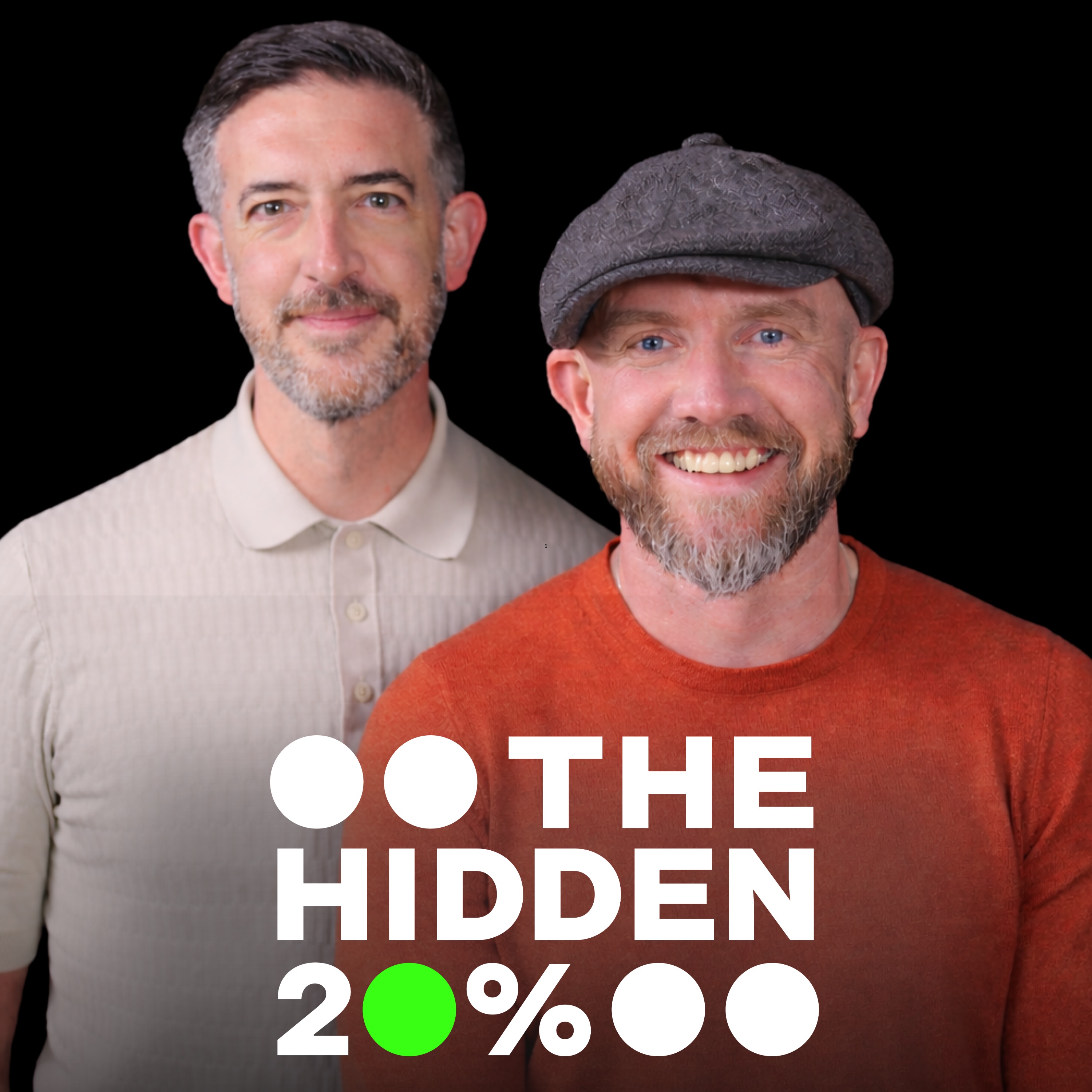
Autism Dadcast discusses “the untold reality” of profound autism parenting, arguing that many meltdowns stem from mismatched expectations between parents and autistic children, and that communication access (not “functioning labels”) is the key to reducing distress and unlocking development.
Ben hosts. Andy Gaz is a father of Thomas (6), profoundly autistic and nonverbal, diagnosed around 16–18 months; he also has an 18-year-old. Gaz is a dog handler/explosive search dog trainer (Iraq/Afghanistan) and uses staged, patient training methods with Thomas. Andy is a father of Lydia (5), profoundly autistic, nonverbal, in nappies, with major sleep and food challenges; diagnosed early 2025 after COVID service backlogs. Both run podcasts and have autistic children; Gaz’s neurodivergence is not formally diagnosed.
Written by AI. May contain mistakes.
Exploring the challenges of managing expectations for autistic children.
“The biggest challenge for your autistic child and for you is expectations.”
Discussing the origins of the Autism Dadcast podcast and its community impact.
“Andy Gaz, I want to start actually with some facts.”
A father's insights on his son's profound autism and communication challenges.
“the experts, which when you're exhausted as a dad and as a mum, sometimes you just can't take that information in.”
Discussing the journey of diagnosis and family dynamics with autistic children.
“And he's just banged his head on the sink three times.”
Exploring Lydia's personality, challenges, and developments in communication.
“We were on the pathway for quite some time.”
Explore the significance of small milestones in autism parenting.
“Okay, but it took Paris to get you together.”
Discuss early challenges and the journey of acceptance in parenting.
“So we thought, yeah, just meet at the airport and run a marathon, then do it.”
Understand the emotional process of grieving the child you envisioned.
“And we were actually grieving him maybe not getting married, maybe not having friends, maybe not having a job.”
Address concerns about supporting children with autism as they grow.
“And then you get sent that kind of, was it, that pamphlet from the NHS on that shitty grey paper to market how your child is meeting milestones.”
Examine the challenges of public perception during meltdowns.
“getting your head around it, listening to various conversations with family, still being very positive, going, you know, she might just be a late bloomer.”
Discuss the impact of media representation on autism awareness.
“And sometimes I think people are looking and they're going, I wonder if he's autistic, you know, because I do.”
Discussion on the growing acceptance and representation of autism in society.
“How do you see yourselves, I guess, in that, well, what sounds like modern role of being a father and speaking up about difficult stuff?”
Exploration of the unique challenges fathers face and their emotional experiences.
“I think, particularly with the podcast and the community we've built, I think we underestimated how alone a lot of fathers are feeling.”
Reflections on how parenting profoundly autistic children changes perspectives.
“And dads, men are particularly guilty of just not wanting to share certain things or portray a certain image.”
Insight into the difficulties of masking behaviors in autistic children and its impact on diagnosis.
“in like WH Smith as a, I don't know, six, seven-year-old having an absolute meltdown, but being left because my mother's just walked out and gone, I can't fucking deal with this.”
Discussion on the terminology and its implications within the autism community.
“Why would I want my kid to be diagnosed?”
Exploration of the individual educational needs of autistic children and the challenges in mainstream settings.
“just from that communication piece but again And the spectrum is so long and so wide.”
Sharing insights on the experiential learning of parenting autistic children.
“I love what Ellie Middleton says, which is, it's just high support needs versus low support needs.”
Learn how dog training techniques can be applied to parenting a child with autism.
“And ultimately when a dog is out there in Afghanistan looking for a bomb, it's actually looking for a tennis ball.”
Discover how screen time led to unexpected communication breakthroughs.
“I presume when you're working with a dog, right, that bond and that relationship obviously is really important.”
Understand the constant vigilance needed while parenting a child with autism.
“And then you're doing it all and you don't even realize it.”
Learn how to adapt holiday celebrations to better suit your child's needs.
“I'm just adjusting to my child and that's because I know them and I understand them.”
Explore the goals and community-building efforts of the Autism Dadcast podcast.
“So Autism Dadcast, your amazing podcast.”
Gain practical advice on parenting autistic children from experienced dads.
“Because I think a lot of the dads are just, no, he's fine.”
Learn valuable insights from parents on supporting autistic children.
“We just want to reach as many people as possible.”
Discover the unexpected feelings and challenges faced by autism parents.
“I think, you know, once you have an inclination that your child is going to be autistic or neurodiverse, it's okay to feel shit.”
Gain insights into the vastness and diversity of the autism spectrum.
“It's like hooking up with yourself, Ben.”
Hear heartfelt stories of joy and connection from autism parents.
“We saw it was like a colour chart, didn't we?”
Explore the importance of support and advocacy in neurodiversity.
“like getting her out of the bath or something like that or, you know, getting her dressed.”

Get the gist, explore an idea or ask about something said.
 Claude
On The Hidden 20%, what are the key points of this episode?
Searching your listeningAutomatic transcript. May contain errors.
0:00The biggest challenge for your autistic child and for you is expectations. It's the expectations you've got for them, and most of the time the meltdowns come from the expectations they've got from you. Whether it's you having a meltdown or them, it's because the expectations that you've got and reality aren't matching up. Massively. Welcome to The Hidden 20%, our neurodiversity charity on a mission to rewrite the future for people who think differently. Together with you and an eclectic range of brilliant guests, we can break the cycle of silence by smashing outdated stereotypes, exposing the myths and sharing the most up-to-date truths about what it really means to be just different, not deficient.
0:42The best way you can help is really simple. Subscribe so you never miss an episode. And if you can, donate to our charity through the link below. So enough preamble. I'm Ben, your host. Let's get into today's episode.
1:03Andy Gaz, I want to start actually with some facts. So you are both fathers. Correct. Yeah. You both have autistic children. I'm also a father with an autistic child. And we both, all three of us, we have podcasts. Yep. That's pretty much it. Yeah, that's a good start. It's a nice kind of level playing. Your podcast is Autism Dadcast. Gaz, I'll come to you. Why did you start the podcast? Right. Okay. So I was doing Instagram videos of Thomas. I was putting stuff up. So I was trying to kind of share the journey I was going through, partly to see what the comeback would be from kind of friends and family.
1:45And I knew Lydia's mum, Selena. I knew her way back when, school, and she'd said to Andy. there's another dad I know who's kind of putting a little bit on social media. It might be worth kind of linking up with him just to share stories and stuff. And then Andy invited me to do the Paris Half Marathon for Ambitious About Autism. Okay. And then when we met at the airport to go and do that, that's the first time we'd met. Just the two of you? Just the two of us, yeah. Strangers. Strangers, yeah. Strangers, yeah. What was it? Half past midnight. Half past midnight, sat in Costa. Yeah, the only place that was open.
2:14Yeah, it was, yeah. It was the only place that was open. And we just got talking about it, didn't we? Yeah, sharing poo stories. Sharing poo stories. very quickly we were like because we found it so cathartic for each other we were like I wonder how many other people wish they had someone to talk to I think we were there about three hours maybe we were there we just had started talking and we just had an information dump going because at the time you think you're unique this experience is solely you no one else would get it and you find somebody that finally understands you're like and this and what about this and what about this and you're going yeah I recognise that I recognise that and you start doing the same and before you know it is cathartic isn't it it's therapy in that sense.
2:50I think we just said, let's get this run out of the way. And when was this? This was March, end of March last year. So 2025. So yeah, we met at the airport. I said to you at the time, I felt like I'd groomed you. I just met you at the airport and said we're going to Paris the first time I met you. The city of love. We did get sweaty because we were running the Paris half marathon. And then it was like, where are the dads? Where are the voices? Because mums are really good at signposting and carrying a lot of the weight out there. And we were like, but where are our voices? Where are the people that we can relate to?
3:23Because a lot of it is mum-led, which is fantastic. And then the other side is a lot of it is kind of clinicians, psychologists, the experts, which when you're exhausted as a dad and as a mum, sometimes you just can't take that information in. So we said, well, should we just try it and talk openly, honestly, like the fun stuff, the not-so-fun stuff and everything in between. And that's what we did. And the response. Completely overwhelming, wasn't it? Yeah, the response was amazing. I remember episode one was very much, we included everything in that podcast, didn't we? We just kind of want to cover all the bases.
4:00Yeah. Because we didn't really know how it was going to go. And it just went crazy. So then episode two, it was a bit more fun. I felt like, because we knew people were listening. Yes. Yeah, and it's just taken off since then. It's just gone kind of crazy. And the community we've built is fantastic. They are fantastic. yeah it's been amazing the community is a mixture of mums and dads we thought it would be I will have the dads will come to us equally if not more sometimes on social media it's the mums that kind of come to us and say thank you for doing this I've passed this on to my partner or my husband they thought they were alone and then we get the message off the dads going you guys have just been saying exactly what I've been feeling and it's yeah it's been good yeah it's been great it's been great and so guys you have a son who's autistic can you tell us a little bit about him Yeah, so Thomas, he's six.
4:48He's what they'd call profoundly autistic. He's nonverbal. Global developmental delay came along with the original diagnosis. He's a very sweet kid, personality-wise. Early on, it was really difficult. Obviously, the thing with autism, people think that the autism and the global developmental delay are the same thing, and they're not. And this is the one thing I've really tried to get out to people is if you get given the global developmental delay, don't take it that because they're autistic, they're forever going to be delayed. The communication is the thing that makes the delay happen. So if you can just get that communication in, a lot of time, I mean, Thomas, for example, when the communication came in with him and a lot of the time he was trying and we weren't seeing it.
5:29So it's little tugs on the jeans, things like that. and I picked up on him doing that one day and I was a dog handler and dog trainer so my brain is slightly more wired to picking up on these little things and I remember saying to my wife it was hardly anything and I was like I think he's trying to take me somewhere he was probably 18 months old in his own world walking around the ice and I went I'm going to go with him she went he's not I went I'm going to go with him and I went with him and he just one hand around her finger took me to the kitchen and threw my hand up to something and I was like oh my god like the world then opened up and a lot of it I think Andy would agree you kind of expectations on your child because you've gone through the grief of losing a child that never actually existed in the first place, which is bizarre in itself, you assume the worst.
6:08So their ability to communicate or even have much going on at all is quite limited. That one little thing happens and all of a sudden you're like, holy shit, okay. And from that point on, it was communication cards and just throwing everything out to see what his preferred method of communication would be. And as soon as the world opened up to him, the meltdowns reduced, all of his struggles and we were allowed to lay out expectations. you know for him that communication piece is just huge and it's it's really helped him and what age was he diagnosed he was probably well 16 months 18 months we went and saw a pediatrician and they can't give the official diagnosis i think until three maybe two three and the pediatrician she said i can't give you a diagnosis because we were so desperate to find out what was going on and she said, I can't give you a diagnosis, but all I will say is this.
6:58We've been here for 45 minutes. He hasn't even looked at me. He hasn't looked at either of you. And he's just banged his head on the sink three times. Like something's going on. And we were like, okay, we'll take that as a yes, but you can't officially give us a diagnosis yet. So I think we held onto that quite a bit. And do you have other kids? Yeah, I've got an 18 year old as well. And I always joke that the two of them, because there's such a big age gap, they're like passing ships in the night. He's 18. I mean, on the rare occasion, he does leave his room. He walks past his six-year-old little brother and he's just like, don't quite know what to do with you.
7:31And, you know, Thomas is like, you again? I haven't seen you for about a week. So they just kind of pass each other, go, give each other a bit of a nod and that's it. So yeah, it's quite funny. And are you neurodivergent? I'm not diagnosed. My wife's family are like 100 % sure I am. Okay, that's nice of them. Yeah, I know. I remember when they first started saying, Because the thing is, when that's who you are, when somebody says, I think you are autistic, ADHD, you're like, no, that's just me. When you've lived with it, you don't see any difference. So I may be, but who knows? I mean, my wife's side definitely, yeah, they've got a lot of it.
8:08And maybe the combination of the two of us genetically have made a super autie. Who knows? I'll come back to talk about Thomas in a minute. But Andy, let's talk about your daughter for a minute. Yeah, sure. Lydia is a little bit younger than Thomas, so she turns five in February. In terms of personality, I'd say she's a diva. So regardless of the autism, I think if that wasn't there, we'd still have a diva on our hands. But very similar to Thomas in the sense that profoundly autistic, nonverbal, still in nappies, awful relationship with food. Okay. So we have that aspect as well. So probably all the trigger signs of kind of that profound autism.
8:43But again, a really kind of happy-go-lucky girl, very active. Okay. So loves nothing more than just running around, jumping on furniture, getting on furniture that she's not supposed to. I mean, recently this weekend. I've heard about the trampolines and the beds. The trampolining, but this weekend it's now she's discovered she can stand on the dining table and there's a drop down light fitting. We're already seeing her hands going towards it like she's going to be some sort of trapeze artist or something like that. So, yeah, a lot of fun. She's quite physical in that sense then. She's physical.
9:16I mean, she's a tall girl, isn't she? She is, yeah. She's tall, strong. I think it's the gallons of milk that she probably has on a daily basis. We often say it'd be cheaper to have an actual dairy cow and constantly go buy milk. But yeah, she's fantastic. And when was she diagnosed? She was diagnosed, I'd say, early last year, 2025. We were on the pathway for quite some time. However, the COVID knock-on, the backlog that the services had to get through, we got sent to let us say, unfortunately, it has been pushed back six months. and then we got the diagnosis early 2025. And again, not a shock.
9:51Yes. Not a shock. We had the call. It was just a rubber stamping. And yeah, I knew exactly from a young age that she had the signs. And are you neurodivergent? I'm not, no. Okay. Well, I don't think I am. But again, similar to Gaz. You know, who knows? Who knows? And your family history? Nobody. Okay. You've had no experience with this? I've had zero experience. So it's been an eye-opening journey to go down this route. and you know previously I forget his name you had a guest on a couple of episodes ago and you were talking about the kind of media's portrayal of of autism and I've said to Gaz many times that my expectation was to film Rain Man and I believe he said you know that's that's not autism that's been a sort of answer something along those lines there but again that was my like yeah autistic and autistic yeah I mean my experience of autism is it's it's going to be you know Rain Man and the mine too yeah we're going to train them we're going to go yeah count cards in Vegas and make lots of money or she's going to get toys and just go, well, these all have to be lined up together and that colour must go in there.
10:47Absolutely not. There's none of that with Lydia. There's no special interest yet or hobby or anything like that. But it sounds like there is a special interest of jumping on things. There's a special interest in being active and jumping on things, yeah. So that must regulate her in a certain way. Because I didn't realise River, who's my daughter, who's six, who was diagnosed when she was five, Very gifted, but yeah, plenty of challenges, meltdowns, regulation, social, doesn't make eye contact, etc. But is kind of intellectually very gifted. Doing cartwheels all the fucking time. Oh, you're joking.
11:24Have I got this to look forward to, have I? Yeah, in, let's call it, inappropriate situations of, I don't know, whether it's dangerous because she's going to kick someone in the head. Yeah. or she's going to land on something sharp. Or I don't know, like if she was here and we're having a conversation, just she'd start doing cartwheels. And she's got really good at doing cartwheels, which is amazing. And she can do them very slowly and she can do them very fast and in a row. But I had to look into it because I was like, what is this cartwheel? And then you're kind of like, she's not alone. There are other autistic girls and cartwheels is a stim and is a way of her regulating.
12:07Like vestibular activation. Yeah. And then just asking her, like, why do you do the cartwheels? And she's like, it just helps. Yeah. So the jumping around. Jumping around is exactly that. And I think the other thing I kind of noticed about Lydia is ever since she started walking, she's extremely stable. She won't walk into things, bump into things. And I said to her mum at the weekend, do you know what? I've never seen her with a grazed knee. Nothing at all. She doesn't fall over. her ability to stand on the edge of a sofa and jump without coming off is phenomenal. Interesting. What's Lydia's kind of day-to-day like?
12:42Again, that changes day-to-day, as you would expect sometimes with autism. And they say there's lots of routine, but sometimes there's no routine whatsoever. Sleep with her has been a challenge. So we've had many, many times where she'll fall asleep anywhere between 7pm and midnight. And she can wake up literally one minute past midnight all the way through to, you know, three o 'clock and then just stay awake for the rest of the day. And still she'll wake up with gallons of energy. Okay. And just enjoy herself. But yeah, similar routine. We try and do breakfast and everything else like that. And I think starting school, she's in a specialist setting now, has helped.
13:21And how's that? How is that specialist setting? It's great. Really, really small class sizes. So she gets the assistance and the dedication from her teacher as well as the TAs there. We've noticed that her sleep is slightly improved. I think that's just being regulated and being challenged in the correct manner has helped. But little things like being able to guide us. So we've had a couple of incidences where she's taken a picture card and I've said to you, we've had these picture cards out for moments of the best part of two years, nothing. We didn't even know she'd recognized them or acknowledged that they were in the room.
13:54And then we've had occasion where she's just gone there, picked a picture of a digestive biscuit and just marched over and just handed it to us. and we're like you know this is like how does that feel it's a holy shit moment isn't it let's be honest it's like we've got communication we've got takeoff and we've said this before like to neurotypical parents you know why are you celebrating this it's such a small and we're like no this is the fucking biggest thing that's happened and you're just like i need to video record this or i need to obviously when you bring the camera out they stop doing it which is you know which is a classic way but we've called her a couple of times yeah but it's do it again do it again.
14:25He's doing it again and sometimes you know the other thing is there'll be a pause she might do it one day we might not see this happen again for three months yeah and then all of a sudden it's like there you go have some of that get me a biscuit so yeah it's been great it's been great and that's only been she started in September so what are we now okay you know six well less than six months into being in school yeah and it's just fantastic. And is Thomas in school? He is yeah Same specialist school. So you also live? Oh, yeah. Yeah, we live in the same town. Okay, but it took Paris to get you together.
14:59Yeah, crazy. Yeah, exactly. We could have met beforehand. We could have done. Why do something easy? We're so used to being autistic parents, we take the long route to everything. So we thought, yeah, just meet at the airport and run a marathon, then do it. Yeah, it's funny. So Thomas is at the same school? Same school, yeah. He's a couple of years ahead. Okay. Yeah, it's been fantastic, mate. It's funny, you forget a lot of the hard times at the beginning, like even getting them to school or getting them on the transport, getting them to transition while they're at the school between the dinner hall and the class and the class and maybe forest school, whatever it is.
15:31They sound like a notebook that comes back with them and you can kind of see how they did in the day. And in the morning you send notes saying like, listen, he's had a shit night. So we could kind of see what he's been up to in the day. And I dare say, we haven't done it. I'm thinking about it now, it'd be worth doing. go back all the way to the beginning and just be like what was it like yeah because a lot of those hard times they're so hard almost a ptsd you just kind of block them out your mind be interested to go back and be like oh my god look what he's achieved in this short time and and it that to anyone else the small wins but they're huge yeah can you remember a a real low point yeah i I think probably my lowest point was around my mother-in-law.
16:16She's got a lot of experience with neurodivergence. She fosters. Okay. So she's always had kids coming through the mill, as it were, so she can spot it from a mile away. And in hindsight, she clearly had concerns with Thomas. And we were, which I know is very common as parents, like, stop hinting. No, there's nothing going on. Stop saying that something's wrong with my child. you know and there was my my wife at the time my wife at the time she's still my wife sorry she she sent me a photo or a video of thomas sitting in a high chair just flapping and i don't know why but i'd seen this a thousand times before but something about i was at work i was a painter and decorator at the time and i was sending some skirting boards and she sent it and i saw that and she didn't say anything she just sent me that he was happy he was so happy in this video And I just broke.
17:08That was like the penny dropped moment. And from that point, probably for about six months, it was just grief. And again, like I said earlier, it's like you're grieving the loss of a child that never existed. And I had to kind of spin it for me and my wife and say, from his perspective, we're grieving. And he's going, guys, I'm still here. Who are you grieving? Yeah. Grieving someone that never existed. Like I'm still here. What have you lost? Exactly. I'm okay. I'm happy. And he was. And we were actually grieving him maybe not getting married, maybe not having friends, maybe not having a job.
17:45We weren't thinking of it from his perspective. And his perspective was, I'm really happy, guys. Yeah, I have my meltdowns. I'm really happy. It's okay. So as soon as I kind of changed my mindset, I've been okay since then. And how do you find that now? Because my understanding of grief is it can come in waves. And depending on, you know, we had James sat here, stories about autism. Yeah, yeah. and those different milestones as his boys have grown up present different differences with how his boys are versus a typical quote-unquote 16-year-old, for example. How do you deal with that? Kind of in stages now, I think.
18:23I just want to say, like, James' stories about autism, like, huge thanks to him. And his dad recently passed away, and there was a video that went viral where his dad put in the water in the pool. that was the video goosebumps that was the video for me that kind of gave me the impetus to go I'm going to start sharing you know I think that video was because his lad he called his granddad for a kiss I want to say thank you it wasn't his granddad that initiated that it was from him and something about that I was like I need to start telling my story you know he was telling his so yeah that's just big thanks to him but as far as handling it I think it's gone from kind of grieving a child that never existed to now like what's next like okay school's good he's little but then you get these little moments where you try to pick him up to put him in the bath and you're like you're gonna get really heavy or you're gonna start going through puberty what then what happens when you're 18 and you're not at school where's the support then and the big one is what happens when when we're no longer here you know we kind of talked yesterday about like thomas is gonna be 20 i'm nearly 45 like i'm gonna an old man and how that's gonna you know how can i cope with him yeah what's gonna happen when we're gone those are the kind of things you struggle with after that yeah how's that for you andy that the grief and the fast forwarding yeah the grief side of things i mean i i think i spotted lydia i'm gonna say the word different but yeah hopefully everyone understands what i mean but she wasn't the same as you know other neurotypical children so there was things like i was knowing She wasn't making any eye contact.
19:56She wasn't, you know, clapping hands. And then you get sent that kind of, was it, that pamphlet from the NHS on that shitty grey paper to market how your child is meeting milestones. And it was just like, miss, miss, miss. And it just hammers it home. But you set an expectation. I completely understand why. You know, you go through the pregnancy with your partner and you're thinking, oh, what personality traits are they going to have? Are they going to look like me? Unfortunately, she's got my ears. You know, she's going to be like you. So you build this picture up of what your child's going to be like.
20:26And having a daughter, I'm like, you know, I'm going to take her to gymnastics. She's going to have a boyfriend. I'm going to have to call somebody. We're probably going to have to bury him in the woods when he's lit up. You know, all these sort of things that you go through. So you set this beautiful picture of what the future is going to look like. And then, boom, it hits you. And you're starting to realize there's two conversations going on in your head. The one that's going, this ain't going to happen, buddy. You're going to go down a different path. And then there's the other one going, now let's explore other alternatives.
20:55I said to you, at one stage, Lydia wasn't, she still doesn't, but she wasn't responding to her name. And that's one of the things, you know, you call her name and they're supposed to go like this. Yes. None of this. And I was spending hours going on YouTube researching, because I was like, this is autism, isn't it? This is autism. Okay. And I was going through various videos and one of them came up and it said, your child may not be autistic. it may be a hearing loss or a hearing deficiency, which is why you're not having communication. Sure, because they can't hear you. Yeah, so I was like, Eureka, she might not be autistic, she might just be deaf, we can work around this.
21:33And it was like a Tom and Jerry cartoon, I got a pan, a wooden spoon, I was hitting it next to her ear, absolutely nothing. I was like, I mean, she's deaf. I went and opened a packet of crisps. She heard that and come running in. I was like, we're back to square one again. Wow. Wow. So you kind of go, right, what's life going to look like? And a lot of the stuff was quite scary. You know, going through these videos, kind of seeing, you know, what your child is potentially going to be like. And that shatters the belief that you had. So, yeah, I get the grief. You go through the kind of selfish stage as well.
22:06Why me? Sure. What have I done to deserve this? Why is my life going to be so different? It's not what I asked for. No, you know, you go through that kind of selfish part of it. and then there's kind of that you start to accept it but you're in that period of limbo for a while and it can be a couple of months it could be a couple of years everyone's different until you finally get your head around it but then i just thought i can't change it i think these are the cards i've been dealt i either just sit here and just moan about it and go oh whoa my life is so difficult or you just go fuck it i've got to get on with this haven't i she's still my child yes still want to do the best i possibly can for her yes and i remember going to the pediatrician is one phrase that stuck with me was before the diagnosis came he said what you need to do is make sure she fulfills her potential whatever that looks like and I was like right okay that's what we have to do then by hooker by crook that's what we need to do so yeah it's about her it's about her so it's becoming very pragmatic and going well take your personal feelings out of this for the time being and just crack on and the first couple of years going through the diagnosis getting your head around it, listening to various conversations with family, still being very positive, going, you know, she might just be a late bloomer.
23:21You know, we found somebody on the internet in America that didn't start talking until they were five. And you're like, that's really nice, but I've got my head around it now. And that's not really helping that much. But it comes from a place of love and positivity. So you kind of have to take that on board. And what's the reaction you get from, I want to say, the public? I'm not talking about for the podcast because you've got a wonderful audience there. Just taking the kids out. Meltdowns. Meltdowns. In public. Stimming. What's been your reaction and experience? At first, I found it hard. Yeah.
24:01Just eyes on my child because she was doing something different. Yeah. Different to the majority of children, shall we say. the meltdowns or just kind of in the middle of a supermarket or you're suddenly in a play park or a soft play and it just boom it happens and then you start thinking well people are looking at me aren't they they're judging me as a parent yeah control your kid discipline her that side of things there but after a while you develop you know very thick skin and you just think this is my child exactly if you want to say something come and have a chat and i'll educate you yeah and we can go from there So now I really don't give a shit.
24:39You crack on with your day. I've got my hands full. So if you're not going to add any positivity or value to my day, then see you later. I've got something else to deal with. To be honest, I mean, I think we only have one meltdown in public. As far as someone like Sainsbury's, for example, just because we only were willing to do it once and then we would just kind of put ourselves on lockdown, essentially, and we'd never go anywhere together, which, you know, in a relationship, that could be a strain in itself. you kind of end up having very separate lives. Now I tend to do whatever he's doing.
25:11So he whistles and stims. And like if we go in Aldi now, like he loves walking around in Aldi and he just whistles constantly the same tone, same pitch. And I just match him. So that essentially if anybody - I've not heard that before. Yeah, I just match him and like laugh. Hey, Tommy. So that if anybody's, because they do, they look and like, what's going on here? Why is your kid so weird? And I'm like, well, if he's weird, I'm weird as well. It's like a defensive preemptive strike essentially. yeah but that's kind of what i do like it's in that mindset though isn't it it's that mindset of just like i don't really care what anybody else thinks yeah i'm doing this for my kids yeah that's all that matters and he's so happy yeah he's so happy in the thing he's doing so i'm like you know and no one typically does say anything they just tend to look and if they look you look at them back and then they look away you know it's yeah a lot of the time you mastered the stare stare down a lot of the time the look isn't necessarily one of judgment a lot of the time it's kind of inquisitive.
26:04Like sometimes autism for one is kind of getting out there into the zeitgeist a little bit. And sometimes I think people are looking and they're going, I wonder if he's autistic, you know, because I do. Sure. You know, we've got kind of a radar for it now, don't we? But a lot of the time I think that's what people are doing. Or it might be someone that recognises one of the family members, like, oh my God, that's what my grandson does. I wonder. Yeah. So, you know, stuff like that. I think there's a lot to be done, but I think as far as the public perception, it's getting better it's not where it needs to be it's going in the right direction I think yeah it's it's changing and that I think is the most positive thing we talked yesterday about the announcement that Barbie have brought out a neurodivergent doll or an autistic yeah it's called a hoop like that yeah but I showed River and she's like yeah it looks cool yeah it's funny we talked about we did an Instagram live last night and we were talking about it what do you think about it and I was like I don't know how I feel about it I was initially like you've just crammed all the stereotypes into one doll and it's Mattel.
27:05Let's not pretend that Mattel are doing anything ethical or moral here. It's a financial thing, which is fine. It's a business. That's capitalism. And then it took someone in the comments who dropped in and she just said, I showed my daughter and her response was, she's got headphones like me. And I was like, boom, sold. There we go. I love it. Great thing. Great. Because it ain't for me. I'm not buying the bar, but it's not for me. So they said that and I went, okay, cool. That's all I needed. yeah the other thing i've seen people say is well you can take the headphones off you can take the fidget spinner off yeah you can take the aac device away yeah and you can just put back the headphones not to accessorize autism right but sure here's one representation but yeah for some people they're gonna see themselves it's a star isn't it and what's been nice is we've seen a few people have done some ai images of their own kid and their own kids things and it's like that's the way to deal with it actually that's a great way they're like well this is oscar and all of oscar's things on there and i was like that's brilliant i was like gruffalo and a dinosaur and something else something else it's like yeah that's quite nice actually they've kind of personalized it yeah it's been that acceptance isn't it it's been it's becoming more mainstream i say that kind of yeah cautiously but to see companies like them come out and go right you know there's clearly a market for it yeah there is a market it's underrepresented so it's a start and if other people start to follow on it becomes something that people talk about and the community kind of linked to it then it can only be positive can't it yeah there's a huge element of moral justice and injustice in this community and and people care and there's a lot of people that can get triggered very easily and we said the other thing you know if companies like didn't do this we go well there's no representation why aren't they showing us why are we for the forgotten people and then they bring it out and then certain groups go, oh, that's completely wrong.
28:53You're never going to please everybody. You can't win. Let's just talk about being dads. How do you see yourselves, I guess, in that, well, what sounds like modern role of being a father and speaking up about difficult stuff? I love it. Okay. I absolutely love it. I think, particularly with the podcast and the community we've built, I think we underestimated how alone a lot of fathers are feeling. And a lot of this is just because men tend to shut down quite a bit about stuff. And mums, like Andy said earlier, they kind of carry the load. And they carry the load alone. So a lot of the signposting that we've been getting from mums, it's not just that they want to do the right thing.
29:35They need help. And they're like, I need my partner on board because I'm struggling here and I'm doing it all on my own. So a lot of the signposting has been for that reason. a lot of the messages we get from dads it's just been a thank you for not teaching them anything it's just been Andy sharing a story about you know shit and oh my you're going through that as well and this is the thing like if you've got your mates and you go down the pub you don't want to be that miserable sod who's just like my life you know shit it's so hard everything else sometimes you're just like yeah everything's fine and you're just like no one's going to get it so I'm not going to say it so we just kind of shared stories and then it's just like dad's mum's coming out going yeah that's normal or you think that's bad wait till they start doing this yeah so it's just kind of like little things like this that you think are unique to yourself that you're in this little weird autism bubble that no one will get and then suddenly you you meet somebody else is going through the same thing it just makes you feel a lot better yeah that someone else understands and gets it yeah what do they say that sort of shame disappears when it's exposed to the light in in terms of not carrying that all just you.
30:40Yeah, absolutely. And dads, men are particularly guilty of just not wanting to share certain things or portray a certain image. And sometimes you just think, after a while, what's the point of sharing it with people if they're not going to understand? Or sometimes when you have got a slot and you are going to go out and see your friends or you've got an hour to go to the pub, the last thing you want to do is talk about everything else. You want to forget about it and just unwind and just have a, I say, normal conversation. rather than kind of what's going on at home. Has this experience changed you as a person, do you think?
31:12Yes, I'd say so. I'd say it's made me a lot more patient, empathetic towards other people. On the flip side, I won't put up with bullshit anymore or people just chatting nonsense or anything else. It's like I haven't got time for it. Literally, my time is taken up with life. You just kind of put a filter and go, well, I'm not interested in that. but most of it is that kind of empathy and understanding side of things and you realise actually after a while how resilient and strong you actually are as an individual and that applies to mums dads, anybody, grandparents, anything else who are going through something similar Gaz, are you nodding along?
31:54Patience, resilience, understanding, I admittedly would have been one of those parents staring at your kid in the supermarket saying get a grip of your kid, purely through ignorance I didn't know any different a meltdown is a tantrum to me and why would you know any difference? So I actually have empathy for people that think that because you don't know unless you experience it. All I would say is when someone's trying to explain it, listen to them because I would have been one of those people. I've got an 18-year-old, so I've had a typical kid, so I know what works with a typical kid. Yes, he had tantrums and this is how we dealt with it.
32:22So yeah, I would have been one of those people for sure, but it's changed me night and day. Listening to you guys talk is taking me back to being left on the floor in like WH Smith as a, I don't know, six, seven-year-old having an absolute meltdown, but being left because my mother's just walked out and gone, I can't fucking deal with this. I don't want to be around it. And you remember that? Yeah, but it's like listening to you guys talking about it and that public piece. River's very good at masking. And so we get it after the event. so we don't get it during so much it's the aftermath is that when she's back in her safe space at home yeah or coming out of school and sitting in the car and then it all comes out or it's Saturday morning because of the transition from the week of school Saturday mornings guaranteed for the last 12 months anyway very very difficult this masking thing is extremely difficult as well isn't it yeah yeah for kids that well they can send between us it's why it's so difficult for the send between us to get a diagnosis because the school are like they've been fine all day and it's like because they've been masking and they pop and they come home so when you've got a profound child it's very easy to get the diagnosis because it's clear as day but for those kids that mask and the school is that main point of contact to say I need help and the school are going I don't know what you're seeing because we're not seeing you they're fine no discipline issues no from ehcp in that kind of point of view yeah we've said we are probably more fortunate that our children are profoundly autistic because it's like right there you go that's what you need that's a specialist setting but if they were i don't know send between or you know they were in the mainstream school and the school they're just going no they're they're doing well they fit in you know nothing to worry about here but when they come home it just absolute you know the mask is off and everything is chaos yeah you could see how parents and we've heard it from other parents where they just go the school think i'm neurotic they think i'm just one of those parents that wants to kick up a fuss and wants to get a label as you know the media keeps saying like no no you're just not seeing it we've said many times you know if you're going through that process video record it take your phone out get the evidence that you need to show that your kid is slightly different when they are also just fucking believe the parents well there's also There is that.
34:54Do you know what I mean? Yeah, there is that as well. Just believe me. I'm not, why would I make this up? Yeah. Why would I want my kid to be diagnosed? Like, what the fuck? Yeah, there's the kind of neurotic parent bit. And then there's also that maybe you're just a bad parent. Yeah. Maybe you're just not setting boundaries at home. Because we set them at school. So that's probably why they're doing well. We've seen the comments. But at home, which must drive you insane as a parent, when you know you're doing everything that you can do. and that first port of contact. If you had disciplined your child more, your child would be, it doesn't work like that.
35:30It's so dismissive, isn't it? When you get the like, oh, they're fine here. So something wrong with what I'm doing as a parent. Clearly. And with the stress you're already dealing with, just to add that on top must be so fucking hard. Let's talk about the term profoundly autistic because that's another fucking loaded word. You're setting us up now, aren't you? What are your thoughts on that or how have you got to, you both use it? I'm just taking a big deep breath. Do you know what? And I'm asking that as an autistic person. Yeah, yeah. So I used to say severe and I was like, I don't like that.
36:07I don't know why, I just don't like it. It's got a negative connotation to it. Profound in my head is just very. I actually, and obviously the community is very split on this, I quite like what they do in America where they level it purely from a perspective we've had parents that communicate through us through Instagram and when they send us a message if they're from the States it's a way for them to very quickly get across roughly where their kids are without having to go they do this, this, this, this, this, this, this they can go my child's level 3 autism and I quite like that just from that communication piece but again And the spectrum is so long and so wide.
36:46I don't even call it a spectrum. Our kids are tiny individual dots across this huge spectrum. I mean, Thomas and Lydia are probably as close as any autistic children I know, including the ones I've met at his school. But they're still miles apart. Sure, yeah. So I say profane for lack of a better way of kind of putting it. And I only use the word profound when I'm talking to other people. Oh, no. Yeah, I don't consider like, oh, she's so vast. She's my daughter. Yes, of course. Of course, it's Lydia. Yeah, it's just Lydia and that's how she is and that's all I've ever known. But it's when people, you know, you're talking to people out there, you kind of go, yeah, profoundly autistic.
37:22And I guess, you know, being nonverbal, you know, feared and still being in nappies, the lack of sleep, you know, all these kind of things here. It's like, right, yeah, she's that end. Yeah, that's kind of what it is, isn't it? She's at that end of it. She's one of them. Okay, yeah, no problem at all. And I think because autism is kind of out in the zeitgeist again, if I was to say, like, I've got a son who's autistic, especially like maybe with work and stuff like that i i need them to know that he's not a high functioning sure autistic who who's okay he's just a bit quirky and it's my way of saying like i've got this medical appointment to go to and it's important because of and very quickly they go oh okay i kind of know where you're at yeah so it's i think that's the that's the real difficulty with autism if your child was deaf blind missing a limb you'd be like right that's really obvious but because you can put two autistic children right next to each other and they will be completely different yeah one of them would just you know they could be speaking won't shut up the other one won't speak at all yeah different interests different abilities yeah it's so different if you're from the outside looking in to go what is this autism yeah yeah what what is it i don't quite understand it because everybody i've met is is so different and you'll here oh yes i know somebody's autistic they've just done their law degree you're like that's fantastic my daughter can't wipe her ass yes yes do you know what i mean it's yes but they're both autistic yes so it's yeah there's a lot for a lot of people going on i guess in the experts and clinical world of should we be splitting it back up you know be creating some sections uh do we take what the us have done there are actually levels obviously in that dsm yeah which is what we follow here in the UK, but we don't tend to talk in kind of levels in the UK.
39:08I love what Ellie Middleton says, which is, it's just high support needs versus low support needs. And it is situational because I have high support needs in some areas and incredibly low support or no support needs in other areas. So yeah. And then I guess the only pushback I see on the profound piece is autistic people who are not high support needs going well profound sounds like you know then i'm not autistic because this is like the real autism yeah you know oh i'm not i'm not autistic enough yeah you know because can't yourself lucky you know yeah but you can even understand that and have that conversation yeah that's proof there yeah but again it doesn't take anything away from their struggles or who they are as a person.
39:56And that's why it's so difficult. I took talking about kind of different levels of autism. We got invited, or Thomas got invited to a birthday party at a soft play. And it was by his classmates. And I thought, I just thought I was going to be turning up to a bunch of kids that were just like Thomas. And the little boy's birthday was, just came straight up to Thomas and went, hello Thomas. And I was like, what the fuck's going on here? Like, why is that kid talking? Now, they're in the same class and they've got some level of equal need. But here's this kid who's completely verbal and he's like, hey, Thomas, and Thomas completely blanked him and walked off.
40:29Sure. But the same class. Yeah. Same class, same school, similar needs, but still very different. Yeah. I mean, I imagine it's a bit of a struggle at the school when they're trying to decide what kids to put where. Yeah, based on their needs. Based on their needs, yeah. Which is why I guess having the small classes and the individual attention is the only way to do it. Because, I mean, obviously everyone's an individual, but the kind of classic saying of if you've met one autistic person, you've met one autistic person. And that's what seems to be difficult for society to grapple with. Yeah. That's why the Barbie stuff starts throwing up big, strong-loaded kind of positive and negatives because it is so different.
41:13And you see that with kind of, obviously, kind of the send reforms or white papers that the government are looking at if you're a neurotypical person looking in you know you'll have that well surely it's easy to fix and what's everyone getting so upset about but you know your child whether it's autistic or another special educational need you know know that they're an individual it's not just a copy and paste job it can't be done like that yeah how have you learnt to be parents to autistic children on the job mate yeah you're 100 % on the job trial and error build the plane while flying it Yeah, yeah, yeah.
41:45I think there's a lot of mistakes. My history as a dog trainer has helped me massively and very black and white. Just talk about how that, yeah, because I know we all love dogs. Yeah, so I spent some time in Iraq and Afghanistan as an explosive search dog handler. So you can actually imagine training a dog to search for explosives. It's very staged, very gradual. And ultimately when a dog is out there in Afghanistan looking for a bomb, it's actually looking for a tennis ball. They don't know what they're looking for. If they did, they wouldn't do it. Do you know what I mean? They think they're looking for a tennis ball.
42:12That's what they're doing. Okay. So essentially that's what we do. It's very staged out this training. Very patient. Very, yeah, yeah, yeah. Some of these dogs, ooh. And that's kind of naturally what I've been doing with Thomas. And it's really helped me be patient with him and look for signs and stage things out very gradually, like communication cards. You know, it wasn't a case of here's a PEX card that the school are using. It was like really slowly staging it out. Here's a picture of the car you love to go in on a white background so you don't confuse it with the school that's behind it. Yes.
42:43And then that would be, you know, the car on the driveway or a picture of someone's front door or, you know, a picture of his shoes. So many cards, which ended up building out to like, God, loads of them. We covered the table with them the other day because we were just like, how many of these cards did we end up making? And that special interest that he has is actually, he's had all sorts of special interests, but letters and numbers was just something that he was like, well, these are weird little shapes. Why are they like this? Then he recognised those shapes. And by the way, I'm going to say this, I say it all the time.
43:10People say about letting the kids have too much screen time. Oh yeah, we haven't talked about that. Sorry, shut up. My kid is now communicating with us because, I mean, we weren't doing anything amazing at the time. We just wanted a break. We were like, kid, have the iPad, get on YouTube, enjoy yourself. We weren't like, this is going to make a miracle one day. But as it turns out, letting him have all that screen time taught him to count to 100, loads of words, just sentences, the sounds of letters when they're together to the point where when my wife, credit to her for taking this leap was like i'm just gonna spell the word car because we always put the word underneath the picture cards and she was i'm just gonna try something and she spelt car right with his magnetic letters and he was looking at it and i was like don't know if he's gonna get this and she was like we were kind of almost a bit like a kick in the teeth like we just thought he was getting a great car and then let's go in the car so we were like okay okay no worries we'll forget about it and then the next day he's got a little cctv camera in his bedroom and then she rang me like, look what I've just sent you, look what I've just sent you.
44:13And I was like, well, calm down. And she sent me, then this is a day after, he's got those magnetic letters, spelt the word car out on the carpet, looked at it, and then you can see him because the camera points out to the landing and you can just see him running up and down the landing trying to find his mum. And he grabs her and he pulls her in. I'm so glad we got it on camera. And he like points at the word car and she was like, yeah, car. And then the penny dropped for her and she went, oh, and she just burst out of tears. and she's like, he's spelling. And we were like, oh my God. And that kind of then links.
44:44I'm like, right, cool. He can spell. This is crazy. What can he spell? And we just started saying words to him. Like, can you spell zebra? And he was like, da, da, da, da. And we're like, oh my God, how many words are in your head? Wow. We were like, what do you know? So it just totally opened the world up to him. And I think that by hook or by crook, by some way, my time as a dog trainer has just made me see things that maybe I might not have seen. I don't know. I just feel like that's kind of where it's all come from. I presume when you're working with a dog, right, that bond and that relationship obviously is really important.
45:18But they are looking to you as much as you are looking to them. And you are constantly reading micro expressions and all those little nuances of body language, which when someone isn't just talking to you or a dog is not always barking at you, I'm guessing yeah I can imagine how amazingly helpful that training has been it's perfect actually I haven't even thought of that the kind of micro expressions on the dogs when it let's say they've indicated on some explosives in a pot and you need to deliver the ball in time I mean because the ball you'd throw from behind their head like they just where's this magic ball suddenly appeared from but they would stare at the explosives until the ball just appeared in front of their face so it would be yeah there's like timing and delivery and seeing things and I mean because sometimes especially early on if the dog was indicating on explosives, you'd have to deliver that ball quick because they might go, what's this?
46:10And then just before they're about to move off, you throw the ball too late. So you'd have to be really, really sharp. So I never thought of that. That's a really good point. And then I guess when you're not training and you're doing it in real life, and this is what happens with a child, you're hypervigilant anyway, because they're a child. Then you're hypervigilant because they're vulnerable. And yeah, you're constantly reading situation. That's a really good point. Thomas gets transport to school. and that hypervigilance, you don't realise you're doing it until something happens. And she was walking him out to the bus, going past the car.
46:42He loves going out in the car. And she had a bag with her that she needed to put in the car. And she was just putting her hand on the door handle. And she went, oh, my God. And she realised all of a sudden, oh, my God, if I'd opened that door, he would have thought we're going in the car. And then me going, no, no, we're going on the bus, would have been a huge meltdown. So, yeah, this constantly alert and vigilant to what's going on around you and what you're about to do wrong, essentially. I feel like some of the adapting or learning how best to parent my children, when you're doing lots of things for the first time, is a slog, it's a lot of effort, and it's, what the fuck am I having to change the fucking teaspoon?
47:25Can't you just have the white one, not the black one? You know, where there's all the... And then you're doing it all and you don't even realize it. And my wife and I have made a thousand adjustments, but we do it without thinking now. It becomes the norm. Yeah, how normal does this feel to you guys? It's just the way it is now. I think you have to make those mistakes, don't you? You make those mistakes earlier on going, no, we're going to do it this way. And you're like, well, that hasn't worked out, hasn't it? And then you just go, we'll do it this way again. He's like, maybe if I just change it.
47:58And you go, okay, that's easier, isn't it? That's easier for me. Definitely easier for your child. And before you know it, it just becomes the norm. This is all you do now. And it doesn't feel weird then, right? No, we said when we were in Paris, it was the first time we'd been away from, like you'd been away from Mish and Thomas by yourself for a long time. Same for me with Lydia and Selina at the time. Well, this feels weird just walking down a street, not having to check who you're walking into or where are they or what are they doing. going into a restaurant yeah sitting down and sitting down where you want yeah enjoying the meal with no interruptions or even if you're not with them clock watching because the kid is with your grandparents and you've only got an hour so you're like we better eat this can we get dessert no we haven't got time there was none of that yeah just having the freedom to do things that you want finish a conversation it was alien it'd become alien like wow this is what life used to be like I think a lot of the time as well you don't realise until someone else goes sorry you do what Yes.
49:00Why did you go that way to Sainsbury's? Yeah. Well, because if we go right, he thinks he's going here. So we have to go this way. But that's such a long way around. Yeah, but it creates a meltdown if we turn right at the roundabout. We do it this way. Yeah. This is the way we do it. Yeah. Okay, why? And you're like, yeah, we do a lot of crazy shit. I heard from a friend of mine who now lives in LA. Her son's just been diagnosed level two. She's in America, autistic. She's right at the beginning of that journey. And he's six. She's worried he's going to get kicked out of his school. She's worried, worried, worried.
49:32What shall I read? What shall I watch? What can I do? And in some ways I can obviously, you know, give her some help and advice. And ultimately the advice is don't worry about reading anything. Just know that you know your child way better than anybody else. And your only job is to be as curious as possible with him and about him and for him. That's your only job. Be curious. You don't have to be an expert in autism. You can put so much pressure on yourself. They kind of go, I must read every book out there. I must watch every YouTube video, every clip from a clinician or an expert or a psychologist.
50:06Yep. And you can put so much unneeded pressure on yourself. And, you know, 90 % of the stuff that you read probably won't impact your kid because your kid is different to the one that they were dealing with at the time. So, yeah, learn from your intuition. Follow your kid's lead. Be curious. That's great advice. We say get into their world, not try and force them into your world so much, but get an understanding of what makes them tick. Yeah, go and join them in what they want to do. But I think for people listening and watching who are struggling or finding it really challenging going, is this never going to end?
50:39Is this always going to feel so hard? I think my only marker, the only marker I've got, is when there's this new normal created and you're not spending worry, time and stress on trying to figure everything out and adjust everything and thinking, oh my God, everything's going to change and we're never going to go here and we're never going to go there and we won't be able to do this rather than just going, actually, I'm doing loads of stuff on autopilot now. I'm just adjusting to my child and that's because I know them and I understand them. And you can't rush that bit. No. You've got to live through it.
51:16Yeah. So you've got to live through the pain and like a little burst of anger sometimes or even the resentment, that's real. Even though people don't want to talk about it, you can sometimes at three o 'clock in the morning when you're sleep deprived, look at your child and go, what are you doing to me? Yeah. Why? Yeah, looking back, I think it was all about research and stuff. That actually was the hardest because you weren't just going with it. You were fighting it. I remember reading and reading and YouTube videos and YouTube videos. That's when it was its hardest. As soon as I went, I'm going to let go and just let it take me where it takes me and takes us as a family, that's when I was like, oh, this is way better.
51:51Yeah. This is so much nicer. Because again, you're still putting expectation on yourself. The expectation. Because the book says that you must do this or this should happen. And if you do that and that, this will happen. And you're like, but it's not. No. And that's what I'd say is like the biggest challenge for your autistic child and for you is expectations. It's the expectations you've got for them. And most of the time, the meltdowns come from the expectations they've got from you. That's kind of where the meltdown is. Whether it's you having a meltdown or them, it's because the expectations that you've got and reality aren't matching up.
52:18Massively. Yeah, and things, I guess, societal normal things like Christmas, birthday parties. See you later, bye. Exactly. All these things where there's just the knowledge of how they should quote unquote be. Yeah. Yeah, that's a hard one to step back from to kind of go, actually, I don't give a shit if Riv eats whatever she wants on Christmas Day sat on the sofa. Okay, whatever. This is one of the big things. Early on, you do put pressure on yourself to have a magical Christmas. And the element of you're trying to bestow on your child the memories of what your Christmas was like. Oh, it's a beautiful time of year.
52:58And you're like, we'll get the presents, everything else. And it takes a couple of Christmases for you to realize this ain't working. And you feel so shit afterwards. You feel like you're looking at Christmas was a disaster, wasn't it? Absolute disaster. And you're like, well, yeah, absolutely no shit. You brought a tree in the house. you put loads of sparkly things on there they have sensory overload you put them in a jumper that's too itchy for them and now the house smells of various different candles that you've gone out and bought it smells completely different and you're trying to feed them Christmas food and everything else like that it's like well there's no routine is there it's just gone no wonder your kid's not enjoying it the only thing the only thing we try and do is well you just you pick the interesting bits and you pick the bits that they like that's your Christmas that's it you don't need to worry about anybody else's Christmas great couldn't give a shit about it afterwards great like whatever okay you want to take everything off the tree if that's what makes you happy that's your Christmas hey no problem at all do it there's your own little tree in your bedroom you can decorate it and then not worry about it yeah that's it fine whatever but you've got to go through those early Christmases to go I'm not doing that again yeah I ain't putting myself through that or my daughter or whoever your child is through that you just go yes we've cherry picked the things that work now yeah and that's what Christmas looks like yeah Yeah.
54:12So Autism Dadcast, your amazing podcast. What's the plan with it? Yeah. What have you got coming up? What's the plan, Andy? What's the plan? We keep saying we've got this vehicle, but we've got no destination. We don't know where to go with it. And a huge responsibility. Yeah. We feel we've got this community now and we feel a responsibility to do something good with it, but it's hard to find something other than what we're doing now, which is just creating it. It's hard to do something that feels ethical and moral with it. We could quite easily, call some companies and say, listen, do you want us to advertise your stuff to sell all these people?
54:45We've been approached by some and we're not willing to do that. So we just want to grow it and reach as many people as we can and help as many people as we can. It's just finding a way to do it. I think just having the validation from parents coming out going, geez, I thought I was alone. That's enough. As soon as we hear that, that's great. We know that we're spreading awareness and connecting people that thought they were by themselves and going through it alone. I think that's the key thing there. It's continued to spread awareness. I think as it grows, you know, we've got opportunities to kind of meet with yourself, Ben, media, the BBC or his, you know, an article in a paper.
55:19It's great. It'll just grow from there. Would we love this to be our full-time job? It'd be amazing. Oh, absolutely. We'll go to an autism conference in the Caribbean or something like that. That'll be nice. But yeah, it's just keep growing it and just having more dads realize that, okay, what they're saying resonates with me. Yeah. If that means then I can help my partner or be more positive and help my child even more, then, you know, job done. Or even accept that the child's got autism in the first place. Because I think a lot of the dads are just, no, he's fine. No, he's fine. It's like, mate, he's not.
55:51He's just delayed. He's not. He is fine. Yes. But he's autistic. Yes. Yes. It's okay. He's fine and autistic. It's okay. Yeah. The two can go together. Yeah. Yeah. Yeah. So I think that's the key thing. Yeah. We just want to reach as many people as possible. Yeah. Help as many people as possible. for sure. I'm going to come to each of you individually. Gaz, your top three tips on being a parent to an autistic child. Okay. First one, don't underestimate what they're capable of. So I was guilty of that very early on. Be patient and as much as you can, enjoy it because there's some really beautiful magical moments in there.
56:26I've always said, okay, if my eldest had gone to college and straight A's and all of that. Amazing. I was just as happy when he spelt car and went running off excited because he knew he'd done something amazing. So just don't underestimate your kids, be patient and enjoy the ride as much as you can. I know there's a lot of hard, very hard moments, but there's some beautiful moments in there as well. Try and try and hold on to those. And Andy, your top three tips on parenting autistic children. Don't be so hard on yourself. I think, you know, once you have an inclination that your child is going to be autistic or neurodiverse, it's okay to feel shit.
57:05It's okay to go, I need to process this or grieve or whatever the case may be. Get it out of your system. Don't hold it back. Do it. Go through the process. Once you've done that, you're in a better place to move on. And I think if you can then, you know, whether you're still with the other child's parents or you're separated, it's being like, well, two of us on the same page, working in the same direction, it's going to be massively more positive for your child and give them the best opportunity to reach their potential, whatever that looks like. I think that's really important. And again, I think what you said there, Gaz, enjoy the ride.
57:41It's a different ride than what you thought you were going to be on. It's a very, very different ride. And there's going to be... Different roller coaster. Yeah, there's There's going to be times where you are going to be really down in the trenches and it's going to be a slog. And sometimes you'll think it'll never end. But when you hit those moments of kind of breakthrough or Lydia bringing a picture card to me, those highs are just going to be absolutely phenomenal. And I think it's just being ready for that. What has surprised you most about being a parent to an autistic child? I think initially it's how alone you are once people go your child's slightly different or they know the invitations stop happening or you pull yourself out situations and go I can't accept that and you have to then over justify why you can't go to this particular event or this party or bring your child here or go to a restaurant with your with your child and you go oh I must over explain this and you feel awful you get to the stage where you just go up no and that's the end of the conversation and it's up to them if they're a good friend or you know they understand you they'll go no worries but we'll still invite you so that's fine but you're probably still going to get the no but thank you for still thinking of me yeah I think that's kind of the the feeling that you're you're alone is one of the the things that you pick up on And then it's kind of, after a while, it's things like the Autism Dadcast.
59:11It's like hooking up with yourself, Ben. It's like, okay, who's my tribe now? I might have had to let that tribe go. That's life. But here are some new people that understand it. Yeah. And they'll add value. And Gaz, what surprised you most? I think it's the spectrum. I think I thought everyone that was autistic was just autistic and that was it. And everyone's the same. You're autistic? Cool. I know what that is. Yeah. Nah. Yeah. Oh, it's insane. It's long, it's infinitely wide. We saw it was like a colour chart, didn't we? Colour chart, like a Dulux. You know, paint colour chart. It's like, we're all here, but we're all going to be different shades.
59:42And that still is only just scratching the surface, like all the shades. It's a great analogy to just try and give someone, just on the surface, what it might be like. Go in to Dulux, get one of their colour. I want a grey pink. Which grey is it? Which grey do you want? Yeah, exactly. What do you mean? I know, we've got a book of just different types of grey pink. You tell me which one you want. It's not this linear thing either. It's your inner spectrum, not on a spectrum. Yeah. You're not on a spectrum. It's like, it's four dimensional almost. It's crazy. So that's probably what surprised me the most.
1:00:10I was like, because again, you're ignorant to the world. As soon as you've got an autistic child, you're then in that world and you're like, oh wow, hey everybody. Yeah. Okay. This is kind of crazy. Which is understandable. If someone said my child's got a different special educational need or, you know, a disability, I'd still be blank faced. I'd be like, yeah. So I understand. Yeah. I understand. Second to last question. It's easy to be down on all this stuff, right? And it's hard and it's important and it's serious, right? Just give me a flavor about just how wonderful Lydia is. No, I'm already smiling, aren't I?
1:00:47Yeah, you're already smiling. No, she's fantastic. And we've had the conversation, guys, myself. I wouldn't change her. It wouldn't be the daughter I know. And I know a lot of people will say, you know, based on their individual circumstances, I get it, but I wouldn't change her. I'm invested too much. And it's little things like, you know, I used to get worked up and go, I'm never going to hear my daughter say I love you, daddy, or anything else like that, or daddy's home, you know, that excitement. and then your expectations level out and you go, right, well, that's life. And then randomly, you could be doing something normal like getting her out of the bath or something like that or, you know, getting her dressed.
1:01:23All of a sudden, you get an arm around the shoulder and a kiss on the cheek and you're like, where the fuck did that come from? And when will that happen again? Yeah, but because it's happened, you've gone, well, I didn't initiate that. Yeah. You've done that off your own back and then suddenly you might have had a terrible day at work and you're stressed out. All of a sudden, everything melts away and you're just like, wow. And it's something that's unique to a lot of elders and parents. And yeah, that just makes me smile. And Kaz? Oh yeah, Thomas is an absolute marvel. He's sweet. He's super intelligent.
1:01:55I mean, some of the stuff that he does just blows our minds. And sometimes we're like smacking ourselves in there going, how did we not know what he was saying? You know, what he was trying to communicate. He must have been banging his head and saying, well, are you too stupid? Yeah. So for all of his other needs, he's sweet. He's intelligent. He's funny. He loves, I mean, kind of, yeah, he doesn't initiate kisses. ever. But you find you're equivalent to that. So if I walk through the door after a day at work and he hears the door shut because he knows it's me and I can hear him laughing and he runs down the stairs and grabs my hand and takes me upstairs so that I can push him around in the swing.
1:02:29I'm like, cool. You love me. You don't need to say it. You love me. So he's great. Obviously, you know, you worry about what's coming. Puberty. I hope he stays sweet. I hope he's going to be a sweet, sweet adult but yeah for all the worries i'm kind of excited as well because i've he's gonna i think he's gonna be super super human yeah love i've loved chatting to you guys yeah yeah just um autism dads yeah exactly my background is making physical things right not digital things yeah and that's connected me to a lot of people which is great and you can do that in real life but having podcasts and media and all this kind of stuff it really does open a lot of doors to start a lot of conversations and and bring yeah like-minded people together so yeah thanks for coming down to london no problem thanks for having us yeah yeah it's like we're right with you behind you around you thank you mate yeah love what you're doing and just do more of it please yeah yeah last question for both of you you are sporting green dot badges and i have another green dot badge for you they are our symbols of support for neurodiversity you can buy them from our website they are 10 pounds and you get two because it's really important that we share this message andy who would you like to give yours to well today obviously we're in london so this evening we have the pleasure of meeting the minister for schools georgia gould as he hosts a format to discuss the the white paper that the government are looking to bring out so i think it'd be very fitting for me to hand her a green badge and just say make sure you do the right thing yeah and we're watching yeah we're watching no No pressure.
1:04:21No pressure. It's one of those. You've got a chance to kind of make a real impact. Yes. And you'll be remembered for what you do. So, you know, hopefully this is a little reminder that we need this. Yes. Do the right thing. Good one. And Gaz? Mine was a close one. It was between my wife and my mother-in-law. Okay. But I'm going to go with my mother-in-law. Controversial. I know. She's amazing. She's an amazing human being. Like I said earlier, she has a really good understanding of neurodivergence. Like I say, she's fostered for a long time. She's just an insanely amazing person to everybody that she knows.
1:04:55And like I said early on, she was very patient with us. Looking back at videos, we'll see her like clapping hands and we're like, what's she doing? And she was like doing all these little tests all the way through and we didn't realise at the time. But she was amazingly patient with us. She's just an amazing woman and she'd absolutely love to have this badge. Yeah, I love that. Thanks, guys. Don't be strangers. keep doing what you're doing and yeah we'll catch up at another point and we can keep comparing notes yeah but yeah and good luck tonight thank you very much really appreciate it cheers bud thanks for having us
1:05:36that's it for today's episode of the hidden 20 % but just before you go a favour the hidden 20 % is a charity and we do this to bring you the truth the latest research and the real stories that matter. So if this episode spoke to you, then please hit subscribe. And if you can, donate via the link below. Finally, a big shout out to you all for listening and our brilliant team who make this all happen. Phoebe, Charlie, Kristen, James, John, and the guys at TYX Studios. We'll see you next time.
1:06:17Thank you.
Today Ben is joined by Andy and Gaz, hosts and founders of The Autism Dadcast Podcast, which has quickly become a vital voice for parents raising profoundly autistic children - gaining tens of thousands of followers and millions of views in just weeks. They share candid insights about parenting, grief, and the day-to-day realities of life with children who have profound autism, from navigating meltdowns and stimming to advocating in school and in public.
Andy and Gaz reflect on the moments that may look small to an outsider - a smile, a new word, a shared laugh - but are in reality huge victories that shape their children’s lives and their family’s world. This episode offers quietly powerful perspectives on empathy, resilience, and the deeply human side of raising children with profound autism.
Join us at hidden20.org/donate.
________
Host: Ben Branson
Production Manager: Phoebe De Leiburné
Video Editor: James Scriven
Social Media Manager: Charlie Young
Music: Jackson Greenberg
Head of Marketing: Kristen Fuller
00:00 Introduction
1:03 Why Andy & Gaz Created the Autism Dadcast Podcast
4:44 Parenting Profoundly Autistic Children: Gaz & Andy’s Lived Experience
16:40 Processing Grief & Parenting Expectations for ND Children
23:40 Public Reactions to Autistic Meltdowns, Stimming & Neurodivergence
28:57 Being an Autism Dad: Advocating & Speaking Up on Parenting Challenges
33:29 Home Life vs School Masking: Supporting Autistic Kids Authentically
35:44 Understanding the Term “Profoundly Autistic” in Daily Life
41:36 Lessons Learned: How Andy & Gaz Navigate ND Parenting
47:06 Adjusting Life Around Autism: What Feels “Normal” Now?
54:12 The Future of Autism Dadcast & Growing Community Impact
56:06 Top 3 Parenting Tips for Raising Autistic Children Effectively
58:10 Surprising Insights About Being an Autistic Parent
1:03:33 Andy & Gaz’s Green Dot Badges
The Hidden 20% is a charity founded by AuDHD entrepreneur, Ben Branson.
Our mission is simple: To change how the world sees neurodivergence.
No more stigma. No more shame. No more silence.
1 in 5 people are neurodivergent. That’s 1.6 billion of us - yet too many are still excluded, misunderstood, or left without support.
To break the cycle, we amplify voices, challenge myths, and keep showing up. Spotlighting stories, stats and hard truths. Smashing stereotypes through honest voices, creative campaigns and research that can’t be ignored.Every month, over 50,000 people turn to The Hidden 20% to feel safe, seen and to learn about brilliant brains.
With your support, we can reach further, grow louder, and keep fighting for the 1 in 5 who deserve more.
Join us at hidden20.org/donate.
Become a monthly donor.
Be part of our community where great minds think differently.
Brought to you by charity The Hidden 20% #1203348
______________
Follow & subscribe…
Website: www.hidden20.org
Instagram / TikTok / Youtube / X: @Hidden20charity
Ben Branson @seedlip_ben
The Autism Dadcast with Andy & Gaz @autismdadcast
If you'd like to support The Hidden 20%, you can buy a "green dot" badge at https://www.hidden20.org/thegreendot/p/badge. All proceeds go to the charity.
Hosted on Acast. See acast.com/privacy for more information.