Ask ChatGPT
 The Hidden 20%
11 Feb 2026 · 1h 4m · 25 chapters
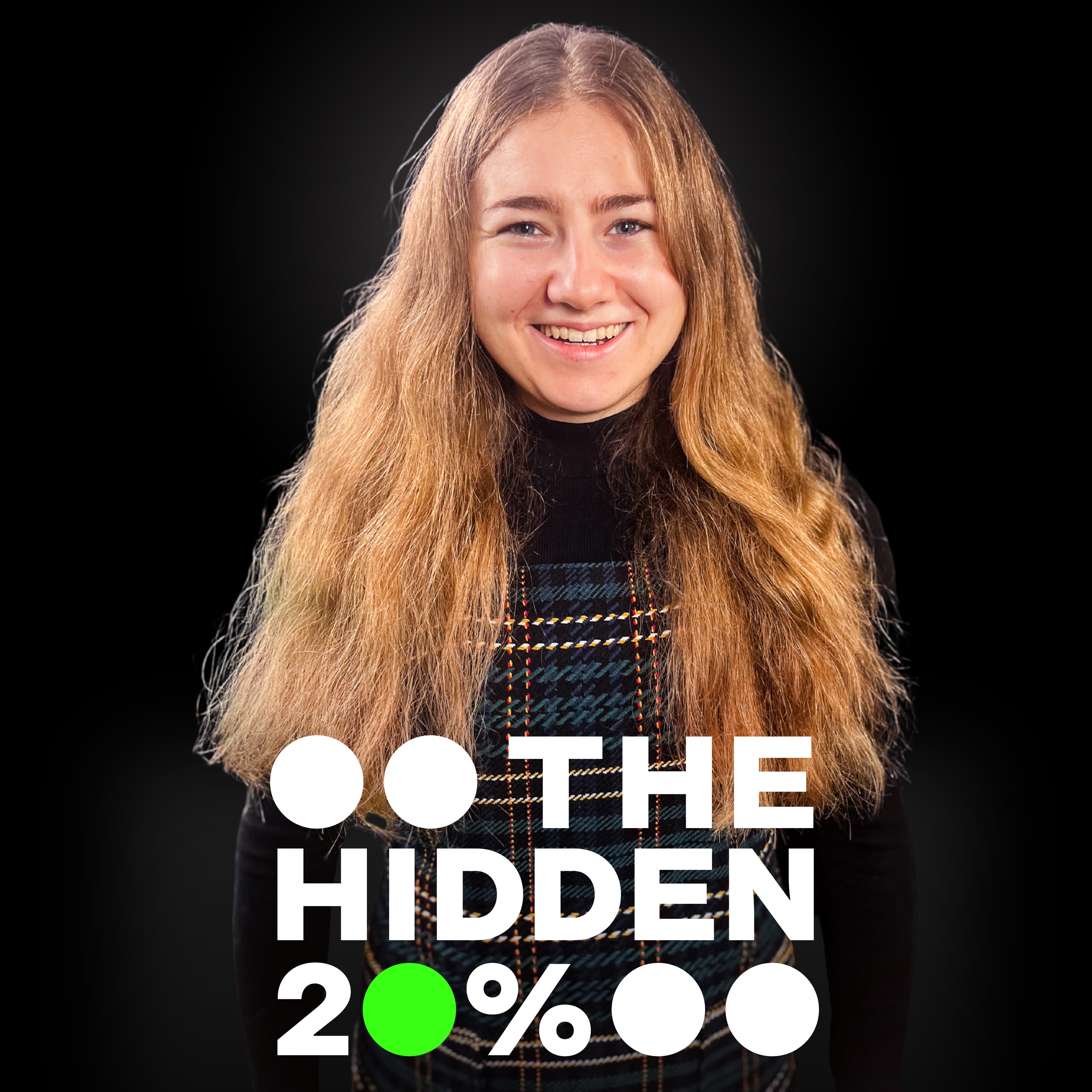
Connie Hayes discusses being an autistic woman in elite cycling while doing a PhD, linking neurodivergence to identity, disclosure, and environmental support; she also describes how elite sport can fuel eating disorders through number obsession and under-regulation.
Connie Hayes is a professional cyclist and PhD student. She was recently (semi-recently) diagnosed autistic, dyslexic, and dyspraxic. She grew up in East London, later studied at university (Queen Mary), and built a cycling career over about 13 years.
Autistic people aren’t “broken”; success depends on changing environments and advocating for needs. School often provided diagnoses without meaningful support, causing shame and mental health strain. Elite sport culture is results-driven, often unaccommodating, and can become an “eating disorder breeding ground,” especially for autistic women due to obsession with numbers and power-to-weight ratios. Disclosure can be safer when framed as needs rather than diagnoses.
In Spain, she trained ~4 hours daily for two weeks on about one energy bar, aiming for low intake/power-to-weight, leading to overtraining and under-fueling, weight gain, and eating disorder behaviors. She describes cycling as sensory-overwhelming (peloton movement, descents at ~60 kph) but also a de-stress tool when training alone.
Written by AI. May contain mistakes.
Connie shares her experiences of marginalization and stereotypes as an autistic woman.
“How do you see yourself as an autistic woman?”
Connie recounts her unexpected path into cycling and her early experiences.
“Connie, you are, and let me get this right, a professional cyclist doing a PhD, recently, semi-recently diagnosed autistic, dyslexic and dyspraxic.”
Connie discusses the balance between individual training and team dynamics in cycling.
Connie reflects on how being autistic affects her cycling performance and environment.
“So I think that's sort of what really drew me down that line and also being outdoors.”
Connie explains the significance of open dialogue in her cycling environment.
“What are the three things then that help you in an environment being autistic thrive?”
Connie shares her challenging school experiences leading to her diagnosis.
“I'm struck by the fact that you put the word standard in front of that.”
Connie discusses the difficulties faced due to dyspraxia and lack of school support.
“I remember the assistant head at my school, my GCSE results were diabolical.”
Connie reflects on societal misconceptions surrounding neurodiversity and her own acceptance.
“But it was all the little things like that where I sort of hope now, nearly 10 years down the line, things have changed.”
Learn about the challenges faced when diagnosed with dyslexia and dyspraxia and the lack of support in school.
“and I was sort of below average for every test they did and extremely below average essentially.”
Discover how university support systems differ from school and impact mental health and academic success.
“And the actual social experience and everything like that, I think would have also benefited positively.”
Explore the journey of self-discovery and the importance of understanding autism through lived experiences.
“And everything was sort of starting to make sense.”
Understand how university experiences and support shaped personal and academic outcomes for autistic individuals.
“And it was just a sort of, she's being assessed.”
Learn about the research focus on the experiences of neurodivergent women in the education system.
“by absolute sheer luck yeah just ended up where i was at the right time at the right place But then it's also set off, obviously, a path of your dissertation, then your master's, now weaving that into your PhD.”
Gain insight into the societal perceptions of autistic women and the challenges they face in sports and beyond.
“Whereas when there's almost less on the female side in a weird way, I think it's almost easier to go, no, that's male.”
Understanding the challenges of mental health and eating disorders in high-level athletics.
Exploring the impact of overtraining and dietary restrictions on performance and health.
“If you survive that, well done, brilliant, onto the next sort of thing.”
Discussing the lack of support for athletes with neurodivergent conditions in competitive cycling.
“So autism, eating disorders, those destructive repetitive patterns, routines, is that common in professional sport?”
Analyzing the prevalence of neurodivergent traits among cyclists and its implications.
Describing the overwhelming experience of participating in a competitive cycling peloton.
“My pain receptors are a bit funky anyway.”
Learn about the unique mental challenges faced by cyclists, especially those who are neurodivergent.
Discover how cycling affects confidence and the importance of advocating for neurodivergent athletes.
“How do you then channel that into speaking up about neurodivergence in sport?”
Explore the systemic issues in women's cycling and the lack of support for female athletes.
“Who else are you seeing within female sport that is neurodivergent, that is like speaking up about this?”
Understand the implications of disclosing neurodivergence in the competitive sports environment.
“And even though you've got some people like him who have the knowledge from lived experience, nobody's sort of going, right, how can we make this better?”
Connie shares her experiences with autism in the context of competitive cycling and how it shapes her interactions and performance.
“And I think you don't want to use it as a label.”
Connie discusses the importance of supportive figures in her life, particularly her coach, who understands neurodivergence.
“and please keep going and please keep doing that because we need more of it.”

Get the gist, explore an idea or ask about something said.
 Claude
On The Hidden 20%, what are the key points of this episode?
Searching your listeningAutomatic transcript. May contain errors.
0:00How do you see yourself as an autistic woman? I think I'm by default always going to be marginalised and I think that is something that does then affect you and you're constantly having to still even today fight the sort of stereotypes.
0:18Welcome to The Hidden 20%, our neurodiversity charity on a mission to rewrite the future for people who think differently. Together with you and an eclectic range of brilliant guests, we can break the cycle of silence by smashing outdated stereotypes, exposing the myths, and sharing the most up-to-date truths about what it really means to be just different, not deficient. The best way you can help is really simple. Subscribe so you never miss an episode, and if you can, donate to our charity through the link below. So enough preamble. I'm Ben, your host. Let's get into today's episode.
1:06Connie, you are, and let me get this right, a professional cyclist doing a PhD, recently, semi-recently diagnosed autistic, dyslexic and dyspraxic. What's it like being Connie? It's a bit wild. I mean, it's everything that I've always known. So it's not like I can go like, oh, it's different to everyone else. I have no idea what it is to be inverted commas normal. I think it is full on. It can be very intense and it can be very overwhelming, but it can also be quite good, I think. And I think my little world is quite good fun for my brain, as fun as I can make it, if that makes sense. Tell me about bikes.
1:43How did you get into cycling? So my dad had raced, but I had zero interest as a child. And even though my parents sort of consecrate me to watch professional men's races and stuff like that, I just didn't have any interest at all. And then I was at school. I'd never been a particularly sporty child. I'd been very active, out of control, active. I'd run off as a small child. My parents trying to try and chase me back, all that sort of thing. But I'd never been particularly sporty. And then we had to do some cycling last year at primary school. Turned out it was actually quite good. And I was sort of able to beat the boys who had sort of made my life a little bit yeah crap shall we say that yeah what do you mean by that sort of yeah had picked up on the traits that no adults had picked up on sort of thing so what were those traits i think it was finding social situations difficult if i disagreed with something i tend to pull a really dramatic face very social justice orientated and i just get very overwhelmed if i didn't perform very well in a test or something like that so I'd sort of be very visibly upset and there was sort of all that sort of thing in hindsight it's like people did know because kids had picked up on it but nobody had picked up on it sort of higher up so then I joined my local club and it kind of just went from there sort of 13 years ago now and yeah it's just sort of very slowly built up through the levels and yeah got to where I am now I guess what does cycling do for you I think the thing with cycling is as a sport it looks like an individual sport from the outside in terms of you do a lot of the training on your own you're spending hours off to now literally in the freezing cold on your own or with like a couple of other people but then it's also a team sport so when it comes to race days it's very much a team sport you go in with a team plan you're usually working for somebody else so it's sort of got that element of social as well as very isolated and I think that really drew me into it I had rowed as a teenager as well I took up rowing when I was about 13 and that was much more you were relying on other people all the time you were training as a group all the time whereas cycling I think why I sort of went actually no I want to focus on the cycling and drop the rowing was very much because I could get train on my own if I came home from school feeling overwhelmed everything like that I could just get on the bike by myself and sometimes use that to de-stress essentially.
4:08So I think that's sort of what really drew me down that line and also being outdoors. I'm a very, very outdoorsy person. I hate being inside. So that sort of element of being able to just go out in the countryside and ride my bike is like basically that's sort of heaven for me really. It's the perfect balance essentially of everything that I enjoy. Also I am quite introverted but I do enjoy being around other people. So the sort of team aspect that's really good so yeah you kind of get the best of both yeah oh you do you definitely get the best of both since being diagnosed autistic what have you reflected on or changed or improved or understood about cycling and your cycling i think for me it was understanding i'd really struggled in certain environments if you look at my race results i'm incredibly incredibly inconsistent and I sat there with my old boss and we were going through them and it was sort of like right so what went wrong okay you overstimulated okay what went right there oh the environment was really good you were around people you really get on with and it was sort of this whole pattern of actually where we sort of looked at them thinking right it's going to be you've over trained here or you've under trained it was actually all environmental linked and then it was being able to step back and think right okay I know I'm not broken but I need to change the environment that I'm in in order to be able to be successful essentially and sort of know when to say no I think that's the thing that really in that moment of knowing right okay this is why I feel the way I am this is why I find things difficult or alternatively this is why I do well in this situation it was having the ability to go actually right I'm not going to do x y and z that's too much and almost being able to advocate for myself I think that was the sort of main gain out of it all I guess.
5:57What are the three things then that help you in an environment being autistic thrive? I think being able to have open dialogue with others I think that's really important and that's one of the things I found difficult you go up the levels I'm now on a team that's very international so you've got people who've no idea even if you said to them I'm autistic they may have never heard the word or their preconceptions of it I mean the UK is bad but there were other nations around the world which are even further behind us so being able to have open dialogue with people and almost not being afraid to explain it where I think initially I was a bit like if I said it you know like oh but just by the way I'm autistic and someone sort of looked and was like what I wouldn't explain further whereas now I'm at a point where I'm kind of like almost I don't even use the word I almost explain it without using yeah I don't say I'm autistic per say I say oh I can find that situation's overwhelming you say what you need yeah I say my needs not my diagnosis and I think almost being able to advocate like that has then been a massive help for me but that's one of the things I found difficult moving up you're constantly around different people so whereas when I was a kid I was essentially around my friends we were racing under 16 races in the UK I had my little group of mates it was all nicey-nicey sort of thing and then when you go into sort of professional ranks you're around different people everyone's chasing money a job essentially and it sort of becomes very much you're surrounded with work colleagues trying to work out how do I disclose this how do I explain it to help me be better to ultimately help the team be better and yes it's a very weird kind of situation to be in trying to explain it but I think having the diagnosis was the sort of right okay now I can sort of formulate it in my head how to move forward yeah whereas i think previously i've been almost convinced is there something wrong with me am i the problem and it was constantly why can i not cope and almost trying to think right right i need to be normal inverted commas sure and it's like no you're not the problem connie you need to help yourself and yeah improve the environment around you essentially take me back to then leading up to going for an assessment what was going on so essentially i I had quite a normal high school experience, East London High School, standard sort of, I didn't really fit in.
8:19I'm struck by the fact that you put the word standard in front of that. Yeah, in terms of sort of standard neurodivergent undiagnosed. Okay, standard neurodivergent. Yeah, so I didn't really fit into the school environment at all. I was quite isolated and I just sort of got by. I was quite academically able. so as far as the school were concerned there wasn't any alarm bells even though I didn't fit in because I could talk to adults really well okay so as far as the teachers were concerned oh our communication's really good and it's like nope because with my peers I was sort of lacking that sort of understanding of my own age group essentially did that differ in your kind of reflections pre-puberty versus then puberty hormones do you have any distinction there around friendships?
9:11Yeah, I think a little bit. I think when I was younger, I was able to be obsessed with animals, obsessed with horses. And that was almost quite cool, almost in a weird way. Sort of me coming out with random facts about a pony sort of thing. That was quite cool and almost accepted. Also, you can run around a lot more at primary school. When you go to secondary school and you're supposed to have conversations and the girls were all talking about boys and stuff like that. And I was just like, can we do some info dumping about our special interests here? And it's like, nope, that's not how it works.
9:41So that was a big shock to my brain sort of thing. I'm suddenly trying to learn, right, how do I fit in? How do I make and keep friends in this situation? So I sort of went through that. And then I got into year 10 and I just hit what I can only describe as complete brick wall. Grades suddenly dropped overnight with a sort of jump up to GCSEs. and I was quite lucky that I had my old history teacher she was amazing neurodivergent herself and she basically pulled my mum aside at parents evening was like I think she needs to be assessed for dyslexia at the very least because it was unraveling very very quickly and I'd sort of gone from always never having a problem getting good grades to sort of failing stuff and it's like did you feel that yeah oh yeah and then it was that thing of I couldn't make the jump up and then the sort of self-esteem confidence knock as I couldn't do it anymore so yeah I went for the dyslexia assessment and obviously that came back I was dyslexic and dyspraxic so then had a bit of a battle to get all the access arrangements in place how was your dyspraxia showing up at that point I think the main thing was actually cycling there was a lot of sort of skills-based stuff I was behind my peers physically I was there but I couldn't do the skill element so things like riding on rollers which essentially literally are sort of rolls that you put your bike on and you just sort of station recycle on but you have to balance and most kids sort of pick it up in a matter of weeks took me about two years okay and that was sort of really odd it was like why can she not do that when she's physically very good and i always had the sort of power numbers per se but not the skill element okay and that was the main thing that was sort of showing there and it was little things like I'm really bad at tying shoelaces takes me forever and that sort of got laces on today yeah that hadn't really been picked up it almost be oh she's quirky you know small hand movement she's not good at and it's actually no there's a much bigger issue going on here and how did school support you post that dyslexia and dyspraxia recognition in all honestly they didn't It was quite funny.
11:50I remember the assistant head at my school, my GCSE results were diabolical. I drastically underperformed what they predicted. And she sort of turned around and went, I really don't think A-levels and anything academic is the route you should go. And I sort of sat there thinking, I'm not sure this is like what you should say to a 16 year old sort of thing. And that's always been in the back of my mind as almost motivation of, right, you're going to have to go out there and prove a point here. Also, you've done a master's and you're doing a PhD. Yeah, which is sort of always my thing of why I've sort of gone down that route and want to stay down that route to almost prove a point of, yeah, your grades at 16 don't define you.
12:29Are you quite stubborn? Yeah, very stubborn. Ridiculously stubborn. Almost not a good trait sort of thing. But yeah, so I'd sort of, it had to really battle with the school to keep me on essentially. And then from there, it was a constant battle for support. and it was even just little things like I was allowed a laptop in class, but no one had really described to other kids why. So it was suddenly this thing of why are you using a laptop all of this? And I'm trying to sort of explain it myself, but with no support there. We almost thought that should have been an adult, should have probably said to them, this is why she's allowed a laptop, this is the score.
13:03And also saying, I've not got Google on there, I'm not cheating exams, it's literally just a word processor because I can't write very quickly. My handwriting is not readable. But it was all the little things like that where I sort of hope now, nearly 10 years down the line, things have changed. But I always hold my breath a little bit when I say that because I suspect they might not have done. But yeah, it was sort of weird one of sort of I got that diagnosis, but nothing really happened. And it was almost then a sort of right now we've got something to use to fight, but we still got to fight.
13:34Did it help you understand knowing that you were dyslexic and dyspraxic? I think it did to some extent, but I also couldn't accept it particularly well. And I think if I could go back and talk to myself from 10 years ago, I'd probably say, this is okay and this is good. Whereas I took it as a complete disaster. because I'd very much gone into the assessment being like, right, I'm going to show there's nothing wrong with me. And then the results were utterly horrendous and I was sort of below average for every test they did and extremely below average essentially. Despite me coming out thinking I've aced this, I've done really well, there's nothing wrong with me.
14:11But nobody had sat me down and sort of explained it. And I think 10 years ago, the media is not good now. There's a lot of misconceptions and a lot of sort of everyone's being diagnosed blah blah blah but there was nothing positive essentially at the time and there was so little conversation around it it's sort of one of my friends she'd been diagnosed dyslexic dyspraxic several years before i had and it was literally only her who i knew and almost sort of relying on her to almost guide me through it sure because it was just nothing there was nothing like this there's no podcast talking about it obviously there's nothing in the media and the sort of social media was still behind.
14:51Yeah, so it becomes a secret, it becomes an unsaid, and therefore it becomes something ultimately to think is a bad thing, and therefore shame, et cetera, et cetera, like is fuelled. And I just couldn't, it's almost getting my head around it all. And I think had I been 15 now, there's a lot more sort of stuff you could almost signpost people to, and yeah, it's all that sort of thing, whereas at the time, I think was sort of given a sheet and a report sort of thing of like now off you go and then thrown into this world of almost not wanting to help myself in school because it was drawing attention to it.
15:27Yes. It's like they'd given me a screen reading pen but I didn't want to use it because it was like that was another item of technology to have and another round of why is she using that. Yes. So sort of stuff that I now use daily and use at uni all the time I'd sort of had this absolute I can't touch it I don't want to be different and couldn't really accept it. And I think it's also, yeah, school funding is awful for anything related to neurodivergency. And at the time, there was nothing in place. There was no support given because the school literally couldn't afford to do anything more than what they did.
16:03So I think that also played in, sort of was a direct effect of austerity essentially. So if you were 15 now, getting a dyslexia and dyspraxia diagnosis, what would you love the school to be doing? I think basically sort of sitting down and helping me navigate it essentially having the tools and having people there who understand with lived experience I think that's the most important thing is you need actual neurodivergent role models who are visible and I think that's what I didn't have so I was sort of left on my own sort of thing of here's your piece of paper here's the support we can offer but we're stretched essentially We can't do anything more.
16:45Whereas I think had I had the support I had at uni at school, the outcomes and the grades would have been very different. And the actual social experience and everything like that, I think would have also benefited positively. So then fast forward to uni and assessment, autism side, what happened there? So I got picked up very, very quickly at uni. I got several offers from different universities. and what I didn't know obviously at the time was I made the absolute best decision I could have made with where I went and the department I ended up in. So see the autistic girls network that you know, Vicky May who's on their board, her husband is a professor at Queen Mary.
17:26He was my tutor and my supervisor. So essentially I turned up and had someone who completely understood autism in women and basically guided me through my entire university experience. And that was the major difference for me, was having somebody I could go to and say, yeah, John, this has happened. What do I do now? Or I think I need some more support. Yeah, do you think I can email and ask for an extension on this? And it was all that sort of thing. At the end of my master's, we sort of could have submitted it in the deadline, fine. You turn around and you've got an extension, use it. even if you don't need it take the pressure off yourself and having someone say that I usually would just be like right deadline that's it I'm not being different I'm not yeah I'm not going to use it I'm not going to back down and actually having someone who completely understood my brain go right no you're using it you're putting me in extension yeah you're doing it so I think that was very very different I came with money essentially for the university to put support in place money that obviously I didn't come with because I'd never had an EHCP from school hence the school not being able to do anything suddenly at university i come with a load of money and a load of support and they were almost queen mary basically they're going yeah you've got 20 hours of support you haven't used this term you know use it before the end of the exam period sort of thing it was very much kind of you haven't checked in why not are you okay whereas at school i think even if i had had support and i turned around and gone oh i'm not using it this week they've gone brilliant we can use it elsewhere and it was very very different and it was suddenly this realization of actually school everything could have been more like this and a friend of mine who's autistic she turned around said to me the other week she went why do we have to survive not breaking down to get to university to get the help why is it only available essentially after we're 18 yeah and i was sat again yeah you're spot on and it was it was sort of like here's a sport here's the hand holding essentially to guide you through and to almost fill in that gap between sort of being normal in inverted commas and sort of where you are whereas at school you never had that and almost you need that as a teenager more than you do as a young adult sure so yeah it was sort of very weird situation to sort of go from the school system to a university where you're fully supported so can you remember a day then at uni with john where you were suddenly thinking maybe I'm autistic yeah so I'd gone to uni and my head of year at school had sort of started to pick up on stuff before I'd left but obviously it got to the end of my time at school I was now 18 and I started uni and I was sort of it was always in the back of my mind and then I got pulled aside by a lecturer and sort of like yeah are you have you ever been assessed what do you find difficult and that was the moment where it all sort of started the ball rolling went along the SEN sort of support as they called themselves at the time sort of went yeah we agree we're gonna yeah help you put referral in sort of thing and what did you think about this by this point as well it was sort of beginning of covid you had a lot of crap coming out of the media but there was also a lot of very positive stuff and at the same time I'd sort of turn around I went to John and can I do my dissertation looking at the experiences of autistic dyspraxia and ADHD girls in the secondary school system during the period of austerity and to have someone go yeah this is brilliant let's do it let's get the ball rolling and it was almost at the same time as I was doing the research for that everything was starting to make sense so as I was sort of reading the academic literature around it was like right I fit that box and it was sort of stuff that I suddenly was sort of sat and thinking this is it but also then as I was sort of doing this project I was then into carrying out interviews, meeting other autistic people of a similar sort of age.
21:25And everything was sort of starting to make sense. Also, the fact that my own experiences weren't unique. So it was kind of like, right, we're all not broken here. The system was broken. And it sort of went from there. And obviously, we had quite a delay to get an assessment. And then when we did, I think we were about half an hour in. And the psychiatrist turned around and was like, I've got to carry on with it all. But I think you're autistic. I think that's, we can confirm it at this point sort of thing. And in that moment, it was sort of a massive relief of finally we have answers. I was still never 100 % sure.
21:59So could they turn around and say it's not? They say there's something sort of more mental health going on. Yeah, you've only done half an hour. Hold on. How do they know? And it was sort of, yeah, is there something more going on? Is the anxiety really secondary anxiety from being autistic? But they sort of instantly were like, no, we know what this is. We've got everything in front of us and enough. you know we've got to carry on but don't worry we've got an outcome almost already and that was a massive relief because it was suddenly right okay we know the score and that was the other thing the difference between the university and the school is when I was being assessed for dyslexia and dyspraxia school couldn't do anything until they had a concrete diagnosis university they sort of put me down as autistic before anyone had formally diagnosed me while While you were waiting for an assessment.
22:45And it was just a sort of, she's being assessed. This is how we do it. And I think even at one point I sort of said to the supervisor, I said, yeah, am I okay? And he went, yeah, yeah, carry on. You want to use it, use it sort of thing. We all support you in doing that. Whereas had that been at school, my God, there would have been several hurdles and it would have been, no, you can't until we've got the paperwork. We can't put anything in place. Whereas uni were very much like, this is the score. we go with it and I'm not to sound dramatic but I think that saved me my mental health as a teenager was awful and suddenly having the support around me being in an environment where I could actually academically thrive and I think yeah it's slightly I suspect it is sort of part of being autistic I'd like doing well and being the best I can whether that be in sport or academia and suddenly I was doing that and I was getting the grades that years back I would have dreamt of essentially getting because I came out of school with mostly C's and a couple of B's for my GCSEs whereas suddenly I was completely thriving in quite a decent level institution and it was sort of this weird situation of suddenly realising had I had that support as a kid what would have happened would things have been different even though I probably lots of ways wouldn't want them to have been different uni just changed my life essentially yeah and I think having a supervisor by complete luck who had a background whose wife's heavily involved in the autistic girls network it was complete that decision that day of going to go to queen mary did essentially save my life and i sort of yeah sounds a bit traumatic to say it but that was i think the case and i don't know what my university experience would have been like elsewhere and also just having by absolute sheer luck yeah just ended up where i was at the right time at the right place But then it's also set off, obviously, a path of your dissertation, then your master's, now weaving that into your PhD.
24:46It's helped to chart a course that sounds like it really fits you. Yeah, no, I think I was very lucky that I had what I thought was a very silly idea because I was like, is this geography? Can we do this? I knew other people don't work around austerity and I was like, can we look at the autistic female ADHD women, dyspraxic women sort of experience of the school system in hindsight, in retrospect, looking back at the sort of period of austerity in 2010 to 2020? and I sort of took this idea and having someone go yes this is brilliant we're doing this I completely support it just took me down this complete journey which changed my way of viewing the world and I also kind of like to think it sort of may down the line change others in some respects in a society that isn't fully up to date yet on the representation of autistic females I mean we're not there on autistic males either but we're even further behind I think on autistic females how do you see yourself as an autistic woman I think I'm by default always going to be marginalized and I think that is something that does then affect you and you're constantly having to still even today fight the sort of stereotypes and that is very difficult and I sort of see it is you've got to try and advocate for yourself all the time, which I think in some ways can be positive because I think it'd almost be harder for a non-stereotypical autistic male because there is so much, this is what you should do, this is what you should be like.
26:27Whereas when there's almost less on the female side in a weird way, I think it's almost easier to go, no, that's male. You can sort of use the gender card a little bit more. What do you think society believes about autistic females? I think there is a lot of stuff in the media that's almost, yeah, oh, it's an excuse or it's this. Everyone's diagnosed. It's like, well, actually, if you look at the numbers, it's tiny, tiny percentage. But people, for whatever reason, struggle to grasp how big the population actually is of society essentially as a whole. So I think trying to explain that all the time and trying to defeat that stereotype of it's just an excuse is difficult and it is challenging.
27:11But I think in some ways things are changing or at least they're changing with people that matter, if that makes sense. What's been your experience then of neurodiversity and sport? it's a weird one I think taking cycling to start with as that's where my sort of most of my knowledge essentially is in a sport that's very neurodivergent friendly and a lot of people sort of said oh there's probably a lot of neurodivergent athletes whether they're diagnosed and don't disclose it or undiagnosed it's incredibly ableist the whole elite sport you have to be the best you can be you have to almost grin and burr it get on with it and be very limited flexibility because it's always oh but we can replace you with someone with very similar talent for yeah who's more suitable to the environment or whatever and you're constantly battling to stay where you are let alone move up and I think that yeah that's why I know people who are diagnosed and sort of say to me I can't believe you're open about it and I sort of go why not they're like oh well i've been diagnosed adhd say but i would never tell anybody i wouldn't disclose it because it ultimately if things go wrong or you end up in a bad patch or you turn around and go i can't do x y and z they can just at the end of the year goodbye you're out and i think that the nature of high level sport just fuels chaos essentially in my eyes it's not a very accommodating environment you know you have to go away traveling all the time different hotels everything like that is very overwhelming but being able to sit down to people and explain it can be really really difficult and I think even if you are open and you're out about it essentially you're still faced with sort of people going oh yeah but you're okay you'll get on with it you'll be all right and it's like no I'm trying to explain this to you because I'm not okay with this situation or I don't think I can do seven race days in four weeks say because I'm just going to get burnt out socially let alone with actually physically performing and I think elite level sport on a whole there is just this awful toxic culture of you can never say no you can never have a day off and there's still a lot of things around weight and stuff like that in endurance sports which obviously if you turn around and sort of say to someone who's obsessive with numbers anyway oh you lose weight or you need to eat this amount or not eat this amount you are just tunneling in an obsession that's going to become unhealthy and i mean i ended up quite a bad eating disorder as a teenager and then basically broke myself in my early 20s and someone sort of said to me but why did you let that happen and i said because i'm obsessed with numbers and data and everything like that so the idea of being lighter and faster became an obsession sure that's performance yeah and i just completely and i said also statistically eating disorders within autistic women really high throw in the endurance sport element and it's a perfect storm for complete and utter disaster essentially and it was even because someone said to me but you knew you were tired you knew your body was almost breaking down and i said yeah but i was being set training i was going out and doing it yeah if i go out the door and i feel awful but i've got four hours to do i'm doing four hours i'm not going to go an hour in actually i should go home because in my head it's like this is the plan we stick to the plan and i think there's so little knowledge and awareness again whether especially at professional level because it is such a massive so many people involved yeah trying to almost get everybody educated involved in cycle sport would be pretty much impossible or at least in a short-term situation that sounds really tough can you tell me about what a day would be like when you were in that really difficult spot around eating, data, training.
31:08Can you paint a picture for our listeners? Essentially for me, I'd really overtrain and under fuel. So my idea of success would be limited food consumption, big day on the bike. If you survive that, well done, brilliant, onto the next sort of thing. Whereas actually all I was doing was breaking my body as I was over training to the amount food I was consuming essentially. So how long would you go on the bike and how much would you eat? I mean I think when I was out in Spain I was doing four hours in the mountains for sort of two pretty much every day for two weeks on sort of yeah one energy bar in those four hours sort of thing.
31:48That's it? Yeah which for context should be having about 60 plus grams of carbs every hour at the bare minimum and I was doing about 30 across four hours and then it was like in hindsight what was I doing but in the moment all I was thinking is power to weight ratio more training whereas actually my performance was decreasing and then I'm starting to cut back more and more because I'm like why am I not going well I'm going absolutely awfully I need to do more I need to consume less and that was the whole and so I was trying to think like how little could I eat for breakfast before I go on a ride and then it'd be like oh I'm back back at two o 'clock lunchtime's already been try and skip lunch sort of thing and you end up in this cycle and I think it was always going to happen with my brain with the environment that I'm in and I think that sort of shows the problem with sport because my brain it was always going to latch onto it and I needed people around to sort of go actually no we need to be careful here and again possibly that was that thing of not having a diagnosis earlier on and not having the knowledge because I think if I had the knowledge I had now when I was 18 I'd probably know right I'm more at risk have I gone down that path already yeah I have what do I need to do to get out of this situation I was reading a paper for uni but I probably shouldn't have been reading it sort of thing I'd gone on a tangent didn't really have much to do with my project but that was at the point where I thought hang on that was all around autism in women and eating disorders and it was sort of like this is ticking a box and I basically made a GP appointment in that moment and I was like yeah this isn't it's not healthy the situation I'm in and also thinking statistically I'm highly likely and this is probably what's happened because with my body it was a bit weird instead of losing weight I and suddenly started gaining it.
33:44As the little, my body was consuming, it was storing its fat essentially. Okay. Because it was in a state of fright, I guess. Yeah, essentially. Yeah. So it was sort of periods had stopped and everything like that. It was like, I need to hold anything I can. So I was gaining weight and it was reading this paper and I suddenly thought to myself, hang on, I relate to a lot of these traits and also this is my situation. and I literally did pick up the phone and make a GP appointment in that moment and I thought I think I know what I've done here and then obviously it was all sort of confirmed on tests and everything like that but breaking that cycle was then really difficult because I knew what the problem was but you've got to then get yourself out and away from it I think in that situation again it was having a diagnosis really helped because it was that link and I sort of knew then it almost wasn't my fault in a weird way so i think had i not had the diagnosis i'd probably been like yeah is this right is this really right why have i ended up in this mess whereas actually i was sort of there going right okay statistically i'm very mathematical so i was sort of able to go right this is probably why i'm here and this is what i've done you can work it out yeah you work out essentially but that was a sort of blessing in disguise again at that point knowing my brain and being able to process the situation that I was in.
35:09So autism, eating disorders, those destructive repetitive patterns, routines, is that common in professional sport? Yeah, I mean, I know a lot of people who've been at the very, very top, a couple of former world tour riders, which is like the top, top end of the men's scene, who've walked away, you know, because they're either diagnosed and never disclosed it. or undiagnosed and now have subsequently got a diagnosis. And they've just said to me, it's just, it's eating disorder breeding ground. And it just, the sport as a whole is bad, but let alone when you throw people in who are more susceptible to it, obsession with numbers, power to rate ratio, all of that.
35:54It is just a disaster. And then that's the thing. If you break yourself, it's so easy for teams to just go, right, we'll bring someone else in. Okay, you're out. and they literally even at the top just chuck people out with nowhere to go essentially and it's sort of right go and sort yourself out and then it's no wonder we've got so many high level athletes who just disappear and it's like they just disappear for years or yeah that's it they're done and it's like why is that probably because the lack of support where do nutritionists sit and support groups with physios nutritionists support teams safeguarding which is a bit of a strong word for an adult but where is all of that there isn't cycling's very unregulated in that sort of respect and at the end of the day members of staff are under pressure they want the best results for the team so if you're not at the very very very top of being the big household names yeah they can literally say they just replace move on so if you can't fill the needs and sustain a weight or whatever that they want okay that's it sort of thing and it's bad enough for everybody else but when you're throwing neurodivergent brains in which i think a lot of athletes are you've got to be slightly crazy to put it mildly to go and spend six hours a day riding up mountains punishing yourself on your own yeah limited interaction with anyone else to then sort of go home eat sleep do it all again the next day yeah and i think that's the problem with the sport and certainly with cycling is that nobody sat down and thought right what are the majority of our riders neurotypes and stuff like that how do we best support them and I think ultimately and that's my big thing if you change the environment for everybody yes it helps neurodivergent athletes and it sort of focuses around their brains but it will help everybody else if you make it slightly less pressurizing and you know you put people's health first before results and things like that ultimately helps everybody but it will particularly help those of us that are very very numerical driven yeah i have this picture that comes to mind of kind of tour de france and stereotypes of sprinters being adhd and you know mountain climbers and more long distance being autistic yeah because it just does seem a sport that is absolutely prime in a really good way for you know thinking differently and having to do something repetitively and I'm just struck by the fact that my very limited exposure to the world of cycling is there's a huge mental aspect to it yeah huge mental game and yet and there's obviously with neurodiversity and autistic people we can think about the brain but it sounds like that those dots haven't been joined no no one sat there and thought how can we make this better essentially how can we make it easier for athletes and it's really odd because it is as you say like stereotypically i think the peloton is full of neurodivergent athletes there's loads of people that i know of and there's even more people i think i wonder if they've realized that they've got an awful lot of autistic traits going on here but there's no sort of joined up thinking on how can we support athletes it's sort of very much driven of results results results and that's fine to a point because by nature elite level sport is always going to be about results it's always going to be about winning but it's that thing of how can we make this better for everyone else so that everyone can perform better and be in a more relaxed environment why do you think being autistic makes you a great cyclist I think it is that ability to train so I've had friends who sort of lack motivation I haven't done a session I think I've only ever missed sessions if I've been genuinely really ill or injured and even then I trained for six weeks on what was essentially a broken leg because even though I was in pain I was like, oh no, I think it's just bruised.
40:09My pain receptors are a bit funky anyway. I was like, no, no, it's fine. But I've got to train. I can't miss a day of training. And in hindsight, I'm like, oh my God, the damage I then went and did from one accident was then massively magnified. But it was my brain being like, this is on the plan. This is what we're doing, which can be brilliant. And that's probably my greatest weakness so training really suited to what else i'd say the sort of ability to think in the moment when i'm not overwhelmed and if i've not got any pressure on me my ability to think and read a situation i think in part because i've had to learn how to read body language and everything like that i can then read that of people in a peloton which sounds really weird i can often sort of work out I think there's going to be a crash on the right hand side and there's sort of people looking tense and I'm like right there's a lot of tension over here crap there has been a crash on the right hand side sort of thing and it's that ability to sort of overanalyze everybody I think that's also a real strength and it's the same as sort of being able to analyze people of are they going to go on the attack are they not are they going to sit in today and I think because I've naturally spent my entire life overanalyzing people, trying to read emotions because I'm not very good at it, but I've had to learn.
41:36It's almost made me, I guess, hyper aware of people. Little changes in body language where even away from cycling, I'm like, I don't necessarily know what's up, but something's changed. And it's that ability to realize in the moment, right, something's going on here, what's about to happen. I've sort of grabbed my chest for the last couple of minutes while you've been talking because the thought and idea of being in a peloton to me is absolutely terrifying so I'm like holding on you talk about you're sensing and predicting various things might happen you're noticing people tense up you're predicting crashes this is all happening obviously in real time very fast what is it like being in the peloton it's crazy it's honestly crazy and it is incredibly overwhelming i think i often get more tired from the actual movement and all the sensory aspects of it than actually riding my bike and it's the same with training now when i was completely broken i was napping in the day because i was so tired and my body was a mess but now i almost need to go and sit down and let my brain recover from being out in the road for four hours and it's the same when i race it's almost the actual overwhelm of sort of everything moving around you you've got the convoy of cars behind which you have to go back to sort of thing all that just sort of adds up and it is just crazy going down descents at 60 kph with people around you the movement everything else it yeah it's a weird one to talk about because in the moment just sort of get on and deal with it away from it's like oh my god this is crazy for the brain more than anything else yeah that's so interesting that it's your brain that needs a rest not your body yeah though i just find it so taxing mentally just all the sort of sensory aspects of it you're moving so quickly everything's passing by people are around you you're knocking shoulders you're constantly having to keep yourself safe but also you want to win so it's this kind of fine line of sort of trying to think in the moment and almost ignore that and then when you step away after you finish it's like oh my brain's knackered so i just need to sit in a dark room for a couple of hours to almost recover from it all and yeah I've heard you say that you are different when you're cycling like you are a different person can you just talk a bit about that as it relates to being autistic I think away from sport I'm quite quiet I'm quite reserved I don't really deal with conflict I'd be the first person if there was a row happening to just get up and walk out the room I'm very fight or flight always flight however if you put me in a bunch of people I'm incredibly loud and will hold my position and I'm not afraid to shout and I think that throws people off a little bit sometimes because they're like oh she's all really nicely off the bike and she's very quiet and then suddenly I'm effing and blinding at somebody sort of trying to keep myself safe and it's really weird because I kind of just almost swap people a little bit in my brain and I think it's almost this sort of mentality of like right I'm gonna do this I'm gonna do this well sort of kicks in and I sort of don't let myself be pushed around whereas off the bike I'd sort of be like oh god there's a small argument going on over here I don't like this I'm going to run away essentially from the problem whereas on the bike even if it didn't really involve me if I thought there was a sort of right or wrong I will shout and give my opinion sort of thing and that I find really odd even when I sit there and think about like did I come out with that sort of thing like did I really hold my own against people who are household names and stuff like that and not let them push me and it's like you did but in normal day situation I can't deal with any form of conflict at all and that's how I've been my entire life so it's really odd it sort of brings out this almost confident persona in me the second the sort of adrenaline gets going.
45:31How do you then channel that into speaking up about neurodivergence in sport? I think my own experiences and I think the last couple of years I've had some great great experiences and some also really crappy experiences had been around people who just haven't got it. And I had sort of 23, I had someone turn around and go, oh, you just use it as an excuse. And I'm like, no, I'm trying to help everybody here by saying this environment isn't all right. And yet this is too much for me. And I think having the negatives made me turn around and go, actually, if I don't speak up, nothing's going to change.
46:07You're not born with a prejudice against someone who's autistic you're not born with a negative perception they've developed so i almost feel like it not only on me personally but it's on sort of everybody who is neurodivergent to almost turn around and go right we're going to rewrite people essentially if you don't tell your story nobody's views are going to change and i think i do channel that very confident rider in me off the bike when it comes to talking about it because i'm sort of like well if i don't do anything nobody is so therefore I sort of have to step up stuff like this today sort of thing it's to come out my shell and speak essentially and then to throw another layer on it what about women's cycling women's cycling is very underfunded and that's one of the big problems teams are not in a great situation financially so therefore you haven't got the ability to hire a sports psychologist, for example.
47:02And I think that does play in because you haven't got anybody medically qualified there to someone else to help. And I'm not saying not every medic understands for sure. There's a lot of people with very outdated views still in the sort of medical world, but you haven't got that chance of having somebody there to almost understand and also pick up. And I think that's why a lot of female athletes go under the radar. And it's the same in the men's side, I know a lot more of being picked up by team doctors, team psychologists. Whereas in the women's side, and you don't have that, nobody's being picked up, no support sort of being offered there.
47:40And there's sort of nobody to lead teams. It's almost luck of the draw. If you end up somewhere or a manager comes in with a bit of understanding, it's like gold dust. If you don't have that, you're fighting left, right and center to try and have it. But you're already fighting, right? So you're fighting an imbalance. that's there I can see how it becomes totally counterintuitive to kind of go oh yeah I'm gonna start talking about how my brain works or asking for stuff or admitting some of my challenges or my the vulnerabilities because you're already starting from a different place and I almost started talking about it when I got to the point in my career and I thought I'm probably not going to make the world tour which is the very very top flight and it was actually at that point when I thought I don't really want to I want to stay at continental level which is sort of second third and also kind of thought if the event I got a big result and teams were interested they'd probably have a conversation and think that I didn't quite fit the model anyway and it was at that point I thought I've got nothing to lose I can come out and talk about this whereas had I been in a position where I thought oh actually there might be a big salary coming from this sport I probably would stay quiet yeah and i think that in itself sort of says a lot whereas i think when i was younger i was 21 i didn't want it known and it only actually came about really because when i was doing my dissertation at university it was only then it was sort of on the cover form of this i described myself as an autistic and dyspraxic researcher and it was like now a lot of people know yeah cats out the bag yeah whereas prior to that it was very much like keep us under the radar nobody needs to know it will all be fine and suddenly it was like okay and at the same point i was situation was like i don't want to go higher i don't think i will be therefore i've nothing to lose which is interesting i think sort of stepping back and looking at it because i always think would i be sat here had i been a bigger name possibly not and that's why i have a lot of respect for people like lucy bronze for example who's come out the top flight of the sport and spoken about it.
49:51Who else are you seeing within female sport that is neurodivergent, that is like speaking up about this? Not many, to be honest. Lucy comes to mind first as the biggest female footballer, arguably, and made the decision to go public for autism diagnosis, which has been amazing. But there's not that many. And I think someone like her, she's in a position where she's so good, it almost doesn't matter, essentially. whereas I suspect again slightly more second tier than talking football here you might be less inclined to come out and publicly say it and I think that's quite interesting in itself this whole pressure of sport as a whole is so competitive you're fighting for places in every sport and sort of the acceptance and being able to speak out about it, you're tied essentially between do I talk about it but what if that's used against me Yeah, I'm really struck by just listening to you talking about sport and kind of thinking there's a concern that if I talk about how my brain works, A, the first thing is going to be seen as a negative.
51:01B, that will then be used against me and disadvantage me. and then I kind of go people like Simone Biles, Lewis Hamilton, Muhammad Ali, whatever, these sports people who are at the top of their game or Lucy Bronze where because of the way their brain works is the reason why they're good. You know, I kind of, I'm wrestling with that in my brain to kind of go, well, if we keep looking at this all as negative and keep seeing it as a problem, we will keep not hearing about the wonders and the brilliance. And you talk about creating environments in which you can thrive. You do your best cycling. Yeah.
51:48So why wouldn't we want to create more environments in which people can do their best? That's what blows my brain. It's sort of this weird situation where no one's prepared to go, actually, how can we change this? Yeah. It's all, we'll keep using the same model because I'm sure we'll get the best people eventually, or if they're good enough, they'll make it. And it's like, no, there's quite a few people who are really talented who just haven't got the environment there to make that jump up to that very, very top. Or they're getting burnt out, stepping away very young and things like that. And that's sort of the reason why I sort of made the decision I'm going to talk about it.
52:24Because it's almost, I'm not doing it for myself in any shape or form. It's for those around me who either I think you could be really, really good, but you need a better environment or those who feel I can't say anything because I'm not in a position. I'm not secure, essentially. And I think when money becomes involved in it as well, it's almost because you don't want to disclose it because ultimately you don't lose your job. Yeah. And that's the really scary reality of it. and that's why there's not many people come out and talk about it. Or people, you know, a few who've come out and said, oh, I was diagnosed autistic at 15, 10 years ago, but I've now retired and that's now why I'm talking about it sort of thing.
53:07It's only when they've stepped away do they come out. And then there's a little bit of people going, oh, is it just an excuse of why they've decided to pack it in? It's like, no, it's because the environment's wrong, but also they can only say it now because they're in a position where they're not fighting for money, they're not fighting for contracts. And I think that's, yeah, it's just a very odd environment that you're put into. It's so professional driven. It's so we can replace you tomorrow. Yes. And I think that's the thing fundamentally with high level sport is that it's a point of the sort of general sport pyramid where we're all very close together.
53:42Numerically, there's not much in it. So it is that thing of there's somebody else who have the same power numbers with similar power to rate ratio or whatever to you who they can just bring in. Yeah. and that is sort of why who maybe has a bit more consistency or doesn't ask for stuff or yeah who yeah who can race 20 race days in a month without question whereas someone like me i'd sort of go no i'm gonna burn out mentally i need a smaller calendar yeah so that's the sort of difference i think why ultimately we're sort of in this weird position where a few people like Jonathan Voiters, who's owner of EF Education on the big teams, he sort of said, yeah, I think most professional cyclists are probably neurodivergent, but nobody's done anything about this because it's like, oh no, we can't change the model.
54:31And even though you've got some people like him who have the knowledge from lived experience, nobody's sort of going, right, how can we make this better? Because ultimately in lots of ways, if teams were to make it better, you'd end up with riders who could do less race days and things like that and it is just we'll carry on with our model if people make it to the top they make it to the top otherwise we'll just spin them off and bring someone else in and it will be fine for us without any consideration of actually if we do this better we can get better athletes who can perform better and everyone's happier essentially but no are you glad you did disclose your autism it's a weird one i think i got exposed very quickly to very negative stereotypes and people holding views of me and of the diagnosis that are simply not right the sort of very classic oh but everyone's getting diagnosed and I'd sort of try and say oh I've struggled with this and that and someone's literally turned around to me everyone's got autism these days and I was like oh my god no and I was sort of there like I wish I hadn't opened my mouth and tried to advocate for myself on the other hand I've had a lot of people who have been completely supportive people who've sort of gone I always wondered if you were but I wasn't 100 % sure and then almost it made people come out their way to ask how can I help which is the really interesting thing and almost whether it was a sort of oh god I've got to do something now sort of thing or whether it was genuine I don't know but having sort of staff and I feel like we've got to at least ask was a massive help because it suddenly was sort of less on me yes It was almost more sort of everyone, I'm autistic.
56:15Now you respond to this situation. And I think you don't want to use it as a label. Sure. And working out the sort of finer, when do I say it? When do I not? That's often difficult because again, it's that thing of, I don't want this to be seen as some sort of excuse. Sure. However, I want people to understand how my brain works and everything like that. And I think it is... Because I just want to f***ing win races, guys. Yeah, basically. That's kind of it, right? Yeah. And if you understand a bit more about how I work, in the same way as if I understand a bit more about how you work, guess what?
56:49Performance and all that kind of good mentality stuff, like things can be better. Are you glad you did? Yeah, I think 100%. I think, yes, it brought some negatives. And yes, you're in quite an intense environment. And yeah, not everyone in sport is a good egg. So obviously you will always have people who will use it it's a sort of weakness and take the mick essentially but it has been really positive and I think I've also connected to people that I would have never spoken to I have quite a few parents who follow my social media who sort of reach out and like have you got any advice on this or my child's struggling picking up track cycling do you have any advice on how you took up track and all that sort of thing has been really eye-opening and I think I've been able to give back a little bit and sort of almost heal me in a child a little bit in the sense that I've been able to help other kids via their parents in a way that I wished I'd had something you know or had known somebody for my parents to ask when I was 15 and I couldn't cope with the lighting in an indoor velodrome but we didn't know that was why or anything like that so I didn't have any advice and sort of had to figure out myself so being able to go actually yeah I found having colored glasses in this environment really helpful so I can judge distances better and being able to sort of give back like that's been really helpful and I think I've had a lot of people when I've done media and stuff like that sort of message me and be like I can't believe you've spoken out about this but thank you because even though I feel like I can't myself knowing that somebody has has been really helpful and I think that that's been a massive driver to sort of be open and there's been times where I've sort of thought oh god yeah I've ended up in sort of situations where I thought I wish people didn't know or that wouldn't have happened if people didn't know do you think cycling is good for autistic people yeah I think it definitely is what do you say to people listening or watching who are thinking about cycling or who are in cycling what do you say I think stick with it and I think let it take you on an adventure essentially and I think for me it's always been an outlet and it's been a way to almost escape reality in lots of ways and I think that's the beautiful thing about not necessarily sports cycling but cycling as a whole you can take yourself off you can go to places explore whether that be on road off road and I think that element of the outdoors connection and being able to either go out with people so you have company or go out on your own and I think that's the beauty of it.
59:29I'd always encourage anyone who's neurodivergent pick up cycling, go for it, do it because it's a sport slash activity that does allow you that sort of freedom to decide am I going to be social today or am I not almost? Yeah, yeah. And I think that's beautiful in its own right I think. I spoke to Simon Mottram last year and he's the founder of RAFA for people listening and does a lot of work supporting autism charities and special schools. And I asked him, do you think, Simon, there's a lot of autism within cycling? And he was just like, oh, my God, it's rife. You know, it's like autism and cycling are such great friends.
1:00:12You know, you've got this rhythm and repetition. And as you're saying, you can do it on your own. You can do it with other people. You can do it inside. You can do it outside. You can do it kind of long. You can do it fast. There's all these different components. Couple that with some numbers, data, statistics, performance, all that kind of. Yeah, I can. You can see why it's a great match. It's even the tech for me. I just love all the bike tech completely obsessive and again it's sort of a weird one a lot of my female peers their interest in team bike at the start of the year is what's the color going to be is it going to be pink what shade pink is it whereas I'm like what's this part going to be on it what's the carbon makeup and I'm very much looking at the performance data and the tech element I don't care about the color I don't care about anything I want to know the spec all of that the design element everything like that is sort of my focus yeah but I think if you are into the tech it's beautiful as well you've got yeah all of that to play with as well as everything else it's great yeah monitors numbers yes I think what you're doing is amazing Connie and it sounds like you speaking up is really needed and really important for everything for female cycling and that industry, amateur or professional, and just getting people on bikes.
1:01:41For autistic women, definitely, and for autistic girls, and representing and speaking up, I think it sounds like it is really needed. So I'm really glad as a father to three daughters that you took that risk and coming on, sitting here, sharing. So yeah, thank you for that. and please keep going and please keep doing that because we need more of it. So last question, Connie. We have our green dot badges, symbol of visibility for the hidden 20%. We sell these from our website. Donations go to the charity. We've given you one already and given you another one. Who would you like to give this to?
1:02:25I think I'm going to go with my coach, Kenny. Having a coach that understands neurodivergence has been an absolute game changer for me. He's got a lot of neurodivergent family members. His understanding is brilliant and he just goes out his way to try and help me navigate situations and almost read between the lines a little bit of my brain. Right, I'm going to change this before she goes and does X, Y and Z. We need the allies, right? Yeah, oh, definitely. Thanks, Connie. Thanks.
1:02:58that's it for today's episode of the hidden 20 but just before you go a favor the hidden 20 is a charity and we do this to bring you the truth the latest research and the real stories that matter so if this episode spoke to you then please hit subscribe and if you can donate via the link below. Finally, a big shout out to you all for listening and our brilliant team who make this all happen. Phoebe, Charlie, Kristen, James, John and the guys at TYX Studios. We'll see you next time.
Semi-Professional cyclist, Connie Hayes, joins Ben for a deeply personal conversation about growing up autistic, dyslexic and dyspraxic - and how cycling became both a regulator and a place of safety.
Connie reflects on the early signs of autism that were missed, the self-esteem battles that came with puberty, hormones and friendships, and the long road to understanding her neurodivergence.
She shares how sport - particularly cycling - helps regulate her nervous system, why environment matters so deeply for autistic performance, and how dyspraxia shows up at an elite level.
Together, they also explore autism in women, eating disorders in sport, disclosure, and the urgent need for more inclusive practices across the industry.
If you’re curious about neurodiversity, sport and identity, this episode is for you!
Join us at hidden20.org/donate.
________
Host: Ben Branson
Production Manager: Phoebe De Leiburné
Video Editor: James Scriven
Social Media Manager: Charlie Young
Music: Jackson Greenberg
Head of Marketing: Kristen Fuller
00:00 Introduction
01:05 Connie Hayes: The Autistic, Dyslexic & Dyspraxic Professional Cyclist
02:20 Early Signs of Autism & Being Missed
03:07 How Cycling Regulates Connie’s Autistic Brain
04:41 Understanding Autism Through Sport (Post-Diagnosis)
05:57 Designing Environments Where Autistic Athletes Thrive
08:05 Autism, Dyslexia & Dyspraxia Diagnosis Journey: Self-Esteem, Puberty & Friendships
10:42 Dyspraxia in Elite Cycling: Coordination, Balance & Training
12:28 Fighting for School Support & Being Left With Questions
16:59 The Right University & Autism in Women: “It Saved My Life”
25:53 Identity: Seeing Herself as an Autistic Woman
26:38 Society’s Expectations vs Autistic Females
27:19 Neurodiversity in Sport: What We Get Wrong
29:21 Autism, Sport & Eating Disorders
39:43 Why Autism Can Be a Strength in Professional Cycling
46:45 Women’s Cycling Through an Autism Lens
55:06 Disclosing Autism: Regret, Relief & Reality
58:38 Is Cycling Good for Neurodivergent People?
01:02:07 Connie’s Green Dot Badge
The Hidden 20% is a charity founded by AuDHD entrepreneur, Ben Branson.
Our mission is simple: To change how the world sees neurodivergence.
No more stigma. No more shame. No more silence.
1 in 5 people are neurodivergent. That’s 1.6 billion of us - yet too many are still excluded, misunderstood, or left without support.
To break the cycle, we amplify voices, challenge myths, and keep showing up. Spotlighting stories, stats and hard truths. Smashing stereotypes through honest voices, creative campaigns and research that can’t be ignored.Every month, over 50,000 people turn to The Hidden 20% to feel safe, seen and to learn about brilliant brains.
With your support, we can reach further, grow louder, and keep fighting for the 1 in 5 who deserve more.
Join us at hidden20.org/donate.
Become a monthly donor.
Be part of our community where great minds think differently.
Brought to you by charity The Hidden 20% #1203348
______________
Follow & subscribe…
Website: www.hidden20.org
Instagram / TikTok / Youtube / X: @Hidden20charity
Ben Branson @seedlip_ben
Connie Hayes @connie_hayes
If you'd like to support The Hidden 20%, you can buy a "green dot" badge at https://www.hidden20.org/thegreendot/p/badge. All proceeds go to the charity.
Hosted on Acast. See acast.com/privacy for more information.