
 Ask ChatGPT


 The Hidden 20%
1 Oct 2025 · 59m · 30 chapters
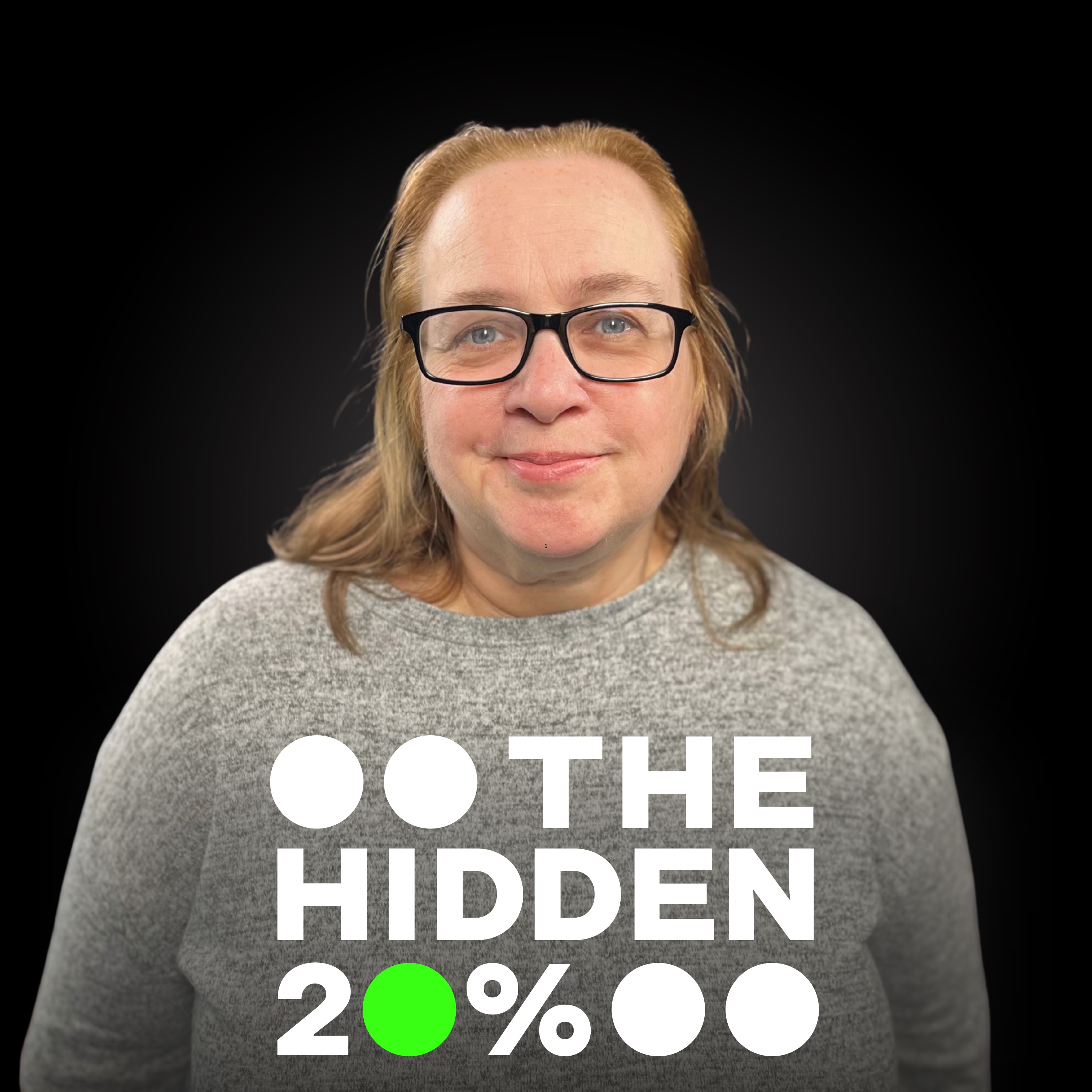
Education, diagnosis, and mental health for autistic children (especially autistic girls), focusing on why mainstream schooling often fails neurodivergent pupils, how EHCPs work in England, and alternatives like government neurodiversity training and Autistic Girls Network’s online school The Haven. It also covers bullying, suicide risk, and hidden factors like alexithymia and interoception, plus practical Q&A for parents.
Cathy Wassel is CEO of Autistic Girls Network and founder of Haven Online School. She is neurodivergent and has two autistic children, and she has a master’s in autism.
Teachers lack adequate SEND training; education system problems are systemic, not individual. EHCP access is difficult despite legal timelines; mainstream transitions can cause failure without enforceable support. Bullying and lack of appropriate mental health support contribute to distress in autistic girls. CBT and inpatient care may be unhelpful for some autistic people. Many autistic people experience alexithymia and/or poor interoception, affecting emotion/pain recognition.
EHCP took 18 months for her daughter and enabled specialist schooling, GCSEs, college one-to-one support, and university. She cites “94% of autistic kids are bullied” and “73% in mainstream” with only about “20% odd” having EHCPs. Haven (12–17, girls and non-binary) uses camera-off participation, recorded lessons/signposts, and a passion-led Friday project mapped to curriculum; it launched with “insect week” for new educators.
Written by AI. May contain mistakes.
Cathy discusses the deficiencies in the current education system for neurodivergent students.
“Today, I'm chatting with Cathy Wassel, CEO of Autistic Girls Network and founder of the Haven Online School.”
A discussion on who should be responsible for improving education for autistic children.
“just having a conversation about how late most dyslexic people are diagnosed.”
Explaining the Educational Health and Care Plan and its impact on students.
“Ultimately it has to be the government's responsibility because they have to ultimately fund it or at least they have to fund local councils to be able to fund it better.”
Cathy highlights the challenges faced during transitions to secondary education.
“And it brings a variable, depending on need, level of support for the child that can be legally enforceable.”
An overview of the Partnership for Neurodiversity in Schools initiative and its goals.
“I'm just sort of struck on the outside by, okay, well, more people are being assessed, more people are being diagnosed, there's more awareness, etc, etc.”
Cathy discusses a unique assembly initiative aimed at educating all students about neurodiversity.
“And so Autistic Girls Network has been involved in pins in three local authorities last year and five local authorities this year going into primary schools.”
Exploring the factors contributing to mental health issues in autistic individuals.
“You know, terrible statistics about bullying in schools and exclusion in schools.”
Learn about the consequences of late autism diagnosis and the need for societal change.
“they wouldn't have been abused, for example.”
Discover The Haven, an online alternative provision for neurodivergent youth.
“Yeah, so it has always been part of Autistic Girls Networks to set up some kind of alternative provision.”
Explore the unique curriculum and structure designed for neurodivergent learners at The Haven.
“And we will co-design that with you, the learner, and we will map it to aspects of the English and maths and science curriculum.”
Understand the accessibility features and supportive environment designed for students at The Haven.
“So I want them to be able to have that opportunity.”
Learn about the importance of nurturing neurodivergent identity and emotional strategies.
“And actually, there's no reason why it couldn't be, why there couldn't be an online form of state education.”
Delve into the concept of alexithymia and its prevalence among autistic individuals.
“putting strategies in place so you don't feel so exhausted.”
Discuss the difficulties autistic individuals face in identifying emotions and the implications.
“So research shows that about one in 10 people in the general population are alexithymic, but that between 50 and 70 % of autistic people are alexithymic.”
Explore practical strategies that can help individuals recognize emotions and improve communication.
“the family won't either because there's so little about it out there.”
Explore the challenges faced by autistic individuals in recognizing emotions and how alexithymia affects their emotional experience.
“If you know that your child has difficulty with this, you can start doing that and they can start building up almost like a mental library.”
Learn how a strong sense of social justice can manifest in autistic children and the importance of understanding social rules.
“but you're also ADHD, so you've also got that impulsivity and you're also alexithymia, so you can't actually identify what the emotion is.”
Discover how interoception impacts emotional awareness and bodily sensations in autistic individuals.
“and a teacher said to me, I've got a boy who's autistic and he's in danger of permanent exclusion because he's always angry.”
Examine how autistic individuals may experience pain and the implications for medical assessments.
“So it's quite a good way of describing it.”
Understand the educational rights and support options available for neurodiverse children, including EHCPs.
“And they don't understand how pain may present itself in a different neurotype.”
Learn strategies for helping autistic children cope with burnout and the importance of recognizing triggers and glimmers.
“How do you know if you should apply for an EHCP for an ND child with low support needs?”
Discuss the social pressures faced by autistic children and how to support them in navigating peer interactions.
Learn strategies for helping autistic children manage social situations without overwhelming them.
“She wants to go to a birthday party She wants to see people But then finds it incredibly tiring I know, it's very difficult Particularly with girls, I think because they so much need to be in that peer group.”
Discover how schools can improve their response to bullying faced by autistic children.
“It will depend on, it's a postcode lottery again.”
Understand the significance of special interests and how they bring joy to autistic individuals.
“Maybe we haven't talked enough about the positives and the wonderfulness and brilliance of autistic brains.”
Learn about the double empathy problem and the importance of mutual understanding in communication.
“And I absolutely found that with my daughter, who wouldn't have been able to cope with any kind of gig.”
Explore ways to reduce stress for autistic children by creating a supportive home environment.
“Because if you don't, then you're just falling into that same trap and they are still getting excluded and they are still getting punished for what is essentially an autistic trait that they have no control over.”
Learn how to appropriately communicate an autism diagnosis to your child.
“It's letting them be who they're going to be.”
Explore the struggles neurodivergent children face in the education system and the need for supportive environments.
“What's the one thing you would like her to do?”
Hear reflections on the conversation's importance and the hope for change in the educational landscape.

Get the gist, explore an idea or ask about something said.
 Claude
On The Hidden 20%, what are the key points of this episode?
Searching your listeningAutomatic transcript. May contain errors.
0:00Welcome to The Hidden 20%, our neurodiversity charity on a mission to rewrite the future for people who think differently. Together with you and an eclectic range of brilliant guests, we can break the cycle of silence by smashing outdated stereotypes, exposing the myths and sharing the most up-to-date truths about what it really means to be just different, not deficient. The best way you can help is really simple. Subscribe so you never miss an episode, and if you can, donate to our charity through the link below. Enough preamble. I'm Ben, your host. Let's get into today's episode. Today, I'm chatting with Cathy Wassel, CEO of Autistic Girls Network and founder of the Haven Online School.
0:49Neurodivergent herself with two autistic children, Cathy is on the front line, supporting autistic girls, women and their families, campaigning for earlier diagnosis and the urgent need for a more up-to-date education system. With both lived experience and a master's in autism, Cathy is the perfect guest to break down what's really going on.
1:17okay so welcome back this is part two with kathy and for this second part i'd love to get stuck into the education system why does the current education system not best serve autistics i don't think it serves any neurodivergent young person very well to be honest with you i think we were just having a conversation about how late most dyslexic people are diagnosed. And of course, we've already mentioned in part one about how late autistic girls are diagnosed. But equally, ADHD girls are also diagnosed really late. And I think it's the system that's the problem. It's not people that are the problem.
1:59A lot of teachers would really love to have training. In fact, there's been research done which shows that a lot of teachers don't feel they have enough training in SEND in general. Yes. So I think that there are a lot of people who really mean well and really want to do well and really want to help the young people that they are working with. You don't become a teacher to become rich and famous. You become a teacher because you want to help people. And so I think that more training would be a really good idea. Maybe mandatory training would be a good idea. but it would have to be the right training.
2:40And whose responsibility is this, Cathy? Is there parents involved? Is the school involved? Is local councils involved? Is the NHS involved? Is the government involved? Like whose responsibility is this? Ultimately it has to be the government's responsibility because they have to ultimately fund it or at least they have to fund local councils to be able to fund it better. I mean, who knows what's going to happen. this autumn. There's big announcements expected about SEND. I dread for what's going to happen to the EHCP process. Actually, only a very small number of autistic children in mainstream schools have EHCPs.
3:21It's not a big number. Yeah. 73 % of autistic children are in mainstream school. And I think only something like 20 odd percent of autistic children have an EHCP. Why is that? Well, why is it indeed? I mean, it's not an easy process. No matter what headlines anyone has read about it being the gold ticket of being able to get support. I mean, that's just not true. It's actually really hard to get an EHCP now. The likelihood is that your application will be rejected either at one stage. There's two stages where it can be rejected. It's very likely to be rejected at least one of those stages. But at tribunal, over 97 % of parents win, if you can call it that.
4:05There are no winners in this process. So what does that tell you? It tells you that local authorities are not following the law. Let's just break it down. What is an EHCP, Cathy? So EHCP stands for Educational Health and Care Plan. And it's a legal document in England. Doesn't exist anymore in Wales or Scotland or Northern Ireland. And it brings a variable, depending on need, level of support for the child that can be legally enforceable. And so just help people understand what is the benefit of having an EHCP? Well, I think that's probably a controversial question. I think for some, some EHCPs are not very well written and there isn't very much benefit.
4:47For some of them, you can struggle to get what's written into the EHCP actually happening. Yes. But for others, it can be a huge benefit. Certainly for my daughter, her EHCP, which took 18 months to get. And the legal statutory timeline is 20 weeks. So that was considerably longer than 20 weeks. And I think the number that are getting processed in 20 weeks now is very small. But for us, it actually really was worth waiting. She was out of school that entire time. But then it enabled her to get a place in a really lovely, small, nurturing specialist school, which enabled her to get GCSEs that she just wouldn't have done.
5:30It then enabled her to have enough confidence to go to college. The only choice for her was a mainstream college. that post-16 choices are so poor, but her EHCP gave her a one-to-one and that enabled her to be able to go to college and get a qualification, which then enabled her to be able to go to university. So for her, an EHCP, you might say, was life-changing. Yes. And there are many children for whom an EHCP is an absolute lifeline. And I don't use the word lifeline in a small way. I'm just sort of struck on the outside by, okay, well, more people are being assessed, more people are being diagnosed, there's more awareness, etc, etc.
6:18And yet, we are then putting in more blockers and more, oh, yeah, yeah, you finally are assessed and nope, you're not going to get any more help. Why are we not able to follow through? I suspect we're going to be having even more blockers soon, as I suspect that they may make EHCPs even more difficult to get. The actual legal requirements for applying for an EHCP are quite low. Really, you just need a special educational need or disability to be able to apply for it. That's the accessibility part, right? Yeah, you should be able to. The barriers are low. The barriers are fairly low, but in reality, they're not at all.
6:57In reality, the barriers are massively high. Yes. What we do see in our Facebook group is people saying, oh, her primary school were really great. They put all these things in place. It was fantastic. They really knew her. They knew how to support her. And then she went to secondary school and it all went wrong. The worst part is that we are expected to watch our children fail before support is put in. And that's what happens so often on transition to secondary school. Because the secondary school, it's not their fault. They don't know them. And if there's no EHCP in place, then there is no legally enforceable support in place.
7:38So what they say is, oh, we'll try. We'll see how they do with this. Well, you know, I can tell you. or that parent can tell you exactly how they're not going to do, how it will be really, really damaging for them to be put in that situation to fail. And that's what we see time and time again. You know, we're back to that February half term of year seven because the support hasn't been put in place. And of course, sometimes the overwhelm is so massive that even if the support is put in place, then it doesn't work. There are a lot of autistic young people who will not be able to manage in a secondary school of 3 ,000 students.
8:17Sure, sure, sure. It's just too big. It's too noisy. It's too overwhelming. So then where does PINS come in? So PINS is a program by the government, which is in primary schools in England, only England. And most local authorities are taking part now. It started last year and it's just going into its second year. And it stands for Partnership for Neurodiversity in Schools. and it's meant to change the narrative a bit. Of course, bring more support and everything, but also bring understanding and awareness. And so Autistic Girls Network has been involved in pins in three local authorities last year and five local authorities this year going into primary schools.
9:00It's not every school in the area, so schools have to volunteer to take part in it. And how have you found that process? It has been quite interesting. In one area, we noticed that knowledge about masking, for example, so one of our workshops for that local authority was about masking. Knowledge about masking was very low. Okay. Although they didn't perceive it as being low, which of course brings its own problems. And it's funny, I can't actually tell you the reason why that would be the case in one particular area. Yes. Other than, you know, they just haven't really had training and perhaps there had been more training in other areas.
9:38Yeah. What's the future for PINS then, do you see? I don't think anyone would be able to tell you the future past this year. Yes. There has been a similar programme called the Autism in Schools programme, which was in secondary schools. Okay. And also ran as a national programme for two years and then fizzled out completely. So, I don't know. I don't want to say what the future is for PINS after this year. Because I guess, and it's slightly whack-a-mole, isn't it? But you're sort of like, well, if EHCPs are not going to be successful and we don't need them anyway, then an element of the training and the education for schools, for teachers is another way of, I want to say, combating or attacking this.
10:24It's very nuanced and complex. And, you know, to a certain extent, like most things, revolves around funding. Yes. So, you know, some EHCPs don't have that much in that wouldn't be replicable. and you know there are hundreds of reasonable adjustments that you can make that don't cost any money at all however if you need a one-to-one support for example obviously that does cost a lot of money yes and what schools you know a real bugbear for schools is that local authorities don't put enough money don't put enough funding behind the EHCP to supply that one-to-one and then a school has to try and find the remainder of the funding themselves which when finances have been cut to the bone that's that's really really hard for schools as well so against this backdrop of challenges specifically for i guess autistic neurodivergent people within the quote-unquote traditional education system you've come up with a solution well i'm not sure i would call it a solution but we a different way of doing things we were very pleased because we had a school training called whole school neurodiversity and we've had it on our website for the last two years and no school had ever bought it because they didn't think they needed it I guess or they didn't have the money to pay for it I mean it wasn't very expensive but then I am going to name them because they did it Warwickshire commissioned us to do our whole school neurodiversity training but also to design an assembly and the assembly is for the whole school or some schools only want it for key stage two or some schools invite parents some schools invite governors and and you know dinner staff if they're able to come and that assembly is not about going in and doing an intervention which i hate that word to neurodivergent children it's about talking to everybody and talking to them about neurodivergence and difference not deficit and opening your mind to other people being different and different ways of experiencing the world.
12:26And Warwickshire, to their credit, not only commissioned it, but made it mandatory for all of their schools. And as far as I know, they were the only local authority to have done that. So each local authority had to pick a showcase to show at a national event and Warwickshire picked our assembly. And we did like a little five-minute excerpt of the assembly. And when we did that, the NHS team, funded by the Department for Education, but it's funneled through the NHS. They said that was the only piece they had heard about that was for children. Okay. I.e. not just the neurodivergent children. Yes.
13:00Everything else had been for adults, parents or teachers, which blew my mind a little bit. But that's who we need to be in front of. We need to be changing the stigma around being neurodivergent. You know, terrible statistics about bullying in schools and exclusion in schools. 94 % of autistic kids are bullied. Yeah. Why are we finding really alarming rates of suicide for autistic girls, Cathy? Well, it's not because they are autistic to start with. There is nothing about depression, for example, in the DSM-5, the diagnostic manual. Even though if you go to CAMS, you can be refused support in CAMS because you're autistic.
13:50but it's really down to how other people treat you, how other systems treat you, how often, especially if you're a girl, you're recognised. When I did my master's research, so many autistic women said that if they had been diagnosed earlier, they wouldn't have been abused, for example. And I think that there are so many societal reasons why it happens, but there is very little support and the support that there is is mostly based around CBT, which is famously not particularly good for some neurodivergent people. And inpatient care is also not clued up on autistic people and often makes them feel worse.
14:36You know, and so how do we change that? Well, we don't change it by changing the neurodivergent person. And we change it by talking to everyone else and making it much more, well, what word can I use? Acceptable to be neurodivergent because it's just another human being. I guess from the outside looking in, you're then taking all of that knowledge, all of that feedback that you're getting and going another step further in terms of accessibility with The Haven. Can you tell us about The Haven? Yeah, so it has always been part of Autistic Girls Networks to set up some kind of alternative provision.
15:15I kind of always assumed that it would be face to face, but an opportunity came up and funding is much smaller for online because we have no premises. And so we were driven by what was going on in our community. We could see how many, I mean, so many young people who had crashed out of the education system in really poor mental health, basically just not wanting to leave their house, you know, probably situationally mute, probably poor mental health. and we wanted to provide somewhere for them. And just like in our face-to-face groups, nurturing that kind of positive neurodivergent identity is really, really important.
15:57And there's so much power in getting together with other people who experience the world in the same way as you do. It's like a life transformation to realise that actually you're not weird and you're not broken and all of those things that you feel like. So that's what we decided that we needed to do and it needed to be online, but it needed to be different. It couldn't be like traditional education. So it has lots of other aspects to it. It does offer like a core academic education, which can lead to GCSEs or functional skills, if that's what you want to do. It also has a Friday session, which is our passion-led, project-led day.
16:39And that is a co-designing, a five-week project that's on something that you're really passionate about. Whatever it is. I don't care what it is. It could be anything. And we will co-design that with you, the learner, and we will map it to aspects of the English and maths and science curriculum. We have a competency framework that we've designed attached to those curriculum. And we want you as a learner to be very much in charge of your own learning because autonomy is so important for neurodivergent young people. What age is the haven for? 12 to 17. 12-17 and this is as an alternative to going to school?
17:19So most of our young people will either be home educated and they want a bit more structure before GCSEs or they will have an EHCP or they will use it as EOTAS education other than at school. So they will have that written into their EHCP or they're using it as alternative provision, which needs the agreement of the school that they're on roll at because that school still has their legal safeguarding. Yes. And so you've just gone live. I know you've had a busy week. Yeah. So this week has been our insect week for our new educators who at the moment are all neurodivergent themselves. I'm not promising that that'll always be the case.
17:58And yeah, we start on Monday. People just from the UK? No, we have someone from Denmark who's starting on Monday. I've had inquiries from Australia. At the time I said no, but actually we are trying to think of a way that we could do that. So we're doing live lessons and obviously with the time difference, Australia does not work. But if we could find another way to do it as well, then we might be able to do that. And what kind of capacity can the haven have? At the moment, we've started pretty much at capacity for where we are with the funding that we've got. We don't have investors, we're just funding it from the charity.
18:33So we need to start small and grow sensibly. And what's the goal? The goal is to make them happier, to improve their wellbeing. The goal is much more about wellbeing than about academics. But I know that many of them do want to do GCSEs and ultimately do want to do A-Levels and do want to go to university. So I want them to be able to have that opportunity. I would love it if we didn't have that system and that we didn't have a system that automatically fails a third of people that take the exam and that we could have a system that was all project led and passion led. And our learners could use their digital portfolios that they will create and use those to get into university.
19:18That would be fabulous. But we're not there yet, sadly. And what differences or accessibility pieces or adjustments have you designed into the Haven for people? So the Haven is only for neurodivergent girls and non-binary young people. So it's kind of automatically got a lot of things that are just, are normal, what we'd like to say. But, you know, for a start, cameras, you don't have to turn your camera on. You don't have to speak. There are other ways to engage. which what our responsibility is, is to create a psychologically safe space where you feel able to turn your camera on and you feel able to speak.
19:56And I'm really confident that that will happen because in our groups, it's very common to have a highly, highly anxious young person who joins us and maybe has to have their mum with them or, you know, doesn't say a word for the first session and by the third session, you can't shut them up. So, you know, we're quite used to that. And I suspect that we will get there. There's various accessibility design in the tech. So you can change the background to have like different colour backgrounds. You can change the font, you can change the size of the font and everything like that. Things are available in various formats.
20:32So if there's videos, they'll have transcriptions. So no matter what the way you process things, there should be something that works for you. And do people pay for this? People have to pay, unfortunately, because we have to pay our teachers. It would be great if it could be part of state education. And actually, there's no reason why it couldn't be, why there couldn't be an online form of state education. And do you record things so that people can catch up? Yes. So we record our lessons or we provide signposts to where they can find the same. We don't always put a recording out there because a young person might have said something that we don't want other people to hear.
21:17But there's always ways to catch up on things that you might have missed. Yeah, it's great. I think it's all just about providing another space, right? Another option or another pathway within the sort of Autistic Girls Network where you can feel supported, where you can go. It doesn't have to be face to face. It can be online. Yeah, and we have different strands of it as well. So we have a strand where we're really nurturing that neurodivergent identity and talking about things like energy accounting, putting strategies in place so you don't feel so exhausted. We talk about things like alexithymia, which is difficulty talking about emotions and identifying emotions.
21:57We talk about lots and lots of different things, including things like managing money and all of the preparing for adulthood things, which everyone should be doing post-14, but doesn't happen generally in mainstream schools. And also about entrepreneurship, because there are so many, as you know, so many neurodivergent entrepreneurs and also such dire statistics around employment, particularly for autistic people, that giving them that head start feels really important. Let's just talk a little bit about alexithymia. it's something that I can relate to in the sense of I didn't grow up learning about feelings and I certainly didn't talk about them and I certainly didn't have any idea how to identify them and so it's kind of pappy or not that was as simple as it needed to be I know intellectually what feelings are I know there's loads of different feelings it's something I noticed with my middle daughter this happy, sad, scared, angry, and is often her frame of reference.
23:09She's autistic, so I'm not surprised by that. But I actually think it's probably also my frame of reference as well. What do we know about alexithymia and autism? Well, we definitely don't know enough about alexithymia. Another thing we need to research more. So research shows that about one in 10 people in the general population are alexithymic, but that between 50 and 70 % of autistic people are alexithymic. So there's obviously a huge number more, and I suspect it might be higher than that. And if you're alexithymic, then I suspect it's also a spectrum. But again, I haven't seen any research saying that.
23:49and if you are pretty alexathymic then yes you may only recognize those early developmental emotions happy sad fear anger and what we quite often get people saying in the group and certainly what my daughter used to say and sometimes still does say at 20 is mum why are you angry with me yes and what's happening there probably I'm not in someone's brain am I but what's probably happening is that they're looking at the context of the situation and they're assessing okay she's not happy because she's not laughing or smiling she's not sad because she's not crying she's not scared because nothing has happened to scare her so the only one left is anger and of course sometimes you might be angry with your child but it's more likely that it's something else if you think of it on like a feelings wheel you know that you often see illustrated and you have happy sad fear anger in the middle, out of anger, you'll get like a section of that wheel, which has much more nuanced emotions like frustration and disappointment.
24:56Inpatience. Yeah. And all of those kinds of things. But those are too nuanced for my daughter to recognize and it can cause huge issues. So what therefore, when a parent or a young person asks you, hey, this whole feelings thing, how can I be better at spotting what I'm feeling? It's really important for families to know. It's really important for the young person to know if they're alexithymic, but also it's really important for professionals to know because bad things happen when they don't know. So for example, something like a child is a child in need. So they have to have regular meetings with CAMHS and social care in this case, shall we say.
25:47And that child tells a CAMHS practitioner, my mum's always angry with me. Now that gets written down on the file and that's brought up a year later in a bad way. Yes. You say, oh, you're always angry with me. And that causes huge problems for neurodivergent families when professionals, A, don't understand alexithymia and probably never even heard of it. the family won't either because there's so little about it out there. I certainly didn't know about alexithymia years ago. The child doesn't know that they are because nobody knows. And there is the potential for, you know, really dangerous things to happen when professionals just aren't aware of these things and they make assumptions in a neurotypical framework about what that means.
26:38Yeah, child says parent is angry. Yeah. when actually it should be the default. Once we know that child is autistic, every professional around them, education, health, social care, should default to, okay, they're probably alexithymic. It's more likely than not statistically that they are alexithymic and therefore you should then understand that they might not be able to identify those emotions. I'm trying to think if within the autism sort of assessment or the DSM, whether there's anything in there around feelings and recognising them? Well, I mean, there's ways you can improve things. You know, you can start narrating.
27:24I mean, it helps a lot if you're not alexithymic, but what you can do is you can start narrating your own emotions according to context. Yes. So let's say, for example, you get a job rejection letter in the post. You can say to your child, I mean, we're presuming that it's a child. You can say to your child, I just got this letter. I'm really disappointed. You know, I didn't get the job and that makes me sad. And then it's not going to change anything overnight, but it gets marked down mentally. Yes. In that context, that emotion is disappointment. Yes. If you know that your child has difficulty with this, you can start doing that and they can start building up almost like a mental library.
28:08of emotions and context and attaching them to them. Can you learn this? Can you learn to recognise feelings? I think you can learn to recognise what happens in certain situations. I don't think that always means that you can recognise feelings. So that's spotting patterns, right? Yeah, which of course we're good at. But whether you can always recognise feelings in yourself or in other people, that's probably more difficult. And of course, many of our cohort will be hyper empathetic and may be able to take on other people's emotions. But if you are alexithymic, autistic, ADHD and hyper empathetic, which I used to call the triangle of peril before I realized there were four things.
28:52But the square of peril just doesn't sound so good. That can bring dangerous things because what's happening is if you're not alexithymic, and I'm not, if I'm getting really stressed, I can put strategies in place to do something about that. Yes. But if you're alexithymic, you may not be able to feel that buildup of huge emotion. And then what happens is you only feel it once it's so big that it whacks you over the head. And then all your brain is saying then is, this is terrible. I have to make it stop. but you're also ADHD, so you've also got that impulsivity and you're also alexithymia, so you can't actually identify what the emotion is.
29:32It might be something terrible. And so you do something impulsive that you might later regret. And this is why we think it's so important. Alexithymia pops up in all our school training now, I think. No matter what we're training about, we talk about alexithymia, but we also talk about it in our groups because it's really important for that young person if they're alexithymic to know what's happening because otherwise you don't know what's happening and you can tell that your peers have more understanding about it than you do and you know there's something going on that you're not grasping. But if you realise that you're alexithymic, then when that bad thing happens, yes, it's still really bad.
30:12Yes, your brain still says, this is terrible, I have to stop it. But you can also think, okay, I know why this is happening. I know that I can ask somebody about it. I know that it will stop in an hour or, you know, whatever it might be. I don't know when I'm shut down until I'm in a shutdown. And usually then my wife points it out to me because I just go silent. I just don't want to talk. But there must be a relationship also between shutdowns and alexithymia. Or it sounds like, it feels like there is. Very possibly. There's loads more research that could be done into alexithymia. But if people just understood that it even existed, that would help.
30:57I was doing some school training. We'd covered alexithymia because we cover it in everything. And we'd also covered a strong sense of social justice as an autistic trait. And the reason why that's important will come up in a second. And we always have questions. We always have a lot of questions at the end. and a teacher said to me, I've got a boy who's autistic and he's in danger of permanent exclusion because he's always angry. How do we change his anger to disappointment? Okay. And I said, I have no idea how you would change anyone's emotion to a different emotion no matter what their neurotype is, but why is he always angry?
31:42And she said, oh, just school. I'm like, no, we need to think of what's actually happening. What are the triggers for when he gets angry? And one of them was that he was playing in the playground. So I'm presuming it was primary age. With other boys, they were playing football in the playground and the other boys were cheating and he was getting upset about it. And so I said, look, what happened to the other boys? Was there any consequences for the cheating? No, just playground banter. And I said, okay, well, we've just talked about a strong sense of social justice. You know, what's going on there?
32:19There's two boys that are cheating and there's a boy who's upset about the cheating. Who's in the wrong there? And, you know, they were like, oh, okay, yeah, actually. I said, you know, he has a strong sense of social justice. As far as he's concerned, this is massively unfair. They are getting no consequences for cheating. and has anybody sat down with him and said it's an unspoken social rule that it's okay to cheat in the playground but it's not okay to cheat in the classroom and it's not okay to cheat in exams because otherwise how is he supposed to know that? He will not have picked it up because he's autistic and it's an unspoken social rule.
32:59Talking about another hidden, unaware side of this, what is interoception? So interoception is how we feel things in our body. So that might be physical sensations, but it might also be emotions. So the way I usually describe this, I use the stomach because we feel a lot of things in our stomach. So it's quite a good way of describing it. And I suppose one of the cliches about a classical autistic presentation is that you don't know when you need to go to the toilet. And that is an interoceptive thing. It's poor interoception. And nerve endings within organs in your body are not sending the right signals to your brain.
33:39And so you can't feel that you need to go to the toilet, which of course you would feel in your stomach. But you also feel lots of other things in your stomach. You feel hungry. To a certain extent, maybe you feel thirsty. You feel a bit poorly. You have an upset stomach. You feel... Fear, fire in the belly, anger. I mean... Those emotions. We talk about butterflies in the stomach. You feel excited. You feel, yeah, as you say, angry and fearful. You feel all those things in your stomach. But if you actually can feel that something's going on, but you can't identify what it is, then that's quite scary.
34:14And often poor interoception is very linked to alexithymia. What's the impact of poor interoception? I think there's quite a lot of impact because for a start, if you were having a heart attack, that might also be in the region of your stomach, roughly. And so if you don't know what's going on, your brain might be telling you, I could be having a heart attack. So that's actually really scary. And it also means that if you ignore those signals enough, you might actually be having a heart attack, but not do anything about it. And I know that's quite an extreme example. But it takes me to thinking about feeling connected to my body.
34:52And it takes me to, I don't know, whether it's injuries that you don't necessarily feel or cuts that I've historically found. I put something on Twitter years ago because I had taken my daughter to the doctor for a back pain and he happened to look in her ears. And I guess he was just being thorough. And he said to her, do your ears not hurt? She said, well, she didn't say because she was situationally mute, but her ears didn't hurt her. She had raging ear infections. Her ears were bright red. And he couldn't believe this. And I said, you know, autistic people can experience pain in a different way.
35:28And obviously in her brain, the back pain was taking over her sensory sensitivity, you know, and she didn't actually feel the ear pain, which is very ironic because when she was a small child, she had constant ear infections and her ears perforated 20 times. So she certainly felt ear pain then. And I certainly bore the lack of sleep. I had so many people reply to that post to say, I've broken my leg and I was walking on it for a week or I had an appendix that almost perforated because nobody thought that I needed to have an x-ray because my face didn't look like I was in pain. Yeah. This is, you know, a huge issue because we have medical professionals who have been trained in a neurotypical framework.
36:13Again, we're back to that. And they don't understand how pain may present itself in a different neurotype. And they make assumptions based on what people look like. What do they say when you say on a scale of one to ten? Yes. How much pain are you in? Well, how do I know? Yes. How do I know what that scale is? Yeah. Maybe I have EDS, Erlodanler's syndrome. Maybe I'm always in pain. Yes. What does that mean? Maybe I have a really high pain tolerance. Yeah, exactly. So those kind of assessments make too many assumptions that don't necessarily take into account a neurodivergent experience of pain.
36:51And therefore that means you may not get referred to the consultant. You may not have that x-ray. You may not be given those antibiotics. All of those things might happen. And then, of course, there's also the other kind of diagnostic overshadowing of having EDS and nobody knowing about it, of being hypermobile and nobody knowing about it. You're hugely more likely to be hypermobile if you're neurodivergent. Throw in a whole level of masking and, yeah, even more hidden. Yeah. We're back to the need for more training. Yes. Speaking of training and education, I've got a load of questions from a wonderful community that I'd love to run through with you, if that's OK.
37:38Yeah. First question. I feel like I'm a masked mind. How do you know if you should apply for an EHCP for an ND child with low support needs? The school says there's no point, but I want to do my best for my child and get them all the support they need. Where do I start? So really, you need to think, does your child need more support than other children in the class? And is that support going to need to be replicated elsewhere? Or is that support going to be really missed if, for example, the headteacher leaves, which we have had quite a few posts about in our group, the headteacher leaves and decides that neurodivergence doesn't exist and therefore removes all of the support that has happened?
38:26I hope it's very rare, but it has happened. And so in that case, you may need an EHCP. Many people are told not to bother. I was also told not to bother. And then I've already said what an EHCP made a difference to for my child. And it can make a huge difference. So I would say don't be too put off by saying you don't need it, but do listen to them because they do know what they're talking about. You don't have to wait for school to do it for you. You can apply yourself. Ipsia, I-P-S-E-A, has lots of resources about EHCPs and a template email for how you can apply yourself. Love that. What legally are the rules about my ND child going to school?
39:13If they are refusing to go and I'm thinking about homeschooling, what are my next steps? So if you want to homeschool and you want to be in charge of it yourself and you don't want the state to pay for it, you can deregister your child. It's more complicated if your child has an EHCP. You have to kind of get permission to do that then. But if your child doesn't have an EHCP, then you can just write a letter to the school and say that you want to deregister. There then may be certain steps within your local authority where they would like to get some kind of oversight over what's happening. But basically you can do that.
39:49It's just you need to make sure that your child is educated. You don't have to send your child to school. How to manage burnout in my child? How much to push, not push? Low demand options to entertain without worsening? worsening? So this is going to be kind of a like, how long is a piece of string question? Because it kind of depends how much burnout that we're talking about and how serious, you know, if there is serious mental health crisis going on. But in general, burnout, you know, for some people might be a week. For some people, it might be two years, you know. So we're talking about very different things in different people.
40:30And in general, there's nothing you can do to force burnout to stop you know you kind of have to just chill and be relaxed and allow rest allow them to like lie on the sofa or whatever they need to do really be led by them on what you know it's a little bit like energy accounting but in a much more extreme version so in energy accounting we're looking at identifying what triggers are. So what diminishes your energy and what replenishes your energy? And so triggers are obviously bad things, things that we find really difficult to cope with. And what many people call glimmers is what things we find joyful, what things we find replenish our energy.
41:21And that's going to be different for everybody. I can't tell you what your triggers and glimmers are. But what I can say is if you balance them and if you have more glimmers than triggers, then you will start to feel less anxious and you will start to feel like you've got more energy, which means that you will start to come out of burnout, but it can't be forced or pushed. That actually gives me a question, Cathy, while I have you How do I, as a parent, as a father, best manage this You know, with River, my six-year-old She's autistic, she wants to socialise She does socialise She wants to go to a birthday party She wants to see people But then finds it incredibly tiring I know, it's very difficult Particularly with girls, I think because they so much need to be in that peer group.
42:15And I had exactly the same with my daughter, you know, constantly being asked, can I stay an hour longer? Or, you know, can I go back to their house after school? Sleepovers. Yeah, and really, really needing to be involved, you know, which is kind of like a form of masking, of course, because you desperately want to fit in, but it being so exhausting. And it's very, very hard when she's six because she doesn't have the capacity to be able to assess how exhausted she's going to be and to make sensible decisions about how to. So in a sense, you have to do that for her. But even the excitement, the anxiety, the questions leading up to a social occasion and then her either just not wanting to actually then be in the social occasion when it gets there of like the idea of the occasion being high energy exciting but then sometimes the reality of the occasion is sensory overload no thank you don't want this or the occasion is just so full-on and then afterwards it's meltdowns and I'm really painful for her I mean, I think to some extent, energy accounting can help you there because what's really the basis of energy accounting is that you think about your whole week or even your whole month.
43:39You don't just think about the one day. So if she has a birthday party to go to on Thursday, then you make sure that on Wednesday and on Friday, she's very chilled and she's doing the thing. So you've done your chart, you've figured out what her triggers are, which will be like this sensory overwhelm of the birthday party. And you figured out what her glimmers are. So on the Wednesday and the Friday, she's doing things that replenish her energy, whatever that is. You know, for my daughter, it's pacing and listening to music, watching the same TV program over and over. For your daughter, it will be something completely different.
44:11But you almost timetable it so that she's doing those things that replenish her energy around the thing that's difficult. Yes. That doesn't necessarily change how difficult the actual event will be for her, but at least it enables her to participate a bit more and it lessens the fallout from the sensory overload. It's just little things, isn't it? Like, well, not having a play date in the afternoon, do that in the morning because otherwise the whole morning leads up to the play date. And you perhaps doing more things where you're in charge of what's happening so that you can arrange it so that it's less of a sensory overload.
44:50Yes. But she's still seeing her friends. And it depends how much she wants to feel different as well, because, you know, we know that they never want to stand out. And so she may not want to wear noise cancelling headphones, for example, or things like that. In a way, it's easier once they get to the stage where they can make the decision to do that because they know how much easier it is for them. Yes. But I appreciate that she's not likely to be there yet. Can our school refer my child for an ADHD diagnosis? Yes. Well, I say yes. It will depend on, it's a postcode lottery again. So in some areas, only schools can refer.
45:29In some areas, only GPs can refer. So either your GP or your school can, but it depends where you live. Okay. How can schools respond better to autistic bullying without causing more harm? Oh, that's a very big question. And my son was terribly bullied in his primary school and they were lovely, but they didn't really do anything about it. I think things like having this whole school awareness of what neurodivest is, is a big way to doing things about that. So you are educating your whole school, not just the children either, but you're educating them to understand difference and to understand why, you know, they might not get those unspoken social rules or they might not pick up on some social cue that is obvious to everyone else but is not obvious to them.
46:20Things that make them seem a little bit different and make them stick out a bit more and just building tolerance for that, I think, goes a long way to it. What they can actually do about it at the moment and while it's happening, I mean, I think that very much depends on schools, but certainly they should be taking it a lot more seriously than most schools do at the moment, even when they say they have a zero bullying tolerance. Yes. And it's the integrated understanding for the whole school, like you say, rather than, oh, great, the autistic person understands about autism. Well, so what? Although often they do need to understand more.
47:01But what they need to understand is the good things. You know, because there are so many good things about being neurodivergent. Absolutely there are. We talked a bit about some of the difficulties and the challenges. Maybe we haven't talked enough about the positives and the wonderfulness and brilliance of autistic brains. Can you just talk to me a bit about that joy? Do you know who illustrated it really beautifully? was Chris Packham. In one of his programmes about autism, he went for a walk in his favourite wood and he talked about the sensory experience of being in nature and, you know, really seeing everything and seeing every detail on a leaf and all of those things.
47:45A lot of that brings joy. My husband did research on autistic joy, which was published earlier this year. And in his respondents, loads of them talked about joy in nature, loads of them talked about music, being really joyful and special interests particularly or passionate interests, being a real source of joy and being able to talk about your special interests, which is essentially what I'm doing now. Just being able to talk about them being so important. And that's why I said to parents, don't dismiss your child's special interests. You might be fed up with them bending your ear for 10 hours a day about whatever it is.
48:26I did have a girl that I interviewed for my master's, I think, who had a special interest in something. I'm not going to say what it is. And every single question I asked, none of which were related to her special interest, she managed to get that special interest in there. And I did think, wow, that must be quite intense to live with. But it gave her so much pleasure to talk about that. So if you are dissing somebody special interests you're taking away all of that joy and there is such a lot of joy in it yeah and even things like we often get asked about music actually which is interesting because it came up really highly in my husband's research which was basically about autism and autistic joy it came up really highly music is so important to a lot of neurodivergent not just autistic people but one of the things that we get asked quite a lot in schools as well as families is how can my child who's who's older and you'll see why how can they want to go to a concert or a gig when they have massive sensory overwhelm how can they cope with that and the reason is probably the only reason is they have such joy from that music that everything else is you know secondary And yeah, it might be really difficult and they might have to put strategies in place to deal with it.
49:48But the joy of the music is what's so important. Yes. And I absolutely found that with my daughter, who wouldn't have been able to cope with any kind of gig. But for her favourite music, she could. How does this relate to then double empathy? So the double empathy problem was thought up by a neurodivergent researcher called Damien Milton, who's fabulous. and basically it says that communication is a two-way street. There's lots of research which says that autistic people don't communicate very well and unfortunately it is about autism rather than about neurodivergence. Autistic people don't communicate very well with neurotypical people.
50:26But the same research says that neurotypical people don't communicate very well with autistic people. You know, it's a two-way street. It's like a seesaw. If it's unbalanced, it's not going to work properly. But our society has made it unbalanced because our society says that we have a deficit. And it's in the DSM-5 as a social communication disorder. And so autistic people are called disordered for their communication. But actually, it's just a misunderstanding. It's miscommunication on both sides. It's like the signals aren't getting through. And so that's something that we talk about a lot in our training is you need to understand autistic communication or neurodivergent communication in order to understand what's going on with your pupils.
51:12Because if you don't, then you're just falling into that same trap and they are still getting excluded and they are still getting punished for what is essentially an autistic trait that they have no control over. Cathy, what simple changes can parents make at home to reduce daily stress for an autistic child? So you mentioned a little bit about a low demand environment and a low sensory environment. Those are the biggest things. And what I mean by that is creating a space where you aren't constantly asking or not even just asking because demands can be implicit. Demands can be unspoken. You can just look at your child and they know that at nine o 'clock at night you're expecting them to go upstairs and brush their teeth, for example.
51:58That is also a demand. Putting food on the table in front of them is a demand. You know, so just kind of creating a much lower demand household, creating a household where it's perfectly OK to go and pace in the garden 10 times a day, if that's what regulates them. Creating a space where you're not expected to constantly go to clubs every night or they might like that club, in which case that will be a glimmer for them. but they might not. Understanding your child, figuring out what their triggers and glimmers are so that you can help them create a balance but also really understanding how important their special interests are.
52:38Understanding monotropism which is our brain kind of is in this attention funnel, attention tunnel. Understanding how important and how joyful it can be to talk about your special interests and not dismissing them or not, you know, which I have been guilty of in the past as well. My son loves Star Trek and really there's only so many times that I can watch an episode of Star Trek, but he can watch them infinitely. But it's the societal norm of like, let's watch something different. Yes. Or let's try something different. Yeah, and understanding how comforting it is to be able to listen to the same song over and over again or watch, you know, an episode of Friends over and over.
53:24You haven't got there yet, but you'll be there. I have with our 13-year-old. She absolutely loves Friends. Yes. But interestingly, I've noticed, and I'm also guilty of this at times, of saying to my daughter, for example, this week started a new school. Big, big time. Leading up to it, now in reflection, notice she went back to watching a lot of Paddington Bear. She'd moved on from Paddington Bear, but actually safe place, familiarity. And this time, I'm glad, I didn't even say anything about the fact it was Paddington Bear. Oh, why have you, come on, watch. I thought you'd gone and moved on from that.
54:02Or Peter Rabbit. She'd gone back to... The comfort. Yeah. It's letting them be who they're going to be. Yeah, and not necessarily thinking of them by the same, you know, neurotypical ideas of what is right. Yes. What is the right way to play? What is the right social development? You know, letting them be themselves. And if they want to have a cuddly toy or a bed full of cuddly toys when they're 15, well, what's the problem? Yeah, as Mel Robbins would say, let them. I've got two more questions, Cathy. One more is from our community, which I think is a good one. What should parents say or not say when their child receives a new diagnosis?
54:45Well, for a start, don't hide it because when they do find out, then they'll think that you were ashamed of it and they'll think it's a bad thing. And it's definitely not a bad thing. Just be matter of fact about it. And also maybe think about your own neurodivergence too. But that's perhaps another question. But yeah, there are much more than there used to be resources. There's programs like A Kind of Spark or Geek Girl, which they are for older children, not for really young ones. But there are books that are decent neuroaffirmative books. That question comes up a lot in our Facebook group. So you could do a search in our Facebook group about how to tell your child.
55:24Your child has had an assessment to get to that point. They will have known that something is going on. So just be matter of fact about it and don't hide it. Yeah, I'm totally with you on that. Last question. Who would you like to give your green badge to? So I've thought about this and I would like to give it to my MP, who is Manuela Portagela. And she is the MP for Stratford-upon-Avon. And she's a very nice woman. She's been to one of our groups, but also she is on the Education Select Committee. So I hope that she can affect change in a good direction. What's the one thing you would like her to do?
56:06The Department of Education, no, already. the situation around mental health and emotionally based school avoidance, whatever they like to call it at the time, and just how many neurodivergent young people cannot, not will not, but cannot go to school. But it's being willfully misled in media, in policy. I would like her to really get them to understand how our education system is affecting neurodivergent mental health and why places like the Haven have a need to exist. I wish we didn't need to exist, but we do because the education system is really being so destructive to neurodivergent young people.
56:56Thanks so much, Cathy. Thank you for having me. It's been so great talking to you and listening to you And I sort of feel like, and for our listeners, you've lived through this of a neurodivergent family, neurodivergent children, the education system, the support, the missed section of society. yeah what's going on at all levels within the education system I guess it's been brilliant to sort of be able to just ask you loads of questions like our questions other people's questions and just hear from someone who's yeah been through all this I'm just glad people are interested in it because it means they want to effect change yeah and I'm hoping I'm sure people are going to take away a lot from yeah from hearing you today so thank you thank you
57:57That's it for today's episode of The Hidden 20%. But just before you go, a favor. The Hidden 20 % is a charity and we do this to bring you the truth, the latest research and the real stories that matter. So if this episode spoke to you, then please hit subscribe. And if you can, donate via the link below. Finally, a big shout out to you all for listening and our brilliant team who make this all happen. Phoebe, Charlie, Kristen, James, John, and the guys at TYX Studios. We'll see you next time.
In this second part of the conversation, Ben is joined again by Cathy Wassell - CEO of Autistic Girls Network, founder of The Haven online school, and author.
The focus shifts to solutions: changing education, understanding the hidden side of emotions, and tackling the mental health risks autistic girls face. Cathy brings clarity and compassion to topics like Alexithymia, Interoception, and the realities of school life.
She also answers listener questions on EHCPs, burnout, school refusal, and diagnosis, before closing with her vision for a fairer future rooted in authenticity and the joy of autistic brains.
CW: This episode contains references to mental health and suicide.
NB: All information was relevant at the time of recording.
Join us at hidden20.org/donate.
_________
Host: Ben Branson
Production Manager: Phoebe De Leiburné
Video Editor: James Scriven
Social Media Manager: Charlie Young
Music: Jackson Greenberg
Head of Marketing: Kristen Fuller
The Hidden 20% is a charity founded by ADHD & autistic entrepreneur Ben Branson.
Our mission is simple: To change how the world sees neurodivergence.
No more stigma. No more shame. No more silence.
1 in 5 people are neurodivergent. That’s 1.6 billion of us - yet too many are still excluded, misunderstood, or left without support.
To break the cycle, we amplify voices, challenge myths, and keep showing up. Spotlighting stories, stats and hard truths. Smashing stereotypes through honest voices, creative campaigns and research that can’t be ignored.Every month, over 50,000 people turn to The Hidden 20% to feel safe, seen and to learn about brilliant brains.
With your support, we can reach further, grow louder, and keep fighting for the 1 in 5 who deserve more.
Join us at hidden20.org/donate.
Become a monthly donor.
Be part of our community where great minds think differently.
Brought to you by charity The Hidden 20% #1203348
______________
Follow & subscribe…
Website: www.hidden20.org
Instagram / TikTok / Youtube / X: @Hidden20charity
Ben Branson @seedlip_ben
Cathy Wassell @autisticgirlsnetwork
If you'd like to support The Hidden 20%, you can buy a "green dot" badge at https://www.hidden20.org/thegreendot/p/badge. All proceeds go to the charity.
Hosted on Acast. See acast.com/privacy for more information.


