
 Ask ChatGPT


 The Hidden 20%
26 Nov 2025 · 41m · 16 chapters
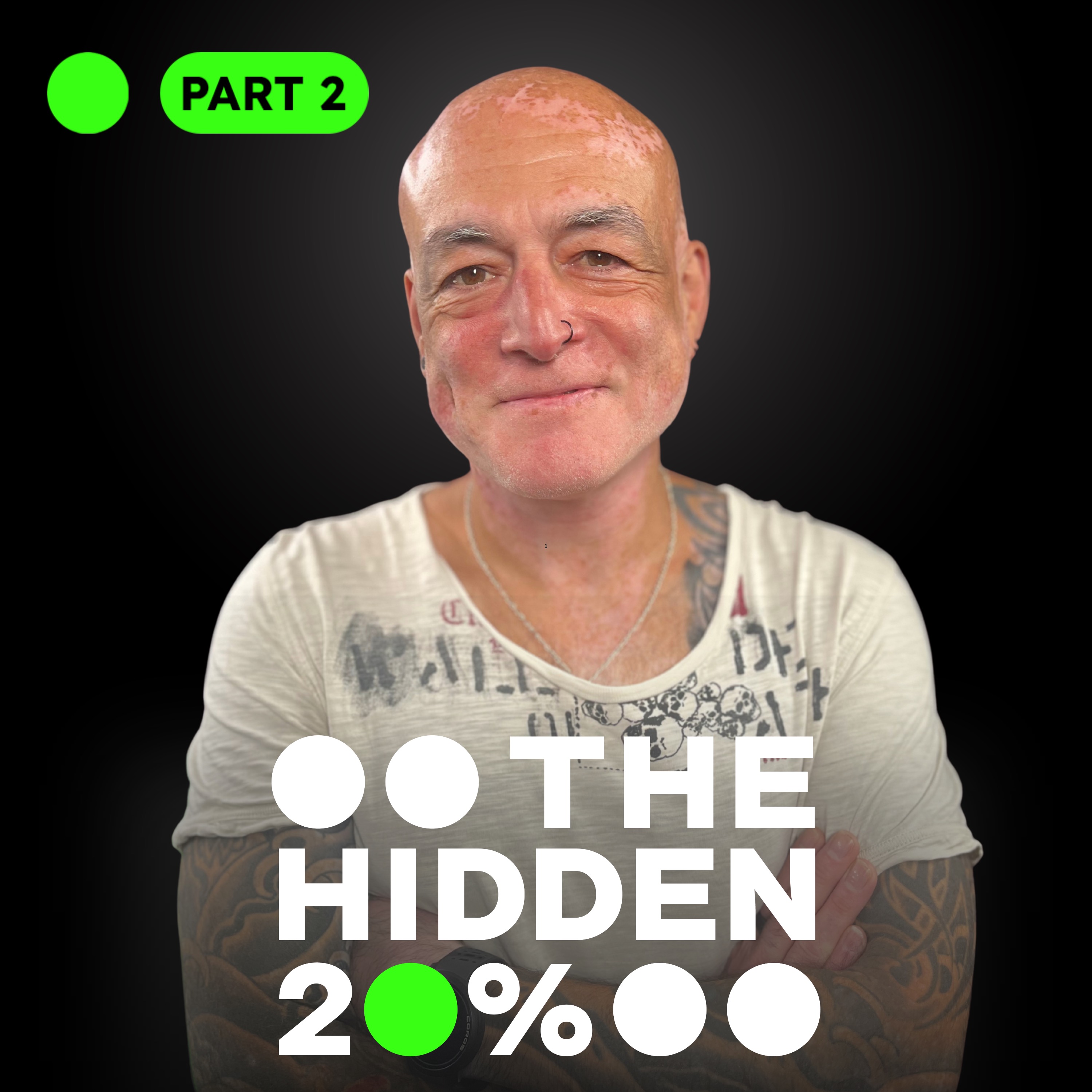
Autism isn’t the problem; education and other systems create barriers. Dr Luke Beardon argues for “autistic courtesy” and “autistic safety,” using universal design and choice to reduce anxiety and prevent discrimination. He also critiques UK/UK-influenced training and clinical/education content that perpetuates autism myths, and discusses autism and criminal justice—arguing some people are criminalized for autistic behavior due to non-autistic legal assumptions.
Dr Luke Beardon is a senior lecturer and autism lecturer teaching autism courses (online and in-person). He works in education and has researched autism in the criminal justice system.
Anxiety levels affect learning; teachers must reduce arousal. One-size-fits-all teaching disadvantages autistic students; more choices reduce discrimination risk. Autism-specific qualifications should be prerequisites for professionals working directly with autistic people. In criminal justice, autistic people may be disadvantaged by law wording (e.g., “reasonable man”) and lack of reasonable adjustments.
A student allowed to knit during class; a student who graduated without writing by using presentations/interviews; using Teams invites, captions, headphones, and chat Q&A to remove sensory/spotlight barriers; a child stressed for two terms to attend assembly; autistic people convicted of “harbouring stolen goods” after being manipulated by “friends”; school-shooter headlines misread as evidence of autism causing crime.
Written by AI. May contain mistakes.
Host Ben introduces the episode's focus on education and autism.
“Let's talk about the classroom and education and your work there, Luke.”
Dr. Luke Beardon discusses his inclusive teaching methods for autistic students.
“When we did a briefing call with you, you were telling me, I guess, about your approach to working with autistic people, autism and education.”
The importance of autistic courtesy and creating a safe learning environment.
“And you can see the kind of juxtaposition between what's that strange hobbit-y looking fellow on the floor?”
Dr. Beardon emphasizes the role of teachers in minimizing anxiety in students.
“What I am going to do, hopefully, is to create a semblance of autistic safety so that that's a space that individuals can come in feeling heard before they've even been met.”
The discussion highlights the need for flexibility and choices in educational settings.
“but proactively saying, no, wander around.”
Dr. Beardon explains sensory challenges faced by autistic students in mainstream education.
“Three top tips, Luke, for supporting pupils in the classroom.”
Discussing practical adjustments to support autistic students in learning environments.
“And then I've replicated that to parents say, look, it might be that you've got to go in full guns blazing saying you need to change your attitude.”
Learn how simple adjustments can significantly improve educational outcomes for autistic students.
Discover the importance of recognizing neurodiversity in the context of history and education.
“But if you agree with that kind of notion of if you only deliver things in one way, then some people at the periphery will be disadvantaged.”
Examine the inadequacies in professional training regarding autism in the UK.
“They were the ones who travelled from A to B where nobody else did.”
Understand the challenges in how autism is taught and perceived in academic settings.
“That's just the examples that I'm aware of, of people.”
Explore how the UK's understanding of autism compares to other countries worldwide.
“but DSM-5, there were a bunch of people that came together in 2013 and came up with a set of diagnostic criteria.”
Understanding how different countries perceive and address autism.
“other countries understanding of autism?”
Exploring the intersection of autism and criminal behavior within the justice system.
“autism historically with the hidden 20 a lot of focus has been given to adhd and the criminal justice system and the high rates there, the lack of support, the lack of just help.”
Discussion on how laws may disadvantage autistic individuals in legal contexts.
Challenging stereotypes and assumptions surrounding autism and its implications.
“And it's not, of course it's not an excuse.”

Get the gist, explore an idea or ask about something said.
 Claude
On The Hidden 20%, what are the key points of this episode?
Searching your listeningAutomatic transcript. May contain errors.
0:00Part of critical autism studies is saying, hold on a minute, this theory might have been groundbreaking and it might still have a lot to tell us about autism, but it isn't the only answer. Welcome to The Hidden 20%, our neurodiversity charity on a mission to rewrite the future for people who think differently. together with you and an eclectic range of brilliant guests we can break the cycle of silence by smashing outdated stereotypes exposing the myths and sharing the most up-to-date truths about what it really means to be just different not deficient the best way you can help is really simple subscribe so you never miss an episode and if you can donate to our charity through the link below.
0:49Enough preamble. I'm Ben, your host. Let's get into today's episode.
1:01Let's talk about the classroom and education and your work there, Luke. When we did a briefing call with you, you were telling me, I guess, about your approach to working with autistic people, autism and education. Can you just, for our listeners, tell me about lying on the floor and what you expect of your students? You set me right up there. No, so lying on the floor is an example of inclusivity. So I really love the idea of inclusivity as a concept, as a culture, as opposed to a thing that people need to do so just to explain that in terms of education and the classroom i am an autism lecturer so i have the unbelievable privilege of being in a classroom sometimes online virtually but sometimes in person to talk with lovely amazing students about autism so it's just like let's face it it's the best job in the world right i don't know how i've managed to do it i know how lucky I might thank the autism gods every day about how lucky I am.
2:09So I absolutely recognize I'm hugely privileged. I'm also aware that often the majority of individuals within that space are neurodivergent. Most of my students on a cohort by cohort basis are often the majority of those individuals are autistic. And therefore, as you would do with any group of individuals where there's neurodivergencies, you want everybody to feel as included as possible. So I will do things that I could list now, if you wanted me to, as examples or exemplars of inclusive practice. Yes, please. So say, for example, if you're one of my students who finds writing difficult, so you've got all that amazing knowledge in your head, but actually getting it down on a piece of paper or a virtual piece of paper as a 4 ,000 word assignment, just you could do it.
2:57But after a huge amount of agony and trauma and an enormous amount of intellectual capability and actually the end result won't be reflective of your knowledge however you're really good at talking about it you can graduate on my course without ever having written a word so you don't need to write you can do a presentation you can record yourself you can do an interview whatever there's all different ways so they're examples maybe of inclusive practice i'll do other things so i'll send out a little missive before the course even starts to say, for example, nobody will be asked a question in front of the rest of the group.
3:31That doesn't mean to say you can't ask questions if you want to. And if you want to be involved in discussions, that's absolutely the case as well. But nobody's going to be singled out and say, right, you answer me this. There's not going to be any icebreakers, for example, hideous things, horrible, hideous things. Nobody's going to be expected to be put on the spot in those sorts of situations. Have you got any sensory needs? Do you need to sit at the back at the table on your own so these are examples of i hope anyway inclusive practice and i know we're going to talk about autistic safety later on but to hopefully make people feel heard before they've even walked into the environment and then occasionally if i get everything set up before i start teaching a brand new cohort i'll just go and lie on the floor in the corner so no and people won't know how to walk in the file in you can see you can feel people looking over at you and everybody sits down and then actually at like five to nine or whatever and you stand up and say, good morning, everybody.
4:22My name's Dr. Luke Beard. I'm a senior lecturer. I'm your course leader. And you can see the kind of juxtaposition between what's that strange hobbit-y looking fellow on the floor? And oh my God, he's our academic supervisor who's teaching the course. And it's that bang in your face, unexpected. And then you can go on and say, folk, if you want to lie on the floor, lie on the floor. You're not going to catch me sat on a chair all day. Like I couldn't do it. No way I could do it. If you want to walk around, walk around. If you want to walk out because it's getting too much or it's a bit overwhelming, or you need to answer your phone, I know for a fact if you're sitting there going, oh God, I'm just really stressed because my daughter's struggling at school and I don't know if she's going to be all right, but I'm not allowed to have my mobile phone on.
5:05You're not going to learn anything. So if you need to put your phone on silent, but then walk out and say, oh no, your daughter's okay, do that. So I've got the former as examples of inclusive practice, whereas the latter I think is an example of inclusive culture. And what do you think that means and communicates to your students? So I love the idea of autistic courtesy and autistic safety. As an example of autistic courtesy, I'm going to send you an email saying there aren't going to be any icebreakers. We've already talked about if I know you're autistic, I don't know anything about you and I'm not backtracking from that.
5:40However, I'm well aware that most autistic people I know, children or adults, lack exposure to people who are willing and able to proactively take them into account before they've even met them. Now, I think the converse of that, you talk about concepts of non-autistic care, see predominant neurotype, and people look at you as if you're mad. What are you talking about? Because most of life is set up for most people anyway, because most people do things that work well for most people. So if you're part of that demographic norm, crack on. Well done. Lucky you. If you fall outside of that demographic norm, then by definition, those activities, that communication, that sociality, that learning, that teaching, is likely to be less suited to you.
6:29Whereas if you flip it around and go, okay, I'm going to recognize that the traditional way of doing things might not suit you. So I'm going to proactively do the best I can to take you into account before I even meet you. And I call that autistic courtesy. Now, I'm not going to solve all the world's problems by doing that. What I am going to do, hopefully, is to create a semblance of autistic safety so that that's a space that individuals can come in feeling heard before they've even been met. And therefore, I would expect the outcome surely is that you are creating a better environment in which a student can learn.
7:07I absolutely hope so. Let's not forget, in terms of education, full stop, be it formal education, whatever age, there's a direct correlation between levels of arousal and ability to process information, cognitive ability. And if levels of arousal in terms of what we're talking about being anxiety, simplistically, the more anxious you are, the less likely you are to learn. It's as simple as that. I absolutely argue from my position as somebody in education, that it is you as the teacher, it's part of your role to reduce anxiety to the best of your ability, because that's part of the role of teaching.
7:42If you ignore that component, you're potentially leaving barriers into the learning process, which makes you a poor teacher. So surely we should be doing everything in our power to reduce anxiety as part of the learning process. And if that means encouraging, not just saying, oh, it's okay, but proactively saying, no, wander around. Like I lie on the floor. If you want to lie on the floor, like absolutely lie on the floor. If you need to go and have a flap in the back, go and have a flap in the back. If you need to wander around, if you need to stand on your head, whatever it is, if you need to do your knitting, do your knitting.
8:10I had a student, that's what she did. She contacted me and said, oh, do you mind if I do my knitting? She graduated with a master's and a whole pile of knitting. It was great. Everybody's a winner. Do you know what I mean? What do we do though about primary school? Same principles apply. Okay, so one of the arguments is, well, if you allow that for one person, everybody will want to do it. Well, okay, your point being, if everybody wants to do it, then let everybody do it, surely. Like, if that allows everybody to learn, that's fine. Then people would say, oh no, but that's really disruptive in the classroom.
8:39Yeah, everybody's got to sit still. It's not true. It's like literally not true. Why do we not believe we can take a risk? Off-air, we were talking about the concept of understanding life through the autism lens, which I think is a gorgeous concept the flip side is if everything we do as a society that is done in the traditional everyday way if we don't translate that for the autistic individual for the neurodivergent individual then there's a higher risk of discrimination and by everything I mean everything from sociality to communication to teaching to learning to the sensory environment everything so if we just go well it works for everybody or almost everybody therefore you need to fit in, there's a higher risk of that person being directly discriminated against.
9:26The flip side being, if we do make changes and adaptations for everybody so that there's choice, there's another one. Here's a really, really simple one. The more choice there is available in any given context, the less risk there is of discrimination. It's such a simple saying, but I think it's really deep. So the flip side being, if we only give one choice, then there's a higher risk of discrimination. So therefore within the classroom, if it's, there's only one way of doing it, then some people will be disadvantaged, potentially discriminated against by definition. That's not me saying it. It's a truism.
9:59It has to be. Three top tips, Luke, for supporting pupils in the classroom. So going back to my equation, autism plus environment equals outcome. If we want the outcome to be happy, content, well-educated children, focus on changing the environment. And if you want to read more about the environment, I have broken it down into nine different components, three threes, obviously. So you can ask me more about that or read more about that. Secondly, it goes back to what I was saying about the more opportunities you give that are perhaps non-traditional. If you've got non-traditional kids in your classroom, then non-traditional methods of teaching and learning may be a way forward.
10:37And then the third one, I actually came up with this specifically in relation to autistic child that I was involved with in a school. And then I kind of replicated it for parents. So it's the amount of energy put into effecting change needs to warrant the intended outcome. That's pretty much word for word the statement, by which I mean choosy battles. And this was a kid where the school, for whatever reason, had decided, we need this child to go to assembly. Like, I still never understood why, what's so good about assemblies. Sorry, people who love assemblies. They might be brilliant for some people, other people not so fantastic.
11:08And for him, he was absolutely terrified of going. and they just put all of these systems into place to finally get them to assembly after about two terms worth of work. And we came out and we had a meeting. I was like, was that worth it? The amount of effort you've put into doing that. And he got nothing out of it whatsoever apart from an enormous amount of stress. And then I've replicated that to parents say, look, it might be that you've got to go in full guns blazing saying you need to change your attitude. You need to do this. You need to do that. You need to do the other. And then all of a sudden your child goes to a different school or they go to a different classroom.
11:39It's like sometimes you just have to accept the world's not a perfect place. So put your energies into affecting change where necessary. Yeah, let them. It's funny, before I understood that I was autistic, I have to write lots of briefs and give clear, direct communication and instruction to my teams. I was asking my team to do a pitch and they had to pitch a new product. Didn't matter whether they were in finance, sales, marketing, everybody was going to do their own individual pitch. And I gave every single person the choice of how they delivered that pitch. Interpretive dance, poem, presentation, speech, written, didn't care.
12:19Ironically, everybody delivered it in the same way, right? And we're talking like 50, 60 people. They all did a presentation. And I didn't realize it at the time. But just having that choice allowed people to do it in the way that they wanted to. They had an option. And you're talking about a similar concept of just, yeah, offer choice. People will gravitate in one way, right? But you've given them choice. So they're doing things free will. And I think flooding the environment with choices, first of all, allows individuals themselves to realise that the traditional way might not suit them because they might not have known that themselves in the first place, offers that autistic or neurodivergent courtesy.
12:59But also the more we do it and the more people buy into, I'm not going to do a presentation I'm going to do interpretive dance it opens the gates for more and more people to follow suit and then to redress the inequality balance that there currently is in the world so when we were talking about education in terms of the mainstream classroom so I've seen three problems an autistic kid might have one they might not be able to hear the teacher's voice very well so we know that from a sensory point of view from an auditory point of view if there's lots of background noise which that almost invariably is in a mainstream environment it's very difficult sometimes to actually process what the teacher is saying secondly and i mentioned this about asking questions in front of the class some autistic people hate being in the spotlight absolutely hate would do anything to go under the radar they're kind of masking that you talked about that maybe we'll get a talk a chance to talk about later on so they would never ask a question in front of anybody which puts them at a disadvantage and thirdly they're not verbal people anyway they're visual they need written information and verbal instruction you can't see it it's not tangible so i thought that's interesting because one way of getting rid of that overnight was just to send out or put on the you know missive or put it on a website or whatever is your team's invite or your zoom invite or other alternatives are available now by doing that say i say to you ben right we've i've set up teams for this classroom you're in my class if you want to come in with your headphones on and dial in i'm gonna have my laptop so it's just there recording me you have got your earphones you're only listening to me now you the rest of the noise is like gone it's you know it's literally i'm talking directly to you secondly you've got captions so you can read what it is i'm saying almost instantaneously and thirdly if you want to ask a question just type it yeah just dm me yeah straight away on teams in the chat all of a sudden those three areas of significant disadvantage disappear now when you talk about the law and reasonable adjustments so reasonable adjustments basically you know are you at a substantial disadvantage in that example that hypothetical example that child is at a substantial disadvantage they are not learning in the same way as other kids would it then be reasonable for me to send out a team's invite and then have a laptop in front of me like how long is that genuinely going to take it doesn't cost any money really costs about 30 seconds of my life does that put that individual no longer at substantial disadvantage and if the answer is actually that takes away that substantial disadvantage am i not unlawful not offering it and i think when you flip it around like that and just go okay well that's just one example which might you might go oh that's only going to help one child a year in one school in the whole of the region okay rather than that child failing at school or the education system failing that child that child then goes on to do a phd or degree or whatever yeah and that is literally life-changing for that individual the irony is that one child does it and has a really good experience and tells their mate and another child wants to do it and another child and you flood it and it's not hands up who in this classroom is autistic no who needs it it's like anybody can do this yeah and all of a sudden you've got five out of the 30 kids and it's become normalized and by normalized i mean that in the best possible way it's just become oh yeah perfectly acceptable like lying on the floor is perfectly acceptable yes that's how you learn why do we want everyone to sit still and do our work in one way learn one way conform why it's not all about me but this concept it's just made me squirm that even you saying sitting still like how people can honestly learn sitting still that blows my mind if i'm speaking at a conference one of the first things I'll always say to conferences oh have you got a lapel mic like you are not going to get me stood at a lectern I need to wander around otherwise I can't think straight if I'm not thinking straight I'm not doing my job properly it's not knowledge transfer but I'm allowed to do it speaking at a conference but I'm not allowed to do it sat in a classroom yeah there just seem to be loads of inclusive good universal design principles that again offer choice and freedom but also if this is all about someone getting the best education, a team performing at the highest level.
17:16And guess what? You have to cater to the individual. It cannot be one size fits all. Well, it can't be. But if you agree with that kind of notion of if you only deliver things in one way, then some people at the periphery will be disadvantaged. And it's got to be a truism. The flip side means that you can reduce risk of active discrimination by offering alternatives. and then people say yeah but what if more people want to it just demonstrates how much need there is yeah for things to be done in a different way how do you see autism being educated in the uk so i love the idea of it actually being part of the national curriculum not just autism but neurodiversity i came up with neurodiverse history okay so the t the history of neurodiversity okay Or if you want to make it specific to autism, you can have aut-history, which I think is quite cool.
18:07I tried to flog it to the United Nations, but they didn't pick up on it. But I genuinely think, you know, in terms of the fact that we teach history, why can't we teach history of humanity? And part of that being neurodiversity. And we mentioned the last time we spoke about shifts that stem from the autistic community. now the neurodiversity paradigm has come from the neurodivergent community to say no we're not going to buy into the pathology model the tragedy model which states that neurodivergent people are somehow lesser or broken or need fixing we are saying it's part of a natural variation of human life and that's a key step change massive key step change in our history and by our history i mean our history so the development of that concept of the neurodiversity model is essential in terms of humanity's understanding of where neurodivergences sit within the umbrella of of history and the development and evolution and anthropology and sociology and all of those sorts of things so we can go back in time and go okay we shouldn't necessarily identify people retrospectively but it's pretty clear that those individuals who acted outside of the norm back in the day they They were the ones who travelled from A to B where nobody else did.
19:25They were the ones who invented things, maybe. I'm not saying all inventors are autistic or anything like that, but there are examples throughout all of history of individuals who have done things, sometimes educationally. Often people who have, education has failed them, they've gone their own pathways and become incredibly successful by doing things in their own way. And retrospectively thinking, hang on, has a lot of the advancements in society been as a result of that wonderful blend of neurodiversities within society? And the answer I would argue is absolutely yes. What centralised education is there for professionals in education, medical profession, therapeutic industry in the UK?
20:09So my view, it's only my view, but I have massive, massive issues with certain professions who have an enormous amount of power over the autistic community whose developmental pathway for that career barely touches the surface when it comes to understanding autism. Everybody listening to this will presumably know, I don't know, a GP. They'll know a clinical psychologist. They'll know a pediatrician, Maybe they'll know a psychiatrist. Go to those individuals and say in your training, how much time is dedicated to learning about autism and who taught it. And thirdly, because we like things in sets of threes, what was being taught?
20:57Have you seen the content of what medical community, education community, of what they are being served or taught? I had a message this morning on the train where somebody was going down an SEN route of qualified teacher status and they shared some of the material that was being delivered this morning. And? That was all about autistic people lack empathy. That was today. That was this morning. So again, I don't want to get into trouble. I'm not having a go at any profession whatsoever. Absolutely not at all. No, no. But last year I had people in my cohort who were doing dual degrees. degrees. They were doing my degree in autism or postgraduate certificate in autism.
21:40And at the same time, they were on a degree course for speech and language therapy. And they shared, as part of their assignment, doing a critique of an autism driver, they shared the material that was essentially the antithesis of what I did on day one, which was the myths of autism. So the material they were being taught were the actual myths. Oh my God. So that was last year. So they're just isolated examples. I don't know. I haven't done a whole review of clinical psychology training, for example, for the four years. But every single psychologist that I've asked, their response is, oh, no, we had a day or half a day or a couple of days over four years.
22:20Not even the amount, right? When you say then the actual quality of the content or accuracy of the content. And I'm not one to say, because I've not been on those pathways, but it's very interesting that when we do get clinicians who come on our courses, the feedback that they give is, well, this is antithetical to what I was led to believe. That's just the examples that I'm aware of, of people. Now, they may be of skewed population. I don't know. But I would suggest that every single clinician that's ever come on the course that has fed back to me, that's the narrative that they would give. so again i don't know if they're indicative of the wider population or not terrifying if if that's widespread and i would suggest it it may well be i i do think it is scary yeah i do how can we sort that out well one way of sorting out is to make autism academic courses vocational okay say more about that i mean i've got an academic title so i'm i i'm and i do teach academic courses that have autism in the title however i'm sort of reluctant to understand autism as an academic subject because it's not it's a group of human beings yeah that doesn't mean to say we can't critique that you critical autism studies is a real thing yeah same as disability studies critical autism studies fantastic real thing autistic-led scholars are debating critical issues around what autism means and so on and so forth which is fantastic so it doesn't mean to say i'm not saying that our courses at halima aren't good i think they're fantastic absolutely brilliant and we run a master's course as well absolutely fantastic What blows me away is that you can be a professional, whoever you are, solely working with autistic people without ever doing an autism qualification.
24:06Ridiculous. It blows my mind. Like, I don't understand how that is allowed. Personally, I just don't understand how that's allowed. And I genuinely think having something like postgraduate certificate in autism should be a prerequisite for certain types of professions who are working directly with the autistic population. Say, for example, if you are specializing in autism as a professional, surely you should have an autism qualification before you're allowed to do that. But at the moment, you're not. I will categorically say I don't have any issues with individual clinicians at all. Most individual clinicians are amazing and they do the best they possibly can.
24:42A hundred percent. Same with everybody I've mentioned. GPs, speech and language therapists, fantastic OTs, wonderful, wonderful human beings. Teachers, incredible, in the main, incredible human beings. But what you don't know, you don't know. And I come across professionals, often they end up on my course, usually because they've discovered they're a parent. They're not there often, not there as a result. And they go away going, oh my goodness, why were we not taught this when I was learning about psychology or speech and language therapy or whatever? Now, I'm not saying it's not happening. Some clinical professions are better than others.
25:16But there are still some professions that I know for a fact, because people have told me, and they might be in the minority. I don't want to make a sweeping statement because I haven't done the research. But I suspect that the general teaching around autism on courses that are outside autism-specific courses wouldn't potentially live up to my concept of autistic epistemology. And so therefore, if we can't even teach the right things or the most up-to-date information, and we're teaching the myths and the misinformation that is given to people who then take on positions of influence and power, we can't break the cycle.
25:59Not everybody can come on your course. No, they're very welcome to. Yeah, take it away from me. So this is just factually accurate. There's a group of people who come together, and I know things are potentially changing for DSM-6, but DSM-5, there were a bunch of people that came together in 2013 and came up with a set of diagnostic criteria. I don't know for a fact because I wasn't in that room, but it's fairly clear that that diagnostic criteria was based on autism theories that have been perpetuated over the years. I would be pretty confident to say under the criteria of is this theory applicable to all autistic people?
26:40Is this theory unique to the autistic population? Does this theory explain all of the autistic experience? I would argue that the traditional theories fail on every count. In which case, how come they have then led in to how the world currently understands autism? So part of critical autism studies is saying, hold on a minute, this theory might have been brilliant in its day and it might have been groundbreaking and it might still have a lot to tell us about autism, but it isn't the only answer. so we can't then go and make all sorts of assumptions just based on that theory and there are other like monotropism being an autistic led theory that maybe could tell us more about the autistic lived experience and some of the more traditional psychology-based theories but that's what i do love about my course in terms of it being an academic subject that you can actually critically analyze perceptions of autism autistic theory autism theory and so on from a genuine scholarly perspective to then go back in the real world going hang on a minute I wonder whether what people are saying about autism is necessarily as accurate as we once thought.
27:56Where do you think the UK and our sort of general understanding of autism sits against other countries understanding of autism? I know what's going on in the US but I don't really have a sense of the other 189 countries and where they're at from an autism perspective i've always been led to believe that the uk is generally thought of worldwide as leading in autism understanding okay as well as provision as well actually okay so i i've always been led to believe that the uk is kind of at the forefront and sometimes get invited to go and speak international conferences and people who have heard me speak before say look we want you to come speak at this conference but you need to tone it down because they will not have a clue what you're talking about okay you need to sort of go back a decade back yeah take us through the basics i'm actually not prepared to do i mentioned culture earlier in terms of inclusion and i'm fascinated about the culture of autism and cultures understanding of difference including autism as well and in those areas sometimes it's a case of hang on we need to kind of weave your way through understanding culturally where people are coming from rather than going no no you're completely wrong in terms of your understanding because that wouldn't be very fair either i just want to switch gears on to talking about your work or exposure experience with criminal justice system and autism historically with the hidden 20 a lot of focus has been given to adhd and the criminal justice system and the high rates there, the lack of support, the lack of just help.
29:35I don't know anything about autism and the criminal justice system. Help me understand what's going on. Cool, where to start? So start at the beginning. I like kind of, in my head, kind of going through things almost like chronologically. So at point of contact with the criminal justice system, all the way as a perceived criminal, let alone as a victim, all the way through to, say, probation and everything in between and what issues there might be along the way so my thesis wasn't about prevalence it wasn't about are you more likely to be a victim of crime are you more likely to be a criminal and the answer is no by the way but anyway as far as i can tell in terms of reading other people's studies although the headlines always will mention so if someone's autistic and committed a crime which i think is appalling like unless there's a very clear reason for that to be mentioned i don't understand how we're allowed to get away with it like i don't the fact that it does happen oh such and such a school shooter was discovered to be autistic so that was a year ago last year i think it was in america and that hit all the headlines and an amazing autistic person contacted me and said you don't have to believe me but i've done a statistical analysis going through all of the cases of school shooters in America and which ones of those were diagnosed as autistic and statistically and I can't remember what he actually said I hadn't done the maths myself but I do believe there's something to be said you're far less likely to be an autistic school shooter than you are a non-autistic school shooter but of course it being the headline then there's that inference or there's a link then yes between being autistic and being a school shooter yes and that's because people don't really understand statistics they just accept headlines without questioning them going well what's the relevance of that that's just that's literally not relevant yeah so bringing it into the equation in terms of this is part and parcel of a particular crime is hugely problematic what i was interested in was the potential either links or disparity between the actus reus and the mens rea so the act itself and then deliberate malicious intent behind the act so i was really interested in individuals who had behaved in a way that was deemed to be criminal.
31:46So everybody that I engaged with in terms of my thesis came to me on a voluntary basis and said, oh yes, I was accused of committing crime. I was convicted of committing crime. And I understand that you're interested in my story. And then my story was, without them knowing, in terms of it wasn't unethical, I didn't want to be leading or biased. I just wanted to know why they ended up committing crime and then understanding their narrative to try and work out whether being autistic was part of whether or not they ended up being arrested. And almost all of them, it was crystal clear to me that the reason they behaved in the way that they ended up getting arrested was because they, was certainly in part to do with my understanding of autism as opposed to them being criminals.
32:33Got it. But they were still deemed to be criminal because of the way the law is written. and this is all published so it's not me being controversial my conclusion rightly or wrongly my conclusion was if the law doesn't take reasonable adjustments into account could you put forward the argument that some individuals who are deemed to be criminal are being substantially disadvantaged against in which case is the criminal justice system itself unlawful under the equality act okay so are autistic people being criminalized for being autistic being criminalized yeah now what i want to be absolutely crystal clear so again to stop people complaining autistic people can be criminals sure and i'm absolutely sure that there are people out there who are both autistic and deliberately criminal yes however and i'm not casting any aspersions into demographics in terms of numbers i don't really care what i do care about is i absolutely believe 100 in my heart of hearts there are some people who have been criminalized as a direct result of behaving in a very normally autistic way where there hasn't been criminal intent so there hasn't been both the actress and the men's rare but because they've been judged against a non-autistic lens because being autistic has not been understood they've ended up as criminals and that really concerns me are there a lot of autistic people in prisons i don't know okay um i suspect so yes and i've been involved supervising other research studies that are looking at things like experiences of autistic prisoners and how problematic it might be and there'll be some interesting results coming out of that all of the studies that i've read and there haven't been anywhere near enough all of the studies would indicate that there's a much higher rate of autistic people who are in prisons compared to what you would expect in terms of the demographic norm in terms of the one to two percent or whatever you yeah yeah so it would suggest that you are more likely to end up in prison as in the same for all neurodivergences i would imagine and we do know from statistics from the national autistic society you're much more likely to be the victim as an autistic person as well compared to non-autistic populations yeah interesting but going back to the law if you look at the wording of the law it states and i might be out of date now but it states things like would a reasonable man understand risk of damage to property say for example that's horrible language a reasonable man so it's you know forget about intersectionality or anything like that that's the wording though what that means in my view and i'm not a lawyer by a reasonable man i suspect they're talking about that demographic norm.
35:26Now, I'm not saying that autistic people are not reasonable, but the language of the law states a reasonable man. But if you are judged without your neurology being taken into account, does that not disadvantage you? And I think it does. But legally, it's not being taken into account. And it's not an excuse. And it's not, of course it's not an excuse. Absolutely not in a million years. But it can be a reason why an individual has innocently behaved in a criminal way. Yes. In the same reason on the flip side, why an autistic person might be a victim. Oh God, absolutely. And it can be both actually.
36:03I know a number of individuals who've been convicted, particularly of harbouring stolen goods. So they end up criminalised, but clearly being victimised at the same time. And it's literally, and I know some of these people and they will literally go, oh no, they just said they'd be friends with me if I hid stuff under my bed. And then when the police came and said, have you got stuff? I was like, yes, of course I have, because I'm a very honest human being. And then all of a sudden, and the so-called friends had disappeared. And that's literally a paraphrasing of numerous individuals that I've known.
36:32And I was an expat witness in court for several years who have told similar sorts of stories. Now, I'm not to say that categorically every single one of those, but if you know anything about autism and you meet these individuals, it's pretty clear that they were victims of other individuals rather than criminals. Second to last question. What is the one thing that you would like to change about what we understand about autism? Like one thing, I give you a magic wand and you can eradicate, change, improve, remove. One thing. If we could change one thing, it would be that every single person who meets an autistic individual for the first time will not make any assumptions about them whatsoever based on the term autism.
37:24Last question. I've got another green badge for you. Who do you want to give it to? I don't know if you're going to let me say this. Well, I'm going to say it. I don't know if you're going to allow it. I was at a conference not so long ago, and it was an anniversary conference. I can't remember what it was, 25 years of a charity or 30 years of a charity. And I was at a panel i'd done a tour and there was a panel at the end and they said in another 30 years time where would you like to be and i said i would like to cease to exist not in a sort of existential kind of renee descartes what i meant was i don't want my job or your charity to exist because we would have got it all right so in answer to your question i don't want to give that to anyone because I want them to already know what you know.
38:10I love talking to you because A, your answers are not predictable. And so that keeps me intellectually on my toes because you surprise me. I secondly love, because I relate to it, that you are happy to think about every single question that I ask and you're happy to challenge not in a defensive way or I'm just going to be a bit difficult way or in a bolshie or controversial way but that you actually take the time to think and question and unpick the questions and I find that really refreshing partly because lots of people just jump straight to answering things secondly because i know that you have thought about this stuff so much and you've got so much to say about it and thirdly because although you keep telling me that you don't want to get in trouble and you don't want to say the wrong thing or you don't want to get cancelled you don't want to piss people off that doesn't stop you from saying what you think even though you qualify what you say before you say it you still say what you think and i respect that so i'm going to hold on to this badge thank you and yeah just say thanks so much luke well it's been a few hours of my life that i'll never get back that has gone by in what feels like about nine seconds it's been such an absolute pleasure and a real privilege to meet you and be part of your podcast so thank you so much
39:57that's it for today's episode of the hidden 20 but just before you go a favor the hidden 20 is a charity and we do this to bring you the truth the latest research and the real stories that matter so if this episode spoke to you then please hit subscribe and if you can donate via the link below. Finally, a big shout out to you all for listening and our brilliant team who make this all happen. Phoebe, Charlie, Kristen, James, John, and the guys at TYX Studios. We'll see you next time.
In part two of Ben’s conversation with Dr Luke Beardon, they move from language and identity into the systems shaping autistic lives - classrooms, healthcare, and even the criminal justice system.
With over 30 years’ experience in autism education, Luke breaks down why inclusivity isn’t a “nice extra” but the foundation of genuine support, and why a one-size-fits-all approach consistently fails autistic people.
Luke shares his top three tips for supporting neurodivergent children in school, explores how the UK’s autism training compares globally, and offers a candid look at how medical and justice systems misunderstand autistic communication and behaviour.
This episode reframes what meaningful inclusion really looks like. If you’ve ever felt misunderstood, misinterpreted, or pushed to fit into systems that don’t fit you or your brain, this conversation will help you make sense of it and remind you that the problem was never you.
Join us at hidden20.org/donate.
_________
Host: Ben Branson
Production Manager: Phoebe De Leiburné
Video Editor: James Scriven
Social Media Manager: Charlie Young
Music: Jackson Greenberg
Head of Marketing: Kristen Fuller
00:00 Introduction
1:00 How Dr Luke Beardon Approaches Autism & Education: Why Inclusivity Matters
8:43 Understanding Life Through the Autistic Lens VS “One Size Fits All” Support
10:00 Dr Luke’s Top 3 Tips for Supporting Neurodivergent Children in School
17:42 Neurodiversity History: Educating the Education System
19:55 Autism Training in the UK: What Medical Professionals Are (Not) Taught
27:57 How the UK’s Autism Understanding Compares to Other Countries
29:13 Autism & the Criminal Justice System: What Needs to Change
36:52 The One Belief Luke Would Change About Autism in Society
37:24 Luke’s Green Dot Badge
The Hidden 20% is a charity founded by ADHD & autistic entrepreneur Ben Branson.
Our mission is simple: To change how the world sees neurodivergence.
No more stigma. No more shame. No more silence.
1 in 5 people are neurodivergent. That’s 1.6 billion of us - yet too many are still excluded, misunderstood, or left without support.
To break the cycle, we amplify voices, challenge myths, and keep showing up. Spotlighting stories, stats and hard truths. Smashing stereotypes through honest voices, creative campaigns and research that can’t be ignored.Every month, over 50,000 people turn to The Hidden 20% to feel safe, seen and to learn about brilliant brains.
With your support, we can reach further, grow louder, and keep fighting for the 1 in 5 who deserve more.
Join us at hidden20.org/donate.
Become a monthly donor.
Be part of our community where great minds think differently.
Brought to you by charity The Hidden 20% #1203348
______________
Follow & subscribe…
Website: www.hidden20.org
Instagram / TikTok / Youtube / X: @Hidden20charity
Ben Branson @seedlip_ben
Dr Luke Beardon On X:@sheffieldluke
If you'd like to support The Hidden 20%, you can buy a "green dot" badge at https://www.hidden20.org/thegreendot/p/badge. All proceeds go to the charity.
Hosted on Acast. See acast.com/privacy for more information.


