
 Ask ChatGPT


 The Hidden 20%
22 Oct 2025 · 47m · 23 chapters
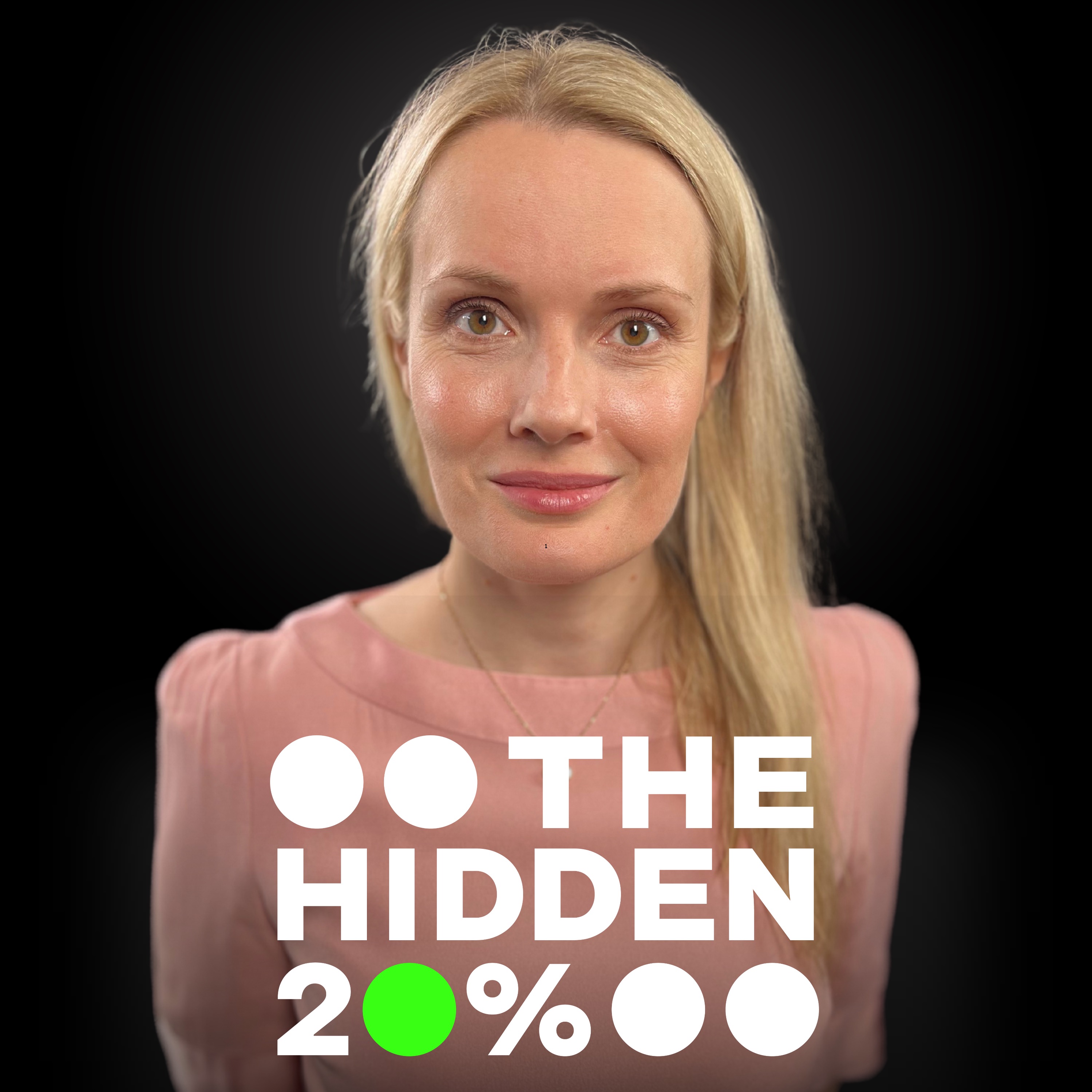
Dr. Alison Lennox (ex-NHS adult autism/ADHD clinical lead) explains how adult autism diagnosis should work, why NHS waiting lists have ballooned, and what she believes is coming next (including possible needs-based triage). She also challenges myths about autism, masking, trauma vs autism, and stereotypes—especially for women.
Dr. Alison Lennox is late-diagnosed autistic; former NHS psychiatrist who ran an adult autism diagnostic service and an ADHD diagnostic service (15 years NHS). Now she works privately supporting autistic adults, trains clinicians, and shapes neurodivergent understanding in mental health services.
NHS autism waits are driven by pandemic-era backlog growth and “front vs back of list” misunderstanding; transparency failed, contributing to her leaving. Current assessments rely too heavily on instruments (e.g., ADOS/ADI) and can miss masking, gender effects, and co-occurring conditions. She expects assessments to worsen and become more restrictive.
She screens face-to-face for an hour, then uses ADOS without scoring; she cites waiting lists of 220,000+ (rising to 275,000+) and “one in three women” misdiagnosed / “80% of females” undiagnosed by 18 (as stated). She discusses masking delaying her own diagnosis and notes synesthesia/proprioception/interoception are often overlooked.
Written by AI. May contain mistakes.
Discussion on the emotional impact of long waiting times in NHS autism services.
“The only way I know what the waiting times at the back of an NHS list are is because I once did some sums and saw that that figure was a double figure.”
Introduction of Dr. Alison Lennox and her background in autism.
“Enough preamble, I'm Ben, your host, let's get into today's episode.”
Dr. Lennox shares her journey and reasons for focusing on autism.
“breaking down why one in three women are misdiagnosed and 80 % of females remain undiagnosed at 18.”
Discussion on autism diagnosis and the roles of different professionals.
“autism when I was at university at Cambridge when I went to some lectures by Simon Baron-Cohen back in the day.”
Exploration of current assessment practices and their limitations.
“I reckon about 15 consultant psychiatrists with specialist expertise in autism in the UK.”
Detailed explanation of the assessment process for autism.
“In the UK, you can also be assessed by people such as speech and language therapists or occupational therapists who have got the right sort of training.”
Discussion on how masking can affect the diagnosis of autism.
“I'm trying to find out, well, hang on, past medical history, have you got any co-occurring medical things of interest that might be a clue that might lead you closer to thinking that somebody might have autism?”
Dr. Lennox reflects on her personal journey and understanding of autism.
“What makes you so good at joining those dots and spotting those patterns?”
The speaker reflects on their university experiences and social masking.
“attending any lectures or anything in order to be able to go to things in the evenings yes and And they never kept in touch with anyone when I left.”
Discussion on the impact of social masking on autism diagnosis and personal experiences.
“So I'm now really aware that my masking really slowed down my diagnosis.”
An overview of NHS autism assessment waitlists and the complexities involved.
“the prognosis for next year is that that'll be north of 275 ,000 people.”
Providing practical advice for individuals on autism and ADHD waitlists.
“I'm not thrilled to have left the NHS, but I couldn't see any way forward that was truthful about what the situation is.”
Exploring the challenges and systemic issues in accessing autism assessments in the NHS.
“And I'm thinking, well, I ought to because this is what I do.”
Speculation on the future of autism assessments and budget constraints in the NHS.
“really came down to feeling that there was a lack of transparency about what I could see as very clear signs that we were on fire in terms of waiting lists.”
Discussion on the potential for GPs to assess autism and improving assessment processes.
“see a psychiatrist gets referred by their GP is autistic there's a need there right well my concern is that I'm worried that what's going to happen if we make this all a societal problem, an education thing.”
Learn about the gaps in autism education for psychiatrists and the need for improvement.
“And certainly we've got scope for psychiatrists.”
Discover the speaker's positive reflections on being autistic and its impact on their work.
“And I've spent a lot of time trying to sort of fix that.”
Explore the link between synesthesia and autism, and its implications for understanding neurodiversity.
“it's about kind of having senses that kind of muddle up a bit.”
Learn about proprioception and interoception, and their significance in understanding bodily awareness.
“it's all sort of diverted into other research interests.”
Discuss the complexities of autism presentation in females and the stereotypes involved.
“I think a lot of it is about stereotypes and about expectations.”
Identify and challenge common myths about autism and their impact on understanding neurodiversity.
“and there isn't a one-size-fits-all and there aren't these overly simplistic presentations, male, female, whatever.”
Examine the misconceptions surrounding autism and trauma, and the importance of nuanced understanding.
“So to kind of eradicate that idea that this is a single assessment for a single thing, because people, as we've talked about today, have other forms of neurodivergence and it's part of who somebody is.”
Explore the complexities of diagnosing neurodivergent conditions and the need for a more integrated approach.
“where things like BPD, borderline personality disorder, and complex PTSD come in, which are more trauma-based presentations, what diagnostic outcome is most right for you.”

Get the gist, explore an idea or ask about something said.
 Claude
On The Hidden 20%, what are the key points of this episode?
Searching your listeningAutomatic transcript. May contain errors.
0:00Dr Alison Lennox: The only way I know what the waiting times at the back of an NHS list are is because I once did some sums and saw that that figure was a double figure. I'm not thrilled to have left the NHS, but I couldn't see any way forward that was truthful about what the situation is. I've got friends and, you know, people have family members on these lists. It's not numbers, it's people. I felt completely complicit in something that I thought was fundamentally, you know, harmful. Somebody quite senior told me to stop being so emotional. And I was like, I don't really understand why you're in this room if you don't think that this is a scandal.
0:40Welcome to The Hidden 20%, our neurodiversity charity on a mission to rewrite the future for people who think differently. Together with you and an eclectic range of brilliant guests, we can break the cycle of silence by smashing outdated stereotypes, exposing the myths, and sharing the most up-to-date truths about what it really means to be just different, not deficient. The best way you can help is really simple. Subscribe so you never miss an episode, and if you can, donate to our charity through the link below. Enough preamble, I'm Ben, your host, let's get into today's episode. Today I'm chatting with Dr.
1:23Alison Lennox, late diagnosed autistic, psychiatrist and former clinical lead for an NHS adult autism diagnostic service. Alison now works privately supporting autistic adults while training clinicians and helping shape how neurodivergent people are understood in mental health services. Part one will focus on autism diagnosis. Alison's own journey, her work and approach to supporting autistic adults. Part two will focus on misdiagnosis, breaking down why one in three women are misdiagnosed and 80 % of females remain undiagnosed at 18. Let's get into it.
2:06Alison, I wanted to start actually with a question that I don't think I've asked a guest before. Why did you want to come and sit in the green chair? I have a confession. I wanted to sit in the green chair because I've secretly been recommending
2:22Dr Alison Lennox: The Hidden 20 % to all of the people I assess for autism for a number of years. And I was approached by a producer and asked if I might come along. And I thought, God, that sounds really awful. I don't really want to be on a camera. But then I remembered Nelson Taylor, 12 year old, karting sensation. I've got a big interest in motorsport and I thought, right, well, you're going to have to go. But also I feel very pleased that there's been an opportunity for me as a sort of on the ground clinician to come and think about some more tricky topics, I suppose, together. What led you to wanting to understand autism, wanting to spend your career on it, Alison?
3:06Dr Alison Lennox: Yeah, it's a bit tricky to be sure. I come from a big family of doctors and I lack imagination, so I was always going to become a doctor. My dad had a stroke when I was quite young and he had stopped working as doctor. And interestingly, a very forward thinking psychiatrist gave him some ADHD medicine off license to try to improve his thinking again. And it made a huge difference. And I felt that I got my dad back. So I guess at the back of my mind, I always thought there was something very cool about psychiatrists for that reason and then I eventually became one and it took me a while to connect that actually you know I'd always had that sort of interest going back as to kind of what could be done there and how people with ADHD could definitely be be helped a lot in ways that I didn't see other people getting help by medicines.
3:57Why autism specifically?
3:59Dr Alison Lennox: I mean I first heard of autism when I was at university at Cambridge when I went to some lectures by Simon Baron-Cohen back in the day. Didn't hear anything else about it until I was a consultant psychiatrist. It wasn't really in the training. I just started to gravitate towards the people that I most enjoyed talking to. I asked my NHS trust if they would advertise a job in autism and ADHD and said that I will train for it. I will fund it and I will apply for the job. Wow. So you kind of... It didn't exist. Yeah. Well, thank you for doing that. I want to talk all about diagnosis for this first part.
4:35And we will get into kind of misdiagnosis and where it goes wrong in part two. Can you start by telling me about you being on the ground and that clinical work that you've done and are doing?
4:49Dr Alison Lennox: Yeah, so I currently work as a private psychiatrist specialising really in adult autism. In the past I've done 15 years in the NHS including running a autism diagnostic service and leading an ADHD diagnostic service and quite a lot of time doing sort of extra time in sort of psychotherapy jobs as well. And so that's where I am today. It's a strange place to be because it's lonely. There's not very many people who have taken a path into what we call neurodevelopmental psychiatry. There's not very many of us in the country and there isn't a prescribed training. How many are we talking? I reckon about 15 consultant psychiatrists with specialist expertise in autism in the UK.
5:35Wow, 15. Yeah, yeah.
5:37Dr Alison Lennox: But you've got to remember partly this is because a lot of these services have been psychology led for a long time. We've got lots of really great psychology colleagues who have been assessing for longer. I'm thinking about our audience and people who are on waiting lists or wanting to go for assessments. and there's GPs, there's psychologists, there's psychiatrists. How do you simply define the difference between a psychologist and a psychiatrist? Yeah, so I suppose a psychiatrist is somebody like me who has trained medically as a doctor first and then they have specialised in, I suppose, trying to support people's mental health.
6:15Dr Alison Lennox: And that's where neurodivergence comes in in a sort of slightly clunky way because of course that's not mental illness at all, though people with neurodivergence do experience poorer mental health. So that's sort of where I come in. Psychologists are people who have done a psychology degree at university and then usually are training in something like clinical psychology or counselling psychology that gives them the skills to actually sort of practice with patients. But their focus, I suppose, is more therapeutic generally. It's generally more about kind of understanding and making the right formulation of what somebody's difficulties are, what their needs might be, and helping them to improve their well-being.
6:52Dr Alison Lennox: So again, there's another slightly odd intersection where people in that group are also in a sort of assessment role rather than in a sort of therapeutic treatment role. And who can assess somebody for autism in the UK? There are lots of people. It's really quite confusing. So you could be assessed by either an individual or a team. The old guidelines suggested that all assessments should be team-based, but practically no one has the resources to offer that. Yes, why a team? I think the idea was that you would have different perspectives on somebody rather than it being sort of a one-person sort of judgment of somebody, which I think is a very nice thing to do but very hard to deliver routinely.
7:36Dr Alison Lennox: In the UK, you can also be assessed by people such as speech and language therapists or occupational therapists who have got the right sort of training. I suppose it's all about is the person who's going to assess you, are they going to be able to know, say, what autism is? And are they also going to know what it isn't? Because, I mean, there isn't one way to assess autism, correct? Minefield. And there isn't one type of specialist that can also assess for autism. Exactly. Why? It's a really good question. So my feeling, my opinion, is that we have been assessing autism in a certain rather formulaic way for a really long time that has been based on psychology, quote unquote, instruments.
8:22Dr Alison Lennox: So people might have heard of an ADI or an ADOS. And whilst these can be really helpful with, you know, children, for instance, because it's really contemporaneous intel, I think with adults, sometimes we end up in a situation where we're doing almost a little bit of a dance with somebody to show that we're triangulating information from different sources. So I think there's a feeling at the moment, sort of with colleagues that I have who also are interested in this area, that assessments could be done, I suppose, in a more thoughtful way. or maybe done in a way that's more inclusive of other neurotypes in a single assessment, for instance, that the way they've been done isn't necessarily the best way, but it's archaic and we are doing it globally.
9:07Dr Alison Lennox: That's still the way it's done. So we're starting to tweak things so that they're more useful. I'm obviously already diagnosed autistic, but if I was coming to be assessed by you, what process would we go through? So what I do is I always screen somebody face to face for an hour. And the reason I do this is very pragmatic. I want to be sure that you need the assessment before we go any further. And if I think you're neurotypical, I don't really want us to spend the whole afternoon together going through things that are going to raise your expectations when I know algorithmically it's a no. but if I meet you and I think after an hour of going through kind of the diagnostic criteria looking for each of the pieces of autism with you really transparently collaboratively what we got if that kind of profile looks like it could be exciting it could be suggested autism then I'll be like well actually I think we should you know stay for a couple more hours today if you're okay we'll go through your history but with a very neurodevelopmental focus meaning I'm not just asking questions about different paragraphs of your life just to write something down.
10:13Dr Alison Lennox: I'm trying to find out, well, hang on, past medical history, have you got any co-occurring medical things of interest that might be a clue that might lead you closer to thinking that somebody might have autism? So what I'm trying to do is to pull out all the little kind of clues and trying to see whether I can connect the traits longitudinally all the way back in your life to show, to prove that actually this is a lifelong neurotype. And then the other thing I like to do is I do like to use an ADOS for most people, but I don't score it actually, because we understand that these instruments are really limited in terms of they're not tested for people's IQ, you know, genders, masking, co-occurring conditions, you know, anorexia, OCD, that kind of thing.
10:52Dr Alison Lennox: But it's really interesting. If you can make an ADOS feel really safe for somebody so that you can get a little bit of participation, you tend to see really nice little snippets. Can you just explain what ADOS is? Yeah, so it's basically where you do an observational assessment. It's basically designed to see if you can sort of see some more traits of autism. And then the assessor will be scribbling furiously, trying to sort of write down any extra things they can notice. It's really a chance to stop sort of listening and start looking in terms of what you can see in terms of gesture, behavior, emotional gesturing, expression, tone of voice, all these sorts of little things.
11:27It's kind of just looking for more little clues, I suppose.
11:30Dr Alison Lennox: But the problem is, if you're really good at masking, just ace it. Yes. What makes you so good at joining those dots and spotting those patterns? My neurotype, probably. Tell me about that. I discovered that I was autistic bit by bit by bit. It comes as no surprise to people who know me very well that I was working in an autism diagnostic service for a long, long time. I think as a doctor, you have an affinity to certain sorts of patients. and you know I always found it very strange we call them patients because I don't nowadays I don't do that they're people you know and you meet them on a people level but yes I'd come to understand that I was probably autistic after quite a number of years denying it I used to say to people which is really strange that I have all of these features but I'm just so socially competent it took my boyfriend moving in to live with me okay and cohabiting to sort of gently see that this stuff was actually quite apparent so how long had you been working in the autistic field six years six years I mean you've got lots of letters your name Alison and you've got all these qualifications and you've obviously got this it makes me sound like I'm not very good at my job doesn't it no but I kind of it's not the first time that I am meeting someone with a brilliant wealth of experience and also I can relate to sort of being the last to know and other people not surprised when I was diagnosed but I guess I'm interested in the fact that you knew so much and yet to yourself denied it how was that realization process I don't think I denied it Ben I think I didn't I didn't have the insight that my social experiences and the way that I project socially isn't quite what I know it to be I can remember somebody asking me if I were autistic when I was about 19 I didn't just didn't understand it but I tried very very very hard through school and university to fit in to the point where I think it could be described as a completely obsessive interest okay and I got so good at it you know I decided that being popular was a currency I needed and I needed to get that to get through my undergraduate degree at Cambridge I ended up really doing very well socially yeah but completely burnt out not attending any lectures or anything in order to be able to go to things in the evenings yes and And they never kept in touch with anyone when I left.
14:08Dr Alison Lennox: So I sort of went from the most popular person to suddenly forgot everybody, just dropped them. Yes. Everybody. Yes. Gone. Yeah. And I also spent my time at university trying to kind of really fit in with very neurotypical people. I was at Cambridge. It's a very neurodivergent thing. Yeah. But I was terrified of that. I was desperately trying to be as normal as I could be. Yeah. And how do you now reflect on that as it relates to A, you now understanding that you're autistic, but B, with the clients and the people and autistic people that you obviously interact with and support and assess their kind of lived experience as well?
14:46How do you triangulate that?
14:48Dr Alison Lennox: So I'm now really aware that my masking really slowed down my diagnosis. Yeah. Because I thought that I was so good at it that it was no way that I thought it meant I couldn't be. Yes. Neurodivergent. Yeah. You know, I just I couldn't see how those could go together. I suppose it gives me more kind of curiosity in terms of what people are going through, why they're doing things. You know, one of the questions I really like asking people is how many people did you invite to your wedding? What did you do at your wedding? Did you talk to people? No, I just smiled. You know, these sorts of things.
15:20Yeah.
15:21Dr Alison Lennox: Because things aren't always what they seem. No, but the answers to those presumably can tell you everything about the way that someone masks or socializes or approaches a social situation. Let's talk a little bit about the NHS. So I think the last waiting list numbers NHS wise for autism assessments is well over 220 ,000 people. the prognosis for next year is that that'll be north of 275 ,000 people. What is going on? It's quite complicated. The first thing I'd say is that when I started working in an autism service around six years ago there wasn't a concern about weightiness in the way that there has been in the last couple of years.
16:13Dr Alison Lennox: And I think that's because at the time the pandemic was a bit of a distraction and people were just trying to sort of get back to offering services in a usual way rather than in a remote way. I think that meant for a couple of years we lost sight of what was happening. And during the pandemic, we didn't stop assessing people. Services didn't close. Referrals were still received. Referrals were still triaged. People were added to lists. Lists got bigger and bigger and bigger and bigger. But I don't think we quite saw what was happening until it got a little bit too late. One of the difficulties with the autism waiting list is that there's a real difference between the front and the back of a waiting list.
16:47Dr Alison Lennox: This is what I learned on the ground. So when you're told the waiting time is two years, that doesn't mean anything. It means that people who have waited already at the front have two years. You know, the front person waited two years. The person I assessed this morning has waited two years. It's got no reflection on the person at the back of the list because you don't know how quickly other people have been added. And one of the things that happened, for instance, during the pandemic, just from a practical point of view, is that a lot more people were added. And so suddenly there are a lot more people between you.
17:24Dr Alison Lennox: And so I think this is why sometimes people would, you know, call up a service saying, I've already waited two years. Come on, this is ridiculous. I actually need to move to a different postcode, but I can't because you'll off list me if I do. How long is it? So mad. So mad. and then what you can't do is ask what an accurate estimate the back is okay the only way i know what the waiting times at the back of an nhs list are is because i once just did some sums because i was feeling very anxious about this and i divided the capacity that we had the number of assessments we do per year by the number of people we've already agreed to honor and see and saw that that figure was a double figure and escalated it very, very hard.
18:10Dr Alison Lennox: But I felt like a canary in a mine, you know? Yeah. And in the end, I just kind of did what I could and then got out the cage. I'm not thrilled to have left the NHS, but I couldn't see any way forward that was truthful about what the situation is. What would your advice be to somebody who is on that list listening right now? Honestly? Honestly. I would suggest that they look at the Freedom of Information request BBC figures for how long a waiting time is trust by trust. that were published about a year ago and consider whether that is feasible or whether they may be in a better position to switch over to a right to choose referral, which yes, it would be remote, but it may be a very different timescale and that might be more appropriate and more helpful for a proportion of people.
19:11And what about the people who are on an ADHD waitlist and on an autism waitlist, is there anything that they can do differently than just sitting on these two waitlists?
19:25Dr Alison Lennox: I think the difficulty is that for ADHD, a lot of people are hoping to access a trial of medication and that's not going to get expedited in any way. But I do think that if you self-identify as neurodivergent, you have those conversations with people like your partner, discreetly with your boss, You can try to get some adjustments in place that might get things to a more supportive kind of place. And I would also advise people to really not lose faith, keep reading, keep learning about neurodivergence because it gives you so much more if you can feel in control of it. I think part of a waiting list is that powerlessness.
20:04It is, especially when the first big decision is I'm going, I would like to be assessed. Maybe I am. That's a huge action. And then you're met with, yeah, well, just hold fire.
20:20Dr Alison Lennox: Or worse, your referral's been rejected. Yes. You're not enough. You're not something enough. Or you move and you've got to go to the back of the queue and start again. And so I find this great irony with people making a decision to take some power back and take some initiative and advocate for themselves. and yet the system won't then allow that esteem building action to be validated. Right. I mean, I'm just thinking about when you had a previous guest, Adrian James, talking about this in the NHS because it is wild. And I think we heard him tell us about how there's going to be a shift in the NHS now towards need rather than diagnosis.
21:06Dr Alison Lennox: And I don't know what that means. And I'm thinking, well, I ought to because this is what I do. Because I think I just can't see why anyone seeking a diagnosis doesn't have a need. No one's doing this for fun. So what does that mean?
21:24Dr Alison Lennox: I can't understand that, Ben. It sounds awful because I want to be able to be very supportive and say, I can reassure you I understand this. It might not make a lot of sense, but from the inside it does, but it doesn't. I think what we're actually hearing is that actually waiting lists are going to be looked at in terms of who is highest need. Not that if you have a need, you'll be seen, but just only a certain part of the need will access the diagnostic assessment. And I don't think that's what people are expecting to hear. no my reflections on talking to adrian were i guess if i can pithily summarize the messages i took if i was listening would be okay this is needs-based so there's going to be some triage system that all sounds very confusing and then secondly do you really need a diagnosis what does diagnosis mean what does assessment mean do we just need to give people more support i.e.
22:21not the NHS's fault, not the NHS's responsibility. Not healthcare budget. Yeah. Let's sort of almost push the thinking back on the people on the wait list to kind of go, can't you just go and get some support elsewhere?
22:34Dr Alison Lennox: But as you say, there's this kind of slightly sexy side to this. Oh, actually, we're not really offering any pre-assessment support. So if we can somehow build in something great there and support everyone who's waiting, then very few will need to then go on and be seen. And I just don't understand how decisions are going to be made in the NHS about who should be seen. And I think this is where my decision to leave the NHS really came down to feeling that there was a lack of transparency about what I could see as very clear signs that we were on fire in terms of waiting lists. But that we weren't being encouraged to be transparent with patients, with their families, with people calling up, with their GPs.
23:21Dr Alison Lennox: I felt completely complicit in something that I thought was fundamentally harmful. You know, I've got friends and people have family members on these lists. It's not numbers, it's people. And I used to get told that when I talked like this, I remember once somebody quite senior told me to stop being so emotional. And I was like, I don't really understand why you're in this room if you don't think that this is a scandal. Yeah. Do you know what I mean? This isn't a problem with me. No. And this, by the way, is before I realised I was neurodivergent. Okay. It was just my justice sensitivity going mad.
23:58Dr Alison Lennox: And when I finally actually left the NHS, I thought, gosh, that's a bit principled. I'll get the autism assessment. And that's when I did it. Okay. But equally, I couldn't have assessed myself anyway. No, sure, of course. No one knows what's going to happen, of course. Yeah, well, some do. Some, maybe. How do you see this NHS autism waitlist piece playing out? What do you think is going to happen? Not hope, think. I'm a very cynical person, Ben. Sure. I think it's all about to get a lot worse. Okay. I think for both autism and ADHD, we're going to find that there isn't a budget for everybody who wants to be assessed to have an assessment the tricky part is the autism act which is kind of suggesting that everyone's entitled to an autism assessment but if you think about that if we were to actually offer everybody who would like an autism assessment in the uk whether they need it or not if we were to actually offer that we probably wouldn't have enough money left for maternity services yeah so that's it's not going to happen you know and I think this is part of the difficulty so I think there are going to be really harsh decisions made about who's in who's out in terms of who accesses specialist assessments and I suspect there's going to be a lot of spin around education and other departments mopping up some of the quote-unquote issue fundamentally though neurodivergent people are always going to have needs and a lot of them one in five people who go to see a psychiatrist on the NHS have autism one in five one in five of everybody who goes to see a psychiatrist gets referred by their GP is autistic there's a need there right well my concern is that I'm worried that what's going to happen if we make this all a societal problem, an education thing.
26:04Dr Alison Lennox: Now, I do understand that people don't like this language around disorder, deficit, etc. Yep. But if we take everything out of health, I don't think anyone else is going to be picking it up. And my concern is that I think a lot of it is going to be pushed out of health. On the other hand, I think there is some good news. And I think that's that we recognise now that as people in the UK have started to recognize neurodivergence, we're realizing that it's really, really common. And it's important. And it's, you know, it's nice to help people to feel comfortable at work and get the best out and have different minds in the conversations wherever you are.
26:39And it's natural.
26:40Dr Alison Lennox: Yeah. And it was always there. And this is not news. This is not news. So I guess what I was thinking is that we've got that kind of awareness piece. I think that now makes people working in mental health and GPs sit up and think, okay, we can do this better. We talked up front about there are lots of different people who can assess for autism, but there are only 15 specialists, kind of clinical psychiatrists in this field. Yeah. How specialist do we need to make autism assessments? Like could GPs assess for autism, for example, in the future? I think, God, to be honest, it's a really obvious question, isn't it?
27:20Dr Alison Lennox: That we should be asking. You know, this isn't ivory tower stuff at all. There's actually a research study going on at the moment to try to see whether GPs could assess for autism. And what they're trying to do is they're trying to do an autism assessment over a couple of sessions in a GP surgery. Then they're getting the same patients assessed by the local psychiatry specialist and they can compare the outcomes to see whether you get to the same outcome. The only concern I suppose that I could think of immediately about that though is it sort of depends who you're measuring it against. because we know that diagnostic rates really vary across the UK anyway, depending whose service you go to.
27:58Dr Alison Lennox: So I think they would need to think more carefully first around what the benchmark is. But it's an interesting point. And certainly we've got scope for psychiatrists. I mean, God, we've got an army of psychiatrists. And everybody nowadays is getting really into ADHD. You know, that's good. But if you can get into ADHD, why not get into something else beginning with A? And this is why we have tried really, really hard to upskill psychiatrists across the country, because you can't just sort of turn away because you've not learned about something. Well, you really ought to quickly read it then before that patient comes in, rather than just sort of silo it.
28:42Yes, it just feels like it's sort of been left out of the manual, left out of the education system.
28:49Dr Alison Lennox: Ben, I used to actually have a little book when I was a medical student called Psychiatry A to Z. Okay. A started, no autism, no ADHD. A was just anorexia and then it was B. Okay. So it wasn't even in the textbooks. Yeah. I had a look back at my old huge psychiatry textbook from when I was a trainee. And autism is only referenced in children. Wow. Wow. Yeah, I mean, that's the huge catch up, I guess, that we need to go on. What do you like about being autistic, Alison? The first thing I like is it makes sense of the fact that I've always been really, really, really intense. And I've spent a lot of time trying to sort of fix that.
29:34Dr Alison Lennox: And so it's nice to just kind of realise that actually I am who I always was. Yeah. You know, I was doing ward rounds with my teddy bears in shoeboxes and that kind of stuff. And it's sort of like, well, it's me. It gives me a clearer sense of myself. And in terms of my mind, I'm really proud of the fact that I can make connections really easily between things because it makes my job a joy. you know and I know lots of people who are doctors who would hate to do my sort of work because I might see somebody for three and a half hours and they're like well how do you put all these pieces together how can you write a 20-page report and I'm like with pleasure you know because I like to be able to bring ideas together and to make meaning for people I read a post that you'd done on LinkedIn not very long ago.
30:27Stalker. Yeah, stalking you about, let me get it right, synesthetic calendar.
30:34Dr Alison Lennox: Yeah. Is that right? Yeah. So synesthesia is where your senses get in a bit of a muddle. They get a bit blended together. I first heard about this when I was a student because I had a tutor who told me that when he went to listen to opera, he could see it as colors. and I was like whoa that's that's amazing and then I later found out that I have a much more common form of synesthesia called calendar synesthesia which my family think is really strange but my dad sees every single day of the year now and in the future as a different color there you go so you can ask him what color the 16th of November in 2041 looks like and he'll give you a colour for it.
31:19Dr Alison Lennox: So what you've got to do is repeat test him to make sure it's true. But seriously, that's how they check. They repeat test. Okay. So I suppose the thing about Sins These Years, it's about kind of having senses that kind of muddle up a bit. So for me, I have a visual calendar of the year that's actually like a tilted disc, like a sort of ring of Saturn that has months on it and I can move in different vantage points around it in the year. So when I try to imagine something, I have to kind of almost spin this disc in my mind and get to the right place to look. And I have the same with days of the week and times tables.
31:53Dr Alison Lennox: I'm sort of manipulating these images in my mind because that's just how my mind has always done it. I can't do it differently. So from the little I do understand about synesthesia, there are quite a few different types. It over-indexes in autistic people. That's right. And there was no part of my autism assessment where synesthesia was looked at or spoken about or asked about. I guess my exposure to it, A, knowing how my dad's brain works, but also I see flavor and color. So taste for me is very colorful. And that is immensely helpful. Taste and smell. that's immensely helpful when it comes to cooking or making drinks which is which has served you well which is which is serving me really well and I guess I haven't really I've not really looked into it I've not really I've only just begun to understand that that's what happens and how I might be able to harness that but what do we know about synesthesia and autism so we know they're linked, but we don't know very much.
33:05Dr Alison Lennox: And unfortunately, this is because about 10 years ago, there's quite a lot of research from Cambridge University about synesthesia, and it's all sort of diverted into other research interests. So there's nobody very actively researching it in the UK at the moment, but we do know that it's common. It's something that I ask about in all my assessments in the same way as I will always ask about, you know, ADHD symptoms, you know things to do with like ticking Tourette's and things like that too because it's very strange just to try to ask somebody about a sliver of them yes you know what I mean how conscious do you think synesthetes are of their own synesthesia I think most people think it's in everybody okay I remember growing up as a child and asking people about it and then just being very confused thought I was making it up I didn't know how else you could conceptualize the seasons yes you know I couldn't understand it yeah and tell me about that sense of rhythm and calendar where the seasons are concerned living in in England yeah so I suppose for me I like the changing of the seasons because it makes me feel anchored like I know where I am like it sounds strange but my sort of disc of my year is a bit like a map and there are certain seasonal variations that I'm suddenly like hollyhocks are there I am here and I know who I am because I know where I am yeah if I take things like cherry blossom or conkers or what's going on right now I mean everything's been a bit early this year that's thrown me yeah but I love how you describe the changing of the seasons gives you a sense of time and place and therefore I assume grounding and that you're okay.
34:53Dr Alison Lennox: Exactly. Can you explain what is proprioception and what is interoception? Yes so proprioception is your mind's understanding of where your joints are in space and interoception is your internal perception of the signals that you're getting from your body like knowing when you're hungry and when you're thirsty things like that. So can you give me an example then of proprioception? It's where you know where you are in space it's how you know what's up what's down where your body is is it physical i know i've got my feet on the floor yeah exactly so it's interesting because people with dyspraxia have different sort of proprioceptive world okay because of that time place and sense of where you are physically there's actually some really interesting research by jessica eccles group in brighton about proprioception and how it might be a mediator in neurodivergent people with actually their so it says their proprioception their sort of awareness of their body may be a mediator for their emotional regulation in people who have hypermobility i.e and this is it i.e exciting stuff that the mind and body are linked here and they're showing it let's talk about presentation and women females girls why in your view have so many females been missed?
36:16Dr Alison Lennox: Because some of us wear pink dresses. Good answer. Thanks. It's true though. I think a lot of it is about stereotypes and about expectations. So, you know, I think most of our listeners know that there's been a very male heavy view of autism over the years. And certainly I wasn't aware of female autism until, you know, a number of years ago, really. I've spent a lot of time over the last few years giving talks on autistic women and what that looks like. Only to conclude everyone that actually that's just a new stereotype. And please don't stereotype because it's not going to help the woman who doesn't have the stereotypically female interests.
36:52Dr Alison Lennox: You know, like I love Formula One. That's my big thing. So there are certainly differences in terms of actual presentation, in terms of what kinds of features. Generalizations are making me uneasy, Ben, but there is probably more masking in women that makes it potentially slightly more nuanced to understand. That doesn't mean it's more complicated or it's deceptive. It just means proceed with a little care. That's all it means. I guess it's this conundrum, isn't it, for society that every autistic's different and there isn't a one-size-fits-all and there aren't these overly simplistic presentations, male, female, whatever.
37:34it's not just trains and there isn't the same stereotypical train special interest for females
37:43Dr Alison Lennox: either i think there are okay i would say sort of in my in my area people would say oh you've got to look out for things like do they like to line up their lip gloss and sniff lip gloss and collect makeup and have a ritual around face care and you're like that's great but a lot of people have the sort of sensory stuff that means they don't want mascara on the eyelash or something on the face so then what so there are sort of new stereotypes about what autism and women might look like i'd be interested if you ask somebody on the street what does an autistic female look like today i'd be very interested in the answer right but i don't know what people would say i know i know i don't know we don't have to have an answer but i think the reason that i'm being a bit cagey to not sort of talk a lot about that and then sort of propagate a new idea on what the female version is because actually we have a lot of you know gender non-conforming clients anyway and the sense of otherness and then otherness can get really strong in those situations but there isn't a male presentation of autism right agreed like anybody can be autistic and no two people's autistic presentation is the same totally and this makes it so difficult for society this is this is par for the problem it is so different it is so individual it's not binary and it's not these five things and it's not these two special interests that when i think about the communications challenge that there is of catching society up is a really difficult one i think to try and help people understand because it's sort of like what does autism look like well you can't really answer that i think also there are some things though with females that muddy the water if you think about things like i don't know diagnoses i know we'll talk about this a bit later but diagnoses that women are more likely to receive or impact of a menstrual cycle hormonal health on your presentation i think those sort of features add more complexity diagnostically what are the three biggest myths about autism that you would like eradicated?
39:55I'd like us to not think that autism stands alone.
40:02Dr Alison Lennox: So to kind of eradicate that idea that this is a single assessment for a single thing, because people, as we've talked about today, have other forms of neurodivergence and it's part of who somebody is. I think a myth about autism that I really struggle with is that it's still seen today as being socially awkward. Now, I don't meet very many socially awkward autistic people in my job. I really don't. And I think that's unhelpful for a lot of people. It puts people off actually exploring other things that are perhaps more difficult. That's two. I'd really like it if we could stop, this is quite a specific thing, but to stop trying to work out whether somebody has autism or trauma.
40:57Okay.
40:58Dr Alison Lennox: And to just be a bit more realistic that autistic people can experience trauma. When I started practicing in the NHS, that was the first thing I was told again and again, we've got to work out, is this autism is this trauma and I think there's still a lot of belief in that very reductionist approach so is that the belief that the belief of clinicians that it's one or the other is the is the answer okay not one leading no not one leading but it's it's either or binary yeah and it's widespread wow I've not really thought about that or come across or come up against that maybe i definitely i'm very aware that a lot of autistic people have experienced trauma definitely and we're going to talk about the the kind of misdiagnoses and some of those barriers in part two but i've not yeah i've not come across the fact that someone could actually kind of go no you're not autistic it's just trauma informed psychology yeah so so i guess this is where things like BPD, borderline personality disorder, and complex PTSD come in, which are more trauma-based presentations, what diagnostic outcome is most right for you.
42:14Dr Alison Lennox: And I guess I just really want to sort of banish that idea that you're having to pick a one or the other with people because that's unlikely to be helpful for most people to be sorted into a micro box. into a box and then and then that decision will therefore inform something helpful for them yeah the picture that comes to my mind is philosopher stone harry potter sorting hat yeah and we're going to put a hat on people and you can only be in one house rather than the reality and this is yeah this speaks to all the silos that we have right across different neurotypes and And holy, guess what? I can be ADHD and autistic.
43:01Like, whoa, who knew? So therefore, how do you play out the fact that autism obviously is a focus of yours? You've said that during your assessments, you're going to be looking at everything rather than only one lens. Is this person autistic or not? How do we solve or sort or improve this idea of different neurotypes, not individual neurotype waiting lists? How do we improve that?
43:31Dr Alison Lennox: I think what's likely to happen is that all psychiatrists will be expected to diagnose autism and ADHD, as well as potentially in the future other neurotypes, as well as their psychiatric illnesses per se. it's going to take a long long time and i think we're gonna have to change what what autism assessments look like because at the moment they're too long to fit into anybody's clinic day okay why do they have to be so long well they don't okay well i don't i don't think they do i think i think what we should be doing is doing the right sorts of assessments the right sorts of people and bolting on the right bits and so that's how now i have the autonomy and private practice to do things if i'm seeing someone and i think yeah we've done some screen think autism, I'll do the autism bits.
44:15Dr Alison Lennox: If I think, actually, I really think you might have ADHD, we'll build up what you need. You know, if I think you have OCD, I'll refer you to a colleague who, I'll make the diagnosis and refer you to somebody who can start some treatment there. But I think it's about having something that's a bit more tailor-made, but not in a kind of super fancy way, just in a really pragmatic way. For instance, once you start to get a picture of somebody, just keep following the leads in the right direction. I mean, one of the problems I had in the NHS and I had a very good time working there but sometimes I would see somebody and I would know it was the wrong assessment the wrong A I used to call it I'd swap them over do the right one and then be told off for rule breaking or I would go and assess an inpatient who everybody thought was autistic and you know if people are actually telling you hey we don't do this but we think this is an autistic person could you come and see I'd be like yeah sure I'll set some time aside in my admin time I'll go and do an assessment for you and then you're sort of told and sort of in trouble because that's not commissioned work it's not what you're being paid to do you're being paid to go through a waiting list of primary care referrals sequentially yes stick to the process yes wild it's that flexibility i think is what we would need to introduce to the system yeah and getting to the end of this first part allison i'm just reminded of the very very simple fact that everybody only has one brain right keep it together yeah and and yet we want to put it into all these different parts through all these different diagnostic pathways different people different specialists and i get it like the brain is a really complex thing which is amazing i mean if i'm really honest we just need to get a bunch of autistic people with brilliant brains to sort this out join all the dots simplify it make it really clear practical logical but this is the difficulty is on the ground you can't join the dots yeah save that we're going to finish part one thank you
46:18that's it for today's episode of the hidden 20 but just before you go a favor the hidden 20 is a charity and we do this to bring you the truth the latest research and the real stories that matter. So if this episode spoke to you, then please hit subscribe. And if you can, donate via the link below. Finally, a big shout out to you all for listening and our brilliant team who make this all happen. Phoebe, Charlie, Kristen, James, John, and the guys at TYX Studios. We'll see you next time.
47:03Thank you.
In this first of a two part episode, psychiatrist Dr Alison Lennox shares the inside story of autism diagnosis in the UK, why she left the NHS after being told to stay quiet about waitlists, and what every adult should know before seeking an assessment.
Alison, a late-diagnosed autistic psychiatrist, has led NHS autism services and now works privately helping adults navigate the diagnostic process. She breaks down what to expect from NHS vs private assessments, explains why autistic women are so often misdiagnosed, and shares practical advice for people currently on waiting lists.
If you’ve ever questioned whether you might be autistic or struggled to get answers, this conversation is for you.
Join us at hidden20.org/donate.
_________
Host: Ben Branson
Production Manager: Phoebe De Leiburné
Video Editor: James Scriven
Social Media Manager: Charlie Young
Music: Jackson Greenberg
Head of Marketing: Kristen Fuller
The Hidden 20% is a charity founded by ADHD & autistic entrepreneur Ben Branson.
Our mission is simple: To change how the world sees neurodivergence.
No more stigma. No more shame. No more silence.
1 in 5 people are neurodivergent. That’s 1.6 billion of us - yet too many are still excluded, misunderstood, or left without support.
To break the cycle, we amplify voices, challenge myths, and keep showing up. Spotlighting stories, stats and hard truths. Smashing stereotypes through honest voices, creative campaigns and research that can’t be ignored.Every month, over 50,000 people turn to The Hidden 20% to feel safe, seen and to learn about brilliant brains.
With your support, we can reach further, grow louder, and keep fighting for the 1 in 5 who deserve more.
Join us at hidden20.org/donate.
Become a monthly donor.
Be part of our community where great minds think differently.
Brought to you by charity The Hidden 20% #1203348
______________
Follow & subscribe…
Website: www.hidden20.org
Instagram / TikTok / Youtube / X: @Hidden20charity
Ben Branson @seedlip_ben
Dr Alison Lennox https://www.dralisonlennox.com/
If you'd like to support The Hidden 20%, you can buy a "green dot" badge at https://www.hidden20.org/thegreendot/p/badge. All proceeds go to the charity.
Hosted on Acast. See acast.com/privacy for more information.


