
 Ask ChatGPT


 The Hidden 20%
21 Jan 2026 · 1h 18m · 35 chapters
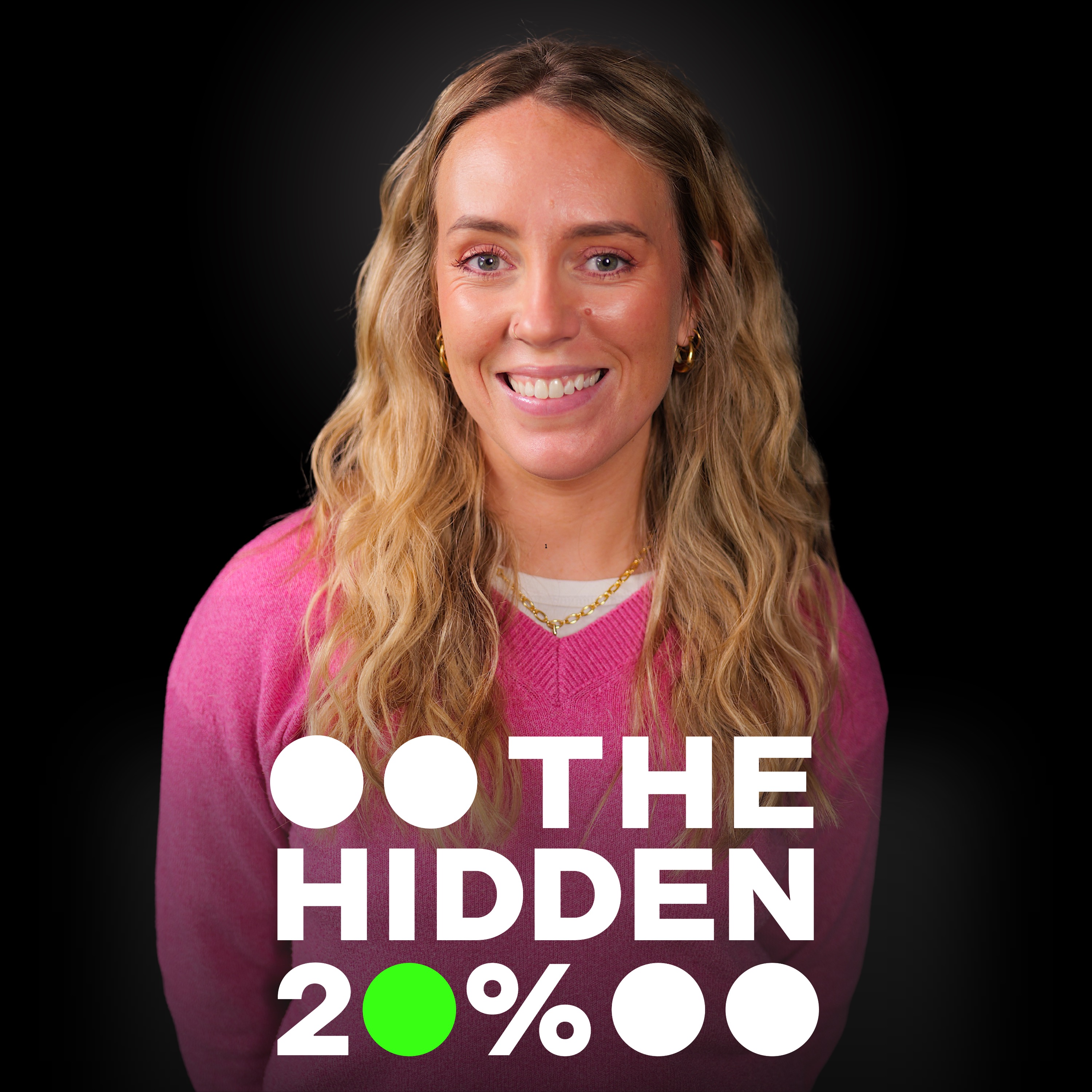
Holly Morris (comedian/presenter/influencer) discusses late ADHD and autism diagnosis, masking as a survival defense learned in school, hypervigilance and social exhaustion, and how ADHD and autism “pull” in opposite directions. She also explains emetophobia (fear of vomiting), its link to neurodivergence, and how it shapes routines and relationships. She argues masking can be a tool used in key moments, not an identity.
Holly Morris is a UK comedian and content creator who identifies as ADHD and autistic. She was assessed for ADHD around age 28 and for autism at 31 (via NHS Right to Choose). She has anxiety and emetophobia rooted to childhood (around age 8). Her partner is Rory.
Masking helped her “climb social ranks” and succeed, but it’s exhausting and blurs what feels like “actual me.” Online feels safer than in-person for being believed. Friendships can feel like “admin” due to object permanence and low-maintenance needs. Diagnosis reduced imposter syndrome and clarified her internal experience.
A networking event where she froze after introducing herself; school “social ranks” and copying peers’ behaviors; hypervigilance during hazard perception driving tests (failed twice); emetophobia leading to strict food rules (no raw chicken; gagging at mushroom smell); using silence and Nintendo Switch time with Rory as connection.
Written by AI. May contain mistakes.
Explore the conflicting feelings between ADHD and autism experiences.
“It's like the ADHD is just reaching for the stars and the autism is pulling me back down.”
Discover how comedy serves as a lens for Holly's worldview and experiences.
“That makes me feel really good about myself.”
Holly shares her thoughts on small talk and the awkwardness of social interactions.
“I don't think anyone ever comes to trying to be funny from a place of joy.”
Holly recounts her struggles with networking and the pressure it creates.
“I start all my Zoom video calls, especially with people that I've not met before.”
Discuss how masking affects Holly's professional life and social interactions.
Holly explores the origins of her masking behavior developed from childhood.
“And there's other people that are like, oh my God, I thought it was only me that thought that.”
Learn about Holly's journey to understanding her ADHD and autism diagnoses.
“It was, I need to survive in this school.”
Holly shares her experience with emetophobia and its connection to being neurodivergent.
Learn about the connection between emetophobia and neurodivergence, particularly ADHD and autism.
“Like the amount I wash my hands, the amount I think about it, think about sick all the time.”
Explore the theme of hypervigilance in neurodivergent individuals and its impact on daily life.
“And it's so deeply baked into masking as well.”
Discover the contrasting effects of ADHD and autism on personal identity and social interactions.
“And you just talking then like, that sounds really tiring.”
Follow the personal journey of seeking diagnosis for ADHD and autism and the challenges of self-identification.
“And I think it's also with the ADHD side.”
Examine the varying reactions to being neurodivergent in personal interactions versus online.
Holly discusses the conflict between her logical understanding of being autistic and her emotional feelings about how others perceive her.
“And of course you get some of the crap too.”
The conversation shifts to the awkwardness of socializing and the challenges of masking in social situations.
“But then I've really only, you know, started to unmask or even learn what the masking is in the last few years.”
Holly shares her experiences with friendships, questioning societal norms around friendship and feeling okay without a best friend.
“And sometimes I would question that of like, why don't I?”
The discussion focuses on the perceived expectations of friendships and how neurodivergent individuals approach them differently.
“who I love deeply, if he goes on holiday, I'm like, okay, whatever.”
Holly emphasizes the need for honesty and clarity in friendships, especially among neurodivergent individuals.
“It's just a ping pong of someone needing something and doing it.”
The conversation dives into how emotional processing and past experiences influence current friendships and self-image.
“It just, like, why wouldn't you want a relationship like that?”
Holly reflects on her late diagnosis of autism, contemplating the implications of masking and its impact on her life.
Holly discusses the challenges of masking and the importance of self-acceptance.
“But I think unconsciously learning to mask has helped me get by.”
The conversation focuses on discovering personal strengths and the importance of starting new endeavors.
“I wouldn't want anyone else to push like that.”
Holly shares her experiences with negative comments and how she handles criticism in her creative work.
“If you find that little light within you of something you're good at and you try and let that grow while doing this, you've got something, I think.”
The discussion revolves around imposter syndrome and its effects on self-perception and aspirations.
“Sometimes I've got tears in my eyes talking about where I am in life because I never thought I'd get there.”
Holly emphasizes how social media can empower neurodivergent people and foster community.
“Like it's so many things for me, for people around me.”
The conversation concludes with a discussion on the misconceptions of neurodivergence and the importance of being assertive.
Learn how being direct and authentic can foster closer relationships.
“Same with OCD and like having horrible intrusive thoughts like no one ever spoke about that and then when they do you're like oh my god I'm not a horrible person it's actually like a condition and this is so incredible.”
Explore strategies for expressing needs in social situations.
“And the more that I lie to people and make out everything's fine, oh yeah, I don't mind why I'm easy.”
Understand the complexities and discomfort of promoting oneself.
“the end I'm and thinking I'm not asking for the world yeah I'm asking you just to make this small or like with like coming here, I mean, well, we've got the tube here.”
Discover aspirations and challenges of breaking into traditional media.
“And I don't usually do this because I don't really like it on podcasts when I hear this, but I'm going to do it anyway.”
Learn about the persistence required to succeed in content creation.
“Yeah, like ideally Greg James, we can sack him off, get me in his position.”
Explore the metaphor of life as a canoe and the importance of steering.
“I'll make this one this week, another one next week, see what happens.”
Learn why accepting compliments is important for self-esteem.
Holly discusses how her partner has impacted her life and neurodivergent experience.
“And I'm going to say thank you to me for calling myself a hot shot and thank you to you for calling me hot property.”
The discussion highlights the importance of humor and being true to oneself as a neurodivergent person.
“Neurodivergent people in a relationship with non-neurodivergent people.”

Get the gist, explore an idea or ask about something said.
 Claude
On The Hidden 20%, what are the key points of this episode?
Searching your listeningAutomatic transcript. May contain errors.
0:00It's like the ADHD is just reaching for the stars and the autism is pulling me back down. But if I don't have that tension, I don't actually know where I'd sit. This is an advert. If you've got a busy brain, this one's for you. Get Doper was created from lived experience by someone who knows what it's like to feel permanently switched on, even when exhausted and wanting support that felt steady and sustainable. it's a daily blend of 16 nutrients amino acids, minerals, probiotics botanicals and vitamins all in forms your body can actually absorb the focus isn't on quick fixes but on steady sustainable support for focus, energy and gut health people take it because they want to look after their brain to stay focused, balanced and keep their energy steady through the day it's vegan, allergen free and packaged sustainably.
0:56And the feedback, it's been amazing. Thousands of people now take GetDopa every day and 94 % would recommend it. They talk about feeling clearer, more energized, more balanced and less drained by the everyday. And for what it's worth, having taken it for three months myself, I recommend it. I wrote our manifesto and the plan for our research project whilst taking it. So it definitely gave me clarity and focus. So if you've got a busy brain and you're looking for daily nutritional support, GetDopa could be a simple place to start. Three capsules once a day. Head to GetDopa.com and use code HIDDEN20 for 10 % off or click the link in the show notes.
1:40And that's the end of the advert.
1:49Holly Morris. Just for our listeners and watchers, let me get this right. You're a comedian. You're a presenter. You're an influencer. You are ADHD and autistic. Yeah. I think that's kind of everything. Is that a pretty good... Yeah. Yeah. I would say that kind of rounds it off. That makes me feel really good about myself. And I liked the order. I like the influencer came last. Okay. Because that is the main thing that I am, but I'm trying to move further and further away from it. So that made me feel good. I said, well, just scrub that bit. Deprioritized. Why comedy? Like, tell me about being funny.
2:22I honestly think the comedy side has just been how I see the world is slightly off. I honestly feel like I just used to say things about how I felt about like, why do we do these things that everyone's doing? And people are like, that's funny. And I thought I wasn't being funny. I was being quite serious about that. I don't understand why we make all this talk about the weather when no one cares. Everyone's got eyes. Everyone can see what the weather is. Like those little elements of life that we go through, I've always kind of questioned them. And I feel like people have found that funny. So I was like, OK, I'll keep saying it.
2:52And then I think probably somewhere deep rooted at school, I realized that being funny got you places. If you didn't have other things going for you, funniness was like a replacement for a push up bra, things like that. So I was like, oh, nice. So that's where I suppose that kind of came from. A defense mechanism. I don't think anyone ever comes to trying to be funny from a place of joy. It's normally from a place of like, help me. And you're like, this will work. I'll do that then. And so that's observational kind of comedy. Is that? Yeah. Is that what you call it? Yeah, I'd say so. By the way, I love the weather.
3:26So... Do you? Don't be dissing the weather. I'm really surprised by that. But you want to talk about it with people. I'm from a farming family. The weather is everything to me. I understand that from a farming family. But when I'm talking to Joe Bloggs on my road in Surrey that only leaves his house to go up the high street, I'm like, you don't actually need to know. You don't need to talk to me about it either. Or like Zoom calls. I'm chatting to someone for the first time, never met them before, and we need to talk about some business, right? Why for 10 minutes are we discussing what it looks like outside?
3:55I'm totally with you on small talk, rubbish, why do we resort to the weather? But if someone engages me in the weather, then I will seriously talk about the weather. Well, if you're going to offer something interesting, I'd let it happen. I'd be like, fine. But if you're just going to be like, oh God, yeah, I'm so pleased I'm sitting indoors, I'm not outside. Well, obviously, like water's wet. Of course you don't want to be outdoors when it's raining. Why are you telling me? Just tell me your name. Tell me what we need to do. Let's just get on with it. That's how I feel about that. I start all my Zoom video calls, especially with people that I've not met before.
4:32I don't know why I'm saying this out loud, but I feel like I might need to change tact. I ask people, where are you? That is my first, I don't know what else to say. So I just say, where are you? And people, nine times out of 10, look really surprised that I've asked them that. Yeah. And you get some people who are like in my living room. Yeah, very literal. And other people who tell you I'm in London or wherever they are. Or at what stage of their life they're at. Yeah, yeah. All elements. Yeah, that's a very good opening question. Yeah. And we're going to talk about masking because I know you've got a lot of thoughts on it.
5:08And also we haven't really talked a lot about masking on here with people. But it's a big thing where socializing is concerned of how do you start a conversation? Yeah well I actually experienced this last week so I had to go to this event and I had to network I saw the video Oh and it was the worst thing in the entire world because I honestly couldn't believe it I went up to someone I went hello I'm Holly they were like hi I'm whatever obviously didn't even listen to what their name was because all I was thinking was alarm bells were going off of like what the hell have you got to follow up with Holly I had nothing so now it's just like literally just being a brown nose I was like your writing is so good they were just talking about being a writer And I thought, Holly, you don't know this person.
5:50You don't know if their writing's good. You're just lying now. And then there was a pause. And I just thought, actually, now what? What is the next thing to say? I had nothing. And it was interesting because I was like, I can't believe, Holly, you've not got a follow-up here. You've actually lost all ability to talk. And then that was just the end. So at this networking event, I was there for an hour and a half. And the only networking was only 20 minutes long in that time. And I went for about four weeks just to like, I had to have somewhere to go and somewhere to be somewhere that people weren't looking at me and I wasn't having to think of what to say.
6:23Yeah. And my best performance was in the toilet when I was talking to myself being like, what the fuck was that, Holly? Get a grip. Yeah. Networking's insane. It's such a strange, like forced thing, isn't it? Of like, OK, we're all going to network. What does that mean? Yeah. And it's like, why don't you just tell me what you want? I'll tell you what I want. And then we can go from there. My dad lived in America for about 10 years and he used to go to these design conferences. He was like, they just have it down over there. It's literally like they're ready with the business card. Yeah. We're only going to chat for a couple of minutes.
6:57Is this interesting? It's interesting. Here's the business card. I'm moving on. Yeah. It's completely transactional. Yeah, yeah, yeah. Whereas we had a hidden 20 dinner a couple of weeks ago. 30 people like big corporates entrepreneurs psychologists it was like really amazing group of people I only really spoke to three people because I just talk to people and you I don't want to move around the room no but networking is the opposite of that isn't it it is I went to America recently and I realized they will just be like I want this from you yeah that's great because we didn't have to go through this rigmarole of pretending that either of us care about like sorry where you're from what it's like there what your job is I can just say hi I'm talking to you because I'm trying to be a presenter and I know you're in presenting how did you do that and they'll say oh well I like talking about myself and I like being able to say how successful I am so I'm going to do that for a little bit and then I'm going to say well can you teach me they're going to say yes or they're going to say no let's move on yeah next yeah next and I wish that's how we communicated I understand if you're actually at like a dinner a party because you're genuinely interested in those people so you would be like I really want to talk to you about what you do what your business is and stuff but in general I think maybe it's an English thing that we all are very self-deprecating and everything feels like it's got to be said in a certain way to be accepted so that's why you wouldn't just come out and say I want this can I have that you would say oh I love the way you did this I love this oh if you've got a second I'd love to invite you for lunch but not I know you're really busy uh I'm really sorry for ask a question uh yeah yeah we're so repressed aren't we things we go through and so what role does masking now play with work for you oh it's an interesting one i feel like weirdly my content is all kind of like relatable there's something about saying funny when you're talking about yourself that is embarrassing but i'm gonna have to say that for the context it's meant to be funny it's up to you to decide if it is or not but that feels very natural to me because again it is just my observations on the things that we do that I think are odd.
9:00And I seem to share my opinions. And there's other people that are like, oh my God, I thought it was only me that thought that. And I love that. And I feel like in the realm of comedy, you can be self-deprecating and you can talk about things in a dry way. And because it's entertaining, people let you speak like that. But in the day-to-day runnings of my life, you can't really speak like that because it comes across as rude. I'm great if it's a one way. If I'm talking to my phone, I'm presenting, I'm talking to a camera. That's fine because no one's feeding back to me. I'm not very good when there is someone there being like responding back and I'm trying to make sure that they feel OK.
9:37OK. And I think that's how I feel. Masking in my actual job, which is creating the content is great because it's just me. I'm not worried about it. In the business side, in the meeting people side, in the networking side. Awful. Can't do it. But what is it about making sure that the other person is okay? What do you think that's about? I think the masking is a defence mechanism. So it's a classic story, comes from school, that you're not fitting in, not getting it, not being able to do it. You look at the people around you and I'm like, oh, but that girl, she's not listening to the teacher. She's talking over the teacher.
10:12That person's pulling that face when that story's being told. That person is sending this message on Bebo when they're getting a message from another friend. And I was picking all these things up and then I was like, oh God, if I just do that back to them, they love it. If I just give their personality back to them, they suddenly think I'm incredible. And I just, honestly, it was like overnight, I just climbed the ranks, the social ranks. I was properly at the bottom with the people that it was really not working for them. And even they didn't really like me. And then I somehow managed to go, I'll see you down there.
10:44I'm going up there with the big shots. So I'm in the popular group. How have I done that? Mum, for Christmas, I need all these things. That's everyone else's wardrobe. I need Jack Wills. Why? You don't even like Jack Wills. Shut up, Mum. Everyone else does. I need Uggs. I need a Paul's Boutique bag. And I need you to shut up at the fact that I'm talking differently. You know? Yes. And so you do all of that. You get up to the top and you're like, this is the life. And then you get home and you're exhausted because you're like, I've actually been putting an act on for eight hours and trying to concentrate on work and go through puberty and trying to learn.
11:15But at that age, like how much of that is conscious versus I just would like to be a bit more popular? Yeah, this is interesting because I talk about it retrospectively now and I'm like, obviously. But at the time, it wasn't like I was going home and researching or like taking pictures of people secretly on my phone and then like getting that back and be like, mum, we need to buy me this immediately. I suppose it is subconscious. But then some things I feel like we're more conscious. I even remember my cousin. She used to do this thing and she would really strongly blink and it was a tick. But I remember thinking, oh, that looks quite cool.
11:48I started doing that and then I actually developed that tick and it then turned into this cough that I would do and I had to then really get out of it. But I thought that's a really interesting way of explaining how even subconsciously my brain is like, she's older than me and she's cool and she's doing this thing. And I even picked that up. So I don't think on the whole it wasn't particularly conscious. It was a survival mechanism. It was, I need to survive in this school. I've got to be here for another five years. I'm miserable. it's a bit like Pavlov's dogs you know I did this one thing they were doing it worked and then I just went off and it didn't actually matter to me what my actual personality was like I honestly think to this day I still don't entirely know if I was left just in the world just me what my personality would be like yeah I'm still a load of fragments of all these different people I've been around and all the creations and if you spoke to I don't know 20 people that have met me they would all say that I was very agreeable probably and just slightly different and I'd always be slightly leaning and they'd be like oh she's so like me yeah every person I've read I've read you write about oh we're kindred spirits yes everyone thinks we're soul sisters we're kindred spirits and I'm like well of course you think that I'm reflecting you back at you yes so yeah that's what I think masking is like so deeply ingrained in me that it sometimes it's hard for me to know what is actual me and what isn't where did adhd and autism then factor into all of this in terms of your awareness i think i was about 28 and i was getting loads of like videos on youtube and tiktok and everything about adhd and i was like oh that sounds like me and then i went into a deep dive i think this is everyone does the same thing don't they watching like hour-long youtube videos i'd already been in therapy for so many things like well mainly anxiety emetophobia which is phobia of sick like whoa whoa let's talk about that can we talk about that yeah yeah what is that so emetophobia is a phobia of being ametophobia or metophobia em e then there's a load of other letters for emeta yeah okay emetophobia yes i've never heard of that have you not no what don't make me feel stupid no but i'm like oh that must be so nice to have people are like have you not yeah oh it's very trendy at the minute to have a metophobia it's very cool yes a metophobia is a phobia of being sick it's kind of to put it simply everyone's like but no one likes being sick but i'm like yeah but you don't live your life in ways to avoid being sick okay so like i i am vegetarian now for animals but initially it's because i was scared of food poisoning i wouldn't want to eat if someone else had cooked it.
14:30So it was easier. Like the amount I wash my hands, the amount I think about it, think about sick all the time. But is it the action of being sick or being ill? It's the action of being sick. Of actually being, of vomiting. Yeah, yeah, yeah, yeah. Okay. But it's like really deep rooted from when I was like eight. And now actually a lot of people that have got ADHD and autism, well, I get a lot of people DMing me and I've researched it. There's such a big correlation between emetophobia and being neurodivergent. Wow. Because it's about being out of control Yeah, okay With any illness, like with a cold, you can blow your nose You don't know exactly when you're going to be sick Or what's going to cause it And that's why often there is a correlation between them And was there something that happened when you were eight?
15:13There wasn't this big moment or something that happened I honestly think I was always anxious And I think if there was a situation I was bitten by a dog I'd be scared of dogs I think it was just, it hooked onto that And then it was quite an easy thing for my brain to try and control so that then I could get through not worrying about everything else because all I would worry about is that. Like I wouldn't have to worry about people dying or being anxious. All I would focus on was not being sick. So I imagine it was something to do with that. What if I was going to be sick? If you were going to be sick, I would just run out.
15:44We'd go home. That would be the end. You wouldn't help me? Oh, I wouldn't. It's so bad. I say this to my partner, Rory. Sometimes if he's been sick from alcohol, which he would never do, but like at near the start there might have been a few occasions when I wasn't telling him exactly quite how bad my phobia was I'd be like get in that toilet goodbye I'm going home now like I cannot help anyone there's no helping I don't care what happens to you it's honestly it's like something switches I'm like I don't care about you goodbye well I'll be his birthday like drinks and I'll be he was like hiccuping in the back of an uber and I was like you're ruining everything and I thought this is his 30th birthday I need to not be shutting in poor poor boy so I've diverted no no don't worry I know we're coming back don't worry button mushrooms cooking like those like English fry up mushrooms like that will make me gag that is I think the only smell in the world that will make me gag where does like gag reflex no that wouldn't be allowed either you would never eat another mushroom in your life and you wouldn't be near one either And if we went to a restaurant and you could smell it, I'd say, you can eat here, but I'm going to go.
16:51Rory, a raw piece of chicken has not entered our household. He can have a steak, but only when I'm away. Wow. Yeah, it's really interesting because it's so hidden, but it's so all consuming. Anyone that sees this or the metaphor book will be like, I know exactly what you mean. But because it's not like a social thing and you can hide it so easily. And it's so deeply baked into masking as well. Yeah, of course. Where does OCD fit? Like is there that component to it? Yes, yeah. You sound like you have to be, I don't know why I've just sort of put my hands over my heart, but I'm getting the sense of like you are incredibly vigilant.
17:29Yes, yeah. And that both in a all-consuming, difficult way, but also in a that's why you're so funny way. Thank you. Your vigilance and then in a masking way, you know, like all consuming. Like I'm just, yeah, I get the sense that vigilance is a big thing for you. I'm incredibly vigilant to absolutely everything. I'm vigilant to people on the street, how they're responding. When I was trying to get my provisional driving license, they had hazard perception on that. And I had to ask twice for the instructions to be repeated because I was like, but everything's a hazard. And then I failed it twice.
18:06Got all the questions right because I'd obviously prepared for that because I don't want anything to ever go wrong. but that has a perception both times you've done too many hazards that's not a hazard yet and I'm like are you living in the same world as me I'm like if my life was that I'd just be pressing it the whole time if there's a visual for my life everything is a hazard I'm vigilant in a way of like comedy of okay who's the person that I'm with what are they going to find funny I'm vigilant in being correct in what I'm saying and being aware that I don't know I don't think I know a lot compared to the average person so making sure that I don't trip up alarm bells are going off my head are you going to say something that's rude is someone going to be pissed off is it not a tick like my outward being is oh I don't care everything's funny everything's whatever inside the little people that I call them in my brain there are thousands of them operating an office and that office is still working on paper it's still got filing cabinets and it's all over the shop and everyone's shouting at each other but the work they bring out I actually think is incredible and I'm really pleased with it but none of it is natural I've never had someone say that you're very vigilant but like that has really like got me because I'm like that is incredibly correct yeah I guess partly I'd see it because I really relate yes and I'm not a comedian but hypervigilance, that coupled with anxiety, masking, crazy attention to detail, resistance to change, which the flip side is if you've moved anything or changed anything, I'll f*** you know.
19:43Yes, yes. You know? And it will do something horrible. I will be nasty to be around. Yeah. And when you say it out loud, I'm like, that is insane. But I can't explain to you. But the flip side of the sort of vigilant coin is exhaustion. And you just talking then like, that sounds really tiring. Yeah, I am exhausted on the whole, I would say. But I have a lot of things now that I do to fill my cup. I find exercise, competitive sport. It's like it just zaps. The exhaustion is different to the average person. I'm sure you'll understand this entirely. I'm not exhausted tired but I'm exhausted socially and I have to do other things the exhaustion is being with my brain and it be and it to be running whereas when I play like paddle oh it's all I'm thinking about is one thing and I'm like is this how other people feel all the time they're just thinking about one thing and then the other thing they're not thinking about work but also their parents dying but also that message they've not replied to but also being funny but also being interesting and not being a twat yeah they're just thinking about doing that one job yeah I'm like oh that is the dream but in general yeah the only people that see it as well are like my partner and my mum and dad that's it and in the evenings that's it I'm quiet I'm playing on my switch like if my partner Rory wanted to be with someone that was always really tactile and really chatty and there'd be no point being with me yeah like yeah me and him get on because he likes to watch his golf videos on YouTube I like to be in my Nintendo switch our feet are touching and we're sat on the sofa in silence.
21:21And that to me is me saying, I love you with my whole being and I'll do anything for you. Yep. I don't want to talk to you. Yeah. I don't really want you to look at me. I don't want to make eye contact. But I am here. But I'm here and I love you so much and I'd do anything for you. But it's interesting because my job is the opposite of that. Yeah. Because I love it. I love performing and then f***ing off and then being silent. the end but I guess you've designed your life in a way that suits you right and you get to do sort of both and I talk a lot for work and I don't talk a lot at home yeah and yeah I'm ADHD I'm autistic and I need both of those for my work and I need both of those at home obviously as well but I kind of need the the sort of kick and the urgency and the impatience and the impulsiveness and the drive of being ADHD and constantly on go, go, go.
22:21Because otherwise I'd just be in my own little autistic world, researching trees and doing a lifelong PhD in something and figuring out the blueprint for things and being all theoretical and never actually getting anything done. No. And I think it's also with the ADHD side. I need the euphoria that is the fire. like yeah I'm saying the autistic side would just do the same routines and would just stay in my little cave and would just play on stardew valley until the day I die right wouldn't move wouldn't talk not interested see you later and would eat the same meals on repeat forever which I will do anyway but you know I'd do it even more I would limit it just to my morning smoothie for breakfast lunch and dinner I'd sack off the rest of the meals yeah but I do think the ADHD side means I I need the euphoria.
23:08I need the attention, like, of doing comedy, of being a presenter, of making the videos I make. I can't get that feeling anywhere else of being a business owner, of making more money, you know. Those sides, I think, are so fascinating because they're so opposing. The autistic side of me is like, I don't care. I don't need holidays. I don't like holidays. I don't need a big house. I need the same shit. I want it to be repeated. I don't need new clothes. This is all I need. We don't want money, Holly. We don't want all that. We don't want fame. We don't want people coming up to you in the street and trying to make conversation.
23:40No choices. Yeah, yes. ADHD me. No decisions. Opposite. Yeah. We need to be the biggest star that's ever happened. We need to be a millionaire. For what? What are you going to spend that money on? I don't care. It's like the ADHD is just reaching for the stars and the autism is pulling me back down. But if I don't have that tension, I don't actually know where I'd sit because if I was up with the ADHD, it would be a nightmare and I'd be really superficial and I wouldn't have any, I don't think, close relationships or grasp or understanding. But if I was just down here with the extremely autistic, insular kind of side of me, I think I'd be really down.
24:18Yeah. Because I'm both. People that aren't both, I'm sure it balances out. I was only assessed, what, three years ago. So I'm still trying to figure out this push and pull and increasingly leaning into it and embracing it of kind of, oh no no I'm like let's go yes let's absolutely go yeah versus no no small small simple less less less less less rather than the more more more more shout kind of let's go yeah you're at 28 you're watching YouTube videos oh yeah I told you I was going to bring us back around you're relating to a lot of the ADHD content yeah then what happens so then I was like I need to get a diagnosis obviously I'm on Reddit and I had to get the quickest one now I need to get a diagnosis that was your that was your next step straight away I was like I've got such imposter syndrome about myself about everything about myself and I was like I just need someone to say to me you're this that's it so got the diagnosis they're like yep you've got ADHD I was like okay cool kind of got that carried on in life and then I was like this just there's still things that are missing from this explanation I was like the way I behave outwardly ADHD is making sense I say to people oh yeah sorry I feel like this because of this and I'm overstimulated because of this and I'm late I hate being that I can't believe I'm late because of this but I was like there's more to this this is still actually only describing really still masked me it's not describing this inside me really me before I was 13 it's not describing any of that then I looked into autism and I was like I'm really quite sure I've got that that was this year so when I was 31 got again got on the waiting list got diagnosed all through right to choose in the NHS and yeah so then I had this like process and I kind of always had imposter syndrome with autism which is awful of me I was like but you can do too many things that you classically think an autistic person wouldn't do I wouldn't choose to put themselves into I don't think it's an autistic person couldn't do it wouldn't choose to be in that position that you're in and my masking was so deep within me just natural it's almost subconscious doesn't take much effort now it does it takes energy it doesn't take effort i was like i actually don't maybe i'm not but then more i read into it i was like i don't think someone that isn't autistic does this many online quizzes or does this much studying or is this desperate to know more or to be around autistic people so then i got the diagnosis and i read at the report and I thought oh no like probably is imposter syndrome probably haven't got it and it was just like definitely have it and then it was also Holly nods her head a lot she's trying to make out that she's doing it to listen but it's clearly not natural like this woman was incredible it kind of pissed me off because I was like she's more vigilant than me yeah I was like everyone else all my friends and family you're not autistic apart from Rory and maybe my mum and dad everyone else you're not autistic don't you can't be you can't be which i also think is incredibly offensive to autistic people it's so offensive and it's also offensive to me because i'm like i'm not saying it's bad yeah i'm not saying this is a horrible thing i might be yeah you know it's kind of like so that was a lot what's the reaction that you get in real life versus online being ADHD and autistic?
27:38I try and put myself in other people's minds a lot which there's not much point me doing because particularly if I'm trying to put myself in a neurotypical person's mind they're not going to think the same way as me but naturally I suppose that's how we try and get feelings and make connections with people by just plonking ourselves in our own shoes in their head even though they've not been in our shoes at all and we've not been in theirs so it's all skewed and my logical brain I describe it as like my logical brain and my other side of the brain my logical brain understands that but the emotional side of my brain which is unfortunately the more powerful at the minute I'm trying to train that logical to be louder and to speak up to that emotional side but the logical side of my brain is like yeah that's fine you are autistic you told them the end the emotional side is like they don't believe you they don't believe that you've masked so heavily to them how could they believe that they actually still think that you're lazy you just don't want to you just don't fancy it you're rude you're blunt all the horrible things but that is just like I think a lot of people that are neurodivergent are unfortunately very self-deprecating not in a funny way in like a actual way yeah so I feel like people in person sometimes find it probably a bit confronting and are a bit like oh you actually whereas online everyone's like oh yeah oh you've made me feel so much less alone or like oh Holly I've always felt that way but I didn't know how to articulate it or I've never said that out loud I think in person there's still a lot of work to do to educate on autism and that it can look a thousand different ways but the same as a neurotypical person is a thousand different ways and the more we educate on it the more people will understand it but I do feel like there's a bit of resistance but I think it's because people don't like people that are different do they and it's mad that online there's I don't know it's the walls are somehow broken down a little bit where it's okay to go, me too.
29:28Yeah. Me too. Yeah. I feel seen. Thank you, et cetera. And of course you get some of the crap too. Oh, yeah. But in real life it's, I don't know, it just feels way more awkward. Yeah, it does. If I was just me, it would be awkward. And it's great for comedy, but for actual communicating with people, I am awkward. I am. If I said what I actually thought, it is pretty rude and it's pretty blunt and I'm a lot of the time not interested in all these weird ways around that you're going to tell me something that is very simple I want the destination not the journey I don't want to be anywhere for that long I don't want to be in a loud busy pub I can't hear you I want to put my headphones in like because of the way that we built out society to be so polite and so not honest and so like avoiding awkwardness or avoiding uncomfortableness at such a degree that no one is honest i'm like why are we avoiding having this uncomfortable conversation why are we all doing this why are we still doing as well like bottomless brunch that's so yeah just sack it off no one enjoys it everyone dreads they get that whatsapp chat being like we're going to this hendus same no one actually enjoys it but we're all too polite to say that let's change it let's talk about friends because i don't have friends yeah that's a good place to start isn't it that's a great place to start i don't but listening to you so i masked relate to a lot of what you were saying you know i was really good at sport and i was i was pretty clever and so i got in all the top sports teams and that gave me a friendship group yeah and so i could hide effectively i was good at stuff and if you were good at stuff you were kind of popular yeah and so yeah i don't know i look back and i'm like i was actually very lucky that i was good at some things and those things that I was good at made you popular.
31:16They're on a pedestal, aren't they? Yeah, in a really simple way. But then I've really only, you know, started to unmask or even learn what the masking is in the last few years. But I never had a best friend. And sometimes I would question that of like, why don't I? I've got this big friendship group and I go to lots of social things and I'm one of the lads. But I don't, yeah, I don't have a best friend. Is that okay? Am I okay with that? No, I'm actually okay with that. And now I'm even more okay with it. Like, I don't need friends. Honestly, it doesn't sound odd to me. I actually completely get that.
31:58It's not necessary. You've still got love in your life. Yeah. Do you know what I mean? Like, I spend time with the people that I want to spend time with. Yeah. And I work with the people that I want to work with. Yeah. and I want to see my family more than anyone else. Yeah. And that's as simple as it is. But that's it. I think the fundamental is, I think you need love. You need love. And like you said, love is all different forms and it's coming from different people. But I don't think everyone necessarily feels this big need to have friends. And when I had my autism assessment, she was like, oh, what are your friendships like?
32:37And I was like, do you know what? If I'm entirely honest and I'm completely not caring about what she thinks of me and I'm not caring about what you think of me or anything else, I said, it's a lot of work. It's something to remember to do. Being a friend is something that I've got to remember to do. I've done that wrong. I've not done this right. It feels like admin. It feels like hard work. having friends to me is it's like having a business and i know and i've one now i know that neurotypical people don't necessarily see friendships as that they don't see it as a business they've got to keep running but to me i'm like it's a shift like really if i like i was actually saying i need to print off a picture of my friends and stick them in my kitchen on my wall i was i will never think of them i will never think of them i only think of the people that directly in front of me.
33:28Even if Rory, my boyfriend of five years, who I love deeply, if he goes on holiday, I'm like, okay, whatever. Like initially I'm like, oh, I'm going to miss you so much. He goes and I'm like, okay. And like, he's a bit like, do you want to have a phone call? It's very brief. I'm like, we don't really need to do this because I'll talk to you when you get back. Same with my wife. Yeah. It's like my brain doesn't do that. I've got such object permanence. Unless I'm with you right here and I find as I'm getting older, I find friendships really, really challenging. why do friendships feel like a job to you I think because a lot of my friends I made when I was still masking quite heavily so I'm having to drop feed this new me to them which was very awkward and I know because masked me was very it was very important just to be like an echo chamber and just to reflect people's personalities back and to be easygoing and to always be up for whatever and now that I'm not that because I realized that was not true to me it's hard to come back and be like I feel like I'm saying to my friends you used to have this really shiny great version I'm coming back I'm taking that away from you I'm giving you this version that really wants to say to you I'd love to see you but I want to see you between 7 and 9 p.m.
34:35and at 9 p.m. you're going to be like oh shall I go and my mask is going to come out and I'm going oh no stay but I really mean please when I say seven or nine don't ask me at nine because I'm not going to have it in me it's a cut off yeah just go like and it feels like it's a lot of effort to have to say to people this is actual me and unfortunately I'm not the same as you and as a friend I don't think I can offer the same things I used to be able to offer and I'm in this stage now because obviously this is recent I've been diagnosed with autism I'm trying to work out what it is that I offer and I'm trying to tell myself that is enough but at the minute because I don't think I've got a good enough offering I can't put the thing out it's a bit like if I had a business if I don't quite have the model perfect yet it feels rude to give it out to people and get them to pay for it with their time but it's interesting because you are thinking about it in terms of what it means to be a friend in terms of what somebody else wants.
35:24And I get that rather than, yeah, but what do you want? Oh, I've never considered that at all. That doesn't matter. People might think this is really rude. I'm like, you don't need me as a friend. Yeah. I'm not going to be a great friend in the definition of what a friend is. I am going to be in touch when I need something. And I beat myself up for that so much because I'm like, oh, my God, God, I am literally only in touch with people when I need something. But I think the difference is that you're aware of that. And like you said, you said, I don't need friends because you're saying, I don't need anything from you and I'm not going to give anything.
36:02That's actually fair because you're saying, I don't want a friend because I don't want to give you anything, but I'm also not going to ask of anything from you. I'm taking myself out of the equation. Yeah, but then I am sometimes asking something from you. But also then they could just ask you something and be like, well, I want that. True. You're not gun to the head. I need this and you need to do it for me, aren't you? No, I'm not pretending. No, that's what I mean. If everyone just spoke and said what they want, friendship to some degree is that. When you're going through something, I presume, this is going from how I see it, it's just back and forth.
36:31I've got a problem, can you solve it? You've got a problem, can I solve it? I need some support, can you solve it? That is what friendship is, isn't it? It's just a ping pong of someone needing something and doing it. Yeah, but I don't know. I feel like we need to write the Autistics Guide to Friendship here. I don't know it. I've got actual close friends. I'd say I've got three, maybe. And what makes them close friends? That they're also neurodivergent. Okay, there's one criteria. My friend Liz will go for a walk round. I'll be like, I should do another lap and talk a bit more. No, I'm going to go home now.
37:01Great. When you see her, how's this going? Yeah, she's like, I've not asked you enough questions. You'll go. Okay, fine. I'll answer some questions. I'm like, no, Liz, I won't be able to sleep at night if I don't ask you some questions, go. And then it's also like, she told me she's moving to Stonehenge, right? If that was another friend, I'd be like, oh, that's nice. I said to her, why the fuck are you going to Stonehenge? That's going to be so boring. Do you think it is going to be shit? I'm like, yeah, I do. I was like, I'm not visiting. She's like, oh, I don't want you to come and stay anyway.
37:27Perfect. So like honesty and clarity. Yes. Like, oh. Yeah. Clarity is kindness. And my friend Liv is exactly the same. You can go to her house sometimes and I'll be sat in her bed next to her on my phone and she'll say, I'm going to bed now. You can go home or you can stay here. And there's been times that genuinely I've been like, I can't be able to get out yet. I'm at her house she's asleep she's done with the socialising and I just left my phone and then I let myself out and that's why I just love her or I've got her Christmas presents before and she'll say the next year that was what you got me and I'm like oh no because she never used it and it's so rare and I'm so lucky to have these people it's this deep deep honesty and clarity and understanding and I do think you only get that with two neurodivergent people because I completely get why a neurotypical person thinks I'm such a friend.
38:18Whereas they just don't seem to think that. And yeah, I just love them. I would do anything for them apart from reply to the text. Like there's a level of efficiency and optimization there in terms of like we both know where we stand. We're both able to go, I like this. I don't like this. I don't want to do that. I do want to do that. Yeah. We can stop. We can start. It just, like, why wouldn't you want a relationship like that? And they're low-maintenance friends. I think neurodivergent people need low-maintenance friends. They're like a cactus, right? Like, I can keep that alive because I've only got to text them every couple of weeks.
38:59Liv lives in Dubai, the perfect friend. Don't ever have to see her. We're on a different time zone. Hardly have to talk to each other. When I see her, I love it. And she knows me. She knows that I'll say, oh, I'll see you before you go. She knows I won't because I don't like goodbyes. That's just accepted. Why don't you like goodbyes? I just don't. I don't like it being the end. I don't like the emotional bit of it. I don't like the thought of me not getting it right if I'm not that emotional. It feels awkward. Do you feel that you need to be sad if you're saying goodbye? You need to say something, don't you?
39:29You need some kind of speech, some kind of... Who says that? I don't know. This thing in my head that's telling me everything's shit and it's like, perform. I was saying this to Rory. In my head, I'm either good or bad. I can never be in the middle. I'd quite like to say to myself you're an alright friend sometimes you're fine but like I think other people's heads they've got a bad and a good camp and whatever I've last done has put me there in their head so at the minute I've got some friends that I've not replied to I've got one friend Lucy I'm definitely in the bad camp because she's trying to organise this meal and she's asking me what I want I don't want anything on the menu so I need to call them up and ask for a really plain order that is effort I'm avoiding that because I'm avoiding that I'm avoiding replying to her and so in my head at the minute she's got her good and her bad camp and I'm in that bad camp.
40:12That's what you think she's thinking? Yes. Someone told me when I was in rehab 20 years ago. Yeah. What someone thinks of you is none of your business. I know. Unless they choose to tell you. Yeah, which you won't. Right? Yeah. And we don't. Like, we actually very rarely say to someone what we think of them. Yeah. Oh, here's a good brother card or a Mother's Day card. We give lots of people feedback in the work world. Yeah. But not feedback on like friendships or people you know or how somebody was on an occasion. Yeah. Yeah, I know. My logical brain knows that. But I know the emotional response.
40:57I know what it's done. It's saying good, bad camp. You're shoved in that camp. Because I know I do it with people. They go good or bad camp. You know, I wish I wasn't so black and white on that. But I just, I am at the minute working through therapy to stop putting myself in other people's heads. like my therapist she said which i think is brilliant she's like she's picturing little this little person in my head that is like scurrying out of my brain and then going into your head she's like picture that and suck it back and put it back in your head because that's where it should be it shouldn't be in anyone else's head yeah i don't want it and stop worrying and so like i'm telling you that story about lucy because that is i know that's what i think right now but i know that will go past but that is my natural response and i feel like other people will know and that's from probably years at school of trying to fit in and working out how to be good good good good good and annoyingly being good did get me everywhere it got me my jobs it got me my relationships it got me work I've always been quite successful but to such a detriment you know it worked and annoying and so then how do you feel today about that today uh yeah well sometimes I think like would you rather have been diagnosed earlier and part of me is like I don't know because I honestly do think and this is advice but I don't think I would have pushed as much Do you think that?
42:09I really do. Masking has saved me. Yes. Maybe. Sounds a bit dramatic, doesn't it? But I think unconsciously learning to mask has helped me get by. I don't want that for anybody, though. Yes. Like I don't want my daughters to believe that they've got to pretend or mirror or be a chameleon or be what someone else wants them to be in order to get on and thrive. I don't want that for anyone. But yeah, the masking thing is, it's a tool, isn't it? Yes, it is. 100%. It is. And it's how you use it now. Yeah. And I think it's I know within me, I know there is everyone so scared of being up their own ass.
42:56But I honestly believe within me there is some sort of brilliance. I really and I try and really tell myself that. And I know that. And I do think the mask helped me bring it to life. But it's understanding. And this is what I hope my future children, I'd say to them if they end up anything like me, I'd be like, you're good in short bursts. That's it. Okay. When you go to a workplace, show them what you can do and say, I can do this for you, but these are the conditions I need and this is how I'm going to do it. And if they can see the output, I'm sure they would want to work with you. But it's just having that self-esteem to be able to say that and to be able to notice the positives about me because all I noticed until 28, I'd say, was the negatives.
43:37I didn't notice the positives. Whereas now I've had to really train myself to be aware of the positives of being me and to thoroughly believe in them and be like, well, even if you do think that, whatever, or like knowing I can do it. But they say that as well, like neurodivergent people are great as like entrepreneurs, but are really not that great at being employees. And I completely get that. I was an employee. You had a lot of jobs, didn't you? In a very short space of time. I had about eight jobs in two years. Like, what was the point? My LinkedIn was on fire. My dad was like, it's going to look so bad.
44:12I was like, dad, I can't stop. I have done every job under the sun. Why was I PA? Hello? I can't organise anything. Why the hell? You know, but I think the main thing is my mum always said about you. You just got up again. Every time you got knocked down, you just got up. And I think that's all it was is that I pushed and I pushed. And I feel like now I'm reaping the rewards of all that pushing. But what is the advice? Because I agree. I wouldn't want anyone else to push like that. But I'm really grateful to that. So what would you say, so therefore, to put you on the spot? Yeah, great. I don't have a solution, obviously.
44:46Look at me. To someone listening, watching, who's like, oh, yeah, this masking, yeah, that sort of chimes. And oh, yeah, it is really exhausting. What have you learnt works around masking and unmasking? Like you said, using it as a tool, not as a defence mechanism. So I use my masking in the key moments. I'll use it here probably to some extent. I'll use it if I'm meeting someone's parents and I don't want to go into the depths of what I'm actually like. I don't need to because I'm not going to see them again. I'll use the tools that I've got from being neurodivergent. I do think sometimes set me apart in the skills that I want that are creative and problem solving.
45:25And I use them when it's necessary and I do everything I can to make them happen. And I recognize the other things around me that are like holding me back and I try and limit them. and I'm really trying to make my life my own. I think it's about also like analysing yourself and being like, okay, what am I good at? And being like, okay, well, let's go forward on that. Let's try. I think the main thing a lot of people struggle with is starting or the embarrassment of starting. You know there's something within you. You know there is a nugget of there's a little light within you that is going to do something good.
45:58You know it's in you. You know it's in there. You keep saying to people, oh, I'd love to have done this. Oh, one day I'll do this. Just start that thing. And in starting that thing, you will start to grow this belief that you're good. You'll get a bit of feedback. Oh, that felt good. You'll get that euphoria, like I said, that I get out of making content. Oh, that felt good. And it will grow and grow. And then you will use your masking and your abilities as a tool rather than if your whole environment is just you're just trying to put out fires. If you find that little light within you of something you're good at and you try and let that grow while doing this, you've got something, I think.
46:31I don't know if that's quite well explained. No, no, it makes sense. I mean, I completely disagree with the make content feel good about it because I feel the opposite. I don't want to make content and I don't. Yeah. And then I won't feel good about it. So I'm not with you on that front. But what's the worst thing someone has said about you? Well, I didn't like it when someone said it like Dory the fish. But you mean more like personality wise. I've had a lot of shit that people have said to me. As a creator, you get so much shit. Really? Yeah. My boyfriend acts as my head of PR and he won't let me look at half the comments because he's like, I want to respond to them and be like, that's not actually true.
47:12I'm actually like this. And he's like, no. Sometimes if I'm on the toilet too long, he's like, you better not be replying to hate comments. I'm like, no, I'm doing shit. Leave me alone. But I'm actually there. Like, fuck you. Leave me alone. What is controversial or bad about what you're doing? It's not. It's normally about what I look like. It's not so much. Really? Yeah, it's not really about what I'm doing because you can't take the piss out of someone that's taking the piss out of themselves. Exactly. Like, I've already said that joke, so I don't really get that. Yeah, I'm there, mate. Too late.
47:39I do feel bad for people that leave those kind of comments. I do think they're often going through something. And so then they're like, I need to attack you for some reason. Or it's because they don't get satire. So I think quite often people think I'm being serious. Okay. So then they're like, that's not, obviously. It's fine. Or, yeah, or one, do you know what it bugged me? just because it wasn't true. Someone was like, got loads of comments on this video and they were like, you need acne treatment. You've got this massive spot on your head. And I'm like, do you know what? I wouldn't mind if I did.
48:07I'm like, that is a wart. That is a wart or a mole, okay? And I went to reply to all of them and Rory was like, you don't need to tell Ian from Wigan that it's a wart. Like, who cares? But it's just factually incorrect. And that bugs me. It's wrong. It's a wart. So shut up. That's not going to work me putting acne treatment on that. so I've digressed there No but I guess I'm just surprised that it's that surface it's like that Yeah it's an easy shot aesthetic you go Yeah but they don't bother me the comments that bother me when people comment on what I'm like someone said like I made some joke when I said about their networking that I was like sweating because I was networking and I was like why am I here?
48:49I'm so shit and someone commented being like you're so lucky to be in these positions it sounds like you're taking them for granted you clearly didn't prepare people would kill to be where you are okay and i want to go back and be like i've made a funny tiktok do you not know that i've prepped for weeks i've written scripts out i've gone youtube videos how to make the right facial expressions like that's the problem i find sometimes with doing comedy things it's like when people are like you're taking the piss out of this you're not grateful i'm like i think someone's going to take all this away from me every day like i couldn't be more grateful if I tried.
49:25Sometimes I've got tears in my eyes talking about where I am in life because I never thought I'd get there. You know, they're the things that hurt me is people thinking that I'm a bad person or that I take anything for granted. I don't take a second of even being alive for granted. Like everything to me feels like it could get taken away in a millisecond. I'm with you and I'm driven by a fear of failure. Yeah. Ultimately, not the pursuit of like success or achievements or none of it. I just don't want to let down. I don't want to let my team down. I don't want to let the companies down. I don't want to let my family down.
50:03I don't want to let myself down. That is the biggest driver. Yeah, it is. And I've got quite significant imposter syndrome in some aspects, but I've still also got a big ego. So it's very confusing a lot of time. But I read this thing about how we think. It was this really interesting book that I can't remember the title of, so that's good. but it was thank you so yeah so that's really useful Holly Morris I'm just game keeping it dishing out the helpful stuff yeah yeah I don't want any of you to get better than me I read this amazing book and I can't tell you what it is and I'm also going to give you a bit of it but I'm going to botch it because I don't remember exactly because I skim read it but it was basically saying that a lot of like leaders or whatever there was I think it was in like Iceland so it's whatever the story is good story it's all alleged and there was this woman that was going for prime minister she had no chance of getting it at all.
50:50And then there was the other person that was going for it and he was really sure of himself. Anyway, because she was an imposter, she ended up thinking very differently about how she was going to approach it because she was like, I've got no idea. So I'm going to try these 10 avenues of how I'm going to approach it. Or she was also like, God, no one knows what my feelings or thoughts are. So I'm going to tell them very candidly. I'm going to get people where they are. I'm going to go in Facebook group chats. This was ages ago. I'm going to have in-person talks. I'm going to really get people on an emotional level.
51:17In the end, she didn't quite win but she got really far up and it was that imposter syndrome that actually drove her to be really successful yeah whoever she is because i don't know her name in whatever book whatever country whatever book whatever day i was reading it like how important to you is thinking differently oh incredibly important i think it's the main thing i've got going for me it really is and i love my brain i love the way i think i don't always love the way it's perceived but i honestly do i I'm never ever going to say, oh, being neurodivergent is a superpower. It's not a superpower.
51:52Like it's so many things for me, for people around me. But I do think there's certain elements of the way that I think in the now what I work in, I wouldn't have without being neurodivergent. Yeah. And what are your hopes for breaking this cycle of people feeling ashamed and rubbish and all of the societal challenges that there are for neurodivergent people? And the opportunity that social media and content has to like catch society up and break it. What do you hope? I hope that people start to believe in themselves and believe that they are good enough because I think that was something that I struggled with so much and I think on social media and seeing other people thinking like me I was like oh my god I'm not an alien it's not just me I'm not on my own here um that I always say like with the people that follow me I was like I felt like an alien and then everyone dm'd me being oh my god I'm exactly the same which spurred me on to share more and then I was like maybe I'm a bit of an alien in a neurotypical world but oh we're invading there's a whole load of aliens now like and we can take over and I I hope that with social media people will see themselves in other people and see where they've managed to get themselves or how they've managed to make their lives nice or how they've managed to make the way they feel about themselves a bit better and they will absorb that rather than just absorbing what neurotypical people are doing and trying to shove themselves in against ever feeling good ever feeling enough I hope that you will start to see yourself as someone that is worthy of all the good things that you would like in life and not letting neurotypical and societal norms make you feel like you're never going to get that because that's how I always felt I just thought life is just a slog it's just something I've got to get through like I've got to do this for potentially like 80 years.
53:45I can't do that. Are you joking? Whereas I think with social media and seeing other people like you and seeing how they are managing things, it gives people a window of hope. And I think that little bit of hope, that is that light that I'm talking about within you that can then grow into something bigger and bigger until you make more room for yourself. You say, I'm not actually going to go to this mill because I can't think of anything worse than being sat in a loud place with all these people. Do you know what? I'm not going to keep going after being the CEO and earning a load of cash because actually fundamentally I don't give a shit about that I'm doing that to look good to who people I don't give a shit about yeah because I think I should yeah actually do you know what I'm gonna do I'm gonna work in a cafe and I'm gonna spend all my spare time doing my art that I love doing I just think there's so many possibilities that you could do that will make you feel good that you don't do because you don't see other people doing it whereas social media is showing other people doing it yeah and the irony which is amazing from all that from a representation perspective and people not feeling alone and having access to the funny bits the difficult bits the personal bits the advice the expertise is amazing i get a little bit concerned we were talking before when people then translate that to being like oh yeah being autistic and adhd is trendy yeah or it's being over diagnosed and you're like no no we just missed a load of people yeah how lucky to be that obnoxious and to never experience anything or but also to be so out of touch and i think these people do you know how many of your like actual friends and family that you're alienating like the amount of people that are neurodivergent and don't know and that's why it's now going up so more people are getting diagnosis like do you know how many of them you're alienating even more by saying that also like i think we said before like what is trendy about it there's nothing about me that is part of my neurodivergence is trendy in any shape or form like what an odd thing for me to try and come up with like it's insane but I saw that you have be like yeah how can I be a bit more autistic I'm not autistic but how could I seems like everyone is so yeah I I know I think it's really odd to say that oh it's getting too trendy everyone's talking about it because all of us have suffered in silence for so long.
56:00Do you know how incredible it is to have someone else online say what you've always had like deeply in your brain but you've never shared because you thought people are going to ostracize you and people are going to share it. Same with OCD and like having horrible intrusive thoughts like no one ever spoke about that and then when they do you're like oh my god I'm not a horrible person it's actually like a condition and this is so incredible. Yeah I think it's a shame that people think that talking about it on social media makes it trendy. But a resistance to it's change right it's hold on a minute hold on a minute that's not what i thought yeah therefore i've got a problem with it yeah exactly i also feel that as a woman like when the way when i actually speak directly or do things i want to do i feel like people do have a problem with it again it's because it's change it's me being assertive and direct which i never was yes and they hate that and it's so difficult i understand why they hate it because before i've been so like i don't mind if you might if you could just do this but i waste so much energy on all those random filler words that mean f*** all.
56:55I don't want to talk like that at school anymore. No, now you can just get communication. Yes. Clear. Yes. Clarity is kindness. That's what I'm realising. And the more that I lie to people and make out everything's fine, oh yeah, I don't mind why I'm easy. I'm just creating such a big barrier between me and other people and I don't want that anymore. I want to be really close up with people and be like, this is what I'm like, this is what I think, the end. I don't want to be doing all this filler sh**. And a lot of people actually are like, oh, that's a relief because now I can stop pretending as well.
57:23Exactly, exactly. And I think that's just, to me, it doesn't matter how your brain works. That's just good universal design. I was on a Teams call yesterday, three of us on the call, two of us with no background noise, one person who's in a public place. That person said at the beginning of the call, is it a bit noisy with the background? And I didn't say anything because I was like, I don't know yet because we're not in the call, really. Yes, I've not experienced it yet, so I can't tell you how I feel about it. And the other guy said, no, it's absolutely fine. So on it went. And then I could just feel it.
57:59I'm like, okay, I'm struggling to hear. This is loud in the background. I can't like, no, I need to, I'm going to say something. Yeah. Historically, I wouldn't have. And then I would have just been, and this is my business partner who sat in the loud place. Yeah. I'm like, no, I can tell her, but I'm not going to embarrass her. Yeah. I'm going to DM her. Yeah. Perfect So can you Shut the fuck up Turn that off And then she goes on mute And Oh And the second half of the call is amazing Everything goes down like this doesn't it Yeah Yeah Because I can feel it It's like the feeling of other people Of rage Yeah It's like And it's so weird how when you stop it It's like Someone's just let out the tap Of that And then guess what I'm kind of half engaged For the first half of the call Because this is going on And it's taking over my brain The second half of the call I'm fully engaged and I am talking and I'm active and I'm into it because I can hear and concentrate and I've removed the distraction but it's like just all those simple things of learning to ask for what you need It takes practice and it's speaking up and I think it's also again it's that thing of staying in your brain and not being like oh what are they going to think about it realistically she's going to be like yeah of course jump mute and then that whole that situation that has gone through your head for the next 10 minutes of how much can I tolerate this oh my god I hate this oh what am I even talking about oh like that's all just gone just by sending that message and I think it is it's almost like exposure therapy of saying what you need and it being fine or people being like no all right and you think well you're blacklisted for me goodbye that's it the end I'm and thinking I'm not asking for the world yeah I'm asking you just to make this small or like with like coming here, I mean, well, we've got the tube here.
59:50And now with him, if I'm on the tube, I just put my noise cancelling headphones on and I do the crossword. And in my head, I was like, oh my God, what if anyone that follows me, because a lot of them live in London, sees this and they're going to think, oh, those two must be going through something because they're not talking, you know, blah, blah, blah, blah, blah. But I thought, but if they do think that they don't know me very well. And like, and who cares if this random person thinks I'm not going to, I'm not famous. I'm not going to end up in the daily mail. like the paps are not on the tube wind it down i've got my bose or whatever headphones on and rory sat there with his headphones on but you know it's those amendments as soon as i said to rory can i put my headphones on he was like i don't care and i thought oh my god and when you realize you can say these things and people that love you yeah are not going to give a shit and just want you to be happy the same way you want other people to be happy treat people how you want to be treated if my friend says to me when we're at dinner i want to be doing a handstand the whole way through so that I can enjoy it, I'd say, go for it, babe.
1:00:47I'll do it as well. Like, that's my crux of what I say to myself now. It's just treat people how you want to be treated. If someone asks for something to be changed for them, I would love that if it makes someone more comfortable because I know how it feels. And I'm sure they would do the same for me. The end. Yeah. You are not difficult. Yeah. You are not being fussy. Yeah. You are not trying to, being a princess. You're not all of those. Yeah, you're not trying to sabotage the end. You're not trying to piss someone off. You're not trying to make things difficult. I'm just trying to be able to listen to you.
1:01:14and have a personality. Yeah, and just being honest with what I need. 100%. And I agree, I like that. I've not heard that exposure therapy phrase before, but we take these little risks and they pay off. Yes. And the world doesn't crumble. Yeah. People don't hate you, so you've got to take another risk in a different situation. This thing works, like keep doing it, keep doing it, and you build up that belief that you're enough to ask for what you need. Yeah, you just worded what I said much better. That was incredible. Thanks. That was really good. That's all right. Well, it helps when you take the long version and then I just go, oh, and here's a little summary.
1:01:52Yeah, that was perfect. I wish I had just done that. I've got two more questions. Okay. And I don't usually do this because I don't really like it on podcasts when I hear this, but I'm going to do it anyway. Nice. Treat people how you want to be treated. What is coming up for you? Like, what is next? I was thinking about this, rehearsing this the other night, and I thought, I can't say it this way. Yeah. Because it sounds a bit weird. and Rory will beat me up. He's ready. He's got his fists up. But you are, in like creator terms, I would say that you are hot property. Right, okay. Yeah, like things have gone pretty well, right?
1:02:28Hopefully, yeah. Yeah. No, no, don't be coy. No, I'm not being like that because it's not good for other people to hear people being like that. No. Yeah, it feels like at the minute. It's kicking off. Yeah, it is. I'm scared. I should have started with this, but I'm ending with it. It's kicking off. So what is coming up? Like, what do you do with, like, yeah, what do you do? Yeah, what's going on? Yeah, what is happening? Yeah, for anyone that doesn't know me based on my content creator, started off on TikTok and I was making stupid videos. People were liking it. I couldn't believe it. Then I could quit my job, did that full time, grew Instagram as well.
1:02:59So now that's what I've got. I've got about 200 ,000 on both channels, which is, as a creator, if people don't really know, that is a good amount to have to get going, right? But I want to be a presenter. so at the minute what I'm doing is I'm begging anyone in radio in tv whatever to be like why don't you give me a shot I feel like I could do that because I feel like my delivery of things is quite deadpan I think it'd be quite entertaining so I'm trying to do that what I have to mention here and you know I hate doing this self-promotion but just accept it is my own podcast I think that's what I'm meant to do in this segment so I'm going to tell you and Rory's smiling at me because every I go on things to promote it.
1:03:37Don't mention it because I get frigid. Yeah, yeah. And I'm like, oh, I've got a podcast called, yeah. Okay, let's just go for it, guys. It's called Lousy Advice. And basically, I think a load of podcasts are full of lousy advice. Not this one, obviously. I was waiting for you to say that. Yeah, obviously not this one. This one's really good, particularly when I'm on it. My podcast is like, it's me and this elusive Rory. We talk about all the lousy advice that we've seen on different topics, like dating advice or day-to-day life or work. And it's just quite entertaining and it's all quite deadpan.
1:04:07It's quite good. So I work on this podcast, but in general, I'm trying to break into traditional media and present because that's what I want to do. I want to be a radio presenter. So that is what's happening for me. What kind of radio do you want to present? Like we've got a lot of people listening. Yeah. Working radio. I'm not fussy at this point. I can do whatever. Like whatever you want me to do. Is that what you say? Okay. What do I say? I just want to be on there. Yeah. Yeah, like ideally Greg James, we can sack him off, get me in his position. He can stay on Tailenders, love him on there.
1:04:37Yes, yeah, yeah, yeah. Like he's a national treasure, everyone loves him. Like we can't love him forever. Like it's my turn to get him there. Radio 1 DJ. I'd love to be Radio 1 or Radio 2. Okay. That's where I want to be or Kiss or Heart or any of them, Global, whoever wants me, I'm ready to go. And I'd love to present something on TV. I'd love to do like It Takes Two. Steady on, we're just getting you onto the radio. No, but you've got to just go for it. Once you're trying for it, you have to keep pushing. This is so unnatural to me, but I've decided that I have to think big because even if I don't make it right to the top, I will get somewhere that will be pretty good.
1:05:11So that's the plan of action. You've got to put it out there. Yeah, exactly. Otherwise, what's going to happen? Yeah. And you've got to come on and say that kind of shit on things like this. And it's also, I think it was interesting for people at home, is that honestly, sorry, my stomach's rumbling. Me too. Mine's really loud. It's not a competition. Another thing that I think is really useful is honestly, like the only reason I've got to where I am, like I'm not a business owner. I've not had some bright idea. It's just that I thought, oh, I think I can make some funny videos. And I made a few and then I kept going.
1:05:46But if I'd never have made those initial videos for the first two months that were going to no one at all, I would not be sat here. No one would have any idea who I am. And I wouldn't ever be saying I'm going to be a radio presenter because I was nowhere near it. I can't believe that when people say to you You just got to take the first step They're actually right I can't believe that That is insane And like for anyone at home that listens to people And is like oh yeah but that's you You're separate to me I honestly don't think I am separate to any of you I just had the audacity to give it a shot Yeah That's it And keep doing it Because it's not Oh well I made one crappy video And the next one Oh it blew up It blew up It's like I made another one and another one and another one I don't have that experience because I'm not kind of in the online world so I don't you know it took me two years to make a drink yeah two years it can't have taken two years it took two years did it my tree project silver that started 14 years ago yeah that is incredible for a neurodivergent person to commit to that for that long yeah that's incredible rather than make a drink every week right and see what people think and like, oh my God, people hated the first ones and then what they loved.
1:07:02I'm like, no, no, I'm going to spend two years and then I'm going to see if anybody likes it. Yeah. Which sounds ridiculous, doesn't it? But it worked. Yeah, but in the physical world, yeah, you can't just make stuff quick. You can't just go, oh, I'm going to make some chairs. I'll make this one this week, another one next week, see what happens. Yeah, and so I love the digital world for that though. There are loads of great stories of, well, I just did. You know, we had Sophie, vegan chef on. She made videos for 30 days. That was her goal. Yeah. She had like 100 ,000 followers at the end of it.
1:07:38Yeah. It's just sticking at it and it's accepting that you're going to be shit at something. Yeah. Which I know that we all really struggle with. Yeah, because you put yourself out there and no one wants to not be liked or not be popular, etc. Yeah, you don't want to put something out and it be a dud, but you're never going to know if you haven't tried that. every time you fail at something you're getting closer to doing something good and i know i'm giving proper like motivational speaker and like just speaking in code but it's so odd that that advice is genuinely true like i was doing that still in my full-time job in advertising but every morning i'd get into work i'd edit on the way in i'd film something at lunchtime i'd film in the evening you've got to put a shift in it's just like nothing good just comes when you're like i want to start now you're putting a shift in but you're putting a shift in the right direction like you're on a little canoe in life this is a book like haramberg it's called 4 000 weeks it's an incredible book and it says everyone wants to be on this big cruise ship and just cruising in life and it's chilling and you're waiting to be on this cruise ship and life just feel easy and like it doesn't matter how big the waves are because you're on a massive cruise ship but actually in life we're always on a canoe we're on a tiny little canoe and we can easily there's gonna be big waves you can go over you think you've got more control you haven't but the only thing you can control is the way that you're going to steer and i just steer towards towards what i want i'm steering towards being a radio presenter will i ever get there i don't know but i'm gonna get closer i'm gonna get little opportunities and it's just choosing what you're gonna steer towards and doing those little motions to get there because you're always going to be on a canoe unfortunately you're never gonna find i bet you know you're very successful i can't imagine you have ever been like oh that's enough now no it's never enough no permanently dissatisfied Yes, yeah, yeah You're still on that little canoe No matter how successful you are Yep You're still on that little canoe Going towards You don't know exactly what But just steering in the right direction And taking what comes You know that No matter how successful you are You're not on a cruise That's just going to be fine That's it You're still on that little tiny canoe Thanks very much No matter how successful you are Stay on the canoe Yeah I also like that you just said yes When I said you were successful I hate when people are like Oh, I don't know if I am No, I said thank you Yeah, but you didn't then go like Because that's the other thing That I was told 20 years ago listen to if someone gives you a compliment the rudest thing you can do is dismiss that compliment true and the best nicest thing you can do is thank somebody whether you believe it or not yeah it's not for me to say whether i'm successful or not you think i'm successful yes thank you yeah and that is that is what i think and that's just subjective and that's up to you yeah you're right so when i said i was you said i was a hot shot i'm gonna retract what i said actually oh did you?
1:10:17Okay, I'm saying I'm a hot shot. You said I'm a hot property. And I'm going to say thank you to me for calling myself a hot shot and thank you to you for calling me hot property. There you go. Here we go. Oh, great. We've sold the world now. My last question, our green dot badges, you've got one on, I've got one on. There are similar support for neurodiversity. Yeah. Money goes towards charity. Very important. I've got a second one here for you. Who would you like to give this to? I think you have said I can do this, but I just wanted to check. I wanted to just give it to someone that's personal in my life.
1:10:48Of course. Is that all right? Well, don't do it. Someone that's personal in my life. Yeah. That's annoying because I was going to give it to your wife, but now I can't, can I? So the person I'm going to give it to, it feels so obvious and so cliche and this is embarrassing. This is really exposing. Or I can, like, see your brain working. Yeah. Only one person. I don't want to offend them. I don't want to offend them. What about him? Or maybe everyone's thinking I should give it to Rory because he's such a supportive partner. Yeah. You've ruined it because that's who I'm giving it to. It's a nice one.
1:11:21I know it's what everyone thinks. Oh, you're giving it to your boyfriend. That's so sweet. Shut up. Whatever. But unfortunately... Give it to your PR manager. Okay. No, I just... Yeah. You can have it as well. No, I'm going to give it to Rory, but I'm not going to give it to him because... Oh, he's so good, but I'm going to give it to him as a warning to other people when choosing a partner. right? But this is good still for him. It's not like... You're not throwing him under the bus. Yeah, if you see someone like him, avoid. I think choosing your partner as a neurodivergent person is one of the most important decisions you will ever make beyond any job, any place that you're going to live.
1:12:01And, oh, this is horrible because Rory's off camera so he can see me. And I don't like saying nice things because he has got no words. He's not good at... He can look at me and be like, oh, you look nice. And I'm like, so... I'm not going to get a love letter. so I'm not going to give him one but Rory I feel like changed my life quite a lot because he's the reason I got diagnosed I think with ADHD and autism because I was finally around someone that I could be my authentic self and I realized what a pleasure it was to be in my own body being around him and that is what made me realize around other people I was like oh my god nothing compares and first of all I thought it was because this boy is so amazing but it actually wasn't it was because he let me be me and so much of my success has been because he's let me it makes me emotional but so much of my success has been because he has let me be me he's let me take the risks that a neurodivergent person would take and I feel quite a lot of time like I said this that I feel like I am like a Fiat Ponto but I've got this Ferrari badge I've stuck on it and a lot of people think I can go a million miles an hour because I've got this Ferrari badge on um but actually my engine is more like Fiat Ponto and I actually need a lot of time to recharge.
1:13:12I can't go on long distances. I can't do all these things. And I feel like Rory saw that like Ferrari badge like swinging that it wasn't actually meant to be on that car. And he kind of took that off and was like, I'm quite happy with this Fiat Ponto. You know what, Holly? Actually, Fiat Puntos are really good for parking. They're really good for getting to A &B. They're really comfy. No one worries when they're in a Fiat Ponto if they're going to spill their drink. And the amount of belief he had in me made me believe in myself. And I honestly, I wouldn't have done videos. I wouldn't have quit my job and we just got a mortgage to try and make videos my full time job.
1:13:46I truly think and I'm not saying this to blow smoke up his ass, but I just want to say to you, the partner you're with will determine, I think, what your life will look like. And as a neurodivergent person, that can really affect you. That can really change the life you're going to live. And my life is incredible as well as still being neurodivergent. And I think a lot are like 50 % me, but also 50 % because of him. And that's why I would give it to him. That is a really great answer. And just to end on a massive downer, the divorce statistics for MD people are really high. But he's not. No, no, I know.
1:14:27So is that going up? Neurodivergent people in a relationship with non-neurodivergent people. That doesn't surprise me. But it's the support. When you understand, and it sounds so stupid, when you're allowed to be yourself and someone loves you for that, understands that and supports that and encourages that, then like magic happens. Yeah, 100%. And even if we do get divorced, I still think he'd be quite supportive in sorting that out. Yeah, that's true. We have got to get. He is actually my fiance, but that feels embarrassing. So I haven't actually said that. But like, boyfriend feels not enough.
1:14:59We've had boyfriend and partner and now actually you've been lying. Yeah, he is actually covering on it. Sorry everyone If anyone's sniffing about Unfortunately I'm off the market Which I'm sure you all are You're not married yet There's no contract No true There's still a bit of time And if anyone wants to Sponsor our wedding That would also be really useful Because we don't want to pay for it That's my final words And it's available for radio Presenting gigs as well By the way guys Just while you're there I've really enjoyed chatting to you I can see why you're successful Thank you You've made me laugh And that's Like who doesn't want that Yeah I noticed this with you know with ADHD autistics like we can like this can be all serious can't it and it can all be negative and difficult and this needs to change and that needs to change but actually there is a lot of lightness to this and there can be and we can laugh at ourselves yeah so thanks for coming sharing your brain with us Holly well thank you so much for having me on the radio yeah me I'm looking forward to hearing me on the radio I know some people in radio do you Yeah.
1:16:01Can you sell me in? Yeah, we just have. I'm just going to send them this and be like... Just go with that. Listen to this lady. Like, she'd be great on radio. She's a hot shot and hot property. Sort of the fuck out. There we go. No, thank you for having me on. I think you've got a very good interview style because you can tell that you're actually listening, which is unusual because normally you'd just be thinking about what your next, you know, people are like, oh, these are my questions, I need to get through it. But I don't know. I think you're very good at looking through someone beyond what they're giving you.
1:16:33Whereas I think a lot of the time people see you just as what you're presenting. Whereas you obviously, like you said, you're vigilant as well. And it makes a safe space to actually say there's a lot of things on here that I would not say anywhere else. But yeah, I think this is an amazing space for neurodivergent people. I think you've probably changed a lot of people's lives with this podcast. So thank you. Thanks very much.
1:16:58that's it for today's episode of the hidden 20 but just before you go a favor the hidden 20 is a charity and we do this to bring you the truth the latest research and the real stories that matter so if this episode spoke to you then please hit subscribe and if you can donate via the link below. Finally, a big shout out to you all for listening and our brilliant team who make this all happen. Phoebe, Charlie, Kristen, James, John, and the guys at TYX Studios. We'll see you next time.
Comedian, presenter and creator Holly Morris joins Ben for a candid conversation about living with AuDHD, the hidden cost of masking, and why being “funny” is often a survival strategy rather than a personality trait.
Holly shares how her comedy career grew out of lifelong hyper-vigilance - constantly scanning rooms, people and conversations and how that same awareness fuels both her humour and her exhaustion. She opens up about navigating networking, friendships and online spaces as a neurodivergent adult, and why masking can feel automatic, ingrained, and hard to switch off.
They explore Holly’s later diagnoses of ADHD and autism, imposter syndrome, her experience of Emetophobia, and how her Autism and ADHD overlap and show up in daily life.
If you’ve ever felt socially switched on but internally depleted, this episode will feel quietly familiar.
AD Head to https://bit.ly/hidden20_getdopa and use code Hidden20 for 10% off.
Join us at hidden20.org/donate.
________
Host: Ben Branson
Production Manager: Phoebe De Leiburné
Video Editor: James Scriven
Social Media Manager: Charlie Young
Music: Jackson Greenberg
Head of Marketing: Kristen Fuller
00:00 Introduction & AD
1:48 Holly Morris’ AuDHD Comedy Journey
5:04 Masking as an AuDHD Comedian & Networking Pressure
8:36 How Masking Shapes Holly’s Online Content
13:14 Discovering AuDHD & Living With Emetophobia
17:25 Hypervigilance, Anxiety & the AuDHD Nervous System
21:50 ADHD vs Autism: How AuDHD Shows Up Day to Day
27:30 Being Open About Neurodivergence: Online vs In-Person
30:39 Adult Friendships, Social Energy & Neurodivergence
44:40 Masking vs Unmasking: What Actually Helps
46:48 The Hidden Cost of Being a Neurodivergent Creator
50:09 AuDHD, Imposter Syndrome & Self-Doubt
51:30 Thinking Differently: Strengths, Creativity & Hope
1:02:00 What’s Next for Holly Morris
1:10:30 Holly’s Green Dot Badge
The Hidden 20% is a charity founded by AuDHD entrepreneur, Ben Branson.
Our mission is simple: To change how the world sees neurodivergence.
No more stigma. No more shame. No more silence.
1 in 5 people are neurodivergent. That’s 1.6 billion of us - yet too many are still excluded, misunderstood, or left without support.
To break the cycle, we amplify voices, challenge myths, and keep showing up. Spotlighting stories, stats and hard truths. Smashing stereotypes through honest voices, creative campaigns and research that can’t be ignored.Every month, over 50,000 people turn to The Hidden 20% to feel safe, seen and to learn about brilliant brains.
With your support, we can reach further, grow louder, and keep fighting for the 1 in 5 who deserve more.
Join us at hidden20.org/donate.
Become a monthly donor.
Be part of our community where great minds think differently.
Brought to you by charity The Hidden 20% #1203348
______________
Follow & subscribe…
Website: www.hidden20.org
Instagram / TikTok / Youtube / X: @Hidden20charity
Ben Branson @seedlip_ben
Holly Morris @hollymorrisss
If you'd like to support The Hidden 20%, you can buy a "green dot" badge at https://www.hidden20.org/thegreendot/p/badge. All proceeds go to the charity.
Hosted on Acast. See acast.com/privacy for more information.


