Ask ChatGPT


 The Hidden 20%
3 Jun 2026 · 54m · 24 chapters
Dyslexia screening and early identification in schools, and how technology could scale accurate, actionable support; also discusses comorbidity (dyslexia with working memory, ADHD, dyscalculia) and education reform toward mainstream-based early intervention.
Ben (host). Jamie (guest; founder/leader at Talamo; works with 800+ schools on classroom screening). Jamie’s background includes being diagnosed around ages 12–14 (working memory as a major challenge), suffering “in silence,” being put in bottom sets, then seeing grades improve after diagnosis and later support.
Dyslexia isn’t a “superpower”; the real advantage is knowing individual strengths/weaknesses and making better decisions. Early intervention (reading, spelling, phonics) can be highly effective and achievable for schools. Most dyslexic children leave school undiagnosed due to limited assessor supply and gatekeeping. Labels are useful but should shift toward person-centered profiles and domain-specific needs.
A history teacher discouraging GCSE due to reading/writing difficulties; a Birmingham trust screening every child in a mainstream setting; Year 3 baseline screening to place pupils into phonics/reading interventions. Jamie cites Talamo screening accuracy targets (dyslexia ~45 min; dyscalculia ~35 min; ADHD ~30 min plus questionnaires) and plans to add executive functioning/ADHD and dyscalculia tests.
Written by AI. May contain mistakes.
Discussion on why dyslexia is often overlooked in educational settings and the impact of early interventions.
“We're talking your story and your work in this space.”
Jamie shares personal experiences regarding late diagnosis and its impact on self-esteem and academic performance.
“as not the most kind of serious need if you're looking at a classroom.”
Explores the interplay between emotional self-esteem and practical support needs for dyslexic students.
“And that's when my grades just improved massively and I kind of my academic outcomes flipped.”
Jamie discusses the current state of awareness regarding dyslexia and the various misconceptions surrounding it.
“So I definitely think there's more awareness.”
Jamie explains the founding of Talamo, its mission to improve dyslexia assessments and the importance of accurate data.
“but there's definitely a couple of different camps going on.”
Discussion about the systemic challenges in diagnosing dyslexia, including lack of resources and accessibility.
“And I definitely think there was something interesting there.”
Jamie talks about the crucial role of schools in identifying dyslexia and the impact of parental advocacy.
“So one of the things that I think probably comes up, I'm sure you speak to a lot of people who have a strong parental advocate.”
Exploration of how schools manage dyslexia assessments and the push for wider access to educational psychology reports.
“busy working, maybe there's a cultural aspect to it, but they just don't get noticed.”
Discussion about the responsibility of mainstream schools in addressing diverse educational needs and the challenges faced by specialist settings.
“I think primary are getting slightly more or something.”
Overview of new screening tools for assessing cognitive profiles in children and their importance in mainstream education.
“as a screening tool, we want to be as accurate as possible.”
How technology and AI can aid in educational assessments and support for neurodivergent students, addressing the stigma around assistive tech.
“People are looking to use for this guidance.”
Explore how AI tools are reshaping assistive technology for dyslexic students.
“like, again, I'm sure you make use of plenty of AI tools like in your day to day.”
Discuss the integration of technology in primary and secondary education.
“You can create that sort of tailored approach at scale.”
Understand the crucial role of teachers in supporting neurodiverse students.
“Our eldest is 13 and has a laptop at school.”
Learn how to effectively support children with special educational needs in schools.
“If you had a magic wand, what would you do for schools?”
Debunk common myths about dyslexia and discuss its varied impacts.
“What's the one thing I guess that you would like more people to know about dyslexia that you don't hear about?”
Discover how dyslexia can enhance communication and empathy skills.
“It completely depends on the individual.”
Explore the unique communication strengths dyslexics possess.
“I actually think the communication aspect and the lateral thinking aspect are like two sides of the same coin.”
Discuss the prevalence of dyslexia and the challenges in its diagnosis.
“I believe the statistic comes from by the time they leave school compared to when I think it's from the DSA.”
Learn about the screening tools and their implications for education.
“And so therefore, based on the 800 schools you work with and the screening that has been done, and although they're not official diagnoses, where does the prevalence piece sit when you guys screen a class?”
Understand the balance between business interests and charitable goals in dyslexia support.
“But what if Bridget said, I'm going to, I'd like to buy it so we can roll it out as mandatory across 35 ,000 schools.”
Examine successful approaches in dyslexia education from around the world.
“Like the school down the road would use it.”
Highlight potential pitfalls in the understanding of dyslexia and its implications.
“But I have seen a couple of times where it's like, well, I can't do that because I'm dyslexic.”
Discuss the importance of continued attention and advocacy for dyslexia.
“And I've had a lot of dyslexic people sat in the chair.”

Get the gist, explore an idea or ask about something said.
 Claude
On The Hidden 20%, what are the key points of this episode?
Searching your listeningAutomatic transcript. May contain errors.
0:00I would want more people to know that dyslexia is not necessarily a superpower. It completely depends on the individual. And actually the real superpower is knowing what you're good at and not good at and making better decisions as a result. Welcome to The Hidden 20%, our neurodiversity charity on a mission to rewrite the future for people who think differently. Together with you and an eclectic range of brilliant guests, we can break the cycle of silence by smashing outdated stereotypes, exposing the myths, and sharing the most up-to-date truths about what it really means to be just different, not deficient.
0:41The best way you can help is really simple. Subscribe so you never miss an episode, and if you can, donate to our charity through the link below. Enough preamble. I'm Ben, your host. Let's get into today's episode.
1:03Jamie, so we're talking today dyslexia. We're talking screening. We're talking your story and your work in this space. I'm going to put you on the spot with the first question. Why don't we care enough about dyslexia? I think the reason why we don't care enough about dyslexia is because it normally crops up as not the most kind of serious need if you're looking at a classroom. If a school has finite resources, it's easier to kind of look for the kids who are more kind of obviously having a higher level of need. But I think that that's a big shame because fundamentally the intervention for dyslexia a lot of the time can be really effective.
1:50For most children, it's about reading, spelling, phonics. and if you have intervention early on that can make a huge difference and if you don't it can have hugely debilitating effects for a child and so it's kind of like whilst the level of need might not be as high for many children the intervention can have a disproportionate impact with something that is very easy for a school to do in most cases and not expensive not expensive but you will have to provide some kind of like teaching assistance and things like that but yeah it's achievable for schools to be able to provide this provision. And was that your experience in terms of early assessment support, massive difference?
2:33Well, I didn't really get it that early. So I kind of suffered in silence for a while and more just thinking that I wasn't very clever or very academic. So I think sort of ages 12, 13, basically bottom sets for everything. Age of 14, getting a diagnosis. and then a couple of calendar years after that. And that's when my grades just improved massively and I kind of my academic outcomes flipped. And I think for me, probably not too dissimilar with other types of university that knowing is probably more important than actually any type of intervention anyway, because you don't hold the diagnosis so close.
3:07You're like, okay, a working memory challenge is just something that I have. And I'm going to look at that dispassionately rather than kind of think that that's just a personal thing, as well as reading, spelling, all the rest of it. But I think for me, actually, working memory was the biggest challenge, which is not something which is just kind of restricted to dyslexia either. Yes. And can you remember how that felt in terms of you thinking, I'm not academic, I'm not clever, and then I'm bottom set. And then I know you got really good grades. Yeah, I think for me, my siblings were quite academic.
3:45My parents were both journalists, the BBC, and my mum was basically like a newsreader or news reporter in the evenings. And she was like a very, very hot on grammar. And I think having poor spelling was viewed as something which is just laziness. She feels terrible about now. So I sort of kind of internalized a lot of that. And I remember saying to my mum that I wanted to go to university. And then she sort of told me sense that she's sort of reflecting that being like, I don't know if that's going to be for you. And so I definitely felt like the black sheep of the family definitely affected my self-esteem.
4:17And I think even, I mean, not so much now, but like certainly a few years ago, there would be times where something would happen where I would make a mistake while driving, or I would be late for something. And I would really just like spiral because it would kind of just trigger some sort of, you're just stupid and feckless and you're an idiot. my self-esteem would still be sort of so tied to some of those early neuropathways that were drawn. I ultimately was lucky though because I had a good outcome academically from school whereas I think if you haven't had that you're always carrying that around especially if you hadn't had a diagnosis I think you're just going to be quite resentful.
4:51Yeah and how much of it in your mind is esteem emotional and how much of it is practical in terms of getting the right support or adjustments? Yeah, I mean, it's a good question because I guess like what we're doing with Talamo and what I kind of have in my personal life is slightly different because it's just at different stages. So I think if you're a child, your kind of self-actualization probably doesn't come until a little bit later anyway. And so you need to have intervention. You need to have teachers who are going to explain to you what the differences are. But critically for dyslexia in particular, a lot of it's about learning the fundamental building blocks of language.
5:31And And I guess in very simple terms, it's going to take you longer to learn how to read. And it's going to take you longer to learn how to spell. And it'll be challenging to learn phonics. And so you just need extra support with that. And so if you have that at the age of seven, say, by the age of nine, you might actually be pretty much okay from a school's perspective. You might still have things where you need to have a bit of extra time. But generally speaking, like your intervention has brought you up to the level that you need. And then once you get into your other subjects, you've got the fundamental building blocks nailed down.
6:01So that's okay. but if you haven't then when you start learning geography or history all of these types of things then your reading problems are meaning that you think that you're bad at history and geography whereas actually as we all know as i'm sure you know a lot of neurodivergent people are extremely interested in these types of kind of things like history and that was my experience i'm very interested in history now but when i was like in year eight year nine my year nine history teacher told me i shouldn't take it for gcse and that was just such a shame but i think where he was coming from is that he didn't think I was engaging with the subject because I probably wasn't doing well at it and that's because I was finding all of the reading and the writing boring yeah or just like I wasn't engaging with it because I hated doing it yeah so let's just talk about Talamo because you've set up this amazing business and you're now working with over 800 schools tell me how different schools and their response to dyslexia is now and in current today versus how you remember it when you were at school i definitely think there seems to be more awareness of what dyslexia is and i think there's more awareness in the public eye from like brisks dyslexia association made by dyslexia kind of richard branson um jamie oliver kind of putting a big megaphone up.
7:24So I definitely think there's more awareness. Do you think it's accurate, the awareness? I think that what I struggle with sometimes is that dyslexia is almost like an umbrella term. And I think that there's a dyslexia for inclusion and there's a dyslexia in terms of what the diagnostic criteria is. And I think there's a bit of a kind of, I wouldn't say battle, but there's definitely a couple of different camps going on. And I think from my perspective with the Talamo, I'm much more interested in the science behind it. And actually, I'm more interested in accurately seeing what a child's profile is.
7:58And our whole thing is that we're doing it at school. So we're making it as affordable as possible so that you can screen everybody. And it's not hugely interesting for a school for you just to say this number of kids have got a risk of dyslexia and these ones don't. That's really the start of the conversation, because then you're like, well, is it their reading comprehension? Is it their phonological processing? Is it their working memory? Is it their spelling? And the answer is different for everybody. Everybody's kind of scoring slightly differently on a profile. And I guess my problem with some of the inclusion narrative around it is that I think it's all very well-intentioned, but then it can be like, well, dyslexia is a superpower because everybody with dyslexia is going to be like the next Richard Branson.
8:42And you might be, that might be the case for some people, but dyslexia is not kind of ability related so your profile could have it could show spikes and you could be really high ability or you you might not be and that's absolutely fine but it might feel slightly if you are not a richard branson type um and you're being told that you're supposed to have this superpower you could feel even worse because you're like well i'm really struggling with this and yet that's not true for me and so i think what we're trying to do with talimo is trying to just sort of present this information and then the next step is, okay, well, when you've got this data on the kids, here are best practice recommendations for things that you can do as a result.
9:22Here are the kids that we think you should put an intervention group together. We think that there's something going on with this child. We don't think it's actually dyslexia, but you might want to go and investigate further, things like that. So I think for us at Talamo, it's actually much less about the inclusion aspect and more about your cohort's cognitive profile. Tell me how Talamo came to be. So before Talamo, I worked in like a service design agency. And so we were making kind of digital products for Fortune 100 brands like Samsung or Helihansen or companies like this. And it was quite a fun job.
9:56Like we were making apps and my job was a strategist. So I get to speak to the clients and get to speak to the customers. And it was kind of like sort of mini entrepreneurship in a way. But I always knew I wanted to do something entrepreneurial. and I started listening to more books about dyslexia. And I never really thought that much about my dyslexia kind of that specifically, but I read a book by Roy Davis called The Gift of Dyslexia and it kind of just reframed things for me. I'm not sure now I actually really agree with the thesis, but it was very interesting to me at the time. And I definitely think there was something interesting there.
10:27And that sparked kind of further inquiry into what dyslexia is all about. And I looked at the space and I saw the dyslexia landscape and having worked in kind of quite a sort of fast-paced tech environment, I felt like these were websites that looked like they were made in the 90s. And it was kind of like the space that time forgot. And I was just thinking, surely there must be something that can be done here. And then I found a British Dyslexia Association statistic that 80 % of dyslexic school kids are not diagnosed by the time they leave school. And then thought, wow, this is a great opportunity to create a business.
10:59Remote assessments are coming out after COVID. Maybe we could help dyslexia assessors conduct more remote assessments and maybe that will bring the cost down. And of course, there was a big kind of opportunity staring us in the face, which was, well, why would you do that when you can just automate it? And the whole point of 80 % of dyslexic school kids not being diagnosed is because there's not enough people. There would never be enough people to meet the demand of people who need a diagnosis. Just to pick back up on that massive statistic around the 80 % of people are leaving school undiagnosed, 80 % of dyslexic people are leaving school undiagnosed and you're saying that that is a resource thing like why is that happening i think it's a lack of supply and and so i think that you have less than 2 000 dyslexia assessors in the uk okay and then you also have something like 2 000 educational psychologists in the uk as well with a large amount of those people basically aren't available for booking them because they work for a local authority.
12:06So you're kind of talking probably about 3 ,000 people who you can realistically book. It's also quite a lot of work. So it takes a lot of time. It's not like the people who are conducting the assessments are holding everyone to ransom. It takes, you have to travel to the appointment. It takes a lot of time. It takes time to write the report. And actually for some of these tests, they are not hugely complicated. I mean this in the nicest way possible to professionals but how actually skilled do you need to be to diagnose dyslexia in adults and children well that's the thing like so i think be honest i think it is it is challenging in some ways and i think it's challenging there there are certain things that make automation more difficult but and and we've sort of been through the rounds of research and kind of found out the hard way but i think now we've got to where we are we realize that it's not an impossible at least to get to like a good level of accuracy and so i think we and that's not to be disparaging at all to the to the assessors because it's an important i think it's we'd never discourage people from getting a formal assessment but most people wouldn't be able to do that like most if if you really are serious about kind of getting that number down you would want to yeah screen as many people as possible and so i think from our perspective the other piece of this is that there is also human error which is factored into this as well and our perspective is that the schools should basically control the supply.
13:28So one of the things that I think probably comes up, I'm sure you speak to a lot of people who have a strong parental advocate. And that's been the beginning of the journey. Not everyone, of course, but I mean, certainly for me, my parents have been hugely supportive. And at school, that's certainly the case. Like if you can have a parent who is going to come and pay a lot of money for a private diagnosis, it might be that in a regular classroom, you've got three kids who've got really strong parental advocates, and then you've got another class where there's somebody who's got a similar profile, but their parents, for whatever reason, maybe they're too busy working, maybe there's a cultural aspect to it, but they just don't get noticed.
14:06From our perspective, it's like, well, the teacher just does this across the board. And then you just see naturally who crops up. And in a way, the school is the one who's kind of in control of the education anyway. They're the ones who are going to be kind of meaningly providing the provision. it makes sense that they're the ones in control but i think historically this has kind of been an educational psychology job and it basically means that like well you don't get to really know this information unless you pay quite a lot of money it's almost like it but it's a gate isn't it exactly and and i think that even if it's all true and actually it's impossible to automate any of this stuff and actually it is a real kind of art it's which i don't personally believe well You wouldn't have a business, right?
14:50You wouldn't have a business. But at least surely you would be interested in inquiring more because the benefit is so large that if everybody had this amazing educational psychology report, and that was something that was available to everyone, and everyone had the metacognition and the improved metacognitive skills that come off the back of it, then surely that's like a good thing to be aiming for. And I do think that there's a little bit of pushback from the community to trying out more automated tools without a huge amount of evidence to back up why we shouldn't be trying at least because it's a change because it's different i think so yeah i think so and i think to be honest ai has also probably changed the game a little bit as well because people are seeing these amazing things that are happening and they're like actually you know what this is probably possible isn't it yeah but i think there's there's obvious factors that like sitting one one-on-one with a child you can spot things that are harder for a machine to pick up yeah but i've got a class of 30 kids yeah i don't have that one-to-one luxury exactly and you're it's never going to be perfect but there's also an aspect of this is going to be totally standardized as well so like having a standardized assessment across thousands thousands of kids yeah over time it's just getting more and more and more accurate yeah and i think that that's what we should be moving towards and i think the government posting the new white paper i was surprised i saw bridget phillipson give a panel talk last year where she said that SEND funding was going to be a billion pounds and now it's gone up to four.
16:19And so I think it's pretty positive. And I would say that from kind of reading between the lines, it seems like there's much more of a focus on trying to spot kids in a mainstream setting and every child has their own profile. I just think that's a much better way of doing it. I mean, you cannot please everyone in this instance. And so for the amount of people who I've heard from that have kind of gone, this is a great start, this is a good line in the sand, you know, it's not perfect. I'm also ironically hearing from parents whose children are in more specialist settings going, hold on a minute, this is all well and good.
16:59You're talking about all this mainstream, put the responsibility on the schools, but what about our kids? What about this? you know and and so yeah you kind of there's a damned if you do and a damned if you don't aspect here i think it's a fair point i think the ehtp kind of looking like it's going to be much more focused in its approach if you have a child who's got an ehtp and you're worried that now they're going to be checking it more regularly um of course you're going to be yeah nervous about that it would be great if we could have ehtps for for more kids yeah but ultimately like obviously you're you're an entrepreneur there's no decisions there's only trade-offs yeah and i think at the moment, you've got like half for VHCPs are ending in tribunal.
17:40So the government's having to fork out loads of money to fight impairs in tribunal. And I mean, I'm sure that's not going to go away if there's going to be restricted people who are getting it. But I would say that I don't think that some of the provision that you provide off the back of some of these EP reports, a lot of it can be done without taking a child out of a mainstream and putting them into an alternate provision. And like the amount of money that the government spends on an alternate provision compared to a mainstream setting, it is very disproportionate. It's very extreme. Very extreme.
18:10And one of the schools that we work with in Birmingham is a trust run by an amazing lady called Philippa Sherlock Lewis. And they basically screen every child in their whole trust. And she has a mainstream setting. She's a very low socioeconomic area in Birmingham. And her results have done really well. And she's like, we can do this in a mainstream setting, or at least give us more AP capacity in a mainstream setting. and so I think that we're never going to please everyone I think that the it's shocking when people say that they're going to be like kind of really restricting ehtps as a headline sure but I do think just pragmatically it does just make sense and I'm pleased it seems like they do understand and like they've obviously been listening yeah I thought that it would be very different I thought they would shut out the ehtps yes and they would give some kind of token amount to schools.
19:01But I think it's something like£40 ,000 that each school would have. £25. Well, I read£25. I think primary are getting slightly more or something. But yeah, fine. And I think some schools would say that's enough for another member of staff. At the same time, that member of staff might go quite far because you're able to do that many more intervention sessions with small groups. And I don't know, I think you're never going to please everyone. Yeah. So Talamo works with schools to provide a screening assessment, not an official assessment, correct, that can be quote unquote rolled out across a class, across a school.
19:39Is that a fair summary? Exactly. So at the moment, we have a screening assessment that's rolled out across a class. You can roll it out across the school, but generally you would say if it's a class you haven't seen before. So if it's year three, year seven, you could screen a whole class and then you would get the reports of which children that you need to focus on and the cognitive profile of the whole class. It's like a dyslexia and cognitive profile at the moment. But we have two new tests that we're rolling out. So we have a maths ability and dyscalculia test. Amazing. And then we have an executive functioning and ADHD test, which again is in research currently.
20:15And the idea will be that for the next academic year, this is a pretty robust set of assessments that has a really good baseline for a lot of special educational needs. And the good thing about it is that you can do these tests one by one, but you can also just have one profile. So you're not having to go in kind of different places. You can see that it's the dyslexia, it's the executive functioning, it's the maths ability. because a teacher is not going to be thinking about these conditions in isolation they're just going to be thinking about the child so we're sort of in a bit of a state of flux where we're going from being much more focused on dyslexia to being much more focused on on scn we were talking before we started recording of just how siloed everything is and how much because this has been so medicalized it's also separate separate pathways separate assessments separate people that can assess for things separate adjustments separate funding etc etc etc also separate even though we now know guess what you can be dyslexic and adhd and dyscalculic and you are one person with this kind of profile.
21:27And it sounds like you're on that journey towards, here's a screening tool that will help you understand the cognitive profile of your class child, etc. How does this fit then with other screening tools or yeah, the neurodiversity screening bill? How does this all like jigsaw puzzle together? Yeah, so I'd say from our perspective, as a screening tool, we want to be as accurate as possible. So we, our standardization is like thousands and thousands of kids. And so each time we do an assessment, we're very intentional about saying, okay, we, we're trying to draw the line between something which is usable and something that's accurate.
22:11And so for us, we've seen kind of other types of screeners, which are like, we're a kind of a does everything neurodiversity screener, for example, but we feel strongly that it's going to be very difficult for you to find all types of neurodiversity, I guess for a high degree of accuracy, if you're distilling that down into like one 30 minute assessment, for example. So for us, we think that we can get a pretty good level of accuracy for dyslexia within 45 minutes. We think we can get a pretty good degree of accuracy for dyscalculia in 35 minutes. And we think we can get a good degree of accuracy for ADHD within 30 minutes plus some corroboration questionnaires that go to the parent in the school.
22:53And so we're not trying to say this is a diagnosis, but we basically want to get as good as you possibly can. And then again, we feel like if we don't display this to schools in a way which is easy for them to use and easy for them to read, it just nothing will happen. And so that's why we want to have it all in one report. We go further across the kind of the value chain in terms of how a school actually implements things. So here are the kids who we think might have a challenge. Here's how you should group them up together. I mean, maybe down the road, we can even start helping with timetabling and things like that.
23:25But we don't want to work against the school, because I think one of the things that happens sometimes when you have an EP report, the school just kind of gets it sort of thrown at them. And they're like, just do these things. And sometimes they don't necessarily know what to prioritize. There's a lot of stuff in there. And so our whole thing is like, how can we make it as affordable as possible, as accurate as possible, and as actionable as possible? I also think in general, the way that my kind of perception of neurodiversity has changed since starting this, and my perception of dyslexia has changed, my perception of the other conditions have changed too.
23:59And I think that it's really interesting to see this kind of comorbidity rise. But I also expect it's probably going to change quite a lot in the next few years anyway. way, I feel like we're sort of still just learning so much more about the space. So as kind of somebody who's got a business in this space, it's quite hard to cling on to something to be like, this is all changing. People are looking to use for this guidance. And I think the kind of the rock that we cling to is I feel that neurodiversity as a concept is really interesting for general kind of bucketing, that without these kind of broad umbrella terms, it's difficult for people to place people.
24:36And it's important for a person to know generally what ASD is, generally what ADHD is, and generally what dyslexia is. But I think the next step is the domain-specific knowledge. So understanding what a working memory challenge is, understanding what kind of poor impulse control looks like, all of these types of things, and having this kind of language communicated in a way which is accessible. Because I feel like just the more specific you can get around these things, the more likely you are to have a specific intervention that actually works. But these are skills, challenges, and needs, right?
25:11These are not labels. These are not diagnostic criteria. This is being able to be person-centered and kind of go, here is this child's profile and they're brilliant at this and they find this challenging, therefore they need this. And that's how best they can thrive. And it's this blessing and curse of labels diagnosis that they can be so helpful and in lots of cases if you don't have a diagnosis guess what you're not going to get any support and you're not going to get the right help but we're so early on in this journey that i personally feel like we will get beyond these labels we will get beyond these you know names and like we have a kind of acronym if you're ADHD and autistic but there aren't any acronyms if you're dyslexic and autistic yeah or dyslexic and ADHD even though we know that there's a strong overlap yeah and so you can imagine like if you think about all the different neurotypes and you think about all the different combinations we could end up with you know 10 ,000 different abbreviations and acronyms which would just make it even more complicated?
26:31I think it would definitely make it more complicated. And that's why I think that the labels are not going anywhere. And I think we need them. But I feel again, anecdotal, like no data to back up what I'm saying. But when I speak to neurodivergent people who have seemed to have really kind of adjusted their life and optimised their life for their condition, generally speaking, I found it's people who've kind of created their own strategies. And it hasn't been something that they've seen in a report. There's a guy who is like NASA systems engineer who does this loads of this stuff for adhd that he like he he positions his mat in a certain place in his room he does certain things in the shower he organizes his phone in a certain way it's very kind of specific to him and obviously he's been through a journey like trying to figure out like like what's what's worked out and i have probably like a smaller i'm sure you do yourself like a kind of a version of that for myself which is not as intricate you do kind of need to know yourself quite well.
27:25And I feel like it's difficult at the moment when you're getting a report. It's like, you've got a bit of this and a bit of that. So therefore, what is the recommendation? Like, if you have got a poor working memory issue, but your visual ability is really high, then maybe a sketchnoting type of note-taking will be much better for you because that's combining the strength and you're using the strength to mitigate against something that you find more challenging. I also feel that with technology, I wouldn't say educational psychologists are necessarily the most kind of like on the ball with regards to like new AI tools.
27:59And like, as we all know, like, again, I'm sure you make use of plenty of AI tools like in your day to day. And actually, some of the best assistive technology are these new AI tools. And I feel like, again, not to be kind of disparaging of anybody in our community, I feel like assistive tech has had a bit of a reputation of being like a kind of old school school software. Whereas there's this other world which is like kind of lifestyle optimization which is like this mega market yeah but it's actually be like amazing yeah neurodivergent kids yeah but it's seen as cheating right there's a in not in as you're saying in this sort of lifestyle optimization side but i remember being at school you know a long time ago dyslexic kids being able to have some support or you know when it got to being able to use a computer or some extra time and certainly we were thinking well this is cheating they don't need extra stuff yeah things like you know spell check and not needing to check your spelling we've got this weird view of or maybe it's just a traditionalist view of education that you've got to hold a pen and you've got to be able to write and it's got to be neat and it's got to be grammatically perfect and you've got to be able to read these books this small type on these number of pages and that is what education is and that feels so rigid yeah and the thing is now i think it's quite interesting because like a lot of the time that was done because the alternative would be really unscalable like if you were good to give everyone like a slightly different medium in which they can learn that like how do you do that whereas now it's like you actually can do You can create that sort of tailored approach at scale.
29:44But I feel like the change that I'm really interested to see, and I think this will happen naturally, and I'd love to be a part of it, but I feel like we would just be a small part of it, which is, I think that there's going to be a bit of a bloom of assistive technology. I think that this kind of lifestyle optimization, or like workplace optimization, I feel like hasn't yet fed properly into assistive tech as like a, basically technology to help kids with special educational needs. And like one example is like meeting note takers, for example, it's like now such a common thing. And for people who are neurodivergent at work, like if your company lets you do it, like, wow, what an amazing technology means you never have to like remember to take notes.
30:24And I think that when you think of the quintessential dyslexic child, they've got extremely messy handwriting. They scrumple up their piece of work and put it in the bottom of their bag and completely forget about it. and the problem is is that like they're just not engaging in the lesson in the same way as that the kids who are taking these perfect notes on and i think it would be super interesting to do a test to see if a child could use a transcription tool for their lesson and then as they're going through their notes or they're trying to remember what happened they all they could just go like when they get home from school they could go and listen to it as they walk around the park And I think another thing is the Google Notebook LM.
31:02That is an absolutely amazing bit of tech that you can basically feed in all of your schoolwork and have a conversation with somebody about it. And I mean, if I had that at school, it'd be pretty cool that you can't remember what's happened in your lesson, but then you just go and have a conversation with someone who knows all about it and they help you do your homework. Our eldest is 13 and has a laptop at school. when I think about kind of teenagers and obviously then into university, having tech and that responsibility that comes with that and the safeguarding aspect and just the appropriate levels or time and screen time, that all feels like that's sort of possible.
31:45I'm thinking of primary school where assistive tech for lessons and for teachers, maybe not with the kids, but certainly as an aid where are we at with that with the schools that you work with weirdly i think primary are actually very good with technology because they all have they all seem to have chromebooks like i haven't been to many primary schools where schools don't have chromebooks and then you go to secondary a lot of kids will have their own laptops but some secondaries they just don't really use computers and they'll go to like a massive computer suite occasionally yeah and so So I actually think you're right.
32:20I agree with that. I think that assistive tech is probably more useful for kids like kind of past the age of 11 because they can sort of interact with it more themselves. Yeah. Maybe at primary you can do more of the kind of like read out loud, like text to speech type stuff. But yeah, it's more for the teachers. So like if you know that you've got a class full of kids who have got slightly different profiles, you could just like at the moment you could feed your lesson into like that gamma tool. and you can make like a really nice presentation or I mean I don't know how kind of good it is yet but surely we're not too far away from putting the whole lesson into into a video generator and making like a really cool video off the back of it and I feel like for kids that would be super engaging yeah and that will kind of mean that like I mean obviously you'd know this from your experience being a being a parent but like you're fighting a battle against like the extremely engaging content elsewhere and education is just kind of boring in comparison yeah so hopefully that's kind of a way of leveling the playing yeah you can't you don't beat them join them that kind of idea what do the teachers tell you what do you hear what are the common themes in terms of how we can help teachers the biggest opportunity is with just classroom teachers generally like every school has got a special educational needs coordinator but that is the literally like they're the unsung heroes of the school like they have such a big caseload and so the the person who the child's going to be interacting with in a day-to-day is a classroom teacher again they're very busy too but they're going to be with the child as they're going through different subjects and things like that and so i think the understanding needs to come from the classroom teacher and that's where we should put a lot of the energy so once you know what the the profile of the child is.
34:09Maybe they have a little bit of extra support for a few months. But then it's going to be, okay, well, is this classroom teacher looking out to see whether or not this child has got a working memory challenge, for example? Like, are they going to get regular breaks? Are they going to write three bullet points on the board so they understand? I think that a lot of the time is actually not that complicated. It's more of just an awareness. Because if a teacher thinks that a child is falling behind because they're just being lazy or disruptive, then that's going to be communicated back to the parent.
34:37That's going to ultimately lead to the way that they're communicating with that child. But if they're like, I know what it is, they've got a slower processing speed and they struggle with reading comprehension. I'm just going to factor that in when I'm reading their marks and I'm going to feed that back to the parent. And you're going to come at it from a more kind of a place of understanding. So therefore, that understanding will produce more empathy and the child will interpret that ultimately. If you had a magic wand, what would you do for schools? For schools, I would love for schools to be able to give all of the kids the kind of educational psychology treatment and then have that all wrapped up into a meaningful insight plan.
35:15Because at the moment, I mean, teachers are great. Like they have chosen that profession because they are generally an altruistic group of people. But there's only a certain amount of hours in the day. So some of these things fall into the kind of nice to have bucket, but they really want to do it. But they just want to have all of this kind of tied in a bow first. So it's like, okay, here is the profile of your year and your plan. And now you can go off and implement that. That's what I would love us to do ultimately as a company. And what's stopping that? At the moment, we need new tests. So we need to have the tests that we're building at the moment.
35:48I'm hoping that by September, we will have basically that, what I've described, at least for the schools, I think we'll be getting much closer, much closer to that. But I would also say that there is a kind of cultural buy-in. We've got over 800 schools now, but we've basically picked the hand raisers, people who naturally like neurodiversity. And so I think for us to kind of 5X that, it's probably going to be more challenging because you're now tapping into people who don't think about SEN quite so much. How many schools are there, Jamie? There's around 35 ,000 schools. Okay. What proportion of those schools has someone specifically for SEN or who have SENCOs?
36:27So the vast majority, I think pretty much all of the schools will have the SENCO role. Sometimes for smaller primary schools, they'll have a deputy head who will share the SENCO role. But generally speaking, there is a person in place for that. So we've got 35 ,000 schools, 80 % of the children who are dyslexic are not being diagnosed at school. And so is the SENCO your key buyer? Is that your key point of contact? Absolutely. Yeah. We love Senkos. We actually have a conference at LSE in June called We Love Senkos. I love that. If there are Senkos listening, which I'm sure there will be, and I hope there will be, and we know lots of our audience are parents, what would your message be?
37:13So the first message would be, we think that you are doing an amazing job and you need some support because you're expected to do so much. and we would love to give more insight around your year group around your kids and so we would love to take some of the heavy lifting around doing the testing aspect of it and some of the planning and then hopefully it means that you'll be able to test more kids out and then you will then highlight the kids who have slipped through the cracks provide them more targeted intervention and then that will produce better outcomes and that will be something that you can share with the senior leadership and that will go well and critically we want to do this while not giving you a whole load of extra work yeah that's the most important bit can you give me a a sort of mini case study or an example of the impact that this can have with a school that you've worked with yeah so i particularly like working with primary schools because i think once you go in at that younger age then you can really put in targeted intervention and we've got quite a lot lot of schools now who use the tool as a year three baseline screener so the first thing that a child will do basically after going into the kind of year three they're going from infant school into into primary school or to that part of primary school is they'll take this test and then that will be the way that a SENCO decides who goes into reading and phonics intervention and so for those kids that's great because they might not have had that support otherwise and actually at the moment we're collecting a lot of data to see to plot the outcomes of the kids to see kind of the reading ages of the kids so those ones kind of anecdotally we've heard that it's been like a game changer for the schools and i think in particular it's useful for them because it doesn't feel like a massive imposition um historically a lot of the time if you wanted to screen everybody you would sort of have to do the the kind of man hours of screening either one-to-one or in small groups and that is just a huge undertaking or you would use something else but you'd feel like there's a huge trade-off with accuracy so you're like what am I really seeing here and so this allows you to actually get something super targeted that you can then instead of having to sort of go through manually thinking what is this child's reading ability like have I spoken to their teachers about this she's like this is a standardized score which has been mapped to thousands of other kids yeah you can much more objective much more objective you have a lot more faith that they can just be put straight into an intervention group.
39:36Yeah. What's the one thing I guess that you would like more people to know about dyslexia that you don't hear about? I think I would probably say I would want more people to know that dyslexia is not necessarily a superpower. It completely depends on the individual. And actually the real superpower is knowing what you're good at and not good at and making better decisions as a result. And where do you sit then on the lots of dyslexic entrepreneurs? How do you feel as, you know, someone who started a business who's dyslexic? Yeah, so this is why I feel like the dyslexia space is quite interesting.
40:16You've got some people who are very adamant that there's no such thing as like positives associated with dyslexia. And then you've got other people who say this is literally everything. like you have like the it's it's these dyslexic strengths are like they're written in stone and and i think the answer is is a bit more complicated because the definition of dyslexia is all about trying to find like a spiky profile but it doesn't necessarily mean you have to have strengths in certain areas like the strengths can be from different places and so it means that you've got a whole group of people who are not necessarily have exactly the same profile who are considered dyslexic however anecdotally i definitely have like a lot of kinship with other dyslexic people i can see completely how their brain works like relate to it so much and so there's things like pattern recognition which i actually if i had to guess i think it's because you've got a kind of weaker phonological processing working memory and you're kind of compensating by becoming weightless like a blind person kind of having like really heightened senses that you just become much better with a smaller amount of information making a better prediction yep and i see that all the time and that's definitely my skill set i genuinely have a memory like a goldfish okay but i think i make up for it by being quite quick in terms of like my decision making or spotting something so i definitely think that's the case also i do think that a lot of dyslexic people are good communicators well i can see the evidence and i've had enough people sat in that chair that dyslexics make amazing authors and storytellers.
41:50What is it about dyslexia and communication when you would intuitively or historically or stereotypically think that would be the opposite? Yeah, it's interesting. I actually think the communication aspect and the lateral thinking aspect are like two sides of the same coin. Because I think in order to be a good communicator, you need to sort of empathize a lot. You need to listen. You need to also find things interesting and you need to be curious. Like if you're going to be a good author, there's that kind of curiosity about like really understanding someone. And yes, maybe your grammar's not very good, but like that's not really what makes a good author.
42:25Like what makes a good author is like that they've managed to figure out something super interesting or like a side of someone that nobody else has seen. Grammar doesn't make a story. No, exactly, exactly. And you can get the publishers to do that. They can sort that out. It's called editing. Yeah. So I think it's the same. I think that dyslexic people are good communicators because they're empathetic. They spot things that other people don't see. Yeah, good pattern recognition skills. But I also think that probably some of the new technology helps with dyslexia. So it doesn't matter if you can't spell anymore because you use a spell checker.
42:59It doesn't matter if you can't remember anymore because you can use a note taker. I think when you become an adult, it doesn't really factor in as much. Certainly when you're at school, it's still a problem. But yeah, you've probably got better coping mechanisms for it now. But does that mean the 80 % not diagnosed during school, does that therefore mean that 80 % of dyslexic adults are not diagnosed? I believe the statistic comes from by the time they leave school compared to when I think it's from the DSA. So when they find out how many people who've gone through to university, then they've seen that there's a big discrepancy there.
43:32Okay. So that's where that's come from. So they are getting diagnosed. So I think in reality, they wouldn't be getting diagnosed. So this would have been a study based on how proportional, like taking a sample group of how many people actually are dyslexic in the population. So maybe some get diagnosed before, but it's not like all of that group is reaching a point and they all get diagnosed. But I see stats from some people talk about 20 % of the population are dyslexic. Some people talk about 10%. Where do you sit on that sort of prevalence, number, accuracy side of things? Yeah, so I think this is kind of one of my perspectives is probably shifting a little bit, which is that I think that there's probably more similarities between conditions than we previously thought.
44:19And I think we're probably heading into a world where we're going to be talking a lot more about comorbidity. We've only got one brain. Yeah, exactly. But I think that the more we learn, the more we realize that everyone's a little bit different. And it's not like everyone neatly fits into one perfect diagnosis. At the margins, there's lots of little differences. So I think my perspective on it will be like, are there 20 % of people who are neurodivergent? Probably more. Are there 20 % of people who are dyslexic? I think that's a more complicated question. So for us, the original statistic was us like saying, okay, this is the kind of rally call for us wanting to do it.
44:57But now I think kind of having sort of more experience is like kind of thinking probably that it's a bit more nuanced. And so therefore, based on the 800 schools you work with and the screening that has been done, and although they're not official diagnoses, where does the prevalence piece sit when you guys screen a class? So we'll overestimate slightly because we think it's better to get a false positive than a false negative. You don't want to accidentally say that somebody doesn't have it. So we'll be picking up about 15%. Is that leveling out? Is that pretty consistent? Well, it depends on the school.
45:35So some schools would have like 22 % and some schools would have 5%. I think particularly for selective schools, you just see it's just a bit less. Like it's not like it doesn't exist, but you just... But 15 % average? 15 % average from our stats. From 800 schools. Yeah, and in reality, it would be slightly less than that. It'd probably be around 13 % because we just turn up that dial slightly. Yep. We've sort of found between 12 % and 13 % is where it's kind of hitting our model where we're like, we're pretty confident this is dyslexic. And then at the margins, we'll add a couple of percent just to be like, we're not quite sure about these ones, but like, just there's a risk there.
46:12So we're highlighting it. I'm really excited to see how your screening tools develop over the course of this year, Jamie, because firstly, you've got an audience and there is demand and need. And whether built or not, the technology and tools to be able to roll something out at scale, which when there's 35 ,000 schools, that's a lot of schools. that scale is required and because of that there is an element i would hope of pace that can come with that as well of sure doing it properly but it not taking 20 years right to do this you've got a buyer which is so important of having that senco lead and for anyone listening it is okay to talk about this in kind of like financial business terms like i'm so conscious that you know we're a charity we talk to a lot of charities there's a lot of charities in this space yeah and there is also the other side of private equity and lots of people jumping in and and looking to make lots and lots of money but i do think the economical aspect of neurodivergence is really really important i mean i think it was sort of a decision that we made early on that we felt like this would be better if it was a full-profit business but then at the same time we actually got an offer for vc funding that we turned down okay and so it's like we do i think they're probably easier ways to make money like in terms of for us but i felt like we were doing this for for the right reasons and so like we don't want to sell this yeah like we want to do this for a long time like we want to make a big impact to this but if we ever did we'd have to be very careful about what that is and who that would be too because yeah the whole point is that it's supposed to be for kids to like discover what I discovered, but just doing it at a way which is like more affordable.
48:08But what if Bridget said, I'm going to, I'd like to buy it so we can roll it out as mandatory across 35 ,000 schools. Bridget said that. Who have you been talking to? Giving my number. I mean, of course, like I think the new white paper, like it suggests that there could be an opportunity for things which are more widespread. And the whole point is that we want to have more scale. Yeah. But I think for us, what's just been quite nice is that it seems to just be quite organically just ticking along. And it's amazing how kind of geographically centered schools are. Like the school down the road would use it.
48:40And then like the next week you'll get an inquiry from, and it's... Yeah, because they talk. They talk, right? So I don't really know where. Facebook, WhatsApp, just, I don't know, down the pub. Well, that's why, you know, a conference called We Love Senkos is like, that's what an amazing forum, I guess, and way to bring people together. Is there anything in any other country in terms of best practice or inspiring models that you've seen? There's one thing in, first of all, Singapore are amazing, anything neurodiversity related. Like I think they're probably the best I've seen. I think they've just got a lot more funding.
49:22But the US have something quite interesting, which is they have more like baseline assessments for things like literacy. And it's something that the government is interested in rolling out for like year eight students. They want to do more kind of baseline literacy and maths tests. But at the moment, they don't have it really. And so it means that in the US, you can like benchmark kids pretty easily. So when you can actually have the sort of assessment, you don't need to do as many tests because you've already got these baseline assessments. And I think that that's great. I think the more data that you can get, the more baseline assessments that you can kind of bring into some of these tests, like amazing, it would just mean that you're less likely to miss things.
49:59Yeah. And is there anything on the flip side you've seen that is like red flags, warning alarms where you just would not want to see happen? What should we watch out for? I think one thing that we should watch out for is something that I can observe sometimes when I see specialist schools is that because there's more awareness in your university, sometimes kids can kind of get hold of an idea and they do use it as an excuse. And I think it's something that we just should be aware of that, like, for me, my dyslexia has always been something that I've been wanting to either use because I think there's some sort of advantage there or kind of overcome.
50:39But I have seen a couple of times where it's like, well, I can't do that because I'm dyslexic. And I do think that that's just something to be aware of, that the way that we position it, as there's more awareness, should be a way of saying, this isn't an excuse. This is something that you just need to think of things differently. But I think it's something to be aware of. And I think people in the space are quite reticent to say that, because the whole point is that for so long, that's like the enemy who's been saying things like that. But I think it will go down better with the kind of people who are not the advocates, if we're also aware of that, that that can happen.
51:14Yeah, yeah, I think that's a really good watch out, isn't it? Last question, Jamie. I really enjoyed talking to you. And I've had a lot of dyslexic people sat in the chair. And I know we were talking about this before. And we talk about it a lot as a team of like, dyslexia is important. It's important to be talked about. It's important. It needs attention. it's as valid as any other neurotype and people need to give a shit about it ironically and especially as it's one of the more prevalent neurotypes in our population and yet doesn't get enough of the airtime that it deserves or is downplayed or deprioritized but I love what you're doing and I love that you're working with schools and I love that you're trying to make their lives easier ultimately and using tech in order to help do that yeah so please stay in touch please keep us posted and yeah look forward to kind of like following along absolutely well thank you so much for having me not at all it's been awesome last question is we have our green dot badges you are brilliantly wearing one these are available from our website guys you get to and the money comes to our charity so please do check them out i'm going to give you a second one jamie who would you like to give this to so i would like to get out to my mom i feel like sometimes when i sort of speak about my um diversity or i speak about my dyslexia i sometimes feel like my mom gets a bit of a brunt of it but actually she's the most amazing supportive person ever and yeah she she helped me so much like is so much kind of the reason why i was able to bounce back from it like she was the kind of real part of that story so yeah i'd want to give it to my mom yeah good shout good shout thanks jamie thank you very much that's it for today's episode of the hidden 20 but just before you go a favor the hidden 20 is a charity and we do this to bring you the truth the latest research and the real stories that matter.
53:27So if this episode spoke to you, then please hit subscribe. And if you can, donate via the link below. Finally, a big shout out to you all for listening and our brilliant team who make this all happen. Phoebe, Charlie, Kristen, James, John, and the guys at TYX Studios. We'll see you next time.
53:55Thank you.
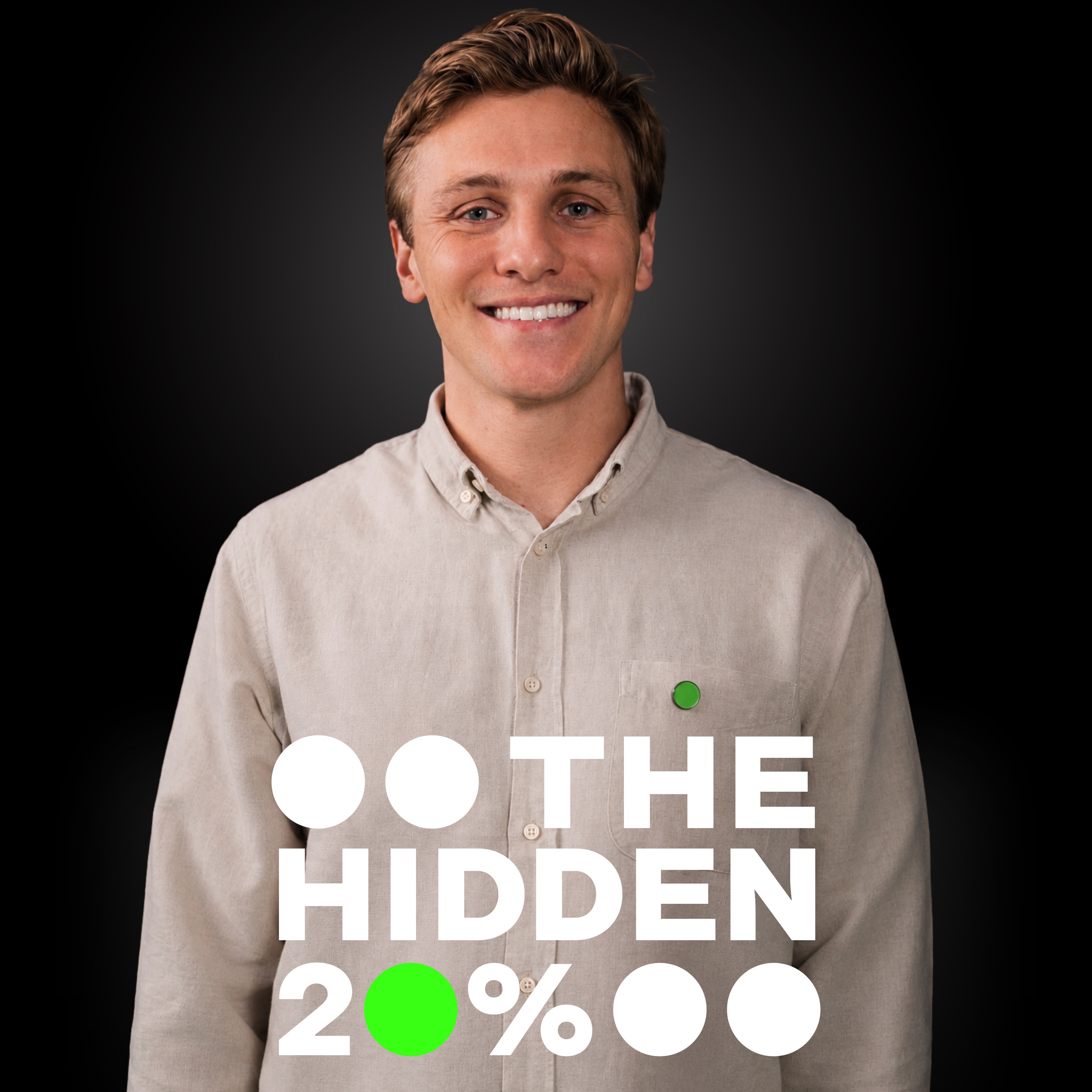
Dyslexic entrepreneur and Talamo co-founder Jamie Wace joins Ben for a conversation about why so many children with dyslexia are still being missed - and how technology could radically change access to support.
Jamie reflects on his own experience of school, including being told not to pursue subjects he loved because his dyslexia was misunderstood. He shares how years working in tech and entrepreneurship eventually led him to question why dyslexia assessment systems remained so inaccessible, expensive and outdated.
Together, they explore the emotional impact of unidentified learning differences, why schools often rely on “wait until they fail” models, and how understanding a child’s cognitive profile can shift the conversation from blame to support. Jamie also unpacks the future of assistive technology, overlapping neurodivergent conditions, and why early identification could change life trajectories for millions of children.
Join us at hidden20.org/donate.
________
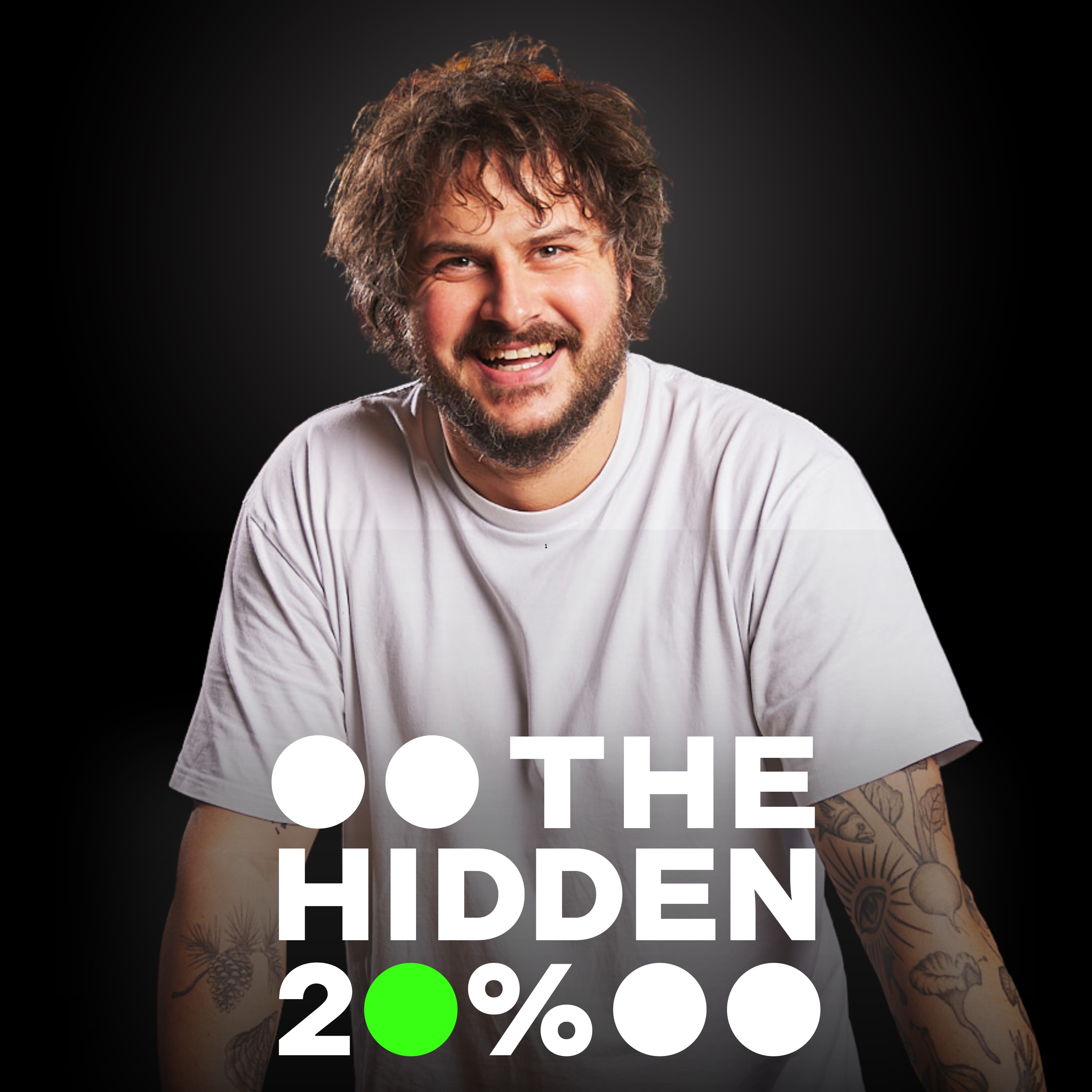
Host: Ben Branson
Production Manager: Phoebe De Leiburné
Video Editor: James Scriven
Social Media Manager: Charlie Young
Music: Jackson Greenberg
Head of Marketing: Kristen Fuller
00:00 Introduction
01:30 Jamie Wace’s Dyslexia Story
05:07 Being Told Not To Take History GCSE Because of Dyslexia
06:00 Has Awareness of Dyslexia Actually Improved?
08:31 Why Schools Need To Understand Cognitive Profiles
08:48 How Talamo Was Created
09:54 The Statistic That Changed Everything: 80% of Dyslexic Children Go Undiagnosed
10:21 Why Traditional Dyslexia Assessments Don’t Scale
19:19 Dyslexia, ADHD & Understanding The Whole Child
29:24 The Future of Assistive Technology For Neurodivergent Students
31:16 Dyslexia, Schools & Assistive Technology In The Classroom
40:32 Early Dyslexia Screening & Why Schools Are Changing
44:24 Why Dyslexic People Often Make Great Communicators
46:20 Dyslexia, ADHD & Neurodivergent Overlap
50:51 Building Talamo For Impact, Not Profit
55:46 Jamie’s Green Dot Badge
The Hidden 20% is a charity founded by AuDHD entrepreneur, Ben Branson.
Our mission is simple: To change how the world sees neurodivergence.
No more stigma. No more shame. No more silence.
1 in 5 people are neurodivergent. That’s 1.6 billion of us - yet too many are still excluded, misunderstood, or left without support.
To break the cycle, we amplify voices, challenge myths, and keep showing up. Spotlighting stories, stats and hard truths. Smashing stereotypes through honest voices, creative campaigns and research that can’t be ignored.Every month, over 50,000 people turn to The Hidden 20% to feel safe, seen and to learn about brilliant brains.
With your support, we can reach further, grow louder, and keep fighting for the 1 in 5 who deserve more.
Join us at hidden20.org/donate.
Become a monthly donor.
Be part of our community where great minds think differently.
Brought to you by charity The Hidden 20% #1203348
______________
Follow & subscribe…
Website: www.hidden20.org
Instagram / TikTok / Youtube / X: @Hidden20charity
Ben Branson @seedlip_ben
Jamie Wace @jamiewace
If you'd like to support The Hidden 20%, you can buy a "green dot" badge at https://www.hidden20.org/thegreendot/p/badge. All proceeds go to the charity.
Hosted on Acast. See acast.com/privacy for more information.