 Ask ChatGPT

Martin (the “ADHD Chef”) explains how ADHD shaped his life and cooking/content, and argues that household food waste can be reduced with a simple mindset: “eat the food you buy.”
Martin (chef since age 15; worked in restaurants/catering; runs a food-waste-focused social channel; diagnosed with ADHD last year; says his ADHD was obvious to his mum; class clown at school; later wrote a book while being diagnosed). Host: Ben (runs neurodiversity charity The Hidden 20%).
70% of UK food waste comes from UK homes. Chefs’ brains can thrive in chaotic service via multitasking/mapping tickets. Social media increases fear/judgment and can distort cooking content (“content farming”). Diagnosis helped him “box it off,” but organization remains difficult.
“Structured chaos” cooking style; using broccoli stalks; “velouté” as just a thick sauce; “taste as you go” (salad dressing/vinaigrette taste then adjust); writing his book “Eat the Food You Buy” during diagnosis (draft largely written in ~2 days).
Written by AI. May contain mistakes.
Discussion about the host's realization of having ADHD through audience feedback.
“The best way you can help is really simple.”
Exploration of the host's cooking style focused on food waste and sustainability.
“Martin, I spent this morning like crying with laughter watching your videos.”
Discussion on the fear surrounding food preparation and social media's impact.
“But it's a really good flip upside down on a really serious subject.”
Presentation of shocking statistics about food waste generated in UK homes.
“What are you dressing like an idiot for?”
Insights on the importance of taking responsibility for food purchases and waste.
“Simple things like potatoes, for example, if they've gone to waste or they're going to turn, like I said to you earlier, or bake five potatoes and then I had a cold baked potato the next day.”
The host reflects on their ADHD diagnosis and experiences in school.
“Obviously, you were diagnosed ADHD now, but how do you reflect back on how you were at school?”
The discussion of living with ADHD and its impact on the host's life and decisions.
“I remember seeing Heston Blumenthal's documentary where he was this mad guy, extremely creative, and then that went spiralled into this depression because everything got so much.”
Exploring the idea of adaptability and the liberating concept of 'f*** it therapy'.
“you know, the Italians can take it, can't they?”
Discussing the emotional impact of receiving an ADHD diagnosis and its implications.
Reflecting on self-discovery and the confusion that comes with late diagnoses of neurodivergence.
“Do you think getting a diagnosis has helped?”
Exploring how ADHD may enhance creativity and adaptability in the fast-paced culinary world.
“I paid just because my mum was like, I think you should get diagnosed.”
The unique multitasking abilities of chefs and the prevalence of neurodivergence among them.
“And you know, the way that your brain can map things out and think about loads of different things at once, and it doesn't have to make sense, but it makes sense to you.”
Discussing the pressures chefs face in the spotlight and the desire to focus on their craft.
“way that I don't think any other profession does it.”
The challenges and opportunities of using social media as a chef and educator.
“But now I'm like, I want to be in the real world, you know, making an impact in a real world because you can't, don't really know what your impact is in socials.”
Detailing the challenges of writing a book while navigating a new ADHD diagnosis.
“And then as I reread the email, this like overwhelming sense of like, oh, bollocks, I've really f***ed up.”
Introducing the idea of minimizing food waste through practical cooking lessons and recipes.
“And I think that was always a relief when I spoke about it after getting that first draft in.”
Learn how tasting throughout the cooking process enhances flavor and technique.
“And then that's how you implement stuff across other recipes.”
Discover how personal taste influences seasoning and the common misconceptions around it.
“Around a recipe of like, we just think about, well, how much and what is it?”
Explore the challenges of receiving criticism and the impact of social media on food content.
“My wife would be like, you can't say that, but if I see her grabbing the salt before she's even tasted her meal, when I've cooked it, because I think I know what I'm doing, I'm just like, have you tasted it?”
Learn about the creative process in cooking and how to make food accessible to everyone.
“Like, you're not the first person to sit there who's got a great social following where people don't talk about the work.”
Understand the difficulties of maintaining a content creation schedule and the importance of authenticity.
“Where you can like, yeah, like you're doing, like take an ingredient and then go, amazing.”
Discover the significance of developing a personal style in food content creation and its impact on audience engagement.
“And I sat there last night and I should post something, but it's not going to change the world if I don't post it, if I do post it.”
Learn how embracing chaos can lead to unique success in cooking and creativity.
“And it was because I didn't know what I was doing.”
Explore the mixed responses to openly discussing ADHD and its impact on life.
“That's why I said to you earlier, when I stepped back and go, I wish I just had a normal business that was like, right, I produce, I don't know, potato seeds.”
Understand the personal experience of getting diagnosed with ADHD and its implications.
“Kind of like, yeah, in my head, like just being diagnosed at festivals.”
Discover how ADHD can influence cooking styles and task management in the kitchen.
“pokey little square and you know i'd start doing a job and it would be like tomato concast or whatever so you're doing that and then all of a sudden you'll be like oh well you know that dish is mussels.”
Learn how to improvise dishes based on available ingredients and flavors.
“Oh, I've just seen some sashimi tagarashi up there.”
Find out how to get kids engaged in cooking while allowing them creative freedom.
“My mate Bob said, how do you get Noah invested in cooking?”
Reflect on the impact of mentors and teachers on personal and professional growth.
“Then Bob, I've mentioned him in the cookbook, my old head chef, so he's out of the play.”
Discover the impact of supportive teachers on student success.
“I used to dress up as Ali G and DJ at the school.”

Get the gist, explore an idea or ask about something said.
 Claude
On The Hidden 20%, what are the key points of this episode?
Searching your listeningAutomatic transcript. May contain errors.
0:00Up until about four or five years ago, I never really thought about ADHD or anything like this. It was only until I started doing my content and then people were commenting going, if ADHD was a chef, this would be it. And I remember calling my mum and going, mum, do you think I've got ADHD? She's like, yes. Like, we've always known. I was like, well, why have we never done anything about it? Welcome to The Hidden 20%, our neurodiversity charity on a mission to rewrite the future for people who think differently. Together with you and an eclectic range of brilliant guests, we can break the cycle of silence by smashing outdated stereotypes, exposing the myths, and sharing the most up-to-date truths about what it really means to be just different, not deficient.
0:46The best way you can help is really simple. Subscribe so you never miss an episode, and if you can, donate to our charity through the link below. So enough preamble. I'm Ben, your host. Let's get into today's episode.
1:08Martin, I spent this morning like crying with laughter watching your videos. It's good therapy. It is good therapy. And I like crying with laughter. That's a really good thing. But to do that, watching somebody effectively in their kitchen cooking. Yeah. I think that's pretty impressive. You know, your style and your approach feels really refreshing and feels like exactly what we need today. Yeah. How would you explain what you do and your style? Good question. So I suppose my thing is always about finding that moment of structured chaos. So my channel is all about food waste. So if I go all the way back to the beginning to kind of tell it all that I set my channels to talk about food waste because I saw people doing amazing things that was about sustainability, Doug McMaster, all of those kind of people doing the big lofty talking.
2:07And then the big numbers are all around food waste, household food waste. And I was like, why is no one really going after this and like having some fun with it? so I set my channels up and I was one of those people that would talk about the stats and I bombard people with that and as I distilled it all down it became this thing of like eat the food you buy it was like that is the solution to food waste so my whole channel is like let's teach people how to have a laugh how to cook anything could be a toasted cheese sandwich if you eat that you're solving household food waste in my eyes so I was just let my personality flow so I just have a laugh.
2:42We have some fun, you know, we be stupid. And I think it's like that idea, like cooking is such a playful thing. So if you can be playful and enjoy it, then the whole process becomes so much more fun. So yeah, that was my take on it. But it's a really good flip upside down on a really serious subject. Yeah. You look at food now, or you look at food back then, and the French classic cooking is how everyone was taught, how everyone learned, must learn these sauces, must learn that. They're the foundations of cooking. But people are scared to do anything different. I think once you've learned the basics, you know how to make a velouté, for example.
3:17Like, you know, it's flour and butter and some light stock. If you strip the word out and just go, it's just a thick sauce, then you can just like open up the whole world of cooking. It doesn't have to be so formal. And social media has made it really, really tricky for people because they look at people and go, oh, but he's cooked this beautiful fillet steak that's probably like 20 quid. my food never looks like this so I drop things on the floor I cook how people cook things spill I put too much salt in I teach people how to change all of those things well you don't measure anything which I love it's like a bit of lube I mean you know it I don't know it speaks to I can do that yeah I could do that that's it I'm gonna try that yeah and I think that from an accessibility perspective or just being shown like how to use up a broccoli stalk instead of throwing it away, right?
4:11Yeah, yeah. I mean, I feel myself like banging my head against the wall going, it's so simple. Food is complicated in the scientific sense. Like if you look at it like that, like you're trying to balance flavors, you could go deep and it's very complicated. But on a base level, everyone knows what they enjoy. If you like carbonara with mushrooms in it, put mushrooms in it. If you don't put it on the internet, no one knows. No one knows. You put mushrooms in it, you're not going to destroy the Italian history of the carbonara. Yes. And I think people just have this fear now. Social media, you put something on it, everyone judges you instantly.
4:47No matter what you do, you put my outfit out there. What are you doing, mate? What are you dressing like an idiot for? Yeah. So I think people are just fearful of just having some fun with food. And yeah, it's a bizarre, bizarre space, really. And just so we note it, what are the headline stats on food waste? What do you want? The shocking one. It's either changed to 60, but it was 70. So 70 % of all food waste is created in UK homes. So you look at the whole system. We can simplify it by going, there's pre and post. So pre-farmgate, we kind of forget about a little bit. That's like farmers, that is like food loss, not so much waste.
5:26So that kind of it. Then you go into the world where we are, which is post. So it's like supermarkets, restaurants, catering, hospitality, all of that kind of stuff and houses. Yes. Everyone looks and goes, well, surely there's all of these restaurants creating waste. There's all of these hotels that are feeding thousands of people a day. There is waste. And you're like, yeah. But then the stats from RAP, you know, love food, hate waste. 70 % of all of it is from UK homes, which is bonkers, you know. And that's where I, when I looked at it, when I first started doing my channel, I was like, that can't be right.
5:55But then when you do think back and you go, well, people don't eat out every day of the week. You know, people live in a home. People have to buy food into their home. And yeah, it just kind of like topped up. And then you got the big bangers that are like 4.4 million potatoes are wasted every day in UK homes. Deli meats are one of the top hitters that are wasted. Bread, obviously milk, all of those bag salad leaves. People buy a bag of salad, eat half of it for a meal and then go, oh, and then it dies two days later. Yes. So my whole thing is I don't want to point the finger at people and say you're lazy.
6:28But at the end of the day, you've brought food into your home. It's your responsibility. So that's where I'm always like, I can give you a solution. If you bought a bag of salads and you've had a chicken Caesar salad, eat salad tomorrow. You know, you've brought it into your home. It's there to be eaten. Simple things like potatoes, for example, if they've gone to waste or they're going to turn, like I said to you earlier, or bake five potatoes and then I had a cold baked potato the next day. It's not like Michelin-style food, but it's food at the end of the day. So tiny little solutions. It's not massively complicated, but yeah, you have to care.
7:04And I love food, so I care. Yeah. And why is your brain so primed? Why are you the perfect person? Why is your brain so good at doing this? Well, I've been a chef all my life. So I've been a chef since I was like 15, worked some restaurants, catering, all of that kind of stuff. And I always looked at an ingredient. well this is a quote from a friend he said you need to look at every ingredient like it's a black truffle so if you're in a restaurant you're growing black truffle over a pasta dish they're not going to go they get to that little knob end bit and oh we don't need that you know that's so much money if you can take that and put it into every ingredient that you have may feel weird like oh a bit of carrot that's that's nothing but if you think of it it's just food yeah then it changes the way you think so when you start taking the the knob end off the the carrot instead of taking an inch off you take like two mils yes it's not going to save the world but it's teaching you those things yeah and it's those habits so what you're telling me there is that's about valuing yeah our food yeah it's such a cheap commodity the stuff that's wasted yeah potatoes you can buy a kilo of potatoes for two pounds yeah and then for someone to go one or two potatoes it's not going to save the world forget about the world think about your wallet you know think about you spent the money if you're chucking away you're wasting your money just that kind of like making it sink in and i get that people are busy and it's not on top of their mind but at the same time it's just like you need to eat every day yes and it's such a simple fix if everyone just ate everything yeah you know food waste be solved yes we'd have no issues so yeah yeah so let's talk about how adhd factors into you your work your brain yeah everything you do and are.
8:49How was school? Obviously, you were diagnosed ADHD now, but how do you reflect back on how you were at school? Yeah, I was the classic class clown, the boy that could never concentrate, the one that was a mischief, you know, all of that. And it's funny because my mum and dad moved house recently. They sent down a box of all of my report cards. Oh, you should have drawn it. So my son is six or six and a half now, as we're saying. Big jump, the half. and I got my report card of his age last year and it was basically just like Martin can't concentrate he is a gifted child but he doesn't want to be involved in the class he wants to do his own thing all of this kind of stuff and I look back now and I'm like if I knew that ADHD was this thing then people might have given you a bit more attention to kind of help but I was always just like I don't see the point of this this is easy yeah I'm done you know I've tapped out so when I went to secondary school always getting told off always being the idiot leaving things to the last minute a lot of picking and choosing the things I wanted to do so like A levels I wasn't allowed to do PE which is a separate story yes which was my passion so I picked psychology art graphics and theatre studies and I didn't care for psychology so I never turned up and I always just go and do what I wanted to do so I've always been like I'll do what I want to do sure doesn't matter if he's not gonna upset anyone fine yes yeah school was I mean I was always quite intelligent in some aspects maths and English but if I didn't care I just tapped out so languages and all that kind of thing but yeah I was always in trouble and any mention of ADHD any I'm 39 now so I always remember started secondary school 98 and up until about four five years ago I never really thought about ADHD or anything like this it was only until I started doing my content and then people were commenting going if adhd was a chef this would be it you are the definition of adhd and i was like still going well i don't know what adhd is you know attention deficit disorder blah blah blah and i was like cool still doesn't make any sense to me i suppose he's skipping a little bit ahead but as soon as i started getting that put on me every day for like two three years i was like yeah maybe i am and i remember calling my mom and going mom do do you think I've got ADHD?
11:04She's like, yes. Like, we've always known. I was like, well, why have we never done anything about it? She was like, well, you're fine. You're totally fine. There's nothing that you need help with. Yes. So I think that was quite a pivotal point. I remember seeing Heston Blumenthal's documentary where he was this mad guy, extremely creative, and then that went spiralled into this depression because everything got so much. And I said to him, I'm not at that level, but I feel like now I'm at this point in my life where everything's going well my channel's doing good and making enough money I'd never have dreamed to have a salary of this amount of money but I felt very unfulfilled and then she kind of went to me say ADHD you know you're always striving for what's next you got bored what's next what's next what's next the dopamine chase so then she was like I think you should go and get diagnosed have a chat with someone and then yeah I got diagnosed last year so are you close with your mum yeah yeah yeah my mum's someone you You could just pick up a phone.
12:00I just want to tell you about going on holiday. And then 45 minutes later, it's like, yeah, we've talked about everything. She's like, told me about what I should do with financial advice. Go to the doctor, get your blood work done. Yeah, she's amazing. Like, I wouldn't change anything. I love the fact that, A, like your audience outed you. Right? It's an open channel. I mean, yeah, I get it. It's cool. I love it. And it was obvious to your mum. Yeah. Yeah. Obvious to my mum from a long time ago. But I think my mum's always been one of those people that's like, let me do the self-discovery. She would never be kind of like, I think you need to get yourself sorted out.
12:35It'd always be like, I was a bit of a reckless person in my 20s, you know, a lot of drinking and that stuff. And I think my mum was just like, oh, it's Martin. Just let him crack on. He'll have a good time. And I've always been able to do what I've needed to do. So yeah. Sounds like you've always found your own way. Yeah. I say yes to a lot of things. That's a good thing and a bad thing. Okay. So I'm a bit of a yes man. and just kind of go down that rabbit hole. And why do you think that is? I feel like I don't want to miss out on something. So even if it's like saying yes to an event or if someone's going somewhere, I'm just like, yeah, I'll be involved.
13:09It doesn't matter. Let's just do it. You never know what opportunity it may lead to or what experience you may have. Yeah. So yeah, always been a bit of a yes man. Are you a risk taker? Calculated. Yeah. That is a good parent grown-up answer. I think you would have asked me about 10 years ago. I guess that's part of the nature though. It's part of being a chef, right? Like there's a lot of danger in a kitchen of knives and fire. And also you seem to be someone with your cooking. You're not afraid to try stuff, right? You're not afraid to break a rule. You're not afraid to add something in. Like you were saying, mushrooms into carbonara.
13:47You know, you seem quite fearless in that sense. Yeah, I think I've always been a person that I'd never want to upset someone for doing something mean or horrible or something like that. So if it's like adapting something, like a recipe, you know, the Italians can take it, can't they? They can take a little bit of adaption. But I think it's that idea of I always play forward in my head. Is this going to upset someone? Is this going to offend someone? No, we're probably all right. So, you know, there's the book, I'm going to swear, the f*** it therapy. I probably read the first, like, two pages and I was like, makes sense.
14:22You know, you just say f*** anything. Like, what's the worst that can happen? Like, obviously, like I said, I don't want to upset anyone. Yes. Like, what's the worst that can happen just plays out in my head and it kind of allows you to be a bit more free. Yes. Take me back to the day, I guess, and how you felt when somebody said you're ADHD. Yeah. It was weird. I remember the first three to four months after being tough because it was almost like everything that you knew had kind of gone well there's an answer for it there was a reason for it and it became a thing like i wasted a lot of my life yeah just like navigating that there's a lot of frustrations pent up around never finishing tasks like i've always wanted to have my own business something i've been like right i want to have a business that's like i'm in control of i'm the ceo i've got people that work for me and we have an amazing time and i've never been able to achieve that and getting that sort of like diagnosis and saying oh it's because of your adhd that you're not programmed like everyone else it felt this overwhelming sense of like wish someone just told me yeah and then i wouldn't have like given myself such a hard time yes but yeah i do remember yeah the three four months after being in a real very emotionally like turmoil period of like everything playing out in my head like going finances life you know relationship was stable kids stable that's solid but just everything around it i was just like yeah it's super confusing isn't it i remember i was diagnosed autistic first and then adhd what six seven months later and like you had that oh my god it's so much like now sort of makes sense but then that's even confusing yeah i was 39 like how the and then i'm the last to know and everybody's like yeah of course yeah i'm like what the what's going on yeah just started thinking back over like a period i always remember work got really slow over like at that period as well interesting right in the book work really slowed down which had always been quite consistent and then there was lots of unknowns and those unknowns started like going well if i would have known this earlier it's your fault and i started blaming people for like things not being in place and it became such a cesspit of just like really confusion is what I can sort of like base it all in.
16:45Do you think getting a diagnosis has helped? Yes and no. Yeah. You know, I went private. I paid just because my mum was like, I think you should get diagnosed. Just go private, get it done. At least you know. And then you can kind of box it off. And I think if I didn't know, my life would have carried on. I do know now my life is carrying on. There's a little bit more sort of like knowledge around things. I try not to beat myself down about like I go to my studio. and I've filmed two dishes. I could film seven, but I find myself just like pottering around, like cleaning a shelf or like, you know, taking the barbecue out and lighting it and just cooking an auberge.
17:19I'm like, why are you doing this? You know, sometimes I'm like, sake, Mark, like, come on, just focus. But now I kind of just go back. Okay. Yeah. And it can be that simple, right? In terms of like, it's just not, yeah, you can go with it rather than judge it, beat it. Yeah, yeah. Yeah, that's interesting. why do you think ADHD and chefs is a good marriage oh I suppose but the the untapped ability of creativeness so like as a chef I get a lot of messages from people that do content or that want to do content and they're like I'm stuck in this job I'm doing the same menu it's like the rinse and repeat of a menu and I'm like okay for me I've always worked in places that the menu would change every two to three weeks and if you have a decent head chef who allow you to be creative then there is like endless things you can do so for me as a chef or for other chefs there's like all of these little areas that you can play into and there's nothing that's wrong yeah so yeah the ability to be playful the ability to be creative the ability to sort of like thrive in a world that is unbelievably chaotic in service obviously not all restaurants are chaotic but places I worked in, it's like this rush of, I've got 20 tickets.
18:36Yeah. And it's intense. It's intense. Yeah. And you know, the way that your brain can map things out and think about loads of different things at once, and it doesn't have to make sense, but it makes sense to you. So I explained to people who've never worked in the kitchen before. If I said to you, you're doing service, and it's always funny. Right. Table two, they've got like two scallops and two sea bass and then you've got table four they're having two scallops two sea bass but one of them doesn't want any butter you know and then you've got another table it's like one octopus two steaks medium rare medium well and you've got 10 of those tickets your brain somehow goes it's chill I know what I'm doing and it's one because you're prepared but also because you're able to sort of like map it all out yeah it's the fascinating thing about chefs that they can multitask in a way that I don't think any other profession does it.
19:26Do you think a lot of chefs are neurodivergent? Yes, 100%. 100%. I think it's just this inherent way that you can think slightly differently, a slight unhingedness to it all. I also think the way things that are magnified, I suppose, the ADHD or the neurodivergent people in cooking is all the way back to social media. Think back 20 years, like there was real no, there was no social media. You had chefs like the Marco Pierre White's, the Rams, all of that, that did it because they loved it. And they were tucked away out back. Yeah. Never this front facing thing. Yes. And they could be who they wanted to be.
20:04You fast forward 15, 20 years, Jamie Oliver doing sort of like the first TV show that kind of like brought people into the cooking world. And now all of a sudden you have to be a personality and a chef and you have to be this spokesperson for whatever you're doing. and it is scary and it's crazy and I think that is yeah one sort of like put a spotlight on people but then also yeah allowed people to be a bit more free I suppose with what they're doing but telling the story is the the tricky bit I suppose yeah I think when you talk about the history like that it's interesting that historically you just focus on the work yeah and the work is cook the food and now the work is not just cook the food yeah and you've got to tell people about it yeah the Kurt Cobain one I always say it like he wanted to be a musician he didn't want to be famous yeah he became famous it became too much yes we don't know the story of what happened sure sure you know yeah yeah it's the same you see a lot of chefs like maybe someone like Anthony Bourdain who was a chef he loved food he became famous he never really wanted to become famous now he is and then you know the rest is history but i think there's that weird thing of like the pressures of becoming something that you don't want to be but you love the skill that you're doing so yeah how do you think about that in terms of your work and social media and having a big following yeah i think i'm in a phase of full circle-ness like i was the the behind the scenes learning my skill in a period where there was no one to judge you it was just learn you know and i have chefs my mate bob who was like my old head chef at a restaurant we worked together and I have so much for him to thank him for because it was all of the skills the stuff he took the time to show me stuff and you take that in and then now you're in a space where anything you put on online gets judged you know I could teach someone how to make an omelette that's not how you do it that's how I do it I'm just showing you how I do it you know and now I sort of like had this time in social media and I love it because I can teach and I can educate and I can put across positive things there's nothing I do is negative.
22:11But now I'm like, I want to be in the real world, you know, making an impact in a real world because you can't, don't really know what your impact is in socials. So yeah, I've kind of gone from here into the socials. Now I'm sort of like slowly eking my way out of it to become a person of some stature, should we say. Yes, a public figure. Yeah, let me be it. Let's talk about the book because your ADHD diagnosis came in the middle love writing a book yeah and that was quite tough bad yeah you say it i'll say tough bad yeah i mean so yeah the the time frames of writing a book is just bonkers like spoke to them in october 20 whatever it was december you sign the contract january you start writing the stuff april may i got diagnosed that was the whole period june was my first draft so like smack bang in the middle got all of like the concepts scrappily down i remember just sending them screenshots of like my notebook because it was just like i want this picture to do this and then i always remember the tipping point was sitting there and i knew i had a deadline on the monday and i thought it was just a section of the book but it was technically the whole book and i sat there and i went oh and my wife's like what and i was like i think i'm meant to have written the whole book by now but I thought it was just one veg section.
23:30And then as I reread the email, this like overwhelming sense of like, oh, bollocks, I've really f***ed up. I'm not going to be able to do this. And I sat there and I went, there's only one way out. You've got to do it. So I sat there for the weekend. I genuinely think I wrote three quarters of the book in the space of about two days, like solid whiskey. If I smoked, I would be chugging away, but I don't. So just whiskey and I was just writing. and I just got into this state, you know, like when you get into it and you're like, boom, I am fully locked in. There is nothing. My wife would walk in and talk to me and I'd be like, not just like, because writing recipes comes quite naturally to me because I've done it for so long.
24:12There's this kind of weird, kind of like Rain Man-y kind of vibe that you get when you're like, okay, I know how much pasta's in a portion. I know how much butter should go in. I know what this should be. So when you start typing recipes, Ralph, Ralph, Ralph. Yeah, yeah, because you know all your ratios right yeah yeah and i did it and i was like wow i was like this is sick and then put it in and then amy my editor was just like i think there's quite a lot of work still to do on this i was like yeah no i just wanted to get it in and then when i spoke to her i said i was like i did this in a couple of days she's just like i can tell but you've got it in and then you know shitty first draft though isn't it yeah yeah scrappy and then that's the editor's job, you know, kind of like give you structure to all of this chaos.
24:54And I was always very open with her at the beginning when I got the book deal, I said, I'm not going to enjoy the process. I know I'm not. I want to do the book because it's the right time for me to talk about all the bits I want to talk about, but I'm going to need help. And they were just like, look, we've worked with a lot of people that don't necessarily want to do a book, but their story is powerful and, you know, their message is great. So that's why we're here. And I think that was always a relief when I spoke about it after getting that first draft in. I was like, I've struggled. And she was like, it's okay.
25:24You know, we're here. And they were amazing, you know. Everyone does those gushy speeches at their book launch. I wouldn't have been able to do it without. This book would not be a book without the editors, my wife sort of being a sounding board and yeah, just whiskey. Yeah. Do you think being diagnosed in the middle of it changed how you approached the book? No, it made it extremely hard. I think because... Made it harder. Yeah. Yeah. Because I was navigating all of those things we spoke about earlier. Yes. I technically have this book written in about 20 different things in my notes. It's all there.
25:59But I could have spent, you know, two, three months before that draft, knowing that I'd got this book deal to piece all of that stuff together. Yes. Go, right, this is really what I want it to be. These are the recipes. Where I found myself on that weekend going, all I had was tomato salad I had in Lugano, you know as the recipe sort of like brief to myself so I could have spent two three months mapping these recipes out beautifully and knowing that they all were like what I wanted them to be it is a book that I want it to be and that's great now but I think on that weekend it was a miserable miserable time and I was sitting there going you idiot Mark yeah if only you did when you know you was away at that weekend or whatever but the book is called eat the food you buy.
26:45Eat the food you buy. It's available for pre-order now. Yes, it's available for pre-order now and it comes out on July the 16th. So eat the food you buy. So that's my saying. Yes. Talking about food waste, I believe the solution to household food waste is just eating the food you buy. It doesn't have to be any more complicated than that. Because we don't. Because we don't. I mean, it's madness. Yes, it's like 15 everyday ingredients. So it goes with all of your vegetables, the main top bangers like aubergine, courgettes, carrots, and all that kind of stuff, then goes into a couple of meats, chickens and stuff.
27:14But it talks about leftover produce more than cooking stuff from scratch. Yes. A lot of sort of like nostalgic recipes that don't need to go on about because no one cares apart from you, but I had to put them in, you know, like my nan's chicken and ham pie. It's a good pie, but no one cares about the story. And yeah, it's just in each recipe, I believe solution to food waste is eating. But how do you eat the food? You make it tasty. and people don't teach that in cookbooks. They go season to taste. What does that mean? Ramsey does it on all his videos. He's like, right, steak in, season. Tell me what that is doing.
27:51So in the recipes, it will go, let's make a salad dressing, for example. And it'll be like, add your oil, add some mustard. Don't add the vinegar. Taste that. Rank. Absolutely disgusting. You're the worst chef in the world. Add a bit of vinegar. Taste again. It's getting better. Put a pinch of salt in taste. and then you teach yourself. Yeah. And then that's how you implement stuff across other recipes. So as you start making a sauce, you go, it needs something. I've registered acidity in that vinaigrette. If I put acidity into this tomato sauce, that's going to do something. Yeah. So those little lessons is what it brings forward.
28:23And it's exciting because I want people to go, oh God, unlock that moment. Yeah. Martin monologue in the head. Yeah. But that's another aspect, isn't it? Around a recipe of like, we just think about, well, how much and what is it? Yeah. order I do it in rather than why. And like you're saying, taste it, taste it again. Giving people those, those prods to kind of go give it, try it. Every chef will be like, well, yeah, that's common sense. But not everyone has been a chef. I've worked in restaurants and you go and give your chef a sauce. And then the first question is, have you tasted it? And when you're new, you're like, so it's drilled into you to taste everything.
29:00Every little thing you're doing, taste it at points. If you're making a tomato sauce, taste it when you put the tinned tomatoes in, understand how acidic, how sweet, how weird they are. Then cook them out for a little bit. Then taste again. You go, wow, add some salt, taste again. Oh my God. Add some vinegar. Add some sugar. Oh my God. But it's the same with how we make drinks. It's layers and it's building blocks. And you have to understand the relationship between what you're putting in, what's already there before you start just overloading it. You can't do things blind. No. You can't do it.
29:30No. My wife would be like, you can't say that, but if I see her grabbing the salt before she's even tasted her meal, when I've cooked it, because I think I know what I'm doing, I'm just like, have you tasted it? She'll go get a jacket potato or whatever, cheese and beans, and she'll be there with the salt. And I'm like, what if I've seasoned the potato? Yes. What if that cheese is really tangy and salty? You might not need it. Yes. Have a mouthful first and then you can season it. We've been conditioned to because the salt and pepper sits, whether it's in a restaurant or whatever, it sits at the table.
30:02Yeah. We've kind of gone, oh, that's what you do at the end. Yeah. When you finish cooking my food, I'm going to then put some salt and pepper on it. Yeah. Bad idea. Yeah. Like it doesn't even need to be there. No. No. We are drilled into us like season throughout, season throughout, season throughout, season throughout. Every little step. Yeah. And I think this, you know, this is the thing that I love about cooking is everyone's palate is different. Yeah. So somebody may like something overly salted. That is totally fine. You know, but when I do dishes on social media and I sprinkle, I use kosher salt and I use Cornish sea salt.
30:36Cornish sea salt I use for like finishing things or if I want like a smoky hit or whatever. Kosher is like the everyday. And when you take a pinch of kosher and you put that into a pan, it looks like a lot, but it's not a lot. So everyone's like, oh, that's going to be so salty. And I'm like, have you tried that food? I know for a fact in my head it could take that much for this thing yes and you know people need to build up those little intuitive things when they're cooking and I think yeah social media is like people just judge things instantly don't they what's the worst thing someone said to you oh someone goes I like his food but he's a twat I did a thing at Christmas where I took all the negative comments like they're always a bit like oh you're just a twat or you're an idiot not about your food not about my food my food's alright Like, it's just more about me.
31:25Shave your beard. Yeah. Like, you're not the first person to sit there who's got a great social following where people don't talk about the work. They don't comment on the work. They comment on you personally. Yeah, yeah. Appearance, like, accent. Yeah. There's a couple of sides to it. I could, like, double down on some of the things I do to sort of, like, rile up the virality of stuff. but at the end of the day I'm just like my linchpin is this food waste thing I don't want that to get sort of like taken over by other things because a lot of people do like content farming they call it where for example like if I'm seasoning something I would intentionally over season it so I know that people will go oh that's too much salt so then it makes engagement pop up so like if I was like cooking a steak and I cooked it you'd do it wrong yeah cook it like medium well and I'd be like that's perfect rare and then people would be like mate that's not that's like you've got to cook it to like 45 degrees.
32:21People intentionally do that and you'll see it everywhere now. And sometimes I do it unintentionally because I'm like cooking something and then I'll put too much vinegar in. And then I like it. And people comment on that. And people comment. Oh, mate, what are you doing? Seasoning your fish and chips? Oh, grow up, mate. You know, yeah. Okay. Yeah. That's interesting. Content farming. Content farming. I'm going to watch out for that. Yeah. What are the best bits about your brain? Can I grow that piece of paper? Yeah, but can you tell people what you're showing to the people who are listening. Yeah.
32:52So this is a page from the book and it's basically a mind map of the ingredients. So in the early days when I was doing my channels, I always thought if I can teach you 20, 30 different ways to use an ingredient, you can put that into any dish. So obviously in the book, I can't give you every single way to use an ingredient. Sure. But on this little mind map, what I wanted to do is to give you like a snow machine. You can roast it, you can burn it, you can char it, you can fry it, you can saute it. So you instantly look at those and you instantly go, oh, all right. If I look at that aubergine in the fridge and I can saute it, fantastic.
33:26It can go into a salad. It can go into like a ragu. It can go into a stir fry. You know, it just gives you those options. Yes. And that is what my superpower of my brain is. Looking at a fridge, having all of that untapped knowledge of like being a chef and going, right, aubergine and pepper. Do you know what? I'm calling it here and now, and I hope that TV producers are listening or watching. Martin needs to come and redo Ready, Steady, Cook. Yeah. Oh, I'd love it. Your Fridge series is great. That was giving me like Ready, Steady, Cook vibes. Yeah. Where you can like, yeah, like you're doing, like take an ingredient and then go, amazing.
34:07I feel like I know I could do stuff with that. Yeah, yeah, yeah. And that's the comments I get. It's like, like I said, social media is a lot of polished dishes. Amazing chefs, Ben Lippitt. One of my, like, I love him. I love what he does. Top man. Every dish I see him do, I'm like, that is restaurant quality. I don't think I'd ever sort of copy any of those. Yes. Because they're just so, you know, the best ingredients. They're perfectly technically done. Chef food porn. Yeah. Isn't it? And then his sort of audience is that sort of the middle class, higher end person. Whereas I want to go for the everyday person.
34:39you shop at Lidl, you shop at Audi, you get a food bank box. You could still see my stuff and go, he's just taking an aubergine and a tin tomatoes and he's turned it into something quite nice with a few simple techniques. Yes. So that's the world I want to play in. Food is accessible to everyone. And the ability to make nice food is so easy, but it's just a couple of little skills that we need to know. Have you added that overlay onto, I mean, I immediately want to like do a spreadsheet and correlate the households, and household and like amount of food waste depending on demographics and households and then go are the biggest wasters of food in the nicest possible way are these kinds of households and these kinds of demographics so that's where we need the most attention yeah which is obviously going to be a big mainstream audience right yeah in terms of how many i don't know how many households there are in the uk but a lot that's funny you say spreadsheets that's the kind of thing my wife does marketing and she's like i've built you this content spreadsheet and i'm like Janine I'll look at that once and I'll never use it ever again it's amazing thank you but I structure and organization is just not me and since she's sort of come on board and started helping with my stuff she looks at me and she's like what are you doing this week and it's all up here okay nothing is on a calendar okay she's like well aren't we going out for dinner on Wednesday yeah it's in my head I could tell you my next month all in here really yeah yeah wow So when it comes to like, yeah, planning, all of that kind of stuff, again, another frustration thing, seeing other people I know are content creators.
36:11They're like, yeah, we've got the next month mapped out. I'm like, cool. I filmed 20 videos. I've got them on my phone. I just don't know when I'm going to post them. Yeah. And I sat there last night and I should post something, but it's not going to change the world if I don't post it, if I do post it. So I'll do it tomorrow, you know. So you come up with the videos, you film them, and then who edits them me you do it all yeah one bit of a one-man band like i was saying earlier i i've got a team like my agent who i blagged when i had i think i had 2 000 followers backtrack adhd story quickly when i got my first job at andrew edmunds in soho this was before i even had an email address and i just sent out letters by post and by hand to try and get a job i had no cooking experience but i was just like i want to work so then fast forward back to like yeah five years ago, I was looking for an agent because I was like, I want to do this social media thing.
37:08I'm onto something with the food waste piece. I had a friend that was working at an agency and he said, just stick with the food waste thing. It was like, you are sticking out like a sore thumb because you're doing something different. So it was like amazing chefs like Tom Hunt, you know, Maximana, Doug, but they sat in this cutesy, sustainable, oh, come on, we'll save the world, everyone. And my mate was like, be a mate, not a wanker. He was like, just jump in there and be like, look, you idiot. Eat that potato. You don't have to have picked it out of the ground yourself. Just eat that potato, you know?
37:39So when I got my agent, that's what I said to them. I said, I'm here. I've got 2 ,000 followers, but I'm on this mission. And Lee and Kay, they both went, yeah, okay, we see something. And I had no work for a year because obviously I had no followings. So trying to get that kind of work was just irrelevant and pointless. And I got that. And then things started picking up. And then I've been with them for five years and yeah, they've kind of like guided me, I suppose, as I've bumbled through. I love that though. And so for people listening and watching who love food, want to be in food content, ADHDers who are like, yeah, I can create, you know, 100 videos a week.
38:18What advice would you have if they want to get into this area? Do it for the right reasons. Okay. Yeah. So many people are like, I hate my job. I love food. Yeah. I want to make content. it seems easy from the outside, but to rattle out content, be consistent, be okay with being shit for the first year, two years, being okay with not going viral and seeing everyone else go viral around you, being okay with getting no likes, no comments on a piece of content that may have taken you two, three hours to do. Yeah. It's the hardest part. You know, I did it for two years before I even had any luck. And the video that I did, I grated a piece of frozen ginger, posted it on TikTok, not even thinking.
39:03Boom, half a million views. My account just blew up. And then I just jumped and it did a frozen series. And I went from 500 people to a million in six months. So I didn't know really what I was doing. And then it just kind of like it happened. But I say to people, if you want to do content, do content that you enjoy and that content that you can do. There's lots of styles you could do hands only, like we were saying, like just film the food, chucking things in. Or you can do style like mine where I talk and then you probably won't get as many views because people have to care about what you're saying.
39:35Or you can kind of like blend the two and kind of do, God, this dish is lovely. Only hands, come back to the end, but you can make that, you know. So it's finding a style that suits your personality and what you want to get across really. It is tough, but there is amazing perks. Yes. And then what do you find difficult about your brain? Organisation. Yeah. Yeah. The want to be so organized that I can do my everyday. Like I could take, this is without bragging, I could take the next, say, two, three months off because I know I've had work signed off. Sure. I could film those videos. I could film content.
40:10I could schedule it all. I could write the captions. I could bugger off. Well, not because I've got a son, but if I didn't have a child, I could bugger off to Australia and have a nice two month break. I could do that. But there's part of me that's just like, well, I kind of need to be in the ecosystem and doing my thing. And I'm just not organized like that. Whereas I know some people are and I look at them going, oh, that would be nice. But then there's also times I just sit there and I'm just like we said, just sit home and stare at a wall and have a coffee. So organization, what else do you find challenging?
40:43Not so much collaboration. organization i found it with my wife when we really try and knuckle down and do the organization piece i'm very good at collaborating and i'm such a yes man i'm like let's do it let's do it but i get frustrated when the idea doesn't sit you know when they say like adhd people are about seven pieces ahead and everybody like can you just say the answer and maybe haven't said the other six yeah can you just just say what i'm thinking yeah can you sit there and like i feel that with me and my wife but we're so open i'm just like can you just hurry up because i know what you're trying to say so we we have this such a beautiful relationship where it's kind of like she gets me i get her and i have to hear her out even though feel it like going just say it just just say what you want to say yeah so that kind of piece i i'm working on to be able to like collaboratively you know do the things that we need to do i think it's also the want to be a structured content creator okay that's a bizarre okay but i see people like ben lippett structure, socials work across, goes into Substack, goes onto YouTube.
41:45I built Instagram to 30k, then forgot about it, built TikTok to 1.2 million. Then was like, Instagram. I was like, started doing Instagram again, then forgot about TikTok, then picked up YouTube. I should have built them all at the same time and just gone, hey, I'm everywhere. But I didn't. And it was because I didn't know what I was doing. Same as Substack. I started Substack now. I should have done that three years ago when everything else was building but yeah I think that's where I struggle but again what I love about that is like you're just doing it your way and you're figuring it out and you can still have amazing success and opportunity doing it in a really chaotic way yeah which speaks through your food and your cooking as well of like there's a lot of permission I feel like you give to people.
42:37That's a nice way of putting it. Yeah. Yeah. Yeah. Like it's okay. Yeah. It's all right not to have it all structured. It's all right not to do multi-channel blah, blah. Yeah. Pick the ones that suit you. Yeah. You can look at people on social media and go, their life is amazing. They are making so much money and they are, but because they've got like a team of 10 people around them that are doing all of those other things. But when you think of social media and you are a content creator, like, you know, if I didn't have an agent, you know, I'll be answering brand emails. I'll be going over contracts.
43:13I'll be talking about IP rights. I'll be talking to lawyers about that. I'll be doing my accountancy. I'll be doing my email. You know, it's so much. And that's where, like, the whole kind of, like, I've just managed to bumble around and make everything kind of work. But, yeah, it is intense. It is. Yeah, it is intense. That's why I said to you earlier, when I stepped back and go, I wish I just had a normal business that was like, right, I produce, I don't know, potato seeds. Fantastic. That is so black and white to me. Whereas at the minute I'm like. Yeah, but I feel you. I wish I just did one thing sometimes.
43:50But then you get stuck. If you're doing lots of other things, you can kind of go like, oh, I might dabble in this for a little while. I might do that today. Yes With you now being I guess public about being ADHD And your audience telling you Before you knew What's that response been like? Mixed Okay Yeah, three tiers of people Okay I always remember I did a running post Because I used to love Yeah Did a lot of running And I went for a run And I never normally do like Vloggy style pieces of content But I was just like walking along And I was like going Oh, I suppose I should tell someone and sort of said, oh, I went and got my diagnosis.
44:29And it kind of made a lot of sense. And this isn't going to be a channel about ADHD, but it's probably answering a lot of the questions. And then mixed bag, people were just like, good on you. Some frustration from people who had obviously been in the system and had never been able to get diagnosed. So a lot of messages from that. And then other people just going, oh, no one gives a f***, mate. Like, why do you have to put a name on it? Why do you have to put a label on it? That kind of thing. And I was sort of, you know, some points I was sitting there, I was going, I don't need to put a label on it.
44:56I was like, this is my channel. Everyone's kind of like outed me as this kind of ADHD chef. People have noticed it. People were like happy for me that now I'm diagnosed and they know and they were correct. Now they're doctors because they know. You know, pat on the back. So it was funny, but a mixed bag. But I was at a festival cooking at Latitude and I was doing a cooking demo and there was a bit of a Q &A afterwards. And this lady at the end said, Martin, what do you want to do in the future? quite like a you know about my career and i bumbled through this answer i kind of went oh you know i'd love to have a school and do this and like then she came up to the end and she looked at me straight i went you've got adhd and i went all right and she was like i'm a doctor or a psychiatrist whatever she was i specialize in adhd but i could tell from your answer that you didn't have a clue where you wanted to go and i was like all right okay and that was the year before i got diagnosed it was Kind of like, yeah, in my head, like just being diagnosed at festivals.
45:55Yeah, baffling. That's wild, isn't it? I mean, I did, as a short aside, we got invited to this government or all-party parliamentary group thing on ADHD a few weeks ago. It was amazing to be asked and not a huge amount of people in the room, including lots of MPs and there was this amazing psychiatrist. and he basically said, look, I've been doing this for like 20 years, right? You don't need a psychiatrist to diagnose ADHD. You don't need all these mega experts and specialists because not to be flippant about it, but you can do a video and someone goes, you're an ADHD chef. Yeah, yeah. You know, and you can not spot it from a mile off, but I do find it amazing that people just feel like they can just come up to people in scourge.
46:48This is who you are. This is who you are, yeah. When I got diagnosed and we spoke about storytelling, I've always been an awful storyteller because I'd always get to the end of a story and be like, everyone would just look at me. That was a shit story, wasn't it? They're like, it wasn't shit, it's just you didn't get anywhere. And then when I got the diagnosis, it was about these tangents about going, oh right, so you start here and then you start telling another story and then you have to tell the backstory for someone to understand the reason for telling that story and then piecing that all together.
47:19So I think that's when the lady saw it when she asked me, what's your future plans? And I was just like, well, so what's this time? And then she was just like, you could see her face just going, yeah, we all know, we all know. I just want to focus on the kitchen for a minute. You were telling me before about when you started out in a kitchen of sort of leaving dishes unattended or not finishing tasks. just can you like give me the stereotypical adhd kitchen well as i said my nickname was the snail yeah so it was it was a tiny kitchen we worked in and there was probably four or five like counter spaces that we could work on wasn't a big galley kitchen like you see it was like a pokey little square and you know i'd start doing a job and it would be like tomato concast or whatever so you're doing that and then all of a sudden you'll be like oh well you know that dish is mussels.
48:12So I need to look at the mussels. So I'll put them in the sink and then I'll start washing them, run them under cold water so they can start cleaning. And then as you walk over there, you put them in and then all of a sudden you spot potatoes and you're like, oh, that was on the mise en place list. So I better start that because those tomatoes would be all right. And then all of a sudden you've got four or five jobs that are ongoing only because you've wandered over somewhere and your mind has been taken away. So for me, you know, that's one superpower when I'm doing my content is that I could film six different dishes at once because I have my corridor of chaos because everything's filmed in portrait.
48:47So as long as the chopping board and everything is, the chaos is away, then I can be like, right, so we're going to make carbonara, bacon's on, pasta's in, great. And then I'll be like, right, I've already got something in the oven. So push everything out of the way, pull that dish out and go, whoa, look at that. Yum, yum, yum, yum, yum. And then you can bounce around. But yeah, ADHD people struggle to stick on that one thing. And it's been a real struggle actually when developing dishes, knowing when to stop. You know, it's such a big lesson in cooking. Oh, just a little bit more of this. Oh, I've just seen some sashimi tagarashi up there.
49:23That doesn't go with, you know, a Mexican dish, but it's nice. I'm going to stick it in, you know. How do you draw yourself back and just stop? Yes, that's a good exercise and some self-restraint. I thought we might play a little game akin to ready, steady, cook, what's in your fridge type thing, where I just shout some ingredients out to you. Perfect. It's my wheelhouse. And you tell me a dish. Yeah. Shall I tell you how I'll do it? It's not like a magic trick, but it kind of plays into the spider diagram. So as soon as you say ingredients, I think of one of three things. How can you treat the ingredient?
50:03Yep. A dish that I know that that has in, or a cuisine. Okay. Or a taste in my mouth. Okay, we're going to start with broccoli and Tabasco. Fantastic. All right, so broccoli, instantly, every time I think of broccoli, I think of burning it or charring it. So press it down in like a pan, like a cast iron pan or whatever, get some char on it, and that will take away a bit of the bitterness of broccoli and kind of give you that smokiness. Tabasco, acidic and also obviously spicy. So I'd make some kind of, go simple. I'd make like a seasoned yogurt, maybe a little bit of garlic in there as a base, charred broccoli, Tabasco, something simple.
50:46Okay, nice. Seabass and mayonnaise. Or now, you could go two ways. I'd go pretty classic and just roast the seabass. And then how do you add things, which is very good, just to a mayonnaise to amp it up. So you could either put a little blob of harissa in there and you've got something fancy. You could put some garlic in there that we did earlier, make it like an aioli, serve it with some sauteed potatoes. Very, very simple. Or you could go really left field and you could think about pushing it down a sort of like ceviche style. So you could have raw sea bass, mayonnaise, maybe a little blob of wasabi in there.
51:25And then lime. Then you could go fancy, press it on a ring and put some shit on it and make it taste nice. Burn the lime. let's go mustard and satsumas well you got a dressing it's an instant dressing so yeah so mustard this is where i'd instantly think about flavors so this may go a bit left field but let me explain it first so when i think of flavors about balancing stuff i look at flavors and they play out to me as shapes. So anything acidic is like very angular. So you got to think about that. Sharp. Sharp, angular, think of that as like a rough diamondy thing. Then when you start playing with things that are a little bit sweeter, then that softens everything down.
52:14And then salt is also another jagged thing. So if you think of satsuma, that could be sweet, depending on what kind of satsuma it is, it could also be tarts. You got to think about that. But then the mustard will be bitter and still acidic. So you're playing off acidic, bitter and sweetness. So that starts out to be a very good dressing. So mustard, that, go down the sesame oil route because it just instantly adds flavor. Garlic, ginger, you've got a fantastic dressing to do a cold noodle salad or something like that. Just tell us your 3311. Oh, it's a good one, isn't it? I can't take credit for it, but it's food 52 I saw it on, but 3311 is a cold Asian dressing.
52:49So 3311, any vessel, you can use a spoon, cup, bucket, bath, whatever you want. Three soy, it's actually salty. Three oil, so that'll be just a neutral oil, veg oil, whatever. And then you go one, one of acidity, so vinegar, rice wine, apple cider, anything like that. And then one of your sweetness. So play on those things. Soy, fantastic. Oil, you can change it to sesame. When you get to the acidity, you can take that and you could go citrus instead of the vinegar. And then with the sweetness, you can either just go agave, you could go honey, you could go sugars anything like that and it's insanely simple but once you've got that add peanut butter you've got this the most amazing sort of like stir fry sauce yeah add some hoisin to it add some garlic ginger it's just endless fun but a really good sort of trusted framework yeah for people to then play with yeah instant balance last few questions Martin yeah so a lot of our audience have got kids yeah a lot of those kids will be ADHDers what's a good starter for like getting kids into baking or cooking, channeling some of that energy.
53:53Yeah. Where do you think they can start? Let them play, clear up later. Okay. My mate Bob said, how do you get Noah invested in cooking? I just said, let him play. Like, you don't have to work like you're in a restaurant. You know, he was prep, prep, prep, clean, da, da, da, da. And I could just picture him cooking with his son, his son like chopping something and then being like, right, I need to clear that. That's what I would do. Just let him play. they're kids just let them make a mess let them burn something let them like chop something weird let them be invested in it because the perfection the precision is absolutely fruitless like if you're doing baking obviously you have to stick to a bit of science sure but like you can you know measure out the the flour and then go right you measure out the flour put it in there and then you can switch the bowl you know there's stuff you can do to make sure it does actually work yes but just like let them play yeah I think we can be so like yeah yeah watch watch watch oh don't do that yeah careful yes I talked to Noah about hot pans the other day boiling pasta handles are cool I was like if it's gonna come up the quickest way instead of turning down the hob is just take it off the heat so we were standing there for about 20 minutes cooking pasta take it off the heat oh it's boiling take it off and I was like we have to let it cook oh take it off the heat but now he's like something's burning take it off the heat and it's you know it's these yeah let him play let him play I like that that's a great shout I'm going to have to ask you our last question Martin or we're never going to stop you have a green dot badge yeah I have a green dot badge I've got another green dot badge for you to give to someone else who would you like to give it to I thought about this on the way here good good one I'd feel out of order if I didn't give it to my mum okay but but I'll at least give one to my dad and my brother and my wife so well you're quite a people pleaser in that sense you don't want to you want it to be fair, right?
55:48I'd always put someone else before me. Yeah. No matter what. Then Bob, I've mentioned him in the cookbook, my old head chef, so he's out of the play. And I'm going to go a bit left field and I'm going to say one of my old teachers, Mr. Chadwick. Okay. DJ Cheese. Okay. Dreadful name, that. Yeah. I used to dress up as Ali G and DJ at the school. He only taught me in maths, but he was one of the only teachers that really got me. I'm still in contact with him. Really? Yeah, I still message him and he always goes, it's nice to see students doing well but he's just a good dude yeah he really got me teachers though they can make a break you're right I mean a teacher like it can be everything for loving a subject or yeah hating it yeah thanks man thanks no thank you it's been fun yeah it's been fun to talk to you and looking forward to your book coming out yeah good luck best luck look forward to following what you're up to thank you thanks man cheers
56:47That's it for today's episode of The Hidden 20%. But just before you go, a favor. The Hidden 20 % is a charity and we do this to bring you the truth, the latest research and the real stories that matter. So if this episode spoke to you, then please hit subscribe. And if you can, donate via the link below. Finally, a big shout out to you all for listening and our brilliant team who make this all happen. Phoebe, Charlie, Kristen, James, John and the guys at TYX Studios we'll see you next time
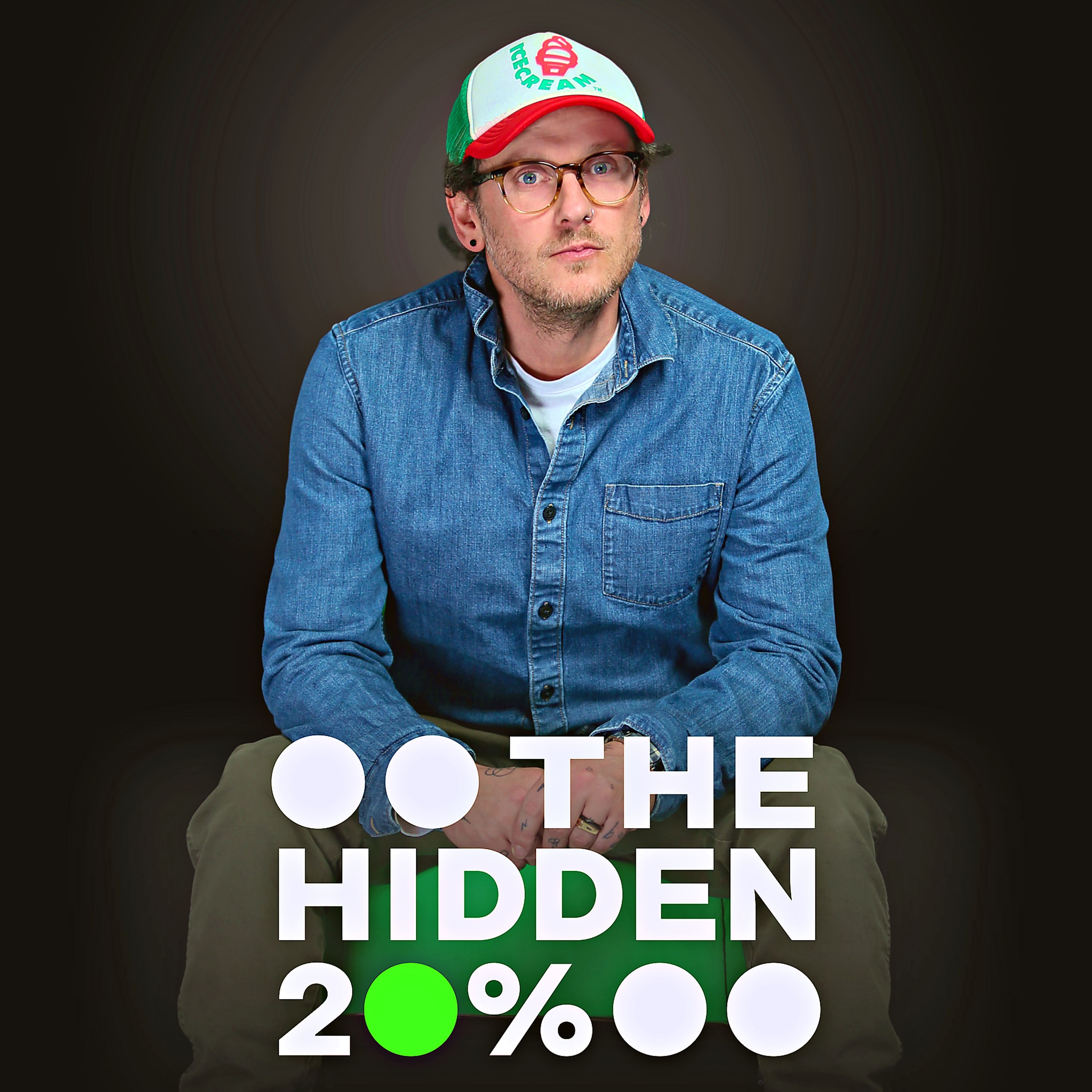
Chef, content creator and food waste activist Martyn Odell - better known online as Lagom Chef - joins Ben for a chaotic, funny and emotional conversation about ADHD, creativity, food, and finally understanding his brain.
Diagnosed with ADHD midway through writing his first cookbook, Martyn reflects on growing up in kitchens where chaos and intensity were normalised, and why that made it difficult to recognise the difference between personality, coping and neurodivergence. They explore ADHD creativity, burnout, internet culture, the pressure of social media, and what happens when your job relies on constantly turning your brain into content.
Martyn shares why “eat the food you buy” became his philosophy, how cooking can help people reconnect with themselves, and why perfection is ruining the way we think about food.
This is a conversation about ADHD, identity, creativity, and learning to trust your own way of doing things.
Join us at hidden20.org/donate.
________
Host: Ben Branson
Production Manager: Phoebe De Leiburné
Video Editor: James Scriven
Social Media Manager: Charlie Young
Music: Jackson Greenberg
Head of Marketing: Kristen Fuller
00:00 Introduction
01:12 Martyn Odell: ADHD, Cooking & Internet Chaos
03:44 Why Kitchens Made ADHD Feel “Normal”
06:20 The Link Between Creativity, Chaos & Cooking
09:18 Growing Up With Undiagnosed ADHD
12:42 Social Media Pressure & Going Viral Online
16:10 Why Humour Can Become a Mask
19:25 Burnout, Content Creation & Internet Pressure
22:14 Being Diagnosed With ADHD Midway Through Writing a Book
25:39 ADHD, Executive Dysfunction & Writing Struggles
26:43 “Eat The Food You Buy”: Martyn’s Philosophy on Food Waste
28:30 Why Cooking Intuition Matters More Than Recipes
31:11 Social Media Pressure, Trolls & Public Perception
34:02 Why Perfection Is Ruining Cooking
38:16 ADHD Hyperfocus & Creativity in the Kitchen
42:05 The Emotional Connection Between Food & Memory
46:20 Why Simplicity Matters More Than Perfection
50:12 What Cooking Actually Gives Martyn’s Brain
54:40 Martyn’s Green Dot Badge
The Hidden 20% is a charity founded by AuDHD entrepreneur, Ben Branson.
Our mission is simple: To change how the world sees neurodivergence.
No more stigma. No more shame. No more silence.
1 in 5 people are neurodivergent. That’s 1.6 billion of us - yet too many are still excluded, misunderstood, or left without support.
To break the cycle, we amplify voices, challenge myths, and keep showing up. Spotlighting stories, stats and hard truths. Smashing stereotypes through honest voices, creative campaigns and research that can’t be ignored.Every month, over 50,000 people turn to The Hidden 20% to feel safe, seen and to learn about brilliant brains.
With your support, we can reach further, grow louder, and keep fighting for the 1 in 5 who deserve more.
Join us at hidden20.org/donate.
Become a monthly donor.
Be part of our community where great minds think differently.
Brought to you by charity The Hidden 20% #1203348
______________
Follow & subscribe…
Website: www.hidden20.org
Instagram / TikTok / Youtube / X: @Hidden20charity
Ben Branson @seedlip_ben
Martyn Odell @lagomchef
If you'd like to support The Hidden 20%, you can buy a "green dot" badge at https://www.hidden20.org/thegreendot/p/badge. All proceeds go to the charity.
Hosted on Acast. See acast.com/privacy for more information.