
 Ask ChatGPT


 The Hidden 20%
19 Nov 2025 · 46m · 21 chapters
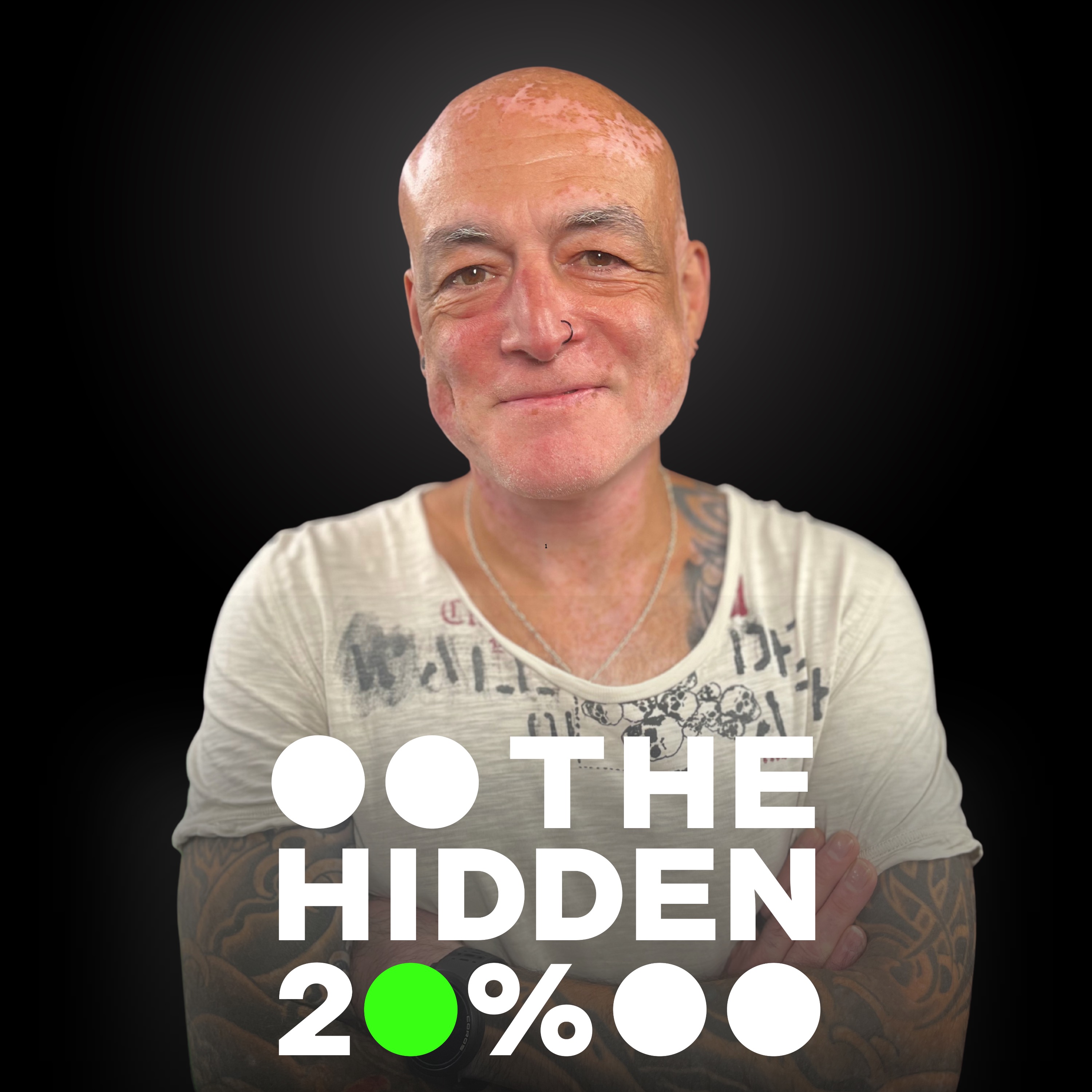
Dr Luke Beardon argues against “autism spectrum disorder” and the medical/deficit model. He claims autism is an understanding problem in society, not an awareness problem in autistic people. He rejects “diagnosis” language, “autistic traits,” “autistic behavior,” and “spectrum” severity/support rankings, arguing autism is constant while outcomes change with environment and support (“autism plus environment equals outcome”). He introduces “autistic epistemology” (questioning where autism knowledge comes from, especially whether it reflects autistic lived experience) and discusses neuronormativity as a form of ethnocentrism.
No other guests are named in the transcript; the episode features Dr Luke Beardon (author; long-term autism field professional; describes himself as a grade one support worker; wrote nine books; eighth published later in 2026).
Autism is not a lesser humanity; anxiety and mental illness often stem from environment; “profound/severe” labels are misleading; identity-first language (“autistic”) is preferred; “spiky profiles” and “constellation” better describe differences than linear spectrums.
“Rain Man” stereotype; “autistic traits” compared to judging a cat vs horse by shared characteristics; microaggressions in everyday autism talk; situational mutism after trauma vs changing autism “severity.”
Written by AI. May contain mistakes.
Explore the misconceptions surrounding autism awareness and understanding.
“You have to have an autistic spectrum disorder.”
Host introduction of Dr. Luke Beardon and his background in autism.
Discussion about the interest in autistic individuals and their unique perspectives.
Exploration of divisive narratives within the autism community and the concept of neurodiversity.
“That does mean that it's that juxtaposition, the collection of neurodiversity, those human beings and those brains that allows the world to evolve.”
Discussion on the impact of neurocentric language and views in autism diagnosis.
“So in reference to the divisiveness I was talking about earlier, it tends to be that kind of concept of there's a right way of being and a wrong way of being.”
Critique of the medical model of autism and the implications of pathologization.
“Again, these are all danger, red flags, concerns.”
Introduction to the concept of autistic epistemology and its significance.
“And you meet this diagnostic criteria, which means that you're having substantial difficulties in day to day life.”
Discussion on common myths about autism and the need for updated understanding.
“I still see myself as a grade one support worker, to be honest, which is how I started off in life.”
Examination of the misconceptions regarding autistic traits and behaviors.
“So actually not teaching people to understand, but teaching people to recognize what they think they might know is potentially flawed.”
Dr. Luke Beardon challenges the notion of defining autistic behavior strictly.
“The only autistic people behave in that way or set of behaviours.”
Discussion on the implications of the term 'spectrum' and its impact on self-identity.
“Most autistic people are very outward-looking, not inward-looking at all, massively lacking in ego.”
Exploration of the relationship between autism, anxiety, and environmental factors.
Discussion on the challenges of defining support needs and functioning labels.
“So I've got a lot of PhD students, many of whom are autistic, who are incredibly autodidactic learners, whereas then you've got the PNT who need their hands holding throughout a GCSE.”
Dr. Beardon emphasizes the importance of understanding autistic behavior beyond stereotypes.
“You can't go into somebody's brain and fiddle about with it and change that.”
Learn about the importance of understanding stimming and the pressures autistic individuals face regarding authenticity.
Discover strategies for having open conversations about autism in a non-offensive way.
“and I kind of prefer for me to ask you that question, to be honest, but I think you're absolutely spot on.”
Understand the differences between person-first and identity-first language preferences among autistic individuals.
“The decent research to date demonstrates that different populations have different preferences, but the adult autistic population are very clear that they prefer identity first as in autistic.”
Explore the myth of savantism in autism and how it affects perceptions of autistic individuals.
Learn about the concept of spiky profiles and how they illustrate the diverse abilities of autistic individuals.
“Like, to do that, nobody would ever do that.”
Delve into the nuances of communication skills in autistic individuals and the misconceptions surrounding them.
“Whereas within the autistic population, you often get individuals who are particularly good at certain things and particularly find other things particularly challenging.”
Learn how to foster open discussions about autism while understanding the complexities involved.
“I don't use this word lightly, slightly treacherous sort of minefield that I feel like so many people feel like they're walking onto of don't want to say the wrong thing.”

Get the gist, explore an idea or ask about something said.
 Claude
On The Hidden 20%, what are the key points of this episode?
Searching your listeningAutomatic transcript. May contain errors.
0:00You're not even allowed to be autistic. You have to have an autistic spectrum disorder. Autism doesn't have an awareness problem. It's an understanding problem. We have to catch society up on what autism is. Welcome to The Hidden 20%, our neurodiversity charity on a mission to rewrite the future for people who think differently. together with you and an eclectic range of brilliant guests we can break the cycle of silence by smashing outdated stereotypes exposing the myths and sharing the most up-to-date truths about what it really means to be just different not deficient the best way you can help is really simple subscribe so you never miss an episode and if you can donate to our charity through the link below.
0:50Enough preamble. I'm Ben, your host. Let's get into today's episode.
1:01I'm so glad we get to sit down, Luke. A, because the first time I heard your just brilliant articulateness, that's probably not even a word, was Neurodiversity Celebration Week last year when we were on a panel and then learning more about you listening to you like i gotta get this guy on i gotta sit down with him there's loads to talk about first question you've been in the world of autism for the last 30 years what keeps you interested talk about the easiest question most people jump in with really difficult questions like what's not i start off gentle i literally want to be if you're interested in humans then you're going to be even more interested in autistic humans surely and what is it about autistic humans that yeah fascinates you you know what it's really interesting you talk about me being in this field for so long and it's true i feel old but back in the day there was charitable organizations autism organizations they produce posters and things like that you may have seen them and there was one which had like cartoon characters on it it's like this is autism and it was so stereotypical and it was always like a signpost this way is kind of like non-autistic people in this way and one of them was variety is the spice of life and that was the non-autistic person so the autistic and i think hang on what are you on about like autistic people the in terms of variety and spice of life that's where you want to go to so i'm not saying non-autistic people are oh god i was almost going to say i'm not going to say they're boring which almost infers i am saying that but i'm not absolutely like all humans presumably are interesting but when you get into the concept that individuals have such different ways of perceiving and understanding life and communicating and differing socialities then by definition they're always going to be interesting surely yeah i mean you're preaching to the converted i guess because i have only a three-year new interest and fascination i think autistic people are absolutely brilliant and because everybody is so different it's a never-ending opportunity to learn well i think yeah there's sometimes this narrative, it's kind of like us and them, or there's this divide.
3:14And the autumn world is quite divisive, like to be perfectly honest, which is a shame is an understatement really. And it isn't a case of us and them, like in terms of neurodiversity, the whole neurodiversity movement, and it's not even a concept, I would say a reality that being neurodivergent is part of neurodiversity, part of a natural variation. That does mean that it's that juxtaposition, the collection of neurodiversity, those human beings and those brains that allows the world to evolve. You can't have one brain without the other. I don't think. Yes, yes, I agree. What is the reaction that you get from people when you talk about what you do and your work?
3:54I don't know, you'd have to ask them. I don't really talk to people. I spend most of my time just talking about autism to people who are interested, so i.e. my students. I suppose I ask them what they think, but it's mostly about what they think about autism. I have been told by people that they refuse to go to the pub with me because that's all I ever talk about, which I find a bit strange. It's like, well, what else is there to talk about? Actually, that's a good one for you. If you ever go to a wedding, if you ever have that horrible thing where somebody's invited to a wedding and you hate going to weddings, as I do, a really good trick is when you get sitting on that table with those strangers and you're thinking, oh God, I really don't want to talk to these humans.
4:26Just ask them, what job do you do? And they tell you. And they always reciprocate and say, what job do you do? And then I can say, well, I'd work and live in the autism field. And then you go, oh really? That's interesting. and then you get to talk about autism for the rest of the day. It's great. You basically tee them up. Yeah, yeah. Works every time. I really want to talk about lots of the language around autism. Okay, here we go. Oh, he's crossed his arms. I'm shuffling him. I'm defensive against the narrative out in the real world, not against you. Well, actually, let's just wind back to something that you said, that there's lots of divisiveness within the autism world.
4:59What is that divisiveness and how have you seen that change over the last 30 years? So in reference to the divisiveness I was talking about earlier, it tends to be that kind of concept of there's a right way of being and a wrong way of being. And I'm not saying one party over another or one population over another, but that notion itself is almost by definition divisive. so i've become really interested in the concept of ethnocentricity where you have one culture or tribe or nation or wherever that there's a belief system that their way of being is the good way of being if you like and if you don't subscribe to that you need to be changed somehow to be brought into line and obviously i was going to say history dictates you don't have to look very far and like today to find examples of ethnocentricity and obviously you'll know this but and most people listening to this will know this but neuronormativity is the kind of neurological component of ethnocentricity where there is still a notion and it almost literally breaks my heart to say this because i find it astonishing that in 2025 society still has this concept of neuronormativity that states if you are autistic you are deemed to be somehow a lesser human being that sounds perhaps extreme.
6:18But it's not because you were asking about language. You only have to look as far as the, if you like, official diagnostic criteria within either DSM or the ICD to find the pathologization of human beings that actually state in black and white, you are an impaired, disordered, dysfunctional, deficit-based human being. That medical model of autism and other neurodivergences is absolutely crystal clear to see. And in fact, talking about language, I really don't like the term diagnosis. So people talk about the diagnostic criteria and going for a diagnosis. Generally speaking, I know there's two different meanings of the word diagnosis, but generally speaking, Western society dictates that a diagnosis is to find out what is wrong with you.
7:01So that subliminally or otherwise straight away puts autistic people or parents of potentially autistic kids in that position of we're trying to find out what's wrong with you. so I reject the term diagnosis and prefer identification or discovery or whatever those sort of more neutral or neuroaffirming terms but right away right from the outset the narrative is littered with that pathologization and it is quite subliminal so even the fact that we're told well if you think your child might be autistic you need a GP referral we go to the GP to find out what's wrong with us why do we need to go to a medical practitioner to find out whether my child is autistic or you have a school saying, oh, we've got some concerns about your child.
7:42There's various red flags. Again, these are all danger, red flags, concerns. Why are you concerned that my child might be autistic? As opposed to, oh, this is interesting, your child might be developing. Yes, this is interesting. And it's very, very rarely the case. So even at that subliminal level, irrespective of the overt diagnostic criteria level and the way that autism is often referred to and written about in academic publications and at conferences and all of those sorts of things, let alone the kind of societal perception of what autism is. And that's almost like a third layer, if you like.
8:14So you've got your diagnostic criteria, the medical model, then you've got maybe the academic field, and then you've got what society believes and then professionals. And it's absolutely littered with this language, which is neuronormative. It's basically saying in order to be autistic, you have to be substantially impaired in some way in your day-to-day life. Yes. Which I just don't understand. That's criteria that you have to meet. You have to. But, so ironically, we can agree on almost nothing in the autism field. One of the things surely we can all agree on is you're born autistic, you live autistic and you die autistic.
8:46Some people still claim that that's not true, but that's just categorically true. So if you want to complain about me, don't complain about that. Because if you think any different, then you're wrong. So you're born autistic, you die autistic. So if hypothetically you're a child and you're having all sorts of problems in life, not, I would reiterate, because you're autistic, but because you're not getting the appropriate support, the environment is not right for you and so on and so forth. And you meet this diagnostic criteria, which means that you're having substantial difficulties in day to day life.
9:14Okay, so you've got that child and we all know children that are like that. Now, I've got to come back to the autism plus environment equals outcome, which I'll come back to later, no doubt. But it's not the autism that's causing the difficulties in and of itself. so as the child everybody realizes and they understand the child through the child's lens and they create a brilliant sensory environment fantastic communication package basically they treat the child as the child should be treated and through their own autism lens and all of a sudden that child has no difficulties do we then sweep in and go well you're clearly not autistic anymore and if the answer is no that makes a mockery of the whole diagnostic criteria surely yeah what does this then lead to what's the impact of that in terms of therefore what society then believes okay i should say from the outset this is my opinion only i believe what i'm saying but it doesn't necessarily say it's been researched to death or whatever but my understanding of autism comes from the hundreds and thousands of amazing autistic people who've shared their lives with me as well as being well i've got an academic title i don't necessarily regard myself as an academic.
10:16I still see myself as a grade one support worker, to be honest, which is how I started off in life. He's written nine books as well, guys. I'm on my ninth. Sorry, he's on his ninth. The eighth one's published later on this year. That's the easy bit. But anyway, no, so I have come up with a phrase or a concept, autistic epistemology, and I really like it. So autistic epistemology is essentially questioning where autism knowledge or perceived autism knowledge actually comes from, how much of that perceived knowledge is actually accurate and well-informed and evidence-based. And by evidence-based, I don't mean in terms of statistical evidence, I mean in terms of the real lived experience of autistic individuals.
10:56And subsequently, how much of that misinformation, if indeed it is misinformation, and I think a lot of it is, what impact that has on the lives of autistic people. And I get so excited about the idea that the world starts sitting up and questioning autistic epistemology and questioning me and questioning you and questioning what's written questioning the diagnostic criteria saying hang on a minute is this actually reflective of the real autistic authentic experience and if it's not why do we believe it yes and i think the damage that's done by automatically believing those narratives without any necessary evidence and then making the assumption that that is the lived experience of autistic people, that has the risk of massive damage to the autistic experience.
11:46Not least the sort of, I need to be careful what I say, gaslighting, but I'm not talking about overt gaslighting. I'm talking about people questioning autistic people's reality because their understanding of autism is flawed. Correct. Which is where we get to this, autism doesn't have an awareness problem. Because I imagine if you asked everyone in the country, have you heard of autism they would absolutely say yes simple it's an understanding problem of what they then believe about autism is not up to date and therefore before we jump to this let's all just accept people let's accept people for their differences etc we have to catch society up on what is a genuine up-to-date modern understanding of what autism is yeah i know it's a different charity but years ago the national autistic society have different strap lines each year and one of their strap lines which i thought was absolute genius it just said autism the problem is understanding i saw absolutely spot on like just so so so so clever i would take it a step further in kind of 2025, I think a lot of the way forward is rebuffing what people think they know.
13:01So actually not teaching people to understand, but teaching people to recognize what they think they might know is potentially flawed. And what do you think societally people think they know about autism? Oh, Ben, you'll have to ask them. I tried not to talk to them about it. It stresses me out. No, but there are all these myths. Like, In fact, there's me saying that I've got a teaching session coming up and the whole first day is myths of autism. So say, for example, autistic traits. Autistic traits is a myth. Like, or people saying, oh, you've got autistic traits, or I don't know if you are autistic.
13:35I think I might be a bit autistic because I've got autistic traits, right? What does that even, this is what I mean about autistic epistemology, this rhetorical question. But what does an autistic trait mean? So if you mean a behavior, then straight away I can say, look, you're talking nonsense. because another one of the things that we can categorically all agree on is there is no such thing as autistic behaviour. There's no such thing as a behaviour that is exclusive to the autistic population. The only autistics do. The only autistic people behave in that way or set of behaviours. If there was, then we would know exactly who all the autistic people were.
14:07Like, the diagnostic waiting lists would disappear overnight because it'd be like, do you do that? Yes, you're autistic. Do you not do that? No, well, you're not. So if that's the case, and it is, then by definition, there's no such thing as autistic behavior. In which case, is there any such thing as an autistic trait? If the answer is no, then it's meaningless to talk about autistic traits. I sometimes talk about my animals in terms of traits or characteristics. And I'm not trivializing this. And by the way, before I give you this example, I'm not saying that autistic people are different species.
14:38But I've got a cat called Little Miss Squirrel, right? I've also got a horse, bizarrely. I'm not that middle class. A long story about why I've got a horse. But anyway, I've got a horse. It was handed to me. She was 25 and she's old and she needed somewhere to retire and I had a field. Anyway, yeah. And she's got one of the best horse names in the world. She's called Hello Lovely, which hands down is just the most amazing name. So she's a really cool horse. When I go home tonight, I go, oh, hello, little Miss Girl. I've just noticed you're a furry quadruped with a tail. And then I go outside and say, oh, hello, hello, lovely.
15:10I've just noticed you're a furry quadruped with a tail. Hang on a minute. Lovely. This morning when i left i thought you're a fantastic horse i think you've got cat traits but you're a rubbish cat yeah i can't remember the last time you meowed or curled up on my knee little miss squirrel you're rubbish at neighing and charging around the field you know when weather's stormy or whatever you're a crap horse like if i was to judge one against the other just because they share characteristics that would be nonsense so to cut a long story short apologies this does this is leading somewhere. Why is it then we've got this horrific comparative model of saying, here's the demographic norm.
15:49If you don't have the same characteristics or behaviors or communication styles or sociality, all the things that we know autism is identified based on, if you don't share those, then you're not good enough. And that's how we currently identify autistic people, which I think, going full circle, is an absolutely clear example of neuronormativity. Why do we throw in this word disorder? Beats me. That's my answer. Genuinely. Why do we throw in spectrum? Okay, so that's myth number three, actually. So I have issues, actually, with autistic spectrum disorder. So again, you're not even allowed to be autistic.
16:30You have to have an autistic spectrum disorder. So if you go through those, going back to my concept of autistic epistemology. Autism, as we all know, the etymology of it come from the Greek autos meaning self, and then ism being state of being. And those concepts of that kind of very ego-based, inward-looking human being, which is very much a stereotype of being autistic, complete nonsense. Most autistic people are very outward-looking, not inward-looking at all, massively lacking in ego. Have to be outward-looking sometimes. Often have to be. So a lot of autistic people make fantastic advocates for other people, absolutely useless at self-advocacy, and that's i think not this it's a very sweeping statement but it's often the case look at yourself and all the work you do in your charity and i'm not going to put you on the spot and say how good are you at looking after yourself but i bet you don't come high in your pecking order in terms of looking after human beings and that's very outward looking not inward looking so i've got issues with the word or the or the background of the word then you've got spectrum i'll come back to that in a moment because that's the more complicated one but then disorder is just a nonsense i don't know how we get away with going around calling a whole group of neurodivergent individuals disordered simply because they're neurodivergent that just seems utterly illogical without any basis without any grounds like if all autistic people were disordered well they're not so yeah so it's like then you wouldn't have massively successful content happy but it's out of order isn't it it's that less than it's the less than diverging absolutely and then that brings us back to the concept of a spectrum which i completely reject like totally reject so this is where I can shoehorn my autism plus environment equals outcome, which I genuinely think I refer to as my self-professed golden equation, which is incredibly egotistical, hubristic or whatever.
18:12The reason why I came up with it is because I was so fed up with people saying, oh, if you're autistic, that must mean this. Full stop. It's like, no, if somebody tells you they're autistic, that means you know they're autistic. That's it. That's it. You literally don't know anything else about that human being. Literally nothing. So this, oh, that's interesting because you're nothing like my friend's cousin's son. It's like, well, I'm a 50-year-old woman. Your friend's cousin's son is a three-year-old boy. What on earth? That's really, that's utterly bizarre. It goes back to autistic epistemology and society thinking they know these things.
18:43And going back to what you were saying about awareness as opposed to knowledge. Because people genuinely think they do. I don't know why they think these things, but they do. So it's an absolute nonsense. So being autistic just means being autistic. We do know statistically in terms of evidence-based that there are certain themes and certain trends. I'm a massive advocate for pushing forward the narrative that we need to acknowledge the damage that we do to autistic people in terms of increasing their anxiety. But you're not born an anxious autistic person. That anxiety comes from somewhere else, not from being autistic.
19:16So there are all these things, but it doesn't definitively mean if you are autistic, you will be anxious. That's not the case at all. So we know there's massively high percentages or statistics of secondary psychiatric conditions. so pathological anxiety, OCD and all sorts actually but that doesn't mean to say that they are co-joined so it doesn't mean if you are autistic you are going to be pathologically anxious but because there's a higher number it must mean we as in society are doing something wrong so it doesn't come hand in hand if you've got an autistic brain it means that you're going to be mentally unwell but there is a high degree of mental illness within the autistic population so it's coming from somewhere else and it comes from the environment that's why autism plus environment equals outcome if you want to change the outcome so you want to reduce mental unwellness in the autistic population or the autistic individual you can't change somebody being autistic we've been through that so the only thing left to change is the environment and i feel so strongly about that because often the individuals i come across the only responsibility is on the person themselves you need to change you need to source you need to conform you need you need better communication you need to start talking you need to make friends you need to do and then you'll be better and that's the subliminal narrative but it's still there like it's still obviously there as opposed to no we're getting it wrong actually yeah we need to sort the environment and then you'll be a happy content autistic individual yeah all responsibility is stopped right it's kind of like it's your responsibility not our responsibility to adjust things shape things change things improve things support on things it's all on the individual sorry but i've just i've i always pass things in my mind and hang on i didn't actually answer the question or i didn't so going back to the notion of a spectrum don't worry i was going to bring you back to okay so there was this old-time notion of a spectrum and back in the day i remember going to training sessions and people put up the rainbow and one end i'll be oh this is severe autism at one end of the rain it was always a rainbow so i don't know yeah i suppose it's because of the spectrum and what have you anyway that's a really dangerous game to play like i think and i know that there are people out there that don't like me and they go well you've clearly never met my child or whatever and i'm talking about autism i'm not talking about comorbidity in terms of with additional intellectual learning disabilities or whatever it might be i'm just talking about being autistic that people even the diagnostic criteria still encourage us as a society to rate people in terms of functioning labels out.
21:46They've got to spit those words out. Functioning labels go hand in hand with the concept of a spectrum. And again, I think they're an absolute nonsense. But we just see it linear, right? It's mild to severe. But we do. And then the next thing is what support level are you? Yes. So if you're severe, you need a high degree of support. And again, it's the othering of the autistic population. And I've done this before and people don't like it. But if you're listening to this, just ask yourself, if I was in the room with you and I said, to you whatever you know whether you're non-autistic neurodivergent adhd and i just say to you what support do you need presumably your immediate reaction always depends on what you're asking me to do so why would being autistic be any different like it it clearly depends on the environment some autistic people might need high levels of support in certain areas because that's not a natural way of being for them yeah and be completely independent in other areas that the predominant neurotype might then need a lot of support in.
22:43So I've got a lot of PhD students, many of whom are autistic, who are incredibly autodidactic learners, whereas then you've got the PNT who need their hands holding throughout a GCSE. Just as an example, in terms of support that's required in one environment. So I think the whole idea of we need to grade you in terms of what support you require and then judge you in terms of are you mild or moderate, I just think it's an absolute nonsense what about this term i've seen profound autism yeah okay so i think what has happened is a historical hangover i think okay i think about this a lot myself and i don't know the answer i'll be absolutely honest and i don't like giving answers if i'm not confident but this is what i think is the case back in the day and by back in the day i'm talking about sort of 60s 70s onwards autism was almost automatically assumed to coincide with an intellectual learning disability yes then the term asperger syndrome came in as a direct result of essentially lorna wing judy called and lorna wing saying well hang on there are these individuals who don't have a learning disability so what what about them yeah and that's what asperger syndrome essentially was now that's flawed because autism is has never been equated with a learning disability but clinicians were making that sort of decision that if i label this person as autistic what i mean is they're autistic with a learning disability yes but that's that i think that's clinically inaccurate nowhere as far as i know nobody has ever said autism is an intellectual learning disability so i think it's just an error and a historical error that people still make those assumptions and then the more you are like that the more of an intellectual learning disability you have but it's completely flawed autism should not be seen as anything to do with a learning disability unless you are an autistic person who also has a learning disability but again because of that use of a word that's actually so loaded like profound i basically take from that personally in my experience as being autistic oh well i'm not i'm not as autistic therefore as someone who's profoundly autistic right it's a bit like saying someone who is profoundly autistic oh they're the original autism you know they're the they're the kind of that's the most autistic you can be if it's profound because profound i haven't synonymed it but i would imagine you get things like serious and original and severe yeah and people say that don't they severely autistic yeah as opposed to what like my view is genuinely i absolutely advocate understanding an individual for who that individual is at that particular time in their life so you might say okay well this individual requires high levels of support at this point of time in their life that's not the same as to say they're severely autistic that's just say we recognize that for whatever reason there's all sorts of support that's being required in this particular environment yeah i don't think you can change somebody being autistic like autism is a neurological way of processing information It's just a natural way of thinking, essentially, and processing and sensory information as well.
26:15And you can't change that. You can't go into somebody's brain and fiddle about with it and change that. But you can change the outcomes for those individuals. And if you accept that as an argument, then saying somebody, if we then go, okay, well, you are profoundly autistic, hypothetically, then what happens when that person has all the right sport and then they flourish? Are they no longer profoundly autistic? They've still got the same brain. like I've got any number of examples I've taken an autistic individual from an environment where they're thriving they're doing really really well for whatever reason and then put them in a situation that causes loads and loads of anxiety and all of a sudden they are what I regard as situationally mute I hate the term selectively mute because it almost puts the onus of responsibility on well you're choosing not to speak no no it's a situation that has caused that much trauma that the individual is unable to speak now have they suddenly become severely autistic?
27:05they're still the same person Like literally, like I know human beings who in one situation are the most articulate individuals you'll ever meet in your life. In another situation are so traumatized, they are unable to speak. Does that mean they flip from being mildly autistic or even not autistic to profoundly autistic from one day to the next? That would be nonsensical. It's not a sliding scale. No, going back to the whole behavioral side of things, people judge based on behavior. Somebody who might have looked like me once, I saw them saying this to somebody where they'd overheard somebody saying, oh but so and so doesn't look autistic so i said not me this person that looked like me said oh can you just remind me what does autism look like yeah there was just like deathly silence and this person that definitely wasn't me because that would be completely inappropriate of me to put somebody on the spot like that so well that just demonstrates what a ridiculous thing it is to say but what people often mean is that there are certain behaviors that you associate with being autistic like stimming and all those sorts of things that if you don't see them in the individual the non-autistic assumption then is well maybe you're not very autistic then which again it's if you judge anybody at that behavioral level stop doing it because it doesn't make any sense and also by the way there are i believe just as many mental stims as there are physical stims and you can't see what's going on in somebody's brain nor can you see what happens when somebody is behind closed doors yeah and versus masking versus masking and suppression of your natural authenticity and authentic way of being which so many autistic people are traumatized or forced into being because they feel otherwise they're somehow lesser yes so again it sort of comes full circle to a certain degree what would you say to people who are listening who kind of want to talk about this stuff but they don't really know how to is it uncomfortable should i talk to my boss how do i approach my friend who's just been assessed for autism like how can we just quote unquote normalize this to kind of you know as an autistic person like i'm okay we're talking about this it's okay you're not going to offend me it's a we need to talk about it how do we like break it down so that people feel a bit more okay talking about it that's a fantastic question and I kind of prefer for me to ask you that question, to be honest, but I think you're absolutely spot on.
29:31Lots of autistic people are perfectly happy to talk about it, as long as you are in a position of being able to trust the person that you're talking to. So, and it goes back, and it does sound like I'm bleating on about the same thing the whole time, but if you purport to have perceived knowledge about a human being based on the fact that they've identified that they're autistic to you, that automatically means that you're not quite as trustworthy as you might want to be so if somebody says to you you're autistic like i can't tell you what to say if somebody says to me oh by the way i'm autistic my reactions usually are fantastic congratulations you know how long have you known i'm really interested in how you came to that sort of discovery i don't have any knowledge about what that means to you because obviously i don't know you but i'm really interested in finding out and i live and breathe autism as a subject i still every single human being that i meet who is autistic i'm absolutely slate clean 100 i know nothing about that person but i really want to find out yeah so why do we struggle to bring that simple curiosity to this word autism i think there's a lot of fear about talking about it i think there's like i don't know if it's simplistic to divide people into sort of two populations one who think they know about autism so aren't particularly willing to listen and two people who really want to find out but are scared to say anything in case they in inverted commas get it wrong and we do live in a culture where you get you know you get shouted down if you say the wrong thing and that probably happens i suppose within the autism world as well like i'm obsessed with awesome narrative and awesome language and i'm very outspoken about how i think we need to change and adapt our language so that we don't say that in my view the wrong thing but that doesn't mean to say i would like jump on someone and go oh my god you've just used person first language and actually most autistic people want to use identity first language you're a terrible human being not at all if somebody wants to open up those discussions like why is it actually that 20 years ago if you said autistic person you'd be thrown under the bus whereas now it's it's completely the other way around that's a really interesting discussion to have and most autistic people would love having those discussions i think Just explain for our listeners the difference between person first and identity first.
31:50So it's basically what it says on the tin, isn't it? Person first is the person with autism and identity first is autistic person. Everyone will have their own preference. Some people can go one way or the other. The decent research to date demonstrates that different populations have different preferences, but the adult autistic population are very clear that they prefer identity first as in autistic. So I am an autistic person, not a person with autism. And the reason that most individuals give is it's not an add-on. It's an identity. It's who you are. As you say, you can't switch it on and off.
32:23It's not something that, yeah. And also like a person with sounds like you could somehow change your way. Exactly. Or you get it. It's like, I am autistic. I do not have autism. Yeah. Yeah. It's who you are. It's like part of who you are. whereas professionals still prefer the term i believe still prefer the term on the spectrum which and again having those discussions like if a professional would say to me he's like oh you don't like on the spectrum so maybe i'll just shut up but i know can we talk about why and then you can prove or demonstrate to me that i'm wrong i love being demonstrated to be in the wrong because then i've learned something yes there's nothing wrong with that like i used to say person with autism all the time because that's what i was taught i was taught actually this is this genuinely i'm getting all excited but this is going back to the autism narrative and neuronormativity i was taught absolutely crystal clearly that saying somebody is autistic is offensive wow which is why i was taught you've got to say person with autism because that's kind of less it somehow sort of dilutes it now that is not too far away at all when you think about it saying well being autistic is a slur then like the offensive bit is being autistic yeah so now and this is what i love about the autistic tribe and the autistic population and their ownership autistic people are going no no you need to listen to us we're quite happy being autistic often we're not happy with the way in which we're being treated and we're not happy about being disadvantaged and being discriminated against but the being autistic bit no problem at all so we're quite happy to go call us autistic individuals yes and it's one of the most gorgeous things that the narrative is actually changing as a direct result of the population itself superpower no thank you well oh god i did do a talk once it was the inaugural conference for the police i was super pleased like i was so excited and they did what they wanted they really wanted the word superpower it's one of the myths isn't it savantism that autistic people have savant skills now well statistically a very very small percentage of autistic people will have savant skills the vast majority of savants are autistic yes so that's possibly where the overlap or where the myth has come from irrespective of rain man and rain man wasn't autistic anyway he was a savant but anyway can we just say that again luke that rain man was not autistic or the character that he was based on was not autistic no because the prevailing stereotype right to this day is still rain man and this was my belief three years ago autism equals rain man right and rain man was not autistic and also the idea of a single character even if it was based on a specific person can be subsequently representative of an entire population is bewildering how anybody can actually accept that if you think for yourself of a marginalized group and then imagine one person be it a politician or an author or an actor or whatever would you look at that person who and go well all people who are in that marginalized group must be like them yeah you would never do that Like, that's so bizarre.
35:43Like, to do that, nobody would ever do that. So why do we do it when it comes to autistic people? It's utterly, utterly bizarre. Do you have any examples or historical reference of language where we have changed for the better? Examples of, like, hope and we have been able to talk about this stuff a bit more accurately or a bit more empathetically that give you real sense of excitement that we can get to a place of just like a good common language for autism? That's an amazing question. You could argue that language has evolved to then kind of explain why some people regard autistic people as having superpowers when you take into the evolution of autistic-led language like spiky profiles and constellation.
36:37So autistic people don't all have superpowers, but I would go as far as to say the majority, if not all autistic people, will have what we call, or what is often referred to as spiky profiles. What do you mean by spiky profiles? If you take a cross-section of society over a reasonable number of people, so a statistically relevant number of people, there'll be a demographic norm in terms of how people think. So most of the autism world call that group of people neurotypical. I don't have major issues with the term neurotypical, but I have certain problems with the term typicality and normality, abnormality, those sorts of things.
37:12So I now use the term predominant neurotype to mean the most dominant neurotype within any given population. So in a statistically relevant, like a large group of people within society, the predominant neurotype will be non-neurodivergent individuals. Of course, if you come from an autistic family, your predominant neurotype might be autistic. So it's just a statistical thing. It's a demograph. So there's no attachments in terms of suppositions or anything like that. So within the predominant neurotype, everybody will be better at some things than others. You might have somebody who's a bit better at math or a bit better at language or a bit better at gymnastics or whatever it might be.
37:46But the highs and lows of that population in the main will be relatively narrow. Whereas within the autistic population, you often get individuals who are particularly good at certain things and particularly find other things particularly challenging. More sort of extreme ways. Yeah, more extreme. Absolutely. And I think that sometimes, going back to what we were talking about in terms of severity and functioning, if you've got somebody, say, for example, who finds their passion interest is language, for example, if you're extraordinarily articulate and you know lots of really clever words, people then make all sorts of assumptions about, well, you must be able to do this, that, and the other, even though they're completely different skills.
38:26Like, I know somebody who say, oh, well, I'm really good at talking, but I can't, don't trust me to cross the road on my own. It's like, what are you on about? You must, well, crossing the road is a totally different skill to talking. They're just completely different things. But actually within the predominant neurotype, skills levels do tend to tell you something about the generic skills levels of that individual. And you can't make those same assumptions, I don't think. So the autistic population came up with the idea of a spiky profile. I think that's kind of moving on to the idea of a constellation.
38:53So it's more of a three-dimensional model, which I really, really like. I like to chuck in the fourth dimension, which is time, and the fifth dimension, which is environment. So you've got your kind of globe and you've got bits that stick out and bits that stick in. So I'm really good at this. Actually, that will change because in that environment, all of a sudden I'm not very good at that particular thing because of the environment. And actually, tomorrow I'm no good at it. Which, by the way, is like surely representative of every single person on the planet being good in an environment, finding another environment really difficult, being good at some stuff, being less good at other stuff, like, guess what, as f***ing life.
39:31It cracks me up because people talk about, oh, autistic people are impaired in communication. That's one of the things that's drilled into you, isn't it? Like, what does that even mean? Like, actually, literally, what does that even mean? You break it down. Some of the diagnostic, for example, will say, oh, autistic people are literally in terms of their understanding of language. Well, no, they're just accurate. It's like, what you're saying is rubbish then. So I'm just an autistic person saying, I've got a big thing about frequency and regularity. And some people assume they're synonymous. They're the same thing.
40:03And they say, oh yeah, no, we need to do that more regularly. You can't do, it's either regular or it's not. Listen, bro, it's either regular or Christmas is regular. Okay, it's every single year, once a year. Regular is clockwork. What people mean is, oh no, we need to do that more frequently. Yes, more often. Or more often, exactly. So then people say to me, oh, you're pedantic. Oh no, I'm just right. I'm linguistically accurate. It's not my fault that you're saying the wrong thing. And then all of a sudden I get into trouble for being poor at communication. I think that's a bit unfair. Surely it should be the other way around.
40:37But also what does being a good communicator mean? Anyways, you see it on job descriptions, you know, you need to be a good communicator. In what way? I don't know. Take me out of the equation. I know people who are brilliant communicators, I think, in terms of getting straight to the point and not, you know, arsing around left, right and centre, fluffing about without actually getting to the point. You know, they say something in two seconds, which other people might take 20 minutes to. And then it's the people who take the 20 minutes to say, no, but the way they approached it was really communicative.
41:08It's like, no, just stop bleating on. Completely inefficient. So I would regard that as completely inefficient, whereas other people say, oh no, well, that's too blunt. Now, is that good communication or not good communication? Or you might have somebody who's brilliant at writing not so good on the telephone i hate the phone i'd do anything if you ever really want to freak me out phone me up from an unknown number um that just don't do that please but that was stressed me out whereas i'm i'm happy and content chatting to you on a podcast i'm not saying i'm good at communication but i'm happy and content doing it and i'm quite able to carry on talking whereas sit me on a phone jibbering wreck so am i good at communication or not yeah i mean in part two We're going to chat a bit more about the education side of this and how we can, I guess, maybe look at or certainly in your experience and your work in the classroom and also the work you've done in the criminal justice system on how we can try and bring people up to date and remove this.
42:12I don't use this word lightly, slightly treacherous sort of minefield that I feel like so many people feel like they're walking onto of don't want to say the wrong thing. Don't want to get it wrong. Don't want to offend. Have autism, being autistic. How do I talk about this? Because the more we can talk about this kind of stuff, the better our understanding will become. because I feel like we just need just little level of curiosity to kind of even ask, well, how is it for you? It's really tough one, isn't it? Because you want the conversations to be open. You don't want people to feel like they can't talk about things for fear of getting wrong.
42:56I think that's a horrible position to be in. I really do. And that kind of, I'm not going to say freedom of speech, but freedom of curiosity. Like that's a gorgeous word, like such a cool word and it's like i'm curious because i don't know yeah i really really are you okay if i ask you about this yeah so yeah but that's on the one side having said that i'm the first person to talk about the dangers of microaggressions because that needs to be understood as well and they're part and parcel maybe of the same conversation so by microaggressions i'm talking about so back in the 70s chesterpist guy in america uh came up with the concept of microaggressions in relation to black americans the idea being the academic concept being that everyday parlance so not people being awful deliberately but just everyday conversations about black americans those black americans were being exposed to microaggressions so being told that they were worthless and so on and so forth the sort of racial slurs and all of those sorts of things just in everyday parlance now i think and i'm sorry to have to say this and be warned this is a horrible thing to have to say, but I genuinely think you can take today's autistic population alongside today's everyday narrative about autism and make the same accusation.
44:18I genuinely think that the way in which people talk about autistic individuals often exposes those very same individuals to those microaggressions. I've experienced it, like I'm one sample of one, But yeah, that chimes in terms of my experience. And I don't go around telling people that I'm autistic all the time. In fact, I'm increasingly probably less comfortable, I think, actually, because I'm starting to experience the reactions. And it's one thing to talk about a charity and a podcast, which is not about me. And it's another thing to talk about my experience. and then I have a daughter who's autistic so I'm very conscious about how I'm modeling and the example that I'm setting to her of this is not something to be ashamed of this is not something that you don't talk about and I feel like I'm doing a good job of that but yeah I can sense and see based on people's understanding today where those microaggressions come in and I'm going to have to stop us now for part one and move us to part two when people tune in next week to hear what we can do about this and how just damning and difficult this can make things for people and what we can do about it.
45:53That's it for today's episode of The Hidden 20%. But just before you go a favor the hidden 20 is a charity and we do this to bring you the truth the latest research and the real stories that matter so if this episode spoke to you then please hit subscribe and if you can donate via the link below finally a big shout out to you all for listening and our brilliant team who make this all happen phoebe charlie kristen james john and the guys at tyx We'll see you next time.
In this first of a two part episode, Dr Luke Beardon - senior lecturer in autism, long-time educator, and author of Autism in Adults and Avoiding Anxiety in Autistic Adults - sits down with Ben to unpack why the language we use around autism matters more than we think.
Luke explains why he rejects terms like “the autism spectrum,” and even “autistic behaviour,” and introduces his concept of autistic epistemology - a way of understanding autism grounded in lived experience, not pathology.
Together, they look at the myths that still influence public thinking, the gaps in UK education, and why simple changes can make learning environments more inclusive for everyone.
This episode is a sharp, thoughtful, and refreshingly human look at autism that challenges old ideas - a genuinely empowering listen for autistic people, parents, educators, and anyone trying to understand neurodivergence better.
Join us at hidden20.org/donate.
_________
Host: Ben Branson
Production Manager: Phoebe De Leiburné
Video Editor: James Scriven
Social Media Manager: Charlie Young
Music: Jackson Greenberg
Head of Marketing: Kristen Fuller
00:00 Introduction
1:00 What Drives Luke’s Work in Autism After 30 Years
4:40 Why Language Matters: Rethinking How We Talk About Autism
10:00 Autistic Epistemology: Luke’s Groundbreaking Framework
13:08 The Biggest Myths About Autism: Debunked
28:48 How to Share Your Needs as an Autistic Person (Luke’s Practical Advice)
31:44 “Autistic” vs “Person with Autism”
34:07 Why Luke Rejects the “Superpower” Narrative
35:50 Hope for the Future: How Autistic Language Is Changing
39:30 Communication, Miscommunication & Being Autistic
The Hidden 20% is a charity founded by ADHD & autistic entrepreneur Ben Branson.
Our mission is simple: To change how the world sees neurodivergence.
No more stigma. No more shame. No more silence.
1 in 5 people are neurodivergent. That’s 1.6 billion of us - yet too many are still excluded, misunderstood, or left without support.
To break the cycle, we amplify voices, challenge myths, and keep showing up. Spotlighting stories, stats and hard truths. Smashing stereotypes through honest voices, creative campaigns and research that can’t be ignored.Every month, over 50,000 people turn to The Hidden 20% to feel safe, seen and to learn about brilliant brains.
With your support, we can reach further, grow louder, and keep fighting for the 1 in 5 who deserve more.
Join us at hidden20.org/donate.
Become a monthly donor.
Be part of our community where great minds think differently.
Brought to you by charity The Hidden 20% #1203348
______________
Follow & subscribe…
Website: www.hidden20.org
Instagram / TikTok / Youtube / X: @Hidden20charity
Ben Branson @seedlip_ben
Dr Luke Beardon On X:@sheffieldluke
If you'd like to support The Hidden 20%, you can buy a "green dot" badge at https://www.hidden20.org/thegreendot/p/badge. All proceeds go to the charity.
Hosted on Acast. See acast.com/privacy for more information.


