
 Ask ChatGPT


 The Hidden 20%
23 Jul 2025 · 37m · 11 chapters
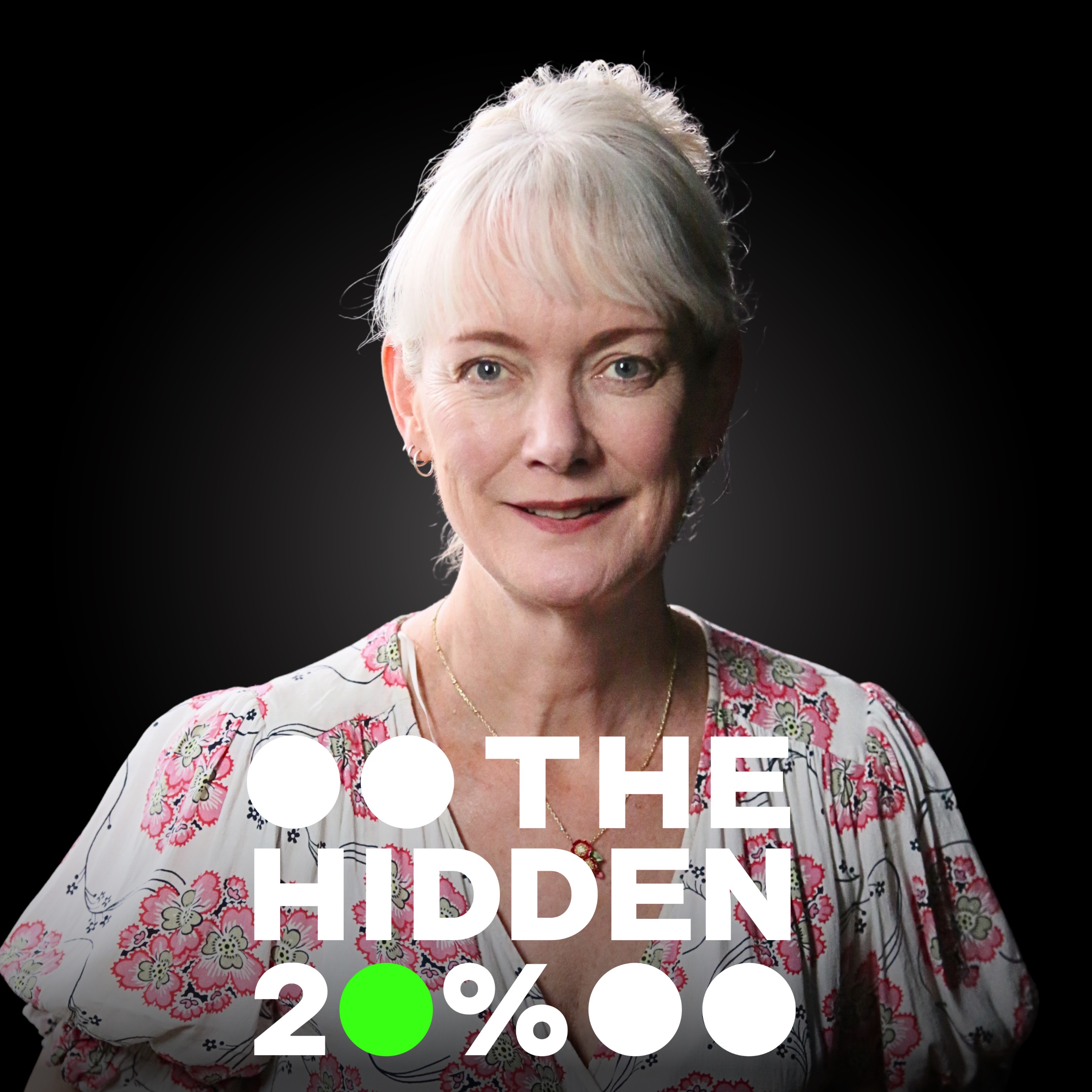
Why autistic women and girls are missed, plus related findings on late diagnosis, autism and aging, and trauma/PTSD.
Professor Francesca Happe, autism researcher with 30+ years in the field, author of 150+ scientific papers; focuses on what’s overlooked in women and autistic adults, including aging and trauma.
Diagnostic research historically centered boys/men, shaping diagnostic criteria and stereotypes that drive diagnostic overshadowing (e.g., autism overlooked when another condition fits). Girls may show autism differently on average (more socially motivated, intense interests that look “typical”), and masking/camouflaging contribute. For aging, a study using GP records suggests ~9 out of 10 autistic adults over 50 are undiagnosed/misdiagnosed. Autistic traits correlate with faster “pace of aging,” mediated by mental health, loneliness, and lifestyle factors. Autistic people show high PTSD-like symptoms even after non-“DSM-5 big T” events.
anorexia clinics—about 25–33% of women with anorexia meet autism criteria; toy cars lined up vs lined-up cuddly toys; bus detour causing lasting PTSD-like symptoms despite not meeting classic DSM-5 trauma definitions.
Written by AI. May contain mistakes.
Discover the challenges faced by autistic individuals, particularly the elderly, and the lack of awareness in research.
“And one of the things that keeps me up at night, I guess, is a recent study that we did where we used GP records and the estimate of there being maybe 1 % of the population autistic was probably a conservative estimate.”
Explore how late diagnoses in autistic individuals can influence their self-perception and societal interactions.
“And a lot of elderly people won't have relatives.”
Understand the pathways that lead to late diagnoses in older adults and the role of family in recognizing autism.
“What are the themes or what are people saying to you?”
Hear insights from older autistic adults reflecting on their experiences and what they would tell their younger selves.
“One is a grandchild or sometimes a child, but often a grandchild who has a more frank and typical autistic presentation, gets diagnosed.”
Examine how autism research has historically focused on males, impacting the understanding of autistic women and girls.
“not with the people you had to be with every day at work.”
Learn about how diagnostic overshadowing affects the recognition of autism in girls due to gender stereotypes.
“But on average, it seems like girls maybe are a little bit more socially motivated, moving towards.”
Discover the concept of the female protective effect and how it relates to autism diagnoses.
“There's a lot of research about masking and camouflaging, which might be the final piece of the puzzle for why we've missed women and girls historically.”
Explore the biological and psychological theories behind autism, including differences in brain function and animal models.
“It applies to other things, other neurodivergent conditions.”
Examine the relationship between autism, mental health, and factors contributing to a shorter lifespan.
“You can test that in animals, you know, frontal lobes.”
Learn about the potential vulnerability of autistic individuals to PTSD and the factors contributing to this risk.
“Wouldn't age faster than other peers, yep.”
Learn about the relationship between autism and trauma, including unique vulnerabilities and case studies.
“I'd like to talk about trauma, PTSD, its relationship with autism.”

Get the gist, explore an idea or ask about something said.
 Claude
On The Hidden 20%, what are the key points of this episode?
Searching your listeningAutomatic transcript. May contain errors.
0:00Why have we missed so many autistic women and girls, Francesca? The research we've done has been traditionally more on boys and men. The research informs diagnostic criteria, and we know that gets in the way because you get diagnostic overshadowing. The typical example would be something like anorexia. About a quarter or a third of the women presenting with anorexia will meet the criteria for autism. Where did we then start actually assessing girls and women? 2012, that sort of time. Wow. That's only a 13 year period where girls and women have had the opportunity to even consider that this might be how their brains work.
0:42Our next guest is one of the world's leading autism researchers who has spent over 30 years changing how we understand autism, especially in women. Professor Francesca Happe has written over 150 scientific papers, and her work has helped expose what gets missed. The PTSD no one talks about, the women who slipped through the cracks, and the aging autistic still in need of answers. In this episode, we unpack some of her biggest findings and why they matter now more than ever. This was an absolute treat sitting down with Francesca. I can't wait for you to hear this episode. Let's get into it. let's see how great minds think differently
1:30I've learned Francesca about autism for five minutes compared to you you've been studying it for you know not far off as long as I've been alive what a treat I feel like for my brain sitting down with you is a real real treat what keeps you up at night that we don't know about with autism oh tons of things tons of things so it's a treat for me to be here too and it's always a treat for me to talk about autism i never get tired of it so one of the things that we've been working on is autism and aging and there's still very little awareness we've been flying that flag quite high, quite hard. And one of the things that keeps me up at night, I guess, is a recent study that we did where we used GP records and the estimate of there being maybe 1 % of the population autistic was probably a conservative estimate.
2:32And we looked at underdiagnosis and estimated that over the age of 50, 9 out of 10 autistic adults are not diagnosed or misdiagnosed with something else, but they don't have their autism diagnosis. And I got interested in that actually, coincidentally, when my mother had a fall in her 70s, was in hospital. And visiting her in hospital, I thought, what a horrible environment for an autistic person. I mean, for anyone really, but for an autistic person, because the lights are on all the time. You have no control of your sensory environment. It's noisy, it's smelly. and I also realized that for elderly people who we don't treat well in this country I don't think we respect well in this country it really matters to have an advocate so when your your relatives turn up and say could you move her to a quieter ward the lady next door to her is screaming all night actually they need that voice and the voice of the elderly person isn't heard very well and that reminded me how often families have to be the advocates for autistic people at various parts of their lives, either because they can't speak for themselves at that point or because they're overwhelmed.
3:40And a lot of elderly people won't have relatives. And a lot of autistic elderly people may not have life partners or children because of the lives they've had. And so they're in a horrible environment without an advocate. And it made me really aware to think about autism in those years. Yeah, I love the lens you're putting on, obviously, a very personal situation with your mother, but because of the work you do, that consideration of what is this environment like for autistic people? And I guess specifically, what's this environment like for autistic elderly people? Yeah, yeah. Yes, because it was an osteo ward.
4:20So the only people who hang around are old. I should have said that. Okay. And so then what did you do? So as a researcher, you try and get some research done. And what I found pretty quickly was that autism in old age was not a sexy topic to get funding for. And one of our grants, we got a review back saying, is aging and autism really interesting or important? And I thought, I can't fight that. So we got no funding. So what I did was I was very lucky to have a sequence of brilliant PhD students for whom I could get funding or they won funding with me and who were passionate about aging and autism.
4:59Okay. One of them neurodivergent himself, late diagnosed. One of them who is now a postdoc with me, and he's going to just, he's storming that area ahead. They did an analysis of how many papers have been published on aging populations with autism versus children. If you could imagine the graph, the axis for child publications, and even for young adult teen populations, was so wrong for the tiny number of aging populations that you actually couldn't see the line at the bottom of the trickle of aging publications. We had to make a whole new figure, but we took it forward in that way. It is now becoming a field where people are beginning to get interested.
5:40And hopefully that means that funders will have to get interested and put some money behind it, I hope. What's been your sense of meeting and talking to people who are 50 plus, who are autistic or undiagnosed? What are the themes or what are people saying to you? So I've met a lot of people who've had a late diagnosis in their 50s, in their 60s, even in their 70s. And I was asked the other day when I was giving a talk for GPs, somebody asked during questions, what's the point of giving a diagnosis to somebody in their 70s? What difference can it possibly make? It made me really cross. But what difference it makes from my experience is an autistic person who hasn't known they were autistic and is given the diagnosis in their 70s, the most typical thing for them to say is, does this mean I'm not stupid?
6:31And these are often highly intelligent, highly successful people, but they needed to find an explanation themselves for why they often didn't quite get it or they said the wrong thing or they didn't get the joke. and that was their explanation. I must be stupid. And it's only when they get the right explanation of their autism diagnosis that they can begin to reassess and think, oh, actually, maybe I wasn't stupid, broken, naughty. I was just different and different in a way that other people are and there are other people out there who've shared some of my experiences or with whom I can share experiences to help them in the future.
7:06It's often a bittersweet experience of if only I'd known, if only other people had known. But I think always valuable. It's always valuable to know yourself better and always valuable to be able to explain to others why you're different. Is there a correlation between sons and daughters being late diagnosed? And of course, we know there's a big genetic hereditary component and then their parents being assessed. Yes. So for these really very late diagnoses, there are two typical pathways that I've seen. One is a grandchild or sometimes a child, but often a grandchild who has a more frank and typical autistic presentation, gets diagnosed.
7:52Everyone reads around autism and somebody says, oh, that's granddad too. Or maybe granddad says, that might be me. And then they explore it. and the other pathway and it's not an either or it can be both but another pathway is somebody is managed through their life they've got the right job for them they found the right life partner maybe or supportive people around them and then they hit 65 they maybe retire and the structure goes out of their life and that begins to be catastrophic and they have what appears to be a depression but then when they see a clinician they see it's more than that or even sadder somebody's life partner dies and they were their social brain and their frontal lobe and they were organizing all of that and once that's gone again the bottom begins to fall out so the level of autistic traits is the same it hasn't changed but the environment that either matched or didn't match the needs and the strengths has changed and that's when the path to the late diagnosis happens so interesting i i wonder where the term midlife crisis comes in as you say we can find these environments that work for us and then all these people and when we don't have them yeah we've done some nice qualitative work interviews with old autistic adults both early diagnosed and late diagnosed reflecting on what it's like getting older and also reflecting on sort of lessons learned and a little bit sort of what they would tell a younger self and actually a lot of the stories are much more full of optimism than i would have thought even where diagnosis was late Life has been a struggle.
9:29And quite often those later years of life are a time when you've accepted who you are. You don't feel you have to fit a social stereotype or you don't have to have a gazillion friends to be successful. Actually, you can do what makes you happy. and work can be quite stressful for everybody but for a lot of autistic people where accommodations aren't properly made. So being able to move beyond that as long as you're financially okay can be a time of great freedom and you can explore your interests and you can be with the people you choose to be not with the people you had to be with every day at work.
10:05So there are some very positive stories as well, I think. You talk about nine out of ten autistics in an older population who have been missed. just to throw in, and I know this is a key area of your work, another area of a society that's been missed, women and girls. Why have we missed so many autistic women and girls? So historically, the research has focused on boys and men. So when I started in the field 30 odd years ago, the estimate was that there were maybe five to 10 times as many males as females. If you thought about the sort of intellectually able, the Asperger's syndrome old picture, then it might be 10 to 1.
10:47And so if you were doing a study at that time, maybe a neuroimaging study, you're going to recruit 30 people and you thought you were only going to get three women who could take part. You would just decide not to recruit any women because you can't analyze them separately. You can't throw one together. So you just get right-handed males. Really right-handed? Yeah, because it makes a difference to your brain organization, depending on the study, but, you know, very often. And so it was a bit like that in generally most studies. So it was also the case at that time that most people like me would be seeing about 10 times as many boys and men in their everyday work as women and girls.
11:29And so it takes a bit of time to build up the phenotype, the prototype in your mind. And I remember about 15, 20 years ago, suddenly realizing that a woman that I'd met in the playground a lot when our children were very young, suddenly thought, of course she's autistic. Why didn't I see it? Why didn't I see it at the time? That was why she kind of greeted me like I was a really close friend, although I didn't feel we had that level of friendship. and she would cut straight into a topic that maybe we talked about many weeks ago and I hadn't kept track with, and why she was struggling with certain kind of social situations.
12:06But it just didn't occur to me at the time because I just didn't have my eye in for what autism can look like in women and girls. So there's that element. The research we've done has been traditionally more on boys and men. The research informs diagnostic criteria, etc., etc. There's also, therefore, the male stereotype that we all carry with us, which means that when a teacher or a parent or a clinician sees a boy who is socially awkward or struggling in the playground, walking the perimeter while everyone else is playing football, they think immediately it could be autism. When they see a girl who's struggling socially, slightly on the edge of a friendship group, they think, oh, shy, social anxiety.
12:45So that gets in the way. And we know that gets in the way because you get diagnostic overshadowing. What's diagnostic overshadowing? So it's where one diagnosis, in this case one that's more sort of sex stereotyped to that gender, gets in the way of looking beyond it to see whether there are additional diagnoses. So this isn't a misdiagnosis. The typical example would be something like anorexia. So we know from colleagues' work that in the anorexia clinics, about a quarter or a third of the women presenting with anorexia will meet criteria for autism, most of whom won't ever have had an autism diagnosis.
13:21But what can happen in a clinic that's not thinking about autism is this is anorexia. Everything that this young woman is going through is to do with their anorexia. And you don't go beyond and say, is it anorexia in the context of autism? Which actually really matters. Yes. For all kinds of reasons. And anorexia has, from the little bit I do know, obviously a huge sensory aspect, a huge repetitive aspect. it can be very number focused and weight focused obviously and control focused and routine focused and so for autistic people and much less to do with body image and so on often yeah so it's important to know and colleagues now have made a whole care pathway for autistic eating disorders okay but that's really needed yeah but you can see if you get that diagnostic overshadowing stop with the obvious one that fits without being a girl yes don't go on to the autism one that doesn't necessarily fit with my notion of being a girl yes and vice and i guess the flip side on eating disorders is the then the myth and the stereotype that boys don't get eating disorders and that's a girl thing yes yes so diagnostic overshadowing happens and then there's a possibility that autism looks a bit different on average in girls compared to the stereotypical picture we've sort of drawn for boys.
14:40And I always want to emphasize in that, that it's not about a particular girl or a particular boy, because there are lots of boys who don't fit the stereotype of autism, lots of girls who actually do fit pretty well the classic picture. But on average, it seems like girls maybe are a little bit more socially motivated, moving towards. So if your stereotype of autism, which is a stereotype, is that social difficulties are going to be being aloof, then the girl who's actually quite clingy and needs to be with that best friend all the time you're not going to think that's autism but it may be and the girl who is really fascinated with Kate Winslet or a particular breed of horses you're just going to think well lots of girls like horses lots of girls like actresses and you need to dig down to see that they're just collecting facts or the interest is very narrow just that breed of horse every other kind of horse is just so boring you never ever read about them But you see, when we think about a boy, if a clinician asks a boy in an assessment what you're interested in and a 15-year-old says, Thomas the Tank Engine, or here are my photos of electricity pylons, let me show you, then that is a red flag for autism.
15:50But that slightly different picture in girls with a more typical focus but still very intense, we don't, you know, traditionally we haven't recognised. I listened to you talk for the Gresham's lecture and I brought such a, I don't know, a smile to my face when you were talking about, and I'm guessing you were showing an image side by side of, you know, things being lined up. Yeah, yeah. Could you just tell our listeners about that? Of course, of course. So a very prototypical description of repetitive behavior in an autistic child might be lining up toy cars. And so I showed a picture of toy cars lined up in a way that would make a lot of people go, ding, that could be autism.
16:32And then a picture of lined up cuddly toys sitting against the wall, again, sort of nicely arranged and paired and so on. And most people go, ah, she's going to play schools or something, something imaginative. But they're lined up toys. It's exactly the same. It's just the stereotype we bring to it. So we do all this research on men and boys. That leads to more research on men and boys. And stereotype, which feeds into diagnostic overshadowing. Which feeds into the diagnostic overshadowing and the diagnostic criteria. And then the public perception of it's trains, it's boys. Yes. And girls and women get totally missed.
17:15Yes. Where in this last 30, 40 years, where did we then start actually assessing girls and women? So I think we started shouting about this a bit maybe 2012, that sort of time. Wow. But it takes a while, but it has gathered momentum now. And I think there's a lot of research now specifically for women and girls. There's a lot of research about masking and camouflaging, which might be the final piece of the puzzle for why we've missed women and girls historically. And encouragingly, we're beginning to do, people are beginning to do research on female-specific experiences like menopause, pregnancy and so on, which have been completely neglected because if you're not thinking about women when you think about autism, you just don't go there.
18:05Yeah. I'm sorry, I'm still slightly just taking in the 2012 fact on that for only the last 13 years we've been able to start seeing this or talking about this only because I guess I just fast forward the tape on that's only a 13 year period. Girls and women have had the opportunity to even consider that this might be how their brains work. I can certainly remember going into autism special schools in the 90s and there was maybe one girl in a whole school. So it's been a growing kind of awareness, but really we need to address how things look different. So I was involved in the DSM-5, which is the diagnostic criteria that came out in 2013, which was, interestingly, the first where you were allowed to have an autism diagnosis and an ADHD diagnosis and an anxiety diagnosis.
19:06So big change. And that's only 2013. I mean, of course, we started working on it in 2008 or something. But at that point, we were asked to reflect on how the presentation might be different by age and by gender. okay and there wasn't very much we could point to in the research about gender although obviously we're beginning to think about it and so that was you know say 2008 or 2005 we're beginning to think about it but actually to have some research evidence and that also actually coincided with my realizing there was no autism research on old age yeah so it's so recent isn't it it's so recent What from your perspective, I guess maybe more from like a biological perspective rather than a presentation or a trait or behavior perspective, what is this difference between boys and girls in terms of autism?
19:58Like, why does it manifest differently? so biologically there is an idea of a female protective effect which means that genetically and we know what is strongly genetic you might need to have more relevant genetic variants to push you over the boundary into autism if you are female than if you are male okay and the way that they've demonstrated that is that if you look at boys and girls who are autistic who are diagnosed, the femur protective effect theory would say those girls who've met diagnostic criteria, they have a stronger genetic signal. They've had more of those genetic variants to get there.
20:42So their relatives should have a higher chance of also being autistic than a boy who's autistic who has a lower number of those genetic elements. And they have shown that the siblings of autistic girls, male or female, are more likely to have high autistic traits or be autistic than the siblings of autistic boys. Interesting. So that's the female protective effect. Now, there is a slight caveat on that in my mind, because we're talking about diagnosed boys and girls as a starting point. Sure, sure. And if it's harder to meet criteria because of bias and stereotype, et cetera, et cetera, et cetera.
21:18Yes. Then you may have, in principle, if you're not careful, you're going to have girls who have more autistic traits, a more obvious presentation of autism compared to boys who they've snuck in under the wire. They didn't have to have many autistic traits to get recognised. And then you're not comparing like with like. Yes. So you have to be careful with that in your design. But some studies have been careful. Okay. But I would also say the female protective effect doesn't seem to only apply to autism. It applies to other things, other neurodivergent conditions. The evidence base isn't so good.
21:49But it may not be autism specific. We don't know. On a scale of 1 to 10, how much do you think we know about the female autistic brain? Oh, well, we know hardly anything about the male autistic brain. So you can divide that by 10, something, for the female autistic brain, just in terms of the number of studies there have been. I don't think we understand the brain in autism very well. But again, reflecting how old I am, when we started in this field, just after my PhD was when we first began to be able to use fMRI rather than PET scanning to look at the brain. So PET, you inject a radioactive ligand and MRI, suddenly you could put anyone in the scanner, probably they didn't have a lot of metal on their head.
22:29And that was just coming in, you know. So again, we haven't had those tools for very long. Interestingly, they're still, compared to some other conditions we might want to understand, there are very few brain banks to look at the brain after death to see what might be different. Why? For autism. Efforts started later. Sadly, the more typical older phenotype of autism, the classic from years ago, those individuals often died from epilepsy or in accidents. And there's also great sensitivity around saying to parents of children, for example, when your child passes away, whatever age they are, can we come and take their brain?
23:11It's a hard thing to say. It's much harder than to say to the relatives of, say, an Alzheimer patient nearing the end of death. You know, we really need you to help us with this. Do we have any theories around autism in animals? Well, so there are lots of headlines that you'll read saying scientists have made an autistic mouse. Okay. So I would say that the core elements of thinking differently in autism, some of them you might be able to model in an animal, but some of them you absolutely couldn't. Okay. But that's my view from my psychological theory. So one of the aspects of autism that I think is really interesting is the eye for detail.
23:54And tending to focus on the parts rather than the whole, which makes autistic people super good at certain sorts of things. And we can talk about that if you'd like. But you could model that in an animal. So pigeons can do sort of local global tasks. Mice aren't very visual. So mice go by smell. How do you think about detail and context with smell? A bit harder, but, you know, maybe you could crack that. Another part of autism, not specific to autism, but important, seems to be to do with executive function planning, monitoring, thinking ahead, coping with change. You can test that in animals, you know, frontal lobes.
24:36No animals have really quite as good and powerful executive functions as humans. You have to go a little bit up the primate thing. probably most people aren't so keen to do that. Yes. But you can do some executive function work in animals. Can we map genes from a genealogy perspective? So the mouse work is all about genes. The mouse work is all about knocking out a gene that they think is interesting and seeing what happens. Okay. And sometimes restoring it. But what I was going to say about the animal models and the psychological theories of autism, one of the important aspects of autism is differences in social processing.
25:11And I don't think any animal processes the world socially quite like we do. And so I don't think they'll ever model that. But what mainly they use animal models for is when you get down to a more mechanistic level. So not the thinking, but how are the synapses firing? Yes. What's the connectivity? Is there an overexpression of this neurotransmitter or something? I just wanted to go back to the aging piece. Do autistics live shorter lives? So there has been some studies that have suggested on average a shorter lifespan and that may relate to high incidence epilepsy. With people who have intellectual disability may also have accidents.
25:55We know actually that ADHD is associated with accidents, unmedicated ADHD. That's regardless of whether there's autism as well or not, but that would add into the mix. And then very sadly, we've realized in recent years that suicide is happening at a higher rate in autistic people and particularly women and particularly women who don't have intellectual disability alongside their autism. So there are a number of factors that are leading to earlier deaths. One of my PhD students did a wonderful piece of work with epidemiological sample where he showed that the pace of aging was fast and they can do that from all sorts of biological measures as well as from facial judgment and things.
26:33pace of aging was faster in people with high autistic traits. That sample, they're now in their 50s. Very few have an autism diagnosis. They're that generation. But we can measure autistic traits and we can use that as a proxy. And we found those who had higher autistic traits, they were aging faster. But he's also doing some work currently to look at what explains that association. And so he found that the association between autistic traits and pace of aging was entirely mediated by, you won't be surprised, mental health, healthy lifestyle or not, loneliness, and I think sleep might also have a little contribution as well.
27:15So there are all those modifiable factors that we can intervene on. I.e. it is not because someone is autistic specifically that they are aging faster. Exactly. It is not autism that means you age faster. No, it's some of the things downstream that high-trade autistic people are experiencing at the moment that they don't have to experience that we can change. And can we then take from that, if the world we live in and the myths and the stereotypes and the understanding was improved, autistic people wouldn't age as fast? Wouldn't age faster than other peers, yep. Yes. I think that would be the implication.
27:55I mean, it's early days, but yes. Could we also therefore say, maybe not so much from something like epilepsy, but from a suicide perspective, that these are avoidable things? Yes. Yes. I'd like to talk about trauma, PTSD, its relationship with autism. I was diagnosed with CPTSD probably 20 years ago, but I know you have done a lot of work in this space, Francesca. And so I'd love to hear what you found in terms of autism and trauma. So we got very interested in whether being autistic might be a vulnerability factor for developing PTSD. We know that autistic people experience a lot of adverse life events more than non-autistic people.
28:45But we've thought on top of that, there might be a vulnerability to do with detail focus, sensory processing and so on. So quite a while ago now, I met an autistic man who told me about something that happened to him that set us on a path of doing some work in this area. So in this case, it was an autistic man who had, he always took the same bus to work every day. and one day the bus had to take a detour because of roadworks and the bus driver said, okay, this is the end of the line, you have to get off here. And he was in the middle of nowhere as far as he was concerned. He didn't know this part of London.
29:20He's somebody who's quite anxious about which areas of London are safe or not and he doesn't think he can reliably read the queue so he's always pretty anxious about that. And he had to get off the bus and he was absolutely terrified. He was scared of where he was. He was scared he was going to lose his job. the shock of his trusted bus not taking him where it should be taking him was just horrible for him. And after that, he told me he would not only not take that bus, he wouldn't take any bus. And when he walked past the bus stop, which was near his home, he would begin to re-experience that horrible fear and have sort of flashbacks of the place that he'd been put down where he didn't feel safe.
29:57Two things struck me from that. One was that wouldn't count as a trauma in most people's eyes. So in some clinical systems, like the DSM-5, we talked about you have to have experienced a life-threatening event or an assault or a sexual assault. So he wouldn't count. He wouldn't get a diagnosis of PTSD and he wouldn't get any treatment. Even though, not as a clinician, but just from what he was saying, it seemed like he really needed some help to get over this trauma. And the other thing was thinking about whether autistic people might be more liable to develop PTSD because of sensory sensitivities, because of eye for detail.
30:34Because one of the things we know in the general population saves you from developing long-term PTSD is being able to weave a coherent narrative out of your experience. If you're looking at the details, that's going to be hard. But a big symptom I know for me 20 years ago was absolute hypervigilance. Yep, yep, yes. And that hypervigilance is all about attention to detail. Yes. And it's quite, for me, it was quite extreme. That's very interesting because hypervigilance is an absolute symptom of PTSD, NC PTSD, and if you have a very strong eye for detail, then your hypervigilance may go down to a tiny, tiny, tiny spot.
31:17And if you're more a big picture person, then you're going to be hypervigilant maybe for scanning the whole scene and the context. So it's going to have maybe a different flavor. So that set us off on a path to try and find out more about trauma and autism. And with Freya Rumbelt, who's a clinical colleague, we did a study, for example, where we asked autistic people who'd experienced something that they found traumatic or that had stayed with them when it was a problem for them still. We asked them to take part in a study where they would tell us what that trauma was or several traumas if they wanted to.
31:53and also fill out a standard questionnaire for PTSD symptoms. So not a clinical diagnosis, but symptom profile. And we found that on the one hand, there were people, sadly, who had experienced those classic DSM-5 traumas. They'd been assaulted. They'd been sexually assaulted. They had a near-death experience. And around 45 % of those passed the criterion for PTSD on a symptom checklist. That's much higher than a neurotypical sample, where it might be around 10%. Really? So four times? Exactly. Most people who experience bad things are upset, but then it doesn't stay with them that long. Okay. And then we asked about, we looked at the people who told us about a different sort of trauma.
32:37And these were things like being bullied, socially ridiculed, or having a situation go really badly wrong. Even an experience of interacting with mental health professionals or their own mental health crisis would be classed as a trauma. And among that sample, 43 % passed cut off. So it was no different. It really didn't matter whether you'd had those big T traumas that some people talk about, or traditional trauma, or these other things like the bus incident. There were still very high rates of PTSD-like symptoms. Because I guess the manifestation of that, when you talk about the man having flashbacks or high anxiety.
33:19Avoidance. avoidance if my middle daughter was here now and we asked her to talk about when she had a blood test that would be quite traumatic for her even though that blood test appointment was very routine yeah that's something that was quite big for her that she found traumatic yeah because it stayed with her. Therefore, are autistics more sensitive? Well, more sensitive is a very sort of general term that would cover sensory and social and all sorts of things. But I think that autistic people in general are more vulnerable to developing trauma type mental health problems for those reasons that I've described.
34:04But sadly, also, we know autistic people are more likely to be assaulted or bullied or have other kinds of adverse life experiences. So you've got a sort of perfect storm in a way. Yes. I come back to like, how do we update the DSM-5? I know, I know. Because it's also not just autistic people where this is relevant, where perceived trauma matters. Think about if you have paranoid delusions, if you're in psychosis, you believe someone's trying to kill you. That's enough to make you traumatized, even if it's not factually true. Or all the people who were in, or the many people who were in intensive care during COVID and come away with an experience of flashbacks of believing the nurses are trying to kill them, even though it wasn't true.
34:51But it's still a real present mental health problem. I don't know. I mean, I think the DSM-5 trauma criteria in America are very linked in with the military vets. And a sense that they don't want it to be watered down so that someone can say, or I'm traumatized by my boyfriend leaving or something. So it's a difficult battle to fight. Why do we follow the US? Well, luckily in this country we use ICD-11 and that's not so strict. So that would allow in the bus trauma, thank God. But of course, a lot of the world uses DSM. So it is important to try and lobby that. And so that is, well, over 10 years old.
35:32Yes, there was a text revision in 2022. So I don't know when they'll do the next one, but they could put in a revision.
35:41you've been listening to the hidden 20 percent if you're still knocking about then let me introduce you to the band first up main man on the mic host ben branson our wonderful producer bella neil and the man who'll probably try and cut this bit video editor james scriven not forgetting our wondrous theme tune by jackson greenberg lovers or haters we want to know so be sure to leave a review wherever you're listening for the lovers amongst you you'll find us on tiktok and instagram at hidden 20 podcast or over on hidden 20.org where you can join our mailing list
In this episode, Ben sits down with Professor Francesca Happé - one of the most distinguished and respected voices in autism research. With over 30 years at the forefront of the field, Francesca has reshaped how we understand autism, from exploring social cognition to uncovering the hidden experiences of autistic women, the elderly, and under-researched groups.
Together, they get to the heart of why so many women remain unseen, undiagnosed and misdiagnosed. As well as exploring what ageing means when the world was never built for your brain.
They unpack diagnostic overshadowing, the crossover between CPTSD and autism, and what happens when a late diagnosis reframes an entire lifetime.
This is the first of a two part episode - tune in for some groundbreaking discoveries next week in Part Two!
________
00:00 Introduction
1:30 Autism: The Study That Keep’s Francesca Up at Night
4:00 Autistic Elderly People VS Our Society
5:45 Late in Life Autism Diagnosis: A Lifetime Reframed
10:07 Autistic Women: The Missing Diagnoses
12:50 Eating Disorders VS Autism: What is Diagnostic Overshadowing?
17:16 Autism in Women & Girls: Finally Being Diagnosed
19:40 What is the Difference between Male and Female Autism?
23:20 Can Animals Be Autistic?
25:33 Aging VS Autism: Does Autism Lower Life Expectancy?
28:10 Living with CPTSD & Autism: Untangling the Symptoms
33:45 Are Autistic People More Sensitive?
__________
On "The Hidden 20%," host Ben Branson chats with neurodivergent [ADHD, Autism, Dyscalculia, Dyslexia, Dyspraxia, Tourette's etc.] creatives, entrepreneurs, and experts to see how great minds.. think differently.
Host: Ben Branson
Head of Production: Bella Neale
Assistant Producer: Phoebe De Leiburné
Video Editor: James Scriven
Social Media Manager: Charlie Young
Music: Jackson Greenberg
Brought to you by charity The Hidden 20% #1203348
_____________________________________
Follow & subscribe…
Website: www.hidden20.org
Instagram / TikTok / Youtube / X: @Hidden20charity
Ben Branson @seedlip_ben
Francesca Happé @happelab
If you'd like to support The Hidden 20%, you can buy a "green dot" badge at https://www.hidden20.org/thegreendot/p/badge. All proceeds go to the charity.
Hosted on Acast. See acast.com/privacy for more information.


