Ask ChatGPT
 The Hidden 20%
27 May 2026 · 54m · 22 chapters
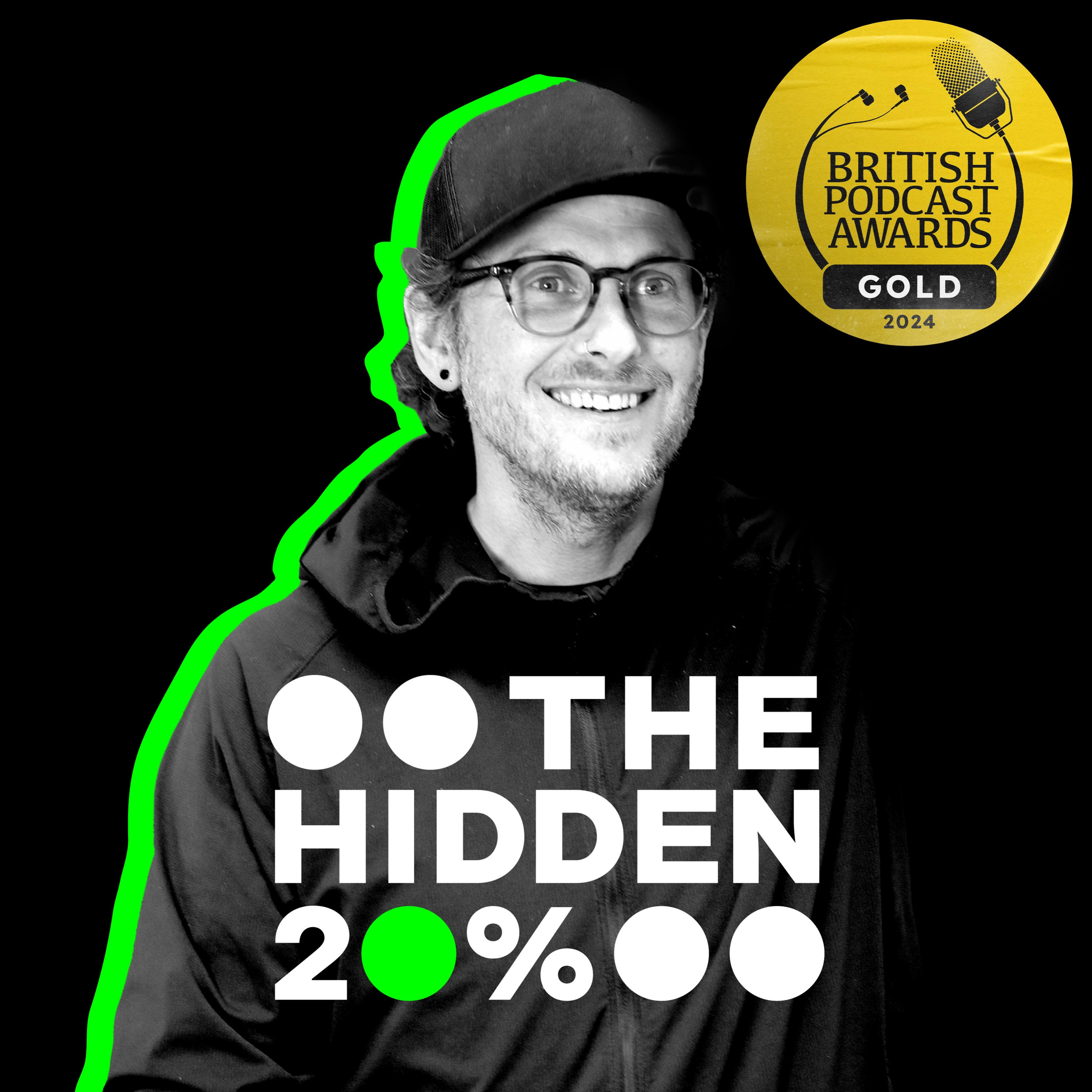
Luke Grosch discusses late autism diagnosis alongside ADHD, how grief and masking shaped his earlier life, and how emotional vulnerability, love, trust, and social media can help neurodivergent people feel seen. He also argues that labels aren’t the problem—agency and education are.
Luke is a neurodivergent content creator and former support worker/teacher who worked with students in assisted provision in Nottingham. He was diagnosed with ADHD at 21 (about six or seven years ago) and later diagnosed with autism mid-last year (around age 26) after years of self-diagnosis. His father died when he was eight; his mother later received an MS diagnosis when he was two.
Social media can be a “gateway” to nuanced understanding; lead with emotion, not just information. Alcohol is especially unhelpful for ADHD/autism due to executive-function impacts. Medication can reveal both relief and new fixation/overwhelm patterns. Labels require context and power-aware communication in schools.
University doctors initially tested for bipolar/ADHD and tried anxiety/depression meds; his autism diagnosis was delayed by NHS “Right to Choose” paperwork. He compares his ADHD/autism switching to “Shrek and Donkey in one body.” He describes dating across language barriers and feeling “nervous system release” crying from comfort. He recounts working with neurodivergent kids facing poverty, grooming/gangs, and school exclusion, and argues support gaps limit outcomes.
Written by AI. May contain mistakes.
Luke shares his current mental state and the challenges he faces with calmness in life.
“Luke, I think a good place to start is how is your brain?”
Discussion on the themes of love, vulnerability, and neurodivergence in Luke's videos.
“I've really enjoyed watching all your videos.”
Luke recounts his experiences leading to the diagnosis of ADHD and autism.
“There is a lot of to be around these things and it is a big decision.”
Luke discusses his motivations for creating content and the feedback received.
“And I think fundamentally for conditions like ADHD and autism, alcohol is never good.”
Discussion on the relationship between ADHD, autism, and alcohol consumption.
“But I think it was always kind of there in my head because a lot of the people around me who were just ADHD or presented or expressed themselves as just ADHD were not the same as me.”
Luke shares insights on the value of research and continuous self-understanding.
Exploring the importance of self-learning and curiosity in personal development.
Discussing the perception of neurodivergent individuals and their experiences.
Sharing personal childhood experiences and relating to students in need.
“And a lot of the kids I was working with were a lot of time, one, one to one were groomed by gangs because their mom has an addiction issue.”
Examining how labels influence our understanding of neurodivergence.
“They've got so much intelligence, so much, so much curiosity and interest in things.”
Discussing the need for educational reforms to support neurodivergent students.
“And I think that like, again, coming back to the school environment I was working because it's such a perfect case study.”
Debating the classification of neurodiversity as an identity or medical issue.
“There's this power dynamic of a teacher to a child.”
Discussing the complexities of living with ADHD and autism and its impact.
“Like it's just constant contradiction and confliction.”
Explore the intricate relationship between self-love and loving others.
Luke shares his meaningful encounter with love and its complexities.
“And I think that for a lot of people who are autistic specifically, it becomes quite personal.”
Discussing the significance of connection and understanding in relationships.
“But I remember bawling my eyes out, like just crying for no reason, just randomly.”
Examining the interplay between vulnerability and trust in personal relationships.
“So I think as well, it's really difficult online when people talk about a specific angle of development.”
Exploring how sensory experiences influence trust and social interactions.
“I went, trained to be a chef when I left school.”
Discover the importance of trusting yourself and being open in discussions with others.
“If that means saying something but also being able to admit oh maybe I was wrong.”
Learn about the struggles of hyperlexia and the journey of writing a book despite difficulties in focusing.
“You're going to be both and you're going to be in between as well.”
Understand the idea behind a non-linear diary and its purpose for neurodivergent individuals.
“that I think has got loads of interesting stuff in it because I wouldn't be able to do cover to cover myself.”
Explore the responsibility of younger generations to advocate for change and support marginalized voices.
“My hope for talking with you was that we would A, cover lots of ground, B, get distracted and go off on some tangents.”

Get the gist, explore an idea or ask about something said.
 Claude
On The Hidden 20%, what are the key points of this episode?
Searching your listeningAutomatic transcript. May contain errors.
0:00How do you wrestle or understand being ADHD and autistic? I feel like I'm Shrek and Donkey in one body. I'm both at once. I'm, are we there yet? Are we there yet? And no, shut up, leave me alone. And one comes out and then the other is triggered by it. Or they're out at the same time. Welcome to The Hidden 20%, our neurodiversity charity on a mission to rewrite the future for people who think differently. Together with you and an eclectic range of brilliant guests, we can break the cycle of silence by smashing outdated stereotypes, exposing the myths, and sharing the most up-to-date truths about what it really means to be just different, not deficient.
0:44The best way you can help is really simple. Subscribe so you never miss an episode, and if you can, donate to our charity through the link below. So enough preamble. I'm Ben, your host. Let's get into today's episode.
1:05Luke, I think a good place to start is how is your brain? I feel good. I feel, what's the best way to put it? I feel calm, but I feel like there's so much going on in life right now. I feel busier than ever. It's like, even when I feel calm, there's like a constant tick in the background of something. And I feel like I'm trying my best to keep that at bay and just keep a level. And I feel like I'm learning that more than ever at the moment. and yeah how normal does that feel that there is that yeah running going on in the brain yeah i think it's always been the case and it's my life but i think obviously as you age as things can compound and life develops so many different kind of facets it is just like okay like i've i've got to this level i'm okay with this in my life i'm doing okay with this i've ticked that off i'm getting better at kind of coping with this and then there's life's constant development right Yeah, I think that's one of the biggest challenges for me in life is keeping that kind of consistent flow of calm because there's always something to disrupt it.
2:13Yeah. I've really enjoyed watching all your videos. Thank you. You talk about loads of things, right? But if I summarize some of the themes, you talk a lot about love. Yes. You obviously talk a lot about neurodivergence. There's obviously a theme there. Vulnerability, people, humans, airports. It's travel, friendship, dispelling lots of the myths, I think, is another thing you do. I love the way you do it. I think it's, and obviously lots of other people do too. Why did you start talking about your brain, autism, neurodivergence? It's really interesting. And I think it kind of starts when I was on my way to university.
3:01I'd just broken up with my first girlfriend. It was a complicated feeling. And essentially kind of growing up, my dad died when I was eight. And a lot of the kind of narrative around my struggles and what I now know as meltdowns and the playground and the sulk that I'd constantly have, the struggle with authority, all these different things that were so pivotal to every point in my life. Even walking down the street and feeling like I don't know where I look whilst I walk past someone because they stare at me. All these things that were to me so like fundamental to who I am, what my day to day is.
3:31and I had been basically kind of socialized in a way to believe that my reality was a lot of the way because of like kind of grief and because my dad had died no one picked up on it and so I got to university I kind of broke up with my partner and kind of one of the reasons was I felt like I needed to work and heal those things. I realized obviously as I got to university I mingled with other people and I think I saw a few tweets there's a few people on Twitter at the time that would make like comics around neurodiversions and stuff and I'm a very analytical person and I've always been extremely self-aware even from a young age and all these things just started to click and I go inside myself and I start to refine that and revise what I'm thinking about myself and I'm constantly in the state of refinement about how I think about things and then I started to pursue ADHD diagnosis.
4:18Doctors at uni were like we're going to test you for bipolar, ADHD. They tried putting me on anxiety medication, depression medication, have a heart condition, avoided those things. There is a lot of to be around these things and it is a big decision. And so I avoided all of them. Got my diagnosis on my 21st birthday. This was sort of six, seven years ago. Yeah. 27 now. Yeah. Yeah. 27 now, 21, 21st birthday, diagnosed officially. I'd kind of gone around on the basis of self-diagnosis that I was someone with ADHD for a while by that point. I'd done a lot of research and felt very confident around that.
4:53And this was pre-COVID? pre-covid yeah just before covid hit and then i went home after quitting my master's degree lots of different struggles around that and i started walking through the woods near my grandma's house and i decided like around the content i'd seen online and seen on twitter and obviously tiktok and stuff had only really started to take off yes during covid i saw things that i felt interested in and sparked a conversation for me but i've always been so talkative so overly in people's terms expressive and struggle to stop myself from speaking that I realized that I feel like there's something that I have to give here I'd done support work at university as a job I'd been a teacher at a school and a assisted provision for kids that looked a lot like me and spoke a lot like me and had a lot of the struggles that I had and more struggles and things that identified that look there's such a to me there's such a wide experience of this and And I thought what was missing is this emotional sentiment around these things and expressing things openly just about how we feel.
5:55And that being the way that it's led, because these conditions are spectrums. We all have such different experiences. And it's so hard to not talk about things from like an informative perspective. I definitely do at times. But the importance is to lead with emotion. And for me, I saw it as a diary, a way for me to kind of express my feelings, to relate with other people, and to allow comments to showcase the variety of that. Because I think it works as like a web and a network. And I did that for a short while. Stopped. Lots of things going on. Needs to get a job. How was the feedback? What were you...
6:28Intense. What was coming back? Intense. At that time, like, I think I was less focused on what people were saying and stuff. It was more just such a big deal for me to record myself. And I've always been quite shy of those kind of things and quite like, don't like photos with friends at events and those kind of things. So I was like, record myself. That feels horrible. but it feels like something that I really love helping people and I care a lot about people and I'm interested in humans that's all I've ever focused on and studied and and so I stopped for about a year saw some other people making TikToks and I was like you know what I had an art studio in Hackney at the time and I was like you know I'm gonna make one video a week I'm gonna go back to it I'm not there's no pressure instead of painting my art studio which is why I was paying for it I just started making videos and the response was really great and I was like you know what I feel like this is really healing for me as well not only other people and and now like fast forward the reason why I think kind of fundamentally as I look back and kind of influenced by now as well is definitely the fact that it opens a gateway for a conversation and a parent someone who's undiagnosed a teacher in hopes in some ways politicians I have Zach Polanski follows me absolutely love Zach Polanski and I mean he's not the sort of politician that needs the education if I'm honest but so many different people that not only comment but also just scroll and look and see the diversity oh I don't agree with what you're saying your video or kind of makes sense for me but not completely but that comment that someone else has left that combined with that video or just on its own I feel seen I feel like there's someone that gets it oh actually maybe this is my experience as well i need to look into this more and there's so many endless ways that impacts people but from an open perspective that is inviting of differences is what i think i like to present and i hope that that's how it comes across to most people if not all i remember you you did a video i think about adhd and alcohol yes and you were very direct and i loved the clarity that you gave which was I think you started it with like ADHD and alcohol don't mix guys yeah not saying don't drink alcohol but then they're just not friends that's what's really important and I think like look social media to get people to listen you have to be on the nose you have to be redirected in the first few seconds of a video you need to let people know what you're talking about otherwise there's so much information going around yeah I work in social media as well yes like in my full-time job and And I could lead with, you don't have to stop drinking, but people want to hear what you're actually trying to get at first.
9:04And I think fundamentally for conditions like ADHD and autism, alcohol is never good. Do I drink? Rarely, but I do drink. And sometimes I drink a lot in one go and it helps with social aid. It helps all these things. It's hard to get all those things across in a short video. And that's where the nuance comes and you'll get people kind of saying different stuff. And it's important to clarify stuff in comments and respond to them as well. but like the importance is that an executive function disorder is going to be impacted by something that impacts your executive functioning and we're all different we'll have different responses to it but overarchingly the generalization but some things can have like an underlying current and and neurodiversions and alcohol especially ADHD and autism there is that underlying current for most people if not all and regardless if that impacts you less or more doesn't impact you to the point that's detrimental like the fact is is that it's not helpful to us like it is something that can be helpful in a social environment but i like that you get to the point right and i guess that's what and you'll know this because this is your work what good content does and needs to do to grab attention so you've got to get to the point 100 what we as autistic people are quite good at doing is getting to the point for sure right and i guess put some adhd on some pace and energy yeah so diagnosed adhd at 21 where does autism then come in yeah so it's really interesting because there's that epiphany when you kind of first get that diagnosis like obviously I had this understanding of neurodivergence for myself before that diagnosis of ADHD but it's like all of a sudden my life fits into loads of different things that I didn't think it did and it's like it's not but it is but like the Truman Show like the realization of oh my goodness everything around me isn't what I thought it was I think the ADHD medication helped but it was softer when I realized I was autistic I can't even remember the exact moment that that kind of clicked for me and I I started to look more into it.
10:51But I think it was always kind of there in my head because a lot of the people around me who were just ADHD or presented or expressed themselves as just ADHD were not the same as me. And I was like, hang on, there's so many things we are similar in and we're all different people, but there's so many things that you don't relate to me on that are about some of the things that are kind of related to his active function, all these different things. Information, sensory stuff, and ADHD, impact sensory, but there's so many different complexities. And so for a couple of years, I was self-diagnosed because I really hate to have to be placed into a position to speak in any way badly of the NHS and the healthcare system because it's not the NHS or the people that work within it.
11:31It's the system. It's economics. It's political. It's the government. And look, not saying that's an easy thing to juggle either. But the reality is my GP sent off my right to choose, supposedly, but they hadn't. And I've been chasing them every month for over a year. Really? Or every other month. and they were certain they'd been sent off. And then I really put some pressure on because it's like, look, this has been way over a year now to even get on to say when my appointment's going to be. And then basically they hadn't gone through. They fast-tracked it six months later. So I was only diagnosed mid last year.
12:03Okay. So 26, even though I was making content and talking about these things. But because I'd spent so much time and self-diagnosis is valid. It's so valid. But I think obviously there's a caveat. You have to really do a lot of research around these things. And that's such a difficult topic around self-diagnosis. but I mean I proved it right for people listening and watching what's your advice around doing research because it's not watch a couple of tiktok videos I think social media is a gateway I think it's a gateway to opening your mind on something that's that's really nuanced and complex we all have different experiences with information I feel very lucky and grateful to to say that you know a levels a degree a master's degree like quit but half a master's degree almost finish it and quit but of all around social sciences political science and history so historiography kind of fact checking looking at primary and secondary resources etc i've been primed to look at things and question them we all have different levels of critical thinking and it's like a muscle you need to work it out and i'm grateful to put myself and kind of kind of just find myself in positions that constantly do that so for me it's quite easy to sit here and just say you know just look through resources read things but what are the right resources what are you know it's looking for credible options and and looking for like researched kind of angles and and sectors and and combining that with emotional sentiment like I don't position myself as like a fountain of knowledge or or someone that someone should go to if they're looking to find out if they're this or that I would like to position what I do and I hope that that's how it's seen as is it something for someone to to see do you know what I relate to this I relate to this this is interesting I feel this way okay let me now look at that here here and here and that's what it is it's that constant kind of you know if you see a few things and turn around and say this is my experience well we can all do that and I think it's important to be rigorous and I think people can get defensive about that because maybe they haven't done enough research or maybe that they're struggling to but it's like research and understanding yourself is a lifelong thing it never stops and so trying going towards it that's all you can do even if it isn't at the pace that you want to or you feel like there's gaps like there'll always be gaps there's always going to be gaps to show up in your life and yeah the ways that you are so I think just being hungry to learn about yourself I think is a point for anyone in life and self-development I think just wanting to learn more and being curious about yourself is kind of where it leads and that's what's most important and and those sources can come in so many different forms yes let's talk about your special interest of people yes and humans sure now you are diagnosed and looking back and you mentioned a bit around people mistaking your grief around your father dying masking and confusing the fact that you're ADHD and autistic like why me back to you being a kid and being fascinated by people and how you now reflect on the fact that you were autistic and ADHD then as much as you are now sure yeah apologies if i the the way i explain it is convoluted usually the story isn't start to finish as i'm sure you'll understand but i think really kind of the the main reflection point comes later on for me i think especially working with with students at an assisted provision in nottingham where i was studying during my master's and a lot of these kids and i think it's really a really important conversation and i'm sure it's one that that you speak about a lot with lots of different people is the amount of individuals that are neurodivergent, they're autistic, ADHD, that do come from kind of, you know, disproportionately, you know, lower income backgrounds, have loads of different difficulties in their upbringing.
15:43And a lot of the kids I was working with were a lot of time, one, one to one were groomed by gangs because their mom has an addiction issue. Maybe their dad isn't in the picture and, and, and this gang environment was the only option or you know i had kids that are on tag at the age of 13 14 they've been kicked out of school for violence and and burglaries all these different kind of things and although that wasn't my experience what i really related to a lot of these children with is that because there wasn't specific people caregivers or specific avenues of support that should have been there to identify things then how was that ever going to be set up for them how are they ever going to have that opportunity and i'd see flecks of myself in some of these kids and the way that they express the way they talk about things.
16:25They've got so much intelligence, so much, so much curiosity and interest in things. All of a sudden they switch back to something else because of all these different conditions and things. And it made me feel grateful for the fact that although it looked like talking about my childhood. So my mum was diagnosed MS when I was two. And then obviously my dad passed when I was eight. So went from having two parents at work, mum's a hairdresser, dad kind of does all kinds of stuff to mum not being able to work. Yeah. And then my dad kind of gone. And the first time I ever went on holiday was when my mum's friends at the school after my dad died raised money to then be able to give to us to afford to go and see my mum's dad my granddad in Spain where he where he was living so although it's not the same my mum tried absolutely everything to put life on as much on a plate as she could for me food and somewhere to live and stuff we were close to you know a difficult situation and that was being autistic being so analytical things that's always been the case that was always in my mind but what that also meant although my mum was there for me as physically as possible she's got so much going on she's got other kids going on she's got grief of her own all these kind of things and at the school the lack of education compared to now although it's not as visceral and there was this kind of lack of understanding not only but there's this lack of ability to direct that focus on me to see it in the first place so a lot of the things that i talked about to my mom she she doesn't even realize some of the stuff she didn't remember because she just she was surviving herself and i think it's so important to realize that so many people are not given the opportunity to have that understanding even if look like now you see like at schools there's so much better awareness around these conditions we're seeing more and more and this is where i think one of the most important things around neurodivergence comes in is is the label people see labels as an issue and i know that they can box people in but this is something that i think actively as a society we need to work on education needs to change massively we label everything the microphones in front of us they're microphones and i guess that's a reductive look at labels right and simplifies it adhd autism and labels the problem is they're also just words they're just words they're just words all of it's constructed yep and we apply meaning and people forget that you know we're all different humans with different meaning no two people have the same meaning and culturally socially if that's another conversation culture is a is an endless venn diagram in my opinion but it's really funny or i find it interesting that we can have words like love yeah where everybody has their own yeah individual experience understanding relationship with that word yet there is also a kind of common okay there's a symbol sure there's a color there's a kind of yeah there's a sort of common thread and i don't think we have that yet for neurodiversity, autism, ADHD.
19:13Like it's all so fresh. Yeah, very much so. It's all very messy. It is very messy. Very loaded. And I think that like, again, coming back to the school environment I was working because it's such a perfect case study. So I'd be working with a kid with ADHD, 14, doesn't want to do the maths paper we're trying to work through. I've been told to help with it. Head teacher is rigorous, intense, man. Means well, but has a specific viewpoint. A lot of these teachers, a few of them do an education around ADHD on the side, but that's because they genuinely have decided that they need to do that on the side which is not expected of them yep and this kid's telling me i can't do it because of my adhd only done half the paper it's taken two hours to do that that's fine headteacher's like why haven't you done this blah blah blah said to headteacher that it's because of my adhd why is it it's because you struggle to focus and it's about the education and this is i think the most important caveat around label the label is not the problem it's the agency that we give to people to be able to express that label within the context for themselves and so when you're an eight-year-old a 10-year-old a 15-year-old a 20-year-old a 30-year-old 40-year-old 50-year-old whatever environment you're in there's obviously power dynamics there's teachers there's bosses there's doctors all these different people that you need to be able to express and we can't expect people to understand something outside of one their own bubble but also the way that their cultural and social experience in the same words as you're referring to there has this own map of the way something looks yep so when you just say well it's because my adhd and it's we shouldn't have to constantly granularly explain everything sure but if we just give a label yep that person applies whatever their idea of that thing is to you and so if i think adhd equals lazy yeah then but if you've not learned anything else we we can't blame people for having that idea of something because it's not inherently of malice.
20:57But that's when we have a duty of care to young people who are still developing that expression to empower them to have the ability to say, this is my experience, to emotionally understand it, which I think is sometimes more important than just the facts or the stats or the data, is to emotionally understand their presence in this experience, to be able to give some nuance that takes some of that agency away. There's this power dynamic of a teacher to a child. It's like that. To balance that slightly in a conversation that needs it slightly more and that understanding kind of of what that experience is for that person so you take away a little bit of that kind of placing of what a label can give that's the issue people say they have an issue with labels i really struggle with that because the label isn't the issue it's the way that we're giving people the ability to express that label within their dynamic with their form and that i think i don't trust a lot of the current refinement governmentally socially around neurodivergence and education until we're placing those things and those steps into education for those individuals so they're able to have that agency.
21:56Because it doesn't come from just teaching the teacher how to do this, to give them a new curriculum or give them a new training module. It needs to come from both sides. Yeah. Where do you sit on the neurodiversity, neurodivergence as an identity versus a medical thing? I think that's a difficult conversation. It's really hard. I'm all up for the difficult conversation. Yeah, of course. Let's get into it. Yeah, it's really interesting. I think it just depends how you feel. I think we're all human beings. And I think like at the end of the day, like it is more than just a medical diagnosis. It is part of who you are and it informs every single moment of my life.
22:32Like it is so, when your brain works differently at the nexus, like the way that you outwardly express in anything, even something like, look, I see often women diagnosed with anxiety or depression first. Obviously it was something that was pushed onto me as well. I think because I potentially don't present. It's the go-to. Yeah. It was. was yeah and i don't traditionally present in the in the stereotypical ways autism adhd presents even just adhd on its own and so i really resonate with that in a way obviously don't experience it but so many women that i know that have had these experiences where there's anxiety depression medication and they go on it and then all this isn't solving this or this it's not helping with this and so obviously these things aren't the end all they're not going to solve everything but it's because at the nexus is something completely different the fundamental way that your brain works is going to inform something like anxiety or depression you know differences in chemicals and all this kind of stuff.
23:22And I know you speak to people at a better place to talk on those kinds of things than myself. But the reality there is, is that like when those things are treated first, it's treated at the wrong point. You need to address at the nexus first. And so I feel like ADHD, autism is at the nexus of your experience before anything else. I don't think it's a bad thing because for me, it's changed the way that I see things. It's changed the way I developed and understood myself and able to support myself. And obviously there's conversations you can have with different people and it can conflict and different parts of life but i think fundamentally you have to see it as a massive part of your life because it is yeah i'm not one for like regret and kind of what ifs and oh if only i'd been diagnosed sooner but i saw my first psychiatrist when i was eight okay and if at that point it had been recognized that i was adhd autistic yeah do i think that all of the bad shit that then happened down the line would have happened i don't know it's a really tough one you know it's really tough but it's a weird one because i'm also extremely logical and matter of fact of like sure well life's good and this was the path to get here then this was the path to get here i guess i look at my kids and i look as you're talking about younger people and go we can change we can break this cycle we can improve the chances of better outcomes 100 % further upstream but coming back to what I was saying a second ago as well like really quickly I genuinely look at again some of the kids I work with or just young people in general who get given ADHD medication or get support for their autism and they're in school and they kind of get given a label without that education understanding I question if I was given that at that point would that have hindered me in certain ways yeah genuinely it speaks volumes to where we need to go that i don't know if i'm was more protected without that and it's a conversation that's different for different people but i think it says more about structurally things that need to change because correct i genuinely look at some of the way that these kids are treated and have been treated and obviously that's hopefully not going to be the same going forward and is being worked on but i don't know if i'd have been better off yeah how do you wrestle or understand and being ADHD and autistic.
25:35It's a minefield, isn't it? Yeah. Like it's just constant contradiction and confliction. And yeah. Where have you got to with it? With like breaking it down and understanding it. I think like it's just looking at the fact that there are things that I'm going to do one way and I'm going to piss myself off or I'm going to bother myself. There's ways that I do something that's going to then kind of contrast with another thing that I do. And it does just feel like a constant kind of like this, like you're shuffling back and forth and pushing against one boundary and then another. And I think it's an endless conversation because I think it is so complicated and I don't envy anyone that is in there trying to understand it from a kind of structural perspective in terms of like scientifically, from a support perspective, from medication, all those different things for say like with ADHD, the way that we actually try and understand the balance between these two because we don't even understand how the brain fully works, right?
26:28So I feel like it's such an endless conversation. do you have that level of awareness where you can recognize when you're leaning into a different neurotype i think it's a blur i think there's moments where you can see both or you can see separate but i think they do obviously all combine because you know none of these things are linear they're not you know two straight lines and we're always connected right and so one may show and present more than others at different times and and yeah definitely like i think medication exposes it massively like i'll feel more relaxed and more able to focus and don't have this paralysis or this kind of struggle with getting started on a task but at the same time then it highlights the fact that i'll then fixate on something for several hours kind of endlessly and and sometimes it can become so overwhelming though it takes over everything else and then the fact that sometimes i'll i want to do something and i call myself an ambivert i refer to myself as like i feel like a lot of autistic and adhd people especially audi hders and those friendships between adhd and and autistic people like a Shrek and Donkey relationship, I feel like I'm Shrek and Donkey in one body.
27:34I'm both at once. I'm, are we there yet? Are we there yet? And no, shut up, leave me alone. At the same time, and one comes out and then the other's triggered by it. Well, they're out at the same time. And I think I kind of flip between the two of being that and sometimes not just to myself, but to other people. And I genuinely think it's one of the, it's not one of my favorite movies, but from a perspective of kind of comparison, I genuinely think it's the perfect comparison to me of how I feel in kind of a fairly simple way but those two conflicting kind of maybe a bit more reserved don't like people too much in my space chill out leave me alone get overwhelmed can get really irritable and frustrated to this kind of completely almost like just life's amazing I'm so positive and and that's not to say that autism negative ADHD positive because the two can but it's that kind of like again it's a kind of generalization but i think it makes sense to me where does love fit in that love oh it's such a tough topic isn't it love because there's so many ways that we can love ourselves love other people understanding of you know how we are to be able to love ourselves before we can allow someone else to love and there's also that kind of conversation around we need to be able to love ourselves before someone else can love us yep i struggle with that because yes to a degree but loving ourselves is an endless is an endless experience we're never going to not stop trying to love ourselves better it's not a destination it's not a destination it's an experience for life and that's so it is hard to find when's the right time when's the right point but then being able to be aware of yourself and how you impact another person and something i think i'm rather heightened to and i struggle with letting go of sometimes is overthinking the way that I fit in with other people, how I consider other people, makes love a really intense thing for me.
29:23And I think that for a lot of people who are autistic specifically, it becomes quite personal. And obviously it's a personal thing, but take it quite personally. It's hard not to when you naturally put so much quite early on into thinking about someone and considering them in kind of this stratified and kind of really nuanced way to then be met with something that maybe isn't. And it's that gap. And the gap is both sides because there can be a lack of understanding. And this is kind of hypothetically talking about not just someone neurotypical or having differences in general with different people, so neurodivergent or not, but being able to kind of bridge that gap and not feeling like there's like an imbalance.
30:01But that imbalance comes from us. It doesn't mean that there's necessarily a lack of balance from the other person. It's just difference. And it's so difficult to find the balance in those conversations as well. Have you been in love? Yes. And how did you know that that was love? it's a tough one because the situation is really difficult so this person lives like 8 000 miles away we met in london almost spoke completely different languages and this to me is testament to it so she's colombian obviously i'm from just outside london and we met at the tate modern and i turned up and we had to use google translate the whole time but it slowed everything down for me and we saw each other the next day and we spent the whole day even though she didn't know at the time that she was autistic and she doesn't have access to the same kind of diagnosis processes there etc but we spent the whole day walking around taking photos of eroded buildings and I have a really specific aesthetic and theoretical interest in duality of human and nature and the disconnection between that and kind of the way that that presents in modern architecture and stuff like that I love erosion I love things falling apart I love the TFL system that's a whole the topic don't get me started but she has the same interest and she likes bins and stuff and she's a tattoo artist stick and poke and so she would stick and poke all of these different designs and stuff of bins and bricks and all these different stuff and so the second time we met all of a sudden we were fixated on the same thing despite having such a different language experience and she speaks some English and then she moved to Spain was seeking asylum there some struggles and then has gone back to Colombia I really can't do long distance really struggle so does she I think that kind of speaks to a lot of the structural issues with what I struggle with what a lot of people like myself struggle with but I I felt like it was different from other experience that I'd had with dating and relationships because I remember one time this is quite open but we sat in my art studio and I was just next to this person who I didn't have to explain myself to at all even though like some of the stuff I try and talk about in a different language she just laughed at me and she doesn't fully understand what I'm saying.
32:06But I remember bawling my eyes out, like just crying for no reason, just randomly. It's like a nervous system release because I never felt so comfortable with someone before. And I think so importantly what love means to people, and I think it's the most, and I have no shame in saying it's the most important thing in the world. And not just in like that kind of, kind of relationship experience, but platonically, societally, and so many different things is that feeling that you can sit with someone and you look at them and you see not only yourself in them but you see things in them that maybe they struggle to see in themselves or other people don't see and we not only kind of uplift someone by making them feel heard or seen but to be able to just be without feeling like they have to question that and I think that's one of the most beautiful things you can give to someone and I think like being able to in any way be a part of that for people specifically specifically kind of in social media as well being able to showcase all these different things about our experience and little snippets of people seeing themselves I think is an act of love and to me that feels like an act of love and to me it is like a diary but it's a diary that's together and and to me that's so demonstrative of how important just loving people and I think like I've always struggled with slowing myself down and filtering what I say but I just want to give love towards people sometimes to the detriment of myself sure thank you for sharing that how do you understand that in the context of being vulnerable and being manipulated or taken advantage of so i had a tough relationship at university actually with someone who i think has been through so much so i'm not going to sit here and and kind of speak in a certain way of like someone who treated me really awfully but somehow had a horrendous horrendous experience that i think fundamentally changed the way that they are and made them be the way they are without even realizing it but i think i will overextend myself massively because not only because i think i struggle to know where i end sometimes and where someone else is with their emotions etc and kind of understanding they all blur into one right yep but also because i just it's such an interest of mine to learn someone to understand them and i think when that's an interest kind of societally in general but then when you can focus that on one person it's look not blaming myself for the things that person kind of cheated on me treat me in certain ways but I have to get better and have done and still am knowing where do I kind of slow down because unfortunately no one's going to do that for me and like it's something that I'm always going to struggle with but it's learning a little bit and I think it's a difficult conversation I'm sure you'll agree around where is it that like self-development and the reality of a disability stops and starts and it's like i'm not expecting myself to be perfect at something but i will always try to understand better because at the end of the day it's for my benefit it's all good saying i can't do this i'm always going to try i can say that sat here with with lots of different struggles that can impact that but then lots of different struggles that someone else has that i don't understand don't know so it's it's not one for all no there's always ways incrementally as people that we can and and And it's dependent on the individual.
35:20So I think as well, it's really difficult online when people talk about a specific angle of development. There's so many ways that that can look. We have to remember that that looks so different for everyone. But I think how we avoid difficult scenarios comes from being really harsh with ourselves. And I think a lot of us are really good at being harsh with other people. We should probably be better at being that with ourselves. And I think that's a learning curve for everyone. And I think it's important. Do you trust easily? connected to that love vulnerability where do i end where does that person begin i think it's really hard right because trust is such a difficult thing and it's so funny i'll trust someone with anything any of my thoughts any anything like that anyone off the street probably but then i won't trust someone to cook for me because my sensory struggles that's a real big thing for me with food it was growing up and like i still struggle with that so very rarely do i let someone cook for me i've been you know cooking for myself almost every day since i was So I'm a really good cook, right?
36:15I went, trained to be a chef when I left school. Cool. How can I cook for you? Tell me the conditions. I'd want to know everything going in it. Okay. Yeah. That's fine. You want to know all the ingredients. But you seem like a trusting guy. Yeah, but I'm going to cook for you. Yeah. You can eat what you want. Sure. Tell me what I need to do. See, I think it partially, you exposed that quite well there. It is a control element. Yeah. I think it's a control of food because I've always tried to control the sensory experience of food. Okay. So the fact that you're giving up the agency there to me to decide.
36:46Yeah. A little bit better. Okay. If a friend says to me, like even one of my close friends, I'll come around. I'm making this pasta or this, that I'm like. And also the problem is if I was a kid growing up and my friend's parents cooked me food or something, if I don't like it, that whole cultural thing, you know, it's rude not to eat it. There is no way I'm eating it. Like I will say that I'm not eating it. There's no way. And so there's then that, oh, how do I deal with that scenario? and kind of running through all these different, and I'm constantly running through social situations in my head.
37:17So it's like everything is calculated. I'm always trying to calculate things like that because I don't want to offend someone, but also I am going to say what I think. So then flip it the other way and you're cooking something for me. Yeah. How do you approach that? I mean, it depends on you, but are you cool with someone cooking for you? Is there trust elements there for you? It really depends. I'd want to understand what you're cooking. Sure, of course. but then I'm okay and do you know what I think I'm okay because I'm increasingly okay with saying I don't like that yeah or I like that though just say it like what don't you like I'm not gonna eat that I love problem solving as well yeah you tell me what I don't like obviously I'm lactose intolerant gluten intolerant was vegan for five years gluten free now I'm so like oh you can't eat I can't eat this can't eat that so I'm always checking what someone also doesn't want to eat because I'm also funny with senses and stuff yes I'm like are you okay with this And I think there's obviously certain ingredients that are more obvious to check, like chili or something like that.
38:16But I love spice, but someone else might not. So I'm trying to be, I think, more overly considerate. But on the point of trust in general, I think it's important. And again, it's a dangerous topic because it's so hard. So I speak for myself specifically. I personally like to try and trust people first. And as soon as I get a sign of something else. Same. Which I struggle with. I cannot do it another way. I don't, it's not in my psyche to go, I don't trust you. So earn my trust. Exactly. I can't do it that way. Exactly. It does. It feels transactional. But my experiences would tell me that I shouldn't have one size fits all.
39:00Yeah. For everybody that I meet, work with, et cetera. Oh, a hundred percent. but I think I analyze people so much like so profusely and even when I talk to a lot of other autistic people I think because of my interest because of my specific focuses and just study all these different things and my personal life experience I think the two intersect beyond obviously my autistic experience just in general I think I specifically I really don't like the phrase my mum used it it's not PC really but she would say I psychoanalyze people I analyze everything but I don't even realize how much I do it sometimes you know that constant analysis of everything to a detail where I trust someone but I'm aware like I'm aware and I'll pick up on things and yeah and there's this there's this conversation I'm really struggling we're all different we have different experiences around narcissism is a buzzword on social media is it yeah well I think it's just an easy one to pull people in on a conversation isn't it because it's intrigue it's interest it creates it's polarizing but a lot of people don't really know what and you know I can't say exactly what a narcissist is or what a narcissistic person is.
40:05I have a strong belief that the person that I was in a relationship with at uni leans in that way. Okay. But I can't say that for sure. Sure. But I feel strongly about that. Yep. But there's this sentiment around that we're just off the bat, we're really good at picking it out. But everything about the condition of autism, for most people, not everyone, would suggest that we're not. That we're not good at it. No, no. We're not good at picking out these things. It's like April Fool's Day and I really, I hate that day. I hate that day. even though I know like the Kit Kat story have you seen the Kit Kat story that's going around on social about 21 tons of Kit Kats were stolen from a lorry do you think it's a set up I don't know if that's true do you know what though is it true I don't know it really bothers me that I don't know whether that's a lie see do you know what my trust when it comes to anything financial I think comes from trauma as a child but also So I think because of my specific interest in studies and just the way I love looking at social construct in the way that the world is structured, society is structured.
41:12I look at all of these things. I struggle to be marketed to by brands massively because it just felt like there is a person sat in the office who has decided that and we're all just going to decide together there's this idea about something that fits a trend or something online and we're just going to post it. My brain does not see that kind of outcome. Like, so I naturally probably don't trust it anyway. Because it's coming from a head office. It's coming from some intern or someone that's decided this is a good idea. Someone higher ups and you know what? Yeah, that's really cool. Let's go. It's interesting being trusting.
41:44Yeah. But also hyper vigilant. Yeah. Super analytical. Yeah. And I guess I increasingly back myself to pick up on the flags. I'm going to pick up on the trust. But don't worry, I'm on it. I'm watching and it's good because I think that's a really good balance to have is to be diligent to have that if you're naturally a trusting person and you naturally like to be warm and welcoming for the general person or thing good be hyper-villigant but also like if you turn around and call someone out on something and say you know I don't like that and it turns out you're wrong realistically if it's the right environment for you to be in that conversation will work out that thing will work out I think it's important to also be really direct and like if you feel if you have a gut on something certain ways to go about it but trust your gut yeah if it's not the case or like you know the conversation that will that will happen afterwards whatever happens afterwards is what happens and i think we have to lean into the fact that again it's a whole another universe around fate and manifestation and and kind of the way that things align but like things will align in the way that they're meant to and trust in yourself allows things to align in a way that that comes from from a central point of yourself yeah i think trusting yourself is so important.
43:00If that means saying something but also being able to admit oh maybe I was wrong. It just comes from just being having a level of... Conviction is important, right? Nothing we do exists without any form of conviction. Otherwise, what's the point? So sometimes we have to be wrong and sometimes you have to and that's hard when you're trying to when there's that kind of black and white sometimes idea around right and wrong. Because I'm not, okay, I don't want to be this or I don't want to be that. But also, you're going to be wrong. You're going to be both and you're going to be in between as well.
43:26And I think that's a big struggle and sometimes I struggle with navigating that. You obviously write quite a lot and it sounds like you started diary journaling, writing prompts or how has that then now turned into you writing a book? Interesting. I'm going to be really honest. I maybe write a note to remind myself what I talk about, but usually I just say it off my head and I might redo what I'm saying because I've not said it the right way. But I kind of formulate things as I'm talking about them. I find that's the most natural way for me. and grown up hyperlexic. I used to read so much. I would read Dean Koontz and Stephen King books off my mum's shelf when I was four or five even.
44:02Wouldn't know the words, be trying to understand what they mean. But I've always been obsessed with reading, but I haven't read a book cover to cover since I was about, probably about 10, 11 roughly. Wow. Struggled to focus on them. Went through uni without that, looking at different pieces of information. Never reading a book cover to cover. Such a struggle for me, such a struggle for so many people like us to focus on these things. It's an intense thing to do. attention span is shot if i'm honest with you anything to do with your generation i think social media is not helping at all and i think there's lots of you know not even just this country but in other countries there's like the us for example massive issue around literacy and like further and further social media people go to question kind of things there so when i kind of had that kind of conversation around writing a book obviously i was doing some journalism when i left uni etc media journalism music journalism and i've always been an avid writer, one of my lecturers, Concha Hoffler, amazing woman, encouraged me and said, you should pursue a career in writing.
44:58And I never thought I would until this book came about. It's called Diary of a Neurodivergent. And I didn't want it to be me trying to get someone to just read a book that I think has got loads of interesting stuff in it because I wouldn't be able to do cover to cover myself. It is a very non-linear experience. It's lots of diary excerpts that are really quite similar to my videos of me just talking about different things. Some of them are a little bit more intense, some are a little bit more heavy, some are a little bit theoretical, but they're all conversation starters and think pieces that some of it's just me being open and vulnerable and some of it's me having a bit of a thought about something.
45:35But there's a declaration at the start where I want people to sign with me and share being vulnerable and just agree to take up space, which we often struggle to. And then there's space after each of the chapters, as each of the kind of sections with some prompts and stuff to help to write your own thought if it's on that chapter you've just read or something that sparked from that. The same as when my videos are with the comments. It's like a co-author diary. And so I thought I want to make a co-author diary that you can pick up at any point. You can open any page, read something, and there's a space for you to join as well.
46:09And that's so important because this experience is so vast and I'm not here to try and tell someone how to experience their life. and I don't just want to make a whole book about just me because that would be pretty boring. No, but it sounds like you can almost take all of your learning from all the amazing videos that you've done, the feedback that you get, and apply that into a different media format. Sure. Marshall McLuhan said, the medium is the message. Sure. Right? For sure. Never a truer word. Like, looking at you saying that, I'm just like, oh yeah, I can see what he's done. That's great.
46:47That takes it into writing, not speaking and typing. We get a different, we get a physical thing. Exactly. And there will be physical elements within the book where it's not just writing. There's places for you to sketch and doodle and maybe so I won't give too much away, but some interesting stuff to engage with your special interests. And there's ways to showcase to yourself and in a way that you can look back through about your experience. And so it's not all in here. it's also there in a way that you can keep safe who's the book for for anyone who's neurodivergent of any kind or anyone really like realistically a lot of these themes and experiences other people share and in their own ways and and i think you know what would be really my dream would be to see or hear about someone filling that book out completing it with me essentially and sharing that to someone that they really care about be that their partner family member friend and feeling like you know what look I explain myself all the time this is really vulnerable I feel safe with you here's a little bit of an insight into my world that would be amazing and I think just giving people a space to have I can't use like a diary that's like Monday Tuesday Wednesday all that kind of stuff I can't I'm so non-linear and I needed to have something that's non-linear and I'm going to fill it out myself it'll be right into myself I guess and co-author it with myself but but just being able to kind of open a page and go you know right that topic's come up like kind of we've gone off today just back and forth on different interesting stuff okay it's got me in there let me just talk about that how do I feel about it say whatever I want shut it again and I don't have to come back to it and there's no it can stop and start I can finish it can can leave a bit to another day when I'm ready for it I'm non-linear I feel like a lot of us are very non-linear and I just feel like there's nothing like that around I'd love people to engage with that so diary of a neurodivergent diary of a neurodivergent where can people get it so it will be shared through my pages, et cetera, online from end of May for pre-order.
48:46Yeah. Amazing. Best of luck with it. I'd like us to get a copy, I think. My hope for talking with you was that we would A, cover lots of ground, B, get distracted and go off on some tangents. Sure, sure, sure. I knew we'd always come back, but I don't want this to come across as patronizing, but I am older than you, right? I'm 43, 27. And your generation and people like you in a nice possible way, you have a really amazing opportunity and responsibility for the generation below you. For sure. That, I don't know, means we can change stuff. And I mean that in loads of contexts. I mean that from a neurodiversity perspective, from a masculinity perspective, from just like feelings, love, vulnerability, trust, all that good stuff that breaks some of the cycles of how previous generations have been that all feed down so yeah thanks man you're wise beyond your years for sure thank you and i love that you especially interest these people but please keep being direct and please keep saying how it is and being vulnerable and sharing how you see the world yeah please please just keep doing that thank you i think first and foremost people forget that we're all animals on a floating rock that are just trying to figure out how to live why are we not just trying to be more and more open with each other because we're all just trying to figure it out everyone's struggling everyone's having their own shit everyone's upset at times everyone's having really horrible days and no matter what your experience is I think just leading with the fact that you just want to see everyone in the same light that you see yourself and that like by leading with vulnerability there's all sorts of topics around how that can be difficult in different scenarios in different people but just leading with openness in whatever way you can and what you feel comfortable with just leads to opportunities for you in a selfish way.
50:43It leads to things that are positive for you but it leads to so many different gateways for other people. You never know what your openness can do for another person. You talking fluidly and like yourself talking fluidly and openly with me here allows me to open myself and talk about things that are important to me and that being a facilitator that's what you do here all the time. Be a facilitator for other people to express themselves be open and vulnerable and that's the sort of catalyst we need for people to be more human in how they express with each other and to you know create a kind of a society that's inducive of of just loving one another you know so thank you very much I really appreciate that not at all my last question I've got a second green dot badge for you who would you like to give it to do you know what I'm going to just put it on a really direct angle I would give it to Nigel Farage and I'd love to see him wear it proudly on his chest and acknowledge that a lot of this populist divisive rhetoric is horrid it's unfair and it impacts lots of different marginalized people and look i am kind of stretching that but lots of marginalized people that for all different reasons that under these kind of populist ways of kind of pushing narratives it impacts neurodivergent people so i'm yeah clambering a few things in there yeah but neurodivergent people in so many different formats so many different ways and it doesn't matter if you're a migrant if you're illegal in a country or you're not or you know you've worked and grown up in a country whatever it is there's so many of us at neurodivergent who are struggling maybe undiagnosed diagnosed self-diagnosed don't have the support that they need haven't recognized it yet at 70 80 years old and still yep waiting for that and they're in so many difficult positions we're all human beings and there's so many of us that need support and the kind of intercept between all those narratives and things as well as the disregard for people like us and the inflammatory statements that have been put out that are ridiculous and genuinely shocking and I think that people should be kind of addressed for those things in different ways but I don't think they'll ever get kind of held to it but I think a beautiful image for me regardless of my dislike for certain people would be more for a hope for change and hope for okay look if we can't get rid of these people hopefully they change their mind and have an open mind to things so that would be my pick just from my perspective I think it stands for what potentially and what we can hope for from certain people we've done like over 100 episodes nobody has actually given for a harsh agreement yet so that's this is time he needs time thanks Luke thank you very much been a pleasure
53:21that's it for today's episode of the hidden 20 % but just before you go a favor The Hidden 20 % is a charity and we do this to bring you the truth the latest research and the real stories that matter so if this episode spoke to you then please hit subscribe and if you can donate via the link below finally a big shout out to you all for listening and our brilliant team who make this all happen Phoebe, Charlie, Kristen, James, John and the guys at TYX Studios we'll see you next time
54:00Thank you.
Content creator and author Luke Grosch joins Ben for an honest conversation about late-diagnosed autism, emotional overwhelm, grief, identity and learning to understand yourself in a world that often misunderstands autistic people.
Luke reflects on losing his dad at a young age, and how many of his autistic traits - meltdowns, sensitivity and shutdowns - were mistaken for grief rather than signs of neurodivergence. Diagnosed in 2019, he shares what changed once he finally had language for the way his brain works, and why being openly emotional online has become such an important part of his work.
Together, they explore masking, burnout, relationships, loneliness, internet culture and the pressure many autistic people feel to appear “fine” while struggling internally. Luke also opens up about writing his first book based on diary entries and emotional reflection, and why vulnerability can be a form of connection rather than weakness.
Join us at hidden20.org/donate.
Buy Luke's new book 'Diary of a Neurodivergent' at https://dashbook.com/book/diary-of-a-neurodivergent
________
Host: Ben Branson
Production Manager: Phoebe De Leiburné
Video Editor: James Scriven
Social Media Manager: Charlie Young
Music: Jackson Greenberg
Head of Marketing: Kristen Fuller
00:00 Introduction
01:08 Luke Grosch’s Late Autism Diagnosis Story
03:42 Losing His Dad Young & Missing The Signs of Autism
07:15 When Autism Traits Get Mistaken For Grief
10:54 What Finally Led Luke To Seek a Diagnosis
14:02 Late Diagnosed Autism: “Everything Started Making Sense”
17:40 Masking & Pretending To Be Fine
21:18 Emotional Overwhelm, Shutdowns & Internal Struggle
25:11 Why Luke Shares Vulnerably Online
28:45 Autism, Loneliness & Feeling Misunderstood
32:04 Burnout & The Pressure of Social Media
35:27 Relationships, Friendship & Communication Differences
39:18 Why So Many Autistic Adults Feel Exhausted
42:56 Writing a Book Through Diary Entries & Reflection
46:21 What Luke Wishes More People Understood About Autism
50:12 The Power of Emotional Honesty
54:30 Luke’s Green Dot Badge
The Hidden 20% is a charity founded by AuDHD entrepreneur, Ben Branson.
Our mission is simple: To change how the world sees neurodivergence.
No more stigma. No more shame. No more silence.
1 in 5 people are neurodivergent. That’s 1.6 billion of us - yet too many are still excluded, misunderstood, or left without support.
To break the cycle, we amplify voices, challenge myths, and keep showing up. Spotlighting stories, stats and hard truths. Smashing stereotypes through honest voices, creative campaigns and research that can’t be ignored.Every month, over 50,000 people turn to The Hidden 20% to feel safe, seen and to learn about brilliant brains.
With your support, we can reach further, grow louder, and keep fighting for the 1 in 5 who deserve more.
Join us at hidden20.org/donate.
Become a monthly donor.
Be part of our community where great minds think differently.
Brought to you by charity The Hidden 20% #1203348
______________
Follow & subscribe…
Website: www.hidden20.org
Instagram / TikTok / Youtube / X: @Hidden20charity
Ben Branson @seedlip_ben
Luke Grosch @lukegrosch
If you'd like to support The Hidden 20%, you can buy a "green dot" badge at https://www.hidden20.org/thegreendot/p/badge. All proceeds go to the charity.
Hosted on Acast. See acast.com/privacy for more information.