
 Ask ChatGPT


 The Hidden 20%
9 Jul 2025 · 43m · 18 chapters
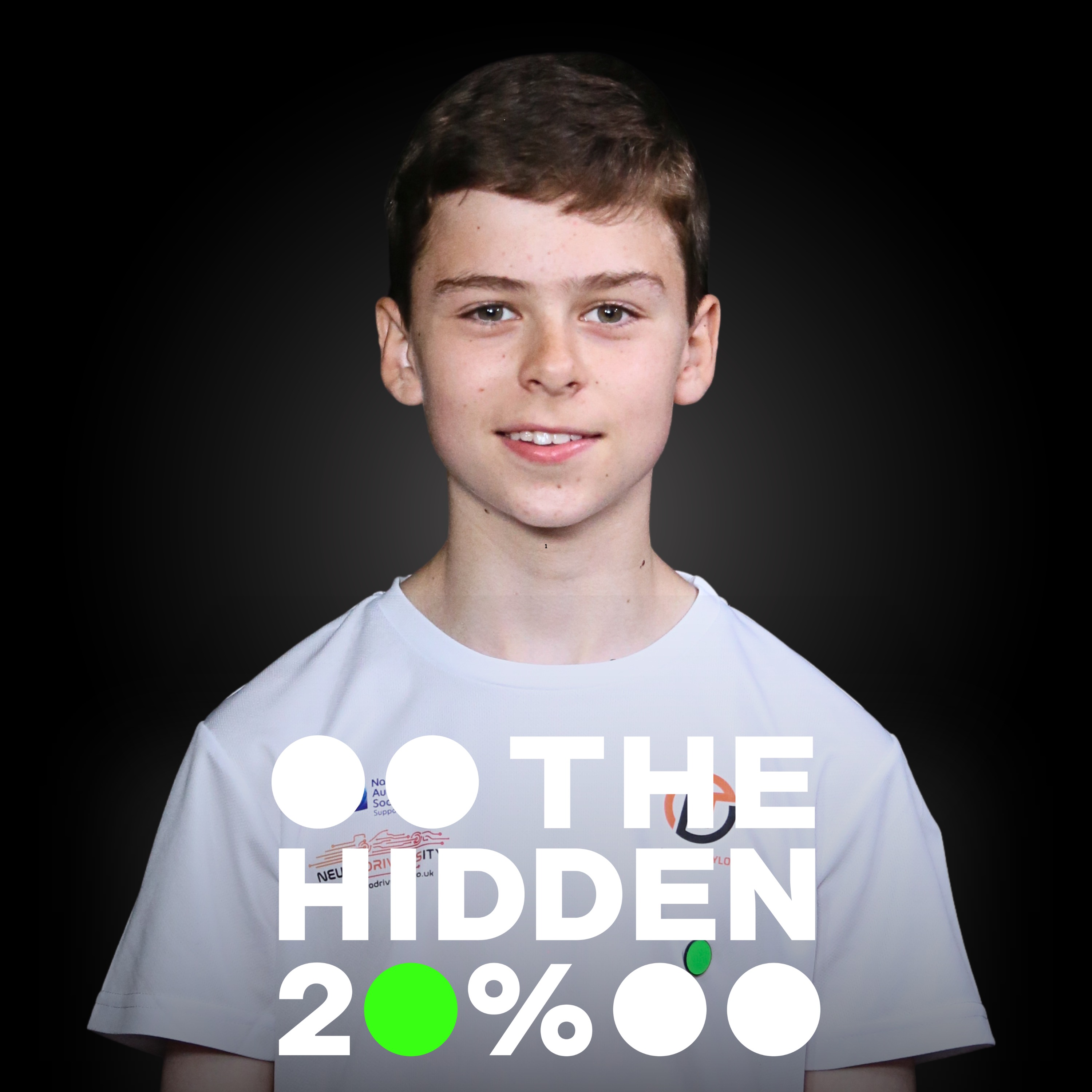
Nelson Taylor, a 12-year-old autistic junior racing driver, discusses how he moved from severe anxiety and sensory overload (including not wanting to leave the house) into confident karting and pro-style motorsport, plus what racing and autism “fit” together.
Nelson Taylor (autistic; diagnosed at 4; says he learned he was autistic in year 4 via a school neurodiversity day). His parents, Shane and Sophie Taylor, share the family’s earlier struggles and the role of therapy and finding the right environment/team.
Sim racing helped him learn instincts and focus; electric indoor carts were a sensory stepping stone. Karting gave confidence, friends, and a sense of purpose through secondary school. Anxiety still affects race decisions (e.g., overtakes), but he’s improving. Support and “keep trying new things” are crucial for neurodivergent kids.
Starting with an electric go-kart at a friend’s birthday party (then racing weekly); holding lap records; qualifying pole at Paul Fletcher International before a wheel issue forced withdrawal; a wheel-fell-off weekend described as a “rollercoaster.”
Written by AI. May contain mistakes.
Nelson shares the pivotal moment of trying go-karting at a birthday party and its impact on him.
“Let's see how great minds think differently.”
Discussion about Nelson's sensory challenges and how he copes with them during races.
“on your own kind of doing your thing to then the sensory even just the sensory aspect of the noise and how do you deal with being autistic and the sensory side of racing?”
Exploration of how karting has helped Nelson build confidence and improve his mental health.
“Yeah, one year in road tax, 18 months since getting into this electric car.”
The family's transformation and newfound joy through Nelson's involvement in motorsport.
“How has your karting helped you with relationships, do you think?”
Nelson shares his thoughts on autism, how it affects him, and his pride in his identity.
“So just before Christmas, I mean, Christmas is a difficult time, I think it's fair to say, in our household.”
Exploration of how being autistic affects personal interactions and self-perception.
“works yeah rather than i don't know maybe in other families or could be different couldn't it where one of you wants to pull in another direction.”
Discussion about sim racing, instinctive driving, and the challenges faced in racing.
“I mean, I'm more comfortable talking to other people of the same.”
Insights into the importance of supporting neurodivergent children in finding their passion.
“So F1 is obviously a dream, but there's lots of other series like touring cars and just getting involved in motorsport, to be honest, would be, I mean, to be honest, getting to Formula 4 would be a success.”
Advice on creating supportive environments for children with autism to thrive.
“And that's always been the case with you, that you will do things, but it's when you're ready and when you want to.”
Exploration of strategy in motorsport and how diverse skills contribute to success.
“I mean, that's why kind of why we went to a smaller team, wasn't it?”
Insights into the competitive world of karting and the community behind it.
“Well, in motorsport what's amazing is you've got so many, I mean, I don't know, Mercedes team, how many people in total have got?”
Explore the intense competition and rules of kart racing for young drivers.
“I think, well, there's rumour has it that some do, but I don't, we don't know if it's true.”
Discuss the challenges racers face in karting, particularly at the start of races.
“at Park Fermo and left so you can't tamper with that your fuel is provided for you.”
Understand how anxiety affects racing decisions and strategies.
“So the first couple of corners, people are flying off.”
Examine the dynamics of parental support in a young racer's journey.
“Do you both get to be with Nelson like down on the track or are you kind of like see you later?”
Insights into how autism and anxiety manifest and how to cope with them.
“How do parents keep going when that keeps not working?”
Discover how Nelson came to understand his autism and the relief it brought.
“We had some, you know, just because, you know, things are all OK at the moment.”
Discuss the strengths of neurodiversity and how to embrace it.
“And then obviously I now know the truth of obviously being diagnosed at four.”

Get the gist, explore an idea or ask about something said.
 Claude
On The Hidden 20%, what are the key points of this episode?
Searching your listeningAutomatic transcript. May contain errors.
0:00Obviously, we had the autism diagnosis when he was very young and that was one thing. But as a parent, the thing I struggled with the most was dealing with his anxiety. We had some very sort of dark times. Nelson, from what I understand, you didn't want to leave the house. Not really, no. Italy, Devon, Scotland, no chance. No, I struggled mentally. I didn't really know what I wanted to do with my life. I was just worried about secondary school. I think casting has just given me the confidence. I've got something that I can do in my life. I think if someone could have told me what would have happened and showed me where we would be, I really, really wouldn't have believed it.
0:41You may notice the setup for this episode is a little different. Today we actually have three guests, a family with their eyes on the podium. Nelson Taylor is just 12, but he's already making waves in British motorsport. In just over a year, Nelson has gone from trying karting at a friend's birthday party to competing at the highest level of junior racing in the UK. He's fast, instinctive and fearless, the next Lewis Hamilton in the making. But Nelson's story goes well beyond the track. Diagnosed as autistic at four, he spent years dealing with meltdowns, sensory overwhelm and isolation. There was a time he couldn't leave the house.
1:22Now he chats freely with marshals, teammates and mechanics and even me. What once felt impossible has started to become second nature. And with the backing of his parents, Shane and Sophie, Nelson is absolutely thriving. Let's get into it. Let's see how great minds think differently.
1:47Thank you all for coming down. I know you're on your way down to a big race weekend, Nelson. appreciate you stopping by London can I take you back Nelson to that first that birthday party and getting in that first go-kart yeah can you tell me what happened so basically my friend had a party any other day I would have probably said no but yeah I just went along and something must have changed in me from last time I did it because that was where it all started so you're 12 now Now, you were about 10 when that? Yeah, about 10. And you'd sort of tried a cart when you were seven? Yeah, and never got back in it.
2:24And never got back in it. And so this was on a little electric cart? Yeah. Can't have gone much faster than 20 miles an hour, to be honest. How fast do you go now? Well, on the data, it's showing 65 miles an hour at the top end. Mum takes a deep breath. It's not a good sport for mum. No, no. 65 miles an hour on a tea tray with wheels. We've got a little go-kart home and it only goes up to, I think, 20 miles an hour and is off-road. And, yeah, watching my kids doing that, even that, at that speed, I'm like, slow down. Remember how you felt in that car? I just remember the sensation of just overtaking people and just driving and just being me in the car.
3:12I just remember just loving it. I went the next week after that. I was begging them to go after that. Okay. Is that, yeah. Every weekend after that. We pretty much went every weekend after that birthday party. Back to the same place. And so you'd not grown up karting? No, I've grown up with motorsport. My dad's a complete fanatic. I've been watching, I went to my first Grand Prix in a push chair probably when I was very, very young to the British Grand Prix. I've loved cars. I did kart, but not a competitive level. and I always wanted Nelson to race, but he just did not want to get in a go-kart.
3:47And as he said, he went at seven, did one race and absolutely hated it. It was too hot. Didn't like all the gear all over him. Drove around at probably about five miles an hour and I went, that's fine. That's cool. I get it. We'll stick to the online racing. Which you loved, right? Yeah, it wasn't that I hated racing. I always wanted to do it, but I was always online. so I had a connection with racing for quite a while I just never got into real life it's just so long being online just real racing is just so different it's quite an extreme difference isn't it from kind of being in your house yeah in your house in your bedroom with a screen in your bedroom on your own kind of doing your thing to then the sensory even just the sensory aspect of the noise and how do you deal with being autistic and the sensory side of racing?
4:43Well, I've kind of just learned how to deal with it, but it also kind of helped the fact that when we went in electric carts, it was kind of a nice stepping stone considering the noise. The carts barely made any noise and it was quite quiet, especially as it was indoors. And I think that probably got me ready for it, just getting used to everything. And which bits do you find difficult now? Well, the mental side I struggle with. Working on, because typically in practice I drive better than when I do in the race. I've never really liked loud noises. Before the race you're basically sat there on the grid for quite a long time, maybe five minutes.
5:21And that doesn't sound like a lot, but it feels like a lot. And there's just silence and everyone's just thinking about what's to come, I guess. How different is Nelson from... Oh, yeah.
5:36how different is nelson from being a boy who didn't want to get in a go-kart and now is going off to meet kimmy in italy and driving all these amazing races for us in our relationship particularly it was massive i feel like for us it's like we're thick as thieves now you know we're a team but i think nelson's progression from his indoor karts he then very quickly became He was fastest driver of the month. And then what happened at Daytona? So, yeah, we kind of progressed, started doing races. Then we entered the championships. And then we ended up in their top championships. And that was kind of where it started, yeah.
6:17Yeah, he held the lap record as a junior on the Indy circuit, which still held. And then we thought, well, actually, he's really good. And that's where we entered into this bizarre world we're in of road tax. Racing against some of the best in the world, basically. the best in this age group. And to put this in context, I guess, for people watching and listening, most of these young drivers have been doing it from five, you know, they've been doing it for seven or eight years. How long have you been racing, Nelson? About one half, is it? Yeah, one year in road tax, 18 months since getting into this electric car.
6:55But in terms of that, your question about how he's changed since he started karting, I mean, do you feel like you've changed? A hundred percent. I struggled mentally. I didn't really know what I wanted to do with my life. I was just worried about secondary school. I think karting's just given me the confidence. I've got something that I can do in my life. The transition from primary to secondary, I mean, it's been tough, but it's been all right and we've been able to deal with it. I'd say that's through karting. I feel like you're very different, much more confident. And I think it's still changing all the time.
7:28I think as each sort of month goes past, we're sort of seeing the development kind of all kind of happening really quite quickly now. We were all a little bit worried at one point, but like you said, you've just done the first year at secondary school and you're in a mainstream school, you're doing really well, you've got friends, you've not had really any difficulties, have you? Apart from homework. Apart from getting the homework done. But we won't talk about that, because I could rant for hours about that. Tell me why, darling. Tell me about homework. Well, after school, I just want to go home and do nothing.
8:06And I just can't sit down and just focus on something like school. I could do sim race for hours and I could focus. People are like, why can't you do that homework? But yeah, I know just sitting down and just writing stuff out, it just seems really tough and I can't spend more than five minutes, it feels like. And then I just have to get up and then I come back. And yeah, it's quite a slow process. So it is quite tough, but we're still getting used to it. How has your karting helped you with relationships, do you think? It's helped me find some people who have similar interests. Those have kind of been my main friends because we just talk.
8:46I still have other friends who are still into most sport, but other stuff as well. But yeah, it has connected me with a lot of people. And I just felt more confident about myself with karting. And so if I'd met you, Nelson, I don't know, two and a half years ago, what kind of Nelson would I meet? Would you be here? Probably not, no. I mean, for any, like, say to come and do this would just be a, that just wouldn't happen. No, never. It was difficult enough to go and try a new restaurant, right? Yeah. We didn't really do anything as a family before. I would say we were pretty much stuck at home at weekends.
9:22If we did do something, it generally was incredibly difficult and we sort of came home and went, well, we won't do that again. Yeah, yeah, yeah. Just because it was, you know, you felt like you had to, you know, force us all to kind of get out and do things and then you go and then you go well that was horrific and then you know you don't do it again and gradually you end up doing less and less and less so that was our reality yeah the world kind of starts shrinking very much i dreaded weekends because i can't sit still so the thought of oh god another weekend of no no structural doing stuff was yeah just dreaded it so then let me ask you shane and and you sophie the impact on you the this huge change in nelson has had for me i'm i'm i'm happy i've got a happy boy that's all you want right so you start off and nelson when he was younger was doing some pretty incredible stuff reciting and memory and all that kind of thing you think we've got a bit of a genius on our hands here which which we have by the way but then as everything kind of started to unfold and the challenges that came with that then all you want you just want your kid to be happy so uh so that's the main the main thing really that's all you want and then how are your weekends now they are intense well there's two weekends there's one we all just took a deep breath at the same time there we're just about to start on the next weekend It is just drama all the time.
10:56It's a rollercoaster of emotions throughout a weekend. Yeah, our last race weekend, we were up Lincolnshire Way, an amazing circuit called Paul Fletcher International, probably our best circuit in the UK, massive circuit. And Nelson qualified pole, which was our first pole in that championship, which was great. And we were having a great weekend until the wheel fell off in the vinyl. And you just have to pack up and go home. Pack up and drive home to Surrey. so it's tough and then go to school in the morning and then go to school on Monday mornings the highs are so mega it kind of that's why you do it and so for you what's been the impact on you?
11:31well I get out now I mean I think you know before Shane obviously went to work and had to sort of you know had lots of other commitments but I didn't go back to work after having Nelson so there was a lot of time sort of spent at home just the two of us which wasn't you know awful but it was it was difficult at times wasn't it I don't think I understood what was happening. The weekends were just normal. I didn't think anything of like these weekends aren't great because I didn't really know any other way. But obviously if I'd known that what my parents were, I was thinking, but obviously I didn't know that at the time.
12:04But obviously I realised the impact now. I've got older. That's not for you to worry about, but it was, you know, it's particularly after the pandemic. Yeah, the pandemic. People came out of lockdown and we didn't. Yeah. And I think that was, you know, all the things that we had done before had just stopped and they didn't start back up again. So I sort of naively thought, oh, it's OK. We're kind of, you know, we're out. We'll go and meet friends again and go and do all the things we used to do. And it wasn't that didn't happen. So, yeah, I mean, it's given us not maybe a life back, but it's given us a different life.
12:42I mean, our life now in the last year has changed. Well, it's not even the last year, the last sort of few months. It's completely about karting now, isn't it? And when the next race is and where we're going. And that's what we do now. It's amazing. It's like a mini adventure, isn't it? So just before Christmas, I mean, Christmas is a difficult time, I think it's fair to say, in our household. We had a call from our team that we were with at the time, I think it was the 23rd of December, wasn't it? And saying, do you want to come to Italy to test Lonato at Lake Garda? And I rang Soph and she went, yeah.
13:17when did we go down 27 28 got in the car and drove to italy yeah because planes are not great airports not great food is not you know we don't have a massive menu that we like so we just we we we take our life and off we go and that's what we do in the uk we drove to scotland rather than flying but we're quite quite happy in our little bubble yeah and i what i really love or i'm picking up is like how much of a unit you guys are where compared to what we used to be yeah that and yeah that definitely compared to what we used to be yeah i think so and how you can make it work for all of you where it sounds like you're all quite happy in the bubble yeah yeah like the bubble works yeah rather than i don't know maybe in other families or could be different couldn't it where one of you wants to pull in another direction.
14:16Yeah. And loves airports and wants to, you know. Yeah, like go on holidays and sit on a beach or something like that. Who would want to do that, right? Sure, ma 'am would if she could. And Nelson, what do you think about being autistic? I quite like it, but it can be tough. I mean, some of my friends think I'm an attention seeker if I say that, which. Hold on, let's talk about that. Yeah. They say, oh, you think you're so special with autism, which is, they're misinterpreting it massively. It didn't make me feel great. I mean, people, I'm just different. It's just slightly different. It just wired differently.
14:51It doesn't change us as a person. But I have been happy to be autistic. And then you've got charities like National Autistic Society who, you know, you share the same kind of concepts with other people. I mean, I'm more comfortable talking to other people of the same. Yeah, that's why, given I'm autistic, that's why we get on. Yeah. Like, it's quite simple that way, isn't it? Where you don't have to explain or justify or feel judged. But the attention-seeking things, yeah, that's a pretty interesting one, that that could be a reaction when, ironically, most autistics, that's the last thing that they want from what I've learned, or personally.
15:33Why do you think you're really good at driving? I think sim racing is a great way for people to get started, if I'm being honest, in racing. I mean, the driving is pretty... It's a bit safer. Yeah, a bit safer. And accessible, obviously. I mean, massively accessible. It's not an easy sport to get into. Yeah. So, yeah. Do you think it's just quite an instinctive thing with your driving? Yeah. You learn through sim racing. You can't really think about what you're doing, because it comes up so quick. So that's why I kind of just do what my instincts tell me. Like when I'm like, okay, my coach told me to break here, I probably won't do that.
16:12I'll just like panic. So I just, obviously I take on board everything I'm told, but it's kind of just instinct to be honest. But you also have an amazing memory, don't you? Yes. And how do you use visualization or do you visualize the track? Yes, we do. I kind of visualize race starts, trying to think of before races, thinking of every possibility, which I kind of should probably stop doing because there's just so many possibilities. How do you deal with a weekend like your wheel falling off? It's tough. When I start getting upset, it's kind of like I then think of other kids and I'm like, how do they deal with it?
16:52It's like they just get on with it if something bad happens. Do you like winning? Do I like winning? Yeah, I do. When it goes wrong, I'm just trying to keep my mind occupied, especially if there's more races to go. If something doesn't go right, you've got to just pick yourself up. I mean, it can be tough. Trying to just keep your mind in the right place is just, I think that's what makes champions, to be honest, not the good weekends, the bad weekends. I don't know how he deals with it because in previous, you know, with previous hobbies, if something went wrong, he'd be like, I'm never doing that again, and that would be it.
17:28And we would have worked very hard to have kind of got him along to a club or along to, you know, something new and trying something. And you'd get quite into it. And then one thing would, you know, not work out. And that would be it. And it's amazing to see. And it's, you know, the progression that's happened in such a short period of time due to this sport and his love of it that he doesn't want to give up. Nelson was more driven to see how good he can be rather than just to win day in, day out. What's the dream there for? So F1 is obviously a dream, but there's lots of other series like touring cars and just getting involved in motorsport, to be honest, would be, I mean, to be honest, getting to Formula 4 would be a success.
18:08But yeah, F1 is obviously the top of my list. But yeah, it's kind of just getting into motorsport and seeing where we go from there. Yeah, I mean, it's such early days, isn't it? And obviously a great start. But why do you think it's important for you to talk about being autistic and to kind of be that really amazing role model? I mean, hopefully it encourages kids to get involved. I mean, I needed so much convincing just to do stuff. So, yeah, I think it is quite important. I mean, there's probably some drivers that are autistic and I don't know if that's the case yet. I mean, we met quite a few drivers at the touring cars and we were convinced they were on the spectrum.
18:48Okay. Do you think racing and autism are like good friends? I do because when you're racing, it's just you. It's only you can make the decisions. No one else is really far of that. In a way, obviously, you've got the whole team around you. Yeah, I think it definitely goes hand in hand with racing for sure. What advice would you have for parents with neurodivergent children about the benefits of finding what they love and supporting them? I think for us, it's just kind of keep trying new things. Yeah. So, you know, never kind of give up, you know, just because something doesn't work or resonate or you have a bad experience, you know, just keep looking for that thing.
19:38Because when we were lucky enough to have some help when Nelson was younger, just to help us try and kind of deal with things. And they all said to us about Nelson, you know, he won't do many things, but when he finds this thing, he'll be really, really good at it. And he will do a lot of it. And they were very, very right. So, yeah, I think it's, as Sophie said, it's been, you know, life changing really for our family, whether it's karting, whatever, just find your thing. Right. And someone had said that to us. We went to see some friends, didn't we, a couple of years ago and they had just got their kids that got into a sport.
20:13I think they were into rugby, weren't they? Yes. And they were talking about finding their thing. We're like, we're trying, we're trying. You know, that's, you know, we can't do any more. We're always trying to try new things and get out there. And it was so difficult. So it's not straightforward to just say you need to go and try lots of different things when you've got a kid that didn't want to try lots of different things. So I don't know about, you know, advice, but I guess you just you don't give up. And, you know, I think you needed to just be ready, didn't you? And that's always been the case with you, that you will do things, but it's when you're ready and when you want to.
20:51And I think I sort of beat myself up for many years desperately trying to do more. And, you know, there's a lot of pressure on parents, you know, all these clubs and, you know, kids have very busy schedules nowadays, don't they? And you're always feeling that you're not doing enough, that we did get there eventually. It's interesting because, you know, I have three daughters and River is, she's five and a half. She was diagnosed autistic just before Christmas. And she's very like you in lots of ways, Nelson, in terms of being, you know, she's got a fantastic memory, very sort of gifted intellectually.
21:28And she loves gymnastics. And so the first thing we tried where this sort of started was there's a school gymnastics club and she got bored of it. and then she went off gymnastics a bit and then we took her to a club like a not school club an external professional and she couldn't handle the massive room all right big bright lights lots of other girls yeah and so we're like okay but she still loved gymnastics she was glued to simone biles in the olympics then we were like okay let's get some bars at home And then she's teaching herself all these flips and all this stuff by watching kids TV shows about gymnastics.
22:15And so listening to you guys talking is really helping me then go, OK, I just need to get try and find someone to come and teach River in her environment where she feels comfortable. Good idea. 100%. Yeah. Yeah. I mean, that's why kind of why we went to a smaller team, wasn't it? We don't go to one of the teams that was like 20 drivers. We started out as literally a father and son team. I mean, now we're in a team, but it's kind of a community. It's a more comfortable environment and you're one of their own drivers. And that works better for you? Yeah. And do you think you drive better, therefore, because of that?
22:58Yeah, 100%. Why did you choose number 91? one i just like the number i don't know what it was about i think it might have been just the two numbers i thought they just went together well it's a really weird answer and then i only realized later that it was the same amount of wins as the legend michael schumacher happened to have right and i was like i don't know should i make that my reason or should i just because that wasn't my reason to begin with i love it obviously he was a massive fan of him i am a schumacher fan i didn't Why didn't I know that 90 points? Yes. Why is this only just around now?
23:29And then I realised that, and I thought that's perfect. Was it Schumacher that had the only season where he finished every single race on the podium? Yes, it was. Thank you. 2002. Very good. There you go. Thank you. Yeah, I am a big lover of facts, Shane. Yeah. As those guys in the control, I could see Phoebe laughing. She probably knows what I'm saying, but I love facts. So, yeah, which I know you do too. Yeah. And I was able to ask Nelson a question on a Formula One fact and teach him something this morning. Wow. One thing. Impressive. One thing, yeah. Only one thing. Okay, only one thing. I asked Nelson how many people on the sort of Mercedes Formula One whole team are responsible or work on tyres.
24:18And they've got like 90 people that work on tyres. 91. That's a good one. Wow. They've also got more PhDs than Oxford and Cambridge. Yep. Yeah, which is pretty... Wow. It's pretty... There you go. See, school is important. Yeah, this is what we're trying to say to Nelson. It's like there's 20 seats on a Formula One grid, right? So you've got more chance of being a premiership footballer. A lot more chance. So, you know, we've got to keep our options open. How high are your hopes, though, Nelson? Like, how high is your expectation? Are you like, I'm going to do this and it's going to happen? I feel like there is definitely potential there, but obviously 20 seats and you don't really get a living until you make it to F1.
25:03F2, you don't really make any money, even if it is a high level. So obviously it is just keeping your options open. I mean, there's so many other series in racing and obviously you can still get involved. I've been always into strategy as well. If obviously racing doesn't work out, then we've got that as well so yeah i am just taking the fact that you are a wonderful 12 year old boy who has just said i'm into strategy as well i think that is i was about to swear then i'm not going to but i love strategy too so i am and for you to be saying that 12 years old is like ah it's absolutely brilliant because there is so like i know very little about the world of racing but I do know that there is a massive strategic side to it.
25:52Even on the tyres and the tyre changes, right? Pit stops. We were talking before about the conditions and setting up the car depending on temperature, weather and all the race conditions. I can imagine that autistic brains are just absolutely really well suited to that, you know, regardless of driving. Well, in motorsport what's amazing is you've got so many, I mean, I don't know, Mercedes team, how many people in total have got? 900. Yeah. Wow. For those two cars. Yeah. Which is insane, right? But the amount of different brains that goes into a Formula One team, from strategy to driving to aerodynamics to mechanics, if you just had one brain, one type of brain, then you wouldn't even make the grid.
26:40Yeah. Yeah. So it's the coming together and understanding where those brains are best focused. And that's why it's such a great example of better together, different thinking. Teamwork and different brains all pulling in one direction that is literally, as you say, about two cars. Everything funnels to just two cars, two drivers. It's unlike anything else, I kind of think, as an industry. It is fascinating. And even at this grassroots level, Nelson's got our team manager, Drew, who's cool, calm and collected, which you need because there's always something going on. It's like we had a race where we were set up for dry.
27:23The sun was out. We're in. Was that Scotland? We've had a couple now, haven't we? Beautiful day. Yes, in Scotland. Literally, right. And you've. Torrential rain. Once the dummy grid shuts, you're out. You can't change. so it's a mad panic to change the whole it's not just changing tires it's changing the ride heights it's changing cambers it's a time we have like you know tons of stuff going on so you need to be calm you've then got your mechanic who works very closely with you as well and then you've got you know the people that provide the castle that kind of stuff so even at grassroots there's a huge amount of people behind the scenes but obviously it's the the boys and girls in the hot seat yeah that all the attention's on.
28:05How is it like listening to people? Have you got people? No, we don't have radios and carts. It's not allowed. It's not allowed? Yep. Interesting. Some people try and cheat. I think, well, there's rumour has it that some do, but I don't, we don't know if it's true. People do try and cheat at this level. It's kind of like, well, there's always rumours. We don't know if it is, but the rule in carting is if you're winning, you're cheating. So basically that's kind of, the chances are no one's cheating, but if someone goes quickly saying oh you're cheating because they're so competitive but it's big business right so you look at Lando Norris, George Russell Hamilton, Kimi Antonelli they've all come through karting so it's big business it's serious and in fact when you get to the big championships, the British Karting Championship your tyres and exhaust are taken off at Park Fermo and left so you can't tamper with that your fuel is provided for you.
29:04They take fuel samples as well. So this is 12, 13-year-olds. Is this younger than that age? Yeah, well, we've got, you've got, well, what are the... The category you're in is 10 to 13. 10 to 13. Okay. So, yeah, we're going up to juniors next year because we have to, but also we will anyway. Mum's excited for that. So then Nelson will be raising... Why is Mum excited for that? I'm being sarcastic. Oh. Fast. I'm not good on sarcasm. Oh, okay, sorry. You said that so deadpan to me. I'm like, okay, why? Why is mine not happy? Okay. Well, they're faster karts. Are they? Heavier karts you're racing against, you know, teenagers.
29:46Some of them are, you know, quite muscly. And, you know, the oldest ones are 15, 16. And it's a big grid. So it's the most popular. Yeah, there's normally like 50, 60 drivers. But they have to split them. Don't worry, they don't always... The maximum you have is about 35-ish on a grid at one time. But when they start, you've literally got them all lined up, nose to tail, pushing each other. So the first couple of corners, people are flying off. I mean, it's... Carnage. It is carnage. And it's not... That's not necessarily about skill. I mean, you just get, you know, dinked by someone and that's your race over first corner and you get punted off and carts are flying through the air, flipping upside down.
30:27It's, you know... Well, it's quite rare. It is quite rare, but it's something I have to deal with and all the other mums. Yeah. But you're always quite sweet. Whenever Nelson has a little accident, he says, I always jump out the cart and wave my arm so that you can see that I'm okay. Are you quite an anxious person, Nelson, would you say? Yes, I would. Me too. I'm interested in the fact that you're quite an anxious person, yet you can be absolutely fearless driving a car at 65 miles an hour. So, yeah, that is something. It's still working because my coaches are working with me to be more decisive with my overtakes.
31:04Sometimes I'll sit there and I'll be, like, thinking about the move, like, no, no, no, don't go for that. Okay. So you have to be aggressive in karting, otherwise you will get bullied. So my anxiety does still come into karting. Obviously, when I'm driving on my own, I'm just driving on my own. But obviously, when there's other people, it is about your speed but also about your race craft. So you have to work on that, and that's something I'm still working on. Sometimes I will literally sit behind someone the entire race, and they'll basically ruin my race because I'll be much quicker than them.
31:35But if I get stuck behind them, it doesn't really matter about my pace. So it's something we're working on, but the anxiety, it has been holding me back a bit, but we have improved this weekend at fighting back after losing pole. Do you both get to be with Nelson like down on the track or are you kind of like see you later? Well no we used to fuss over him and he basically told us to go away. Stop embarrassing me so generally we let Nelson. Me in particular. I stay well away on race day I stay as far away from Nelson as possible. But the helmet goes on and Nelson's in a different world and he goes off with a cart and there's mechanic down and we can't get into the grid anyway so just let them go and then we just stand by the side having mini breakdowns about what might or might not happen so it's a great laugh if there are people children listening you know who are neurodivergent or maybe think they are and who may be struggling to find their thing what would you say well Well, it can take time.
32:46You don't really know until you try it, which is something I had to work on. I had to be told so many times before I go in. I'm like, it's actually quite fun. So, yeah, just kind of you'll find your thing eventually is what I'd say. And it sounds like, Sophie, you were quite active in the exposure of Nelson to like, let's try this, let's try this, let's try this. How do parents keep going when that keeps not working? You feel that you've got to try these things, but I think I was saying earlier, it's when they don't turn out well, you go, was that worth all of that stress and all of that effort that we've put all of ourselves through?
33:27Just to touch back on your question about anxiety with Nelson, I think obviously we had the autism diagnosis when he was very young And that was one thing. But as a parent, the thing I struggled with the most was dealing with his anxiety, which was the sort of overriding kind of sort of struggle that you had, I think. And how did that manifest? Are you all right with me talking about this? Of course, yeah. No, you don't mind. I mean, I'm fine. Lots of sort of problems, not wanting to go into school, sort of struggling with sort of just things going round and round in your head that you couldn't kind of, I don't know, sort of shift and kind of understand.
34:09And I mean, it was pretty bad at certain points with your anxiety. You were very, very unhappy. Negative. You were really tough on yourself. Yeah, I mean, it's… Well, I still am now. I would say now it's a sort of more sort of mature kind of way where we're able to have, you know, sort of conversations about things in a more adult way. Whereas I think when you were younger, just sort of dealing with an incredibly anxious child for long periods of time. I mean, it was it was difficult for everybody and very draining. Yeah. And very hard. I presume, like, how do I help? Yeah. I mean, really, really tough, really tough.
34:49We did have, you know, I did end up going to speak to somebody, you know, sort of a therapist to help because, yeah, it was really, really difficult. We had some, you know, just because, you know, things are all OK at the moment. And I don't want people to think that, you know, it was it was really difficult. We had some very sort of dark times. Yeah. I mean, you, Nelson, from what I understand, you didn't want to leave the house. Not really, no. Italy, Devon, Scotland, no chance. No. I don't really remember going on holidays as a young child because obviously we did a lot more before carting.
35:26But yeah, it would have been off the cards. I wouldn't really travel anywhere. I mean, when we went to friends' houses, it could be quite awkward. And yeah, it just meant I'd just stay inside. Didn't really know any other way of living. Going on holiday was just, oh my. You'd need another holiday when you came back just because it was so stressful. So there was no rest by, I mean, particularly for Sophie. being at home and that kind of intensity at my work so I was kind of I'll go away and come back to it but there was no real respite it wasn't like at least we can go and get a holiday and a break there's no respite at all there's just no so relentless yeah yeah it was at times yeah it did feel like that and I think if someone could have told me what what would have happened and showed me where we would be I I really really wouldn't have believed it and apart from going and talking to someone what were you seeing like i guess just in media or like just wider society around support for you know parents for autistic children what were you picking up on not a lot not enough no not enough no there just wasn't i mean as i said we were lucky enough to get a therapist when we were introduced at quite a young age to help there was so much to deal with like just even playing because imaginary playing and stuff like that isn't something you were doing.
36:51So you just didn't know where to start. When did you know, Nelson, that you were autistic? So it was quite a while after I'd actually been diagnosed. So I think it was year four I was in. We had a neurodiversity day. The teacher actually checked that she was all right with it, which was lovely. So, yeah, we had the day. They went through all the different neurodiversity brains, dyspraxia, dyslexia, autism, ADHD, blah, blah, blah. I just sat through it when I got home and I was just like, mum, I've got autism. And it was just no questions. I just knew it. And then obviously I now know the truth of obviously being diagnosed at four.
37:31But yeah, it was a great way of, I think it was the best way I could have possibly found out, to be honest. That's what the parents want to hear. How was that for you, Sophie? It was a relief. I mean, just to clarify, we had wanted to tell him and we had been scratching our heads about the best way to do it. And the reason we hadn't was because he was very, very anxious at that time. And we were quite worried that how we were going to tell him. So when the school, you know, suggested doing this Neurodiversity Day and Nelson figured it out, it was a relief because we had, you know, we probably should have told him when he was younger.
38:07But it would have been tough. I'm not sure I'd have dealt with it. Yeah, it would have been tricky. Yeah. So, yeah, very grateful to the school for that. I think what's really great, though, is that you could have sat through that day and gone, oh, I'm autistic. I'm not going to tell anyone about that. Whereas you came home and said, I'm autistic. and that's literally obviously music to your parents is a because they knew but also because of course nelson's figured it out of course he has it's just it's a great way and rather than i think certainly when probably when we were growing up and i still think to a certain extent now children are told about these diagnoses as if they're a problem yep you know and there are challenges but there are obviously skills and there are good bits as well but I think historically we've presented these things as being oh it's terrible news and this is going to be a real problem rather than a bit more this is what it is yeah this is what it's called interpreted it this is what it means and certainly you know in my own experience of sharing with my daughter that she's autistic yeah without passing any judgment on it and that's made the world of difference because it's not also saying hey don't worry everything's gonna be amazing yeah yeah yeah you know it's just telling the truth and the truth is that it's like it's great and it's challenging yeah and that that's a really good point right so nelson's found his thing and we're loving it but it doesn't mean that all the other challenges just kind of fall away and it's like your brain changes and you see the world in a different way it's we all still have our challenges it's just to have something that you you're focused on and and driven it's yeah and to have the understanding of you will learn how your brain works nelson and how to channel that and lean into and embrace the things that you find really easy yeah that are just because that's how your brain works that other people might find really challenging you're a top guy nelson i'm really proud of you for talking about this and for coming into king's cross in london to meet random people sit at this desk be asked god knows what questions with bright lights and all the rest of it I'm really really grateful I'm obviously grateful to you both and your parents Nelson for bringing you along because yeah I think you're exactly why I set up this charity you are exactly no pressure but you're exactly what we need you're a beacon of hope and inspiration for children out there to who is like proof that we are different, but we're not deficient.
41:18And we can have some really great contributions and our brains work in different ways. And that can be when you find the right environment can be absolutely amazing. So yeah, thank you for coming on. I've got one last request for you. So we gave you a green dot at the beginning and I've got another one for you. Who would you like to give it to? So I'm going to give this to my friend who'd had the birthday party Ben Covdon I'm sure I'd be delighted to have this Yeah and lots of thanks to Ben Covdon Because if he hadn't had the birthday party He'll genuinely love us He will love us Because if Ben Covdon hadn't had the birthday party We might not be sitting here right?
42:06Yeah Shane, Sophie, thank you so much for coming on and wish you all the best this weekend. Thank you. Fingers crossed. We'll let you know. Yeah, and just, Nelson, just look, yeah, like, look forward to following what you're up to.
42:27You've been listening to The Hidden 20%. If you're still knocking about, then let me introduce you to the band. First up, main man on the mic, host Ben Branson, our wonderful producer Bella Neal and the man who'll probably try and cut this bit video editor James Scriven not forgetting our wondrous theme tune by Jackson Greenberg lovers or haters we want to know so be sure to leave a review wherever you're listening for the lovers amongst you you'll find us on TikTok and Instagram at Hidden20Podcast or over on hidden20.org where you can join our mailing list You
At just 12 years old, Nelson Taylor is turning heads in UK junior racing - fast, instinctive, and fearless on the track. But his path to the podium has been anything but straightforward.
Diagnosed as Autistic, Nelson once found it difficult to leave the house, held back by anxiety, sensory overload, and social struggles. Today, he’s thriving in the high-pressure world of motorsport and chasing a future in Formula 1.
In this chat with Ben, Nelson and his parents, Sophie and Shane, share the story of his remarkable transformation - from shutdowns to starting grids - and reflect on the power of autistic focus, family support, and what it took to move through the darkest days.
_________________
On "The Hidden 20%," host Ben Branson chats with neurodivergent [ADHD, Autism, Dyscalculia, Dyslexia, Dyspraxia, Tourette's etc.] creatives, entrepreneurs, and experts to see how great minds.. think differently.
Host: Ben Branson
Head of Production: Bella Neale
Assistant Producer: Phoebe De Leiburné
Video Editor: James Scriven
Social Media Manager: Charlie Young
Music: Jackson Greenberg
Brought to you by charity The Hidden 20% #1203348
__________________
Follow & subscribe…
Website: www.hidden20.org
Instagram / TikTok / Youtube / X: @Hidden20charity
Ben Branson @seedlip_ben
Nelson Taylor @nelson_taylor_racing91
If you'd like to support The Hidden 20%, you can buy a "green dot" badge at https://www.hidden20.org/thegreendot/p/badge. All proceeds go to the charity.
Hosted on Acast. See acast.com/privacy for more information.


