
 Ask ChatGPT


 The Hidden 20%
13 Aug 2025 · 11m · 6 chapters
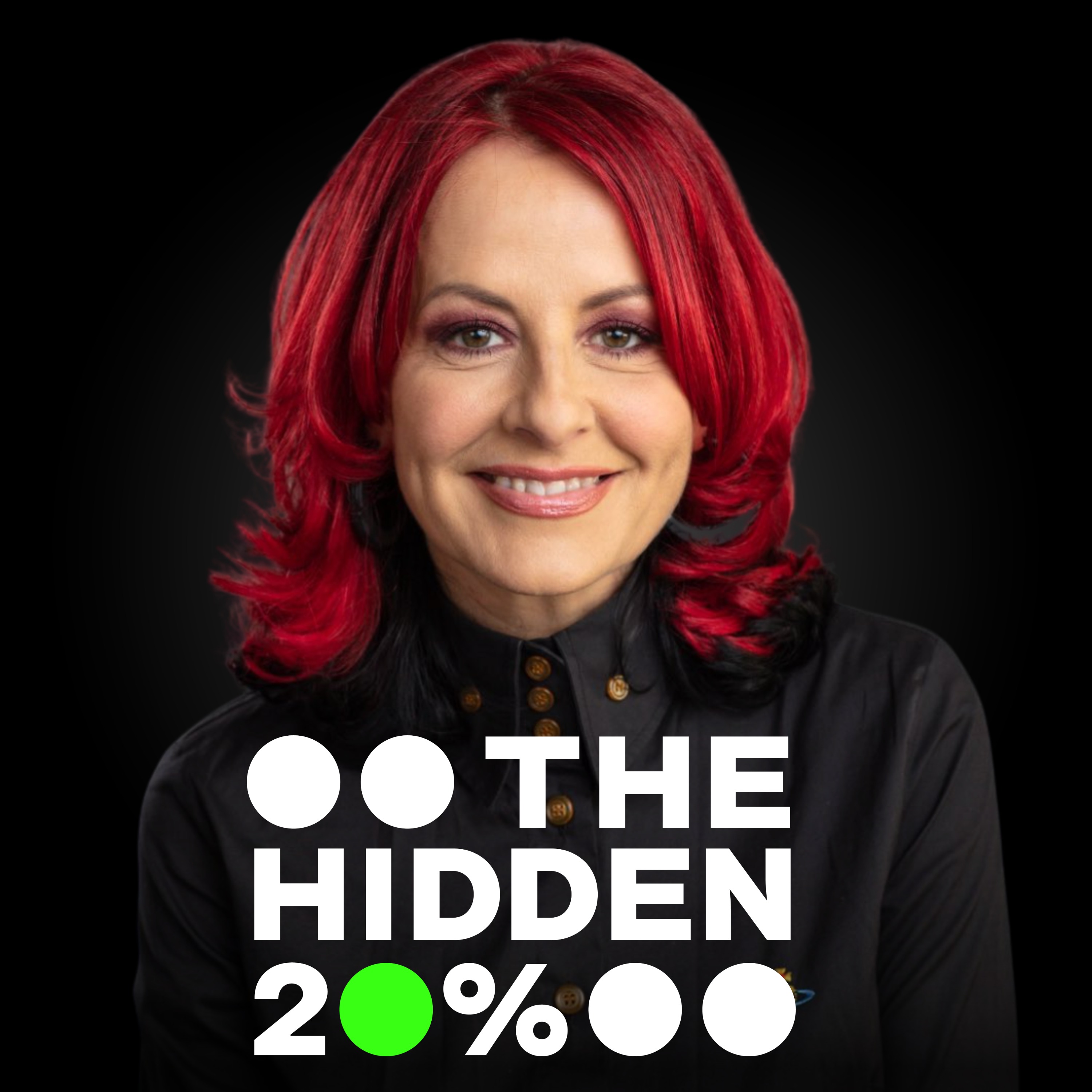
Carrie Grant discusses her 2023 autism diagnosis and how “normal” is an ideology shaped by mainstream life scripts. She argues neurodivergent people keep evolving beyond early adulthood, and frames age as bringing wisdom and self-acceptance. She also covers autistic social energy (needing both intense connection and complete solitude), decolonizing internalized judgment, and parenting advocacy.
Carrie Grant is an autistic parent and advocate, describing years of supporting her children in education/health/social care meetings. She’s married to David and hosts frequent dinner parties.
shame is “toxic” and unhelpful; freedom means living as your true self; society must build environments/infrastructure for neurodivergent needs.
walking away from dinner early (“exit stage left”); needing alone time after socializing; second-guessing requests in meetings due to fear of being judged as autistic.
Written by AI. May contain mistakes.
Carrie Grant discusses her recent autism diagnosis and feelings of self-acceptance.
“So I was diagnosed as autistic this year.”
Exploring societal definitions of normality and the evolution of neurodivergent individuals.
“Whereas I think neurodivergent people are far more interesting.”
Carrie shares her experiences with socializing and the need for solitude as an autistic person.
“And I'm getting to that point where I, you know, I skip words and I miss words.”
Discussion on the complexities of social interactions and self-advocacy in social settings.
“We'd have dinner parties in his house and then that just grew.”
Carrie talks about the importance of living authentically and overcoming shame.
“Now I kind of think, are they thinking, oh, she's going to be doing this because she's autistic.”
Carrie emphasizes the need for acceptance and advocacy for neurodivergent children.
“Even when you're successful, shame will bite you on the bum.”

Get the gist, explore an idea or ask about something said.
 Claude
On The Hidden 20%, what are the key points of this episode?
Searching your listeningAutomatic transcript. May contain errors.
0:00Welcome to Refocus, where we rewind the moments too good to miss. Short takes, big takeaways, no attention span required. Let's get into it. Let's refocus.
0:18Ben Branson: So I was diagnosed as autistic this year. We're currently in 2023. How do you feel? I feel great. I mean, I don't feel any different. I'm still me, aren't I? So I think one of the things I've noticed is that we have an ideology of what normal is. Someone decided, probably white men in their 50s, decided how it was going to be. And so at 21, when people, if they go to university, they graduate. And it's kind of like, that's your life, really. You then go and get a job. You might get married. You might have kids. And that's it till you die. Whereas I think neurodivergent people are far more interesting.
0:54Ben Branson: because neurodivergent people seem to evolve as they go. They never stop evolving. So that evolution doesn't stop at 21 and become just a little bit boring. It's something else that is developing the whole time. So I would say some of my biggest developments in me as a human have happened since, you know, I'm now 58, probably since I was 40, I think. And I love that. I'm constantly looking for where's the better me? Where's the more evolved me? What happens next? What else might I be good at that I haven't yet looked at? I heard you on a podcast say that you can't wait to be 60 and 70 and 80. And 80.
1:34Ben Branson: Like, what will those decades bring? Like, I think that we really don't appreciate the wisdom of age. I think that we think of old people as like, you know, they're probably a bit forgetful. And I'm getting to that point where I, you know, I skip words and I miss words. I'm like, what's that word again? It's a really simple word. However, there is a wisdom that comes and a self-acceptance that comes with age That means that you then have this lovely pot of wisdom to dip into And I love that I just have a heart for people, I love people And again, this is something that perhaps people don't think of autistic people as wanting to be sociable I'm highly sociable My house is like a community centre And so where do you get your energy from then in that sense?
2:22Interesting. From an autistic perspective. Good question. So I get my energy from two extremes.
2:30Ben Branson: Okay. I love people. I want them all in my house and I want to chat and listen. And then I absolutely need to be alone, completely alone. Like don't anybody disturb me because my head needs to rest. Yeah. So I don't really have an in-between. it's either like party party well it's not a party it's lots of listening and hearing and getting involved in people's lives or or absolute isolation I need that isolation I need that space I can share that space with David um my husband but more often than not I just need to be alone so and I've always been like that you know when I first met David and I would go to his house and We'd have dinner parties in his house and then that just grew.
3:15Ben Branson: We had dinner parties and then we got married and we'd have like five dinner parties a week because we just loved people. But come 10 o 'clock, people would be on dessert and I'd go, all right, I'm going to bed now. Please don't feel like you need to leave. And I was known as just the person that walks away from the table because I've never been uncomfortable with doing that. Yes. I look back now and can see how I was always exit stage left early. Yeah. You know, it was always, I just got to go. Yeah. Like, thank you. I've had a lot. It's been such a great night. Yeah. But I now just need to be alone.
3:48Ben Branson: Thanks. Bye. Yes. I didn't, it didn't quest, it didn't even occur to me that I would be judged for that. And so now do you, it sounds like you were, you felt comfortable and vocal enough to be able to do that then in terms of when you need that time on your own now. Yeah. I'm guessing that you're even more assertive and vocal because you have more awareness and more understanding of what that means for you. Well, yes and no. Okay. But you say yes to everything. Yeah. But I think moving away from, like, for instance, let's say we're having a dinner party and I wanted to leave the table. I would now slightly second guess like, oh, no, I'm doing that because I'm autistic.
4:32Ben Branson: Oh, no, like these people don't do this. no one else does this except me around this table and I'm the odd one out I was quite I was like yeah probably they would do it as well but they're just not you know they're just not fancying to say it so yeah I'm fine being the assertive one it's not that I'm assertive and strong it's because I'm autistic but then I've got to complete that cycle and go it's because I'm autistic and strong and that's okay and I'm finding that you know I'm I'm eight months in so I'm still just kind of a little bit worried about judgment a little bit judging myself and dealing with that internalized attitude of a neuro thinking I'm neurotypical I've got to kind of decolonize my mind into being completely comfortable you're one of the the ogs I would say from like a your family and neurodivergence as part of a family identity and part of parenting yeah and then now you've for want of a better phrase joined the club yeah um yeah I did say that somewhere in a podcast oh no that's probably not the right thing to say I don't know what the club is but the club yeah I'm kind of in in the club yes where are you at I guess in terms of decolonizing to use your words yeah I think I think when it comes to my family I'm fiercely proud of my children fiercely proud lot of my friends and my my people and many of whom are neurodivergent I think the hardest thing is that I now worry like I go into meetings and I kick butt when I'm in all those you know education health social care I have those meetings I'm literally on them the whole time for my kids yeah and I'm having to advocate for them when they you know perhaps can't advocate for themselves because they're young.
6:21Ben Branson: Now I kind of think, are they thinking, oh, she's going to be doing this because she's autistic. So I'm then having to second guess that. Yes. And then I overthink. That's really tiring. Or it sounds really tiring. Yeah, it is really tiring. I've got to work that bit out just to be confidently owning my space as an autistic person and saying, actually, it's perfectly reasonable that I'm asking for these things. It always was reasonable. I can't think about what other people think about autism Otherwise I'm just going to lose my strength really I have to just say show up as yourself My thing has always been to everyone around me Just show up as yourself I want you to just be yourself If you need to walk out my house because it's too much for you Fine just walk out I'm not going to judge you So I've always had that thing of show up as yourself But I'm kind of like is it okay for me to show up as myself?
7:16Ben Branson: To live as your true self is, that to me is freedom. That is the answer, is to be allowed to live as who you truly are and to not be embarrassed about who you truly are, to not be ashamed. Shame is like so unhelpful, isn't it? It's so toxic. It literally is the appendix of the mind. Where does it get you? It's not like shame drives you to something wonderful. It doesn't. It just makes you feel like rubbish. Even when you're successful, shame will bite you on the bum. You know, shame is of no use. So finding who you truly are and not being embarrassed about that or ashamed is, for me, that's the definition of freedom, to find that, to find that for yourself.
8:02Ben Branson: But it will involve changing the way you think. but it involves the environment you know it involves society right it's sort of mindset you can do half and take the steps society's also got to create the environment and infrastructure i feel as a parent before i knew about my own autism and i was always talking about my you know i've only ever talked about my children which is you know i'm trying to prepare the world for my kids and provide my kids for the world how do i make those two match because at the moment they're not matching up yeah and that is that's why more of us need to things like this podcast needs to be out there because the world needs to know and not just i mean great our neurodivergent community will be you know drinking this stuff up but we really need for the non neurodivergent people we need all diversities to be listening so that they can understand oh that's that's a conversation between these two people that's so interesting because they they sound like me yes let them realize there's a lot of crossover yeah and that it's okay to think that you might relate to that that it's okay to take those first sort of thought starters of like I recognize that in me and there might be something without shutting it down straight away and going but no but no and then rationalizing it away I think we have so many like people in our our group that we meet with you can come from families where they don't want to know you can be partnered with someone who doesn't want to know who who is negative the one thing i would say is that for parents we've got to work this stuff out because our children will know if we are ashamed of them yeah that's i'm not i'm not trying to shame anyone with that because that's also not going to help you but to encourage people to process their thinking so that they can come to a place where they don't see their children as less than.
9:58Ben Branson: They see their children as world changers. My children are world changers because everywhere they go, they're changing the world. Everywhere they go that people meet them and encounter them, you're changing people's mindsets. Yes. You've been listening to The Hidden 20%. If you're still knocking about, then let me introduce you to the band. First up, main man on the mic, host Ben Branson. Our wonderful producer, Bella Neal. And the man who'll probably try and cut this bit, video editor James Scriven. Not forgetting our wondrous theme tune by Jackson Greenberg. Lovers or haters, we want to know.
10:37So be sure to leave a review wherever you're listening. For the lovers amongst you, you'll find us on TikTok and Instagram at hidden20podcast or over on hidden20.org where you can join our mailing list.
Introducing our Re‑Focus series, where we rewind the moments too good to miss. Short takes. Big takeaways. No attention span required.
In this episode, Ben sits down with BAFTA Award winning broadcaster, vocal coach & author, Carrie Grant. They dive into her late autism diagnosis, shifting perspectives, the importance of overcoming internalised phobias and her four neurodivergent children.
_________
On "The Hidden 20%," host Ben Branson chats with neurodivergent [ADHD, Autism, Dyscalculia, Dyslexia, Dyspraxia, Tourette's etc.] creatives, entrepreneurs, and experts to see how great minds.. think differently.
Host: Ben Branson
Head of Production: Bella Neale
Assistant Producer: Phoebe De Leiburné
Video Editor: James Scriven
Social Media Manager: Charlie Young
Music: Jackson Greenberg
Brought to you by charity The Hidden 20% #1203348
______________
Follow & subscribe…
Website: www.hidden20.org
Instagram / TikTok / Youtube / X: @Hidden20charity
Ben Branson @seedlip_ben
Carrie Grant @carriegrantsays
If you'd like to support The Hidden 20%, you can buy a "green dot" badge at https://www.hidden20.org/thegreendot/p/badge. All proceeds go to the charity.
Hosted on Acast. See acast.com/privacy for more information.


