
 Ask ChatGPT


 The Hidden 20%
24 Sep 2025 · 47m · 21 chapters
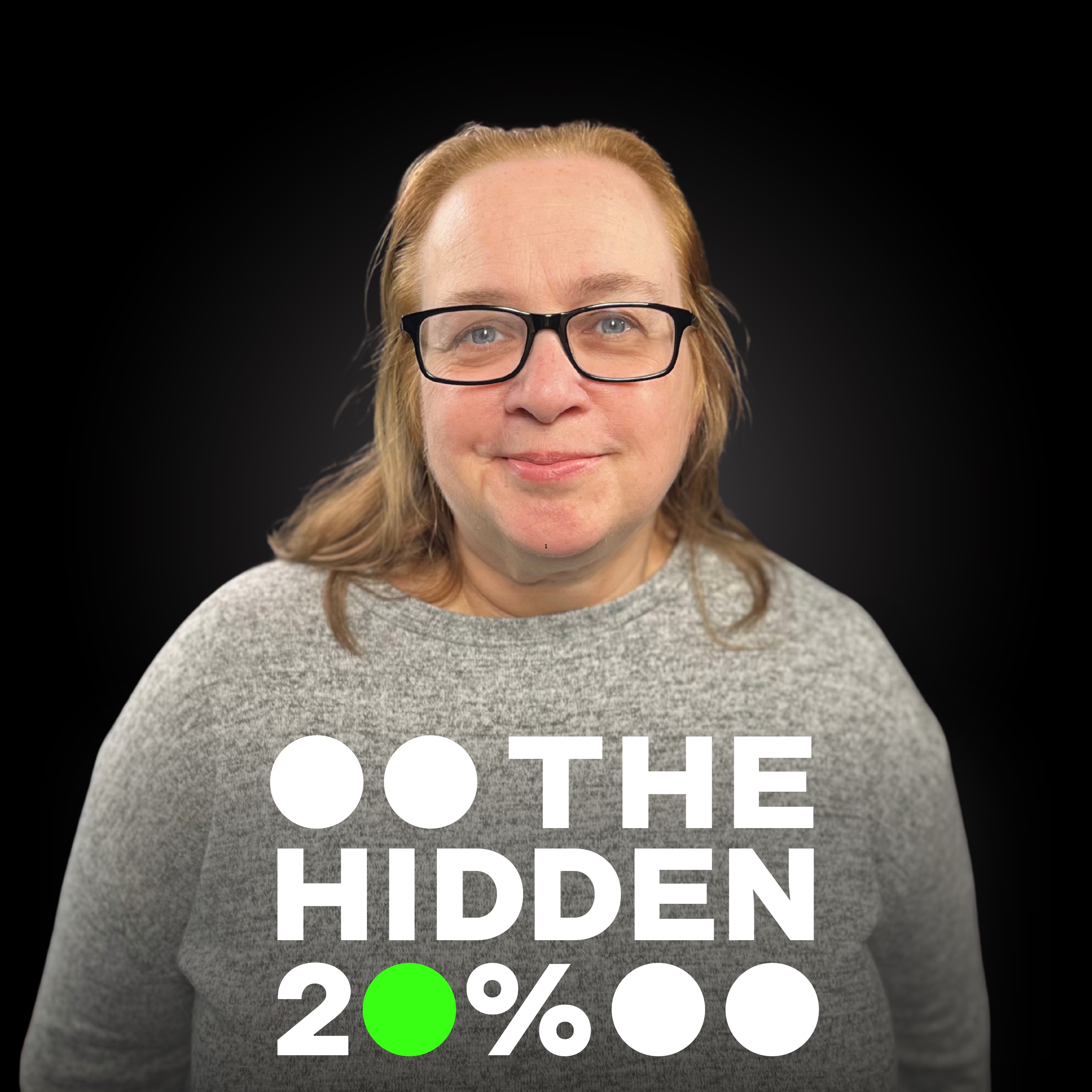
Autistic Girls Network founder Cathy Wassel discusses why autistic girls are often missed, how autism can present differently in girls, and what support should look like—especially around puberty, secondary school transitions, and anxiety-driven “situational mutism.” She highlights a “mind-blowing” claim that 92% of autistic women may have PMDD, and argues for earlier diagnosis and more up-to-date education.
Cathy Wassel is CEO of Autistic Girls Network and founder of Haven Online School. She is neurodivergent herself, has two autistic children, and has a master’s in autism.
Girls are less likely to be referred because they may “keep it all inside,” not disrupt class, and masking/societal expectations hide signs. “Selective mutism” is reframed as anxiety-driven situational mutism. Diagnosis gaps widen for Black girls due to under-recognition and research/policy bias.
Her daughter wasn’t suspected as autistic until a mental health crisis; later dyslexia diagnosis led to major reading changes. She describes secondary school as a major barrier, with mental health collapse often around February half-term of Year 7.
Written by AI. May contain mistakes.
Ben introduces Cathy Wassel and her significant work for autistic girls.
“With both lived experience and a master's in autism, Cathy is the perfect guest to break down what's really going on.”
Cathy shares her personal experiences leading to her advocacy for autistic girls.
“Well, I mean, the original reason is my daughter and the problems we had with getting her recognised and supported.”
Cathy discusses the face-to-face meetups and their activities for autistic youth.
“And yeah, I did that as a volunteer for about five years.”
Cathy reflects on the increased awareness of autism in schools and its impact.
“So they're an hour and a half, each of them, and it's very gentle.”
Cathy explains the differences in how autism presents in boys vs. girls.
“But that's okay because they can say what's happened since they last did it or they can talk to the other girls about it.”
Discussion on situational mutism and its implications for autistic girls.
“But yeah, there are differences and there are different ways that you might want to cope with a certain situation.”
Exploration of masking behaviors in autistic boys and girls and their differences.
“I've heard you talk about generalised autistic girls keeping more inside.”
Cathy discusses the challenges and misconceptions in diagnosing autistic children.
“She was very, she spoke very intelligently.”
Explores the diversity among autistic individuals and societal misconceptions.
“This is the really difficult thing, isn't it?”
Discusses genetic factors affecting autistic girls' mental health and well-being.
“Obviously, the whole field of genetics and neurodivergence is a massive minefield.”
Describes the difficulties autistic children face when transitioning to secondary school.
“We are definitely not there yet in terms of levelling out the playing field, which I suspect is pretty level.”
Examines the differences in special interests between autistic boys and girls.
“And perhaps that's because some of the most difficult things about secondary school are, you know, it's so massive, so many teachers, so many people, so much noise.”
Analyzes the reasons behind delayed diagnosis in autistic girls and intersectionality issues.
“Yeah, but we can say that passionate interests are not gender specific.”
Learn about the challenges non-white individuals face in autism research and representation.
“And a lot of professionals perhaps are working in situations where it's not so easy to spot or society tells us that black girls act in a particular way and so it's being disguised almost or people think it is.”
Understand the demand for groups supporting autistic girls and the barriers faced in providing them.
“20 % of autistic people have a learning disability.”
Discuss the impact of puberty and hormonal changes on the mental health of autistic girls.
“And sometimes I get people saying, well, can you do a group for boys?”
Discover the striking statistic that 92% of autistic women may experience PMDD.
Discuss the impact of puberty and hormonal changes on the mental health of autistic girls.
“a lot more publicity than it did do but yeah periods and puberty is a big thing and there's Definitely something goes on during that period to make things worse.”
Learn about the complexities of diagnosing neurodiversity and the personal journeys involved.
“You know, we get quite a good overview of it in the Facebook group.”
Learn about the internalized checklist for autism in girls and its surprising findings.
“If she had to describe herself, she probably would say, or I don't know, maybe she wouldn't.”
Get a preview of the upcoming discussion on schools and the education system.
“We are going to talk about the education system and we're going to talk about your new school, your new work in that space.”

Get the gist, explore an idea or ask about something said.
 Claude
On The Hidden 20%, what are the key points of this episode?
Searching your listeningAutomatic transcript. May contain errors.
0:00Welcome to The Hidden 20%, our neurodiversity charity on a mission to rewrite the future for people who think differently. Together with you and an eclectic range of brilliant guests, we can break the cycle of silence by smashing outdated stereotypes, exposing the myths and sharing the most up-to-date truths about what it really means to be just different, not deficient. The best way you can help is really simple. Subscribe so you never miss an episode, and if you can, donate to our charity through the link below. Enough preamble. I'm Ben, your host. Let's get into today's episode. Today, I'm chatting with Cathy Wassel, CEO of Autistic Girls Network and founder of the Haven Online School.
0:49Neurodivergent herself with two autistic children, Cathy is on the front line, supporting autistic girls, women and their families, campaigning for earlier diagnosis and the urgent need for a more up-to-date education system. With both lived experience and a master's in autism, Cathy is the perfect guest to break down what's really going on.
1:17so i was looking back kathy at when you first emailed which was february the 19th four days after my birthday earlier this year and your wonderful subject line was audi hd charity head would like a chat great and then we spoke we did we had a great call we spoke for quite a long time It is for you for a long time. And so it's great, what, six, seven months later to now have you here in the green chair. And first thing I have to say is, as a father to three daughters, one of whom is diagnosed autistic, thank you for all the work that you do. because having read up on you and researched you, you are right there, like frontline, doing so much for autistic girls, women and families.
2:11Why do you do what you do? Well, that's a big question, isn't it? Told you we'd get straight into it. What an opening question. Why do I do what I do? Well, I mean, the original reason is my daughter and the problems we had with getting her recognised and supported. She had a large mental health crisis. The school were very understanding and had the best intentions but really didn't put much support in place. And Cam's similar, very similar. And it was actually a private therapist who suggested that she might be autistic. And she then said, I think she might be, and therefore I can't work with her because she didn't feel qualified to work with neurodivergent young people.
2:57And it became necessary to be under CAMHS. And nobody at CAMHS suggested that she might be autistic. Nobody at school for all those years, she was 13 when this was happening, suggested that she might be autistic. Myself and my husband had suggested to two different schools that she might be dyslexic. and that was never pursued. But nobody had ever thought she might be autistic. And what did you know about autism at this time? Well, ironically, very little, given that we are a completely neurodivergent family. Very little. And then I did more research, found a group, which at the time was called FIGS, Fighting for Inequality for Girls on the Spectrum.
3:40And that group was going to close, so I took over that group with their approval and then turned it into a charity in 2021. November 2021, we became a charity. And yeah, I did that as a volunteer for about five years. I mean, it has grown. I can't say what's going to happen. You know, it's a tough, tough landscape for small charities at the moment. Trust and foundation grants are like disappearing in a puff of smoke and statutory funding is also doing similar. But yeah, we've grown and being able to take on two part-time staff members has made a real difference. Someone doing the fundraising, someone doing the volunteer coordination.
4:22They're both fantastic and neurodivergent themselves. And being able to grow that volunteer team means that we can do more things. So we have 11 face-to-face groups at the moment for young people aged between nine and 25. and we are meant to be hopefully opening six more this year. What happens at these face-to-face meetups? So they're an hour and a half, each of them, and it's very gentle. It's very laid back and chilled. So we might be doing some cooking or we might be doing some craft or we might be doing like a quiz or a movie night or whatever it might be. We try to get them involved in what they want to do at the next session.
5:12There's no compulsion to take part. You know, there's always fidget toys. There's always coloring books. There's always board games. If you don't want to, and if you feel like you need to sit on your phone for the first couple of sessions, that's also absolutely fine because you may need that phone to regulate. If you need your mom to stay with you for the first session, that's also fine. Although parents don't usually stay. Okay. And then in the last 20 minutes or so, we have a handbook, I guess you might call it, that we work through that has about 20 different topics in it. So things like friendships, regulating emotions, energy accounting, but also life skills type things like managing money and things like that are all in there.
5:58So we cycle through those. And lots of those who have been coming have already cycled through them once or twice. But that's okay because they can say what's happened since they last did it or they can talk to the other girls about it. So it works quite well. And what have you noticed, I guess, in the last five years around, I guess, what you've seen for autistic girls? What are you taking away? A lot has changed in five years, but I think it's a change in awareness rather than many practical changes. There's more awareness in schools, for example. One of the things that has actually changed just this year, really, is that we're getting special schools contacting us because they're now getting girls coming in.
6:52And they've been used to having almost exclusively boys. Interesting. Now, of course, they're very clued up on autism and ADHD, etc. But they're not so clued up on girls and how it presents in girls and how girls might cope with certain situations. So we've actually developed training for special schools, which is a little bit different and perhaps less basic, you might say, and is more talking about the differences that you might find. And of course, we're talking in massive generalisations here. Everyone is not the same. But yeah, there are differences and there are different ways that you might want to cope with a certain situation.
7:31Let's talk about some of the internal and external differences between how autism is portrayed or manifests or the traits and those differences between boys and girls. Can you just tell us about some of those key differences? Yeah. So, I mean, some of them are societal differences in expectation, you might say. So society expects that girls will behave in a certain way and boys will behave in another way. And obviously that's also a massive generalisation. So, for example, we have this idea in society that girls don't want to get messy and boys like getting messy and things like that. And so we might see a girl not wanting to, I don't know, put her hands in dirt.
8:15But I think of my daughter now, she definitely is not in any way interested in doing gardening or getting her hands dirty. We have two apple trees in our garden, like the lawn is full of apples. Asked her to pick them up and she wouldn't touch the ones that weren't perfect. Whereas society might think that some boys might not want to pick up apples, but they certainly wouldn't mind about getting their hands dirty. And so what we find is that people aren't picking up on certain signs because they believe girls behave in a certain way. Girls are more shy is a common scenario. Of course, some girls aren't shy at all.
8:54And some boys are very shy. You know, it's not as simple as that. It's much more nuanced, but it is a reason why some girls don't get picked up. But also girls do tend to keep it all inside a bit more. I mean, what I usually say is if you've got a daughter who was recognised as neurodivergent in some way when they were three or four, then they have an external presentation. And it's one that other people notice. It's one that affects other people, which might be the most important thing. I suspect that that is a reason why neurodivergent children do get diagnosed and supported and in the case of ADHD, medicated, because they are affecting other people, especially in school.
9:41If a child is being disruptive in school, there will be a concerted effort to put something in place. Whereas if a child is sitting at the back of the class, never speaking and never putting their hand up, nobody notices or at least nobody wants to investigate. Yes, nobody's worried. I've heard you talk about generalised autistic girls keeping more inside. Can you just talk a bit about why you prefer the term situational mutism to selective? Yeah. I mean, I think that the term selective mutism implies that there's a choice involved and that you're choosing, you're selecting not to speak. Whereas actually it's entirely driven by anxiety.
10:24There is no choice, just like there is no choice if you cannot go to school. There's no choice in it. It's really, really driven by anxiety and not feeling safe enough in whatever situation it is. You know, it could be school, it could be the doctor's surgery, could be hospital, could be anything, could be just a shop. And certainly we had years of that in my family. And it's something that we see spoken about so much. Because we've sort of passed it off as shyness, maybe. I mean, there may be an aspect of shyness. Of course, there may be. But you can see in their physical, you know, the way they hold themselves, you can see that they're very uncomfortable and very anxious usually.
11:10That's not just shyness. Yes. You know, they probably haven't been like that their whole life. You know, my daughter, for example, was very vocal when she was a child. She was very, she spoke very intelligently. She used vocabulary that was far in advance of her age. There was a reason why she became situationally mute. And it was because she was highly, highly anxious and didn't feel safe, particularly at school at that time. And sometimes teachers get very upset that I say that they don't feel safe at school. Of course, I don't mean someone's about to attack them. I mean psychologically safe.
11:49And that's really, really important because if you don't feel psychologically safe, if someone can't actually speak, then they're not in a situation where they're going to be able to learn anything, really. And correct me if I'm wrong here, but if a child is mute in a situation, that doesn't mean it's necessarily the whole situation. They could relax or start to feel psychologically safe and start to talk. Especially if they're with somebody who demonstrates that they are a safe person and you should feel able to be safe with them, then yes, you might be able to. If you need to take your child, I hope you don't, but if you need to take your child to the psychiatrist and you get somebody who's really used to children of that age and used to neurodivergent children and really understand situational mutism, then you might find that they have such a good manner on them and they change it to a much more relaxed situation.
12:53Don't make a big deal of the child not speaking. You might find that they do start to speak. although it's probably quite unlikely in the first session. Yes. What about differences in masking between boys and girls? It's not a gender thing. It's definitely a case some boys definitely mask, some girls and non-binary young people definitely do not mask, but those ones are probably the ones who have an external profile. And we get a mix of both in our groups. We have some girls in our groups where you might say that it was fairly obvious that they were neurodivergent. And I say that deliberately rather than autistic.
13:34Most of our cohort are not just autistic. Almost all of them are ADHD. Lots of them are dyspraxic or dyslexic or whatever else it might be. And we have some who present in a way that I think that it's fairly easy to spot. And we have others who people might say, I never imagined that they were autistic. which a lot of autistic adults will probably hear when they're finally recognised. This is the really difficult thing, isn't it? Because, well, in a wonderful way, everybody's different. And in a wonderful way, every autistic person's different. But then for society, in a difficult way, every single autistic person is different.
14:20And therefore, the stereotypes and the tropes and the, oh, but you don't look autistic. We hear that a lot. Unfortunately, we also hear it in the Facebook group about professionals. And a few years ago, we did a survey in the group and we put together an illustration for social media. And it was about reasons why people had not been diagnosed. Children had not been diagnosed. And it was things like has friends, can speak or speaks a lot, looks you in the eye, you know, is clever. All of them absolutely ridiculous reasons for not being assessed. But that's where we were. I mean, that was maybe five years ago now.
15:06I really hope that that's not still happening. But unfortunately, I suspect it still might be in some places. And certainly it still is happening in places like school where they are not professionals who assess and don't have that level of knowledge and don't need to have that level of knowledge. But I do hope it's not happening in professional assessments anymore. Do you see any sensory differences that are particular maybe to girls? I have a boy and a girl, and I don't think that it would be possible for them to be more different to each other. One of them would say that they have no sensory sensitivities at all.
15:49It's not true, but that's what they would say. Whereas the other one has huge, huge sensory sensitivities. And, you know, I suspect that there must be a biological reason for that. We actually, for a completely different reason, have had genetic testing for both my children, not related to neurodivergence or a cure or anything like that. And my daughter has too much cortisol in her body and she can't get rid of waste products from like medication and things. I had to have explained because it was like gobbledygook. When we got it, it was like seeing what had happened in the last few years in biological terms.
16:36It was really strange because she was highly, highly anxious. She had taken a lot of medication, which subsequently had really bad side effects and had to stop taking it. And then we realized why. It was because her body wasn't processing it. And she has so much cortisol that she's always in fight or flight. And, you know, there's other things that need so much research on, like GABA, etc., etc. And, you know, that is a massive avenue for research that actually would be quite useful in terms of genetics. Obviously, the whole field of genetics and neurodivergence is a massive minefield. Yes. And, you know, as far as I'm concerned, I'm not looking for anybody to change themselves.
17:22Yeah. But I don't think anyone would deny that it would be good not to feel like you were in fight or flight the whole time. Yeah, and why the body isn't processing cortisol, for example. Do you know if that cortisol side is that and not being able to fully process it? Is that something you've seen more of or heard more stories of? Yeah, I certainly see a lot of references to GABA, for example. And it was interesting because my son also had the same, did the same sample and he does not have that. So he doesn't, he's not in fight or flight all the time. And that has been reflected in not generally needing medication, not generally being highly anxious.
18:07Yeah. So there's definitely a biological background to it. And I think that that would be interesting to pursue. And whether there's anything gender wise within that. Yeah. There's so much that we don't know, isn't there? There is so much that we don't know. And it's a really important avenue of research because the statistics around mental health in neurodivergence in general, but particularly for women in this situation. I think it's the only situation where women are more likely to have poorer mental health than men. They justify a lot of research and a lot of research spending. And I think that would be a useful avenue for research.
18:43I think we are so, so behind. We shouldn't be. It was 1980 that Lorna Wing wrote a paper about autistic girls, basically saying some of what we now know, perhaps not saying it in a way that we would say it now, but essentially saying, yeah, girls can be autistic, you know. And how many years later is it? What, 45 years later? We are definitely not there yet in terms of levelling out the playing field, which I suspect is pretty level. What do your girls hear if they tell people that they're autistic? I think that has changed in the last five years. I do think that that has changed. They definitely do get some, oh, you can't be autistic.
19:24You know, you talk or you laugh or whatever it might be. because a lot of autistic girls are highly, highly sociable and really, really want to be friends and probably have a big, or may have, a big friend group. A lot of our girls in our groups have a big friend group. My daughter had a big friend group. You can be scaffolded, I think. So that transition to secondary is a huge, huge barrier. It doesn't matter what your gender is. It's a huge barrier. It doesn't matter what your neurotype is. It's a huge barrier. But particularly for autistic children or perhaps neurodivergent children, it's really difficult when you're saying these things and you want to quote statistics because so much research is only based on autism or only based on ADHD.
20:09Or only based on boys. Yes, yeah. But I did research as part of my master's and we based it in Autistic Girls Network. And we found that during that transition to secondary, A, a good transition didn't necessarily depend on whether you had a diagnosis or not. It depended on really, really individualized support and practice and relationships and connections and probably took a long time, like maybe at least nine months, that transition. And so, you know, some of it beforehand, some of it after, but it's not a one day thing. It's very much, you know, should be the whole of year six and year seven, really.
20:54But also, if you moved up from primary to secondary with a lot of friends, that really scaffolded things. And so, for example, and I'm not basing this only on my daughter, but for example, my daughter went to a feeder primary school, moved up with half her class to the secondary school and was in a class with two of her best friends. So she had multiple best friends. She had a big friendship group. Nobody suggested at that point that she was autistic. nobody had ever suggested. And she was really scaffolded. So research that we've done within our group suggests that the point where things really get difficult and either mental health collapses or the child is unable to continue going to school is February half term of year seven.
21:43So they've got to the new school, they've got to Christmas, they've come back and it's not getting any better and they can't cope anymore. But if you have that scaffolding, it can be stretched out a little bit later. And perhaps that's because some of the most difficult things about secondary school are, you know, it's so massive, so many teachers, so many people, so much noise. But also you have to find your way around. In a primary school, you just sit in the classroom, don't you? in a primary school or you go to PE with your whole class and your teacher. But in secondary school, you suddenly have to find your way to the science lab or the DT lab or the food technology lab or whatever it might be.
22:30And that's really, really scary for autistic children. It's also a massive change, right? It is just a massive... And there's no... Uncertainty equals anxiety always. There is massive uncertainty about those kind of lessons. So you've got the uncertainty of being able to actually find your way there. And if you're scaffolded by friends, you never have to go on your own. You're always with other people. So that worry is slightly taken away. But also in a food tech class, for example, there might be people constantly moving around. You have no idea what's going to happen. And that's scary. Yeah.
23:07What about differences where special interests are concerned, boys and girls? This is one where I think there has been a lot of misunderstanding about special interests, passionate interests, I like to call them. I think what tends to happen is that, and again, massive generalisation here. Caveat, caveat, caveat. Not all people, but boys' special interests tend to be a little bit more out there, perhaps. What do you mean by out there? A little bit more unusual, a little bit more or more cliched, such as trains or cars or whatever it might be. Whereas girls tend to be a more passionate, focused interest in the things that all their friends are interested in.
23:56Because again, that friendship group is really, really important. So it might be horses or it might be a particular anime or it might be Taylor Swift or it might be. Gymnastics. Exactly. All those things. And so they don't stand out so much. Whereas for boys, I think it might also be a lack of a certain special interest. And I'm really thinking football here. If you don't like football as a boy, it's really tough. My husband is also autistic and my husband and my son hate, well, hate is too strong a word. They don't hate football. They just have no interest whatsoever in it. And it was tough being at school and growing up without liking football as a boy was really tough because that's all anyone wanted to talk about.
24:43And even in my extended family, when everyone gets together and the males are, you know, from 25 to 65, 75, 85, maybe even, they pretty much talk about football all the time. and my son and my husband can't take part in, well, they don't want to take part. They have no interest in it and it's really, really annoying for them that people want to talk about it all the time. With girls then and passionate interests, it's another sort of like, it kind of feels like it's under the radar. Yeah, because they can talk about it with friends who are also interested in horses or Taylor Swift even more likely, isn't it?
25:29It's just that they might seem to be a bit over the top with it. They're more hyper-focused on it. They're more intent on it, perhaps. Whereas it's funny, we probably wouldn't think anything of the boy who only wants to dress in a football kit, who collects all the stickers, who wants to watch the matches. We wouldn't think that was weird. And I use that analogy all the time. Why are people making fun of a boy lining up cars and playing in that way and we even get professionals telling us that children shouldn't play in that way when we have, well, not only children but grown men going round wearing football tops with their favourite footballer on, a person who just kicks a ball around a field.
26:16You know, it makes no sense to me whatsoever and it certainly makes no sense to a neurodivergent child who has no interest in football. Yeah, but we can say that passionate interests are not gender specific. It's a trait for autistics. Cathy, why are girls being diagnosed up to six years later than boys? Well, there's a lot of reasons, but some of them revolve around the level of knowledge about autistic girls or autism in girls compared to the level of knowledge about autism in boys. And of course, that knowledge is based on decades of research that has pretty much only considered boys. We have somebody in our group who had her first assessment when she was about seven or something like that.
27:05She didn't actually get diagnosed until her mid-twenties. So that's a very long time. I think that gap is probably lessening. But they tend to be diagnosed because they aren't picked up. You know, to be assessed, you have to be referred. And if nobody is picking up, then you're not going to be sent for referral. And if you're not disrupting a class, then you don't get picked up. So that's pretty much why. What do you see within your groups, I guess, online and sort of in-person, Cathy, around intersectionality? Any observations or learnings that you see there? Yeah, I mean, in terms of girls getting diagnosed later, if you are a black girl, your chances of being diagnosed in a timely fashion are even lower because, well, I mean, there are a huge number of reasons for that too.
27:56Some black communities don't know so much about autism. There didn't even used to be a word in Somali for autism. There is now. Oh, really? And a lot of professionals perhaps are working in situations where it's not so easy to spot or society tells us that black girls act in a particular way and so it's being disguised almost or people think it is. It's really hard as a black girl or non-binary young person to be recognised in that way. And there may be, you know, there's a lot of problems with adultification, for example, and it really not being spotted. It's a big issue. There is no reason why it should be any less likely that someone whose skin is not white should be neurodivergent.
28:44Yes, but when you put that against the backdrop of research and therefore policy, etc., all being on white boys and that being like not actually that long ago, right? Well, no, and it's kind of still an issue as well in things like the SPARC research. So SPARC is one of the big cohorts. I mean there's a lot of money in autism research particularly there is you know that black young people are not so well and children and adults are not so well represented in those cohorts and that research could be going from those cohorts for quite a few years from five years ago up until you know could they could be using it for another 10 years yes so that's also problematic yeah because it's then used to inform support policy access to assessment I mean there's there are other issues with it too and you know it's particularly for the children who are in that cohort you know it tends to be much more likely that their parent is interested in genetic research for example, and they may be more, in the children, non-verbal, represented, which is good, but skews the cohort from perhaps other research which is going on.
30:09But again, that intersectionality is also with verbal, non-verbal, with learning disability. There's so much that has changed in our knowledge now that perhaps hasn't changed from what a classic idea of what autism looks like, which, and it's still reflected in the NHS when we talk about learning disability and autism. 20 % of autistic people have a learning disability. More autistic people have epilepsy than have a learning disability. But we don't have NHS departments that are called epilepsy and autism. No, and the media narrative has all been shaped around autism and learning disability being that's autism.
30:50There's a lot of work to do. There is a lot of work to do, but everyone deserves to have that work done. Yeah. Have the girls that come to your groups been assessed or not? They don't need to have done. Okay. Yeah, on the pathway is fine or self-diagnosed is perfectly fine as far as we are concerned. Why do girls and non-binary people come into your groups? There's just hardly anything out there. When we first started, so our first group was in Stratford-upon-Avon and we have four groups now in Stratford and we have huge waiting lists. The 9 to 12 group has people who have been on the waiting list for 18 months already.
31:25And I know that's terrible. I know. They're on a waiting list to come to the group. Because people tend to stay at the group. They don't tend to leave. Some do, of course. And then we let more people in. What are the barriers for you then with increasing the capacity, frequency? We pay our group facilitators who are all neurodivergent as well. In Stratford, actually, we are funded by a lovely local charity. and we don't pay for our venues, but everywhere else we need to pay for our venues. We need to pay for the activities and things. So we just don't have the funding to put on more groups. And anyway, I don't feel like we should have more groups in Stratford because we've already got four.
32:04You know, I have a list of over 100 groups, places where people have asked us to open a group. There would actually be much more than that. That's just the people who have emailed me. There's loads, you know, when you look at our Facebook posts and we say that we're opening a new group, Loads of them say, oh, have you got one in Cardiff? And we don't. But, you know, they cost to run and we can't open infinite groups. I get the kind of having the groups for the young people. That's great. Where do the sort of families, parents, care, where does that sit within Autistic Girls Network? So we don't have at the moment or we don't often have groups for parents.
32:46We have some peer support groups for autistic women and non-binary people. And some of those are face-to-face and some of those are virtual. And we do parent workshops. We try to do one workshop a month and those are free to attend. And then after that, either they get put on our YouTube channel or they get put on our website and they cost a small amount of money for people to buy. But we do not have the funding to offer parent groups in the same way. So we have the Facebook group, of course. And, you know, there's a great deal more parents groups than there are autistic girls groups, basically.
33:23And sometimes I get people saying, well, can you do a group for boys? And I say, well, the reason that we're set up is because there were only groups for boys. You know, when I tried to take my child to a group or even to a special school, you know, it was all boys. She would have been the only girl. and what girl would want to go to a school that only had boys in it? Not many and certainly not an autistic girl. Yeah, it's not even a nice problem to have, is it, that you've got a waiting list and... No, it's a horrible problem. Yeah, there's a wrestling and a tension there of wanting to do more and obviously wanting to be able to put on more groups but I guess I'm struck by the demand.
34:10There is a huge demand. I don't think that we've even touched the surface. We're a tiny, tiny charity. Most people in this country will never have heard of us. They don't know we exist. They don't know that they can get support. Unfortunately, when people find us, we do get quite a lot of emails, you know, from our contact page on our website, wanting, you know, phone support or very specific support. And we have to say, we don't have the capacity to offer that. You know, we don't have 100 million funding. Not even remotely, remotely close to it. And so we just don't have the capacity. I am the only full-time staff member and I'm actually doing two full-time jobs at the moment.
34:51So we can't offer that kind of support. You can ask that question in the Facebook group and you'll get lots of responses, but we can't offer individual support. What do you see or do you see anything of note about autistic girls in your network and puberty? Lots and lots. One of the most common questions that gets asked in the group is about periods. Again, it's a huge area for research. All those episodes, those hormonal kind of surges in a female's life, puberty, periods, pregnancy and menopause, which I'm in at the moment. And boy, is that tough with ADHD. all of those you know need lots more research there is research going into it and there was research very recently that I saw an article on which said that 92 percent of autistic women are likely to have PMDD which is a absolutely mind-blowing statistic that ought to have got a lot more publicity than it did do but yeah periods and puberty is a big thing and there's Definitely something goes on during that period to make things worse.
36:05Definitely. I suspect that might be why we see a lot more mental health issues in girls than boys. And again, I am not a medic and I don't have a medical degree, but I think that anecdotally it's pretty undeniable. You know, we get quite a good overview of it in the Facebook group. And there's so many reasons why it's difficult. A, you've got those hormones raging around your body, and a lot of them probably do have a lot of effect on us. But also you've got that sensory aspect of having a period. The massive change, the transition, you know, having to wear whatever you're going to be using to cope with the period.
36:48Having that pain, because often periods can be painful, especially if 92 % of us have PMDD. It's a really, really big thing. And there has been a little bit of research which shows that autistic girls tend to go into puberty a little bit earlier as well. That was going to be my next question. Yeah, and of course that makes it even harder because you're going through those things at a younger age. Yes. And sometimes schools aren't quite clued up to it at that point either. Or ahead of your peers and therefore you can potentially feel more isolated. Yeah, so then it's even more of a change, which we all know is so difficult for autistic children anyway.
37:24Yeah. No, it is a really, I mean, it's just not nice, is it? No, but it's also, I guess, it's this sort of double whammy of puberty, secondary school, relationships. It isn't a coincidence that poor mental health starts at that age and that girls tend to be recognised starting from that point, you know, from about 10 onwards, we're finding. And I think probably the average age of a girl being diagnosed has got a little bit lower. It used to be 13 and I haven't seen any research which says what it is now. But I wouldn't be surprised if it's 12 now. We still have that statistic, which is terrible, of 80 % of autistic girls are still unrecognised by the age of 18.
38:12That kind of gives you a lot of answers, doesn't it, really? Which means that they haven't got any support, any recognition for their entire school career. Yeah. In the time when, to use your words, there can be the greatest amount of scaffolding. Yes. Yes. Like the most amount of support. Yes, of course, because it's age related, but also teachers, friends, education system, structure, routine, all of that. There is research which shows that the later you get diagnosed, the more likely you are to self-harm, for example. So, you know, all of that is like a massive rolling stone of poor mental health, isn't it?
38:57What do you do with a magic wand if I give you one, Cathy? Well, we always advocate for a start. If one child is being assessed, the whole family should be assessed, you know, in an ideal world. Unfortunately, we know very much that we are not in an ideal world. But, you know, if I could wave my magic wand, I would do that, for example. obviously not forcing people to have an assessment but that would be good because you would find out more if you have one flavor of neurodivergence you're very likely to have more flavors so looking at other assessments I think for my daughter it took about four years to get all of her assessments she was under CAMHS for two years nobody ever suggested that she might be ADHD for for example, and it was so obvious.
39:45We said that she might be dyslexic. Now, she didn't get that diagnosis until 17, and she said she thought she was. And by then, she was in a lovely, nurturing specialist school. They said, okay, and did an assessment, and lo and behold, she was dyslexic. And for her, I think she got that diagnosis in, I don't know, October, November sometime. and unbeknownst to us in January or January the 1st, she decided that she was going to read 100 books in that year. That was probably 10 times as many books as she'd ever read in her entire life. But she decided that she was going to do it and she did. And I think it was because her brain now knew why numbers and letters waved around the page.
40:34Her brain could now explain it. And I'm not saying that it was easy and certainly she prefers to use a Kindle now after many years of resisting a Kindle. She reads a Kindle, she changes it to dyslexia font, she makes it about size 20 so you can get about 10 words on a page and she's cost me a fortune in e-books now. But up to that point she had hardly ever read any books and my husband loves books and I used to work in publishing and get sent so many books. Our house was absolutely full to the rafters with books and yet she didn't read any. And then she got her dyslexia diagnosis and she started reading.
41:16And I would say that is one of the biggest changes in her life. You know, so her first diagnosis was autism and it was in a time of mental health crisis. So, of course, that has made a huge difference. but you know some days being autistic can be the biggest joy or the biggest challenge some days being dyslexic can be some days being adhd can be some days being dyspraxic can be is she annoyed that she can't ride a bike yes she is and that's what i mean when i say that people people are rarely singly neurodivergent but you can't put people in a box you can't say oh, she's autistic, therefore she can't do such, or she must do such.
42:01Yes. You can't say that. Yeah, they're not absolutes. She's not just autistic. Yes. If she had to describe herself, she probably would say, or I don't know, maybe she wouldn't. She might say autistic because that was her first diagnosis, so it kind of felt like the most important one. Yeah. And it probably saved her life. So, you know, that might feel like the most important one, but it's not. They're all equally important and they all have equal effect on her life and how other people perceive her. Although, of course, nobody can ever tell from looking at her that she's any of them. Yes. But she's just her, you know.
42:41Why did you then decide to do your Masters in Autism, Cathy? Probably I was just mad. because, you know, I'm ADHD and like, why not do something else? Like, why not launch a school as well at the same time? Why not get a rescue dog four days before you launch a school? Yeah, all of those things. I just wanted to do it. And then my husband did it a year later. Oh, really? And constantly got like 95 % on all of his assessments. And he's now doing a PhD. Really? You've done a master's in autism. I've done a master's in autism. Yes. In autism. Yes. And your husband is now doing a PhD. Yes, and I was doing a PhD.
43:23And you were doing a PhD. I gave it up to launch the school. No, and I gave it up for various reasons. What did you focus your master's on within autism? My master's dissertation was on a white paper called Autism Girls and Keeping It All Inside. I should have brought you a copy, but I forgot. Okay, I've sort of it online. And we have a checklist inside that which is about an internal profile of autism. And it was looking at the checklist. In your master's, you developed this internalised checklist for autism in girls. Can you just give me some of those signs? I think I had about 1 ,300 respondents to the survey, which was a lot for a master's.
44:05And people would say how much they agreed with it or each point and how much they didn't. One of the things which got least agreement, which didn't surprise me at all, because nobody was ever going to like tick every box, was may pretend to be a cat. But ironically, when we first published the white paper, that was the one that got the most reaction on social media with people saying, oh, my God, I can't believe you've seen me. How did you know that that's what I used to? And so many people, I think like about 39 % of people said that they may pretend to be a cat or other animal. Yes. And, you know, when I originally wrote that white paper, I never meant for it to be used as any kind of tool.
44:52It wasn't designed for that. It was just to give people an idea of what might be happening. But there were other things that got a lot of agreement, like 97 % agreement or something. And they were things like may dislike disagreement or may dislike conflict and things like that, which, you know, you really would expect. And, you know, it's certainly it's part of our training for schools that you need to be, you need to avoid conflict. You need to avoid shouting, you know, all of those things. Talking of schools, we're now closing part one of this chat, Cathy, because in part two, we are going to talk about schools.
45:32We are going to talk about the education system and we're going to talk about your new school, your new work in that space. We can get stuck into the education system as an environment. But I really enjoyed talking to you. I've really enjoyed hearing ultimately sort of from your community, I guess, through you in terms of you've set up all these groups. You've got this fantastic community and network where you're able to really hear what's going on and what's really important for people, the questions that they're asking. And that's great. I'm really glad that you came and you can be a kind of mouthpiece for that to blow up their balloons.
46:13And yeah, we get to have had this first part of our chat.
46:26That's it for today's episode of The Hidden 20%. But just before you go, a favor. The Hidden 20 % is a charity and we do this to bring you the truth, the latest research and the real stories that matter. So if this episode spoke to you, then please hit subscribe. And if you can, donate via the link below. Finally, a big shout out to you all for listening and our brilliant team who make this all happen. Phoebe, Charlie, Kristen, James, John and the guys at TYX Studios we'll see you next time
In this first of a two-part episode, Ben is joined by Cathy Wassell - CEO of Autistic Girls Network, founder of The Haven online school, and successful author.
Neurodivergent herself and mum to two autistic children, Cathy is at the front line supporting autistic girls, women, and families, while campaigning for earlier diagnosis and a more up-to-date education system.
With both lived experience and a Masters in Autism, Cathy brings honesty and expertise to a conversation that busts myths, challenges stigma, and shines a light on what’s really going on for autistic girls and non-binary young people today.
00:00 Introduction
1:17 On the Frontline: Supporting Girls with Autism
7:30 Autism: How It Presents in Boys VS Girls
10:00 Why Situational Mutism VS Selective Mutism?
13:03 Masking & Sensory Differences: The Danger of Gender Bias in Autism
19:46 Neurodivergent Children: Navigating the Secondary School Transition
23:07 ND Passionate Interests: Explained
26:33 Why Are Autistic Girls Diagnosed Later than Boys?
32:30 Parent Groups for ND Children
35:00 Autistic Girls and Navigating Puberty
38:57 If Cathy Had a Magic Wand: Her Vision for ND Change
43:28 Spotting Autism in Girls: Cathy’s Checklist
45:24 Coming Up in Part Two
_________
Host: Ben Branson
Production Manager: Phoebe De Leiburné
Video Editor: James Scriven
Social Media Manager: Charlie Young
Music: Jackson Greenberg
The Hidden 20% is a charity founded by ADHD & autistic entrepreneur Ben Branson.
Our mission is simple: To change how the world sees neurodivergence.
No more stigma. No more shame. No more silence.
1 in 5 people are neurodivergent. That’s 1.6 billion of us - yet too many are still excluded, misunderstood, or left without support.
To break the cycle, we amplify voices, challenge myths, and keep showing up. Spotlighting stories, stats and hard truths. Smashing stereotypes through honest voices, creative campaigns and research that can’t be ignored.Every month, over 50,000 people turn to The Hidden 20% to feel safe, seen and to learn about brilliant brains.With your support, we can reach further, grow louder, and keep fighting for the 1 in 5 who deserve more.
Join us at hidden20.org/donate.
Become a monthly donor.
Be part of our community where great minds think differently.
Brought to you by charity The Hidden 20% #1203348
______________
Follow & subscribe…
Website: www.hidden20.org
Instagram / TikTok / Youtube / X: @Hidden20charity
Ben Branson @seedlip_ben
Cathy Wassell @autisticgirlsnetwork
If you'd like to support The Hidden 20%, you can buy a "green dot" badge at https://www.hidden20.org/thegreendot/p/badge. All proceeds go to the charity.
Hosted on Acast. See acast.com/privacy for more information.


