
 Ask ChatGPT


 The Hidden 20%
8 Oct 2025 · 1h 3m · 28 chapters
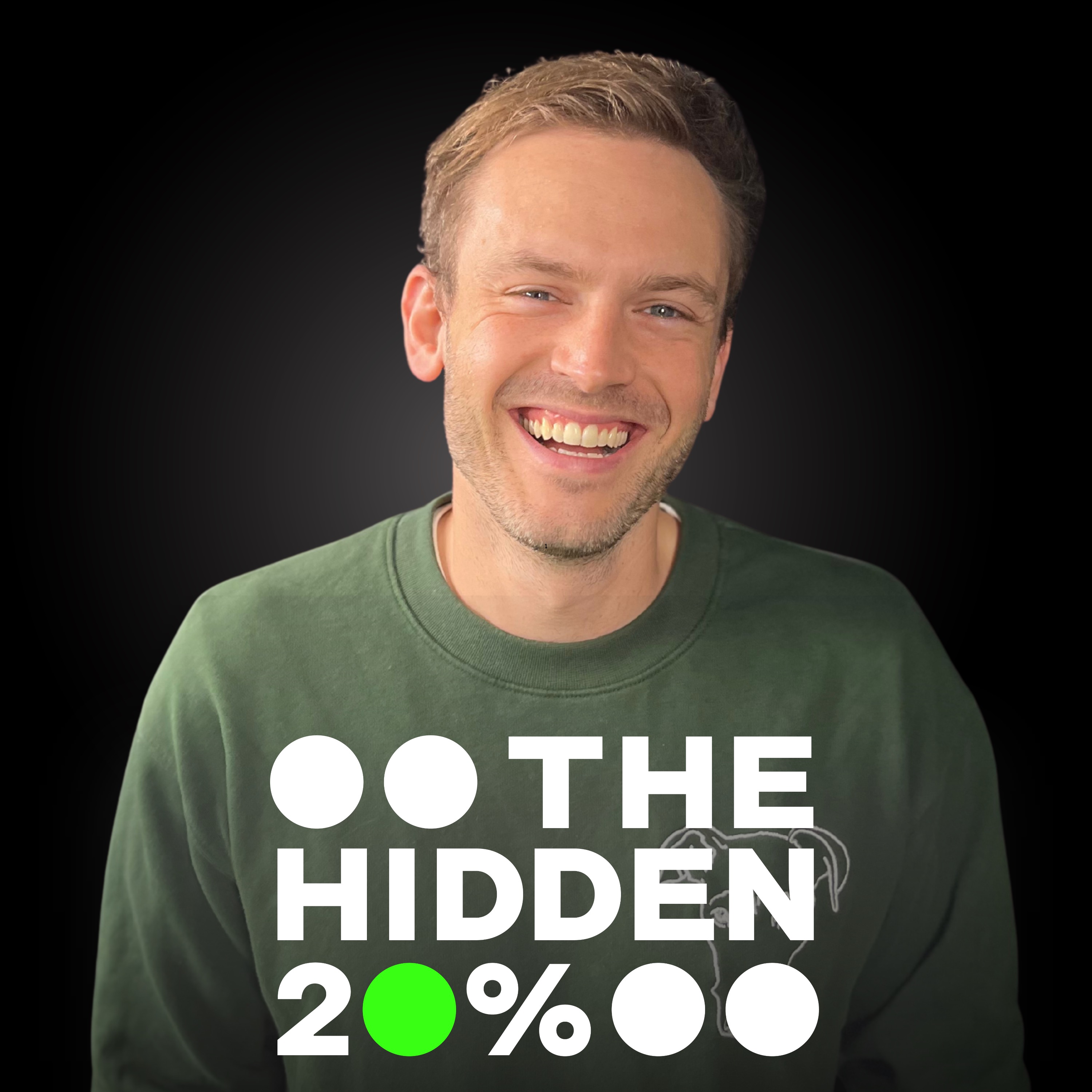
Rory Cowlum (“Rory the Vet”) discusses dyslexia and ocular stress in veterinary training and practice, how he adapts his work environment (yellow filters, non-white paper, ambient light, non-reflective drapes, warm surgical lighting), and why pets can help regulate stress and support neurodivergent people. He also covers vet mental health, corporate pressures, delivering bad news, and animal companionship (including autism/assistance dogs and detection dogs).
Rory is a practicing UK vet, TV face (CBBC’s The Pets Factor), author, and British Dyslexia Association ambassador. He was diagnosed with dyslexia at university and later built coping mechanisms for reading, studying, and surgery.
Dyslexia involves ocular stress and overload (attention span ~20 minutes), not just “being bad at reading.” Accessibility should extend beyond schools. Vets face high burnout/suicide risk due to emotional load and financial pressures. Pets can down-regulate the nervous system.
Failing vet exams after textbook-heavy study; using color paper/exams, screen filters, magnification; stepping out during ultrasonography due to bright screens; a woman laughing during euthanasia; referral bills up to £36,000 and a £50,000 pet cloning story; “no dog heaven” conversations with children about Kiwi’s death.
Written by AI. May contain mistakes.
Discover Rory Cowlum's journey with dyslexia and his veterinary career.
“The best way you can help is really simple.”
Rory shares his experiences of understanding his brain and dyslexia.
“So, Rory, I thought I'd start with your brain.”
Rory discusses the difficulties faced in learning environments for dyslexics.
“And also think about the last couple of days.”
Learn about Rory's strategies for making the veterinary workspace accessible.
“And I was sat in a dark room with a bright screen and I get massive ocular stress.”
Rory shares insights on reading difficulties and tools that help dyslexics.
“And I think it just draws energy from me a bit more if it's a bit brighter.”
Explore Rory's study techniques and tips for effective learning strategies.
Discover how self-care and exercise can enhance learning and memory.
“because I think you're exercising just a different muscle.”
Explore the challenges of maintaining focus during intricate surgeries as a dyslexic vet.
“And also we've obviously placed so much importance over the last 20, 30 years on our body and not on our brain.”
Learn techniques for managing stress and maintaining composure during surgeries.
“A huge common thread amongst all our guests is that they are able to, in whatever way, create environments in which they can thrive and take some ownership, some responsibility, some accountability for that.”
Hear how childhood experiences with pets shaped a lifelong veterinary passion.
“surgery yes so you have to be bare below the elbow yeah so my garment comes off that's more for running and fitness and whatever.”
Understand the importance of communication in veterinary care and client relationships.
“Benson and that was it and you know it all started from there and now I pride myself on my communication with animals I really do I think if you'd asked me what I wanted to be when I was a young kid I'd wanted to be Dr.”
Discover strategies for effectively delivering difficult news to pet owners.
“imagine that you are amazing at, given your profession, is delivering bad news.”
Learn about the emotional challenges veterinarians face while delivering bad news.
Explore the negativity and mistrust surrounding the veterinary industry.
Discuss the alarming rates of mental health issues and suicide among vets.
“The cost of materials, drugs, et cetera, has that all...”
Understand the difficult financial realities veterinarians face when treating pets.
“you always feel like you're failing someone.”
Hear about the fast-paced and demanding environment within veterinary clinics.
“But then you also have people spending 50 ,000 pounds to clone their pets.”
Learn how pets can help regulate stress and support mental health for their owners.
“So there's no hard evidence, but it is estimated that roughly 13 % of vets across the industry are neurodivergent.”
Discover the prevalence and impact of neurodiversity among veterinarians.
“Less so dyslexia, actually, based upon probably the schooling, because you need straight A's to get through.”
Explore how dyslexia can be an asset in the veterinary field.
“And I guess you're also, ironically, from what you're saying about, okay, you've got to sit with lots of books and learn lots of stuff.”
Explore the sensory strengths of different dog breeds and their unique traits.
“The day-to-day is very hands-on, touching, feeling, seeing, smelling.”
Learn about the studies on paw preference and neurodivergence in pets.
“yeah, okay, I'll just come and lean against you.”
Discover how companion dogs can support neurodivergent children’s development.
“It's just how we diagnose that and how we get down to that nitty gritty.”
Discuss how to approach the topic of pet loss with children and its emotional impact.
“The detection piece is, that's pretty mind blowing.”
Examine the positive effects of pets on children's emotional and social development.
“I want to make sure that we talk about Street Vet.”
Learn about the mission and impact of Street Vet in providing care for homeless pets.
“Can you tell us a little bit about your work with Street Vet?”
Learn how Street Vet provides vital care for pets of homeless individuals and the positive effects on their human companions.
“Or they go out and do outreach and they find people and they go and have a chat and they talk about their pet.”
Discover the importance of embracing dyslexia and the role of support from advocates in shaping positive attitudes.
“Second to last question, I give you a magic wand and ask you, what do you want to change for dyslexics?”

Get the gist, explore an idea or ask about something said.
 Claude
On The Hidden 20%, what are the key points of this episode?
Searching your listeningAutomatic transcript. May contain errors.
0:00I got to veterinary school and there were like books of thousands of pages. Little words. Tiny little words, not very many pictures. Very long words. Trying to digest that was super difficult. I fell out of love with reading because of this, massively. And one of the things my wife has trained me to do over the last six years, to read and to love reading again. I wear that with so much pride. I love the fact that I can read because for me, that was so hard. What do you want to change for dyslexics? What do I want to change for dyslexics?
0:37Welcome to The Hidden 20%, our neurodiversity charity on a mission to rewrite the future for people who think differently. Together with you and an eclectic range of brilliant guests, we can break the cycle of silence by smashing outdated stereotypes, exposing the myths and sharing the most up-to-date truths about what it really means to be just different, not deficient. The best way you can help is really simple. Subscribe so you never miss an episode and if you can, donate to our charity through the link below. Enough preamble, I'm Ben, your host. Let's get into today's episode. Today we're speaking with Rory Cowlum, better known as Rory the Vet.
1:22Diagnosed with dyslexia at university, he's now a practicing vet, familiar face on TV, author and ambassador for the British Dyslexia Association. From fronting CBBC's The Pets Factor to supporting charities like Street Vet, Rory's work blends a love of animals with radical honesty about neurodiversity and the mental health challenges in the vet world. Would you like to find out whether your pet is neurodivergent? Is that even a thing? I absolutely love talking to Rory. He's full of wisdom, full of personal anecdotes. Let's get into it.
2:05So, Rory, I thought I'd start with your brain. Two questions. Number one, how's your brain today? Let's start there. Inner, tired is the first thing that comes to mind, but content. Okay. And tell me about your brain. My brain is my superpower. Okay. I think, and that sounds really big headed, doesn't it? But I have had a really long journey to understand my brain. And I think I say that and I immediately think probably only neurodivergent people will understand what that means. I thought I knew my brain. I then thought again that I knew my brain. I probably still don't know my brain. And what would your wife say about your brain?
2:51She thinks it's the sexiest thing about me. I love that. She loves my brain and I love hers. And I think we're both very cerebral people and very different people. And I think the brain is most things. It's not only the most interesting thing for me, but it is also the crux of who you are. And I think when you take away all the facade and you take away the societal pressures and the assumptions, really what's left is just you as a wholesome person, right? Yeah, and so I guess it's not the one thing that's completely unique to you because ears and eyes and fingerprints and all the rest of it, but everyone's got a different brain.
3:30But it is the processor, right? Yeah. It's the hard drive, it's the processor, it's what is you. And also it's moulded by your experiences and moulded by nurture and nature, right? So it's an interesting one. And I think I'm on this journey of really trying to understand who I am and how my brain works. And actually what you're catching me off of two days of learning. Which I was reflecting on my way here. I was walking in the sun. I sort of cut my journey short so I could walk and just have a think and try and sort of process and think about this. And also think about the last couple of days.
4:01And I have been surrounded by a group of mostly younger vets learning a skill and studying. and it's not something I've done properly since probably 2017. So it was stretching a muscle that I'd not done in a while and it felt really weird. And it did feel good, but it also felt like an unlearned skill, which is really odd because it was such a huge part of my life. Learning was everything. Learning was everything from the age of three, four, when I started at school, all the way through until I finished my university degree. And that was always the goal. That was the only goal. And so it was books, it was studying, and that was it.
4:38And then veterinary is a bit like the driving test. You learn to pass your exams and then you actually learn what being a vet is. And that's a whole different ballgame. Yes. So how have you found your dyslexia and being back in the classroom the last two days? I mean, if you're anything like me, you hated it. I think on reflection, we're a long way from catering to everyone in education. And I think that's something that's so relevant and so talked about in kids. But actually, if you think about masters and universities and postgraduate studies and even online courses, right, quite often we don't apply the same accessibility conversation around those things that we do around schools.
5:19And clearly, I'm not saying it's important because I genuinely don't think it is important to apply it to adults because usually, usually by this age, you've got a workaround or you've got a way to understand how to do it. But I'm tired from the last two days, really trying to engage a bit of my brain that I haven't used in a while. And to give you a bit more detail, we were doing ultrasonography and scanning. And I was sat in a dark room with a bright screen and I get massive ocular stress. And that was a big learning for me at university. And I had to step out of the room after about 40 minutes.
5:49I couldn't hack it. And I had to take really regular breaks. And it looked like I was really disinterested, but I wasn't. But I just needed a break because it was giving me a headache and it was giving me sort of overload and too much light and too much sensory information. It was a lot, but it was good. How are you then after a day kind of in surgery, in practice? I'm better now. Okay. It was a lot when it first started out, but I have my coping mechanisms now. And I applied what I learned at university to my day-to-day. So I think having an accessible workplace is being talked about more. And we try to be paper-free.
6:25Okay. And if we do use paper, we use a non-white paper. Interesting. I have a yellow filter on my laptop. Okay. I have ambient light. So we're sat in a room with very bright white light and it's quite jarring. Yes. I have yellow light everywhere. Really? Because it's softer. How does that help you, that change in color? The only real notable difference to me is about 1, 2 p.m. I just don't have a headache or I don't feel as tired. Okay. And I think it just draws energy from me a bit more if it's a bit brighter. I didn't know that until probably a few months ago, I was looking into what a dyslexia assessment looks like.
7:07Not for myself, just because that's the kind of that I look into. Of course. And I found it interesting that in order to go for a dyslexia assessment, the first thing that was required was an eye test. so they wanted to understand i guess the health of your eyes as it relates to then going forward for an assessment i'm interested to kind of hear like you're talking about different colored paper different colored lights what else do you understand about your relationship i guess with your eyes and dyslexia not a question i thought i would ever ask well it's a really good question because actually i think it's something that a lot of dyslexics struggle with And they talk a lot about ocular stress and dyslexia.
7:52And they talk a lot about how you can, particularly on the academia side, how you can reduce your ocular stress and reduce your overload to preserve your brain function and not tire yourself too quickly. Because genuinely, I have an attention span of about 20 minutes. That's pretty much all I can do. And then I have to walk away. I have to break that eye contact. I have to break that focus because otherwise I just start to go a bit numb. and I must admit I thought it was all a bit shit and a bit rubbish when I got the assessment I was like what are you on about that's just surely it's ridiculous yeah I just can't read very quickly that that that was my when I first got diagnosed I was like oh yeah I'm just a bit crap at reading if only that was it but then of course veterinary is so textbook heavy yeah I mean I went from like school and how I used to sort of try and try and memorize the textbook and then got to veterinary school and there were like books of thousands of pages and i was like okay this might not be with little words tiny little words not very many very long words very long words or they're written in the like 80s yes and you're like i just don't understand what you're talking about that's not my language and then they've got like a schematic with numbers and letters and you're like all right no you've lost me so trying to digest that was super difficult so i had to try the things that they were suggesting.
9:12So they gave me exams on different color paper and they gave me highlighters and they gave me a laptop with a screen filter and a magnifying bar that I could sort of make the words much bigger. And one thing that was a huge, huge realization for me, not only was the fact that I just didn't feel as tired if I used those things, but when I read, I skip words but really really frequently and I didn't realise so I'd be reading exam questions I'd be like oh yeah I got that and I'd answer a question I'd go back and be like oh it said not ah damn it I've just spent like 40 minutes writing an answer I'm like oh no so yeah that used to happen all the time and it gets worse when I get tired when I've been reading for a long time I it just it gets much much worse and I didn't read I fell out of love with reading because of this massively and one of the things my wife has trained me to do over the last six years to read and to love reading again so i'm now reading fiction again which is a really weird badge of honor but i i wear that with so much pride i love the fact that i can read because for me that was so hard it was such a skill and it was i was so envious of people that could sit and read and enjoy that where I had to watch TV to to get that same sort of pastime do you read physical books okay yeah so I love a physical book I absolutely love a physical book but it frustrates me when they're not perfect and when a page gets crumpled or someone's folded over a page or the cover gets bashed I can't actually then focus on reading because I'm focusing on the fact that the book's not perfect okay which is a weird idiosyncrasy but the nice thing about the kindle is i can i can pick it up and leave it off where i am at i can change the font size as well because i find that much much easier yeah and i also have it on a non-white background okay which is also really nice when starting the hidden 20 i wanted to choose a font that was the best font for dyslexics and google had created this font called lexend that's meant to be the most dyslexia friendly font and so that's yeah that's the font that we use i've not really heard about the kind of changing color of paper and having that contrast being a different thing what are your best tips for exam revision school university learning i think the first thing to say there is it's not the same for everyone and i'm sure that if you lined up 100 dyslexics they'd all give you slightly different answers.
11:49But for me, when I got to uni, I had never failed an exam. I'd got straight A's and I sort of just got through. And I got through for two reasons. Number one, because I was smart enough that I could sort of just remember. And I would just read a book. I'd read the AQA textbook or I'd get my mum to quiz me on the AQA textbook the night before an exam. And I just regurgitate it onto a page. Cram. Yeah, right. A hundred percent. I was a complete crammer because it worked for me. And that's great. You can't do that at university because as I said, you've got books of a thousand pages and probably about 10 of them.
12:17So it just doesn't work. So I failed my first year, second year, third year. And luckily managed to pass the retakes, not by anywhere near flying colours. And don't worry, he's a really good vet guy. But you know what's really interesting? And actually, I, this is bad, I think vets that fail exams are actually better vets. Okay. We'll come back to that. But there is being bookie and there's being smart and then there's being a vet. then that's actually very, very different. And I had to really assess how I learned and how I revised. And so firstly, ignore what other people do, because there is a ethos and a competition and a attitude towards what you should be doing and how you should be doing it.
13:00And you should be spending 11 hours in the library. No one is learning after probably about four hours in the library. They're just there because they want to be seen to be there. So ignore what other people do. to take breaks more frequently than you think you need to. And actually I had a rule that I'd have a break for as long as I'd revised for. So I used to do 20 minutes on, 20 minutes off, 20 minutes on, 20 minutes off. And that might sound like ridiculous because you're only just picking up things when you're at 20 minutes, but actually your attention span and your ability to work effectively is far, far, far shorter than you think it is.
13:37And you might think you can sit there for two hours and you might feel really accomplished at the end of that. But the reality is you probably aren't going to remember that last hour. And you're probably not going to have worked as efficiently or as effectively. So working for short periods of time with regular breaks, exercise and nutrition are key. And I'm really into fitness. And I have over the years really conflated fitness and revision and education because I think you're exercising just a different muscle. It is very, very similar. If you are not looking after yourself, exercising, eating well, you're not going to remember things and you're not going to learn.
14:16And you need to be in a good place to be able to do it. Same as if you're training for a marathon, same as if you're an Olympic sprinter. Like you cannot do it without looking after your body because you're just not going to be able to do it. So regular snacking, making sure you're exercising, ideally before you sit down to work and ideally at the end of working to de-stress. So I used to get up, I used to go for a swim. I'd be in the library for six hours and I'd do this 20 minutes on, 20 minutes off. At the end of the day, I would then meet up with a group of dyslexics and we would teach each other what we'd learned that day.
14:45And then I would go back to the gym and I would do a weight session and go to bed. I'd do the same the next day. That's how I went about it. Okay. It is quality, not quantity. A hundred percent. Isn't it? And also we've obviously placed so much importance over the last 20, 30 years on our body and not on our brain. and nourishing and looking after our brain so that it can retain information, process information, etc. 100%. All kind of really important. Just going back to the eyesight and your eyes, when you're in surgery and it's tiny and complicated and holy shit, you've got to concentrate and focus, how do you manage that with your eyes and being dyslexic?
15:33So yeah, it can be challenging. I think you are so focused that it comes more naturally. And for me, it's about the light and the setup. So the way I approach those things is we have dull drapes. So when you're draping up a patient for surgery, you can get reflective and non-reflective surfaces. So I always have non-reflective surfaces. Okay. This is the sheet that you put over the surgery? Exactly, to prevent contamination. Okay. You then have surgical lights, which are very bright. We have one that has a yellow setting. So I have a more warm yellow light rather than white light. And I also have it probably lower than my colleagues.
16:13The thing I'm really bad at is having the table really high. So it's closer to me. So I'm not having to bend and focus. And I would probably suggest I'm on the quick side. So I, that sounds really weird. I am very, very decisive about what I do and where I do it and how I do it. And I have also, if I'm doing something really, really intricate. Like what? If I'm doing something like a cancer removal and I'm removing it from, say, around a blood vessel, or I'm doing very, very intricate dissection where one wrong cut is really bad, which doesn't happen often, thank goodness, but you know, those surgeries are there and they can happen.
16:54And you're dissecting with things like cotton buds. to that sort of intricacy. I've absolutely been known to do that for five minutes, step away, walk around the room, come back. Okay. Because not only does that help me just de-stress and just shake things out, it also allows my eyes to relax and allows my hands to relax because everything's tense in those situations more commonly than not. And the likelihood is extending that patient's anesthetic by five, 10, 15 minutes is going to be less detrimental than you're making a mistake. A huge common thread amongst all our guests is that they are able to, in whatever way, create environments in which they can thrive and take some ownership, some responsibility, some accountability for that.
17:42And whether that's by failing and making mistakes and figuring it out, or whether that's by being able to put in place things, that's really amazing that, you know, if I'm one of your clients and I'm bringing an animal to you, whilst you have your own way of doing things, it's the way that gets the best out of you and therefore gets the best out of your work. how was that when you maybe started out 10 years ago didn't have those kind of opportunities to walk in and go I want a yellow light guys yeah absolutely and when you're learning as well and you don't have the confidence in the experience that's even harder I used to and I don't anymore I wonder if you just talking this through I wonder if it's because I feel confident and comfortable now I used to operate in no shoes and I don't didn't know why I did it but I did it one day and then I did it for about eight years and I never wore shoes in theatre ever.
18:36And it was a bit of a weird thing. People used to like think, oh God, it's just a bit odd. And I didn't fully understand why it was, but I also think now it was a comfort thing. I think it was a control thing and I think it was a, okay, I feel grounded. I feel like I have something that I can just feel to just connect me back to where I'm at if something gets really stressful. Yeah. Because you do get those stressful times in theatre and I think being able to keep a cool head is often the difference between life and death in those instances and it is you as the veterinary surgeon's responsibility to be that calm voice even if you're only a year out so having something that just grounded me was was really useful and I found that really helped you have a wearable do you keep your wearables on when you're in surgery yes so you have to be bare below the elbow yeah so my garment comes off that's more for running and fitness and whatever.
19:28My WHOOP goes on a bicep band or around my ankle. Okay. Tell me about the data. I love the fact that it can read from ankles and wherever you put it, it's bloody brilliant. I mean, it's really unnecessary, right? But I love it. And what is so great is WHOOP has a activity as surgery. Yeah, it has like a theater activity, which is awesome. So yes, resting heart rate and And stress, however they measure stress, certainly goes up in theatre. And what's interesting is time and stress correlate hugely. So the longer a surgery goes on, the more stress it becomes, the higher your heart rate becomes, the more anxiety builds.
20:07And yeah, I found that really interesting. And I wish I had this at the start of my career because I'd have loved to look at the data then and look at the data now. Yeah. And I have colleagues and friends that are doing that at different stages of their careers, which I think is really interesting. Yeah, amazing. let's go right back Rory to when you were four and your very first dog Lulu that set the stage for the rest of your career yeah that dog was the start of everything I called her my sister when I was that age which I do have a sister but yeah she she was amazing the best dog yeah I was four years old my parents had cats and I'd grown up with cats who I absolutely adored and you know Lulu wasn't the start of an animal lover journey, but she was absolutely the catalyst.
20:56And I went with my mum to pick her up. And weirdly, my parents had never had a dog, but they went straight in a Great Dane, which is... Big move. Yeah. Well, whether or not they think it was a good move now, I don't know, but it was big. And I got to name her because my sister wanted to name her something like Tinkerbell. And I just said, what about Lulu? And I don't know why I said Lulu. I think it was possibly because Lulu came on the radio on the way there, but it stuck. And she was this blue Great Dane. She was small for a Great Dane, but something in the region of 45 to 50 kilos of silliness and love and o 'fishness and just amazing, amazing, amazing animal.
21:39And Great Dane's a special, as you know, because you have a 14 month old Great Dane. And they get under your skin. I don't know whether we can relate more to them because of their size and because of their human characteristics. I would suggest we probably can because I do relate to them more than other breeds. And we've had other breeds. We've had Collies. We've had Jack Russells. And I love them all differently and mostly equally. But there's just something about giant breed dogs. And I would actually go as far as to say it's not just Great Dens. It's Newfoundlands. It's African Mastiffs. It's St.
22:12Bernard's. it's the big giant silly oafish wonderfully delightful dogs and they are amazing my parents have had great days ever since and they currently have one called myrtle who is a complete moron and wonderful they're just there is something i love all dogs but i don't know we've had two months with pesto and god just really love her just absolutely love her so much and there is that slightly human element to them having lulu from what i've you know learned about you is why you're here right it's set you off yeah 100 so she inspired a journey that has been veterinary since I was for. It was never anything else.
23:01It was always what I wanted to do. I always wanted to help animals. And as you do, when you get a puppy, you take them to the vet. I'd never been to the vet before. And I had shown such an interest that mum was like, okay, cool. I'm going to get him in on this. He's going to do everything with the dog. So we went and it's a vet in Sirencester. And to this day, Mr. Benson looks after our pets. And we met him there for the first time this must be almost 30 years ago and we walked in and we sat down and then mr benson comes out in his white coat proper old school white coat calls us in and was just so confident and caring and had such an affinity and i think the thing that struck me was he acted like he knew Lulu from the minute he met her and I was so in awe because I'd never met someone who was so so au fait with dogs and understood dogs and could read them and could just communicate with them so well and Lulu obviously reciprocated and loved that and I was just so blown away by it and I don't remember this but my mum of course tells stories about her little boy says that when we walked out I looked up room when I want to be I want to be Mr.
24:20Benson and that was it and you know it all started from there and now I pride myself on my communication with animals I really do I think if you'd asked me what I wanted to be when I was a young kid I'd wanted to be Dr. Dillett like that was that was me and and you know when people do these quizzes and they're like oh what superpower do you want talk to animals every time without fail I don't I don't want to fly I don't want a super strength I want to talk to animals I want to understand them I want to be them I want to I just want to know and I think I have committed myself probably unconsciously but really committed myself to understanding animals and be able to read them and to be really really good and to be that Mr Benson and what does that do for you what what is that yearning that curiosity what is that doing for you it's drive it's a never-ending goal it's motivation and I also think it's why I do what I do and it's why I feel that I do a good job because what I know from my clients is that they say that I speak to animals and that is only that's the biggest compliment you can give me right like if they go oh you're so good with him or oh she's not like that with anyone or she's so comfortable in here how do you like that that those comments are what drive me they're super special because I think you know inevitably in veterinary and this is where there's the other side to it right Yeah, we do it because we love animals, but we also do it because we want to help animals.
25:45And that's sometimes noxious. That's sometimes negative. We all know the pets that don't want to go to the vets. They pull away from the door. And that is distressing to an animal lover who wants to help. And if I can take a dog or a cat that frigging hates the vets, and I can make them hate it that little bit less, to be honest, that for me is more important than catching that diagnosis or doing that life-saving surgery. making that day-to-day experience less stressful and nicer and more comfortable for both pet and owner is what I think one of the biggest things about being a good pet. One of the skills I imagine that you are amazing at, given your profession, is delivering bad news.
26:35What have you learned about delivering bad news to people? I think it comes naturally to me, honestly. And I think that sounds really weird. But one of the things I've identified about being neurodiverse in veterinary is I believe my dyslexia gives me a very high EQ. I can read how people feel more than I can listen, more than I can read and ate body language better than I listen. and I think that gives me a step up. I'm a very emotional person. Being able to show emotion in those instances is really positive in a lot of cases. It's also knowing where it's socially acceptable to or not and what is often really interesting is people don't act themselves in those times and I'm really thinking specifically about euthanasia.
27:26People don't act themselves. They don't act as you'd expect and you can get some people completely out of the blue. Can you give me a story or an example of that? I once had a woman burst out laughing as her pet died. And it was such a raw, odd, unexpected response. I started laughing as well. It was so, I've never had anything like it. It only ever happened once. I don't know if it happened again, but she was laughing and then tears started and I was laughing and then I started crying and it was such a weird thing but it was also really raw emotion really raw human and I think I ended up giving her a hug at the end and we sort of shared that moment together but I think people overthink giving bad news because they think about what that person is going to hear and how they're going to react i think you've just got to be very clear you have to try not to project your own feelings or emotions onto it and you have to be there to listen because actually they are going to go through their journey they are going to go through their grieving journey or their questions or their anger or their sorrow you just have to be there you have to give them the time and the space you have to give the shoulders to cry on and i think that's another that's that's the thing about veterinary that a lot of people don't know or don't think about is the veterinary is the easy bit the human side is the tough bit it's it's the being the therapist it's the being the best friend it's the being the shoulder to cry on it's being the first hug that someone gets after they lose a pet it's being someone to talk to about their worries and that is something you don't know yeah that's really hard i guess you are also coming from also a place of expertise and therefore advice and guidance to share with people this is what we need to do or i don't think you should do that anymore or this isn't helping your dog cat budgie whatever yeah tell me about veterinary in the media there's so much negativity around veterinary at the moment is there yeah oh god we could we could talk hours about this so very long story short there is a lot of negativity around veterinary and mistrust of vets and corporatization of vets and over inflation of prices and it's a really tough time to be a vet actually people come in with a chip on the shoulder they come in expecting you to try and fleece them they come in expecting you just to try and do things for money's sake and what's really hard is those opinions and that attitude honestly is fair okay because there are issues within the profession and there are clinics and there are vets and this really really cuts me up to think it and say it but there are doing things not for animals and not for owners and that's a really hard thing to to face up to and the veterinary profession is pushing react against that massively but actually it's true because if you look at price inflation i think we have exceeded inflation by something like 200 okay it is it's massive and they're saying it's because we've been historically underpricing veterinary care okay i'm not sure i I fully agree.
31:01I think, so the veterinary... The cost of materials, drugs, et cetera, has that all... That's all gone up. Okay. But the veterinary industry is now also over 60 % corporate owned. Okay. So back in 2019, I believe, don't quote me on it, Medivet was bought for a billion dollars. Wow. By a US hedge fund. And they own, I think the last count was near a thousand practices. And another big company is IBC and CVS. They all own close to a thousand practices. And when you've got companies like that, that is what drives prices and control of all that sort of stuff. So yeah, it's a really difficult time.
31:46But what's really interesting is, is there is a huge resurgence of independent vets happening now, which is amazing, who are screaming from the rooftop saying, you can do it, right? you can do it for an appropriate amount of money you can do it ethically and empathetically and warmly and you can do it for the right reasons and the reality of it is it's not the vets on the ground but they get the flack and that's really hard yeah because i guess the the other flip side to this that i've been learning and obviously is you know part of the reason you wrote your book is the kind of quote unquote cost and impact on vets mental health just because of this profession and i guess partly because of some of these working conditions and then add in neurodivergent vets who are already predisposed if you know not adequately supported to things like burnout anxiety depression yeah what can you tell us about that when i started to look at the mental health stuff in the profession it was it was sort of always talked about it was like the dirty little secret of the veterinary profession and i i remember googling what professions and demographics and what were more likely to take their own life and as a 30 something london-based single at the time vet i was like the most likely person to take their own life in the modern world right in the veterinary industry in no just across across like so men under 40 yes we know that's the leading cause of death in men under 40 unfortunately taking their own life in depression is so rife in in in that demographic and it needs talking about and vets in a number of different surveys or research pieces have been in the top one or two professions with severe mental health issues and high rates of suicide.
33:45Yeah, I think I saw maybe twice as likely to take their own life. And if you were female, three times as likely. You told me before that 80 % of vets are female. Yeah. So it's a difficult job, right? And I think I read or saw, maybe you said it, you ultimately, as a vet, you always feel like you're failing someone. And so that's like hardcore, emotional rollercoaster. responsible for real loved ones family pets etc what's happening is it burnout is it the stress of the job what's happening it's so multifactorial so there's external pressures from from people so people want the best for their pets now well they always have but more so than ever they want the best for their pets they expect the world they expect you to be able to fix everything they want to magic injection.
34:41There is a fundamental misunderstanding of cost of healthcare in the UK. Healthcare's expensive, like really expensive. And when you are stood there as a vet and you're going, yeah, cool. I can save your cat for 2000 pounds. That's so hard. It feels like manipulation, but it's so not. And it's a really difficult thing to navigate, particularly for young vets. The biggest bill I've ever heard of was at a referral center of 36 ,000 pounds. Oh. Yeah. And I think that was discounted by the referral center. So, yeah. I mean, you can really rack up bills. Really, really, really. And people will do anything for their pets.
35:20They absolutely will. They absolutely will. But then, you know, you say that, and we think 36 ,000 pounds is a lot of money, because it is a lot of money. But then you also have people spending 50 ,000 pounds to clone their pets. Pardon? Yeah. So one of my colleagues had someone, when they had to, unfortunately, euthanize their pet, they took tissue samples and sent them to the US and spent£50 ,000 to clone their pet. And what happened? They now have a clone of their pet. Yeah, yeah. It's a thing. Is this a widespread thing, this cloning thing? No. And it's only in the US, I think. So you have to send tissue samples.
35:53But it can be done. Yeah. It works. I'm not sure how the health implications are, but yeah, it's a thing. It's, I mean, it's, in my opinion, it's playing God and it's not the right thing to do, but it is a thing. You talked earlier on about, you know, the importance of exercise and nutrition and obviously looking after your brain and your body. I've not spent loads of times in veterinary clinics, but I've spent enough time to kind of see that it's quite stressful. It's fast paced. There is a revolving door aspect to, well, look, we want to see people and we want to help people. How do you balance that with looking after yourself?
36:33yeah with difficulty and this is one of the other pressures for vets in the profession but because the corporate clinics particularly do work you super hard i mean i always liken it to so a consulting shift for example i liken it to speed dating okay so every 15 minutes for probably between somewhere around eight o 'clock in the morning till lunchtime you're you're seeing every someone every 15 minutes and that could be a lovely old deal with her jack russell who's the last connection to her husband who died last year and wants to talk to you because actually she's that's the only conversation she's going to get all day but you've only got 15 minutes to give then you might have a new family with a puppy and you need to be that guy that's like oh my god this is amazing oh you're so it's so exciting how cute how wonderful then you might have some someone losing their pet then you might have a cat's been in an accident and then actually in between that consult the next one that's in five minutes time you get someone walking off the street with a dog with a broken leg and it is just constant and you're expected to do that again and again and again and again and you never know what's coming right no that's the other thing what is it about a family pet i mean there's so many benefits to pet ownership right like there's there's the companionship there's the the cute factor there is the mental health and exercise factor and physical health factor there is the responsibility and the i am needed factor and the parenting and maternal paternal love factor as well and i actually was on the way here and i heard a stat that said that actually just sitting with your pet helps down regulate your nervous system because they don't hold on to stresses you know we are living in an ever worsening stressful society every day is getting more stressful and having a pet to help you decompress and help you neurally regulate and be there to greet you when you get in for someone that has anxiety pressures or mental health issues is neurodivergent it's so important and so useful what do we know about neurodiversity and vets?
38:45So there's no hard evidence, but it is estimated that roughly 13 % of vets across the industry are neurodivergent. I think that's a gross underestimation. And what's interesting is vets under 35, it is over a quarter. It's about 27%. You've talked before about how we are diagnosing more and being more aware of neurodiversities. But I think what's interesting is we are embracing it more as well. And we are seeing that those vets coming through are aware of it and we're talking about it. So purely anecdotally, from what I've seen, I think we have high levels of autism, ADHD, and dyslexia within veterinary.
39:31Less so dyslexia, actually, based upon probably the schooling, because you need straight A's to get through. I think a lot of dyslexics are let down with the schooling system, at least historically, and I think it's getting better. But I think often they're not making the grades or they're having longer and harder access to veterinary. And why do you think you being dyslexic makes you a good vet? So the EQ part is huge. And this goes back to what I was saying about there's being book smart and there's being a straight A student and then there's being a vet. And I think they're very different things.
40:05and it also goes back to why I think actually vets that have failed an exam is probably better day-to-day vets at least as GPs probably not the specialists they need to be the bookie people but the day-to-day GP they're sort of walking up the street they need to be accessible they need to know how to speak to people because this is a people business at the end of the day it is absolutely about the animals but it all comes back to what I was saying it doesn't matter whether you can do the life-saving surgeries of course it does but it matters less because 99 percent of your interactions 99 of what you're doing on a day-to-day basis is not life-saving it is being there it is supporting it is being a crutch it is helping someone through an emotional time it is counseling someone through it and also being adaptable and i think that's another superpower that i have got through my dyslexia is is being able to see multiple ways forward and going, okay, we have this option, this option, this option, this option, because it's not always clear cut.
41:09And being able to discuss that in a very open and safe place is really important. Yeah, and I guess what I've learned about the wonders of a dyslexic brain being a great pattern spotter, a great problem solver, there's a reason why GCHQ look for dyslexics, because ultimately you're playing that slight detective role, I guess, of going back to things you've seen before, joining dots, seeing the bigger picture. Yeah, it makes total sense. And I guess you're also, ironically, from what you're saying about, okay, you've got to sit with lots of books and learn lots of stuff. Well, then when you're actually being a vet, you don't.
41:56No. You are with your hands and people and it's very visual, I guess. The day-to-day is very hands-on, touching, feeling, seeing, smelling. And it's super sensory, super sensory. And that really plays to my strengths. I sort of feel like, and I'm being, it's a big generalization, that Spaniels are ADHD. I kind of feel like they're an ADHD breed. They are, absolutely. Let's just talk about dogs specifically. What do we know about dogs' brain in that sense? Because there are different levels of intelligence. All dogs are different. They are. And the characteristics are so different. Yeah. There is no research into it.
42:39Okay. We know so little about the canine brain. So little. And we can look at the anatomy, we can look at the functions, and we can look at where they have large areas of their brain for, say, obsessive behaviors or different aspects of their personalities. But the actual studies or looking into diagnosable conditions without verbalization and being able to understand how that animal is acting in certain instances is really, really hard to get to. And I think we're a way off it. But you're absolutely right because you get very specific breed nature. And it makes you think about genetic links of humans, right?
43:21and neurodiversities and traits and behaviours and that sort of thing. And I think there is a nurture aspect to some of them, but absolutely you can pick the spaniel puppy that's going to be a nutter. It's going to be fully on all the time. What's next? What's next? What's next? What's next? And you can pick the Great Dane who's a bit, yeah, okay, I'll just come and lean against you. Yeah, or the collie that just wants to work, just wants routine, doing the work. And what's really interesting is there's now an area of canine behavior that's looking at how humans misunderstand canine behaviors.
44:00And we try and get them to do things that are so totally against their nature. So you take a collie, you put them in London, and then you diagnose them with obsessive behaviors because they're chasing cars. You're like, well, think about how that dog is meant to and has been bred to be. they are herding species. Like, why are we surprised that they're trying to chase that bus? You know, you look at lurchers, for example. I've got a wonderful lurcher. She's an absolute. But she will chase everything because she's a chaser. She's a sight hound. They see and they run. That is what they do. And then I get surprised when she goes and runs after a cockapoo in the park.
44:42But really, should I be? No. I'm trying to teach pesto to give me her paw. and it's not going very well she's got massive paws but i saw that you'd done a post about this idea of paw preference left brain right brain firstly i wondered if you could just explain that yeah secondly then give me some sort of conclusion on whether dogs can be neurodivergent Oh yes okay so there are studies that show that dogs and cats have a paw preference when doing activities and if you want to do a very very simple thing with your pet to work out what that is ask them for a paw with a very central hand or bury something and see which paw they prefer to start with to dig things up and you can do that a few times in different settings and you should get an idea.
45:38It is suggested that most are right-pawed, which means they're left brain dominant. So same as in humans. The ND aspect, I'm sure there must be. There has to be. They have such a developed brain and they have so many likenesses to humans. I don't see how they can't be. It's just how we diagnose that and how we get down to that nitty gritty. I am so sure that my dog is ASD. She is exhibiting traits of autism across the board, and she is wonderful. I'm seeing the first ND assessment clinic for dogs. There we go. Somebody listening who, you know, we've had loads of amazing researchers on here who have not done anything with animals, but I just, Francesca Happe, for example, or Simon Baron-Cohen, Nancy Doerr, I'm going to give you a call.
46:29Amanda Kirby. I mean, there's loads of you. You guys, we've got a look at neurodivergence in animals. Please, please, please, please get in touch. What about companion dogs? It's not something I've looked into or know about, but when I think about, you know, kids struggling, neurodivergent kids, sensory issues, school issues, for example, and the role of pets is there anything in that in terms of allowances or adjustments from a companion perspective yeah so there's real good work being done in done into canine companionship and autism there is a charity called dogs for autism who provide dogs to autistic children mainly and have some amazing research being done right now great and so companion dogs or i suppose for want of a better term disability dogs so you know we've got dogs for the blind, we've got hearing dogs, dogs for autism.
47:24And then you start to cross into the medical detection side of dogs. They're amazing, right? They're such an amazing species and they can relate, they can help with anxieties and mental health issues and neurodiversities, but they can also detect things. Like we've got cancer detecting dogs, we've got seizure warning dogs, we've got diabetes control dogs. It is madness what these things can do as if they weren't already the most loving, wonderful, fluffy, amazing animals, they can also detect disease and do these amazing things. And it's like, oh God, okay, be better. Yeah. Yeah. What, I mean, what more can they do?
48:03The detection piece is, that's pretty mind blowing. Yeah. And there are some stories coming out from DFA of young autistics, non-verbal, get a dog, have this unbelievable connection with them. And I don't have the science behind it, but they become verbal quicker. They develop relationships with humans better they understand empathy better they develop at a much quicker rate because they've had this bond with an animal that in a non-verbal and non-judgmental and non-human way actually teach them more human behaviors better which is crazy but it is amazing and and i i anecdotally have people come to me who have autistic children they've got a dog for them and they i mean i have never heard a negative it's always unbelievably positive the difficulty comes with actually sometimes we see then or autistic adults or older teenagers getting animals and being the primary caregivers for those animals and then they have anxieties around that and i got to know this one lady very very well in my last job who had a dog but she was into the vet every week every single week because she was so panicked there was something wrong with her pet and there wasn't i haven't seen her in years but as far as i know the dog is totally fine still but there was this huge anxiety over providing care for a pet so i think there's a little bit of a double-edged one thing i've learned as an autistic person and where pets are concerned and We had our Kiwi, our Jack Russell, who was, what was she?
49:40She was my sort of first proper dog as an adult. She lived till she was about 15. Obviously, the kids grew up with her as well. We sadly had to let her go last summer. And that was with a 12-year-old, a 5-year-old, and a 2-year-old. So kind of aware because I can't lie to my kids. So there's no dog heaven. the dog has died and we we buried kiwi and and all the rest of it but yeah just wondered given you've got a four month old yeah your thoughts on being that brutal tell me a bit more about how you navigated that actual situation right so you you went to the vets for so kiwi was i mean kiwi was old she started you know to be incontinent she was just not happy and i made the decision to be like got enough guys let's say goodbye to kiwi i'm gonna take her to the vet right and you went alone and yes there was too much emotion at home interesting so yeah i went alone would you do the same again yeah i think i would i i think the girls were incredibly upset i mean they were absolutely distraught but they didn't keep it in they didn't suppress it they let it all out and i know you know our dalmatian is nearly 14 and she's stiffening up and i know that more's coming i just feel like for children that learning about death and talking about death is so important And having pets or animals as a proxy or an opportunity to do that, not least because we kill animals for food, you know, for example, and not hiding them from that, I think is important.
51:37But then, you know, I can have a conversation with my three-year-old and somebody's asking her about kiwi and she's three and she would just say, no, kiwi's dead. Right. You know, matter of fact. Right. Right. I think it's really important. I'm interested in how you navigated it because everyone does it differently. And I get this question from parents a lot, actually. The first thing is you know your children best, right? It can be an incredibly traumatizing thing to be there, see that and face up to that for some kids. I think if you think your kid can handle it, I think actually facing up to him, being as involved as they want to be is as it's important and i remember our clear as day i was i was in the room when we lost lulu i i think i've been present at all of our dogs actually i mean i'm talking like dozens and i think it's really important to understand that there's no doggy heaven and you know they don't go to the farm in the sky or they've not just been shipped off to the farm there is a circle of life and this is how it is and this is the negative or downside or emotional part of owning pets because actually that's part of the empathetic journey it's part of life right and i think it's really important to understand it and it can be a really valuable learning tool for children and it's a very important thing to learn how to deal with those extremes of emotion yeah because i think if you don't face up to those it can be quite quite tricky too once you reach adulthood understand how you are meant to act so actually i think you know i'm i'm for it yeah it's good training wheels yeah it is and it's a safe space right like you know be there as the supportive adult and you know i i think it's those situations although they're gut-wrenchingly heartbreakingly disgusting at times they are important they're part of being human on the flip side what's your favorite vet story what's your favorite happiest miracle story oh god okay i mean there are the day-to-day miracles they are i think for me it's not really any one big thing it's and actually this is around kids as well i think i'm probably more receptive to it now i am a dad it's the awe it's the it's the wide eyes it's the smiles and one of my favorite things to do and I do this every single time a kid comes to the vets and sometimes they don't want to but I offer them to listen to the heart of a dog or their pet and watching them put the little stethoscope things in their ears and their faces just light up that will never get old it will never go because I think it's also piquing so much interest and it's inspiring in generation and it's understanding and learning and super cool like we can listen to heart with a little bell and a little diaphragm membrane and like it's so cool it's so cool yeah but i think you lose that passion for the the mundane almost and i think sometimes kids are the best at reminding you how cool those things are and you know like you you've obviously been through that first time that you hear your baby's heartbeat yeah is incredible yeah it's the most ridiculous experience isn't it it is yeah so allowing kids to to do that yeah yeah i think it's brilliant That's amazing.
54:57I want to make sure that we talk about Street Vet. Yes. And the absolutely brilliant work that happens there. Can you tell us a little bit about your work with Street Vet? So in a nutshell, Street Vet provides care for the homeless and vulnerable with pets. So it was started by two of the most amazing people I know, Jade and Sam. And they really weirdly both had the same idea they were both just vets in clinics they were both in London they'd sort of walked around and seen these dogs on the street and going well you know what's happening for them and maybe seeing them with a bit of skin issues or limp whatever so they just started chucking meds and bandaging materials and a stethoscope in their bag and they would go out and they'd walk around and they would find dogs they'd have a chat and they would have a little look at them for them and what started as a very simple very basic idea has become this powerhouse movement and unbelievable charity that i am so proud to be an ambassador for and we are in close to 20 cities across the uk and the vets and the vet nurses and the veterinary professionals the paraprofessionals they just go out and they have either sites where the homeless can turn up and get a free consultation flea and whomey treatments, preventatives, just a chat and a cup of tea.
56:18Or they go out and do outreach and they find people and they go and have a chat and they talk about their pet. And what is amazing is not only is it providing care for the animals, but actually it's the human side. It's the fact that those people are getting to have a conversation. They are being listened to, they are being cared for and what i've learned from street vet has been unreal so they're now starting a accredited hostel scheme so the vast majority of hostels around the uk didn't let homeless in if they had a pet yeah as a blanket rule they were not pet friendly and now street vet are accrediting hostels they're going in they're teaching the members of staff they're understanding the process and they're starting to let in people with pets which is amazing because what was happening every single day in every single city in the country was homeless people were choosing their pets over a roof every time.
57:15And it was not even a choice. Like these people, and you hear in the stigma, right? You hear, oh, well, if they can't look after themselves, why should they have a pet? They can't look after them. And that's just bullshit. It's utter bullshit. It angers me to my core when I hear those people say that because the love and the attention and the care that these people give to their pets is so above what a lot of people with homes do. And they are so loved and so cared for. And, you know, any homeless person with a dog, their dog eats before they do. Pretty much every time. They will go without food.
57:55They will go without shelter for their pet. And, you know, the amount of times you see, you walk around and there's a guy on the street sleeping with an umbrella and the dog's under the umbrella. And it's just like, they just love them so, so very, very much. And there are some amazing stats. So actually having a dog when you're on the street increases your likelihood and reduces the time for you in general to get a permanent residence and then a job. And their hypotheses are endless, but things like caregiving, having a reason to get up and get out and do something, having something to do is so important and that's what these animals do for these people and yeah I would implore anyone who hasn't heard of Street Vet to have a look and they did a film amazing Steph and her team went out and filmed a lot of the outreach and the people involved in Street Vet and it was released at a film festival last year it's mind blowing it's so beautiful I'm so glad that through you.
58:58Yeah, I got to hear about that because it's a brilliant thing. Second to last question, I give you a magic wand and ask you, what do you want to change for dyslexics? What do I want to change for dyslexics? Attitudes and attitudes of the masses, less so than the attitudes of dyslexics. And I want kids to embrace it. I want them to celebrate it enjoy it embrace it and be really excited to understand how you're different and understand how your brain works and you know so many amazing dyslexic people and neurodiverse people are doing such amazing things it sets you apart it makes you different and if you can harness just a little bit of that then you're going to be amazing you're going to be amazing anyway but it's such a superpower.
59:51So last question, who would you like to give your green badge to? You gave me such decision paralysis with this. I mean, I've made a list of probably a dozen people and it started with my wife, who is such a support and ADHD. It went to my co-founder, who is wonderful and creative and a visionary and just brilliant. It went to my school teacher, Mrs. Pruitt, who was a great champion of mine, but it all had to come back to my mum because a common theme I hear with dyslexic particularly, but probably neurodivergence across the board is they often have a champion. They often have a person that was their voice, their love, their support, their world.
1:00:33And my mum was absolutely that for me. And I think it comes on reflection now I'm a bit older that she's dyslexic, almost certainly. She hasn't got a formal diagnosis, but the way her brain works is so similar to mine and it meant that she understood me she really harnessed my strengths and made me sing about those and she was always there when I was failing to understand something or not reading something or struggling with a piece of probably English work she was always there to help and she drove me to be a vet and I think without her I wouldn't I wouldn't be where I am nice gotta love the mums thanks Rory I love talking to people where I don't really know anything about what they do in terms of the details of like actually being a vet and surgery and all the rest of it but I love animals and so yeah it's felt like a real treat to kind of hear your brain listen to you talk about your work learn more about what's actually going on in the veterinary industry that is you know alarming and even the awareness around mental health and and vets that isn't talked about enough yeah and then it just makes me look forward to going home this evening and yeah of course cuddling my kids but also also seeing the dogs so yeah thanks for coming on the hidden 20%.
1:02:00Thanks, man.
1:02:08That's it for today's episode of the hidden 20%. But just before you go a favor, the hidden 20 % is a charity and we do this to bring you the truth, the latest research and the real stories that matter. So if this episode spoke to you, then please hit subscribe. And if you can donate via the link below. Finally, a big shout out to you all for listening and our brilliant team who make this all happen. Phoebe, Charlie, Kristen, James, John, and the guys at TYX Studios. We'll see you next time.
In this episode, Ben sits down with Rory the Vet - veterinary surgeon, TV presenter, author, and ambassador for the British Dyslexia Association.
Diagnosed with dyslexia late during his veterinary studies, Rory is now a passionate advocate for early identification, school support, and embracing ND brains.
They explore the realities of dyslexia in high-pressure work environments, the mental health crisis among vets, and the therapeutic (and often overlooked) role of animals in wellbeing.
Rory also shares practical tips for revision and ND brains, insights from his charity work, and gives a playful way to find out how you might discover if your dog thinks differently…!
CW: This episode contains references to mental health and suicide.
Join us at hidden20.org/donate.
_________
Host: Ben Branson
Production Manager: Phoebe De Leiburné
Video Editor: James Scriven
Social Media Manager: Charlie Young
Music: Jackson Greenberg
Head of Marketing: Kristen Fuller
The Hidden 20% is a charity founded by ADHD & autistic entrepreneur Ben Branson.
Our mission is simple: To change how the world sees neurodivergence.
No more stigma. No more shame. No more silence.
1 in 5 people are neurodivergent. That’s 1.6 billion of us - yet too many are still excluded, misunderstood, or left without support.
To break the cycle, we amplify voices, challenge myths, and keep showing up. Spotlighting stories, stats and hard truths. Smashing stereotypes through honest voices, creative campaigns and research that can’t be ignored.Every month, over 50,000 people turn to The Hidden 20% to feel safe, seen and to learn about brilliant brains.
With your support, we can reach further, grow louder, and keep fighting for the 1 in 5 who deserve more.
Join us at hidden20.org/donate.
Become a monthly donor.
Be part of our community where great minds think differently.
Brought to you by charity The Hidden 20% #1203348
______________
Follow & subscribe…
Website: www.hidden20.org
Instagram / TikTok / Youtube / X: @Hidden20charity
Ben Branson @seedlip_ben
Rory The Vet @rorythevet
If you'd like to support The Hidden 20%, you can buy a "green dot" badge at https://www.hidden20.org/thegreendot/p/badge. All proceeds go to the charity.
Hosted on Acast. See acast.com/privacy for more information.


