
 Ask ChatGPT


 The Hidden 20%
3 Dec 2025 · 1h 17m · 28 chapters
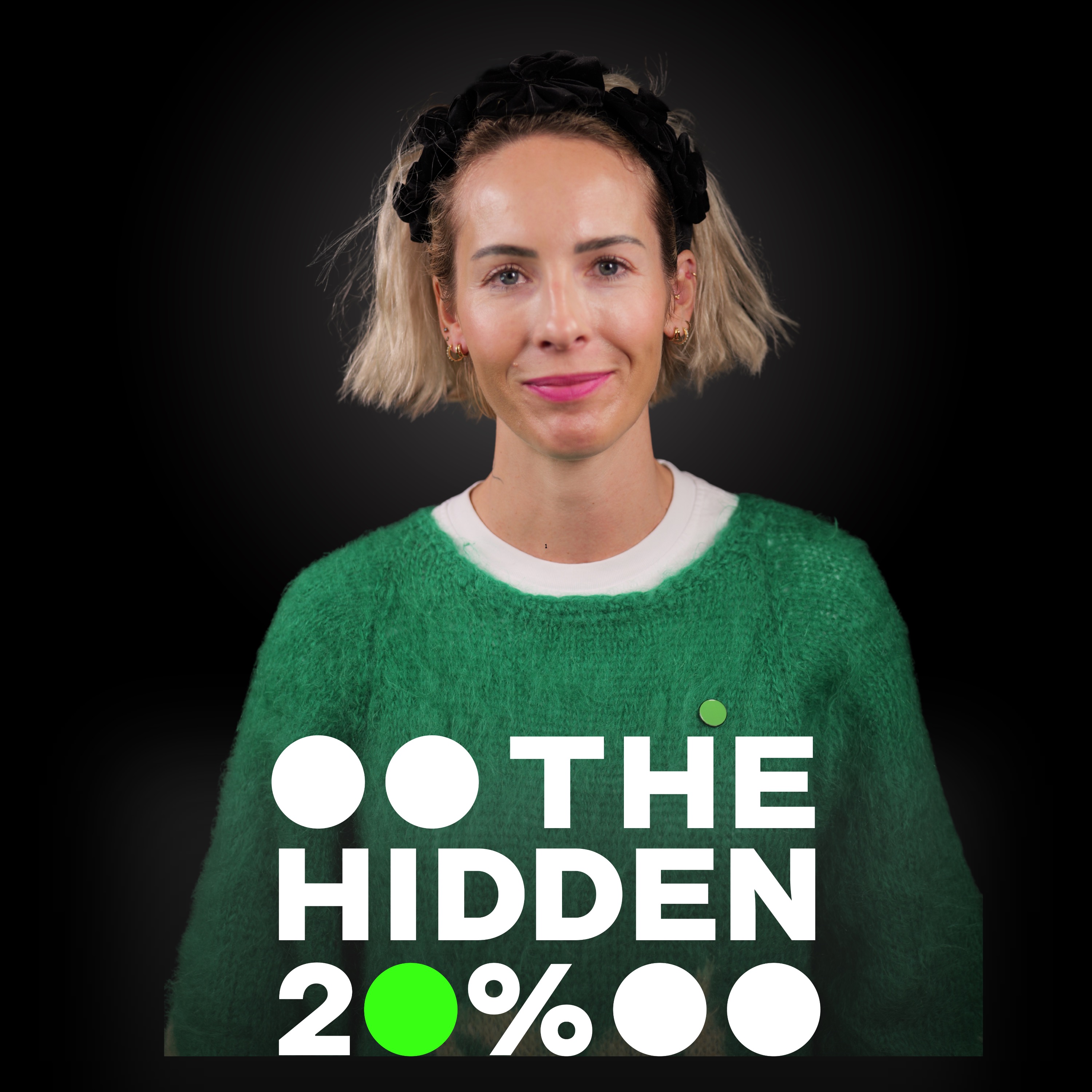
Ben and his wife Sam Branson revisit their earlier episode after 17 months, focusing on autism-related “shutdowns” in their marriage and family life. Sam describes how shutdowns make her feel distant, angry, and resentful—especially when Ben leaves for a hotel without much communication—because she experiences it as emotional abandonment and a lack of reassurance. They also discuss parenting their six-year-old daughter River (autistic) and how supports, routines, and communication strategies have evolved.
Sam Branson is Ben’s wife and the mother of three children, including River (autistic, diagnosed at about age 4.5). Ben is the host and an autistic father; River’s autism is central to the family’s adjustments.
Shutdowns can last hours to a few days; Sam can recognize signs (hyper-focus, dismissive communication, withdrawal) but can’t “get him out” of them. Ben says he doesn’t realize shutdowns are coming and feels he needs to reset his nervous system. They argue that better work-life balance and earlier intervention may reduce shutdown frequency. They emphasize strengths-based parenting and that diagnosis enables school accommodations.
Sam spots shutdown buildup via a joint calendar and overstimulation (meetings, travel, kids/noise). Ben texts “I think you’re shutting down” and then books a hotel. River’s positives include no-filter honesty, empathy, and social engagement (Strictly obsession; asking if autistic people are rare). School support includes timeouts/wiggle time and accommodations like stepping out when overwhelmed.
Written by AI. May contain mistakes.
Explore the emotional and communication challenges during shutdowns.
“And I do still feel very resentful because if you go and you go to a hotel, why?”
Discussion of past episodes and their emotional impact on relationships.
“So it's been 17 months and I have managed to convince my wife to come back on.”
Addressing the complexities of understanding and managing autism in marriage.
An honest conversation about the struggles and feelings associated with shutdowns.
“husband because he's on a shutdown and it's all right to feel like that.”
Discussing how work-life balance affects shutdowns and family dynamics.
“Well, I do because you f*** off and you go and you go to a hotel.”
Explore the challenges of managing feelings of resentment and the impact of shutdowns in a family with autism.
“when I am feeling so resentful, really angry, upset, and dealing with the children and life.”
Discuss the difficulties in communication during shutdowns and the emotional toll on relationships.
“because so far I'm just recognizing the signs and that for me is enough.”
Celebrate River's journey with autism and her proud identity while discussing parenting challenges.
“So last time we were on this podcast, she wasn't diagnosed.”
Dive into River's emotional responses and the techniques used to support her growth and understanding.
“And I'm learning that there are ways to show Riv with real tangible examples of like the good bits and the challenging bits.”
Examine the differing parenting styles and their effects on children in an autism-affected family.
“The best thing that Riv said was when she said out of the blue when we were watching Strictly she said autistic people are rare aren't they?”
The hosts discuss a poignant moment when their child recognizes aspects of autism.
“And Kat Burns was performing her new song which is amazing for people listening to listen to from a lyrics perspective.”
The hosts reflect on their contrasting approaches to parenting their children.
“So I think we said last time on the podcast, I'm quite doting on the kids.”
The importance of encouraging children to be independent is explored in depth.
“See, like my dad's the same, but I know the kids could ask, but also they might not because they're so engrossed in their iPads or whatever.”
The hosts discuss strategies for managing their daughter's meltdowns and routines.
“If you can do it for yourself, do it for yourself.”
They share insights about their child's social skills and school environment.
“Like I have got absolutely no problem with the fact we do exactly the same thing every single time at bedtime.”
The joys and challenges of parenting an autistic child are discussed.
“Yeah, and shout out to the school because I do think, you know, River and Albie's new school, from a neurodiversity perspective, I mean, the fact it is one of their school values, I've been so amazed by.”
They engage in a critical discussion about the implications of autism diagnosis for their child.
“I don't think because you're autistic, we're really good at parenting, River.”
The discussion explores the perspective of autism as an identity rather than a disorder, emphasizing support and understanding.
“I know, and that absolutely blows my mind.”
The hosts delve into the complexities and emotional challenges surrounding autism diagnoses and the implications for parenting.
“94 % of autistic children are bullied and I do not want River to be in that 94 % and therefore signposting to school, for example, without a diagnosis, unfortunately, gets you nowhere in terms of signposting and support.”
They discuss the importance of focusing on strengths rather than deficits in understanding autism and supporting individuals.
“And remember, my brain doesn't work like that.”
The conversation highlights the unique challenges and considerations in parenting a child with autism and how it affects family dynamics.
“And I still don't have any of the answers at all because I'm not being negative about the assessments.”
Learn how to balance the diverse needs within a family and the intricacies of relationships.
“I know, but your brain in situations like this in the family life, I do feel that it can just be your way.”
Explore the communication barriers between partners in the context of autism and emotional shutdowns.
“And there are pockets of hope that I am recognizing the shutdown signs, etc.”
Discuss the personal experiences of shutdowns and their impact on relationships.
“And I can be cold as ice and say, fine, I can get on and do it all.”
Learn the significance of empathy and understanding in relationships affected by autism.
“who are going through shutdowns or meltdowns and there is obviously a difference.”
Learn how taking time for your relationship can improve parenting.
“When the kids go to bed, just making the most of that time.”
Discover tips for managing holiday stress as a parent.
“here I was thinking like what are we really going to chat about I've got two last questions we're heading into Christmas time it's a busy period do you have any advice for parents, ND families going into this period?”
Explore the importance of recognizing neurodiversity in relationships.
“I just want it to be cold and I want there to be fire and different pace.”

Get the gist, explore an idea or ask about something said.
 Claude
On The Hidden 20%, what are the key points of this episode?
Searching your listeningAutomatic transcript. May contain errors.
0:00Let's talk about the shutdowns. You become very vacant. You don't communicate. You don't talk. It's really, really difficult. And I do still feel very resentful because if you go and you go to a hotel, why? Why do you feel it's OK to do that? You just leave with like nothing. It's just the one thing about autism. It put me off at the beginning and it's me off now. And I hate myself for admitting that I just can't see a way out.
0:39Welcome to The Hidden 20%, our neurodiversity charity on a mission to rewrite the future for people who think differently. Together with you and an eclectic range of brilliant guests, We can break the cycle of silence by smashing outdated stereotypes, exposing the myths, and sharing the most up-to-date truths about what it really means to be just different, not deficient. The best way you can help is really simple. Subscribe so you never miss an episode, and if you can, donate to our charity through the link below. Enough preamble. I'm Ben, your host. Let's get into today's episode.
1:27So it's been 17 months and I have managed to convince my wife to come back on. Thank you for having me. Back. Back. Oh, I don't even know where to start. Let's go back to like the first episode that we did. And let's see what your reflections are on that. So obviously talking from the other side, it was very emotional to listen back to it and reaching quite a few people. That was touching to know that I think I saved a marriage or something, didn't you say? And that was really quite special because I am completely naive to all of this and I don't have a lot of knowledge on it. But what I do have is experience and I guess I'm the only guest to have spoken from the other side.
2:19So that gave me a little drive to know that perhaps just being real and honest has given people hope that they do feel what I felt and it's okay to feel like that. So here we are now 17 months down the line and so much has changed in our life. I hope that you agree that we have got better in some aspects of communication, realizing the shutdowns. Now with River, who's been diagnosed with autism, that we've kind of got a grip on a lot of it. So struggling with the other half. I remember we sat down after it had been released and watched it together and just took a moment because it's not something we do every day anyways.
3:08sit down and like have a big deep and meaningful conversation about what it's like me being diagnosed living with me the world of neurodiversity like it's not something that we're going to sit down and do for like an hour and a half but doing that I mean we were both it sounds incredibly like self-absorbed to be like oh we watched ourselves talking and crying I know but it didn't feel like I was watching it was kind of it was the reassurance that we both were allowed to feel what we felt and not to interrupt each other because in real life as you said we don't really communicate about this specific topic it's always with a clash of like a reality or a job or the chaos etc so it was just really lovely to sort of hear it very clearly and know that we do really love each other without sounding corny but we've got each other and coming back I guess today is it's just for us again to sort of realize that we're doing all right yeah what hopefully we are doing all right and I think what I love is that episode has been like one of our most watched listened to episodes I can't believe it really what feedback have you had so family and friends have just been very supportive of on one hand saying I can't believe what you've been through or going through and then I guess people that I don't know talking about the general public have just sort of said like thank you thank you for sort of allowing the perhaps things that they were thinking sharing it and and not feeling bad for it just sort of maybe using like real raw feelings and sort of a release in knowing that it's okay.
5:00It's okay to sort of hate on your husband because he's on a shutdown and it's all right to feel like that. I didn't go into that podcast with you with any preconceived idea of what I was going to say. It was just like from the heart. So the fact that people listened and don't want to say it, like applauded it, made me feel good for doing something for the other side. How are things now? Well, how are things now? Yeah, I wouldn't say that I've got all the answers. So where we were in the first podcast, I like unraveled a lot of like how we got there and me dealing with your diagnosis and sort of very surface level kind of understanding of it.
5:38And I think 17 months down the line, I'm probably 70 % there of knowing how to manage you, us, marriage, life. But I think that... Where were you at the first 17 months ago? Oh, before, my God, like probably like 5%. Okay. I literally probably had no wanting of understanding, just like, let's get on. Yeah. We were okay. Yeah. So it's a big jump and I feel that I am definitely on the more understanding, perhaps a little bit more patient. I recognize your shutdown before it's happening. Yeah, let's talk about the shutdowns because, oh, brutal. Yeah, and it's the one thing I just cannot seem to grasp because, yes, I can recognise the feelings and the signs.
6:33What are the feelings and the signs? So the feelings are you're too busy and you're taking on too much. You're wearing yourself thin and you become very distant. So the communication starts off quite dismissive and then almost you're not recognising what's going on around you. You're just quite hyper-focused on one thing. so it could be in the mornings where you are doing your smoothies and measuring out all the powder etc and the kids can be running around you I could be talking to you but you are just doing that and if your mindset has slightly changed because of the sound of the dogs or the kids you can get quite annoyed like quite quickly and then I feel quite angry and pissed off and are slightly resentful of like well if you're part of this family you've got to be part of the chaos you know morning noon and night and then I kind of then take myself off and look at the diary we have a joint calendar so I can sort of see what's going on and I can quickly recognize putting two and two together that it's a lot of talking that you're doing a lot of meetings a lot of face-to-face travel and so the signs I put all together and I should just be really like okay he's going into shutdown i'll do as he pleases and you know i can make sure that nothing around him is going to overstimulate him and he can just have some time but that that's not the reality and so i really struggle to like practice what i'm preaching like in my head i've got it all sorted but then the reality is i cannot get you out of the shutdown so the shutdown can last a couple of hours, a couple of days.
8:12You know, it doesn't necessarily go on for longer than that, a few days maybe, but it's really tough. It's really, really difficult. And I do still feel very resentful. Yeah. But I feel like you get very scared. Well, I do because you f*** off and you go and you go to a hotel. And now I am going to get emotional because that is the hardest thing but you just leave and it's like no right and so this is where I am really I'm like in my mind being like yeah I can do it I get it he's got too much going on and I think the last time you'd come back from New York and I was so conscious of giving you your time but you then off again for like three days four days and it's not like the fear of abandonment or anything like that selfishly it's just like why do you just get to leave why do you just leave and like there's no communication you don't call you perhaps check in sometimes to sort of say I'm okay I've arrived safely but the reality is that life goes on And I've said this to you so many times.
9:36Why do you feel it's okay to do that? Because when you leave, I know you're not leaving with that emotional goodbye. You just leave with like nothing. it's almost like you have shut the door and you get on with your life of working and getting all your deadlines sorted but I have got like the kids who are so used to it and they're so used to you going and I have to then lie and say oh you've got work and stuff but for me it's just like it's really really tough I think I just it's the one Yeah, it's the one thing. And I know it's something that we are like really trying to work on because I'm not, I know intellectually, you know this, like I'm not leaving because I'm just like, do you know what?
10:37I just checking out. I just don't want to be around. Yeah, but that's how it feels because you don't communicate. I don't even realize when I'm in a shutdown. I don't even realize that it's coming. It takes me by surprise and I don't even know how to like describe it. I'm literally like vacant, emotionless, mute. But you feel that and I see it. So it's like I recognize it. So I can't do anything apart from like sort of leave you. But I just wish that you wouldn't leave us. Sure. But then I can also take that as you don't care. Right. Of like, I don't know, it's this weird. What, that I don't care?
11:23At what point do you think I don't care? I'm shut down or that you're not trying to, you know, I can take it as, and I've said this to you, that I can feel that you're just, you don't care about me. The only way that I can sort of describe it is if a toddler has a tantrum and they're rolling around on the floor screaming and all sorts, I wouldn't go up to the kid. I would just let them be and let them ride it out. It's almost the same with you. I see all of what you've just explained and as hurtful as it is, I sort of know what to expect. But when you leave, it's like I can't touch you. Like I can't give you a hug to sort of say, okay, you're in shutdown.
12:05Let's get ready. What do you need? It's almost, it's like an armor that you're putting on and it is so sharp that I can't get near you. And then you say that I don't care because I'm not showing you. but it is near impossible to get close to you yeah like you talk about this and obviously it I'm not in a shutdown now so I don't I don't feel like that at all and this is a pattern that we try to break in terms of like you know I'm working and then I'm with my family I'm working then with my family and that is how I love my life like that but there's no space for me and so So I think that's been the bit that I'm definitely conscious of, of like, if I don't have any time for myself and build that into my week or whatever, then shutdowns are the kind of thing that are going to happen because it's this sort of like quiet desperation of like, oh, my God, I'm so out of it.
13:07It's like a kettle that is boiling and it's sort of coming to a head. But how many more shutdowns are we going to have to go through for you to realize that if your work-life balance is not balanced, then this is what happens. So I try and step in and sort of say, right, you're doing too much at work. Or why are you not going for a run? Why are you not exercising? it's almost like I am laying out this map that you sort of nod at and sort of agree to yet nothing happens and it's because you are so fixated on this routine that you have all the time and I just wish that you would give yourself some light in between the working day and family because then I would see the shutdowns less often because those shutdowns have a huge impact on the rest of us.
14:00And I know you know that. And it is really hard to navigate around that when I am feeling so resentful, really angry, upset, and dealing with the children and life. I don't want River to feel like this when she grows up, that it's a thing that needs to be managed. From a neurotypical person, I just don't understand them. And maybe I should be better at understanding, but I just, it's just the one thing about autism that it fucked me off at the beginning and it's fucked me off now. And I hate myself for admitting that, that I just can't see a way out. Yeah, but it's the one time we argue. It's the one time.
14:49But you didn't answer the question. What was the question? The question was, why can't you change your pattern? But I am. And then you can see less shutdowns, surely. Let's try that. But I would say that the last few weeks have been really good. Would you not agree? Yes. Okay. But I'm talking when you travel. Yes. Okay, so going from the last example, when you travel and you, I love the fact that you don't go away for more than a week because you try and condense it down to a small amount of days. Yeah. But with that, I pay the price because you have just gone at it for four days and then you switch off on the airplane coming home.
15:37But then the shutdown happens a couple of days after. And that for me, from this side, looks like you're knackered and you've gone straight back into work. Work is getting all of you and I get 10%. and that's shared amongst the kids. Yeah. I guess that theme keeps cropping up. I completely understand it where you're kind of going, hold on a minute, you're giving all this effort and energy to work and then what about us? Yeah. And yeah, I can see why you think that's difficult. Wow. That's not how I see it. Right. I'm not saying that. I don't want you to please the ear. I actually just want you to say to me.
16:18But I do. I'm not saying to you, yeah, yeah, yeah, I give all my energy to work because I can't be asked to give energy to my family. No, it's not about being asked. It's just there has to be some sort of give because I don't want to have to argue and hate your autism because of these shutdowns. Yeah, but I'm basically saying I'm with you in terms of I do not like shutdowns. I do not really understand shutdowns. I wish they didn't happen. They catch me by surprise. They are the biggest problem in our relationship, family, marriage. They're the thing that I most want to work on. They're the thing I don't want to happen.
17:04But when I read about them, it's all from your side, from the fact that, you know, things need to be calmer your side. Demands. Over stimulated and all of that. Yeah. There is nothing that I can read from my side, from the receiving side, someone who's married to them, apart from let your partner have the space. So then am I just being a real, like resenting you from going off for four days? Because I get overstimulated. I get super stressed. There is not enough hours in the day to fulfill the children's needs, etc., etc., with lack of sleep. So when can I go to a hotel for four days and sleep and rest?
17:52That's sort of how it feels, which just sounds so princessy, but it's just like I can't sort of see past that. So I think that maybe we need to speak to someone who can navigate this. because I don't mind being told how to help you because so far I'm just recognizing the signs and that for me is enough. Yeah, but it's... I can't do much more. Really simply, I don't want them to happen and firstly, secondly, and I know you know this, I'm not leaving because I just want to go and have a nice time. But you cut yourself off. Yeah, I do. I have to short circuit what's going on. Yeah, but can you understand that is so mentally hurtful hurtful that you are cutting yourself off from a family that you have.
18:39I think the worst shutdown was when there was literally silence. You leave when we argue and then it's always quite difficult when you come back. But the silence, you know, are you okay? Nothing for ages. I mean, you're bad on your phone anyway, but it's almost like, okay, I understand you go off, but you've got to try and communicate because if there is a problem how do I get hold of you because you are my first point of court I am making you out to be some awful father who is not there for us but in these moments it's really sad and and I wish it could be different yeah and me too because I can't find the words to properly describe it, of like, I cannot articulate or voice or put into words or communicate how I am and what I need in a shutdown.
19:38Yeah. It's a struggle. Yeah. It's a struggle and we don't have answers for it. And I just hope that each time it happens, it gets more and more diluted. Is it last time you spotted it? Yeah. Yeah, and you text me. Yeah. And what did I say? Yeah, you're right. You said, I think you're shutting down. I think you're shutting down. And you said, yes, I think I am. And I said, what do you need? And next minute I know that you've booked a hotel. And then guess what? I don't become supportive of that because you've left. And then therefore it just spirals. Yeah, it's the extreme of like just needing to reset my nervous system and calm down.
20:20and something must be happening before that to overstimulate you yeah so when i have stepped in and said your workload is too much where's your free time you get angry with me by being like don't get involved this is my schedule this is my work and it's almost like i have dropped everything to try make this situation okay but it doesn't work you have got your schedule you keep to it and it's almost like you it feels like you sort of enjoy these moments of escape which i really don't no i know now i know i really don't i'd just like you to navigate this with river you know in her later years i want you to to explain to her somehow what these shutdowns are yeah well i and i absolutely will do but she's six yeah so should we talk about river yeah let's Talk about Rive.
21:15So last time we were on this podcast, she wasn't diagnosed. No, she was four and a half. Yeah. Something like that. So now she's just turned six and she is proudly autistic. And you've done a good job of allowing her to feel... Some positives. You've allowed her to feel... What? To say that again? No. Oh, you are. It's just the shutdowns. That's what annoys me. So let's move on from that. No, you've done a very good job of allowing her to understand what autism is. And she loves her brain. Yeah. She really does. And she uses it amazingly. And she's a bright kid. And yeah, she's just wonderful.
22:06She is quite remarkable. I don't want to see those parents who are sitting here going, yeah, our kids are amazing. But the thing about having kids is like just, they're such great teachers. They're so, yeah, annoying, amazing, all the rest of it. But what's great about Riv is that she has no filter, more so than you, you know, that she really, she can open a present and just say, I just don't like this. It's not for me, you know, and sort of hand it back. Like her no filter is just so wonderful. I mean, obviously now it's okay, but as she gets older. Well, she'll listen to this one day. Yeah. Well, I'm really glad that her going through the assessment was never presented as anything was wrong with her.
22:54No. It was never presented or discussed with her from like a medical, clinical diagnosis perspective. I feel so lucky that I could say to her, this is how daddy's brain is and that I have a name for my brain and that she has a name for her brain. And her first reaction to be, well, what about mummy and Albie and Mossy and do they have names for their brains? And I'm learning that there are ways to show Riv with real tangible examples of like the good bits and the challenging bits. And I feel like we have made so many adjustments for Riv without even realizing it. Yeah. That feel normal now. Or I catch myself going, oh, I'm changing the teaspoon because I know she won't like that teaspoon.
23:47Yeah. I'm changing the bowl. I'm changing the cup. I'm changing how that's presented. I'm changing how I ask that. Like loads of these things are just natural. It's just our new normal now. It is. Saturday mornings and that transition from school is still really difficult. But I think as she's got older, she's a lot more independent. So she can herself remove from the noise. You know, she likes to go to her room more. She never used to. She didn't like to be on her own. No. And now she's sort of that big sister to Moss and the middle to the younger to Albie. and I think she's still finding her feet in that respect, but she definitely mothers Moss quite beautifully.
24:33The empathy is extraordinary. Anybody that has ever been told or read or seen that autistics lack empathy, light is wrong. But I think it's almost at her own detriment. Yeah. But I think it's like a lovely gift for her because, you know, that's why she's loved by so many is because she gives that back. I suppose we could then speak about the emotional regulation, which is so hard. Yeah. Because actually that's the most challenging with Riv is that she can go from 0 to 100 over the most smallest thing. Gosh, she gets angry. I don't know if it's fair to say it's angry. Well, I don't know. It's more just the frustration, the red face, the veins, the actual need to sort of get her point across, where actually it's, there is no point she's making.
25:34She just, it's almost like the drama of it. She just sort of looks like she's on stage performing a piece, which is in the moment, the only way that we can make this all right is just to sort of sit back and watch because you can't actually speak to her. No, you can't get through to her. And then she apologizes. Yeah. Which is very upsetting because she doesn't know why she does it. I'm hoping that will come with just the fact she's six, right? Yeah. So her being able to understand a bit more. But I do think we deliver bad news early and just say it like it is. And we know any changes are going to be a problem.
26:14I don't know I feel like we've sort of just adapted and I feel like I know Riv really well and I just get these moments where like my heart sings where I'm like oh yeah of course I've taken you to a birthday party and I drop you off and literally 10 kids are chanting your name yeah like oh but you were just sat in the car saying I don't want to go and then that's the reception you get like heart sings and then the best one from like a just autistic perspective was then turning up and seeing her bag perfectly packed with all of her school clothes with no mess no just very neat tidy and knowing that she'd done that was just like a little yeah just like a lovely moment and then of course she's six and is questioned the fact that father christmas is not real from a like worked it out she's worked it out like it doesn't make sense that no one can deliver all those presents physically yeah she's really overthought it yeah yeah but she's like worked out but she hasn't done that with the tooth fairy no i know i think she's just not involved she sees the tooth fairy more than she does Father Christmas.
27:39Yeah. The best thing that Riv said was when she said out of the blue when we were watching Strictly she said autistic people are rare aren't they? We were watching Kat Burns performing on Strictly. Riv's sick. She's been now introduced to Strictly. This is for the benefit of our listeners and watchers and she is absolutely obsessed with Strictly. Absolutely obsessed with it. And Kat Burns was performing her new song which is amazing for people listening to listen to from a lyrics perspective. And I said to Riv, that lady singing, she's autistic. And Riv's like, is she? And then, I don't know, the cogs must have just been whirring because then she said, are we rare autistic people?
28:27Yeah, and both Ben and I just had tears in our eyes because she just came to that realisation herself. But interestingly, I think we do parent very differently. Yeah, I think we do parent extremely differently. Yeah. Let's talk about that, actually. Okay. So I think we said last time on the podcast, I'm quite doting on the kids. I sort of enable their needs a lot. And that's just... Do lots of things for them, translation. And I think that's because my mum used to do a lot of that to me and my brother, also me. And it's just in me and I just, I don't think twice about it. and examples being you're quite strict and i am not so i will ask moss if she needs a wee i will also ask river if she needs a wee yeah and i will also ask albie if she needs a wee yeah and that's 13 years old six years old and three years old so that's just in me that's my maternal i just can't change that and so i do not ask them if they need a wee no this is such a simple example but i want them to as silly as it sounds the independence of thought to be like i need a wee so i'm going to go for a wee not wait for someone to ask me yeah well i think we need to give a better example have you had a drink that's your other classic one have you got a drink have you got a drink i never give the kids drinks i know which because i wait for them to ask me no because you when you were younger never drank with your meals no you're old fashioned During eating.
30:03No, exactly. See, like my dad's the same, but I know the kids could ask, but also they might not because they're so engrossed in their iPads or whatever. I just feel like they need to stay hydrated. So perhaps I shouldn't ask. I should just deliver. But I don't because it's in me just to, what would you like? Would you like some? But what I notice you do, it's like with Albs and her washing. Yeah, a teenage girl. Oh, yes. With her washing, kit bag comes home from school. you say to Albs oh Albs can you get your make sure you get your washing out just leave it there what happens? Albs doesn't get her washing out for whatever reason she's probably in the fridge or in her phone or whatever and you don't then follow that through with Albs and go Albs sorry if you don't get your washing out you're not going to have clean clothes you just go and get it out I know and I do it all and then Albs goes mummy asked me these things and she's just sort of saying it because...
31:02I know, but she's not ungrateful for it. No, no, it's not. It's on me, I know. I know, I'll do the washing, I'll do it all. I know, I just... I just want the kids to be independent. That's all, that's why when River goes, can you get me some fruit? I go, you can get the fruit yourself. Family meeting. If you can do it for yourself, do it for yourself. I know, but I've got my reasons that I could bore you with. It's like, Albie's been at school, homework, and it's a lot. And I just feel like she doesn't need to do her extra bit at home with the washing. But then I don't understand why you ask her.
31:43I don't know. It sort of just comes out. Because maybe one day she'll say, it's done. Don't worry. I know. But that made me a little controlling. No, I don't think it makes you controlling. Or an absolute mug. well I just then worry about them about how independent they're going to be when they grow up yes but they are always at school I feel like they have their independence I mean Moss she's super independent and always has been River is I just I don't know what your level of independence is for children these days well I'm probably slightly clouded by well when I was seven eight Eight years old, I had to iron my trousers and make my bed and polish my shoes and get myself breakfast.
32:31So do you polish your shoes now? I definitely do not polish my shoes now. What I mean is there are some lessons to learn and others you can just, it's just being nice. Yeah, and I think we just parent in different ways. But I think parenting with River, with her being autistic, I don't necessarily pander into her needs. Yes, I deal with meltdowns. Yeah, I sort of get the aftermath of it. So she can have her emotional regulation meltdown and then you're dealing with that. And I sort of just take a step back and then I just wait for her to say, I'm sorry. And then she usually comes to me and I don't need to be involved in that.
33:16Whereas you are. I feel like I can get through eventually to RIV or I feel like I can just take RIV out of the situation. It may be hard to find examples, but in the moment of all the chaos, we really sort of have our place and somehow it works. But we definitely parent differently. I guess I can just maybe more easily relate to the sensory side for Riv or the routine and repetition side of Riv. Like I have got absolutely no problem with the fact we do exactly the same thing every single time at bedtime. and Riv checks with me though. Every night she says exactly the same thing to me before we go up to bed to check that we're doing the same routine.
34:11One game of Uno, brush teeth, two games of Uno, two books, meditation. I'm like, yep, of course, that's what we do, Riv. But she never says that to me. Yeah. So with me, she sort of lets me dictate. So it's just two books before bed and a meditation. Yeah. Because she'll say, Daddy always plays Uno with me. And I'm like, no, it's too late. But... And she doesn't say anything. No, but don't you see she just has two routines? Yeah. She has a way with you and a way with me. Yeah, I just, it's so routine-y. I just, I'm quite thankful on days like this where River's being looked after by someone else.
34:54the routine is different so it's not just between you and I yeah all the time I think she can adapt very easily yeah she wouldn't adapt like for example if I said we're doing it differently tonight or we're not playing uno then I think that would be a problem but when you say we're not doing uno it's not a problem because it's a bit more novelty yeah the good thing about River is she's very social, which can I just say you have got better at being social. Whoa. I know. We've even been to a few gatherings. Wow. Parties. You've spoken to school parents. So yeah, you're getting there basically. No, I'm not getting anywhere though.
35:41No, but it makes me happy knowing that I've got you by my side and you're not just dropping me off or waiting, you know? Yeah, I think last episode you were in tears about the fact that you kind of were signed up to, oh, you're going to be going to everything on your own. Yeah, and don't get me wrong, it's not like you are 100 % back there, but I'll take 30%. So I'm grateful, very grateful. So River is social. She's really social. She likes to go to everything and she would stay up later if she could. She would go to more parties. But she has definitely thrown herself into a new school, the best I could ever have hoped for.
36:26Yeah, and shout out to the school because I do think, you know, River and Albie's new school, from a neurodiversity perspective, I mean, the fact it is one of their school values, I've been so amazed by. And they have recognised it sort of for us. You know, we've not had to sort of be on their tail all the time. So, no, I am extremely grateful that River is getting on as normal in vertical modes as possible. Yeah, I don't think she's even told anyone that she's autistic, for example. She has because there is another child in the same boat. And she was quite flippant with it. she was just like yeah i'm autistic too and i think that was about it but yeah she's she's just says it with a smile you know and that's great because she's in an environment that is supportive if i think back to her previous school it was meltdown after school each day where it would just sort of come pouring out of her and like sure she comes back she's tired and stuff but i feel like we get that more on a Saturday morning, but not every day throughout the week.
37:42I don't know if that's to do with just growing up a bit as she's older. She is, but I also, you know, she can take time out at school. Yeah, she has her wiggle time, doesn't she? She can say, I need a moment. But the fact that she can even say that. Yeah. Yeah, it's wonderful. Yeah, I think parenting an autistic child has its challenges for sure. And I sort of feel pretty proud of us as a team. And how do you think it would have been if I hadn't been diagnosed? No different, really. I don't think because you're autistic, we're really good at parenting, River. I feel like I'm a better parent to our children because I know a bit more about how my brain works.
38:29Right. I definitely feel like, because I feel like I know myself a bit more. So I feel like I can understand them a bit more. I definitely feel like a much better ally to River because we're both autistic and because we both know that. Yeah, for me, I sort of, I don't really put you two together in that respect. I sort of have more patience for River's autism. Than mine? Yeah. That's interesting. It's awful, isn't it? Yeah, terrible. Thanks a lot. I know. But why do you think that is? Because it's the maternalness in me to sort of help and shelter and take care of Because she's still so naive to it all Sure Whereas you have to be more knowing to it But then I'm proved wrong really because with the shutdowns you said that you don't know you're in them Yeah, that's a hard one Yeah, Riv is, I guess she's a six-year-old child She's that much more vulnerable, right?
39:34Yeah, and she still needs me. Yeah, she's six. Yeah, but I don't think your autism as a parent has helped me parent River. Do you know what I mean? Yeah, I would challenge that though and go, we wouldn't know River's autistic unless I'd been diagnosed autistic. Well, then that goes to the next thing of, I wasn't really for River being diagnosed because how can you at four and a half, five, tell whether or not it's because of her different brain or if it's because it's just a child's instinct to be like this and this. So my original thought of when you said I'm going to get River diagnosed, I was actually a bit against it.
40:26You're saying that like it's news to me. It's not news to me. I know, but I'm just very cautious of the fact that I'm saying that out loud to people who can hear because then they could argue that why wouldn't you want to help your child? But from my side and being real, how I feel and felt was that why did River need to have her diagnosis done at that age where Albie was so different at that age to where she is now? And, you know, even from where River was at four and a half to where she is now at six is totally different. So did she need to have a label at that age? Do you think River's autistic?
41:08Well, I know she's autistic because you had her diagnosed. That's not why I asked. Do I think she is? Yes. You probably asked me that when River was four and a half. And I said no. Just like you asked me, do you think Moss is neurodivergent? No. But you then say, but I recognize the signs. I recognize this, but they're just still so young. Well, Moss is still so young, but then she's not far off from having her diagnosis done. It's not that I don't believe in it, and I don't want to be hated for what I'm saying. It's just I'd like to be told how at four and a half is she acting in an autistic manner?
41:54Do you know what I mean? No, but there are kids being diagnosed at 18 months, and I think... I know, and that absolutely blows my mind. I think when it's under the lens of like, clinic, diagnosis, medical, problem, something wrong, disorder, all that side of things, then I can see why or how people can be like, oh, no, no, no, like, let's just let them be a child, let them grow up, etc. And that's not how I view it. I view it as identity and skills, understanding and awareness and being able to be helpful wouldn't you want to understand your brain and your behavior and why you do things not labels and medical and pathology and clinical side i look at riv and albie and moss and kind of go how can i best support you how can I best help you thrive in your life?
43:06How can I encourage you to do more of what you're best at? That's how I see it. Whether Moss is autistic or not does not matter to me at all. No, and it doesn't matter to me either. But I think it's fair to say that you asked me if River's autistic. and apart from the emotional dysregulation that she has and goes through, I can't really see many more signs. So are you saying Renata is wrong? No, I'm not. I'm not saying this. But at the time when River was diagnosed, I really struggled to sort of see anything apart from, you know, originally I thought that maybe Riv was ADHD. I don't know, I don't think I'm going to get hated on this.
43:58When you say labels, Riv has that label now. She sort of sees that as I'm autistic. It's part of her identity. Yes. But do you think that's a bad thing? No, it's not a bad thing. All I'm saying is that it's very hard to educate or explain to a six-year-old the ins and outs of it when you are neurotypical, right? And I get that and I'm not brilliant at it. Like, for instance, River and I were listening to Lewis Capaldi on Strictly. And I said, Lewis Capaldi is also neurodiverse. And she said, what's that? And I said, so however many times you say this to Riv, she still doesn't understand. But she only understands when you say, oh, you know, like you're autistic.
44:44He has Tourette's. And she wanted to know what Tourette's meant. So in my best way of explaining, I explained. And she said, but he's not autistic. Which is a very autistic thing to say. Right. Because it's very blunt, literal and factual. What's your worry though? There is no worry. And I'm very conscious of what I'm saying, which is probably why I'm not being very literate with this. But I have to be really honest with myself and how this all started about your diagnosis coming out. I explained that I got your ADHD, but I actually couldn't get your autism. and I struggled with the need and want to get River diagnosed.
45:29Assessed, because we don't like the word diagnosed. No, no, but I just... I can't explain the struggle of it. No, but I think you've moved along like... Because now, then you say, I think we should get Moss assessed and it's almost just, I can't keep up of it being like, I just, let's just see, because the reason why River was diagnosed was because you saw traits in River that you felt, right? Which comes from a place of... Care and love, I get that. 94 % of autistic children are bullied and I do not want River to be in that 94 % and therefore signposting to school, for example, without a diagnosis, unfortunately, gets you nowhere in terms of signposting and support.
46:20Look at the adjustments that they've made for Riv at school around swimming, around timeouts in classroom. They don't happen if you don't have a diagnosis. They would have happened just because we've handed them a report. If we say to them, River doesn't like changing in front of anyone, regardless of her report, they would have accommodated for her? Or are you saying that they wouldn't? This kind of school may well have done, but I'm thinking about just kids and our education system, not necessarily. Like, I think we're very fortunate with having a school that supports this and therefore it's not abnormal, it's not weird that they come to us and go, River's having lots of sore throats and tummy aches, you know, in the day.
47:18And we're going, well, she's not coming home with it. And me going, I know exactly what that is. She needs to step out because she's overwhelmed. And so she can say, I've got a really sore throat. I need to go and see the matron. Yeah. When she doesn't, but she just needs time out. And then we say, you don't have to make up an excuse. No problem. So I feel like we come at this from two different places. I understand. I do. I'm just trying to voice the way in which I got here because I absolutely agree that you wanted this so Riv didn't have to struggle. I absolutely understand that. But my process of when she first was assessed was it's not needed yet because she's still so young.
48:04So I didn't know if it was just, you know, the tantrums or the way that they are at that age. It's very different from a neurotypical mother to then jump to definitely autistic, definitely got ADHD. But you're saying like they're bad things. No, no. Do you see what I mean? I'm like, if, for example, River was an incredible swimmer, for example, or was incredible at the piano or chemistry, you would encourage her in those, right? And I'm not sure what the right metaphor is. And it's not about superpowers and all of that kind of ridiculousness. but because I don't see it as a bad thing I don't see an assessment as a bad thing either right but if you do see it as a negative thing then of course you don't want that anywhere near if it's a bad thing if it's loaded with stigma I'm not saying it's a bad thing I get the positives and support and encouragement I get all of that what I'm saying as these children that we're talking about are ours and mine my brain goes to the protective mode of they are still so young I really don't understand how one can assess at that age when every day is different right and so I had to voice that to you but then you come at me with all the jargon of the medical side of things and what you've just explained to me.
49:46And remember, my brain doesn't work like that. It's super simple. When I say I think that River was too young, I don't have the basis of reports scientifically saying that they're being assessed at 18 months. That was in my heart to know that I didn't care. I didn't care if she was autistic. I didn't care. It's just another type of parenting too. your child where you have to be very conscious and it's just quite a difficult journey when I'm trying to keep up with it all and you've got the answers but like this it's like from the other side from someone who doesn't have that key to unlock and have all the scientific facts and that brain power and capacity to hold everything in like literally things go in one ear and out the other for me but all I know is that I'm a really good mum and I can hold on to like really sort of old school beliefs that a kid is just a kid.
50:59But a diagnosis doesn't it doesn't change it doesn't change it doesn't but for us it did change you know River was assessed and she's autistic that's not me saying it's a negative but do you think we're better parents of rib because we know of course but when i said that we parent very different i don't have any of that textbook worldly information and facts and all of that i don't have that in me to when i parent river i just go on instinct but i don't i'm not reading some manual of like how to parent an autistic child as an autistic person. I know, but you research everything. You do this as a job.
51:44You are interviewing people who are sharing new knowledge to you all the time. You're interested in it. You are taking it all in. You know more about it than I do. And that's because you are solely invested in it, right? So when you parent River, you've got the facts to back it up. You've got all of this information to share or know of and to relate to. Yes, I listen to your podcasts, but I don't necessarily take it in like you. But when I parent River and in situations with River, it's based on sort of instinct, which is nothing to do. But I parent Riv based on Riv. Yeah, but I don't treat her any different really to the other kids.
52:27I don't know. I know that we parent Riv for Riv and we parent Albie for Albie and we parent Moss for Moss and we understand the individuality of our children and we meet them at that we're experts in our kids right we don't have to be experts in autism or anything like that we just got to be experts in our kids and i think we've both come a long way in the curiosity about the kids and the curiosity about why riv does some things the way that she does them for example and that's not about judgment that is about just being curious and I've not got any textbooks in my head. I'm just trying to focus on RIV being able to be RIV.
53:12That's it. I think I remember you saying maybe last time we sat down or just historically that you were worried that me being autistic was going to mean that that's what we talked about. I feel really like I'm coming across really bad. You're not. You're not. I said that you act more autistic. Yes, yes, we've had that one. Because I was masking less. Maybe I'm repeating myself, but it's almost like you have this knowledge and this brain that can now guide you with a clearer mindset going forward, right? And brilliant for you. My brain is just as it always has been. And I am trying to accommodate and compromise where best for your needs and for River in some extent, right?
54:26Taking the time on a Saturday morning not to rush around, etc. And I still don't have any of the answers at all because I'm not being negative about the assessments. You're saying exactly what is challenging at the moment in the world of like, we have over-medicalized it and it's not been strengths-based. It's all deficit-based and it has been. And obviously I'm, you know, I'm on the other side of this. I'm far more evangelical about it. I do see lots of the challenges, but obviously want to focus on the strengths and want to change the narrative. But there is still that kind of historic narrative there.
55:07And so this is exactly the nuance and shift of perception of it's not about diagnoses and medicals and clinics and all that sort of stuff. It is about people just understanding who they are to support them and help them to thrive. I basically feel like Riv being autistic or me being autistic is literally just part of a passport to a better awareness and understanding. Yeah, I get that. That is, as you say, that's it. But from my side, it's also quite a lot. And I don't know how to stress that. I can't explain that without it being clouded by a negative judgment. it's just another layer of parenting that is not easy no parenting is easy but when there is another layer of the tendencies to be so careful about some situations and the compromises and then with you too I sometimes just yeah I'm gonna say it's a lot but I don't mean that in a really negative way it's just I've got you who can't wear wool and then I've got River who has to like put her head on silk like it's my brain you know me going back to like being the empathetic one of just giving so much I careful how I wash your wool jumper and then careful how I wash the silk pillowcase I don't have a wool jumper oh well whatever that is on you now that's sort of making sure that that's not gone into the tumble dryer and made stuff, whatever.
56:47It's just very hard. Yeah, but it is all those intricacies. I know, but your brain in situations like this in the family life, I do feel that it can just be your way. All right. Okay. What do you mean? No, what I've just explained to you is there are so many pathways going, this is what I need to do for you and everyone's got their needs, right? But then from you and River, no filter, it feels very one-sided sometimes. There is no compromise because you are unable to. So we have to bend backwards to your needs, but you don't know how to because you are blunt and you are literal. And when it's done, it's done.
57:36That's it. but you can see with the kids how like you do one thing and they like it and they want to keep doing it and do it and of course that's part of being a child anyway but that's also the routine aspect I also love you know and you you're not as interested in routine no but I can adapt to it very easily because I don't have a choice because you two Moss just fits in Albie's got a routine because it is just the part of living. I think Pat's on the back to us and Pat's on the back to you. I think being in a relationship with an autistic person like me, I know is not easy all the time and parenting three kids and all the chaos, I wouldn't have it any other way.
58:27And I do think you are softening. You're pretty hardcore. You're quite hard exterior. As a parent or person? As a person, you are a softie underneath and when you relax and you're not scared and anxious, you are very soft and very supple and very loving and very caring. but you are you know in in the week you're quite on alert and stressed right but you don't even realize that how normally abnormal the way that we do things as a family is right and that's just our little family unit we call ourselves as i'm sure loads of other families do the wally family we have a f***ing song that's lyrics of basically one line which is there's not a minute in the day to relax to the tune of there's not a minute in the day to relax yeah that the kids now sing with us and it's us basically saying how we don't get any f***ing time to the children but as you say we wouldn't want it any other way we wouldn't want it any other way and we're doing it and at least we're being honest about it, it's not plain sailing No, and I am trying to get better at understanding this side of things.
59:47It's not easy. And there are pockets of hope that I am recognizing the shutdown signs, etc. But I am not going to fully 100 % get it. but I battle with myself because I'm like why don't I get it why am I not understanding of it why am I not patient with it I literally don't have the answer so I am on high alert when I know that you are working hard working late traveling it just sits with me that I cannot just understand it and no one will experience this the same as we're experiencing no of course not and if you've met one autistic person you've met one autistic person but me talking to someone else who experiences this will be completely different i would want to know that it's all right to feel the fields that i'm feeling and and in that moment of absolute sadness it's okay to feel like that because it's really difficult compromise let them have their space it's like I really know yeah and it's difficult when being misunderstood is not a nice feeling right and so it's difficult on both sides of not being on the same page not having that shared understanding of like oh yeah I get it I don't get it I don't get what it's like for you and you don't get what it's like for me and so that yeah that obviously makes it harder I always say this whenever which usually around to shut down or on the way out of it it's like communication communication i do just have to say that your communication stops as well right yes because i think what then goes in front of that is this hard exterior yeah of feeling angry and resentful yes yeah your walls go up and i've explained that to you before is that i have been on my own before yes and i can do it all and i I it's almost like it's my defense mechanism to say, OK, if you're going to go, I'm all right.
1:01:53And I can be cold as ice and say, fine, I can get on and do it all. That doesn't stop me from saying in my mind, I cannot believe that he's doing this. I should be rational and say, yeah, well, he needs some time. But actually the hatred that I feel is just goes back to my, I've been left, I've had to be on my own. That's it. So maybe it's a bad combination. No, but I say this to you, like if your friend was in pain or in need, you would be there like a shot to help them drop everything and you would be there. Yes. But when I'm in pain and in need and in a shutdown, the way I experience you, not to flavor the point, is you.
1:02:49Right? I'm not helping. I'm not coming. I don't care. And I know that's weird. We've been around the houses to understand all about that. And I've said this to you, so it's not news to you, but that's how I experience it. And that's why I then say to you, like, why are you so cold? Why do you get so angry about it? Why can't you see that I'm in pain and in need and desperate and not really able to speak? And yeah, like I'm not happy. And the reaction that I get from you is anger and you. I know. I don't know. It's different to obviously talk about it when it's not happening. But yeah, that's a tough one.
1:03:47Because I think in the moment when you are in your shutdown, I am basically fighting with nothing. It's like a piece of wood. right so i'm very reactional and so i'm very sensitive i am sensitive to people's needs and i think i'm very good at picking up on people's feelings and i said this before why can't i just put an arm around you and say it's going to be okay i got you but as that is all i want as you said before you don't know you're in a shutdown you become very vacant you don't communicate you don't talk you basically just have like a armor on you so i think it's both of us we're sort of just this repelling magnets we can't seem to you can't say i'm in a shutdown watch out and then me to be like okay i'm gonna catch you yeah because in the moment it's like we don't recognize each other and actually we step back and we deal with it in not the right way yeah but we go very far apart Yeah.
1:04:47And I can't explain it. Yeah. And I'm sorry. No, I'm sorry. Because you can't help it. I am really sorry. It's okay. Because I shouldn't, I shouldn't know. But I can't, I can't, I can't even explain it. I think they can be avoided. So I think I can help it in terms of, I don't think it's like, oh, we're just going to have to get used to the shutdowns. I believe they can be avoided. It's not that I can't help it. It's that when I'm in it, and I've said this to you, and I feel empty and worthless and shit and just vacant. yeah the last thing I probably want is for then the person that knows me best loves me most to then reject me yeah I don't want you ever to feel that because that is the worst feeling to ever feel I don't reject you I can't get into your space I can't get in and this it's really sad to hear because what happens if River feels that I'm rejecting her as a mum if I can't get in if she ever goes into a shutdown like what I have to get better I have to get better at recognizing it and being softer maybe it's different with her to you but I can't get in but you don't let me in no no I don't want to let anyone in then So yeah, we started this podcast talking about shutdowns and it's really, really hot.
1:06:43Yeah, but all the people out there listening and watching who are dealing with children, partners, loved ones, etc. who are going through shutdowns or meltdowns and there is obviously a difference. Like, what do you say? Maybe I'm not the best person. There is no right or wrong. And it really is down to communication. So maybe you have 20 shutdowns and you figure it out. I don't know. I'd like to be told. The thing is, all I know is that I have looked in shutdowns, right? And I have read up about them. But I don't want to hear it from your side. No, no, I know you don't. I need someone from my side to say, yeah, I feel exactly the same.
1:07:34How do they get away with it? Why is it all right for them? It's really hard. Well, you're going to get that. I don't want any medical scientific facts. I just want someone to feel this. And I am guaranteeing you that you are not alone. And I'm guaranteeing myself that I am not alone. Right? Yeah. And as part of why doing this is so important that people don't feel alone with it on both sides. Yeah, and you can stick together and do it. It's not like the make or break. No. Because really, I'd say like 90 % of the time we are so great. Yeah, aren't we good? And this 10%, pardon? Aren't we great?
1:08:24The 10 % is a small amount, but it is really hard. Yeah. Really hard. It is a crisis. But it's not just about your assessment or any, it's not just that. It can be very reflective of one's life. You know, it's the children, it's every day, it's the work, it's the dogs, it's this, it's that, whatever. But that 10 % sometimes like overshadows all the good. But yes, communication's key. Yes. But when you're really knackered and actually you just want to watch TV and go to bed, that's okay. Yeah. But I think that making that time with each other to like talk like this, you know, it's really important because we let each other speak.
1:09:14At home, I don't let you speak. Yeah. I don't. or just because it's you've got to get on to the next thing you've got to put the load of washing on yes the logistics whatever I just logistics yeah I just feel that I hope it will go up on the shutdowns because that is really the only thing that is a crisis for us yeah I'd agree with you and i want to know if that also is normal if that is a normal thing when you're in a marriage with someone who shuts down and the other person doesn't am i being really awful am i being an awful wife god imagine if it's like yes you are comment under or am i being real or am i voicing something that people think and not say i just want us to speak and say it honestly because as i said first person to put my hand up and say if i'm wrong i'm wrong but if i if someone feels the same as me then i feel really good that i can say i'm not this bitch i am someone who's just really feeling it so yeah it's progress like if there's parents out there making time for our relationship like i am a better parent when we're good and when we have time for us and i have time therefore or away from the children in the nicest possible way.
1:11:00Like, I'm a better parent for that. But not everyone has the luxury of... No, dumping the kids with someone else. No, you know, using... When the kids go to bed, just making the most of that time. Yeah. Like sometimes when you feel so knackered. Yeah. Just 10 minutes of like, how are you face to face as opposed to silence, which you are appreciative of me feeling tired and likewise and we get it, we just want to chill but actually sometimes maybe no words, just like a hug. Yeah. Hi, guys. You're not very good at hugs. God, I sound like such a cold queen. You're a very complex character, Benny.
1:11:46Oh, thanks. I know and it's not an easy way to navigate you. I love you but I also I mean it's a lot I wouldn't have you any other way I love you for who you are yeah the time has run out here I was thinking like what are we really going to chat about I've got two last questions we're heading into Christmas time it's a busy period do you have any advice for parents, ND families going into this period? I think we just take the pressure off. If you try and do too many shows, events, just because it's Christmas, let's go see a very scary pretend Santa Claus, like whatever. It's okay. You don't have to do it all.
1:12:36I have made a list of all the shows and everything that I want to do. And there was like 12 things on my list. And actually I'm doing one of them and it's actually okay. And it's very local and it's very sort of basic, but that works for us. And yes, we could be going to shows in London, but it's just, it's all facade. I just would rather just do things local and just keep it simple. And when it comes to the big day, it's like any other day, just with a lot more decoration. And it's only for you guys. It's not for anyone else. So however your routine is, just stick to it. It's okay. You can have lunch at the same time, not just because it's Christmas lunch and you have to eat at like seven o 'clock at night or whatever.
1:13:22It's okay. And I'm going to tell myself that because I am on the other side too, where I'm like, I have to do this and I have to go here and I have to take the kids here. No, it's going to be okay. Yeah. So maybe I should ask you the question. It's Christmas coming up, Benny. How do you feel about that? Anything you want to say? I just want it to be cold. I just want it to be cold and I want there to be fire and different pace. And I just have this craving to sing carols. Right. So there is nothing stopping you from doing that. More so than any year. I just feel like I need to sing Christmas carols.
1:14:09Even though I don't even like Christmas. I know, we're both a bit like that. Last question. So you've got one green dot badge. Who would you like to give your second one to? This might be a little different to others. So I would like to give this badge to my former self. So probably at the age of like 22, I think that when I was starting off in the real world, I suppose, like having traveled and worked a bit and kind of really settling into life as an adult. I would like to have been given knowledge of this because I quite honestly admit that I didn't know much about neurodiversity before you were diagnosed.
1:15:04so yeah I think I could have recognized people in my social circle relationships would have been different professional relationships would have been different yeah I think I would have been a good advocate for holding on to that badge well I think you're a good advocate now but you can give your second badge to your 22 year old self I'm just going to hold on to it and where to to remind myself of that, to be greedy. Well, thanks for coming back on. Thanks, Baze. Yeah, thank you. Glad I didn't cry this time. No, I know. Yeah, you cried a lot. Sorry I did that for you, yeah. But thank you for having me and just please be kind in the comments about me and my naivety.
1:15:54I really am just like trying to speak from the heart. And I love you. I love you. Yes, thank you. And my brain. that's your brain
1:16:09that's it for today's episode of the hidden 20 % but just before you go a favour the hidden 20 % is a charity and we do this to bring you the truth the latest research and the real stories that matter so if this episode spoke to you then please hit subscribe and if you can donate via the link below finally a big shout out to you all for listening and our brilliant team who make this all happen phoebe charlie kristen james john and the guys at tyx studios we'll see you next time
Seventeen months on, Sam Branson - Ben’s Wife - returns for her most honest conversation yet. Their daughter River is now diagnosed autistic, and Sam and Ben reflect on how that has reshaped their marriage, family life and understanding of each other.
This episode is their most vulnerable yet.
Sam reflects on what it has really been like since Ben’s autism diagnosis and the pain of autistic shutdowns from both perspectives.
Together, they talk about parenting an autistic child, adjusting their communication and finding understanding and compassion in the hard moments.
This is a raw, honest conversation for anyone raising an ND child or loving someone whose brain works differently.
Join us at hidden20.org/donate.
_________
Host: Ben Branson
Production Manager: Phoebe De Leiburné
Video Editor: James Scriven
Social Media Manager: Charlie Young
Music: Jackson Greenberg
Head of Marketing: Kristen Fuller
00:00 Introduction
01:26 Reflecting Since Sam’s Last Episode (17 Months Later)
05:22 Autism Diagnosis: How Are Things Now in Our Marriage?
06:19 “Let’s Talk About Autistic Shutdowns”: The Pain From Both Sides
21:12 Ben & Sam on Their Daughter River’s Autism Diagnosis
28:34 Sam vs Ben: Parenting an Autistic Child Differently
36:25 The Importance of Neurodiversity-Aware Schooling
38:45 “I Have More Patience for Our Daughter’s Autism Than Yours”
39:45 “I Wasn’t For Our Daughter’s Autism Diagnosis”
58:11 Navigating Autism, Marriage, Shutdowns & Family Life
1:00:12 Sam’s Top Tips for ND Families at Christmas
1:14:15 Sam’s Green Dot Badge
The Hidden 20% is a charity founded by ADHD & autistic entrepreneur Ben Branson.
Our mission is simple: To change how the world sees neurodivergence.
No more stigma. No more shame. No more silence.
1 in 5 people are neurodivergent. That’s 1.6 billion of us - yet too many are still excluded, misunderstood, or left without support.
To break the cycle, we amplify voices, challenge myths, and keep showing up. Spotlighting stories, stats and hard truths. Smashing stereotypes through honest voices, creative campaigns and research that can’t be ignored.Every month, over 50,000 people turn to The Hidden 20% to feel safe, seen and to learn about brilliant brains.
With your support, we can reach further, grow louder, and keep fighting for the 1 in 5 who deserve more.
Join us at hidden20.org/donate.
Become a monthly donor.
Be part of our community where great minds think differently.
Brought to you by charity The Hidden 20% #1203348
______________
Follow & subscribe…
Website: www.hidden20.org
Instagram / TikTok / Youtube / X: @Hidden20charity
Ben Branson @seedlip_ben
If you'd like to support The Hidden 20%, you can buy a "green dot" badge at https://www.hidden20.org/thegreendot/p/badge. All proceeds go to the charity.
Hosted on Acast. See acast.com/privacy for more information.


