
 Ask ChatGPT


 The Hidden 20%
14 Jan 2026 · 52m · 17 chapters
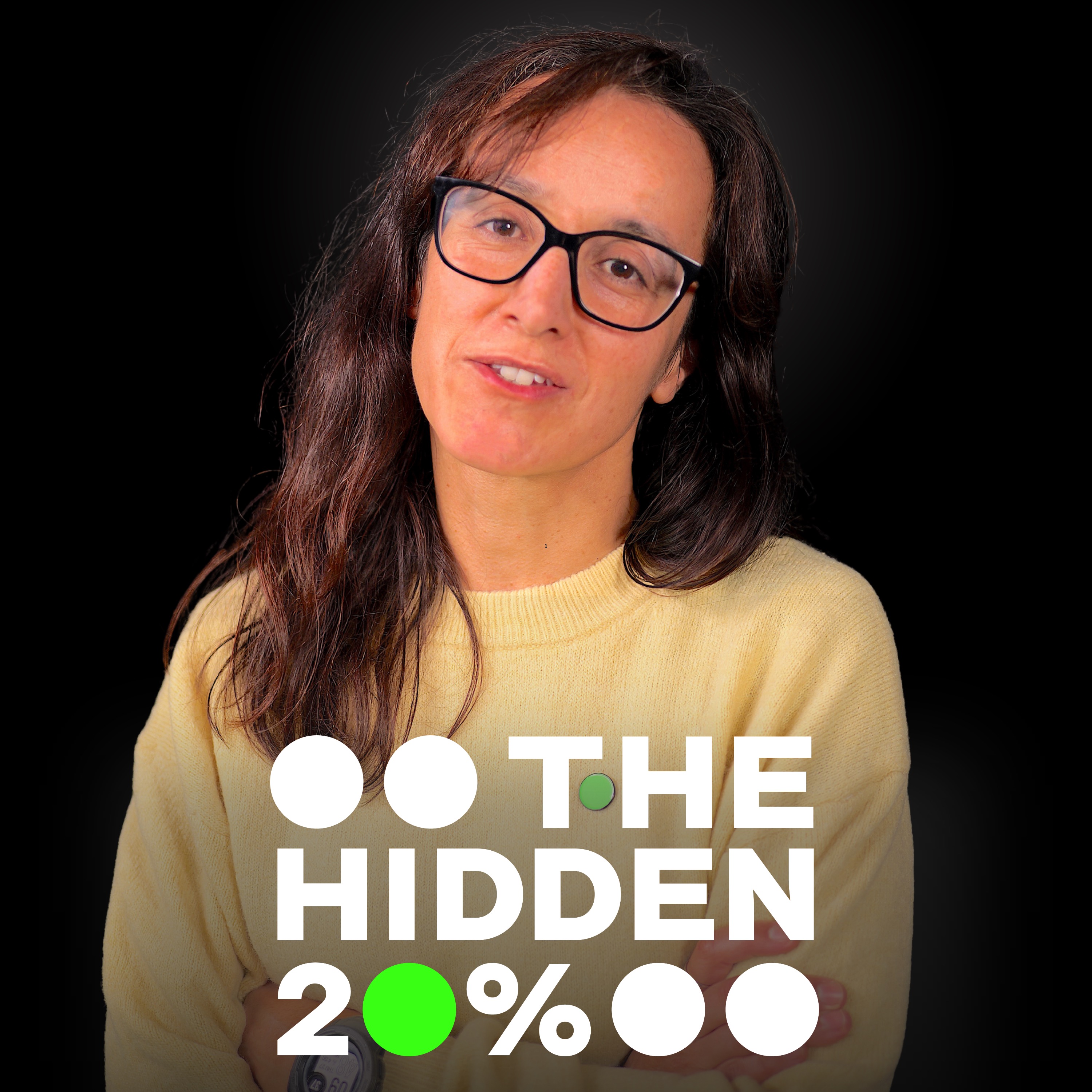
Renata (a clinical psychologist) returns to discuss her own formal ADHD diagnosis, how it changed her practice, and broader critiques of neurodiversity assessment systems in the NHS vs private care. She also shares an ADHD-vs-autism differential case involving suspected PANDAS, and outlines Hidden 20% work including an AI intelligence study and a sports project with Adam Peaty.
Renata is a clinical psychologist assessing neurodevelopmental conditions (ADHD/autism and related differentials). She works across both private and NHS settings and has long experience in general hospital liaison contexts.
ADHD assessments should be narrative, whole-person, and not “tick-box”/single-lens; clinicians need training and time. NHS care is described as reactive, under-resourced, and siloed; private care allows more thorough pacing. Neurodivergence is framed as “difference,” not pathology, and not necessarily tied to mental illness.
A 7-year-old referred for autism who met autism-tool criteria but was diagnosed as PANDAS after deeper investigation; school refusal improved after appropriate intervention. Renata also describes using sports (e.g., kickboxing/swimming) to regulate her ADHD.
Written by AI. May contain mistakes.
Renata discusses her ADHD diagnosis and the impact it had on her.
“Give me a snapshot of what's been going on since you were last sat in the green chair.”
Renata explores how her ADHD diagnosis has changed her approach to clinical work.
“So clinically, I was in an area of work that it wasn't necessarily about initial assessment.”
A comparison of challenges faced in NHS and private practice regarding neurodiversity.
“How has you being diagnosed changed your clinical work?”
Renata discusses her values and the future of healthcare as she contemplates leaving the NHS.
“And so how does your ADHD show up for you?”
Explore the struggles faced by mental health professionals in the NHS and the impact on patient care.
“The system is so broken that I actually have to leave the sinking ship for the good of my own mental health.”
Learn why the guest joined the Hidden 20% and the importance of awareness and equitable treatment.
“Why did you want to join the Hidden 20 %?”
Discuss the myth surrounding neurodiversity and the relationship between cognitive styles and mental health.
“But I do the ADR, you know, the tool that we use to perform the autism assessment.”
Examine a specific case of misdiagnosis and the complexities of assessing neurodevelopmental conditions.
“I think going through an assessment is a clinical process.”
Discover the challenges faced in the NHS regarding ADHD and neurodiversity.
“Whether those two things should be together and that's too big a thing, different story.”
Learn about the mission of The Hidden 20 and their innovative AI study.
Explore how swimming aids neurodivergent brains and promotes executive function.
“And we're doing the work and we are putting that in front of people.”
Understand how role models in sports can empower neurodivergent youth.
“How can we work together to get these kids the best chance to be successful in life?”
Gain insights into the ADHD assessment process and the importance of personal narratives.
“Dementia studies just revealed that over a decade now.”
Learn about the challenges and intricacies of diagnosing neurodivergent conditions.
“But what I'm neglecting is, you know, there's a lot of school reports that say nothing about the individual because probably it was masking or because it was brought up in a very neurodivergent friendly environment.”
Discover the systemic problems in mental health support and diagnosis.
“The waiting lists, the lack of support in schools, and this tremendous narrative of dysfunction, disorder, the pathological model, that annoys me a lot.”
Explore the importance of ongoing education and curiosity in mental health.
“We don't know, but we're going to find out.”
Hear about the positive impacts of educators on neurodivergent students.
“And I think that for a community to kind of go, look, we haven't figured it all out, but please trust us that we're going to absolutely do our best.”

Get the gist, explore an idea or ask about something said.
 Claude
On The Hidden 20%, what are the key points of this episode?
Searching your listeningAutomatic transcript. May contain errors.
0:00Welcome to The Hidden 20%, our neurodiversity charity on a mission to rewrite the future for people who think differently. Together with you and an eclectic range of brilliant guests, we can break the cycle of silence by smashing outdated stereotypes, exposing the myths, and sharing the most up-to-date truths about what it really means to be just different, not deficient. The best way you can help is really simple. Subscribe so you never miss an episode, and if you can, donate to our charity through the link below. Enough preamble. I'm Ben, your host. Let's get into today's episode.
0:47So we're back, Renata. We are back. We are back. Give me a snapshot of what's been going on since you were last sat in the green chair. I have been diagnosed myself with ADHD. Did you know that? I had my suspicions. You're a psychologist assessing people for ADHD. Yeah. Yeah. Do you want to talk about that now? Yeah, let's dive in. Yeah, so obviously the girls have been diagnosed. I was always suspicious and then genetic doesn't lie. I was working and one of my colleagues was saying to me, look, it's pretty obvious that you have ADHD. Someone needs to tell you this. So I'm telling you. I was like, yeah, you know, and I left it.
1:34Okay. So it was my first kind of formal approach and I left it. Then I just did what everyone does. Just went to Google, you know, trying to find. I didn't spoke with any of my colleagues in the area. I just wanted to go completely neutral. I found this psychiatrist. Yeah. One hour and a half. I was assessed. How did you find being on the other side? Very interesting. I was like, you know, as the interview was going, I was like, don't forget to ask me about this. Don't forget to ask me about that. Just make sure you ask me about that. Yeah, but it was a nice experience. And how did you feel afterwards?
2:09So that was quite interesting. I stopped completely clinical work for a week. Okay. I asked my PH and it's like, put everything on hold. I need to digest this process. and I was very compassionate with myself. I was making sure that I had the time to digest the information. It was a process of validation. Not new in regards, you know, explains a lot of things, but I needed to understand why it took me so long or why do I have to wait for my family to be diagnosed to therefore go myself for it. What answers did you get? I never stopped to look after myself. You know, as a clinician, it's all about the patients and looking after others.
2:47and for the first time I allowed myself, okay, now this is about me, let's dig in. I find it quite sort of funny but also ironic lots of what you always tell me is take time for yourself, look after yourself, you're going to be no good to anybody else if you're not able to look after yourself and yet that's advice that you give so brilliantly but do not give to yourself. Yeah, so I had to impose that to myself. Well, the outcome of it is incredibly proud of my brain, completely explains lots of things throughout my life, more dedicated now more than ever. You know, there's the profound commitment to the process and just highlights that I don't know anything about the brain.
3:35I mean, just that process of continuous being curious and learning and delve with the novelty that's coming, that puts me in the right place. Very humble, but still very, very curious and inquisitive about the process. So, yeah, I'm super proud. You said to me, congratulations. So I sort of feel to say back to you, congratulations, Renate, your ADHD. Thank you. Why do you think it took you so long? Several things. So clinically, I was in an area of work that it wasn't necessarily about initial assessment. So I was working already with neurodivergent patients, but with comorbidity, with, you know, physical health and mental health conditions.
4:14So therefore, there was literally no time to think about me. Personally, it's the same thing. Busy mom, having to look after the girls, focus on everything else. And I think one of the key moments was obviously I lost my mom at the beginning of this year. It almost gave me the permission. You need to stop and breathe. And there were so many projects that I was involved that I actually allowed myself. That's enough. I need to look after myself. Yeah. And then moving on. Yeah. And what does that do for your family in terms of you being really proud of your brain and like owning your brain? For me, it's about empowering and enhance performance.
4:58Those are my two key areas. So having to show the girls that they can do whatever they want to be, it's really fundamental. And for me, it's about the process of acceptance and normalize that being different is fundamental. Why do you want to be like everyone else? That's a no-no. You are not better than anyone else. We all have good and bad, things that we are absolutely outstanding, things that we are a rubbish at. Embrace that knowledge about yourself and then just go and live life. So the girls know your ADHD? Absolutely. And we had a party. Of course. And yeah, they were really proud. You know, it was really powerful.
5:38My teenager was like, that totally made sense. We had a neurodivergent party at the time. I was really, really proud of myself for going for it. Yeah. And interestingly, at the time I was leaving the liaison psychiatry role and two of my close colleagues, my ED consultant, also was leaving. And I said, look, I have something to share with you before we go separate ways. I've got ADHD. And he's like, what do you want me to tell you? Nothing, I'm just sharing with you. And he had a massive pause and he said, congratulations. I said, fab, yeah, thank you. and sharing makes you really validating that you are okay in my personal experience.
6:23Yeah, I think as long as the sort of expectations are low in terms of the reaction, I do think it's important to ultimately take responsibility and own it. And that doesn't mean sharing it with everybody, but not to be ashamed of. How has you being diagnosed changed your clinical work? I think it made me a better clinician and I don't share with everyone, but there are certain patients that I feel I need to share and that makes a massive impact. But just validates the way I have been working and explains so much. I was always the odd one out with my clinical peers. Okay. For different reasons.
7:04You are too much, you are too vocal, you are too emotional, you care too much. This has been a constant since qualified 25 years ago. why you want to work in a general hospital when we should be working in a mental health sector. Well, I might have a psychotic patient who has cancer. Why do I need to stop seeing this patient? So, you know, it's always... One person. Yeah. So even with my career experience, I started in infectious disease for a decade. Why are you doing night shifts? How am I supposed to learn if I'm not here to understand the process? Why are you doing extra hours? Even university, the first time this neuropsychiatrist was teaching me about neurodevelopmental conditions, I vividly remember, this is just for children.
7:51They grow up with the same brain. Why are we not asking adults? And it was like, oh, here you go. You and your questions. So even in academia, I was always very inquisitive and curious. So always the odd one out. and that puts me in a place of never give up on my patient. Sometimes I have situations that I don't know the answer. Do you understand? It's so complex. So I take a pause. I'll go and discuss with people that I respect and that I consider they are intelligent and they can offer me some guidance. And then I'll go back. So I never let it go. So my brain has been serving me really well, but explain why everything has been so hard.
8:36Yes. Even career progression. Yes. And so how does your ADHD show up for you? How do you kind of think about your ADHD now? Explains my cognitive style. Okay. Explains to me why I see the big picture, why I see just the physical health, the developmental history, you know, why I dig in everything that I can to make sense of the life story of the person that comes for an assessment and is not siloed. It's not just a structured interview. Tick the box. Yeah, you've got the six out of nine criteria. Off you go. That's not good enough. Yeah. And that leads to misdiagnosis. Yeah, because we're literally only seeing people through these one sort of test, this one lens.
9:22Yeah. It's an ADHD assessment. Blinkers on. I'm only thinking about ADHD in this assessment. I'm not interested in your physical health. I'm not interested in anything else. I'm not actually interested in your mental health. I'm just literally thinking ADHD. How are we going to change that? I think training is fundamental, but I don't know the answer or what would be the best strategy for it. I think there's a problem of attitude from the clinicians itself because compassion care is not profitable. Yeah. Okay, and it does take time. It does take commitment and investment to engage with a person that comes for the assessment.
9:58And that doesn't generate the revenue, the business model. Yeah, it's not commercially viable, is it? When you have to take time with someone and be thorough and look at the whole person rather than do a quick online test. So your background and your current actually is both private and NHS. Yes. How do you describe the key difference between the NHS and the private sector when it comes to neurodiversity? Okay, NHS is chronically reacting to problems. So therefore, there's no thinking process. It's very reactive, very impulsive. And this is constant narrative. There's no money. There's no staff.
10:50Things are crumbling. Things are really challenging. So for you to create any type of change to improve clinical care, it's a massive task. But then you have, for example, the ADHD report that came out, beautiful written, with lots of important questions there. What are we going to do with the rest of autistic, dyspraxic, dyscalculic, Tourette, you know, the other neurodevelopmental conditions? Why are we still investing on one at the time? because there's lots of people that have more than one. Yeah. So I think I know the answer because it's about budgeting and it's about the treatment and it's about prescribing.
11:31ADHD, you have that to offer, so you need to think about it. Still, it's not good enough for me. So you have lots of barriers and you have a lot of stuff that's really burned out. And the quality of the training, you know, you have a lot of clinicians who are not even aware And they are based in a lot of myths around neurodevelopmental conditions. One of the myths that annoys me, for example, is when they are doing the autism assessment, they are looking for a delay at early stage of development. And that's not right because what we need to look is at the difference. Okay. You might start to talk too early.
12:07You just need to look at the difference and then put things into context. But if it's not a delay, oh, there's no changes in unremarkable developmental milestones. Well, that's not correct. So you have lots of systemic issues of profound burnout and poor management. So everything is really difficult for a change. Private sector, you have slightly more freedom to do things the way you feel is the right way to do it. corporate level, private corporate level, you are back to a very business model that is very structured. There's a purpose there. But again, the conditions are slightly better. But you have good and bad in both.
12:54And equally, professionals are working like myself. We work on both sides. That's quite normal, isn't it? That clinicians certainly where ND is concerned are working private and NHS. Yeah. Why is that? Why do you work across both? At this point, I'm going through the process of making a decision of probably leave, you know, NHS and focus privately because what I want is contribute positively to someone else's life. Okay. If, for example, it was really unsafe working in liaison at a certain point that I was going to ED to see someone that was incredibly suicidal, acute crisis. And I knew even before talking with this patient that I couldn't help because there's a waiting list in the signposting services.
13:47There's no staff is going to, you know, privately allows me actually to do things with a patient pace. So I can assess someone that might take two sessions, but other people might take six sessions it really depends on what i need to unpack the pace of the the person that is working with me you can't do that necessarily in an nhs setting but it's really tough and you're not the first person that sat there renata who is basically saying unfortunately i need to leave the nhs because i mean you're using words like unsafe alison lennox was like it's on fire um feeling complicit in people just not getting the help that they need.
14:35The system is so broken that I actually have to leave the sinking ship for the good of my own mental health. Exactly that. What is really sad is the principle of national health care system is fundamental. I truly believe that everyone should be entitled to have health care. The problem is things are not working on that level and for my own values and following what I think it's important to work in a very transparent with integrity and an ethical practice I'm really struggling to do it in an environment that is is really pressured and doesn't allow me to do things or to promote changes yeah I know because I know you well enough to kind of know how much you've wrestled with that decision?
15:29It's been a few years. Because I feel like since I've known you for the last three and a half years, you've been talking about, oh, I kind of need to leave. Yeah, I don't know. Yeah. Yeah, that's not a decision that you've taken quickly or lightly. Yeah. What therefore gives you hope in the private sector? And I think that, again, sits with the way I process information. I can actually make positive changes I can take time to work with my patients and I can make a difference because an assessment is an intervention itself. So be able to have the time to do it is just a massive win. Yes, that's interesting that that's the biggest win is ultimately the quality of care.
16:23And the quality of care is based around seeing the person for the person in their wholeness and being able to not be siloed into single neurotypes, single assessments, and then time. Yeah. That you can explore somebody's whole life. Yes. And it's really good. It's really amazing. But also when you think about how many people have been missed, misdiagnosed later in life. Yeah. And therefore how much there is to unpack of somebody's background. Mm-hmm. You can't do that in an hour. No, you can't. You know? Yeah. Or you can't do that accurately or thoroughly in an hour. So you have joined the Hidden 20 % as a clinical psychologist.
17:20Why did you want to join the Hidden 20 %? Well, definitely align with my values, my own journey, obviously going through the assessment myself. But we need to make some noise. And I think for me it's fundamental this norm around a difference. and make sure that everyone is treated equally with respect. I think it's really, really fundamental. I think there's a lot of awareness. Hidden 20 is doing the awareness part, but I think we need to do more than awareness. And that is where I think Hidden 20 just is outstanding. It's about evidence-based principles. It's about gathering data. I'm pretty sure we're not probably 20 % anymore.
18:06We're going to find that truth. Yes. And it's about enable people. And this myth around neurodevelopmental conditions and mental health is something that I really want to put that message out there. Which is? You don't need to have mental health illness to be neurodivergent. Okay. So identifying the type of brain is almost like identifying your engine. Yeah. Okay. And then you have life thrown at you, things happening. And with your cognitive style, the way you are processing information, you'd probably be more vulnerable to develop some mental illness or not. But it's not like cause effect. It's nothing to do with mental illness.
18:51No, but if I think about myself in that situation, the times in my life when I've been in absolute crisis and in hospital and very, very unwell is not the time that anybody said to me anything about neurodivergence. Yeah. The time that life is good, life is settled is the time that I then said, actually, do you know what? I'm curious about this. Yeah. And so this whole deficit based disorder, the fact that we think people have to be in crisis, there has to be loads wrong for you to sort of be able to join the club. So ridiculous. Yes. And the key word for me is difference. It is not a pathological narrative.
19:50When someone comes for a neurodiversity assessment, it comes to identify the type of brain. How are we processing information? That's it. And then there's so much about the brain that we don't know that we need to be very humble and understanding that there's a lot that we still need to learn and be honest about it. When I was qualified, again, it's just for children. And usually the spectrum needs to be associated with a learning disability or global development delay or whatever. But what about when you don't have those? Yeah. And you are still neurodivergent. But if you look at it in a context, you can see where it's coming from.
20:34But things evolve. We have more data. We have neuroimaging studies. You know, you are understanding. You have research coming out. And that, keep going with the updates, is fundamental for practice. I think sometimes that is a bit neglected. Yeah, and it's fluid, right? I was literally saying this yesterday that there is no destination here. Absolutely. There is no finish line. There is no, we know everything. There is no 100 % here. This is a fluid, moving kind of thing. And that's what makes it, I think personally, so fascinating. Yes. Let me just share one case. I've got these seven-year-olds, comes to me, parents, autism assessment.
21:21I start the process and I say, this is not autism. But I do the ADR, you know, the tool that we use to perform the autism assessment. Everything was positive. So if I just stick with that semi-structured clinical interview, this child meets the criteria for autism. and I was like, this is not autism. Okay. So he had a sore throat. There was a lot going on from a physical health perspective and my immediate gut was like, this is pandas. This is a neuroimmune response. That's why the behavior is presenting that way. So I was privileged. It was private. It was my clinic. So I asked for neuro consult.
22:07Let's keep digging about the clinical aspects to it it was pandas wow and it was a beautiful process meanwhile working with the school and with the parents out to address this and this is a child that was refusing to go to school now is back at school things are fine so was almost presenting literally autistic presentation you know with the typical idea of meltdowns sensory overload you know language specifics all of that it's not autism and it wasn't and it's absolutely fine now and is that a thing with we haven't talked about pandas on here but is that a thing with pandas is there a confusion there yes but also they can have both but in this particular case to the point that i even obviously family work and i I said to mom, you go for an assessment because I suspect you are ADHD, but don't do it with me because I don't want to be biased.
23:08So I was trying to control all the process and all the factors. She went, different person, you know, different clinic. And she came back. Yeah, you're right. I am diagnosed. Okay. So there was, again, this is a very good example. It took us two months to finalize the assessment. It was such a beautiful journey. So tell me what would have happened if that had been in the NHS? I don't know, probably. I don't want to say that they would not delve as much in detail, but probably would come out with an autism diagnosis. But it'd be on a wait list? Probably, yeah. You're right. With the other 200 and however many thousand people who are on the autism wait list for a long time, potentially then come out with an autism diagnosis.
23:54Yeah. But actually it's pandas. Yeah, they can be together. In this particular case, it was very clear for me that it wasn't an autistic presentation. You're on the clinical side and I'm not. And increasingly, the way I think we as a charity are thinking about this whole movement is, to your point on, the difference, not the deficit and not the pathology clinical side. But far more on an identity side and not in those silos of all the individual neurotypes and all the individual names. That's a society, community, identity kind of narrative, not a medical, clinical side of things. What do you think about that?
24:54I think going through an assessment is a clinical process. but I also believe there's a lot that needs to be done to get better at it. And my job is amazing because the expert is the person that comes to me, and my job is just translate that in a clinical narrative. The standards of procedure, the NICE guidelines, the DSM-4s and 5s and all that, that is all important because that gives me the parameters for me to navigate. but my job is making your life story unique and that's super cool right yeah because i'm not putting you in a box i'm just giving you back an answer that aligns with your life story i always ask this so many times actually is this making sense to you after i give the feedback because you come to me it's not to make sense to me no it's it's about you sure i need you to translate and interpret.
25:54Yes. When you write the clinical writing, the report writing, I really tend to be very neuroaffirming and very careful and I avoid the deficit and I put difference. But it's about what makes sense for the patient. And that's what we should be doing. It's about every individual story because I can have 10 ADHD brains that are all different. Yes. And that's the beauty of it. Yes, but that's also the challenge. When it comes to assessments, education system, government, healthcare, the biggest challenge is that everybody is different. Ironically. It's the best thing, but it's the biggest problem.
26:36But that's the beauty of it. Yeah. I'm always thinking about these sort of three, you know, government, healthcare, education. I know there's the workplace as well. That's another big area. But I sort of feel like there's a lot that's possible in the workplace that is happening, partly because there are a lot of big companies who can afford to put things in place. They have enough people in their organization, whether that's in HR or ERGs, where they can make this more of a priority and they can afford training, etc. Because that's more private. Yeah. Right. And then when you get into, yeah, the public side of specifically healthcare and education systems, they're only built for kind of scale and uniformity.
27:30yeah, difference has been stamped out. Yeah. Because it's not efficient. And so that's just the bit that I guess with my blueprint brain, that's the bit I'm trying to figure out. I'm very critical about that because as a clinician, it is your job to make that difference very clear because we are dealing with individuals. Yes, but the system doesn't allow. I agree with you. Yeah, yeah. Definitely agree. But what irritates me with the process is you have that space to do the one-to-one work so we should be doing more and better on that level yeah i sort of feel like the private clinical side has a big opportunity to show the way and show i don't know i'm not part of the nhs or government or a policymaker etc etc and so i just get very frustrated with this right because i'm just like oh my god can we have a lead for neurodiversity and mental health in the NHS.
28:33The word neurodiversity is there. Whether those two things should be together and that's too big a thing, different story. But we have that. But then we spend however long and however much on an ADHD report. And that's it. and until we can treat neurodiversity like until we can like look at it as a whole yeah you know there'll be an autism report in a couple of years then there'll be a Tourette's report and if you you know it's like we'd be doing this forever you have your frustrations from how you see the NHS and the assessment side and the clinical side and I guess we have our frustrations on the inefficiency of this.
29:22Yeah, but you asked me why joining the Hidden 20 and I think one of the things that we can definitely do is make more noise and cause a change of social narrative. I would like to have our children very comfortable with their type of brains, advocate for themselves, be an experts about how their brains work and that for me is crucial we as Eden 20 we can definitely contribute for that process of change yeah I absolutely agree and I guess we're in sort of chapter two now as a charity of okay done the podcast that's great and we've had incredible guests we've built this incredible community people listen and watch and engage and write to us and buy badges and invite us to do talks and partnerships and dinners and outreach and all this stuff is amazing is really so so amazing but now it's sort of like okay and now what and and this is part of this second chapter of the credibility so important the truth sharing is so important and standing up for this space is so important and that's why you know we're chuffed that you're on board thank you we are doing this big ai intelligence study which has never been done and of course we're doing it differently of course we found a more efficient way of doing it and waiting two years with lots of cost and lots of people involved of course we have because it's about getting to the truth and finding the best way to do that and I don't know what's going to come out of that we'll analyze the data and then we'll have fun with it the hope is that there's an opportunity to speak a bit louder yeah and yeah maybe not that we're not confident in what we're doing, but a bit more like, no, no, we know our shit.
31:29Yeah. And we're doing the work and we are putting that in front of people. Yes. And we're holding that up and we're saying, what are you going to do? You know, the autism report that came out, basically, government, what are you going to do? The ADHD report, here you go. Government, what are you going to do? Yeah. So, yeah, you're joining at exactly the right time. We're very, very glad to have you. Thank you. Just tell me a bit about some of the other things that you're doing in this space. Yes. So one of the things is working with AP, Adam Pity. Casual Adam Pity. Cash, cash, AP. Yeah. It's a beautiful project working directly with Kevin.
32:13So we are now targeting awareness and how the swimmers keep the swimmers in the sport. how prevalent, how important it is to understand a neurodivergent swimmer. And we are not talking about elite sports. We are talking about, you know, our kids that are going to swimming lessons. And it's about give the coaches and the parents and the swimmers itself that tools of understanding. And that is one of the layers of intervention that for me is fundamental because the importance of movement of sports with a neurodivergent brain. The other thing that people are not aware is sports optimize executive functions.
32:55And when you are such naive, when your brain is still developing, one of the main difficulties in a neurodivergent brain is that we struggle with executive functions. But if you train that very organically since a very young age, okay, you are developing, it's embedded those difficulties are being tailored in a way that you can overcome that challenging. Why is swimming so good for neurodivergent brains? So basically, the sports requires that different areas of your brain are being targeted. You know, your arms are doing something, your legs are doing something different. So from a stimuli perspective, it's wonderful for dyslexics and ADHDers.
33:36And you have to breathe. Yeah. So there's a lot that you need to process at the same time. So it's more like, oh, this is a happy environment. I can do a lot of things at the same time. I'm just thinking about cycling and how that can lend itself really well to ND brains as well. There is that almost meditative, rhythmic, and no doubt someone is there listening going, yeah and we're back in the womb you know like there's in water there's something about that the other thing is the life skills so you learn not to be on time you learn that on that day you have that that session you know and that rhythm that you are persistently practicing planning organization structure what we need to work better and that is part of what we are trying to do with AP is around dealing with frustration, emotional regulation, variety, you know, fundamentally is, look, ND brains are amazing.
34:34Sports is amazing for ND brains. How can we work together to get these kids the best chance to be successful in life? But fundamentally is proactively promoting good habits that allows your cognitive thinking to be sustained in a healthy way. I think what I love and what we need more of, because this is exactly it, is someone with the profile, reputation, reach, and role model ability, like Adam Peaty, of, yeah, then passing that down. and yeah I just I can still remember Riv seeing Simone Biles on another good example yeah Michael Phelps and knowing that these people have you know their brains operate a bit differently it's not just you know the footballers for the boys but having these role models that it's not just about oh they're an amazing swimmer oh they're an amazing gymnast cyclist whatever it is about oh yeah but they also think differently that's the key point for me yeah and that's what makes them a great swimmer that's what makes them a great gymnast etc like joining those two things together and therefore the next generation how potentially massively empowering yeah when they're like i can do that they can do that i can do that and talk about it in a safe environment with the right information.
36:09Let's ignore the myths. Let's focus on evidence-based. And that is another important aspect to it. Movement is fundamental. Support is fundamental for ND brains. For not just ND brains, you know, there's evidence. You can get old with quality of life. Dementia studies just revealed that over a decade now. And the way to do it is definitely through movement, exercise, okay, because you are creating new connections in the brain, neuroplasticity. So therefore, your cognitive function optimise and all of that with a good, obviously, good sleep, healthy diet and so forth. But if you create those healthy habits at the early stage, you are doing so much in a short period of time.
36:56Sensory regulation, sports is amazing for that. You don't need to go in a team sport if that is too much for you. You have lots of individual sports that can do the job. That's another thing I love about swimming because you can do it individually, but at the same time, you are also part of a team. So you can regulate that. You can play with that. That's how I manage my ADHD is with sports. Every day I train, every day I do, you know, kickboxing with Gemma. She's a world champion. And she says to me, your ADHD today is really on fire. I said, what do you mean by that? So apparently my levels of energy are so high, so dysregulated that she can give me like two hours of me punching the bag and I'm okay.
37:38Do you know what I mean? Because I'm too high. And the way she trains me is absolutely amazing. She can see when I'm under stimulated. So she throw completely new stuff and then my focus is like I'm sharp for the rest of the day. Yes. how important is that it's fundamental I think. Well it's so interesting from then a coach perspective right? Yeah. Of how to understand teams, individuals and what they need like and surely that's part of coaching right or that should be part of coaching is like you're trying to help get the best out of someone and for someone to thrive. How they're physically performing a course is important but how about how their brains performing yeah and their mood and their energy levels when you think about like not even elite performance but just performance to support yeah that's pretty pretty important can you design the most perfect idealnd assessment for me clarify why you're coming why you're coming for an assessment what you want to take it out of of this experience why is this important for you so that usually is always my first conversation okay and then learn about the life story from perinatal you know was mom smoking during pregnancy by the way smoking is a risk factor for adhd so i really need to ask these questions yeah so you really need to go with perinatal when you are you know when mom is expecting but how was it there's a mental health start there and go through the life story where you have the person okay through that life story you can pick up a lot of things dyslexia explore the the primary school environment change jobs lots of times you can see the social battery draining when you for example transition for secondary or when you are for example in private school you know everything is structured everything is for everyone is doing anything for you so you don't need to use those cognitive resources and then you go for university you know free rage so through the life story you can get a lot of detailed information about and defunctioning okay you can see how the person is processing the information and you can start to pick up mental health vulnerabilities physical illness type of medication you've been on genetic conditions and all of that rather than, okay, sit down, here are my ADHD assessment questions.
40:24Yeah, so that's my end. Okay, so why are you here? Let's know about you and then let's go to the specifics of autism, ADHD, whatever. Yeah. And then I have plus family history. If the person wants for collateral, if the person feels that it's important to have someone involved in the process, I need to gather that data. ideally school reports, all of that. So as soon as I've got all of these systems in place, my job is making sense of that narrative, connect the dots and reach the outcome. And just to be really clear, because I didn't give you any school reports and I didn't give you anyone else to talk to apart from me.
41:04Let me give you an example. I asked you, what do you think your mum will say about you? Yeah. So as an adult, I have that ability to gather the information in a different way. Yes. And with my assessment, no one was involved. No. It was just me. But, you know, I could have said no because I don't have parents. They died. I could have said no because I have a very toxic relationship with my family and they are really, you know, not good for me. I don't want them involved. Yes. or like your story it's I'm doing this for me it needs to be me I don't know what's going to happen it's me but just so because there seems to be a myth that this is a very personal process but you've got to have loads of other people involved but that is the tick the box exercise yeah and that's not the case okay and then if I have the tick the box exercise I'll have that data all together.
42:02But what I'm neglecting is, you know, there's a lot of school reports that say nothing about the individual because probably it was masking or because it was brought up in a very neurodivergent friendly environment. And that was the norm. You'd get nothing from my school reports other than some of my naughtiness, but you wouldn't get anything. Do you know, it's very, very common, lovely to teach, lovely to be in the classroom, but then you need to explore. You need to do that detective work. But again, that takes time. Yes. That takes the need to establish a report with a person that is with you.
42:37Yep. And you need to open those doors. You need to make those questions in different ways. Is it humanly possible that a clinician could hold in their brain enough expertise around all the neurotypes to be able to assess somebody for all the neurotypes? The answer should be yes, but the real answer is no. So I can assess autism and ADHD. I cannot do Tourette's, TICS or Tourette's, because for me they always need to see the neurology because of all the... Yep. Out of the scope now of our chat here. Dyslexia, dyspraxia and dyscalculia. There are specific professional bodies that do this. Why haven't you trained in those?
43:24I can't even do the training to be out with the dyslexia because I'm not in the education system and I'm not an educational psychologist. So the way I do, I screen for everything that I can identify. And if I identify dyslexic features, I always recommend, you know, and go to someone that can assess you formally. The same with dyspraxia and dyscalculia. Dyspraxia, usually occupational therapist. GPs, I think they can diagnose. I'm not sure. And I don't even know what is actually the training for dyslexia, dyscalculia and dyspraxia. Dysgraphia. OCD? OCD is a mental health disorder. It's an anxiety presentation.
44:01I thought I can do that. You can do that? Yeah. Or the mental health conditions. Anxiety, depression. Yeah. Anxiety, mood disorder and all of that. So we are trained. You can look for all of that. Yeah. It's so complex, isn't it? It shouldn't be. I know. The thing is, it requires a lot of continuous learning. Yes. People neglect the amount of hours that I spend studying and reading papers and networking and calling my neurologist and my psychiatrist and, you know, look, I don't know about this. Give me some input about it. And that's why I think my brain serves me, right? Because there's first a continuous need for novelty, which thank you very much.
44:43I like it. Never get dull or boring because there's always a lot coming, but that requires a lot of commitment from a clinician. It's not a walk in the park, okay? It's not a nine-to-five job kind of thing. No, it's an always-on, hyper-focus, never going to get to the bottom of it. Keep learning, keep learning. And as much as it becomes very clear, I don't know about this, there's a world out there that we are not even there yet. What else annoys you or keeps you up? The waiting lists, the lack of support in schools, and this tremendous narrative of dysfunction, disorder, the pathological model, that annoys me a lot.
45:26Yeah. And lots of experts out of the blue. What do you mean? There's a lot of people diagnosing and qualifying and having this type of training that I don't even know what is the quality of that training, but they are assessing people. and I think why it took me so many years to get where I'm at and it's so easy for someone else. That's the silo kind of thing. Yes. Do you think people need assessments and diagnosis? No, people need an answer. The way you frame it, you can adjust. I'm a clinician. I think a diagnosis, the process of assessment is fundamental. But if the person wants to take it as an identity process, give it that.
46:09but you need to have clinical understanding. You need to have knowledge to understand what is a mental health. So what is OCD and what is repetitive behaviour patterns in an autistic presentation? Yes. You need to understand the differential. Yes. And that takes time. You need to have experience. You need to study. You need to have supervision. You need to shadow. You need to learn. Yeah, that's not a tick box. No. I guess that's the danger or the way that this could go becomes a sort of volume commercial. Yeah. Get people in the door, get them out. Get out of the waiting list, just backlog as much, as fast as you can.
46:47No support. Yeah. It's just about where the light shone because when so much focus gets put on the waiting list, that puts a lot of focus on diagnosis. Yeah. Not on, but what about afterwards? What about support? what about education all the rest of it and the reality is there's loads of things that need to change yeah but i'm sitting on accepting things are complex yes and what can i do to actually promote some changes for the best so it's almost like effectively what can i do focus on that because i can see the big picture and it's too big for me to fight so it's about picking up the battles so yes city with the hidden 20 let's do the work yep what can people listening and watching do contact us you know get on board with with our mission with the hidden 20 reach out support us because what we can promise is we will be doing our job with the best of our ability based on evidence okay and that for me is non-negotiation yeah i need data i need to understand the process And I can confidently say, we don't know it all, but we want to know a bit more.
48:07Yeah. So let's... We don't know, but we're going to find out. Exactly. And that curiosity is so driven and it's so organically powerful that we'll get there. Yes. It's a really amazing feeling that I increasingly have of, I don't know, I'm going to try and figure it out. And the journey is amazing. Yeah. That's something that I feel is hidden 20 % through and through is, no, no, we don't necessarily know, but we are going to figure it out. Yes, absolutely. It's a good place to be, I suppose. Yeah, it's a really nice place to be. And I think that for a community to kind of go, look, we haven't figured it all out, but please trust us that we're going to absolutely do our best.
48:55What are your hopes and dreams, Renata, for this movement? Remove pathological model for ND narrative and make difference the norm. Like it. And so last question, because you didn't get a green badge to give to someone else last time, because we weren't giving them out. So second green badge for you. Who would you like to give this to? BS teacher, Mr. Monroe. This is your daughter's teacher. Yes. He repaired the damage from last year because we had a difficult academic year for different reasons. That was sitting in school environment. And he had the courage to listen to her, follow her suggestions.
49:39He did the work. Outstanding. And he deserves a massive shout out. He respects the kids. There's a lot of neurodivergent children in the class. And he's doing a fantastic job. So that one is for Mr. Monroe. Mr Monroe, thank you. Thank you. Yeah, so he's going to get a green badge and he should be delighted with that. It's nice to continue our conversations and officially welcome you to the Hidden 20%. We've got a lot of work to do. We do and we'll do it. Yeah, and we will. We're a small team and so another person, yeah, the impact of that makes a massive difference. I think having your clinical experience, having your now personal experience as well, that you see this in a different way.
50:28I just think for our listeners, for our audience and the community, you're here. If you've got questions, you do anyway. You email us, you write to us, which is amazing. But even more so, Renata's here. Bombard her with questions, please. we'll see you again on here soon because I'm excited when we can interview some people on here together looking forward to it thanks Renata thanks Ben
51:01that's it for today's episode of the hidden 20 % but just before you go a favor the hidden 20 % is a charity and we do this to bring you the truth the latest research and the real stories that matter. So if this episode spoke to you, then please hit subscribe. And if you can, donate via the link below. Finally, a big shout out to you all for listening and our brilliant team who make this all happen. Phoebe, Charlie, Kristen, James, John, and the guys at TYX Studios. We'll see you next time.
51:44Thank you.
Dr Renata Fialho is back in the green chair.
In this conversation, Renata and Ben pick up where they left off - this time with Renata sharing her own ADHD diagnosis, what it was like to receive it later in life, and how it has quietly reshaped both her inner world and her clinical work.
Together, they unpack the realities of autism and ADHD assessments across the NHS and private sector, why certain myths continue to circulate, and where Renata sees genuine potential for more thoughtful, humane practice.
Renata also shares why she’s joining The Hidden 20% as a clinical psychologist, her hopes for the direction of neurodiversity care, and reflections on her work at the intersection of neurodivergence and sport - including why swimming can be such a powerful regulator for ADHD nervous systems.
Join us at hidden20.org/donate.
________
Host: Ben Branson
Production Manager: Phoebe De Leiburné
Video Editor: James Scriven
Social Media Manager: Charlie Young
Music: Jackson Greenberg
Head of Marketing: Kristen Fuller
00:00 Introduction
00:47 Dr Renata Fialho Reveals Her ADHD Diagnosis
03:57 Why Dr Renata’s ADHD Was Missed for So Long
08:39 How ADHD Shows Up in Dr Renata’s Daily Life
10:25 Neurodiversity Care: NHS vs Private Explained
11:45 The Autism Assessment Myth That Frustrates Clinicians
13:00 Why Many Clinicians Work Across NHS and Private Practice
15:46 What Gives Dr Renata Hope About the Private Sector
17:14 Dr Renata Joins The Hidden 20% Team
21:15 The Autism Assessment Case That Changed Dr Renata’s Practice
24:05 Identity, Community & Diagnosis: Beyond the Medical Model
29:22 Dr Renata’s Vision for The Hidden 20%
31:57 ADHD, Sport & Mental Health: Why Swimming Helps ADHD Brains
38:38 What a Good ADHD Assessment Actually Looks Like
42:44 Can One Clinician Assess All Neurotypes?
45:14 What Keeps Dr Renata Up at Night and Her Hopes for the Future
49:06 Dr Renata’s Green Dot Badge
The Hidden 20% is a charity founded by AuDHD entrepreneur, Ben Branson.
Our mission is simple: To change how the world sees neurodivergence.
No more stigma. No more shame. No more silence.
1 in 5 people are neurodivergent. That’s 1.6 billion of us - yet too many are still excluded, misunderstood, or left without support.
To break the cycle, we amplify voices, challenge myths, and keep showing up. Spotlighting stories, stats and hard truths. Smashing stereotypes through honest voices, creative campaigns and research that can’t be ignored.Every month, over 50,000 people turn to The Hidden 20% to feel safe, seen and to learn about brilliant brains.
With your support, we can reach further, grow louder, and keep fighting for the 1 in 5 who deserve more.
Join us at hidden20.org/donate.
Become a monthly donor.
Be part of our community where great minds think differently.
Brought to you by charity The Hidden 20% #1203348
______________
Follow & subscribe…
Website: www.hidden20.org
Instagram / TikTok / Youtube / X: @Hidden20charity
Ben Branson @seedlip_ben
@DrRenataFialho (LinkedIn)
If you'd like to support The Hidden 20%, you can buy a "green dot" badge at https://www.hidden20.org/thegreendot/p/badge. All proceeds go to the charity.
Hosted on Acast. See acast.com/privacy for more information.


