
 Ask ChatGPT


 The Hidden 20%
6 Aug 2025 · 53m · 23 chapters
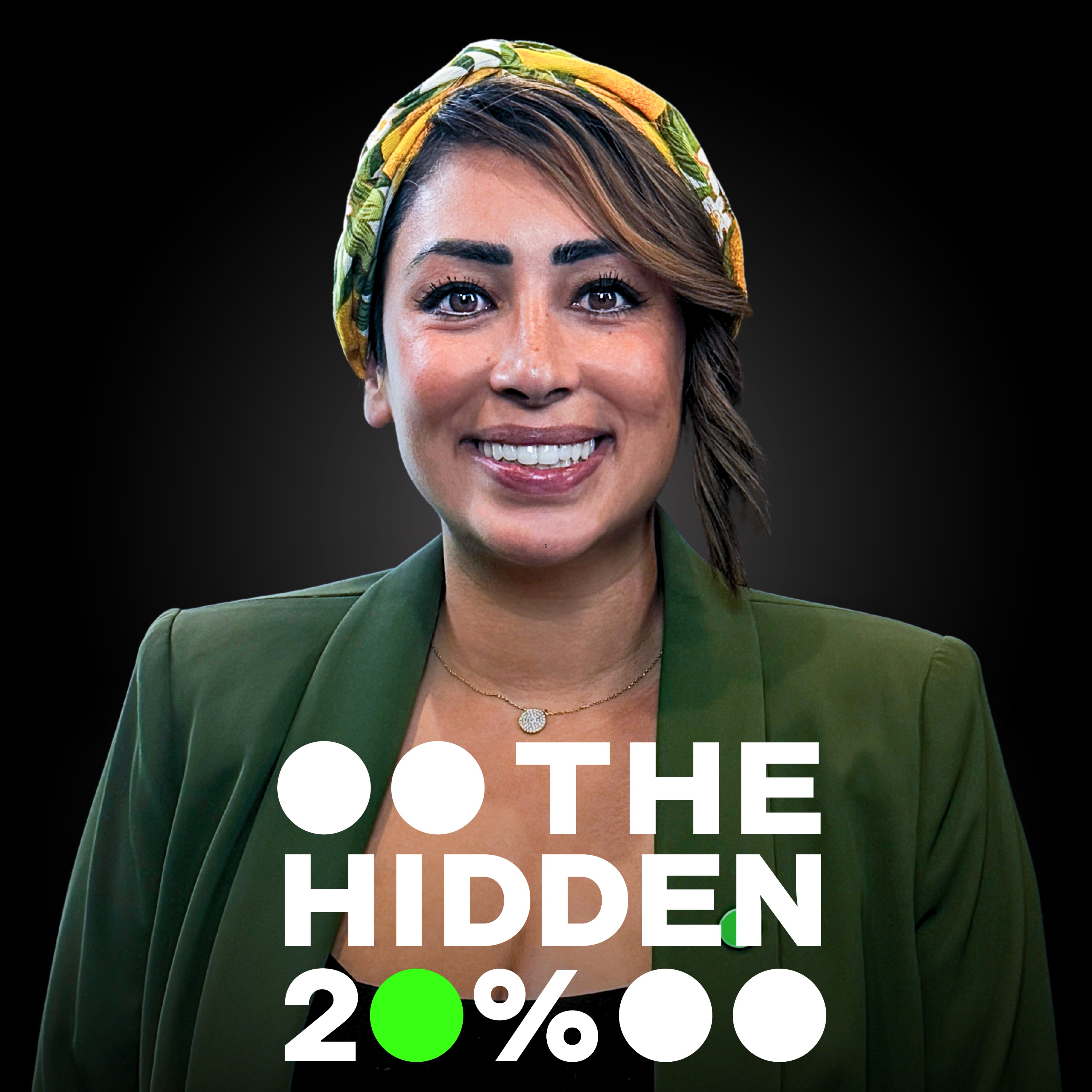
Vanessa D’Souza, an autistic MasterChef UK semi-finalist, discusses late autism diagnosis, sensory processing disorder (SPD), ADHD/autism overlap, and the backlash she faced after appearing on MasterChef. She also criticizes TV presenter Gregg Wallace for ableist comments and for framing autism negatively, arguing autism shouldn’t be used to excuse harmful behavior.
Vanessa D’Souza is a neurodivergent chef and advocate diagnosed in her mid-30s (about five years ago, nearly 40 now). She describes having autism, ADHD, and sensory processing differences; her husband has ADHD (described as “male stereotypical”). She has cooked at MasterChef and later appeared on a Channel 5 documentary; she writes viral advocacy content (including a poem about conditional acceptance).
MasterChef viewers and media are not neurodivergent-friendly; online “acceptance” can be performative; sensory issues are often environment-dependent; Gregg Wallace’s autism-related remarks are harmful and inaccurate.
death threats and derogatory “wokeism” comments after her episode; Gregg resetting her cooking timers; her “porcini ragu” recipe and being slated by the Daily Mail; sensory triggers like smashed wine in a loud restaurant; her “raspberries are my nemesis” explanation driving thousands of inquiries.
Written by AI. May contain mistakes.
Discussion on the unwelcoming nature of MasterChef for neurodivergent individuals.
“The cross-section of people that watch MasterChef aren't very neurodivergent friendly.”
Vanessa shares her journey as an autistic chef and her experiences with autism.
“After decades of masking, Vanessa's diagnosis in her 30s was a complete game changer.”
Vanessa reflects on her childhood experiences and the struggles of feeling different.
“Let's see how great minds think differently.”
Discussion about how the pandemic altered social interactions and self-awareness.
“And I think a lot of people struggled with their mental health in that period of lockdown.”
Vanessa describes her path to diagnosis and the challenges faced during the process.
“And bear in mind, back then, there just wasn't the information there was on social media that there is now.”
Exploration of the dynamics in Vanessa's relationship with her husband and the impact of their neurodiversity.
“And I think because they're merged into the DSM, it's autism and ADHD are associated with sensory issues.”
Vanessa discusses her advocacy efforts and the need for better understanding of neurodiversity.
“I recognize how privileged I am to be able to have paid for that diagnosis and then get the diagnosis and kind of try and unpack it thereafter.”
Vanessa shares her coping strategies and how she communicates her needs to others.
“and as soon as it becomes them versus us, you know, it's this delicate balance of like the neurodivergent community just not talking to itself.”
Learn how sensory overload affects interactions in social settings.
“going through so they understand unfortunately it's seen as dramatic it is seen because they can't relate to what I'm feeling and people often can't relate to things that they just don't understand.”
Explore the different ways curiosity manifests in responses to sensory challenges.
“So how do we move past that where I actually get people to truly step into my shoes and think, OK, I don't understand why she's got these sensory issues.”
Discover how autism and ADHD can interplay in daily life and decision-making.
“And I think my life would be very chaotic.”
Discuss the unique challenges of food textures and preferences for autistic individuals.
“Oh, peas, but they have to be frozen peas.”
Understand the differences between cooking with and eating certain foods for those with sensory sensitivities.
“I mean, I won't lie on some very difficult sensory days when there's just a lot going on and executive function is a little bit lower.”
Learn how to create an organized kitchen that accommodates sensory needs.
“kid's divider plate with Mickey Mouse on it.”
Learn about sensory processing differences and coping strategies.
“Where did this sensory processing, can you remember when that idea, thought, concern came into your mind?”
Discover practical tips for making cooking easier and enjoyable.
“But trying, Which is another of those great sort of ADHD potential opportunities of being creative, solving problems, fixing, trying.”
Explore what makes a restaurant environment accommodating for neurodivergent individuals.
“I need to be able to see out, but I also don't want to see everything.”
Hear about the unique challenges faced by an autistic contestant on MasterChef.
“It's good universal design principles of like, yeah, we all bloody would.”
Gain insights into the emotional experience of sharing one's identity on a public platform.
“But I was presented with quite a difficult situation because I'd only just been diagnosed and I was still coming to terms with my autism diagnosis myself.”
Learn about the unique challenges faced while cooking in a competition setting, especially for neurodivergent individuals.
“And so the amount of people, women, women that are like, oh, she's sexualising herself.”
Discover firsthand experiences with Gregg Wallace and the implications of his ableist comments on autism.
“There's been a lot of talk about him in the autistic community.”
Understand the societal effects of using autism as an excuse for negative behavior and the importance of accountability.
“I think it's so dangerous for autistic people like myself because autism should never be used as an excuse for bad behaviour.”
Explore hopes for future generations to embrace authenticity and neurodiversity.
“Yeah, that do send us on this path towards people having more understanding.”

Get the gist, explore an idea or ask about something said.
 Claude
On The Hidden 20%, what are the key points of this episode?
Searching your listeningAutomatic transcript. May contain errors.
0:00The cross-section of people that watch MasterChef aren't very neurodivergent friendly. And so I didn't have the easiest time when it aired. What is this wokeism? Another one saying they're autistic. So derogatory, but also like death threats. Really? Yeah, really bad. Like people like that should be taken outside and shot. Let's talk about Greg Wallace. There's been a lot of talk about him in the autistic community. What was your experience? So many things to say. Let's have it. I complained about him three times. Not a nice human being.
0:39Masterchef UK semi-finalist Vanessa D'Souza isn't just cooking up a storm. She's redefining kitchen culture by sharing her life with autism, ADHD and now sensory processing disorder. After decades of masking, Vanessa's diagnosis in her 30s was a complete game changer. Now proudly known as the autistic chef, she uses cooking not only to calm her mind, but also as a creative outlet for developing sensory-friendly recipes. Let's get into it. Let's see how great minds think differently.
1:21tell me about your relationship with your brain before you were diagnosed it's interesting because when you hear a lot of late diagnosed especially females the narrative is always the same you know I didn't fit in I felt like an alien I felt something was wrong with me I just didn't have the understanding of why I couldn't cope as well as other people in the same environments. A lot of it went under the radar because I'm an only child. And surprise, surprise, my parents are clearly also neurodivergent. So they don't put themselves in uncomfortable positions naturally. So kids' birthday parties, etc.
2:02I didn't go to many. And birthday parties for myself were done in our house with only people that my parents would invite. It was very selective. It's interesting. That's interesting. So yeah, and that's not, as you say, that's not the story you always hear. This norm was created that you could, yeah, be part of. Correct. And live in. So then tell me about getting assessed and why you wanted to get assessed and... Until I think for a lot of people when COVID hit, it was a real game changer where it's like, wow, the relief I have of not going to an office five days a week, not having to make the small talk.
2:50And I think a lot of people struggled with their mental health in that period of lockdown. And mine, I was thriving. I was living my best life. And bear in mind, I was single at the time, lived alone. So I was extremely isolated more than most, you know. And then I was kind of forced into kind of making friends with neighbours because obviously you need some social interaction. And it was my neighbour who used to go on daily walks for the one hour a day that we were allowed. It was so obvious to him that I was autistic. Because of the need for routine, the sensory issues when it came to, oh, it's raining.
3:27What do I do? It's windy. What do I do? Etc. etc. And it all kind of came to light from there. And what did you know? What were your thoughts, beliefs, understanding about autism then? I've come a long way. Let's put it that way. Very ableist, very stereotypical. You know, I can't be autistic. I'm like not a boy. I can speak. I'm also not a child. So that started the mass journey to kind of uncovering what autism really is my relationship with being autistic. And bear in mind, back then, there just wasn't the information there was on social media that there is now. So that really wasn't a route that I could go down that kind of affirmed what I thought.
4:12And I just faced a lot of backlash with GPs not believing me. And also just saying, well, even if you are autistic, well, you're almost 35, you work a job, you live independently. I suggest that you just get on with life. our wait list is 7 to 10 years. So I was like, okay, fine, does make sense. But my black and white brain needed an answer. Yeah, but it doesn't make sense. It doesn't, but you kind of justify it at the time. When so many doors are closed in your face, you're just like, okay, what other avenue do you go down? Sure. Even the right to choose at the time was just quite ridiculous.
4:51Okay. It's got a lot better since. Yeah. So effectively, I went private. And was ADHD in your sphere? Absolutely not on the card. So I think I'm autistic. Let me just go down that one path. And then they all came in like Pokemons thereafter. It's never just one, is it? It's the autism, the ADHD, the sensory processing actually is probably the highest on there, even though that doesn't actually form its own diagnosis, which I find bizarre because if it did, I think most people will have autism, ADHD and sensory processing. And I think because they're merged into the DSM, it's autism and ADHD are associated with sensory issues.
5:36Yes. Rather than it being pulled out as a separate thing. Exactly, because there are a lot of autistic people that have no sensory issues. Sure. So I find that I think in time, maybe if we look back on this in a decade, we're probably going to find another roadmap where it's like, oh, autism and ADHD can be co-occurring. Yeah, I mean, we could only diagnose it first 12 years ago. Exactly. Exactly. Never the two shall meet. Exactly. 2013, I think, is when they discovered actually they're not mutually exclusive. Yeah. So you went down this autism path. Yes. and then through that diagnosis all of the other paths open the adhd next and then i'm now unpacking all of these so when were you diagnosed autistic five years ago now okay nearly 40 so i was just turning 35 just got into a relationship so it's actually really interesting because my now husband met me when i thought i was autistic okay went through the kind of oh should I explore this diagnosis?
6:44It's a lot of money. I also have a mortgage. I recognize how privileged I am to be able to have paid for that diagnosis and then get the diagnosis and kind of try and unpack it thereafter. And now he's just seen the whole transition basically of me being quite ableist against myself to very neuroaffirming to now to advocate basically. Yep. And what do you think, I know he is here, but he's not in this room. If I asked him the sort of Vanessa then and through those five years, what kind of journey do you think he would describe? I'd say a difficult one. I think that he would now say I'm authentically myself, which is great, but it causes a lot of tension and it's hard to be understanding sometimes.
7:35He has ADHD in a very male stereotypical way. And that really, really clashes with my autism. And so it's tough, but we find a way. There's always a coping strategy, but somebody does have to to lead on that yes and i think that's what a good relationship is you know you know it's not always 100 to one person it's always not 50 50 either no so it's about moving that what's it called you know yes that's the word i'm looking for yeah yeah yeah it is a constant oh it's constant push and pull exactly and i know that you know my wife has sat in that chair and basically said oh my god I couldn't handle it like great you're being you yeah good for you genuinely but also yeah that also is not always so good for me exactly I mean yeah that's part of the learning process I guess isn't it I do think that people need to be more honest about it because I think a lot of the content out there and the things that people talk about is all positive like oh yes one partner's neurodivergent the other one's not this is how we find this amazing solution and it's like I don't think it's that easy sometimes and I think more people need to talk about that gray area in between where you're like wow I'm really digging deep here and this is going against everything that I need to do and how it needs to be done but I recognize that I need to do it for the other person.
9:09And you absolutely do that, Vanessa. I don't know that I've ever probably shared like online when I'm really struggling. Yeah. Why, how do you do that? Primarily for myself, actually. It's a way of me dealing with my own feelings. I have a post that It's still going viral. And it's a poem that I wrote about people saying they want to accept autism, but actually it's only when it's convenient to them. You know, you're too loud. You've got a problem. You're too this. You're too that. And actually, you just don't want me to be myself. That's the bottom line. And I can't tell you how many people, thousands of people have saved that, shared it.
10:00it's obviously resonated with other autistic people but the thing it hasn't resonated with is the people that actually need to understand that yeah and that poem came as a direct result of me really struggling with family members okay you know postpartum is a time where when you have a baby everyone wants to be around everyone wants to be in your space but then it's probably way more than normal you know what is my normal anyway of seeing people maybe once a month, once every quarter. And this is extended family. And it really made me realise it doesn't matter how much advocacy I do, is it reaching the right people?
10:42There's a real danger. As soon as you mention the word neurotypical and as soon as it becomes them versus us, you know, it's this delicate balance of like the neurodivergent community just not talking to itself. and I've seen that with non-alcoholic drinks. You get a non-alcoholic drinks conference and everyone's talking to themselves when actually the goal is go and talk at a drinks conference and it be integrated. There is no awareness problem in my view. If you ask someone if they've heard of ADHD, they will say yes. We have an understanding kind of problem way before we get to this acceptance piece.
11:26Like... 100%. but to your point if we're only talking about well if we're only talking to ourselves and if we're only talking about the positives it's really easy for people who are not neurodivergent to go pipe down don't believe you etc but when you're really struggling how do you muster that I'm really struggling and I'm going to tell people about it well it's a release for me yeah I wrote that poem to get my feelings out on a piece of paper and then what I did was I couldn't do that to camera it was just too difficult okay it was very raw so I just did a video montage of just random things like I was eating a chicken nugget in one you know and it's like two years ago you know a long time ago and just did a voiceover and I found that was the easiest way for me to put out that content.
12:16People resonated with it. I wished that the family members that it related to actually didn't just like it, but really thought about the content in there and thought, is this relatable? Am I part of this? But that's, I think, where the disconnect is. What do you want your family to understand? Truly, the understanding to just listen, to not be generic in, you know, It's quite easy when people throw out phrases of, you know, there's a lot of parent content online now where it's, you know, your toddler is having a meltdown. They're having a hard time. They're not giving you a hard time. I see that a lot.
12:56I see that a lot. And now a lot of neurotypical parents are posting that, you know, as awareness, so to speak. What does that actually mean? And how is that translating? Do you understand why your child or even adult is having a meltdown? It's one, because of environment, two, probably because of people as well, or both. And I try now actively after quite a few therapy sessions to explain myself because it's part of my brain process. So I'll give you a good example. we were at a restaurant a couple of weeks ago and a family member by accident spilt wine. The glass fell, it smashed, wine went everywhere, including me.
13:45Now, in that moment, I had to run to the bathroom because I knew that I was going to have a meltdown. It was nothing to do with the fact that I have wine on me, but I knew that it was coming and that outburst would not have been pretty obviously I'm not five I would have just had a meltdown there and then sure I go to the bathroom I compose myself I come back and I think the logical thing to do is to explain what I am going through so they understand unfortunately it's seen as dramatic it is seen because they can't relate to what I'm feeling and people often can't relate to things that they just don't understand.
14:26And so I'm trying to say I was already struggling in this environment because it's a Friday night. It's a busy pub. We're also away for the week on like a family trip. Therefore, this is a new environment. It's very loud. I can hear the guy with the cutlery in the restaurant. I can smell everyone's foods on this table and that guy's fish absolutely reeks. Like, it's just not pleasant for me. And on top of that we're sitting by a window which has a radiator on so it's like an old pub. There's like a draft coming through the top there's heat coming through the bottom. I also am very aware of the baby so I'm already struggling with all this sensory everything and now half this side of my body is dry and half this side of my body is wet.
15:18And it's just now too much. and it's like for god's sake Vanessa it's just a bit of wine you can buy a new outfit you can go home and change it's fine nobody died yeah and how do you make somebody realize that it's not you being dramatic in that moment and then it's just this awkward silence where it's like okay no one wants to trigger Vanessa so let's just all sit inside it's just awful for Plastic cups, please. No drinks. No drinks for anybody. Yeah. So how do we move past that where I actually get people to truly step into my shoes and think, OK, I don't understand why she's got these sensory issues.
16:04But I can imagine if I was in a nightclub now rather than a restaurant, maybe that's what she's experiencing. We were talking before we started recording about children and being curious. And I guess there's two kinds of reactions, aren't there? One is, and ironically, they're both out of curiosity, but one's really negative. so the response of kind of kind of going why are you over dramatic and why is that such a problem for you and like nothing bad has happened what's the big deal is one way which sounds like that's what you've got the other way is like oh that's really interesting that you feel like that kind of tell me about that like what could be different or how could I help or wow that I mean I couldn't even think that that could happen because I just saw a glass fall over yeah and they're both like they're just the different energies right but they're they're the same it's still about being curious it's just kind of being able to go okay I didn't experience it like that but you did I think one's open-minded the other one actually isn't yeah yeah the other one sounds almost there's an aspect of feeling threatened by your reaction isn't the same as mine.
17:27Yeah. And I'm going to keep telling you it's not a big deal. Yeah. Because that will mean it's not a big deal for you. Yeah. Tell me about ADHD and autism relationship. You know, a lot of people say that their autism fights their ADHD and it's a constant pull. And I think for me, subconsciously, my autism leads. And I'm very grateful for that because otherwise I would get nothing done. And I think my life would be very chaotic. My autism really counteracts and balances out my ADHD. I'd be late for everything if it wasn't for autism. The bottom up thinking as well is like my best and worst trait.
18:12Because if you mix the autism with the ADHD, Actually, like the bottom up thinking means that you just everything is being taken in everything, whether that's, you know, subjects of interest, etc. How do you pick? How do you pick? How have you learned to get the best out of both, I guess? A journey, first of all. So I started off having to label everything because if I can't recognize that's how I recognized it first. what I became obsessed five years ago with knowing what the autism is what the ADHD was and then the bits in the gray area I was like well what is this but now I have a better understanding I go with it and that's I think part of the impulsivity and my pattern recognition skills are elite so I'll know what's coming beforehand so often you don't have to kind of overthink it too much.
19:08And when are you at your best then? In the kitchen. Okay. That was, you know, an area of interest that actually was born out of a necessity because as a child, I had such extreme sensory food issues and I'm nearly 40. Which your grandmother recognised. Yes. My parents were just, I think it's so hard now because I'm a parent, so I get it. You just want the best for your child. And I completely appreciate that. So it's like, we must feed her veg. I don't think there was like five a day back then, but we must feed her veg, fruit, this, that. And it just doesn't work for me. Veg and fruit are like the hardest things for me to eat.
19:57I got to the age where I am now and I don't eat a single vegetable. Nothing. Barely. Maybe like carrots, sweet corn. There's a few foods that I will have. What about peas? Oh, peas, but they have to be frozen peas. No like mushy peas, none of that. And only a certain brand, by the way, because I can taste the difference between, you know, a supermarket brand and a brand that we all know. Yeah, you can say my family grow peas for bird's eye. It's okay. Okay, yeah, it's bird's eye. Frozen gets a big, bad rap. It's blooming brilliant. It really is. And also for somebody that does have ADHD and even though cooking is my special interest, like frozen stuff saves me from, you know, the mortuary that happens in the fridge.
20:42So tell me about what it is about vegetables. It's the sensory side of things for me. And my senses are so heightened when it comes to taste and smell in particular. It's not about the visuals, actually. I can smell the sulfur smell in broccoli from upstairs if somebody's cooking it. So imagine what that is in my mouth. Like it's just, I can't do it. What about mushrooms? I've learned to tolerate mushrooms to the point where actually I made a porcini ragu on MasterChef. I mean, I got slated by the Daily Mail for it because they don't believe that porcini and blueberries are a match, but they really are.
21:25But for me, it's a big win. And I personally chose that recipe because mushrooms and blueberries were my nemesis at one point. Okay, okay. Because blueberries are so wildly different, right? One can be quite firm. One can be super squidgy. Yep. Sometimes you can get really seedy ones. The pop in the mouth, which I do like the pop in the mouth, but it depends on the temperature of the pop in the mouth. Like if it's a cool, fine. If it's like a warm... Yeah, yeah. No, no. Nobody wants a warm blueberry. Exactly. And then you've got the skin. It's just, there's a lot. Do you appreciate there's a lot going on?
22:02There is. And if you've got heightened senses, it's a no. So fruit, I actually went on a Channel 5 documentary, and I can't tell you, I think I had 10 ,000 inquiries to my website because of my description of raspberries. Of, you know, parents basically saying, oh my gosh, thank you. you now have explained why my, you know, neurodivergent child or child with arphid or feeding difficulties won't eat a raspberry. And I never thought about it in this way. Because, you know, I went on national TV and said, raspberries are my nemesis because look at it, look at the hairs on this raspberry. Like, it's like putting an animal in your mouth.
22:43It's like a caterpillar. Exactly. Plus there's seeds. Plus like, you're not sure if it's a squidgy. It's the same going back to the blueberries not sure if it's squidgy or if it's a firm one and so i'm the psychopath that you know will be in like a supermarket squeezing things like grapes through the packet you know to see is this a punnet i can buy you know let me go all the way to the one at the back fruit is much better for me than vegetables that's what about the difference between eating these things and cooking with them oh i can cook with no issues okay because i'm not the one then experiencing the sensory.
23:19I mean, handling them, chopping them. Let's talk about onions. You know, yeah. I mean, I won't lie on some very difficult sensory days when there's just a lot going on and executive function is a little bit lower. I will take shortcuts and I do struggle with some textures. The other day I was having a really tough day and my husband really can't cook, bless him, but I had to get him to chop the chicken because the texture of the raw chicken just wasn't going to work for me on that day. Okay. But the next day I was fine. Okay. So sometimes it's just very dependent on the load that I'm feeling that day.
24:00Sure, sure. But then like onions, for example, I throw in a blender and sometimes I blend them and I freeze them. Yeah. So then I just take out what I need. Yes. What do you love about cooking? Why is cooking your special interest? One, because I have control over what I eat and how it's presented and given to me, because I have so many issues, sensory issues, I should say, even with foods touching, certain foods touching. It's not really acceptable at my age to walk around with a kid's divider plate with Mickey Mouse on it. But you find coping mechanisms. There should be an adult one of those.
24:34I don't walk around with a plate in my kid's nappy bag for me, unfortunately. but I find ways you know where you make chip barriers so that sauce doesn't touch I'm Indian so I absolutely love rice and curry but I can't have the wet curry touching my rice until I let it my parents still think it's wild that I need to eat certain foods with like a teaspoon okay yes over any other spoon. And they are also your environment. Autistics love teaspoons. I have learnt. If anybody that knows me or works with me is listening, I think I've probably got, not lying, 200 teaspoons. I don't blame you. I also, should I admit this, I steal teaspoons if it's a good teaspoon.
25:30Yeah, me too. So we were recently travelling and we were in a lovely airport lounge And I was like, oh, this is meant for coffee, but this is a really good spoon. So I took like 10. Yes. Yeah, I'm a big fan of the teaspoons. So tell me about, tell me how you organize your kitchen. Tell me about your kitchen. Oh, gosh. Yeah. No one can be in my kitchen. I'm a bit like Gordon Ramsay when it comes to things like that. I'm very organized and very systematic. So, you know. And don't you dare put anything back in the wrong place. Oh, gosh. Yes. Yes, I organise my fridge in, I would say, a very ADHD-friendly way.
26:08So it's the things that you see first. So actually, the door of the fridge is where the most important items are. The rest of the mortuary void is the things where I usually buy and then end up not using or having to do like a last-minute salvage. Oh, what can we make? Which the ADHD part of my brain absolutely loves. Yeah, the ready, steady cook. Oh, honestly, it was a lifelong dream of mine to go on that show because I'd just be so good at it. The thing that I wanted to do the most on MasterChef was all of the challenges where it wasn't walk into a pantry and pick loads of things, because that's the thing I would struggle with the most.
26:50Walking in and thinking, oh, my God, there's just like a whole room worth of stuff. And actually, that did happen to me after the semifinals. and I had to go in with a strategy of like, when you go in, you only look at one area. So I only look there and I just pick four things and I make something with those four things because I have confidence in my skills. Which, you know, it's wild because people went in with a whole strategy. Like they prepared things in their brain, like a fish recipe, a meat recipe, a pasta recipe, you know, a dessert. And then they go in there and they find those things or as close to those things to make what they've prepared.
27:26Whereas I'm like, I trust my skills. And I feel like it's cheating, actually, having a pre-prepared kind of thing. I went in and I only picked three things. But yeah, I would have loved if you lifted up a cloche and there was a surprise thing there. And I think that really tests people's skills. Yeah. But apparently, yeah, they've scrapped that. Yeah. I spent six months at Prue Leith cooking school after I left school. and God, I got sick of chopping onions and carrots because we had to do that every bloody day. Yes. Where did this sensory processing, can you remember when that idea, thought, concern came into your mind?
28:11Through the autism process. It was very prevalent that the majority of my autistic issues were very related to my sensory differences, I should say. I am very sensory sensitive in a lot of areas, predominantly food, with some other things too. And what do we know about SPD? Let's acronym it. So it's obviously different for everybody. And you'll have some people that are hyper or hypo. So either you're sensory seeking or you're sensory avoidant in that situation. And you can be both. They're not mutually exclusive. And I think that's what's the difficult thing because I am both. Food is a big thing for you.
28:55But sensory processing disorder, I'm guessing, is not just food. No, no. So I experience it also with sort of weather, wind, rain, water generally. So I love a shower. I love a bath. But the whole process, it's not even about the transitions because we all know autistic people can struggle with transitions. if you remove the transition from that it's the whole wet to dry it's very difficult for me so I can go a whole holiday in a like we could be in the Maldives I won't get in the sea and I won't get in the water like the swimming pool sometimes just because it's just sensory overload for me okay and it's it's obviously dependent on how hot it is because sometimes you can overcome that I have a lot of sensory issues with my feet so what do you think about the fact I climbed Ben Nevis barefoot.
29:47Yeah, that's is a no go for me. Good for you. So what have you learned? What have you learned that works? I have learned to one, not avoid it, but to just find a coping mechanism or a strategy that works for me. It's so easy to not put yourself in an uncomfortable position, right? But actually no growth really comes from there. And it's that fine balance of not putting yourself out too much that you go into burnout or an overload. Yes. But trying, Which is another of those great sort of ADHD potential opportunities of being creative, solving problems, fixing, trying. Yeah. Yeah, trying different solutions.
30:28What tips do you have for home cooks around making it simple and could be how to organize your kitchen, could be how to work a recipe. How do you simplify some of this when maybe you have high sensory aspect or ADHD chaos? How do you make this simple and nice and enjoyable? For me, I take away the decision paralysis. Sometimes I call my dad and I say, what should I have for dinner? It's easy. He knows what I like, what I don't like. Put the pressure on someone else. If you struggle with decisions, take shortcuts. If it's an executive dysfunction day, you know. use the frozen onions have a girl dinner have a snack board that's great picky dinners are like one of my favorite things to do and just put don't put too much pressure on yourself you know people say you have to make complicated meals or you have to eat junk food you don't there is a happy medium for me there is anyway I'm a big meat eater so I personally choose things like steaks that can be cooked in five minutes easy find your faves stick to them people say variety is like the spice of life it isn't stick to what you know keep it simple and take take away the decision i like that let's talk about restaurants and pubs and that sensory side yeah because of the environment being difficult people don't go yeah what would the ideal restaurant like the dream restaurant from a sensory perspective look like for you so lighting is important i love a very dimly lit kind of romantic style restaurant somewhere private so i often ask for the table in the corner that kind of sits together rather than opposite.
32:38I need to be able to see out, but I also don't want to see everything. So when you have two people sitting, not opposite each other, but next to each other, that helps me more. And also nobody wants to face a wall. My husband really hates it when he has to face a wall having ADHD, like he needs to see what's going on so we have to find a balance between us both yeah sound you know nothing that's too too loud too wild just nice and civilized and for me the key is having a menu that is online but also you see what the food looks like and i'm not saying bring back the laminated pictures that you get when you go to asia and those kind of like kebab even kind of restaurants but a happy medium where you know a lot of people and restaurants post things on their instagram some of those lovely pictures in a picturized kind of menu would be so helpful for me because my husband is incredibly impatient we get to a restaurant he's like i don't want to look at the menu you decide so he takes the decision paralysis away by saying you decide yeah he'll eat whatever he's got no sensory issues but for me he wants to order straight away okay because it's like bam bam bam bam bam onto the next i need to take time to absorb the environment but more often i need to look at what everyone else is ordering so i can see what it looks like ah interesting so that guy's smelly fish that we were talking about in the other pub i've now known that that smell doesn't work for me but also it's on some like wet lentils which won't work for me yeah okay and that's not really transparent from the menu.
34:22No, no. And often like people are doing this like very Gordon Ramsay style, like lentils, cauliflower, harissa. What does that mean? Yes. What does that mean? I see. I'm a big fan of the, don't tell me about the style. Yeah. Just tell me about the ingredients because I will choose based on the blend of ingredients. Right. Interesting. Like if you tell me that it's, you know, I don't know, apples and mulberries and cherries. Yeah. Well, that sounds kind of nice blend. I don't need to know kind of what it comes in, how it comes. Because I'm, yeah, I'm just focused on do they make sense? Interesting.
35:05Do I feel like they conjure a color to me? And if I can see the color of that blend of ingredients, and if there's harmony happy but you saying that i feel like restaurants should have look books yes as long as it's accurate though because that's a whole nother thing you can't have you know a lovely looking burger and then it turns up looking you know a little bit sad and sorry yeah because well literal thinking yeah how do you think then we like look we know we've got hospitality big challenged industry ironically high over index of neurodivergence within hospitality with estimates of like 50 percent of the hospitality industry what could restaurants hospitality do to get more people who don't want to go because of you name it yeah neurodivergence yeah what could we do well one thing i want to do because i don't i i don't think i can speak for a whole you know industry but one thing that i want to start doing when i have a bit more capacity postpartum is go to restaurants that i do and actually blog about them in a visual way in an unbiased way as well because i just find that a lot of this kind of content out there everything's amazing i had the best time no talk to me about could you hide in the toilets if you need to you know what is the floor like yeah could you find the toilet yes and that's another thing was there a menu online or was it from two years ago and actually it's a complete like menu of the day i hope that more restaurants would advocate for that and you know in the future maybe there's an autistic chef michelin guide yeah like why is a tire man running the show why can't there be an autistic chef approved guide somewhere yeah so i'm like putting that out to the universe yeah but i I also kind of go, if you asked everybody, would you like to be able to find the loo's easily?
37:05It's good universal design principles of like, yeah, we all bloody would. Of course we would. I can't stand it when I don't know, you know, when you don't know where you're going. We're talking about some simple considerations, not expensive adjustments, but simple basics of like, can I read your menu? Yeah. Is it simple to find the loos? Can you, you know... Can certain things be deconstructed on the menu? Yeah. If you're going to look after my dietary requirements, great. If you're going to have a choice of great drinks across all ABVs, but I think there could be more we could do that, you know, just starts to make some of these places a bit more inclusive.
37:51For sure. I would love to do a supper club at one point that's just very neurodivergent friendly. Yeah, the most like ND friendly. 100%. Dinner. Yeah. And you don't have to talk to people if you don't want to. Yeah. And it's okay. Oh, wouldn't that be a dream? Let's talk about MasterChef. Yeah. Why did you want to go on MasterChef? I have loved that show for a long time. it's been a special interest you know food master chef tv shows generally that involve cooking and i just thought i'm gonna apply i actually didn't think that i would get a spot on the show because it's it's quite difficult i know people that have applied every year like my dad's applied for three years in a row and not even got a phone call so it was kind of like i did the application not thinking it would go anywhere okay and then when the opportunity landed i was like of course I'm going to take it.
38:48But I was presented with quite a difficult situation because I'd only just been diagnosed and I was still coming to terms with my autism diagnosis myself. So other than my parents and like close family, no one knew about it. And it's out there for life, right? It's probably going to be on iPlayer for the next decade and then reruns maybe on Netflix or something, right? And if I don't take this opportunity to be my authentic self, even though I'm not ready yet to maybe tell the world I'm autistic. Am I going to regret this? And I thought to myself, yes. But I wasn't quite ready to fully share this kind of stuff.
39:25But I did, and I'm so glad I did because it resonated with the right people. But I would say the cross-section of people that watch MasterChef aren't very neurodivergent friendly. Interesting. And so I didn't have the easiest time when it aired. Okay. what tell me about that it was pretty awful you can imagine the backlash you'd get being on like a show like love island or whatever but this is it was just a bunch of people online twitter social media everywhere like it's not even me posting by the way because masterchef post great content yeah and it's like what is this wokeism ah another one saying they're autistic this and that like honestly it's awful some of the comments you know so derogatory but also like death threats really bad like people like that should be taken outside and shot that was one of the comments yeah awful and there's only so much that like a production team can help you know they can oh don't look don't look do you know Yeah.
40:39Of course you're going to look. Yeah. So there was like a period after MasterChef aired where I was like, I'm not posting anything. Like, I'm not posting anything because it's not going to be received well. And so all of these plans that I had were just like halted. But you do this thing a year before. Yeah. And then it comes out. There's also a lot of anxiety because you don't know what it's going to be like. You're watching at the same time as everyone else, right? So it's like, how are you going to be perceived? How are you going to be edited? It's not pleasant. How much were you expecting that, worried about that, thinking about what that reaction could be?
41:18Because it's a huge, vulnerable place to be. Yes. And I think I went in very naively, you know. Oh, if I'm my authentic self, that can only be received well. You know, just because I'm being me. Everyone says, just be you. Oh, no. Oh, my gosh. it's like the worst advice you can kind of give but the best advice you can kind of give because it's like just be you and then you go on national television and you're you and you're just like receiving a barrage of hate for being you and it's just like the smallest things you know when you watch that I'd wear the same jumper just in different colors because it's a sensory safe jumper yeah you know all for it and I struggle with temperature regulation but in a studio it's fine we were filming in the dead of winter so you wear a jumper because you're queuing outside before you walk into the studio and it's like december it's cold right you go in there with the lights with the cooking the hobs by the way it's it's a studio it's not a kitchen there's no extractor fans right so firstly you smell everything everything but the heat along with all the equipment i'm like sweating after this cook plus you've got the pressure right yeah So by the end of it, like, my jumper is a little bit like this.
42:35And so the amount of people, women, women that are like, oh, she's sexualising herself. So she gets through like it's it's wild, wild. And it's just like, actually, no, it's the only way I can regulate my temperature out of this left shoulder without taking my top off. I'm blooming hot, guys. Yeah, it's just wild. Wow. I'm really glad that you went on and I'm really glad that you were yourself. Yeah. Regardless of what ridiculousness can come from small minded people. I'm also glad that I was really honest about I didn't present any food because, you know, you asked me the question of can I cook things that I can't eat myself?
43:25And the question for me on the show was, can I cook and present foods in ways that I can't eat myself? So I can't eat rice and curry in a typical way. So I stayed true to that. I presented it in a tiffin separated, you know, the rice, the curry, the salad. and obviously the further along you get in the competition you run out of innovative ways in order to kind of present this in a deconstructed because everyone hates the word deconstructed but sometimes I need to deconstruct food and all I can say is as much hate as it got and it did it got probably about 98 % hate the 2 % it resonated with made it for me because there were kids that were watching that were like, mum, that's like me.
44:11Oh my God. She can't eat that either. The 2 % was great. So if that was launching now, what do you think the reaction would be? Wildly different. That's amazing, isn't it? In like three years. I think I was the first person to be open about their neurodivergence. Okay. Especially their autism. And actually since then, I think they have actively encouraged people to maybe talk about it. Certainly seen it on Bake Off. We're big fans of Bake Off in our household and certainly seen that. Yeah, people being more open, ADHD or dyslexia. Yeah. Yeah. I mean, it's great to be open, but I don't think the television process at all or media generally is very neurodivergent friendly.
44:56Yeah. I think there's a lot of work that could be done there. Yeah. And I think we have to go a long way to basically see a neurodivergent person win it and not go into burnout. Because it's one thing getting far, but actually at what price? Because I was literally about to have a nervous breakdown. I went into such severe burnout. I had to leave the country. It was that bad. Let's talk about Greg Wallace. There's been a lot of talk about him in the autistic community. What was your experience? So many things to say. Let's have it. Yeah, I complained about him three times. I'm not part of the complaints process, unfortunately.
45:32Yeah, not a nice human being. So he's actually very ableist, in my opinion. And at the time, I disclosed my autism and I didn't realise why he was so horrible towards me. He would do things like reset my timers. Just wasn't very nice. And actually, later on, it transpires that his son was autistic. And I think that's probably where the ableism came, because the way that he talked about his son in the media, I don't think was very nice. And I think if I was an autistic person that saw my parents talk about me in that way, I would be very upset. You know, talks about mourning. He talks about, you know.
46:08Really? Yeah. I was in a state of mourning after my son's autism diagnosis. It's all there. And it's just a shame because, you know, he was part of an autism charity, you know, an ambassador. But this is him actively saying these things on Loose Women. And it's really upsetting for me as an autistic person because so many parents of autistic kids were agreeing with him. Like, yes. Like, it's a death sentence, you know? He says things like, oh, my son will never kick a rugby ball. He's autistic. I think he's non-verbal or non-speaking. But he could still kick a rugby ball. He still has his whole life ahead of him.
46:47And, you know, I have a son now and that's made me even more passionate because, you know, I have no idea whether my son will speak or not speak. And it really doesn't matter because, well, he signs already. He's 10 months. We have amazing communication. And I just wish people would stop holding everyone accountable to neurotypical standards and just, you know, meet everyone where they're at. There have been some really serious allegations, obviously, against Greg Wallace and some pretty damning comments or blaming autism, for example, or using autism as an excuse. What impact do you think that has society wise?
47:32I think it's so dangerous for autistic people like myself because autism should never be used as an excuse for bad behaviour. But there's so many of us that just work daily and tirelessly to try and make sure that we're not offending people, fitting societal norms. That's why being autistic is so exhausting for me. and it's just like to say I'll go about my life as normal offending people dropping my pants saying rude comments but you know I'm autistic so my neurodivergence should be taken into account it doesn't fly with me and I personally think that he has a lot of work to do before he can speak about autism it's so interesting because it was quite clear he didn't like my autism that's how he made me feel and that was very much a mirror situation and he reset all my timers which i think is horrendous because that threw my cooking off absolutely but do you know why he reset the timers because he hates the sound of the timer no and like imagine doing a job for 20 years where you can't have a watch anyway everyone in the room has timers no so i was thinking this is It's so ironic because, you know, I'm the autistic person, but I have like now come to terms with, okay, that blend is going off.
49:00That person's time is going off, but I'm zoning in because I just need to focus on this ragu. This ragu, right? Fascinating. That is so interesting. But thank you for sharing that. Yeah, I think it's important to be honest because, you know, I would never go public with these things. There was an episode where he was unwell and John came in and basically said, I'm sure you notice somebody's missing today. Greg is unwell. And my face is like, yes. Literally. Yeah, it's actually like I clipped it and it went viral. Right. And a lot is said with my face without saying any words. And just that alone got so much hate.
49:41Like, oh, another woman jumping on the back. Oh, is this you basically now pretending? You know, it's the gaslighting words. But this is my truth. You know? Oh, I so enjoy talking to you, Vanessa. Like, your energy is great. And I'm a big believer in asking for what you need. Yeah. And in maybe you don't know what you need, but certainly being willing to kind of say what you need and that not being divary, that not being difficult, that not trying to make people go out of their way. Yeah. Or just being met with an open mind. I think that's the most important. I'm not expecting somebody to understand, but just to say, okay, that's your experience.
50:29I will try my best. Yeah. So, yeah, thank you for what you're doing because, yeah, it's people like you that speak up and share the truth, the good bits, the bad bits, the difficult bits. Yeah. Yeah, that do send us on this path towards people having more understanding. Last question. Yeah. Who would you like to give this green badge to? Oh, easy one. Has to be my son because what a game changer it would be for every child to be authentically themselves from day one and for their parents and the people around them to really understand. So yeah, my son. Yeah, I think that's a great answer and it's my greatest wish for the next generation is that people can be themselves.
51:24It sounds so simple and trite and pithy and idealistic and all the rest of it. It's also so simple. and yet has been so unattainable but so important. And so the more parents there are that want to instill that or set an example for their children or, yeah, you know, we've got a wonderful nine-year-old who's sat in the control room. Shout out to Bea, our biggest fan. And I look at her and I see the future. And it gives me so much hope. Absolutely. And I look at my daughters and I see the future and it gives me a lot of hope. And so the more the merrier. Thanks, Vanessa. I got this feeling about chefs and ND and some sort of silent dinner.
52:22Thank you. Thank you.
52:27You've been listening to The Hidden 20%. If you're still knocking about, then let me introduce you to the band. First up, main man on the mic, host Ben Branson. Our wonderful producer, Bella Neal. And the man who'll probably try and cut this bit, video editor James Scriven. Not forgetting our wondrous theme tune by Jackson Greenberg. Lovers or haters, we want to know. So be sure to leave a review wherever you're listening. For the lovers amongst you, you'll find us on TikTok and Instagram at Hidden20Podcast or over on Hidden20.org where you can join our mailing list.
CW: Reference to online abuse, mental health & sexual allegations
MasterChef UK semi‑finalist Vanessa D’Souza (aka The Autistic Chef) was diagnosed with autism, ADHD, and sensory processing disorder in her 30s, after years of masking. Cooking became her sanctuary, a safe outlet and creative expression that calmed her mind.
As an ambassador for the National Autistic Society, she now champions sensory-friendly recipes and greater inclusion in hospitality.
In this chat with Ben, Vanessa breaks down navigating sensory processing disorder, why neurotypical standards don’t work in culinary spaces, how to make restaurants neurodivergent-friendly, and what it’s like to unmask after 35 years. Plus, she shares her experience of Gregg Wallace during her time on MasterChef.
00:00 Introduction
1:20 Vanessa’s Brain & Autism Diagnosis
7:35 ND Love: Meeting in the Middle
9:10 The Power of Vanessa’s Vulnerability
12:32 The Importance of Listening: Unpacking Meltdowns & Family Reactions
17:35 Vanessa’s Autism VS ADHD
20:41 Sensory Overwhelm: Taste & Smell
24:07 Why Vanessa Loves Cooking
28:01 What is Sensory Processing Disorder?
30:28 Vanessa’s Top ND Cooking & Restaurant Tips
38:10 Master Chef: The Hidden Truths & Realities of Being on TV
45:15 Greg Wallace: Vanessa’s Experience
47:13 “Autism Should Never Be Used as an Excuse For Bad Behaviour”
50:50 Vanessa’s Green Light Badge
_________
On "The Hidden 20%," host Ben Branson chats with neurodivergent [ADHD, Autism, Dyscalculia, Dyslexia, Dyspraxia, Tourette's etc.] creatives, entrepreneurs, and experts to see how great minds.. think differently.
Host: Ben Branson
Head of Production: Bella Neale
Assistant Producer: Phoebe De Leiburné
Video Editor: James Scriven
Social Media Manager: Charlie Young
Music: Jackson Greenberg
Brought to you by charity The Hidden 20% #1203348
______________
Follow & subscribe…
Website: www.hidden20.org
Instagram / TikTok / Youtube / X: @Hidden20charity
Ben Branson @seedlip_ben
Vanessa D'Souza @the.autistic.chef
If you'd like to support The Hidden 20%, you can buy a "green dot" badge at https://www.hidden20.org/thegreendot/p/badge. All proceeds go to the charity.
Hosted on Acast. See acast.com/privacy for more information.


