
 Ask ChatGPT


 The Hidden 20%
12 Nov 2025 · 1h 3m · 31 chapters
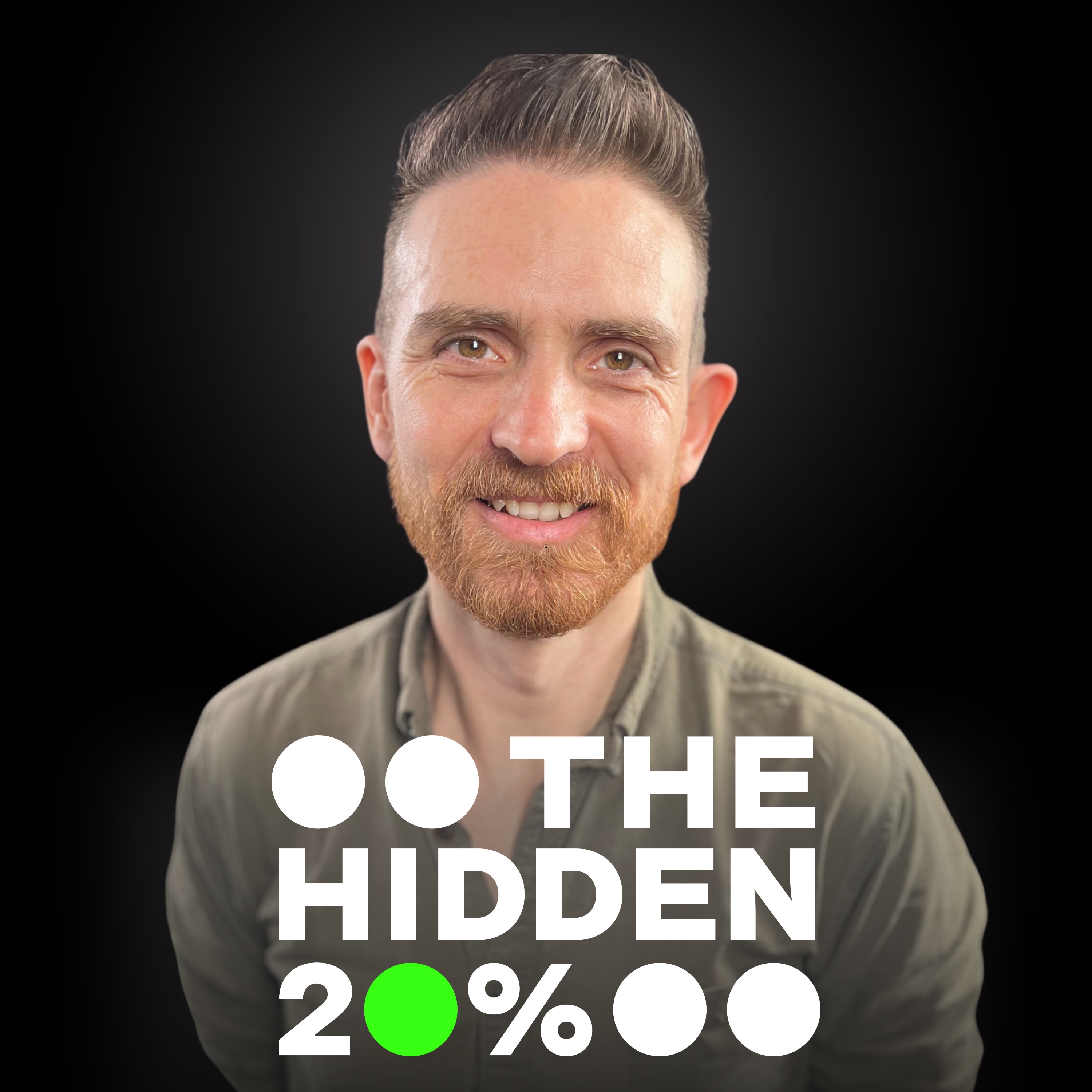
Director Kian O’Gorman discusses ITV’s neurodiversity formats The Assembly and the new show Playtime, arguing that greater public awareness reduces isolation and suicide risk among undiagnosed neurodivergent people. He also shares his own late autism self-discovery and assessment journey, including NHS delays and the relief of understanding traits like hyperfocus.
Ben (host). Kian O’Gorman (TV director; directed The Assembly, series shooting for 2026; also developing ITV pilot Playtime). No other named guests appear in the transcript, though The Assembly’s guest examples include Michael Sheen, Danny Dyer, and Emmanuel Macron (French format).
The Assembly’s “in the round,” lightly produced honesty leads celebrities to answer genuinely. Neurodivergence terminology should shift away from “disorder” framing. Late diagnosis is common; community and representation help acceptance. Hyperfocus can drive creative success but harms relationships without awareness.
Danny Dyer episode; Macron refusing to veto answers; NHS assessment wait “until 2043”; Kian’s “dusty breakfast” routine; Beast from the East disrupting a jungle shoot; Playtime clip where a child says “I’m autistic too” after an adult diagnosis disclosure.
Written by AI. May contain mistakes.
Discussion on the impact of undiagnosed neurodivergence on mental health.
“There are too many men taking their own lives.”
Kian discusses his direction of 'The Assembly' and its significance.
“Kian, I want to start with just saying how much I loved The Assembly.”
Insights into how guests were chosen and the show's honest atmosphere.
“So The Assembly is an ITV series where around about 30 autistic, neurodivergent, learning disabled people interview a major celebrity or public figure.”
Exploration of how the format encourages genuine interactions with celebrities.
“The original French version had Emmanuel Macron on as a guest, which obviously brought a lot of attention to it, like the, you know, the sitting president.”
Kian shares his journey of questioning his own neurodivergence.
“She's like, oh, well, I mean, I wasn't saying it in a bad way.”
Kian describes the realization of neurodivergent traits through interactions.
Discussion about the challenges in obtaining autism assessments.
“So I was just suddenly surrounded by people who I might have been surrounded by neurodivergent people over the years, but no one really talked about it.”
Kian discusses the evolving understanding of neurodivergence over time.
“Yeah, it's not too late to find out because it's great to find out if you're 60, but I'd rather know before then when I'm in my early 40s.”
Debate on identity-first vs person-first language in autism.
“I think the main reason it's happening is because we're becoming just aware of what it is and what it means.”
Explore the evolving language surrounding autism and identity preferences.
Discuss the importance of community support in accepting autism.
“I mean, Marcus Brickstock is a very funny man.”
Examine the significance of the show 'The Assembly' in showcasing neurodivergence.
Discuss the unique challenges and comforts of directing with autism.
“So we're like, okay, so we need to find a solution.”
Explore the role of routine and structure in the lives of autistic individuals.
“But I have had that, yeah, for seven and a half years.”
Understand the concept of hyper-focusing and its effects on relationships.
“You know, if I don't sleep all night, I'm not great company.”
Exploring the impact of receiving an autism diagnosis on personal identity and self-acceptance.
“The point is, I didn't know that that had a term, that it is a thing, that it's recognized.”
Sharing childhood stories that highlight unique behaviors and family support.
“And then what I've come to realize, it's also an identity shift.”
Discussing early creative endeavors and the influence of storytelling on personal development.
“are still with me and they were really brilliant in that.”
Recounting childhood film projects and the passion for creating narratives.
Overview of the new show 'Playtime' featuring neurodivergent comedians.
“And so he became like my muse and we would make silly little films.”
Explaining the innovative format of 'Playtime' and its engaging interactions with children.
“Maybe you've uncovered something there, yeah.”
Highlighting the empowering moments when children assert their creative ideas in the show.
“and their literal ideas, literally what they said.”
Learn how the improvisational skills of the cast contributed to the creative process of the show.
“And Chris is like, maybe he has a friend who's a fireman.”
Explore the personal and emotional connections made during the creation of Playtime.
“There's, I think there's a little bit of upfront explanation just in terms of setting context with who the cast are, who the kids are.”
Discuss the show's intent to normalize neurodiversity without making it the central focus.
“But significantly, unless it's mentioned by anyone in passing, like in the show, you never know what their diagnosis is.”
Learn about a poignant moment between a child and an adult discussing their autism diagnoses.
“So Logan, the lovely boy who's in that clip, is comfortable talking about his autism.”
Understand the struggles and societal perceptions surrounding late autism diagnosis.
“And I'm not saying that bullying doesn't still happen.”
Discuss hopes for representation and the impact of shows like Playtime on societal views.
“Which is why I never have any time for the naysayers about raising of awareness.”
Learn about the concept behind 'Hidden Twenties' and the show's nature as a detox program.
“and the lesson is that it is normal, you know, because many of us are.”
Discover the personal experiences and insights related to neurodiversity in relationships.
Find out where to watch 'Playtime' and its significance in promoting neurodiversity.
“Did we kind of get each other because of that without knowing at the time?”

Get the gist, explore an idea or ask about something said.
 Claude
On The Hidden 20%, what are the key points of this episode?
Searching your listeningAutomatic transcript. May contain errors.
0:00There are too many men taking their own lives. Something's broken. And I know that neurodivergent people, certainly undiagnosed neurodivergent people, are a good portion of those. Because they don't understand themselves. It just makes me very sad because they don't see another way. Yeah, there's too much of that. Too much of that happening. And so the more aware that people are of neurodivergence, the better.
0:36Welcome to The Hidden 20%, our neurodiversity charity on a mission to rewrite the future for people who think differently. Together with you and an eclectic range of brilliant guests, we can break the cycle of silence by smashing outdated stereotypes, exposing the myths, and sharing the most up-to-date truths about what it really means to be just different, not deficient. The best way you can help is really simple. Subscribe so you never miss an episode, and if you can, donate to our charity through the link below. Enough preamble. I'm Ben, your host. Let's get into today's episode.
1:23Kian, I want to start with just saying how much I loved The Assembly. Oh, thanks very much. You were the director. Let's start there. Yes, so The Assembly. So I directed the ITV series, so the four episodes that came out a little earlier this year, 2025, and pleased to say more to come next year, 2026, which we start shooting very soon. and it was, I think, certainly a powerful experience. Like I've made a lot of television over the years and a lot of stuff I'm very proud of, but it's rare that something you make can like touch you in such a personal way. And I've found that for everyone working on it, really.
2:03It means more. It means more than most things you work on. And I can't really put my finger on why that is. If you've watched it, you feel that like human connection. And for those listening, watching, that haven't seen or heard of the assembly, You gave us your version of what it's about, and then I'd love to just give you my thoughts on it. Yeah, of course. So The Assembly is an ITV series where around about 30 autistic, neurodivergent, learning disabled people interview a major celebrity or public figure. It's all in the round, so everybody forms what is ultimately like a large circle, and a celebrity just sits in the circle with them.
2:43All in this big open space, we shoot with cameras all around them, so you see all the cameras in the back of shot. Everything's very stripped back and very honest. It's very lightly produced. Everybody is free to ask whatever they want to ask, and quite often they do. And it's a complete surprise to all of us at the monitors, and you just have to ride the wave of whatever happens, really, because it really is anything goes. And the result you get is that many celebrities who often would likely censor themselves somewhat or put on a certain facade or a mask, if you will. They don't really do it because the room is so honest and so sincere and all of the questions they're receiving are so genuine, without any ulterior motive, without malice, and they're just all really well-meaning, that it sort of forces them as humans just to respond in kind and to be honest back.
3:37And so it really strips away any sheen of celebrity and any facade and you just get the real human. Give us a sense of sort of behind the scenes. How did that series come about? How was it chosen that Michael Sheen was going to be on there? Or how were guests selected? Give us a sense of that. So I'm like a hired hand on the assembly. So I come in to direct the episodes. In terms of the casting of the guests, I'm not as involved in that process. The good producers at Rockadel Studios do all of that. But I think the impression I get is, you know, they like to get people on who will be a genuinely good interview.
4:17I don't think there's any factors taken into account based on who's interviewing them. It's because it's very non-patronizing the way it's made. The point is that you can put anybody in front of them and they will grill them. Because they do sometimes ask very kind of brutal questions. Questions that a lot of interviewers might shy away from. Yes. So the whole approach really is to get people that obviously, you know, will get on with them and have a laugh with them and be light and fun, but also to get people that they can hold to account a bit and ask the spicier questions to and put them on the spot.
4:50It was originally a French format, so it started in France. The original French version had Emmanuel Macron on as a guest, which obviously brought a lot of attention to it, like the, you know, the sitting president. Yeah. And he sort of set a bit of a precedent in that he didn't veto any of his answers. Like afterwards, he got asked, is there anything? And he said, no, I'm happy for it all to go in. And you sort of feel like no one else really has a right when a sitting president said no. Exactly. You know, to just say whether or not they ever do or will, I don't know. But I think it's good for people to embrace what it is.
5:24And then it's a slice of reality and honesty, because actually they will come off better for it. Danny Dyer was one of our guests in the first ITV series. And if you've seen that episode in particular, it's just really powerful because he's completely real with them. And I knew he would be when he got confirmed as a guest. I knew how brilliant he would be. And he was. He sort of thankfully surpassed my estimations. I was worried I was expecting too much. And it wasn't going to be as good as I thought, but it was even better. And you've got series two that's going into production? Yes, series two.
5:56time recording this we are shooting the first episode in just a couple of weeks time so not long at all and I'm not sure when they were air but it will be at some point next year in 2026. What did you take from that experience? Well professionally a lot it was a really good experience for me but I took a lot more personally from the experience of the assembly because for the last two to three years I've been questioning whether I'm autistic myself. My wife probably questioned it the most she'd raised it a few times with me because of things that presented mainly personally at home and at least i thought not weren't as obvious professionally but then i started talking to people who are friends and friends through the industry people i've worked with and one in particular i asked her you know said have you ever wondered whether i'm autistic and she sort of went well yeah in that very much in that way of sorry were you not on that page i was the last to know too yeah well were you the last to know as well yeah so it was i was like oh okay i was like sorry that was just accepted with it and then she mentioned that somebody else that we that i'd worked with separately but she was friends with that she mentioned it to her once and she said well of course he is yeah of course he's autistic and then i met that person and said i i heard that you said you said this and she obviously a little a bit embarrassed.
7:17She's like, oh, well, I mean, I wasn't saying it in a bad way. I just thought, you know, that was assumed or I just thought you knew. So it obviously was presenting itself. Yeah. Isn't that interesting though that I've not really probably thought about the fact that, well, someone told me when I was in rehab, when I was what, 21, that what someone thinks about you is none of your business. Oh my God. Unless they tell you. Yeah. But my wife said that to me for years that's and it's such a brilliant it was literally life-changing my wife's telling me that it's just so weird you saying that well I guess I try to not think about people are thinking about me but I'm just listening to you talking about that it's kind of like oh people are walking around thinking Kian's autistic yeah but it's not spoken about and it's sort of like yeah of course how did you feel about that it's a mixture of emotions like my wife had to say a few times before i'd really sort of pay attention to it which is bad because you should always should always listen to your wife and i'm slowly learning that the more i listen to her actually the better it would have been if i just listened to her earlier i always felt my eccentricities or oddness was like you know that's just me sure and so when it can be put down to something i can only be honest i guess the feeling is like if you see an impressive like magic trick you go wow that's amazing that is and you often think i'd love to know how it's done and then you find out how it's done and it's now really disappointing and it's a feeling like that where you go oh it's all oh it's all down to that all those things are down to that and all of a sudden you feel like these things that you felt were you and were personal and i don't believe this now by the way i'm talking about how i felt at the time this isn't the stance i now take you just feel like oh oh it just can be explained yeah and then you go oh great it's not magic yeah it's not magic anymore like the magic of you know individualism and personality yes and just quirks you know that was the feeling initially gave me and then you know the suggestion so I sort of didn't really accept it for a while and then the assembly came up and came on board to direct series and I had these experiences of being around not only so many neurodivergent people on the cast, the majority of which obviously have very high support needs as well, you know, but many of the team that make the assembly neurodivergent and obviously that lived experience, you know, influences a huge part of the show.
9:48So I was just suddenly surrounded by people who I might have been surrounded by neurodivergent people over the years, but no one really talked about it. but I was suddenly very consciously surrounded by it. Everyone was open and it was very much aware of because it was such an intrinsic part of what you're making. And you suddenly start to recognize your kin, I suppose. And you just recognize lots of things in people that you feel yourself. And like a funny little example is there's a lovely man, Jacob, who's one of the members of the assembly. And he very often will reference the year when he asks a question.
10:21So, for example, when interviewing David Tennant, he mentioned when you started as Doctor Who in 2005 and I was at the monitor and I remember thinking yes that's correct and I I'm not a Doctor Who fan but for some reason I knew David Tennant started as Doctor Who in 2005 and that's something I've just always had is an odd thing about years in my personal life remembering very specific years and months of seemingly innocuous and and on important things of when they happened but also like major events when in particular when films came out and i just like discovered through my writing partner andy kinnear we were writing together a few years ago that i remember the years that films came out in particular in the 80s 90s almost encyclopedically obviously not like all like we're not talking the niche kind of you know indie cinema stuff we're talking the mainstream the stuff i grew up with but for some reason like some form of weird metadata that information is in there because I'm not always consciously calculating or think about either it's just like picture the year yeah and you can go straight to it yeah I could just go straight to it and it's not always right either it's about 80 % of the time but it became like a fun little party trick in fact when I met my wife it came up and the night I met her which was in a pub and she started sort of testing me a bit and when we went on our first date she brought a list of 20 films and with the years and she tested me and i and i think i got like 18 out of the 20 or something and i sort of thought then i was like well yeah well you're you're all right you are like the fact you have lent into this when so many people would say yeah good one mate you're singing my song yeah okay that showed that she was up for a laugh and you know i just love that instinct to lean into things you know so i was surrounded by people on assembly that I recognized and I recognized aspects of myself I had registered on the NHS for an assessment I'd been on this for a while and I chased it it'd been about a year I think I'd been on and I was chasing it say is there any do you know like when it might be and I got an email back to say that for this particular center that they wouldn't get to me till 2043 so you know private assessment was the only option it's extraordinary how like that just shows the explosion of needs for assessment that are happening but someone actually sent you an email yes but actually saying it was like a graph of whether if you requested within this window of dates we will like to get to you in this time period if there was this window of dates this time period and so you could follow on a table and my table said 2043 which is obviously well Well, yeah, that's the year I'll turn 60.
13:07It's nearly in 20 years' time. Yeah, it's not too late to find out because it's great to find out if you're 60, but I'd rather know before then when I'm in my early 40s. I'd like to know now because I'm putting myself on a list now. Exactly, yeah. So I don't know what the solution to that is. People are mistaking the explosion of it as, I don't know, people jumping on a bandwagon or something like that. Oh, yeah, there's plenty of... There's a lot of naysayers. It's trendy. Yeah, it's trendy, exactly. I think the main reason it's happening is because we're becoming just aware of what it is and what it means.
13:40You know, this feels, and don't get me wrong, television writer, director, I'm not a scientist. There's much cleverer people out there who are much more knowledgeable about it than me. I'm quite a layman's really when it comes to the knowledge. But it appears to me that the understanding of neurodivergence is increasing as time goes on exponentially. and so whereas autism and asperger's got recategorized quite recently and that asperger's is now ultimately autism and it's just varying levels of support needs and i think that will continue to happen and i think the terms will all change and in a lot of ways they need to for example like i'd be interested to ask you this like if you have autism which i find isn't slightly odd thing because if you are autistic i mean i prefer identity first yeah so i would tell you that i'm autistic right yeah rather than i have autism yes i agree that because the notion is that that is just the way your brain works which means you've always had the same brain so saying i have autism almost sounds like you've caught it sure and like and people oh can i catch self you know yeah it's like no it's not contagious it's just and if you are i was born yeah then you are autistic rather than you have autism you know so but there's a way you can say that where you can say i am autistic and i guess with like i don't know adhd not only is it an incredibly difficult acronym and it's a very long one to say you had marcus brigstock on didn't you talking about adhuda which i saw but i noticed you had him on and i loved that adhuda adhuda It is quicker to say than ADHD.
15:23I mean, Marcus Brickstock is a very funny man. Yeah. But that moment, I'd never heard that phrase before. I'd never heard it said like that. So he had me in stitches. It's useful, isn't it? But it's awkward, you know, like attention deficit, hyperactive. Sure, sure, sure. Disorder. Yeah. You're like, disorder? Yeah. Is that all right? Are we okay with that now? Yeah. I think those terms will change and they need to change. But we have ASD. Autism spectrum disorder. Disorder. Yeah. Yeah, which is it disordered? Because it seems like our understanding now is that that's just your brain type, but yet we've got these terms that haven't caught up with that notion.
16:03So I think we should be prepared to see them all change again and probably rightfully. Do you remember when then during the assembly the penny dropped for you? Was there an episode or a moment? No, I don't think it was necessarily like a moment in the assembly that made the penny drop. I think the collective experience of it suddenly made it feel much easier to accept that this could be the case. Because I, like anything, I think if you feel very alone with something, that can be harder to accept. But if you feel you have a community and support, actually, that becomes easier. Yeah, it's kind of a bit more okay, isn't it?
16:43Yeah, okay, I can explore this. Which is why I think, you know, like Hidden 20, things like this, are really important and and that's the where social media works for good is because it provides a support mechanism for finding your crowd and finding people that you can relate to that you can share your experiences what was the response to the assembly the public response oh it's immense it was incredible it was so exciting that it was loved as much as it is because and as the producers maintain it's a mainstream show it's not a niche show it's a mainstream show so it's for everybody and you see that when you watch it it's not patronizing it's not a box ticking exercise as a lot of people might think any shows featuring disability or neurodivergence it's not it's a true celebration of humanity and it so happens to include neurodivergence like that that's how it feels to me and that's why i really love it and why i've come back yeah series two and ultimately why i've sort of gone on to make something else very much in the the same ethos yes i mean i cried in the michael sheen episode of the assembly i just found it so i don't know profound like so pure yes yeah and just so brilliant i'm so glad it got the airtime it got i'm so glad there's going to be a second series yeah and the format i just think for a community in a kind of group of people where telling the truth is really important and being blunt and direct and saying how it is is part of our makeup yeah just such a great format such a clever way of doing it and yeah thank you yeah well no it's a pleasure and as I say I'm not the mastermind behind the assembly you know i i'm very much there to do my job which is to capture it on camera in a in a way that represents what's happening in the room which has its complications you know there's over 30 people with the guests it's over 30 people to film but with about six or seven cameras so that's a lot of faces to try and cover yes you know so so it does have its challenges which i enjoy i love that challenge and being autistic now that you know that you are how did you find the process of the unknowns the changes the kind of unpredictableness i guess of that kind of format yeah interestingly that's always been my safe place a tv set is like a safe place okay which is odd because i think a lot of people would find them intimidating stressful highly pressured which which they are but you know when people talk about flow yeah you're in your zone yeah that's what i sort of get when i'm directing it's a really happy place for me you don't like paper on set i i read that you like yeah that's right yeah you like an ipad and do everything via an ipad people often try to hand me bits of paper it's like can you send me the pdf sorry i can't obviously it's better for the environment but i can't pretend to be an eco warrior about you know and that'd be the reason i'm doing it it's it's not like it is because practically a big part of my autism is routines and structure and i have my set routines of doing things okay i'll give you an example once i filmed a trailer for made in chelsea that needs to be set in the jungle so we need to shoot this in uk how do we shoot in the jungle we go to kew gardens and we'll shoot in one of their giant greenhouses all these tropical plants but we needed some shots of feet walking like in the jungle and seeing the ground but you're not allowed to walk on the beds in there because they're protected.
20:22So we're like, okay, so we need to find a solution. We'll shoot those outside and we'll, you know, put in a few plants and stuff, buy a few plants, put them in the foreground and we'll shoot that on the ground outside. No problem. Shoot it all indoors in the morning. Come the afternoon, after lunch, sun's still out, glorious, be perfect. Someone said, have you looked out the window? Only about half an hour after lunch. Someone said, have you looked outside? I was like, no, why? He went and had a look. And it was the bees from the east, the huge snowstorm we had. And the immediate feeling I got was excitement.
20:57I was like, oh my God, that's such a brilliantly horrible problem because we need to shoot a jungle scene, like jungle shots in thick snow. We're already shooting jungle in the UK. That's already a challenge. That's already a challenge, but now it's covered in snow, like really thick because it just came like so thick and fast. And that was the point I realized I enjoy problems. I enjoy problem solving on set in the same way I love logic problems and cryptic crosswords, anything that has sort of a structure of like, you know, solving. Yes. What about at home though? What about when you're not working?
21:34Those sorts of changes of plans, changes of routines. Yeah, I'm with you. Yeah, awful. Like, yeah, in the work environment, what I wanted to say on that is that going wrong. So ultimately the beast from the East destroying what needed to be a jungle set that is less stressful for me than someone coming handing me a bit of paper yeah because coming handing me a bit of paper that i now have to go between that and my ipad much more stressful and you know and that was kind of a bit of a tell as well in a way like because that shouldn't be stressful it's just a bit of paper but like it's really outside of the routine that i like to have and i thought because my routine is efficient and i know where everything is and it means I can make decisions quickly and you know I can do the best job for whoever I'm working for you know so but yeah but at home it's much much harder and I do have very sort of set routines can you tell me about some of those because so do I so I'm I'm curious to swap routine stories I've eaten the exact same breakfast every day for about seven and a half years yeah so I have had a smoothie for breakfast that format a smoothie it changes what's in it oh does it you mix up the flavour but the format is exactly the same I think going on 7-8 years what's your breakfast?
22:57mine is oats and protein powder and cinnamon and that's all that's in oh and almond milk okay i'm not vegetarian or vegan i just love almond milk it's just really nice so that's what i have but i discovered i like it much better when it's been in the freezer for 24 hours so actually every morning i make tomorrow's breakfast and prep it already pop it in the freezer and take the other one out and then eat that because it's a bit frozen it's sort of like an ice cream and so it's it's a very dusty breakfast my writer partner andy calls it like my dusty breakfast because it's like it just looks so dry i mean the milk thankfully makes it all Right.
23:34But I have had that, yeah, for seven and a half years. I have every day, unless I'm away on a shoot or something and I'm not able to do it, but at home religiously. And I'm still not sick of it. I get so excited for it every morning. I can't wait for that. And I think it's somewhat what I'm eating. And it's also largely the routine of it. I know that, you know, I'm going to do that then at this time. And that's following, you know, taking the dogs out for a walk at this time for this amount of time. and before that is getting up and training with my wife. It's very important to my wife because she's a personal trainer that we are fitness training.
24:10Yeah, that's part of your marriage for us. It is. It was. When we got married, one of mine was to train with you. Instead of to have and to hold, she's like, no, no, forget all that. To train with you. So I'm like, okay, yes, I'll do it. Okay. And there is no better motivator to get you up in the morning to train with your wife when one, you know, it's so important to her and her mental health as well as to mine. but you know I know how important it is to her and that's more of a motivator than it is my own when you have that also when you're a little bit scared of your wife um because you know she's a strong woman yeah yeah emotionally and physically yeah so uh she's not to be messed with she's not to be messed with yeah you like routine you like structure yeah how else does being autistic show up for you one of the big difficulties for me was hyper focusing and this is why I think it's always good to have an awareness of it you know a lot of late stage people that are considering an assessment say but what what's the point now almost is it too late but what what how will it help me how it helped me was having an awareness of what these traits are and and what aspects of yourself are down to autism and and how then you can manage it and so i used to hyper focus well I still hyper focus I do hyper focus but I used to do it with no awareness that I was hyper focusing yes so I didn't manage that yeah and a big part of the reason I think I've made a lot of the television shows I have is really because of that ability to really focus on something and become almost obsessive over it but you do really love your work like when we spoke before that you love your work i do my work is my hobby yeah i do tend to often hyper focus and it means that i'll forget to eat or i'll stay up all night you know to get something done and sacrifice sleep which is all great and fine and when the results you know are good and make a successful show you know and it leads to other opportunities and brilliant but obviously there's always downsides to that and the the major downsides was the effect it would have my wife and my family and my friends and the people around me by how it affects me.
26:23You know, if I don't sleep all night, I'm not great company. My wife can just tell when I'm not present, you know, where I'm fixated on something else. She can tell. The stare. Yeah, even though I probably think I'm trying to do a really good job of like, no, no, I'm here, I'm in the room. They just know, don't they? They just know. They just know. They f***ing know. They know. And you're like, yeah, okay. Yeah, I'm still in work. Yeah, you can't get away with it, basically. And so I was in a relationship previously to meeting Kat, which ended after a particularly big TV series I made. I basically hyper-focused in it for over a year, like constantly.
27:08And then when it ended, which was the right thing, I think it was a relationship that would have ran its course anyway. And you wouldn't have Kat. And I wouldn't be with Kat, exactly. you know that relation did end and a large part of it was you know i hadn't been around for you like as and what i mean by that is mentally like and emotionally and i didn't really recognize that at the time i i was kind of like what no but we talk all the time and she's like yeah about your program was like yeah we talk about other things don't we don't you know try and think about it's like no no we talked about that thing that you know you're doing it's like do you know what it is i can't remember what it's called no i completely zoned out for the best part of the year and so understandably i'd sort of let that happen and so i really did feel that when i met a long time ago a long time before this recognition of myself now about being autistic and i remember thinking early on like i don't want to do this to her like because i you know i really love this woman i don't want to ruin this relationship by doing the same thing so i used to try and manage but I didn't know what it was.
28:13The point is, I didn't know that that had a term, that it is a thing, that it's recognized. So when I heard the term hyper-focusing, it was like, oh my God, that was a light bulb moment. I was like, yeah, that's the thing. That's the thing I do. And that was a relief. So a big part of the relief side of a diagnosis is understanding yourself better, which I know so many people have said, but it really is true. That's the biggest part. Do you think you're kinder to yourself because of that assessment? Yes, I think I am a bit kinder to myself now. I've been diagnosed. I used to give myself a bit of a hard time.
28:52I still sometimes give myself a bit of a hard time, but then those aspects that I know are because of autism, I kind of go, well, okay, that's just the way you are. And so, yes, it doesn't mean I can breathe a bit easier now. How do you feel going into series two of The Assembly being autistic yeah with with that knowledge yeah yeah good it's interesting because we haven't shot one yet so i don't know whether it will be different like on the day but don't imagine it will and hopefully it won't because the big big thing for me like i sort of touched on like i i worried that the idea of being autistic would mean all of a sudden all of these personal quirks about myself were explainable and that it would feel like a magic trick explained and it's just disappointing.
29:39Like that's what I used to think. And then what I've come to realize, it's also an identity shift. You know, it's a huge part in human psychology is how we identify ourselves. And I identify myself as a writer-director. And the idea of not doing that, I'd kind of be like, but what am I? You know, it's a strong part of my identity. And so it's a big shift to take something on like that. But the realization I had was, this has always been my identity. I just didn't know it. Yeah. That's always been part of it. So all of those quirks, you know, yes, aspects of them easily attributable to the autism or to do with my brain working the way it does, but they are still my quirks.
30:19Yes. And there's lots of autistic people that don't have that. And there's lots of autistic people that have quirks that I don't have. Yes. And so actually none of that is taken away. No. That is all still me. And so my hope going into another series of the assembly is that it's just recognized or as normal that it is no different because the only difference is I know about it now and I didn't really know about it then. Yeah, but it seems like everybody else knew it. Yeah, it seems everybody else knew it anyway so it was only going to be different for me, yeah. Just tell me the story about the cats growing up.
30:50Oh, yes. Yeah, so obviously, you know, when you go through an assessment and everything, aspects of your childhood and stuff come up. Thankfully, my parents are still with me and they were really brilliant in that. process in highlighting aspects of my childhood and one of the things that my brother actually raised he remembered my parents didn't remember he was like well do you remember when you used to have to say goodbye to the cats every day before we left for school like you had to do it religiously every day and stroke them I said oh no I don't really remember that he said well you think it was fine but we had 15 which we did because my mom really loved cats I would be running around the house trying to find all 15 cats to stroke them and say goodbye and everyone would be stood at the door saying we have to leave we've got to go to school and i'm running up the stairs going i can't find sylvia you know so i was like no i don't i don't didn't remember that and there was lots of like thankfully mostly remembered it fondly humorously like in terms of the stories from my family if we went to a restaurant like for on holiday or something i I would often ask for like the table next to us so I could sit at that table by myself, you know.
32:06And it wasn't because I'd fallen out of my family or I didn't like them or anything. My mum said I would sit at that table smiling over everybody else like I was still with them. But it was really important to have my own table, which is awful. Like now I think, mum, dad, why did you allow that? Like you'd think... Who do you think you are? Who do you think you are? Exactly. Like that's terrible. But bless them. Like my mum and dad have always been so lovely, so supportive. of all of my quirks and eccentricities and dreams, I suppose. Like they always supported the idea of me going into this work, even though it's not in my family.
32:42I'm from a Midlands family, very normal. They were market traders when I was growing up. I used to work on the markets with them. You know, that was my background growing up. No one had a background in telly. But yet when I said, I'd love to do that, they were always like, well, go for it. You know, they always supported it. And it was the same for all those kind of quirks, really. they just always embrace them as part of who I am and maybe in some ways that made it less notable because it made things easier for me why tv and writing for you because you you started doing a lot of this very young from learning about you you were just like drawn to it and just started doing things what was it that attracted you and where do you see autism within that well it was it's an obsession with creativity i'm like i realized that unless i'm doing something creative i'm sort of not at peace it's something in yeah in my soul really unless i'm doing something creative so i struggle if i don't have a like a creative project that i'm working on in some form which is why really it had to be my career like i realize now it had to be because i think my mental health would have suffered had I not been doing something creative and so I was always trying to find that early on I used to draw my own comic books and stuff and create all my own characters superhero kind of comic books the problem was I was terrible so that was never going to be my destiny as in the drawings were particularly good but I loved the storytelling I loved creating stories I used to have a collection of soft toys called the chicken gang who weren't exclusively chickens it was open to all bird themed soft toys so there's lots of ducks and the rest as well but i had a huge collection and i apparently so i don't recall a lot of this now really but i used to create stories with them all the time and act them out like as puppets but i also when we got like a camcorder home i started making like stop frames with them which i do remember that and i've seen some of those more recently as well where you know very sort of shonky sort of stop frame films and so i was always obsessed with storytelling and and and so when we got a camcorder that like opened that up really and that went hand in hand with an obsession with films and i was always regularly visiting the video shop you know as as was our netflix at the time and my mom dropped me off once um went to do the shopping and said she'd pick me up on the way home bless her the the one fault i could ever make was that she forgot that day and she's mortified she's been mortified i'm telling you and it was about four hours after she dropped me off before she realized i was still at the video shop so obviously drove back down like understandably in a panic and a worry got there and i was still choosing yeah and i was delighted every minute that went by she didn't turn up again i was like more time to just look and read the the backs of videos and read all the new the roman numerals and work out from the roman numerals what year it came out which is where i think that's where the data came from like it's because i would i loved working out the roman numerals and like oh that came out in 1988 okay interesting and i just like systematically did like every video in the shop like until she got back and then i chose because i had to because she was there so it's it was just an obsession with story and film and that it all came together.
36:08We got this camcorder and my younger brother, Tig, loved acting. And so he became like my muse and we would make silly little films. We had an alligator, Lilo, you know, like inflatable alligator from like Holiday once it brought home with us. And so we made Gator and Gator 2 because the first was such a hit. And it's funny watching them back because Tig basically plays, you know, he's the protagonist, trying to stop the alligator who was systematically eating every member of the household. But watching it back, I realized I'd put the camera on its head, and I was obviously holding the camera and holding the alligator moving around, so its nose was dipping into the bottom of shot.
36:53And so that was consistent, as it was a POV shot. And I was obviously doing that because I'd maybe seen that in something, but I thought that's funny. It showed there was a passion for experimenting with stuff like that. How old were you here? I guess what would have been maybe eight, nine, possibly ten, kind of around that time, I suppose. Because I can absolutely see you talking about how you would make plays, productions, you know, video camera, make up characters, name them, etc. All plays in, I can see anyway, stepping back to your new series, Playtime. Yes. Yeah, that's interesting, actually, yeah.
37:39If I do my little psychotherapist-type analysis very amateurly. It's good. Thank you. I don't think I noticed that myself. Maybe you've uncovered something there, yeah. Tell us about it. Playtime is a new show for ITV. It's a single pilot, if you like, where it's all about six neurodivergent comedians who enter a primary school to perform a play. But they have no idea what the play's going to be about. because it doesn't even exist yet, because they're going to get all of the ideas from a group, a neurodiverse group of six to eight-year-old children from the school. And so they have these lovely conversations with the kids where they get all the ideas from them, characters, settings, catchphrases, story elements.
38:30And then they had what was arguably not a lot of time to throw all of that together, piece that together from the story and how all the characters play out and who the protagonist is and what are they trying to achieve while throwing together their costumes, their props and everything. Probably about 90 minutes, I think is what they got all together before the school bell went at 3.30 and all the children and their parents came into the school hall and they watched the comedians perform it on stage. and what's lovely is that is in particular is seeing the children's reactions to their own ideas coming alive on the stage being performed by brilliant you know professional comedians and actors that's really special and that's what is it was really special for us when we were developing the concept and and and that came through like well that's the heart of it you know i've watched it i think it's brilliant it made me laugh and well up and ironically it made me well up when Stuart was booed and I tell you where it took me right back to it took me back to being I must have been nine or ten I was in a school play and I was the devil right and I had you know black cape red black makeup horns you know pointed tail the whole kind of shebang we'd done our dress rehearsals no audience obviously and then it got to the day and you got probably I don't know 150 people in the room and it got to my bit and I walked out and 150 people booed me and of course they did because I was the devil the villain yeah but I wasn't expecting that oh no and so I don't know I just found that oh that's so stressful yeah I just found that so did you feel it was a judgement of your performance yeah I don't know I just wasn't And so, I don't know, when Stuart came out.
40:35I'm sorry, so it took you back there. Yeah, he's the baddie, he's the dark lord. And I found Stuart very funny. But yeah, and then we do, we learn at pantomimes and all the rest of it. We boo the baddies, right? And that, yeah, just instantly shot me right back. Yeah, how funny. But I thought the premise of having comedians being the adults and them just being funny because they're comedians was brilliant and under time pressure. And yeah, it was just lovely to watch the kids and their literal ideas, literally what they said. This is the name of the giraffe and the zebra. This is the catchphrase.
41:19These are the songs. This is the name of the land. Like it is there. It really is their ideas brought to life. Yeah, absolutely. Rather than a kind of, yeah, yeah, yeah, okay, could we do something else rather than trains in teeth land? Maybe we need to call the zebra something else. Yes, they're not steered at all because the beauty is that they won't be steered. And there's a couple of moments you see in there when the comedians might try to suggest something and it just gets shut down. There's a brilliant moment when one of the little boys, Jackson, and shuts down Chris because they're talking about a character who basically has fire that comes out of their bum, you know, so he eats spicy food.
42:03And Chris is like, maybe he has a friend who's a fireman. And Jackson's like, no. No. He doesn't. It's like, you know, know your place. Chris is like, yeah, okay. Okay, no, no, that's a similar idea. sorry. You know, and that's what's great is that they really do take charge. And what the comedians do is obviously weave together because it's not that the children are all in one space, like writing the play together. They're having separate conversations and then having to pool all of these characters and references. And what's satisfying about watching the play is that given that it's all thrown together so quickly and from such disparate ideas, that it's shocking how much sense it makes.
42:45It really is. And it really impressed us. And that's why the cast was so brilliant because they're sort of like a heist team in that each member has their individual skill set that they bring to it. And Cariad Lloyd is one of our cast members, and she's like the improv queen. She's so brilliant and has so much experience at having to improvise plays and leading a lot of that that she really took charge of the story structure. And it was lovely when we were editing it, there's little moments which unfortunately weren't able to fit all into the show, but there's little kind of references you hear her making when somebody suggests, oh, what if like Zebra, you know, saves the day by blah, blah, doing this?
43:29And she's like, no, no, no, like Jamie needs to do that because of her protag vibes, you know, protagonist vibes. So the, you know, in true story structure style, the protagonist needs to be the one that saves the day because they're the one that's going on the emotional journey. Yeah, because it's a real hero's journey. It is a real arc of that kind of story. They took it really seriously. Yeah. It's really important, you know, that they honoured the ideas by treating them seriously and applied genuine story structure to them. And so it does really work. And it makes for an interesting, you know, engrossing sort of story, albeit with such disparate and unusual, you know, a range of characters and ideas in there.
44:09And it's been a really lovely process for me because from starting sort of pre-production to make it and filming it and going to the edit, it's kind of gone hand in hand with how I see my own autism. And so it's almost been quite cathartic and a process and a journey for me, really, in creating it. And it's, yeah, it's been lovely. I loved how it's not trying to be education on neurodivergence. There's, I think there's a little bit of upfront explanation just in terms of setting context with who the cast are, who the kids are. There's, I think I heard the word dyslexia once. I heard one of the comedians talk about ADHD.
44:53That's right. And then there was a lovely little clip between Stuart and one of the boys that I'd love us to have a look at and be able to show the guys watching and then maybe we can talk about that because I thought that was a really poignant moment within the show. Yeah, absolutely. Hi, David. How are you? I'm a lot. I like football. Football. Who's your spot? Birmingham City. Birmingham City. I can't believe this, Logan. You're wearing white right now. You're a Tottenham fan. I'm not. You're a Tottenham fan. I'm looking at you. You're a Tottenham fan right now. I've got a season ticket there, they say.
45:31You've got a season ticket. OK, so someone's doing all right for themselves. Do you know something I found? Because I used to be a Tottenham season ticket holder, and I found it really difficult going to the games because of sensory stuff, all the noise and things like that. Do you have, like, ear defenders? I do, yeah. Yeah. Two years ago I got diagnosed as autistic. I am as well. You're autistic. For years I didn't know that I was finding all of that quite difficult. Have there been games where you've sort of been like, oh, that's too much for me, I need to sort of go to a quieter place? Baths of them, yeah.
46:09But football's too good to not be able to go to, right? Yeah. how did that conversation come about the whole approach we wanted to take with playtime was as you thankfully observed so it looks like we've achieved it which was that it's not meant to be educational in a hard sell way it's in a soft sell way as in we want to know that these people are neurodivergent the comedians are and that the children are from a neurodiverse group. But significantly, unless it's mentioned by anyone in passing, like in the show, you never know what their diagnosis is. And indeed, whether even that child is neurodivergent or not.
46:53Because the point, I think, of true inclusion should be that it's normal. Like you become truly included when whatever you are or the thing is that makes you other is now normal. well and that you can be whoever you are yes yeah yeah but as in as in whoever you are is now considered normal yeah i suppose you know so and i think that's the point where you want to get to and i think the way that you do that is by having shows like the assembly like playtime where it just is you know and it's not necessarily the focus it doesn't have to be the topic of conversation Whatever that thing is that people are, that they feel isn't necessarily included, can get tired when that's all they're allowed to talk about.
47:39Female comedians are expected often to just talk about being female or black comedians are expected to talk about being black when they are just comedians and they want to just talk about whatever they want to talk about. They just want to be funny. They just want to be funny, exactly. And it's the same for neurodivergence. You should just be able to be neurodivergent. So that was the ethos sort of behind it. But we obviously knew it would be powerful if there was a moment of connection, you know, that we could feel that. And so we were obviously very careful to ensure that it came up that it was with people that were happy to talk about it.
48:12So Logan, the lovely boy who's in that clip, is comfortable talking about his autism. And that was, you know, checked beforehand. And Stuart obviously had that diagnosis a couple of years ago and he said he was comfortable talking about it. so we thought it would be lovely for them to have a one-on-one conversation and Stuart just naturally found a way to to raise it and it's really it's obviously a really touching clip and we had a screening recently where and I don't know whether it was what like watching it on the big screen for the first time but it was actually the moment that Stuart says two years ago I got diagnosed as autistic that that made me cry really yeah it's gonna make me cry again because because you can feel how vulnerable he is in the moment of saying it.
48:59And I can just really relate to that. Because you do feel vulnerable offering something out like that. And what's lovely is that the adult is more vulnerable in that moment than the child. Because Logan just simply replies, you know, I am too. And with a smile. And with this sort of light kind of confidence. Like, oh, that's nice. and then Stuart's immediate response, he's like, oh, you're autistic. And he's okay. Yeah. Because it's like he's taken a leap and Logan's caught him. Yeah. And there's something really, I don't know, beautiful about that. And encouraging in the age that we're in, that children are able to grow up with this understanding and hopefully grow into a society where that's much more recognized and accepted because you can kind of understand how it's the late stage diagnosis people that maybe struggle with it a bit more.
49:54Yeah. Because when we grew up, those things were the territory of, like, you know, bullying in the playground. Sure. And you're not wanting to be necessarily othered. Sure. You know, no one wanted to be the one that would end up a victim of bullying. And I'm not saying that bullying doesn't still happen. Obviously, I can imagine it does. But, like, Rain Man came out when I was four or five. What year? 1988, of course. Which is obviously a brilliant film. and important, you know, for autistic savants, you know, for people to know about and a lot of people didn't know about them then. But like the side effect can be that that was what autism was for people for many years.
50:34But the view is that it wasn't even autistic. Savant, sure, but not even autistic. Yeah, yeah, yeah. And that still seems to have an effect in society of people asking, oh, like, what's your skill? What's your special talent? And it's like, you know, it's not necessarily the case, you know and it's unfortunately not it doesn't you know necessarily work like that have you seen the john lewis ad yes what did you take from it as well funnily enough the john lewis ads is it's a that's a religious routine thing for me that every year it comes out that it goes into the list of all the others and it gets ranked i rank them all although i only watched it yesterday and I haven't yet put that in the rankings.
51:18So I liked and I realized, oh, it's getting to the heart of like male relationships and male connection. And I think that's really important. And like, it didn't hugely touch me the first time. I don't know why. And it's always a shame that happens because I do love them. And I always long for that. Like I was looking forward to crying at the John Lewis advert. Did you think about autism when you watched it? I thought it could, yeah, it could be that. And I suppose I like that they've left it a bit ambiguous and some people are reading it as men needing to be more emotionally open because of the problems that's presenting in society which is very close to my heart why is that close to your heart
52:02i think because there's too many obviously it's not just men but there are too many men taking their own lives. Something's broken. There's been three instances of suicide. Three people I know this year have affected members of my family. And I know that neurodivergent people, certainly undiagnosed neurodivergent people, are a good portion of those because they don't understand themselves. It just makes me very sad because they don't see another way. Too much of that happening. And so the more aware that people are of neurodivergence, the better. Which is why I never have any time for the naysayers about raising of awareness.
53:02What about the people who say it's being over-diagnosed? Are they doctors? No.
53:10people it's just there's an awful lot of opinions out there aren't there suicide is the second leading cause of death for autistics yeah that doesn't surprise me and i didn't know that particular statistic but that does make sense and i could totally understand why because i think had if I had continued in life not knowing,
53:36I don't know if I would ever have gone down that road, but I would never know for sure. No one could know what's in their future. And that's the thing. There's going to be so many people, and men in particular, because lots of people take their lives, but there's a disproportionate amount of men that do it. the people that affects more are the people they're leaving around them their partners families children you know and they're left in pieces so actually there's the sort of i guess the male suicide epidemic trying to solve that is to help women children families you know parents and other men it's to help all those people around them as well as themselves because it just leaves lies and tatters and and there's it doesn't need to happen that's the frustrating thing is that you know there is a way there's a way out there's a way through yeah and it doesn't need an assessment in 20 years time exactly assessment when you're 60 years old you know because there's people that won't make it to 60 no so yeah so so yeah the the John Lewis ad touched me in that sense just wish it felt a bit more Christmassy I think I think that was you know that was the main thing I love that you watched them all you ranked them oh yeah of course you very important very important I'm giving myself a little pat on the back to be honest Kieran about the Christmas ads because I didn't know we were only talking about it earlier yeah I had no idea that you I have such a strong take on it such a big take on it What do you hope for, with the response of Playtime, what's the future of Playtime?
55:25And I'll stick another one in there. What's your hope for representation of neurodivergence in the media? With Playtime, much like the Assembly, I hope that people just can enjoy it as a show. and that if it does anything for the representation of neurodivergence is that it may be, particularly with the comedians on there, it has that effect of, oh, Cariad Lloyd's neurodivergent, Stuart Law's a neurodivergent, Beck Hill, you know, because then it has that important effect of going, oh, well, I just thought they were normal, you know, and the lesson is that it is normal, you know, because many of us are.
56:08The point you're making with Hidden Twenties is at least one in five. At least. Maybe even more. You might have to get a whole new sign written soon. We're going for a name change next year. Yeah. And so that's what I hope it entertains and it does bring about that awareness. But the main thing, really, the type of show it is, I call it a detox-type program because you can go into it with all the worries of the day or the stresses of the day and put it on. and within half an hour, you just go, oh, actually, you know what, it's all right. And it sort of detoxes all the bad feelings out because it's just so wholesome and lovely.
56:47Hopefully everyone has their own opinion, but not saccharine either, not, you know, not sweet. Like it's still funny. Yeah, I just found it light. Yeah, light. It's just like it washes over you. It's funny and it's kind of life affirming. Like it's heartwarming and, you know, it makes you feel good. My daughter said to me last night, When I was putting her to bed, Riva, our six-year-old. She's like, Daddy, we've got the nativity play. Okay. Important. That's good, Riva. I'm going to be the narrator. Brilliant, Riva. That's great. But I might be an angel or a star. Apparently, I can choose. And you're like, yeah, those school plays, they're pivotal in everybody's childhood, right?
57:32They are nativity or not, but just school plays, nativity especially it's this time of year i think there's a point of relation for everybody there that's been in a school fucking play dressed as a donkey or whatever yes yeah well that yeah that's lovely yeah and so you asked about the sort of the future of it so we're hoping to make a series and to take it basically on a tour of the uk so we would visit primary schools and institutions like up and down country and obviously taken in scotland you know northern ireland wales and so we get to experience lovely local accents on children you know all around the country because the aim of the show is through like representing a neurodiverse group that is also diverse in ethnicity socioeconomic background and truly encompassing of the different walks of life people are in Britain that we get to listen to children that rarely get to be heard yeah if I had to really boil down what playtime is it's about listening to children that rarely get to be heard and so that's the ambition with it and hopefully we get to do that you are massively blowing up their balloons and I think that's just yeah brilliant okay thank you last question we obviously have our green dot badges you are wearing one i have another one people can go on our website and they can buy their two badges one for themselves hopefully one they can share with somebody else support for neurodiversity brilliant to be yourself i'm going to ask you who you'd like to give your second one to kian i would like to give my second one to my wife kat and that's because you like cats yeah i do like cats and i'm also obviously terrified of her obviously as i maintain no i'd like to give my other green dot to my wife cat because she herself has actually gone on a journey and literally only i think maybe two possibly three months ago was diagnosed as being adhd which answered many many questions for her and suddenly made a lot more sense of our whole relationship our way that we connect with one another with the blanks in my life that she fills and the blanks in her life that i fill and how the whole ecosystem of our relationship works and it kind of led to us to investigate you know the connection of autism and adhd people and and actually how that can often complement in this bizarre way and And as neurodivergent people, when we met, was that an aspect that drew us to one another?
1:00:22Did we kind of get each other because of that without knowing at the time? And it's sort of, I don't know, it's thrown up lots of really interesting things. But she's had to obviously manage aspects of our lives around my autism over the years. And likewise, her ADHD, you know, without us knowing. But she's always been a great support. and sometimes I feel like a greater support than me than I might be for her. So I'd like her to have the other batch of things. Yeah, amazing. And just remind people where they can watch Playtime. So Playtime is available now on ITVX and YouTube. It's part of the ITV Fresh Cuts scheme.
1:00:59So if you were to search ITV Fresh Cuts Playtime on YouTube or indeed on ITVX, ITV Fresh Cuts Playtime, then it should pop up. It's a lovely watch. You might not regret it. yeah go and go and check it out so that kian can go on tour and keep doing more fun performances yes please thanks man i'm always in the nice possible way happy to see men cry yeah we should cry we should and so thanks for opening up and sharing your brain with us and like best of luck just glad to know you i'm glad for what you're doing and And yeah, excited to kind of follow your journey and your progress. Thank you so much, Will.
1:01:42Have me on.
1:01:49That's it for today's episode of The Hidden 20%. But just before you go, a favor. The Hidden 20 % is a charity and we do this to bring you the truth, the latest research and the real stories that matter. So if this episode spoke to you, then please hit subscribe. And if you can, donate via the link below. Finally, a big shout out to you all for listening and our brilliant team who make this all happen. Phoebe, Charlie, Kristen, James, John, and the guys at TYX Studios. We'll see you next time.
In this episode, writer and director Céin McGillicuddy joins Ben to talk about his late autism diagnosis and ‘Play Time’ - ITV’s joyful new series celebrating neurodiversity in children and adults.
Céin reflects on growing up with parents so supportive that his autism went unnoticed for decades, the shock of discovering a 17-year NHS waitlist, and how finally understanding his brain reshaped his life and creativity.
From ‘Horrible Histories’ and ‘The Assembly’ to ‘Play Time’, he shares an honest look at hyperfocus, burnout, and what it really means to tell neurodivergent stories - both through the camera and behind it.
Plus, Ben and Céin react to an exclusive clip from ‘Play Time’, and discuss why TV shows like these are changing how we see neurodivergence on screen.
CW: This episode includes discussion of mental health and suicide.
Join us at hidden20.org/donate.
Where To Watch Playtime:
YouTube - https://tinyurl.com/ITVPlayTime
ITVX - https://tinyurl.com/ITVXPlayTime
_________
Host: Ben Branson
Production Manager: Phoebe De Leiburné
Video Editor: James Scriven
Social Media Manager: Charlie Young
Music: Jackson Greenberg
Head of Marketing: Kristen Fuller
The Hidden 20% is a charity founded by ADHD & autistic entrepreneur Ben Branson.
Our mission is simple: To change how the world sees neurodivergence.
No more stigma. No more shame. No more silence.
1 in 5 people are neurodivergent. That’s 1.6 billion of us - yet too many are still excluded, misunderstood, or left without support.
To break the cycle, we amplify voices, challenge myths, and keep showing up. Spotlighting stories, stats and hard truths. Smashing stereotypes through honest voices, creative campaigns and research that can’t be ignored.Every month, over 50,000 people turn to The Hidden 20% to feel safe, seen and to learn about brilliant brains.
With your support, we can reach further, grow louder, and keep fighting for the 1 in 5 who deserve more.
Join us at hidden20.org/donate.
Become a monthly donor.
Be part of our community where great minds think differently.
Brought to you by charity The Hidden 20% #1203348
______________
Follow & subscribe…
Website: www.hidden20.org
Instagram / TikTok / Youtube / X: @Hidden20charity
Ben Branson @seedlip_ben
Céin McGillicuddy @ceinmcg
If you'd like to support The Hidden 20%, you can buy a "green dot" badge at https://www.hidden20.org/thegreendot/p/badge. All proceeds go to the charity.
Hosted on Acast. See acast.com/privacy for more information.


