
 Ask ChatGPT


 The Hidden 20%
4 Feb 2026 · 54m · 21 chapters
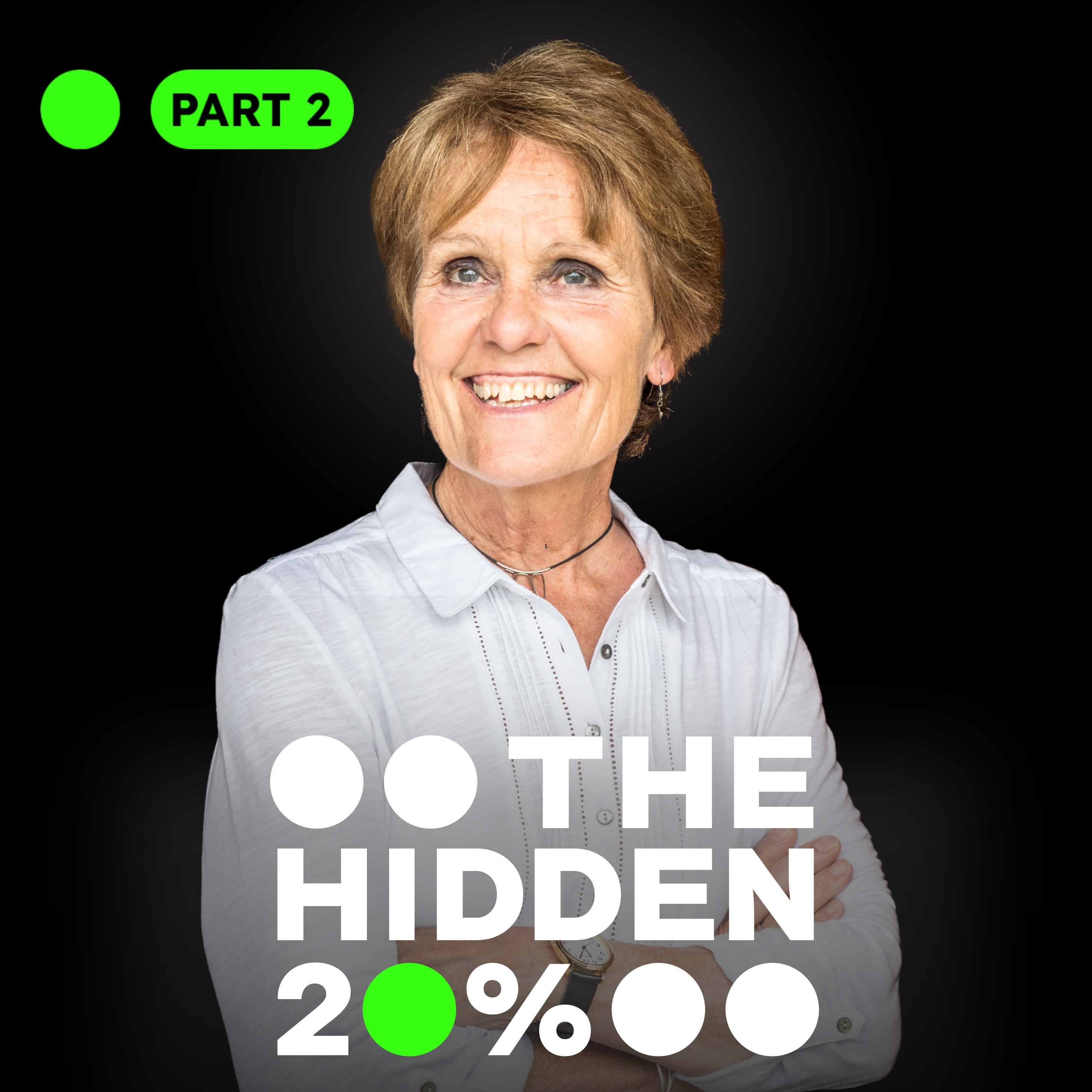
Undiagnosed autism in women and girls, focusing on masking/camouflaging, misdiagnosis, and the long-term cost of being missed. The episode argues autism has been historically defined around male presentations, leading to under-identification of females and later crises (bullying, self-harm, eating disorders, school refusal, abusive relationships). It also critiques “gold standard” tests (ADI/ADOS) as biased toward boys and calls for revised diagnostic criteria and better support.
Gina (social neuroscientist; worked in imaging labs in Birmingham; previously studied cognitive aspects in dyslexia and later autism; author of a book drawing on interviews with autistic women and girls). Host: Ben.
Autistic brains are “predictive coders”; unpredictability drives anxiety/panic. Girls often mask because of gendered socialization to be quiet and not “make a fuss,” especially during primary-to-secondary school transitions. Historical omission of Grunyya Sukareva (1920s Russian psychiatrist) is highlighted.
“Foreign land/undercover spy” analogy for social rules; “My Little Pony” story of a bullied girl trying to fit in; teacher scenario where “Chloe” is rarely flagged autistic; eating-disorder case later reclassified as autism after years; autism suicide risk cited as ~8x higher for autistic women.
Written by AI. May contain mistakes.
Discussion on the historical understanding of autism and the research background.
“Enough preamble I'm Ben your host let's get into today's episode.”
Exploring the concept of predictive coding and its relevance to autistic experiences.
“It's a bit like a guessing game where the brain actually has evolved to make life unsurprising for us, make life predictable for us because the world is full of massive amounts of information.”
Examining the challenges autistic individuals face in social settings.
“One of the people that I spoke to for the book, I think, had a wonderful description of it being like being dropped in a foreign land as an undercover spy without having any training.”
Discussing how female autistic individuals have been historically overlooked.
“This is like there is this system that we as autistics have that helps us navigate the world and ultimately helps us feel safe that when interrupted or changed is a big challenge.”
Highlighting key figures in autism research and their contributions to understanding gender differences.
“My daughter said to me last night that when there's change, she gets demons.”
Discussing the impact of stereotypes on the diagnosis and understanding of autism.
“and she talked about the girls appearing to have milder versions but the behaviour that she described was almost exactly what Kanna described 20 years later.”
Explore the historical context of autism diagnosis disparity between genders.
“And then it became clear that there were more boys than girls being diagnosed.”
Discuss the impact of underdiagnosis on autistic women's lives and the societal implications.
“How many females do you think we've missed?”
Examine the concepts of masking and camouflaging and their effects on autistic individuals.
“Let's throw the camouflaging and the masking lens or masking blanket over this.”
Discusses how autistic women hide their struggles and adapt their interests to fit societal norms.
“effectively you're trying to hide the fact that you are really struggling.”
Explores the emotional toll of bullying on young autistic girls and their coping mechanisms.
“So if I collect lots and lots of lip balms, then I'll fit in kind of thing.”
Examines the relief and grief experienced by women upon receiving a late autism diagnosis.
“They wouldn't describe it in those terms.”
Analyzes how late-diagnosed autistic women navigate social relationships and their vulnerabilities.
“But then we get into adult years and very often they get in inappropriate relationships, abusive relationships, coercive control, because they're so desperate.”
Discusses the paradox of social skills training for autistic girls who already excel at people-watching but struggle with social interaction.
“First of all, there is less stigma associated.”
Looks back at the historical misconception of autism and the damaging 'refrigerator mother' theory.
“That's a great question because I think that's a really interesting focus for future research.”
Covers recent controversial studies related to autism and the dismissal of scientific evidence.
“not being able to form a proper effective bond with their child.”
Explores how the autistic brain processes information differently and its implications on daily life.
“What do we know about the autistic brain from a neuroscience perspective?”
Explore the complexities and challenges associated with psychiatric diagnoses.
“Because, you know, there's a fixed box with a list of ingredients.”
Discuss the concept of neurodivergence and the implications of misdiagnosis.
“I then thought this morning, are we actually talking about the right hidden 20 %?”
Gain insights and tips for supporting autistic women in society.
“I would, in particular, like to get ADI and ADOS, the gold standard tests revised, specifically, even with gendered norms, you know, heaven forfend.”
Highlight notable figures and organizations contributing to neurodiversity.
“would make life better for everybody, actually.”

Get the gist, explore an idea or ask about something said.
 Claude
On The Hidden 20%, what are the key points of this episode?
Searching your listeningAutomatic transcript. May contain errors.
0:00How have we missed so many females who are autistic? Right. How? Long story. Welcome to The Hidden 20%, our neurodiversity charity on a mission to rewrite the future for people who think differently. Together with you and an eclectic range of brilliant guests, we can break the cycle of silence by smashing outdated stereotypes, exposing the myths and sharing the most up-to-date truths about what it really means to be just different not deficient. The best way you can help is really simple. Subscribe so you never miss an episode and if you can donate to our charity through the link below. Enough preamble I'm Ben your host let's get into today's episode.
0:59So, part two, Gina, you kind of blew my mind in part one, so no pressure on part two. Let's talk about autism. Give me a brief history, I guess, of your work with autism. I think the work that I did was related to understanding how brains got to be different. And I had been working with other neurodivergent groups, including people with dyslexia, and had been looking at the kind of cognitive aspects of reading and organisation, etc. And then got the opportunity to work with an autistic community relating to some of the techniques I'd developed. And it went from there, really. And I'd moved to a new imaging lab in Birmingham and the techniques were much more subtle and much more suited to the kind of questions I thought it would be interesting to ask about autism.
1:56Okay. And what were those questions? Well, it tied in with an emerging model of the brain, which is that our brains are predictive coders. It's a bit like a guessing game where the brain actually has evolved to make life unsurprising for us, make life predictable for us because the world is full of massive amounts of information. And if our brain tried to analyze all that information, process all that information, we could not cope. So the brain appears to have evolved a processing system where it learns. We talk about it as learning, saying when you see a light like that or hear a sound like that or a facial expression like that, this is what it means.
2:42You don't have to process it any further, but it'll be part of a sort of understanding of what the world is like and you can ignore it unless something surprising happens, which is in case you need to pay attention because it could be something, it should be something that you're paying attention to. And this tied in with the idea that the experience of autism was the world being unpredictable, tied in with the idea that resistance to change, which is something was focused on a lot, but not just you know I prefer doing it this way absolute panic that emerged if you went a different way to school or if somebody said you know by the way we're going to do this today and not that today or if we're going to Sainsbury's and not Tesco's for example so there was that aspect of you know what is it in the autistic brain that causes these there'd been a big focus on difficulties with social behavior as being the main context of autism, the main presentation of autism.
3:44And one of the areas I was involved in was with social behavior and saying, well, a lot of the understanding of meltdowns and things is perhaps was to do with sensory experiences, too bright lights or too loud sounds or textures of clothes. And maybe we could extend those to social behavior to say, well if we understand the rules of social behaviour then things become predictable and you know how if you say something how somebody should respond if you see a particular facial expression this is what they're experiencing. Supposing you didn't have that kind of handbook of social instinct as it were and you were completely lost.
4:26Or you had to learn it. Or you had to learn it. Yeah it wasn't automatic. Yes it wasn't in it. One of the people that I spoke to for the book, I think, had a wonderful description of it being like being dropped in a foreign land as an undercover spy without having any training. You had no idea what the language meant. You had no idea what the rules of behavior were. And, you know, if you were caught, you were going to be killed kind of thing. So there was a kind of survival. You know, it was really, really important that you understood what was going on. Otherwise, life was going to be really difficult.
5:01And in that analogy, you're actually going to be shot by the enemy. But that was a real experience, you know, going into a strange social situation. So the extension of the predictive coding was this isn't just to do with lights which are brighter than you expect or sounds which are louder or textures which are uncomfortable. It could be your life experiences. Your life experiences where you have no idea how to fit in with other people. And it is very important that you do. And therefore, life is constantly panic-inducing because you're in a group of people. They all seem to know how to get on with each other.
5:42But, you know, they may also be quite deliberately calling you weird or other or whatever. So we wanted to explore whether or not, first of all, you could track this kind of predictive coding. Could you see the brain formulating this message, this prediction to say this is what's going to happen? And can you? And you can. I think you can. I think we have. This is very early stages. But this is like an algorithm, right? This is like there is this system that we as autistics have that helps us navigate the world and ultimately helps us feel safe that when interrupted or changed is a big challenge.
6:27It's actually, I think, even worse than that. I think the autistic brain does not have that system. So that somehow the brain says you haven't got that system. The brain isn't flexible. This is how things have to be. Sure. And if they're not, panic. Yes. And therefore, it's either you've got a very, very narrow perspective. Everything has to be exactly the same. I think Chris Packham talks about he walks into an oak wood and he can tell when one of the leaves has been blown off, etc. Whereas most of us would amble through the oak wood, you know, unless the tree had actually fallen down, we wouldn't particularly notice.
7:13So you either have a very, very rigid view of what it should be like or anything could be possible. you kind of anticipate and I think this is where some of the problems that autistic people report is that it's the what if problem somebody says oh by the way the school's going to a visit next week or whatever we're all going to go and see the crown jewels or something and instantly lots of people I spoke to say this is massive what if there's all the possible options that could happen that immediately spring, you know, because the brain is saying, oh, we don't know what's going to happen. Therefore, anything could happen.
7:52Yes. So you get into a spiral of anxiety. My daughter said to me last night that when there's change, she gets demons. Right. That's an autistic six-year-old's experience of change. Yes. That it's demons, it's something really, really bad. Yes. How have we missed so many females who are autistic? Right. How? Long story. I think it comes very much back to the idea of the kind of self-fulfilling prophecy that we talked about before. And you have to kind of unpack the history of autism. There was never and never has been an understanding that being male is a diagnostic characteristic of autism. Leo Kanner had 11 children in his cohort that he originally talked about.
8:48Eight were boys, but three were girls. Not a huge, A, not a huge sample. And B, you know, one of them could have been a girl. And then you think, well, that's, you know, really much the same. And he never commented on the fact that, you know, there were some boys and girls, etc. Didn't report on any differences which were true of the girls and not true of the boys, etc. Behind that is another story where the person who really discovered autism 20 years before had actually commented on the difference between male and female, boy and girl. And who was that, Gina? Her name was Grunia Sukareva. Her.
9:23Her. She was a female. Her name. A female psychiatrist in the 1920s who, as was the case then, you wrote very, very detailed case studies of each of the individual children you saw. And at that stage, it was very early. It was unusual to actually study psychiatric, in inverted commas, disturbances in children. You know, there was lots of work on adults. But Grunyya Sukareva was a very famous, at that time, psychiatrist in Russia who wrote about, I think it was six boys and five girls, and detailed the descriptions of their behavior, beautifully detailed descriptions of each of these children, and described how the girls were slightly different from the boys.
10:11and she talked about the girls appearing to have milder versions but the behaviour that she described was almost exactly what Kanna described 20 years later. Can I just interrupt you? I was diagnosed autistic just over three years ago and therefore I wanted to learn everything I could about autism and I've sat with quite a few people in that green chair talking about some of the historical context around autism. I've never ever heard that lady's name mentioned. Right. I've never ever come across that. Yes. Canna for sure. Yeah. Asperger's for sure. Of course, yes. But not what was going on 20 years previous.
10:57No. I don't think it was any kind of conspiracy. No, no. But she was just overlooked. And I mean, almost every paper you come across when they talk about autism, first described by Leo Kanner in 1943, also Hans Asperger, 44, not translated until later, or the fathers of autism, as they're called. As they're called. And within the last two years, I've come across papers which describe that. There is an issue where perhaps Asperger, published in the same journals that she did, in German, she originally wrote in Russian, but she also wrote in German. He could possibly have come across her work. later on in the 1950s, Kanner actually communicated with her, corresponded with her about some other work that she'd done, but never commented on that.
11:45But ultimately, when you then fast forward the tape of The Fathers of Autism, and based on everything that we were talking about in part one, you then look at how that plays out in terms of who's researching and who is being, quote unquote, researched, and therefore the self-fulfilling prophecy of the then stereotypes that then form in society of it's a boy thing. Boys are autistic. Not men, boys. Boys, yeah. Like even further down than just men, it's boys. Yes, it's a boy thing. It's white boys that are autistic and they present in this way. Like you can absolutely see how we've missed girls, women.
12:31We've just missed them. Well, I think, I mean, the key thing is, you know, there is an aspect about whether or not Asperger and Kanna knew about her work or whatever. But the key thing is she actually right at the beginning said there are differences between boys with autism and girls with autism. And if that had been followed through, the history of autism would have been so different. Well, actually, to be fair, Asperger did say he thought it was something to do with extreme male intelligence, which echoes other things that have been said about autism. And the paper that gets referred to was his thesis eventually.
13:05And he had four boys. He wrote a thesis based on four boys. Yes, you could do it in those days. Wow. Yeah. But I mean, to be fair. But that's like a thesis on four boys dictating the history and future of autism. Yes. That's it. Four boys. To be fair, he was a clinician and had quite a lot of experience of children with behavioural disorders. I mean, this is not quite like a PhD. He was a medic and however it was done in those days, you could write a thesis, which would be four case studies which illustrate the story I want to tell. And we know, which maybe we'll get onto, there is another whole story about Asperger and his understanding of who was autistic or who could have, in inverted commas, autism.
13:56So it wasn't as though they said, this is a boy thing. Canna certainly didn't comment on it until later on in the 1950s, 60s, when there was an accumulation of cases. And then it became clear that there were more boys than girls being diagnosed. The four to one kind of. Yes, it did. The figure began? It did. I mean, at this point, autism was a rare condition. It was fairly tightly described by Kanner and also by Asperger that his work didn't come out until a lot later in the English-speaking Western world. It didn't come out until later. So it was a quite specific description of autistic behavior, which was characteristically quite disturbed, quite a lot of impairment.
14:43what we would now call children also with intellectual disabilities, etc. And so there was a quite tight description of what autism was like. Which, by the way, is still part of the myth and stereotype today. It's still very much part of it. Although I think hopefully it's relaxing a bit. And then what was happening were there clinicians all around the US and the UK in particular, and then eventually in the wider world, but probably not with these conditions. and so there were clinicians reporting their case studies. So gradually there was an accumulation of, you know, this is what autism, these are the people who have autism.
15:20Here's the jigsaw puzzle, here's the picture that then appears. That's right. And because particularly the descriptions was of quite overt acting out type behaviours, so quite evident difficulties, strange obsessions, repetitive movements, etc, etc. Lots of visible presentation. Yes, but also the characteristic that Kanner drew attention to was this aloofness. And that term really informed what the picture of autism was. And that's what the word autism also means, you know, self-contained, not concerned about other people, apparently lacking the effective contact is what Kanner talked about. So there was this picture of the acting out, isolated, loner, sometimes quite extreme behavior.
16:07So, you know, the repetitive movements might involve headbanging or eye gouging or spinning, etc. So that was the picture that emerged and it seemed to be much more characteristic of voice. And obviously all bad things, of course. Well, because otherwise, you know, if you were very, very quiet and didn't say anything, it has to be good. So I think when they did the first epidemiological studies, it was Lotte in the UK. in fact, in Middlesex, described this behaviour and observed in passing that it appeared to be more boys than girls. And four to one was the ratio. When later on Asperger's was introduced as a concept, sometimes the ratio went up to 15 to one.
16:47So it's been varied, you know, 10 to 15 to one. Can you find any reason, Gina, why the ratio wouldn't be the same amount of autistic males as there are autistic females? Lots of reasons, yes. Because it comes back to self-fulfilling prophecy. So I think if, again, this issue of acting out, you know, more disruptive behaviour, parents not being able to cope with the children or the school saying, you know, we're going to exclude this child, etc, etc. So I think there was that aspect of this is what autism looked like. Yes. And it seemed to be more characteristic of boys. But not all boys. There were girls who were, obviously, because you've got four to one, there were some girls and Canna did have three girls.
17:34But they presented against the male template. It's one template, just a few girls. Who were like that. Yeah, who were like that. So they got the autism badge. But do you believe that there are as many autistic boys as there are autistic girls? Or autistic girls as there are autistic boys. I think it's very likely that, yeah, that we could be getting, we're now possibly talking about two to one. Okay. If you're including adults as well, which I think is important. Yes, absolutely. How many females do you think we've missed? Gosh, I think people are talking about thousands worldwide, you know, hundreds of thousands quite possibly.
18:12Yeah. Because if you look at the accumulation of late diagnosed autistic females, then what is happening is that the positive way of thinking about this is that we've got better at recognising them. But if 1 % of people are autistic, doing some very quick maths here, if 1 % of people are autistic and you're talking like 70 million people globally, and then you kind of go, okay, but we have counted some females within that 1%, obviously. and again, I'm doing just very quick big maths here, I'd be like, we've missed 50 million females. Could you? Yes. Over time, obviously. Yeah. Yeah. In terms of females who are alive today, for example.
18:58Yes. Yeah, yeah. And therefore, how are we even approaching the word overdiagnosis? Yes. Yeah. Well, in fact, because today a lot of people are talking about overdiagnosis and there's some very toxic language associated with that. You know, whisper it quietly. The British public are being taken for a ride. You know, do you know how much we spend on taxis to take children to special educational centres, etc.? And then I come along and say, actually, there's a big problem in that of underdiagnosis. There are a large number of women who weren't diagnosed as children, who gradually, as time goes on, and possibly they have a child who is identified as autistic, clinician describes what the behavior is like and the mother says but that's what i do and then gets diagnosed so i think yes i mean it's shocking because these are not people whose lives have otherwise been you know calm and wonderful and then perhaps they get older things get a bit more difficult these are people whose lives have always been difficult yeah parents have said do you think she might be autistic.
20:06You know, clinician will say no, teacher will say no, because girls don't get autism. And therefore, oh, she's shy, gets to secondary school, huge problems emerge, perhaps lots of bullying, self-harm, eating disorders, school refusal. Yeah. And eventually, given that, you know, the waiting lists, I mean, autistic, I did a big survey, some of the waiting lists and some of the postcodes are five years or more. You know, so a girl's whole secondary school career will be blighted by the fact that actually she needs the kind of support that is available for autistic children, but she hasn't got an autistic diagnosis.
20:51It's criminal. Yeah, I know one case where she presented with eating disorders, sent to an anorexic clinic, which in itself took a bit of time, but because there was a kind of emergency, physical emergency associated with that, she was seen quite quickly. She was then sent back saying, actually, she's not anorexic, she's autistic. So she gets put on a waiting list for autism. Three years later, she gets a diagnosis, by which time there's been several medical crises, etc. etc. And that's because the whole setup was for boys. There was a study done where teachers were given identical scenarios of primary school teachers of children causing behavioural difficulties in their classroom and said, you know, do you think this child might be autistic and would need some help?
21:39And the teachers who were given the scenario and the child was called Jack almost invariably said, yes, I think that boy is autistic and he needs help. Whereas other teachers were given the scenario and the child was called Chloe, no, virtually none of them said that she was autistic and needed help. Oh, she's shy, chronically shy, socially anxious, etc. So, you know, these are almost the first port of call where, you know, parents might be anxious. Having said that, you know, I came across parents who have an autistic son who then have a daughter and, you know, start to express difficulties to the GP.
22:19I think she might be autistic. You're just anxious. You're oversensitive. No, she'll grow out of it. She's shy, etc. So even parents who would be experts are dismissed. Teachers who see 30 children a day, all day, over several years, they should be experts in saying, I think there's something a bit unusual about this girl. and they are because they have this picture yes they would accept there's something unusual about the girl but it couldn't be autism you know that'd be way down the list because autism is voicing the irony of like forget the challenges that autistics face here are the skills that autistics bring and you kind of flip the exercise and kind of yeah i wonder if it will be different Yes.
23:11If Grunia's a grave road. Yes, that's right. Well, it's a huge waste of human capital. I mean, not only the suicide rates among autistic women, I think they're eight times higher than non-autistic women. So, you know, the desperate struggles that these people have gone through because somebody at some point has said, oh, they don't, you know, not even referred them for testing. And of course, the other irony is that if they do get referred for testing, the so-called gold standard autism tests are devised to pick up autism in boys. So the girls present and they fail the test. Sure, there's no trains or planes in that girl's world.
23:53No, no, that's right. Yes, she's not interested in weather patterns at all. I do love weather patterns, by the way, just for the record, Gina. Let's throw the camouflaging and the masking lens or masking blanket over this. Yes. How does that help us understand also why differences in presentation between boys and girls, you know, men, women and autism? Like where does masking and camouflaging come into this? Really, really important. That was the key breakthrough in a way. Oddly, in about 1980s, it was Lorna Wing who said, when somebody commented on the difference in numbers of boys and girls, said almost in passing, well, maybe girls are better at disguising their autism.
24:36And there was a kind of, yeah, yeah, perhaps. And nothing else was done. Until the beginning of this century, there was a kind of wave of personal testimonies of these amazing autobiographies of late diagnosed women who emerged from the shadows, who found their voices. said, look, you know, I was age 40, 50, whatever diagnosis is autistic. At last, my life made sense. And they then catalogued the agonies that they'd gone through before they'd got to this diagnosis and how much it had changed their lives. So all of a sudden, there was a big move to say, do you know, there are autistic women out there.
25:16Look, you know, these amazing books. So psychologists thinking, maybe we should be looking at this. And that's when this issue of camouflaging emerged. And interestingly, it had been around at about the same time where social anthropologists, et cetera, were saying, maybe there is a kind of behavioral female protective effect where because girls from a very early age are socialized to be quiet, not to make a fuss if they feel uncomfortable, not to draw attention to it in any way. so there is a kind of behavioral protective effect that although these girls are autistic they don't act out in the way that boys do and therefore they don't cause a trouble not not spotted until eventually and this wasn't said at that point but what does then happen or how it was happening was that when they moved from primary school to secondary school they then found that this nice neat little protective scaffolding that they developed in primary school was no longer fit for purpose because the change from primary school to secondary school I think everybody would agree for everybody not just neurodivergent people is horrendous and it comes also at the wrong time of children's lives adolescence puberty hormones yeah so then then they are no longer good girls or perfect cause no trouble always very quiet the gendered socialization is no longer effective as it were so there was that aspect that maybe they were autistic in the same way as as boys were but they didn't show it and then this camouflaging and masking came out and said actually maybe they're not autistic in the same way that boys are they have got problems but because they are socialized to be quiet and not make a fuss they camouflage and so that's when it emerged in the psychological community let's have a look at this camouflaging because in a way if a camouflage is successful you don't know that somebody's camouflaging so and just for the record Gina that camouflaging and masking is not just a female autism thing yeah like it's any autistic yes i think that's really important and also why i kind of anxious about the idea that there's a female autism because there are boys and i've spoken to them and males as well who will say actually i did my best to hide the fact that i was having difficulties yeah right okay and masking the same thing masking camouflaging slightly different but effectively you're trying to hide the fact that you are really struggling.
28:05Yeah. Or I guess your special interests can be very quote unquote normal. You know, me collecting football cards. Yeah. Pokemon cards. Totally normal. Yeah. No one bats an eyelid. Right. Go, go memorize some train numbers and suddenly you're kind of on your own. Right. Or collect dolls or Barbies or. Yeah. Ponies. Yeah, as Cathy said about Taylor Swift. Boy bands. Exactly. Yeah, yeah. And they're much more quote-unquote normal. Yeah, I think it's Tony Atwood in Australia who talked about socially acceptable obsessions. Yeah. And of course, if you look at the gold standard tests, there are questions about, you know, does your son have an unusual interest in weather patterns or train timetables or calendar dates, etc.?
28:54To which the answer is no, but you're not asked, does your daughter have an unusual interest in Barbie dolls? So the parents don't say, I would have told them that she's got a thousand Barbie dolls in her room, all organized in height order or whatever. Or anyway, if she starts to show an interest in Barbie dolls, well, all girls like Barbie dolls. So, you know, whatever. And that's one of the things that came out in these various personal testimonies, quite funny stories about, you know, collecting lip balms because girls have lip balms. So if I collect lots and lots of lip balms, then I'll fit in kind of thing.
29:29But how much of that is conscious, though, around those interests and obsessions and camouflaging? How much have you learned from listening to the lived experience of autistic women? How conscious is that? I need to fit in, therefore. I think it's quite conscious. And I think very sadly from very early on. And it very often is a response. some of the younger children I spoke to, I was lucky most of it was on Zoom because I could turn the camera off while I was weeping at the stories they were telling me. It's young girls being bullied, you know, being told they're weird. A little girl said, you know, I was called other, you know, weird, you know.
30:07And so they do consciously try and fit in from a very early stage. You look quite emotional about that. Yeah, I do. Because there were some very sad stories. You know, a little 10-year-old girl, somebody was asking if she's got any friends. She said, well, I think so. You know, I think so. I think the bullying is something which came across really powerfully because one of the things that I say in the book and I've said since is that I was a dyed in the wall objective scientist. You know, you mustn't get involved, know anything about your, you know, you've been sent these participants. They, you know, they are autistic, etc.
30:44And it wasn't until I started talking when I realized, you know, what was going on and started talking to them. And yes, so I think from a very early age, camouflaging and masking is evident. They wouldn't describe it in those terms. But you can tell, I mean, there was one little girl who said she watched all of the popular girls and they all had My Little Ponies. Sure. So she saved up her money and got a My Little Pony, you know, thinking, so now I can be part of that gang. Yeah. Sadly, she got the wrong My Little Pony. What is the cost to undiagnosed or late diagnosed autistic women who are adults now?
31:25How has this played out? One of the things is, as I said, you know, these are not people whose lives have been fine and then suddenly, you know, they're autistic. They've always been autistic, but they've been given all sorts of other labels. The diagnostic bingo, I call it. And unfortunately, very often inappropriate medication as well, which has caused additional problems. So I think very often the first reaction, almost invariably, when late diagnosed women describe their experience was joy almost. It's at last the relief. I know why my life has been like it has been. I know why I found my workplace difficult.
32:03I've got to try about there because actually at the moment, you know, there's amazing resources out there and they can say, I am autistic so I can access your resources. And the second response is grief. If only I'd known that, my life would have been so different. And that's, again, almost invariably the case. One person said to me, I'm quite glad I didn't know I was autistic when I was at school, or I, you know, wasn't labelled as autistic when I was at school because I'd have been treated badly by my friends, even though she'd had a really bad time at school. She just thought that would be an additional problem as opposed to helping her out.
32:39But almost invariably, it's this kind of relief. So it has made a big difference. And a lot of them, one of the things, I didn't go into this in a lot of detail, is because an aspect of the autism which is more characteristic of females than of males is desperately wanting to have a relationship, wanting to belong. Wanting to be social. Wanting to be social. which as I've said is the why of camouflaging because in a way we've got this camera type picture of the aloof loner so who cares if people think I'm weird kind of thing whereas these individuals I call them the chameleons really really care and so anybody that will respond to them then they will attach themselves to them and very often there's stories of friendships you know parents say, well, she always had a special friend, but they fell out for some reason and, you know, things like that.
33:34But then we get into adult years and very often they get in inappropriate relationships, abusive relationships, coercive control, because they're so desperate. If there's somebody out there that will partner me, then I'll let them do anything. Yes. Just so that I feel I belong to somebody. Yeah. And so that's a major problem. Yeah. There's a kind of naive vulnerability there isn't there yes and also because they haven't got the kind of social support group where people will say i don't think that's a really good idea so that there's not an awareness from other people to say i don't think that's acceptable yes yes but then how immensely potentially empowering if you are recognized autistic as a young person i mean male female whatever yeah and can a be in environments and with support networks that yeah allow you to thrive and recognize all the amazingness yes that you can bring but also the potential pitfalls i i feel very lucky for my daughters that i can have some awareness or i can look into or speak to brilliant people about what might be the pitfalls yeah to watch out for it's very interesting because I think that's actually right.
34:55I mean, two things. First of all, there is less stigma associated. So the term autistic is not as bad as it used to be. So it's not such a problem. People are talking to older women saying, oh, you know, I didn't think I was autistic because I was at school and there was two or three boys there and they were always taken out to do woodworking or something. So there was a kind of the self-fulfilling prophecy aspect. I think that's part of it. But it's really bizarre because a lot of the training for autistic adolescents was about how to be social. So you were taking them out. And particularly if they were girls, they were the world experts in people watching.
35:35They'd been doing it since, you know, they were conscious almost. And they were saying, now, if somebody says this to you, this is what you should say in reply. Or if their face looks like this, you know, they show them the Thomas the Tank Engine, you know, this is a happy face. So it's paradoxical in a way. Yes. People who knew all the rules but didn't have the kind of automatic production of them. I think that's the problem. What have you come across, Gina, where hormones and PMDD are concerned and autistics? That's a great question because I think that's a really interesting focus for future research.
36:09The issue of hormones has somewhat been contaminated by the issues of the extreme male brain and testosterone, for example. But in the book, I talk about the perfect storm for females of being female, adolescent in puberty and autistic. So there's a key point of hormonal change. There's a lot of work done around a pregnancy and motherhood, which is interesting. Yes. But emerging now, there is a feeling that there can be fluctuations in difficulties during the menstrual cycle. But there's a lot of reports now about the perimenopause and menopause. So I think it would be really interesting to go back to the kind of hormone story and see what it is that is producing this fluctuation in the experience of autistic symptoms, the presentation of autistic symptoms, which are allied with female hormones.
37:01What is the idea around the refrigerator mothers? Oh, gosh. Yes, I had a whole chapter on that which got taken out. The idea was that, bearing in mind this was very much the time of psychoanalysis, so relationships with your parents were to do with the ego, etc. etc. So the idea was that these children had a lack of effective contact with their parents in particular. That's what Kano commented on because their parents had no effective contact with them. So they had no experience of what it's like to be cuddled or whatever, which is interesting because again, Kano observed one of his patients walking to the clinic.
37:43The mother was ahead, walking ahead and the child was hanging around behind. And he said, you know, she's got no loving attention to this child. Not thinking that actually this mother had been with this child from the moment of birth. He may have been rejecting her. He may become very angry if anybody touched him or whatever. So he was observing the product of the autism as opposed to the cause of the autism. But the whole idea was that it was to do with women in particular not being able to form a proper effective bond with their child. There was various references. And that meaning that the child will become autistic.
38:26Yes, that's right. And very often references to the fact that these were women who worked outside the house. Okay, okay. So, you know, this, one of them, I think one woman was a clinical psychologist. You know, so there was a bit of social, you know, stuff thrown in there. But what was worse was that there were clinics, This was very much in the States where mothers could get help for their children who were behaviorally quite impaired, only if they agreed that they would go through some kind of rehabilitation themselves to be proper mothers. Wow. So that's how powerful that idea was. What do you make of the Tylenol Trump?
39:05Appalling. I've watched that in horror. Yeah. Today, like we've spoken a lot about some of the historical context of 20 years ago, 40 years ago, 150 years ago, where there's sort of maybe a little smidgen of allowance of, okay, it was all pretty different back then and we were all trying to figure it out. and none of it's excused by that. But thinking about what we know today and the access to information that we have and still something like that coming out in 2025. I think what I find most appalling is the way that the science has been dismissed. So huge study in Sweden, demonstrating 2 million children, everything beautifully controlled for siblings, etc.
39:55Forget that. And there was a study which was done in Harvard, which they cautiously said, well, maybe there's a bit of an association. But it was done at two separate clinics. And now it's being reported in the States as two separate papers. So two sets of scientists. So they're rewriting history. What do we know about the autistic brain from a neuroscience perspective? Well, this comes back to the idea that we're looking at a brain which processes the world differently, which is the story of neurodivergence, if you like. And that can be immensely positive. Sure. You know, creative ideas. I mean, Simon Baron-Cohen's idea about pattern seeking.
40:40Yes. Amazing. You know, this is being able to see different connections, different patterns. Really, really good. Plus side. Minus side is that it means the world is less predictable. So that can impact on everyday life in quite a dramatic fashion. Talking about supermarkets, somewhere with bright lights, loud noises, lots of people. a terrifying environment if you can't make sense of it. And God, don't move the milk. Don't move the milk. That's right. Yes. Don't move the supermarket around. Yes. Or anything. Anything. Or anything, actually. I was talking to somebody whose son is autistic and travels around with him and says, Premier Inns are the best things ever because they're all the same.
41:28Because they're predictable, that's fine. You know, the bathroom is always on the same side and everything's purple and whatever. So, yeah, so there's plus sides and minus sides. I think what's happening is that more profoundly for some people, the brain just can't make sense of the world less profoundly for others. And I think that's the key issue. And that's to do with all sorts of neurodivergence. I mean, I think, you know, this issue at the moment about autism, ADHD, ADHD, actually, I think that's demonstrating the problem with psychiatric diagnosis, psychiatric labelling. Because, you know, there's a fixed box with a list of ingredients.
42:12And if you've got those ingredients, you go in that box. But supposing you've got some of those, but not those. So, okay, you don't fit in that box. Maybe you've got enough of those that we could put you in the ADHD box. And then people saying, I've got both now. Because the fact that till 2013, you couldn't have both diagnosis says it all for me about, you know, diagnosis. But then when you follow the money and you look at the funding and the research and the silos, there is not an incentive, unfortunately, at the moment to bring all of that together. Right. there isn't even an efficiency someone's not even kind of gone we've got about a million people on the waiting lists for adhd and autism and there's loads of people on both but they're on two separate waiting lists this doesn't make any sense yeah well there's two things you can do one of the things i'm slightly worried about what's going on at the moment is that you say well there's actually too many people asking for a diagnosis.
43:18So we should ration them. So that's the way of getting rid of the waiting list, saying, okay, you know, no, you're not ADHD. And it comes back to this toxic language about a sick note from life, but also sharp-elbowed middle-class professionals looking for excuses for their children not being very bright, et cetera. So really unpleasant language. So the UK seems to be dealing with it by saying, actually, well, let's get rid of, you know, that famous 787 % increase in autism statistics, which everybody does, saying that just proves that there's too many. In the US, what they're saying is there's too many people taking paracetamol, so they've got a different rationale.
43:57But it's all to use the kind of eugenics side of things. Nobody is going, well, how many people are there, actually? Like, what does that look like? Yes. I had a hunch this morning, Gina, It's a silly hunch. We've been doing this charity for coming on two years. We called it the hidden 20 % because of the belief that 20 % of the world are neurodivergent. I then thought this morning, are we actually talking about the right hidden 20 %? Because what if there's another 20 % who generally are hidden, who are not diagnosed, who are female, who are from other ethnic minorities, who are adults? What do you think about that?
44:44Yeah, I think that's absolutely right. And I think this issue about neurodivergence and neurodiversity is something, you know, if we come back to the idea that every brain is different from every other brain, then that's quite a good starting point. Which is the idea of neurodiversity. Biodiversity, neurodiversity, every single brain is different. Right. But that's kind of morphed, not altogether helpfully, into neurodivergence. Because still coming back to the idea there's neurotypical and there's people who aren't neurotypical. and they're neurodivergent. But then on the other hand, you have to say, these are people who need help.
45:19Sometimes they need help because the world hasn't accommodated for them. So we should be dealing with that. But sometimes they need help because they genuinely need help. And we should find a way of helping them. So, I mean, I think the hidden 20%, well, I mean, we're now talking, I think most recent findings in the States were one in 31, eight-year-olds diagnosed with autism. and you think, how much does that actually say about autism and the world? And is it because the world has become much more demanding, much more conforming, and therefore if you're a tiny bit different, all of a sudden you're divergent?
45:54Yes. And is that actually a good thing? Yeah, yeah. And I think that's right. How do you think this plays out, Gina? Give you a crystal ball. How do you think it plays out in terms of, let's be specific, autism and females? and then diagnostic criteria and individual silos. Yeah. I would love to have a bonfire of DSM-5. I love the idea of that. But coming back to the money, huge amounts of money for the American Psychiatric Association buy that. So I don't think that's going to happen. Interestingly, I think Francesca Habby talked a bit about the idea that if you said to a group of neurodivergent people, should we get rid of labels like autism?
46:43No, no, no, because that's us. You know, this is our banner. I am autistic, you know, and so it's an issue. That's helping me make sense of who I am. Yeah, issue of identity. I think the issue of identity is really important. I think that's something which the over-diagnosis debate forgets. You know, this isn't just about using up scanning time or something. It's actually people who have a genuine problem with identity. So I would love to reform the whole diagnostic process. I would, in particular, like to get ADI and ADOS, the gold standard tests revised, specifically, even with gendered norms, you know, heaven forfend.
47:26But, you know, if that's the answer, then let's do it. Because there are so many people being missed. And the adults in particular being told, I don't know why you want an autism diagnosis, there's no cure. And you just think, somebody who can say that, you know, what is their understanding of what a diagnosis is for? Yeah, the what's the point argument is so dismissive. Yes, not compassionate at all. No, not at all. Last two questions. What gives you hope? I think what gives me hope is this discussion. And the fact that hopefully people having this discussion, you and I and anybody else, is arming people out there.
48:05I mean, and we are talking about arming them because, you know, it is a battle. And saying, a parent contacted me recently trying to get their daughter an EHCP, got a private diagnosis of autism, not accepted by the council, has to use the council-appointed clinical psychologist. Council-appointed clinical psychologist says she can't be autistic because she's a girl. This is 2025. So you do need arming against, you know, this is the council with allegedly little money to support legal appeals, etc. So I think there's an awareness of that. I think the focus on the different kinds of autism, I would like to go back to subtypes, even if it's type 1, type 2 or whatever because I don't think this spectrum is currently fit for purpose.
49:00Sure, some distinction. Yeah, I think, well, particularly if there's one group of people who are less concerned about social contact and another group of people who are passionately obsessed with social contact, they will need different support mechanisms, different strategies. so acknowledging that would be important so that's where I would go And what do you say to River, my six year old daughter? I'd almost say lucky you because she's got you as a father so that she's got somebody who understands her Stand your ground I think that's the other thing I'd say that to all girls because I do but stand your ground don't let them push you around but I would also like to talk to River's friends and say you know, there's a lot of focus on self-care, which I shouldn't dismiss, but there's so much less on other care, kindness.
49:53You know, I think that should be part of the curriculum. Acknowledging that people are different. They're not the same as you. I just think, I don't know if there's a kind of anxiety about conformity at the moment. You know, let's not be seen to be different because whatever. Another thing as a social neuroscientist, we have a drive to belong. Belongingness is hugely fundamental human drive and it will make people do anything including hiding the difficulties they're having yes causing themselves huge amounts of mental health you know the anxiety and depression statistics in autistic women are huge yes but they will carry on which just shows how important it is if you suffer you have burnouts meltdowns etc because your whole life is trying to fit in.
50:37And I think somehow finding a way of addressing that would make life better for everybody, actually. Gina, can you give our listeners your three top tips for autistic women? First of all, stand your ground. There is evidence out there, and more than there used to be. So don't be dismissed by the idea that autism is a boy thing, because it definitely isn't. The second top tip is maybe stepping back and not being so anxious about not fitting in, I think that drives a lot of the more maladaptive behavior and just relax a bit more. And I think perhaps the third tip would be related to that and saying be aware that unlike some people, social life is a struggle.
51:27Don't think that's a failure. That's just the reality for you. And therefore, take appropriate steps. Make sure you can look after yourself and be aware that things will be more difficult for you than for other people. And that's just how it is. Last question. Who would you like to give your green badge to, Gina? Well, I knew this was coming. So I was hoping you had dozens of green badges because I'd love to give lots of people badges. Steve Shirley was one, but she died very recently, sadly. So can I have two? Yes. Can I have two? Maybe three. Yeah, you can have three. Great. Okay. First of all, I'd like to give one badge to Olivia Bailey, who's the newly appointed Minister of Early Years, because I really think that a proper focus on understanding neurodivergence in the early years would be as important as whether or not they can do maths and English.
52:23Agreed. I'd like to give a badge to the Bullying Helpline, which is a charity, and really good charity, because so much of the suffering that I heard, which is why you mentioned I got quite emotional from the people I spoke to, was to do with bullying. and so some kind of support to make that a frontline thing. My third would be to Ute Frith, who's my absolute hero and has made so many helpful comments. She's really been my role model. So that's three. Thank you, Gina. We've got to stop and I'm so gutted, but thank you so much. Well, thank you.
53:09That's it for today's episode of The Hidden 20%. But just before you go, a favor. The Hidden 20 % is a charity and we do this to bring you the truth, the latest research and the real stories that matter. So if this episode spoke to you, then please hit subscribe. And if you can, donate via the link below. Finally, a big shout out to you all for listening and our brilliant team who make this all happen. Phoebe, Charlie, Kristen, James, John and the guys at TYX Studios we'll see you next time
In part two of this conversation, neurobiologist and author of The Lost Girls of Autism, Gina Rippon, rejoins Ben to focus on the women autism research left behind.
Picking up where part one ends, Gina traces how early brain science, diagnostic bias and cultural assumptions combined to hide autistic women in plain sight. She unpacks why autism was framed as a “male condition,” how masking became a survival strategy, and the real cost of decades of late or missed diagnosis.
They explore the neuroscience behind prediction and masking, the forgotten female figures in autism’s history, and why the language of “over-diagnosis” risks oversimplifying a much more complex history of under-recognition .
Gina also reflects on autistic bullying, and what meaningful change in diagnosis and research could look like next.
If you’ve ever wondered why so many autistic women are only being seen now - or why you still don’t feel seen - this conversation is for you. We hope it offers some clarity, context, and hope.
Join us at hidden20.org/donate.
________
Host: Ben Branson
Production Manager: Phoebe De Leiburné
Video Editor: James Scriven
Social Media Manager: Charlie Young
Music: Jackson Greenberg
Head of Marketing: Kristen Fuller
00:00 Introduction
01:00 Gina Rippon’s Career in Autism & Neuroscience
02:00 The Brain Questions That Changed Autism Research
05:12 Autism & the Brain: Predictive Coding Explained
08:11 Why So Many Autistic Women Were Missed
09:09 The Forgotten Female Psychiatrist Who Identified Autism Decades Earlier
16:52 Autism Diagnosis Ratios: Female vs Male Explained
18:02 How Many Autistic Women Have We Missed? The “Overdiagnosis” Myth
24:02 Masking in Autistic Women: The Breakthrough Moment
29:30 The Reality of Bullying for Autistic Girls
31:18 The Cost of Late Autism Diagnosis in Women
35:59 Autism, Hormones & PMDD: What Research Still Lacks
37:00 Debunking the “Refrigerator Mother” Myth
40:15 What Neuroscience Tells Us About the Autistic Brain
44:11 Neurodivergent vs Neurodiversity: Why Language Matters
46:00 The Future of Autism Diagnosis in Women
47:54 What Gives Gina Rippon Hope
50:45 Gina Rippon’s Top Tips for Autistic Women
51:44 Gina’s Green Dot Badge
The Hidden 20% is a charity founded by AuDHD entrepreneur, Ben Branson.
Our mission is simple: To change how the world sees neurodivergence.
No more stigma. No more shame. No more silence.
1 in 5 people are neurodivergent. That’s 1.6 billion of us - yet too many are still excluded, misunderstood, or left without support.
To break the cycle, we amplify voices, challenge myths, and keep showing up. Spotlighting stories, stats and hard truths. Smashing stereotypes through honest voices, creative campaigns and research that can’t be ignored.Every month, over 50,000 people turn to The Hidden 20% to feel safe, seen and to learn about brilliant brains.
With your support, we can reach further, grow louder, and keep fighting for the 1 in 5 who deserve more.
Join us at hidden20.org/donate.
Become a monthly donor.
Be part of our community where great minds think differently.
Brought to you by charity The Hidden 20% #1203348
______________
Follow & subscribe…
Website: www.hidden20.org
Instagram / TikTok / Youtube / X: @Hidden20charity
Ben Branson @seedlip_ben
Gina Rippon https://www.ginarippon.com/
If you'd like to support The Hidden 20%, you can buy a "green dot" badge at https://www.hidden20.org/thegreendot/p/badge. All proceeds go to the charity.
Hosted on Acast. See acast.com/privacy for more information.


