Ask ChatGPT


 The Hidden 20%
18 Jun 2025 · 1h 5m · 25 chapters

How naturopathic/functional medicine approaches can support neurodivergent children and families in crisis—especially sleep, feeding (including ARFID/selective eating), emotional regulation, and underlying gut/nutrient/infection issues.
Neurodiversity isn’t caused by poor nutrition, but nutrition and physiology can magnify traits. Many autistic/ADHD kids have gut problems; up to 84% of autistic kids are said to have long-term gut issues. COVID/long COVID and hypermobility may form a “perfect storm,” with symptoms like fatigue, POTS, and prolonged inflammation. For sleep, magnesium (Epsom salt baths) is presented as calming via GABA and blood-sugar support; tryptophan foods (oats, yogurt, turkey, cashews, bananas) and cherries are presented as sleep-supporting. For mood, blood sugar swings and low protein/healthy fats are emphasized.
A child excluded from 42 schools; kids with feeding tubes and seizure activity; River (Lucinda’s 5.5-year-old autistic daughter) improved sleep with magnesium salt baths and a cherry smoothie.
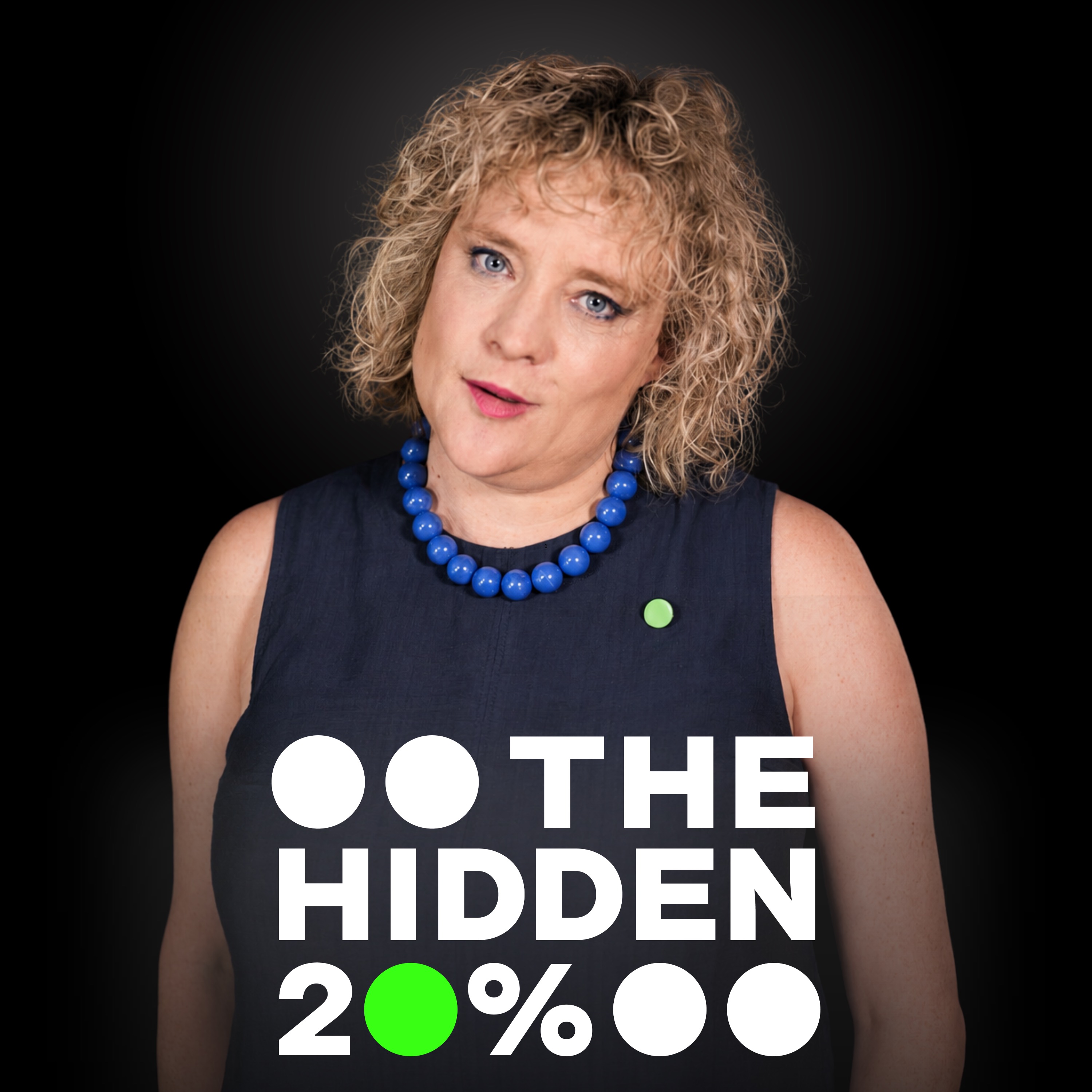
Lucinda Miller, founder of NatureDoc; leading naturopath/functional medicine practitioner with 25+ years’ experience; late-diagnosed ADHD herself; mother of a neurodivergent family (two ADHD, one dyspraxia; sensory processing, some autism).
Written by AI. May contain mistakes.
Discover the challenges faced by neurodivergent individuals and their families.
“Let's see how great minds think differently.”
Hear Lucinda's story of her ADHD diagnosis and its impact on her life.
“If Lucinda could concentrate, she'd achieve a huge amount.”
Understand the complexities of neurodiversity as it relates to family issues.
“And in fact, two have ADHD and one also has dyspraxia.”
Learn how Lucinda's interest in nutrition developed from her health challenges.
“I was definitely seeing kids with both of those before then.”
Explore the crises families face and the support they seek for their children.
“And that would have normally knocked me out for the weekend.”
Gain insight into the principles of naturopathy and its role in treating neurodivergent conditions.
“A bad infection, like encephalitis of the brain, you know, whatever it might be.”
Explore the links between COVID, neurodiversity, and health complications in children.
“But essentially, it gives you a roadmap.”
Discover the correlations between neurodiversity, hypermobility, and chronic health issues.
“And the symptoms tend to be rashes, fatigue, something called POTS, which a lot of people find very hard.”
Learn about dietary plans and nutritional strategies to support neurodiverse children.
“So let's talk about the nutritional aspect and children.”
Explore practical sleep strategies, including the benefits of Epsom salt baths for children.
“What is the one thing that somebody can do today?”
Learn how Epsom salts can support dietary choices for neurodiverse children.
“is because their blood sugar goes too low.”
Discover the importance of bedtime nutrition for neurodivergent children.
“Is that working on blood sugar in terms of regulating it?”
Explore which foods can help promote sleep in children.
“on ADHD medication, they might need that extra meal in the evening.”
Understand the physiological reasons behind sleep issues in autistic children.
“so it doesn't need to even convert, are cherries.”
Learn about parental support and supplement options in managing children's sleep.
“And therefore, that is where we feel that supplements as scaffolding are put in just to try and induce a bit more of that sleep.”
Examine how nutrition can impact neurodivergent traits and overall health.
“It's a support for them until they don't need it anymore.”
Identify key minerals that influence health in neurodivergent teenage girls.
“perhaps more sensitive that everything's a little bit more magnified exactly the way i see it it's like we've got our baseline.”
Learn how puberty influences the nutritional needs of neurodivergent children.
“you've been feeding yourself well or not?”
Discover the relationship between blood sugar levels and mood in children.
“And I guess connected to that emotional regulation and obviously connected to that children.”
Understand how to help children with ARFID improve their eating habits.
“Think about, have they, and almost all the kids that come to see us, when we look at their food diaries, breakfast looks fantastic, okay?”
Explore how supplements can assist children with sensory issues related to food.
“So the zinc I was mentioning earlier, as I said, it really does help with things like sense of smell, taste, texture perception, but also kind of hunger and kind of the tummy feeling more comfy.”
Explore the relationship between ARFID and gut health in neurodivergent children.
“When we do the tests on a kid with ARFID, normally we find multiple things going on.”
Discover the valuable lessons learned from working with neurodivergent children and their families.
“They've taught me that we are all so different and you can really thrive with difference and it's exciting to be different.”
Learn about the challenges parents face and the importance of self-care in parenting neurodiverse children.
“Yeah, I really slept well last night, so it's okay.”
Hear a tribute to Lucinda's niece and the impact of her life on those around her.
“Last question, Lucinda, although I feel like there's a whole other episode here because I've barely scratched the surface.”

Get the gist, explore an idea or ask about something said.
 Claude
On The Hidden 20%, what are the key points of this episode?
Searching your listeningAutomatic transcript. May contain errors.
0:00Why do families come and see you, Lucinda? They are going through crisis. A child is not sleeping. A child is not eating. A child is having such extreme mood swings that it is ruling the whole family. Neurological issues, seizure activity, such extreme selective eating that they're on feeding tubes. How can we supercharge this diet even if it's highly restrictive? How do you not take all that home with you? I do. The first few years of doing this properly, I cry every night.
0:39Today's guest is a leading naturopath and functional medicine practitioner with over 25 years experience supporting children's health. Lucinda Miller is the founder of NatureDoc, a nationwide clinic helping families with everything from sleep and gut issues to neurodivergence. Lucinda's not just an expert, she's lived it. As a late-diagnosed ADHDer and mum to a neurodivergent family, she blends deep clinical knowledge with real-life insight. Today, she shares practical, evidence-based strategies to support your neurodivergent child and your family's wellbeing. Let's get into it. Let's see how great minds think differently.
1:26I thought I'd start with, yeah, tell me about your brain. Mine works very, very fast and then gets exhausted. So my challenge over my life has been to try and get that back in balance. And it doesn't happen all the time. And it serves me really well a lot of the time. You know, I can write a book or create recipes or write a blog pretty quickly. I can piece together clients' complex histories, etc., etc. But then there are points where I do need to retreat and be very quiet and recover. And that can be hard to find that time to do that. And so I've had periods of my life where I would tick the box for chronic fatigue, which is something that many neurodiverse people experience.
2:17Yes. And have you always been like that? Yes, absolutely. I remember as a little girl, you know, being 100 miles an hour and then, yeah, zonked out, zombified. What did the school report say? If Lucinda could concentrate, she'd achieve a huge amount. And it was only when I got to 31, I'm now 55, that I had a diagnosis of ADHD because my husband had had a diagnosis. He'd been just diagnosed and it just rang so many bells. and then we had a baby quite quickly and then really my brain properly fell apart because hormones and ADHD and hormonal changes and depletions and things can really really disrupt things and that's where he said I really think we need to know what's going on and whether it is this and I at one point thought it was postnatal depression or something like that but actually they said it's very clear that this is ADHD.
3:13And what did you think about that? Well this was a long time ago, there was probably only one book that was relevant at the time, Ned Halliwell's amazing book, the first version of it. And I loved it. I found it incredibly gripping, incredibly helpful. And I thought this is a great toolkit to help me. But I was still having these peaks and troughs of energy. I was becoming a very inconsistent parent, inconsistent wife inconsistent friend dropping lots of balls which I think we all do of course we do it's a really hard time of our lives but it seemed to be really magnified and I was transitioning because I was basically doing the nutrition course as a hobby I had got a grasp of the nutrition by learning through it and so forth but I hadn't probably got the clinical experience by that point to really get it so I started experimenting really with my husband and I because we had to make that friction go away because we were both setting each other off all the time.
4:17And it really did make a massive difference. And we knew that it's such a strongly genetic thing, this ADHD. And there's more neurodiversity in the family, which has become much more apparent over the years that at least one of our children would have some kind of neurodiversity. And in fact, two have ADHD and one also has dyspraxia. So you're a neurodivergent family. Yeah. There's a lot of dyslexia in the family, lots of sensory processing, and there's a little bit of autism. It's just it'd be really interesting to unravel it. So we're all understanding our brains a lot more. And these diagnoses are helpful, but I think it's important to realise it's not the whole picture.
4:58And, you know, a psychiatrist has a very, very clear set of guidelines to follow to see whether you tick those boxes or not. and I would say especially with the families that we work with I find that there's either a massive shopping list of diagnoses that go on and on and on because they've seen every expert under the sun or they sit there going well I know there's something going on but no one seems to be able to pinpoint it because it doesn't tick all the right criteria and it seems very complex so I I think even the experts are kind of realising there's so many crossovers. Yes. And therefore, I think just I love this umbrella term of neurodiversity because it can mean so many things to so many different people, but people feel held and heard.
5:49Yeah, I mean, it amazes me that it was only, you know, in 2013, we could diagnose somebody as autistic and ADHD. It's extraordinary, isn't it? That's 12 years ago. I was definitely seeing kids with both of those before then. Yeah. Where did your interest in nutrition come then? It came from all those energy crashes. Okay. So at school, I was falling asleep during A-levels. At university, I slept through literally every lecture. I could time it. I'd do the first 10 minutes, then my eyes would just shut and my brain would shut off. and then I'd sort of come awake a few minutes before the end of the lecture and I couldn't work out why.
6:32I did love my job but the trouble is I was literally relying on sleeping on the tube both ways to work and back and I was probably having a nap in the loo every day just to get through and the weekends were pretty much in bed, which wasn't really a life. And so I guess I was seeking out that chronic fatigue state, not realising that ADHD really existed. And so why then do a nutrition course? Because there was a lovely girl on my desk who said, I've been seeking out alternative support for my aunt. And there's a wonderful woman in Chiswick. You must see her. So I kind of went completely blind. Again, I think that's a very ADHD thing.
7:15I didn't do my research. I just did it. She sounded good. I need some help. And so I went along and she was phenomenal. and she basically said, I think this has to do with your gut. And in fact, I'd been backpacking through Asia and had picked up a parasite called Jardia. Okay. So I think she was very clever with that. And she basically said, I think you're very depleted. So she said, your diet is terrible. And I will be totally honest. My diet was my breakfast would be a can of Diet Coke. Lunch was probably something in the canteen at work, baked potato, tuna, whatever. I thought it was fairly good.
7:52The evening could easily be a baguette and hummus. You know, it really was pretty sparse. Yeah. And there was a lot of alcohol involved at that point. We were, you know, I was 21, 22. Yeah, in the city. Exactly. So, yeah, I wasn't serving my body very well or my brain. So I didn't go all purist. It didn't exist in those days. It was really hard to find even a health food shop. Yes. But I still just ate more sensibly and I did the guidelines she gave me. And within 10 days, my brain was on fire and I was feeling fantastic. And I remember going to a party really late and then waking up completely clear as a bell and ready to go.
8:28And that would have normally knocked me out for the weekend. So I thought, yeah, this is it. But as soon as I had that experience and I met that wonderful naturopath, all those pieces in the puzzle suddenly came together. I mean, it sounds huge, like having a baby, ADHD diagnosis, a big rethink and reshift in terms of your health, finding a course, finding a naturopath that had such a big impact on you, getting a diagnosis and then that charting literally the course of the rest of your life. Absolutely. It was the most extraordinary time, but so exciting. Yeah. And every morning I still wake up with that energy and that passion.
9:11And I can't believe that's like 30 years later. Yeah. And so why do families come and see you, Lucinda? They come to see me because they are going through crisis most of the time. Now, it could be an ongoing crisis like a child is not sleeping. A child is not eating. A child is having such extreme mood swings that it is ruling the whole family. They've hurt siblings, whatever that might be. They're refusing to go to school. There's an emotional-based avoidance. They often come because they've been excluded from school. I see kids that have been excluded from five schools, six schools. I've had a child who's been refused by 42 schools.
10:00Wow. We see this raw extreme end of neurodiversity in children. We often see many other layers of the neurodiversity too, which are more physical or neurological issues, seizure activity, such extreme selective eating that they're on feeding tubes, you know, that kind of level. And we do obviously see other kids, you know, I saw an elite tennis player this week who's doing phenomenally well, has ADHD, needs some help. So we do that as well. But it's those kids that the whole family and their whole world is being disrupted by. Not the neurodiversity itself, but the presentation that's been magnified through whatever that might be, through trauma, through, as I said, lack of sleep, lack of nutrition, whatever it might be.
10:57Yeah. A bad infection, like encephalitis of the brain, you know, whatever it might be. How do you, I don't know, not take all that home? I would do anything for my children and I do not want to see them upset, suffering, etc. But they're my children. How do you not take all that home with you? I do. Okay. The first few years of doing this properly, I cry every night. Yeah. Thinking, and I still do sometimes, and I might now. So many of these kids are being overlooked. You know, social services come in and they go, well, the kitchen knives aren't hurt and you clearly love each other. Get on with it.
11:43And they're going, we're in serious distress. We can't cope. We're at breaking point. The school system is not adequate for many, many of the kids. and I can't see it getting any better in the near future. When you hear about these diagnoses of autism or ADHD, they talk about these early interventions. But there aren't any. They're not offered. Parents have to go out of their way to find funding from their own pockets to be able to get any meaningful kind of therapies to help their child. We're seeing kids who are four, five, six years old and they have the developmental age of a nine to 12-month-old baby.
12:22And there's been no early interventions whatsoever. And just basic human need is not being addressed. I'm guessing you're not the first port of call. Absolutely not. Very rarely. I'm guessing you're the last, with no disrespect to you, we've talked to the school, we've had these tests, we don't know what to do. I think more and more people are feeling a little bit more engaged in the process and feeling that this is an odd space, I think. I think people wait for months, if not years, for these diagnoses, expecting a huge amount to just suddenly pile in and all this support to be there. And actually, they're deeply disappointed when they're told to go and read a leaflet or go online and look at a website or whatever.
13:15it might be. I think it's a huge relief. And I think, as I said, it's great to understand your brain, be able to do that research, understand your child better, be able to learn techniques to parent your child in a different way. All of these things are incredibly helpful. And I know, you know, there can be a kickback with the idea of therapies because, you know, we're not trying to snub out any of the actual greatness of the brains. But equally, it's looking at the aspects like emotional dysregulation, sleep patterns, feeding patterns. I just think even though there's been great technical breakthroughs with things like speech tools and so forth through iPads, which is phenomenal.
14:00However, you know, I think at the end of the day, whether it's a parent wanting this or whether it's the child deeply inside wants to be able to say I love you to mum and dad and have a two-way conversation. What is naturopathy and functional medicine? So naturopathy is essentially, the word is natural medicine and it essentially is looking at nutrition, herbal medicine. Some people go into homeopathy and osteopathy and things like that. I didn't. You just find your interest. But it's essentially things like sleep techniques, breathing techniques, meditation, mindfulness, all of these come under one umbrella.
14:41So naturopathy, I guess, is a bit like the neurodiversity word. Neurodiversity is an umbrella word, and the naturopathy is an umbrella word for all these different modalities within natural medicine. That is basically not the traditional Western medicine. Yeah. And then functional medicine is something that I came across probably about 20 years ago. And this is just drilling down a little bit more using tests. So I think a lot of people are aware of something called a gut microbiome test, which, you know, various people are talking about. So we do that quite a lot. Up to about 84 % of autistic kids have some long-term gut issue, whether it's constipation, reflux, allergies, inflammatory bowel, celiac disease, etc., etc.
15:33So often you do need to think about their gut. And we run lots of other tests like nutrient testing because I think when you've got a child, especially they've got fragility. I'm talking about seizure activity. I'm talking about when there's significant mood swings or developmental delay, you're thinking, I really don't want to guess, especially if you can't have a two-way conversation with them. So that's where testing, which is usually urine or poo or hair, we very rarely would do a blood test just because I don't want to put a child through that unless they have to. I think the trauma involved can, you know, obviously there's some phenomenal lobotomists out there who are great, but I have had some bad experiences.
16:22River's five and a half. She's autistic. The one thing when you mention a doctor, the one thing she'll tell you about is the time she had a blood test when she was nearly three, you know, and that just not happening again. So this information will give us exactly what we need to do. Obviously, no test is perfect. I wish it was. But essentially, it gives you a roadmap. So are you looking at a child with deficiencies, which usually it is if it's a child with a highly selective palate? Or are you looking at a gut picture? And usually a parent will know because their stools look odd or strange or don't happen very often or happen too often or smell or whatever.
17:09Are you looking at kind of more of an infection based thing? So we've seen a lot of wonderful neurodiverse brains, really utterly brilliant neurodiverse brains be really derailed by COVID, for instance. Okay. So we all know that COVID has this cytokine storm and then there's oxidative stress, you know, all these words we all learned about. But if you've got a very delicate, sensitive system, then that's going to be knocked much more by that. So that inflammation and oxidative stress often sticks for longer. Okay. So we found a very big link between long COVID and neurodiversity. Interesting. In children?
17:55In children and adults. Wow. And there's also another sort of third dimension is the hypermobility. Just to clarify, are those two separate things you're talking about there, i.e. long COVID and neurodivergent people, there's a correlation. And neurodivergent people and hypermobility, there's a strong correlation. So both. Yeah. But the three together seem to be the perfect storm. So what have you seen there? So what happened was, to begin with, it was right at the beginning of the pandemic. We were seeing, actually to begin with, some women who said they are hypermobile people. And then they said, yes, I'm dyslexic or I have ADHD.
18:39And they just weren't getting better. You know, we didn't know the word long COVID at that point. And then fast forward a few months, suddenly this word long COVID was coming out. And I said, that's what I'm seeing. and basically people with hypermobility have their cells in their body, their collagen, tend to be a bit more loose. There's a lot of research into this. There's Jessica Eccles, I'm not sure if you know her. She calls herself bendy brain. And essentially she's done a huge amount of research and she talks about the kind of cohort, these comorbidities, neurodiverse people and chronic fatigue, neurodiverse people and hypermobility, neurodiverse people long COVID, etc, etc.
19:25And there seems to be this interweave that once there are certain infections that they damage the cells more easily. And if you've got slightly looser cells and they're a bit damaged, it takes longer for them to heal. And the symptoms tend to be rashes, fatigue, something called POTS, which a lot of people find very hard. But it's basically an imbalance of your blood pressure and pulse together, which can make you dizzy, sick, etc. Yes, standing up too quickly, that feeling, I think, is how I've simply understood it. Absolutely. And also, circulation is often a bit slower. With hypermobile people?
20:07Yes, because everything works a bit slower. So often people get cold and slow. and therefore what you get is you get this sort of slightly stickier blood. You know, we hear about the blood clots. I'm not a researcher. I'm just a clinician who we've seen about 11 ,000 people. But you're a detective as well, Lucinda, in the sense that I would imagine with your brain and part of your job is you are spotting patterns. Yes. And you're joining dots. Yeah. Your job is kind of being detective and I guess building up an evidence-based aspect of this kind of thing works for these kinds of people. Yeah, I'm really into evidence-based nutrition, full stop.
20:53So I spend a lot of time with my head buried in this database called PubMed. So we're always looking for new papers coming up. And then because we're running tests, we're also building this empirical evidence in terms of looking at patterns. But the most important thing is that we will never, ever go down that protocol route of giving everybody the same just because they happen to show this pattern. Because at the end of the day, our brains are all unique. Our bodies are all unique. We are unique. And therefore, I could see five people with a very similar profile on the same day and they all end up with a very different health plan.
21:36Yes. So let's talk about the nutritional aspect and children. And of course, I'm happy to talk about my children and River specifically. But I don't want to talk about it too much because one day she'll listen to this and she's only five and a half. But her nutrition isn't great and her sleep isn't great and her emotional regulation and her mood swings and her meltdowns are not great. And I want to do whatever I can to help her because there are many amazing, wonderful aspects of River. and then there are aspects of River that she finds really challenging and some of that has an impact on the family.
22:28Some of that has an impact on River. Of course. And so I wondered and I know there's going to be people listening and watching who have children, who do not have health plans, nutrition plans, who have not done and I haven't done any nutrition tests or gut tests or urine tests. I've not done any tests for River. And so I'm sort of putting myself in that I'm right at the beginning of trying to want to do the best for River, that I know there's loads of people out there who are also at that beginning of that journey. Tell me how it works. just very quickly because this is not accessible to everybody.
23:10And so why I wrote Brain Brilliance is purely because I want this to be accessible and I want everyone to have some tools to be able to help sleep feeding, emotional dysregulation, etc. But generally what would happen is if someone came to one of my team, I have this big team called NatureDoc, we would basically go through the whole health history, medical history, feeding history, and learn if there are any moments in the child's life where things may have changed. Or was it more gradual? You know, so it's kind of looking at, or was it always there? Like I had a kid, yeah, last week who literally from weaning spat the food out and took till they were a year to eat anything.
23:57And this is one of the children on the feeding tube. So, you know, there's a lot more complications going on. But essentially, how can we supercharge this diet, even if it's highly restrictive? Is there a supplement we can put in to help kind of reignite those gastric juices or sense of smell and taste or help with the sleep? You know, what could we do? But equally think, do we need to do more tests to find out what might be going on? Is this more complicated? I'd say a lot of the families that come to see us have probably spent two or three months using the tools within Brain Brilliance, have kind of got to a space where they've seen a really nice difference in their child.
24:41And then they're thinking, actually, this is exciting. And we'd like to do a little bit more to help them. So that's really what we do. And the tests, as I said, give us a bit more clarity, but they're not essential but I guess usually people have got to that stage where they're looking for that information sorry sorry sorry I know neurodivergence interruptions distractions not good I apologise but I need to tell you about something we've just made supporting the hidden 20 % super super simple you can donate or buy a green dot badge at hidden20.org join the green dot club hit subscribe or follow wherever you get your podcasts even just leaving a comment or a review can help to support us in taking our message one step further.
25:27Now back to the episode. What is the one thing that somebody can do today? They haven't bought your book. Are we talking about sleep to begin with? Let's start with sleep. So I know that the experts often say take away the screen, but sometimes that is something that a child is relying on, especially if it's a communication device. So that is not what I'd say first. Basically, I just want to clarify that. So my first step would be that most children love to have a warm bath before bed. I am feeling like a really good student now because you're telling me what I've learned the hard way with River.
26:08Keep going, please. Neurodiverse kids, well, all kids love water. They feel really regulated in a bath and there's something magical called epsom salt baths i am going to just interrupt you and just say that i've felt like a detective with river's sleep basically since she was born and we have got to a point now where having a bath having a magnesium salt bath before bedtime and And as long as there isn't a big change and they are a way of River staying in bed or in her room until six o 'clock in the morning. Wow. That is really amazing. Pure gold. Oh, my God. Really. We had to wake her up the other day and that's unheard of.
26:56And we just want her to sleep, obviously. So, yeah, the baths, I, yeah, I'm with you on that one. So Epsom salt baths are magnesium baths. And magnesium, basically, they're little flakes and they just disappear in the water. And then they get absorbed through the skin. And so it's not a supplement. They don't have to put something in their mouth, which is just brilliant. And it has a dual role. First of all, magnesium works on at least 300 pathways in the body. But the particular one is it helps to make something called GABA. And GABA is our cool, calm, relaxed state. So it puts us into a zen-like state.
27:36So it's very calming. So I think that's the main aspect. Secondly, it helps to relax all your muscles. So often there's restless legs and that kind of thing. It also helps to balance blood sugars. So magnesium is a really important funnel for getting sugar from the blood into your cells. And one of the reasons why kids wake up in the middle of the night is because their blood sugar goes too low. So that's another angle. And then, as I said, they're called Epsom salts. The real name is magnesium sulfate. And not all neurodiverse people, of course not, but there's a certain slice of neurodiverse people who find it very difficult to sulfate, which is a part of their liver detox pathways.
28:25Okay. And it helps to take out pollutants and things that we're exposed to every day. Yes. And essentially the sulfation pathways really, really help you to cope with a whole load of good things like broccoli and eggs and onions and so forth. Which some kids, one of the reasons they don't eat their greens is because they instinctively know that's going to make them feel a bit weird. But once you get the Epsom salt baths in, that helps to sort them out. So just you're saying that the salts can help with then children wanting to eat greens? Over time. Okay. And also there are some kids that go super hyperactive on eating oranges, strawberries, berries.
29:12They kind of go a bit wild. Orange squash, you know, or the blue smarty kid. Yeah. And again, Epsom salts, that sulfation helps to calm that down. Is that working on blood sugar in terms of regulating it? It's to do with your body dealing with the chemicals within those foods, the natural chemicals. Yes, yes. Neurodiverse people are very sensitive to lots of different things. And what I love about Epsom salts, as I said, is they do so many different things. And they're great for your skin, right, as well? Oh, lovely, smooth skin. So it's really good for the, even the skin that's very, very sensitive, like the eczemary skin, can tolerate that.
29:50Whereas some of those other magnesium flakes, even though they're really good for most, they can be a bit irritating on a slightly sensitive skin. So Epsom salts, at least two cups in the bath. And you can plong all the children in the bath together. River loves putting the salt in. Yeah. So I'm very glad to hear you say that because we've only just figured that out. And you can then start adding a few things to the bath. It could be a couple of drops of lavender. We know that lavender is, you know, good. Like rosemary is very calming as well. So it could be a drop or two of rosemary essential oil.
30:29Frankincense, that's incredibly balancing. It seems to be really, really kind of helpful for that child that finds it difficult to sleep and regulate before bed. What about eating before bed and sleep? I think it's vital. so I know that we all think healthy eating means you finish eating two hours before bed but actually I find that these neurodiverse kids especially I'm not I mean adults yes sometimes as well but as I said if they're the child that finds it difficult to eat during the day so actually they're missing out on some nutrients so often they haven't eaten lunch they've been on ADHD medication, they might need that extra meal in the evening.
31:14Equally, the child, as I said, who wakes up in the middle of the night might need some kind of power snack before bed. I'm not talking about chocolate or anything sweet like that, but something like it could be a banana, it could be some cashew nuts, it could be a couple of slices of turkey, whatever it might be to kind of help to fill their tummy, but also balance the blood sugars so that they don't have that kind of drop in the middle of the night. What about porridge with your secret egg trick? That would be lovely before bed. I heard you, you know, on Izzy's podcast talking about this cracking an egg in porridge and they will not, they won't find it, they won't taste it.
31:57You can get protein easily in. Heard it, I tried it, I can confirm. They do not spot it. Yeah, crack an egg in your porridge. So, yeah, so there are certain foods that help to put you into a more soporific state. And oats is one of them. Okay. Yeah, and we obviously know about chamomile tea. That suits some of the older kids. What I say is if they're a slightly younger kid, you brew it, put a bit of honey in it so that it tastes a little bit sweeter. And then you put a couple of ice cubes in just to cool it down. because what I found was my kids made it a really good delay tactic to not go to sleep because they said it's too hot, I can't drink it.
32:42So anyway, that's just one little tip. But as I said, so oats, yogurt, kefir, which is the cousin of yogurt, which some kids like, some kids don't. You know, everyone's different. Turkey slices, chicken, cashews, avocado. Some kids do, some kids don't. Bananas. These all contain something called tryptophan. and tryptophan converts into melatonin and melatonin's the hormone that says it's night time. Yeah, time for sleep. And it's the one medication that the paediatricians in the UK will prescribe to children. They will prescribe melatonin? Really? Okay, I didn't know that. So overseas, you can just buy it over the counter, easy peasy, but over here it is regulated.
33:26So it needs to be a GP or a paediatrician. Some parents are a bit kind of like, not sure if I want to medicate at all. Yes. But as I said, there are alternatives that you can try first. And if these are not enough, then you can turn to talk to your GP about it. But essentially, those tryptophan-rich foods very rapidly turn into melatonin and tell you to go to sleep. So they're the good one to have as that sort of grounding food before bed. And then the one that actually contains the melatonin, so actually has some in it already. so it doesn't need to even convert, are cherries. Okay. So these could be frozen cherries, fresh cherries, cherry juice.
34:08And actually in Brain Brilliance, there's a chamomile and cherry smoothie, which is particularly for the kids. And what we've found, I've had so many messages on Instagram saying, my child has had the Epsom salt bath and the cherry smoothie, and they've slept through the night for the first time. And that makes me so happy. Why, and let's specifically talk about autism, for example, and children. Why is that, and sleep, why is that a real challenge? Why physiologically? Well, imagine navigating the world as a small person who's autistic. You're going to be in a very high fight or flight state a lot of the time.
34:49Yes. So you're in this high adrenaline output. Your cortisol's on fire. so imagine trying to calm that down before bed you can't really go from 100 miles an hour to zero without some sort of support and a lot of parents you know they've tried all sorts of you know techniques but i find that that epsom salt bath and cherry smoothie just gives that that extra boost and then obviously there are supplements as well so sometimes you're as i said when we're starting out, the parents are in crisis. I mean, a typical autistic child that will come to see us, this is a family in crisis. They're probably nodding off to sleep eventually at about 11pm and then waking up at two and that's the rest of the day.
35:40Wow. No nap, nothing. So, you know, at least one, if not both of the parents are trying to work. Yes. And therefore, that is where we feel that supplements as scaffolding are put in just to try and induce a bit more of that sleep. And that could look like magnesium orally as well as the Epsom salt baths. It could look like a supplement called theanine. So theanine is normally in green tea, but it's the bit that's not caffeinated. So it's that lovely zen-like feeling. So if you've had a shock and someone says, have a cup of tea, love, you feel less shaky afterwards and that's the theanine. So essentially it's kind of taking you out of that sort of shaky, anxious, high fight or flight state.
36:27It again induces this neurotransmitter called GABA, which I mentioned earlier, which makes you feel calmer. Then there's something called saffron, which has been really well researched with ADHD overall, especially boys and sleep. I don't know why it was a cohort of boys, but it was. But, you know, I'm sure, I mean, it's not that it's not going to work for girls. Girls benefit actually really well from saffron because especially when they're a little bit older, I mean, obviously your little girl is quite young still. But, you know, especially puberty and period issues, PMDD, et cetera, the saffron can be amazing.
37:01And again, that brings down that high adrenal state. How do you deal with that kind of responsibility and that dynamic of sort of expert and specialist and vulnerable person in a world where we're bombarded by take this, don't take this, eat this, fat's good, fat's not good. You know, where all this information, how do you deal with that? I think it's lots of reassuring emails and phone calls and knowing there's a helpful hand there for them. and glimmers. So it's realizing that actually the child didn't wake up till three rather than two. You know, those sort of, you know, I find that the parents that we work with are really delighted with even small wins to begin with and that they're confident once they see a small win that they'll get a bigger win over time.
37:55I've had a couple of young people sort of with very, very entrenched autistic needs, you know, the sort of ones that need three people to care for them at once. So high support. Really high support who do need medication for the sleep. But normally, as I said, they're usually in some sort of support environment. You know, they may be living in a 24-7 kind of environment or whatever where the care team are on hand and therefore they are medicated. But with the young kids, as I said, melatonin is given out by doctors. I'm not medically trained. So we can only go with the supplements. And what do you think about supplements in children?
38:43What's your approach? As I said, I call it scaffolding. Okay. It's a support for them until they don't need it anymore. Okay. So I'm not saying this is everybody's story and it is not possible because obviously there are severe allergies, celiac disease, very complex needs. You're part of that kind of rare genetics club or whatever it might be. But my idea and my ideal is for these children just to become young adults who are healthy, strong, resilient and loving their particular brain that they have. Yeah. And really thriving with that without the need to be on a special diet, without the need to be on any particular supplements, unless there is just one thing that kind of keeps them going.
39:34Can I just clear up with you, does poor nutrition cause neurodivergence? No. Neurodiversity has always been with us and you just have to look at grandparents, great-grandparents. Can poor nutrition impact neurodivergent traits? I believe so, yes. Can you give me an example? I'm going to talk about a 12-year-old young lady who started her periods. And she went from thriving at her autism school to school refusal, severe anxiety, PMDD, basically a very different profile. And it was purely because she'd become anemic. But what's very interesting is that iron is vital for converting protein tyrosine into dopamine.
40:34And iron works. It's the most abundant mineral in your central nervous system. So if that drops, that can make a massive difference to someone. So I have seen that a few times with young ladies and teenage females. What is there for? I have a teenage daughter. What is the most important mineral for a teenage girl? I'd say iron because we're bleeding every month. As I mentioned this word comorbidities, essentially they're things that are more likely to come alongside if you're neurodivergent. So endometriosis, fibroids, those sort of aspects can be really challenging. The PMDD, which is this very extreme premenstrual tension, those can come alongside.
41:20and so that's where if you can keep your iron levels up that can make an enormous difference to how you deal with your monthly cycle and mood and so forth yeah and so does that suggest that in some ways being neurodivergent and as you've talked a couple of times about being perhaps more sensitive that everything's a little bit more magnified exactly the way i see it it's like we've got our baseline. And I think anyone that has explored their brain over the years will realize there've been high points and low points, you know, and can you track that with times when you've been feeding yourself well or not?
42:04I think men are generally more constant overall, just because they don't have the monthly cycle. And also women may well have babies. And again, that's a depletion time where your hormones are changing. And then we have the perimenopause and menopause. So I think that men may feel that they've had less change in their neurodivergent traits, whereas women I think would see much more of a fluctuation depending on hormones and depletions and so forth. And so pre-puberty wise for boys and girls who are neurodivergent, what do you think is important for parents to understand or know? So the other sort of nutrient, which is also a mineral, is called zinc.
42:51And zinc's the second most abundant mineral in your central nervous system. So it kind of works pretty closely with iron. And actually zinc is really used up a lot when you are going through pubertal changes. So it's vital for making testosterone, estrogen, progesterone, etc. And therefore that is where very often, and remember a lot of the kids that we see, the girls are going through puberty very early, the boys are often going through puberty quite late, so it can be quite kind of mixed in terms of age groups. So girls, we might see pubertal changes from eight, maybe even a bit earlier, and some boys are still not even showing a single squeak of turning into an adult by 15 or 16.
43:39And is there anything within being neurodivergent that either makes puberty earlier or later? So early puberty is called precocious puberty, but it's also called adrenarch. Now, if you think about adrenaline. Yes. And so someone's been in a high fight or flight state very early on in life. as I said, trauma, someone not understanding the way you tick, blah, blah, blah, blah, blah, then that could speed things up. But also what's really interesting, there's been research done, Stanford universities in Japan, quite a few global studies looking at sort of zinc and neurodiversity, because it seems to be the one that pops up a lot being quite low.
44:27And it's vital for reuptake of dopamine, reuptake of adrenaline, making serotonin, making GABA. So all of these kind of neurotransmitters need zinc. And you can test for zinc levels, right? Yeah, yeah, yeah, you can. And that, again, could be hair or urine or whatever. But what's really interesting is that, as I said, when you're going through puberty, you need a lot more zinc. and the body is interesting. It will use up that zinc to turn you into an adult, but it will take it away from things like gastric juices, so hunger, sense of smell and taste, and also perception of texture in the mouth.
45:12So what you often see is a shift where you think, actually, we eventually got into a pretty good rhythm with them eating, you know, a reasonable spread of food. You know, we can go out for a meal as a family or, you know, suddenly it changes again. Okay. And that's often because the zinc is being used up so much going through puberty that there's less layer for those sort of sensory aspects. And so they crave the crunchy food because at least that's giving them some sort of sensory feedback. But it's so subtle and slow that you don't see it. It's not like an overnight thing. It might happen over six months, a year.
45:51You just suddenly go, you know, you used to really like spaghetti bolognese and now you're just leaving the bolognese on the side or you're only having dry spaghetti, whatever it might be. You know what I mean? It's that sort of thing. It just happens. So iron and zinc, really important. Yeah. Magnesium bath, really important. Can we talk about mood? And I guess connected to that emotional regulation and obviously connected to that children. Yeah, what are good mood foods? A lot of what I've mentioned already. Okay. I would say a lot of the kids that we see wake up pretty grumpy, pretty moody.
46:31Like the beginning of the day is hard. And that is definitely a sign of low blood sugar. Okay. And that is where that big power snack before bed is a really big kind of red flag for that. but equally if they're super dysregulated you might want to actually leave something for them to eat when they wake up just or just have breakfast ready to go so that i think if you can start the day well then everything else falls into place now remember adhd medication can really knock kind of appetite as well yeah so as i mentioned earlier often one meal can suddenly be missed and then there's a lot of grazing etc happening rather than like nutritious food going in but to go back to the mood swings I think a lot of it lies with blood sugar so there is some research not masses but it's something that we have seen so much of is that blood sugar balancing is something that many neurodiverse people really struggle with and it's almost like when you do a really difficult task it might be as an adult writing a difficult email it might be as a child doing a spelling test it might even just be that ability to get out of the door to go to school or walking in through the school gates you know those really really hard difficult things lots of demands in the mornings lots of demands that puts a lot of demand on the glucose in your brain and you can literally feel like you have got a hypo, like a low blood sugar feeling straight afterwards.
48:15And that can really dysregulate the child and really dysregulate their mood. So even though I love kids to eat lots of fruits and veg, of course, of course they're going to be great for them. I actually really want the kids to have more protein and healthy fats where possible. And that is where getting the egg in the porridge Yes. And actually to begin with, I don't care if it's a sausage for breakfast, you know, or bacon or something. Yeah. You know, you can build in healthier habits the longer term, but just to get that grounding food in that's not just white carbs, which are just going to make the blood sugars go up and down very rapidly.
48:53Yeah. So I would say, think about that. Think about, have they, and almost all the kids that come to see us, when we look at their food diaries, breakfast looks fantastic, okay? But it's all carbohydrate. So it's a piece of toast and jam and a glass of apple juice, say. And you think, great, you know, lots of tick, tick, ticks, but actually there's no protein or healthy fat in there. And they go, ah. So if I tell you that the child eats the same thing every day and don't even try and change it, how do you make some change there? Yeah, really good question. That's what we do in our clinic because we see a lot of kids with ARFID.
49:39Just explain what ARFID is, Lucinda. is avoidant restrictive intake disorder, which is essentially where a child is either fearful of new foods or is highly restrictive in their approach to foods in that they will eat two foods, four foods, or the same foods every single day. And some of that is autism, liking sameness. And some of it is fear-based, as I said. Maybe there has been a choking incident or something like that. Some of the kids have had multiple allergies, you know, so they're fearful of being contaminated by a nut or they've got OCD. It's a really complicated subject, which we probably can't go into too much today.
50:21How can you shift a routine around food and nutrition for parents? How do you do that? How do you start? So you'd want to start at a weekend where naturally routine will probably be a little bit out. whether it's a timing thing because you don't have that rush of parents getting to work or school or whatever you're going, therapy, whatever you're doing. And it could be not even at a mealtime. So it could be between breakfast and lunch where you make something together or you produce something that you know they like but with a very subtle change. And I'm not saying that will always work. You know your child, you know, audience, you really do know your child more than I would.
51:11But it's to think, what is it that I could change that is not going to substantially change the taste or the smell and to do it incredibly subtly? so for instance if they like greek yogurt say you could put a tiny drizzle of honey on it they might like that because it's sweet most kids do like the sweetness you could then think you know what i'm going to put a tiny tiny sprinkle of ground flax seeds in there and then that might end up being an eighth of a teaspoon then a quarter of a teaspoon etc etc etc So you want to do things that are acceptable to them and that you know is not going to surprise them at the time where it's crucial.
52:03They don't miss a trick. They don't miss a trick. And it's also to show them at a mealtime what the others are eating, what you're eating, just to have the smells and the colors and so forth in front of them. they will pick up the subtleness to it and equally you know going to a lovely food fair or farmer's market again where there's food available but it's not part of that demand of eating sitting around the table i'm totally okay if a new food is presented to them watching the tv you know that's okay if that works for your child if you feel that they'll feel safer doing that. So I think there's a load of rules that people think they have to abide by, but actually the rules are always chucked out in my book.
52:52Yeah. And I guess as parents, we're trying to do our best. Everybody's trying to do their best. No one is trying to do a bad job on purpose. In my case anyway, I'm constantly thinking about just managing expectations. Absolutely. So it is where we do lean in on the supplements when the diet is super restricted and there is rigidity over change. So the zinc I was mentioning earlier, as I said, it really does help with things like sense of smell, taste, texture perception, but also kind of hunger and kind of the tummy feeling more comfy. So it's more welcoming for food. And again, zinc drops are almost tasteless.
53:37I'm going to say they're not tasteless, but they are a little bit salty. okay and therefore you could put one drop in some apple juice or some orange juice and most i'm talking about 99.9 percent of kids would not notice but i do understand that there will be some that do i was the view on juice because i probably in my head i'm like oh that's we're not having that all the time. Fructose, blood sugar, don't want too much of that. I think we see kids that don't drink any water and therefore they're very prone to getting very dehydrated. We see kids that are in hospital purely because they stop drinking.
54:22So it's something different, something new that you just put a little tiny drop of the zinc in. It could go in the porridge. It could go in the pancake batter. It could go in the bolognese or the pesto. Literally, it can go in most things. And yes, over time, it usually takes six to eight weeks, sometimes 12 weeks. And I'm not promising phenomenal change. Sometimes you do. I had someone literally the other day, my child has Arphid, 12 days of zinc, now eating spinach and broccoli. I was like, what? No way. Really? You're kidding me. Just from zinc drops. Yeah, yeah, yeah. So it can happen, but I don't want to promise or like over expectations is just the worst.
55:10You've got to think, give it a go. Exactly. Rather than anything else. But generally, they become more curious. We do see kids that literally can't go into the kitchen if there's a fruit bowl because they gag. The smell is too extreme. They're so sensory. And that goes with the zinc as well. So there's amazing little sort of subtleties and they think, ah, at least they can even go close. So there are these sort of 30 steps. There's something called SOS feeding, which is essentially where if you've got a child that really, really is incredibly highly selective and fearful of new foods, it can take 30 steps of literally touching, smelling before they'll even take a proper mouthful of the food.
55:55And that's okay. Wow. But what we find is the zinc can speed that up just a little bit. Okay. As I said, it's not everything. When we do the tests on a kid with ARFID, normally we find multiple things going on. So, as I said, often there are low minerals across the board because simply they haven't eaten those foods. Yep. So, it's a chicken and egg thing. Yes. It's not the cause of. As I said, there's usually a moment or something that has where the parents understand where the arphid came from. Sometimes they don't. So sometimes they are born with low tone, low muscle tone. So they actually find chewing and swallowing really hard.
56:35So actually they are fearful of properly swallowing food and therefore they only want soft foods. And that's where actually we would send them off for exercises to help strengthen the jaw and the swallowing process and that sort of occupational therapy and things like that. And then you've got quite inflamed guts. So as I said, up to 84 % of autistic kids have gut inflammation or some of the long term. Why? We don't know. Why autistics and guts? We don't know. Okay. We just don't know. I mean, there've been gazillions of papers looking at so many different angles. I can see the data of these kids seeing the inflammation markers, seeing their immune systems low, seeing their gut microbiomes out.
57:22Now, often the story is that when they were very tiny, when they were born, two days old, 10 days old, antibiotics were given. And we do know that that can mess with the gut microbiome. I think I've heard that story enough to want to investigate it. And parents come saying, something changed in my baby. And I'm saying it's not causing the neurodiversity, but it's magnifying the gut issues. You know, suddenly there was bleeding or, you know, out of the nappy or whatever it was, you know, or colic or reflux. So there's a lot of research into the gut microbiome and the neurodiverse. I feel like we've just scratched the surface here.
58:01What have all these kids taught you? They've taught me that we are all so different and you can really thrive with difference and it's exciting to be different. They've taught me compassion. I've learned so much from their parents, from them. Because I've been doing this for nearly 30 years, I'm seeing some of their babies now and it's really exciting. just seeing them doing some really special things in life but equally you know there's a gorgeous 12 year old girl I'm looking after at the moment who is non-speaking but she's now using a device yeah and she basically it turns out she knows absolutely everything and she wants to be a doctor so her ambition she's 12 her ambition is to go to Oxford and read medicine and so I just believe in their potential.
58:59Everyone has a place in this world and we all need to help them be able to navigate it really properly and well. And if I give you a magic wand, what do you change? I think it's proper therapy's support for families when they're going through crisis because it's not there at the moment. And there are so many talented people out there that are probably either super stretched or underutilized that could fill those gaps. Yeah. And there needs to be a proper rethink in terms of schooling, therapies, support, everything. The full caboodle. Yeah, it's about support, isn't it? This can all be incredibly isolating.
59:54Yeah, and I think that's why these communities online have built so rapidly. Yeah. And why your wonderful podcast has reached so far and wide, because that support's not there. Yeah, I feel like it's very simplistic in one sense of hearing people who sound like me or look like me or have similar challenges as me, that representation piece. And then information. How do I help my child? Yeah. Where do I turn to? What do I look for? I'm in that sort of desperate. Yeah, I really slept well last night, so it's okay. But I'm like, I know that desperate feeling. And then I know that there's absolute, can be paralysis in terms of who do you listen to?
1:00:45What advice do you take? Who's made it simple? What can I do? It's not about costing the earth and I don't want to wait. I can imagine I'm not alone in that feeling. No, you are certainly not alone. And of course, you want to be the best parent you can be. Yeah. You want to help a child that you love. Of course. The neurodivergence aspect is all fresh and new. And then we have this world of nutrition and information and access to an overwhelming amount that you then have to make sense of. Yeah. And it can take a lot of bandwidth. And what I start in the book with is a message to the parents to put their oxygen mask on first and essentially look after yourself.
1:01:33and whether that's having a nap in the middle of the day or whatever it might be, prioritizing your sleep, your nutrition, because actually these wonderful kids, however special and unique they are, you know, they will need that extra input. And whether it's, you know, if they're in their mid-20s, their mid-30s, whatever it might be, you know, it's not just when they're children. I'm just saying it's, you know, this parenting thing goes on and on and on. Sure, sure, sure. Whether they're neurodiverse or not. Yes. It's a rollercoaster. It is a rollercoaster. Parenting is a rollercoaster. Last question, Lucinda, although I feel like there's a whole other episode here because I've barely scratched the surface.
1:02:16Our green badge, who would you like to give this one to? Oh, so this is a very special one. It's actually a heavenly badge, heavenly green badge. it's to my beautiful niece Amber who had 24 years of living a very very bold and brave life she was born with a very rare genetic condition called Alstrom syndrome I think it's about 100 people in the UK have this and it affects your sight in your hearing your heart and your lungs basically every part of your body. And she had this incredible attitude that she was just going to live her best life. And she also was autistic. So she was a fascinating character.
1:03:07And she ended up with a degree in medieval history. Amazing. And she taught us all so much about resilience and fun and love. And I normally don't swear, but I don't give a fuck. Basically, she was incredible. And very sadly, she passed away last year, but I think she would adore this green badge up in heaven with her wings. Thanks, Lucinda. And I guess thank you for all of the work that you do for really giving a shit about this space and these wonderful kids and their parents and families. Yeah, just thank you very much. Ben, thank you so much. It's been the most incredible conversation. Thank you.
1:03:57You've been listening to The Hidden 20%. If you're still knocking about, then let me introduce you to the band. First up, main man on the mic, host Ben Branson. Our wonderful producer, Bella Neal. And the man who'll probably try and cut this bit, video editor James Scriven. Not forgetting our wondrous theme tune by Jackson Greenberg. Lovers or haters, we want to know, so be sure to leave a review wherever you're listening. For the lovers amongst you, you'll find us on TikTok and Instagram at hidden20podcast or over on hidden20.org where you can join our mailing list.
1:04:44Thank you.
Lucinda Miller is a leading naturopath and functional medicine practitioner with over 30 years of experience supporting children’s health. She’s the founder of NatureDoc, a nationwide clinic helping families navigate everything from gut and sleep challenges for neurodivergent children.
Her expertise isn’t just clinical, it’s personal. As a late-diagnosed ADHD’er and mum to a neurodivergent family, Lucinda brings a rare combination of lived experience and deep professional insight.
In this conversation with Ben, Lucinda shares practical, evidence-based strategies for supporting neurodivergent kids. Plus smart, accessible tips that can supercharge nutrition, even for children with highly restrictive diets.
________
00:00 Introduction
1:26 Lucinda’s Brain & ADHD
6:05 Why Nutrition?
9:16 Lucinda’s Clients: Who She Helps and How
14:12 What is Naturopathy?
17:14 How Long Covid is Linked to Hyper-mobility and Neurodivergence
21:37 Accessible Nutrition for Neurodivergent People
25:30 Lucinda’s Sleep Tips For ND Kids
37:04 Balancing Being the Expert & Vulnerable Clients
38:34 Does Poor Nutrition Cause Neurodivergence or Enhance Traits?
41:33 Hormones and Fluctuations in Traits
42:36 Neurodivergent Pre-Puberty Nutrition Tips
46:00 What Are Mood Boosting Foods?
49:22 ARFID & ND Children: How To Variate Food
56:50 ND & Inflammation of the Gut: Why?
58:00 What Neurodivergent Children Have Taught Lucinda & What Needs To Change
1:02:10 Lucinda’s Green Light Badge
_______
Follow & subscribe…
Website: www.hidden20.org
Instagram / TikTok / Youtube / X: @Hidden20charity
Ben Branson @seedlip_ben
Lucinda Miller @naturedockids
If you'd like to support The Hidden 20%, you can buy a "green dot" badge at https://www.hidden20.org/thegreendot/p/badge. All proceeds go to the charity.
Hosted on Acast. See acast.com/privacy for more information.