Ask ChatGPT


 The Hidden 20%
17 Dec 2025 · 1h 10m · 27 chapters
The rise of ARFID (Avoidant Restrictive Food Intake Disorder) and how it overlaps with autism and ADHD, emphasizing that it’s not the same as “picky eating.” The episode also covers assessment pathways, subtypes, and practical support (especially around high-stress times like Christmas).
Josephine is a medical doctor (UCL), with degrees in medicine/surgery and physiology & pharmacology, trained as a psychiatrist, specializing in child psychiatry at Great Ormond Street Hospital. She studies ARFID pathways and has done UK/IRL research with Imperial College.
ARFID is a DSM-5 diagnosis (since 2013) with multiple profiles; about half of ARFID cases in her research involve autism. Referral pathways are unclear: in a study of 319 UK/IRL cases (ages 5–17), only 3 were under both psychiatrist and paediatrician care. ARFID is closely related to autism and can be anxiety-, sensory-, or appetite/interoception-related (also ADHD-linked via interoception/inattention).
sensory “ladder” exposure (e.g., tolerating button mushrooms smell/room/plate before eating); fear subtype tied to negative experiences like choking/vomiting/food poisoning; “Anorexia trumps ARFID” and medical causes (e.g., GI issues, cancer meds) must be excluded. Christmas advice: low pressure, keep safe foods, prepare/bring food, offer tasting without forcing.
Written by AI. May contain mistakes.
Josephine introduces her qualifications and background in psychiatry.
“Josephine, I counted that you have 15 letters after your name.”
Josephine shares her experiences and insights from working at Great Ormond Street.
“And then tell me how that has then led you into the world of neurodivergence and eating disorders.”
The importance of early intervention in changing children's lives.
“that changed things for me in terms of a finding that I really liked child psychiatry.”
Discussion on how mental and physical health are often treated separately.
“Having intervention at an early age which could radically change the course of someone's life.”
Exploration of rising rates of autism, ADHD, and their impact on society.
“And I think when you look at something like eating disorders, that falls into the category of mental health, psychiatry, but it's a very physical presentation.”
Josephine explains what ARFID is and its complexities.
“I knew that society didn't understand much about those things.”
Detailed discussion on ARFID's diagnostic criteria and implications for treatment.
“So ARFID is an acronym for Avoidant Restrictive Food Intake Disorder.”
Learn about the unique characteristics of ARFID compared to picky eating.
“The only caveat I would add to that is picky or fussy eating is very common in very young children.”
Discover the consequences of ARFID and how it is assessed.
“But the difference between them is that ARFID has a consequence and that's how I best frame it and understand it.”
Explore the steps and pathways to seek help for ARFID.
“But there are lots of parents who would seek reassurance in that example.”
Examine findings from research on ARFID in children and young people.
“They're not getting the nutritional intake.”
Understand how ARFID relates to autism and neurodivergence.
“We don't want people seeing psychiatrists and paediatricians if they don't have to.”
Learn about interoception and its effects on eating behaviors.
“So lots of people with autism will have eating patterns that are not considered typical.”
Learn about how hunger recognition affects individuals with ARFID.
“If you don't recognize when you're hungry, things can unravel very quickly.”
Explore the developmental aspects and research behind ARFID.
“Like you're not born with ARFID, correct?”
Discover the interplay between psychological and physical factors in ARFID.
“But how much of ARFID is psychological and how much of ARFID is physical?”
Understand the principles of support for those with ARFID.
“You do see increased levels of anxiety, decreased mood through lack of nourishment, essentially.”
Learn about desensitization methods for helping individuals with ARFID.
“And that's really why I've been so interested in it is because, yes, it's one thing to do research, but actually it's another thing to translate that into making a difference to people's lives.”
Examine food preferences in children and adults with sensitivities.
“In terms of presentation, are you seeing children and adults who are literally like, I'm only going to eat sweet things, for example, and I don't want anything nutritious?”
Learn how sensory preferences influence children's eating habits.
“So it might be that it's about crunchy foods.”
Understand how ARFID is diagnosed and distinguished from other eating disorders.
“I only had kind of first degree burns on my face, but I did coat quite a bit of my throat and my mouth, A, with petrol, but also then with fire.”
Explore how ARFID symptoms can fluctuate and the implications for treatment.
“And I should say, sorry to interrupt your question, I should say distinguishing anorexia from ARFID is really crucial as part of that process.”
Examine how societal pressures influence eating behaviors and ARFID prevalence.
“And if that consequence or a consequence comes back based on my eating behavior being detrimental, I've then got ARFID again.”
Discover the unique challenges of the holiday season for individuals with ARFID.
“I think it's part of a bigger conversation.”
Learn about the unique challenges individuals with ARFID face during holiday gatherings.
“And gluttonous is the right word, because again, that's the societal pressure put on us.”
Discover practical advice for families managing ARFID during the holidays.
“What advice do you have for this Christmas?”
Understand the importance of seeking professional help for ARFID and its symptoms.
“you said if we just left it, it would be fine.”

Get the gist, explore an idea or ask about something said.
 Claude
On The Hidden 20%, what are the key points of this episode?
Searching your listeningAutomatic transcript. May contain errors.
0:00Welcome to The Hidden 20%, our neurodiversity charity on a mission to rewrite the future for people who think differently. Together with you and an eclectic range of brilliant guests, we can break the cycle of silence by smashing outdated stereotypes, exposing the myths, and sharing the most up-to-date truths about what it really means to be just different, not deficient. The best way you can help is really simple. Subscribe so you never miss an episode, and if you can, donate to our charity through the link below. Enough preamble. I'm Ben, your host. Let's get into today's episode.
0:48Josephine, I counted that you have 15 letters after your name. Oh, I didn't know that. Thank you for counting. Can you explain, as a way of asking you to explain who you are, what those letters are for? Yeah. So first and foremost, I'm a medical doctor. So I've been to medical school, trained in medicine and surgery. So that accounts for some of those letters. While I was at medical school as a UCL graduate, you always do what they call an intercalated BSc, which is effectively doing another degree within your medical degree. Okay. Which sounds like overkill for just doing a medical degree on its own.
1:34Is that optional or is that something that you have to do? At some universities. So at UCL it was everyone did it. Okay. Unless you were already a graduate going into medicine, which I wasn't. So I've got another degree in physiology and pharmacology. Okay. How the body works, how medications work, that sort of thing. And then as you advance through medical training and pick your specialty, you then do your membership exams to go into that specialty. Okay. So for me, when I'd done my basic medical and surgical training, I then knew I wanted to be a psychiatrist and work in mental health. How did you know that?
2:15I've always been interested in the mind and that sounds pretty abstract, but I guess interested in how people think and what makes people do things. And so you train to be a psychiatrist. Yeah. And then tell me how that has then led you into the world of neurodivergence and eating disorders. Halfway through psychiatry training, you do three years of general psychiatry, going through the subspecialties, thinking about what you want to do. And then for the second half, you pick your subspecialty. So for me, that ended up being child psychiatry. And I was so lucky that my child's psychiatry placement was at Great Ormond Street.
3:00And it was an amazing place to work because you see rare things, you see really, really specialist things. You see things that you wouldn't see anywhere else in the world, let alone any other hospital in London. And I think for me, it was seeing quite an unusual situation in that at Great Ormond Street Hospital, mental and physical health care are under the same roof. I mean, I'm really struck by the fact you qualify that as being unusual. Yeah, it's bonkers, isn't it? Yeah. I describe that as unusual. Yeah. And it didn't occur to me at the time that that was unusual. Okay, because that was your norm.
3:46The setup, yeah. Yeah. But the fact that you could be on a children's mental health ward and ring up the gastroenterologist in the hospital or the rheumatologist or the general paediatrician and say, could you pop over and help us? And the answer was generally yes. Yeah. So I didn't really appreciate at the time how lucky I was to experience that. But because of that and because of that setup, you see a lot of the overlap in a hospital like that between mental and physical health. And Great Ormond Street have a great feeding and eating disorders service. And they also have a great social communication disorders service.
4:30so having spent a lot of time working in that hospital and rotating around the different teams I started noticing that not only were they very interesting teams to work in with very interesting patients and families they had lots of overlap and actually with all the different teams in that hospital consulted with each other and again that shouldn't be unusual but it is and I think that changed things for me in terms of a finding that I really liked child psychiatry. What did you like about child psychiatry? What drew me to it in the first place was hope. Having intervention at an early age which could radically change the course of someone's life.
5:18Can you give me an example of that? Hundreds probably. A dayling it's fair to say one example because you don't know what would happen if you hadn't intervened yes but to give you an example of again this intersection of physical and mental health that i like to say much there were children on the inpatient ward at grey on one street who couldn't walk they were using a wheelchair or they were having seizures through no physical cause no neurological origin of those symptoms and had they not been able to access that specialist help these are what we call functional disorders so they're the interaction between brain and body and you don't see it as a common occurrence.
6:13So therefore, most teams will not have a specialist who can treat that sort of thing. So those young people that could access that specialist support in that hospital, their lives would have changed dramatically because they got the right help. Whereas if it had been treatment in another hospital, more rural, outside London, less specialist input it could have been really different and just make that real for me in terms of what could that difference have been if they hadn't have had this crazily unusual idea of body and mind specialist support it's probably the difference between having an illness for life or for many, many years and walking out of a children's hospital.
7:05Wow. It's really difficult to describe or it's really difficult to say what could have happened because it's a sliding doors moment. Of course, yes. Who knows what would have happened if they'd been treated elsewhere. And side note, why is it so unusual that kind of mind and body are so separate? I don't know. And it shouldn't be that way. And I think when you look at something like eating disorders, that falls into the category of mental health, psychiatry, but it's a very physical presentation. That's so weird. Yeah. Is that changing? Is Grey Ormond Street just a unicorn and totally unique or is that brain body piece, is that starting to come together?
7:53there? I'd love to say it is. I think yes, because I think people are more willing to understand the mind. Yes. And the connection with the body. No, because we still work in systems where mental health is over here and physical health is over here. They're very far apart. Yeah. I think there are so many factors which play into this. I think there are so many things in the way healthcare systems are set up that mean that people are busy people are stretched and therefore they're less willing to help yes and this isn't unique to healthcare that would apply to any company any industry anywhere yeah the more you stretch people and the more you ask of them the less they are willing to help out their fellow colleagues and i know great ormond street i guess is quite rightly on a pedestal, right?
8:43It is held up in such high regard. But I'm sitting here going, well, yeah, you treat the child as the child, as the whole person and whatever is needed. Yet we don't apply that to adults and we don't apply that in lots of other kind of instances. You were spoiled, I guess in some ways of having that experience at Great Ormond Street and then where did that take you? So I think I was spoiled and I think not knowing that at the time of how luxurious that was meant that I had really high expectations for what came next and therefore actually felt quite disappointed with what came next and infuriated and stuck with lots of cases lots of people lots of families that i worked with i knew from that time that i wanted to work with eating disorders but i also wanted to understand broader mental health i knew that things like autism and adhd were on the rise, but we didn't fully understand what was going on.
9:58I knew that society didn't understand much about those things. Back then, I don't think we even used the term neurodiversity or neurodivergence. So as I sort of saw things moving forwards, I wanted to understand more about all these things overlapping. And part of the reason I liked working in those specialist services so much was how interesting it was. And actually how you could have lots of professionals working in a true multidisciplinary team. Yes. For the benefit of the child. Yes. Like you said, why not have the holistic approach and all the people around the table doing the right thing?
10:42And you saw the benefit of that, right? You saw the results. You saw the real tangible difference that that makes. Have you any personal experience with eating disorders? No, I was a picky eater when I was younger. And my mum would tell you that I was very, very fussy. So would my mother about me. But for me, that didn't persist into adolescence or adulthood. So I can't say that's what drove me to it. I perhaps have more empathy with those who are picky eaters or fussy eaters for that reason, but no personal experience other than that. That's a good way into talking about ARFID. Firstly, what is ARFID?
11:28So ARFID is an acronym for Avoidant Restrictive Food Intake Disorder. Why is that such a complicated acronym? Because it describes lots of things within it. It is not one thing. Okay. Where did that acronym come from? So any diagnosis that's in the diagnostic manuals is reached by consensus. So a group of experts agreeing what's the best description and what's the best description that we have now. Okay. ARFID has been around for longer than its name. Okay. So it's a new diagnosis in the DSM-5, which is the latest version of the diagnostic manual we use in mental health. It's previously been known by other acronyms.
12:22Okay, like? Such as feeding disorder of infancy and early childhood, FDIEC. Okay. Or EDNOS, which you might have heard of. EDNOS. Eating disorder not otherwise specified. Hell, are you kidding me? NOS, not otherwise specified. Really? That is the bucket of diagnoses. I don't know where to put this. Exactly. Wow. It's everything that doesn't fit into the current diagnoses. We'll put it in this bucket. Are there other things with NOS on the edge? Really? You'd have real fun reading the diagnostic manual. Oh my God, not otherwise specified. How? Yeah. That doesn't feel very clinical to me. So you can see why ARFID is quite a good acronym.
13:06Yes. In the grand scheme of things. Yes. Because it's much more descriptive than something like EDNOS. And to explain, EDNOS was not just ARFID. EDNOS was other things that didn't fit into other eating disorders, diagnoses. And so is it the DSM, the American side of things? This ARFID came from the US? Not necessarily. Okay. Generally speaking, DSM is more widely used in America. Yes. ICD, International Classification of Diseases in the UK and Europe, but there's a lot of overlap, there's a lot of consensus building between them. So in the latest version of both of them, the ARFID descriptions are very, very similar.
13:51Okay. And so when did we get the ARFID acronym? 2013. Okay, so 12 years ago, quite fresh. Yeah. How much do you think we know about ARFID? Hardly anything. Okay. Can anybody have ARFID? Yes. Children, adults? Anyone of any age. The only caveat I would add to that is picky or fussy eating is very common in very young children. Got it. So food neophobia, which is a fear of new foods, is really common in babies, toddlers who are weaning. Yes. and that's fine. Okay. That's a normal part of development. That's nothing to worry about. So if you look at children who are preschool age, you won't tend to find many ARFID diagnoses because they haven't been exposed to the sort of social scenarios which might change their eating, even if they are a very picky or fussy eater.
14:56So just so I'm really clear, that ARFID is not picky and fussy eating. No. How do we assess ARFID? Yeah, and that's a really important point to differentiate between what is picky and fussy eating and what is ARFID. So ARFID is restrictive eating and it can look like fussy eating. Okay. But the difference between them is that ARFID has a consequence and that's how I best frame it and understand it. So ARFID is what we call an umbrella term describing a range of presentations where picky, fussy, restrictive eating results in a problem. Got it. And that might be weight loss, not growing if it's a child or what we call failure to thrive.
15:46Okay. That might be nutritional deficiency. It might be reliance on nasogastric feeding, for example. Or if it's not a physical health consequence, the other thing is thinking about mental health or psychosocial impact, as it's described in the diagnostic manuals. So as you can imagine, that's quite difficult to quantify, psychosocial impact. Yes. What does that mean on a day-to-day basis? But that might mean someone who has distress, significant distress around eating. Yes. It might mean a child who can't go to birthday parties because they can't tolerate the environment and the food and everything about that.
16:33It might mean someone who isn't getting their nutritional intake because they become distressed or stressed for another reason or anxious or low in mood because of it. So there's a whole range of possible consequences that you would still describe as ARFID. So I assume, therefore, that there is something wrong, there is a consequence, and that is why people are then going for an assessment or going to their GP. What's the pathway for an assessment? How do people get help with this? Yeah, great question and a very hard one to answer. It really depends on what's going on. And thinking, sort of following on from the picky and fussy eating, it might not be that there's a problem.
17:25necessarily but people want reassurance okay so that for me would be step one is finding out if a child or an adult has picky or fussy eating is it a problem is everything actually okay and just so i'm really clear and i guess people are really clear the problem is about the consequences right and the and the consequences being they are physically ill they are mentally unwell they are avoiding school like there's some proper tangible consequences yeah rather than well I'm just really annoyed as a parent that my child won't eat lots of different things for example yeah that's the distinction between picky or fussy eating and ARFID is that there is a physical or mental health consequence.
18:20But there are lots of parents who would seek reassurance in that example. So if it's a parent of a child with fussy eating, for example, they might not know if it's picky eating or ARFID, but they want to know, is it one or the other? Should I be worried? Who do we go to? Where do people go for help? So always GP would be first port of call. Okay. Do GPs know about ARFID? Some, not as many as I'd like. Yep. But regardless of whether they know about it or they can diagnose, what a GP can do is a general physical health assessment and make sure, particularly in the case of children, are they growing?
19:01Are they tracking their weight and height centiles on a growth chart as expected? Okay. And actually, when I have worked in feeding disorder clinics and worked with families who come very worried about their children's intake, quite often the role is reassurance and saying, actually, I know your child isn't eating as much as you would like, but actually they're growing. And that's the most reassuring thing. So seeking that reassurance would be step one. Now, your other question about how to get an assessment depends where you live. Okay. Depends what your local services are like. Good psychiatrist, it depends, aren't you?
19:42Yes. I like those. I think it depends on what the person has as the problem or the priority. I'm guessing most people, the first thought is not going to be, oh, I wonder if this is Arphid. Exactly. Exactly. The thought is, I'm concerned about my child and for whatever reason, I don't know what's going on. So to give you some kind of concrete steps, if it's a child and parents are worried that they're not eating enough, they might go to their GP and they might then go on to pediatrics if they're worried about weight loss. And what happens quite a lot is the weight loss is unaccounted for in that the child is still eating, but not eating enough overall.
20:37Or they have blood tests and it turns out they're iron deficient, for example. So they're not getting that range. They're not getting the nutritional intake. Yes. If it's a physical health presentation, let's call it, they're more likely to end up in pediatrics. Okay. Going back to what we talked about, the physical consequences and the mental health consequences, if it's distress that's associated with eating, they're more likely to end up with a psychiatrist. And it goes back to the split of physical and mental health. Yeah. So like there's then a crossroads of like, is it impacting you a bit more mentally or is it impacting you a bit more physically?
21:16Yeah. But please tell me that both is the most common outcome, right? That it affects your physical health and your mental health. Yeah, in some cases. And for that reason, you might expect that children would be under the care of a psychiatrist and a paediatrician. Yeah. Not the case. No. So I've done a big piece of research with Imperial College over the last six or seven years, looking at children and young people with ARFID. Of the 319 cases we identified, three of them were under the care of a psychiatrist and a paediatrician. What was common between those three? What are the bits of hope around those three, model-wise or pathway-wise, that could be replicated and rolled out?
22:11So it's not necessarily a bad thing. Okay. And again, I'll go back to my psychiatrist sitting on the fence tendencies. We don't want people being over-medicalised. Sure. We don't want people seeing psychiatrists and paediatricians if they don't have to. But it's too low, for sure. Three is too low and it's less than we expected out of that group of children. What did you learn from six, seven years of studying children and young people and ARFID? That the referral pathways are not clear. Okay. Which is why it makes it so hard to answer questions about what are the referral pathways because we don't know.
22:51Okay. What would you like them to be? They need to be tailored to people's needs. Okay. So I can't sit here and say every child with fussy eating must be seen by a pediatrician. And I can't sit here and say every child with fussy eating must be seen by a psychiatrist or both. But it needs to be geared around what that person needs. And that applies to health care generally. Yes. And I think it's so hard to work out the systems and where you are supposed to be and how you are supposed to access help. Yeah. When you've got most often a condition that isn't named and a problem that isn't defined.
23:34Yes. And a lot of people with ARFID neurodivergent. Yes. So of the group that we looked at, and we did this research by surveying paediatricians and psychiatrists across the country, we know that about half of those children and young people with ARFID have autism. Okay. So it's not unclear. That sounds very high. Yeah. And that's of those who we knew had a diagnosis of both of those things, ARFID and autism. Okay. Sure. So there could be people who are undiagnosed. Do you therefore, I'm going on a big leap here and asking you to not sit on the fence and give me an it depends answer. Does ARFID actually exist?
24:30Are we talking about unrecognized autistic traits? Are we talking about unsupported neurodivergence here? Are they separate? Yeah. No. I can give you a definitive answer on that one. Thank you. ARFID and autism are very closely related. but what you mentioned about undiagnosed or unsupported traits is very interesting so part of my work has been looking at where does something like autistic eating end yes and after begin yes and again it's back to that concept of is there a problem is there a consequence Yeah. So lots of people with autism will have eating patterns that are not considered typical.
25:20Yes. But that doesn't mean to say there's a problem. Yes. Only society might view it as a problem. Exactly. Right? Exactly. And the best way to describe or answer that question is to go through the subtypes or profiles of ARFID that we know about. And again, I caveat this by saying this is my research in children and young people. This doesn't necessarily apply to adults, but the research and the evidence base is growing in that area. So when we looked at children and young people, we know that there are broadly four subtypes of ARFID or profiles of ARFID. And some of those are more closely related to autism.
26:02So we know that there is a lack of appetite subtype. We know that there is a sensory subtype. which is kind of sensory sensitivities drives that subtype we know that there's a fear subtype an anxiety driven subtype and the fourth is a combined profile okay so a combination of the lack of appetite subtype and the sensory sensitivities subtype so it won't surprise you to know that the subtype that is driven by sensory sensitivities is more closely related with autism. Okay. Because sensory sensitivities are commonly a feature of autism. Yes. And if you are more sensitive to textures of food, if you are more sensitive to smells, if you are more sensitive to your environment when you're eating, all of those things are those things are likely to have an impact on your eating.
27:05Yes. So the sensory subtype, more associated with autism, and the combined subtype. I want to leap to ADHD, interoception, lack of appetite. Yeah. Anything there? Yes. I'm trying to be more definitive with my answers than saying it depends. But no, the answer is yes. Yeah, well, you're the expert, Josephine, and I'm just joining some dots and leaping and kind of going, okay, yep, sensory, autism, food, yep, definitely a big area. Not understanding when you need to go to the loo, when you're hot and cold, when you're hungry, thirsty. Yeah, I've heard a lot with ADHD. Yeah, with ADHD and autism.
27:56Yes, and autism, yes. So interoception is that process of recognizing the things you just described. So particularly relating to eating, knowing when you're hungry and when to eat, drink, is a real important human need. Yeah. If you don't recognize when you're hungry, things can unravel very quickly. And, you know, we have this phrase hangry, when people get hungry and cross or hungry and irritable. And I love that word because it so aptly describes what the body then tells you is going on. Your body goes into meeting its basic needs mode. Yes. And stops you doing anything else because you need food.
28:47Yes. But for some people, that pathway isn't working properly. So if you have differences in interoception and how you perceive hunger and thirst, then you might not recognize the need to eat. ADHD, you mentioned, obviously a core feature of ADHD is inattention and distractibility. So if someone is either distracted from eating, they might not eat because of that. But equally, if they're hyper-focused on something, they might forget to eat. So most people are clued into their hunger and thirst cues. If you're not, there are ways around it, like implementing routine. Yes. Setting reminders. Yes.
29:34So it doesn't have to mean that it leads on to problems, but that's definitely part of the picture. Do we know where ARFID comes from? What do you mean? Like you're not born with ARFID, correct? Correct. So you can develop ARFID? Yes, you do develop ARFID. You develop ARFID. So why do you develop ARFID? Now I can't be definitive in that answer. And I think if we have this conversation in 50 or 100 years, we might have more definitive answers. Okay. So this piece of research that's just been completed is the first step in understanding what's going on and what drives ARFID. Has there not been other work done?
30:17Not on this scale. Anywhere? Nowhere in the world. So we are catching up. So the surveillance study that we designed was very closely linked in methodology to a study that had been done in Canada. Okay. And we found very similar results. Good. Which is good because it means that the more data we have on a condition in a certain age group, the more we understand, the more we can develop treatment pathways, the more we understand about where people are accessing help. Yes. But to talk about what drives it takes me back to the fact that ARFID is not one thing. Yes. So I also think if we sat and had this conversation in 50 or 100 years, we're not going to be calling it ARFID.
31:02We'll know so much more about the different types of ARFID that they will probably have their own names. But how much of ARFID is psychological and how much of ARFID is physical? It depends. But it does depend on subtypes. So to give you a clearer example, the fear subtypes. Yes, yes. That is very clearly anxiety driven. And to give you a more concrete example, the fear subtype is about fear of aversive consequences of eating. Like? tends to be either children or adults who have had a negative experience with eating, such as choking or such as vomiting, food poisoning, for example, and then stopping eating or significantly reducing their eating because of their experience.
32:03Because they are scared to eat. So you can see how in that scenario, that is clearly psychologically driven. The body has not sent any signals physically saying you can't eat or you're not hungry or you're not full. But the anxiety is driven by the negative experience and actually the trauma that surrounds that experience. And particularly for children, that tends to really put them off eating. If food becomes unsafe, very difficult to get back into that. So that's an example of our food being psychologically driven. And we know that. If we look at the lack of appetite subtype, that quite nicely fits with what we talked about with interoception.
32:51And to some extent, that's an it depends answer. But that is more physically driven than the fear subtype, for example. So again, if you're not recognising hunger, you're not going to be particularly interested in sitting at a table for a long time and eating, drinking with other people because it's not something your body is driving you to do. Yeah, and you're not therefore satiated as a result of it. Exactly. So you might still get the hangry symptoms, which is not a very medical way of describing things. Sure, sure. But you do see irritability. You do see increased levels of anxiety, decreased mood through lack of nourishment, essentially.
33:38So is ARFID an eating disorder? It is technically classified as that. It is technically classified as that. And I presume you can help somebody out of ARFID. Yes. What does that look like? And I know the answer is going to be it depends because it's going to be different for everybody. But for people listening and watching, if some of what you're talking about is sort of chiming and ringing some bells and truth for people, what are the principles of support that help people out of ARFID? So this is why the conversation around subtypes and profiles is so important to understand how we treat them.
34:21And this is why the research, I hope, then translates into clinical practice. And that's really why I've been so interested in it is because, yes, it's one thing to do research, but actually it's another thing to translate that into making a difference to people's lives. So if we look at the subtypes, your sensory subtype, let's start with that. So if you have sensory sensitivities and that's what puts you off eating and that's what causes the restrictive eating, that's what's caused the age essentially. You might look at something called desensitization, which is very similar to exposure therapy that's used for other presentations.
35:07so depends where the child or the adult is on their journey and how sensitive or how affected they are but broadly speaking desensitization is starting from the bottom rung of a ladder and working your way up so food exposure might look like can the person tolerate being in the same room as that food really that's yeah that's a starting place so if i can put you on the spot sure and use you as demo if i asked you of a food you really really hate yeah is there something that comes to mind yeah button mushrooms button mushrooms yeah the smell makes me gag the smell perfect not for you but perfect as an example yep so button mushrooms if i asked you to be in this room with a packet of button mushrooms could you do that if they weren't being cooked no problem okay yep if they were being cooked i want to leave the room i don't want to go to a greasy spoon calf where i know there's going to be that smell yep and it is the smell interesting and it's the smell of them being cooked okay because they're not they're not bad without being cooked so raw is fine raw is fine okay but if there's a pan of sizzling mushrooms you're leaving okay to slightly veer off on that and i'll talk about children because that's my clinical and research interest if a child is very avoidant of eating certain foods it might be something that's very well tolerated by everyone else and everyone thinks well it's easy isn't it why can't you just eat why can't you just eat that yeah just have a bit yeah that's often the just try it yes because that's what parents do with children it's just lots of encouragement but for lots of children with arford that really visceral reaction that you just described with a sensory element to it the smell that's the strength of reaction that you see when you're asking children to confront a food sensitivity okay that they really don't want to eat something okay in the context of aphid sure sure you know i know it's different if you're asking your kids to eat broccoli at dinner time yes for example yes and to be clear because my kids don't want to eat broccoli or my kids are not kind of going, Daddy, please can I have loads of vegetables on my plate?
37:57That does not mean they have our food. No, not at all. Not at all. That means they're just kids. Exactly. Exactly. So that is the distinction is children are naturally supposed to be fussy about food. Yeah. Adults are naturally fussy about food, but we're not forced into eating things that we don't want to eat as much as when we're children. Yeah, because I guess as adults, it then becomes preference, right? Exactly. And so I have free will and choice over what I eat. And therefore, guess what? I'm going to eat the things that I like. Exactly. And that means I don't eat everything. so that means I have my own restricted set of foods because I know what I like and I like that doesn't mean I don't try things but we yeah we have our preferences.
38:53So you won't go home tonight and cook yourself something with button mushrooms in? I absolutely won't. But no one's going to say to you go on just try button mushrooms for your dinner. Yeah. Why not? Yes Yes. And there is no physical or mental consequence by me not eating button mushrooms. No. And again, to use that example, button mushrooms are easy to avoid. Yes. I imagine. Yes. In everyday life. There are various steps depending on how well the child tolerates that food. Okay. And essentially what you want to do is build up the exposure, build up their confidence. so again to continue with your button mushroom example if it's tolerated to be in the same room as them great fine you move up to the next stage okay which might be tolerating them being on the plate okay don't have to eat them yes and i think this is another really key point which is pressure around food, particularly with children, if they are left to their own pace and there is no force feeding approach, they are much more likely to pick up new foods with some encouragement.
40:12You know, there's a balance in all of this. So it might be having mushrooms on the plate. it might then be smelling the mushrooms or touching them and this might be you know over weeks we're talking yeah this isn't in the same day but this is gradually getting used to things you pad a mushroom on your plate was that okay was there significant anxiety that came out of that and particularly with sensory sensitivities the more you can tolerate at a certain level and then step away from it, the more you get used to it over and over. And you gradually go up the ladder. So you go from smell, touch, licking it perhaps, having a tiny piece, asking them to eat it but not necessarily swallow it.
41:03So it's fine to spit out the food if you don't like it. And then obviously top of the ladder is eating that food. Yes. But that might take a really long time. Okay. In terms of presentation, are you seeing children and adults who are literally like, I'm only going to eat sweet things, for example, and I don't want anything nutritious? Yes, but I don't think it's that cognition. Sure. Necessarily. Okay. I don't think it's as clearly described as that. Okay. So I've seen lots of children who have a very short list of safe foods, somewhere between five and ten. Are there any commonalities on those?
41:47Beige. Crisps, chips, potatoes, bread, white bread. I'd say less common that I would see just kids that want to eat sweet things. And again, thinking about that kind of sensory aspect and the parts that are more connected with autism, the beige diet, very, very common in the children that I would work with. Anything on texture? Yes. Again, sensory aspects. Yep. So it might be that it's about crunchy foods. It might be about soggy foods. It might be about foods that mix. So I've worked with lots of children who don't like things on their plate touching. Yep. And that is fine. Yep. That is not a problem in itself.
42:42Yes. But I think people get very hung up on the fact that they won't eat a lasagna. Yeah. But fine, have pasta over here, sauce on a different bit of the place, and cheese on a different bit of the place. Yep. Whatever works. It's the same thing, but deconstructed. Exactly. You know if someone in a fancy restaurant would charge you a lot for a deconstructed lasagna. Yes, yes. Wet versus dry? Yes. Temperature. I love wet food. Okay. Yeah. I need sauces. I need condiments. Yeah. Dry things on their own. Not as appetizing. No. No. Temperature as well? I mean, I learned how to fire breathe when I was in Thailand.
43:28working there 20 years ago. This is a complete side note, but I then was doing it at a party in the UK. I didn't take the proper precautions and I set my face on fire. I was very lucky. I only had kind of first degree burns on my face, but I did coat quite a bit of my throat and my mouth, A, with petrol, but also then with fire. And so I cannot have anything hot. So this is a really good example. Okay. So prior to that, did you have any sensitivity around temperature? No. So this is a good example. And I say that because going back to what ARFID is and what it isn't, and this is not me labeling you with ARFID, but to use that example as a really good demo.
44:13ARFID is not ARFID if there is a better explanation from something else. Okay. So if you read through the diagnostic manual, which not many people will do, I accept. We've talked about what ARFID is, but if it is explained better by something else, it's not ARFID. For example, if there is anorexia nervosa, it's usually not ARFID because anorexia essentially trumps ARFID in most cases. Interesting. Because there are weight and shape concerns driving the anorexia and driving the restricted eating if there is a medical condition such as anything that affects the gastrointestinal tract yeah so children who are on medications for example children who have had chronic conditions like cancer for example might well have restricted eating but it's not offered because it's caused by something else.
45:17Really good to clarify. Yeah. And going back to your example, you don't have temperature sensitivity as it relates to food. You've had a traumatic event which has caused your sensitivity to foods. And that really underlines the importance of asking the right questions and clinicians being trained in ARFID and knowing what to look for and what not to look for. Is there a checklist? There are tools. There are instruments that can be used, questionnaires to narrow down what's going on. But really you need to have a good understanding of ARFID. And I suppose I'm often asked why a psychiatrist or a doctor needs to be involved in ARFID.
46:05And I think it's about knowing what other conditions with that medical training, what might be contributing to restricted eating, fussy eating, difficulties with digestion, for example. But therefore, do you think that ARFID is symptomatic of other things that are going on? I don't know how to answer that because it'll take me down a rabbit hole. It depends, it depends, It depends. I think it's so important to exclude other possible causes of ARFID that you end up with a very narrow group of children or adults who do fit those diagnostic criteria. Let me just see if I can play back what I'm hearing.
46:52Anorexia trumps ARFID. Yeah. And I should say, sorry to interrupt your question, I should say distinguishing anorexia from ARFID is really crucial as part of that process. Okay. What about bulimia? The same. Really important to distinguish it. Is ARFID the answer to, I don't know what's going on and it's not any of these other things and it's not something going on gastro-wise and it's not anorexia or bulimia, then it must be ARFID? Kind of. Okay. Are we in an NOS kind of sort of? No, because I think we understand more than just saying it's not any of these things, therefore it's this. And I think knowing the different subtypes, if you can align the presentation with one of those, it starts to make more sense.
47:42Yes. And I think as research develops, we will know so much more about why certain things happen. So I know why you're asking the question. Yeah. It's a bit of a mixed bag of presentations. Yes. Which is why I said in 50 years' time we might call it something else. Yeah. Or we might call it, you know, ARFID might get split into different things. Yes, because we know more and we clarify it and can distinguish it. And in common with so many mental health disorders, there's no test for ARFID. Yeah, there's no biomarkers? No. So you can have ARFID and then not have ARFID. Yes. can you have a bit like maybe depression or anxiety can you have kind of episodes is this a something you can kind of go in and out of yes okay and i think if you have had the tendencies towards a restrictive eating pattern for whatever reason whatever has driven that you may revert back into that in future for whatever reason so then if i have aphid there is something physically or mentally consequential about the way in which i'm eating and then i don't have that mental or physical consequence i i therefore then don't have aphid exactly okay Okay.
49:11And if that consequence or a consequence comes back based on my eating behavior being detrimental, I've then got ARFID again. Yeah. And some people will find it more helpful to just consider that ARFID is part of their life. Okay. Rather than seeing it as on and off episodes. What do we know prevalence wise? So again, I can only talk to the child research. When we did our study, which broadly covered the period of 2021 leading into 2022, we surveyed every pediatrician and every psychiatrist in the UK and Ireland. You can see why it's taken me several years. In that period, we found 319 new cases.
50:02So that's new diagnoses between the ages of 5 and 17. Okay. So it's not very rare, but it's not very common either. The estimates in terms of what that means for populations. So for every 100 ,000 children in that age group, we expect about three cases of Arphid. Okay. Do you think that based on how human beings eat, ARFID existed in history? Yes. Do you think that the way in which our world is set up now of huge amount of choice of food, we're bombarded by messaging all the time, we've got kids on iPads eating. do you think any of how we live our lives today is contributing to ARFID or a rise in ARFID?
51:05Yes. Can you tell me about that? So I think the reason why the answer to both of those questions is yes, is because this isn't a new thing. This isn't something we've just identified in 2013. It's an ongoing understanding of normal human behaviour to some extent. and human illness. But eating as a whole, and this is partly why I find it so interesting and fascinating, it's so integral to the way we live as humans. It's so integral to everyday life. You can't not think about it. You can't not do it because it's one of our basic human needs. But is society changing and making things more difficult?
51:53For sure. There is so much pressure on not just eating, but well-being as a whole. You know, I see memes on social media that say things like, are we all getting up at 3am and doing our gratitude journaling and going for an infrared sauna and all the wellness things that you could think of? Just listing them would take a whole day. Yes, yes. And we're kind of obsessed as a society with being the most well versions of ourselves, which I find really ironic because we're not. I don't know how we are in an age where we have all of the information at our fingertips. Literally, everyone has a phone in their hand all day, every day.
52:46But in many ways, we're so uninformed still. And so unwell. And so unwell. Yeah. I should be out of a job by now for all of the information that everyone has and all of the, in theory, connection that everyone has and the support that everyone has literally in the palm of their hand. But mental health is on the rise. Eating disorders are on the rise. ARFID, like you say, is on the rise. Now, a big part of that is recognition. a big part of that is diagnosis rates going up because people can access assessments because awareness and you've spoken on this podcast before about diagnosis rates and why they're going up yeah for many reasons but i i do think we are we're sort of obsessed with food and pressure and it's all tied into things like body image wellness the wellness industry billion dollar industry the d word yeah so there are lots and lots of reasons why there is so much pressure i think you mentioned ipads yeah now they're a blessing and a curse i would say because we've got a generation of children who don't know life without a screen they don't know a life without a phone or an ipad or a device of some description but for some kids with ARFID that's the only way to eat yep so some families think that's a lifesaver yep if you can distract someone enough so that they eat yes and they stay alive because they eat where's the harm in that where's the harm in that I'm thinking like GLPs diets where do these all factor into ARFID?
54:37I think it's part of a bigger conversation. And for me, one of the most interesting things working with children is looking at what the parents' expectations are and what are the pressures on parents that mean that that anxiety or pressure gets translated down to the next generation. Yes. And none of us are immune from those pressures, myself included you know there is a lot of talk out there about what we should look like what we should be eating what we shouldn't be eating there are a hundred podcasts out there about what we should or shouldn't be eating and i think there is so much noise yeah that it is really hard even as a professional working in psychiatry working in the nutrition field to make sense of that how do we do that as a society yeah there is a hell of a lot of noise thinking about this time of year and thinking about pressure and this sort of festive period that weirdly for some reason is we eat more we buy more food we consume more food in some gluttonous kind of over consumption sort of greedy way.
55:58What's this time of year like for people with ARFID? Can be awful. And gluttonous is the right word, because again, that's the societal pressure put on us. If you had no contact with other people, there is no reason why one day you would suddenly say I'm gonna fill my table and feed everyone until they're basically feeling sick not wanting to move and I think every tv advert every magazine advert every social media post is of this perfect Christmas dinner perfect boxing day dinner and everything in between until new year where overconsumption is the norm. Yeah. And what's even more challenging about Christmas, aside from just the overconsumption, and I'm not saying that's a bad thing, it's a chance for people to celebrate, to enjoy themselves, and food is central to celebration and joy in all cultures.
57:08Yes. I'm not sitting here saying people shouldn't eat more at Christmas. No. Because I will certainly do that. Yeah. But I think for those with ARFID, there is the combination of more food, which might be tricky in itself, with being out of routine, which might be difficult. Being with family who you don't necessarily see a lot, which may be stressful. It may just be different. Yes. It may be less familiar. And those challenges apply whether you have ARFID or not, whether you have autism or not, across the board. And I think that brings with it comments like, oh, you've lost weight or you're looking well, which has connotations of its own.
57:52Sorry to just jump in and now think like we have this weird once a year, I'm going to tell you how you look. Which is just weird, isn't it? Yeah. You're looking good. That's what happens when you don't see people for a while, though. Yeah. And this tendency to comment, particularly on children and their appearance. Yes. And do they look healthy or not? Yes. So you've got this kind of toxic or potentially toxic combination of overconsumption, the stress of family or the stress of seeing people who you don't see very often, the expectation that you will all sit around a dinner table together, just like in the John Lewis Christmas advert or whatever it is that you all have a fabulous harmonious time there'll be no one shouting but of course usually there is it's quite a tense time there's a lot of stress even on preparing a meal tension in the house might rise temporarily fortunately for most and it just creates this atmosphere that makes it even more difficult than every day already was before that What advice do you have, Josephine, for families, partners who have AFID, have AFID within their wider family?
59:19What advice do you have for this Christmas? Low pressure. Pressure on yourself as well as pressure on others. So if you have someone with AFID in your family, don't expect anything different over Christmas. And to give you a personal example of this, my mum would tell you that for several Christmas day lunches, I ate a Cornish pasty for my Christmas dinner. But there wasn't any pressure to do anything else, you know, and I didn't want a Christmas dinner. Yeah. I didn't have Arphid, but I just didn't want a Christmas dinner. And that worked for me. and my mum was like okay just eat your cornish pasty and we'll all have ours yeah so i think if the expectation is it's just another day we're just going to carry on there is no pressure the offer can be there if you want to try something else there's a lot of other food around generally so it's a great time to do things like tasting times where it's not necessarily pressure to eat something different, but the option is there.
1:00:27Okay, so I take from that a combination of here's what you know and like, and that might be in your five to ten restrictive safe place, safe foods. And then guess what? There's like some other bits on the table and it's a little bit more relaxed or a little bit more informal. You can have a look, have a smell, have a pick, have a taste. Yeah. And if you put a sprout on your plate but you don't eat it, that's a win. Yes. Yes. And I think it's framing that rather than going into it as something that's going to be very stressful and going to be different. How do you handle that, therefore, if you're not in charge of the cooking and you're going to somebody's house and it's not even about Christmas Day.
1:01:16It's, oh, yeah, we're going around to these friends because the kids know each other or whatever. and they're putting on some nibbles and someone's cooking something. How do you handle that as a parent of a child with ARFID? What's your recommendation? Great question. So I think it's best to be prepared. If you know what's going to be on offer and you know the sorts of foods that will be there and you know they are unlikely to be eaten, take stuff with you. Prepare. Yeah. I've known families who have gone on holidays and taken all of their food with them just to eliminate the chance that eating will stop.
1:02:03So try and be prepared as much as you can. Try and give your hosts a warning. Even if it's to say such and such isn't likely to eat very much, don't draw attention to it. Yes. and same principles as the Christmas dinner kind of buffet sharing style approach. If the child knows they can try something but they don't have to, expectations come down, pressure comes down, anxiety comes down. Yeah, chances of success go up. Exactly. Not a guarantee. Yeah. And I always get caught out with people saying, you said if we just left it, it would be fine. And it's more likely to be fine, for sure. You're more likely to see progress.
1:02:44is that your best tip for helping people with arphid reducing pressure for sure yeah and i think it's a lot easier to do that once you've had reassurance from a professional that you can take a step back take a breather which is why i would say if people are worried whether it's a child or an adult go and get some help go and get some advice yeah even a trip to the gp just to say should I be seeking further help? What is the local pathway? I think I have symptoms in keeping with ARFID. How would I get help in the future if I needed it? Because even if you don't need to go down that route right now, it's really reassuring to know what your options are in future if you need it.
1:03:30But if someone can tell you, particularly with children, it's fine they are eating enough so for example if a child is grubbing in terms of weight and height in the way that they should be if they are eating enough of a range that they're getting all their essential nutrients vitamins minerals or they need a multivitamin tablet for example or just a supplement and that's all they need in some scenarios if someone can tell you that from a professional point of view and give you that reassurance it's then a lot easier to go to a friend's and say they're not going to eat much today yeah but that's okay yeah or i've brought some of the bits they do like i have to wrap this episode up josephine because otherwise we're going and talk all day and I kind of feel like I would hope you agree we've only just scratched the surface here definitely and I'm struck by the fact that oh 2013 well that's when we first categorized ARFID that's also when we first allowed someone to be diagnosed ADHD and autistic you've mentioned your study and one other Canadians that like this is quite fresh and new and you know we have a lot of parents that listen I don't want people to be worried and kind of running off thinking oh my god I'll feed another thing to like think about and worry about but what I've loved is that we could like step through and yeah just walk through like the basics the subtypes some of the bits around just the simple take the pressure off low demands is amazing and the fact that if there aren't consequences physical and mental it's not offered like that is the simple bit I'm taking from it.
1:05:25But thank you for the work that you are doing. And thank you for taking such a keen interest in this whole kind of, yeah, brain and body piece as it relates to food, as it relates to kids, as it relates to neurodivergence, because it feels really important. And as you said, we eat every day. We eat all the time. We need to eat. And so this is like daily personal yeah no avoiding it and so we need to know more about it we do to be able to help people my last question is we have a green dot badge our symbol of support for neurodiversity we've given you one already giving you a second one thank you who would you like to give this to so i am giving my green dot to a lady called trisha bowie phillips okay who is a family therapist who I work very closely with.
1:06:20And the reason I'm giving this to this person is not only is she an amazing family therapist, but she is one of the few clinicians I've worked with who can see past diagnostic labels. She works with lots of people who would come into the sub-diagnostic category, i.e. those who are in the grey area and not quite meeting thresholds for autism, ADHD, ARFIDs, other eating disorders, anything like that. And she can see past that and still help people to break some of those patterns which keep them stuck. So I think she has a really rare magical skill for doing that and i think lots of us get so hung up on is it a diagnosis or is it not do i have x or do i not do i have y or do i not and for a clinician to be able to put that aside and say let's actually just focus on the problems you know there are good reasons why we need diagnoses sure but trisha is one of those people that can work alongside that uncertainty yeah and it takes us right back to the beginning i guess about focusing on the individual exactly and what the individual needs rather than working out which box people go in that then sets off a whole load of things yeah that being the focus rather than like the curiosity of who is this person and what do they need being the kind of priority yes yeah love that thanks josephine i really hope people listen to this episode i know it's going to help a lot of people i know it's going to alarm some people because they've not heard of arvid before but it also might provide some answers maybe some relief and some feelings of like you're not alone and hopefully some people have a slightly less stressful christmas because they take a bit of that pressure off themselves or their child around eating.
1:08:34Yeah. And I don't want to be doom and gloom about everything. There is help out there. There are many more clinicians who are interested in ARFID, who are interested in the overlap between eating disorders and autism, ADHD, lots of other things. And I think that curiosity will drive improvement in services. And I think help is out there. You just have to knock on the right doors lovely thank you very much
1:09:12that's it for today's episode of the hidden 20 but just before you go a favor the hidden 20 is a charity and we do this to bring you the truth the latest research and the real stories that matter. So if this episode spoke to you, then please hit subscribe. And if you can, donate via the link below. Finally, a big shout out to you all for listening and our brilliant team who make this all happen. Phoebe, Charlie, Kristen, James, John, and the guys at TYX Studios. We'll see you next time.
1:09:55Thank you.
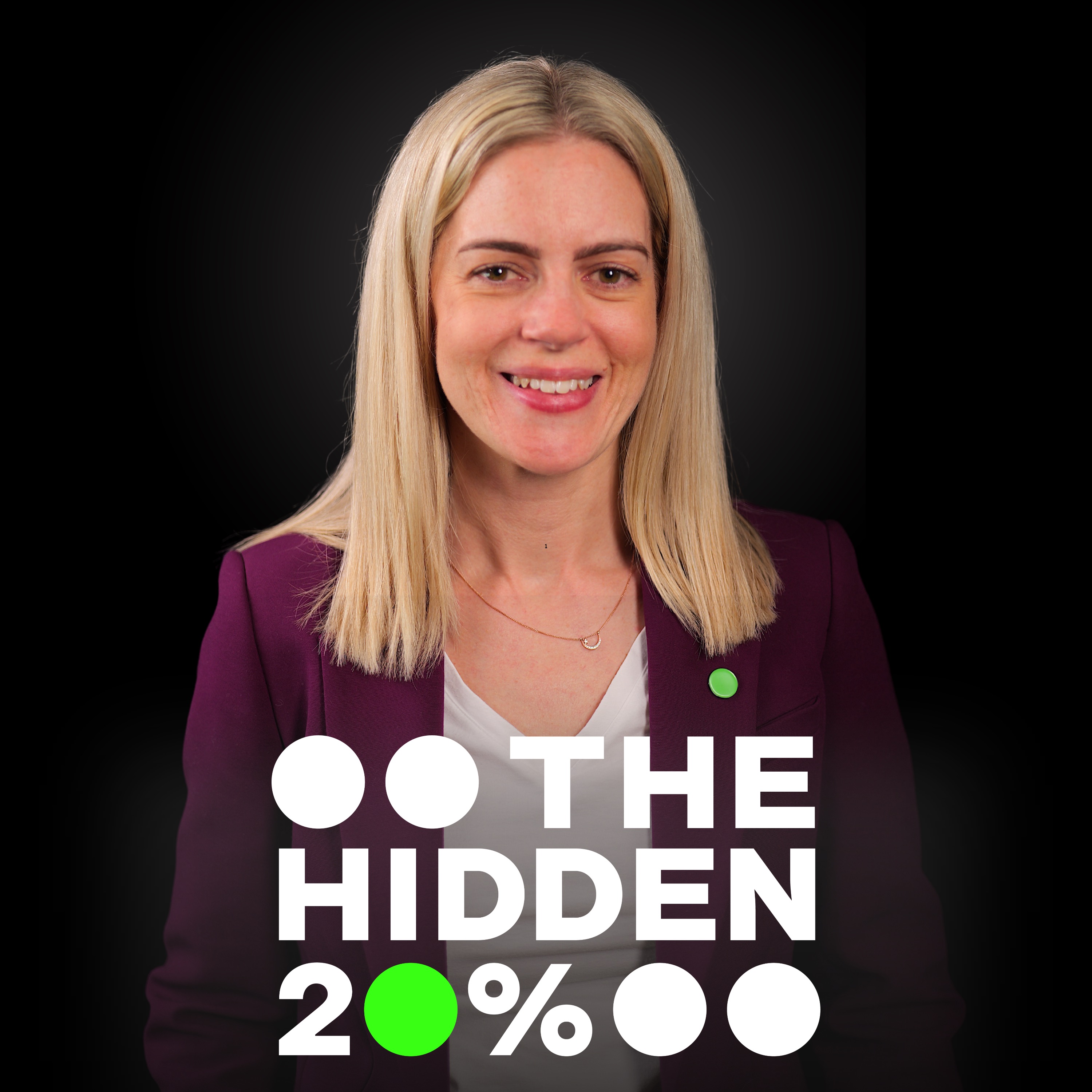
In this episode, Child & Adolescent Psychiatrist Dr Josephine Neale - Clinical Director for Child and Adolescent Mental Health Services at the Priory and founder of Neale Health, the UK’s first fully online child and adolescent psychiatry service - joins Ben to unpack ARFID (Avoidant Restrictive Food Intake Disorder), a condition many people have never heard of but is increasingly recognised in autistic and ADHD individuals.
Josephine explains that ARFID isn’t about weight or body image, but driven by four key subtypes: sensory discomfort, fear and anxiety (often around choking or vomiting), low appetite, or a combination of these.
Drawing on her specialist work across autism, ADHD, and eating disorders, she breaks down why ND people experience food so differently, why ARFID is still often missed, and how eating difficulties can quietly build long before families know what’s happening.
This conversation offers clarity, compassion, and practical tools - whether you’re navigating ARFID yourself, supporting a young person, or simply trying to better understand ND eating differences.
If you would like to support us this Christmas please consider gifting from the below link to spread awareness and carry on the conversation:
https://www.hidden20.org/christmas-grotto
________
Host: Ben Branson
Production Manager: Phoebe De Leiburné
Video Editor: James Scriven
Social Media Manager: Charlie Young
Music: Jackson Greenberg
Head of Marketing: Kristen Fuller
00:00 Introduction
00:48 Dr Josephine Neale: Her Background in Eating Disorders, Autism & ADHD
7:20 Why Mind & Body Are Often Seen As Separate in Eating Disorders: & Why That Can Be Problematic
11:26 What Is ARFID? (Avoidant Restrictive Food Intake Disorder Explained)
15:01 How Clinicians Assess ARFID
23:35 ARFID in Neurodivergent People: Autism, ADHD & Sensory Profiles
25:29 The Four ARFID Subtypes: Fear, Sensory, Low Appetite & Combined
29:40 What Causes ARFID? Understanding Roots, Triggers & Early Signs
31:13 ARFID Fear Subtype: Anxiety, Choking Fears & Avoidance
32:44 ARFID Low Appetite Subtype: Interoception & Reduced Hunger
34:38 ARFID Sensory Subtype: Texture, Smell, Taste & Food Aversions
48:23 Can ARFID Come and Go? Understanding Episodic Presentations
50:30 Did ARFID Exist Historically? Why Modern Life May Be Increasing Cases
55:36 Christmas & ARFID: How to Support People with Eating Difficulties
1:01:08 ARFID at Someone Else’s House: How Families Can Navigate Christmas Day
1:05:59 Dr Josephine’s Green Dot Badge
The Hidden 20% is a charity founded by ADHD & autistic entrepreneur Ben Branson.
Our mission is simple: To change how the world sees neurodivergence.
No more stigma. No more shame. No more silence.
1 in 5 people are neurodivergent. That’s 1.6 billion of us - yet too many are still excluded, misunderstood, or left without support.
To break the cycle, we amplify voices, challenge myths, and keep showing up. Spotlighting stories, stats and hard truths. Smashing stereotypes through honest voices, creative campaigns and research that can’t be ignored.Every month, over 50,000 people turn to The Hidden 20% to feel safe, seen and to learn about brilliant brains.
With your support, we can reach further, grow louder, and keep fighting for the 1 in 5 who deserve more.
Join us at hidden20.org/donate.
Become a monthly donor.
Be part of our community where great minds think differently.
Brought to you by charity The Hidden 20% #1203348
______________
Follow & subscribe…
Website: www.hidden20.org
Instagram / TikTok / Youtube / X: @Hidden20charity
Ben Branson @seedlip_ben
Dr Josephine Neale @drjosephineneale www.nealehealth.com
If you'd like to support The Hidden 20%, you can buy a "green dot" badge at https://www.hidden20.org/thegreendot/p/badge. All proceeds go to the charity.
Hosted on Acast. See acast.com/privacy for more information.