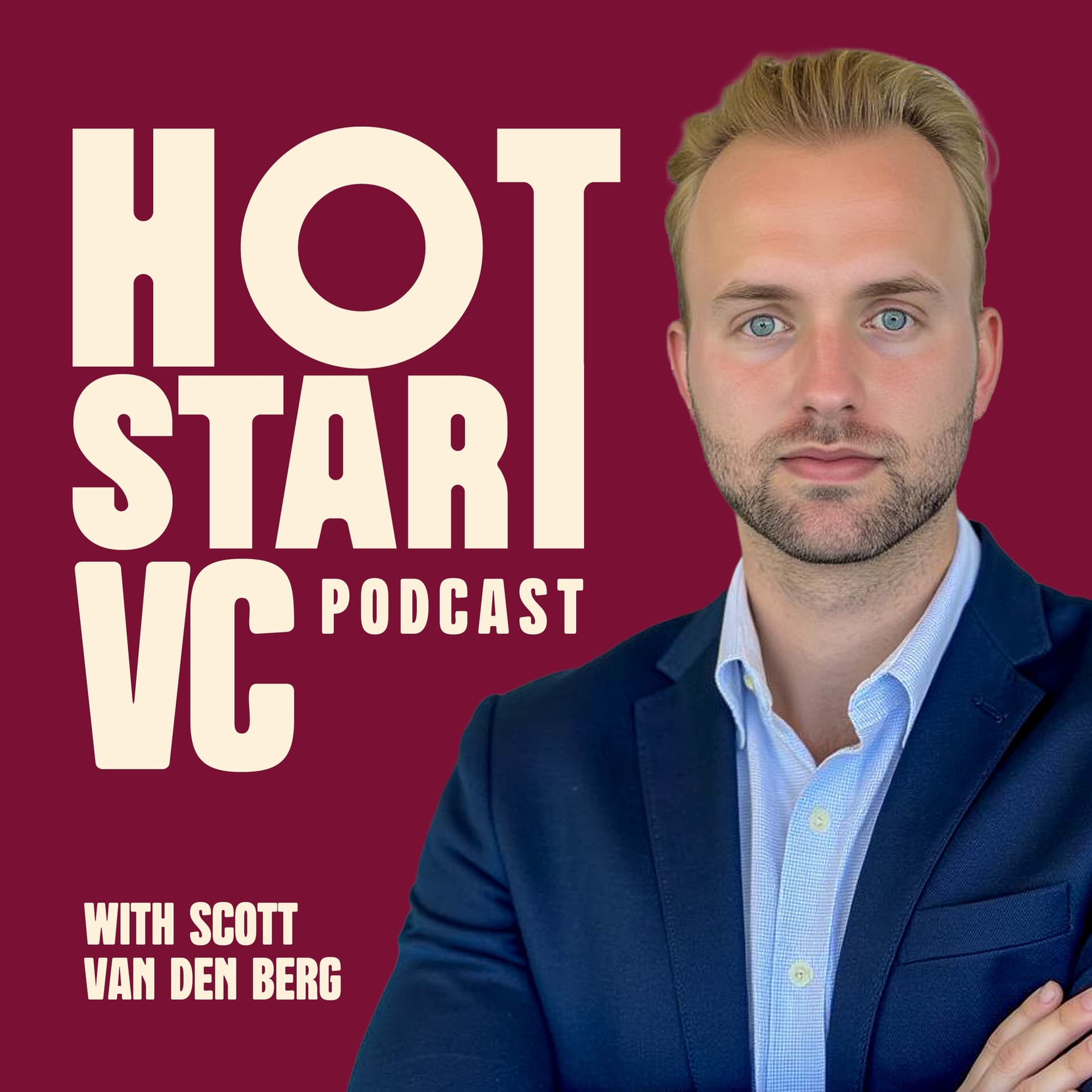
In short
Jay Fujiwara explains how he used viral English-teaching content to build Big Bean, a visual AI language-learning app, and shares lessons on virality, monetization, and founder/content balance.
Guest backgrounds
Jay is a Japanese-based creator known for viral English teaching videos; he built an audience of 30M+ followers. He previously helped other language apps scale via social media (including replacing their social team), growing accounts from ~20K to ~1M on TikTok and ~300K to ~1.5M on Instagram, and worked on launches in Japan.
Key claims
Don’t monetize too early—optimize for views first. Virality strategy: find small creators and copy their most-viral formats. Many creator app launches fail due to losing content focus. Visual-first learning avoids native-language translation.
Notable examples
Big Bean’s launch video rapidly hit Japan’s App Store education category #5. Big Bean uses AI-generated images/videos on every screen; Duolingo uses images sometimes and relies on translation prompts. New feature: users describe images; Gemini API corrects grammar/accuracy.
Written by AI. May contain mistakes. Listen to the episode to check what was said.
Chapters
Tap a time to open that second in VOJay's Early Aspirations and Influences
0:47 to 2:10
Discover Jay's childhood dreams of becoming a YouTuber and his early content creation experiences.
“Yeah, so ever since you were a kid, you always wanted to become a YouTuber.”
The Evolution of Jay's Content
2:10 to 3:59
Hear about Jay's transition from crafting videos to teaching and going viral.
“while for it to hit a million views, but I'm quite proud of it.”
Understanding Virality and Audience Engagement
4:36 to 8:16
Jay discusses his strategies for going viral and building an audience.
“TikTok pushes content to the country you're in, basically.”
Transitioning from Influencer to App Creator
8:16 to 12:36
Explore Jay's journey from helping other apps to building his own, Big Bean.
“And I think a lot of creators, like once they gain a bit of a following and they have a bit of clout, they immediately think, okay, it's time for me to launch a brand.”
Introducing Big Bean: The Visual Language Learning App
12:36 to 13:34
Learn about Big Bean's unique approach to language learning through visuals.
“When you actually now launch your own company, you probably would have made a lot of mistakes if you actually skipped that phase and immediately jumped to actually building your own.”
Visual Learning in Language Apps
14:01 to 16:44
Explore the differences between Big Bean and traditional language learning apps.
“But with recent developments in AI-generated videos, it's pretty crazy the amount of things that you can actually visualize now.”
Expanding Language Offerings for Big Bean
16:44 to 18:06
Learn about Jay's plans for expanding Big Bean's language offerings beyond English.
“most of your early users are Japanese because that's the market that you're in.”
The Impact of AI on Localization
18:06 to 20:04
Discussing the potential of AI in creating localized content for diverse markets.
“I would have to look more into that and consider the pros and cons of doing so.”
Launch Moment of Big Bean
20:04 to 21:24
Jay shares the key moment when Big Bean's launch video gained traction.
“looking at the websites and you saw all these downloads coming in?”
Trends in Creator Entrepreneurship
21:24 to 22:31
Understanding the trend of creators launching their own businesses and brands.
“Yeah, I think it's quite an obvious trend, I suppose.”
Show all 16 chapters
Inspiration from Other Entrepreneurs
22:35 to 24:24
Jay discusses who inspires him in both entrepreneurship and content creation.
“So whatever I'm interested at the time, whether it's travel videos or technology videos, I'll watch those and try to take elements of those that I can put into my content production.”
Balancing Creation and Entrepreneurship
24:24 to 25:36
The challenges of balancing content creation with running a startup.
“Yeah, it's very tricky to have that balance.”
The Future of App Creation by Creators
25:36 to 27:25
Discussing the potential rise of content creators launching consumer apps.
“Like most of the creators, when they launch companies, they actually get into CPG.”
Lessons from Content Creation for Founders
27:25 to 28:00
How being a content creator shapes a better entrepreneurial mindset.
“I think being a content creator, you're always, I guess, building or making for the public eye.”
Innovative Features for Big Bean
28:00 to 30:24
Learn about the exciting new features being added to the Big Bean app to enhance user interaction.
“So very quickly, I think you go from making content that you want to make to actually making content that people want to watch.”
Advice for Content Creators
30:24 to 31:18
Discover key advice for creators looking to launch their own businesses while maintaining their content focus.
“I think we touched on this earlier, but to focus on content creation, it's very tempting once you've built a following, once you're getting good views to take all of your focus into building a business.”
Transcript
Automatic transcript. May contain errors.0:00I feel like apps will become the new dropshipping. You might recognize Jay from his viral videos teaching English on social media, which have helped him build an audience of over 30 million followers. For years, Jay used that reach to help other language learning apps grow. Some of the apps Jay worked with reached valuations of over$300 million. And although Jay got a nice one-time fee, he never saw a cent of the upside. So at some point, he asked himself the obvious question. Why am I building everyone's else company when I could be building my own? And so he did. He launched Big Bean, an app that teaches English through short visual lessons.
0:35And it went immediately viral. He posted one video about Big Bean and the app shot straight to number five in the education category on the Japanese App Store, showing the power of creative founded brands. And on today's episode of the Hot Start Podcast, Jay tells the full story. Jay, thank you so much for coming on. Thank you for having me, Scott. Yeah, so ever since you were a kid, you always wanted to become a YouTuber. So what inspired that? Yeah, that's right. I would say that dream started when I was about 12, as it did with a lot of kids. I just started watching a lot of YouTube. At the time, it was a lot of gaming content, probably around Minecraft.
1:10So naturally, those were the people I looked up to. I think I liked that they had a lot of freedom as compared to other adults with nine to fives. It seemed like they could do what they enjoy most and be able to make a living off it. So to 12 year old me, that seemed like a dream. Yeah. What was the first type of content that you started to producing and also pushed out? Yeah, great question. I mean, I was ready to get started when I was 12 or 13. It was actually my parents that put a stop on that and said, hey, look, you know, you can make content, but not with your face. So looking back, I think that was a very nice interference from my parents.
1:46I think I would have regretted certain things I would have put out back then. But yeah, so I was quite limited with what I could put out. So what I started with was like an arts and crafts channel. So it would be me making like dominoes or folding things out of paper, which I quite liked back then. Actually, my first video with a million views was me making a paper box when I was 14. It took a while for it to hit a million views, but I'm quite proud of it. Yeah, and I remember that the name of the channel was something like Clumsy Dodo, if I'm correct. Yeah, how do you know that? Did I tell you that?
2:20No, I actually watched some interviews of you. So yeah, did some research about it. Yeah, yeah. So how did you go from actually the Clumsy Dodo channel to actually evolving into language content creators? Yeah, it was quite a long journey. So I was doing Clumsy Dodo and Arts and Crafts back when I was 14. And then I sort of got into technology and I was looking up to YouTubers like Marques Brownlee, for example. So I made a few videos about like building a PC, putting together parts. That did okay. But eventually I then started really liking shoes. Like sneakers were quite big back in sort of 2016, 2017.
3:01So with that, instead of YouTube, I started making Instagram accounts where I would repost other people's photos, for example, and grow what they were calling theme pages at the time. So I'll say that was the first time I sort of actually made some money from posting content. And then I wanted to do something myself where I'm actually producing the content. Right after I graduated high school, I decided to start teaching maths on YouTube because I was quite passionate about maths. That's still probably my favorite subject. And yeah, the thing with YouTube is that it just takes a very long time for a new video or a new page to start growing.
3:42right so I actually made one video about trigonometry and it just wasn't growing that much I thought it was a great video but I then discovered TikTok and I saw people with new accounts going viral overnight and seemingly those videos that I was seeing weren't that high production it just seemed like things that I could definitely make based on my experience so yeah that's that's when I decided I'm gonna start making short form and I initially was trying to make a vlog series on how to make a thousand dollars online and because i happened to be in japan at the time that content didn't really reach the right target i didn't know that even to this day
4:22Jay Fujiwara:hey quick one before we get back to the episode if you love conversations like this one you would love the fame game our weekly newsletter in which we break down how celebrities and creators build billion dollar brands sign up for free via the link in the description and now back to the episode TikTok pushes content to the country you're in, basically. So then I thought, well, I'm in Japan. I'm getting a lot of Japanese traffic. What content can I post that would get views? And the obvious answer was to start teaching English since I'm bilingual. That's kind of why I did it. I just wanted to sort of see if I could get views.
4:54And after two or three videos, I think there was one that reached 80 ,000 views or something, which was more than I'd ever gotten in the first three days, at least. So I thought, okay, it makes sense to lean into my strengths. here and continue on with that. That was six years ago. So it's been a while since I started, but I'm very glad I did. Yeah, it's so interesting to hear that you kind of started from earning a $1 ,000 challenge to actually finding your content niche and now having like 13 million followers across social media platforms. And what I think is also interesting is that ever since you were 14 years old, you already knew how to go viral and you have done it with different niches, different topics like the arts and craft, the tech, the theme pages, and now obviously the language.
5:39So what do you understand about virality that most creators don't? Yeah, good question. I wouldn't say I have like a superior understanding. I would say I tend to maybe have good strategy and also a combination of good execution. For example, when I was 14, when I made that video of making a paper box, I essentially just started searching a lot of things into YouTube, like folding a paper plane or folding a paper box and I actually found a video of someone that just showed how to fold a paper box. I think it had maybe 10 million views or something which at the time back in sort of 2014 was was a lot of views for something seemingly so simple and I checked their page they didn't have that many subscribers so I thought okay if I make something like this maybe even with a small page I can grow.
6:27So that was the strategy I used back then which actually isn't too dissimilar from the strategies I use to this day where I think many people would look up to very successful YouTubers with sort of tens of millions of subscribers and try to copy their content. I think the best strategy actually is to find small content creators and then look for their most viral video. So often you'll find a YouTube channel or an Instagram page with a few thousand subscribers, followers, but one of their video has like a million views. And usually that is a good indicator that a format like that can help you go from sort of zero to a few thousand subscribers.
7:09Yeah. And while you actually like building those pages, did you kind of always think that you eventually wanted to leverage the audience that you were building to launch your own company, similar to what you now have done with Big Bean, or was that never on the roadmap at all? Looking back, I think I was always just focused on each individual video that I was putting out, and for that to get the maximum amount of views and engagement possible. I obviously saw other creators monetize in various ways. I was always open to that. I think, thankfully, I didn't focus on the monetization aspect too early, and I just obsessed over the views.
7:45And it's only sort of in the last two or three years where I've decided since dropping out of university that I need to find a way to monetize my views. Do you think that's a mistake that many content creators nowadays make that they actually start monetizing too early? Yeah, absolutely. I think I specifically am very bad at multitasking, whether it's small tasks or big tasks like making content, but I struggle to maximize two values at once. So if I'm trying to maximize views, it's very difficult for me to then try to maximize revenue from views, for example. And I think a lot of creators, like once they gain a bit of a following and they have a bit of clout, they immediately think, okay, it's time for me to launch a brand.
8:26It's time for me to launch an app. And what happens then often is that they kind of stop doing what they're best at, which is making content. And I think it's a very common trap to fall into. Even me at the moment, even though I have a big page, like sometimes some weeks or months when I put too much focus towards my app, my engagement and my sort of general health of my accounts will go down. And at the end of the month, I'm thinking, well, was it actually worth it that I allocated so much more focus to my product? I probably should have made some more videos. So yeah. Yeah, I love that insight.
9:00I kind of always bring this up with something like Logan Paul with Prime, for example, just because he's holding the bottle everywhere he goes, it kind of takes away the authenticity sometimes of the promotion as well. If you sometimes only promote it once a month or whatsoever, it's much more authentic. So I really love that insight. And before you actually launch your own language learning app, and we actually will get to that in a second, you started working with a lot of other language learning apps. So what was the type of work that you did for them, helping them scale? And what was kind of the ultimate moment that you decided like, hey, now I actually want to build my own instead of helping others grow?
9:36Yeah, I worked with quite a few language apps. At first, it was sort of one-off ads. So the language app would reach out to me and say, here's our budget, we want you to make one video posted on your account, and they would get some downloads to their app. The issue with that for me was that it wasn't very scalable. And, you know, I was posting those ads on my account. So my audience was getting a little bit annoyed and fed up with the fact that every other week I'd be promoting a different app. Right. So I thought, well, OK, I'm making maybe a few thousand dollars from this, but it's coming at the cost of damaging my account.
10:15Also, the language apps aren't too happy because I'm getting less views on the ads than I do my normal teaching videos, which is an obvious thing to me, but maybe not to them. And I sort of came up with the idea that, OK, maybe I can go behind the scenes and help the language apps themselves build accounts. And that way, the views I'm getting is for them. The accounts that are growing are under their ownership. And also I don't have to post ads on my account every other week. So it seemed like a win-win. I pitched it to one of the language apps I was working with at the time. And thankfully they were willing to take that risk with me.
10:55So they pretty much just replaced their existing social media team with me. And I came on and started posting daily. And those accounts actually grew on TikTok from about maybe 20 ,000 followers all the way up to a million followers. And on Instagram as well, probably from about 300 ,000 all the way up to about 1.5 million. And through all of that growth, many people were discovering this language app, downloading it, and generating a lot of revenue for them in the process. So I think that was a good move that I made. I think that was back in 2023, if I'm not mistaken. I then sort of repeated that process with a couple of other apps.
11:36and occasionally I would use my ability to speak Japanese to help apps launch in Japan, which was also quite a good partnership that I made a few times. But yeah, eventually, I think I realized that there's sort of a ceiling to what I'm doing here as well, growing other people's apps, because I would get paid a pretty good amount of money. But then in a couple of months, I would see an article saying that they were able to raise at a valuation of 300 million or something and I'm thinking all right well you know I thought I was making good money but you know I'm actually just contributing to somebody else's pot and it was partly that and it was partly that there was many things with these apps that I personally didn't agree with just simple things like learning techniques or how the paywall would work and I would sometimes sort of voice these concerns or my opinions to the apps and sometimes they would listen but sometimes they wouldn't ultimately because they're in charge right and i think that's kind of when i realized well i do actually want to build my own language learning product and i want it to be an extension of my social media presence so that was back in 2023 i decided to do that i joined an accelerator at my university and the rest is history yeah i think it's so interesting because obviously like, yes, you were helping other companies skill, but it definitely gave you a lot of learnings on the job.
13:02When you actually now launch your own company, you probably would have made a lot of mistakes if you actually skipped that phase and immediately jumped to actually building your own. And it also gave you a proof point, right? Because having millions of followers doesn't mean exactly that people will actually download your app. So also you were kind of able to validate your whole unique advantage that you can add to a company, meaning, hey, can I actually turn followers into users? So I think that's great. So let's talk about Big Bean. So what is Big Bean and also what makes it different from other learning apps on the market?
13:34Thank you. So Big Bean is the language learning app that I'm building. And the main thing that's different is that everything in Big Bean is visual. So we use AI generated images and videos, which appear on pretty much every screen of the page. So whether you're learning a word or a phrase, there's always an image there, which tries to represent what you're learning as accurately as possible. Easier with nouns, like an apple or a desk, a bit more difficult with emotions, for example. But with recent developments in AI-generated videos, it's pretty crazy the amount of things that you can actually visualize now.
14:15Yeah. And like what is kind of like something that Big Bean has that these others don't have, like let's take Duolingo, for example. And so Duolingo also has somewhat of like a visual component sometimes where they show you a picture of a cow or like an apple or whatsoever. So what would you say is like the main difference from such apps? Yeah, good question. Duolingo has images sometimes. Big Bean has images for everything. So actually, I think having an image for a cow or an apple is very easy to implement. But it's also not that useful because when people hear the word apple or cow, naturally that's what they imagine anyway.
14:52It's more important when it's adjectives or even adverbs like quickly, if you can visualize a person walking slowly versus a person walking quickly. You don't necessarily have to rely on your native language to remember that. But Duolingo is still very much, so if you're learning English from Japanese, for example, the question will be in Japanese and you have to translate that into English. Most apps are like that. Most learning material is like that because it's very natural. If you're fluent in one language to learn the meaning of another language, you would want to build a sort of A to B mapping between the two languages.
15:28But that's, even though it's intuitive from a learning perspective, when you actually come to speak English, it's very tricky because people first have to formulate their sentences in their native language, be it Japanese, and then they have to translate every word into English, all whilst changing the grammatical structure in their head. And that's, in my opinion, the number one reason why people struggle to speak English here in Japan. And I think that's also why I'm able to get a lot of people to use my product with this completely new sort of visual learning approach where you learn English from images instead of Japanese.
16:04Yeah. And right now it's only available in English. Do you plan to also expand to other languages? Yeah, that's right. Right now it's just for learning English. And I made that decision because it aligns with what I do on social media, which is teaching English. I would love to expand to other languages. I get a lot of requests from my friends naturally because they're already fluent in English. But I think to be honest, I just want to perfect the product for English before I start expanding into other languages. But the first language I would offer would definitely be Japanese, since myself and my co-founder, we're both fluent in Japanese.
16:38So it wouldn't be too difficult for us to flip the whole product for learning Japanese. Yeah. And also if you're kind of thinking long term, like as you already mentioned, most of your early users are Japanese because that's the market that you're in. How do you plan to kind of expand to other markets where you don't have that organic reach? Yeah. So that's where I think the visual learning comes in very handy. A lot of obstacles faced by language apps scaling globally comes with localization. So translating all of the app UI components, but then also you have to translate all the lessons, all the questions, all the translations, right?
17:12And I have actually already done that for 20 languages. That's why I know the sort of pain and the time consuming process that comes with it. But if I go with this visual learning approach and take it to the max, in theory, we wouldn't have to rely on the user's native language as much. So with that, I think it's possible to just start marketing it in other markets. I'd probably start with the other East Asian countries like South Korea, slowly expand towards maybe Southeast Asia, Vietnam, Indonesia. And I think I would try to promote my app a bit more on my main account, where the following is quite international.
17:50And that probably will give me an idea of what countries to target based on how that performs in each market. Yeah. And would you ever consider bringing on like the Vietnamese J or the Korean J or the Arabic J or the Brazilian J to kind of come on as equity partners, for example, to help you like expand in those organic regions, similar as how you've done it in Japan? Yeah. As equity partners, I'm not sure. I would have to look more into that and consider the pros and cons of doing so. I personally see a lot of AI UGC accounts popping up all around the world, more so in Japan than I do in English-speaking countries, actually.
18:29So I think it very much depends on how good AI video production can be in that language. And also it depends on sort of how AI videos are perceived in a certain country. In Japan, people generally are willing to watch AI-generated videos, whereas in the UK, maybe not as much. So I think I'd like to explore, actually, instead of hiring content creators in each region, Would I be able to make localized content for each region with the help of AI, for example, so that it's my face and it's me speaking English, but the sort of Japanese part where I'm normally explaining could be sort of dubbed and translated into Vietnamese or Korean, for example.
19:12Yeah, I'm so curious to see how fast that we actually can get to really high quality dubbing and AI kind of twins of yourself. Two years ago, when I heard about it for the first time, I was like, nah, this is never going to work. And then I saw Mr. Beast do kind of like this whole strategy and expanding his content to other regions. And now I see like AIs who are really getting close to being one-on-ones. So I think like in one or two years, like exactly what you mentioned can happen. Take us back to kind of the launch moment, because I read that like you literally posted one video about Big Bean and you guys immediately were like the number five app in the education space.
19:54So like you have been building this app for months and months and months. What was that kind of moment when you actually pushed the video and then you maybe were like looking at the websites and you saw all these downloads coming in? Like take us back to that moment. Yeah, so that moment was right about a month and a half ago, I believe. I just decided to make a video talking about the benefits of visual learning, since that's the main premise of the app. And I honestly didn't expect the video to perform that well, because at the end of the day, the video was an ad for my app. And generally ads don't perform as well as your regular content.
20:31But for some reason, that video performed really well, completely outperforming everything that I was posting at the time. And I really realized that there is a huge demand for visual learning here in Japan. It obviously brought a lot of downloads, traffic. I made quite a bit of money through my app. But I think the main thing for me was the fact that people are actually quite frustrated by the current learning methods available in Japan, even though there are thousands of apps, books, products, that there isn't really anything that is natively visual. So, yeah, it was a big breakthrough moment for me.
21:06And that's sort of the same messaging that I've then applied to all of the other marketing that I've been doing ever since. And everything has sort of risen in conversion. Yeah, I love that. And you're not the first creator, obviously, that has launched his own company. Many other celebrities and creators are nowadays launching their own brands. What do you make of that trend? Yeah, I think it's quite an obvious trend, I suppose. Content creators, I think, are struggling to monetize through the views themselves. unless you're sort of getting millions of views as a long form YouTube creator, for example, like TikTok doesn't really pay you any money and neither does Instagram.
21:43So they will always look for ways where they can monetize. And I think a lot of people go through a similar route to what I did, where you start working with a couple of brands, you make a little bit of money, but you realize it's not scalable. And then you see people that you look up to or people that you know are making more money than you and they have their own business they have their own brand so naturally
22:05Jay Fujiwara:you decide you before we continue i wanted to share something quickly at hotstart pc we exclusively invest in brands founded by celebrities and creators think selena gomez jake paul katie perry if you are an accredited investor and want to co-invest alongside us we just launched hotstart angels allowing you to invest in the same companies we back starting at just 5k per deal interested sign up at hotstart.vc slash angels or via the link in the descriptions accredited investors only and now back to the episode i'm gonna do the same so i think i think it's pretty natural the trend that's happening right now yeah are there any celebrity or creative entrepreneurs or brands that you take inspiration from inspiration i try to take from entrepreneurs and not necessarily hybrid people because i think in my eyes like the best entrepreneurs focus on entrepreneurship and the best content creators in my eyes focus on content creation so specifically for entrepreneurs I try to take inspiration from people that are in my niche and are a few steps ahead of me so obviously I've watched a lot of Duolingo stuff his founder story incredible but I personally find it more inspiring when I see an app that sort of launched three years ago that has managed to grow like 100x in the last year for example so those because I feel like it's doable for me I take a lot of inspiration from that and for the content side I actually try to take inspiration from people completely outside of my niche because I think if I take inspiration from people that also teach English then naturally my content is going to whether I mean it or not going to look kind of similar to what other people make and that's not really a trap I want to fall into.
23:49So whatever I'm interested at the time, whether it's travel videos or technology videos, I'll watch those and try to take elements of those that I can put into my content production. Yeah, I think it's quite interesting what you just mentioned about kind of the best entrepreneurs focus on being an entrepreneur and the best creators focus on being a content creator. But how do you kind of balance both? Because obviously being a creator gave you the unfair advantage to launch your company and immediately go to number five in education category. So like there's still gonna be like a balance going forward, I assume.
24:24Yeah, it's very tricky to have that balance. And I'm not gonna say I have it all figured out. Some months, as I said, I put all of my focus to my app. And then the next month I put a lot of focus to my content. And the correlation is obvious. You know, if I allocate more time to my content, I get more views. When I allocate more time to my app, my app gets better. So the one thing that's helped a lot with that balance is getting a co-founder. I think one thing I would advise my younger self is what would be to try and find a co-founder sooner. I had people advising me at the time too, but I just sort of maybe arrogantly thought that I could do it all myself, which I suppose I could have, but it comes with the sacrifice of not having full focus on content or the app.
25:10And I think if you're trying to either compete in social media or in entrepreneurship, both extremely competitive fields, it's very important that you have sort of your full focus on that thing. So this is sort of maybe advice for myself now too, but find yourself a technical co-founder and make them like fully in charge of the product so that you as a creator can really focus on what you do best, which is making content. Yeah. Like most of the creators, when they launch companies, they actually get into CPG. So some of the brands behind me, for example, instead of tech i am a big component of celebrities and creators launching tech companies so i'm curious do you think that we're going to see this a lot more in the near future certainly it's getting easier to build software with all of the vibe coding tools out there so i definitely think a lot of content creators even if they don't have a technical background will be inclined to start doing apps i feel like apps will become the new drop shipping which i don't know how to feel about that but i think that's the direction it's headed so i've also considered sort of b2b ideas where i help content creators launch apps for example i think that would be quite a lucrative b2b business but yeah i mean for me at the moment i just want to focus on my own now yeah no i think you're spot on and this is kind of the worry that i um like think is going to happen like if you even look at the cpg companies right after george crooney sold casamigos for a billion dollars almost every single celebrity wanted to launch their own liquor brands but instead of actually coming up with a unique product they all started to white label the same product slap their names on it and that's it and i think we're gonna see that with consumer apps as well where they're just quickly gonna create an app and try to sell it and even like very large content creators you already talked about marquis brownlee for example he launched his own app panels um and when he launched it the internet went crazy they were like this is the quality is so shitty like why would they charge $50 for something you can get for free online.
27:08So I think you're spot on. And I think in the upcoming years, we are going to see a lot of celebrities and creators. We're going to take shortcuts and just publish really, really terrible consumer apps that might have that initial spike, but they're never going to have any retention and it's going to hurt that personal brand. What would you say that being a content creator has taught you about being a better founder? I think being a content creator, you're always, I guess, building or making for the public eye. And I think a common trap that founders fall into is that they'll spend too much time building what they think is a good idea.
27:46And then once they launch it, they realize, oh, nobody actually wants that thing. Whereas with short form content, especially where you're posting almost every day, you put out a video, it's only going to get views if it's something people want to watch. So very quickly, I think you go from making content that you want to make to actually making content that people want to watch. So I think that mindset alone translates very well into startups. Yeah, I agree. The whole feedback loop, the whole lean startup method. So what is next for Big Bean and what is something you're most excited about? Yeah, next for Big Bean, I'm experimenting with quite a lot of things.
Read the full transcript
28:28The newest feature we added is to show an image and make people describe that image. So up until this point, it's primarily been like, here's an image, here's a word, remember it. But in order to make that more interactive, we show them an image and say, describe this scene, describe this image. For a beginner, it might be something as simple as a bar of chocolate, and they say chocolate, and it's correct. For an intermediate level, it might be someone sat at a desk working on their laptop and they have to say a man is doing some work on his laptop. And if they make a grammatical error in that, they say a man work on laptop, it would immediately correct it, for example.
29:06And we're also sending both the image and their voice input to the Gemini API. So if what they say is not accurate to the image, if they say a man is sleeping at the desk, then it would correct it and say the man is working at the desk, for example. So that's the current feature, which people are loving in Japan. I'm also building a web product, which I'm calling the Visual Dictionary. So I think the issue with apps is that it's quite a stretch sometimes to bring people from social media to the app store to then make them download the app and do the onboarding and then start using the product.
29:42A lot of people just want to immediately start using something. So with that, I'm building a web application where you can search up any word and then you'll get videos instead of definitions. So I'm hoping that that will sort of almost be part of the funnel in towards the app. I'll get myself and other influencers to promote the visual dictionary. People come on there. They see value in that concept of visual learning and then hopefully go to download the app. So in the immediate future, those are the things upcoming. Yeah, I think that's very interesting. People obviously on social media want instant gratification and downloading an app is obviously not the best customer journey.
30:22So I think that's very smart. Last question on my end, what were your number one piece of advice for other creators who want to launch their own companies? I think we touched on this earlier, but to focus on content creation, it's very tempting once you've built a following, once you're getting good views to take all of your focus into building a business. But the fact is you've mastered content creation. You haven't mastered entrepreneurship, right? You haven't mastered building a successful consumer brand, for example. So try to create a setup where you get to focus on doing what you do best, which is content creation.
30:58And ideally, that system also is able to produce a genuinely good product at the same time so that you can grow in parallel instead of, you know, the product growing and you shrinking or you growing and the product not growing. Yeah, I think that's great advice. Well, Jay, thank you so much for coming on. Yes, thank you so much for having me. Thank you for listening to the Hot Start VC podcast. If you enjoyed this episode, make sure to subscribe and leave a rating or review. It really helps us grow. You can also subscribe to our newsletter at hotstart.vc for more breakdowns on how celebrities and creators build billion-dollar brands.
31:37Thanks again for tuning in, and we will see you in the next episode.
From the publisher
Jay is a creator entrepreneur with over 13 million followers teaching English on social media, and the founder of BigBean, a language learning app that teaches English through AI generated images and videos instead of traditional translation methods.
Before building his own, he spent years using that reach to help other language learning apps grow, working with companies that reached valuations over $300 million. He got paid well. But he never saw a cent of the upside. So he asked himself the obvious question: why am I building everyone else's company when I could be building my own?
That question became BigBean. The core thesis: people struggle to speak English because they're forced to think in their native language first, then translate every word while changing grammatical structure in their head. BigBean eliminates that cognitive bottleneck by creating a direct association between image and word, no native language required.
When Jay posted his first video about BigBean, the app shot straight to number five in the education category on the Japanese App Store. That wasn't luck. It was the result of years spent understanding virality across multiple niches, building audiences from zero, and learning exactly what converts followers into users by growing other people's apps first.
He breaks down why he believes apps will become the new dropshipping as AI coding tools democratize tech entrepreneurship, how he balances being a creator and a founder without sacrificing either, and why the best move he made was finding a technical co-founder so he could stay focused on what he does best.
He explains:
Why he started creating content at 12 and how a paper box tutorial became his first million view video at 14
The virality strategy he still uses today: find small creators with one viral video and replicate the format
Why he stopped posting ads on his personal account and started building social media teams for language apps instead
How BigBean's visual learning approach solves the cognitive bottleneck preventing people from speaking English fluently
How one video pushed BigBean to number five in the Japanese App Store education category
His number one advice for creator entrepreneurs launching companies
Chapters:
Chapters
00:00:00 Introduction: From 30M Followers to Building BigBean
00:00:53 The Early Creator Journey: From Clumsy Dodo to Theme Pages
00:04:22 Finding the Niche: Why Jay Started Teaching English on TikTok
00:05:43 The Virality Strategy: What Jay Understands About Going Viral
00:09:36 Working with Language Apps: Building Others' $300M Companies
00:11:47 The Pivot Decision: Why Jay Decided to Build His Own App
00:13:34 What is BigBean: Visual Learning Through AI-Generated Content
00:20:08 The Launch Moment: One Video to Number Five in Education
00:21:25 The Creator Economy Shift: Apps as the New Drop Shipping
00:24:02 Balancing Creation and Building: The Co-Founder Solution
00:28:23 What's Next: Visual Dictionary and International Expansion
00:30:29 Advice for Creator Entrepreneurs: Master Your Craft First
HotStart VC
Subscribe to the HotStart VC newsletter: https://hotstart.beehiiv.com/
Become a HotStart Angel and co-invest with us in celebrity-founded brands starting from $5,000: https://www.hotstart.vc/hotstart-angels/
Check out our fund: https://www.hotstart.vc/
Scott van den Berg
LinkedIn: https://www.linkedin.com/in/scott-van-den-berg-22b534150/
Instagram: https://www.instagram.com/scottvandenberg_/
TikTok: https://www.tiktok.com/@scottvandenberg_
YouTube: https://www.youtube.com/@scottvandenbergvc
Jay Fuijwara McCaughrean
Instagram: https://www.instagram.com/jayfujiwara/
TikTok: https://www.tiktok.com/@jayfujiwara
BigBean: https://www.bigbean.ai/
HotStart VC is a fund that exclusively invests in brands founded by celebrities and creators. We're the go-to platform for celebrities and creators launching brands, providing capital, strategic support, and the infrastructure to scale.