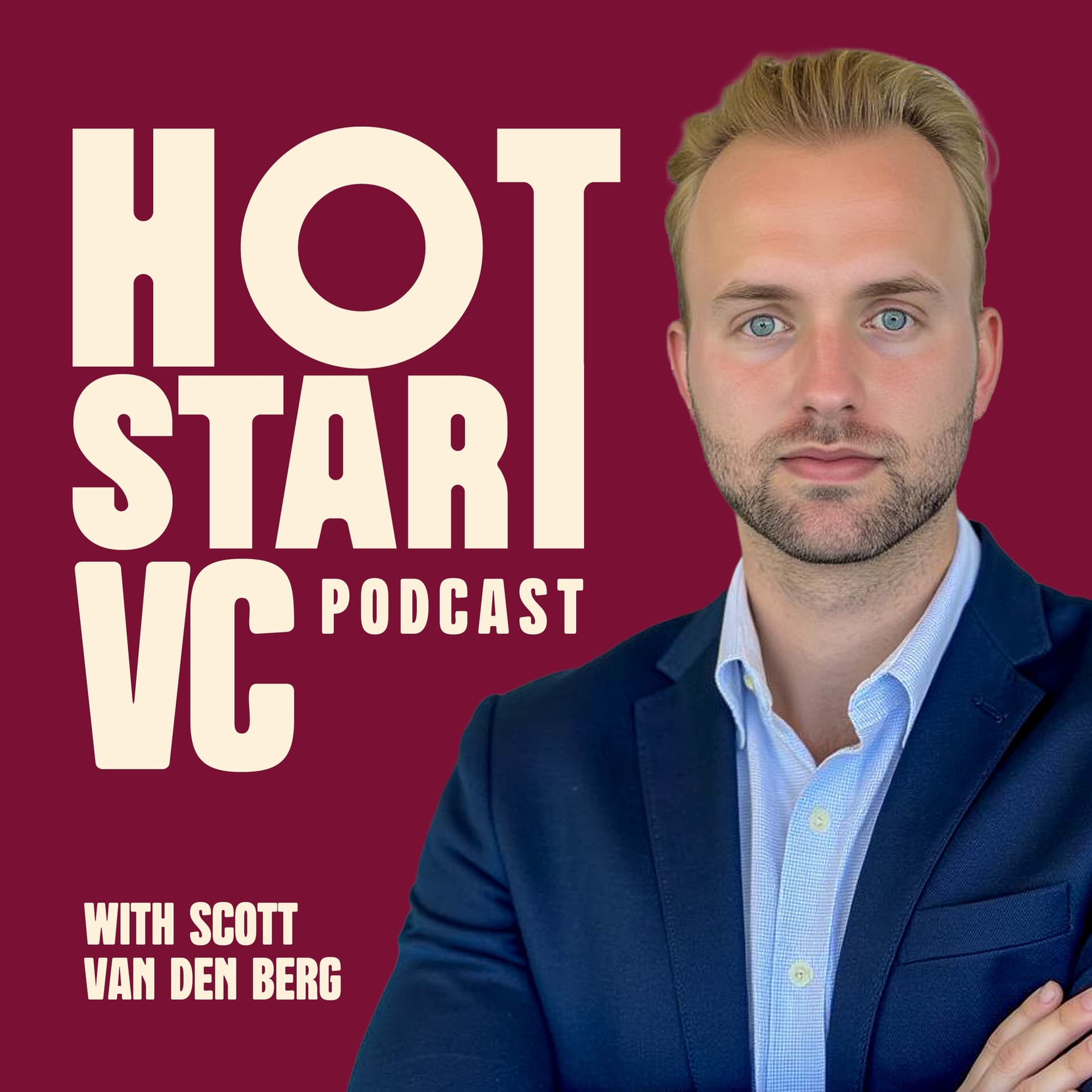
In short
Paradigm Sports’ athlete-advocacy model for building long-term businesses with combat-sports stars, arguing “fame is distribution, not the business model,” and explaining how/when to venture-build via equity deals rather than commission-only representation.
Guests
Azhar Shelsa (CEO of Paradigm Sports; 18 years in athlete advocacy; previously 25+ years in financial markets/wealth management and fintech at Rothschilds, Bloomberg, IHS Markit, Thomson Reuters). Scott (host).
Key claims
Paradigm focuses on combat sports due to combat’s “hockey-stick” growth and direct-to-consumer reach. Traditional representation misaligns incentives (commission % of fight earnings; no accretive enterprise value after retirement). Paradigm “times the founder” (early career runway; peak is harder due to big sponsorship checks; post-peak is legacy-focused). Venture building requires category fit and operating partners for supply chain and distribution.
Notable examples
Proper 12 (Conor McGregor; built with operating partner Proximo; whiskey flavor/design involvement; $600M exit). Conor vs Floyd Mayweather “money fight” as a Paradigm inflection point. Snapdown Snacks (Mike “Venom” Page and Fennon Page). Van Norway (Dakota Ditcheva co-ownership; water sourcing/testing). Hoop (sports-tech platform; Paradigm founding partner).
Written by AI. May contain mistakes. Listen to the episode to check what was said.
Chapters
Tap a time to open that second in VOAzhar's Journey and Paradigm Sports Overview
0:46 to 4:53
Azhar discusses his background and the evolution of Paradigm Sports.
“I've been a big admirer of your work for a while now, so it's great.”
Building Long-Term Value for Athletes
5:06 to 13:51
Discussion on venture building and the importance of aligning athlete representation.
“And I especially love the part about the paradigm shift that you guys are actually focusing on.”
Building Brands with Athletes
14:00 to 19:05
Learn how Conor McGregor's Proper 12 whiskey brand was developed and the challenges faced.
“You know, the supply chain, routes and market distribution channels, and then we like the touch paper on marketing and BR.”
Traits of Successful Celebrity Founders
19:06 to 19:31
Explore the personality traits that make celebrities successful in entrepreneurship.
The Rise of Tech in Combat Sports
19:31 to 24:25
Discuss the potential for celebrities to launch tech companies in combat sports.
“I mean, one of our portfolio assets is the smart basketball sports tech platform, Hoop, who we were founding partners for.”
Innovations in Combat Sports
24:26 to 27:55
Understand why combat sports are innovating faster than traditional sports.
Excitement for Client Success
28:02 to 28:55
Learn about the passion behind managing elite athletes and their ventures.
“I mean, 25 years in that world, you know, most people logically would have thought, well, you've got another five to 10 to go and then you can enjoy your retirement.”
Advice for Aspiring Athlete Entrepreneurs
28:56 to 29:58
Discover essential advice for athletes looking to start their own businesses.
Closing Thoughts and Gratitude
29:59 to 30:38
Hear the final reflections and thanks from Scott and Azhar.
Transcript
Automatic transcript. May contain errors.0:00Conor McGregor is one of the most successful athlete entrepreneurs in the world. He co-founded Proper 12, an Irish whiskey brand that sold for$600 million just three years after launching. He launched Ford's Irish Stout after and he's about to launch Mac, an energy drink. But behind McGregor's business empire is a firm that most people have never heard of, Paradigm Sports. And Azhar is its CEO. Paradigm is not your typical athlete representation firm. They co-build companies with their talent, from McGregor's Proper 12, to Mike and Fennon page Snapdown Snacks to Dakota Di Chaffa's co-ownership in Fenn Norway.
0:32And on today's episode of the Hot Start Podcast, Azhar Shelsa's approach to building companies with athletes, what makes a great athlete entrepreneur, why he believes famous the distribution and not the business model, and where he thinks the future of celebrity brands is going. Let's get into the conversation. Azhar, thank you so much for coming on. A pleasure, Scott. I've been a big admirer of your work for a while now, so it's great. I'm obviously back in Dubai last year, but it's great to connect with you and have a nice conversation hopefully. Yeah likewise I appreciate it and I'm excited to talk about some of the athlete founded companies that you guys have been involved in like Proper 12 with Conor and Van Water obviously one of the latest companies but before we do that I want to learn more about you and also Paradigm Sports so could you give a brief introduction about yourself and also what is Paradigm Sport?
1:18Yeah sure let me start with the company first so we're now in our 18th year of business now we're headquartered out of Orange County in California My partner is the founder and CEO of the company, Audi Attara. It's really a journey in athlete advocacy, I'd say. So Audi played ball at UCLA, became an NFL agent and really started to recognize over 20 years ago that there was an economic misalignment between what we've always believed to be the most important asset in any league or team or promotion, the athlete, and what the motivations of those parent entities was. So it was a paradigm shift in thinking that we have to find a way of representing the rights and economic interests of the athlete in a way which protects them more.
2:04So Paradigm Sports was born out of athlete advocacy. He made a smart decision 18 years ago, sorry, which we haven't really deviated from. And that was to focus on high growth sports. So at that point, a lot of data points then and continue to point towards combat sports as the gold standard in live sports content. When you compare it to, you know, we're both football fans, traditional stick and ball sports where there's a relative maturity now in viewership. Not to say commercially still aren't valuable properties, but there tend to be fairly predictable commercial models. MMA at that point had just started to become more socialized in the public domain through the UFC's reality program, The Ultimate Fighter.
2:48So we started to see at that point this incremental hockey stick growth of viewership, engagement and fandom. So 18 years later, we really haven't deviated through the paradigm roster over the years. It's really been a who's who of the combat sports, particularly the mixed martial arts world, that we've either managed to world championship belts or are currently managing. So we started off as a management company. I'd say our inflection point into what we believe to be a management platform was nine years ago when we architected the first crossover fight when Conor crossed over into boxing to take on Floyd Mayweather, which has now gone down as the money fight.
3:28That was also the launch of our first, which is proper number 12 Irish whiskey, which Cardero is a co-owner. So that was the inflection point. We really started to see a direct-to-consumer influence of these super athletes far superseding what traditional marketing practices were yielding. So that's what we have evolved into. We are centrally focused around 360-degree athlete representation of 15 key names in the MMA world, sports world. And then around that, if you consider that to be the sun of our business universe, the planets that revolve around it are our partnership, sponsorship business, our business ventures that we've created with our athletes and then our media business as well.
4:14So that's who we are. Who I am is I didn't grow up in this sport. Spent over 25 years in the financial markets, initially as a wealth manager at Rothschilds many, many years ago. And then in the financial technology world with Bloomberg, IHS Market, Thomson Reuters. I've done the whole tour of duty, London, New York, Singapore, Dubai. And then Audi and I have known each other for some time. So the opportunity to join Paradigm just over six years ago now was one that was difficult for me to turn down. I felt I achieved what I wanted to achieve in the corporate world. And it was time to bring some of that learning into this world.
4:52Azhar Muhammad:Hey, quick one before we get back to the episode. If you love conversations like this one, you would love The Fame Game, our weekly newsletter in which we break down how celebrities and creators build billion dollar brands. Sign up for free via the link in the description. And now back to the episode. That's really where we are now. Yeah, I love it. And I especially love the part about the paradigm shift that you guys are actually focusing on. Because something that I see with a lot of dealing with talent representation firms is that the incentives are still misaligned. Like whenever I approach them for venture building, they're slow to reply.
5:26They ignore me. And that's also just because the business model is not aligned, right? Like they focus on 20 % of what the athlete or the talent makes today. So they rather take cash deals over equity. And you guys are really forward thinking. And also in your communication, you talk about wanting to build like equity deals and brand value for the long term. What is specifically different about Paradigm Sports than practically versus all those other firms? I'd say you hit the nail on the head and it's one of my fundamental concerns with the representation business in the sense that it's unlike football or NFL or NBA where there's minimum barriers, right?
6:04There needs to be certification, licensing. There is no protective covenants for athletes in this sport. So the reality is the most exploited talent is ultimately the athlete. And for us, it's a balance, right? Because we're also very aware of the fact that cash is king in the short term, particularly. A professional fighter doesn't have an academy or a union to look after their interests, to provide them with basic health care protections in the case of injury. They're independent contractors. so they literally eat what they kill so when they fight they get paid if they don't fight for a period of time then they're on the mercy of cash and it's also very very important plus it was really a question of what are we trying to do here are we trying to build an actual business or is this just a transactional you know infrastructure where you sign x amount of clients you book fights and you know your economic value is limited by that duration of competition then right it's not even a league season you know they might fight once a year or twice a year or once every 10 years but you're linked to performance and that's not how you build the fundamentals of a business so most firms as you said scott run on commission a percentage of what the athlete earns when they're competing but guess what that model expires the day they retire so essentially having to replenish the roster on a regular basis and there's no accretive enterprise value that's being created in your management company so for us it's getting the fundamentals of representing career correctly so architecting the best and highest purses and bonuses and in the old day the old pay-per-view model but effectively we build multi-asset portfolios for them and a balance sheet you know that protects not only their short term but it builds a sustainable portfolio for them to yield value on the back end in the medium to long term as well yeah very interesting and then when you sign on new athletes or new talent is then the venture building capabilities and the entrepreneurial component also something that you guys are actively looking for like for example let's say there's two different fighters one is a little bit better than the other but the other has more like out of the octagon like opportunities to build actually that equity value and media businesses around the person do you guys then have a preference for the second or is that just too deep thinking around it?
8:25So that's a great question, Scott. And the short answer is no. And that distinction matters because we don't gate our representation on whether someone can be a founder, right? Our job is to represent the career at the highest standards we can for them while they're competing. And that's owed to all our clients, whether they're builders or not. So the fundamental criteria we use is their technical and skills, right? Do they have what it takes to be a high ceiling performer in the octagonal cage. Our scouting takes all that into consideration. Can there be a challenger? Can there be a contender?
9:00Can they win a world title belt? Everything else revolves around that, right? So fundamentally, we look at ability first. And then what naturally happens is you start to get to know them better, right? And it's an education process. So being a founder of a company or an entrepreneur isn't on most athletes' thinking. You know, most of them want to focus on being professional athletes and we have to support them through that journey. But the education is there. It's not that we've done this once or twice and got lucky. You know, we've created a blueprint nine years ago and have replicated that multiple times over.
9:35So if the curiosity is there in foregoing some short term money for category sponsorships in the build for a long term venture, that's a discussion we'd have. right but it has to be aligned to that client you know the categories have to make sense in order for that that economic equation to work for them yeah and could you maybe dive a little bit deeper into that like how do you guys actually approach like the venture building a component or the equity deals like where does it start is there also like career thinking around it planning is there a specific thesis that you guys are looking for yeah i mean it starts in many stages to be honest scott right because i've get asked this question a lot when is the right time to sign a client and start to build around them i've discovered it's a lot more nuanced than that you know the instinct is to time the fame catch the peak maximum reach maximum checks but that's in my view endorser spokesperson thinking you know peak maximizes the discovery but that isn't the business model right so we don't time fame we time the founder so i'd say early career is when you're betting a lot on the talent you know highest upside longest runway but it's unproven distribution at that point and we're not the first to do it michael jordan and his mother did this many many years ago with the air jordan licensing you know michael was coming out of college at that point right and just about to be drafted as a high potential talent but that was genius you know but nike also took the gamble that they had established players within the NBA at that point but they took a gamble on someone that could be you know the goat of that business so early career is a thinking you know peak is also a thinking but it's also a dangerous period as well because when they're at the peak of their career sponsorships endorsements can be very very attractive so the willingness to to effectively discount that return to build something is less right because the checks are coming in five persons are healthy sponsorships are healthy so i've always felt that peak is also a challenging time and then time and also a challenging time distribution is real they have more time now and perhaps more reason but competitive career ending is when is when the legacy question like lives so i look at george foreman for example i don't know you're probably too young to remember george foreman but when he first retired when he released his grills right And that became the biggest contributor to his wealth was his barbecue grills.
12:09So there's different stages, but you have to really judge in discussion with the client when is the right time. And then there's macro and micro things that we take into it. So firstly, category fit. It has to be accretive to that client. It has to live within their DNA. Right. Right talent, wrong category. It's going to fail. And I know you're not only a student of this business, but an expert on this business. There's plenty of businesses in the graveyard where businesses felt attaching a name on the product is going to be enough. It's not. It has to live in their DNA. So you put up kindly the bottle of proper earlier on.
12:47That was accretive. That was accretive to Connor. Not just a spokesperson, right? Involved in the flavoring, involved in the design. an irishman building an irish whiskey what is more aligned than that right and then you have who i believe connor to be the most instinctive marketer in sports that was the touch paper that took that business to the next level yeah it's very interesting especially what you also earlier mentioned about momentum because like from an investor point of view for us it's always interesting to look at investing in a talent before they actually have that peak moment because there's a certain discount to it then when they are at the peak moment that's obviously most interesting for the company that's associated with them but it also brings challenges to your point because if conor is in his camp like good luck doing a photo shoot for the next 12 weeks he doesn't have time he doesn't have the focus to do it right and then when they're retired um that has disadvantages and advantages too because now they have time but now they might not have the cultural moment so it's very interesting to hear it also from your perspective you're 100 correct Scott and I'll say fame is the distribution it's not the business model I keep reiterating that talent with no model infrastructure around them is basically a marketing campaign and that that has a short shelf life as long as the fame lasts so for us it's really you know one of the criteria we look at really strong operating partners we are we work in a very intellectually honest area we know what we're good at we know certainly what we're not good at so operating partners have to be gold standard that they can then deliver.
14:21You know, the supply chain, routes and market distribution channels, and then we like the touch paper on marketing and BR. And that's simply a model that we follow. Yeah. And you already talked a little bit about Proper 12 from Conor. Like, could you also tell a little bit more about how that deal all came about? Like, was it Conor that said, I want to do something in whiskey? Or was it like the founders, the operators behind this brand approaching Conor and saying, hey i think you'll be a great fit for this it was a combination of both to be fair i mean um it was around the time um of connor winning the uh his second ufc world title with a lightweight mayweather fight at that point so the story was that they were approached by a u.s whiskey company i believe a scotch company for a traditional sponsorship deal and it took that thinking of let's let's consider let's consider building something in this area right which hadn't been done in mma before right so it was really that thinking bringing on an amazing partner with proximo who the operating partner then working with them on strategic capital supply chain route to market distribution markets and so on and so forth and um that was the test case which ended up being super successful right so um what it gave proper 12 hour launch was in the global discovery through connor it's what all spirits brands spend tens of millions of dollars a year in marketing to try to get to so So the starting line was already very high, but that wasn't the finish line.
15:47The infrastructure around Conor had to be correct. Serious go-to-market, route-to-market, real distribution partner. So a lot of things had to be built to yield the success that that particular business had. And as we've since found out, you know, in the combat sports world, several other fighters released versions of it, whether it was tequila or spirit, you know, gin or whiskey. How many are still on the shelf? It's not enough. You have to have the right team around you and the right strategy around you. Yeah, I think you're spot on. I think there's this interesting stat that said something around like in 2018, there were about 20 celebrity liquor brands.
16:25And nowadays there's like almost a thousand. So you kind of see that the Conor McGregor's and George Clooney and Ryan Reynolds of this world has also kind of inspired the whole generation to also wanting to launch their own liquor brand. But to your point, fame is not a business model. You need a lot more to actually be successful in this space. When I actually talk about the talent component, like you already mentioned that Conor is a great marketer and that is kind of what is setting him apart from any other athlete or celebrity that wants to launch their own company. What do you think are other personality traits that come to a talent or a celebrity that makes them great founders as well?
17:00Yeah, it's a great question, Scott. I mean, the lazy answer is reach. Enthusiasm, of course, important. But the algebra has that something different. That's the willing and appetite to really discover what the entrepreneurial world is. And it's an education, right? A professional fighter hasn't grown into that world. So you have to guide them along entrepreneurship in the right way. I mean, to your point, I think George Clooney and Gerber is probably the closest to what we achieved with Casa Mingos. So I tend to focus less on reach and more category alignment, target market and operations, right?
17:36Because I always feel the best venture products are the ones that live and can live, continue to live beyond fame, right? It has to stand alone on the merits of the product. And the fact you've got a talent or celebrity co-founder shouldn't be the reason why that business is successful. It should be additive to the reason why that business is successful. And nowadays, many other celebrity creators and athletes launch their own companies. are there also ones that you guys take inspiration from or think are really well executed? I try to study quite the ones that fail as much as the ones that succeed.
18:11I mean, I mentioned Casamingos with Cleaning and Gerber. I like what Rihanna did with Fenty because that solved a genuine category problem, right? I mean, female in the entertainment world with females and talent, pretty much most of them started to deliver skincare or makeup products. what she did was slightly different right or what nobody else was willing to do at the time which was to release shades the industry had ignored so her fame got it discovered but the product decision is what built it so i respect the the bills where the founder is a little bit more quiet in the background and it's a little bit more organic because ingesting them into the pr and marketing over time is where the the multiples of valuation come in so they're the ones i tend to look at you know but i love some of the creativity marketing that i see with some of the launches and i is plenty of bad examples as well right but i take a lot of education from some
19:05Azhar Muhammad:of the guys that are doing it well before we continue i wanted to share something quickly at hotstart pc we exclusively invest in brands founded by celebrities and creators think selena gomez jake paul katy perry if you are an accredited investor and want to co-invest alongside us we just launched hotstart angels allowing you to invest in the same companies we back starting at just 5k per deal interested sign up at hotstart.vc slash angels or find the link in the descriptions accredited investors only and now back to the episode yeah and in going forward do you think that also we're gonna launch different type of companies like i always talk about the first wave and the second wave whereas in the first wave a lot of people were focusing on beauty on liquor on beverages do you think that in the future we're also gonna see a lot of tech companies being founded by celebrities, creators and athletes?
19:52I do. I do. I mean, one of our portfolio assets is the smart basketball sports tech platform, Hoop, who we were founding partners for. I think the rise of technology, particularly in MMA, where it's still incredibly nascent, right? You know, the traditional sports have consumed and continue to develop really high qualities of tech and data for their analysis on performance and maybe even competitive analysis for all the next teams that they play. MMA is still building that and you know our clients are becoming more fluent in moving or evolving away from watching game film or tape of their opponents and wanting to actually scientifically study how many strikes, how many takedowns, what's the velocity of the kick or the punch, which hand that they lead in.
20:35So there's a few things that we're getting involved in, which starts to harness a lot of that big data and puts it in a contextual way, which could be quite fun to play. But I see tech being a natural evolution of where our type of clients start to own businesses in. Yeah. Are there any other tech companies that you guys have been involved in already? We've done how many conversations I've had, hundreds. I mean, the reality is I've come from a fintech-ish background, right, from my days at Bloomberg and Market. it so it's a it's a category i'm very familiar with from you know i laugh a lot because everyone is speaking about ai and has been for the last two years you know the reality is the financial world as you know scott was doing ai or robo traders and algorithmic platforms over 10 years ago it's not new it's not new our consumption of it has evolved and the context of using it in the sports world is new but i also feel it's dangerous sometimes you've got a bunch of folks that don't really understand it it's one person's machine talking to another person's machine the art of negotiation has been lost because it's the power of your mac against the power of mine that's negotiating the terms of the deal i do feel that there's we're still at the very beginning of it all and we are very tech heavy as a company you know from all our decision making has various forms of big data and context and we you do you know we have programmatically implemented ai in many aspects of what we do yeah i love that i want to talk a little bit more about the market of the combat sports world what i think is really interesting about combat sports is the way that how they're able to innovate compared to traditional sports if you look at football or basketball or like hockey or baseball it hasn't innovated in decades and if you look at the sports world like obviously UFC is not a really old company but nowadays you have also new leagues being started with MVP and the stuff that they would do with Netflix you have the crossover fights which you guys were leading with Conor versus Mayweather you have new leagues like power slaps and your countrymen as well it's got Rico and Usyk exactly so yeah we have new leagues coming up power slaps and bare knuckle fighting why is the combat sport world so set up to innovative ideas versus these other sports who are just like have been the same for decades yeah another great question scott i mean look it appeals to the primal instinct of human beings right before you know a ball or a bat was created you know what was sport several thousand years ago it was two people competing or groups of people competing so i think there's a primal aspect to it no barrier to entry you don't need infrastructure really you don't need anything for two people to compete each other to see who's tougher right or more skilled as the case may be so i feel there's always a desire to see that natural competition and what we've now seen evolve and from our perspective we welcome it is this genuine competition now between linear programming and ott platforms a new generation of consumers of content who don't have the attention span that i grew up with right i mean i'm trying to watch some of the world cup with my kids who are in their teens and it's a struggle to have them focus for 90 minutes they just want to see the goals they want to see the the action at the end and like the ufc and pfl fights they won't sit through a three or four hour event they just want to see well this is the person i like how do they win right so short form content so i feel it opens up the market to new disruptive entrance you know the ufc is obviously in a position of great authority and rightly so but entrants like mvp are encouraged you know the way they're now leveraging maybe alternative distribution he's going to take the sport to new people but the piece which no one has fixed yet which i'm really encouraging to fix is what you're saying how do you adopt technology into the mma or combat sports world to make the viewing experience or consumption more enriched that still need to be done yeah and a lot of people actually answer this by the ufc has a superstar problem but i don't think they have a superstar problem i think they have a problem to your point exactly it's about how can you make fights still enjoyable for your viewers so i think you're spot on well i'd argue the case the superstar returns on the 11th of july exactly exactly the mac is back right the mac is back yeah and you guys have also in the last couple of weeks really prepared venture building around that fight like a couple weeks ago it was announced that conor mcgregor is launching an energy drink line i've saw something about pouches as well so could you also talk a little bit more about that in the upcoming fight for each athlete there's elements of character that we want to have the conversation about ownership versus sponsorship right and for conor should conor own an energy drink brand absolutely as he should have you know owned a spirits brand or stout brand so there's categories that are that make absolute sense for him the pouches is a sponsorship deal effectively right but he has his cigars as well as you know cigars now that would differ client to client right so if you look at our pfl world champion dakota ditcherbo you kindly held up a bottle of van norway that is very aligned to what dakota is right so dakota is not only an incredible fighter and she's a month away also now from her her next fight but someone i feel that will lower the barrier to entry for females just to be involved in a sport from a recreational perspective as well as a self-defense and competitive point of view as well so she guzzles water so when we started to look at this norwegian brand that it made sense that let's dig in deeper let's look at ph testing it just so happened that the source water was from a a very exclusive source in a place called os in norway with a fine water certificate attached to it so great product for dakota right and with her now she has a a football team as well it involves she's a co-president of a team in the new arena 2 season which starts on the 15th of august he co-presides that with um michael venom page mvp our other clients so they own their first football team and they'll be competing with against seven other very interesting presidents um patrice everard jeroen botan kabib park jisung a k-pop celebrity zoom in there's a professional team club america fc from mx liga in mexico Portuguese legend Ricardo Carisma, Brazilian Keeper, Julio Cesar.
27:23So it's going to be fun to watch that venture because that is tech driven. That one has an underlying blockchain and crypto or tokenization element, which fuels fan engagement. We like looking at businesses like that. Yeah, very interesting. And yeah, I can speak very highly of Venn. Like the water is delicious. So I appreciate you sending it over. There's some more flavors coming out. We'll be sure to get you a box so you can try them out first. we've got flavored water coming out all right i appreciate it i love flavored water so i'll definitely be a fan yeah you had a lot of like busy last couple of weeks and also upcoming weeks with the week of hoover fight in at the pyramids of cairo the white ice fight next week obviously the mech is back what is next for paradigm sport and what is something that you're most excited about well i get excited by our clients right for me you know the easiest thing to for me to have done was stay in the corporate world and sunset my career.
28:17I mean, 25 years in that world, you know, most people logically would have thought, well, you've got another five to 10 to go and then you can enjoy your retirement. But I've never really been. I think I'll always work, Scott. I think even to the very end, I'll be involved in something. For me, true meaning came in seeing these incredible people that we manage and their storylines and their backgrounds and what they're trying to achieve. So that's what really gets me out of bed, bright-eyed every morning ready to take on the world for them again so i'm excited about connor's return obviously i'm super excited about where dakota's career will go from here michael vernon page is doing great things not only has he been at the top of the mma world for for many years now but he's now a budding entrepreneur with business assets growing all over the place so i get excited by the day-to-day management of our clients but moreover i get excited by where the venture business could evolve for them you know we're at a point now we've architected i think eight companies so for us it's not a risk or a gamble anymore um it's a model right so it's trawling through um the diligence on these things and i'm excited about what else we can build with them yeah i love it last question on my end what were your number one piece of advice for athletes that are listening to this and also want to launch their own first company your professional career is the biggest asset you have right but it's also the most short dated so you have to find the right team around you to balance what your short-term needs desires are financially but also start to prepare to build for the post-retirement landscape as well that is so important it would pain me generally pain me for any of our fighters to want to get back into competition in their 50s we simply just haven't done our job properly if that ever happened and thankfully that's never had to happen to this point so we want them to fight because they want to not because they have to and that involves strong conversations because sometimes you will not be aligned when a brand is offering you you know seven to eight figures for a sponsorship deal now getting them to see the path to a nine figure payout in three to five years that's a conversation yeah i think that's great advice.
30:35Azhar, thank you so much for coming on. My pleasure as always, Scott. Thank you for your time. Thank you for listening to the Hot Start VC podcast. If you enjoyed this episode, make sure to subscribe and leave a rating or review. It really helps us grow. You can also subscribe to our newsletter at hotstart.vc for more breakdowns on how celebrities and creators build billion dollar brands. Thanks again for tuning in and we will see you in the next episode.
From the publisher
Azhar Muhammad is the COO of Paradigm Sports, the athlete representation firm behind some of the most successful athlete-founded companies in the world, including Conor McGregor's Proper 12 Irish Whiskey, which sold for $600 million just three years after launching, and Dakota Ditcheva's Vann Norway fine water brand.
Paradigm Sports is not your typical athlete representation firm. While most firms run on short-term commissions tied to fight purses, a model that expires the day the athlete retires, Paradigm co-builds companies with their talent, creating multi-asset portfolios that generate sustainable value long after the competitive career ends. Nine years ago, they reached their inflection point when they architected the first crossover fight between Conor McGregor and Floyd Mayweather. That same year they launched Proper 12, proving that direct-to-consumer influence from super athletes could far exceed what traditional marketing ever yielded.
Azhar breaks down why fame is the distribution and not the business model, how they decide when to launch a venture versus take a traditional sponsorship deal, and why the best athlete-founded companies are the ones that can stand entirely on the merits of the product long after the fame fades.
He explains:
Why most athlete representation firms are economically misaligned and how Paradigm built a different model around equity and long-term value
How they architected Conor McGregor's Proper 12, which sold for $600 million just three years after launch
Why category alignment matters more than reach and why the wrong category always fails regardless of audience size
How they think about career timing when launching ventures: early career, peak, and post-retirement each carry different risks and opportunities
Why he studies the celebrity brands that fail just as much as the ones that succeed
His number one advice for athletes launching companies: balance short-term financial needs with building for post-retirement so you fight because you want to, not because you have to
Chapters:
Chapters
00:00:00 Introduction: The Hidden Firm Behind Conor McGregor's $600M Empire
00:01:17 The Paradigm Sports Origin Story: 18 Years of Athlete Advocacy
00:03:16 The Money Fight: When Conor vs Mayweather Changed Everything
00:05:09 Why Most Athlete Representation Firms Get It Wrong
00:07:56 Scouting Founders vs Scouting Fighters: The Selection Criteria
00:10:11 Timing the Founder, Not the Fame: When to Build
00:14:30 The Proper 12 Blueprint: How Conor Built a $600M Whiskey Brand
00:17:00 What Makes Great Athlete Entrepreneurs: Beyond Reach and Enthusiasm
00:19:51 The Future of Athlete Ventures: From Spirits to Sports Tech
00:22:05 Why Combat Sports Innovates While Traditional Sports Stagnate
00:25:00 The Mac is Back: Building Around Conor's Return Fight
00:25:48 Dakota Ditchevo and Van Water: Perfect Category Alignment
00:29:39 Advice for Athletes: Fight Because You Want To, Not Because You Have To
HotStart VC
Subscribe to the HotStart VC newsletter: https://hotstart.beehiiv.com/
Become a HotStart Angel and co-invest with us in celebrity-founded brands starting from $5,000: https://www.hotstart.vc/hotstart-angels/
Check out our fund: https://www.hotstart.vc/
Scott van den Berg
LinkedIn: https://www.linkedin.com/in/scott-van-den-berg-22b534150/
Instagram: https://www.instagram.com/scottvandenberg_/
TikTok: https://www.tiktok.com/@scottvandenberg_
YouTube: https://www.youtube.com/@scottvandenbergvc
Azhar Muhammad-Saul
Paradigm Sports: https://www.paradigmsports.com/
LinkedIn: https://www.linkedin.com/in/azhar-muhammad-saul-85114b17/
HotStart VC is a fund that exclusively invests in brands founded by celebrities and creators. We're the go-to platform for celebrities and creators launching brands, providing capital, strategic support, and the infrastructure to scale.