The Indicator from Planet Money
19 Nov 2026 · 9m

 Add vo to ChatGPT or Claude to ask about everything you hear
vo listened to this episode to put together the overview and transcript, so there may be the odd mistake.
Why tariffs and “good old days” rhetoric won’t revive mid-20th-century U.S. manufacturing; instead, supply chains and high costs keep production abroad, though a different U.S. manufacturing renaissance may be possible.
Willie Shee, Harvard professor and author of Where Does My Stuff Come From? He has visited over 1,000 factories worldwide, describing himself as “industrial tourism” like Anthony Bourdain.
The U.S. is a high-cost labor country (about 5x China). China’s labor-efficiency and factory-centered cities are hard to replicate. Tariffs shifted production to lower-cost countries (e.g., TV makers moved from China to Vietnam), not back to the U.S. Forcing U.S. production would raise prices (an analyst estimated a U.S.-made iPhone 16 Pro could cost nearly 3x).
iPhone assembly and screw-making; furniture supply chains (New Hampshire hardwood to Vietnam sawing to China furniture making); Toyota/Hyundai U.S. plant investments without a broad job boom; potential U.S. “global champion” sectors like jet engines, pharmaceuticals, and semiconductors; biotech/vaccines/advanced therapies; reviving trade via an expanded ally network (e.g., a Trans-Pacific Partnership-style approach).
0:01NPR.
0:06This is The Indicator from Planet Money. I'm Ricky Mulvey. And I'm Adrian Ma. When President Trump instituted tariffs on virtually all our trading partners last year, one of the rationales the administration gave was that it would bring manufacturing jobs back to the U.S. Here's Commerce Secretary Howard Lutnick on CBS last April. Everyone in the world sells to us. Our economy is the consumer of the world. Blutnik said that companies want to sell to the U.S. so badly, they'll move their factories to America just to avoid tariffs. And as a result, products that have long been made in places like China will be made in the USA.
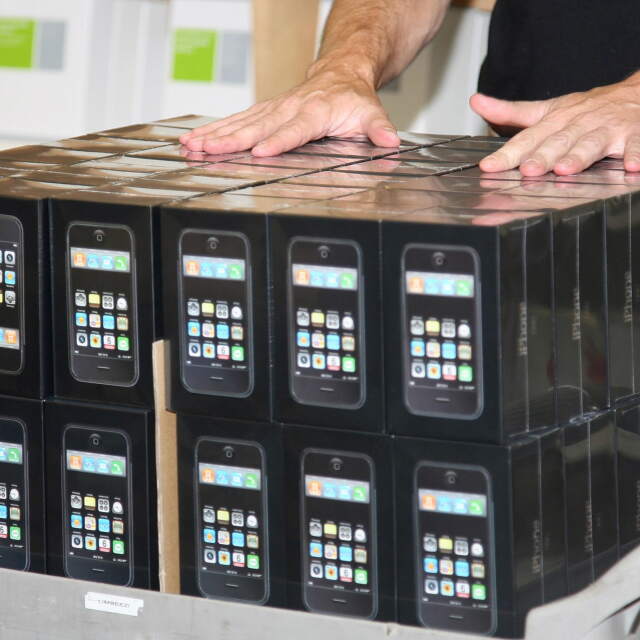
0:41The army of millions and millions of human beings screwing in little, little screws to make iPhones, that kind of thing is going to come to America. It's going to be automated. And great Americans, the tradecraft of America, is going to fix them, is going to work on them. Well, that isn't exactly what happened. And it's not where we're going, according to today's guest, Willie Shee, a Harvard professor and author of a new book on supply chains. After the break, Willie explains why we probably won't see iPhones made in America or a revival of the manufacturing jobs of yore. But he'll also argue that a different kind of manufacturing renaissance is still possible.
1:23Stay tuned for the following announcements and messages from our sponsors. This message comes from Bombas. Looking for the perfect gift? Bombas has a little something cozy for everyone. Socks, slippers, shoes, and more. Visit bombas.com slash NPR and use code NPR for 20 % off. This message comes from NPR sponsor Charles Schwab with its original podcast on investing. Each week, you'll get thoughtful, in-depth analysis of both the stock and the bond markets. Listen today and subscribe at schwab.com slash oninvesting or wherever you get your podcasts. This message comes from Airwallex. Are your business's financial operations ready for agentic speed?
2:05Airwallex's agentic global business accounts help optimize receiving, spending, and managing your money. Over 675 ,000 businesses trust Airwallex, direct or through platform customers. Visit airwallex.com slash go global. That's Airwallex with an X. Airwallex US LLC is a licensed money transmitter in most states and not a bank. Terms and conditions apply. To understand how global supply chains work, Willie Shi has traveled all over the world. He's sort of like Anthony Bourdain.
2:36Willy Shih: Well, maybe I'm the Anthony Bourdain of industrial tourism, right? You know, my whole career, I've been visiting a lot of factories as well over a thousand. And it's given me a unique picture of the world on how supply chains actually work in practice. Even after a pandemic made supply chain a household phrase, he says a lot of people still don't understand the how and why behind them. I ask students, for example, where did you get that? And they said, oh, I got it at Amazon. It's like, no, how did it get to Amazon? Right. So what people don't realize is that a lot of the products that we use every day take a crazy trip around the world.
3:17Willy Shih: Take furniture, for instance. But where does the hardwood for that furniture come from? A lot of it comes from forests around my house in New Hampshire. OK, and they cut it down there. They ship it to Vietnam for sawing into boards and they'll send it to China for making their furniture. Before sending it back to the U.S. Willie explores these logistical loop-de-loops in his new book, Where Does My Stuff Come From? The Powerful Economics Behind Global Supply Chains. His goal was to give the public and policymakers a more nuanced understanding of supply chains. And he was skeptical when the Trump administration said tariffs would bring about a boom in manufacturing jobs.
3:57Willy Shih: Frankly, I never believed it was going to come back. And it is not coming back. Now, to be fair, he says the tariffs have motivated some car makers like Toyota and Hyundai to invest in plants in the U.S. But the promised job boom hasn't materialized, and on the current path, he doesn't think one is coming. And that's because of one fundamental economic fact about making stuff in the U.S. The U.S. is and continues to be a high-cost country. In particular, the cost of labor is high compared to many other countries. You know, our current labor rate is probably five times that of China. Not to mention that in China, there are entire cities built around factories where hundreds of thousands of people live and work, making everything from electronics and furniture to clothing.
4:45Willy Shih: They were very efficient at mobilizing these huge amounts of labor to do these types of assembly jobs. And even today, it is hard to replicate that anywhere else in the world. This efficiency and cost savings when it comes to labor is why Willie says China is essentially the world's factory. And how much companies care about keeping labor costs low is hard to understate. For example, when the Trump administration hit China with tariffs, companies like TV manufacturers with operations in China responded by shifting more of their production to Vietnam. And if you look at the trade lane between Vietnam and the U.S., there's been huge growth as that production is moved to Vietnam.
5:28Their response to tariffs wasn't to say, let's move the TV factory to the U.S. it was, let's move it to another country where the cost of labor is relatively low. Right. For products that require a lot of human labor, whether it's assembling TVs or furniture or iPhones, it's just going to be much cheaper for companies to make stuff outside the U.S. Let's say, hypothetically, the U.S. government forced companies to make their products in the U.S. On the upside, Americans would get jobs, right? But Willie says there would be a big trade-off.
6:00Willy Shih: The question is, how much more are you willing to pay? Okay, are you willing to pay twice as much or three times as much? Because that's how much more the labor is going to cost. Well, labor, materials, and all the other things. And just take this as an example. Last year, one analyst estimated that an iPhone 16 Pro made in the U.S. would cost almost three times more. That U.S. price premium would also apply to all sorts of products made here. And not everybody wants to or can pay that. When you go into Walmart, you're not going to be able to have these selections of relatively inexpensive products.
6:37Willy Shih: You know, so you can't have it both ways. The manufacturing boom of the mid-1900s. Willie says those jobs aren't coming back, and we don't necessarily want them to. But he says a different kind of manufacturing renaissance is still possible in the U.S. So what would that mean? It would mean being more strategic about here are the products that we're going to maintain global champion status. These are the things that are really important to make in the U.S. so that, you know, if we did it better than anybody else, everybody would have to buy from us. And there are examples of these products already, like jet engines, pharmaceuticals, semiconductors.
7:17But Willie says the U.S. could also do more to nurture industries like biotech, which produces things like vaccines, advanced therapies, and cutting-edge medicines.
7:26Willy Shih: If you look at what's going on in that field, Some of the new things that are coming along are incredible, right? And what we should be doing is investing to make that next generation of drugs and therapies and really lead the world in things like that. And for the things the U.S. can't lead in, well, for those Willie thinks the U.S. basically needs to make friends. I think we need to kind of cast a wider net of allies that we can source from. Rather than the sort of zero-sum, go-it-alone approach, the U.S. could join up with countries in North and South America, Europe, Asia, and Africa and say, we're going to trade across this block.
8:08Through this network, Willie says the U.S. could access most of what we need, whether it's critical minerals, low-cost labor, or specialized technology. And what might it look like in practice? Well, it might look like the Trans-Pacific Partnership. During the Obama administration, the U.S. agreed to join the trade pact with 11 other countries, including Japan, Australia, Chile, and Vietnam. But Trump withdrew the U.S. from that deal during his first term in office. Still, Willie says, with the right moves, a manufacturing renaissance in the U.S. could happen, even if it'll look a lot different than the old one.
8:42Willy Shih: In the post-World War II period, 1950s, 1960s, you could graduate from high school, you could go down to the auto factory, and you could get a good job. But the world has gotten more competitive. It has gotten more complex. You walk into factories today, newer factories going into the U.S., you see a huge amount of automation. You see different types of jobs. And that's a good thing because it will move U.S. manufacturing forward. And because we can't go back.
9:14NPR superfans, listen up because you and a guest could win a trip to NPR headquarters in D.C. You'll get to watch a live broadcast of All Things Considered and have lunch with us. It's free to enter at npr.org slash giveaway. You can make a donation for more entries and support the NPR network while you're at it. There's no purchase or donation required, but you do have to be 18 years or older to enter. Find links to the entry page and official rules at npr.org slash giveaway. December 1st is the last day to enter and good luck. This episode was produced by Julia Ritchie and engineered by Debbie Daughtry.
9:51It was fact-checked by Sierra Juarez. Kagan Cannon is our editor, and the Indicators production of NPR.
9:59Stay tuned for the following announcements and messages from our sponsors. This message comes from Edward Jones, where they believe rich means opening yourself to new possibilities. That's why your dedicated financial advisor meets you where you are, helping you move forward with confidence. Let's find your rich. Edward Jones, member SIPC.
Scan the code with your iPhone camera
Listen in the app.