
 Ask ChatGPT



Written by AI. May contain mistakes.

Get the gist, explore an idea or ask about something said.
 Claude
On The Intelligence from The Economist, what are the key points of this episode?
Searching your listeningAutomatic transcript. May contain errors.
0:28The Economist read. But some new research suggests that considering the effects of a different emotion is pretty instructive. And it's the final installment of our Archive 1945 project, which relives the end of the Second World War through The Economist's coverage at the time. Eighty years ago, precisely, we wrote about VJ Day, the end of a war, but the beginning of a nuclear age.
1:01First up, though.
1:14This is the voice of Al Jazeera correspondent Anas Al Sharif in Gaza last month, reporting on the ongoing suffering of Palestinians.
1:28People are falling to the ground from the severity of hunger, he says. In one of his reports, he broke down and couldn't go on.
1:39A bystander says to him, keep going on us, you are our voice. He did keep going, despite the many threats. intimidating phone calls from Israeli agents that would begin with, Shut up, Anas. On Sunday, he was targeted in an airstrike. He and four members of his team were killed. That makes 186 Palestinian journalists killed since the fighting began. Even after nearly two years of war and devastation, Israel continues to ramp up pressure in Gaza, on Gazans, ostensibly in the name of defeating Hamas. Hamas, defiant, has held on to its Israeli hostages. But opinion is shifting inside and outside the organization, among its allies and backers, and among the people of Gaza.
2:29Hamas is under immense pressure to abandon its original founding goals as a resistance movement. Nicholas Pelham is a Middle East correspondent for The Economist. From the beginning, it's been both a political entity and an armed entity. And it's that armed element which it's now under increasing pressure to forsake. Israel is not only targeting journalists, but as we've spoken about before, it's using food and aid as a weapon and threatening a full occupation of Gaza if Hamas doesn't acquiesce, return the hostages and lay down its arms. And so how do you think Hamas might respond to that pressure then?
3:05What are the options available? Hamas at the moment has a delegation in Cairo where the Egyptians are believed to have put on the table a new proposal in consultation with Qatar and Turkey. And that proposal provides for the decommissioning of Hamas's weapons, a dissolution of its armed forces, the freeing of the reigning hostages, and a surrender of power. So essentially, this is like Hamas giving up everything that it's really built up over the last almost 40 years of its existence. In exchange, Palestinians would secure a full Israeli withdrawal. They'd get an interim Palestinian technocratic administration.
3:39And they'd also get a UN-sanctioned international force, which would come in in place of the Israelis. And at some point, the restoration of Gaza's rubble. If they don't acquiesce, Benjamin Netanyahu, the Israeli prime minister, is threatening to launch an offensive to fully occupy Gaza, including the last 15 % of the Strip that's still in Palestinian hands. And indeed, that offensive has already begun. there's heavy bombardment of the last cities that still have a Palestinian population within them, Gaza City and Deral Balah. That began on August the 12th, and another offensive would just completely destroy what little remains and could end up invicting not just Hamas, but Palestinians themselves from their coastal homeland entirely.
4:24And given the gravity of the situation then, are we at last at a point that Hamas will bend to the pressure? The decision really comes down to one man, Khalil Haia. He's the head of the Gaza wing of the movement. He arrived in Cairo on August the 12th. Historically, he's had a close relationship with Yahya Senwar, whose decision it was to launch the October the 7th attack. He's close to the military wing as well, the Hezidino-Kassan brigades. But that pressure on Mr Haia is really onerous. You've got pressure from the outside. As we mentioned, you've got that Israeli bombardment of the last cities, which are still standing in Gaza.
5:02You've also got just a completely different geostrategic reality in the Middle East. For the past two years, all the external backers of Hamas have been hobbled. Hezbollah in Lebanon has been pummeled and is now going through a process of disarmament. Iran has been pushed back from the Mediterranean, from Lebanon through Syria. It's under pressure in Iraq, really, to its borders. So those are the two pride backers of the armed wing, the Ezzedino-Kassan Brigades. And then as far as the political wing is concerned, Qatar and Turkey are also showing signs of losing patience with Hamas's foot dragging.
5:37Indeed, it's said that Hamas's leaders have already left Doha, the Qatari capital, about two weeks ago and haven't returned. So on all fronts, externally, they're under pressure. And it's not clear what their way of surviving as a movement at all is going to be without that external backing. So clearly pressure on Hamas from a number of sources, a number of fronts. What about its support within Gaza? If the pressure from outside is severe, it's almost unbearable from within. Essentially, Hamas was born in Gaza. Its constituency is primarily from Gaza. And over the last two years, the population which may initially have cheered the October the 7th attack on Israel's southern flank has really turned.
6:21and the price for the population is just becoming simply unbearable. There is just a kind of a cry that you hear from every conversation you have with people in Gaza. Just they want this nightmare to end. And the longer that Hamas is seen to procrastinate over these negotiations for a ceasefire, the more frustrated that population has become. Very few people see value in a resistance that has failed to protect them. They've seen everything that they've built over the last 70 years, smashed within two years. Gone are their universities, their schools, their hospitals, hotels, high rises, even the cemeteries have been ground to dust.
6:57And their best academics, their doctors, their journalists lie under that rubble. And those who are still alive just can often feel like they're kind of walking dead. They're homeless, they're destitute, they're unemployed, they're desperately hungry. And so while Hamas's armed wing, the hesitant and Kassan brigades shelter in their tunnels and Hamas's politicians negotiate from the relative comfort of exile. Israel is raining down fire on the ground and still killing about an average of 100 civilians a day. And as I said, they've got this fresh bombardment that has started in the cities. So you can even hear that dissent now, not just on the streets, but within Hamas's ranks.
7:35And you can tune into WhatsApp groups where Hamas affiliates are calling for their movement to lay down their arms before Gaza suffers even more loss. But what happens to Hamas as a movement if they do lay down their arms? If that is a decision that Khalid al-Hayr and the rest of the movement, the political leadership take, then it's said that the Ezzedine al-Qassan brigades will heed that call. You've got pragmatists within Hamas who are vying to fill the vacuum at the head of Hamas's Politburo after Yahya Sinwar, the head of the movement, was killed in October last year. One of the people who's perhaps a prime contender come elections within the movement is Khalid Mashal.
8:16He's the head of the diaspora wing. He's been a head of the movement in the past, and he's been a longtime advocate of politics over the armed struggle. And he's been waiting in the wings for years for a chance to return to the helm. There are those who just want to go even further who say that this is a time when Hamas should reinvent itself as a political party, perhaps on the model of Northern Ireland's Sinn Féin or incredibly even Israel's own Islamist party, the United Arab List. And that's a party which could then sign up to the conditions which the Palestinian president Mahmoud Abbas has set for participation in the political process inside the West Bank and Gaza.
8:52And if that political party did find itself back within the framework of normative Palestinian politics, then it could be the case. They could do actually quite well at the polls, even though Hamas has lost a huge amount of support in Gaza. there's still significant admiration for its grit, its ability to hang on against the Middle East's most powerful military machine when others are folded in the West Bank and in the broader diaspora. So whatever they've lost in Gaza, they might recoup in other parts of the Palestinian polity. But what about the militants, the hardcore of Hamas, the ones who would actually be putting down the guns with their own hands?
9:31How do they feel about that possible eventuality? I mean, from the conversations that I've had with not the commanders themselves, but with the sons of the commanders who are in exile, there's a lot of resistance to what they would see as a surrender and acceptance of these terms. They still think they have significant forces in the tunnels. They don't think they've got much to gain by handing over their weapons. They think that many of them might be pushed out of Gaza as part of the terms of a settlement into exile. and they also feel that for all the losses that Gaza has taken and all the sacrifices that it's made it hasn't been without some return.
10:07As they see it Israel standing in the world has been really badly bruised and many of them would draw a comparison with the Algerian war of independence against the French in which a million Algerians were killed and even though France won the battle such was the ignominy in which it was held by the rest of the world that it lost the kind of moral legitimacy to continue in Algeria and withdrew. And they do see a parallel with Israel in Gaza. And so they feel that ultimately that reward of liberation will be worth the cost that they're now paying. And that's why they say they want to fight on. And there's another reason why they want to fight on.
10:45They don't believe that these negotiations are going to lead anywhere. The Americans and the Israelis aren't in the room. They don't trust Netanyahu. They think that he wants to push on and conquer the Strip regardless. And so they don't really think they've got a choice. And the only option they've got is to stand by their guns. Nicholas, thanks very much for your time. Thank you, Jason. Always a pleasure.
11:23Fun fact, that 21st century acronym FOMO, the fear of missing out, was actually coined in the magazine of the Harvard Business School. It's a sort of personal, ineffable feeling. Maybe you do want to go out tonight after all. But it's also, as the Harvard business types would have it, an effect with economic consequences. And that kind of fear may actually be an overlooked force driving the markets. There's a standard model of investment where investors will only take on more risk if they get higher returns in compensation. And in this standard model, risk is defined by how much prices swing around.
12:03Josh Roberts is our Capital Markets correspondent. But a recent study suggests that something's missing from this model, that risk doesn't do a very good job of explaining how markets work. And it proposes a different idea as the driving force instead, fear. Okay, so we're going to rewrite the maths. We have a new variable, F, for fear. Tell me how it figures in. So it's based on a working paper by Rob Arnott of Research Affiliates and Edward Macquarie, who's from Santa Clara University. And what they've done is they've looked at the historical record. They've actually gone back two and a bit centuries.
12:41And they've concluded that over a really long span of time, risk, as conventionally defined, does an inadequate job of explaining how stock markets have actually moved relative to bond markets. So risk does an inadequate job of explaining how the stock market actually works. So we need a paradigm shift. We need something new to explain what drives returns. Well, hold it right there, do we? Well, the conclusion of the working paper is based on a historical study. But if you look around today, it certainly resonates with what we're seeing in markets. Stock markets are hitting all-time highs all around the world.
13:21And yet the risks just seem to keep piling up. There's geopolitics, there's trade wars, there's actual wars, there's vast government borrowing, which, to be corrected, can only really involve quite a bit of economic pain. And yet stock markets at all-time highs. Investors are pricing bonds as if they were less risky than ever. So right now, risk doesn't really seem to be doing an adequate job of explaining how markets are working. So it does seem like an alternative explanation might be quite good. Or, as you earlier said, paradigm shift, which I'm often loathe to use. But talk me through it. What's the new lens to look through at this?
14:01So risk theory says that investors in pricing assets look at any swing in asset price and consider that to be risky. So whether prices are going up very sharply or down very sharply, they consider both of those things risky and demand higher returns in response. This paper says, hold on, that's not really how investors think about risk. People aren't afraid that an asset might deliver higher returns than expected. They're only afraid that it might deliver lower returns than expected or outright losses. So they say, OK, let's get rid of this idea that investors price assets according to all swings in their prices and say instead, they only price them based on fear of losses.
14:50That's one sort of fear. The other sort of fear that they propose as an explanation for asset pricing is fear of missing out. Another thing I might fear is that I don't own an asset that everybody else owns and that goes up a lot. So an example would be recently, if I haven't owned NVIDIA, which unfortunately, I haven't owned NVIDIA, it's gone up a lot. Lots of other investors have. They've made massive profits and I've missed out on them. That's another fear that investors would want to avoid. I mean, what you're saying here, Josh, much like the standard model of asset pricing that you described earlier, does make some intuitive sense here.
15:24I mean, what do you make of this new way of thinking about it? I think this new way of thinking about it makes more intuitive sense to me. If you're worried about an asset, you're not worried that it might deliver better returns than expected. You're only worried that it might deliver a loss. And fear of missing out is also, it's a rational human emotion. People sometimes talk about it as if it's irrational. But if I'm a fund manager, I don't own a stock that does really well. All the other fund managers own that stock. I'm getting fired because I've been beaten by the market for a long time. So that's an entirely rational response.
15:57Similarly, if I'm a normal person and all of my friends own an investment that makes them massive profits and I can't afford to go out for dinner with them anymore, that's an actual risk. It's not irrational. So I do think the new theory makes intuitive sense. The trouble is that the maths is likely to be formidable. And Arna and Macquarie admit this. They don't work through the maths of the new theory. They're inviting other people to join them and try to figure out what the maths would be. One of the appeals of risk theory is that the maths is relatively straightforward. It's still quite complicated, but you can work through it.
16:31Fear theory is likely to be a lot harder to do actual work with. But the tantalising offer is that it provides a much better explanation of how markets work. And obviously, we should want that. Josh, thanks very much for your time. Thanks for having me, Jason.
17:04After America dropped atomic bombs on Hiroshima and Nagasaki on August 6th and 9th, 1945, Japan surrendered within days.
17:21On August 15th, 80 years ago today, Emperor Hirohito's declaration of surrender was broadcast by radio across Japan. Fraser McGillraith is the author of Archive 1945, an account of how The Economist reported on the end of the Second World War. Parts of the country's armed forces still wanted to keep fighting. Some would hold out for years, refusing to believe the news of the emperor's surrender. When Hiroo Onoda came out of a jungle earlier this year and surrendered his Japanese army sword, the story how he had carried on World War II in his own way for 30 years made a deep impression on many of his countrymen.
18:04In Britain, Prime Minister Clement Attlee's Labour Party had defeated the Conservatives under Winston Churchill in a general election only a few weeks prior. At midnight, hours after Hirohito's address, Attlee made a radio broadcast of his own. Japan has today surrendered. The last of our enemies is laid low. The Economist welcomed the end of the conflict in its August the 18th edition. The war is won. Now the carnage and destruction can cease. The creative energies of mankind can be withdrawn from slaughter and battle and be devoted to the rebuilding of a decent world. But the Allies' relief at the end of the fighting was tempered by America's use of nuclear weapons.
18:53The world was entering a nuclear age and would need to contain its apocalyptic threat. It is because this task is so vast and the implications of failure so terrifying that most people are facing victory not only with profound relief and thankfulness, but also with a sense of uneasiness and awe. The bombs which wiped out Hiroshima and Nagasaki stopped the war, but they started something else, a new age in human history, in which the issue of peace and war is literally the issue of extermination or survival. Who can fail under those circumstances to approach the task of making peace with passionate hope and anxiety?
19:38After its surrender, Japan would be transformed America would occupy the country until 1952 General Douglas MacArthur, the American general in charge of the Allied forces would make sweeping reforms to its army, political system, economy and society Debates surrounded the position of the emperor After much deliberation, America decided that Hirohito would be allowed to stay But only in a ceremonial role How does his continued presence square with the allied insistence on an end to militarism? Is it comparable to the survival in office of a Hitler or a Mussolini? Does an emperor necessarily imply imperialism?
20:24The decision has aroused uneasiness, particularly in Australia. It is, however, possible to argue that the emperor's position resembles that of a King Victor Emmanuel or a King Michael. Japan, like Italy and Romania, has not fought to the last. The Germans, lacking any constitutional machinery to effect a change in authority, were compelled to do so. This fact alone differentiates the Japanese emperor from the fascist chieftains. Japan's empire would be broken up. Korea would become independent. Taiwan, then called Formosa, would return to Chinese control, as would Manchuria. The Soviet Union would also make claims of its own.
21:14The Russians are showing signs in the Far East, as well as in Europe, of returning to the policies of czarism. More complicated territorial wrangling would ensue over Mongolia and other parts of the Asian mainland. Yet the case of Japan itself would be simpler. Unlike Germany, which would be occupied and divided by the main allied powers, in Japan, America would take full responsibility. The Potsdam Declaration guarantees Japan access to, as distinguished from control of, raw materials. eventual Japanese participation in world trade relations shall be permitted. There is far more sanity in these clauses than in the swinging economic conditions imposed on Germany.
22:01The Japanese people, freed from the incubus of a war industry, which by 1938 was absorbing 61 % of their national income, have a chance of recovering a measure of prosperity and of contributing to the rebuilding of Asia.
22:21It would take time for the last of the fighting to cease. On September 2nd, Japanese officials formally signed Japan's surrender on the USS Missouri, anchored in Tokyo Bay. The Japanese envoys arrive. Foreign Minister Shigemitsu, who lost a leg in a Shanghai air raid, hovels on board. He will sign on behalf of his emperor. General MacArthur made a short address. It is my earnest hope, and indeed the hope of all mankind, that from this solemn occasion, a better world shall emerge out of the blood and carnage of the past. The war in the Pacific, and with it the Second World War, was over. To find Archive 1945, just open up The Economist app or visit economist.com slash interactive.
23:35The End
23:48is William Warren. Our producers are Henrietta McFarlane and Benji Guy and our assistant producer is Anne Hanna with extra production help this week from Emily Elias and Eleanor Sly. We'll all see you back here tomorrow for the Weekend Intelligence. This week, my colleagues are drawing back the veil on Opus Dei, a religious organization with global reach but which actually pulls a lot of strings in Spain. Controversy about it has focused on how it treats its low-ranking members but we went higher up the ladder to find out how Opus Dei got so powerful.
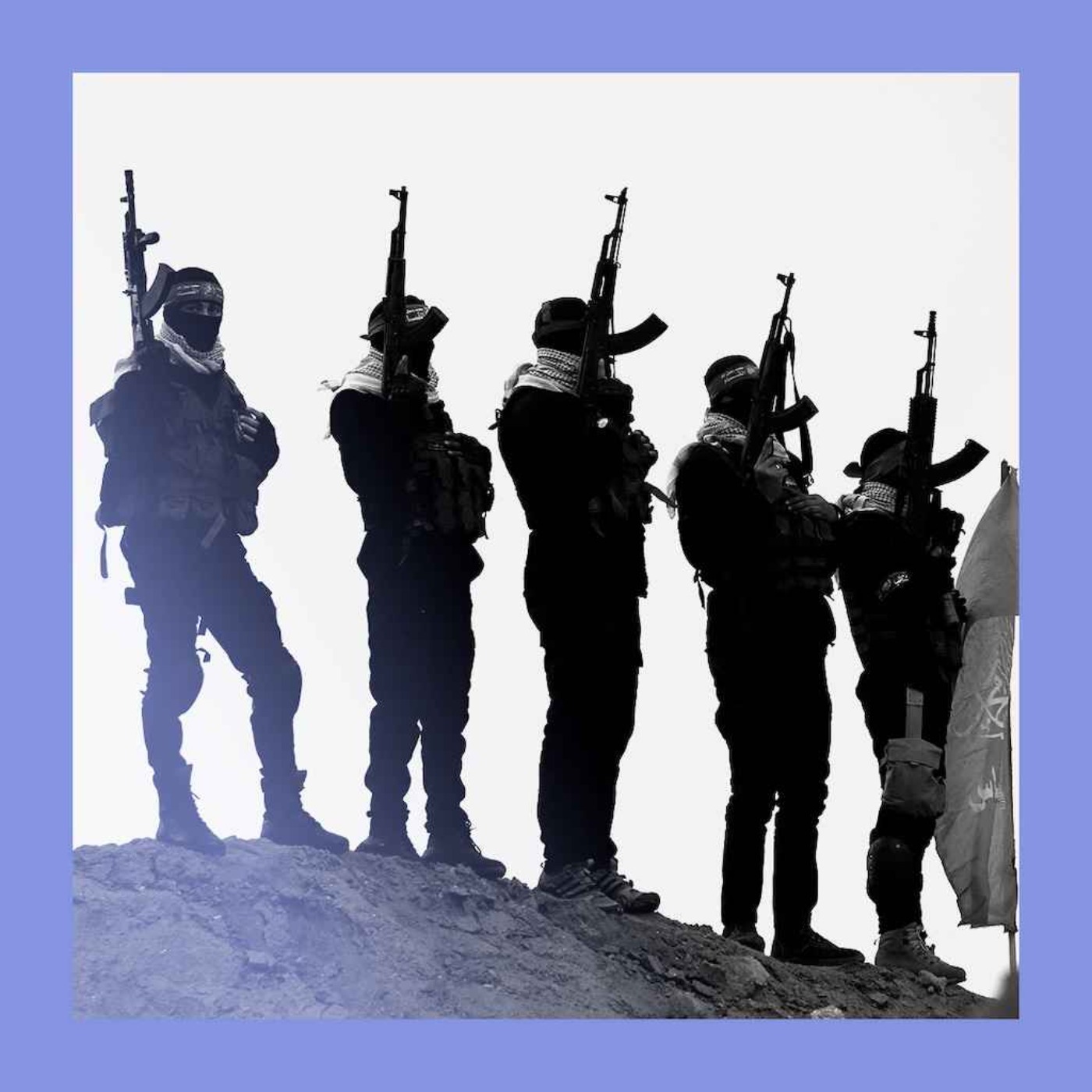
Opinions of Hamas are shifting—among its international backers, in Gaza, even within its affiliates’ ranks. If it opts to disarm, what would happen next? A new analysis suggests using a sense of risk to explain markets’ movements might be focusing on the wrong emotion. And our final “Archive 1945” instalment relives VJ day through The Economist’s coverage at the time.
Get a world of insights by subscribing to Economist Podcasts+. For more information about how to access Economist Podcasts+, please visit our FAQs page or watch our video explaining how to link your account.
Hosted on Acast. See acast.com/privacy for more information.


