Ask ChatGPT


 The Intelligence from The Economist
9 Nov 2026 · 24m · 7 chapters
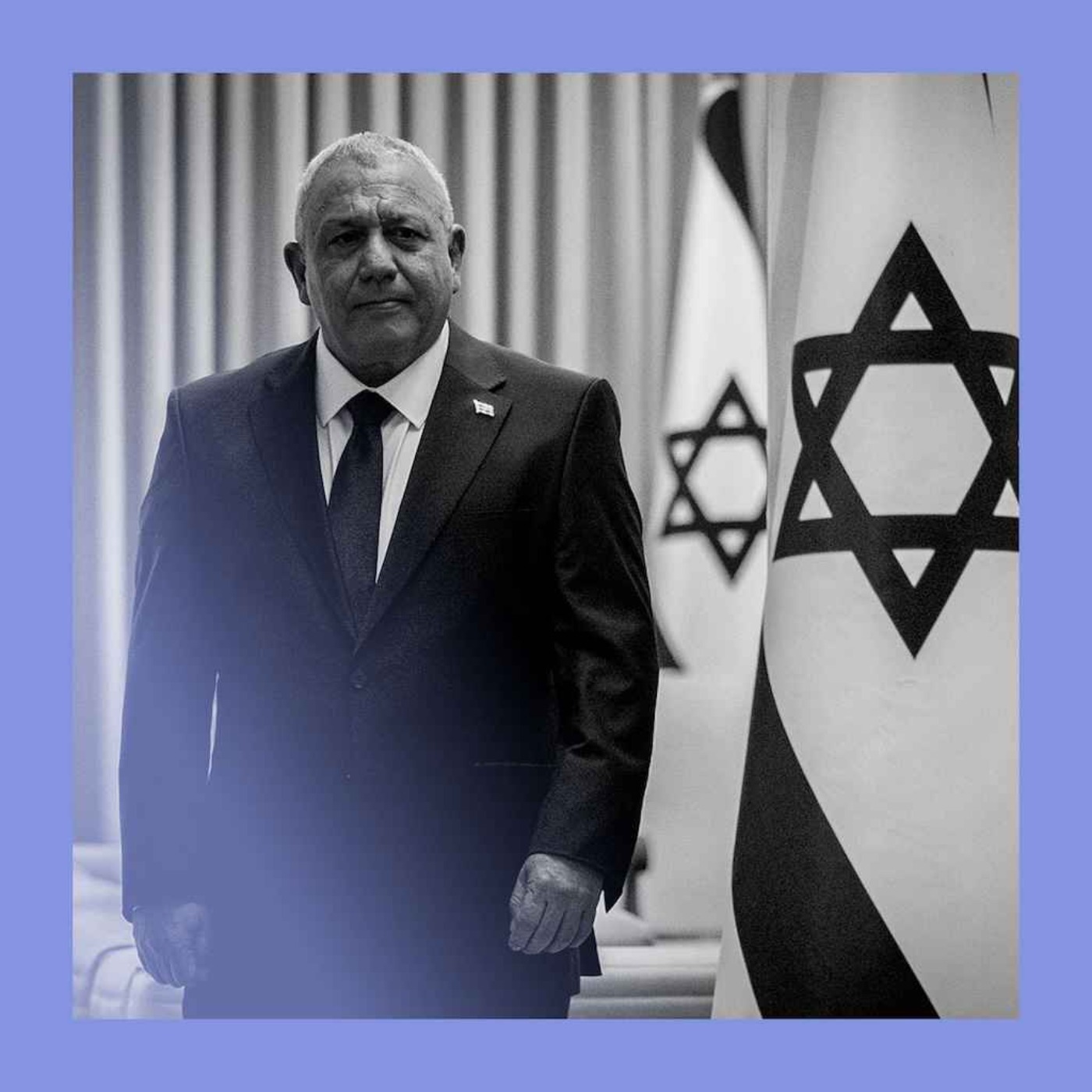
The Intelligence episode focuses mainly on Israel’s post-election leadership scramble after a close vote left no majority. Guest Gaddy Eisenkot, a former IDF chief (commander-in-chief until 2018) who entered politics in 2022, has been tasked to form a coalition within six weeks.
Eisenkot aims first for a minority government with four opposition parties (barely a third of Knesset seats) to replace Netanyahu’s government urgently; he expects compromises via Arab parties and/or ultra-Orthodox parties through support, abstentions, or confidence-vote backing.
Netanyahu’s attempts to disqualify votes failed; he’s pushing a unity government and attacks Eisenkot as relying on “Islamists.” The episode also discusses US-Israel relations after US midterms and a separate Ukraine front-line/data segment.
Anshul Pfeffer (The Economist Israel correspondent); also Sonja Solstad (The Economist data journalist) for Ukraine.
Written by AI. May contain mistakes.
An overview of potential leadership changes in Israel.
“Israel could be about to see a change in leadership.”
Discussion on Eisenkot's struggle to form a new coalition government.
“in which President Trump, and those close to him, pointed fingers at Israel as a reason why his party fared so badly in the House and Senate.”
Exploration of Eisenkot's experience and political dynamics.
“So just to swear in a minority government, there will be need for compromise.”
How Netanyahu is reacting to the political shift and its implications for US-Israeli relations.
“Well, Netanyahu has so far failed to disqualify the election result.”
Analysis of recent changes in the conflict in Ukraine.
“Recently, we've told you how Ukraine is being bombarded from the air by Russia in a way that it hasn't been before in nearly five years of conflict.”
Explore the rising Russian casualties and changes in military strategy in Ukraine.
“where they would attack both from the south and the north to cut off three of Ukraine's key cities in the defense of the country, the Fortress Belt cities.”
Discuss the significance of Who's Who as a historical record of British elites.
“Thatcher, Baroness, liked music, reading.”

Get the gist, explore an idea or ask about something said.
 Claude
On The Intelligence from The Economist, what are the key points of this episode?
Searching your listeningAutomatic transcript. May contain errors.
0:00Global payroll is a headache when you're juggling multiple vendors. We get it. Companies like Shopify and Revolut are scaling effortlessly across borders with Deal. Revolut manages over 450 employment contracts across 26 countries without setting up separate local entities. And KLM pays 189 employees across 12 countries, all from one system. Build your global team with Deal. Visit deel.com slash intelligence and start expanding your business today. This Economist podcast is sponsored by Apollo.io. In a fast-moving business environment, finding the right people to connect with takes time. For sales teams, prospecting, outreach, and follow-up can mean juggling multiple tools and workflows.
0:46Apollo.io brings these activities together in one platform, helping sales teams find the right buyers and spend less time on scattered, manual tasks and more time building relationships. Apollo.io. Sign up for free at Apollo.io.
1:03The Economist
1:10Hello, and welcome to The Intelligence from The Economist. I'm Ore Ogombie.
1:20Today on the show, the slow but significant shifts along Ukraine's front lines and the importance of who's who.
1:36But first...
1:43Israel could be about to see a change in leadership. After a very close election in which no side won a majority, This weekend, Israel's president tasked the opposition leader, Gaddy Eisenkot, with trying to form a new coalition government. Mr. Eisenkot is Prime Minister Binyamin Netanyahu's strongest rival. Yesterday, at a short ceremony, Mr. Eisenkot told the onlooking media that Israel needs new leadership as urgently as it needs air to pave the way for a new era.
2:24This is all unfolding in the aftermath of the American midterm elections, in which President Trump, and those close to him, pointed fingers at Israel as a reason why his party fared so badly in the House and Senate. Without much time or foreign support, will Mr. Eisenkot be able to pull this off?
2:45Anshel Pfeffer: Gaddy Eisenkot now has the mandate to form Israel's next government Anshul Pfeffer is The Economist's Israel correspondent The big question now is whether Eisenkot can gather enough of the opposition parties to form this new minority government and most importantly to get it sworn in by the Knesset Okay, so he has the mandate What could his coalition look like? So what we know of his plans is that he's at present trying to form a minority government with just four opposition parties, which hold barely a third of the Knesset seats, because his view is that the most urgent thing is to replace Benjamin Netanyahu's government.
3:37Anshel Pfeffer: And after he succeeds in doing that, perhaps to broaden his coalition. In recent weeks, Netanyahu has tried to drag Israel into another war with Iran. He has been in a campaign to disqualify the votes of Arab Israelis. He's used the Shimbeth security service for political purposes. So all that adds urgency to Eisenkot's attempt to form a government. Eisenkot has at most six weeks to do so. So that's why his current priority is to try and form a minority government. And speaking yesterday, Eisenkot talked about the need for compromises. What concessions does he need to make to form that emergency coalition government?
4:22Anshel Pfeffer: So a minority government will still need support from other parties in the Knesset. And that means either the Arab parties or the ultra-Orthodox parties, or perhaps a combination of both camps, either voting in favor of his government without actually being members or abstaining just to allow this minority government to pass its inaugural confidence vote. And that in itself would mean compromises because some of the parties in Eisenkot's coalition, including his own party, Ashar, have been, let's say, reluctant to join with the Arab parties and they've also been very reluctant to compromise on various issues with the ultra-Orthodox parties.
5:04Anshel Pfeffer: So just to swear in a minority government, there will be need for compromise. Now, Ansh will remind us, who is Gaddy Eisenkot? What's his background? Do you think he's got the political skills to pull this off? Gaddy Eisenkot is a former general. He was, until 2018, the commander-in-chief of the Israel Defense Forces, spent most of his life in uniform. And he only joined politics in 2022, has been a party leader now for just over a year. So his experience in the coalition building is, shall we say, limited. And that means that the other members of the opposition bloc, the other party leaders, are far, far more experienced than he is.
5:52Anshel Pfeffer: They don't have as many seats. Eisenkot being this fresh face and having won many more seats than the other opposition parties but he still needs them and his main problem is Avigdor Lieberman, leader of a nationalist opposition party, someone who began his political career over 40 years ago as an assistant to Netanyahu. Now he's sworn to replace Netanyahu but Lieberman has his own agenda and he is now on a freelance manoeuvre to try and broker some kind of a deal with the ultra-Orthodox parties. And that's a big headache for Eisenkot because instead of having a coordinated opposition bloc, he's got other party leaders trying to build their own coalitions, breaking election promises not to compromise with the ultra-Orthodox on issues like universal national service.
6:46Anshel Pfeffer: And at the same time, Lieberman has said he will not support a minority government supported by the Arab parties, which does seem to be Isenot's preferred course of action right now. So it's a big headache for Isenot, who is not only up against his political opponents, maybe Benjamin Netanyahu, and his camp of far-right parties, but also up against some of his potential partners. And speaking of Netanyahu, how has he responded to all of this? Well, Netanyahu has so far failed to disqualify the election result. He's tried. His party, Likud's lawyers, have petitioned to do so, but the election results have been ratified by the Central Election Commission and are now basically set in stone.
7:33Anshel Pfeffer: So there's not much he can do about that, though he's going to continue trying, at least in public, to delegitimize those votes. Netanyahu's aim now is to try and prevent Isencourt from forming a government in that six-week period. He has his latest ploy has been to call for a unity government, obviously a unity government which he will lead and in which some of the parties of the opposition will agree to sit. And he's doing everything he can and using parts of the Israeli media to slime any kind of Isencourt government. And Netanyahu said on Saturday night that Eisencott's government is a government relying on Islamists that will dismantle Israel from within, and a government that will simply not allow Israel to survive.
8:19Anshel Pfeffer: Eisencott responded that Netanyahu is hysterical, but he still doesn't have the numbers to replace him. Looking beyond Israel for a moment, in last week's American midterm elections, we saw a Democrat blue wave. Where does that leave US-Israeli relations? There is an increasingly hostile vibe towards Israel because the Democrat Party is much less supportive of Israeli policy. It's less supportive of arms sales without conditions to Israel. And it's not just the Democrats. We're also seeing from Donald Trump and from J.D. Vance and other parts of the Republican Party also So an increasing tendency to blame Israel for their woes.
9:04Anshel Pfeffer: Both Trump and Vance have mentioned in the Iran war, in which Israel was a partner with America, and in general Israel's relations with the US, as one of the reasons for their dismal results. So it sounds like when these newly elected representatives and senators take office in January, that relationship between the US and Israel could continue to weaken. Well, it certainly will be tested. And really the question is, how does the Israeli government or what Israeli government will be there to respond to this? Now, Benjamin Netanyahu, in his many years in office, has presented himself as an ultimate expert on American politics.
9:44Anshel Pfeffer: He began his public career as a diplomat in the United States. And he's obviously made a huge deal out of his own personal relationship with Donald Trump. and what we're hearing now from Washington doesn't sound like that relationship amounts to very much anymore. So this could also add more urgency to the attempts to replace Netanyahu as the Prime Minister of Israel. Will this be enough to get Eisenhower over the line? We'll see in the next few weeks. Anshul, thank you so much for coming on the show. Thank you for having me, Ori.
10:25This episode of The Intelligence is sponsored by VantageScore. For years, credit scores have been generated with just a snapshot, and that snapshot left millions of people out of the picture. So VantageScore is modernizing the whole process. They use 400 % more credit report and alternative data than legacy models, bringing more people into the credit economy, like 5 million more mortgage-eligible people. So all the banks win, but so do all the francs. The lenders and the borrowers, the Lindas and the Olivers. When you build credit scores the right way, everybody wins. That's the power of VantageScore.
11:00Get started at VantageScore.com. This podcast is supported by NordLayer AI Scout. You can't secure, govern, or measure what you can't see. NordLayer AI Scout makes AI usage visible first, so you decide where controls are needed instead of blocking blindly. The first step to AI governance is visibility. See every AI interaction. Decide what happens next. Learn more at nordlayer.com slash AI dash scout slash economist.
11:46Recently, we've told you how Ukraine is being bombarded from the air by Russia in a way that it hasn't been before in nearly five years of conflict.
12:00Its defenses suffered after Elon Musk's Starlink withdrew satellite service, while Donald Trump eased sanctions on Russia and cut a deal to buy its diesel exports.
12:15But over the past several years, the picture from the eastern front lines of this war in Ukraine have been muddied. a stalemate largely established a long time ago. Now, satellite intelligence suggests that new trends are at play. To track the fighting, what we are doing is to repurpose a NASA system originally set up to track forest fires. Sonjo Solstad is a data journalist with The Economist. Now, forest fires produce a lot of heat, but so do explosions. and the sort of stuff you see along an active front line. We are using the data from the satellites to track the war along the front and beyond in near real time.
13:01And what we found is that over the past three months, there's been more activity along the front line than in any other comparable period of the war. And in all this activity, what we are seeing is that it's actually Ukraine, which is gaining ground, not Russia.
13:18Okay, Sanjay, this is a wall where the front line has barely moved in years. Tell me a bit more about what exactly we're seeing here. Yeah, sure. So in the past 90 days, Ukraine has gained on net about 73 square kilometers. That is not a lot. Ukraine is about 600 ,000 square kilometers to give you a sense of the numbers here. But it is a lot if you take it in comparison to Russia's gains over the year so far. Effectively, what we've seen is that they've wiped out half of Russia's gains in just 90 days. And in part, that's been through some quite sophisticated and audacious operations. And here, I think we should mention Operation Vivaldi, named after the composer.
13:57So this was a four-stage Ukrainian counteroffensive that began in the spring in May and ran into October. And the context of the operation was that Russia was trying this enveloping move, where they would attack both from the south and the north to cut off three of Ukraine's key cities in the defense of the country, the Fortress Belt cities. Now, what Operation Vivaldi did was to target the northern part of that attack and effectively nullify it, meaning they trapped a lot of Russian forces and stopped the attack in its tracks. But again, the frontline in Ukraine is not like the frontline, have in your mind, of like World War I or what have you.
14:37These are enormous areas where effectively you can't operate at all. And then sort of people trying to stake out positions and move it incrementally. And so what does that mean for the loss of life in that bloody battle? As far as we can tell, Russia is losing a lot of men. Casualties are very high. And casualties would be both the dead and the severely wounded. And the signs point towards the dead being a big share of that compared to some other conflicts. Because just the attacks tend to be lethal if they hit at all. And also, some suggest Russia isn't making that good of an effort to actually get its wounded out of the front before they perish.
15:15So our meta-estimate, which looks at all the credible estimates we have from various sources, these are intelligence agencies, researchers, huge efforts to basically collect a list of all the dead Russian soldiers you can find in memorial, social media, and so on. All these different sources, we pull those together to come up with a number that is also informed by what we are seeing on the front lines in terms of activity. So that long prologue aside, our meta-estimate puts Russian fatalities at about 370 ,000 to 780 ,000. And total casualties, which would also include the severely wounded, between 1.4 million and 2.1 million.
15:51And you could look at those numbers, and especially the dead, and compare it to what we know about the Ukrainian side. And here, I think the best source is this website, which also categorizes Ukrainians that are known to have died. And we've checked that, and we found it to be quite credible. So that lists 116 ,000 soldiers as dead and another 106 ,000 as missing, giving a range from 116 ,000 to 220 ,000 effectively. Now, what the Russian president, Vladimir Putin, thinks is that he has the initiative regardless because he feels like he can replenish his forces, it seems. And he's basically inflicting pain and seems to be willing to accept the cost, at least for now.
16:34And as those casualties are mounting on both sides, I guess it makes sense then that the Kremlin wants to inflict even more pain by attacking from the sky even harder. Yes, and that's really what the last month has been about, where you've seen this dramatic uptick in deep strikes on Ukraine. So these are strikes that are at least 100 kilometers from the front line or the international border between the two countries, hitting Ukrainian cities, infrastructure, railroads, its industry. And it's been effectively a tripling of attacks between June and September. In the past month, Russia hit 290 civilian infrastructure targets, killing at least 62 civilians.
17:16And that's the total that sadly is just increasing. On October 29th, we saw one attack kill 15 people. This was when a Russian drone hit the train platform. What this is doing is it's limiting Ukraine's ability to function. It's effectively targeting its industry and society. You've had over 500 trains been hit since the start of the invasion. 300 of those were this year. And I think overall what this suggests is a sort of a change in strategy, or at least an expansion of what Russia's forces is trying to do. Not just destroying Ukraine's defenses at the front, but also its economy and society in the rear.
17:55So for all of President Trump's talk that he was going to bring parties to the table, that doesn't seem to have happened then? No, at least not in the sense of any sort of pause in the conflict. The American president has been trying to get both sides to the table to set up high-level talks between Ukraine and Russia. And that might bear fruit in that we could see a meeting as soon as mid-November. But what he's also tried to do was to push through this so-called energy ceasefire, which would limit attacks on the energy infrastructure of both countries, though some later said that it was only about Russian refineries.
18:34In any event, the ceasefire never took effect at all. And the week in which it was announced was one of the worst weeks of the war so far for these attacks on Ukrainian infrastructure. Blackouts and power cuts are routine in Ukraine already, and it's getting colder. And so it's going to be a very tough winter. Ukraine has also, of course, continued to step up its long-range attacks, though that has plateaued over the summer, whereas Russia's attacks have just accelerated massively. On the Ukrainian side, they have conducted more than 100 long-range attacks in the past month. And these have killed 11 civilians, as far as we can tell.
19:11Overall, though, the picture seems to be that Putin holds the upper hand in Washington. and the Trump administration sees more assertive fight between two enemies than the Russian aggression and escalation, which the data reveal. So, Andre, thank you so much for coming on the show. A pleasure. Thank you.
19:52Thatcher, Baroness, liked music, reading. Catherine Nixie is a Britain correspondent. Chamberlain, Neville, enjoyed shooting. Stalin, Joseph, and Hitler, Adolf, did not deign to send in their recreations. This was unlike Mussolini, Benito, whose hobbies included violin, horse riding and fencing. And how do we know all this? It's thanks to a little red book, Britain's catalogue of the elite, known as Who's Who.
20:30Who's Who was first published in 1849. It's the world's oldest biographical reference annual. and arguably its oddest. It is a catalogue of a certain sort of British elite and the just occasional foreigner. The first entry, listed in 1849, was Our Beloved Sovereign, Queen Victoria. It included notable people, including Churchill and Trotsky. It was copied widely and ripped off even more widely. There was Wer ist Wer in Germany, Wem, Wachem for Norway, and even Who Was Who for the afterlife. Now its publisher Bloomsbury is selling it. It's not known who the buyer will be and it's not even known whether it will continue.
21:16And if it doesn't, this matters. Because Who Is Who has gone on for so long and collected so many entries, it's no longer just an anthology. It's an anthropological guide to the English elite. There have been 179 editions and over 125 ,000 entries. It lists these elites' habitats, their hobbies, and their sort of humour. For example, the comedian John Cleese listed his pastimes as gluttony and sloth. The current edition contains John Macdonald, a former shadow chancellor, who lists his recreations as fermenting the overthrow of capitalism, rather than fomenting it. Spelling is evidently less of an enthusiasm.
22:04The selection process is complicated. Broadly speaking, people fall into two categories. There are the bigwigs you've mostly not heard of. MPs, KCs, judges, peers, the kind of people who wear tights. And then there are the bigwigs you may well know. Actors, writers and business figures. And they get voted in by a board. But quite who the board are is not very clear. its selection process is shrouded in secrecy to prevent bribery and corruption.
22:38The demographics of Who's Who are striking and quite different to the rest of Britain. 80 % of the entrants are male, 97 % of the current ones are white. It doesn't really reflect Britain's demographics in any way. The entrants are also more likely to live in London almost 36 % of them do versus 13 % for the average Britain and they are way more likely to be privately educated 47 % of them are versus 6 % in the rest of the population They are far, far more likely to have gone to Oxbridge Who is who in Britain is more or less exactly the same as who was who and both are pretty much exactly what you'd expect In the older editions, hunting is a popular pastime.
23:23In the 1850s, a quarter of entrants listed hunting as a hobby. And this, as they explained, could either be for Tusker elephants, or, as one Etonian put it, he enjoyed hunting the Philistines. It's odd, but it's also important. Historians absolutely love it. It is, as Tristram Hunt, the director of the V &A Museum, put it to me, absolute gold dust. Even in an age of online oversharing, Who's Who offers you information that's hard to find elsewhere. This information goes back so far and is so homogenous that you can easily compare the 1870s with the present day. It's often at its most telling in the incidental details, so earlier volumes list telegram addresses and car number plates.
24:09Later ones will give a person's social media handles. It can be quite eerie reading it, Mostly when you read history about the Second World War, you're reading it mediated through a present-day author. But if you pick up Who's Who, you're reading history as it was written at the time. So if you pick up the 1938 volume, you find Hitler, Stalin and Churchill all listed, all in capitals. But it's a strange feeling reading it. It's like reading the cast list for a play whose ending hasn't yet been written.
24:45It is still relevant today, and it's still interesting. It shows that Britain's elites are changing. Fewer these days list hunting as a hobby. Now they prefer pets, and displaying an awkward sort of irreverence towards things like who's who. Far too many of them list sex as a recreation. Britain's elite are not going to disappear, but they may well become harder to spot if who's who is lost. But what's most striking, actually, if you pick up an old volume of Who's Who in the library, apart from the odd Hitler or Stalin or Churchill, you will hardly have heard of any of the people listed inside.
25:38That's all for this episode of The Intelligence. We'll see you back here tomorrow.
26:10Deel. Revolut manages over 450 employment contracts across 26 countries without setting up separate local entities. And KLM pays 189 employees across 12 countries, all from one system. Build your global team with Deel. Visit deel.com slash intelligence and start expanding your business today. Granger knows if you're a procurement manager at an industrial manufacturing facility, you're balancing inventory and budget while sourcing critical supplies across the operation. Too much inventory? Costs climb. Too little? Production slows. Grainger's$2 billion in on-hand inventory helps you get what you need when you need it, so you can help keep budgets balanced and lines moving.
26:53Call 1-800-GRAINGER, click grainger.com, or just stop by. Grainger, for the ones who get it done.
The president has tasked the former general – and Binyamin Netanyahu’s strongest rival – with building a new government. With just six weeks and barely a third of the Knesset seats on his side, will he succeed? Russia has a stalled front line with Ukraine but is bombarding harder from the air. And why the sale of the world’s oldest biographical reference annual matters.
Guests and host:
Topics covered:
Listen to what matters most, from global politics and business to science and technology—subscribe to The Economist.
Hosted on Acast. See acast.com/privacy for more information.