
 Ask ChatGPT


 The Intelligence from The Economist
19 Mar 2026 · 25m · 14 chapters
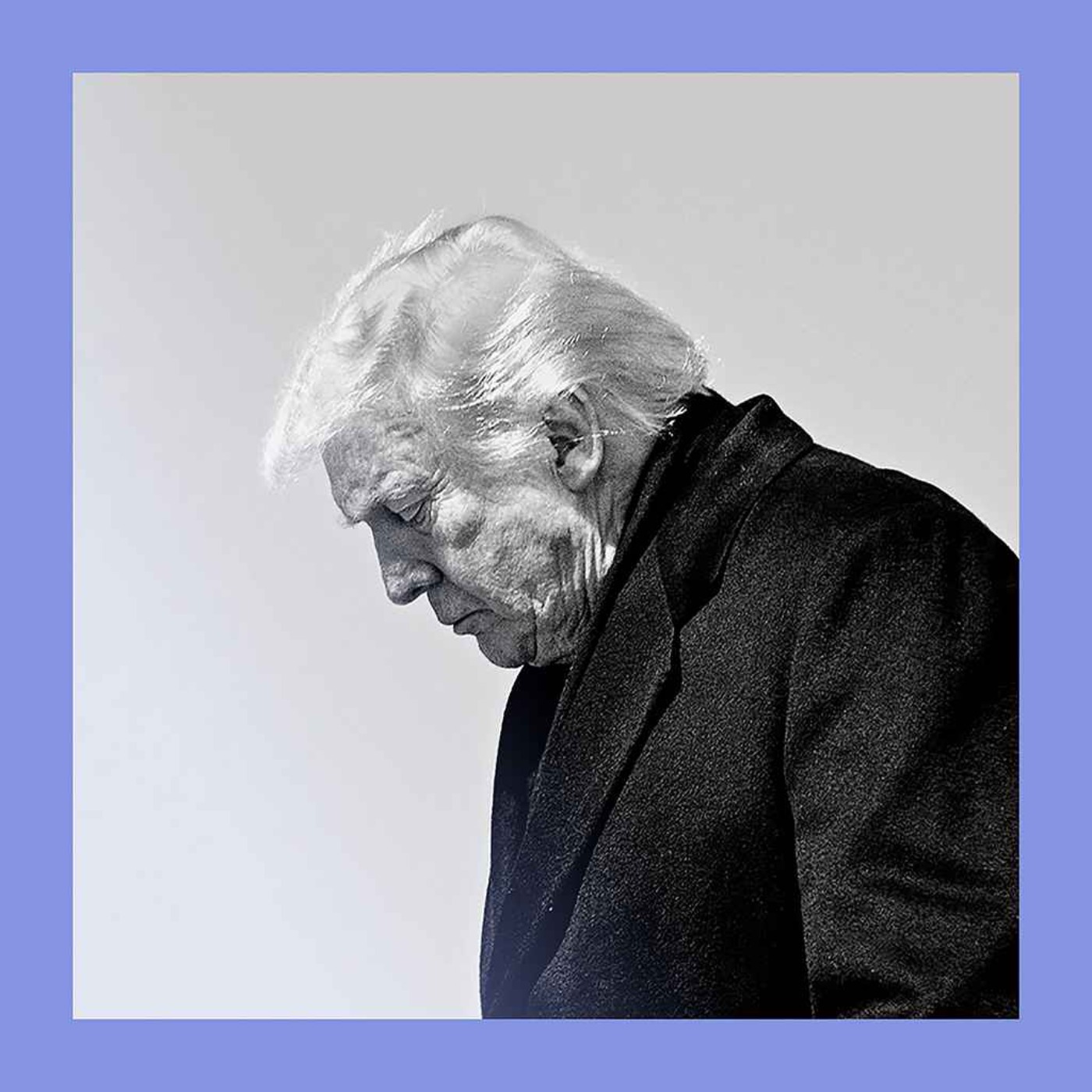
In this episode, the hosts and correspondents discuss the implications of President Donald Trump's choice to engage in a military conflict amidst declining political support. The conversation also touches on Turkey's political landscape and the peculiar public sentiment towards food delivery robots in the United States.
Written by AI. May contain mistakes.
Discussion of the ongoing political situation in Turkey and its implications.
“when it comes to the narrative of the bots are coming for us all.”
Examination of the recent military actions in Iran and their impact on global politics.
“The back and forth of the war in Iran continues.”
Analysis of how the war in Iran threatens Donald Trump's grip on power.
“Robert Guest is a deputy editor of The Economist.”
Exploration of how voters perceive Trump's claims amidst ongoing crises.
“but the war is likely to accelerate that process.”
Discussion on how the war affects Trump's political leverage and popularity among voters.
“Okay, and this particular situation affecting his superpower of relentless use of leverage.”
Analysis of the implications if Democrats gain power, particularly legislative constraints.
“at the scale of the loss they're expecting in November.”
Speculation on how Trump might react if his position weakens after midterm elections.
“So with the possibility of going to prison if they're caught lying.”
Coverage of the trial of Ekrem İmamoğlu and its significance in Turkish politics.
“Last week I travelled to Selivri, a town on the outskirts of Istanbul, to attend a court here at a courthouse outside a maximum security prison.”
Explore the implications of Imamoglu's arrest on Turkish politics.
“He was arrested only days before nominated as his Republican People Party's presidential candidate.”
Learn about the CHP's approach to navigating the political landscape.
“I caught up with the leader of the CHP, Özgür Özel, and I asked him whether the party was considering the new candidate, given the very real risk that Imamoglu will not be set free before the elections.”
Understand how Erdogan's foreign policy is used to divert attention from domestic issues.
“The first group, meaning voters, are asked to pay more attention to Turkey's growing footprint abroad than to persistent inflation or the crackdown against the opposition.”
Discover Turkey's strategic position in regional conflicts and negotiations.
“He has a few foreign policy victories to his name.”
Learn how Turkey's regional relevance affects its internal political climate.
“And in that sense, it leaves a lot more room for what might be termed a show trial in the case of Mr.”
A look at public sentiment and reactions towards food delivery robots.
“Back in 2014, researchers from Toronto built Hitchbot, a full-body hitchhiking robot designed to test human-robot interactions.”

Get the gist, explore an idea or ask about something said.
 Claude
On The Intelligence from The Economist, what are the key points of this episode?
Searching your listeningAutomatic transcript. May contain errors.
0:03The Economist.
0:10Hello and welcome to The Intelligence from The Economist. I'm your host, Jason Palmer. Every weekday we provide a fresh perspective on the events shaping your world.
0:24Democratic institutions have been taking a beating in Turkey. At the same time, and perhaps as a distraction, Turkey has been making itself important on the world stage. All that bodes ill for the opposition politician at the middle of a massive criminal trial. And we do try to paint a nuanced picture for you when it comes to the narrative of the bots are coming for us all. But delivery bots, well, they're already here. Weird thing about them, though, Americans in particular just really hate them.
1:01First up, though.
1:10The back and forth of the war in Iran continues. Overnight, Israel hit South Pars, the world's largest natural gas field, in the middle of the Persian Gulf. Iran launched its own attacks, causing serious damage to a natural gas facility in Qatar that accounts for about a fifth of global gas. Saudi Arabia said it intercepted missiles aimed at a gas facility there, which makes Donald Trump's recent assertion that the war was, um, very complete pretty much, make even less sense. He threatened to massively blow up that South Par's gas field if Iran struck Qatar again. Maybe so. What also seems probable is that this war will massively blow up his presidency.
1:53This is an extraordinary self-inflicted wound by Donald Trump. He's leapt into a war without thinking about it. And now this looks like the kind of crisis that could dramatically weaken his presidency. Robert Guest is a deputy editor of The Economist. There may be upsides to him being weakened, but also if he starts to feel that people think he's a loser, he may lash out. Why do you think this is so different a moment than moments we've seen before? It erodes Trump's what you might call his three political superpowers. So his ability to impose his own reality on the world and make people believe it.
2:39his remorseless use of leverage to coerce people, and his dominion over the Republican Party. These were always likely to diminish after the midterm elections in November, but the war is likely to accelerate that process. Okay, well, let's take the superpowers, as you call them, in turn. How do you think this in particular affects his ability to call what reality is? Well, throughout his career, he has said things that are not true, said things that are wildly exaggerated, said things that are totally made up, and he's got away with it. What's different this time is that voters can see with their own eyes that what he is saying is not true.
3:24So he says he's won a great victory. He says that he's destroyed 100 percent of Iran's military capacity. Yet somehow with the 0 % that remains, Iran is able to cause total global economic havoc. And voters can see that because the price of oil is not one of those bits of news that you can censor by taking away people's broadcast licenses. It's displayed outside gas stations all over America, which people drive past every day. so they can see how his foreign policy, his supposed great victory, is making their lives worse. Okay, and this particular situation affecting his superpower of relentless use of leverage.
4:09So again, this was a war that he thought was going to be very easy because the previous operation in Venezuela was very easy for him. One can argue about whether he achieved anything useful there, but the operation was tactically brilliant and over very quickly. He thought it would be the same this time. he's run into the mud, he's asking people for help. But here's the thing. Trump's allies now know that they can expect bad treatment from him. He's asking for help from NATO when he has disparaged the alliance, he has threatened not to come to their help if they don't do what he says, he's threatened to annex territory belonging to another NATO member, Denmark.
4:51And now when he's asking them for help and saying that it'd be very bad for NATO So if they don't supply that help, well, amazingly, they're not that willing to help him out of a mess that he created without consulting them. And then going on to say, well, I didn't need your help anyway, I would point out. Yes, of course he says that. But I mean, again, this is undermining his ability to shape reality. Everybody can see that he's lying. Right. And as for how this might damage his hold on the party? There's a big chunk of the Republican Party that will continue to support him absolutely regardless of what he does.
5:25There's just, they love him. But in order to win elections, such as the midterms that are coming up, he has to be able to gather in waverers and people in the middle. And he got a lot of people in 2024 with promises that he would not get involved in any foreign wars and that he would not merely end inflation. He said he would bring prices back down on day one. And given that a lot of younger voters, hard-up voters, Hispanic voters were really concerned about inflation under Biden, which was partly a knock-on effect of the COVID pandemic, he got a lot of votes from them. They believed him. Well, he has spectacularly broken both those promises.
6:11He started a war of choice, despite there not being an imminent threat to America. and he's done things, not just the tariffs, which kind of raise prices in a slightly less obvious way, but he's raising prices now in a very obvious way. Everyone can understand the idea that if you start a war and the people you're starting a war with start blowing up oil tankers from the most important oil-producing part of the world, that there's less oil and so the price goes up. So that is making him less popular. That is making Republicans, Republican officeholders around the country start panicking at the scale of the loss they're expecting in November.
6:49So before the war started, the betting markets thought that there was a pretty good chance the Dems would take the House of Representatives, but that they probably wouldn't take the Senate. Now that's moved about 10 points in the space of a couple of weeks, and it's looking 50-50 that the Democrats might take the Senate. And that will impose enormous constraints on the Trump administration. It means they won't be able to pass any legislation without democratic assent. And it means that the Democrats will have subpoena power. They will be able to call in people in the administration to testify before Congress under oath.
7:27So with the possibility of going to prison if they're caught lying. And that will make it just much harder for people to operate in the Trump administration, particularly if they're doing things which are dodgy or criminal. I might argue that a fourth superpower he has shown over the years is the ability to do a U-turn and not call it as such. Why, if he sees himself being disempowered by all this, does he not just pull the plug on the whole operation and go back to business as it was? So he doesn't like to admit that he's wrong about anything. Undoubtedly, at some point, he will declare victory.
7:59The question is, and the question that he's wrestling with at the moment, is when. He could obviously declare victory today if he wanted to. The problem is the Iranians get a vote as well. So if the Iranians decide that in order to create deterrence, to create a sense that if you come after us again, we're going to cause lots of trouble, they have an incentive to cause lots of trouble now. And by inflicting immense damage on the global economy, they're raising the cost of future military actions against them. So even if he declares victory and stops now, it's quite likely that the Iranians will carry on shooting for a while.
8:38Not forever. I mean, they don't want to make enemies of the entire world indefinitely. That's not sustainable. But certainly they can do a lot of harm. And it will take time for energy markets to recover, particularly with things like gas, where you have to lower it to a very low temperature in order to liquefy it, to load it onto tankers. It takes time to get that machinery up and running again. and it takes time to get oil shipments going where they're needed. So even if he stops it today, it's still going to be a significant hit to the global economy and to Americans. And to the president's superpowers, as you've laid out, you hinted that he might lash out then.
9:16What form does that take at this stage? It seems odd to talk about lashing out for a man who's just started yet another unilateral military action. But the kinds of things one would worry about, So supposing he does lose the midterms badly and he's constrained next year in what he can do, he could do immense damage. He could do damage at home by pursuing more frivolous prosecutions of his political enemies, by putting out executive orders and waiting for the courts to strike them down by seeking ICE agents on democratic cities. And then abroad, he could abandon NATO de facto. He could cut loose Ukraine just to punish Europe by not giving them weapons or intelligence.
10:00He could bully Latin America in the name of fighting crime and drugs. He could demand money for defending Japan and South Korea. There's lots of things he could do that would be destabilizing and damaging for the world. And there's lots of ways that other powers might respond to the perception that he is weaker. There's a possibility that Russia or China might try to take advantage of that, that Russia might decide that now's a good time to invade the Baltics. Do you not get the sense that perhaps both adversaries and allies have already perceived that his power is on the wane? Yes, they're aware that there's an electoral timetable in the United States.
10:39And certainly that's something the Iranians are very conscious of and trying to use as a lever to make him stop bombing them. But he's still in charge of the executive branch of the United States of America, which is still the most powerful country in the world. So even if he's very unpopular at home, even if he's hemmed in by Congress, he's still very dangerous. and the world may not have liked it when he was full of macho self-confidence but they may like it even less when he's not. He may prove to be a very bad loser. Robert, thank you very much for joining us. Thank you, Jason.
11:23One of the more interesting facets of this shift of opinion is deep within the American right among the MAGA faithful. That's the topic of this week's Insider our video series for subscribers. Our editor-in-chief, Zannie Minton-Beddoz, interviews Tucker Carlson, perhaps the most vocal anti-war pundit on the right. Look for Insider in the Economist app or on Economist.com from 6 p.m. in London, 2 p.m. in New York.
12:03liquid death now makes a better for you energy drink liquid death sparkling energy feels like a coffee not an electric chair it has zero sugar and just five calories no sucralose aspartame and artificial flavors and dyes plus it has essential vitamins you can find it in four delicious flavors that has a clean taste scary strawberry strawberry with a hint of lemon tropical terror which is like a pina colada orange horror tasty orange with a hint of orange cream and murder mystery my favorite, a blend of cherry cola and spices. I love a good energy drink to keep me moving, and I'm glad I now have Liquid Death Sparkling Energy to keep me awake.
12:42I can't wait to keep drinking all these delicious flavors. They have an extreme 100 milligrams of caffeine, same as a cup of coffee. You can buy Liquid Death Sparkling Energy at fine retailers like 7-Eleven or learn more at liquiddeath.com.
13:06Last week I travelled to Selivri, a town on the outskirts of Istanbul, to attend a court here at a courthouse outside a maximum security prison. Piotr Zalewski is our Turkey correspondent. The courtroom itself is packed. About 400 people are on trial. The man many had come out to see, Ekrem İmamoğlu, the deposed mayor of Istanbul, received a resounding round of applause the moment he entered the courtroom. One woman finally spotted her husband surrounded by a flock of police-shot arms and cried out, He saw me, before collapsing into her chair, sobbing. It was March 9th, and it was the start of Turkey's most important trial in years.
13:53And so give us a little history here, Piotr. What is he charged with? Akemi Moroglu was arrested exactly a year ago on March 19th on corruption and terrorism charges which he and his party deny. He was arrested only days before nominated as his Republican People Party's presidential candidate. The Republican People's Party is the country's main opposition. He was then deposed as mayor of Istanbul, a post he has occupied since 2019. The CHP points to a clear political motive. It says that the whole point of the case and his arrest is to prevent Imamoglu from running in the 2028 presidential elections.
14:36President Recep Tayyip Erdemon, who many see as the man pulling the strings in the case, swears by the independence of Turkey's judiciary. But it was he who appointed the prosecutor who oversaw Mr. Imamoglu's arrest as his justice minister earlier this year. Imamullah faces up to 2 ,532 years in prison. The trial can take years. And so, insofar as his supporters and the Republican People's Party think this is politically motivated, what are they trying to do? How are they handling this situation? Well, a few days after the start of the trial, I caught up with the leader of the CHP, Özgür Özel, and I asked him whether the party was considering the new candidate, given the very real risk that Imamoglu will not be set free before the elections.
15:24Uzet told me it was too earned and that Erdogan needed to pay a political price for placing his top rival behind bars.
15:40Uzet also said that to choose a new candidate now, especially a strong candidate, would give Erdogan and his government ample time to go after the new candidate and have him arrested as well, basically. That's why he said it's not right to say anything or do anything just now.
16:06And you said that Mr. Erdogan swears by the judiciary's independence. He says there's nothing fishy going on here. He has been very outspoken about the case itself. As the trial began, he accused the CHP of tarnishing his government's name when bigger things were at stake. And by bigger things, he was referring to the war in Iran. And that seems to be a sign of a relatively new political strategy on which Erdogan is turning to foreign policy to obscure problems at home. And that is a strategy pitched to both Turkish voters and Turkey's allies. The first group, meaning voters, are asked to pay more attention to Turkey's growing footprint abroad than to persistent inflation or the crackdown against the opposition.
16:54The second group, meaning Western allies, is asked to overlook Erdogan's autocratic excesses so as to keep Turkey on side. And at least in terms of relations with Europe and the US, that strategy seems to be working. Özel had quite a few things to say on the subject as well. One of the things he told me was that Europe's security concerns, regional wars, and Erdogan's transactionalism are helping mask Turkey's democratic decline.
17:39So when you say Turkey's growing footprint abroad, what do you mean? Well, Turkey matters to the West. And in times like these, it matters more than ever. Its geopolitical role has acquired additional importance. Turkey is something of a gatekeeper in the Black Sea in that its control of the straits allows it to control the passage of warships, among other things. Turkey has also become something of a kingmaker in Syria and has played a very visible role as an occasional mediator between Russia and Ukraine. That's the extent to which Turkey matters to its foreign allies. But Erdogan has also tried to use foreign policy accomplishments to try to win more votes.
18:25He has a few foreign policy victories to his name. He has squeezed the PKK, the Kurdistan Workers' Party, Turkey's main regional foe. He has squeezed them in northern Iraq, in Turkey, and most recently with the help of Ahmed al-Shahra's government in Syria, in Syria. It's also in Syria that Turkey has become a key security player and a major investor. And the relations with the U.S. are also something that Erdogan can point to as a major success, at least in the Trump era. His rapport with Trump has already paid dividends, and America's war with Iran cements the sense that Turkey is an indispensable partner in the region for the U.S.
19:11But to be clear here, where does Turkey stand on the war? Turkey has opposed the war from the start. It threatens and has already disrupted trade and can set off yet another humanitarian crisis on Turkey's doorstep. But the war also shows how critical its regional role has become. When it comes to migration, the EU has once again seen Turkey as a buffer between it and the chaos in the Middle East, and has made clear that in case of a mass exodus from Iran, the EU is counting on Turkey, just as it did during the war in Syria, to take in Iranian war refugees. where a negotiated solution to become possible, and Turkey also stands to play a key role.
19:59Turkey would have an important role in negotiations, largely because of the fact it is amicable with Trump and with the Iranian regime. But that's what makes it so important for Western leaders to keep Turkey on side. And in that sense, it leaves a lot more room for what might be termed a show trial in the case of Mr. İlhamoglu. Exactly. The big commentators will say that Turkey's growing importance for regional security gives Erdogan more room to push ahead with his domestic agenda, including his crackdown against the opposition. So this is not good news for Igbozbo, and it's not good news for Turkey's democracy or what remains of it.
20:38Piotr, thank you very much for your time. Thanks for having me.
21:06One of the great pleasures of living in the 21st century is the ubiquity of food delivery services. Rebecca Jackson is our Southern correspondent. Empty fridge? Uber Eats can fix that. Working late? Just door-dash yourself a meal. Suddenly confronted with your total lack of culinary acumen and the crushing weight of independent adult living? Grubhub doesn't judge. And increasingly, the couriers themselves are being technologically optimized. That's because automated delivery robots are slowly overtaking humans. In fact, thousands of cooler-sized food delivery robots now roam American streets. Thanks to contracts with major food delivery companies, they're now still the most visible examples of artificial intelligence taking human jobs.
21:57The bots use the same cameras and sensors as self-driving cars to map their surroundings, and they use AI to help them decide how to cross the road, dodge runners, and scale snowmakes. The makers of these bots promise efficiency. An analysis by the firm Thunderset Energy found that they can be up to 100 times more energy efficient than a motorcycle. Plus, they're certainly cheaper than a trip across town. One exec put it to me this way. Moving a two-pound burrito in a two-ton car doesn't make a lot of sense. And he's not wrong. There is, however, one slight problem.
22:41People seem to hate them. Social media videos of pedestrians assaulting these robots have gone viral. In one clip, a woman climbs on top of one and begins to gyrate. The robot screams in alarm.
23:03In another video from Miami, a man tries to chuck a similarly shrieking bot off a bridge. Look it up. It's crazy. In Chicago, 3 ,300 residents have signed a petition asking their city to ban the bots. In Indiana, the University of Notre Dame's student paper called for a boycott. But this disdain for robots isn't new, especially in America.
23:34Back in 2014, researchers from Toronto built Hitchbot, a full-body hitchhiking robot designed to test human-robot interactions. We've created a robot that is a helpless robot, and it really does tap into people's sense of helpfulness. Hitchbot successfully got strangers to carry it across Canada, Germany, and the Netherlands. I am a robot. I am hitchhiking west across Canada from Halifax, Nova Scotia, to Victoria, British Columbia, going my way. Okay. Two weeks into its American trek, though, it was found stripped, dismembered, and decapitated in Philadelphia. I am Hitchbot, a hitchhiking ro -
24:31Years later, a security robot patrolling San Francisco's Mission District was discovered besmirched by barbecue sauce and befouled by feces, according to local news. These acts of human-robot violence may only get worse as AI becomes more common. A recent survey by Pew found that Americans are far more concerned about AI entreating on their daily lives than people in other rich countries. Perhaps these acts of aggression are really an outward expression of some pent-up anxiety about technology taking over the world. Or maybe it's just about nabbing some fruit pad thai.
25:26That's all for this episode of The Intelligence. We'll see you back here tomorrow. Thank you.
A rash entry into a war of choice exposes President Donald Trump in a number of ways—and he may prove more dangerous as he becomes weaker. Turkey’s foreign entanglements mask the democratic backsliding at home; that is bad news for an opposition figure whose trial just began. And Americans seem to be taking their anger out on food-delivery robots.
Guests and host:
Topics covered:
Get a world of insights by subscribing to Economist Podcasts+. For more information about how to access Economist Podcasts+, please visit our FAQs page or watch our video explaining how to link your account.
Hosted on Acast. See acast.com/privacy for more information.


