
 Ask ChatGPT


 The Intelligence from The Economist
24 Apr 2026 · 32m · 17 chapters
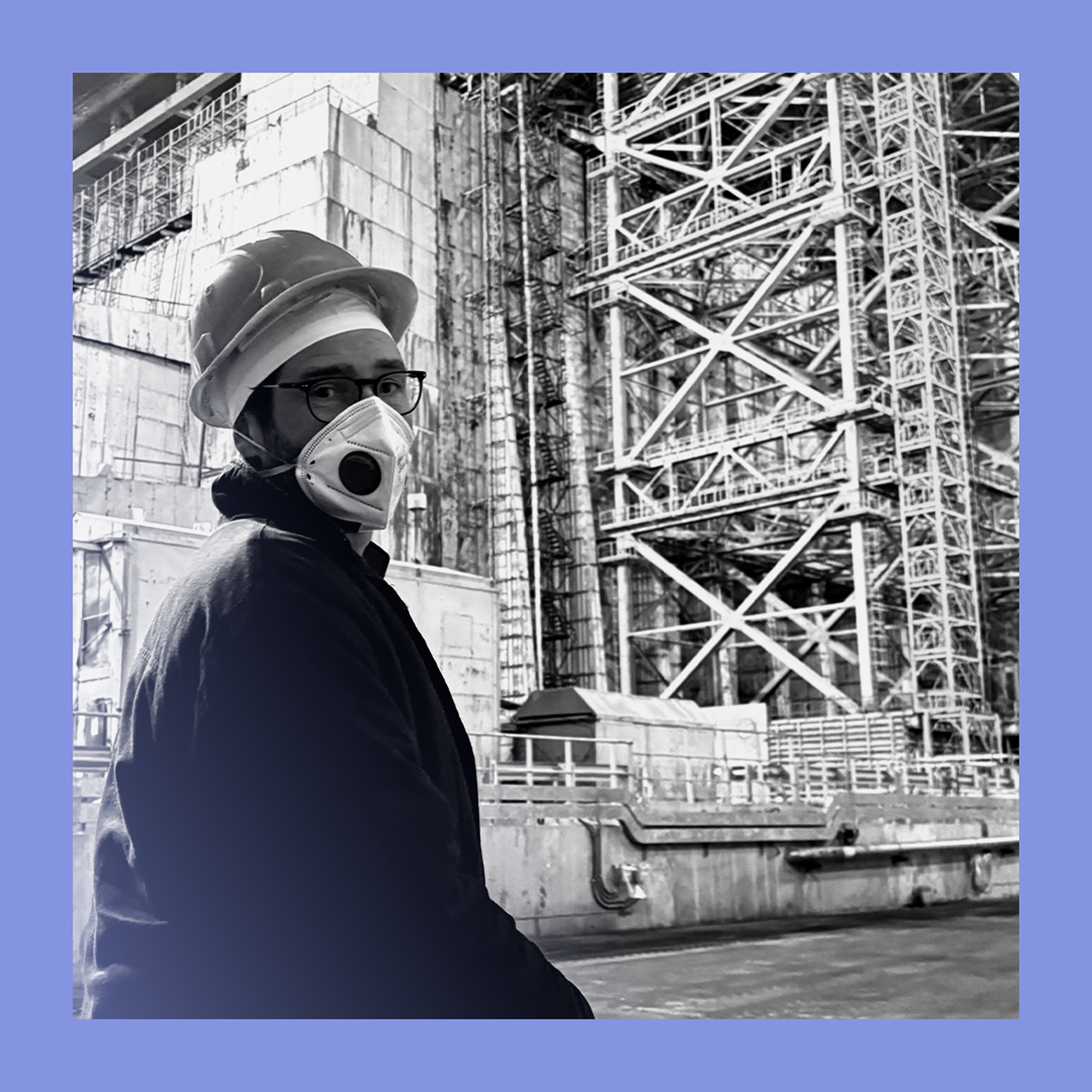
The Chernobyl disaster’s causes, cover-up, human toll, and enduring lessons 40 years later, including how little was learned after the 2022 Russian occupation and attacks on nuclear sites; plus what the exclusion zone has taught scientists about ecosystems and radiation-adapted life.
Written by AI. May contain mistakes.
Exploring the lessons that Chernobyl continues to teach us today.
“We visit the Chernobyl nuclear power plant, four decades after a devastating explosion, the worst nuclear disaster in history.”
How Cold War tensions influenced the development of nuclear power in the Soviet Union.
“From Moscow came the good news in 1954 that the first atomic power plant in the world had begun operating in the Soviet Union.”
A glimpse into the vibrant life of Pripyat before the Chernobyl disaster.
“My cousin worked here, and I saw these amazing, amazing buildings.”
Detailed account of the events leading up to and during the Chernobyl explosion.
“So this section was the main stage for the piece for Disco.”
The immediate aftermath of the explosion and the evacuation of local residents.
“But there were calls during the night about the accident.”
The response efforts by first responders and the challenges they faced.
“Ala was just one of some 200 ,000 first responders exposed to unmonitored amounts of radiation at the time.”
Discussion on the Soviet government's attempts to contain the truth about Chernobyl.
“I watched many of my colleagues die right in front of my eyes.”
Chernobyl's relevance in modern discussions about nuclear safety and war.
“A week later, Zaporizhia in southern Ukraine became the second.”
Expert insights into the historical significance of the Chernobyl disaster.
“he was lost somewhere under this debris of the equipment.”
Explores the truth behind the Chernobyl disaster and its management failures.
“In the process, I also was researching and telling the story of the late Soviet Union.”
Discusses lessons learned from Chernobyl and ongoing nuclear risks, especially in Ukraine.
“What lessons do you think the nuclear industry learned from the accident in the sort of immediate aftermath in the first couple of decades?”
Analyzes how Chernobyl shaped public perception and policy regarding nuclear energy.
“Did that surprise you that there was just simply not any kind of protocol around that?”
Discusses the need for stronger international oversight of nuclear energy post-Chernobyl.
“ultimately affected the nuclear industry's proliferation, the degree to which people didn't want a power station on or near their border, for example?”
Explores the unexpected ecological recovery in Chernobyl's exclusion zone.
“Just next to the road, a horse rooted through the snow, looking for something to nibble.”
Explore how bacteria may evolve to utilize radioactivity for survival.
“So in the sarcophagus, there are not that much nutrients for bacteria and not that much sources of light, of energy and so on.”
Learn about ongoing scientific efforts in Chernobyl and the challenges faced.
“From bacteria up to plants to animals to agriculture, Chernobyl is yielding lessons on how to manage the next big nuclear accident, even still.”
Discover the diverse roles researchers like Elena play in nuclear science.
“Yeah, I'm currently, I'm working mostly in Chernobyl.”

Get the gist, explore an idea or ask about something said.
 Claude
On The Intelligence from The Economist, what are the key points of this episode?
Searching your listeningAutomatic transcript. May contain errors.
0:02The economist
0:20Dihaf follow us, okay? This is your safety and because you are our guest, okay?
0:33So now you don't need to step in that on the way back. You have to step in and step here and go. Today on the intelligence, some perspectives on an event that really did shape the world 40 years ago.
0:53We visit the Chernobyl nuclear power plant, four decades after a devastating explosion, the worst nuclear disaster in history.
1:08They definitely didn't tell us that the reactor was completely destroyed. Now it's a site that became part of a war. We look at what lessons Chernobyl still has, even after all this time. Nothing was learned from 1986. Things actually became worse.
1:31From Moscow came the good news in 1954 that the first atomic power plant in the world had begun operating in the Soviet Union. Its creation was not only a great scientific achievement... In the midst of the Cold War, there were few societal advancements that couldn't be pitched as a competition between either side of the iron curtain. And as the nuclear arms race heated up, so too did the race to use that same technology to generate power. If we remove the protective lid, we can peep inside the reactor while it is operating at a low power output. That reactor design from 1954 evolved and evolved again, and by the 1970s became the RBMK, the largest then in the world.
2:20One single unit could power the whole Ukrainian capital. It could be built more quickly and run more cheaply than designs used elsewhere. But it did have its faults. Work began on an undeveloped site close to water, railways and electricity demand, where six such reactors were planned. Chernobyl.
2:44The first time I was here, it was 1972. I was there with my father. My cousin worked here, and I saw these amazing, amazing buildings. It was modern for that time. Natalia Olenchenko was inspired, so she went away to study so she could come back just a handful of years later. I was a big boss. She jokes that she was a big Soviet boss heading up a ventilation team. The power plant was staffed with young people looking to start their lives. They all lived nearby in Pripyat, a town built for plant employees. Pripyat was, you see, it was an amazing town. It's the best town in the world. Pripyat was, in Soviet terms, good living, no rations.
3:36A state-of-the-art culture palace was built in the heart of the city. 2 ,000 students attended a shiny new school. These days, it's a ghost town. So this section was the main stage for the piece for Disco. Life for plant workers was ripe with possibility. Natalia met her husband at Chernobyl. Not long after, she gave birth to their son.
4:05Runaway reactions had been seen in RBMK reactors in other parts of the Soviet Union. Mishaps and near accidents that had been brushed under the rug. For the fallback, the failsafe, the worst-case scenario, was an actual big red stop button, the AZ-5. This plunged all of the reactor's control rods into its core. The rods absorb lots of the fast-moving neutrons coming from and starting more nuclear reactions. Plunging them in should make things swiftly more stable. That isn't what happened on April 26th, 1986. That night, engineers were carrying out a safety test to find out what happened if the cooling systems ever failed.
4:48So emergency cooling was shut off. The reactor was being powered down. But it started falling too fast. The engineers didn't know at that point that it was unstable. They did know they were under pressure to get the test done. So they removed more and more control rods to get the power back up. This wasn't in the safety handbook. and anyway the book was in the hands of a less experienced night shift who unexpectedly inherited the test after it was delayed. When the test began, the power surged unexpectedly. Thirty seconds later, there was only one thing to do. Push the AZ-5 button.
5:30But it was too late. The fuel had got too hot, burst its casings, jamming the control rods. Power kept rising. Steam built up. And after five seconds, they heard this explosion, huge explosion. The building shuddered as the core detonated with the force of 60 tons of TNT.
5:56On April 26, 1986, we were supposed to start our ship from 8 a.m. But there were calls during the night about the accident. No one could tell the exact cause or its scales, and all they said was that different systems refused to function. They definitely didn't tell us that the reactor was completely destroyed. Yevyan Yashin was 40 years old at the time, shift supervisor in the chemical department. He was at home in Pripyat when the safety test was carried out.
6:37When we got to the plants, where we were met with was a destroyed reactor. There was no protective wall. There was just a bare reactor with red flames. It was glowing.
6:57immediately 115 ,000 people were evacuated from their homes around the plant never to return again later another 220 ,000 people from belarus russia and ukraine would be displaced the soviet union tried to bury the truth of the accident just as those before it but the evidence couldn't be contained it's not certain when it happened but we do know the radioactive cloud was carried to five neighboring countries. Swedish scientists said today that after overnight rain, the radioactivity levels had gone up 100 times more than the normal. I've heard about Chernobyl from my dad on the day of the disaster.
7:36My dad was always listening either to the Voice of America or to BBC radio because he didn't trust the local news. Ala Shapiro and her colleagues were sent in to examine the children from the evacuated areas, not being told at all about the circumstances they were walking into. I was a peaceful pediatrician until the Chernobyl disaster. Ala was just one of some 200 ,000 first responders exposed to unmonitored amounts of radiation at the time. But we didn't wear no masks, no gloves, nothing. And we evaluated children in that area, I think, 20 hours per day. Like, no rest at all. It's impossible to put a firm number on just how many people died from radiation exposure after the accident.
8:33The best guess from scientists puts the total at something like 15 ,000. Clearly, the workers at the plant and the first responders were the ones at the highest risk. About 30 died shortly after the accident from acute radiation sickness. Some workers chose to leave, but most stayed, bound by a sense of duty to the plant and to public safety. A lot of people would do anything in order not to be removed from the plant. Those who could not hide all their symptoms and those whose condition was in need of hospitalization got acute radiation sickness and they were taken out of the facility. Yveni was among those who got sick and later that summer was sent to a hospital in Moscow.
9:27I watched many of my colleagues die right in front of my eyes.
9:37The policy of our government was to falsely attribute as many of these deaths as they could to others' health conditions, instead of the accident. This way they could decrease the official number of victims.
9:58The cleanup effort was gargantuan. Hundreds of thousands of men, referred to as liquidators, brought to the site, haphazardly wrapping themselves in thin lead sheets and getting to work. By the end of 1986, a giant concrete structure called the sarcophagus had been built over the ruined reactor number four. The rottenness of Soviet management and the damage the regime's secrecy could do, that was the first lesson of Chernobyl. Another became apparent first in 2022, the day the Russian invasion began. Chernobyl became the first nuclear plant in history to be occupied by an invading army. A week later, Zaporizhia in southern Ukraine became the second.
10:40Then in 2025, the giant radiation-tight structure put over the sarcophagus in 2019 was pierced by a Russian drone. That these haven't led to tragedy, mostly dumb luck. Chernobyl's wider lesson about safety is one that nuclear experts and workers desperately want the world to learn.
11:09And probably you know that at the night when the reactor number four explodes, Valery Hodinchuk, who was senior operator of main circulation pumps, was the first victim. He died during this night. There's a memorial between reactors 3 and 4 inside the Chernobyl plant. There's a plaque and a sculpture and flowers. Flowers that even 40 years later are still changed out regularly. Because a lot of structures of Unit 4 were completely destroyed, he was lost somewhere under this debris of the equipment. So now we can go to the unit form. This family was my neighbor in Pripyat, next building. Natalia has worked at Chernobyl since 1986 and says it's hard to explain what keeps her here.
12:06Because it's our life. I told you before, it was only 1972 I was there. the first time. And I saw like from hall to big building. It was our child. This station, it's our child.
12:43isn't just moving money. They're simplifying financial operations for nearly half a million customers. Bill has securely processed over a trillion dollars in transactions. That's proven infrastructure. Ready to talk with an expert? Visit bill.com slash proven and get a$250 gift card as a thank you. That's bill.com slash proven. Terms and conditions apply. See offer page for details.
13:20An official announcement from the Council of Ministers. There has been an accident at the Chernobyl atomic power station. One of the atomic reactors was damaged. The consequences of the accident are being taken care of. Help is being given to the victims of the accident. A government commission has been set up. For me, who lived through Chernobyl back in 1986, I lived also through mobilization of the Ukrainian society, taking place under the slogan, tell us the truth about Chernobyl. Serhii Plohi is a professor of Ukrainian history at Harvard University and the author of two books on the subject Chernobyl, the history of a nuclear catastrophe and Chernobyl roulette.
14:00The key issue, the key question was the truth, right? What is truth? And that's also one of the reasons why I researched and wrote the book, because I wanted to answer that question that I had back in 1986 when I had to keep my children inside when my information was coming from BBC and Voice of America and Deutsche Welle and my own government at that time was either silent or was lying. In the process, I also was researching and telling the story of the late Soviet Union. How much would you say the Chernobyl accident was attributable to how it was managed, that notion of hierarchy and information flow, and how much of it had to do with, you know, bad protocols, bad safety procedures, a bad kind of reactor?
14:50In the Soviet Union, they believed, honestly believed, that reactors don't explode under socialism, and that only under capitalism something like that is possible, like Three Mile Island. It turned out they exploded, but they exploded also in a very socialist, communist Soviet way. First of all, Chernobyl reactor originally was based on the design that was stolen by the Soviet spies from the United States back in the late 1940s. It was a dual-purpose reactor that could be turned from the one that was boiling water, as was the case in Chernobyl, into one that would produce weapon-grade uranium or plutonium.
15:34And that is why the problems, they were kept top secret. So even operators didn't know that the reactor had those issues because it was also a military reactor. So that secrecy was one major factor. Another major factor was, of course, the top-down political and bureaucratic culture. If you look at what happened at Fukushima, what happened at Three Mile Island in the UK, there was an accident in 1957. The people on the plants when the accident happened, they were empowered to make decisions on their own. In the Soviet Union, to evacuate Pripyat, one had to go all the way to the head of the government of the Soviet Union.
16:24So that creates all sorts of issues and problems. And also the key element of that political culture and managerial culture is avoiding responsibility because it never was a law-based society. And that's a big difference. So reactors explode both under communism and capitalism, but they explode in a little bit different way. What lessons do you think the nuclear industry learned from the accident in the sort of immediate aftermath in the first couple of decades? So the radioactive clouds didn't pay attention to the Iron Curtain. Chernobyl is viewed as one accident where there was some learning, And those adjustments were initiated by the International Atomic Energy Agency, agreements on the exchange of information about accidents.
17:15Once the Berlin Wall fell, a lot of these reactors, the Soviet-made reactors, were really modernized in accordance with the European and Western standards in general. And the phrase was born out of that, that became part of the now general understanding of the dangers of the nuclear industry, that Chernobyl anywhere is Chernobyl everywhere. So suddenly it became very clear that if the decision to build a nuclear power plant is a sovereign decision of individual state, once something goes wrong, it becomes an international problem. And that realization, that understanding is now deeply ingrained in the thinking of international community in general.
18:01Now, my analysis in particular, that it's more than about just technological deficiencies of the reactor. It's about the political culture. You really can't go to Russia and turn it into the law-based society or somehow take the party in China outside of the decision-making on the reactors or how the industry is being run. And we saw that once again in 2022 with the start of all-out Russian aggression against Ukraine. The war went nuclear on the very first day of the invasion, on the 24th of February, 2022, when Russia took over Chernobyl nuclear power plant. They waged a battle on the territory of the Parisian nuclear power plant in March of 2022, the largest nuclear power plant in Europe.
18:52And that demonstrates completely another level of disregard for nuclear safety, for life of your own soldiers, life and health of the population in general. So when there is a learning from Chernobyl on the level of technology, I found zero learning when it comes to the political decisions and the political culture. In particular, here we are talking about Russia. Nothing was learned from 1986. Things actually became worse. One thing that we found on our first trip to Ukraine, looking into the occupation at Chernobyl, there was a safety protocol for all of the possible failure modes of this massively complex machine, but no game plan for if somebody comes to the gate.
19:43Did that surprise you that there was just simply not any kind of protocol around that? It didn't surprise me because that was unthinkable. So my surprise was linked to the decision that was made by the Russian government, by the Russian military commanders to do that. And another surprise really linked not to 2022, but to the year 2026. And my understanding is that as there was no plan and there were no instructions back in 2022, we are as unprepared to humankind to that sort of developments now in 2026. As it was the case in 2022, the major piece of international kind of legislation and agreement comes from late 1980s, where the reactors are treated on par with the hydroelectric power stations.
20:41So they're in the same category. I am arguing after occupation of Chernobyl for the need to have a major international convention on the nuclear side, specifically at the time of war, how they can be protected. Because my personal belief, I'm not against nuclear energy in general. I think that the question for me is I want the public to be informed. I also want safety to be there. We are not learning lessons at this point. To a degree, that reaction to Chernobyl 1 in 1986 was almost immediate. Within a few months, agreements were made. There is no learning of any sort from Chernobyl 2022, despite the fact that even an aggressor country like Russia is interested in some sort of an international agreement, because in 2023, the Ukrainian armed forces launched an offensive on the territory of Russia in the Kursk region, getting probably 50, 60 kilometers close to the Kursk nuclear power plant.
21:48and Russians were using the same language in 2023 that the Ukrainians were using in 2022, appealing to the International Atomic Energy Agency, what is going on, where are you, why you wouldn't stop that. And International Atomic Energy Agency has actually no mandate. It has no mandate, even what they are doing, and people are very critical of what they are doing. It has no mandate to do even what it was doing in Chernobyl and in case of Zaporizhia. The taboo on the occupation and military attacks on nuclear sites that existed before 2022 had been broken. It is gone. Now, the war in Ukraine is the war of drones more and more.
22:35And the non-nuclear country can very easily go nuclear by attacking somebody's nuclear facilities like nuclear power plants. That's the new reality. I hope that people behind closed doors in the military intelligence and planning and things like that, at least consider that and think about that. So my position is we have no business building new reactors before we found a way to protect the reactors that we have. And there are ways to do that. One needs a political will, and that's what we lack so far. How do you think that the fact that the Chernobyl accident happened, that it sort of exists now as a sort of cautionary tale, ultimately affected the nuclear industry's proliferation, the degree to which people didn't want a power station on or near their border, for example?
23:32Certainly, Chernobyl became the symbol of the dangers that come with the benefits of nuclear energy and nuclear industry. For very good reasons, again, the size, the number of people affected. But also because of its representation in the popular culture. What we see generally is that with any nuclear accident, there is periods measured in decades. that people would be really cautious and reluctant to touch again nuclear industry. In the United States, only three reactors were built in the last 30 years. After Fukushima, Germany decided actually to go nuclear-free. So that is one of the reasons why it is so risky to bet on nuclear industry, to deal with climate change.
24:27Because the accidents do happen. because any accident, God forbid, will mean that the nuclear industry would be put on pause for another couple of decades. The legacy of Chernobyl is not that nuclear should not be used, but it should be used responsible and international oversight should be much stronger than it is today. Fascinating. Professor Pohy, thank you very much for taking the time with us. It's a pleasure to be on the podcast.
25:02The End
25:32Just next to the road, a horse rooted through the snow, looking for something to nibble. This was a Schiavalski's horse. Short, stocky, pretty cute. It's about as wild as horses get, taxonomically speaking. It shouldn't really be here. These highly endangered horses are native to Central Asia. But in 1998, scientists recognized the exclusion zone for what it could be, an enormous nature reserve. So by 2004, 36 of the horses had been brought to the exclusion zone and in their way became part of a decades-long science experiment because there are way more than that in the zone now. So what we've seen in the decades after Chernobyl is not just the recovery of the ecosystem from the effects of the accident, but the dramatic improvement in the ecosystem, which may seem counterintuitive.
26:26Jim Smith from Portsmouth University in Britain first came to Chernobyl in 1994 as a physicist. But since then, he's become an expert on the zone's wildlife. We've looked at fish populations, aquatic insect populations, even in the cooling pond supplying the cooling water for the reactor. And we find a very diverse and abundant aquatic ecosystem. When it comes down to looking at more subtle damage on individual animals, it's more difficult. This rewilding is by now pretty well documented. Like I say, the horse is cute, the wolves ferocious, the lynx mysterious. But I wondered what else the world had learned from this unnatural experiment, this laboratory unlike any other.
27:10It is quite obvious that radiation poses a great evolution pressure, like on fungi, on animals, on plants, whatever. Elena Porinyuk was just a child when the Chernobyl accident took place, And she found herself completely fascinated with it from that early age, opting to become a radiobiologist. So we understood that after the accident, the environment was sterile because it was very radioactive, it was very hot. And then the radioactivity decreased a little bit, the temperature decreased drastically. So right now it's about 40 degrees centigrade, which is a really good temperature for bacteria to thrive and to live.
27:56Bacteria thriving in the wildly radioactive remains of a nuclear accident. Blew my mind. So in the sarcophagus, there are not that much nutrients for bacteria and not that much sources of light, of energy and so on. So bacteria needed to either evolve or perish because of no sources of nutrients and everything. We were thinking that they might evolve to be able to use radioactivity or ionizing radiation energy in their metabolisms. So it was something that we were looking for. This is more than mere scientific curiosity. It might have implications pretty far from Chernobyl. In Chernobyl and Fukushima, I believe that we would find a lot of similarities.
28:47And by finding these similarities, it will be possible to use this knowledge for genetical engineering, for altering bacteria that would like to survive in space or on Mars or in any other territories with high radiation pressure. As soon as I started digging, it became clear that the science going on at Chernobyl, the stuff that started as an effort to understand what just happened, it never really stopped. From bacteria up to plants to animals to agriculture, Chernobyl is yielding lessons on how to manage the next big nuclear accident, even still. What was interesting was how each and every one of the experts I spoke to ended up working with Japanese teams in 2011 after the Fukushima nuclear accident.
29:34These days, it's hard going. Funding was tight before the war. It's hard to do science when lab equipment is subject to rolling power cuts. And most of all, the all-hands-on-deck response to the Russian invasion has spread people pretty thin. Elena wears a bunch of hats. Yeah, I'm currently, I'm working mostly in Chernobyl. Sometimes I'm also working in Fukushima. And I'm also working in the Ministry of Economy, and I'm doing the demining. the humanitarian and demanding. Chernobyl still has its lessons to give, and researchers will, against seemingly any odds, bear them out. There is so much more to share on this point, so I sat down this week with Babbage, our sister show on science.
30:19Do go have a listen. Thank you very much. Welcome to the contemplation. Many thanks and big props to our deputy editor, Sarah Larniuk, who produced and recorded this special episode. In Ukraine, Anastasia Parafinuk and Marta Radyonova helped with production and translation. That was incredible. We need a couple of sanitized things in a couple of offices and be done, but I felt like I was inside the damned reactor. Thank you very much. No contamination. No producers or host were dangerously irradiated in the making of this podcast.
31:14The Intelligence
31:32with extra production help this week from Emily Elias and Eleanor Sly and Jonathan Day. Farewell, JD. We'll all see you back here tomorrow for the Weekend Intelligence. This week, we're going back to Georgia, the country. The country that was supposed to be a shining light of European values in the Caucasus. After a couple of years as an EU member candidate, its democracy is now on its last legs, and the government is determined to kick those legs out from under it.
32:02Thank you.
We go deep inside the Chernobyl nuclear-power plant and the surrounding exclusion zone, recounting the history of the accident on April 26 1986, and speaking with plant workers who were on shift that day. A pre-eminent Chernobyl historian discusses the lessons learned and yet to be learned from the disaster. And we consider the science still being done at Chernobyl.
In 2024 “The Weekend Intelligence” went to Ukraine to consider the aftermath of the Russian invasion and occupation of Chernobyl, and then of the Zaporizhia nuclear-power plant. What we found was an industry that had no expectation that could even happen, and nothing of a plan when it did. Listen here.
Guests and host:
Topics covered:
Get a world of insights by subscribing to Economist Podcasts+. For more information about how to access Economist Podcasts+, please visit our FAQs page or watch our video explaining how to link your account.
Hosted on Acast. See acast.com/privacy for more information.


