
 Ask ChatGPT


 The Intelligence from The Economist
17 Mar 2026 · 21m · 10 chapters
Written by AI. May contain mistakes.
Exploring the Iranian community in California and its characteristics.
“Every weekday, we provide a fresh perspective on the events shaping your world.”
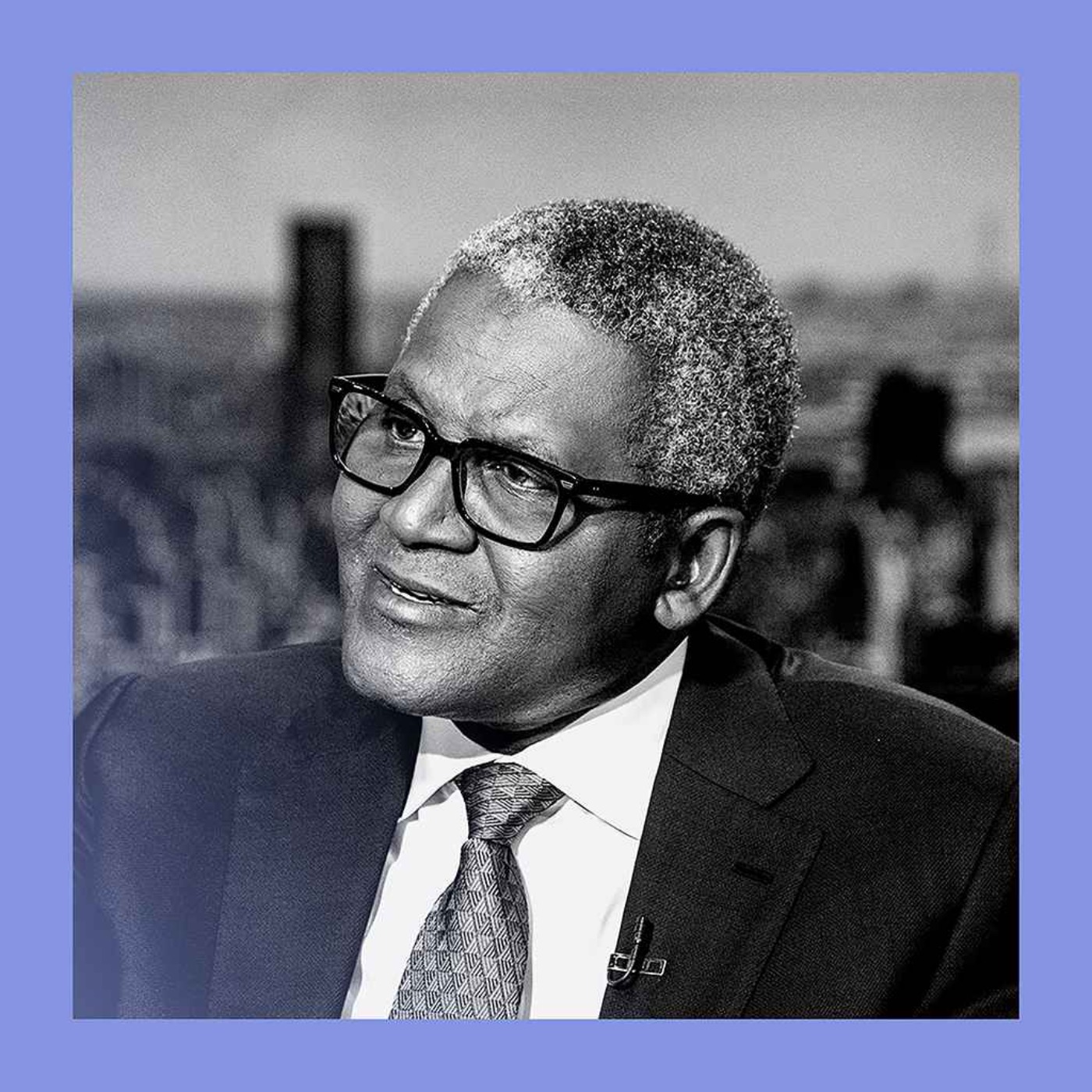
A deep dive into Aliko Dangote's rise and the significance of his refinery.
“Sir, just to test your sound, please may you introduce yourself.”
How Dangote's refinery affects Nigeria's economy and energy security.
“It's spread across land, about half the size of Manhattan.”
Discussing the implications of Dangote's business model and competition.
“and since that's another thing that's getting stuck in the Strait of Hormuz, this is also bringing him new customers, this is good for his margins, it's good for farm yields both in Africa and in the rest of the world.”
Evaluating Dangote's vision for Africa and future expansions.
“But what about that wider picture that you talked about earlier, the ramping up Africa's industrial capacity, helping it become more self-reliant?”
Concluding remarks on the impact of Dangote's ventures on Africa.
“He told us stuff about copper smelting, power generation.”
Explore the contrasting perspectives of Iranian activists on foreign intervention and the future of Iran.
“He was an opposition leader in Iran, and he fled the country after leading a student uprising in 1999.”
Discuss how cultural events, like a concert, reflect the complexities of Iranian sentiments during war.
“Support for Donald Trump and his aggression might weaken as the war drags on.”
Learn about research revealing how a cancer diagnosis may influence crime rates and the socioeconomic factors involved.
“and to try and provide for his family and to pay for his treatment, he turns to a life of crime and becomes a drug lord.”
Consider the implications of healthcare policies on crime, as discussed with the study's author.

Get the gist, explore an idea or ask about something said.
 Claude
On The Intelligence from The Economist, what are the key points of this episode?
Searching your listeningAutomatic transcript. May contain errors.
0:00Are you noticing your car insurance rate creep up even without tickets or claims? You're not alone. That's why there's Jerry, your proactive insurance assistant. Jerry handles the legwork by comparing quotes side by side from over 50 top insurers so you can confidently hit by. No spam calls, no hidden fees. Jerry even tracks rates and alerts you when it's best to shop. Drivers who save with Jerry could save over$1 ,300 a year. Don't settle for higher rates. Download the Jerry app or visit jerry.ai slash acast today. Why does every recipe I try need 18 ingredients, including a jar of something paste I'll never use again, but will sit in my fridge for nine months?
0:40I just want dinner in the oven fast. That's why I love Blue Apron's new one pan assemble and bake meals. They send you fresh ingredients that are already chopped. All you do is put it all together and bake. That's it. No chopping, no weird leftovers, just delicious, easy to make meals. Get 20 % off your first two orders with code APRON20. Terms and conditions apply. Visit blueapron.com slash terms for more.
1:15Hello and welcome to The Intelligence from The Economist. I'm Jason Palmer. And I'm Rosie Bloor. Every weekday, we provide a fresh perspective on the events shaping your world.
1:30A surprising fraction of Iran's diaspora lives in California. Like Iran itself, it's multi-ethnic, multi-religious, and multi-generational. We get a view from what's called Teirangelis. And millions of people are diagnosed with cancer each year. And it's hard to predict how you'll respond until it happens. But a new study finds something I'd never expected. a surprising link between cancer and crime rates.
2:07First up, though.
2:16Let me turn off my ringer. How are you? Good afternoon, sir. Good afternoon. How are you? All right. All right. Nice to meet you. Oh, really? Yes, sir. Okay. Sir, just to test your sound, please may you introduce yourself. Aliko Dangote is my name. With our prices skyrocketing, last week was the perfect time for us to visit Aliko Dangote. Ore Ogambi is an Africa correspondent for The Economist. He's not only Africa's richest man, but he's also the owner of Africa's largest refinery. Well, you know, it's a very rough period, you know, especially now. I've seen it two days ago, I think on Tuesday also, where the crude ranges between$90 to$119.50.
3:09My colleague and I sat down with him on Thursday while news reports from Iran were beaming on the news channel behind us. You know, Nigeria is very lucky to have the refinery because right now it's not even about price, It's about availability, which we have now actually delivered that availability. The Strait of Hummus is still effectively blocked. And that means there are lots of people calling up Mr Dangote's phone for solutions. It's a crazy situation right now, really. And I think this situation will continue forever.
3:42Now, Ori, we spoke about the refinery when it was just opening up. But remind me about Mr Dangote and how he got where he is. Ali Kodangoti is a 68-year-old entrepreneur and he runs a conglomerate that does everything from cement to tomato processing, a bit of infrastructure, he's branching out into mining. But in 2024, he opened a massive$20 billion oil refinery. It's just outside of Lagos. It's spread across land, about half the size of Manhattan. It is really huge. But that's what's made him extra relevant right now. Since February of this year, that refinery has been able to process 650 ,000 barrels of crude a day.
4:23It turns it into everything from gasoline for cars to jet fuel. And those are things that are in high demand at the moment. I can tell you without the refineries, would I have been out of all the petroleum products? Nigeria would I have been at a standstill without the refinery? He has a grand plan to ramp up Africa's industrial capacity and importantly, make the region much more self-reliant in a world that is this unpredictable. So the refinery part of his plan does seem to be working out, not least because of geopolitics as they are. Well, exactly. And before we get into the geopolitics, it's also had real benefits for Nigeria.
5:04So despite being Africa's largest crude producer, Nigeria has historically spent lots of scarce dollars re-importing its own crude that's being refined abroad. it doesn't have to do that anymore. It gets to save those costly dollars and put them towards much more important things. But also it takes away those fuel shortages that used to create lengthy queues around the corner and that have been a real problem for Nigeria for about 50 odd years. As if Mr Danglater's refinery isn't big enough, he's planning on expanding it so he can offer that same energy security to countries like Cameroon and Angola, other countries in the region that also are still too dependent on the rest of the world for their own energy supplies.
5:46We will end up being the largest refinery in the world. We'll have almost about 48 % of the entire Saudi Arabia's refining capacity. So it's not a small decision and it will mean quite a lot to the region. Beyond just oil, the refinery also produces fertilizer. and since that's another thing that's getting stuck in the Strait of Hormuz, this is also bringing him new customers, this is good for his margins, it's good for farm yields both in Africa and in the rest of the world. So it seems clear then that this refinery has just made a big African businessman even bigger. Well exactly. Jason, he is a capitalist after all.
6:30I mean if you look at his big cement division for example, he leveraged tax breaks, political favours, import bans and he managed to build a company that has such big profit margins, that has such capacity that you wouldn't even bother competing with him. He can single-handedly crash prices if he tried. And that's why people accuse him of being a monopolist. That's a common criticism that he receives. Although he denies this, he says that he's being completely misunderstood. But you can already see signs of that model being replicated in his refinery business. I mean, for example, Nigeria's regulators are saying that they are freezing new import licenses for anyone else who imports petrol.
7:11So you're basically trusting the country's entire energy security into one man's hands. It's great for him and his bank balance, but obviously a less competitive energy environment probably isn't very good for Nigerians. But he is giving them a bunch of jobs at what is, as you say, an enormous refinery. I mean, we didn't see as many people on our refinery tour as I think we thought we would. Another way in which Mr. Dangotee widens his margins is by relying quite heavily on foreign subcontractors, especially for the more technical kind of high skilled jobs. And that comes at a cost because the kind of local knowledge transfer that you'd hope would really lift up the population and inspire a new generation of Dangotees just isn't really happening.
7:55The refinery's managers are mostly Indian experts. And there are a few scores of Nigerian employees and trainees that we ran into. But Mr. Dangote's projects are lean on staff by design. He's going for efficiency and high standards, he says. It doesn't matter whether they are English, they are Indians, they are Nigerians. It doesn't matter. But they are our staff. And to be honest, I think he is well aware of the new position that this refinery puts him in. We don't have any reason today to go and increase even capacity because we want to ward off competition. Already where we are, competition will never, there's nobody, I'm telling you as a proud African, there's no African that can build a refinery.
8:39It's a compliment, it's a point of pride, but it's also a dare to anyone else who wants to try. That is a man that is fully aware of his power. But what about that wider picture that you talked about earlier, the ramping up Africa's industrial capacity, helping it become more self-reliant? Is that a realistic vision or just it sounds good? I think it's a bit of both. I think he does care about Africa, but ultimately he's got his eyes set on the whole world. His main buyer of his urea fertilizer is Brazil. He parks his wealth in Dubai. He exports those refined petrol products, not just to neighboring countries, and he's not just supplying Nigeria.
9:16they're also going to Europe and America. He plans to take the refinery public this year and there are whispers of a dual listing in both Lagos and in London. But I think for all his flaws, Africa is much better off because they have Africans like this investing a lot of their capital into the continent. The region is becoming more resilient in the face of global shocks. Big oil prices that would usually rattle the continent still are, but slightly less so. And Mr. Angote has even more lined up. He's branching into steel, into mining. He told us stuff about copper smelting, power generation. That should make the continent even more resilient than it's already becoming.
9:58As he gets up to leave his interview and staff popped up from everywhere, he left us with a promise. When you come back in three years' time, what you have seen today in the complex, it will be three times. And I don't know, Jason, I personally, wouldn't bet against him. Ori, thanks very much for joining us. Jason, thanks so much for having me.
10:35With no fees or minimums on checking accounts, it's no wonder the Capital One bank guy is so passionate about banking with Capital One. If he were here, he wouldn't just tell you about no fees or minimums. He'd also talk about how most Capital One cafes are open seven days a week to assist with your banking needs. Yep, even on weekends, it's pretty much all he talks about. In a good way. What's in your wallet? Terms apply. See CapitalOne.com slash bank. Capital One N.A. member FDIC. Are you noticing your car insurance rate creep up even without tickets or claims? You're not alone. That's why there's Jerry, your proactive insurance assistant.
11:15Jerry handles the legwork by comparing quotes side-by-side from over 50 top insurers so you can confidently hit buy. No spam calls, no hidden fees. Jerry even tracks rates and alerts you when it's best to shop. Drivers who save with Jerry could save over$1 ,300 a year. Don't settle for higher rates. Download the Jerry app or visit jerry.ai slash ACAST today.
11:51Half of all Iranian Americans live in California, and nearly a third of them, which is about 230 ,000 people, live around Los Angeles. Aaron Braun is our West Coast correspondent. Many of these people arrived after the revolution in 1979, and a lot of them were Iranian Jews. These first immigrés were often really wealthy and highly educated, and they settled in neighborhoods like Westwood and Beverly Hills. And little by little, the community built what's known locally as Tarantulas. Westwood Boulevard is filled with Persian restaurants and bookstores, and Iranian flags hang from supermarkets and are across entire buildings like a rug shop that I visited.
12:41So when America began bombing Iran last month, many of the residents of Tarantulas came to Westwood Boulevard to voice their support and their hope for the future.
13:09This morning I am walking down Westwood Boulevard, just south of Wilshire in West LA. And I've just been talking to shop owners, restaurant owners about their views of the war. It's about a week now since the bomb. One of the people I met was Ruzba Farhanapur. He's the owner of a couple of restaurants on Westwood Boulevard. We met at his Greek taverna, where a shark tank was in the back of the room, and the salt and pepper shakers had little Greek figures on them. I was here. At the time of the Khamenei killed, we heard the news. I was suspicious. That's not true because sources I couldn't trust.
13:58until President Trump put it in his own truth social. But Ruzbeth is not just a restaurateur. He was an opposition leader in Iran, and he fled the country after leading a student uprising in 1999. For decades, he's been living in Los Angeles. I opened, I grabbed a bottle of champagne and opened it and drank it up. So that's on the TV. So that was, so, and then after that, anybody passed by, came to congratulate me. I poured the champagne for them.
14:38It's important to say that the Iranian diaspora is vast and diverse. It's multi-ethnic and multi-religious and multi-generational. People have very different opinions on how this war should proceed. Elham Yegubian is an activist and a local business leader in Beverly Hills. She is desperate for the regime to fall. Leaving Iran in that situation wouldn't help the Iranian people. Because in the streets of Iran, people are still in danger. She believes America should stay the course, should keep up the bombing, until the regime is absolutely crippled. They just said it to find excuse to kill people in the streets.
15:23So no, I'm 100 % disagree. This is not the right time to leave the Iranian people alone. But not everybody agrees. Ruzbou, that restaurateur who was pouring champagne for people, he's a longtime friend of hers, and he's much more skeptical of America's involvement. Advisor, I could suggest that's the best time. Instead of waiting there to become an unend the war, or we get stuck in something like Iraq, Afghanistan. He's worried that what's happening in Iran could one day resemble Iraq or Afghanistan, become another of America's forever wars. He wants America to declare victory and stop the bombing so that Iranians themselves can take to the streets.
16:09So that's a U.S. So that's a big victory. Cheers and leave. But the two are united on one thing. Neither of them wants a Venezuela-like outcome, where the president picks a more pliable member of the regime to run the country. They believe Iranians should determine their own future. Honestly, I believe that choosing the leadership for Iran, it should be in control of the Iranian people, not West, not Israel, no, no one else.
16:47Support for Donald Trump and his aggression might weaken as the war drags on. It already feels like the celebrations are subsiding in Westwood. I went to a concert at UCLA in advance of No Ruse, the Persian New Year, about a week after the start of the war.
17:08The first song the orchestra played was a funeral march in honor of the protesters the regime had killed in January. The music projected sorrow, but also resilience.
17:36So, I don't know if you've seen the program Breaking Bad. Ainsley Johnstone is a data journalist. The idea is that this mild-mannered chemistry teacher is diagnosed with cancer, and to try and provide for his family and to pay for his treatment, he turns to a life of crime and becomes a drug lord. What I'm making is classic coke. All right. There's a recent study that shows that this plot may not be as outlandish as it seems.
18:12okay and how did you work that out so it was a study by researchers based in denmark and the netherlands and they used administrative data for the whole of the danish population between 1980 and 2018 they specifically looked at people who at some point during this time were diagnosed with cancer. And they found that those people were 14 % more likely to commit a crime after their diagnosis compared with people who were yet to be diagnosed with the condition. Interestingly, they found that in the year of and immediately following their diagnosis, they actually were a bit less likely to commit crime, probably because they were in treatment or maybe they were actually acutely unwell in this time.
19:01But what they found was then following this, after a few years and then extending for a whole decade after the diagnosis, the likelihood that the patient became involved in crime increased by a lot. And what kind of crimes are we talking about? So the biggest absolute increase was in what the authors called economic crimes. So that was things like drug dealing and burglaries. and that gives some hints to what the motivations might be. So they think that people may turn to crime because of money problems. In Denmark, even Denmark that has a great social welfare system, people after a cancer diagnosis are less likely to be employed and they're likely to have a lower income.
19:46But also they found that as well as these economic crimes, violent crime also increased and this was actually the biggest percentage increase. They found that things like homicide and assault rose by 21 % after a diagnosis. That's a massive increase. Was there some history of criminal past or something else going on as well? So no, they found that the effect was basically the same, whether someone had a history of criminality or whether they were a first-time offender. But there were other predictors that kind of moderated this effect. They found that people who were particularly financially vulnerable, so perhaps people who don't own a home, people who are single, that they were the most likely to have an increase in crime rate.
20:34They also found that during the course of the study, there was this change in the municipal level welfare benefits. Some municipalities became more generous than others became less generous. and what they found was that in the places where welfare became less generous there was again a bigger increase in criminality. The other predictor was patients' prognosis so patients who were diagnosed with more severe forms of cancer, cancer that was more likely to be lethal, they were the ones in which offending rose the most sharply. The authors think maybe this is that these people, they think they have a shortened lifespan and the idea of going to prison just may be a slice of a threat to them.
21:19What about other diseases? Have they looked at that? Other life-threatening illnesses? They haven't looked at other life-threatening illnesses. The reason they looked at cancer was because it's a very clear diagnosis. There's lots of different types of cancer. It affects people across income levels. But the idea is that this may well generalise to other diseases as well. And the gender split? Gender was a very important predictor. So men tend to commit a lot more crime, particularly a lot more violent crime. And the effect of cancer on crime was much bigger in men. So they had this much greater increase after diagnosis.
22:00And how might these sorts of consequences play out in other parts of the world? So when I spoke with one of the authors of the study, she said that in her mind, these results were really a kind of lower bound estimate of this effect. So as I mentioned, they're looking at Denmark has this very generous social welfare policy. And the authors think that in places where there is maybe less of a social safety net, that this effect might be greater. and I think the effect on crime is just not something that governments think about when they're designing health care and welfare policies and maybe they should.
22:38Ainsley thank you very much. Thank you.
23:00That's all for this episode of The Intelligence. We'll see you back here tomorrow.
23:22With no fees or minimums on checking accounts, It's no wonder the Capital One bank guy is so passionate about banking with Capital One. If he were here, he wouldn't just tell you about no fees or minimums. He'd also talk about how most Capital One cafes are open seven days a week to assist with your banking needs. Yep, even on weekends, it's pretty much all he talks about. In a good way. What's in your wallet? Terms apply. See CapitalOne.com slash bank. Capital One N.A. Member FDIC.
Nigeria sorely needed the enormous oil refinery built by Aliko Dangote, who was already Africa’s richest man. We ask what that new capacity means for him, for Nigeria and for the continent. We speak to the surprisingly large and diverse Iranian diaspora in Los Angeles. And how a cancer diagnosis seems to drive some people to a life of crime.
Guests and host:
Topics covered:
Get a world of insights by subscribing to Economist Podcasts+. For more information about how to access Economist Podcasts+, please visit our FAQs page or watch our video explaining how to link your account.
Hosted on Acast. See acast.com/privacy for more information.


