
 Ask ChatGPT


 The Intelligence from The Economist
20 May 2026 · 20m · 7 chapters
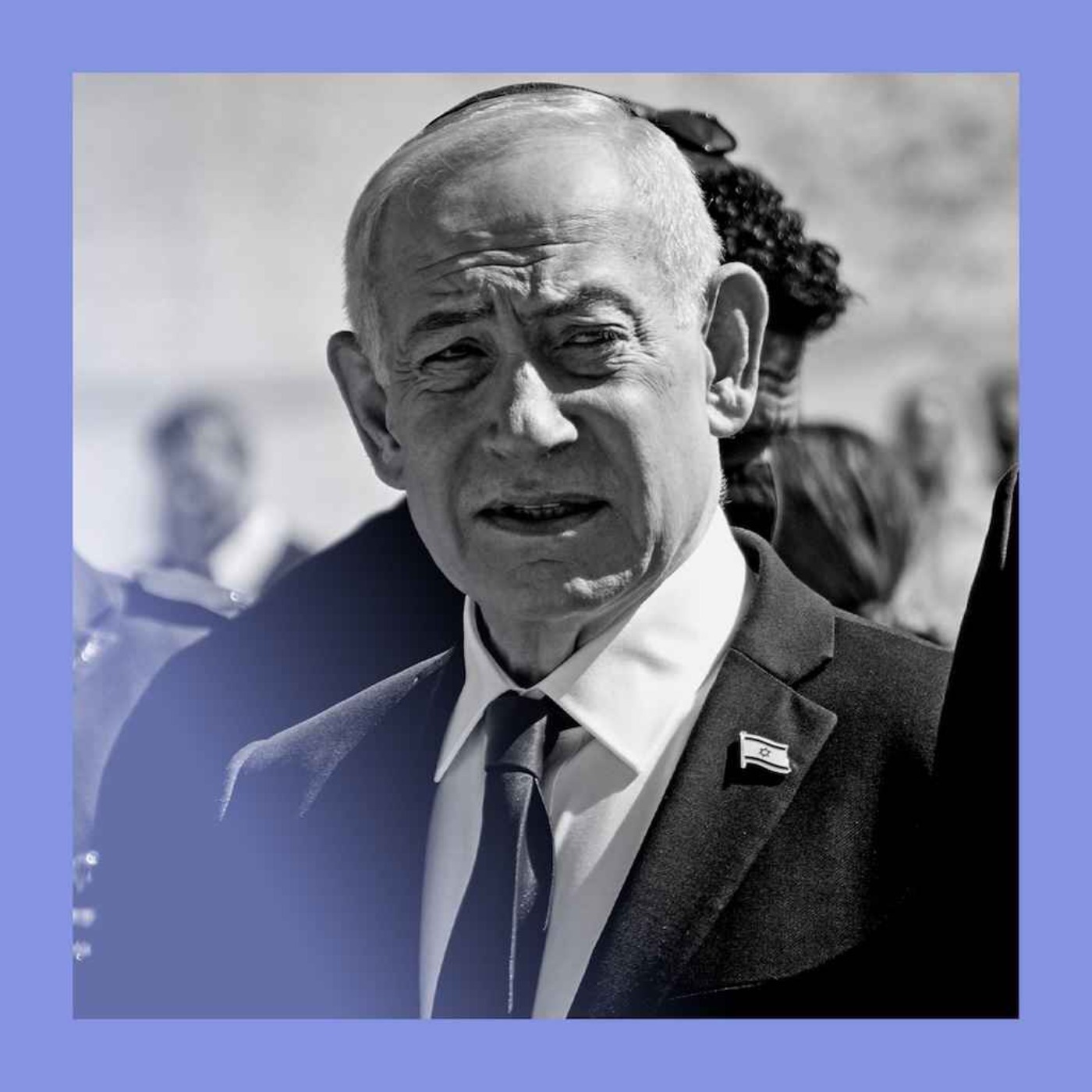
The episode of The Intelligence from The Economist covers three stories. Topic 1: Israel’s election and Netanyahu’s survival.
Anshol Pfeffer, Israel correspondent and author of a Benjamin Netanyahu biography.
the Knesset will vote on a dissolution bill; the immediate trigger is Netanyahu’s failure to pass a law exempting ultra-Orthodox seminary students from national service; Gaza and the October 7 attack (1,200 Israelis killed) will dominate campaigning, alongside lack of a national commission of inquiry; judicial reforms weakening the Supreme Court remain an election issue; Netanyahu may face corruption charges and rumors say he might seek a plea bargain, but Pfeffer doubts he’ll resign.
Hamas entrenchment in Gaza; over 70,000 deaths in Gaza, mostly civilians.
Africa counter-terrorism and Operation Flintlock.
Tom Gardner, Africa correspondent.
Operation Flintlock is an annual US-run training exercise (since ~2005) with ~1,500 soldiers; Mali, Burkina Faso, and Niger declined to participate after cutting ties with Western governments and booting out French/American forces; this year adds drone surveillance training and counters jihadist online propaganda, inviting local influencers; despite decades of training, jihadism has spread across the Sahel and coastal states.
drone use by jihadist groups; Ivory Coast, Togo, and Benin facing attacks.
Cape Verde at the World Cup.
John Fassman, senior culture correspondent.
Cape Verde qualifies for its first World Cup; it’s a tiny archipelago (population just over 500,000) and “underdogs” hope to reach at least the quarters; squad mixes homegrown players and diaspora talent.
Roberto Lopez (Irish-born defender) joined via a LinkedIn message; Cape Verde’s group includes Saudi Arabia, Uruguay, and Spain.
Written by AI. May contain mistakes.
Exploration of Netanyahu's political survival and upcoming election implications.
“It would be an understatement to say that Benjamin Netanyahu, Israel's Prime Minister, is a political survivor.”
Discussion on how the Gaza conflict and recent events shape the upcoming elections.
“and Netanyahu has so far refused to even set up a national commission of inquiry.”
Analysis of Netanyahu's judicial reforms and their electoral implications.
“in the two inconclusive wars, one in Lebanon against Hezbollah and one with Iran, where Israel was fighting together with America, they will also overshadow the election.”
Assessment of Netanyahu's chances in the next election amidst controversies.
“He perhaps will try and find a plea bargain and part of that will be resign and not stand again.”
Explore the effectiveness of US-led military training exercises in Africa against jihadism.
“And of those that were there, you've already mentioned the amphibious mission, But what else are they learning?”
Learn about Cape Verde's inspiring path to their first World Cup and the hopes of its young players.
“On a sunny Sunday in East London, a group of young men from Cape Verde have gathered for football training.”
Hear the aspirations of Cape Verdean footballers and their desire to represent their nation.
“First time seeing my country in that World Cup.”

Get the gist, explore an idea or ask about something said.
 Claude
On The Intelligence from The Economist, what are the key points of this episode?
Searching your listeningAutomatic transcript. May contain errors.
0:00Business is booming, but you know what really helped? Zero. The accounting platform for small businesses. I used to think unpaid bills were just part of it. Ugh. But batch payments? Wow. Automated accounts payable? Even better. All in one place? That's a big one. And I can keep track from my phone while I get the job done. No bills in sight. What a life. Do right by yourself and your business and search XERO for your free trial. Conditions apply. Dell PCs, with Intel inside, are built for the moments that matter. For the moments you plan and the ones you don't. Built for the busy days that turn into all-night study sessions.
0:44The moment you're working from a cafe and realize every outlet's taken. The times you're deep in your flow and the absolute last thing you need is an auto-update throwing off your momentum. That's why Dell builds tech that adapts to the way you actually work. Built with long-lasting battery, so you're not scrambling for the closest outlet. And built-in intelligence that makes updates around your schedule, not in the middle of it. They don't build tech for tech's sake. They build it for you. Find technology built for the way you work at dell.com slash dellpcs. That's dell.com slash dellpcs. Built for you.
1:27The Economist
1:34Rosie Blau: Hello and welcome to The Intelligence from The Economist. I'm Rosie Bloor.
1:42Rosie Blau: Today on the show, will America keep supporting Africa's counter-terrorism efforts? and as the World Cup approaches, Cape Verde is competing for the first time.
1:58Rosie Blau: First up though.
2:07Rosie Blau: It would be an understatement to say that Benjamin Netanyahu, Israel's Prime Minister, is a political survivor. Though the collapse of Israel's government has repeatedly been predicted in the past couple of years, and many have wished for it, only now begins the campaign and the fight for Netanyahu's future.
2:27Anshel Pfeffer: Today, the Knesset Israel's parliament will begin voting on a dissolution bill.
2:36Rosie Blau: Anshol Pfeffer is our Israel correspondent and the author of a biography of Benjamin Netanyahu.
2:43Anshel Pfeffer: This may bring the election forward, perhaps the beginning of September. As it is, the election is supposed to take place at the latest by the end of October. So whatever the date turns out to be, it's already needy in election season. As so many Israeli elections over the last decade or so, this will also be yet again a referendum on Netanyahu as prime minister. So his career, his political future is on the line.
3:12Rosie Blau: Just tell me what's triggered this vote now.
3:15Anshel Pfeffer: So the most immediate trigger of the vote is a dispute between Netanyahu and the ultra-Orthodox parties of his coalition. He promised them four years ago that this government would pass a law exempting students of religious seminaries from national service, serving in the army mainly. He's failed to do that so far and they've finally given up on waiting. And this also may be the end of his very long and very strong alliance with those ultra-Orthodox parties, though it's hard to see who they will link up instead of Netanyahu if this is the end.
3:53Rosie Blau: We've got a campaign coming. Gaza is obviously going to feature hugely. What impact do you think it will have?
4:00Anshel Pfeffer: As far as Israelis are concerned, Gaza still means one thing, and that's October 7, 23, the surprise attack by Hamas, the massacre of over 1 ,200 Israelis on that day, and everything that led up to it, the failures of intelligence, the policy that Netanyahu had of basically allowing Hamas to entrench themselves in Gaza. Those are still things that greatly concern Israelis, why it happened, how to prevent it from happening again. and Netanyahu has so far refused to even set up a national commission of inquiry. That is something that all the opposition parties are demanding. So I think that will almost certainly dominate a large part of the election campaign.
4:44Rosie Blau: You say that Netanyahu has refused to set up a commission of inquiry. Essentially what I think you're saying there is that there has been no reckoning about what's happened in Gaza. There's been no proper discussion about the conduct of the war.
4:58Anshel Pfeffer: You're talking here now about two things. You're talking here about what happened on October 7 and everything that led up before October 7. Then you're talking about the conduct of the war, which is everything that's happened in Gaza over the past two and a half years. And that's something that obviously the world is much more focused on, the fact that over 70 ,000 people, the majority of whom were civilians, have been killed in Gaza, the destruction of much of the area, the fact that the population there were brought to the brink of starvation. and that I don't think will be very much in this election because Israelis are still so fixated on what happened on October 7 and also because Israelis regard the war in Gaza and it doesn't matter whether these Israelis are pro-Nitania or anti-Nitania overwhelmingly regard the war in Gaza as a war that Israel had to fight because of what happened, because of the Hamas attack.
5:48Anshel Pfeffer: The debate on how that war was conducted and all the bad things that happened, the destruction, the death, in Gaza, I think is something which will play out in Israel for years to come. And it needs both a different government that is capable of starting this national reckoning. And I think also for all of Israelis, the processing of the trauma of what happened, and that's, if at all, it's only starting now.
6:13Rosie Blau: And will Lebanon or the conflict in Iran play a part? So the fact that Israel is still fighting, or there are just brief lulls perhaps,
6:23Anshel Pfeffer: in the two inconclusive wars, one in Lebanon against Hezbollah and one with Iran, where Israel was fighting together with America, they will also overshadow the election. A majority of Israelis believe that it was justified to go to war against Hezbollah in Lebanon and against Iran over the nuclear and ballistic missile programs. But they, at the same time, don't see what these wars have achieved because those threats still exist. So the criticism is not so much of Netanyahu going to war but failing to prosecute that war in a decisive manner.
6:54Rosie Blau: We should remind ourselves that even before October the 7th, Netanyahu was very controversial, not least for the judicial reforms he was pushing through. Remind us about those.
7:05Anshel Pfeffer: So very quickly, when the Netanyahu government came to power in December 2022, they pushed a raft of what they called the judicial reform, which was basically a series of laws aimed at weakening the Supreme Court and other parts of the legal establishment that sparked many months of very bitter and large protests in Israel. That still, I think, will be an issue in this election. And I think there's also a broader issue in this election where it's a referendum of, not just on Netanyahu, very much will be that, but also on this coalition of religious and far-right parties which set out to achieve these radical changes in Israel and which at least half of Israelis are against.
7:49Anshel Pfeffer: And I think they'll be voting on that as well when this election is held.
7:53Rosie Blau: Anshal, a basic but important question. Will Netanyahu himself stand?
7:58Anshel Pfeffer: Well, there are rumours swirling around of Netanyahu, both the health reasons and because he's facing corruption charges, which Netanyahu denies. He perhaps will try and find a plea bargain and part of that will be resign and not stand again. Those rumours are around. I'm not convinced that Zinial is even capable of resigning. This is a man who's been for 40 years now in frontline politics. This will be his 12th election campaign as leader of his Likud party. It'll be 77 when the election finally comes. I don't think he has a life outside of this and I'll be surprised if he resigns, but the rumours are there.
8:37Rosie Blau: And what's your prediction? Who will win this election?
8:40Anshel Pfeffer: Anybody who's covered Israeli politics for any length of time, and sadly I've had to dedicate my entire career to covering them, knows that you never bet against Netanyahu. He's lost before, he's failed to win elections, but he's also achieved some unimaginable comebacks, so I'm not going to put any money on that. But it certainly is a tall order. Almost all the serious pollsters are very clear that his coalition doesn't have a majority, but he does have an advantage in the fact that he's going in and serving prime minister. So it means that not only does the opposition have to win a majority, they have to be able to build a coalition around another prime minister who will then receive the confidence of the Knesset and replace him.
9:23Anshel Pfeffer: And that is much more difficult than just winning a majority in total.
9:28Rosie Blau: Anshil, thank you very much.
9:30Anshel Pfeffer: Thank you for having me, Rosie.
9:53Thank you.
10:07was in Jacquesville, by the sea, in Ivory Coast.
10:11Rosie Blau: Tom Gardner is our Africa correspondent. It was a grey, foggy morning, just after sunrise, and I was peering through the undergrowth, out towards the sea, where a motorboat was coming to shore.
10:30A dozen or so men were on board, dressed in army fatigues, their faces covered by balaclavas. And I watched them as they leapt onto the shore, disembarked, and began prowling through the thick forest, firing their guns. Eventually they reached the building, which I was standing near, and broke down the door. I had to cover my ears as they shot their guns inside the building. each room one by one they cleaned of terrorists to use the word they chose and rescued the hostages tom what was going on well this was actually a training exercise it's held annually in africa and it's called operation flintlock it's run by the american special forces and they train dozens of mostly West and North African special forces and have done every year, practically since 2005.
11:35It's sort of a mixture of a boot camp and a networking event. So as countries in the region are threatened by jihadist militant groups in particular, this is an opportunity for these special forces under American guidance to train, swap ideas, build relationships. And the Americans provide much of the funding and logistics with the support as well of several NATO partner countries.
12:04Rosie Blau: It's interesting to hear that this is run and part-funded by the Americans, given all that we've heard about cuts in overseas aid from the Trump administration. Is this going to continue? It did feel for me a bit like a throwback. I think a lot of the budgeting came from before the Trump administration returned to office. So whether it continues long into the future, given NATO rivalries and the general pullback from much of the African continent on the Americans' part remains to be seen. But for now, it was certainly billed to me by the officials and officers I spoke to as an opportunity for America to continue to demonstrate its strength as a security partner, particularly in comparison to rivals such as Russia and China.
12:57Rosie Blau: So who is actually involved in this exercise? Well, there's about 1 ,500 soldiers. What was interesting for me, covering the crisis in West Africa and the Sahel region, where jihadist groups have been running on what for sort of best part of a decade now, the three countries most affected by jihadism, Mali, Burkina Faso, and Niger, they declined to participate. And that's despite recent American efforts to restore security cooperation with their ruling military government. So they were invited. They chose not to attend. And why didn't they attend? Well, starting from 2020, these three countries cut ties with Western government.
13:45So they booted out in particular French troops who'd been aiding the fight against jihadism, but also American ones, also UN peacekeepers. So there's a lot of, frankly, bad blood really between these three governments who've drawn much closer to Russia in recent years, and in general, the West and Western aligned countries.
14:07Rosie Blau: And of those that were there, you've already mentioned the amphibious mission, But what else are they learning? Well, flintlock has evolved over the years. This year, a course on using drones for surveillance and reconnaissance was introduced. That was definitely a big thing. Apparently, it was very popular with the African militaries that were present. Drones are currently being used by Johannes militant groups to great effect. So there was a lot of interest in skilling up in that regard. The Americans as well, they say they've been putting more resources into countering jihadist online propaganda.
14:44That's something that has become a real ugbar, particularly that there is evidence and a sense that a lot of this has also been amplified by the Russians. So that's become a key priority. And so for the first time, local social media influencers were invited. So all of this, to me, seemed in a way as, you know, like something of a relic of a kind of bygone era of American-led multilateralism.
15:09Rosie Blau: In terms of content or in terms of its mere existence? Its mere existence, certainly. But also, I mean, elements of the exercise that were emphasized to me by American officers included, you know, training local armies in human rights, the rule of law, for example. There was one American officer who gushed about the work they were doing to engage with local communities. Another one mentioned to me that this was an opportunity to get 30 plus countries into a room to talk to each other. sounding rather like the UN, not really like a member of Trump's so-called Department of War. So in that respect as well, I think it felt a little bit out of sync with the times.
15:57Rosie Blau: So Tom, what impact did training exercises like this have on Africa's efforts to counter terrorism? Well, I mean, the short answer is they had not been massively effective. I mean, If you consider that these exercises began in 2005 and over the subsequent two decades, a huge amount of resources and money had been invested by the US and other Western allies, particularly the French, in counter-terror, in training. But at the same time, over that period, jihadism has continued to spread, not just in Burkina Afaso, Niger and Mali, which are really fragile these days, but also some of the coastal nations, including Ivory Coast, which has experienced attacks on its northern border, Togo, Benin as well.
16:47So I think the evidence today is that this approach has not worked quite as well as America had hoped.
16:56Rosie Blau: Tom, thank you very much. Thank you, Rosie.
17:11On a sunny Sunday in East London, a group of young men from Cape Verde have gathered for football training.
17:18Rosie Blau: John Fassman, our senior culture correspondent, is counting down to this summer's FIFA World Cup by introducing us to 10 of the teams taking part. Many are wearing the jersey of their home country and have big dreams for Cape Verde at the World Cup this summer. We are the underdogs, if you like really and truly, we are the underdogs, but at this point, we've already put ourselves in that position and I just hope that they do well. That's what it is. I'm not really aiming for them to win the cup because that sounds a bit extreme, right? If we get at least like, quarters, semis, everyone will know about them.
17:50We're representing Africa as well, not just our country, because if a nation so small like Cape Verde can qualify for the World Cup, it just shows other small African nations, whether it's African, Caribbean, Asian, that you know, it's possible.
18:06Cape Verde is tiny, with a population of just over half a million people. It's an archipelago comprising 10 volcanic islands located 350 miles off the coast of West Africa. The closest countries are Senegal and Mauritania. Uninhabited until Portuguese explorers found the islands in the mid-15th century, Cape Verde has been independent and relatively stable since 1975. This is its first World Cup. Being such a small nation, a lot of people don't know even where Cape Verde is. They don't even know Cape Verde is a country, so obviously we need to put ourselves out there and show that we're capable.
18:47I'm excited. First time seeing my country in that World Cup. Like I actually have someone to actually support you here. Their men's national team came together in 1978, just a few years after the country gained independence from Portugal. Their World Cup squad is a mix of homegrown talent and players pulled in from the diaspora, many of whom play for European clubs. Kate Behrends have qualified for the World Cup. Let that sink in. An astonishing achievement for the island nation. Recruiting the squad has given rise to some unlikely origin stories. Roberto Lopez is an Irish-born defender who plays for the Shamrock Rovers, a Dublin-based team in Ireland's Premier League.
19:34He got his invitation to join the team through a LinkedIn message. Initially, he ignored it because it was in Portuguese. But after some help from translation apps, he joined the team and helped secure qualification last October. To do this, to be the poorest Cape Verdean team here, to lift all the people in the nation, to put them on that stage, there's no better feeling than that.
19:59Now, Cape Verde will find it hard going to get out of the group stage. They'll play against Saudi Arabia, Uruguay and Spain. Still, their supporters are optimistic that a sea of blue will be in the stadiums, on the beaches and in the bars for the Blue Sharks. They're going to do fairly well. Obviously, we've got Spain. We're playing against Spain in the first match, which is not going to be easy. But I've got faith in them. I think we can put up a good game. There's a lot of Cape Verdeans in America, to be honest, especially Boston. So I think there will be a good crowd representing us there and pushing the team.
20:36But at this football pitch in East London, there's more on these players' minds than just watching the games. This whole journey to the World Cup has been inspiring. I feel like it's more than just the people of Cape Verde, it's the entire world. You have people in villages that don't even have shoes that are playing football. Football is just a way that we can connect with one another, even if we speak different languages. It's just a wonderful sport. It's the best sport. And now these young players have a new goal. To play for their country. It would mean everything. It's a dream. It's a dream come true.
21:10Hopefully I get better and each day we get better and hopefully they see me and I can play for them one day. So this is a message to the world out there. Just know that we're coming and we're coming to show ourselves. We're not the underdogs and I'll let you guys know that for now. That's it.
21:51Rosie Blau: That's all for this episode of The Intelligence. See you back here tomorrow. Thank you.
Is Binyamin Netanyahu’s time up as Israel’s prime minister? As a vote in parliament triggers the election campaign, our correspondent – and Netanyahu’s biographer – analyses what comes next. We join a US-backed counter-terrorism training exercise in Africa and question whether such missions will outlast Trump. And how Cape Verde came to take part in its first World Cup.
Guests and host:
Topics covered:
Listen to what matters most, from global politics and business to science and technology—Subscribe to Economist Podcasts+
For more information about how to access Economist Podcasts+, please visit our FAQs page or watch our video explaining how to link your account.
Hosted on Acast. See acast.com/privacy for more information.


