
 Ask ChatGPT


 The Intelligence from The Economist
27 Aug 2026 · 22m · 7 chapters
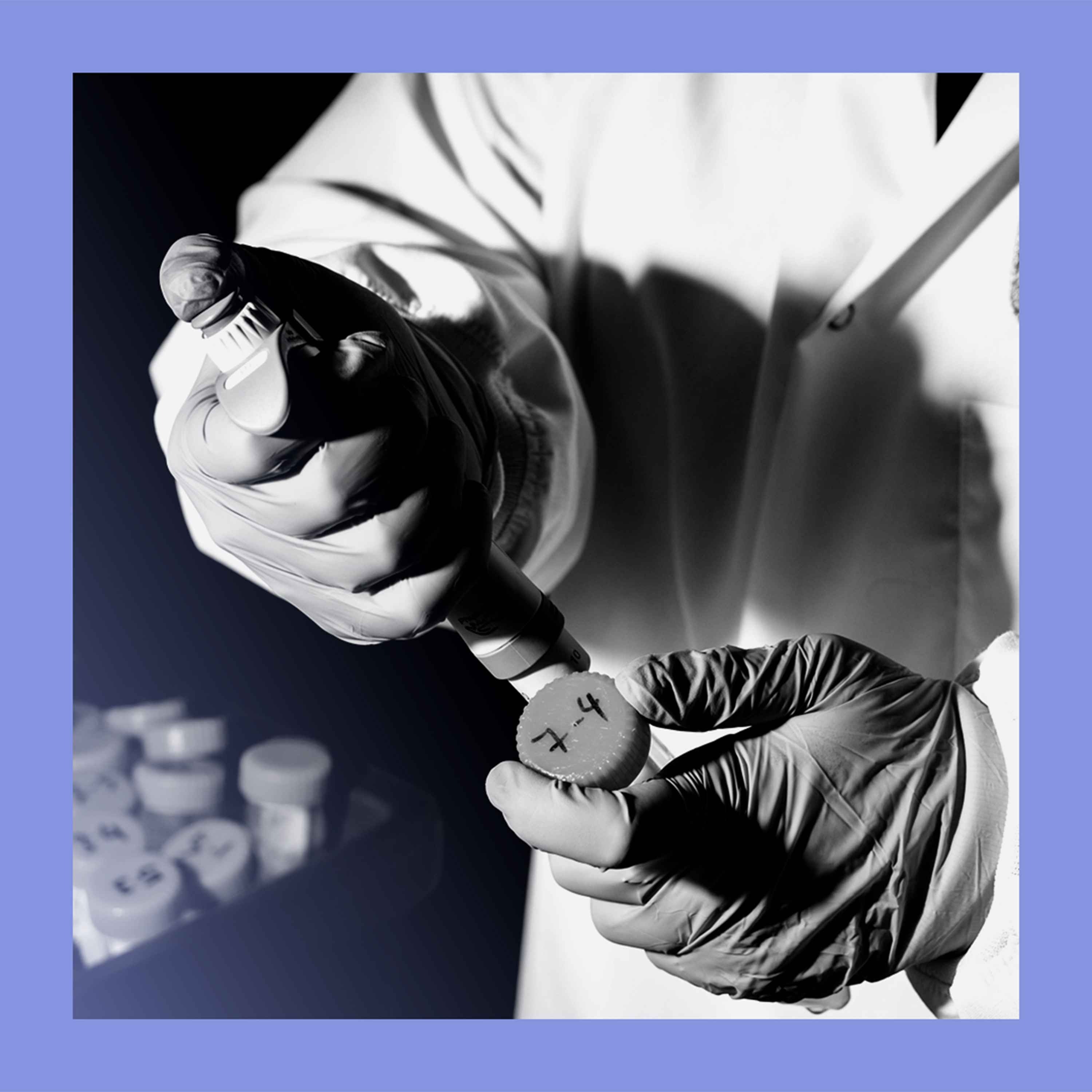
The episode is about three things: (1) a potential breakthrough in cancer treatment—personalized mRNA cancer vaccines for melanoma combined with immunotherapy; (2) Canada’s oil industry amid trade threats—why oil sands profits are surging and what pipeline limits mean; (3) Dolly Parton’s impact on America—why her voice, songwriting, and business savvy made her a cultural force.
Steve Young, a Hertfordshire musician diagnosed with T4 nodular melanoma; Natasha Loader, The Economist health editor; Sarah Larniuk, deputy editor of The Intelligence; Andrew Leach, energy economist; John Fassman, senior culture correspondent.
Steve’s Moderna-personalized mRNA vaccine trial showed preliminary results (lower recurrence risk: 12% vs 40% cited); vaccine works by training immunity to neoantigens, aided by checkpoint inhibitors. Oil: oil sands output benefits from higher global prices, weak Canadian dollar, and pipeline capacity; Trans Mountain expansion (completed 2024) reduces rail dependence. Dolly: Parton refused Elvis’s rights demands; wrote hits like “Jolene” and “I Will Always Love You,” collaborated broadly, and promoted COVID vaccination.
Written by AI. May contain mistakes.
Steve shares his diagnosis and the breakthrough treatment he received.
“I was diagnosed with a T4 nodular melanoma.”
Exploration of how cancer vaccines work and their historical challenges.
“But as with drug trials of all sorts, plenty of questions remain.”
Discussion on the role of mRNA technology in personalized cancer vaccines.
“and then they look to see all of the mutated proteins in them.”
Insights on the broader implications of mRNA vaccines in cancer therapy.
“I guess I wasn't expecting any feedback, really, at all, maybe after seven years.”
Learn about the complexities and recent developments in the Canadian oil industry.
“So in terms of the flows into Canadian companies, you're sort of getting a double whammy, right?”
Discover key moments and achievements in Dolly Parton's life and career.
Explore the cultural significance and lasting influence of Dolly Parton.
“When Dolly Parton was in her 20s, she rejected Elvis Presley.”

Get the gist, explore an idea or ask about something said.
 Claude
On The Intelligence from The Economist, what are the key points of this episode?
Searching your listeningAutomatic transcript. May contain errors.
0:00This is Will Friedle from Podmeets World. Let's be honest, the 90s gave us some great things. The music? Totally rad. The fashion? So fly. Home decor? Eh, it's a different story. In HGTV's new competitive series Totally 90s House, two teams of iconic TV stars take on two homes frozen in time. Paired with HGTV experts, they'll turn dated spaces into fresh modern homes and compete for the ultimate bragging rights. Goodbye, honey oak cabinets. Hello, 21st century. Totally 90s House. Special Series premiere starts August 26th at 9, 8 Central on HGTV. When demand slowed for HydroJug, Amazon Ads rising star Hayden Wadsworth pivoted.
0:40When our bank account hit near zero, my brother Jake and I had one last shot to save HydroJug. So we engineered the Traveler, a leak-proof, coupler-friendly Tumblr. Amazon Ads enables a business to be able to expand their product shelf because of the visibility and the reach you can get. Each week, our new-to-brand customers make up about 95 % of all of our sales. Watch HydroJug's story at advertising.amazon.com slash rising-stars.
1:11The Economist.
1:17Hello and welcome to The Intelligence from The Economist. I'm Jason Palmer.
1:27Today on the show, the Canadian industry isolated from trade threats and why Dolly Parton mattered to America.
1:41First up though.
1:51My name's Steve Young. I'm a musician and music teacher living in Hertfordshire. I had a lump on my head for many years and I did have it looked at by a GP. Back in 2023, Steve met with doctors at Hertford East Hospital, north of London. The diagnosis was not good news. I was diagnosed with a T4 nodular melanoma. That is a particularly aggressive form of skin cancer. They were giving me all the Macmillan booklets, how to go on holiday with cancer, how to tell a partner you have cancer, how to eat with cancer, how to work with cancer. Like, it was just... It was so incredibly overwhelming.
2:38Doctors who removed Steve's tumour discovered he was a match for a clinical trial of a newly licensed immunotherapy treatment. Had my melanoma been a year earlier, I would have probably had to have gone on to chemo instead. The trial was for a personalised mRNA vaccine made by Moderna, the same company that developed an mRNA vaccine for COVID. They basically said, If you just do the immunotherapy, there's a 40 % chance that your cancer will come back within the next seven years. If you do the trial and you get the actual drug, there's a 12 % chance that your cancer will come back in seven years.
3:15So I was just like, yeah, I'll take those odds. So researchers tailored a vaccine to Steve's melanoma. They took my cancer and they sliced it up. They sent it to the labs in America and they sequenced the DNA so that they could then map out an mRNA vaccine that matches my cancer. In 2024, he got the first dose of the vaccine. They didn't tell me at the time, but I was actually the first person in the world to have it. Every three weeks I had a jab and every six weeks I had immunotherapy. And this went on until my last jab was in September. And just last week, some preliminary results came out.
3:57Moderna is touting a landmark moment in its experimental melanoma treatment. Moderna's mRNA vaccine could fundamentally reshape treatment. It is being called a major breakthrough in the treatment of cancer, a potential watershed. The trial is seven years. So I'm on year three now. and all my blood work's been great. There's been no worries about anything. My scans have all been clear. It's been unbelievable, really. It is a landmark result and genuinely promising. But as with drug trials of all sorts, plenty of questions remain. Cancer vaccines are a really old idea in oncology. Natasha Loader is The Economist's health editor.
4:45But billions of dollars over many decades have been spent trying to achieve cancer vaccines, and they've just largely failed to work. And we've had a positive result in the last week from two firms working on a cancer vaccine. We only have a very limited amount of information that tells us that it slowed the rate of recurrence or spread in the trial. Now, winding back a bit, vaccines normally associated with viruses, mostly, how do vaccines work in the case of cancer? not the same kind of thing. When a cancer cell divides, it throws off these mutated proteins, which we call neoantigens. And the idea is to train the immune system to recognize these neoantigens.
5:32And then once the immune system knows what a tumor looks like, it can then hunt down and kill the cells that contain these proteins. And so that's really the basic idea. But not an easy one to put into practice. Why not? So when they first started to make these cancer vaccines, they just kept failing. And now in hindsight, we can see why some of those failed. Sometimes they picked the wrong protein. Sometimes targeting a single protein just wasn't enough because the tumor can evolve to not express that protein. But one of the really important reasons that they were failing is because the tumors themselves can suppress the immune system.
6:15And that's something we only started to deal with in the last 10 to 15 years with the introduction of drugs called checkpoint inhibitors. And what we've been able to do is turn off this immune suppression. And checkpoint inhibitor drugs are incredibly successful drugs in their own right. They've been one of the keystone elements to this revolution in immunotherapy that we're now seeing. And you give these drugs and then the immune system wakes up and then it is able to see cancers and fight them off. But the idea of a cancer vaccine is, well, if you could give it alongside one of these drugs and you could give it information about the specific tumor, maybe you could get a much better response.
7:00maybe vaccines could work in a way that they hadn't done before. So that's the series of ideas. And the result of all those ideas then is the vaccine that Steve had. So what they've done here is really cool. And five years ago, it just didn't even seem possible you could do something like this. So what they do is they sample the tumor, they take a biopsy, and then they look to see all of the mutated proteins in them. There might be hundreds, but what they're looking for is a smaller set. they can build a vaccine around. And they use AI and algorithms to pick out the proteins that they think they should develop a vaccine against.
7:38And then when they've picked the targets, they then manufacture a personalized vaccine made of mRNA. And mRNA technology is fundamental to this sort of personalized vaccine approach because after you've taken the sample, the biopsy, You want the patient to get a vaccine as soon as possible. And we can't do that quickly with traditional vaccine-making tech. But mRNA technology, you can make a vaccine in weeks. And so that's exactly what these patients have been getting. They've been getting this personalized vaccine. It's given multiple times over the course of their treatment. And clearly the early results here are very promising.
8:17But put this into context for us, how close are we to being able to say that melanoma in principle can be cured? What we don't know yet is whether this has an impact on overall survival. It probably will, but we just don't know. It could be that there was lots of side effects that mean some of the people just couldn't tolerate it and therefore lots of people dropped out, which would mean it was less useful as a therapy. We don't know the additional benefit it's bringing on top of the checkpoint inhibitor drug that is being used. and this is going to be a very personalized therapy that could be very expensive to make and so even if it is improving survival if that's relatively marginal for a therapy that's very expensive that comes on top of a drug that's already expensive you could end up in a situation where you have an incredibly clever and innovative therapy that actually isn't widely available because of cost.
9:15Cancer's touched all of our lives and we all want to see these breakthroughs. We all want to see the frontiers of human understanding against this horrible condition to advance. But I always think it's important, even when we have incredible results, to take a step back and say, look, this is just one step on quite a long road. So it's clear how much we don't know about this trial, but as you say, there will be tremendous hope for it. And I guess most of all around the idea that it's more generalizable. This was a melanoma trial. Does this mechanism, this mRNA vaccine plus checkpoint inhibitor, pave a path towards treating cancer more generally?
9:56Yes. I think we have to hope it will. The two companies behind it, they are doing trials of this vaccine in a whole bunch of other tumors. I do think this tells us that the technology can work. Skin cancer stimulates a strong immune response anyway, so you would expect that these kind of techniques would work in this particular tumour. We do need to sort of wait and see how effective it is in other tumours. But yeah, I mean, the technique works and it gives us another crack, another chink in the armour of cancer, which we can use to hopefully drive a stake through its heart. Thanks very much for your time, Natasha.
10:45Thank you, Jason. Yeah, the fact that this news has come out, it's amazing. I guess I wasn't expecting any feedback, really, at all, maybe after seven years. I've not really thought, actually, you came close. This could have been it. This could have been your time. but yeah it's really good news I'm just going to carry on carry on and just say yep that's done that's over I will never underestimate how fortunate I've been to do this and to have this opportunity because to be honest I don't think I've been ill since I had the jab like I mean forget cancer I haven't even had a sore throat
11:31who set out to redefine men's self-care with his brand Crown Skin. Amazon Ads helped him grow. I walked away from big tech to build a luxury brand in a category that no one was paying attention to. With the help of Amazon Ads, I'm reaching relevant audiences and competing with the biggest names in men's grooming. We've scaled to over$500 ,000 in monthly revenue. Watch Crown Skin's story at advertising.amazon.com slash rising-stars.
12:06We started the week with a new flare-up in America's year-and-a-half-old trade war with Canada. Any Canadian who's in the business of medium or heavy-duty trucks or lumber or aluminum or dairy is busily biting their fingernails waiting for some certainty. But there's one business, at least, that seems isolated from all that, benefiting, in fact, from America's adventures elsewhere in the world. The Canadian oil industry is just booming this year. Sarah Larniuk is the deputy editor of The Intelligence. And a big part of that is down to the war in the Middle East. High prices for oil are good for business.
12:44But a really interesting combination of geopolitical factors have meant that business is good now, but that this hangover from this period of upheaval could actually last for quite some time for this sector. You say business is good, how good are we talking? So important things to understand here. Canada is home to the world's fourth largest proven oil reserves, and 97 % of that comes from the northern region of Alberta called the oil sands. The oil here is called unconventional, which means it's not one of those wells that you just tap the ground and it starts flowing. Instead, here it's bitumen mixed with sand and clay, and as a result, it's mined rather than just tapped out of the ground.
13:28It means that in this region, oil is more expensive and dirtier to produce. Despite that, last quarter's earnings reports broke all kinds of records, and the biggest producers in the oil sands are just making money hand over fist. Synovus Energy reported that its quarterly profits had nearly tripled year on year. Canadian Natural Resources Limited posted their best ever adjusted quarterly profits at$4.6 billion Canadian. I spoke with one energy economist named Andrew Leach, and he said that it hasn't been this good to be an oil producer in the oil sands in a very long time. So in terms of the flows into Canadian companies, you're sort of getting a double whammy, right?
14:12Previously, you had strong Canadian oil investment that was making for a stronger Canadian dollar. And so the higher prices didn't translate quite as much to Canadian dollar returns. but now you've got a very weak Canadian dollar and a higher global oil price translates into much more in Canadian dollar terms. Okay, so big fat pile of Canadian dollars, that makes sense. But what did you mean when you said there would be a hangover from this period that will last beyond current conflicts? So this largely comes down to pipeline politics in Canada. Important context here is that for years, under Prime Minister Carney's predecessor Justin Trudeau and even before the predecessor to him, Stephen Harper, pipelines have been so difficult to build in the country.
14:58And that's down to environmental policy and indigenous consultations, interjurisdictional feuding. And so building a pipeline has been a challenge, which means we've had restricted pipeline capacity for oil production to increase. A lot of oil shipped by rail, which is just not what you want to see. And so this came to a head in 2018 when a company called Kinder Morgan abandoned a pipeline expansion project called the Trans Mountain Expansion. And Justin Trudeau was forced actually to buy that pipeline for$4.5 billion and then sink a further$34 billion into getting that pipeline up and running.
15:36That finally happened, though, in 2024. And this excess pipeline capacity coincided with this new demand for oil on the global markets. And so this allowed production to increase in the oil sands and get this to markets that needed it the most when the Strait of Hormuz was closed. And what about the trade war that has heated up even more this week? Does that not complicate this story? So the trade war has had an impact on all of this, but not necessarily a negative one. It's the one industry that actually seems to be doing well amid all of this back and forth with Washington. So despite the fact that the trade war has gone on for 18 months, oil has been exempt from that 50 % tariff that Donald Trump has put on many Canadian goods.
16:23And what has happened as a consequence of that trade war is that Canadians are actually pushing for energy independence from the United States. Prior to the trade war, 90 % of Canadian oil was sent to the United States. and they just don't want to rely on a trading partner that is so difficult to anticipate their next move. Part of that response has meant that Prime Minister Mark Carney has opened something called the Major Projects Office, which is basically this full court press to get infrastructure projects of national interest off the ground and through one approval process as opposed to having to go through all of these different hoops that they would have had to have jumped through before.
17:03One of those projects is another pipeline to the west coast of Canada, which would allow for Canadian producers to ship to Europe, Asia. And this demonstrates a fundamental shift for Canada. Mark Carney is taking on infrastructure policy from the perspective of a central banker, which he used to be. And this is, again, what Andrew Leach told me. He just wants to get out of the way. Infrastructure is something that enables. It's not something that you think of as a means of exercising policy, whereas in Canada, I think we have gotten to that. But, you know, I think Prime Minister Carney is maybe a different voice in that, at least on the infrastructure file.
17:44So the main industry lobby group has called this a generational opportunity where the country is actually fully behind energy independence for Canada. So despite everything we said earlier in the week, all the very careful steps that Mark Carney has to make, there is at least one thing it seems that he and Canadians don't need to worry about, and that's the oil industry. It is really the only bright spot in the Canadian economy right now. And if there's ever an indicator as far as how healthy the oil industry is, it is actually in something called the Calgary Stampede, which is a local rodeo festival that happens in Calgary where all of the head offices are for these oil companies.
18:24You can use that as a barometer, and I've seen it post-oil crash in 2014, and you saw the evaporation of the parties and the investments in different races. And now, this summer, we saw that all come back. Big parties, big bids on races, and it seems that Alberta's oil producers are indeed back in the saddle. Sarah, thanks very much for joining us. Thanks, Jason.
19:05When Dolly Parton was in her 20s, she rejected Elvis Presley. John Fassman is The Economist's senior culture correspondent. She had written a soaring, wonderful song called I Will Always Love You, and the king wanted to cover it. He demanded that she sign over half the rights to the tune itself. She said no. It must have taken nerve for a woman who grew up in a one-room shack without electricity to tell the king to get lost, but it made her millions. Ms. Parton became a megastar with 25 number one hits and 11 Grammy Awards. Yet what was striking about her career was not how many people loved her, but how few didn't.
19:50What was her secret? Well, it started with her voice. A warbling, bright soprano with a twangy Appalachian accent. It could be honeyed and nostalgic, as in coat of many colors. About a homemade coat stitched together from rags, which the other kids laughed at, but made her feel rich because of the love her mother put into it.
20:14She could sound weary and bemused, as in 9 to 5, in which she pours herself before battling rush hour traffic to toil for an indifferent boss.
20:28Or it could be sharp and piercing, as in Jolene, in which she begs another prettier woman, don't take my man. Jolene, Jolene She was a gifted writer who started at a time when female country singers rarely penned their own songs. Her lyrics were plain spoken and playful. She had a knack for compressing complex stories and life lessons into rhyming couplets. And she wrote quickly. She said she may have written Jolene and I Will Always Love You on the same night. She was versatile, collaborating with artists including Lizzo and Paul McCartney on a cover of his track, Let It Be. When I find myself in times of trouble.
21:09She acted, wrote a memoir, developed a wholesome theme park called Dollywood, created a charity that gave more than 200 million books to kids, and died with a net worth north of$450 million. The world's first cloned sheep was named after her, having been cloned from a mammary cell. People had to respect her grit. Her parents, a tenant farmer and homemaker, were so poor that the doctor who delivered her was paid with a bag of cornmeal. Daddy was an old-time preacher man. She had a songwriting deal before she finished high school, and when she grew more popular than Porter Wagoner, a singer she teamed up with in 1967 on songs including Daddy Was an Old-Time Preacher Man, he became jealous and abusive, and she struck out on her own.
21:53She proved savvy without being cutthroat, at least not in public. She was serious about her Christian faith, releasing religious songs such as There Was Jesus, a collaboration with Zach Williams. but she easily poked fun at herself. She twice declined the Presidential Medal of Freedom for fear of appearing political. Asked how she had both gay and conservative religious fans, she said, it's two different worlds and I live in both and I love them both. She did, however, encourage Americans to get the COVID jab with the cover of Jolene. Vaccine, vaccine, vaccine, vaccine I'm begging of you, please don't hesitate vaccine, vaccine, vaccine, vaccine cause once you're dead then that's a bit too late Her death was announced by her nephew who took over as her head of security from his father One of her last albums featured collaborations thanks to some archival recordings with five generations of her extended family on tracks such as The Orchard It was produced by a cousin and closes with Miss Parton's spoken word outro Until we meet again, keep the music in your heart and the mountains in your soul.
23:09John Fassman on Dolly Parton, who's died aged 80.
23:27That's all for this episode of The Intelligence. We'll see you back here tomorrow. Thank you.
Personalised vaccines could offer a breakthrough in the fight against cancer. Our correspondent analyses the latest trial. Canada’s oil market is flourishing, despite the trade war. And, why we will always love Dolly Parton.
Guests and host:
Topics covered:
Listen to what matters most, from global politics and business to science and technology—subscribe to The Economist.
Hosted on Acast. See acast.com/privacy for more information.


