
 Ask ChatGPT


 The Intelligence from The Economist
6 Nov 2026 · 26m · 8 chapters
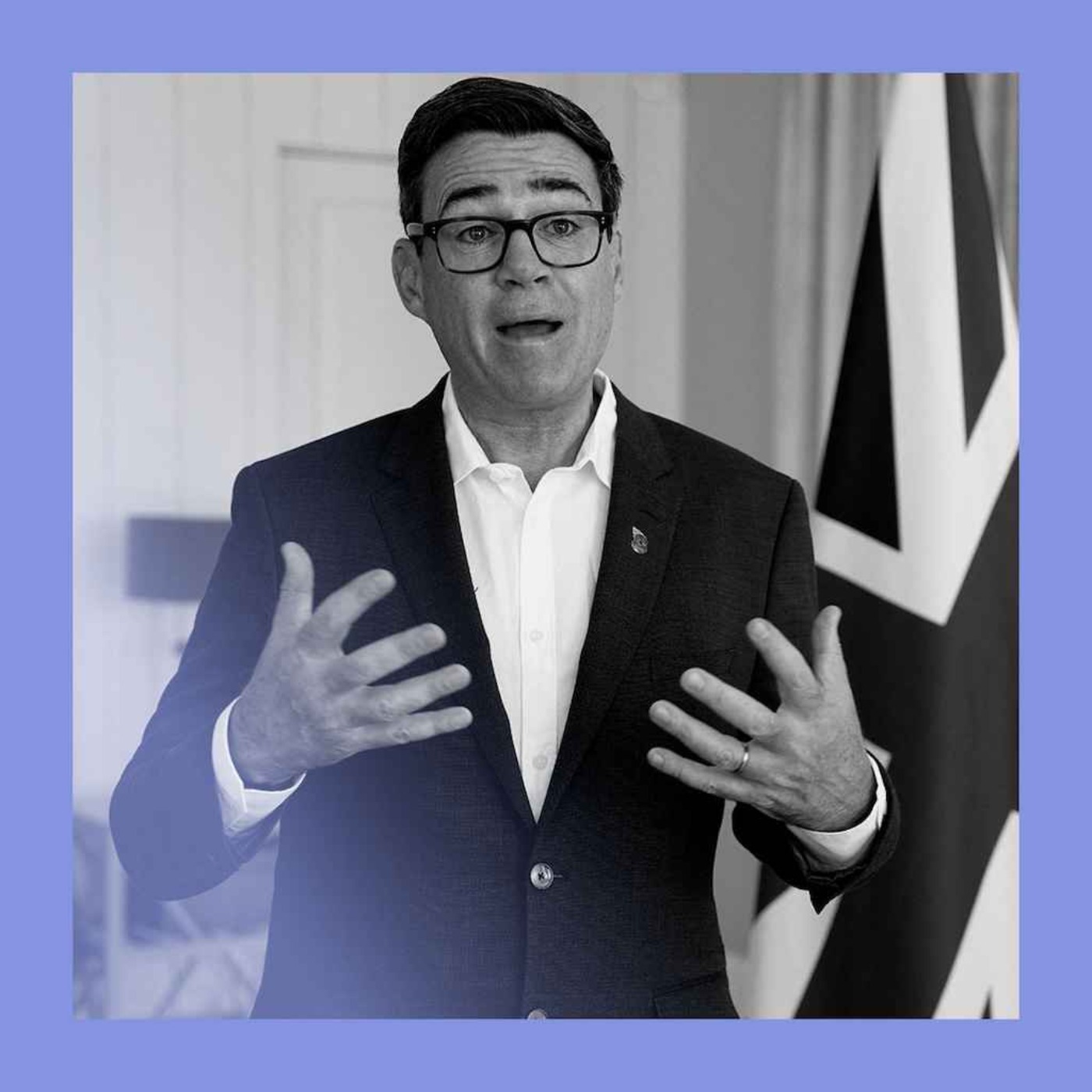
The episode of The Intelligence from The Economist covers three interviews/segments. Topic 1: UK foreign policy under Prime Minister Andy Burnham.
Hugo Jai, The Economist’s Britain political correspondent; Andy Burnham, UK Prime Minister.
Burnham wants to reset foreign policy via the Commonwealth, the Middle East, and especially Europe, possibly reversing Brexit. He frames the G20 in Manchester (Nov 2027) as his “key foreign policy test,” aiming for Britain to act as an AI “honest broker” between the US and China. He says the UK will support Ukraine “for as long as it takes,” and is open to British troops as peacekeepers after a Russia-Ukraine deal. He supports sanctions on West Bank settlement products and is willing to rebuild ties with a non-Netanyahu Israeli PM. Notable example: he cites Treasury analysis that even limited EU cooperation could raise growth by 0.4% short term.
Ukraine’s war-driven demographic collapse.
Piotr Zalewski, The Economist foreign correspondent.
fertility is ~0.8–0.9 children per woman; deaths outnumber births nearly 4:1 in early 2026; about 5 million refugees left since the invasion and return intentions fell from 74% to 43%.
Zelensky’s estimate of 50,000 soldier deaths since full-scale invasion, possibly up to 150,000; 71% of companies report labor shortages; veterans’ unemployment challenges and limited childcare.
Remembering Dolores Huerta.
John Fassman, The Economist senior culture correspondent (standing in).
Huerta co-founded the United Farm Workers and was its chief negotiator, not just Chavez’s side figure.
UFW lobbying helped pass the 1986 Immigration Reform and Control Act; later revelations that Chavez raped/pressured Huerta and assaulted other women, leading to statue removals and renewed scrutiny of sexism in the union.
Written by AI. May contain mistakes.
Discussion on Andy Burnham's stance on foreign policy as UK PM.
“Hello, and welcome to The Intelligence from The Economist.”
Examining Burnham's ambitions and challenges in international diplomacy.
“We had a difficult decade I was clear when I walked up Downing Street that we couldn't possibly go through another decade like the one we've just had.”
Analysis of Burnham's plans for Europe and relations with the Commonwealth.
“Burnham, like his predecessors, is doubling down on Britain's support for Ukraine.”
How Burnham balances domestic voter concerns with global issues.
“And looking a bit further, how about the Middle East and the Commonwealth?”
Exploring the ramifications of global political shifts on the UK.
“Whether he's going to be able to deliver on them both is, of course, a different matter.”
Explore the factors contributing to Ukraine's demographic decline due to war.
“Hours later, she reached Kharkiv and safely gave birth.”
Discover the life and activism of Dolores Huerta and her impact on workers' rights.
“Piotr thank you so much for coming on the show and thank you for having me.”
Learn about the concept of prediction markets and their implications.
“This week our global business correspondent Avantika Chilcotti lifts the curtain on prediction markets.”

Get the gist, explore an idea or ask about something said.
 Claude
On The Intelligence from The Economist, what are the key points of this episode?
Searching your listeningAutomatic transcript. May contain errors.
0:00This is the story of the one. As a shipping manager, he's running the dock, stocking supplies, and making sure every order goes out on time. And Grainger helps him stay prepared. From shipping supplies, to PPE, to hand tools, he counts on Grainger to keep products moving and trucks rolling. So his operation runs smoothly, no matter the shift. Call 1-800-GRAINGER, click grainger.com, or just stop by Grainger. For the ones who get it done.
0:32This Economist podcast is sponsored by Apollo.io. In a fast-moving business environment, finding the right people to connect with takes time. For sales teams, prospecting, outreach, and follow-up can mean juggling multiple tools and workflows. Apollo.io brings these activities together in one platform, helping sales teams find the right buyers and spend less time on scattered, manual tasks and more time building relationships. Apollo.io. Sign up for free at Apollo.io.
1:03The Economist.
1:10Ọrẹ Ogunbiyi: Hello, and welcome to The Intelligence from The Economist. I'm Ore Okunbi.
1:19Ọrẹ Ogunbiyi: Today on the show, how the war in Ukraine has supercharged demographic decline. and remembering the Labour activist Dolores Huerta.
1:36But first...
1:40Promise in trouble for a minute.
1:42Piotr Zalewski: Well, that's a bad light. Great, thank you. Let's go cracking if we can. I'll start with the midterm result overnight. I recently flew with Prime Minister Andy Burnham to the small Caribbean island of Antigua.
1:56Ọrẹ Ogunbiyi: Hugo Jai is The Economist's Britain political correspondent. Burnham, who has been something of a foreign policy novice when he became Britain's Prime Minister earlier this year, was on his way to the Commonwealth Heads of Government meeting. He's been keen to dispel the impression that he's not really interested in foreign affairs. Britain is back. We are showing confidence on the world stage. We had a difficult decade I was clear when I walked up Downing Street that we couldn't possibly go through another decade like the one we've just had. You know, I've had, I would say, eight, nine, ten people, leaders come up to me at this event saying, where are you?
2:37Where have you been? We need you. The UK has still got unique trust amongst nations and we need you to be more at the forefront of these things. When Andy Burnham became the MP for Makerfield in Greater Manchester and then Prime Minister, he promised to apply a so-called Makerfield test to all his decisions. Now, it's not immediately clear what jetting off to the Caribbean has to do with the constituents of Makerfield. But whether he likes it or not, Andy Burnham faces an autumn of diplomacy ahead, a number of international summits that are lined up one after another. He wants to prove that he can be Britain's Prime Minister, not just Britain's Mayor.
3:18Ọrẹ Ogunbiyi: Hugo, we've heard a lot about Burnham's domestic plans, but tell us about his foreign policy goals. Well, he told me he was trying to reset foreign policy in three areas, with the Commonwealth, with the Middle East, and also, probably most importantly, with Europe. He suggested this could even eventually mean reversing Brexit altogether. He's really looking forward to next year, when Britain is going to host the G20 summit in Manchester in November 2027. He sees that as the key foreign policy test for his administration, And one of the big goals at that summit will be building a role for Britain on AI as a kind of honest broker, which can seek to take the two superpowers, the USA and China, and put them round the table together to try and build a common framework for supervising and ultimately regulating AI.
4:11Ọrẹ Ogunbiyi: And apart from AI, what else can we expect to see from the G20 summit? Well, one thing we won't see is Vladimir Putin. One of the challenges of the G20 clearly is that it includes Russia. Will Vladimir Putin be invited to the G20 summit in Britain next year? No. Burnham, like his predecessors, is doubling down on Britain's support for Ukraine. He says the UK will support Ukraine militarily and financially for as long as it takes. And he also told me he is open potentially if there is a peace deal between Russia and Ukraine to deploy British troops on the ground in Ukraine to act as peacekeepers to guarantee that deal.
4:47He is very keen to see Xi Jinping come to the G20. He told me he met Xi Jinping in 2015 when the president of China visited Manchester. There's been a lot of Chinese investment in Manchester. That's been one of the factors behind the city's economic growth when Andy Burnham was the mayor there. And Burnham has talked about using that model as a model for further cooperation between Britain and China, making that relationship, which can be quite difficult, into a constructive one.
5:16Ọrẹ Ogunbiyi: And earlier you mentioned reversing Brexit. What does a new relationship with the EU look like to the PM? It's pretty ambiguous at the moment. What Andy Burnham says is that he's very open-minded about where the relationship between Britain and the EU goes next and that it could end up in a halfway house like Britain rejoining the single market but not going back into the EU. But it's very clear that he is keeping his options open and that does include potentially undoing Brexit altogether. For example, he brought up, without me even asking in one of our interviews, new analysis that he says the Treasury has produced, which says that even a limited deal of closer cooperation with the EU will boost Britain's growth by 0.4 % in the short term.
6:02And I was really interested, not necessarily in the number, because frankly, I think that's fairly speculative, but in the fact that he was so keen to communicate to me and by extension to our readers and listeners that he really does see the EU as potentially a growth engine for Britain. Going back to the Makerfield test, Makerfield voted pretty heavily for Brexit. If Andy Burnham can sell a reversal of Brexit in Makerfield, he can sell it anywhere.
6:29Ọrẹ Ogunbiyi: And looking a bit further, how about the Middle East and the Commonwealth? What are his plans there? Andy Burnham and particularly working with the Foreign Secretary Ed Miliband have adopted a much spikier attitude to Israel. They've put sanctions on products from settlements in the West Bank. Of course, the wild card here is that Israel's just had an election, the results of which are inconclusive. I asked him whether he would be willing to work more closely with a new Israeli prime minister who is not Benjamin Netanyahu. He said, yes, he is willing to rebuild that relationship. On the Commonwealth, Andy Burnham, even before this Commonwealth summit in Antigua started, braved quite a significant political backlash by saying that he was willing to consider not reparations for slavery, which is what some Caribbean countries want, but potentially a formal apology for Britain's role in the slave trade.
7:21And his view is that it's only by dealing with the legacy of the past that the Commonwealth, which I think currently punches way below its weight on the global stage, can be refashioned into an organisation that's fit for the future and that can, if you like, hold its own against the great power blocks that increasingly the world seems to be divided into.
7:42Ọrẹ Ogunbiyi: And speaking of power blocks, Hugo, you would have been with the Prime Minister as America's midterm results were trickling in. What was his reaction to those results? Well, he said he was optimistic that the scale of the defeat for the Republicans is going to focus Donald Trump's mind on the cost of living, which is widely seen as the biggest single factor behind the Republican defeat. And what that means, first and foremost, is resolving and ending the war in Iran to bring down the global price of oil. Andy Burnham's argument essentially was that would be good for America. It would be good for Britain.
8:16It would be good for the rest of the world too. There is one more issue between the UK and the US that doesn't show any sign of resolution, and that's the future of the Chagos Islands. Keir Starmer struck a deal to hand over the Chagos Islands to Mauritius and give up British sovereignty over them. Donald Trump said he would veto it because of the importance of the US military base on Diego Garcia. Andy Burnham made it clear he's not currently pursuing that handover deal and he's rethinking whether in fact Britain should give up sovereignty in the first place or whether there's a different better way forward that can satisfy the concerns of the US administration.
8:51Well we are in discussion with our US friends to see how we might recast the arrangement that better meets their concerns. You know, we look at the Greenland deal and obviously there was a solution reached there. Now, maybe there was something there that we can take from that to see if there's a solution that works in relation to Diego Garcia.
9:12Ọrẹ Ogunbiyi: Hugo, do you think that Andy Burnham can truly make a mark on the world stage? Has he got what it takes to be an international statesman? So I think any leader, whoever they are, wherever they're from, when they're doing foreign policy has to do two things at once. They have to persuade other world leaders, businesses, and so on, that they are a credible international figure who is not parochial, not just focused on their own domestic concerns. But they have to convince their own voters that those domestic concerns are always in their mind and that the things they do globally feed back domestically.
9:47And I think Andy Burnham understands those two things. Whether he's going to be able to deliver on them both is, of course, a different matter. I think one thing that's really helpful for Andy Burnham is he's a people person. Diplomacy is not only, but to a large extent, about getting on with people and finding areas of mutual interest. That is something that Andy Burnham has a track record in doing in Britain. I would say there's no reason he can't do that internationally. Going back to this Makerfield test, Andy Burnham can care about Makerfield as much as he likes, but what happens in Makerfield is heavily affected by what happens in, say, Mauritius or Michigan or Mikhailov in Ukraine.
10:28And Andy Burnham is going to have to deal with all these things at the same time. And that is always the challenge.
10:35Ọrẹ Ogunbiyi: Hugo, thank you so much for joining us. Thank you very much, Ori.
11:09Ọrẹ Ogunbiyi: A whooping. The Democrats have won majorities in both the House and Senate, making astonishing gains in Republican strongholds along the way. A balloon army, if you will. On The Insider this week, John Priddo, the Economist's executive editor, is joined by a trio of regulars from Checks and Balance, our American politics podcast, to dissect the Democrats' extraordinary victory and consider the rocky road ahead for Republicans. Where do both parties go from here? Has the Trump era of American politics really come to an end? And if so, what comes next? If you're a digital subscriber, Insider is already included in your subscription.
11:53Ọrẹ Ogunbiyi: And if you're listening for free, you can watch extended clips via the link in our show notes.
12:05This episode of The Intelligence is sponsored by Vantage Score. For years, credit scores have been generated with just a snapshot, and that snapshot left millions of people out of the picture. So VantageScore is modernizing the whole process. They use 400 % more credit report and alternative data than legacy models, bringing more people into the credit economy, like 5 million more mortgage-eligible people. So all the banks win, but so do all the francs, the lenders and the borrowers, the Lindas and the Olivers. When you build credit scores the right way, everybody wins. That's the power of VantageScore.
12:40Get started at VantageScore.com. This is the story of the one. As a shipping manager, he's running the dock, stocking supplies, and making sure every order goes out on time. And Grainger helps him stay prepared. From shipping supplies to PPE to hand tools, he counts on Grainger to keep products moving and trucks rolling. So his operation runs smoothly no matter the shift. Call 1-800-GRAINGER, Click Grainger.com or just stop by Grainger for the ones who get it done.
13:23Jon Fasman: I met Alena and baby Yehor in a hospital in Kharkiv.
13:29Ọrẹ Ogunbiyi: Piotr Zalewski is a foreign correspondent at The Economist.
13:33Jon Fasman: Yehor was tiny, he was a preterm baby, and weighed only two and a half kilo. The birth had been traumatic. Aliona's waters broke in her hometown of Kramatorsk, that's only 10 kilometers from the front mine, a city devastated by Russian attacks and a city that has no functioning hospitals. Aliona was taken by ambulance to Slavyansk, but due to complications with her pregnancy, she was told to go elsewhere for treatment. Hours later, she reached Kharkiv and safely gave birth. Aleota told me that Kharkiv actually felt safe compared to Kramatorsk, despite the fact that Kharkiv was also frequently targeted by Russian missiles and drones.
14:18Jon Fasman: Now, when drones approached the city, the hospital staff ushered the women and the babies into the hospital corridors to wait out the attack. When missiles approach, the mothers and the newborns are hurried downstairs into a bunker. Giving birth in Ukraine is not for the faint-hearted.
14:41Ọrẹ Ogunbiyi: That sounds like something that, while tragic and difficult in and of itself, would have other repercussions for families too. And it does.
14:49Jon Fasman: The fertility rate in Ukraine is estimated to be anywhere from 0.8 to 0.9 children per woman. And that is lower than in any big country except South Korea. As bear in mind that the replacement rate is 2.2 children per woman. In the first six months of 2026, deaths in Ukraine outnumbered births by nearly four to one. And this low birth rate, among other things, has led to a demographic collapse. The low birth rate is only one of the reasons. The others, and perhaps the biggest factor, is the exodus of refugees from Ukraine, as well as the Russian occupation and combat deaths.
15:35Ọrẹ Ogunbiyi: Piotr, was there any sign of demographic decline before the invasion?
15:40Jon Fasman: In Ukraine, the birth rate has lagged behind the mortality rate since independence in 1991. That is to say that every single year since independence, Ukraine has seen fewer births than deaths. And that has been down to economic hardship, labor migration to Europe, and poor health, especially among men. So that gap had existed prior to the full-scale invasion, but the war has turned it into a chasm. The situation might actually be even worse than official statistics suggest, because combat deaths in Ukraine tend to be underreported. President Zelensky said in July that about 50 ,000 Ukrainian soldiers had died since the full-scale invasion.
16:25Jon Fasman: It's thought that the figure could be up to 150 ,000, if not more, according to the Center for Strategic and International Studies in Washington.
16:35Ọrẹ Ogunbiyi: And so the invasion just amplified demographic decline in other parts of the population then?
16:40Jon Fasman: I would say rather than amplified, the invasion turned a crisis into a catastrophe. And the biggest factor by far is the refugee exodus. Around 5 million Ukrainians are believed to have left Ukraine since the start of the invasion and settled mostly in Europe. So they account for the largest share of the decline. Thousands more may leave this winter amid redoubled Russian attacks on major cities, including Kiev. Also, the share of refugees who say they plan to return to Ukraine has fallen. At the start of the war, about 74 % of refugees said they were planning on returning to Ukraine. That number has since dropped to 43%.
17:26Jon Fasman: It was thought, still thought, that sparing men under the age of 25 from conscription would encourage them to start families. But the evidence suggests that many of those men, particularly men under 22, have left Ukraine and many have decided to suspend any kind of family planning.
17:47Ọrẹ Ogunbiyi: What impact does that have to those living in the country now?
17:50Jon Fasman: Well, this has had a serious impact on the economy. The labor market is struggling. Ukraine is in the midst of a major labor shortage. 71 % of companies say they cannot find workers or fill vacancies. The labor shortage today is estimated to be near 2.5 million people following any kind of sustainable peace. And given the need for reconstruction, that labor shortage could increase to up to 8.6 million in the next decade. Now, immigration could ease some of the economic problems. But today, Ukraine has very few immigrants. Only some 9 ,500 foreign workers are registered. The priority, Ukrainian officials will tell you, is for the country to find workers at home, especially among women, war veterans and internally displaced people.
18:44Ọrẹ Ogunbiyi: And are those efforts working?
18:45Jon Fasman: Those measures have only had partial success. More than 40 % of working age veterans report that they struggle to find work. Largely because of inadequate psychological support, but also because of the trauma which they've undergone. and because many of the workplaces in Ukraine are not adapted for disabled veterans. Women, meanwhile, still struggle to participate in the workforce due to limited childcare options. Ukraine is one of the few big countries in Europe never to have experienced mass immigration. Polls suggest that many Ukrainians want to keep it that way. And so there is fear that in case there could be a nationalist backlash.
19:30Jon Fasman: But the fact remains that once the war comes to an end, there are and will be too few Ukrainians to rebuild the country on their own.
19:39Ọrẹ Ogunbiyi: So what does all this mean for Ukraine going forward?
19:41Jon Fasman: The most optimistic projections foresee merely a slowdown of the decline. And that's assuming that the war ends in the next few years or so. If the war were to continue into the 2030s, the risk is that the fertility rate, which is already quite low, could dip further, perhaps to as low as 0.6%. The government has offered prospective parents financial incentives, including a one-time household payment of 50 ,000 krivni, or about$1 ,100 per newborn. It also offers parents a monthly allowance of 7 ,000 LV during the child's first year. Ukraine also offers parents vouchers or stipends to cover part of the cost of child care and has covered the cost of infertility treatment for women since 2024.
20:34Jon Fasman: Soldiers can have their eggs or sperm frozen and stored free of charge. but in reality none of the measures that it has adopted will slow the decline without an end to the war.
20:50Ọrẹ Ogunbiyi: Piotr thank you so much for coming on the show and thank you for having me.
21:13Piotr Zalewski: In late November 1986, the United Farm Workers of America, a union whose founders included Cesar Chavez and Dolores Huerta, was ready to celebrate.
21:24Ọrẹ Ogunbiyi: John Fasman is our senior culture correspondent and is standing in for Anne Rowe this week.
21:31Piotr Zalewski: Earlier that month, then-President Ronald Reagan signed into law the Immigration Reform and Control Act, for which the UFW had spent months lobbying. The act offered undocumented immigrants long resident in America a path to citizenship and gave farm workers who could prove 90 days of employment legal permanent residency. It also penalized employers who knowingly hired undocumented workers whom the union feared would drive down wages and service scabs during a strike. Shortly before a news conference to mark the legislative win, Chavez told Huerta that she was needed in Florida. A crisis, he said.
22:09Piotr Zalewski: So of course, Dolores went, because that's what she did. Go where workers needed her. But when she got to Florida, she found there was no crisis. Nobody was expecting her. They just wanted to get me out of the way so they could take credit for the work. Straight male chauvinist trick. The assumption was that Chavez was the leader and Dolores the housekeeper of the movement. In fact, they founded the union together, though unlike him, she had to balance work with raising her 14 children. With his soulful dark eyes, conversational speaking style, and love of the microphone, he was the charismatic frontman, but she was the union's chief negotiator.
22:51Piotr Zalewski: He could make the speeches. There were also boycotts to organize, contracts to negotiate, and people who needed help.
23:03Piotr Zalewski: Her mother Alicia had a similar streak of dogged practicality. After a divorce, Alicia took her three children from New Mexico to Stockton in the Central Valley, California's agricultural heartland. After stints as a waitress, cannery worker, and restaurateur, Alicia ran a 70-room hotel that welcomed migrant workers, often waiving room fees if they were too steep. Dolores later recalled that Alicia often thought she was the migrant worker's mother and gave them curfews, made sure they sent money home, and didn't drink away their paychecks. She also invited them to local dances so they could meet nice girls and settle down, which many did.
23:44Piotr Zalewski: From Alicia, who participated in a cannery workers' strike in 1938 and joined civic groups in Stockton, Dolores learned about activism, which was nothing more than helping people who needed help and advocating for people who could not speak for themselves. From the start, Dolores held her own. Elected officials learned to fear her. One state senator recalled that she was indefatigable and unorthodox. Dolores will bring in hundreds of people and they'll camp outside your office. And while sleeping in a Senate hallway sounds uncomfortable, it was nothing compared to what her union members were used to.
24:22Piotr Zalewski: They worked in the fields for 16 hours a day. There were no toilets. Female workers had to squat behind a towel or a blanket. The only drinking water sat baking in a tank under the sun. There was no health care or unemployment insurance, and no recourse if the farm owners cheated them. So she and Chavez got to work. In 1965, their union, which mainly represented Mexican farm workers, joined 2 ,000 Filipinos on strike in vineyards near Delano, California. Growers hired scabs and refused negotiations, figuring they could force the workers to back down as they had before. But the times were changing.
25:01Piotr Zalewski: It borrowed tactics from the civil rights movement, calling for boycotts of table grapes and liquor produced by one of the larger vineyards. By 1970, the growers had given in, agreeing to raise wages and recognize the union. And five years later, California passed a law protecting farm workers' rights to unionize and making migrant workers eligible for health insurance and other benefits. Chavez became a hero, giving his name to streets, parks, and schools across California and beyond. He died in 1993. Dolores kept doing the work, campaigning for women's rights and encouraging them to run for office, picketing and protesting.
25:40Piotr Zalewski: Age barely slowed her. A policeman broke her ribs and ruptured her spleen during a demonstration when she was almost 60. But not until this year did she reveal her deepest secret. Chavez had raped her in 1966. He had pressured her into sex years earlier. Two of her children were his. She kept quiet because, as she said, I didn't want to hurt the movement. A New York Times investigation found that Chavez had assaulted and molested multiple women and girls, some just 12 years old. Sexism pervaded his union. Liz Sullivan, who was raped by two men after an organizing meeting, recalled that union members berated her and her female colleagues who spoke out about the movement's treatment of women.
26:28Piotr Zalewski: The male executives had no patience for what one of them called women's lib and all that other bullshit.
26:38Piotr Zalewski: In recent months, statues of Chavez have come down. Murals have been painted over and parks renamed. Some in the movement blamed Dolores, too, for keeping quiet. But Ms. Sullivan took a different view. She urged people to see Dolores as a human being, in all her beauty and with all her faults, just like the rest of us.
27:04Ọrẹ Ogunbiyi: John Fassman on Dolores Huerta, who has died aged 96.
27:15Thank you.
27:45Ọrẹ Ogunbiyi: is Rory Galloway. Our producer is Anne Hanna and our assistant producer is Canal Patel with extra production help this week from Eleanor Sly and Katie Peterson. We'll all see you back here tomorrow for the Weekend Intelligence. This week our global business correspondent Avantika Chilcotti lifts the curtain on prediction markets. People are placing bets on anything and everything But who is the real arbiter of truth?
28:41He counts on Grainger to keep products moving and trucks rolling, so his operation runs smoothly no matter the shift. Call 1-800-GRAINGER, click grainger.com, or just stop by Grainger for the ones who get it done. The quarter pound of a cheese is made with 100 % fresh beef cooked when you order it.
29:04Jon Fasman: Then comes the melted cheese, the slivered onions, the pickles, the ketchup, and the mustard. Add hot crispy fries and an ice cold Coke, all for$8. And if things go well, one loose fry at the bottom of the bag. The Quarter Pounder with Cheese Meal, now$8. Ba-da-ba-ba-ba.
Ahead of the G20 summit in Manchester, Britain’s prime minister sets out his foreign-policy plans. From reviewing EU links, to brokering the relationship between America and China, he is making big promises. To Russia’s delight, war is eroding Ukraine's population. And a tribute to a renowned American labour leader.
Watch extended clips from Insider here
Guests and host:
Topics covered:
Listen to what matters most, from global politics and business to science and technology—subscribe to The Economist.
Hosted on Acast. See acast.com/privacy for more information.


