
 Ask ChatGPT



Hosts: Jason Palmer and Rosie Blau
This podcast delivers in-depth analysis and news from The Economist's correspondents, focusing on significant global events across politics, business, and culture. The episode titled "Bust a Vessel: NATO v Dark Fleets" discusses emerging threats at sea, labor dynamics in China, and evolving definitions of antisemitism.
Written by AI. May contain mistakes.

Get the gist, explore an idea or ask about something said.
 Claude
On The Intelligence from The Economist, what are the key points of this episode?
Searching your listeningAutomatic transcript. May contain errors.
0:10Hello and welcome to The Intelligence from The Economist. I'm your host, Rosie Blore. Every weekday, we provide a fresh perspective on the events shaping your world.
0:25For decades, China's economy has been powered by millions of migrant laborers, many of whom also lived in the place they worked. Now China has a vast and growing body of nomadic freelancers engaged in gig work. Our correspondent explains the consequences. And what do people mean when they talk about anti-Semitism? You might think the definition is pretty straightforward, but a new book suggests otherwise.
1:02But first...
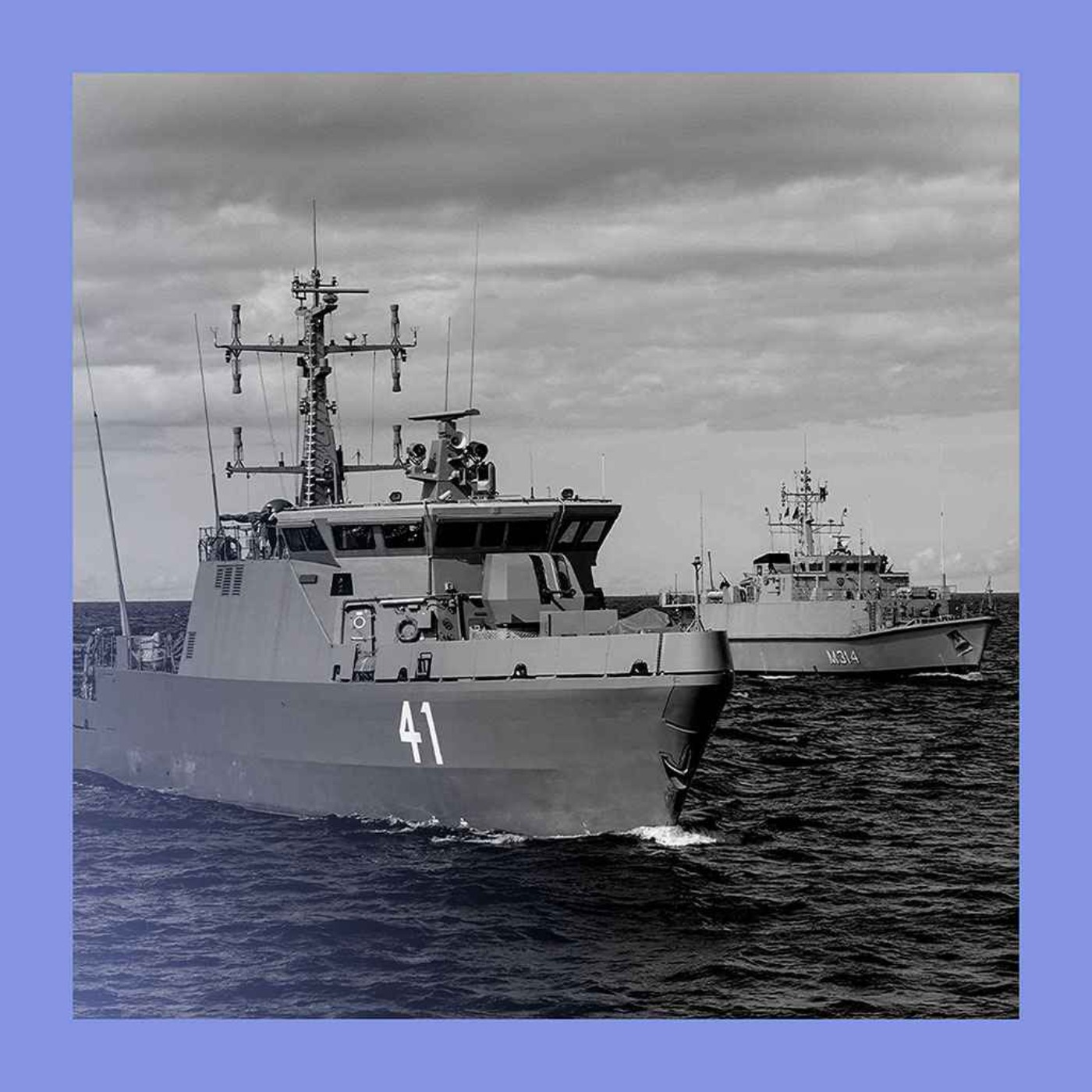
1:11A few weeks ago, I took a trip into the Orison Strait between Denmark and Sweden. Alice Su is our senior international correspondent. I was aboard the Versaitis, a Latvian naval ship that's part of a NATO mission called Baltic Sentry. And we were called to check on a suspicious Russian fishing boat that had stopped in a busy shipping lane near an undersea gas pipeline. It claimed to have suffered a power failure. Attention on board, until further notice is prohibited to use private mobile phones, they should be either switched off. As we approached, officers asked everyone on board to turn off their mobile phones for protection from possible hacking.
1:50Commander Yanis Oce explained exactly why NATO forces are interested in vessels like these. We observe everything. We are trying to create patterns of life to get what is unusual, what is abnormal with the reaction. Usually it's not happening very often when a ship is reporting emergency and going on anchor in place here. What do we see? Here is no fishing grounds around. What is the reason why the ship is here? In recent years, NATO has become concerned about sabotage of critical infrastructure in the Baltic. Oil tankers involved in sanctions evasion have been linked to cable cutting at the bottom of the sea.
2:29Recent drone attacks that shut down airports in Denmark and Norway have also sparked police investigations into shadow vessels, that is, ships that are using deceptive tactics to hide their identities and movements. These shadow fleets are causing trouble on the high seas, and Western governments are struggling to respond.
2:50Alice, it sounds like an extraordinary reporting trip. Shadow fleets causing trouble on the high seas. Explain what you mean. Yeah, so first of all, shadow fleets are not a new problem. When we talk about shadow fleets, we're referring to ships that are tampering with their identification signals. They're sailing under lots of different flags. They basically use sketchy practices to disguise who they are and what they're doing. These tactics were pioneered a while ago by North Korea and then used by Iran and Venezuela, mostly to avoid sanctions. But in the last few years, since Russia invaded Ukraine, the shadow fleets have really been supercharged.
3:25They have jumped in number from roughly 200 or so before the war to about 1 ,000 today. And now they make up nearly one-fifth of the global oil tanker fleet. And what is really new and particularly worrying about shadow fleets now is that they're becoming more of a security risk. Alice, you say that the rise in the Shadow Fleet has been since the invasion of Ukraine. So presumably a lot of these vessels are working for Russia, but not all, right? That's kind of the interesting and tricky thing about Shadow Fleets. It's hard to say who they belong to or who owns them. And I actually became interested in this story from my previous base in Taiwan.
4:04Taiwan has been having a lot of problems with suspicious ships of unknown origin cutting the undersea cables around the island. And in Taiwan, the authorities there would always suspect that this could be a form of gray zone aggression from China. But it was very difficult to ever pin down who was running these ships and why they were cutting the cables. And that's because shadow vessels typically are flying under lots of different flags that are registered to third countries. And they can deny any connection to, say, the Chinese or the Russian authorities. And here in Europe, the Shadow Fleet has basically become Russia's economic lifeline because they are the ones that are transporting oil back and forth from Russia to other countries, actually mostly India and China.
4:44But when there are suspected sabotage incidents involving these ships, it's very hard, again, to prove any direct connection. There's one example of a ship that was recently detained by France and investigated by Denmark because the police thought it was involved in this drone sabotage around the Danish airports. It is called the Borike, but it's also known as the Kiwala and it's also known as the Pushpa. And actually, it's flown seven flags, had four different owners and changed names five times since 2022. Mostly, if you look at what it does, it's shipping oil between Russia and India. But again, it's hard to link it directly to the Russian government.
5:19And one of the points that maritime experts made to me was that shadow fleets are increasingly run now as freelance services. is they have more than one client and the operators and insurers and flag registry managers behind these shadow fleets are often opportunistic middlemen who come from all over the world who are just looking to make money. They're not necessarily pro-China, pro-Russia or motivated by any kind of ideology. Isn't what they're doing still illegal? So surely the authorities can clamp down on them because their behavior is illegal? Yeah, that's a great question. And actually, it gets to the heart of the problem of shadow fleets, which is actually one of legal jurisdiction.
5:57So when ships are out sailing, especially in international waters, they're meant to be regulated by their flag states. So if you are flying under the flag of Panama, that becomes sort of the nationality of your ship. And in recent years, more and more shadow ships have been either registering with very lax flag states that don't enforce the international rules for the ships and their registries, or they have been jumping quickly from one flag to another too quickly for the regulators to catch up. Or increasingly, they're also sailing with fake flags or with no flags at all. If you look deeper into the flag registry problem, you'll find that there are all kinds of registries set up on the internet, sometimes by just unknown individuals claiming to provide flags for all sorts of countries.
6:39And sometimes it's just very obvious that they're fake. There's even this tiny uninhabited rock in the Southern Pacific called Matthew Island. It has a registry online, so you could go online and register a ship to it. And again, there's not that much that other governments can do about this, especially if these ships are in international waters, because it's not in their legal power to stop or regulate other countries' ships. That is, unless they can say, you know, this ship is about to cause my country some kind of harm. So what should be done? Well, there are a couple things that governments are trying to do now.
7:11The first one is that Western countries are putting diplomatic pressure on some of these smaller states that have large registries, and that has seen some results. For example, Panama recently announced that it wouldn't allow any vessels over 15 years old to register under its flag. And that's important because a lot of these shadow vessels are very, very old ships that are useful for this purpose, but that wouldn't otherwise be still sailing today. And a second thing, which is what a lot of Baltic states are now doing, is a sort of legal harassment. They know which ships are vessels of interest, which ones are suspicious.
7:42And when they see them, they basically call them on the radio and say, identify yourself, show us your documents. and then they try to check if their documents are real or not. And it's a way to slow their movement and slow their operation and create obstacles for the shadow fleets to keep operating. The problem is that some ships will just ignore them. So on that Latvian ship, the officers were telling me, they sail around and they radio into these ships and they say, tell us if you see anything abnormal or suspicious. And sometimes the ships that are going to and from Russia will just say no.
8:13And then there's not much they can do. So then if these kinds of harassment tactics don't really work, you come to the third thing governments are doing, which is military deterrence. Estonia has actually passed a law authorizing its navy to attack civilian vessels if they are damaging critical infrastructure. So far, that hasn't happened. Hopefully it won't have to happen. But it needs other bigger countries to back it up. So the EU is discussing new policies that would allow member states to stop and to board shadow vessels. NATO is also stepping up, which I got to see firsthand on that patrol in the Baltic Sea.
8:46So it sounds like there really is some way to go before the situation's resolved. Yeah, that's right. I mean, shadow fleets are drawing a lot more attention and action now because of the sabotage problem. But I should say all the things that the European governments in particular are doing are still not really curbing the shadow fleets trade activities. I think it's amazing that nowadays we know more about the shadow fleets than ever before. We can name the ships. We can see them moving on the map. We see them changing their flags and we see how they break the rules. But still, much of what we're doing is just watching them do that.
9:19Their trade is continuing. And then looking forward, even if someday in the years to come, some of these sanctions were lifted and a lot of these ships went back to normal non-shadow trade activity, the explosion of shadow fleets in the last few years has shown just how weak international maritime governance is and how easy it is to exploit the loopholes. And so I think shadow fleets are now clearly about much more than just oil or about sanctioned evasion. You can actually use them to transport anything that you want to hide, you know, drugs, weapons or people. And they've become this giant floating platform for illicit and very profitable activity that will likely be used for years to come.
10:01Alice, thank you so much. Thank you, Rosie.
10:13Hello, I'm David Rennie, The Economist's geopolitics editor. This evening, I'll be hosting the first episode of my new video show, Inside Geopolitics. The show's a chance to have serious conversations with the people in the room when big decisions are made about how the world runs. My first guest is Kaya Callas. She's the former Prime Minister of Estonia and now the European Union's foreign policy chief. She's been very outspoken, not just on the confrontation with Russia, but also Europe's relations with China. I hope all these conversations will be lively, insightful, but also kind of crunchy, and will give you an insider's perspective on the thinking behind big policy moves.
10:59Full subscribers can watch us in our brand new studio on The Economist's website or app at 6pm this evening. And I'll be back each month after that. Thank you, and I hope you enjoy watching.
11:23A few months ago, I visited a labor recruitment center in Shenzhen. It was a busy, chaotic place. A lot of shouting and people talking on megaphones. A lot of workers being recruited and then shuffled off into buses. I think they were headed to factories. John Wineland is our China business and finance editor. Most of these people here were men. And they're young and they're a growing group of China's workforce. There's around 200 million people in China these days who are classified as flexible workers. So, in other words, gig workers. And in many ways, they're becoming the backbone of China's manufacturing sector.
12:11Just tell me a bit more about who is actually in this cohort of workers. Sure. So they make up about a quarter of China's total workforce. Most of these gig workers that are in factories average at around the age of 26. 80 % are male, and most of them are single. But they're a very important group of people. We have been calling this group the make-or-break generation because they have a real possibility to boost the economy or hurt it in the future. Don, we've long heard that migrant laborers are the backbone of China's economy. So what's the distinction between migrant laborers and this newer cohort of gig workers?
12:53So I think what you're thinking of is the past generation of workers who migrated to factory towns, took up jobs, usually for a longer period of time. So at least a couple months, sometimes several years. They're a much stabler group of workers. The group that we're talking to is the next generation of China's labor force. They are migrants, but they're very, very digitally connected. That's something that the past generation didn't have. They're quite savvy. They understand what's going on with the world, but they usually also have relatively low education levels. And they are the group that is powering China's manufacturing sector.
13:35So during peak times in the biggest factories in the country, It's estimated that about 80 % of the workforce are these short-term gig workers that are being paid by the day or by the week. And that's really not how the government intended to structure the labor market. They didn't want that many gig workers taking responsibility for the bulk of China's manufacturing. These part-time workers also work in marketing, construction. They're the people serving dishes in restaurants, and they're doing a lot of online sales work as well. So they're very, very embedded in the economy right now. And why are so many young people turning to gig work then?
14:16There are a couple different reasons for this. There was a trope on Chinese social media a few years ago, people that were finding jobs in Shenzhen, and they were really celebrated as workers who would do their job for a couple days, then they would take their money, they'd find a place to stay, a bunk bed somewhere, and they would relax. And when they needed money, they would go back to work. And this was kind of celebrated. They were considered masters of their own destiny in an environment where it's very, very hard to control what's going on around you. So that's part of it. There's a lot of other people within that 200 million figure that are retired and looking for some part-time work.
15:00I talked with a yoga instructor who worked at a state school for many years and just decided that she wanted more freedom and she stopped doing her normal job and became a yoga teacher. I've even heard that there are some civil servants in small Chinese cities that after they're done with their day job, they will go drive a delivery bike around and deliver food. So this group is huge. So Don, having more freedom sounds like a positive choice. Why do you call them the make or break generation? There's a lot riding on the economic futures of these people, if they are not integrated into big cities, if they can't afford homes in the future, not only will they not be buying homes, China has this housing crisis right now, and there's a lack of demand for homes.
15:48So not only will they not be contributing to that part of the economy, but they probably won't settle down, they won't have children, or they will have children back in their homes and they will miss out on all the great things that city life brings, better education, better health care. And so like many generations of past workers in China, they could just kind of miss out on the economic phenomenon here. So Don, those are some of the long-term risks. What about the shorter-term risks that the party's worried about? Yeah, there's a darker side to this right now. Around these labor markets, a lot of young people will end up just sleeping outside.
16:31So last year, I went to a park in a city near Shanghai where I live. And yeah, when I showed up, there were quite a few young people sleeping in this park. I noticed just being on the ground in Shenzhen for a couple hours that there seems to be drinking and drug use going on among some of these people. And we hear more and more about that. So these are all threats to social stability in China. So yeah, there's a lot of social questions around how to deal with this group of people. So then what, if anything, is the party going to do about this? There are a lot of reforms on the table. China does want to reform its pension system.
17:13One of the biggest problems with this group is that the companies are not paying into pensions and the workers themselves are not paying into pensions. China wants to change that. They want to make it easier for people to settle down in big cities. So there's a lot of these changes that are happening now. It's going to take a lot more time to really see the results. Chinese reforms often move very slowly. Sometimes they don't seem like they're moving forward at all. In this case, I think they need to speed this up because there are a lot of people out on the street looking for work. It's not the image that the Communist Party wants to portray to the world.
17:52Don, thank you very much. Thanks, Rosie. And for more on China's gig economy, check out this week's episode of Drum Tower, our show on China. You can hear the story of Hu An-Yan, who had 19 different jobs in 20 years. His account of that time, I deliver parcels in Beijing, became a best-selling book in China, and has now been translated into English. Our episode on Beijing's most famous delivery man is out later today. You'll need to be a subscriber.
18:34The definition of anti-Semitism appears, at least on the surface, to be clear. It means prejudice against and hatred of Jews. Its manifestation, sadly, is also clear. John Fasman is our senior culture correspondent In both Britain and America, the number of hate incidents targeting Jewish people soared after Hamas' attacks in October 2023 But some people disagree over what constitutes anti-Semitic speech In his new book, On Anti-Semitism, A Word in History Mark Mazower, a historian at Columbia University in New York argues that the meaning of anti-Semitism is actually far more complex than it seems.
19:19He traces how it has changed over time.
19:30Mr. Mazzauer credits Wilhelm Maher, a German journalist, with inventing the term anti-Semitism in 1879. Maher created a league of anti-Semites to oppose Jewish emancipation. And he called Jews Semites to emphasize their foreignness and to imply that they could never become fully European. Anti-Semitism of that era drew on centuries of anti-Jewish hostility, but it was also a rebellion against modernity. The Enlightenment values that inspired the French and American revolutions led to rapid social change across Europe. That included Jewish legal emancipation in much of Western Europe, as well as weakening aristocratic and ecclesiastical authority.
20:14Reactionaries and revolutionaries alike blame the Jews.
20:27A potent form of political anti-Semitism took shape after the First World War. Mr. Mazzara points out that anti-Jewish conspiracy theories proliferated as a convenient explanation for dizzying change. Vile views became mainstream. For instance, Henry Ford, America's most famous carmaker, helped popularize the Protocols of the Elders of Zion, a Russian forgery purporting to reveal a Jewish plot to dominate the world. That form of anti-Semitism lost much of its political potency after the Holocaust. But such beliefs didn't vanish. The world offered up a silent prayer of thanksgiving that the senseless sacrifice of human lives could now cease.
21:10After the Second World War, the center of the world's Jewish population was no longer in Europe. It was in America, and by the end of the 20th century, Israel. These two Poles initially had a frosty relationship. American Jews, leery of being accused of dual loyalty, were lukewarm to Zionism and eager to prove themselves as full Americans. While Israel's first prime minister couldn't understand why American Jews didn't just emigrate to Israel, The two groups became closer after Israel's victory in the Six-Day War in 1967.
21:48American Jews took pride in Israel's success. Mr. Mazauer argues that as American Jews' identification with Israel grew, threats to Israel became more and more regarded by American Jews as an attack on themselves. Plenty of people have encouraged that sense of identification. and claim that anti-Zionism is in fact a form of anti-Semitism. Anti-Zionism can certainly inspire anti-Semitic acts, but it is also possible to criticize Israel without hating Jewish people. And in any event, that sort of a mode of identification with Israel may be growing less common, especially among younger American Jews.
22:29Israel has drifted rightward in recent years, while American Jews are mostly liberal, and many, in fact, have marched for Palestinian rights. The arguments that Mr. Mazzauer raises in this book are unlikely to be resolved soon. And you can read John Fasman's review of On Anti-Semitism, A Word in History by Mark Mazzauer in the Culture section of The Economist.
23:03Thank you.
23:33Thank you.
Ships of unknown origin or intent are flummoxing NATO forces on the high seas. Our correspondent visits the Latvian navy on the Virsaitis as it intercepts a mystery vessel. We examine China’s enormous gig economy and how 200m workers are turning precarious conditions to their advantage. And a new book explores what people talk about when they talk about antisemitism.
Get a world of insights by subscribing to Economist Podcasts+. For more information about how to access Economist Podcasts+, please visit our FAQs page or watch our video explaining how to link your account.
Hosted on Acast. See acast.com/privacy for more information.


