
 Ask ChatGPT


 The Intelligence from The Economist
28 Oct 2026 · 21m · 12 chapters
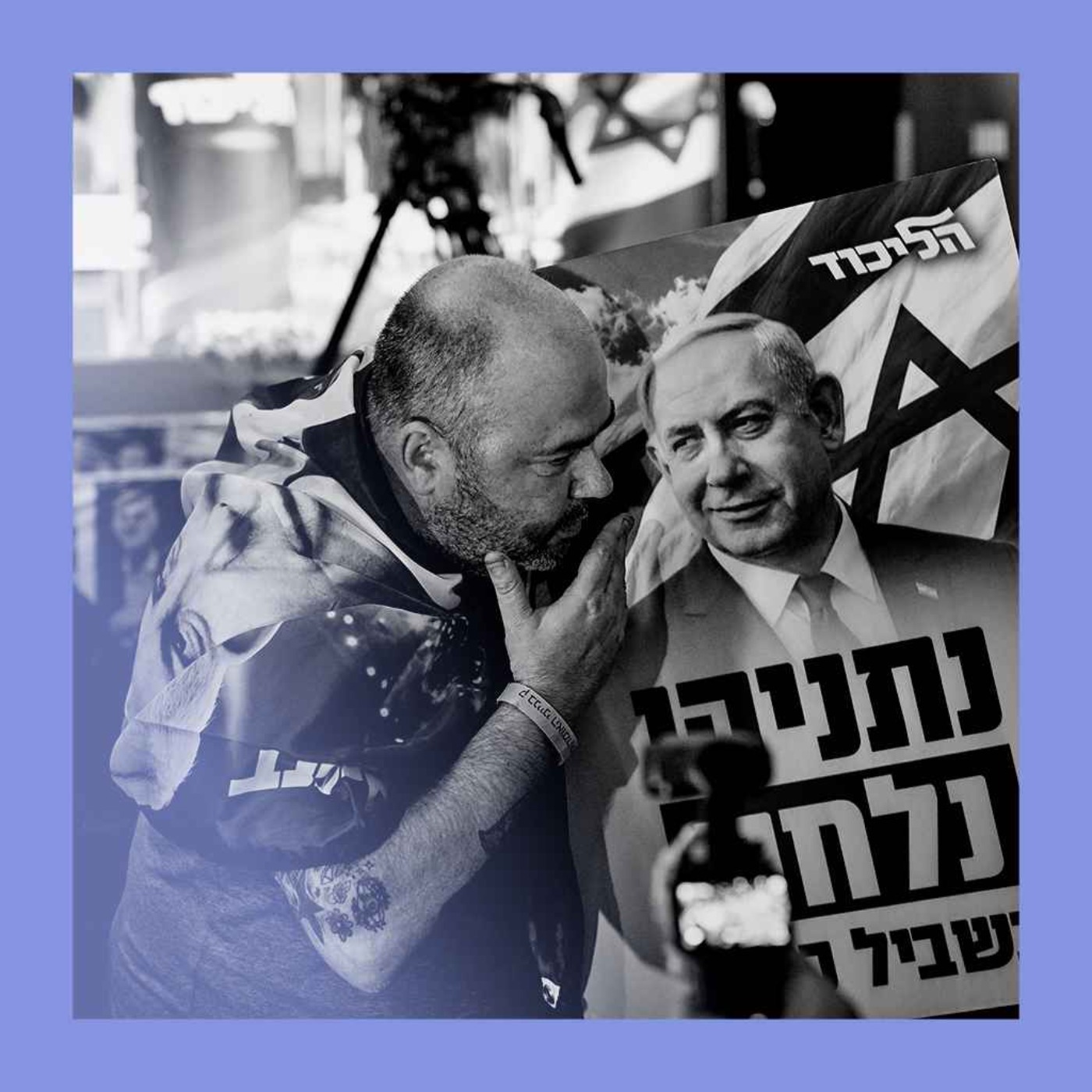
The episode covers Israel’s election results and what they mean for forming a government, plus a separate segment on film critics vs audiences. Israel: Exit polls initially suggested Netanyahu’s coalition would lose (about 50 seats vs opposition 70), but as more votes were counted Netanyahu’s coalition rose to around 55 and Likud emerged the biggest party. Key claim: Netanyahu won’t accept defeat because Arab-party coalition options are politically taboo and he’s delegitimizing any government with Arab parties. Result: neither side can form a coalition—Netanyahu is caretaker prime minister; if taboos aren’t broken, another election may occur in early 2027.
Anshul Pfeffer (Israel correspondent). Also featured: Rebecca Jackson (Southern correspondent) on Georgia’s Senate race with John Ossoff; Doug Dowson (data journalist) on critics/audience alignment.
Written by AI. May contain mistakes.
Analysis of the unpredictable election results in Israel and Netanyahu's position.
“Israel is getting accustomed to unpredictable elections.”
Discussion on the shifting narrative and the role of Arab parties in Israeli politics.
“will not have a majority in the Knesset in Israel's parliament.”
Exploration of voters' expectations and Netanyahu's propaganda strategies.
“Well, the simple reason is the polling was much worse for Netanyahu than the actual results seem to have been.”
Insights on the difficulties of forming a coalition government post-election.
“who are against Netanyahu forming another coalition.”
Analysis of Netanyahu's response to the election results and his future plans.
“because I think he realized that he doesn't have a majority, but it was no way a speech admitting defeat.”
Introduction to a discussion on political dynamics in Georgia.
Profile of John Ossoff and his rise within Georgia politics and the Democratic Party.
“So this is Al Gore, Bill Clinton, and my grandpa.”
Learn about Jon Ossoff's campaign strategies and voter engagement.
“And he will do everything in his power to make sure my grandson knows that he has somebody in his corner.”
Explore the significant issues shaping the midterm elections.
“may face new pressure from a party hungry for someone who knows how to win.”
Discover the disconnect between film critics and general audiences over time.
“Heading to the movies always comes with a slight element of risk.”
Examine the evolving relationship between critics and box office success.
“but actually what films they decide to rate in the first place.”
Understand how critics influence audience decisions at the cinema.
“So that was our speculative best guess at why the agreement between critics and audiences has tended to go up in recent years.”

Get the gist, explore an idea or ask about something said.
 Claude
On The Intelligence from The Economist, what are the key points of this episode?
Searching your listeningAutomatic transcript. May contain errors.
0:00With no fees or minimums on checking accounts, it's no wonder the Capital One bank guy is so passionate about banking with Capital One. If he were here, he wouldn't just tell you about no fees or minimums. He'd also talk about how most Capital One cafes are open seven days a week to assist with your banking needs. Yep, even on weekends, it's pretty much all he talks about. In a good way. What's in your wallet? Terms apply. See CapitalOne.com slash bank. Capital One N.A. Member FDIC.
0:32This Economist podcast is sponsored by Apollo.io. In a fast-moving business environment, finding the right people to connect with takes time. For sales teams, prospecting, outreach, and follow-up can mean juggling multiple tools and workflows. Apollo.io brings these activities together in one platform, helping sales teams find the right buyers and spend less time on scattered, manual tasks and more time building relationships. Apollo.io. Sign up for free at Apollo.io.
1:04The Economist.
1:10Ọrẹ Ogunbiyi: Hello, and welcome to The Intelligence from The Economist. I'm Ore Ogumbie. And I'm Jason Palmer.
1:20Ọrẹ Ogunbiyi: Today on the show, our American midterm series continues from Georgia, and why film critics and audiences don't always see eye to eye.
1:34Ọrẹ Ogunbiyi: But first.
1:49Ọrẹ Ogunbiyi: Israel is getting accustomed to unpredictable elections. So has Binyamin Netanyahu. Back in 1996, exit polls predicted that he had lost the vote. And by the morning, he had won. Last night, the exit polls painted a similarly bleak picture for him. Israel's longest-serving prime minister had been denied a majority, it seemed. And the main opposition candidate, Gadi Eisenkot of the Yasha party, sounded triumphant.
2:24Ọrẹ Ogunbiyi: Record turnout, especially of Arab voters, appeared to have dealt a blow to the ruling coalition. But as more results come in, it has become clear why Mr Netanyahu, famously a political survivor, is not accepting defeat just yet.
2:41Anshel Pfeffer: It's 9am here in Jerusalem, so we're 11 hours after the polls closed. About half of the votes have been counted. And it looks like Benjamin Netanyahu and his coalition will not have a majority in the Knesset in Israel's parliament.
2:56Ọrẹ Ogunbiyi: Anshul Pfeffer is our Israel correspondent.
3:00Anshel Pfeffer: However, even though the opposition, on paper at least, will have a majority, they are split between a block of Jewish parties and of Arab parties and they simply can't cooperate with each other in forming a government.
3:15Ọrẹ Ogunbiyi: Anshul, talk us through the results that have already come in.
3:18Anshel Pfeffer: So when the polls closed at 10pm, the first exit polls were actually quite encouraging for the opposition. They showed the opposition with a total of 70 seats and Netanyahu's coalition with only 50 seats. And that created an atmosphere, at least for a short while, that Netanyahu had lost big time. However, the exit polls were adjusted and more actual votes were counted. Both Netanyahu's position improved and we're now seeing him around his coalition, at least around 55 seats. But also the narrative changed. Likud, Netanyahu's party, emerges the biggest party. Now, that doesn't have to mean anything in a coalition system, because it doesn't matter how big your party is, it matters how big your coalition is.
4:01Anshel Pfeffer: But that change in the narrative allowed Netanyahu and his outriders to totally dismiss the idea of an alternative coalition, which will rely on Arab parties.
4:12Ọrẹ Ogunbiyi: Anshul, why did people expect Mr Netanyahu to lose?
4:16Anshel Pfeffer: Well, the simple reason is the polling was much worse for Netanyahu than the actual results seem to have been. He's been punished by the voters, but nowhere near to the extent that most of the polls were predicting. The other reason is that in the aftermath of October 7, the biggest tragedy to befall Israel, the massive strategic and intelligence failure, everyone else, all the intelligence and security chiefs have already resigned. And Netanyahu, the last man standing, the man who was at the top of the pyramid for so many years, was expected to finally be held accountable. While that seems to have happened to a degree, it hasn't happened anywhere near what the polls were predicting.
4:55Anshel Pfeffer: It seems that his constant propaganda, accusing his political opponents of being in cahoots with the Arab parties, of planning to form a coalition with them, tapped into the fear and hatred of many Israelis of the Arab minority, a fear that has intensified since the October 7 attack.
5:16Anshel Pfeffer: Stoking Jewish-Israeli's fears of the Arab minority has been a constant throughout Netanyahu's campaign. And on election day, he released video after video on social media, blaming the Arab parties and the left-wing for trying to steal the election.
5:33Ọrẹ Ogunbiyi: So what does this mean for Israel after this election?
5:36Anshel Pfeffer: The Israeli parliament is now divided in a way where neither side can form a coalition because there's a majority of parties and Knesset members who are against Netanyahu forming another coalition. So Netanyahu will be prevented from forming a new government. On the other hand, there's a majority against forming a government with Arab parties. So that means that Gadi Aysenkov or any other opposition leader can't form a government either. Now, Netanyahu is caretaker prime minister. He remains prime minister until a new government is formed. So for there to be a new government, one of those taboos has to be broken.
6:12Anshel Pfeffer: either the taboo against having another government with Netanyahu or the taboo in having a government with Arab parties.
6:19Ọrẹ Ogunbiyi: So if no one can form a government, Anshul, what happens next?
6:22Anshel Pfeffer: Well, we're still waiting for the final results. I don't think with half of the vote counted from the projections, I'm seeing that the overall picture will change very much. But if it does, then that can change the calculations. But assuming that we're more or less where we are now on Wednesday morning, that the actual results are similar to what we've seen so far, There's a series of consultations next week. The various party representatives will meet with President Isaac Herzog. They'll be expected to endorse a candidate for prime minister. Once Herzog has spoken with all the parties, then he'll have to think who he thinks has the best chance of forming a government.
6:59Anshel Pfeffer: But even when he does confer that mandate on one of the candidates, it's hard to see how either candidate, assuming it's either Netanyahu or Eisenhower, succeed until some of the parties break their election promises and either agree to sit with Arab parties or either agree to sit under Netanyahu. Unless that happens, if the parties stick to their commitments and don't break those election promises, then we can expect another election to be held in early 2027.
7:29Ọrẹ Ogunbiyi: So it doesn't look like Bibi's going anywhere just yet.
7:33Anshel Pfeffer: Now, Netanyahu made not quite a victory speech, because I think he realized that he doesn't have a majority, but it was no way a speech admitting defeat.
7:48He was very clear that he is the only person who can still form a government
7:53Anshel Pfeffer: and that any government that his rivals would form with the Arab parties would be morally repugnant and totally against Israel's Jewish and Zionist character. So what we're seeing here is basically Nteniao is now embarking on a very vicious delegitimization campaign against any possibility of forming a government with the Arab parties. And in effect, this is basically the launch of a new election campaign. The next election campaign may have begun on the night after the previous election.
8:22Ọrẹ Ogunbiyi: Anshul, thank you so much for joining us.
8:24Anshel Pfeffer: Thanks for having me, Ory.
8:34Here's a feeling you might know. You come out of back-to-back meetings, open your inbox, and there are a hundred new messages. Somewhere in there is the thing that actually matters, and you're not totally sure what it is. That low-grade worry that something's slipping through? I've tried AI for this. It helped, but it lived in another tab. Too much time spent copying, pasting, and trying to write the perfect prompt, and too little time doing the work I actually needed to get done. Then I found Superhuman Go from the makers of Grammarly. It works where you already work. Reading a dense thread? Highlight it.
9:08Ask Go for the key points and you're already up to speed. Not sure what you owe after those meetings? Ask what was decided and get clear action items. Before you hit send, Go flags a number or name that doesn't add up. It's right there when you need it, on the side of your browser, without switching apps or losing your place. And you're always the one in control. Try Superhuman Go from the makers of Grammarly. Find out more at superhuman.com.
9:57financing, and estimate trade in value. Advanced, intuitive, and deployed. That's how they stack. That's technology at Capital One.
10:10So this is Al Gore, Bill Clinton, and my grandpa. Jimmy Carter and my grandpa. This is a little note that Bill Clinton wrote. Jimmy Carter. Wow, dear Manuel, I'm pleased to join your family and friends and wishing you a happy 70th birthday. Cool. Over the years, a lot of famous politicians have visited Manuel's Tavern, a neighborhood bar at the end of my street in Atlanta, Georgia. Rebecca Jackson is our Southern correspondent. Around here, it's known as the Democrat Bar, a place for people to meet to talk politics. You mentioned John Osso. Tell me about the first time he came in here. In his first run for office, it was this sweet little fundraising event.
10:50And the general manager, Megan Maloof, and her family, who have run the bar for decades, may have the clearest vantage point for observing the rise of John Ossoff, the senator running for re-election in Georgia. It was tiny, and it was behind a curtain. We have this room that holds about 20 or 30 people. And he filled it up, and he was talking very passionately about what he thinks that Georgia needs. Megan has since watched Ossoff become the first millennial to serve in the Senate and transform into a leading Democrat who many hope will run for president in 2028. It's very cool to see him stand up to the big bully.
11:32I would challenge him on the stage and see all these Republican politicians just not be there in the way that Georgia needs them. And then to see Ossoff actually challenging that, it's such like a little gossipy thing where it's like, ooh, I wonder what's going to happen.
11:56The convention center was packed at an Ossoff rally I attended last week. In a swing state Trump carried by two points in 2024, Ossoff currently leads in every major poll and has raised more money than any other candidate across the country this cycle. — The Americans are a race. We're a people. United not by ethnicity, but by shared convictions. And that is what makes us exceptional and a beacon to the world. This is what small men like Donald Trump and Mike Collins will never understand. — Republicans' weakness in the state makes it easier for him to shine. His opponent, Mike Collins, has been dogged by continued revelations of his ties to white supremacists.
12:38He personally himself has promoted neo-Nazi propaganda. But as Democrats consider how to succeed beyond the midterms, Ossoff offers one answer. And national Democrats are paying attention. Last week, Pete Buttigieg came to town. Tonight, Barack Obama will rally in Atlanta with him.
13:05The Democratic Party is wrestling with its identity. Will it revert to the moderate camp or follow the populist left? Ossoff straddles the two worlds. When it comes to governing, he is deeply uncontroversial. But when it comes to his rhetoric, he's a firebrand. For one thing, he's just good at his job, particularly constituent services.
13:28Ọrẹ Ogunbiyi: We were brought to the Capitol and met Senator Ossoff. and from day one, he has been the most genuine. Shanette Williams is the mother of Amber Thurman, a woman who died in the hospital after she fled Georgia to get an abortion in North Carolina, a state with looser abortion laws. Shanette was at a campaign event that I attended last week. And everything he said to me in that meeting, whatever we need, don't hesitate to call him. And he will do everything in his power to make sure my grandson knows that he has somebody in his corner. I told him, yes, Amber's son, every birthday he calls to tell him happy birthday.
14:14He calls himself every time it's his birthday. Yes. John Ossoff. Yeah. Even Republicans admire how much Ossoff shows up. In August, two Republican mayors from rural South Georgia endorsed him. One of them, Julie Smith of Tifton, told local press that there are times when a person exceeds the party. Ossoff's Senate record is uncontentious. His focus has been on things like reforming foster care and making military housing safer. His only controversial vote was against blocking federal funding for schools that let transgender women compete in women's sports. Thank you, Senator. What can National Democrats learn from your campaign?
14:53Well, look, my team and I are working every day to earn every vote and taking nothing for granted. We are relentlessly focused on the unmet needs of my constituents here in Georgia who have seen their... As a campaigner, Ossoff is sharp. He writes his own speeches and his team is adept at splicing them into clips that go viral on Instagram. While he fruitlessly drains our munitions and oil reserves, the president sleeps through his meetings. He golfs and trades stocks. See, he doesn't want to do the job. He wants to build his ballroom and travel with Natalie on their apparently defenseless flying palace gifted by the emir of Qatar.
15:42And his speeches pack a one-two punch. First, he calls out the corruption of the people in power. You see this scenario and you look at the state of our politics and it shakes your faith in the future. I get it. Then, invoking his mentor, the civil rights line John Lewis, he outlines a vision for a better America. Because Georgia, our power's right there just waiting for us to pick it up. Freedom's guaranteed at our founding. But picking up power isn't just about mobilizing the base. Running in Georgia, a state that is still more red than blue, Ossoff will need the support of Republicans to win, even in a cycle that favors Democrats.
16:23What do you think it's going to be like here on election night? Oh, we're fully prepared. We're fully staffed up. Back at the bar, Megan is getting everything in order for November 3rd. We already have our game plan ready. Where all of our servers are going to be, we have all hands on deck. It's going to be crazy. Given that, you know, you saw Ossoff when he was holding a small 20-person fundraiser, what would it feel like if he beats Mike Collins by big margins? What do you think the energy here will be like? Oh, it would be off the walls. It would be so nuts in here. I would have a question.
16:56If Ossoff overperforms compared to Democrats in other swing states, more eyes will turn to Georgia. The senator, who has already said he has no interest in running for president, may face new pressure from a party hungry for someone who knows how to win. You should also just sort of come by. Yeah, do you think there's a chance he'll come by? I don't know, but I would like it to happen. That would be very cool. These midterm elections will be shaped by issues big and small. All week, we're offering you a peek into the races that will determine control over both chambers of Congress. Tomorrow, we'll look at Kansas.
17:52Ọrẹ Ogunbiyi: Heading to the movies always comes with a slight element of risk. You might not like it. Watching a trailer could be one way to mitigate that. Or you might turn to the trusty wisdom of film critics. Except sometimes, their reviews can look quite different from the comment section. So critics and audiences have never agreed on everything. Doug Dowson is a data journalist at The Economist. Looking back at some of the biggest films in history, you can even see that they sometimes don't agree. Star Wars was dismissed by some reviewers as childish. The Shining, one of the most famous horror films of all time, got mixed reviews.
18:37But today there's this idea that professional critics and moviegoers are increasingly disconnected, that critics are out of touch. So I decided to kind of look at the data and see whether this was the case.
18:54Ọrẹ Ogunbiyi: And how did you try and figure that out? So we collected reviews on more than 10 ,000 films over two decades. And then we matched those up with box office data. and matching these up together, we could see how closely critics and audiences were aligned and whether this mattered for success at the box office. And what did you find? What did the data reveal? So we found that the biggest difference actually between critics and audiences isn't how they rate films, but actually what films they decide to rate in the first place. So critics, for example, tend to favor documentaries, foreign films, low-budget movies.
19:36Not exactly surprising there. Audiences prefer action films, sci-fi, much more than critics do. And when it comes to how they rate these films, it was surprising. Reviewers and moviegoers actually have historically agreed. Between 2005 and 2016, we found that the correlation between critics and audiences, So the correlation coefficient meaning like how closely they matched up with zero being sort of they didn't agree at all and one being that they matched up perfectly. So that correlation was about 0.6. So to give you an idea of how high that is, the correlation between parents and children's height is about the same 0.6.
20:17So it's pretty high, but not perfect. And then around a decade ago, we found that this correlation started to drop.
20:25Ọrẹ Ogunbiyi: What happened in the last 10 years that might explain that?
20:54this may be because critics during this period were suffering from franchise fatigue. So it's just too many big superhero Marvel movies. But then around 2022, post-pandemic, this relationship started to go back up. We found that critics and audiences started to agree more. And actually today, they're more aligned than at any point in our data set. So that goes back 20 years. And we think that this may be because the pandemic was a big shock to the industry. It nearly killed off the industry as far as seen films in cinemas. And with box office revenue still down compared to before COVID, critics might realize that if they're too snobby, then they may be out of a job.
21:42So that was our speculative best guess at why the agreement between critics and audiences has tended to go up in recent years.
21:51Ọrẹ Ogunbiyi: Doug, give me an example of when critics and audiences have agreed recently. Sure. I mean, this latest A24 documentary, You Can See Everything, by Nathan Fielder and Lance Oppenheim, about Elizabeth Holmes. You really feel you did nothing wrong? I did not. So where did things get lost? Like, how are you where you are right now? I wish I knew, you know. Rotten Tomatoes is given at 98%. Fans are lining up around the block to see it, sitting through three hours, apparently just not moving or leaving the theater for a minute. This is a really good example of a film that has just really resonated with both groups.
22:33Ọrẹ Ogunbiyi: How much of this disagreement impacts what people actually then choose to watch at the cinema? Well, you know, I spoke to a few industry experts. Several of them claim that critics are kind of irrelevant. Success at the box office depends a lot more on word of mouth or social media buzz. But our data actually showed that critics matter quite a bit. We found that higher critical scores are associated with significantly higher box office sales. moviegoers have spent around 25 billion dollars at the box office this year that's globally up by about 13 percent compared to last year so regardless of what critics are saying people are still keen to go to the movies doug thank you so much for coming on the show thanks so much
23:33Ọrẹ Ogunbiyi: That's all for this episode of The Intelligence. We'll see you back here tomorrow.
23:56With no fees or minimums on checking accounts, It's no wonder the Capital One bank guy is so passionate about banking with Capital One. If he were here, he wouldn't just tell you about no fees or minimums. He'd also talk about how most Capital One cafes are open seven days a week to assist with your banking needs. Yep, even on weekends, it's pretty much all he talks about. In a good way. What's in your wallet? Terms apply. See CapitalOne.com slash bank. Capital One N.A. Member FDIC.
Binyamin Netanyahu has underperformed but so has his main opponent, Gadi Eisenkot. Who will form a government? We decipher what the messy results mean for Israel. Our American-midterms series heads south to Georgia. And how film critics and audiences have agreed to disagree.
Guests and host:
Topics covered:
Listen to what matters most, from global politics and business to science and technology—subscribe to The Economist.
Hosted on Acast. See acast.com/privacy for more information.


