
 Ask ChatGPT



In this episode of The Intelligence from The Economist, hosts Jason Palmer and Rosie Blau discuss various global issues, including the political and economic challenges facing Argentina's President Javier Milei. They also explore the current state of the American commercial property sector and feature an archive interview with primatologist Jane Goodall.
Written by AI. May contain mistakes.

Get the gist, explore an idea or ask about something said.
 Claude
On The Intelligence from The Economist, what are the key points of this episode?
Searching your listeningAutomatic transcript. May contain errors.
0:28The Economist and after the pandemic. But things are at last looking up a bit. We look at what is likely to be a painfully slow recovery. And one person, perhaps more than any other, showed the world how very much primates are like humans. Jane Goodall. We return to An Economist Podcast's interview in the archive to reflect on a life of discovery and conservation.
1:02But first...
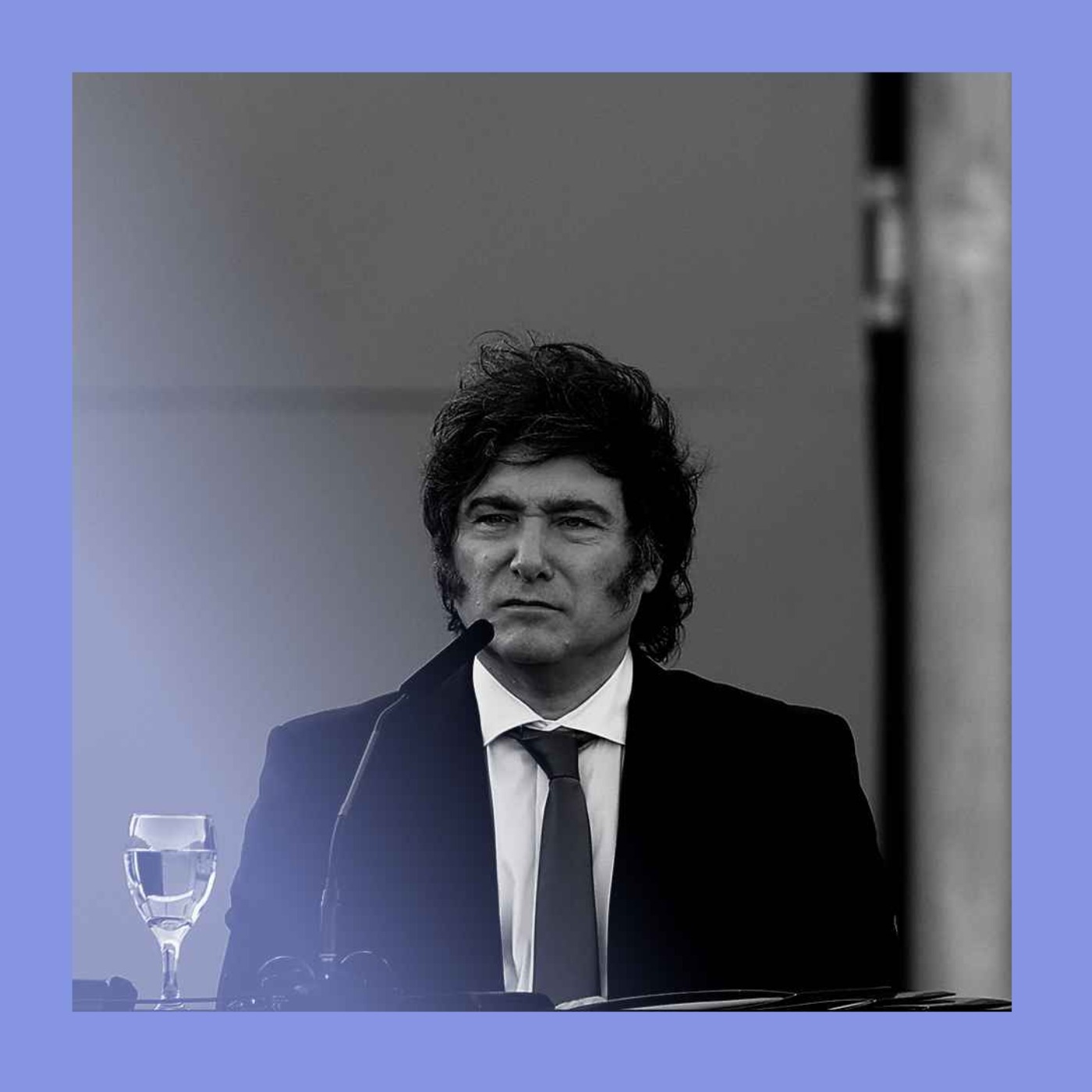
1:10When The Economist spoke to Argentina's president, Javier Millet, 10 months ago, things looked pretty promising. At that point, he was a year into his term. He'd already taken a chainsaw to public spending and promised radical reform to deal with Argentina's ongoing economic problems. Markets were responding well to the cuts and voters seemed to love his passionate style and anarchic streak. Recently, though, Millais' political fortunes have taken a turn. In early September, Millais lost a pretty minor election in Buenos Aires province. Hal Hodgson is our America's editor. This spooked the markets and investors started to sell the peso.
1:59And keeping the peso steady is vital to Malay's project to bring down inflation and stabilise the Argentine economy. And everything started to fall apart from there. So what's gone wrong? He had been so popular. Well, Buenos Aires province is a particularly, relatively speaking, left-wing bit of Argentina. and a defeat was kind of expected, but not the size of defeat. The other problem is that his sister, Karina Malay, is also currently embroiled in a corruption scandal that is to do with accusations that she's taken kickbacks from pharmaceutical companies who are doing business with Argentina's health department.
2:41And Javier Malay has denied these charges. These two things together are really bad for Malay because his whole pitch is that he's not a member of the corrupt caste that has run Argentina for decades, that he is fiscally responsible and the markets trust him to stabilize the Argentine economy. So these two things coming in close succession have really hit his government very hard. And how is he doing with that project of stabilizing the Argentine economy? So up until this point, he had been doing pretty well. Inflation was way down from when he took office. The economy was growing quite slowly and a little bit up and down.
3:19Even poverty was down and Argentina was looking pretty good. But the difficulty is that his position was extremely fragile and these recent events had knocked him off course. And this all culminated on September 18th and 19th when the Argentine central bank spent about a billion dollars defending the peso, propping it up essentially, stopping it from sliding into territory that would become dangerous for the government. And within a couple of days of that, just before markets opened the following Monday, Scott Bessent, the United States Treasury Secretary, tweeted out a message saying, in effect, that the American government was standing behind the Argentine economy, that it was standing behind the peso, that it was going to support Malay in this.
4:06And not a moment too soon, because the Argentine government does not have enough money to spend a billion dollars every two days. Specifically, it doesn't have enough US dollars to spend that much money every two days just to support its currency. The United States has a very large number of dollars, as you can imagine. And why did the US government step in? This is not totally clear. There's some slightly out there theories that suggest they stepped in because they're interested in Argentina's shale, oil and gas resources in Vaca Muerta in the south of the country, or that they stepped in because it was problematic for the IMF, which is a huge creditor to Argentina, to potentially once again be about to lose all of its money, not get any of its money back from Argentina.
4:50But I think the most plausible explanation is that Malay has courted Trump really effectively and that Trump now considers him to be a sort of core ally in the hemisphere. And Trump just didn't see it as being in his interest for Argentina's economy, the economy run by one of his friends, to go down the tubes and for Millay to lose upcoming midterm elections. What that would likely mean is that the left wing would get back into government in Argentina and Argentina would go back to being its same old spendthrift self with a wildly inflated currency. So the Americans didn't say much about the motivation.
5:25They just said they're standing behind Javier Millay and that he's doing a fantastic job and that the markets don't really think his authority is slipping. Now, that said, since all of this went down, there has been more market turbulence this week. The peso fell by more than 6 % against the dollar, prompting the government to sell more dollars to bring it back up. And how has Millet's reliance on the US gone down in Argentina? Kind of as you'd expect. On the left, he was immediately called a stooge of the Americans. This is all about midterms, which are coming up at the end of October. And it's not that hard to see a scenario where Malay doesn't get a very good result and pressure starts to build on the peso again.
6:08And then instead of just the promise of the United States standing behind the currency, then you have the reality of the United States spending money to prop up Argentina's currency. That's American taxpayer money. That may create real problems in America, and it just simply may not work. and then you have a situation where Malay has run to the United States for help. The help hasn't actually worked and this is all very what if and speculative but having brought the United States and Trump into the picture probably wouldn't soften his exit if you know what I mean. It's going to make it harder if things go to the wall.
6:43It's going to make it easier for the left to claim that they have a good reason to run the government. Hal, you mentioned at the top that Malay had lost an election in Buenos Aires, but that that was a bit different from the rest of the country. And of course, midterms are across the country. How is he likely to do elsewhere? He will definitely do better overall in Argentina than in Buenos Aires province. Buenos Aires province is the territory of the elites. It's the territory of, relatively speaking, rich Argentines. And Malay is popular with poorer, more rural Argentines. So he'll definitely do better.
7:19And one of the amazing things about his government is that his party has very, very few seats in Argentina's Congress. and the way he gets things done is by having this enormous popular support and so opposition parties feel like they can't go against him because it's not in their interest to do so voters will hate them for doing that and so he's pushed loads of things through even though he has no majority so even a small win he doesn't have to win a majority to do well in this election all he has to do is increase his margin by enough that basically the markets and voters believe that he can keep doing this, that he can keep pushing things through.
7:58It's a very finely balanced thing. And the American support really helps in a way, right? Because the peso is much more secure. He doesn't need to keep intervening in that he has American backing now. But ultimately, it is voters who will decide if they vote massively against him in October. It's very hard to predict exactly how that will go, but it will be very bad for him in a very immediate way because markets will immediately react and start selling. And in the longer term, Millais' agenda relies on radical and controversial reforms. Will he be able to achieve them? It all depends what happens in October.
8:35And markets are on a hair trigger because they are worried that if those midterms don't go well for Millais, that it will mean that he has no chance of winning in 2027, which is the next presidential election, and that his left-wing opponents, the Peronists, will sweep back to power and Argentina will go back to being the economic basket case that it was before. And as soon as that idea lodges completely and firmly in the minds of investors and indeed Argentine voters, it's over from LA. Hal, great to talk to you. Thank you. Thanks, Rosie.
9:26the commercial property sector offices particularly took a real one-two punch mike bird is our wall street editor the first thing that happened was the pandemic everyone working in a city center in an office job started working from home or was furloughed or laid off There's a huge change to the sector, not all of which has been resolved. The second punch came a couple of years later as the pandemic was really on the way out when interest rates began to rise significantly. So investors in this sector were left with assets that were much worse, much cheaper because people didn't want to use them as much.
10:04And also they were much more expensive to refinance when loans attached to them, when mortgages attached to them rolled over. So a real double whammy for the sector. And so now down the road a bit from all of that, what is the outlook right now? At first glance, things in the US commercial property sector look just about as bad as they ever have. Offices are sitting vacant. But after half a decade of turmoil, things may have finally hit rock bottom. We may be in for a bit of an improvement for the sector. a very fragile, slow recovery seems to be in the offing. So before we get around to the brightening, take me to the dark place.
10:46What do you mean by rock bottom? Things on the surface of it look extraordinarily bad at the moment. That vacancy rate for US offices is at about 20%, an extraordinarily high level of vacancy. The price of floor space in real terms after adjusting for inflation is now as cheap as it was in 2010, immediately after the global financial crisis. Commercial mortgage-backed securities, which are debt secured against commercial properties for offices, about 8 % of those are in delinquency or foreclosure, some stage of default. That's compared to about 6 % immediately after the global financial crisis.
11:23But there are some signs of the market shifting a little bit. There are new players, private credit companies, coming in to fill some of the gaps that have been left by banks. And for the first time since the pandemic, the big five commercial property companies in the US are all simultaneously upgrading their earnings outlook, seeing things getting brighter just ahead. You describe how the situation is shifting sort of qualitatively, but what's behind the change now? So this is a sector where things move pretty slowly. You have to make plans a very long time in advance if you're building office buildings or planning them out.
12:04dwindling supply that really began in plans being made during the pandemic is just starting to affect the market. There'll only be about 13 million square feet of office space built in the US this year, completed in the US, down from more like 50 million per year between 2018 and 2021. The stock of offices that do exist are also being changed. Some of them are being demolished And some of them are being converted into housing where that's possible. Places like Lower Manhattan, that's been a very popular thing. And that means that the actual total amount of US office space is going to shrink for the first time in at least a quarter of a century.
12:45There's also some signs that American banks, which have really withdrawn very aggressively from making commercial property loans, they got their fingers burned during the pandemic and afterwards are just starting to creep back into the market or maybe at least no longer pulling away. And there's been more issuance of those commercial mortgage-backed securities this year. There's been a bit of a surge in volumes, despite the fact that so many of them are in delinquency or default. People are starting to issue new ones. That's been a real change from 2022, 2023, especially when volumes just collapsed.
13:22Nobody was issuing anything in that market. So in part, this is a supply-demand curve issue, but largely it's about who's ponying up the money, to your mind. Yeah, the volumes of money required in this industry are absolutely enormous. It's been a huge thing for commercial banks, especially regional banks in America. They've been enormously exposed to commercial property, and this has been one of the sources of their struggles over the past few years. There are new investors coming in here, basically, and taking over. A part of this is a risk question. So as the value of offices has declined, the loans attached to those offices look significantly larger.
14:03Say you've got an office building with a mortgage of $20 million and the building itself has collapsed in value by half, that looks a lot riskier than it used to. Banks are less interested in that now, but there's a lot of private credit investors who are much more interested in taking on that risk. They'll get higher returns for doing it. It's something they're much more keen to do. Moody's, which is a credit rating firm, expects there to be about a trillion US dollars worth of commercial property mortgages in Europe and the US, shifting to these new private investors within the next five years.
14:35This makes sense for the sort of end investors in these private funds, companies like life insurers. They take on mortgages that banks don't want. They take a little bit more risk. They're very long-term investors. So this is a sort of changing of the guard that makes a lot of sense in this industry. So things broadly on the up, but as you say, it's an extremely slow moving industry. Yeah, this is not going to be a rapid recovery by any means. The increase in interest rates since 2022 has been damaging. You've still got a very large portion of people in the US in particular, but in a variety of different developed markets working from home.
15:11Now, that number is below where it was at the peak of the pandemic or immediately afterwards, but it's quite sticky and there's been a clear change in working habits. that's not going to go away. So the demand for office space is just not going back to where it was and say December 2019, nor are interest rates. So this isn't going to be an extremely rapid turnaround, but commercial property investors have been so beaten up over the last five years that they will be very, very glad just to see a period where things aren't obviously getting worse. Mike, thanks very much for your time. Thank you for having me.
15:47for lots more analysis on business finance and economics check out our sister show money talks you'll need to be an economist podcasts plus subscriber to listen
16:09i wish that i could greet you as i know you often greet audiences when you're giving talks as a chimpanzee would. Could we hear what that sounds like?
16:26Eight years ago, I had the privilege of speaking with Jane Goodall. When I heard that Dame Jane had died this week, aged 91, I thought back to that interview. I was more than a little starstruck. This was the person who, starting in 1960, 60, began to change how the entire world thought about primates, chimpanzees in particular. Back then, she was under the guidance of Louis Leakey, an archaeologist who was interested in human evolution. He thought understanding modern primates might help unravel that story, so he underwrote her education and her travel to what is now Tanzania. In time, Jane became a world-leading primatologist, legendary conservationist, winner of like all the prizes and medals and honors and titles.
17:16This was a woman who fought the odds and the stereotypes to help force a real reckoning, not so much about chimps, but about what exactly it means to be human. When I visited her at the modest little flat she stayed in when she was in London, she was as warm and bright-eyed and enthusiastic about her work as in any recording of her I had ever seen, and she had an incredible memory.
17:47I have here a photo of you from your early 20s. You were sat down in a forest holding a camera and a chimp behind you is playing with your hair. Let me see exactly. It's a gremlin and I was just sitting there and she just came up and was clearly interested in my hair. You know, we try not to interact with them, but it's a bit difficult because they like to interact with us. So winding back just a little bit, you were just stepping off a boat in Tanzania, 26 years old, armed with little more than binoculars, a tent, some tin plates. I'm curious to know, at that point, what did you think you were going to find?
18:24At that point, all I wanted to do was to learn something about how chimpanzees lived in the wild. I first went to Africa on my own, and that's when I met Louis Leakey. It was so unusual at that time for a young girl, for anybody really, to go out in the forest and live with animals. and Leakey believed in me. It took a year for him to get the money because I hadn't even been to college. Finally, he found a wealthy American businessman who said, okay, we'll give her money for six months. So he and my mother were the two key significant people who enabled me to do what I did. My mother, of course, she believed in me when I was 10 years old and said I wanted to go to Africa and live with animals and write books about them.
19:10And everybody laughed at me and said, well, I was a girl, we didn't have any money, it was not possible. And she just said, if you really want something, you're going to have to work really hard, take advantage of opportunity, don't give up. So then the authorities didn't want to take responsibility for this young girl. So in the end, they said, well, she has to have somebody with her. And so my mother volunteered to come. So there was my dream. And yet, I knew if I didn't see something exciting before the money ran out, that would be the end. But you did. In the end, you saw quite a bit that was interesting.
19:44How did that play out? At first, they'd never seen anything like this white ape before. And they would take one look and vanish into the forest. It was my mother who boosted my morale in those early days, pointing out what I was learning. And it was really sad that she left before the breakthrough observation, which was when the first chimpanzee who began to lose his fear of me. He was very handsome. I called him David Greybeard. I don't know why the David bit, but he had a beautiful white beard. And I saw him sitting on a termite mound and using pieces of grass as tools and stripping the leaves off a twig to make a tool.
20:24At that time, thought something only humans could do. That was what enabled Leakey to bring National Geographic in. And they agreed to continue funding the research. I knew that it was going to make a difference. I didn't realize the extent of the difference it would make. Up to that point, that was the way that humanity was defined, right? We were the tool makers, the tool users. Man, the tool maker. That's how we were defined. So it was Leakey who sent that famous telegram. I wish I still had it. He said, well, we should just have to redefine man, redefine tool, or accept chimps as humans. and all these years later kind of none of those things as yet happened absolutely and the the your methods in a way kind of transformed the the field transformed the way that people dealt with apes there there was a question at the time about the degree to which you were interacting well it's true the big problem was when the geographic sent hugo van lauwek who became my first husband as a photographer and filmmaker he instigated the banana feeding so that the chimps would come into camp and he could film them because you know he couldn't film them out in the wild and although perhaps it was a mistake if we hadn't done it the geographic would not have continued funding and the study would have ended so it was a mistake for a good reason but I think the worst part of it for me was getting a letter from Lewis Leakey.
21:57And this was before Hugo arrived, telling me that I would need to get my own money when he was gone and I would need a degree. And he got me a place in Cambridge University for a degree in ethology. I had no idea what ethology meant. And can you imagine how I felt when I got there and was told by these erudite professors that I'd done everything wrong, that the chimpanzees should have had numbers. It wasn't scientific to give them names. They didn't all say that, but many did. But they basically all said, you cannot talk about chimpanzees having personalities, minds, and especially emotions, because those are unique to us.
22:39So back then in the early 60s, it was truly thought that the difference between us and all the other animals was a difference of kind. and fortunately when I was told this I remembered my childhood teacher and that was my dog Rusty you cannot share your life in a meaningful way with a dog, a cat, a rabbit, a horse I don't care what it is, a bird and not know that of course animals have personalities minds and emotions and now you can study those things and especially the mind and having seen and done so much already i mean what do you want the legacy of your work to be well i think you know there are two ways that that i feel that my passage through life has not been in vain one i truly think it's helping people to understand animals better and realizing we're part of and not separate from the animal kingdom and then the second is the jangrel Institute does a lot of work for conservation.
23:47And if you want to conserve chimpanzees, for example, and there's very, very poor people living around the forest, if you don't work to improve their lives, then you'll never, ever conserve the chimp. So we have huge programs of community-based conservation. And finally, what's the point of doing any of this, any of it, if we're not educating the younger generations to be better stewards than we've been?
24:16That's an excerpt from a conversation I had with Jane Goodall in 2017. You can find a link to the full episode in the show notes.
24:41The Intelligence
24:54Warren, and our producers are Henrietta McFarlane, Benji Guy, and Jonathan Day. Our assistant producer is Anne Hanna, with extra production help this week from Emily Elias and Sonny Loughran. We'll all see you back here tomorrow for The Weekend Intelligence. This week, our East Asia Bureau chief, Noah Snyder, does an extraordinary amount of reporting on, well, one of the hardest regimes in the world to report on. North Korea's dictator Kim Jong-un is becoming even more repressive and threatening at home. At the same time, he's getting chummier with the likes of Xi Jinping and Vladimir Putin. The Weekend Intelligence is out for subscribers tomorrow and every Saturday.
25:31See you there.
A telling local-election loss, persistent allegations of scandal and an American pledge to prop up the peso: much is chipping away at the experiment of Argentina’s President Javier Milei. Long after the twin troubles of a pandemic and interest-rate rises, America’s commercial-property sector might at last be recovering. And we return to an interview with Jane Goodall from our archives.
Get a world of insights by subscribing to Economist Podcasts+. For more information about how to access Economist Podcasts+, please visit our FAQs page or watch our video explaining how to link your account.
Hosted on Acast. See acast.com/privacy for more information.


