
 Ask ChatGPT



In this episode of The Intelligence, hosts Jason Palmer and Rosie Blau delve into three significant global news stories:
Written by AI. May contain mistakes.

Get the gist, explore an idea or ask about something said.
 Claude
On The Intelligence from The Economist, what are the key points of this episode?
Searching your listeningAutomatic transcript. May contain errors.
0:09Hello and welcome to The Intelligence from The Economist. I'm your host, Rosie Blore. Every weekday, we provide a fresh perspective on the events shaping your world.
0:25Is something rotten in the state of Chinese business? Bosses of companies keep disappearing into a form of extrajudicial prison. To get rich is no longer glorious, apparently. Our correspondent explains whether the government has a method in this apparent madness. And last weekend thieves stole water effectively the crown jewels of France from the Louvre, the world's most popular museum One of the most audacious robberies in history Will they get those jewels back?
1:01But first
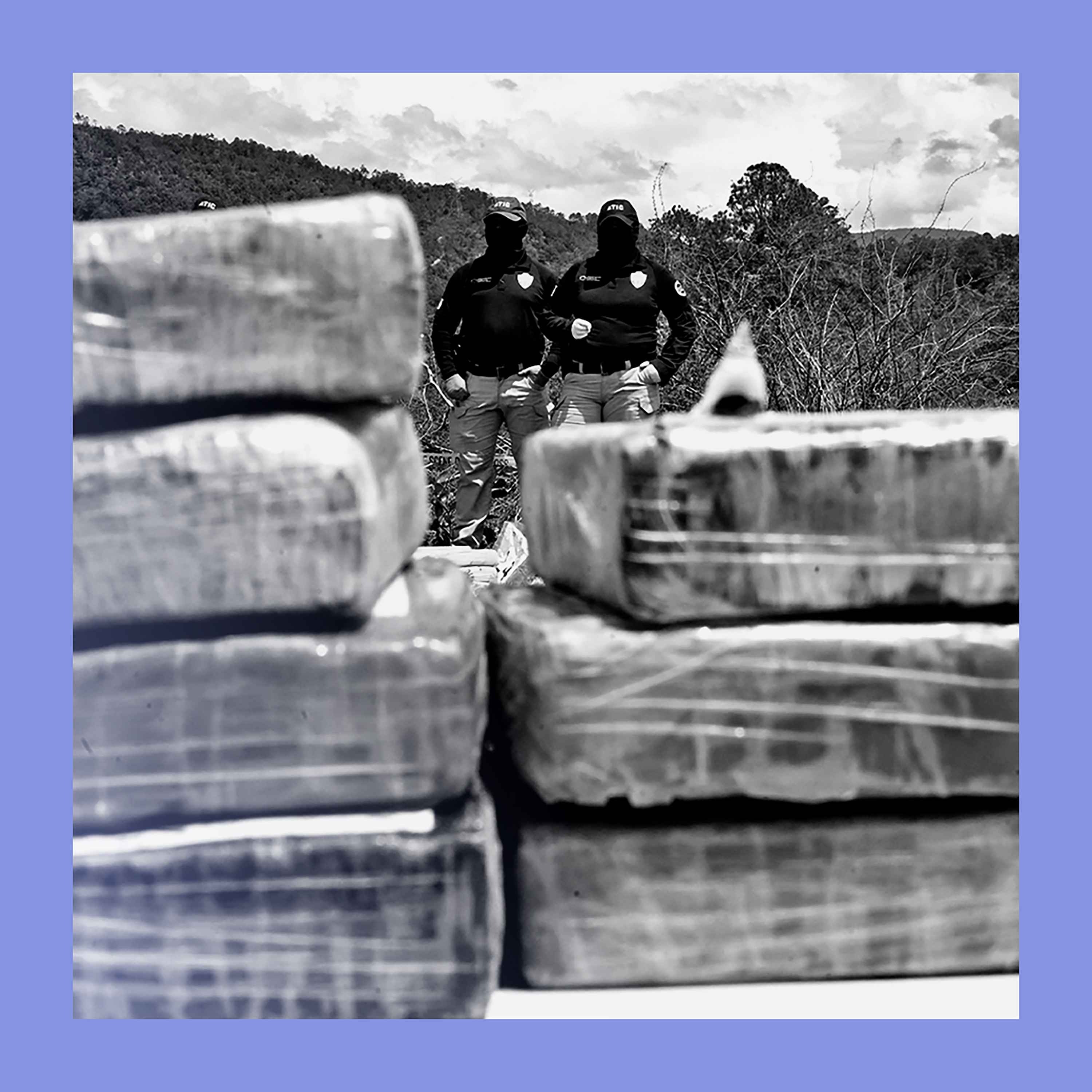
1:10Last week, American missiles blew up a boat in the Caribbean. It was said to be carrying substantial amounts of narcotics. That was the seventh such recent attack as Donald Trump has stepped up America's decades-long war on illegal drugs. Using the template of the war on terror, the administration is waging a campaign of unprecedented violence against traffickers. But though burning boats makes for shocking video footage, raining hellfire from the sky may have little effect on the international narcotics trade. In the last 15 years, the illegal drug business has really been revolutionized. Kinley Salmon is a Latin America correspondent for The Economist.
1:52Drug gangs used to be vertically integrated, you might say. They controlled pretty much everything. Now they rely much more heavily on outsourcing. And with that outsourcing comes specialisation and a lot of innovation. Beyond that, smuggling has gone global. This is not just about America. This is a booming industry. And as a result of all of these changes, it's more dangerous and it's also harder to disrupt. You say it's booming. Just how big are we talking? Globally, production of cocaine, seizures of cocaine and consumption are all at all-time record highs. Estimates are very difficult for illicit markets like these, but one estimate suggests that the global market for cocaine is between$84 billion and$143 billion.
2:37That's from back in 2014, but that would make it a bigger global market than chocolate. And whatever that figure in 2014, it's got to be higher now. You know, production, which is a bit easier to track, has tripled since then. And this is really happening all around the world. In the US, that consumption of cocaine is still high, but it has flattened a bit with the rise of other drugs like fentanyl. But in Europe, the rise is just extraordinary. Consumption's up by 60 % in the decade to 2022. It's almost certainly now the biggest cocaine market in the world. And yet it's also increasing the consumption of cocaine elsewhere.
3:12In Asia, in Latin America, Australia, for example, consumes more cocaine per head than anywhere else. So it truly is booming. Those stats are absolutely staggering. What's behind all this? Well, from the perspective of the traffickers, they are basically chasing the highest prices they can. And that's pushed it right around the world. I mean, a kilo of wholesale cocaine, and we should remember that retail prices are even higher still, but a kilo wholesale goes for about$30 ,000 in the US. In Western Europe, that's up to$39 ,000 to$45 ,000. So it's no surprise traffickers are pushing in that direction.
3:49But if you look at Asia and Australia, it's much more still. In Hong Kong, we're talking about$65 ,000 a kilo. And in Australia, it could be as much sometimes as$250 ,000 a kilo. So how is all that changing how the drug business works? Drug trafficking is really now best thought of as a fluid network of subcontractors and service providers. There are still big groups and cartels very clearly, but they usually only directly control one part of the supply chain. A European gang sender mysteries, for example, to Ecuador, and they would talk to a local gang such as Los Lobos. That gang in Ecuador might then contract another gang in Colombia to bring the cocaine across the border.
4:30They'll also have to deal with small suppliers and perhaps smaller other groups smoothing the route along the way. You know, this is now a kind of system of subcontracting that one person I spoke to likened to that of making an iPhone. And there are big benefits to the traffickers of this. Having a subcontracted supply chain makes it more resilient. If you seize a shipment of cocaine, it's quite hard to tell who's really running the whole thing behind it. And specialization like this, which is not just in the transport, but in the chemical processes, in the ways that things are smuggled onto boats, that is breeding innovation.
5:04It's also changing cultivation. There's innovation in money laundering. So right across the supply chain, we see specialization, subcontracting, and more and more innovation. Okay, so let's take some of those aspects of the innovation in the supply chain in turn. Cultivation, What's happening with that? Coca-leaf, from which cocaine is made, used to be grown only in Colombia, Peru and Bolivia, particularly in the Andes. It's now moved to other countries, at least in small amounts. Belize, Guatemala, Honduras, Mexico, all have coca-leaf being grown on their territory. But you also see it being concentrated to work for markets better, near the borders with Ecuador in Colombia, for example, so they can get it more quickly to the ports.
5:46In Peru, it's going deep into the Amazon Basin, not a natural territory, but that's convenient for export out through Brazil. And they're also innovating. I mean, the yield of coca leaves is rising sharply. People talk about precision agriculture, using drones to test the soil and identify just how much fertilizer they should be putting on. That's at least in the most advanced areas. And then the process of getting from coca leaf into cocaine has changed too. And one of the things that we see is a kind of narco nearshoring. For example, in Peru, half of seizures are of something called coca base, which is a preliminary product on the way to cocaine.
6:20That's now shipped to Europe, and it's in Europe that the labs are turning this into full cocaine. So Latin America, once again, looks a bit like a commodity exporter. So it sounds like there's real change also then in the transportation and smuggling of the drugs. Huge changes, I would say. The subcontract is also used in smuggling. And you see single shipments that are seized, sometimes having drugs that are from various different producers. and then you also in those same shipments can have them going to different owners, sometimes marked by the color of the packet. Some of the methods though that you see to hide this from the authorities are pretty mind-boggling.
6:56One is neutralizados or mezclados as they're called in Colombia. That's a way of mixing cocaine with other products, putting it in for example two cans of pineapple pop. And it's not just mixed, it's often also chemically masked. So if you do a spot test for cocaine, it'll often come back negative. When it arrived to the destination, then they take it to a laboratory there and retake the cocaine out of this mixture and out of this chemically masked state into something that can be snorted as usual. The result of all this innovation is that port security in much of South America is now extreme.
7:32I went to a port in Cartagena. I had to do a 40-minute online course before I even got to the door to ensure I was going to abide by all the security. I spoke with the head of security at that port who talked about the full array of security measures, which include a man sitting day and night in a boat offshore, watching for the bubbles coming from divers who might be trying to stick parasite pods, if you like, of cocaine onto the hulls of ship.
8:11To have that job, he told me, those men have to take a polygraph test every six months to make sure the gangs haven't got to them. If that's not staggering enough, specialists for the gangs are building narco subs. Most of these sit very low in the water. They're extremely hard to spot. These were originally designed for short trips up the Pacific coast, for example, from Colombia to Mexico. But now they're crossing the Atlantic and even the Pacific. And there are, even beyond that, fully submersible submarines being built with the capacity to take perhaps 10 tons of cocaine in a single voyage.
8:44Kinley, earlier this year in our series Scam Inc., we talked about changes in money laundering and Chinese gangs getting involved in the drug trade. What's going on there exactly? There are huge changes on how these enterprises, these criminal outfits, recycle and launder their cash too. It used to be they would try to send it back in, you know, bags stuffed with cash. But that's much less common now. Instead, what's happening is really outsourcing again. And it's time to specialist Chinese money laundering groups. They can do this laundering and get cash to the traffickers much more quickly and cheaply than in the past.
9:17And they're also innovating too. They're using cryptocurrencies now. Stablecoins in particular are very popular for this because they can move across borders with very few checks. Again, for the authorities, this is a real headache. Right, so where does that leave efforts to crack down on the criminal drug trade? It's getting harder. These networks are more resilient. They are not, of course, infallible, right? A lot of what we know about how these works comes from successful law enforcement. But the challenge is huge. The temptation for the authorities is more iron fist. And we see this in the Caribbean with the attacks on alleged drug smugglers coming out of Venezuela.
9:54But really what's needed here is intelligence, is police, is investigations to unwind these networks. Of course, more successful still would be to look at legalization of cocaine in the rich world, because that would take away the extraordinary price premium that drives a lot of the violence and a lot of the corruption. But there is just very little appetite for that among politicians or indeed voters in the rich world. And without that, I think we can say that cocaine smuggling just isn't going anywhere. Instead, it is probably coming to a port near you. Kinley, thank you very much. Thank you.
10:50On September 22nd, Yu Faxin, a Chinese businessman and scientist, made headlines in China. Don Wineland is our China business and finance editor. His company, Shanghai-listed Great Microwave Technology, announced that Yu had been taken away by anti-corruption investigators. Yu is now in a system known as Liu Jie. This is an extrajudicial form of detention that bypasses courts. And he's not the only one. A lot of Chinese bosses are disappearing into this system this year. What does that mean, Don? Where are they disappearing to? Liu Zhi is a type of detention that falls outside of normal policing and the normal judicial system.
11:40So these types of detentions have been happening for a long time in China. The current system that we call Liu Zhi was created out of an old system and refashioned to meet the needs of the anti-corruption agency. So it's expanded quite a bit. And this is a way of making it easier for the agency to detain people that they suspect of corruption. It has mainly been aimed at communist party members and government officials for the past couple years. And if you are detained by the corruption agency, then that means you're not going to have access to lawyers. You don't go through the normal court system.
12:21The agency doesn't need approval from courts to detain you. And you can be held for up to eight months at a time in this system. And after you've been detained, the clock on your detention can be reset. Of course, this form of detention has a pretty bad reputation in terms of its conditions. People are held in cells that don't have windows or clocks. They're supervised 24-7, and apparently the lights are left on the entire time. So people don't do well in these kinds of conditions. And when you say Chinese bosses are disappearing into Liu Zhih, how many bosses are we actually talking about? We don't really know.
13:00There's no full count of the types of people that are being detained in this system. We have an overall number of cases for people being put in Liu Zhih, but we don't know exactly who they are. What we've done is we've counted the number of companies that have announced their bosses have disappeared into Liu Zhi. And of course, the only companies that are really announcing these types of things are listed companies. They have an obligation to let their investors know that their CEO or their chairman is no longer available and he's been taken away by anti-corruption investigators. So we've counted 39 business people that have disappeared between January and September.
13:42From what we can tell, This is an increase on last year, which was already a record for people going into the Liu Zhe system. It seems like in 2025, people are disappearing into Liu Zhe at a very rapid clip. Don, if these disappearances are about the anti-corruption drive, that's been going on since Xi Jinping took power in 2012. So why are they increasing now? It's very hard to say why the overall anti-corruption campaign is expanding right now. But it certainly is. So if you look at the numbers of cases opened in the first half of this year, we are on track to hit a record 1 million cases by the end of this year.
14:25Why exactly that's happening? It's not totally clear. But this, of course, is something that is dragging in lots of people that might be tangentially connected with corruption cases. So when a government official is brought into one of these anti-corruption campaign probes, his entire business network can also be investigated at the same time. For the most powerful officials, this is dragging in lots and lots of business people that he may have connections with. You know, it's worth mentioning that there's a lot of other things going on in local governments. Local governments are quite short on cash these days across China, and there's a lot of talk of what they're calling deep-sea fishing campaigns.
15:15That's when an anti-corruption division at a local government goes to another local government and tries to detain or probe a businessman there to see if they've done some sort of wrongdoing. They put them in the Liouzha system, question them for who knows how long, and they do all this with the potential of revealing some sort of wrongdoing. They can then seize the company's assets. And presumably, they don't all end up in this system. What else might happen to those caught up in the anti-corruption campaign? So there's a number of things that the anti-corruption investigators can do. if people have been caught breaking some sort of law, they can be referred to the police.
16:02We can tell that about 60 ,000 pharma industry people were punished by the anti-corruption agency last year. About 17 ,000 finance people were punished as well. They weren't all put into Liu Zhi. We don't know exactly what has happened to those people. For some, it could just be a warning. So Don, we know that the economy is struggling anyway. This must be affecting business sentiment. Absolutely. So I mean, it's probably the biggest problem facing Chinese business people today. But when you add in these Liu Zhir probes, and you add in a number of other things, like how business people are being added to this credit blacklist that's stopping them from riding high-speed rail and flying on planes.
16:51You know, this is another big problem. And you have something like 200 ,000 people that have been added to this credit blacklist just this year. Many of them are probably within the business community. So there's lots of things that are dragging down sentiment within Chinese industry. I think it's worth mentioning that there's a public discussion right now within China about suicides among business people. So this year, there have been five high-profile cases where businessmen have leapt to their death from high buildings. It's a really terrible situation. and people seem to think that this is because pressures are building on the business community and people are under a high amount of stress, whether it's the economy or risk of corruption probes.
17:43The Communist Party is trying very hard to signal to the private sector that things are good and they are being supported. But right now, it seems pretty clear that the private sector is down and that sentiment is not going to improve anytime soon until some of these problems that we're talking about right now get better. Don, thank you very much for talking to me. Thanks, Rosie.
18:24I've reported on France for many years but I've rarely experienced a week as chaotic as this and we're not even talking about politics Sophie Pedder is the Economist Paris Bureau Chief It took masked thieves just seven minutes to gain access through a window at the Louvre Museum in Paris and make off with eight items of Napoleonic and royal jewellery. In broad daylight on Sunday morning, they used a truck-mounted ladder from the street outside to break in through a first-level balcony window, and they fled the same way. They escaped with accomplices waiting on the street below. It might look like something out of the movies, and already questions are being asked about how this could have happened.
19:11Sophie, someone stole the crown jewels. What's the reaction been? Well, it's felt like a strike at the heart of both the French state and the art world. The Louvre is the most popular museum in the world. There are nine million visitors who go there every year. It has 400 galleries, 35 ,000 works of arts. It's a breathtaking and sometimes quite bewildering place. But it really captures France's history. It was a former royal palace and it's right in the centre of Paris. Emmanuel Macron, the president, called the heist an attack on France's history. So how could it have been allowed to happen? Well, that's the question that everyone's asking here.
19:51You cannot really believe that a truck was parked on the pavement outside the Louvre in daylight, unnoticed and didn't raise suspicion on the Sunday morning itself. The fact that the thieves then got up through a window that is visible from the street, from the Seine, from across the river and made off within a few minutes, literally a handful of minutes with the crown jewels, among other things that they took. This has really shaken the French establishment, the cultural world, but also ordinary French people who feel that their absolute most treasured possessions held at the Louvre are not actually secure.
20:29And you said they took eight items. What were they? Well, some of them came from the collection of crown jewels. They include an emerald studded necklace and earrings given to Marie-Louise by Napoleon for their wedding in 1810. 1810. There was also a tiara made of hundreds of pearls and thousands of diamonds belonging to Napoleon's third wife. The empress's crown was damaged but retrieved. That was the only item that the thieves dropped on their way. I was told by one expert on art theft that the Louvre was the ultimate heist. The brazenness and the symbolism is worthy of a Hollywood script and there's actually very little hope now of retrieving any of the items.
21:09Sophie I'm surprised to hear you say that, why is there so little hope of retrieving these jewels? Well, there was a study that was done earlier this year of 40 museum thefts, and it showed that less than half of items stolen from museums are ever recovered. One art expert that I spoke to said that the items will probably already have been dismantled and the gold melted down and the precious stones cut up and resold. Do we know who did this? The Paris prosecutor in charge of the case has put about 60 policemen on the investigation. They have various hypotheses. One is that it could be organised crime, a form of money laundering.
21:50Another is that it could have been ordered from some outside player, possibly outside France. But art experts reckon that this is bound to have been organised crime and that the gang probably operated on their own. Sophie, it's an extraordinarily simple crime, and so brazen. Presumably heads will roll at the Louvre now. Well, that's a question that everyone's asking. There's a feeling that the political pressure has mounted ever since the heist took place. There is pressure both on the culture ministry and on the direction, the management of the Louvre Museum. There has been over the years projects to modernise the security setup, but the budgets are obviously tight and it's a public museum.
22:32it's absolutely huge and there is a concern in any case that it's very difficult if thieves are trying to get out within a question of minutes then you have to have incredibly high-tech state of the art security systems in order to make sure that there's either a deterrent or a way of catching them in the act. Sophie as you say this is worthy of a Hollywood film and presumably will become one but is it really so rare for there to be robberies like this? Well what's interesting is that museum thefts are actually surprisingly common. Even in France in the last month or two, we've had a number of smaller museums that have experienced robberies not on the same scale, but it's something that's happened all over the world.
23:11And we've seen cases in America, in Amsterdam, and various other cities. So it is a surprisingly common event. And on the whole, paintings are the single biggest item that tend to be taken. Jewelry, which is the case in the Louvre, is a lot less common. France has been in political disarray for more than a year now. And the heist at the Louvre is really the last thing it needs. Sophie, thank you so much for talking to me. Thanks, Rosie. It's always good to talk.
23:56That's it for this episode of The Intelligence. We'll see you back here tomorrow.
America has been blowing up ships in foreign waters suspected of carrying drugs. That will do little to dent today’s narco-business, which is more inventive and adaptable than ever. Why business executives in China keep disappearing. And the jewels stolen in the brazen Louvre heist may never be found.
Listen to what matters most, from global politics and business to science and technology—Subscribe to Economist Podcasts+
For more information about how to access Economist Podcasts+, please visit our FAQs page or watch our video explaining how to link your account.
Hosted on Acast. See acast.com/privacy for more information.


