
 Ask ChatGPT



In this episode of The Intelligence from The Economist, hosted by Jason Palmer and Rosie Blau, three significant topics are discussed:
Written by AI. May contain mistakes.

Get the gist, explore an idea or ask about something said.
 Claude
On The Intelligence from The Economist, what are the key points of this episode?
Searching your listeningAutomatic transcript. May contain errors.
0:02The Economist
0:10Hello and welcome to The Intelligence from The Economist. I'm Jason Palmer. And I'm Rosie Bloor. Every weekday, we provide a fresh perspective on the events shaping your world.
0:25It's sort of hard to keep up with macroeconomics these days. Remember how for decades Japan had a problem with deflation? Now it's a regional hotspot for inflation. It's just about everywhere else in Asia where price growth is worryingly low. And this story is truly bizarre. A group of religious leaders took part in an experiment to see how taking psychedelics would affect their spirituality. It was clearly a wild trip.
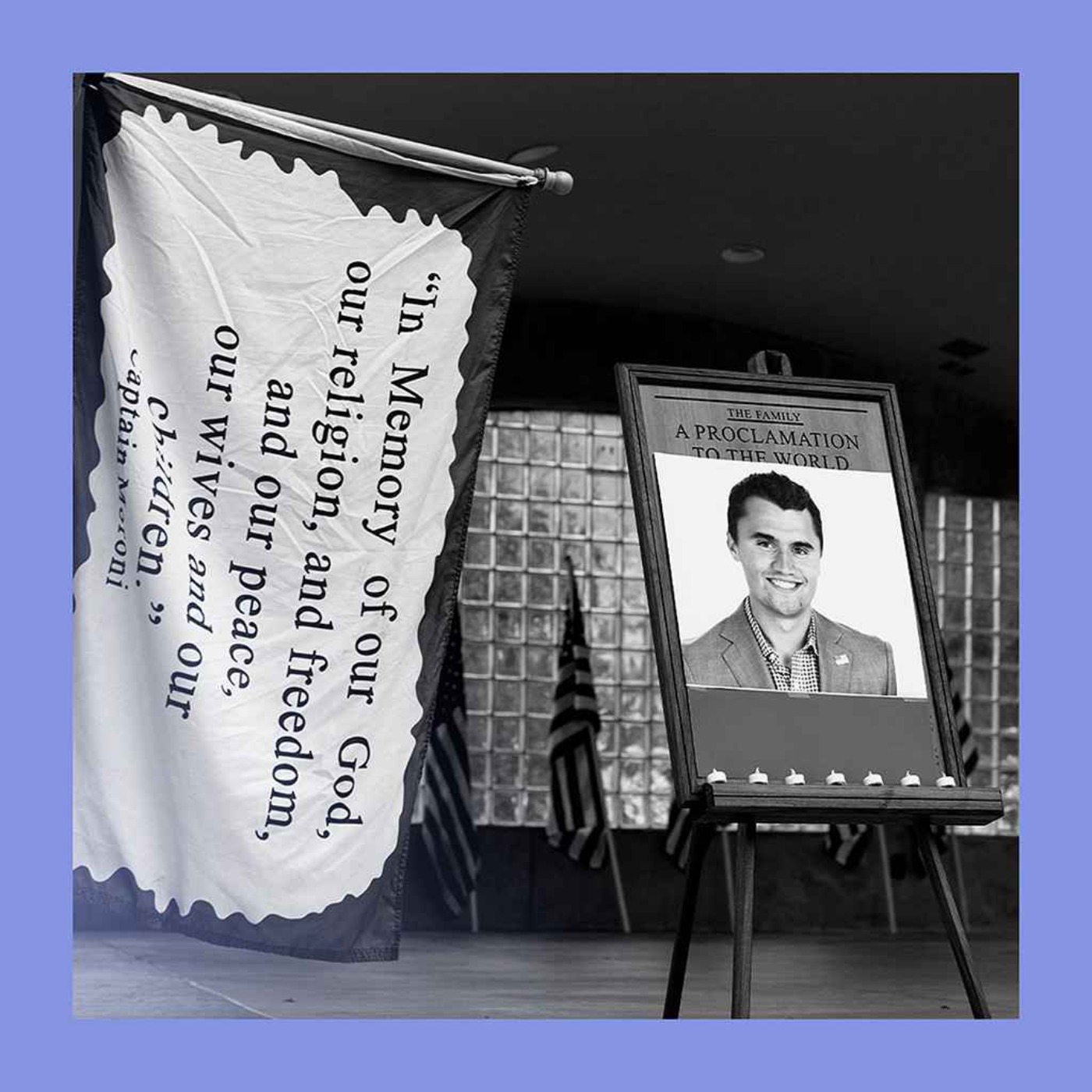
1:00But firstazione tutor tapessi - hierarchical yesterday, suddenly there was chaos. Charlie Kirk, a prominent conservative voice allied to the MAGA movement, had just been shot. Confused students attending his prove-me-wrong campus event suddenly scrambled in all directions. The killing of a face, maybe the face, of young American conservatism, it's hard not to imagine that as a political assassination, which would put Mr. Kirk on an ever longer and deeply sad list. This is another bleak day for America. Adam Roberts is The Economist's digital editor. The murder of Charlie Kirk in a public setting in front of thousands of students just shines a light on the horrific level of political violence we're seeing right now in the US.
2:12What do we know so far? Charlie Kirk was beginning his latest tour of American universities where he goes and sits with students and great gatherings, usually outside. He was beginning to talk at a Utah campus, sitting at a desk underneath a small gazebo with thousands of students in front of him. And what appears to have happened is a lone sniper on a rooftop facing the stage, shot in dead just as he was taking questions from the crowd. It appears there was a single shot. The sniper then fled. There was some footage taken from people in the crowd of the sniper running away. but the FBI, the police have not been able to detain him.
2:51There was great upheaval, of course. Charlie Kirk died within a couple of hours. As of this moment, as we're recording this podcast, the killer is still enlarged. Donald Trump, first of all, confirmed the death and then condemned the death. He gave an order for flags across the US to be flown a half mast and has talked about the great tragedy of the death of Charlie Kirk. For years, those on the radical left have compared wonderful Americans like Charlie to Nazis and the world's worst mass murderers and criminals. This kind of rhetoric is directly responsible for the terrorism that we're seeing in our country today.
3:31Tell me more about Charlie Kerr. Who was he? What was he doing? Charlie Kerr was an interesting political figure. He was only 31. He'd been active in Republican hard right MAGA politics since he was 18. He dropped out of college, in effect, to start arguing with people. He loved to get together with students who he thought were far too left-wing or too liberal and to confront them and to push his own views, his Christian views, his strongly conservative views, and to confront their views with his. And that was face-to-face. He would love to do that just sitting at a table or chatting to a small or a large group of people in person.
4:09He became a powerful political figure. He raised a lot of money from Republican donors. The more that the woke movement got powerful in American universities, the more there was talk of cancel culture, the more that someone like Charlie Kirk could then go to donors and say, we have to confront this, we have to fight back. He founded a group that he called Turning Point USA, and that became not just a movement for promoting conservative and Christian values across universities, but actually a big supporting group for Donald Trump and for the MAGA movement. So he was an activist who focused on the young.
4:43He was a very strong political and media figure. So he was strong in podcasts, on social media. He filmed everything he did. And his influence undoubtedly gave support to Donald Trump in getting re-elected last year. But his views, his platform were not just fiery rhetoric and Bible-thumping and rabble-rousing. He had some fairly solid old-school conservative views. Yeah, he's an interesting character because of that mix of his views. So he, on the one hand, had that Christian anti-libertard confrontational approach to politics, but he also had views that he really believed in. He certainly early on in his campaigning career, he was very much in favor of free markets, small government.
5:24He was a traditional Republican in that sense. He's the sort of figure when I was the Midwest correspondent based in Chicago, and actually he grew up just in the suburbs of Chicago. He was a sort of political figure that I frequently would meet in the Midwest, who were maybe less enamored by the coastal excitement of someone like Donald Trump being a big celebrity. What they really cared about was the old values of the Republicans, the importance of government not being too big. Of course, these days, the Republican Party has shifted quite far away from those values. But Charlie Kirk was someone who early on in his career certainly believed in the power of markets and the importance of government not being too big.
6:00And now perhaps the reason he'll most go down in history is because he's joined a sad list of victims of political violence in America. Yeah, there's a long history, a very sad history of political violence in the US, obviously stretching back to assassinated presidents and attempted assassinations on the most senior political figures in the country. The fact that Charlie Kirk was very young appears to make it all the more tragic and will probably be a large part of what he's remembered for. But it is worth noting that there's political violence at all levels of politics in America. It was only three months ago or so the two state representatives in Minnesota were shot dead by a man masquerading as a policeman.
6:37We've had attempts to kidnap the governor of Michigan a few years ago, Gretchen Whitmer, an attempt to burn down the house of the Democratic governor of Pennsylvania, Josh Shapiro. And most notably, during the campaign in 2024, there was at least one attempt and very, very close to being successful attempt to kill Donald Trump as he campaigned in Pennsylvania. The truth is that violence is much more tolerated in the US than it would ever be in Western Europe. And the availability of really sophisticated military style weapons makes it very hard to combat it. Charlie Kirk was killed apparently at a distance of hundreds of meters.
7:12So securing any space where a politician is, is much harder in the US than it would be elsewhere. You say that it's tolerated more in America. Is that fair? It's not that Americans want political violence, that they think this is the answer to political ills. That's true. It's not that American voters on either side believe in political violence. Less than 10 % of Americans would endorse political violence as ever legitimate. The problem is not just the availability of guns, but the lack of trust. People on the left, for example, believe that their opponents on the right are much more willing to support political violence than is the reality.
7:49And equally, those on the right believe that it's the people on the left, whether it's because of looting or violence in protests in cities or just outright political assassinations, there's a lack of trust. And therefore, the people on the right think it's those on the left who tolerate violence. Those who believe in violence are still very small in number in the US, but you don't need many people to believe in it for it to be extremely dangerous. Well, in light of that, it's notable that Mr. Trump immediately blamed the radical left for this killing when we don't know anything about the killer.
8:21In my view, Donald Trump has abdicated leadership at that point. He has done nothing to bring down the political temperature. He's stoking up hostility and a lack of trust in the other side. The right approach for a leader, I believe, would be to tell people that violence is never acceptable. And Charlie Kirk himself used to talk about that. He said, it's when people stop talking is when you get violence. Well, it's not just any talking. What matters is the right sort of talking. And what we've seen, I think, in the last few hours of Donald Trump's reaction is the wrong sort of talking. Adam, thanks very much for joining us.
8:54Thank you. For much more on the Charlie Kirk story and how it will affect the political landscape, listen to this week's episode of Checks and Balance, our subscriber-only weekly show on American politics. It'll be out on Friday.
9:21The End
9:41Meanwhile, very different forces are at play on the other side of the hemisphere. There, falling prices are actually a worry. The average inflation rate in Asia has gotten surprisingly low of late. Ethan Wu is our Asia business and finance editor and a co-host of Money Talks, a weekly show on business, finance, and economics. There are, of course, a couple hotspots, Japan, Bangladesh, but leave those out. And what you get for the 10 biggest Asian economies is an average inflation rate of just above 1%. And the other day in Asia's biggest economy in China, we got new consumer inflation numbers showing outright deflation of 0.4%.
10:24And that's having a broader impact on the region. It's, of course, here tempting because we all think about it and talk about it nonstop to blame Donald Trump's tariffs. But really, behind this deflationary trend in Asia, there's a variety of other factors to blame. So why not to blame Trump's tariffs? I'm very sympathetic with why people would. In theory, tariffs imposed by America are a negative demand shock to Asia. They should reduce both the prices Asian exporters can charge and also the general output that they're producing. But what's happened in the last few months is that many firms in Asian exporting economies have actually been front-loading shipments.
11:06And what that means is they've been trying to hurry more stuff out the door to qualify for the lower tariff rates knowing what was coming down the pike from America. And so what we've seen up until very recently is many Asian countries' exports to America actually soaring. In addition to that, the disinflationary trend has been going on since before Donald Trump took office, which suggests that the tariffs are not to blame, at least right now. So something else must be. What is it or what are they? Yes. So there are, of course, Jason, three factors. And the first is Chinese overcapacity, which, as I mentioned earlier, China is in this deflationary moment.
11:45And this is a big structural reason why. You have insufficient demands, an excess of productive capacity, and that's put pressure on prices across the Chinese economy. And because China is such an important exporter, particularly within Asia, that's had broader implications. China's export price index has fallen 15%, even as its exports to the rest of the world are rising. And I think there's reason to suspect that Asian economies have been particularly hit by this deflationary impulse. China's goods trade surplus with Asian developing countries has doubled in the past few years. And when you look at some of the regional inflation numbers by product, you start to see fingerprints of China exporting deflation.
12:27One, I think, really good example is car prices in Thailand, where cheap Chinese models, including electric cars, are becoming increasingly dominant. In the year to July, car prices in Thailand fell 6%, which of course is very good for the consumer, but it's helping to entrench this deflationary pressure. And that's not even to mention what's happening in the commodity space. That must be reason number two. Go on. Indeed, yes. Reason number two. It's food and it's fuel. And these are prices that, broadly speaking, are set by global markets. And on the fuel side, what we've seen from OPEC, which is this important cartel of oil-producing countries, they've decided to up oil drilling in recent months, which has kept global prices stable, which, of course, from an inflation perspective, puts a bit of downward pressure.
13:13In addition, food inflation has come down quite a bit. And since the pandemic, we've seen really quite high food prices all around the world for a variety of reasons. You had the war in Ukraine, which is an important breadbasket. You had a really strong El Nino, which is this weather anomaly, pushing up food prices in 2023 and 24. But a lot of those shocks have quieted down. And as a result, while you had average food inflation in Asia's 10 biggest economies, excluding Japan and Bangladesh, of 5 % just a year ago, in July of this year, that average food inflation rate, it's fallen to just 1%. And it's not just these global trends.
13:50There's also country-specific stuff going on, too. In China, for example, they have way too many pigs in the hog herds. And one important deflationary trend in China has been pork price deflation. Okay, Chinese overcapacity commodity markets, what's number three? Number three is something that will be more familiar to people who have watched China recently, but it's weak demand. And this is actually happening more broadly across Asia for a variety of different reasons. And it can be a bit challenging here to generalize. But in some economies, what you're seeing is normal business cycle slumps.
14:24And in others, you're seeing more longstanding structural issues. For example, in Indonesia, where an uncompetitive manufacturing sector and high degrees of prolonged policy uncertainty have led to uncompetitive industries that have fueled layoffs. When you get layoffs, then you get a dent to consumer confidence and weaker wage growth. Weak wage growth is another trend we've seen fueling weak demand across Asia as well. And I think an additional factor behind weak Asian demand has been overly hawkish central banks. Many central bankers in the region are afraid of what happened just a few years ago when Asia was experiencing high inflation.
15:01And so this time around, they've kept monetary policy quite restrictive, arguably too restrictive given the looming threats to demand from things like Donald Trump's tariffs. And so the result is you've had surprisingly high real interest rates all across Asia, which is holding back credit growth and therefore economic activity more broadly. And of course, as anyone who's taken Econ 101 will know, when you have weaker economic activity, you tend to get downward pressure on inflation. I try not to use the phrase perfect storm, but this sort of looks like one. And I try not to break the rule of threes, but it seems at this point, Mr.
15:34Trump's tariffs could in fact be a fourth factor pushing inflation down. Yes, I think that's right. I think even if Trump's tariffs are not the proximate cause of the disinflationary pressure in Asia recently, I find it quite convincing to think they will entrench the trend. Eventually, Trump's tariffs will show up as a negative shock to demand. And indeed, we're seeing some early signs already. We recently got Vietnamese export data that looked quite weak and suggests that there may be a turnaround in the front-loading trend that we've seen so far in 2025. And I think as American demand for Asian exports wanes, there's going to be an intensifying race to find new markets in places like Japan, in Europe, perhaps even in mainland China itself.
16:19And that race to find new markets for exporters that don't have as much access to America as they once did, that could lead to further price cuts. Although shoppers might temporarily be celebrating a reprieve from the quite painful inflation experience of just a few years ago, I think it's more true to understand this deflationary trend in Asia as really a symptom of faltering economic health. Ethan, thanks very much for joining us. Thanks, Jason, for having me.
17:08A rabbi, a priest and an imam walked into a drug den. That may sound like the start of a joke, but believe it or not, it actually happened. Or almost. Not quite a drug den, but a carefully controlled scientific study where a bunch of religious leaders all tried psychedelics.
17:29Researchers at Johns Hopkins administered psilocybin, which is the active ingredient in magic mushrooms, to 29 religious leaders. So there were 29 participants from all major world faiths, Christianity, Judaism, Islam, Buddhism. Elizabeth Winkler writes about culture. And they were psychedelic naive, meaning they had never dabbled in these kinds of drugs before. They were not your average pot smokers. and the results of the study were published in the Journal of Psychedelic Medicine. Elizabeth, why would anyone do this kind of experiment and what were they looking for? They wanted to see how it affected their spirituality, their prayer life, their faith.
18:11There's been a lot of research in recent years on the therapeutic effects of psychedelics. They can be very beneficial in the treatment of depression and PTSD. So they wanted to see what happened when you give these drugs to people with very active, powerful spiritual lives. And what did they find out? It was one of the most spiritually significant moments for the participants. Almost half of them said it was the single most profound experience they had ever had. A year after the study, they reported deeper connection to their faith, a sense that they were more effective spiritual leaders in their communities.
18:47I interviewed the participants and they were extraordinary. They felt that they were flying through galaxies and having encounters directly with the divine God manifesting in different forms. As a snake, as a woman playing a harp. And many of them felt like they were watching their own lives, sort of from a third-person perspective, seeing themselves from birth through death. They encountered loved ones who had passed. They're sort of ineffable experiences, but there are a few commonalities. they all experienced God fundamentally as love as a kind of cosmic energy that they felt was in everyone and then many of them also reported the recognition that all religions are valid that they are all paths to God and that God is bigger than any single faith tradition so there is a sense that psychedelics sort of help break down maybe some of the barriers between different religious ideologies and how would the effect of psychedelics on the very religious be different from the effects on anyone else who might try them?
19:53I don't know that it's different than other people. Other people might also have really powerful spiritual experiences. I think the idea was to test it on people who weren't in some sort of mental health crisis. Most studies have tested psychedelics on people who are suffering from grief or depression or PTSD, and it's used to help them sort of regain a sense of well-being. And so how does it affect someone who's in a healthy place in their lives? And what does it do to enhance their sense of the divine and connect them with the sorts of mystical experiences that are often described in religious texts?
20:29Speaking to a burning bush or seeing the city of God, these kinds of things that you read about maybe in the Bible or in other texts, but most people don't actually get to experience them. And these religious leaders reported feeling that they were no longer just reading about mystical experiences, but actually experiencing those kinds of things themselves. And presumably this was quite a small study. Does it really show anything about how to have bigger conversations about religion? It was a small study, but the results were very powerful in terms of the overwhelming positive effects of the psychedelics.
21:07One priest told me there was his life before psychedelics and his life afterwards, that it was such a profoundly life-altering experience for him. And it affected them so much that several of the leaders have now gone on to create organizations intended to support the use of psychedelics in their religious communities. So one man created a Christian psychedelic society for Christians who are interested in incorporating psychedelics into their spiritual life. A rabbi created an organization for Jews and a mom created one for Muslims. They were so affected by this experience that they felt like they needed to sort of talk about it with their congregations and support people who are maybe using these drugs recreationally and don't have a kind of spiritual advisor counselor who can help them integrate that experience.
21:55It wasn't just the trip itself. It was then integrating it and reflecting on what happened during it in order to sort of get the most spiritual mileage out of it. There are some religious traditionalists, of course, who object to this. But as one minister pointed out to me, Christianity is fundamentally based on a mystical experience. Elizabeth, thank you so much. My pleasure. Thanks so much, Rosie.
22:54Transcription by CastingWords Thank you.
America’s most prominent young conservative was assassinated while conducting one of his signature campus events. His death might only widen political divides. In Asia a broad trend of deflation points to lower prices but unhealthy economies. And what happens when spiritual leaders are given hallucinogens.
Get a world of insights by subscribing to Economist Podcasts+. For more information about how to access Economist Podcasts+, please visit our FAQs page or watch our video explaining how to link your account.
Hosted on Acast. See acast.com/privacy for more information.


