
 Ask ChatGPT


 The Intelligence from The Economist
20 Oct 2026 · 21m · 7 chapters
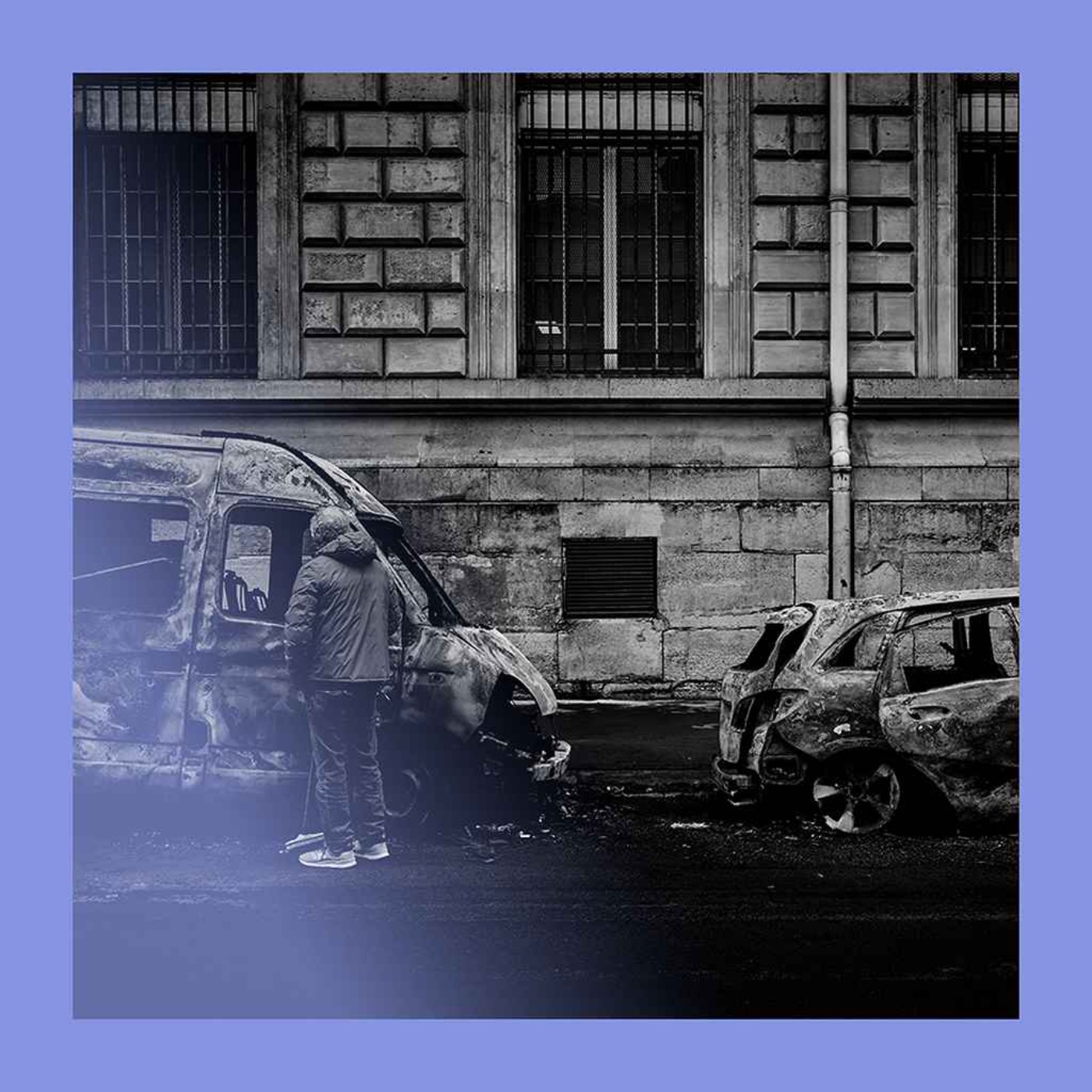
The episode’s main topic is France’s weekend riots and how quickly student protests escalated into looting, arson, and clashes with police. It describes three groups: peaceful students, “casse” troublemakers wearing ski goggles, and younger opportunistic looters smashing shops (e.g., Decathlon; Nike trainers and backpacks). The government blames far-left encouragement; far-left and far-right blame authorities for under-policing. Interior Minister Lorne Nunez admits police lost control and offered to resign. The government’s response: faster legal proceedings, local curfews authorized for mayors/prefects, and short-term help for small businesses. It also argues the unrest benefits both extremes ahead of a presidential election in six months.
Sophie Petter (Paris bureau chief) and John McDermott (chief Africa correspondent).
Written by AI. May contain mistakes.
Discussion of the recent riots in France and the government's response.
“France's Prime Minister, Sébastien Lecranou, held a crisis meeting yesterday in the wake of what can only be described as brazen lawlessness over the weekend.”
Analysis of the different groups involved in the riots and their motivations.
“I spoke to students who were worried that things might turn violent, but they just wanted to make their voices heard.”
Exploration of how the riots affect French politics and upcoming elections.
“When last we spoke to you about these protests, you expected that things would probably get worse before they get better.”
Introduction to farming in Zimbabwe and the return of white farmers.
“It's called Chat Concierge, and it's simplifying car shopping.”
Discussion of the historical background of farming in Zimbabwe and its impacts.
“It's a sign of how farming has moved on somewhat from the turn of the century.”
Explore how contract farming and new ventures are reshaping Zimbabwe's agricultural landscape.
“But even scorch fields show signs of life eventually, and cereal production, while still below that of the pre-chaos era, has ticked up of late.”
Discuss the risks associated with the rapid development of artificial intelligence.
“We at Nostradamus AI continue to believe in the limitless potential of the technology.”

Get the gist, explore an idea or ask about something said.
 Claude
On The Intelligence from The Economist, what are the key points of this episode?
Searching your listeningAutomatic transcript. May contain errors.
0:00This episode is brought to you by Capital One. Capital One's tech team isn't just talking about multi-agentic AI. They already deployed one. It's called Chat Concierge and it's simplifying car shopping. Using self-reflection and layered reasoning with live API checks, it doesn't just help buyers find a car they love. It helps schedule a test drive, get pre-approved for financing, and estimate trade-in value. Advanced, intuitive, and deployed. That's how they stack. That's technology at Capital One.
0:32This intelligence podcast is sponsored by business travel on hotels.com. Does booking business travel feel like another job? Hotels.com makes booking work trips easy and rewarding. It's easy because you can set your preferences once and get results tailored to your business travel needs every time. It's rewarding because with hotels.com's free rewards program, you can save instantly on your next work trip and earn rewards for future travel. Book faster with confidence at hotels.com. Loyalty Members 18+.
1:05The Economist
1:12Hello and welcome to The Intelligence from The Economist. I'm Jason Palmer.
1:21Today on the show, a visit to Zimbabwe where white farmers are returning to the land and the legalese surrounding an AI-driven human extinction.
1:37But first...
1:50It's a miracle that no one was killed. France's Prime Minister, Sébastien Lecranou, held a crisis meeting yesterday in the wake of what can only be described as brazen lawlessness over the weekend. In cities across France, the looting, the rock-throwing, the arson was shocking. Last night, curfews were imposed in several French cities, including Paris and Lyon. Mr. Lecranou said that declaring a state of emergency remained an option if needed. All this from relatively quiet student protests we told you about a couple of weeks ago. A national fuse seems to have been lit, and authorities seem to have been caught flat-footed.
2:34And all of it plays into the hands of the politicians at France's extremes.
2:39Sophie Pedder: I was in Bordeaux on Saturday to cover the riots, and in the center of the city it was a scene of absolute devastation.
2:51Sophie Petter is our Paris bureau chief.
2:53Sophie Pedder: There were fires breaking out and being lit on every corner, door fronts being smashed down, there were clashes with the police. It was really a sort of scene that felt almost close to urban warfare. And across the country we saw very similar things. We saw the town hall being set alight in Limoges. We saw devastation in Paris as well, and des Marseilles protesters broke into the town hall entrance and knocked over a bust of Marianne, which is the symbol of France. It was, I think, as bad as we've seen for a very long time.
3:33So who was it that you saw at these riots? Who was out on the streets?
3:38Sophie Pedder: Well, I would say there were three different groups, and it's important to understand that in a way. The first, the peaceful protesters. I spoke to students who were worried that things might turn violent, but they just wanted to make their voices heard. Then there were groups of what are known in France as casse, sort of troublemakers. They're wearing ski goggles, they're wearing their heads completely covered and they are clearly out to cause trouble. When I was walking along the road with the protesters, they were marching in the opposite direction. One of them was clutching a bottle and they are well known in France.
4:05Sophie Pedder: They infiltrate and join protests when they want to cause trouble. And the third group that I saw were looters. I mean, these look much younger. They would say they were sort of teenagers, probably quite opportunistic. I saw them smashing down Decathlon, which is a French sports retailer, grabbing Nike trainers and backpacks and just running off. And so I think it's important to see that there was a kind of combination of those three different groups. And it was the latter two groups that made it so violent. So with that mix of people on the streets, how did it get so out of control? Who's to blame for it descending into utter chaos?
4:37Sophie Pedder: Well, the government has blamed the far left of encouraging and fomenting the violence. the far left and the far right are blaming the government for not putting enough police on the streets and it does seem as if the authorities badly underestimated the numbers who are going to turn out and also the level of violence that was likely. Interior Minister Lorne Nunez has acknowledged that the police lost control and he offered to resign. His resignation wasn't accepted but I think it's a measure of how much there was a sense in the government that they were not in control of the situation. When last we spoke to you about these protests, you expected that things would probably get worse before they get better.
5:16What is the government doing to make sure it doesn't get worse still?
5:20Sophie Pedder: Well, the government says it's doing three things. The first is a tougher legal response. It wants to make sure that those who did the looting end up paying. They want to make sure that the legal proceedings are fast against those who are held in custody. The second is a situation where the government has authorized local mayors and department prefects to put in place local curfews. We saw them in Paris last night, and it seems to have helped calm things down. And the third is to help the local businesses, especially the small businesses that lost their inventory, that had their shopfronts smashed up with some support in the short term to try and help them pick up the pieces.
5:59It seems that the general anxiety, angst, anger that you spoke of last time is indeed still boiling over, may boil over again.
6:08Sophie Pedder: I think that that's the worry because France faces a presidential election in six months' time, so everything becomes politicized very easily. And there's an interest in some political forces to make it, to keep it that way. So there is, I think, a risk of repeated violence. We're probably going to come back to this subject several times before that election. Never mind that the politics behind the causes here, but the effects. Who gets a political benefit from all of this? Well, I think the violence does give everybody a reason to point fingers at the government for losing control. That's absolutely clear.
6:40Sophie Pedder: And it is a message that is very powerful on the far right in particular, because Marine Le Pen is standing for the presidency on a platform of law and order. And she has been very critical of what has been taking place. and it plays very much into her hands that things have got out of control. But it also, in some respects, helps the far left and Jean-Luc Mélenchon's party, because although the government's pointing the finger at ultra-left groups for encouraging the violence, they can point the finger back at the government for failing to control the streets. So it is, in effect, helping both extremes, but in particular, I would say, Marine Le Pen.
7:19Sophie, is this just distraction from the things that need solving?
7:22Sophie Pedder: I think the great difficulty is that France does have big questions to ask itself about its generous welfare state, how it can afford it, how it can sustain it at a time of very low economic growth. And with a particularly squeezed situation with the public finances, that makes it difficult for the government certainly to spend more on things like education as people are asking. But it also means that because of the law and order situation, this public debate isn't taking place. And ahead of the election, it really needs to. And I think if the centrist politicians can't at least put that subject firmly at the front of the agenda, it could be a situation where the French voters end up with a choice simply between the extremes.
8:03Sophie, thanks very much for joining us.
8:05Sophie Pedder: Thanks, Jason. Always good to talk to you.
8:19Okay, real talk. Every time I open up my inbox, I've got this vision of the day I'm going to have. Deep work. Big ideas. The project I keep meaning to start. Three hours vanish into replying to threads and hunting down a file someone sent last week. I've tried AI tools that promised to fix this. They didn't. They were just another tab I had to open, explain myself to, and abandon by Thursday. Superhuman is different. It's at your service, not after your job. It's already where you work. So I'm never starting from a blank tab. It's from the makers of Grammarly, living right inside of the tools I already use, like Gmail and Slack.
8:57When I'm drafting a message or making sense of a messy thread, it just helps. Like a thought partner that's already caught up. So we get to the hard part together. The problem was never too little time. It's that busy work crowds out the work that actually matters. Start streamlining your workflows with Superhuman. Try today at superhuman.com.
9:21This episode is brought to you by Capital One. Capital One's tech team isn't just talking about multi-agentic AI. They already deployed one. It's called Chat Concierge, and it's simplifying car shopping. Using self-reflection and layered reasoning with live API checks, it doesn't just help buyers find a car they love. It helps schedule a test drive, get pre-approved for financing, and estimate trade-in value. Advanced, intuitive, and deployed. That's how they stack. That's technology at Capital One.
9:56From the van now, you come and put it in. These goats are going to be intoxicated on tobacco. Earlier this year, I visited Mivrui, which is a town about 100 kilometres north of Zimbabwe's capital, Harare. John McDermott is our chief Africa correspondent. I met lots of farmers there, including a man named Lovemore Chiwa. And on a rather delightful tour of his five to six hectares, he introduced us to the five women who helped sort his tobacco leaves. What are you doing, sister? And he pointed out all the many crops that he's now growing, from maize to citrus fruit. He also pointed out the clucking chickens and, to everyone's delight, showed us his swimming pool-sized tilapia farm that he'd recently opened.
11:00There's everything going on here. How many people? Now, he was in a good mood because this year's tobacco harvest is a whopper. And throughout Mavuri I saw the autumnal leaves piled high in the warehouses that dot the town. A couple of months ago we got official data confirming that it is the largest crop in Zimbabwe's history. 7-0. It's a sign of how farming has moved on somewhat from the turn of the century. Yet while tobacco in many ways shows how farming has adapted since those chaotic days, the legacy of that devastating period still lingers.
11:47So take us back in history to that turn of the century scene you describe. In 2000, Zimbabwe had been independent for 20 years. White farmers still owned most of the best land and Robert Mugabe was under intense domestic political pressure. He launched what was euphemistically called the fast-track land reform program, so fast that it involved thugs turning up at your farm gate with guns demanding that you scarper quickly. Dozens of people were killed, mostly black farm workers, and hundreds of thousands of people lost their livelihoods. After a year or so of the chaos, Mugabe tried to put a legal framework around the madness that was happening.
12:30And that involved essentially giving the commercial farmland to two groups of people. The first were black smallholders who got tiny parcels of land. And the second were party bigwigs, state bureaucrats, and other folks associated with the regime who got larger parcels of land on which they were going to, at least in theory, try commercial farming themselves. And how did that pan out in the years after? The effects were catastrophic. I mean, politically, it turned Mugabe into an international pariah. But focusing on agriculture, in the 1990s, Zimbabwe was, at the very least, self-sufficient in major crops like maize and soy.
13:16It often exported to the wider region. But after so-called land reform, that production collapsed because now you had so-called farmers without the skills and perhaps more importantly, without the capital to do the sort of commercial agriculture that was happening before. Many of the farmers were bureaucrats or cronies within the ruling party. And besides, even if they were the best farmers in the world, there were few banks that would lend against stolen land as collateral. So fields went fallow, there was more poverty, hunger, and all of this led indirectly to the hyperinflationary period in the late 2000s.
14:03But even scorch fields show signs of life eventually, and cereal production, while still below that of the pre-chaos era, has ticked up of late. And there are these discrete success stories, such as blueberries and, most of all, tobacco. Which you said was something of an outlier. What did you mean by that? Well, tobacco farmers have ready access to the one thing other farmers lack, credit. it. Big tobacco firms, including a mega Chinese one called Tianzi, loan farmers money and the inputs that you need to grow your crop, and they get paid back at harvest time. This so-called contract farming has boosted smallholders like Mr.
14:50Chiwa, and in a new and especially fascinating twist, it has also encouraged a new generation of white farmers to give farming a go in Zimbabwe. But what does that look like in today's Zimbabwe, though? Given, as you say, all that land was taken from white farmers, handed out instead to cronies of the regime of Robert Megami, how are white farmers getting involved again now? They are increasingly getting involved in what are called joint ventures between themselves and the black recipients of those larger parcels of land that were given out in the early 2000s. This generation is youngish, mostly 30s and 40s.
15:33Most have Zimbabwean passports. They have some emotional commitment to the country as well. And they started in tobacco because it's relatively easy. you can get the financing and it's quite a quick crop to grow. One informed source in Harare told me that there's now around 400 of these farmers, which is at least as many, if not more, than the number of white farmers that managed to cling on through the chaos of the fast track era. And how do they feel about essentially farming now on land that was stolen from other white farmers? it's sensitive as you might imagine and the world of white zimbabweans is tight-knit but farmers are nothing if not practical types and most of the newbies ask and receive permission from the former owners one ex-farmer that i've spoken to for many years when i asked him about it he said well, I'd rather someone did something with my farm than let it go to rack and ruin.
16:40So that is quite a measure of progress then, that the farmers would rather put the history behind them and get on with farming. It's progress of sorts, but Zimbabwean agriculture exists in a liminal or even purgatorial state, so long as the property rights issue remains unresolved. Because farmers of all types, whether these new white farmers, the black Zimbabweans that toil on communal land, or the many black farmers that have tried their luck since 2000, struggle to make the long-term investments you need to make agriculture work without easy sources of financing. And the government has recognized that.
17:27Earlier this year, Zimbabwe started a new initiative to try and hand out title deeds to farmland. Yet even if this is a success, and that's a big if, banks will still be reluctant to lend because the question of whether the original farmers will receive compensation remains unanswered. And so where do you think that part is going? When Mugabe's successor, Emerson Managagwa, came to power in 2017, he quickly struck a compensation deal with the body representing the farmers. And the deal was that they would get, on face value,$3.5 billion in compensation. And the vast majority of the farmers signed up to it.
18:13But that amount has never materialized. There's been some payments, but the vast majority has not been received. But on the question of this agricultural renaissance, the path back to where things were is sort of blocked until all of these issues are hammered out. The joint ventures we've been talking about are much better than the farms being idle. And there have certainly been some qualified successes among smallholders. There's no doubt about that. But at the same time, it's a suboptimal situation. and anecdotally chatting to some of this new generation of white farmers, there are problems.
18:51There can be a lack of trust between farmer and ostensible landlord. Few of the farmers want to make investments in the more profitable crops like avocados and blueberries that take several years to grow. I suspect that around half of the joint venture arrangements as the end before the contractual period of around five to seven years. And in the ever gossipy world of Harare, the talk is that some of this younger generation, having given farming a go, they've had a look at the high gold price and said, well, I think I might try mining instead. John, thanks very much for joining us. Always a pleasure, Jason.
19:38Thank you.
19:53We at Nostradamus AI continue to believe in the limitless potential of the technology.
20:03Andrew Palmer, No Relation, hosts Boss Class, our wildly successful podcast series about the world of work and management. Nonetheless, you may have heard talk in the industry about some of the risks that come with the development of artificial intelligence. A former AI researcher says he left the industry because he believes the uncontrolled development of artificial intelligence could, quote, kill us all. The people building AI earnestly believe that it could kill us all by the end of the decade. No other human activity poses this level of danger.
20:37Sophie Pedder: You just said 10 % doesn't seem an unreasonable estimate. That AI could kill all humans? Yes. Wow. We would like to reassure you that we are completely committed to the responsible and safe development of AI. While we have you, we'd also like to inform you of some updates to our terms and conditions for our latest model, Ragnarok 5.6.
21:11Firstly, an amendment to Appendix 3, subsection 4, item 7, rights and responsibilities. You are responsible for all inputs you submit to our services and all actions. You must ensure that you have all rights, licences and permissions that are necessary for us to process such inputs in accordance with our terms and to provide the services to you. Next, please refer to Appendix 7, Addendum B, Part 3, Article 42, Section 118, Subsection 4, Clause B, Subclause 3, Item 5. Extinction By using this product, you understand that you may be hastening the death of everyone on the planet, hereafter known as the end of humanity.
21:59You confirm that you will not create an agent to act against us on your behalf in the event of your non-existence. You agree that the end of humanity is potentially worth it, because sometimes you don't know what recipe to make from leftover ingredients in your fridge, or need help planning a city break in Bruges. Finally, Appendix 11, Addendum B, Part 2, Subsection 15, Clause B. Fees and Billing.
22:33If you purchase access to our services or features of our services from us, you must provide complete and accurate billing information, payment method. You confirm that the card or bank account which is being used as your payment method is yours, or that you have the authorisation of the account holder to use it. In the event of a total collapse of the financial system, see Section 53, Clause G, or the end of humanity, see Appendix 7, Addendum B, Part 3, Article 42, Section 118, Subsection 4, Clause B, Subclause 3, Item 5, you or your estate remain liable for any payments missed. We thank you for your custom.
23:14We take the responsibilities of harnessing AI extremely seriously, and we'll always do so in a way that's compatible with a successful IPO.
23:42That's all for this episode of The Intelligence. We'll see you back here tomorrow.
24:28in your wallet. Terms apply. See CapitalOne.com slash bank. Capital One N.A. Member FDIC. You save. You invest. You keep an eye on spending. So why do your finances still feel so complicated? Quicken helps you put the whole picture together and make sense of what to do next. Connect accounts from more than 14 ,000 financial institutions and see how all the different pieces of your financial life fit together. With Quicken, you can make sense of your options and decide what to do next. Quicken. Know what to do next. See how at Quicken.com.
What started as student protests ballooned into national lawlessness. The disorder plays into the hands of France’s political extremes; expect more of it. In Zimbabwe white farmers are returning to work land taken by Robert Mugabe a quarter-century ago. And our columnist considers the delicate wording that might indemnify AI firms if the bots happen to wipe out humanity.
Guests and host:
Topics covered:
Listen to what matters most, from global politics and business to science and technology—subscribe to The Economist.
Hosted on Acast. See acast.com/privacy for more information.


