
 Ask ChatGPT


 The Intelligence from The Economist
22 Oct 2026 · 24m · 10 chapters
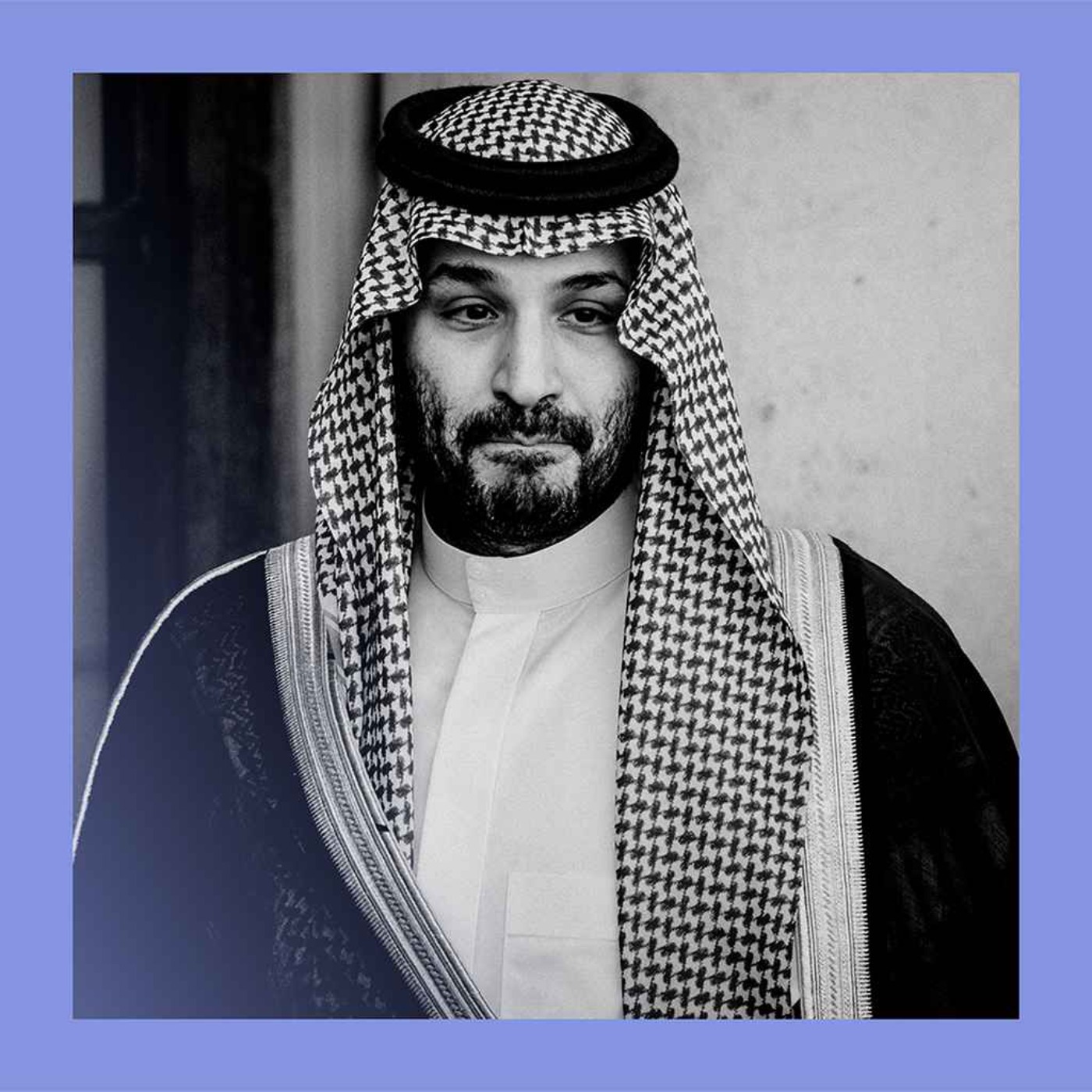
The episode of The Intelligence from The Economist covers three threads: (1) Saudi Arabia’s Mohammed bin Salman (MBS) having an “annus horribilis,” focusing on Houthi attacks that have struck Riyadh (including the airport closure), economic strain from missed foreign-investment targets ($30B vs $100B goal), and uncertainty from U.S. decisions about Iran; it argues MBS retains domestic support but faces deeper, harder reforms and limits of past changes. Key examples include the cancelled Future Investment Initiative summit (Oct 19) and MBS’s earlier Trump outreach (e.g., Kushner investments, Trump-linked golf/hotels). (2) A prison call with Sam Bankman-Fried (SBF), convicted in 2023 fraud tied to FTX/Alameda; he regrets the outcome, says “ends don’t always justify means,” maintains innocence, and blames timing/mismanagement under adversarial takeover. (3) Southeast Asian toxic smog from Borneo/Sumatra wildfires, worsened by El Niño; guests discuss Singapore haze shelters, mask distribution, and enforcement limits.
Greg Karlstrom (Economist Middle East correspondent), Shira Aviona (U.S. business correspondent), Vishnu Padmanabhan (Asia correspondent).
Written by AI. May contain mistakes.
Discuss the implications of the cancellation of MBS's annual summit and his difficult year.
“Today on the show, a phone call with Sam Bankman-Fried from prison and Singapore's toxic smog.”
Examine the three major gambles made by MBS that are currently failing.
“And it's just the latest way in which MBS is having a terrible year.”
Explore how the Yemen conflict and attacks on Saudi Arabia are affecting MBS.
“He hasn't been seen much in public over the past couple of weeks, despite these deadly attacks at the airport.”
Discuss the economic challenges facing Saudi Arabia under MBS's leadership.
“after the midterm elections in November?”
Analyze whether MBS's leadership is at risk given the current crises.
“It's not the first time that he's been in a difficult situation.”
Reflect on MBS's previous crises and compare them to his current challenges.
“And so I think the challenge for MBS going forward is you've almost you've done the easy stuff so far.”
Discuss the concept of effective altruism and its relevance in Silicon Valley.
“coverage vary by state and insurance plan.”
Discover the impact of effective altruism and the downfall of FTX's founder.
“That's the idea behind effective altruism, an ethical doctrine built on the notion of combining empathy with evidence to do the greatest possible good in the world.”
Investigate the wildfires in Indonesia and the regional air quality issues.
“podcast is out later today and we can hear more from you then, right?”
Explore Indonesia's government actions to combat haze and public health issues.
“And it allows Singapore to penalize companies operating abroad if they contribute to haze in Singapore.”

Get the gist, explore an idea or ask about something said.
 Claude
On The Intelligence from The Economist, what are the key points of this episode?
Searching your listeningAutomatic transcript. May contain errors.
0:00Therapy's biggest impact doesn't show up in some dramatic breakthrough. It shows up in the smallest moments. You bite your tongue instead of escalating. You put your phone down instead of firing off that text. You say what you actually mean instead of what would hurt someone else the most. Nobody applauds those moments, but they quietly change your life. That's what growing feels like, and that's exactly what Grow Therapy is here for. Grow is therapy that works, covered by insurance. Sessions average$21 with insurance, and some pay as little as$0, depending on their plan. There are no subscriptions, no long-term commitments.
0:37You just pay per session. Grow connects you with thousands of high-quality, licensed therapists across the U.S., offering both virtual and in-person sessions, nights and weekends. You can search by what matters, like insurance, specialty, identity, or availability. And you can book a therapy session in minutes and begin in as little as two days, not the national 48-day average. See if you could pay as little as$0 for therapy in seconds at growtherapy.com slash ACAST. That's growtherapy.com slash ACAST. growtherapy.com slash ACAST. Availability and coverage vary by state and insurance plan. For investors at the highest level of sophistication, those with strong advisory support, the natural outcome is two distinct portfolios, one public, one private.
1:26Each plays a different role in the overall strategy. Uncover new investment opportunities for you at creativeplanning.com slash new.
1:38The Economist
1:44Rosie Blau: Hello and welcome to The Intelligence from The Economist. I'm Rosie Bloor. And I'm Jason Palmer.
1:54Rosie Blau: Today on the show, a phone call with Sam Bankman-Fried from prison and Singapore's toxic smog.
2:08Rosie Blau: First up, though.
2:17Saudi Arabia's crown prince should have been gearing up for his big annual summit right about now. The Future Investment Initiative, or as it's also known, Davos and the Desert, is when Mohammed bin Salman glad hands big shots of government and finance looking for investment in his country. But on October 19th, it got cancelled. It's just not safe for all those dignitaries. And it's just the latest way in which MBS is having a terrible year.
2:47Jason Palmer: When he was first coming to power a decade ago, Mohammed bin Salman made a few big gambles. Greg Karlstrom is a Middle East correspondent for The Economist. He thought he could defeat the Houthis in Yemen, that he could reshape the Saudi economy, and that he could forge a close relationship with Donald Trump and make him into a reliable ally. All three of those bets seem to be going wrong all at once this year. Well, starting with the Houthis, for one, who are now striking Saudi Arabia in quite an explicit way. Right, that's been the most recent development. We've had weeks of attacks on the Saudi capital and on other cities across the kingdom.
3:31Jason Palmer: The airport in Riyadh is closed. there's been a real disruption to people's day-to-day life and a real human cost for this. You've had around 20 people who've been killed in strikes in Riyadh and people who've been injured and killed elsewhere as well. So the war in Yemen, which seemed to have been quite distant and quite far off for a while, has come back home to Saudi Arabia. And it's been unnerving for many people in the kingdom. And while all this has been going on, the crown prince really has been invisible. He hasn't been seen much in public over the past couple of weeks, despite these deadly attacks at the airport.
4:10Jason Palmer: And it's led to some talk amongst analysts and others in Washington, wondering whether this year poses an existential threat to his rule. Now, I don't think that's the case. None of the diplomats I've spoken to in Saudi Arabia think that's the case either, but it is nonetheless a very precarious moment for the crown prince. Because of the three bets you mentioned going wrong, one of which was about reshaping the economy. How's that coming along? That one was struggling a bit even before this year, because if you look at the top line figures from 2025 or previous years, things actually looked pretty good, right?
4:46Jason Palmer: Growth was respectable. Unemployment was low. Inflation was low. By rich country standards, Saudi Arabia seemed to be doing pretty well. But the goal for the crown prince wasn't simply to post respectable growth figures. It was to try and transform the Saudi economy. And that's where he seemed to be struggling. The Saudis had been targeting $100 billion a year in foreign direct investment by the end of the decade. They were way off that mark. In 2025, it was only about$30 billion, so two-thirds below their target. Because of low oil prices and high spending, public finances were strained. There were new taxes, new fees, and salaries were not keeping pace.
5:30Jason Palmer: So all of this was straining the economic diversification program. And then you've had a year of conflict. And that has obviously made things much, much worse. And so where the IMF had been expecting 4 % growth in Saudi Arabia this year, now it expects the economy will contract by 3.3%. And now Mr. Trump's war of choice in Iran is making matters even harder economically. It is, and it's putting a lot of uncertainty around what's going to happen next year and going forward. Whether there can be a rebound in Saudi Arabia in 2027, that is largely in Donald Trump's hands. Does the war with Iran end?
6:12Jason Palmer: Does it come back in full force after the midterm elections in November? And it's frustrating for the Saudis when you speak to officials and advisors in Riyadh. They thought they had a close relationship with Trump. They thought they had influence over him. They had pledged to invest huge sums of money in America. If you think back to last year when MBS visited the White House in November, he was talking about a trillion dollars of investment in the United States. It's an implausible sum, but it seemed to impress Donald Trump. He seemed happy with it. They've also made various deals with Trump's family.
6:48Jason Palmer: They've invested$2 billion with Jared Kushner, his son-in-law. They've steered Saudi-funded golf tournaments to golf courses that Trump owns. They've spent a lot of money at his hotels. They thought all of this would help them. But what they're discovering, as so many other countries around the world are discovering, is that Donald Trump is not loyal to anyone. And no matter how much influence you think you might have, actually, it doesn't get you very far. So in sum, how is all of this landing at home, coming from a leader who had promised so much change and for whom it's all now unraveling? You can't make any quantitative assessments.
7:23Jason Palmer: In Saudi Arabia, there are no reliable polls of public opinion when it comes to politics or things like that. I think it is fair to say broadly that most Saudis trust their government and continue to trust their government, and that hasn't changed. MBS has a lot of goodwill for the reforms that he's already made, particularly on the social and cultural front, allowing women to drive, allowing concerts and cinemas and things like that, making Saudi Arabia feel like a more open, more fun place. So yes, there's a feeling that the capital in particular is almost under siege at the moment. But again, I would say broadly, there still is a good deal of support for the crown prince and for the leadership.
8:05And it's fair to say that even though his loftiest ambitions aren't really coming to pass, he has gone pretty far in his time.
8:13Jason Palmer: He has. It's not the first time that he's been in a difficult situation. And this is something that, as I spoke to diplomats and other people over the past few weeks, they kept reminding me of. If you go back to 2018, 2019, and you think about where MBS was then, he had only recently become the crown prince. He was still trying to consolidate power. He had a lot of rivals and people who weren't happy that he had been elevated to become the heir apparent. And many of Saudi's allies were unhappy with him. The war in Yemen was a quagmire. The blockade of Qatar was a source of great frustration in America and elsewhere.
8:53Jason Palmer: And then, of course, you had the murder of Jamal Khashoggi, the Saudi journalist who was killed in 2018 at the Kingdom's Consulate in Istanbul. And all of this was a source of international outrage. Contrast that with today, his domestic position has been shored up. Yes, he still has critics at home, but there's no one in a plausible position to challenge his rule. And then his allies are also broadly supportive. I had a particularly interesting meeting a couple of weeks ago with Senator Chris Murphy, a Democratic senator who was visiting the kingdom, who met with MBS. Yes, Senator Murphy has been for many years a staunch critic of the war in Yemen.
9:35Jason Palmer: He was one of the most outspoken members of Congress criticizing Saudi Arabia for that conflict. But when I spoke to him two weeks ago, he said, listen, we have to understand they're in a very different position now than they were. They are being attacked by the Houthis. The Houthis are threatening not just missile attacks, but even ground defensives in Saudi Arabia. And so they have no choice but to fight. And so even people who were very critical of Saudi Arabia years ago are taking a much more sort of moderate tone towards the kingdom now. And I think that helps as MBS tries to navigate this very difficult time.
10:10So history shows then that MBS can basically get himself out of a hole. Do you think he'll be able to get out of the one that is present before him now?
10:19Jason Palmer: He's done it before, but the problem now is he's in a much deeper hole. All of the crises he was facing seven or eight years ago, they were self-inflicted, right? If the world is angry at you for pursuing an aggressive foreign policy, then you just make your foreign policy more pragmatic and eventually public opinion changes. Whereas now I think he has two big problems. First, the major decision is not in his hands. Does Donald Trump resume bombing Iran in November or at some other time? whether or not that happens will have a huge impact on Saudi security, the Saudi economy. And again, that decision is being made in Washington, not in Riyadh.
11:01Jason Palmer: And then the second issue is I think we're seeing the limits of the reforms that MBS has implemented over the past decade. Yes, there's been a lot of social and cultural change and there have been some cosmetic changes to the economy, but the foundations of the state haven't changed much. It's still a very oily economy. The army is still struggling to defend the country and to fight a war against Houthis in Yemen. And Saudi foreign policy is still dependent to a large degree on the United States. And so I think the challenge for MBS going forward is you've almost you've done the easy stuff so far.
11:40Jason Palmer: The reforms that he will have to implement in the future are much more difficult ones and he will have to pursue them at a time when the kingdom is beset by crises on all sides. Thanks very much for joining us, Greg. Thank you, Jason.
12:05Okay, real talk. Every time I open up my inbox, I've got this vision of the day I'm going to have. Deep work. Big ideas. The project I keep meaning to start. Three hours vanish into replying to threads and hunting down a file someone sent last week. I've tried AI tools that promised to fix this. They didn't. They were just another tab I had to open, explain myself to, and abandon by Thursday. Superhuman is different. It's at your service, not after your job. It's already where you work, so I'm never starting from a blank tab. It's from the makers of Grammarly, living right inside of the tools I already use, like Gmail and Slack.
12:43When I'm drafting a message or making sense of a messy thread, it just helps. Like a thought partner that's already caught up. So we get to the hard part together. The problem was never too little time. It's that busy work crowds out the work that actually matters. Start streamlining your workflows with Superhuman. Try today at superhuman.com.
13:08Therapy's biggest impact doesn't show up in some dramatic breakthrough. It shows up in the smallest moments. You bite your tongue instead of escalating. You put your phone down instead of firing off that text. You say what you actually mean instead of what would hurt someone else the most. Nobody applauds those moments, but they quietly change your life. That's what growing feels like. And that's exactly what Grow Therapy is here for. Grow is therapy that works, covered by insurance. Sessions average$21 with insurance and some pay as little as$0 depending on their plan. There are no subscriptions, no long-term commitments.
13:44you just pay per session. Grow connects you with thousands of high-quality licensed therapists across the U.S., offering both virtual and in-person sessions, nights and weekends. You can search by what matters, like insurance, specialty, identity, or availability. And you can book a therapy session in minutes and begin in as little as two days, not the national 48-day average. See if you could pay as little as$0 for therapy in seconds at growtherapy.com slash ACAST. That's growtherapy.com slash ACAST. growtherapy.com slash ACAST. Availability and coverage vary by state and insurance plan.
14:32Rosie Blau: What if you could calculate how to make the world a better place? That's the idea behind effective altruism, an ethical doctrine built on the notion of combining empathy with evidence to do the greatest possible good in the world. What started out as an attempt to make charitable giving more effective has morphed into an influential and controversial movement. Nowhere is its impact more profound than in Silicon Valley, where it shaped the debate over whether artificial intelligence could save humanity or destroy it. But it's not just the ideas behind effective altruism that divide people. It's also the movement's devotees.
15:12Do you have anything to say to your investors? Do you have anything to say? Anything at all?
15:17Rosie Blau: Among its most famous apostles is Sam Bankman-Fried, who made billions from founding a cryptocurrency exchange, FTX, and was then convicted of fraud. This call is from a federal prison. Earlier this week, late in the evening, I got a call from Sam Bankman-Fried, also sometimes called SBF, from Lompoc Federal Prison, where he currently is living. This call is from Sam Bankman-Fried. Shira Aviona is our U.S. business correspondent. We had 15 minutes, which is the maximum that you can have with a prisoner, to discuss all manner of things, what he does every day, the sci-fi books he's reading, and, most importantly, what he thinks about effective altruism, the ideology that motivated a lot of his rise, and the series of unfortunate events that led to FTX's downfall.
16:16Rosie Blau: Unfortunate events seems like quite a polite way of putting it. Sam Bankman-Fried was convicted of financial fraud in November 2023, and he was ordered to pay$11 billion. dollars. He's in prison for 25 years. Just remind us what happened, Shira. In its heyday, the FTX exchange was one of the world's largest crypto exchange with millions of customers, billions of dollars. And I think one of the things that made it so compelling was its founder, SBF. So he was the kind of curly-haired wunderkind who wanted to change the world through crypto, but also he was a poster boy for effective altruism. He wanted to play nice with regulators, to be involved in sports, culture, politics.
17:02And so he really did in short order become one of the most famous business people in the world. Then in late 2022, Coindesk, which was a crypto news outlet, published a leaked balance sheet showing that Alameda, FTX's sister hedge fund, which Bankman Fried also founded, held few assets apart from a few illiquid crypto tokens that he had invented. And this spooked customers and set off something like a classic bank run. And within days, FTX had stopped meeting withdrawal requests and customers still had billions deposited on the exchange. And after a few days of frantically trying to raise funds, Bankman Freed placed FTX into bankruptcy.
17:42And those are the events that eventually led to the fraud conviction. And they're the reason why this former golden child is now in prison.
17:51Rosie Blau: What does he say now about the ideas that led to forming FTX in the first place? He still says that he's an effective altruist and I think believes in some of the underlying principles. But I think one of the most interesting things about speaking with him now is that he says something a little bit different from what he used to say, or maybe understands something a bit different, which is that ends don't always justify means. and the path that you take to get somewhere is as significant as where you eventually get. I mean, it's terrible. I'm really sad about the impact that it had. It's obviously never what I wanted.
18:30And one of the things I had to come to terms with was that, you know, because I'd become relatively high profile, like what happened to me had backlash on everything I had been associated. I think while he's proud of a lot of the good that he's done, he said he does feel a tremendous sense of regret for what happened.
18:52Rosie Blau: Did he say anything more about the downfall of FTX? He says he has a lot of regrets, but he remains grateful to employees and feels that FTX was a legitimate and very successful business. And in fact, could have continued to be just that. He still maintains his innocence and feels that FTX was not a fraudulent company in and of itself. He basically feels that it was a mismatch, not of intent, but really of timing. That had he waited a little bit longer, he would, in fact, have eventually been able to raise the funds and make everyone whole, which is what happened, but certainly not under his management.
19:32I did not handle it well. Um, I, you know, ultimately, parties adverse to the company and stakeholders took control. And when I needed to fighting that, I was weak instead. And that was an absolutely huge failing. He believes that he could have gotten through it with more time.
19:57Rosie Blau: Trump is a proponent of crypto. So in some ways, if he'd been able to hold out, it might all have been OK. Possibly. I mean, those are the kind of tantalizing counterfactuals that I think make this story so interesting, even years after it was one of the biggest business news stories in the world. So to that end, SBF is still pursuing both an appeal to the U.S. Supreme Court, but also trying to get Trump or the Department of Justice to consider pardoning him. All I can do is put forward the truth as I see it and hope that parties are more reflective and that there's less visceral reaction than there was before and that some of the lies that have been clouding the atmosphere have dissipated over time.
20:56he's doing what he can to appeal but as even he would admit to say it's an uphill battle would
21:01Rosie Blau: be an understatement where do you think this leaves the effective altruism movement i think when the ftx scandal was happening a lot of people figured this must be its zenith in the news but as it turns out the ai boom has brought it to possibly even greater prominence and so one question that we wanted to explore in this week's Money Talks is why is it that global business can't seem to shake its EA addiction or maybe vice versa? Nice plug, Shira. Money Talks, our business and finance podcast is out later today and we can hear more from you then, right? Yes. Thanks very much for having me, Rosie.
21:41Thanks, Shira.
21:53Here in the city, a gas chamber. Nowhere to hide, nowhere to escape. And it's just so dark and yellow because of the poisonous gas.
22:08Rosie Blau: Indonesians have been living under a blanket of haze for months as wildfires spread across Borneo and Sumatra. This week, students took to the streets in several cities, protesting at the government's handling of the fires. and the toxic smoke. This soon broadened into wider anger with President Prabowo Subianto's administration. But Indonesia isn't the only country suffering. The smog is choking Malaysia, parts of the Philippines and Singapore. Singapore has been the world's most polluted city at various points in recent weeks. It's a big public health problem. Vishnu Padmanabhan is our Asia correspondent.
22:51The government is really trying to help its citizens adjust to that. It's distributing masks to citizens and permanent residents. It's also set up haze shelters. I'm in the community center. And there are some people doing tai chi. Earlier this week, I went to one in my area. And I'm now looking for this haze shelter. Ah, here it is. Oh, it's actually the library which has been converted into a haze shelter. It's basically an air-conditioned room in a community centre where people who don't have access to AC in their homes get relief from the pretty toxic air around us.
23:30Rosie Blau: Vishnu, for Singapore to be this bad in terms of air quality, it suggests that Indonesia's wildfires are particularly bad this year. Why is that? Yes, that's right. So June to October tend to be the dry months in Indonesia, and that's when you get fires. And so these fires are started by farmers or plantation owners, and they typically set their land ablaze to prepare for a new crop. And it doesn't help that many of these plantations are on peat lands, which is essentially land where dead plants are stored in the soil, which makes it more combustible. And so fires can spread more easily. And so this tends to be the fire season.
24:07But what's really made it bad this year is El Niño. So El Niño is a climate pattern that occurs every two to seven years. and it's marked by unusually warm waters in the Pacific Ocean. And that brings hotter, drier weather to Southeast Asia and South Asia. And that increases the risk of fire. And the bad news is that the World Meteorological Organization predicts that this El Lino is really bad and it's going to persist until February 2027.
24:34Rosie Blau: Students and others have taken to the streets in Indonesia to protest about the government's response. What has it done? Well, the government says it's trying to do its best to crack down on the fires. It's opened up 98 cases against corporations who have been accused of starting fires or not doing enough to prevent them. It's also deployed thousands of personnel for firefighting. And they're also trying other measures like water bombing the areas affected by fires and cloud seeding to encourage rain. And a couple of months ago, the president of Indonesia, Prabowo, announced a new peatland and mangrove restoration agency.
25:12So that's a long-term measure to inject more water into peatlands and help prevent future such fires. But many people are still unhappy with all of these measures and feel much more needs to be done.
25:23Rosie Blau: So it's tough for Indonesia's government to do anything about it, let alone neighbouring countries where that smog is descending. Is there anything they can do? Both Singapore and Malaysia have offered to send people over to help firefight, but Indonesia so far said it doesn't need any help and it'll handle it on its own. But there's growing pressure in these countries to get their governments to do something about these fires. Singapore, in fact, already has a law called the Transboundary Haze Pollution Act, which was passed in 2014 after a similar Haze episode then. And it allows Singapore to penalize companies operating abroad if they contribute to haze in Singapore.
25:56And earlier this week, as part of this act, several Indonesian companies were issued preventive measures notices for causing this episode of haze. And basically, these notices mean that these companies have to put out the fires and submit plans on how they will prevent such fires from occurring again.
26:12Rosie Blau: Would any of that actually be effective? Enforcement is difficult, right? Take the last big episode of Haze in 2015. Similar notices were issued to companies then, but it didn't result in any convictions. And there's, of course, a geopolitical element to this. The use of this act has annoyed Indonesian officials who see it as infringing upon Indonesia's sovereignty. And ultimately, I think the economics of burning is still too compelling for companies and plantation owners. So that really has to change. And there's been some pressure to get these companies to stop these practices through online boycott campaigns, for example, but that hasn't really worked.
26:48Rosie Blau: Vishnu, as you say, the context for these fires and the smog is the powerful El Nino this year. How prepared are Asian governments for the wider effects of that? Yes, so El Nino is going to have a massive effect on the whole region. And the haze is one element of that. But the biggest cost, I think, will be on food. Farmers who depend on rainfall across the region will be hit hard. And that in turn could raise questions about food security. And of course, it could put pressure on food prices. And all of this, remember, comes on the top of the energy shock in Iran. So Asian governments already have been grappling with that.
27:22But the good news is that we now know what is coming, partly because of previous Al Nino episodes, but also because we have much better data and forecasting. Governments should, in theory, be much better are prepared for all of this. But all these forecasts are only useful if people act on them. Vishnu, thank you very much. Thanks, Rosie. Thanks for having me.
27:59Rosie Blau: That's all for this episode of The Intelligence. We'll see you back here tomorrow.
This week, Muhammad bin Salman, crown prince of Saudi Arabia, was forced to postpone his annual investment summit. His other big bets on the kingdom’s future are also floundering. Sam Bankman-Fried, a crypto-billionaire supporter of effective altruism, calls our correspondent from prison. And things look hazy in Singapore and other Asian countries.
Guests and host:
Topics covered:
Listen to what matters most, from global politics and business to science and technology—subscribe to The Economist.
Hosted on Acast. See acast.com/privacy for more information.


