
 Ask ChatGPT


 The Intelligence from The Economist
29 Oct 2026 · 23m · 10 chapters
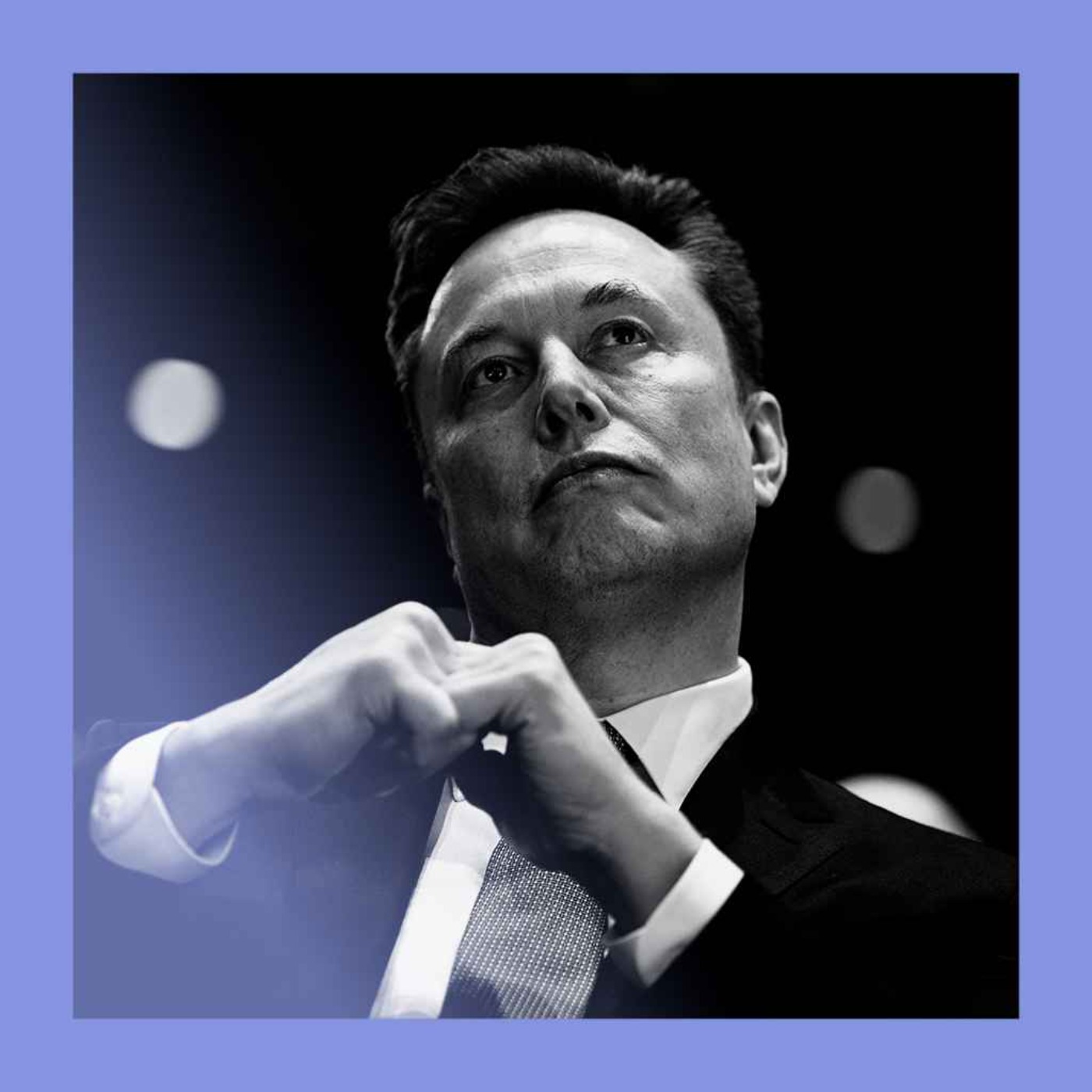
The episode is about “effective non-altruism” and how Elon Musk’s foundation fits that worldview, plus brief side segments on Kansas politics and walking science.
Avantika Chilkoti, Economist global business writer who analyzed Musk Foundation IRS filings (2020–2024) and accounting experts’ views.
Musk publicly criticizes charity as net negative, yet runs the Musk Foundation with about $14.7B in assets; major gifts were about $8B of Tesla stock (2021–2022) used for tax-efficient transfers to a private foundation.
grants to Fidelity Charitable (~10% of dispersed funds) and a Musk-linked public charity (“The Foundation,” ~60%); small grants (e.g., sea turtle conservation, spinal medicine); a $55M 2021 grant tied to a SpaceX-related hospital fundraising sponsor. It also discusses the 5% annual distribution rule and Musk Foundation shortfalls (~$400M by end-2024).
Written by AI. May contain mistakes.
Explore how past philanthropists like Rockefeller and Carnegie shaped society.
“You know, the plutocrats of the past don't always get the credit they deserve.”
Discuss Elon Musk’s views on philanthropy and his private foundation's size.
“So, what about the richest person in the world today?”
Understand the tax implications of Musk's foundation and charitable giving.
“It's just a little bit smaller than the Ford Foundation.”
Examine the limited transparency and operations of the Musk Foundation.
“What does the foundation do or what does it say it does?”
Learn about the legal requirements for foundations and Musk's compliance issues.
“The other big thing I saw money going to is to a public charity.”
Discuss the potential future impact and use of Musk's foundation funds.
“So there is this requirement for the Musk Foundation to give and the scale of the assets it sits on doesn't make that an easy target.”
Explore the dynamics of the Kansas Senate race, focusing on how Christian voters influence politics.
“that Roger Marshall is probably ever so slightly more likely to win.”
Preview of election day with insights into key races.
“Tomorrow it's a roundup of other races to watch on election day.”
Discussing the origins of the 10,000 steps recommendation and its lack of scientific basis.
“But really, we're here to talk about what we're doing right now, which is walking and the health benefits of walking in particular.”
Exploring evidence on step count, pace, and their impact on health outcomes.
“So, for example, going from 2 ,000 daily steps to 4 ,000 resulted in a 36 % drop in mortality risk over the years' track.”

Get the gist, explore an idea or ask about something said.
 Claude
On The Intelligence from The Economist, what are the key points of this episode?
Searching your listeningAutomatic transcript. May contain errors.
0:00With no fees or minimums on checking accounts, it's no wonder the Capital One bank guy is so passionate about banking with Capital One. If he were here, he wouldn't just tell you about no fees or minimums. He'd also talk about how most Capital One cafes are open seven days a week to assist with your banking needs. Yep, even on weekends, it's pretty much all he talks about. In a good way. What's in your wallet? Terms apply. See CapitalOne.com slash bank. Capital One N.A. Member FDIC.
0:32This Economist podcast is sponsored by Apollo.io. In a fast-moving business environment, finding the right people to connect with takes time. For sales teams, prospecting, outreach, and follow-up can mean juggling multiple tools and workflows. Apollo.io brings these activities together in one platform, helping sales teams find the right buyers and spend less time on scattered, manual tasks and more time building relationships. Apollo.io. Sign up for free at Apollo.io.
1:28of that 10 ,000 steps a day rule.
1:34First up, though...
1:43You know, the plutocrats of the past don't always get the credit they deserve. When you hear phrases like robber barons, you don't tend to think about philanthropy. But the foundation of John Rockefeller, founder of Standard Oil, planted the proverbial seeds for the Green Revolution, transforming world agriculture and preventing famine for untold numbers of people. Andrew Carnegie, steel magnate, 2 ,500 libraries around the world. Henry Ford's foundation, shoring up public broadcasting and civil rights and democracy in general. Inspiring stuff. So, what about the richest person in the world today?
2:29Oh, he's got a foundation and maybe a slightly different worldview. Everybody knows that Elon Musk isn't a big fan of philanthropy, of charity, of general do-goodery. Avantika Chilkoti is our global business writer. Recently, he's been posting and sharing and thumbs-upping comments on X that suggest that charities are net negative for the world. and in particular criticize Mackenzie Scott, who's perhaps the most generous philanthropist of this generation. So I was surprised to find out that Musk actually runs America's fifth largest private foundation, the Musk Foundation. Okay, so how does that add up?
3:13It does seem like a massive contradiction, but the thing to remember is that for a lot of rich people, setting up a private foundation is part of their tax strategy. So just to give you a sense of the size of the Musk Foundation, it had about$14.7 billion in assets at last count. That makes it one of the biggest foundations in America. It's just a little bit smaller than the Ford Foundation. It's double the size of the Rockefeller Foundation, which are probably organizations you've heard of. The thing you can tell quite quickly looking at IRS documents is that the biggest gifts that Elon Musk has made, so about$8 billion of stock in Tesla.
3:52He made those gifts in 2021 and 2022. And you might remember that those were years when Elon Musk faced a massive tax bill. He came into billions of dollars of shares. And it's really common for founders who come into stock in that specific year to hand the money to a private foundation to reduce their tax bill and basically be as tax efficient as possible. Okay, talk me through the tax efficiency of this then. So the thing that's very specific to someone who starts a company is that the cost of the shares to them is almost nothing, right? You just own the company because you set it up. As the company gets bigger and bigger, you get this market value of those shares that's either on the stock market or based on what other investors will pay for them.
4:37And so if you do what Musk did, you avoid paying capital gains tax, which you would have to pay if you came into shares and sold them. At the same time, you get a massive charitable deduction in the year that you make a gift into a foundation. And the charitable deduction isn't based on the cost of the shares to you. That's actually based on the much, much higher market value of the stock. So, you know, I spoke to accounting experts and they say this is a really smart and common thing for founders of businesses to do. And you can see in the Musk Foundation's documentation that this gap between what they call the book value of the stock and the market value.
5:16It's huge. The book value, I think the last time I looked at it is about$5.7 million, whereas the market value is around$14 billion. So you say it's not uncommon and from a tax point of view, it sounds kind of smart. Yeah, it's pretty common. You get a lot of stories of tech founders, the times that they have to sell their shares or come into shares. They do exactly this. They put the shares into a foundation. A lot of the world's biggest tech founders in particular have large foundations. And also it's totally legal to do charitable giving in a way that optimizes your tax situation. It's not illegal.
5:54So that sort of explains the money going in. What about the money coming out? What does the foundation do or what does it say it does? The thing that really got me interested in the Musk Foundation is that it says so little about what it does. You know, the other foundations of its size that I mentioned earlier, there's a big website. their spokespeople. The Musk Foundation website is exactly 33 words. It lists the causes that it supports, so stuff like renewable energy, space exploration, but there isn't much more to it. You can't apply to them for a grant. From the documents I've seen, there's a team of basically three people that run it.
6:29There's Elon Musk, there's the head of his family office, who's sort of his right-hand man, and there's another employee of his family office. To really know anything about what the foundation does, you have to dive into their tax returns. And that's what I've been doing. And what did you find? So I looked at the filing starting around July 2020 to the end of 2024. The reason for that period is at this point, Musk moved his foundation from California to Texas. So we have consistent paperwork. And what you can see almost immediately is a lot of what the foundation does appears to be circular. So I looked at every single grant I had made.
7:06I made a big spreadsheet of them. I amalgamated them to see who are the biggest recipients of Musk Foundation money and the most striking thing is almost 10 % of the money dispersed went to Fidelity Charitable. You can think of it as a financial institution that runs donor advised funds. This is basically Elon Musk taking a bunch of money, putting it into a fund and saying I promise to spend this on charitable giving at some point. But once this money is in that donor advised fund, there is no real reporting requirement on that money. So again, this is legal and others do it too, particularly big foundations, but you're just putting money from one bucket to the other.
7:50So is any of this money being used unambiguously for demonstrably charitable purposes? The other big thing I saw money going to is to a public charity. But the bulk of that, actually about 60 % of his giving in this period, it went to one public charity that's actually linked to Musk. I looked it up. It's confusingly called The Foundation. By naming it The Foundation, he's made it almost impossible for journalists or anyone interesting to look it up on government websites. But The Foundation is run by people we know are linked to Musk, and it's actually registered to the same address as The Musk Foundation.
8:26It does schoolwork, education work, But again, it's really hard to know what exactly the foundation is doing with the money it's getting. And, you know, some money has gone to independent grantees, which is basically what a layperson expects a foundation to do. But, you know, that too can seem self-serving. Musk, for example, has given money to nonprofit groups in southern Texas after a SpaceX rocket exploded and showered this part of southern Texas with debris. He's also given$55 million in 2021, which is a pretty big grant for the Musk Foundation. He gave it to a hospital group, and that was to help a sponsor of SpaceX, a client of SpaceX, to meet their fundraising mission.
9:14You generally expect philanthropists of this scale to have some sort of strategy. And looking at Musk's giving, there really isn't any strategy. There's sort of tiny grants that go to everything from sea turtle conservation to spinal medicine. But at the outset, we suggested that this is not a guy who's big into philanthropy in the first place. This certainly looks like somebody who's trying to spend as little of it as he possibly can. Yeah, the thing is, you can, of course, want to put money in a foundation and not actually bother giving a lot to charities, but that's not actually legal. In America, under American law, if you are a grant-making foundation in the way that Musk Foundation is, you have to distribute 5 % of your investment assets every year.
9:56If you don't, you face penalties. You have a one-year grace period to make up any shortfall. But that rule is really to help make sure that if you are benefiting from all the tax advantages of having a foundation, you are actually doing good with your money. The Musk Foundation has made use of this grace period, i.e. it has failed to meet the 5 % target and has had to defer disbursement. It's been in that situation in each of the past four years. If you look at the end of 2024, it's basically on the hook for$400 million. You can think of that as money that the Musk Foundation owes to charitable organisation.
10:34So there is this requirement for the Musk Foundation to give and the scale of the assets it sits on doesn't make that an easy target. The analysts I speak to about this who look at philanthropy a lot, the note of optimism for them is, you know, this money has been promised a charity. If you want to be fair to Elon Musk, he's pretty busy nowadays. You have to sort of hope that at some point, these billions of dollars will be put to use doing good. Avantika, thanks very much for your time. Thanks for having me, Jason.
11:36Thank you. doing the work I actually needed to get done. Then I found Superhuman Go from the makers of Grammarly. It works where you already work. Reading a dense thread? Highlight it. Ask Go for the key points, and you're already up to speed. Not sure what you owe after those meetings? Ask what was decided and get clear action items. Before you hit send, Go flags a number or name that doesn't add up. It's right there when you need it, on the side of your browser, without switching apps or losing your place. And you're always the one in control. Try Superhuman Go from the makers of Grammarly. Find out more at superhuman.com.
12:39way. What's in your wallet? Terms apply. See CapitalOne.com slash bank. Capital One N.A. Member FDIC.
12:53This is my defining story. I will show you. This is my Bible. I carry it in my back pocket. It's shaped like my back left butt cheek because, you know, I carry this everywhere I go. I'm reading it every day. You know, this is what, this is my defining story. The best way to describe Adam Hamilton is, he looks like what he is, a Midwestern pastor. Daniel Knowles is our Midwest correspondent. Kind of guy who wears chinos and checkered jackets. He's got glasses. He is 62 and looks 62. In fact, what he really looks like in some ways is a Republican, the kind of guy who belongs to a Rotary Club. But he's not.
13:30He's a Democrat and he's running for Senate in Kansas. He's also the pastor of the largest United Methodist church in America. And he could well be the most surprising candidate in these elections. There's an indecency in Washington, a cruelty in Washington. There are policies in Washington that are hurting people back in Kansas. And I guess the question I would ask you today is this, are you happy with how things are in Washington? If you are... Hamilton's still an underdog. According to our election model, the Republican candidate, that Roger Marshall is probably ever so slightly more likely to win.
14:07But the race is neck and neck. And Kansas is a deeply Republican state. It hasn't elected a Democrat to the Senate since 1932. The fact that the seat might flip has a lot to do with how Christianity is playing out in this election.
14:30Evangelical voters have been a core constituency of Republican politics for decades. And recently it's got quite intense. Donald Trump has claimed that he was saved by God to make America great again. And there's an ascendant Christian nationalist wing that questions the separation of church and state. And in the case of Pete Hegseth's church, the right of women to vote. But with Warren versus Wade overturned in 2022, that's the right to an abortion, the messaging that appealed to a lot of evangelical voters isn't there anymore. And there's been a long tradition that's been much quieter in American politics of liberal Christianity, of mainline Protestants voting more left.
15:16And they tend to talk a bit more about helping the poor, turning the other cheek. And that's what Democrats like Adam Hamilton have spied an opportunity. Hamilton is part of a new group of Christian leaders, mainline Protestants, getting back into American politics. Have you, you're a registered Republican, so you said. When did you last vote for a Republican at a federal level? Well, I was until about 10 years ago. I still consider myself to be a moderate Republican. Yeah, so do I. In the context of whatever that used to be. I was in Lawrence, Kansas a few weeks ago to see Adam Hamilton give a talk at an art gallery.
15:57It was a pretty big space with a bar and canapes, and he filled it out. Something that really struck me about it, this is the first event that I'd been to in the Midwest that I can remember. Nobody was wearing a baseball cap. Everybody looked a bit like Hamilton, actually, in blazers, chinos, and button-down shirts. A Republican all my life. I'm still registered. Until then. Instead of being a Republican in name only, which actually Trump is the most. Right. Because I now think of myself as a righto, an RITO, Republican in theory only. A lot of the people I spoke to said to me that they still think of themselves as a Republican.
16:40But they're here at a Democratic event and they want to know what Adam Hamilton offers Kansas. I'm Daniel Knowles from The Economist magazine. And I'm Adam Hamilton, and I'm right from the U.S. Senate. After a bit of mingling, we sat down to hear Hamilton speak. I'm fifth generation Kansan. My family moved to Dickinson County, Kansas. They founded a town called Hope in 1870. It's an opportunity for him to set out his agenda. Here's what I'm committing. I think I will be a better listener than Roger Marshall. And I am committed to being a champion for the needs of people in Kansas. I'm going to fight for you.
17:17Hamilton's policy positions are pretty conventional for a Democrat. He criticizes the White House, cutting food stamps and support for health care. And he emphasizes that immigration is important and that deporting longtime residents is cruel. He says that immigration and customs enforcement is militarized and politicized and needs radical change. People have asked me, you know, why are you running? I said, it's sort of like death by a thousand cuts. I feel like there's a thousand little things that have happened where I think that's not right, or that's not okay, or that's going to hurt people, or that policy is going to have a negative impact on people.
17:54That makes him a bit like James Tallarico in Texas, also a Christian pastor running on this progressive Christian message. But what makes Hamilton different? He doesn't have that same populist invective. He's not always talking about billionaires. In fact, he says he's a capitalist. My name's Adam Hamilton. I'm an independent-minded Democrat. running for the United States Senate. And I'd love to have your help. Thanks so much, Gina.
18:22Hamilton's rise has been alarming Republicans. Donald Trump was just there. And before that, J.D. Vance. Ladies and gentlemen, that is not Christianity. That is left-wing radicalism dressed in the skin suit of our religion. Let's send it packing in November. Trump says that Hamilton is a radical left lunatic And he's also attacked him, like the Republican candidate Roger Marshall, for supposedly saying that Americans should repent for eating beef. And remember that Kansas, that's cattle country. We're proving over and over that he's too weak. He's too woke. He doesn't stand for anything. Mr. Hamilton, you have 45 seconds for a rebuttal.
19:05I won't need that long. I'm pretty sure if Jesus were here, you would call him woke.
19:13Kansas is still likely overruled to vote much more Republican than Democrat next week. But Adam Hamilton really could be the first Democrat that the state sends to the Senate in nearly 100 years. Whether he wins or lose, he shows that, while Christianity has always shaped American politics, this could be the next chapter being written now.
19:38All week we've been bringing you sneaks into some of the most contentious races this midterm campaign. Tomorrow it's a roundup of other races to watch on election day.
20:03I'm very excited today because we've actually left the studio and I'm going to take a walk with Sam Wykley, our science correspondent. Hi, Sam. Hi, Rosie. So it's pretty loud out here. It's why we normally record in the studio, but we are on the mean streets of London. Tell me why we're going for a walk. Well, it is just nice to get out and about, isn't it? But really, we're here to talk about what we're doing right now, which is walking and the health benefits of walking in particular. OK, well, let's head to the park while I tell you what surely every person knows, which is that it's 10 ,000, isn't it?
20:39Well, that is the number that has become the accepted standards. But what you might be What I'm really surprised to hear is that it's not actually based on any sort of concrete scientific evidence. Its origins lie in an advertising campaign that was run in Japan ahead of the 1964 Tokyo Olympics. And by coincidence or intention, we're not really sure. It just so happens that the Japanese kanji character for 10 ,000 looks a little bit like a person walking. So you're telling me that we've all been giving ourselves a really hard time because of an old marketing campaign. That's exactly what I'm telling you.
21:18OK, so what does the science say? I mean, surely it's a good idea to walk. How much should we be walking? Absolutely. I mean, we should get out in front and say that walking any amount is good. You should aim to get out and about and walk. But there have been a lot of studies looking at where the kind of health benefits of doing this start coming about. So there was one major review in 2025 that looked at a ton of different perambulation papers spanning a 10-year window. And what they found is that taking 7 ,000 steps a day, for example, in contrast to about 2 ,000, brought about a 47 % lower risk of a premature death, a 25 % lower chance of developing cardiovascular disease, and a 14 % reduction in the risk of diabetes.
22:13So across the board, really, walking is beneficial. And those who like to get in their 10 ,000 steps a day should certainly not shy away from that number. You know, walking more is good, but even a little goes a long way. So, for example, going from 2 ,000 daily steps to 4 ,000 resulted in a 36 % drop in mortality risk over the years' track. OK, so I do actually check how many steps I've done most days. Isn't 10 ,000 steps better for me? Well, what this study found is that, in fact, the health benefits of walking start tapering off at around the 7 ,000 mark. So it's always better for you, but how much it is better starts gradually diminishing after that.
23:06So, for example, the jump from 7 ,000 daily steps to 10 ,000 brought about only a 2 % further reduction. in mortality risk. And besides, step count is obviously only one measure of walking. You know, how fast you walk is another. This is something that step scientists measure with a property called cadence, which is how many steps you take per minute. Unfortunately, the evidence behind what the optimal cadence is, is a little bit more mixed. However, there was a big study recently where they tracked the joint effects of step count and stepping intensity, you know, the cadence, how fast you're going, on health outcomes for about 65 ,000 participants tracked over an eight-year period using the UK Biobank data set.
23:59And as with step count, they found that a quicker cadence is generally beneficial for health. those who walked between 0 and 5 ,000 steps but walked them speedily could bring about the same or similar health benefits to those who were walking 5 ,000 to 7 ,500 but at a slower pace. And they found similar to quantity, there are diminishing returns here too. So they suggest that the sweet spot is around 7 ,500 to 10 ,000 daily steps with frequent intervals throughout the day of about 100 steps a minute. So what you're telling me is that it's really good for my health that I'm always late and therefore rushing.
24:48That's exactly what I'm telling you. Fantastic. Sam, how did we do? We've done 500 steps, but maybe for next time we should pick up the pace. Okay, next time we'll aim for a train. Be late. Good talking to you, Sam. Thank you so much. Thank you.
25:17That's all for this episode of The Intelligence. We'll see you back here tomorrow.
25:28Thank you.
25:58weekends. It's pretty much all he talks about in a good way. What's in your wallet? Terms apply. See CapitalOne.com slash bank. Capital One N.A. Member FDIC.
The world’s richest person does not say much nice about philanthropy, and his foundation does not say much about itself. Our correspondent digs deeper. The next stop for our midterm-elections series is Kansas, where a Republican-seeming Democrat has an unlikely shot at the Senate. And an examination of the received wisdom about how many steps to walk in a day.
Guests and host:
Topics covered:
Listen to what matters most, from global politics and business to science and technology—subscribe to The Economist.
Hosted on Acast. See acast.com/privacy for more information.


