
 Ask ChatGPT


 The Intelligence from The Economist
26 Oct 2026 · 27m · 8 chapters
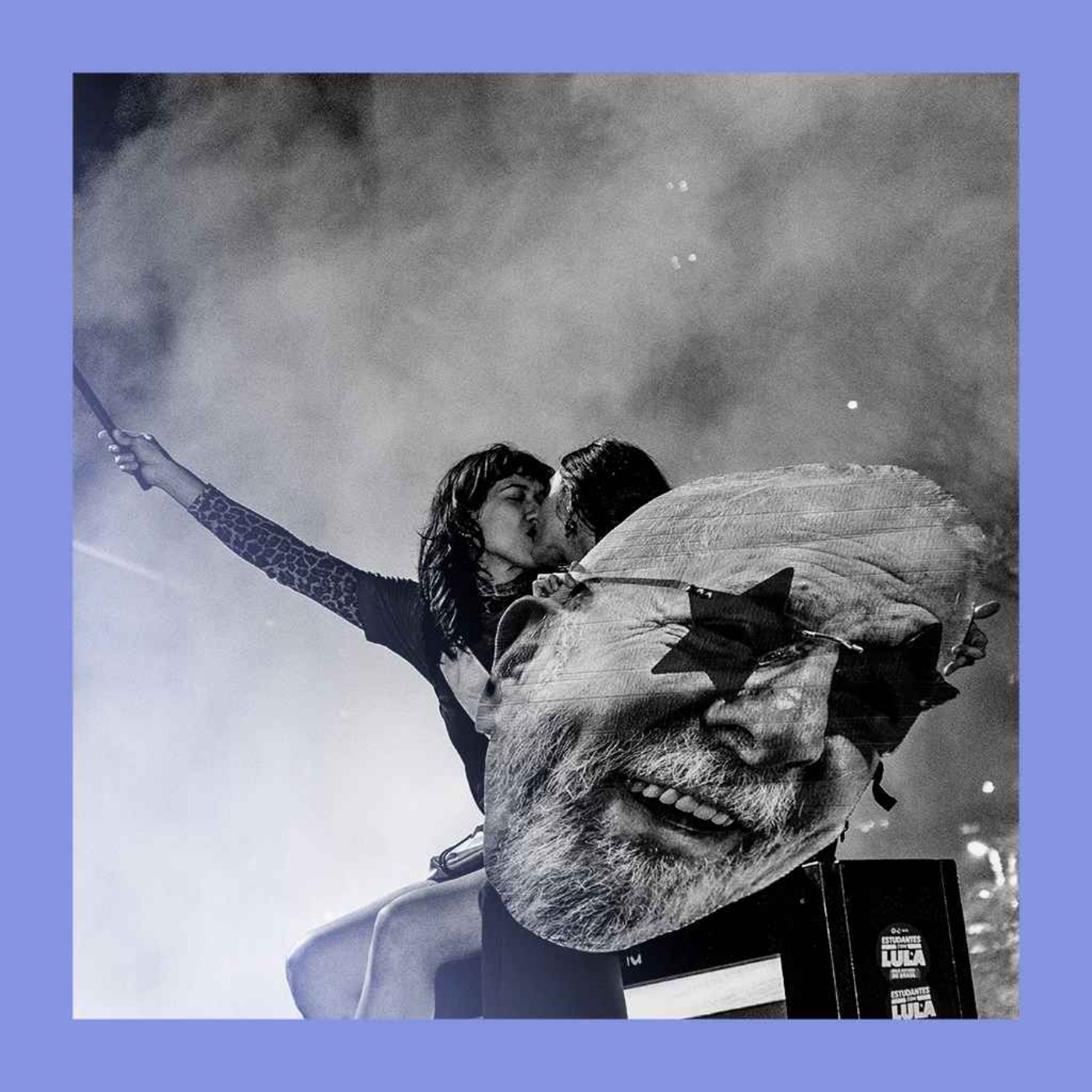
The episode of The Intelligence focuses on Brazil’s presidential runoff, where Luiz Inácio Lula da Silva (“Lula”) won a surprise fourth term against Flávio Bolsonaro.
Ana Lankas, Economist Brazil bureau chief, who explains Lula’s turnaround: a shift from a “boring” analog campaign to Instagram selfies, André Janones’ “Lula’s Army” WhatsApp channel (10M+ members in two weeks), massive rallies, welfare handouts, a 44-to-40 hour workweek law, free weekend public transport, and debt forgiveness plus $1,000 promises to micro-entrepreneurs.
Lula gained votes via increased turnout and reduced blank/annulled votes; televised debates resurfaced scandals about Flávio’s alleged militia links (including a death-squad payment) and a televised courtroom mix-up involving a murdered child.
Supreme Court extended voting hours; right-wing Senate/Congress gains could make Lula a “lame duck,” while reduced deforestation under Lula is framed as good for the Amazon.
Written by AI. May contain mistakes.
Discuss Lula's surprising win in the Brazilian presidential election.
“Today on the show, the first of this week's segments on crucial American midterms races and why even that little coffee shop around the corner sells tote bags.”
Explore the tactical changes Lula made between election rounds.
“Brazil is a country that loves a dramatic political comeback.”
Analyze the reasons for Lula's dramatic electoral comeback.
“So first, he made a really important tactical overhaul.”
Examine the controversies surrounding Flávio Bolsonaro.
“Incumbents in Brazil often make lavish giveaways before elections.”
Discuss the obstacles Lula will face as he begins his term.
“And Flavio Bolsonaro, who was long a councilman for Rio, then a state deputy and then a senator for Rio, has had allegations of having very close ties to these people.”
Explore the dynamics of the Texas elections and the shifting political landscape.
“Control of the United States Senate remains on a razor's edge.”
Discover the unexpected rise of merchandise in various industries and its societal implications.
“Texas may still vote straight Republican next week, propelling the party into a more hardline era.”
Learn how social media and COVID-19 have influenced consumer preferences and behaviors.
“or branded water bottle why do we somehow feel like we must have these things?”

Get the gist, explore an idea or ask about something said.
 Claude
On The Intelligence from The Economist, what are the key points of this episode?
Searching your listeningAutomatic transcript. May contain errors.
0:00With no fees or minimums on checking accounts, it's no wonder the Capital One bank guy is so passionate about banking with Capital One. If he were here, he wouldn't just tell you about no fees or minimums. He'd also talk about how most Capital One cafes are open seven days a week to assist with your banking needs. Yep, even on weekends, it's pretty much all he talks about. In a good way. What's in your wallet? Terms apply. See CapitalOne.com slash bank. Capital One N.A. Member FDIC. This episode is brought to you by Capital One. Capital One's tech team isn't just talking about multi-agentic AI.
0:37They already deployed one. It's called Chat Concierge and it's simplifying car shopping. Using self-reflection and layered reasoning with live API checks, it doesn't just help buyers find a car they love. It helps schedule a test drive, get pre-approved for financing, and estimate trade in value. Advanced, intuitive, and deployed. That's how they stack. That's technology at Capital One.
1:05The Economist
1:11Hello and welcome to The Intelligence from The Economist. I'm Jason Palmer. And I'm Rosie Bloor.
1:21Today on the show, the first of this week's segments on crucial American midterms races and why even that little coffee shop around the corner sells tote bags.
1:37But first...
1:47In the small hours of the morning, the streets of Sao Paulo were teeming. The results of Brazil's second-round presidential election were in.
2:05With very nearly every one of 64 million votes counted, President Luiz Inácio Lula da Silva, or more popularly just Lula, received 52%. For his opponent, Flávio Bolsonaro, son of the former President Jair, 48%.
2:27Lula, himself, hoarse from all the celebrations, addressed the crowd in Sao Paulo. This is a historic achievement that I owe to the Brazilian people, he said. Brazil is a country that loves a dramatic political comeback. But even by Brazilian standards, last night's comeback was remarkable. Ana Lankas is our Brazil bureau chief. No presidential hopeful since the return of democracy in 1985 had lost the first round of voting and gone on to win the runoff. Lula now has, which means that he joins an exclusive club of presidents who have won four terms democratically alongside Franklin Delano Roosevelt.
3:20When last we spoke about this election, you said Lula had a very, very narrow path to victory. Yeah, he was definitely expected to lose. So on the first round of voting on October 4th, Lula trailed Flavio Bolsonaro by two million votes. And three of the four other candidates who were knocked out all backed Flavio. Between them, they had gotten 8 % of votes. So all those votes were expected essentially to go to Flavio. Voters also appeared to be sick of Lula's Workers' Party, which has been in power for 18 of the past 24 years. In my travels across the country, I really sensed a desire for change, especially in the main swing state, Minas Gerais.
4:01And all polls put Bolsonaro ahead. Yet, in less than three weeks, Lula gained an extra 10 million votes, which is unbelievable. How did he do it? So first, he made a really important tactical overhaul. Before the first round of the election, he ran a very boring analog campaign. He spent, for example, only$500 ,000 on boosting his online content compared with$2 million by Bolsonaro. He focused on issues that a lot of Brazilians felt were a bit abstract, like how to add value to Brazil's mineral exports or how to defend sovereignty, when most Brazilians were really, you know, cared more about bread and butter issues.
4:46But between the two rounds, he massively changed tack. So he began posting selfie videos on Instagram. This is a man who didn't previously have a mobile phone. And a 42-year-old evangelical congressman from Minas Gerais, the country's most important bellwether state, André Janons, started supporting him with social media and a WhatsApp channel called Lula's Army. This WhatsApp channel attracted over 10 million members in just two weeks. And what Janone's did was send its members missions where they had to repost stuff about Lula. And that helped Lula basically become a trending topic on social media in the final stretch of the campaign.
5:26It kept him more relevant than the right online. So this was mostly about him simply being present on people's phones more than he was before. It was definitely partly that. There was also a lot more energy in the campaign between the first and second rounds of the election. The Lula campaign organized these massive rallies, attracting hundreds of thousands of people across major cities in Brazil. And they invited big celebrities and there was this big carnivalesque atmosphere. I went to one of the rallies here in Rio de Janeiro and it really felt like a party. But another very important factor was the fact that Lula opened the spigots.
6:07He raised handouts in Brazil's flagship welfare program. He managed to get Congress to pass a law that reduced the work week from 44 hours to 40 hours without pay cuts. He pledged to make public transport free on weekends. He promised to forgive federal debts for what are called individual micro-entrepreneurs, so sole traders like plumbers or manicurists, barbers. He promised to hand out$1 ,000 to a million of them. So this is going to be very expensive. Incumbents in Brazil often make lavish giveaways before elections. But even by Brazilian standards, Lula has been generous. On election day, I talked to a lot of people on the street.
6:50And my impression was that many were afraid that if Flavio were to win the presidency, they would lose their social benefits, including welfare handouts. So this was much more a matter of more votes for Lula rather than fewer votes for Bolsonaro. Both things appear to be true. So Lula gained by massively increasing turnout. The number of absentee votes and annulled and blank votes declined between the first and second rounds very significantly. But at the same time, two televised debates helped to rehash Flavio Bolsonaro's dodgy past. And I think many Brazilians decided that Flavio was just beyond the pale.
7:28In particular, I want to mention his alleged links to Rio de Janeiro's militias, which are armed groups staffed by corrupt policemen who work as hitmen and run extortion rackets in the neighborhoods that they control. And Flavio Bolsonaro, who was long a councilman for Rio, then a state deputy and then a senator for Rio, has had allegations of having very close ties to these people. To be clear, he denies those ties. So for example, in 2023, Flavio, who was then a senator, sent over$40 ,000 of taxpayer money to one member of a death squad, who was later jailed for helping to assassinate a popular left-wing politician.
8:09In phone chats, that member of the death squad called Bolsonaro our senator. Bolsonaro denies wrongdoing, but this is just one of many examples of, quite frankly, unexplained ties to people who do very nasty things. And two weeks after the first round vote, So on the eve of the election, one of Bolsonaro's allies in Rio was arrested precisely on charges of working with militiamen and drug traffickers. But you've hinted that the people kind of knew about these alleged links before, before the first round. Why did they become important before the second? Yeah, that's true. I do think it helped that they were rehashed in the public press.
8:46I would say that the emphasis on scandal and disappointment was on Lula in the first round. And the emphasis on scandal was on Flavio Bolsonaro in the second round. And that's partly because of these notorious cases that were brought up again and again. So one of them in particular was brought up in a televised debate on October 23rd, when Flavio Bolsonaro, who was a lawyer, was asked about a case in which he defended a policeman accused of killing a five-year-old girl. The child's mother was in the audience. And when Flavio turned to her, he mixed up her name with that of her dead daughter. And I think that kind of thing put off a lot of voters, especially female voters, who are reminded of who Flavio is.
9:31Now, I'm reminded that when Lula won against Flavio's father in Jair Bolsonaro in 2022, there were big protests. What do you see happening this time around? It was not on a knife edge, but it was close. So there were more than protests when Jair Bolsonaro lost in 2022. he attempted a military coup. And true to family form, Flavio Bolsonaro has not conceded defeat, and he said he would try to get the election result annulled after bad weather and transport disruptions led the Supreme Court to extend voting hours in an unprecedented move. Ironically, though, Flavio himself had asked for an extension.
10:05I think an annulment is unlikely to happen, just because the scale of Lula's victory was so much bigger than expected. But when we spoke last, you said that plenty of the Bolsonaro clan had been elected in the first round are already in government in one way or another. They were elected. I think what's really interesting is that Brazil's right focused on winning Senate and Congress seats in this election. They put a lot of energy into that because one of their main aims was to impeach the Supreme Court justices who put Jair Bolsonaro in jail. And they succeeded in that. They now have the largest caucus in both the lower house and the upper house.
10:40That will make it very hard for Lula to govern, especially because of his age and constitutional limits on terms mean that he cannot run again. So he could become a lame duck from day one. But I just want to say one thing which sometimes gets lost in the discussion about this election, and that is that even if Lula is a weak president in his last term, this is really good news for the Amazon rainforest. In the last three weeks, as it became clear that Flavio Bolsonaro could become the next president, fire notices in the Amazon had doubled as illegal loggers and ranchers felt emboldened. And indigenous leaders in reserves were receiving phone calls from wildcat miners warning that the miners would be back to take their land.
11:24So this is much less likely to happen under Lula because one of the significant policies he has overseen is a reduction in deforestation in Brazil. So this election outcome is good news for a lot of poor Brazilians. It's good news for the Amazon. But I do want to remind people that Lula and his left-wing workers party are hated by half the population. And that will not make it easy to govern either. So how do you think he will try to govern from the out here? Some of the reasons that Lula and his workers party are not liked by many people are because of previous corruption scandals in his party.
12:03Because Lula is seen as weak on crime, which is a very important issue in Brazil. and because the economy is not doing well, in part because of Lula's spendthrift policies. The central bank has had to hike up real interest rates to vertigo-inducing heights, and government debt to GDP rose by over 10 percentage points in Lula's last four years in office. That's really bad. So rather than announce a party codder as finance minister, he will have to appoint a heavyweight and offer a much more credible plan for reducing spending to calm markets. But so far, his pre-election giveaways have signaled that he may do just the opposite.
12:41So I think it's important for Lula to remember that though he made history by winning a fourth term, history will not treat him kindly if he does not govern more effectively than these last four years. Anna, thanks very much for your time. Thanks for having me, Jason.
13:06Here's a feeling you might know. You come out of back-to-back meetings, open your inbox, and there are a hundred new messages. Somewhere in there is the thing that actually matters, and you're not totally sure what it is. That low-grade worry that something's slipping through? I've tried AI for this. It helped, but it lived in another tab. Too much time spent copying, pasting, and trying to write the perfect prompt, and too little time doing the work I actually needed to get done. Then I found Superhuman Go from the makers of Grammarly. It works where you already work. Reading a dense thread? Highlight it.
13:40Ask Go for the key points and you're already up to speed. Not sure what you owe after those meetings? Ask what was decided and get clear action items. Before you hit send, Go flags a number or name that doesn't add up. It's right there when you need it, on the side of your browser, without switching apps or losing your place. And you're always the one in control. Try Superhuman Go from the makers of Grammarly. Find out more at superhuman.com.
14:30financing, and estimate trade in value. Advanced, intuitive, and deployed. That's how they stack. That's technology at Capital One.
14:44Control of the United States Senate remains on a razor's edge. The battle to control the Senate is running right through the working farms and rolling hills of Iowa. One of the Senate races drawing the most attention is unfolding in Maine. Democrats and Republicans battling it out to squeeze out an advantage as a showdown for control of the Senate is coming down to the wire. The nail-biting ahead of America's midterm elections is getting more intense. And this week on The Intelligence, our correspondents based across the country are going to take us deep into some of the most contentious races and tricky issues raised during the campaigns.
15:24Alaskans know the difference between a senator who fights for fish and one who fishes for donations. Mr. Hamilton, you have 45 seconds for a rebuttal. I won't need that long. I'm pretty sure if Jesus were here, you would call him woke. Each day, a new story from the campaign trail in the run-up to the vote next Tuesday.
15:47First up is our Southern correspondent, Rebecca Jackson.
15:56Everyone says it every time, but this is one of the most important elections of our lifetime. A couple of weeks ago, I went to San Antonio, Texas for a Trump rally. The rally felt very similar to the ones that I've attended in the past. The crowd was mostly white, very bedazzled in red, white, and blue, and a little bit angry. Trump's walk-in to the classic, proud-to-be-an-American anthem got the crowd going wild.
16:47It was the third time Trump visited Texas in three weeks, campaigning for Republicans like Senate candidate Ken Paxton. When the blues get in, everything becomes dirty. The streets are dirty. The doorknob's going into stores are dirty. It's coming to destroy your beloved state of Texas in the sky, Yamanaya. This time last year, I wouldn't have imagined that I'd be watching Republicans in America's biggest red state playing defense. But at the rally, it was clear to me that they are panicking about the upcoming elections. Remember this. Proud long-to-go patriots of the Lone Star State will never forgive you for what worked out when you let that happen.
17:36Ken Paxton is trailing James Tallarico, the Democrat, in almost all the polls.
17:49Republicans admit that he's probably their worst candidate this cycle. For years, he was under federal investigation for securities fraud. He was impeached by his own party for corrupt dealings with a donor. And his wife divorced him last year on biblical grounds. He's also not particularly charismatic. Since September, Republicans have poured a whopping$200 million into ads to save his campaign and their Senate majority. And it's not just the Senate race that's in trouble. Greg Abbott, Texas's three-term governor, has won every past election by double digits. He too has failed to knock his Democratic challenger out of striking distance this cycle.
18:35Republicans everywhere are dragged down by Trump's unpopularity, and Texas is no exception. Do you feel like he's a little bit of a drag? In a leaked recording from September, Paxton told donors that Trump's midterm convention in Dallas hurt him. So, did the odds go here, the numbers, and we did that on the convention, what Trump's remember? And Abbott was then conspicuously missing from the rally I attended. But the problems run deeper than just the president's unpopularity. Even the tried-and-true Lone Star arguments are losing force. For a decade, calls for border security united Texas Republicans and won over many independents.
19:15Now that border encounters have plunged under Trump, affordability has overtaken immigration as voters' top concern. And bragging about the Texas miracle, the economic boom that made Texas an epicenter of AI development, is losing its shine as Texans have furiously turned against data centers. With the old campaign lines falling short, Republicans have resorted to a new rallying cry. As the Republican candidates came out one after another, there wasn't a lot of energy in the audience. But the thing that really rallied the crowd was when they promised to get rid of Sharia law in Texas. That was the first time people got to their feet and started screaming and, like now, cheering USA again and again and again.
20:02Explosive population growth has whipped up a feverish debate over whether foreigners belong in Texas at all. Politicians in Austin are crafting policies around it. First, it was Muslims. Last year, Abbott tried to block a Plano mosque from building a master plan community he dubbed Sharia City. Paxton tried, unsuccessfully, to bar Muslim schools from school vouchers. Then they turned to legal immigrants. Abbott froze H-1B visa applications at state agencies and universities. And Paxton opened investigations into 30 firms he accused of letting foreign nationals invade Texas. It's a line that might not resonate with swing voters.
20:44And I was surprised here at the rally I attended that even some MAGA faithful were hesitant about it. Would you like the Republican Party to pull back on those things? Maybe a little bit. Maybe a little bit. Because I don't want anybody to ever feel like they're not welcome. Is there a point where it might become a big enough issue that you wouldn't vote for the Republican candidate on the ticket? Potentially. Potentially.
21:07Welcome, Pastor Jaxer. Thank you for leaving our vacation tonight. While I was in Texas, I drove over to Frisco, just north of Dallas. To the resident staff and city council of Frisco, thank you for having me. It's in suburbs like Frisco, where the fight over who belongs in Texas is most heated. Dizzying growth has transformed Republican strongholds into political battlegrounds. Between 2020 and 2025, the Dallas metro area grew faster than any other in America. The Muslim population grew with it, building cultural centers the size of Walmarts, and the share of people who identify as Hindu roughly tripled.
21:45In Frisco, a third of residents are now Asian. And in recent months, city council meetings have turned into political theater. Good evening, Friscoistan. What are you guys doing here? Inviting the enemy to eat at the table with you and they steal all your food. Indians on temporary work visas are completely changing the face of Texas. Texas' life and culture is shrinking. The anger hit a fever pitch during the mayoral race in June. But the candidate who ran on these messages lost by 16 points. Frisco residents told me that the nativist rhetoric felt manufactured. And when I was there last week, the storm seemed to have calmed.
22:35A group of Scouts got up to lead the Texas Pledge and introduce themselves. They were all Indian. My name is Ahana, and my favorite thing about Cub Scouts is that we get to learn life skills. My name is Turkey. My name is Drew. My name is Nisha. And a local pastor opened the meeting with a benediction about unity. May our different personalities, upbringings, perspectives, and experiences benefit our city rather than divide it. The debates have moved on to the next city over, McKinney, where there's an effort to recall the mayor for voting to let a mosque expand. Frisco residents are relieved to be out of the spotlight.
23:17USA! USA! USA! Texas may still vote straight Republican next week, propelling the party into a more hardline era. But the candidates will have had to work harder than ever to retain their grip.
23:55I was recently clearing out my pretty crammed wardrobe in New York and I realized how much random bits of merch I've acquired during my time that I've been living here. Lizzie Peet is a US researcher with The Economist. I think probably the most random one that comes to mind was the Roxbury Country Store, which is this tiny farm shop in Vermont that I probably spent about four minutes in. And for some reason felt that I just had to acquire this tote bag. It's just got a really sweet picture on the front of the shop with wild animals going in and out, which I just thought was quite charming and a nice memento of a holiday in Vermont that I took.
24:32so lizzie we're not just here to discuss your retail habits tell me why you're telling me about this tote what's going on so this kind of inspired me to go down a kind of rabbit hole of why it does seem to me that there is merch literally everywhere for everything these days and so i dug into some data and oxford economics which is a research firm estimates that about $350 billion a year is spent globally on merch, which is fairly broadly defined as anything that's a licensed product, a piece of clothing or a bag, anything branded. It also includes print-on-demand items from a local shop or something which doesn't have a big trademark brand.
25:12So it includes all of that. In London recently, you might have seen these Trader Joe's bags that have gone really viral, even though there's no Trader Joe's shops in London or in the UK or anywhere outside America. It just seems that all kinds of different companies are now joining in this wave of merch production and peddling their own wares, different logos, different brands and different creations. Lizzie, I have to confess, I also love merch. Why are all these companies, bookshops, supermarkets, you name it, producing these kinds of products? There's a sort of lot of different things going on.
25:44Obviously, we have to acknowledge that merch is definitely not a new phenomenon. It's long been a sort of big part of marketing and branding in several key areas. I'd say one of them is children's products. Disney were a real pioneer in this field. They quickly licensed Mickey Mouse in the 1930s and 40s, and that became a huge part of their business. It's also always been really popular in the music industry. So if a musician goes on tour, a huge part of the revenue from that tour will be from merch. A good example is Harry Styles at the moment is on tour. And Barclays has estimated that on the London leg of his tour, which was earlier this summer, fans spent about£100 each on merch, which is a crazy amount.
26:20And then obviously sports is the other huge area where merch has always been a thing. People like to own a t-shirt for their local team. People like to celebrate a sort of win. So I'm based in New York at the moment and still everyone is wearing Nick's merch because obviously they won the championship this summer. So those are the broad areas where merch has always been a big part of the business model and has always been really popular. There are some surprising origins of merch today, which would include big tech companies. So OpenAI recently launched their first public line of clothing. Palantir also recently released some tennis whites with their kind of Chevron logo on it.
26:54That's a surprising thing recently is these slightly more unusual businesses that are getting in on the act. Companies like OpenAI are not going to make a significant amount of money from merch. Why are they doing this? I think a lot of companies are quite keen to create a sense of personality and to really build up that brand connection with individuals. These companies want to sort of create a sense of personality and create a bit more of a lifestyle. An example would be that Lidl, the big German grocery chain, released a sort of parody England football strip to go with the World Cup called the Three Lidls jersey that was meant to be waterproof, spill proof from beer showers.
27:30It's obviously also a bit of a joke and so they're leading into the sort of World Cup fever. Just a way of a brand kind of signaling to their customers, creating a sense of community. For other companies, a tote bag can cost about sort of a dollar or so to make. It could be a really cheap thing to produce. but the return on investment in terms of the amount of people that that tote bag is reaching I mean one person walking around with a New Yorker tote that brand is being seen by thousands of people every day. And what about us as consumers Lizzie it's not like you or I need another tote or branded water bottle why do we somehow feel like we must have these things?
28:07I think here there's a few things going on I'd say one thing which particularly might explain why this seems to be more of a recent phenomenon is that COVID lent a lot of businesses to adapt their business models and particularly support for a local bookshop or a local coffee shop which may have been struggling a lot of them started to sell and produce tote bags instead of branded merch as a way of just keeping afloat so there's still something maybe of that but also I think there may be something a bit more profound going on which is that in our social media digital age there's an increasing desire to signal individuality and your personal taste and that you have something to say through your apparel and what you're wearing.
28:44A marketing professor that I spoke to very much said that was a big reason for this. It's a sense of status changing shape, I guess, which is that it's now more based on your taste and your personal experiences as well. So if you've traveled to somewhere a bit off the beaten track, that's become more of a thing that you may want to signal through your clothing. On the flip side of that as well, there's a lot more social isolation these days. People are feeling quite disconnected in the digital age, particularly the age of AI. And so I think wearing a particularly niche bit of merch may also be a way of finding a sense of community, maybe seeing other people out there with similar merch or people out there with similar likes and feeling a sense of connection to strangers as well.
29:23Lizzie, thank you very much. Thanks very much, Rosie.
29:37That's all for this episode of The Intelligence. We'll see you back here tomorrow.
30:00With no fees or minimums on checking accounts, it's no wonder the Capital One bank guy is so passionate about banking with Capital One. If he were here, he wouldn't just tell you about no fees or minimums. He'd also talk about how most Capital One cafes are open seven days a week to assist with your banking needs. Yep, even on weekends, it's pretty much all he talks about. In a good way. What's in your wallet? Terms apply. See CapitalOne.com slash bank. Capital One N.A. member FDIC. This episode is brought to you by Capital One. Capital One's tech team isn't just talking about multi-agentic AI.
30:38They already deployed one. It's called Chat Concierge and it's simplifying car shopping. Using self-reflection and layered reasoning with live API checks, it doesn't just help buyers find a car they love. It helps schedule a test drive, get pre-approved for financing, and estimate trade in value. advanced, intuitive, and deployed. That's how they stack. That's technology at Capital One.
Brazil’s president, Luiz Inácio Lula da Silva, staged a historic comeback to win a fourth term. We ask how he did it, and what he must do next. Each day this week our correspondents in America are focusing on crucial midterm-election races; today we start in Texas. And tote-bag economics: why so many businesses are getting in on selling merchandise.
Guests and host:
Topics covered:
Listen to what matters most, from global politics and business to science and technology—subscribe to The Economist.
Hosted on Acast. See acast.com/privacy for more information.


