
 Ask ChatGPT


 The Intelligence from The Economist
27 Jan 2026 · 23m · 7 chapters
Hosts: Jason Palmer and Rosie Blau
In this episode, the hosts delve into three significant global stories:
Written by AI. May contain mistakes.
Exploration of the significant military purges in China and their implications.
“We visit Kiev, the capital, and ask frigid citizens how they cope without heat, electricity, or even water, sometimes for days on end.”
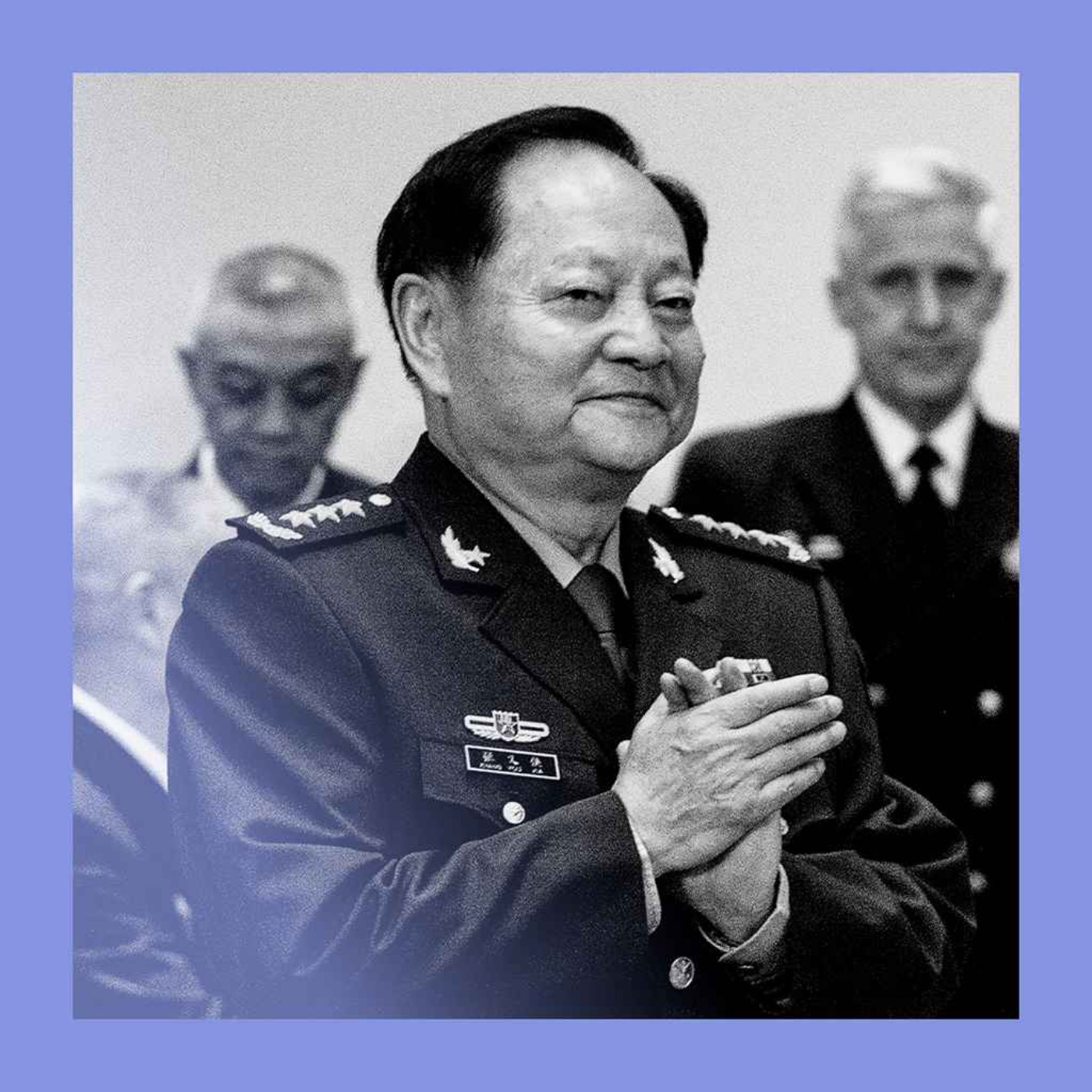
Detailed profiles of Zhang Yuxia and Liu Chen Li amidst the investigations.
“Others are saying it's the biggest crisis for the PLA since its involvement in the killing of protesters around Tiananmen Square in 1989.”
Analysis of the possible reasons for the military purges and their significance.
“And how does their dismissal actually work?”
Discussion on the operational readiness and future challenges facing the PLA.
“Or I suppose it could be a combination of those things.”
A first-hand account of the ongoing energy crisis in Ukraine amidst the war.
“I have spent quite a lot of time in Ukraine over the last nearly four years since Russia invaded.”
Learn about the harsh living conditions in Kiev during the ongoing conflict.
“reported no electricity and no water at all for 10 days.”
Understand what makes Strava successful and its competitive landscape.
“People who know me will tell you I'm quite a reluctant runner, but I am trotted out for my own good every weekend.”

Get the gist, explore an idea or ask about something said.
 Claude
On The Intelligence from The Economist, what are the key points of this episode?
Searching your listeningAutomatic transcript. May contain errors.
0:28The Economist during a particularly harsh winter. We visit Kiev, the capital, and ask frigid citizens how they cope without heat, electricity, or even water, sometimes for days on end. And if you do any kind of physical activity at all, you've probably heard of Strava, an app that helps you track your progress and sends you nice messages even when you achieve something pretty mediocre. Now the fitness app has its own goal, an IPO.
1:01First up, though.
1:10They say it's lonely at the top, perhaps most of all at the top of China's military leadership.
1:21This weekend, the defense ministry announced that two senior generals in the Central Military Commission or under investigation for suspected serious violations of discipline and law. The charge sheet was long but vague. An editorial in the army's mouthpiece suggested they had fueled corruption, impaired combat readiness, and undermined the authority of Xi Jinping, who, of course, is the commission's top dog. It's hard to know what's really going on here, but whatever the reasoning, it's bad news for a leader so fixated on projecting stability and one who has ever fewer experienced voices around him.
1:59These latest investigations are hugely significant because the scope of Xi Jinping's military purges is now unmatched since the death of Mao Zedong in 1976. Jeremy Page is our chief China correspondent and is based in Taipei. Xi Jinping has effectively hollowed out his entire military leadership just as we're approaching the deadline of next year that he has set for the Chinese military to be capable of launching an invasion of Taiwan. And one former CIA China analyst that I spoke to the other day described this as the most dramatic turn of events in Chinese politics since Xi rose to power in 2012.
2:39Others are saying it's the biggest crisis for the PLA since its involvement in the killing of protesters around Tiananmen Square in 1989. Well, first let's focus on the two people who are at the center of this latest investigation and where they fit into the picture. Yeah, so the most interesting one is Zhang Yuxia. He's a general, 75 years old. He's what's known as a princeling in China, like Xi Jinping, because his father was a prominent revolutionary who actually fought alongside Xi Jinping's father in the civil war. And the two men have known each other since childhood. He was promoted by Xi Jinping to the Central Military Commission.
3:19That's the top body that controls the armed forces in 2012. Then promoted again to the Politburo. That's the Communist Party's top 20 or so leaders. That was in 2017. And then he was promoted again in 2022 to be the military's top uniformed officer, despite being above normal retirement age. So I think that's really testament to how much Xi Jinping trusted him. And he's also one of the few top military commanders that has actual combat experience. He fought with some distinction in a war with Vietnam in 1979. So all of that made it seem that he was kind of untouchable as these purges unfolded over the last couple of years.
4:01In fact, some people thought maybe he was one of the masterminds of these purges. And the other person under investigation? The other one is General Liu Chen Li. He's 61. He heads the Joint Staff Department, which oversees operations, intelligence, training, and other matters. It's sort of the nerve center of the military. Interestingly, he is also a veteran of that 1979 border war with Vietnam. And he is thought to have close personal ties to Zhang Yung Xia. So it does seem that whatever they're accused of, the two cases were related to each other. And how does their dismissal actually work? Where are we in the process?
4:43They haven't yet been removed officially from the Central Military Commission or dismissed from the army, but investigations of this type normally involve detention and they are typically followed by formal dismissal from the military and often the party as well. And the other uniformed officers on the Central Military Commission, who've also been purged, have all been formally kicked out of their party in military posts. So one of the extraordinary things about this situation is that the CMC, the Central Military Commission, which controls a military of more than two million personnel, this commission only has two active members now.
5:24It has Xi Jinping as the chairman and another general, General Zhang Shengmin, who is basically the top disciplinary chief, the anti-corruption guy. And he was just promoted to be a vice chairman in October of last year. So it's just these two guys sitting on top of this vast military apparatus. So as you say, we don't have a whole lot of detail about what the actual allegations are. That's right. I mean, the most detail we've got from official sources is in that editorial in the official military daily, which lists a whole bunch of things. I think there are probably three most likely explanations.
5:57One is that Xi Jinping has become frustrated with the lack of progress in rooting out corruption and improving the combat readiness of the PLA ahead of that deadline of 2027 to be capable of launching an attack on Taiwan if he decides to give that order. The military reforms that have been underway now for more than a decade haven't yet been completed. There is still rampant corruption in the military and other forms of indiscipline. And Zhang Yuxia in particular was supposed to be the guy who was spearheading all the changes to deal with these problems. So it could be frustration at the lack of progress.
6:34It could be that these guys were actually involved in some kind of corruption or family members. I mean, a lot of these senior generals have skeletons in their closet because for many years before Xi Jinping took power, there was a sort of rank buying system that was absolutely rife throughout the Chinese military. So almost every single officer paid money to get promotions. So there's always some dirt that can be dug up on people. And then I think the third possible explanation is that it was more of a political issue, that their loyalty to Xi Jinping had been called into question, maybe even that Zhang Yuxia in particular had become a little too powerful because so many of the other senior generals had been taken down, particularly the other vice chairman of the Central Military Commission.
7:20So that left him by default as by far the most powerful uniformed officer. And perhaps Xi Jinping saw that as a threat. And there's a hint of that in the PLA Daily editorial, which suggests that these guys had trampled on the chairman responsibility system, which is essentially the system which centralized military authority around Xi Jinping as the head of the Central Military Commission. Or I suppose it could be a combination of those things. Absolutely. There's all sorts of speculation, rumors flying around in Beijing at the moment. There's one report in the Wall Street Journal which suggested that Zhang Yuxia had actually been accused of passing secret information about China's nuclear weapons program to the United States.
8:10Now, no one else has reported that. There's been no independent confirmation. and some of the people who I've spoken to, long-term experts on the PLA and the CIA and the US military, are a little skeptical about that. But I think that gives you an idea of the sort of impact these announcements have had and just like the frenzy of speculation that is now going on inside China and overseas. So what happens now that the top of the army is completely hollowed out? What happens next? So I think Xi Jinping faces two main problems in the near term. One is who exactly does he promote to replace these guys?
8:48Because anybody in the sort of tier below these guys who've been dismissed from the Central Military Commission, they're pretty much tainted by association with those guys. So as Xi Jinping's trying to work out who to promote now, there are no obvious choices. Plus, these guys have less experience. I think there is a real risk that there's sort of younger, younger, less experienced people that he promotes, give him less reliable advice perhaps than these more experienced folks. And then that leads on to the second problem, I think, which is about operational readiness. I mean, this has got to be having an impact on the capabilities of the PLA.
9:26I mean, I think that day-to-day functions continue. They can obviously still do big exercises like we saw around Taiwan in December. But in terms of the readiness to go to war, it has to have an impact when you're in a situation where basically every member of the military high command bar one in uniform has disappeared. So I think that is something that is going to be on Xi Jinping's mind, particularly with that 2027 deadline fast approaching. I mean, in all cases, it's bad optics, right? This does not look like the vision of stability that Xi has been really cultivating. That's right. And you've also got to remember that we've got in 2027, a five yearly meeting of the Chinese Communist Party, at which Xi Jinping is likely to seek another term in power.
10:10And the process of preparing for that has already started. And he'll be very keen to try and re-establish a sense of order and stability throughout the Chinese system, but especially in the military, well before that meeting begins. Jeremy, thanks very much for your time. Thanks, Jason.
10:45I have spent quite a lot of time in Ukraine over the last nearly four years since Russia invaded. But never have I seen the country in such a bleak state as it is now. Sarah Larniuk is deputy editor of the intelligence. The smell of diesel fumes hangs in the air absolutely everywhere you go. And while for the last three winters, generators have become somewhat of a permanent fixture on the sidewalks of cities all across the country, in this fourth winter, things have become much more dire. They are in use now almost constantly since the winter began. Many are falling into disrepair, as a stopgap measure now becomes the primary source of electricity for businesses.
11:30With temperatures around minus 20 Celsius, Ukrainians face power cuts, heating disruptions, and a lack of running water. Missile and drone attacks have continued at a pace that Ukrainian infrastructure just can't keep up with. Repair teams have also had to contend with this blistering cold. Using fire to thaw pipes. What they're trying to do, they're trying to disconnect cities from the energy grids. And the main targets for them are those big substations. Pavlo Bilodid from DTEC, a Kiev-based power company, says that maintaining power is most critical for even being able to keep water pumps switched on.
12:11Around Kiev, it's like five or six big substations, and they almost destroyed all of them. Some of them were stored and then destroyed again. This method is something that has already been executed effectively in the southern city of Odessa, and now the focus has turned to Kiev and Kharkiv. A pattern has emerged here. First, the Russians send a missile that punches through the roof of the target. And then they follow it up with drones that destroy everything inside. Russia now producing hundreds of those drones every single day. Over the course of the past year, Ukraine's drone interception rate has fallen from 98 % to 80%.
12:54in part because of the lack of air defense missiles being supplied by the West, but also in part because of the sheer number of attacks. Some central businesses that are able to keep the lights on, like this bookstore, are crammed with people, keeping warm, charging their phones and power banks, and using the Wi-Fi to work. One, off, two hours we have, and close, and one day no. No electronic, no water. Catalina and Liliana say that for the past three weeks, it has been relentless. Describing having to use bottled water heated on the stove to keep themselves clean. Bottle of water? Yes, and drink.
13:39Or wash some hands. Some. And what do you have? Their experience is echoed by nearly every Ukrainian. Attacks on Monday and Friday last week left 80 % of the country without utilities. Some people living on the worst hit east side of Kiev reported no electricity and no water at all for 10 days. With this intermittent nature of utility supply now, water pipes are freezing and bursting, which is worsening the situation. It's quite cold in my apartment. I think last time I checked it was around 10 degrees. Dimitro was recently released from military service on the front lines of this war. So while he has to rely on this bookstore's Wi-Fi to work his IT job now, he does keep a stiff upper lip and says that he has seen much worse.
14:32But he does worry about those who are less able to cope. But I guess the biggest problem is for older people. It's really hard for them to, you know, to stay without hitting. and also we have some problems with the snow and ice and, you know, there are lots of broken bones. I visit one older woman operating a small food stand in one of the city's underground arcades. She sits huddled in her coat in minus 15. The steam of her breath hangs in the air as she makes a few cash sales by flashlight.
15:15Others have resorted to heating bricks on gas camping stoves to try and radiate some kind of heat into their homes. Children are also among the greatest at risk here. Six-year-old Yeva says that she is always adding layers, even inside her home. One jumper or two, sometimes even with her winter coat on.
15:41Mayor Vitaly Klitschkov says that Kiev residents who are able to leave the city should do so, either to other parts of Ukraine where attacks haven't been so focused, or abroad. His office estimates 600 ,000 have already left the capital this month. For those who cannot leave and who are facing the worst of circumstances, warming centers are being set up across the capital, and World Central Kitchen is providing hot meals.
16:14In the way that they have since the beginning of the war, Ukrainians are trying to maintain that air of defiance.
16:24Blackout parties have become a regular occurrence. People suiting up and dancing in the frigid streets. Anything to boost morale. But the truth of the matter is, stripping away people's basic needs has hit Ukrainians in a way that I have not seen in any of the time I've reported on this war. My name is Diana and I'm 22 years old and I live in Kiev. You hear it from the people you talk to and some of the people are even brave enough to admit it publicly on social media. And we still try to have this spirit and to believe that everything is going to be all right, but everything is not all right, you know?
17:04And you must know... And all of this has happened while the first round of peace talks took place between Russia, Ukraine, and the U.S. in Abu Dhabi. And a new round is set to start this weekend. But certainly, in Kiev, it does not feel like peace is any nearer.
17:40Every 19 seconds this year, someone on Strava hit a goal. So every 19 seconds... This year, the fitness app Strava wants to hit a goal of its own, an IPO. The app was launched in 2009 and turned users' desire to track their athletic progress into a profit. The consumer wellness market has turned out to be an endurance game, and it just keeps on pushing upwards. Strava was valued last May at a whopping$2.2 billion. And roughly around that time, its CEO said that it was on track to make$500 million in annual recurring revenue. So it's quite a healthy business. Shira Aviona writes for The Economist.
18:23And on the back of all that success, they're actually looking to go public this year. So they've engaged bankers at Goldman Sachs. And they've apparently filed some of the first documents that they need to to enter public markets. Shira, do you use Strava? I have used Strava. People who know me will tell you I'm quite a reluctant runner, but I am trotted out for my own good every weekend. It's good. I mean, part of the funny thing is that you can track your own runs, but you can also see what other people are doing. And you can even see professional cyclists and runners. So people that win world-renowned marathons, like the winner of the Boston Marathon, tracks all of his training.
19:03And so even though he doesn't give interviews, you can actually see what he was doing in the weeks that led up to his winning sprint. So that's the key to its success, that you're sort of sharing your experience with others? I think that's one of the keys. I think there are maybe three or four things. One is that you can track an unbelievable amount of data and you can do it on various devices. So there are some people that are big loyalists of Garmin smartwatches, then you have your Apple tribe and it integrates with multiple different things. I think another thing is that social aspect, exactly what you said, that you can organize running groups.
19:41If you've ever been in a UK park on a Saturday, you've seen park runners. So that's becoming more and more popular, especially since the pandemic. And people seem to really like having a platform to coordinate group runs and also see what other people are doing. There's some voyeurism to it as well. I sometimes think everyone I know is using Strava. Are there particular groups that are strong consumers? So what's powered their growth is really young people. They do have quite a diverse set of users by age, but the growth is a lot among millennials and members of Gen Z. And what they've said is that those younger people like to use it for many different sports, say younger users that want to use it sometimes for running, but also to track a hike or even skiing.
20:28So it works on multiple levels for them. And what about its competitors? Who are they? It has competitors from its friends in a funny way. So it has frenemies, which is that Apple has its own health tracking tools and especially so does Garmin. So companies that make hardware in the kind of fitness space also have some interest in social fitness software. And then you also have fitness giants that we associate more with actually sneakers and things like that. So Nike has an app for its Run Club and Asics, the Japanese sneaker company, also operates a Strava competitor. And then you have smaller startups, actually two of which Strava bought last year, named Runa and The Breakaway, which kind of focus more on coaching or some of them are more cycling focused.
21:15But they had various features that were attractive to Strava's bosses. So why is Strava going for an IPO now and what will it do next? So one reason Strava is seeking to enter public markets is that they want access to more capital. If they want to buy bigger and better targets, that's something that entering public markets might help them do. So I think Strava is part of a larger trend in really huge rises in spending on things like wellness, but also beauty, health, sleep trackers, all that kind of stuff. And I think Strava is a great test case, as we see at IPO, to see can spending on these kind of things continue to increase more and more?
21:57And is the wellness boom durable? Shira, thank you so much. Thanks so much.
22:17That's all for this episode of The Intelligence. We'll see you back here tomorrow.
22:31Thank you.
The two men under investigation are in the army’s highest echelon, and are some of President Xi Jinping’s closest counsel. We examine the probable motives for a surprising purge. In Ukraine’s freezing capital thousands upon thousands of people suffer unpredictable cuts to electricity, heat, even water; we ask them how they cope. And why Strava is leading the fitness-app footrace.
Get a world of insights by subscribing to Economist Podcasts+. For more information about how to access Economist Podcasts+, please visit our FAQs page or watch our video explaining how to link your account.
Hosted on Acast. See acast.com/privacy for more information.


