
 Ask ChatGPT


 The Intelligence from The Economist
7 Oct 2026 · 20m · 8 chapters
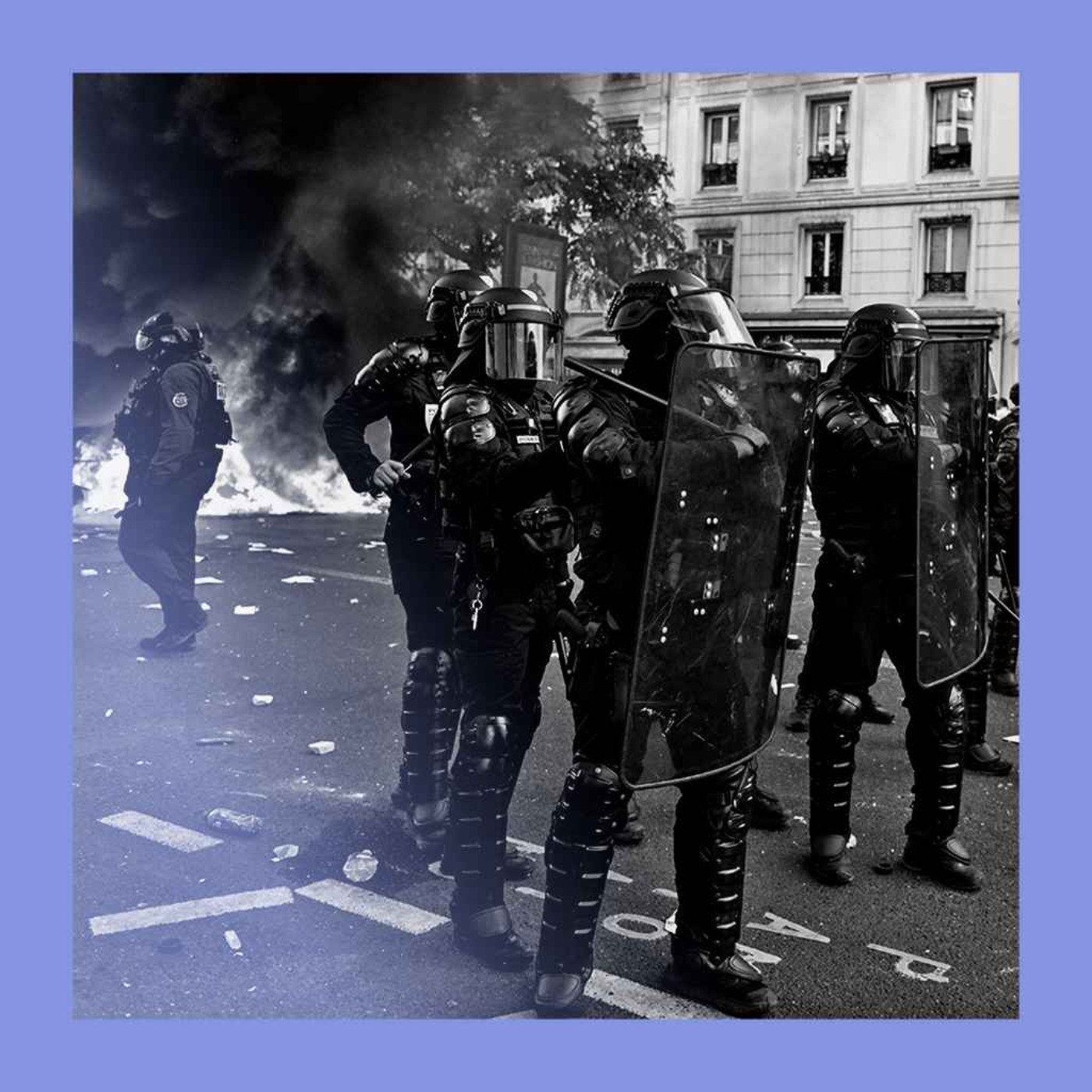
The episode covers three stories: (1) France’s “gilets jeunes” school protests, where over a quarter-million people joined pupils blocking high-school entrances since late September. Students cite budget cuts, teacher absences, heavy baccalaurea exam timetabling, and unsafe/poorly repaired buildings. Violence included burned entrances, tear gas, flashball guns, and a student losing a hand after a police grenade. The government (Prime Minister Sébastien Le Corneau) ordered secondary schools to pause regular classes for half a day to hold “internal democracy” councils. Key claim: the protests reflect wider national anxiety ahead of a presidential election and political polarization. (2) Cornell “Cornell Seven” protests: Cornell police and Title IX process allegedly omitted Jane Doe’s governor-confirmed rape statement; no criminal charges; Title IX rules and due-process swings are criticized. (3) India’s astrology in finance: 44% of adults believe astrology; fund managers use it as a “fog light,” advising IPO dates, deal signings, and hiring; examples include Mars-linked stock picks and “lucky number” investing.
Sophie Better (Economist Paris bureau chief), Stevie Hertz (Economist U.S. policy correspondent), and Abhishek Kumar (Economist writer in Mumbai).
Written by AI. May contain mistakes.
A detailed look at the reasons behind the recent school protests in France.
“And that's exactly what Grow Therapy is here for.”
A detailed look at the reasons behind the recent school protests in France.
“Yesterday, across France, over a quarter of a million people took part in school protests.”
Discussion on the government's response to protests and the political backdrop.
“Well, it was interesting when I spoke to the students yesterday.”
Exploring how political divides impact the situation in France amidst upcoming elections.
“And you can see it in the way that the political divisions are playing themselves out.”
An examination of the sexual assault allegations involving Cornell University students.
“You bite your tongue instead of escalating.”
Explore how the 2020 Title IX rules impact investigations and outcomes for sexual assault cases in universities.
“claims, according to one of its authors who I spoke to recently.”
Learn about the cultural significance of astrology in Indian finance and its influence on investment decisions.
“Thanks very much for joining us, Stevie.”
Discover how fund managers use astrology as a tool in their investment strategies and its impact on decision-making.
“All this came up in the office because I've been speaking with one of our writers, Abhishek Kumar, who's based in Mumbai.”

Get the gist, explore an idea or ask about something said.
 Claude
On The Intelligence from The Economist, what are the key points of this episode?
Searching your listeningAutomatic transcript. May contain errors.
0:00Therapy's biggest impact doesn't show up in some dramatic breakthrough. It shows up in the smallest moments. You bite your tongue instead of escalating. You put your phone down instead of firing off that text. You say what you actually mean instead of what would hurt someone else the most. Nobody applauds those moments, but they quietly change your life. That's what growing feels like. And that's exactly what Grow Therapy is here for. Grow is therapy that works, covered by insurance. Sessions average$21 with insurance, and some pay as little as$0, depending on their plan. There are no subscriptions, no long-term commitments.
0:37You just pay per session. Grow connects you with thousands of high-quality, licensed therapists across the U.S., offering both virtual and in-person sessions, nights and weekends. You can search by what matters, like insurance, specialty, identity, or availability. And you can book a therapy session in minutes and begin in as little as two days, not the national 48-day average. See if you could pay as little as$0 for therapy in seconds at growtherapy.com slash ACAST. That's growtherapy.com slash ACAST. growtherapy.com slash ACAST. Availability and coverage vary by state and insurance plan.
1:20This intelligence podcast is sponsored by business travel on hotels.com. Does booking business travel feel like another job? Hotels.com makes booking work trips easy and rewarding. It's easy because you can set your preferences once and get results tailored to your business travel needs every time. It's rewarding because with hotels.com's free rewards program, you can save instantly on your next work trip and earn rewards for future travel. Book faster with confidence at Hotels.com. Loyalty members 18+.
1:59Hello and welcome to The Intelligence from The Economist. I'm Jason Palmer.
2:10Today on the show, the shoddy law behind the Cornell 7 case, and a look at how astrology plays such a big role in Indian finance.
2:25But first...
2:33Sophie Pedder: Yesterday, across France, over a quarter of a million people took part in school protests. Parents, teachers, union workers joined pupils who've been blocking the entrances to high schools since late September. Sophie Better is our Paris bureau chief. More than a thousand secondary schools have been blockaded or touched by the violence. And yesterday, police fired tear gas at protesters. I went to see some of this for myself. I went to the Place de la République, which is where the day of marches was setting off. There were a lot of people, very, very high turnout. I went up to high school students who had a lot to say about why they were out protesting.
3:15There's a lot of high school that don't have enough money, so they don't have enough teachers. The budget is increasingly going down for our education when we're supposed to be the future generation, so the ones that are going to take the jobs of today or tomorrow. And everything is going bad in education.
3:37Sophie Pedder: I also spoke to a university student who'd come out in solidarity and described the protests as an expression of just widespread frustration felt by young people who are fed up. And how did things get to this big, a quarter of a million people? The protest started in one school in Quetet, just outside Paris in September, soon after the start of the school year. But it has really snowballed very fast into lycées across the Paris region and then into big cities and even small towns across the country, including the overseas territories. By Monday, there were 5 ,000 people who'd been arrested. 85 % of those are underage.
4:16Sophie Pedder: So that still means that there's been a share of adults who've been taking part in these protests. Some of the protests have turned really very violent. Public property's been burned, school entrances set on fire. The riot police have been deployed. And some of the use of tactics have been quite heavy-handed. We've seen tear gas and buttons, flashball guns used. One student lost a hand after picking up a police grenade. There's also been a high number of police injuries during these clashes. And all of this has been fueling a lot of anger that has now spread beyond just the high school pupils.
4:52But what is it that they're asking for or complaining about?
4:56Sophie Pedder: Well, it was interesting when I spoke to the students yesterday. The grievances start off about heavy timetabling. There's been a reform of the high school leaving exam, the baccalaurea, which has made it very intense days. They've also had a lot of teacher absences. absences. This is a stressful moment for students and not having enough teachers around has been very unsettling. There's also a problem with school buildings, repairs not made to roofs. It's been too hot during the summer, too cold during the winter. So there's a long list of grievances. But I would also say that the broader discontent was reflected in a lot of comments I heard.
5:31Sophie Pedder: People were angry about the government. They were angry about budget cuts. They are angry about the fact that there could be a government led by Marine Le Pen next year. So there's a lot of wider anxiety, I think, reflected by the fact that you've got so many people on the streets. And how has the government responded as this has grown and grown? Well, yesterday, the Prime Minister, Sébastien Le Corneau, announced that all secondary schools in the country will stop regular classes for half a day from today or as soon as schools are able to reopen. And the point here is that he wants a sort of moment of what he calls internal democracy.
6:06Sophie Pedder: Students in schools are represented on councils and you have a chance now for them to express their grievances and try and thrash them out, the headteachers. And that's the idea, is to try and start this dialogue at a very local level inside the school. But it's a very difficult moment in France at the moment. We're six months away from a presidential election. And after 10 years under Emmanuel Macron, there's a lot of uncertainty about what happens next and the possibility of a populist right government being elected. There's also pressure on France from the bond markets. The public finances are in a terrible state.
6:40Sophie Pedder: The budget deficit's at 5%. And the government is under pressure to cut budgets. So it is not an easy time for France. And you can feel the anxiety about the future, which comes out and is coming out now on the streets. So really, this is kind of a proxy for a wider national anxiety, political tension? I think it is. And you can see it in the way that the political divisions are playing themselves out. You have the far right, which is accusing the far left of infiltrating the student groups and fueling the violence. You have the far left accusing the government of ordering a heavy handed crackdown by the police.
7:18Sophie Pedder: And it's this kind of atmosphere, which is it's very difficult to see how that's going to get better in the coming months, because the closer we get to an election, the more intense those kind of divisions and accusations across the political divide are going to become. And if the problems in schools are a manifestation of belt tightening and ever smaller budgets, then France getting its house in order is only going to make matters worse. Yes, I think that's right. Although what we're going to see over the next months is a debate in Parliament about the budget. And it could well be that some of the belt tightening actually has to be eased in order to meet some of the objections from the political extremes.
7:54Sophie Pedder: So it is going to be a very tense debate inside the parliamentary chamber. It's going to be tense on the streets. And the government's worry is that this will spread to a more general discontent that would not just focus on schools, but would focus on the French as a whole. How much do you personally reckon things are going to get worse before they get better? I suspect that for the high school students, once half term comes around and schools are closed, that those protests will die down. But there is a broader discontent. It has a lot to do with the cost of living, the high price of petrol. At the pump, a lot of people rely on their cars to get about.
8:29Sophie Pedder: And those kinds of sources of anxiety and anger are unlikely to go away and could prove at some point much harder to tame. Sophie, thanks very much for your time. It's always good to speak to you, Jason. Thank you.
9:09It's a simple way to feel more prepared when an expensive surprise hits. Join the millions of customers who trust HomeServe. For 50 % less your first year, go to homeserve.com slash intelligence. That's homeserve.com slash intelligence for 50 % less. Savings compared to renewal price. Void in Florida. Therapy's biggest impact doesn't show up in some dramatic breakthrough. It shows up in the smallest moments. You bite your tongue instead of escalating. You put your phone down instead of firing off that text. You say what you actually mean instead of what would hurt someone else the most. Nobody applauds those moments, but they quietly change your life.
9:48That's what growing feels like, and that's exactly what Grow Therapy is here for. Grow is therapy that works, covered by insurance. Sessions average$21 with insurance, and some pay as little as$0 depending on their plan. There are no subscriptions, no long-term commitments. You just pay per session. Grow connects you with thousands of high-quality, licensed therapists across the U.S., offering both virtual and in-person sessions, nights and weekends. You can search by what matters, like insurance, specialty, identity, or availability. And you can book a therapy session in minutes and begin in as little as two days, not the national 48-day average.
10:28See if you could pay as little as$0 for therapy in seconds at growtherapy.com slash ACAST. That's growtherapy.com slash ACAST. growtherapy.com slash ACAST. Availability and coverage vary by state and insurance plan.
10:53Next, we're going to visit very different protests in America yesterday. Band up, rats! Band up, rats! Band up, rats! Cornell University students rallied in solidarity with a woman known only as Jane Doe. She has accused seven men of drugging and raping her at a fraternity party in October 2024. The Cornell Seven, as they've come to be known, deny any wrongdoing. But screenshots of their damning and crude messages have gone viral. Why is the case only making the news now? Last Friday, New York's governor, Kathy Hochul, revealed one reason. And according to new reports, she could not have been clearer that she was 100 % confident that she had been raped.
11:38Yet, shockingly, those words never made it into the account that the Cornell police sent to prosecutors. So last month, Jane Doe filed her own lawsuit against the men and Cornell. So the news as it's coming out of Cornell is awful and bleak. But it isn't an isolated case. Stevie Hertz is The Economist's U.S. policy correspondent. Every few years, an appalling case of sexual assault on campus captures national attention from Stanford swimmers to Columbia mattress protests. What draws focus is not just the assaults themselves, but also how they are subsequently handled by the universities and law enforcement in question.
12:22And what about this case with the Cornell 7 and how officials handled that? So after the assault, Jane Doe reported it to Cornell University police. And it's important to note here that these are sworn police officers. They are real cops. They're not just campus security guards. And in 2024, the university opened its own formal investigation under Title IX. This is the federal law that requires schools to respond to reports of sexual assault. In the end, no criminal charges were brought. And a lawsuit filed by Jane Doe last month has put the university, the police department and the county district attorney under a lot of scrutiny for that.
13:00The New York governor, Kathy Hochul, has appointed Letitia James, the state attorney general, to investigate the case. But it's also raised questions about Title IX, the federal civil rights law that pertains to sexual assault on campus and how schools and universities investigate it. Well, tell me more about it, first of all. So it's really a historical oddity that this civil rights law has become how universities regulate and investigate sexual assault. For its first few decades of life, Title IX was all to do with sports and admissions. But as there has been increasing pressure to get a grip on campus sexual assault, it's been used by a series of presidential administrations to put their stamp on this issue.
13:40And because it is administrative law, it doesn't require Congress to act. So every time there is a new occupant of the White House, there's been a new interpretation of Title IX. In the latest version of this, which Donald Trump passed in his first term and re-entered into official federal law last week, actually, it's called the 2020 rule. And it aimed to eliminate the possibility of false or unverified claims, according to one of its authors who I spoke to recently. It did this through a large amount of due process for both parties. The rule required universities to create miniature judicial systems on campus with hearings and cross-examinations and huge teams of staff.
14:17And so what has that looked like since the 2020 rule took effect? So we've now had six years of the 2020 rule. Joe Biden did his own rule, but it was only in place for like half a year. And victims groups really worry that these elaborate investigations are quite damaging. According to Jane Doe's lawsuit in the Cornell case, there were 12 hearings that she had to sit through. Many accusers declined to go through with Title IX lawsuits. In New York in 2024, a state where Cornell is, but also where we have pretty good data, just 14 % of incidents reported to Title IX coordinators ended up going through with investigations.
14:56And that's lower than it was before under Barack Obama's different rules. The Department of Education's Office of Civil Rights investigates whether schools are following Title IX. And after the 2020 rule, one former lawyer for the Office of Civil Rights, who I spoke to, told me that resolved investigations into sexual violence on campus, quote, fell off a cliff. So clearly, procedurally, that this rule is not serving the people that it's intending to serve in a lot of ways. What about the notions of punishment? So none of the interpretations of Title IX in recent years, whether from Democratic presidents or Republicans, have dictated punishments for students who are found at fault.
15:37Colleges decide that based on the circumstances, their individual standards, state law, they are only required to keep campus safe space. The strongest sanction that a school has is expulsion. And in the case of the Cornell 7, subsequent reporting has shown that Cornell expelled or suspended students found at fault of sexual misconduct. Another student had already graduated by the time that the Title IX procedure was through. And two students were found responsible for attempted sexual exploitation. And the university there required courses and essays. In a statement, Cornell said, quote, any suggestion that the university did not impose consequential punishments for those involved is false.
16:17Still, all but two of the men involved will be able to get their degrees. So it's hard not to say that Title IX is not doing what it is intended to do now that it's been bent towards dealing with these sexual assault cases. There is a trade-off in any kind of justice system between justice for the victims and justice for the accused. But increasingly, we're seeing really relatively little oversight into how Title IX is executed on campuses. In 2025, the Office of Civil Rights reached no resolution agreements in cases of sexual harassment or violence at schools and universities, despite more than 1 ,100 pending.
16:56So 1 ,100 students had petitioned the Department of Education saying something went wrong in my case, and there were no resolution agreements found. These wild pendulum swings between different administrations also create a lot of work for colleges and universities. It's one thing for big public universities or wealthy private universities to have these teams of lawyers and investigators, but it's much harder for smaller schools to keep up with the different changes. And fundamentally, it's just really unclear if Title IX is having any impact on reducing sexual assault on campuses. There are few national surveys.
17:28Because of New York law, Cornell polls its students. And in 2025, more than a third of female undergraduates reported experiencing sexual assault during their time at college. And that's an increase from prior years. Criminologists often say in a variety of circumstances that one of the best ways to deter crime is to ensure that perpetrators get caught. Fifteen years into its expansion, Title IX seems to be falling far short of that.
17:58Thanks very much for joining us, Stevie. Thank you.
18:12In case you were wondering, I am an Aquarius. And a quick Google search earlier revealed that I'm a Scorpio ascendant, which further Googling revealed that people often see you as mysterious, magnetic, or quietly powerful. And lots of other generic, flattering, if I might say, nonsense. All this came up in the office because I've been speaking with one of our writers, Abhishek Kumar, who's based in Mumbai. and who's been looking into how much this stuff permeates the world of finance.
18:48Traders everywhere are a superstitious lot. You've got Americans who wear lucky ties at stock exchanges, and Asian businesses pay premiums for lucky numbers. It's even said that JP Morgan subscribed to an astrology newsletter. But India takes celestial finance to a whole other level. Celestial finance. Okay, why is that? Why is that such a major influence in India? I think most Indians, most of us are born with it. It's part of our culture. A recent study by Pew Research Center showed that 44 % of Indian adults believe in astrology. And it's a small wonder that astrology market in India makes a staggering$7 billion in annual revenues.
19:28And this crystal gazing starts very early. Horoscopes are drawn up the moment. Newborns stumble forth. Doctors try to perform C-sections in a priest-appointed lucky time window. And cars, motorbikes, even bicycles are delivered to buyers at auspicious moments. And so why should finance be any different? And so it's not uncommon for fund managers to be part of WhatsApp groups that are run by astrologers. They don't necessarily take decisions based on the stars and constellations, but they say they use it as a lever and compare it with the fundamentals for which they crunch numbers on Claude and perplexity among others.
20:03So tell me then how people are putting it to use, if not outright depending on it. Yes, I spoke with one person who ran two alternative investment funds for high net worth individuals and he said something interesting. He said that astrology is like a fog light. It's not really needed when the visibility is good, but it's very useful when the road disappears into mist. He said that he gave astrology roughly half the weight in his investment decisions. And there was a time he said he bought stocks in Jindal. It's a steel maker in India because the planet Mars is associated with red metal and Mars was strong in his birth chart.
20:39The stock, he said, ended up rocketing. Astrologists do a whole lot of things. They advise corporate clients on IPO dates. Deal signings say when to lay a foundation stone at a factory. Some consult on CXO recruitment by studying candidates' horoscopes, and they match them with that of the company's vision to see whether the temperaments of the candidate and the company might match. I hesitate even to ask about how much this stuff works, but it might be said that your guy with Mars in his birth chart just got lucky once, you know? He would strongly disagree, but yes, you're right. When you look at the numbers, it doesn't look that great.
21:13Like, for example, there were some studies of Chinese and Taiwanese investors, they've shown that betting on firms linked to the lucky number eight and avoiding those associated with the unlucky number four, they actually resulted in significant underperformance, which showed that investors were overpaying for eight-laden stocks. It could be roll of the dice, but the astrologers think different. So perhaps the only guaranteed beneficiary of this is the people who sell astrology-related advice and the like. Oh, big time, yes. It definitely works out for retail businesses. They thrive on banking on individual customers to pay a little amount of money online through UPI and thrive on some of their insecurities.
21:54Sometimes online courses that promise to predict stock market movements using astrology, they cost around 35 to 45 ,000 rupees or up to$470. There's in fact a platform called InstaAstro that brings traders, investors and astrologers together. It raised some$12 million from investors in August alone. There's another entity called Astro Talk that charges anywhere between 14 and 200 rupees a minute for consultations. It also sends merchandise like financial prosperity bracelets for a few hundred rupees. And until recently, customers could pay another 111 rupees for a ritually energized version, which basically a priest would bless.
22:32So yeah, there are quite a few companies that are seeking, you know, venture capital investment and doing quite well. That seems like the sound financial advice to come out of this. Abhishek, thanks very much for joining us. Thank you, Jusun, for having me.
23:03That's all for this episode of The Intelligence. We'll see you back here tomorrow.
23:13Thank you.
What started as a small protest about conditions of a school and of schooling has mushroomed, and tapped into national anxieties that may prove hard to tame. In the context of the “Cornell 7” case we examine Title IX, the statute that should protect students—but that is failing. And how peddling superstitions to financiers is big business in India.
Guests and host:
Topics covered:
Listen to what matters most, from global politics and business to science and technology—subscribe to The Economist.
Hosted on Acast. See acast.com/privacy for more information.


