
 Ask ChatGPT



In this episode, the hosts discuss three major stories shaping global politics, culture, and economics, focusing particularly on France's political instability, China's economic challenges, and the phenomenon of podcast listening speeds.
Written by AI. May contain mistakes.

Get the gist, explore an idea or ask about something said.
 Claude
On The Intelligence from The Economist, what are the key points of this episode?
Searching your listeningAutomatic transcript. May contain errors.
0:28The Economist One way around that would be reforming the famously stingy pension system. It would be good stimulus and good social policy, if the government dared to do it. And I really hope that I sound completely normal to you right now, and not like Donald Duck, because apparently a lot of you listen to podcasts at double speed. Our correspondent asks if I'm being precious by minding about this, and how your listening experience might suffer.
1:01But first...
1:10When France's president, Emmanuel Macron, dissolved the country's parliament in June of last year, it was entirely unexpected. A gamble. He had hoped to recoup the political majority he'd lost in 2022. But his minority got even more minor. As support has shifted both to the left and to the hard right, getting anything through Parliament has proved impossible, even existential for one prime minister after another. And voters are tired of the chaos. As a protest vote builds in Parliament, actual protests are planned for the streets. France looks almost certain to lose another government this evening.
1:53Sophie Petter is the Economist's Paris bureau chief. National Assembly, that's the lower house of parliament, is holding a vote of confidence in the prime minister, François Biro. It is fairly certain that they will not give him confidence and the government will therefore fall. And if this happens, it'll be the second time in nine months and the fifth prime minister will need to be named by the president, the fifth in two years. So France is facing yet more gridlock in parliament and yet more political uncertainty. Sophie, we have obviously talked about this before on the show. What is it with all of this instability?
2:32What's going on here? We have, I mean, I feel like we're often having the same conversation. This time it's about the budget for 2026. Last time it was about the budget for 2025. It's the same problem. That is to say that France has high level of debt, high level of government budget deficit. It is trying to make savings. It needs to make savings. The markets are putting pressure on it to make savings. And it's got a commitment to the European Commission to make them. But Parliament won't have it. At least they won't have the savings that this government has come up with, which is 44 billion euros of budget savings, including the abolition of two public holidays.
3:06You can imagine how well that's gone down. So the Prime Minister could see that he was facing rebellion in Parliament. He runs a minority government. He doesn't have a majority at all in Parliament. And he thought that he would hold a confidence motion. It's looking like he's going to lose. and nobody wants his deficit reduction plans. That's why he is probably on his way out. So it seems clear that these reforms are needed in one way or another. Why is it so hard to get anything through towards that goal? Well, the main problem is that parliament is split into three blocks and each of those blocks is hostile to the other and nobody wants to see Macron's centrist grouping succeed.
3:44So you have the far left, you have the far right, And both of those blocks are in a sort of unholy alliance, trying to make sure that these budget savings don't go through, and certainly not in the way that the current government has wanted them to. What do they want instead? Or is it just for Mr Macron to fail? Well, it is for President Macron to fail. And indeed, the far left has said they want him to resign. I mean, that's very clear. On the far right, if you look at what Marine Le Pen has been saying, she herself has called, and on Sunday she repeated this, She wants a very fast dissolution of Parliament and she wants fresh elections.
4:36It's interesting that she's saying this because under the ban, her ban for running for Parliament, she wouldn't be able to stand for her seat again. And she recognised that and said, I don't mind. I know that. But I still think the only solution is fresh elections at which she said her party would win a majority. And then the really interesting question is about the socialists. Now, nominally, they're in the same group with the far left. But they've actually been the ones who have been drawing up a more moderate alternative budget. They want far fewer savings. They've got about 22 billion against the 44 billion that the government wants.
5:08But these are made up, interestingly, of mostly tax increase rather than budget cuts, including a new tax on the ultra-rich. And that is something that President Macron is not at all keen on. But it's what the socialists want as a condition for either taking part in government or in some sort of potential non-aggression pact with the government. So with all of that opposition in all those forms, what do you think Mr. Macron will do? What can he do? Well, constitutionally, all options are in his hand. And he could call fresh elections. I don't think he'll do that immediately because, well, the last time he did it, it didn't go so well for him.
5:43He shrunk his own majority. And the same thing would happen again. He is unlikely to do well at all. If you look at polling, the far right, the national rally is polling at around 33 % in the first round. The left, United, would get about 25%. And Macron-centric, not more than about 15%. So it's much more likely that he'd choose instead to try yet another prime minister. It's not going to be easy. It's not obvious what the choice would be. The various names floated among his camp. I mean, one of them is the defence minister, Sébastien Le Cornu, who is a loyalist. Comes originally actually from the centre-right, but very difficult to see how any of these names, many of which are being banded about at the moment, could unlock what is stalemate in parliament.
6:27Whatever you try to do, and the only sort of very narrow possibility of getting an agreement, I think is to try and work with the socialists. And you are still up against the numbers in parliament, which are against you. And even with the socialists, the centrists don't have a majority. So it's incredibly difficult for whoever takes over if that's what Macron decides to do in the short term, which I think is it. And in the meantime, what does all of this political instability mean for the country? Well, it weighs on everyone, really. It weighs on businesses, which are feeling nervous. And there's a lot of uncertainty.
7:02Business doesn't like uncertainty. and that means that investment decisions are being put off, recruitment decisions put off. Consumers are not spending like they should be. There's a lot of saving going on. It's a very cautious stance that the French consumer is in at the moment. And then if you look at the markets, there is a nervousness. There's no financial crisis about to happen in France. I don't think anyone's suggesting that that's the case. France can borrow money on the markets. It's a very big economy and it's very diversified and there isn't a problem. But the rates have gone up and France's borrowing costs are now higher than those in Greece, which is quite a turnaround when you think about it.
7:39So we are looking at strain and stresses, uncertainty, which all weigh on the economy. And there is always the possibility that these things can move very fast and catch people unawares. And that's the greatest risk that France is facing. That's a look at kind of largely how the markets are looking at this. What about the people? What do voters reckon to all this? Well, voters are fed up. They dislike the president. They dislike the government. They seem to want to have fresh elections, but it's not quite clear that that would resolve anything. And then there are the prospects of all sorts of protests and strikes.
8:12There are two dates already set, September the 10th, September the 18th. The first of those is a quite amorphous social movement, meaning protests, but not organised by unions. The second is a union organised protest, which is much more easy in a way to predict. It's when the railways and the airlines and transport generally goes on strike and schools are out. But the one on September the 10th is something that has arisen by social media. It's called block on tout, meaning block everything. And that is something that reminds me a little bit of the beginning of the Yellow Vest movement back in 2018, which was something that then spread.
8:48It's difficult to know whether this will happen a second time, but it's certainly something to watch out for. Sophie, thanks very much for joining us. You're very welcome, as always.
9:18China's households aren't spending enough.
9:24The savings rate is not quite as high as it was during the pandemic, but it's still too high. A lot of households put away something like 30 % of their disposable income. And migrant workers, it's often closer to half. Simon Cox is our China economics editor. And with the property market in a slump, there's a question of where do you put this money? And too much of it is collecting in idle bank deposits. Now, the problem is that weak spending means there's not enough demand for goods, which means that prices are falling. And that can lead to further problems. if companies' prices are falling, they're often tempted to cut wages, and that could further damage household demand.
10:03So it becomes a vicious cycle that the government's frankly struggling to break. So Simon, what is the Chinese government trying to do to escape that cycle? So recently, the leaders, including Xi Jinping himself, have talked a lot more about livelihoods, about improving social security and public services. This is a bit of a switch in emphasis from their usual favourite topic, which is the wonderful technological future that China is aspiring towards. And I think the logic behind this is that if households feel insecure, then they're not going to spend. So if you can strengthen the social safety net, that will ease this sense of insecurity and unlock some of this spending.
10:44So, for example, in the last few months, we've seen a variety of fairly novel policy initiatives. There's a new subsidy for childbirths. There's free preschool. You can put your kid into the final year of preschool for free now. They've also been talking about initiatives at the other end of the life cycle. We've seen some effort to improve the generosity of pensions. So what's going on with pensions? I would normally think of pensions as being synonymous with saving, not stimulus. So there's this rising chorus of economists and government advisors who think that pension reform could be good stimulus policy.
11:21So it's not just social policy. It's not just about making people feel more comfortable in their retirement. It's also good for the macroeconomy. So the hope is that if you make pensions more generous, the people who are receiving the pensions will spend more. But even better, the younger people who are looking forward to their pensions will be a little less concerned to save. They'll count instead on the pension safety net to tide them over during their retirement. and they won't be quite so determined to build a separate nest egg. One former government advisor has said, if you spend a trillion yuan on rural pensions, it'll increase GDP by about 1.2 trillion.
11:59And that could be quite useful right now. So Simon, let's just step back for a minute. What does the pension system look like at the moment? Why is it not working to do that? So Chinese pension system is often described as having three pillars. There's the personal, the occupational and the public. That makes it sound very tidy, like a piece of classical architecture, but actually it's much messier than that. It's a whole variety of schemes that have been stitched together. So the broadest scheme covering rural residents and people in the cities who aren't working is not very generous, but also doesn't make huge demands on people.
12:35Then there's a more extensive scheme built around employers in urban areas where both employees and their employers make contributions. On top of that, enterprises can offer their own schemes. And then you can also take out your personal pension if you want. So the government's been tinkering with all of these schemes. In particular, it wants the occupational schemes to invest a bit more adventurously. At the moment, a lot of the money is flowing into really quite safe investments. And the reason for that is that the people who are managing the money tend to be judged year by year. So there's no real concept of investing in stocks for the long run.
13:11They basically have to invest in things that aren't going to lose money in any single year. The government wants to change that and have them evaluated over a three-year or even longer span. And that hopefully will improve returns to these schemes. And what else are they doing about this? For the urban scheme that covers workers, the big initiative there is to try and extend the net to include all of the gig workers that China now has. Often those more flexible forms of employment fall through the net of the existing pension schemes. And then the rural scheme, they've become a little bit more generous.
13:45So in the last couple of years, they've offered a 20 yuan increase in the monthly payout. And that sounds terribly little, and indeed it is. It's actually quite large compared with previous increases. So at least there's a sort of recognition that that has to become more generous. Simon, the big ambition here is to make people feel more secure so that they spend rather than save, right? Are these measures enough or what else could they be doing? So I think the most important thing they could do is make the rural pension much more generous. And I'm not talking about a 20 yuan increase. They need to triple the size of these pensions to really make a difference to rural spending.
14:24That would be affordable. It costs about half a percent of GDP. And it would make a big difference in the lives of the people receiving it now. But also a big difference to the outlook of people who could expect to receive it in the future. I think it would help to lower their savings rate. And a lot of people in China who live on these pensions are still quite young, quite active. Until recently, you could retire at the age of 50. If you're a woman in a blue collar job, those retirement ages are creeping up. But people still have the capacity to spend. And indeed, some economists have noticed that it tends to be the older parts of the country that in many ways are a little bit more exuberant right now, who are spending a little bit more.
15:04And it's the youth who are unemployed and depressed and lying flat. So there is some consumption potential there. And another key reform would be for the government to move more of its stakes in state-owned enterprises into the pension pot. So China has these enormous state-owned enterprises. Many of them are really quite profitable. And it would be good if pensioners, the public, had a more direct claim on those profits. Right now, China's economy is suffering from such a chronic shortfall of demand, such a shortfall of spending, it really has to do something to make this large cohort of the country more secure and more willing to open their wallets.
15:45Simon, thank you so much. Thank you.
16:05Earlier this year, there was a pretty controversial advert for Audible, an audiobooks platform, which discussed the chosen speeds at which people listen to their audiobooks. Lizzie Peet is a researcher for The Economist. Hollywood icon Glenn Powell likes listening at one time speed. Now, I want to hear people talk at a normal human rate. Bowen Yang, an American comedian, on the other hand, prefers a faster paced narration. You can round up to two, but you need 1.8, which I think is what Goldilocks also likes. This advert sparked a fierce online debate, with some feeling it implied that those who make haste are weird.
16:47I think people who go real fast are, I don't want to say psychopath, but it's giving that. Some claim to feel shamed by the ad and threatened to cancel their subscriptions. Lizzie, do many people listen to podcasts speeded up? I've heard anecdotally that a lot of people are listening to podcasts and audiobooks sped up just to get through the sheer avalanche of content there is out there. Hang on, I'm not following. Tell me about this at normal speed. I've heard anecdotally that a lot of people are listening to podcasts and audiobooks sped up just to get through the sheer avalanche of content there is out there.
17:21So The Economist asked YouGov to do a poll of this. And it came back with some quite startling results. 31 % of Americans between the ages of 18 and 29 listen to audio at playback speeds faster than one. And the figure for those aged 45 and over is just 8%. Apple and Spotify offer users the option to speed through their podcasts. Netflix also has a button that you can toggle the speed on certain formats. YouTube has a similar feature and actually recently rolled out even a 4x option to its premier subscribers. Do you do this, Lizzie? Well, it kind of depends for me on what exactly I'm listening to.
17:59I mean, I would obviously never speed you up, Rosie. But there are some podcasts these days that go on for sort of hours. And I personally just don't really have that time, even if I want to listen to the content. But obviously, for the audio and video platforms, there's not really a downside to offering this feature. The more books and episodes that someone can get through, the more advertising and sales revenue come in. And in terms of time saved, YouTube recently published some statistics where they claimed that viewers save more than 900 years per day by toggling the playback speed above one.
18:31We did a back of the envelope calculation. If you had a 10 hour car journey, you could listen to Persuasion unabridged in eight hours and 13 minutes if you listened at normal speed. But if you click that just to 1.5 speed, so not even double speed, that would go down to five hours and 30 minutes, after which you could fit in several other shorter books. But does that really work? I mean, can you really take in what people are saying when they're sped up? You've hit on the instinctive reaction that a lot of people have to this, which is this image in your head of people's brains being frazzled by endless content coming in at faster and faster pace.
19:04There's not a huge amount of studies that have been published on the exact impact of speed on concentration. But those that have indicate that it doesn't seem to have that much of an effect on the listener's ability to concentrate and to process information. So I spoke to Marcus Pierce, who's a cognitive scientist, and he pointed out that the average person speaks at a rate of 150 words per minute. But most brains are capable of processing information much, much faster than that. The best studies have actually looked at the impact on students who speed up video lectures. And there have been a lot of studies testing what happens when students sped up the rate at which their lectures were played back and then took a test on the content of the lecture.
19:45And overall, they found that up to 1.5 speed, there isn't really much difference in performance. That changes quite significantly as you approach and exceed double speed. But I was even surprised that just going up to 1.5 speed didn't seem to have that much of an effect, which I think is the main takeaway from all of this. Isn't that all quite transactional, though? I mean, I can sort of see it with news. You might be trying to get information, but enjoying a podcast is also about enjoying the experience. It's an entertainment. You know, we put quite a lot of work into pacing that kind of thing.
20:17Surely all of that's lost when you're on fast forward. Completely understandable. All of this really boils down to a matter of taste. It's up to you personally what you choose to speed up and what you don't. Someone I spoke to compared this to skim reading. So a lot of people skim read books just to get through them a bit faster. There are techniques that came about in the 1950s and 60s of people that could train their brains to scan pages at a much faster rate, almost up to 30 pages a minute. But to your point, Rosie, actors, audiobook narrators and podcast presenters often rely on rhythm and pauses for emphasis and meaning.
20:52Few actors, for example, would race through soliloquies in Hamlet. At the end of the day, it really comes down to a question of habit and personal taste. It's fundamentally up to you where you choose to draw that line. Fascinating and a bit depressing. Thank you, Lizzie. Thanks very much, Rosie.
21:29That's all for this episode of The Intelligence. We'll see you back here tomorrow. Thank you.
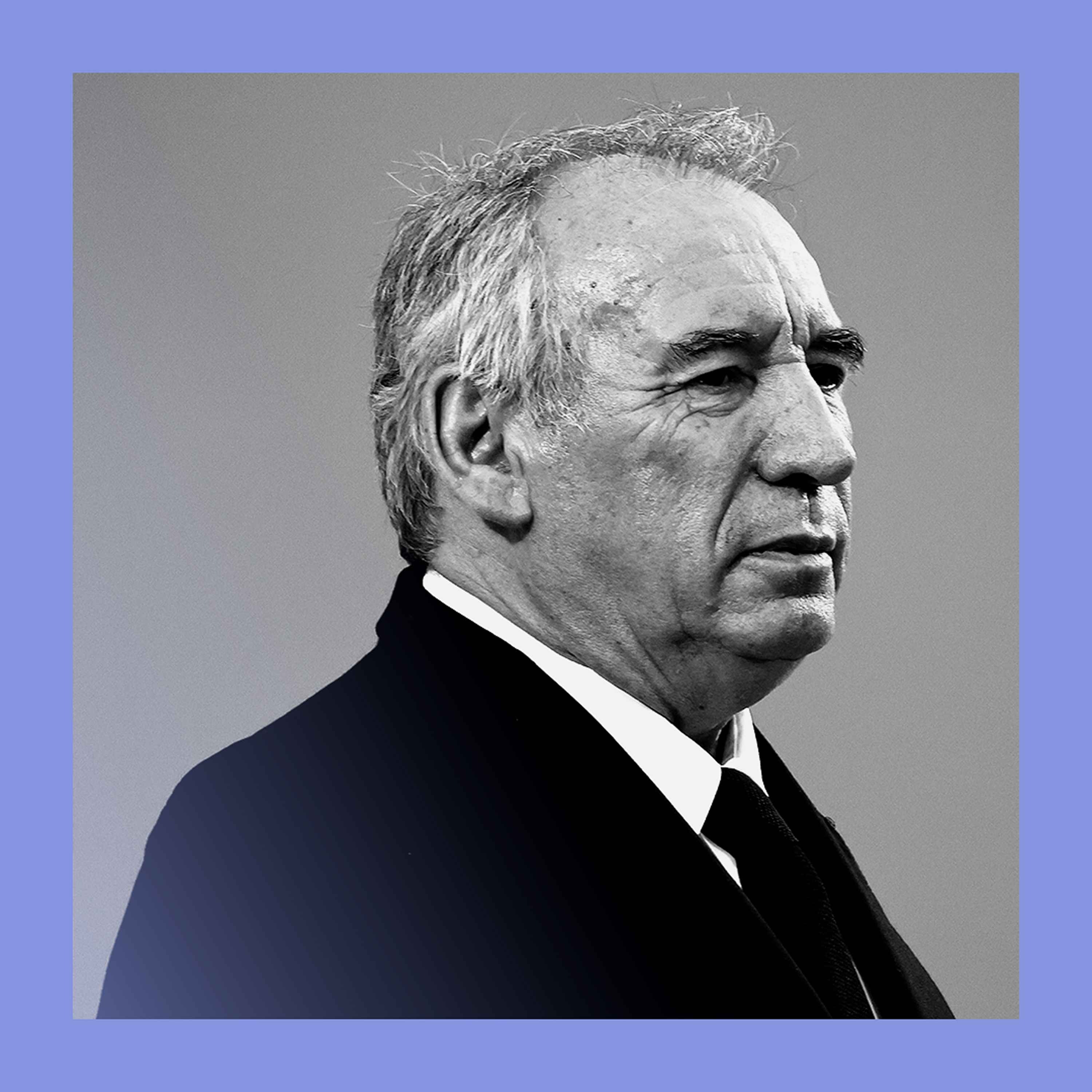
An unpopular budget will probably spark the ousting of another prime minister, Francois Bayrou—and with him goes another government. Parliamentary impasse is now business as usual, and voters are fed up. Getting Chinese spenders spending is tricky, so policy wonks are at last considering reforming the stingy pension system. And why so many people listen to podcasts at warp speed.
Get a world of insights by subscribing to Economist Podcasts+. For more information about how to access Economist Podcasts+, please visit our FAQs page or watch our video explaining how to link your account.
Hosted on Acast. See acast.com/privacy for more information.


