
 Ask ChatGPT



Hosts: Jason Palmer and Rosie Blau
A daily podcast offering news analysis from The Economist, focusing on significant shifts in politics, business, culture, and unexpected topics.
Written by AI. May contain mistakes.

Get the gist, explore an idea or ask about something said.
 Claude
On The Intelligence from The Economist, what are the key points of this episode?
Searching your listeningAutomatic transcript. May contain errors.
0:02The Economist
0:10Hello and welcome to The Intelligence from The Economist. I'm Jason Palmer. And I'm Rosie Bloor. Every weekday we provide a fresh perspective on the events shaping your world.
0:24In America, more and more students are leaving during the school day to receive religious teaching. We look into the fast-growing company behind these lessons and the loophole that makes this blending of church and state legal. And, dear listener, we bring you the color of the season. What is it? Why is it? And how on earth do you wear it? Let our correspondent be your guide.
1:01But first...
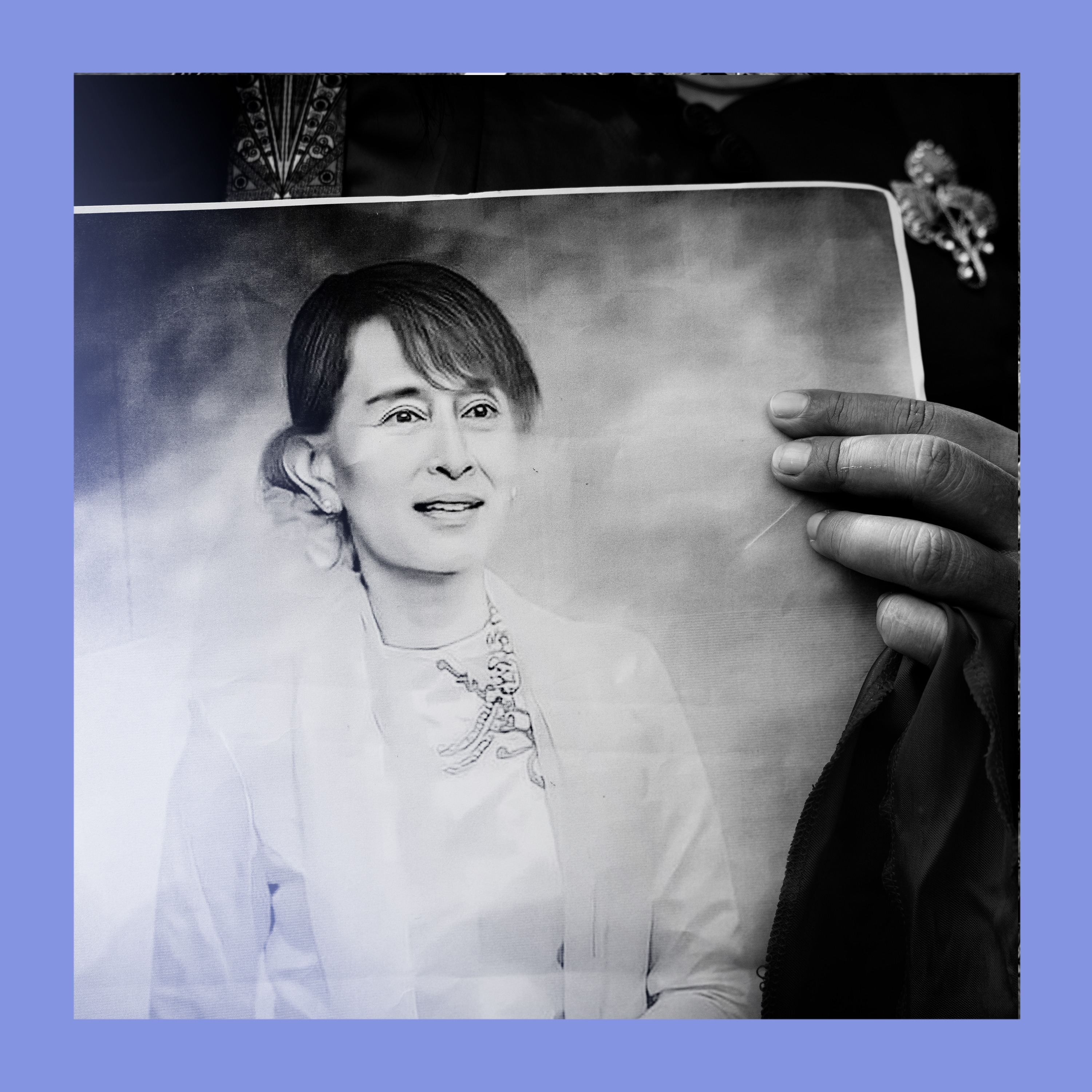
1:09Only Ansan Suu Kyi's jailers know how Myanmar's ousted leader spent her 80th birthday on June 19th. Irina Long writes about Myanmar for The Economist. She was detained in February 2021 when the army staged a coup and is believed to be kept in solitary confinement in a purpose-built cell in a detention centre in Nepidol, the capital. She cannot communicate, even with her family. That's never clear where or when she was anywhere. They keep saying that she's been moved to house arrest or maybe some military compound or whatnot. But as far as I'm aware, she's been in prison all this time. There's nothing I can confirm absolutely because any information that comes out is via military sources and prison personnel.
2:03Kim Aris is her younger son. He is the only person to have heard from her since her arrest in the form of one letter received in January 2024. What I do believe is she is suffering from ongoing problems with her gums, so eating is a chore, problems with her bones, problems with her heart. And she's 80 years old now. She's spent 20 years of her life incarcerated in one way or another. And whilst she has an extremely strong spirit, she's an old lady, you know, and the conditions are horrendous in Burmese prisons. We all know that. What about the insects? Is that still an issue? We believe that there's mosquitoes, rats, you name it.
2:54This year, to mark his mother's birthday and to remind the world of her plight, Eris called on supporters to produce short video messages.
3:19Our aim was 80 ,000 and we have surpassed 110 ,000. Suu Kyi might not see them, but the campaign is rumoured to have irked Myanmar's military ruler, General Ming Ao Nain. He is said to have ordered his followers to send him more than 100 ,000 video messages for his own birthday on July the 3rd. And Irena, for any listeners who haven't been following this step by step, let's talk through the events that have led to Ms. Succi's situation at the moment. The military who's been watching her success in the democratic elections were very disappointed with the outcome for their party. And in 2021, they staged a coup.
4:05The National League for Democracy, which is Sue's Chiefs Party, won 82 % of the seats. That's an even higher number of seats than they had in the previous elections. She was arrested on the first day of the coup and taken to prison. And in December 22, she was sentenced to 33 years in prison. And that number was later reduced to 27. The offences they claimed she had committed were incitement to resist the coup. electoral fraud and corruption, and there were some other charges, 11 in total. And Suu Kyi denies them all. This is the fourth time she's been locked up by the military dictators. Between 1989 and 2010, in three separate periods, she spent 15 years mainly under house arrest in a villain Yangon, the biggest city.
4:59This stretch is especially grim. I was able to get every so often a parcel delivered from the embassy, for instance. Sean Turnell is an Australian economist and National League for Democracy advisor who spent almost two years in detention in Myanmar, quite a bit of it in the same jail as Aung San Suu Kyi, and saw her and spoke to her during her trial in 2022. I'll never forget the first time I saw her, because it was about a year into my imprisonment before I was put on trial. So I hadn't seen her in a year. And I was really quite shocked because she was very, very thin. And you said that the goal for Miss Suchi's son this year was to remind the world of her plight.
5:42Does the world need reminding? How much attention does her case now get? Her latest stretch in jail has attracted much less attention from international human rights activists. That is perhaps because the scale of the Myanmar crisis, Suu Kyi is not the only one who is locked up. There are 22 ,000 political prisoners suffering in similar conditions or worse. But it's also because there is a deep dismay about things that happened while she was in power between 2016 and 2020. What is the source of that dismay? She strongly criticised for not defending the mainly Muslim Rohingya ethnic minority who live at the borders with Bangladesh.
6:27And when they came under attack from Buddhist neighbours in Rakhine State in 2015 and then were massacred by the Myanmar army in 2017. Her disgrace was sealed when, as Myanmar's state councillor, she went to defend her country against charges of genocide. at the International Court of Justice. She actually admitted war crimes were committed, but stopped short of calling it a genocide, which made many people upset. The verdict on the case is still pending, and her supporters say her priority was to introduce a fully democratic constitution. This was made very difficult because it required that at least some of the military we would vote for the changes.
7:19And maybe one way she tried to do that was to charm the generals, or at least some of them, switch to her side. Others think she shared the generals' racist view about the Rohingyas. And earlier you pointed out that she is far from the only political prisoner. There are more than 22 ,000, you said, and it's been clear from what we've heard on the show recently that the state of things in Myanmar is pretty appalling now, right? Yes, that's absolutely right. Every day the military is actually bombing schools, hospitals. The whole country is basically in a state of civil war. There are hundreds of armed groups active.
8:02Most of them are trying to dislodge the military regime. But the military regime has their own militia groups too. So it's actually a real big mess. Two million of its people are on the verge of starvation, not to mention the earthquake, which made things a lot worse for the living conditions of many, many people. The UN has been calling for years now that what's taking place inside Myanmar is a humanitarian disaster. And the Junta, we know, are not willing to help people. The resistance is making a lot of inroads. They have large parts of the country under their control, but the Junta is still in charge of most of the cities.
8:49So given that that's the situation on the ground, that Miss Suu Kyi has been imprisoned for a while now, has, at least in many people's eyes, a tainted legacy, how much influence does she still have? People still adore her. They call her Mei Mei, that means mother of the nation. The Junta is not squeamish about dispatching its enemies, but seems to have chosen to keep Suu Kyi alive, much to the relief of her son. She's always maintained her health and mental health as well through meditation and exercise and general healthy practices. So we can hope that her mind will still be strong. If she was released today, I'm sure a lot of people inside Myanmar still would like her to be their president.
9:39If she was released, she could play a role as a figurehead for a new democratic government, perhaps with some prestige, but little power. But for now, all evidence points to a grimmer outcome that she will age in prison. She has a long sentence to go. Irena, thanks very much for your time. Thank you, Jason.
10:16In America, there's one nonprofit that's doing quite a bit more than others to push the boundaries between church and state. Rebecca Jackson is our Southern correspondent. It all started with a chance meeting in 2018 when Joel Penton, a former football player, was inspired to try to bring his Christianity directly to America's elementary school students. I was in my hometown and I ran into somebody who said, hey, Joel, glad I ran into you. We'd love for your help with our release time program. Joel would soon learn about the idea of release time, that students could legally be dismissed for public schools for religious instruction, and then bused right back.
10:58I thought, well, I've never heard of that. That sounds illegal. Like, are you sure that you're allowed to do that? And they were like, yeah, there's a Supreme Court ruling that says we can do that. And I was like, oh, okay. From there, Joel took the idea and just ran with it. He founded LifeWise, a nonprofit that buses children from schools to local churches, during recess, gym, art, and other elective classes to teach them the gospel during the school day. I tell people that that's the day I gave up sleeping because I thought, yeah, like, this is amazing. Unless I'm confused, this might be the single greatest missed opportunity to give access to the Bible to the next generation.
11:42Is he confused, though? I mean, this does seem to be, as you mentioned, a kind of blurring of church and state. At the moment, this is perfectly legal. It hinges on a case called Zorak v. Clausen, which is a 1952 Supreme Court decision that stemmed from a New York City case. Students in taxpayer-funded schools in America are legally allowed to be released for religious study, as long as the classes aren't taught on school grounds and no students are forced to go. Mormon and Jewish communities have been doing this for a long time, but not at scale. LifeWise works almost like a franchise. Parents initiate bringing the program into their schools, and they raise the funds to pay LifeWise a startup fee.
12:18The group then provides these signature red buses and a plug-and-play curriculum. It may sound like a cute small-town thing, but this is no small enterprise. What do you mean by that? How big is it? This year, LifeWise operated in 585 school districts across 28 states, and it enrolled more than 44 ,000 students. When school begins again at the end of the summer, it will be in 982 districts in 33 states, an increase of nearly 70%. To think if I hadn't signed him up, I don't even know what our lives would look like. And like our story. You can also track the group's meteoric rise in terms of money.
12:55In 2023, LifeWise made a$4 million surplus, according to his tax filings. Last year, that figure jumped to$17 million. I really want LifeWise to go on until my kids get to do it and then my kids get. So talk me through what exactly is being taught here. So Jason, this is not a typical Sunday school. I got an employee handbook from a former disgruntled employee, and that shows that LifeWise is really trying to get at what they call unchurched students. They're not after your typical Christian kids, and they're teaching them a somewhat radical version of Christianity. I got a recording of one of the LifeWise classes from April, just before Easter.
13:40The lesson was on the crucifixion. And the teacher started off by asking the seven and eight-year-olds to write down a list of their most troublesome sins. She had brought an example whip to show them how Jesus was tortured before his death. And then she went into graphic detail. Some parents are thrilled that Christianity is being built into the school day and that their children can go to these LifeWise classes for free. Others say that LifeWise students are taught to proselytize to their peers. And sometimes they're coming back saying pretty nasty things. A little girl who identified as lesbian was told that she was going to hell, and a Jewish nine-year-old begged his parents to let him believe in Jesus so that he could go.
14:20But the get-out clause, what the Supreme Court decision you mentioned specifies, is that no one's forced to go and it's all voluntary. So in that regard, LifeWise is still within the law. That's right, and that's what LifeWise says. This is a completely optional program. I spoke with two parents, Molly Gaines from Ohio and Zachary Parrish, a dad from Indiana. The two of them together founded this group called the Secular Education Association, which fights to get LifeWise out of public schools. They're finding that LifeWise is causing problems both for the kids who go and for the kids who don't.
14:53The kids who are left behind often are in unsupervised study halls. Third graders report being told to sit down and do math questions for an hour. We know how tight the day is for public school. And now because you want to pull 80 % of the class out, you're shoving the other 20 % in a study hall and making them do nothing for an entire class period? That's absurd. But there's also something bigger going on. Lots of the towns that LifeWise is in are really poor rural places. Molly says she lives in a place that has no grocery store but seven churches. But it also exacerbates differences in these places and makes kids who don't subscribe to evangelical Christian theology feel fundamentally left out.
15:38And this is in places where they have 16 % poverty level. This is in places where a pizza party once a week could be the only hot meal that that kid gets. So they are absolutely targeting and they are preying on not just religion and like good meaning of these people, but also on these kids themselves. Because they want to be a part of something and they might be hungry and they want to be accepted. Molly and Zach are confident that LifeWise is crossing the boundaries set up by the Supreme Court in Zorak. they've identified more than two dozen school districts where school staff have promoted LifeWise, have let the group fundraise on school property, have included LifeWise on official class schedules, or rented the group space.
16:22In some schools, teachers are prohibited from teaching new material while LifeWise students are away. Joel Penton, LifeWise's founder, says that they're very careful not to break any of the laws. You know, we live in America, which is a great place with lots of freedoms. And LifeWise is just one of many choices. And we hope it's as attractive as possible. And we hope that as many people, you know, we would love for families to want to engage, but nobody has to. And in any case, the support for LifeWise would seem to be, have more force really than the opposition. So far, it would seem that way.
16:59LifeWise has very good connections with state politicians and state laws are changing to accommodate them. In 14 states, the law says that school districts may allow for release time. But in 16, it says that they shall, meaning they have to allow for programs like LifeWise to come into schools. This year, Montana, Iowa, and Texas flipped to shall. And LifeWise is lobbying other states to do the same. In June, LifeWise received a cash prize for innovation from the Heritage Foundation, a think tank close to the Trump administration. Right now, LifeWise has tremendous momentum. It's growing incredibly fast.
17:34When I spoke to Joel, he said seven schools had signed up that very day. And he's dreaming big. He wants LifeWise to be in every public school in America. Rebecca, thank you very much for your time. Thanks for having me on, Jason.
18:06Butter yellow. The colour invokes daffodils and springtime, indulgence and earthiness, cake and home comfort. Hacier Sinclair writes about culture. This is the colour of the moment, and it's been endorsed by celebrities. Timothée Chalamet wore a full butter yellow leather suit to the Oscars. Sabrina Carpenter donned it to several events in the past year. Young people seem to love it too. The butter yellow hashtag has been viewed almost 500 million times on TikTok, a 1 ,000 % jump on last year. Soft and beautiful butter yellow is going to be the yellow of the winter season. But was this colour made for you?
18:55There's a lot of different reasons why butter yellow has become so trendy. One of them is, funnily enough, that it's a difficult colour to wear, especially if you're pale. The reason for this lies in colour theory. Yellow is the complementary colour to purple, so wearing it particularly close to your face can bring out purple shadows on pale skin. If you can pull it off, you become part of an exclusive club. Most people who look good in it are either tanned or wearing a full face of makeup, and these are symbols of glamour. It helps that butter itself has had an upswing and butter consumption is on the rise.
19:32Butter is delicious, of course, but have you tried whipped brown butter? We served this in one of the first restaurants I cooked in and we were never allowed to take it off. Margie Nomura is one of the many creators who has posted about this trend. Whipped and flavoured butters are being bought to audiences online and there are plenty of ideas that people want to try.
19:59You may be wondering, will this be a trend that lasts? And the answer is that it probably won't. Colour trends, by their very nature, come and go. In 1775, the colour of the moment was puce, which was worn and popularised by Marie Antoinette. Now it's a description for choleric fictional characters. In the mid-19th century, mauve was in vogue, in part because of Queen Victoria, who wore the colour to the wedding of her daughter, but also the Empress Eugenie, who was said to have believed that it brought out the colour of her eyes. However, by 1890, mauve-wearing women were the butt of Oscar Wilde's jokes.
20:36Butter yellow itself will likely soon be toast.
20:52Plus helps make our journalism possible. Thank you. Search Economist Podcast Plus. That's all for this episode of The Intelligence. We'll see you back here tomorrow.
She was once the great hope for Myanmar. Though Aung San Suu Kyi fell from grace – and now sits in jail – she still has much support. How LifeWise, a Christian group, is changing religious education in America. And what to make of butter yellow, the colour of the moment.
Listen to what matters most, from global politics and business to science and technology—Subscribe to Economist Podcasts+
For more information about how to access Economist Podcasts+, please visit our FAQs page or watch our video explaining how to link your account.
Hosted on Acast. See acast.com/privacy for more information.


