
 Ask ChatGPT



The episode covers three stories. First, Spain’s snap election: Prime Minister Pedro Sánchez calls an early vote for Nov 29 after housing anger, sparked by the eviction of 87-year-old Marie Carmen Abascal from a Madrid flat after a firm raised rent fivefold. Sánchez’s housing decree (automatic rental extensions, limits on evicting vulnerable people, and restrictions on firms buying homes) failed when a coalition partner backed out. Guest Michael Reid (Economist Spain correspondent) says housing is Spain’s top concern; Spain faces a 750,000-unit housing deficit and only ~80,000 units are built yearly. He notes right-wing parties lead in polls and Vox is more “normalized” than in 2023. Second, US beef prices: Economist editor Bella King argues meatpackers (Tyson, Cargill, JBS, National Beef) are price takers, not price setters; margins fall because cattle prices rise faster than beef. She cites Tyson’s beef loss guidance ($775m) and plant closures. Third, edible electronics: David Adam (science writer) discusses swallowable “edible electronics” and MIT’s biodegradable magnesium-and-gel battery in a wax coating, tested in pigs with RF tracking tags and electrical stimulators; safety and power remain key hurdles.
Written by AI. May contain mistakes.
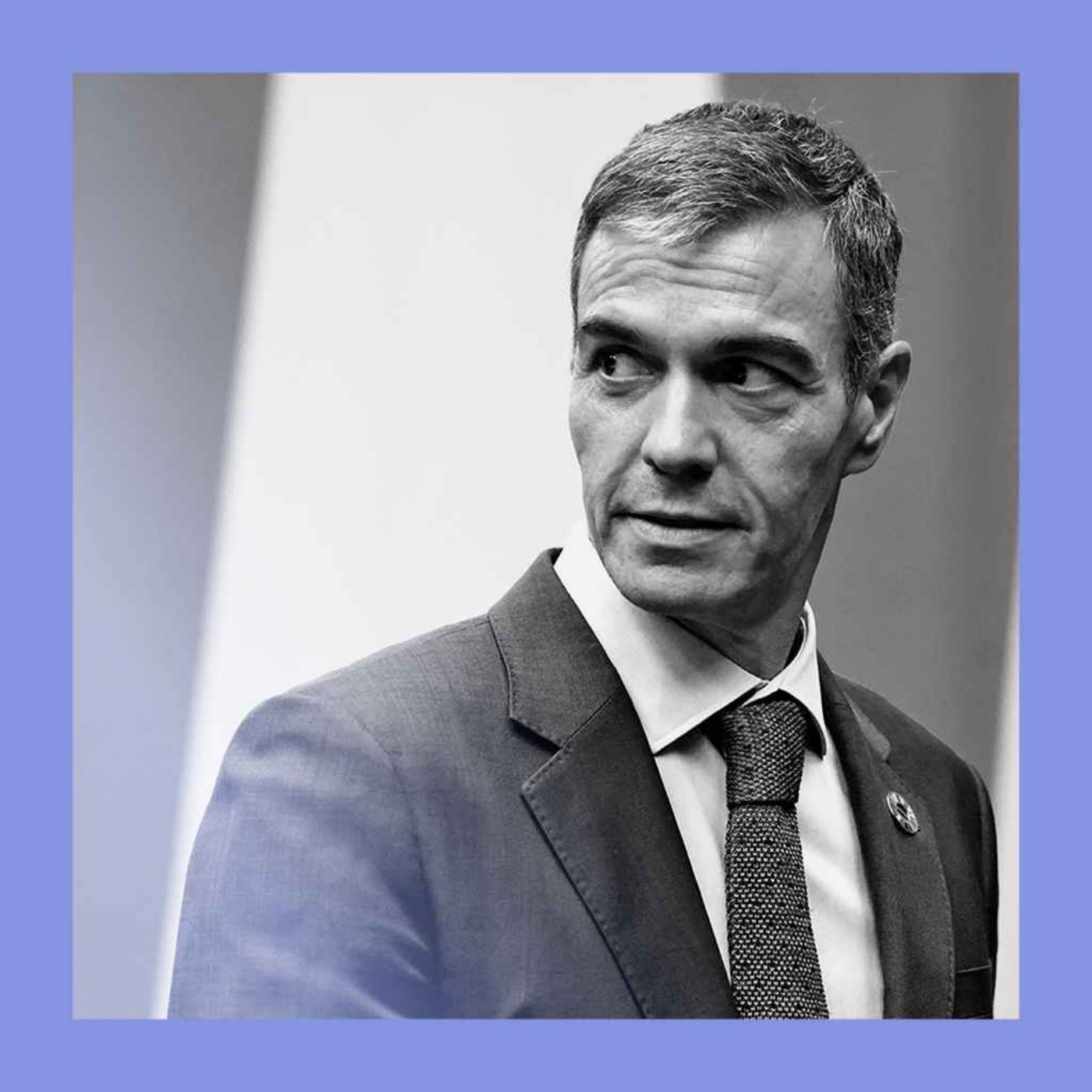
An overview of Prime Minister Pedro Sánchez's call for a snap election.
“Hotels.com makes booking work trips easy and rewarding.”
An overview of Prime Minister Pedro Sánchez's call for a snap election.
“making edible electronics go down safer.”
Discussion of the housing crisis in Spain and its implications on politics.
“because yesterday, Prime Minister Pedro Sánchez revealed himself to be a betting man.”
Analysis of Sánchez's attempts to address housing issues and the political fallout.
“That touched a nerve across the whole country.”
Examination of the electoral challenges Sánchez faces and the right-wing opposition's strategies.
“So 700 ,000 in three years against around 250 ,000 housing units completed, and you can do the maths.”
Discussion on the implications of Sánchez's potential loss on the European political landscape.
“So I think it's going to be very hard for him to prevent a right wing government.”
Final thoughts on Sánchez's position and the upcoming election.
“Unexpected home repairs have a way of happening at the worst possible time.”
Explore the factors driving up beef prices in America and its effects.
“For the past few years, the price of beef in America has been on a tear.”
Explore the cyclical nature of the beef industry and current price dynamics.
“It recently revised its guidance, so Tyson now expects its beef business to lose$775 million for the year.”
Learn about the challenges of visualizing internal body conditions.
Discover how edible batteries could transform medical devices.
“One of the big challenges in medicine is trying to work out what's going on inside a body from the outside.”

Get the gist, explore an idea or ask about something said.
 Claude
On The Intelligence from The Economist, what are the key points of this episode?
Searching your listeningAutomatic transcript. May contain errors.
0:00Being a serious business owner takes hard work, patience, and a drive to keep moving forward. So it's important to find a serious business card that goes the extra mile. With the VentureX Business Card from Capital One, you earn unlimited double miles on every purchase. And with big purchasing power, you can spend more and earn more. This is your sign to take your business to the next level. The Capital One VentureX Business Card. What's in your wallet? Terms apply. See CapitalOne.com for details.
0:30This intelligence podcast is sponsored by business travel on hotels.com. Does booking business travel feel like another job? Hotels.com makes booking work trips easy and rewarding. It's easy because you can set your preferences once and get results tailored to your business travel needs every time. It's rewarding because with hotels.com's free rewards program, you can save instantly on your next work trip and earn rewards for future travel. Book faster with confidence at hotels.com. Loyalty members 18 plus.
1:09Hello and welcome to The Intelligence from The Economist. I'm Jason Paulman. And I'm Rosie Bloor.
1:19Today on the show, how America's meatpackers are caught in the middle of a price beef and making edible electronics go down safer.
1:33First up, though.
1:49Today, Spain's parliament will be dissolved because yesterday, Prime Minister Pedro Sánchez revealed himself to be a betting man. convocar unas elecciones generales que se celebrarán el domingo 29 de noviembre. He's called a snap election for the end of November, many months early. Why? It starts with an 87-year-old woman named Marie Carmen Abascal.
2:19She had lived in her flat in Madrid for 70 years. Then a smallish property firm jacked up the rent by a factor of five. Last month, unable to pay, she was evicted, as forcibly as required to evict an 87-year-old. That touched a nerve across the whole country.
2:46Protests spread. Back in Madrid, demonstrators camped out in a popular square. For eight years, Mr. Sanchez has been in office, heading up the Spanish Socialist Workers' Party, all the while pledging to fix, among other things, the country's housing crisis. But last week, his signature housing bills were shot down, in part because a partner in his governing coalition hung him out to dry. Mr. Sanchez has not been having a good run, his government on the back foot since the migrant surge in the exclave of Ceuta in July. So what's a betting man to do? Wager that white-hot public anger about housing is his last best chance.
3:27Pedro Sanchez had always insisted he would carry on until the end of the parliamentary term next year, or near to it. But he decided to go for it now. Michael Reid is our Spain correspondent and writer-at-large. For months, the government's been down in the polls. But the housing issue and the eviction, he saw a chance to turn that to his political advantage. So why do you think this eviction story has resonated so much? Looks like such an opportunity for Mr. Sanchez. Well, it was quite clearly a human tragedy. And here was this 87-year-old woman who'd lived in this flat for more than 70 years.
4:05And she was wheeled out on a hospital trolley. And I think that resonates quite widely because there has been a lot of gentrification in Spanish cities in the past 10 years. And also because the bigger picture is that housing is the number one public concern in Spain. There is a big deficit of 750 ,000 housing units, according to the Bank of Spain. And it gets worse each year. Why? Because only around 80 ,000 housing units are built each year, and Mr. Sanchez has failed to increase that on the one hand. And on the other hand, his policy of welcoming immigrants means that there are 700 ,000 new households in the past three years alone.
4:53So 700 ,000 in three years against around 250 ,000 housing units completed, and you can do the maths. But Mr. Sanchez said he would address exactly this problem, didn't he? Well, he put forward for a second time a decree that would have extended existing rental contracts automatically, barred evictions of vulnerable people for a couple of years, and prevented commercial firms from buying residential properties. That chimes with the approach of the global left to housing, which is in the terms of the American political debate to highlight affordability, the problems with existing tenants have in paying rising rents.
5:34But the problem is that studies show that where rent controls are applied, they shrink the supply of rental homes. And that means that people who are looking or outside the system are hit harder. But there is a lot of debate about these policies. And one of the parties that Mr. Sanchez has relied upon for his fragile parliamentary majority, which has now ceased to exist, clearly, is a right-wing Catalan nationalist party that represents property owners, essentially, in Catalonia. And they voted against, and the decree fell. And quite apart from this housing question, Mr. Sanchez, as you mentioned, has been falling the poles, right?
6:18Indeed. I mean, the government has been on the defensive for quite a long time because of that fragile parliamentary majority. There are a lot of judicial investigations into corruption amongst leading figures in the Socialist Party that he appointed to their party jobs. Even his wife is facing trial for influence peddling, although both he and she insist on her innocence. But then back at the end of July, there was this extraordinary surge of more than 80 ,000 migrants into Ceuta, which is a small peninsula on the North African coast, whose permanent population is only around 80 ,000. The government was very, very slow and ineffective in handling it.
6:59There are still several thousand migrants there, and that's a matter of great public concern. So he has very much been on the back foot. So Mr. Sanchez essentially wants to put all that behind him, focus on housing, gather up the public support that he has, and renew a mandate. Do you reckon that will work? I think it will work up to a point. In announcing the election, he framed it on a very populist platform, essentially of the people against the speculators. Housing is a very, very big public concern in Spain. There's a poll which found that a majority of respondents are in favour of the rent control approach and government interventions.
7:42But against that, the election is seven and a half weeks away. And I think probably most Spaniards have already made up their mind about Mr Sanchez. He is a formidable campaigner, a much better campaigner than his opponents. and usually he pulls up during the campaign. But there's a big, big gap in the polls. The combined right wing is 15 points ahead of the combined left wing. So I think it's going to be very hard for him to prevent a right wing government. He could well narrow its majority, but we'll have to see. So the parties to Mr. Sanchez's right are going into this with great confidence, you reckon?
8:20Yeah, I think Alberto Núñez Feijó, the leader of the mainstream conservative People's Party, must be a little nervous because in 2023, they thought they had the election wrapped up and they fell four votes short in the parliament with allies. So I think they will be aware of that this time. The terms of trade within the right have changed in the last three years. Vox, which is a harder right populist outfit, the polls suggest would represent around one third of the right-wing coalition, which is much more than it would have been in 2023. Mr. Sanchez will undoubtedly try to whip up, as he did last time, fear of Vox in a country that had a long right-wing dictatorship until 1975.
9:17But I think Vox has been a bit more normalized compared with three years ago. It's in several regional governments, and the sky hasn't fallen in. So we'll see to what extent that is an effective tactic or not. And if indeed Mr. Sanchez does fall, it follows quite a pattern throughout Europe of ceding power towards the right. Absolutely. I mean, he is the last significant left-wing leader in government in the European Union. And he's framing this election on a left-wing platform of opposition to the 5 % of GDP target for defense spending, of defense of the welfare state, of defense of immigration, and so forth.
10:00If he loses, then the swing to the right in the EU will be more or less complete. Michael, thank you very much for your time. Thank you.
10:21Unexpected home repairs have a way of happening at the worst possible time. And standard homeowner's insurance often doesn't cover everyday wear and tear, like plumbing, electrical, or HVAC breakdowns. That's where HomeServe comes in. They offer plans starting at just$4.99 a month, So if a covered issue comes up, you can just call their 24-7 hotline to start the repair process. It's a simple way to feel more prepared when an expensive surprise hits. Join the millions of customers who trust HomeServe. For 50 % less your first year, go to homeserve.com slash intelligence. That's homeserve.com slash intelligence for 50 % less.
10:55Savings compared to renewal price, Void in Florida. Okay, real talk. Every time I open up my inbox, I've got this vision of the day I'm going to have. Deep work. Big ideas. The project I keep meaning to start. Three hours vanish into replying to threads and hunting down a file someone sent last week. I've tried AI tools that promised to fix this. They didn't. They were just another tab I had to open, explain myself to, and abandon by Thursday. Superhuman is different. It's at your service, not after your job. It's already where you work, so I'm never starting from a blank tab. It's from the makers of Grammarly, living right inside of the tools I already use, like Gmail and Slack.
11:36When I'm drafting a message or making sense of a messy thread, it just helps. Like a thought partner that's already caught up, so we get to the hard part together. The problem was never too little time. It's that busy work crowds out the work that actually matters. Start streamlining your workflows with Superhuman. Try today at superhuman.com.
12:06For the past few years, the price of beef in America has been on a tear. That's not only annoying the country's shoppers, but also the well-done beef eater-in-chief, Donald Trump. We're creating a program where small and medium-sized and large ranchers can sell their products directly to consumers so that they don't have to go through the big four processes and middlemen. Mr. Trump has chosen, wrongly, to blame the rise on the country's meatpackers. There are four big companies that slaughter most of America's cattle. That's Tyson, Cargill, JBS and National Beef. So that's pretty concentrated.
12:50Bella King is a news editor for The Economist. The price of beef has been rising for the last five years. Shoppers are very angry. Americans love beef. They love burgers. It's becoming more and more of a problem for Donald Trump. He's trying to placate these angry shoppers by basically blaming the meatpacking industry for keeping prices high. And is that fair? Is it the meatpackers who deserve blame here? Not really. It's not really fair. where meatpackers don't really control the price of beef. They buy cattle at cattle prices. They sell beef at beef prices. They're price takers. They're not price setters.
13:32They're basically middlemen. The difference between those values, they end the spread between those two. So what in the middle of all these price rises has life been like for the meatpackers? You would think that meatpackers would be doing very well because the price of beef is so high, but they actually have not been doing well. For example, shares in Tyson, the largest of the meatpackers, have fallen by about 40 % since 2021. Its operating margin is down by about six percentage points, mostly because of its beef business. It recently revised its guidance, so Tyson now expects its beef business to lose$775 million for the year.
14:14So if the meatpackers aren't the villain of the piece here, who is? Why are prices going up so much? The beef industry is really a boom and bust industry. There are these cycles. They usually start with a bad drought. So when drought hits, the price of feed goes up. That prompts farmers to start shrinking their herds to save money. when there are fewer cows the price goes up at a certain point conditions improve feed gets less expensive and farmers will start rebuilding their herds and this is the cycle it usually lasts about 10 years another part of this is that cows unlike chickens they just state for longer than other livestock so farmers must be feeling really good about the market in order to invest in rebuilding their herds.
15:07And so which part of the cycle are we in now? How is that affecting prices now? The current cycle we're in began in 2014-ish. There were a few years of bad drought. Farmers started shrinking their herds. Cattle prices went up. And then what actually happened is all the farmers just jumped in, started rebuilding their herds really, really quickly, crashed the market. Right now we're at the end of one of these cycles, but there are no signs yet that farmers are going to rebuild their herds. So cattle prices are an all-time high. That forces meatpackers to pay more, squeezes their margins, and also pushes up the price of beef.
15:45But the problem is that cattle prices rise higher and faster than the price of beef. So the middlemen, i.e. the meatpackers, their margins suffer. So instead of being the villains, the meatpackers are the ones in fact getting it in the neck. They are getting it in the neck. So another part of the problem is that a lot of these meatpacking plants were built in the 1980s when the industry was consolidating. Back then, America's herd was a lot larger. So now a lot of these plants have spare capacity. These plants have high fixed costs. They require a lot of electricity to cool carcasses. Labour costs are high.
16:27So when there are fewer cows walking into the plants, they're losing money per cow. So to cut costs, they've been right-sizing. Tyson has closed a few plants, one in Illinois, one in Utah, and removed about 15 % of its beef processing capacity. Cargill too has closed a plant and cut many jobs. So how do we get out of this impasse then? Is it just simply a matter of the ranchers just have to thicken up the herds? Basically, yes. So the only way that the price of beef is really going to come down and meatpackers are going to stop making losses is if ranchers decide to start rebuilding their herds.
17:12The market is signalling to them to start. Cattle prices are very high. Feed costs aren't super high. part of why they are reluctant to do this is one they don't want to repeat of what happened in 2014 when they all rushed in at the same time and basically crashed the market two a lot of these ranchers are pretty old they're in their 60s over cycle lasts 10 years that's a long time to wait for your investment to pay off and three there's the overall state of the economy. People aren't feeling very optimistic. So amid all of this misery that they are already experiencing, they also have Donald Trump breathing down their necks.
17:55So meatpackers are an easy target for Donald Trump. Nobody likes them. Nobody likes to think about what happens inside them. Instead, Trump has launched a thing called the Ranchers First Initiative. This is designed to sort of gently encourage ranchers to start raising more cattle. It involves measures to make it easier for them to process and sell their own food. It provides some support to smaller slaughterhouses. And there is a measure to help protect cows from grey wolves. But basically, none of this is really going to help. The numbers would be so small. The only thing that's really going to bring down the price of beef and help meat packers stop making losses as if farmers start rebuilding their herds.
18:45Bella, thanks very much for your time. Thanks for having me.
18:59One of the big challenges in medicine is trying to work out what's going on inside a body from the outside. X-rays, ultrasounds and other types of scan do help. But a bevy of edible electronics also shows promise. At the moment, doctors use adjustable sensors, things like cameras, to have a look inside the body. David Adam writes about science. You need to power them. At the moment, these devices sort of wrap the batteries up in protective casings to stop them being exposed to the body. But a better way would be to eliminate those toxic materials in the batteries entirely. Before we get to the batteries, why is it so useful to be able to swallow a device like this?
19:46So with the cameras, it's a lot more acceptable to patients to swallow. Essentially, it's a capsule the size of a medicine, rather than having to go in and have an endoscope, which is a tube pushed in. when you move beyond cameras, you can get to a range of devices which can do things that you can't do from outside the body. So you could monitor, for example, gases produced inside the stomach. And those could be either ways of tracking an existing disease or even to maybe find early warnings of disease that we don't have yet. People are familiar with x-rays and MRI machines. That's a way of looking at what goes on in the body from the outside.
20:26Well, if you could do that from the inside that opens up a whole new range of possibilities. So batteries are typically toxic. What's the solution? Well you either take a conventional battery and make it out of non-toxic materials or you build a battery out of stuff which we already know is safe to eat. So there are batteries that people have made out of everyday food ingredients. So one team in Milan has built one of these. They They used things like vitamin B2, extracts from capers and seaweed, and they showed that it can work. It's just not particularly powerful yet. It doesn't really produce enough energy.
21:07So the most recent study that we're talking about, there was a team of researchers at MIT who kind of took the opposite approach. Let's think how a battery works and how can we make that as safe as possible. And so what they wanted to do was to make a battery which it degraded inside the body. So not only was it, in theory, not harmful, but it didn't need to be passed through. So there was no risk of it being stuck. And so they made it of magnesium and a gel and a chemically active paper, and they wrapped it inside a protective coating of wax to not allow the intestinal juices to get access to it straight away.
21:49And they run tests and they show that it can produce more power than the batteries made of food and it can power some small devices. And did that work? It did work. I mean, up to a point, they tested it in pigs and they used the battery to power some devices to do some fairly limited tests. But they showed, for example, that it could power a radio frequency tracking tag packed inside a gelatin capsule, one of the capsules you'd take if you took a prescription medicine. And in another test, they could use a battery to power a little electrical stimulator, which could do from the inside to the pigs what sometimes we have to do from the outside to people who have a condition that food doesn't pass through the gut particularly well.
22:34So you can stimulate from the outside to help the muscles pass the food through. And so they showed that in the pigs for a limited period of time with these limited sort of devices that yes, essentially the battery worked. And what happens to the battery after that once you no longer need it? So this is the clever bit, I suppose. We mentioned that it was covered in wax, but that's only a very temporary protection. After about three days, the juices and the acids in the gut, they do work their way through the wax and they start to degrade the components. So the paper dissolves, the magnesium sort of reacts, which means that essentially the battery completely disappears.
23:15rather than needing to be excreted. It sounds like amazing stuff. How long before we start swallowing them? Well, if you're a pig, you can do it already. It's going to be a while. I mean, a few years, I would say. I think independent experts who have looked at this say, yeah, it's promising. It's one of a series of ideas that people are looking at. I think in this case, you've really got to focus on the safety testing. These chemical bits of the battery may have degraded and even dissolved, but they haven't completely vanished. They're in the system somewhere. So we need to know exactly what these things break down to inside the human body.
23:51We need to make sure that those dissolved components won't irritate the gut lining. So that's all the safety testing, as well as kind of the greater technological challenges, which is just to continue getting as much power out of these things as possible. Because in principle, some of these devices could be in there for more than three days. So we need to get more power out of them as well. Fascinating. David, thank you very much. And we can hear more about this on a recent episode of Babbage, I think. Yes, that's right. We had a very interesting, wider discussion about the kind of devices that these batteries might be able to power in the future and how those might be able to help us look after our health.
24:33We'll put a link to it in the show notes. David, thank you very much. Thank you.
24:48That's all for this episode of The Intelligence. We'll see you back here tomorrow.
25:34in a good way. What's in your wallet? Terms apply. See CapitalOne.com slash bank. Capital One N.A. Member FDIC. For investors at the highest level of sophistication, those with strong advisory support, the natural outcome is two distinct portfolios, one public, one private. Each plays a different role in the overall strategy. Uncover new investment opportunities for you at creativeplanning.com slash new.
Prime Minister Pedro Sánchez is gambling that anger about housing might solidify his mandate in a snap poll. Most probably it will instead add to the rightward shift in European politics. America’s beef prices have never been higher, so why is it that the meatpackers have it so tough? And the battery technology to improve medical diagnostics you can swallow.
Listen to our episode of “Babbage” on edible electronics here.
Guests and host:
Topics covered:
Listen to what matters most, from global politics and business to science and technology—subscribe to The Economist.
Hosted on Acast. See acast.com/privacy for more information.


