
 Ask ChatGPT



The episode is a wide-ranging Economist “Intelligence” segment covering (1) whether AI could be conscious, using the 1960s chatbot ELIZA and modern LLMs, (2) a rise in sexually transmitted infections across Europe, and (3) an obituary tribute to Mary de Rachewiltz, Ezra Pound’s translator daughter; it also tees up a future segment on Japan’s “lonely deaths.”
Alok Jha (Economist science/tech editor; hosts Babbage). Stephen Hereford (Economist digital team writer). Anne Rowe (Economist obituaries editor). No other named guests.
LLMs may develop internal “workspace” mechanisms (Anthropic’s Claude “J-space”) that resemble theories of human consciousness, but simulation isn’t proof of consciousness; the door can’t be closed on AI consciousness. Europe’s gonorrhea and syphilis cases are up (gonorrhea ~3x vs a decade ago; syphilis > doubled), with COVID-era testing changes only partly explaining it. Congenital syphilis is spiking, requiring targeted antenatal screening and safe-sex campaigns.
Blake LeMoine’s 2022 belief a Google chatbot was conscious; Claude’s emergent J-space; outbreaks in Hungary (congenital syphilis) and country spikes (e.g., gonorrhea in Bulgaria/France/Italy; syphilis in Belgium/Hungary/Lithuania/Malta). Mary de Rachewiltz translating Ezra Pound’s Cantos into English and Italian after his 1945 psychiatric confinement.
Written by AI. May contain mistakes.
Explore the influence of the 1960s chatbot Eliza on today's AI discussions.
“It's kind of amazing that a computer program from the 1960s still has such influence in what we talk about now, still in the dawn of the generative AI era.”
Discuss the complexities of consciousness and its relation to AI.
“Alok Jha is The Economist's science and technology editor and hosts Babbage, our sister show on science.”
Debate whether AI can develop consciousness similar to humans.
“They know everything about human culture through the training data they've had.”
Examine the potential for future AI to possess consciousness.
“But there's a lot wrapped up in those words compared to humans, right?”
Explore the alarming increase in STIs across Europe and its implications.
“pretty miserable, maybe don't look this way for further cheer.”
Delve into the life of Mary de Rachewiltz and her relationship with Ezra Pound.
“As soon as Mary de Ratchewilz was born, she was sent away.”
Delve into the life of Mary de Rachewiltz and her relationship with Ezra Pound.
“I'm Jake Stouck, co-founder and CEO of Serval.”

Get the gist, explore an idea or ask about something said.
 Claude
On The Intelligence from The Economist, what are the key points of this episode?
Searching your listeningAutomatic transcript. May contain errors.
0:00Losing weight can feel like a roller coaster, full of ups, downs, and being thrown for loops, like when someone brings donuts into the office, or your kids' dino nuggets start giving you that look again. That's why there's Noom. They combine GLP-1s to quiet the food noise with healthy habits that help you keep it quiet, even if you get off the meds. Their program is designed to make weight loss a smooth ride, helping you understand what drives you, so you can build better habits to not just lose weight, but keep it off. Noom. Lose for keeps. Get started at Noom.com. Not all customers will clinically qualify for medications.
0:37Individual results may vary. I'm Jake Stouck, co-founder and CEO of Serval. We built Serval to automate the IT work that slows companies down. Onboarding, password resets, access to applications, my laptop stopped working. While employees wait for help, their real work is put on hold. IT desperately wants to automate this work, and that's why they need Serval. You just tell Serval what you want to automate in plain English, and it's built. No drag-and-drop workflows, no expensive consultants. Employees get unblocked and IT teams go from drowning in tickets to building what actually matters. With Serval, IT becomes the AI engine powering the entire company.
1:18This is a new way to run IT. We guarantee you'll automate 50 % of all tickets and we'll prove it to you in a free four-week pilot. Go to serval.com slash tickets. That's S-E-R-V-A-L dot com slash tickets.
1:44The Economist
1:51Hello and welcome to The Intelligence from The Economist. I'm Jason Palmer.
1:55Ann Wroe: And I'm Rosie Bloor.
2:00Today on the show, the surge of sexually transmitted infections in Europe and a tribute to Ezra Pound's translator daughter.
2:15First up, though.
2:25It's kind of amazing that a computer program from the 1960s still has such influence in what we talk about now, still in the dawn of the generative AI era. Eliza was, in essence, the first chatbot, the brainchild of a computer scientist at MIT in 1966. In today's terms, it was primitive. All list referencing and pattern matching and bouncing users' statements back rephrased as questions. The weird part was how those users often had the conviction they were typing to a machine that was thinking, conscious even. Since then, it's been called the Eliza Effect, a reminder that humans are still kind of bad at determining what is conscious, and what consciousness is.
3:14Alok Jha: The idea that machines could have emotions, can talk to us, have their own desires, and maybe even take over the world, all of that is a classic of science fiction. But it's always felt really far away, until now. Alok Jha is The Economist's science and technology editor and hosts Babbage, our sister show on science. There's this conversation going on amongst computer scientists and philosophers about whether modern machines, the large language models that we are interacting with on a daily basis, whether these things could develop some of those magical conscious properties. So you've used the really big word there, conscious.
3:55Easy starter for 10. do we even know what consciousness is?
3:58Alok Jha: No, not really. Consciousness, I think we know it when we feel it. We know that we wake up in the morning, we see the sky, we have a feeling when we see the blue sky. When we drink coffee, we have that sharp tang. When you smell a rose, you feel great. Those are thoughts, sort of the effects of consciousness. It's this inner theatre we have inside us that tell us about all the sensory things going on in the world. In recent years, it's been split into two types to try and understand it. There's phenomenal consciousness, which is what we've just been talking about, which is this idea of what does it feel like to be something?
4:30Alok Jha: And then a more sort of pedestrian version of consciousness called access consciousness. And that's more about how the brain processes information. So the idea there is that your access consciousness allows your brain to become aware of information from the world. So, you know, you see something with your eyes and you feel whatever you feel when you see it, but then that information is made available to all the other modules in your brain to then respond to. That's access consciousness. This is just an attempt to sort of try and allow philosophers and scientists of all types to try and find reasons and explanations for these very mysterious things.
5:04So with all that in mind then, how to even start going about answering the question about AIs being conscious?
5:11Alok Jha: People have been talking to AIs for a number of years now and there's cases already of people thinking that there's something inside the machine. If you remember Blake Lemoyne, the engineer from Google in 2022, after talking to a chatbot, was convinced that it was somehow conscious and it had its own feelings and didn't want to be turned off. And people in the wider sort of computer science world thought, you know, that's a bit ridiculous. These are just machines that follow probabilistic computer programs. I think that at that point, people were less convinced but now given how complicated and sophisticated the responses are from things like claude and chat gpt and gemini and the number of people who have actual relationships with these things some people have ended up marrying these chatbots i'm not saying that these chatbots are conscious but the point is that more people are thinking about them because they feel something within the conversations right but an increasingly good simulation of consciousness is still not consciousness.
6:09The knife that we need to find is what divides seeming conscious from being conscious.
6:14Alok Jha: You hit the nail on the head. So these machines are really good mimics. They know everything about human culture through the training data they've had. Like they've had trillions of words of books and novels and all sorts in there. And so they know how to respond to things in a way that would make them seem human. So what you have to actually do is look inside the neural networks. So you have to look inside the thousands of layers of computer code that sort of takes an input that you give it, computes it in lots of different ways, and then gives you an output. So you have to look inside there for clues that the machine can't invent, basically.
6:51But let's wind back a bit here. What is the evidence that AI even could become conscious?
6:56Alok Jha: So evidence of consciousness is hard to come by because we don't really know what it's like in humans. But some interesting results have come out of the computer science world. So Anthropic have published a paper recently that shows that Claude has a kind of mental notice board inside its neural networks that the user of Claude doesn't know exists. And so when Claude is talking to you, it's thinking lots of things that aren't apparent to you. And this mental workspace, the J space, wasn't programmed into Claude. It emerged through training as a sort of mechanism to allow it to come up with answers better.
7:32Alok Jha: And so it's very similar to the kind of neural structures that humans have in their brains. One of the main theories of human consciousness is called global workspace theory, the idea that there's a bit of your brain that if information gets into that bit, so from the senses, then it's broadcast everywhere in your brain and you become conscious of that bit of information. So the J-space in Claude seems to be doing something similar. Now, you've got to be careful, they're not exactly the same thing and the j space doesn't perform all the functions that the global workspace and human brains would do but the point is that if these things emerge in computer networks then what else has emerged in there that's similar to the kinds of things that you might need in the human brain for consciousness the point is that there's this whole new field of computer neuroscience that's going on to try and find these things and if you can find enough of them that are similar in neural networks versus human brains, then you start to sort of come up with a more sort of global hypothesis around what consciousness might look like in these machines compared to humans.
8:36But there's a lot wrapped up in those words compared to humans, right? Like they will be different. There's a school of thought that basically living things have consciousness and machines don't can't.
8:46Alok Jha: So you're right. For a lot of people, consciousness is tied to biology. and in fact that's one of the sides of this debate which says that without biology then consciousness just can't exist you can simulate the brain in even better ways using neural networks and computer simulations and all of that but actually you miss out all the sort of messiness of biology and since we don't really know what consciousness is it could be that one of these bits of messiness in biology is the seat of the consciousness and you've missed all of that out the other side of the debate is saying that it's not the biology that's important it's the fact that the brain can do loads and loads of computations.
9:22Alok Jha: That's what makes it special. And it's only the computation that matters. It doesn't matter where the computation is happening. It happens to be going on in neurons in the human brain, but it doesn't matter if it's going on in silicon chips in AIs. And so if the latter group, the computational functionalists, as they're called, if they are right, then there's no reason at all why AIs could not be conscious. In fact, anything that can make calculations in sufficient ways would eventually become conscious. Okay, we've gone just about as far as we can go on this thorny question in the time allotted.
9:53Just tell me this, you've spoken to countless scientists, philosophers, all sorts of people about this. Where have you landed on this question?
9:59Alok Jha: So I started reporting this thinking, it's not possible, right? Humans are conscious, many animals are conscious, and biology seems to be the deceit of it all. But when you strip down all the arguments and talk to all the philosophers and computer scientists involved, and you realize the importance of computation, you know, making calculations and how far that gets you then you know where i've landed i guess in talking to all these people and reporting this piece is that the door can't be closed you can't categorically say that it's not possible now i know that's a bit of a sort of a cop-out answer because it's kind of saying i don't know but it's kind of i don't know but in a sort of leaning yes direction i can't see a reason why even if the modern lms are not conscious and no one thinks that the current versions are the future ones as they get more sophisticated they get more brain-like they seem to develop all these tools and structures that allow them to do things in human ways that point towards consciousness and then if you think about the sort of next generation or even the generation after that of the kinds of neural networks that will be created so they're made of silicon chips right now but people are already putting human brain cells onto silicon chips the growing organoids so like mini 3d brains to do computations in 10 years time if data centers are full of those sorts of brains and those sorts of neural networks made of actual human brains.
11:16Alok Jha: I mean, come on, you've reintroduced the biology. So the people who thought that it had to be living to be conscious, they're also satisfied. So everything points in the direction that these things will become conscious. And even as I say it, I struggle to think that that will be true, but you've got to look at the facts sometimes and think, well, that's just the way it is. Alec, thanks very much for your time. You're very welcome.
12:10Transcription by CastingWords and social experiment in human history. He reckons AIs will come to control civilization and considers what it'll mean to be a human in that world. If you're a digital subscriber, Insider is already included in your subscription. If you're listening for free, you can watch extended clips via the link in the show notes.
12:38Losing weight can feel like a roller coaster, Full of ups, downs, and being thrown for loops. Like when someone brings donuts into the office. Or your kids' dino nuggets start giving you that look again. That's why there's Noom. They combine GLP-1s to quiet the food noise with healthy habits that help you keep it quiet, even if you get off the meds. Their program is designed to make weight loss a smooth ride, helping you understand what drives you. So you can build better habits to not just lose weight, but keep it off. Noom. Lose for keeps. Get started at Noom.com. Not all customers will clinically qualify for medications.
13:15Individual results may vary. I'm Jake Stouck, co-founder and CEO of Serval. We built Serval to automate the IT work that slows companies down. Onboarding, password resets, access to applications, my laptop stopped working. While employees wait for help, their real work is put on hold. IT desperately wants to automate this work, and that's why they need Serval. You just tell Serval what you want to automate in plain English and it's built. No drag and drop workflows, no expensive consultants. Employees get unblocked and IT teams go from drowning in tickets to building what actually matters. With Serval, IT becomes the AI engine powering the entire company.
13:57This is a new way to run IT. We guarantee you'll automate 50 % of all tickets and we'll prove it to you in a free four-week pilot. Go to serval.com slash tickets. That's S-E-R-V-A-L dot com slash tickets.
14:35Ann Wroe: pretty miserable, maybe don't look this way for further cheer. Because even if you are having sex, some rather unpleasant things are on the rise. There's been a big rise in cases of sexually transmitted infections across Europe. Stephen Hereford is a writer on our digital team. According to the European Centre for Disease Prevention and Control, recorded cases of gonorrhea were three times higher in 2024 than they were a decade ago. So that's something like 100 ,000 cases in all the countries surveyed. Syphilis cases have also more than doubled over the same period. Chlamydia is slightly different, so that's actually fallen in recent years, but it is still by far the most prevalent in Europe.
15:19Ann Wroe: And why this outbreak of STDs? I think it's important to say that the amount of testing you do will often increase the number of infections you find. That's sort of unavoidable in these epidemiological studies. and that may well explain some of the increase in recent years. But what's interesting is that there has been a big jump after COVID which can be explained partly by the resumption of testing services after the pandemic. You see a bit of a dip in 2020 and then it comes back in 2021. But the ECDC and clinicians I've spoken to, they've said that it doesn't explain the full upsurge in gonorrhea and syphilis which is coming through in the data.
15:56One theory that gets put out a lot and I think it might pop into quite a few people's minds, is that the rise of dating apps have changed sexual behavior. They've made people more promiscuous, or in the jargon, they've changed sexual networks. But actually, there is scant data for this. For one thing, the usage of data apps, it largely predates the big spike. Another idea that's put around is that there's been a decline in condom use. So the data to support this is also quite limited. Which isn't to say it isn't, it's just not too clear. And then there's the use of PrEP, which is a daily pill that can prevent HIV from developing.
16:33That may correlate with reduced condom use among some men, but bear in mind that PrEP users are also more likely to be tested, so there's regular screening for people who take it, and that might influence the results slightly there.
16:44Ann Wroe: So if we don't really know why there's this increase, do we know who's being infected? Well, okay, let's take gender first. So older men seem to be more at risk here. So in the latest data, gonorrhea rates fell among men under 24, but they increased among older men. Among women, though gonorrhea rates actually fell in the most recent data, they do remain above pre-COVID levels. But syphilis rates in that data set rose. The biggest increase was among younger women. And then this is happening across sexual orientation. So although men who have sex with men tend to be at higher risk, syphilis and gonorrhea rates have also risen sharply among heterosexual men and women since the pandemic.
17:27Geographically, it's quite difficult to make country by country comparisons just because of the way surveillance and testing systems differ. But trends showing what is happening within countries over time are more reliable. And we're seeing some of the steepest rises in gonorrhea, for example, in Bulgaria, France, Italy, and then Belgium and Hungary saw sharp increases in syphilis. Both diseases, interestingly, spiked in Lithuania and Malta. So there's a bit of a mixed picture going on.
17:54Ann Wroe: So the rise in infections seems to be real. We don't really know why. It probably means more people are having unprotected sex. Has there been a change in public health campaigns about the use of condoms? That is something that came up again and again in the conversations I had. There's a general sense that people are less aware of safe sex these days. All the clinicians I spoke to were convinced that the fear factor, I suppose, that would have driven people to wear condoms at a higher rate in the pastures in there. This is a huge public health problem then, isn't it? Yeah, I mean, beyond the initial illnesses caused by these diseases, if they're left untreated, chlamydia and gonorrhea can lead to severe long-term complications.
18:37But I think one of the most alarming things that experts are seeing is this jump in congenital syphilis. That's where the mother passes it on to her baby. This is thought to be spiking because of higher syphilis rates in the general population. It's quite a rare disease, but it can often be fatal or cause lifelong debilitation.
18:56Ann Wroe: What can health authorities do? Well, for one thing, targeted responses can be very effective. So, for example, there was a spike in congenital syphilis in Hungary recently, and targeting that outbreak can work very well. So with things like antenatal screening, better access to testing generally would help. This is quite uneven across Europe. Something officials will have to bear in mind, though, is that antibiotics are primarily used to treat these diseases, and so they do have to weigh up the benefits of treatment for the individuals against the risk of furthering antimicrobial resistance, which is quite a thorny cost-benefit analysis for them to make.
19:33More generally, aggressive, safe-sex public health campaigns are thought to have proven effective, perhaps unsurprisingly, and heightened awareness and fear of an outbreak can drive action at both the government and the individual level.
19:48Ann Wroe: Stephen, thank you so much for talking to me. Thanks very much for having me.
20:09Ann Wroe: As soon as Mary de Ratchewilz was born, she was sent away. Anne Rowe is The Economist's obituaries editor. Her parents, the American poet Ezra Pound and his mistress Olga Rudge, an American violinist, simply felt they couldn't cope with a child on the premises. He was too busy with his poetry and she with her violin playing.
20:37Ann Wroe: So they sent her from Venice, where they lived then, to the South Tyrol, to a very kindly family who took in abandoned children, although Mary was not quite abandoned. Ezra and Olga paid 200 lira a month for her keep. And she herself, when she was older than a baby, was very pleased with the arrangement because her two foster parents, Mame and Tata, as she called them, were incredibly comforting and kind, and she loved growing up as a little Tyrellian peasant child. Every so often, however, there would be visits from her parents. There was one occasion when, at night, Ezra Pound, her father, came into her bedroom just to say goodnight and had a look at her hands and saw her nails were filthy with doing farm work all day and took out scissors from his luggage and cut her nails and then asked her if she brushed her teeth.
21:49Ann Wroe: She was rather coy about that, so they went out the next day to buy a toothbrush. And all these were signs to her that this was a man who cared about her, even more so when she, every so often as she grew older, would go on trips to Venice and he then took charge of entertaining her so that they would go to the Lido on the Vaporetto. They would have wonderful feasts of ice cream and exquisite pastries. And later on he taught her tennis and was generally a splendid father to her. She soon adored Ezra Pound, whom she called Bubbo. And there was only one problem with him, which as she became a young woman she began to appreciate.
22:35Ann Wroe: His political opinions were really extremely right-wing and often depressing. Ezra, in the 1920s, when he moved to Italy, had begun to worship the fascist dictator Benito Mussolini. He wrote articles about him. He campaigned on his behalf. He generally espoused the whole fascist view of politics, which was basically that Italy needed a strong man, needed order and it needed to feel it was a nation therefore he thought it should be racially purified. The whole problem in the world, he thought, was what he called international jury. And along with these views, which were pretty nasty in themselves he began to express horrible racist insults against both the Jews and the Italians, although he actually was extremely fond of both Italy and Italians.
23:44Ann Wroe: He turned against Roosevelt, then President of America, and during the war he appealed to him on Italian radio not to join with the Allies and not to enter the Second World War. He also opined on the radio that Roosevelt ought to be hanged. And these broadcasts eventually earned him an indictment of treason in absentia. And as soon as American troops liberated Italy in 1945, they arrested him. And they put him in a cage because they assumed he was crazy and unfit to stand trial. Then he was taken to America and he was kept for 13 years in a psychiatric hospital in a locked cell.
24:40Ann Wroe: Mary had to work out what on earth to do about this. However, she did fight against any imputation that he was insane because he wrote her long lucid letters from the hospital. and he was also still working on his huge poem, The Cantos. She realised that not only was her father, unjustly as she thought, put into this hospital, but suddenly his literary reputation lay in tatters. No one would touch him. In the 1920s, he had been put on the same ranking as T.S. Eliot and he had helped him finish the wasteland as well as helping James Joyce get Ulysses published. He was a friend of Hemingway's and he was in the very forefront of literary endeavour in the 20s.
25:32Ann Wroe: And now he seemed to be nobody. He was locked up with insane people. So one of the things she did was to keep going on the cantos, keep translating them. until in 1985, which was actually 13 years after Ezra had died, she at last produced the first dual-language version of them in English and Italian. All this time, she was actually producing her own poetry too, and that had been heavily influenced by her father, and indeed she had learned through him the importance of poetry simply by listening to him read the cantos in the evenings. when she found the air absolutely electric with his voice.
26:24Ann Wroe: And she would defend him to the last. He himself had written that he had tried to write Paradise, but he hoped that those he loved could try to forgive what he had made.
26:41Anne Rowe on Mary de Racheviltz, who's died aged 101. The End
27:15and our senior development producer is Rory Galloway. Our producer is Anne Hanna and assistant producer Kunal Patel with extra production help this week from Emily Elias and Eleanor Sly. We'll all see you back here tomorrow for the weekend intelligence. This week we head to Japan. We talk all the time on the show about the country's demographics, an aging population and shrinking families. What that means at the end of life is more people with fewer social ties. There's a job called Special Cleaner that barely existed a generation ago and is now booming, clearing the houses of those who die alone.
27:50My colleague Moeka Iida looks at the growing phenomenon of lonely deaths, how demographic change is reshaping elderly care, and the new ways people are finding friendship and community at the end of life. See you there.
28:16I'm Jake Stouck, co-founder and CEO of Serval. We built Serval to automate the IT work that slows companies down. Onboarding, password resets, access to applications, my laptop stopped working. While employees wait for help, their real work is put on hold. IT desperately wants to automate this work, and that's why they need Serval. You just tell Serval what you want to automate in plain English, and it's built. No drag-and-drop workflows, no expensive consultants. Employees get unblocked, and IT teams go from drowning in tickets to building what actually matters. With Serval, IT becomes the AI engine powering the entire company.
28:55This is a new way to run IT. We guarantee you'll automate 50 % of all tickets, and we'll prove it to you in a free four-week pilot. Go to serval.com slash tickets. That's S-E-R-V-A-L dot com slash tickets.
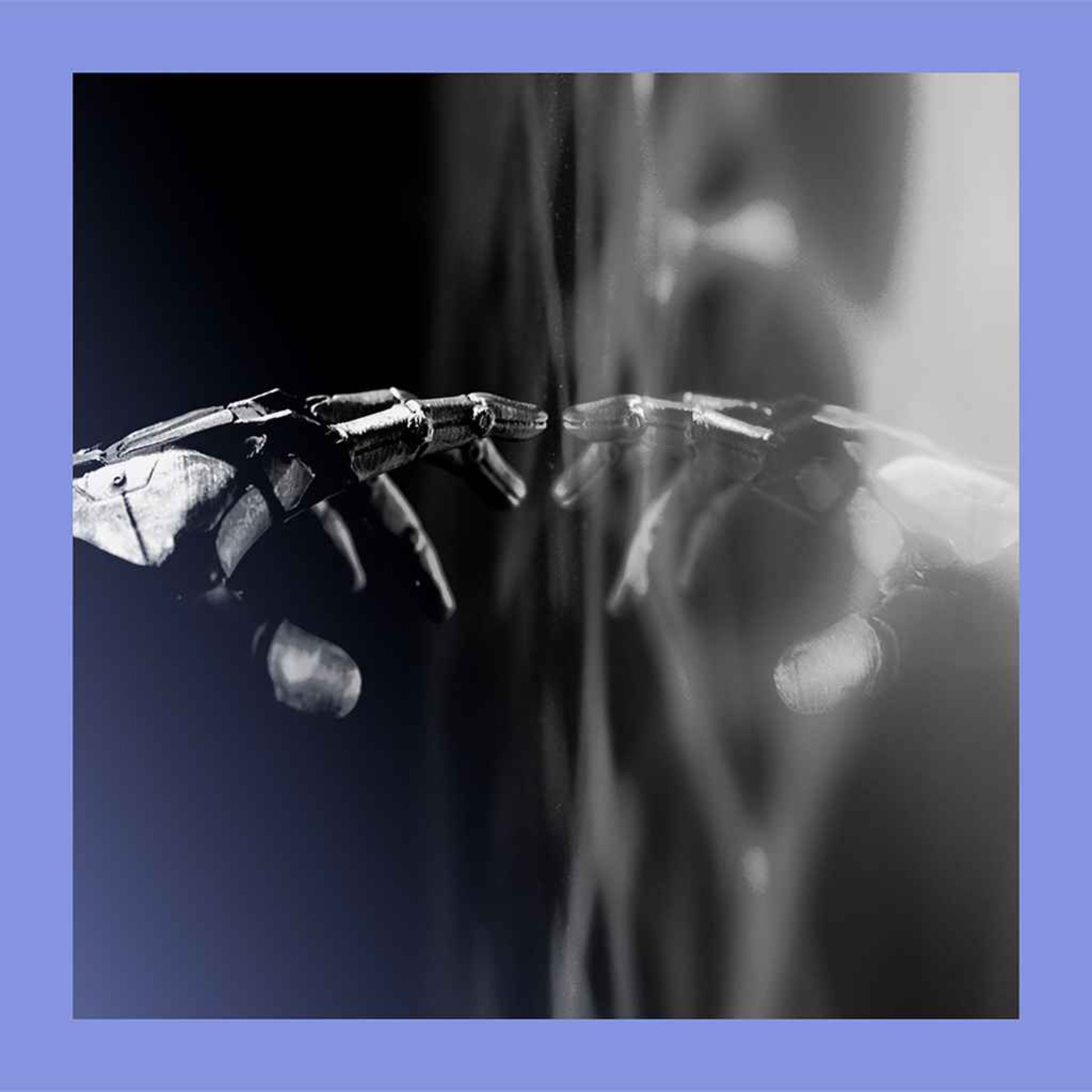
The rise of generative AI has put new urgency into ancient questions. What is consciousness, and can machines ever have it? We dive into the data that reveal a surge in sexually transmitted infections in Europe. And our obituaries editor considers the life of Mary de Rachewiltz, translator and tireless defender of her father, Ezra Pound.
Watch extended clips from Insider here.
Guests and host:
Topics covered:
Listen to what matters most, from global politics and business to science and technology—subscribe to The Economist.
Hosted on Acast. See acast.com/privacy for more information.


