
 Ask ChatGPT


 The Intelligence from The Economist
23 Jun 2026 · 29m · 16 chapters
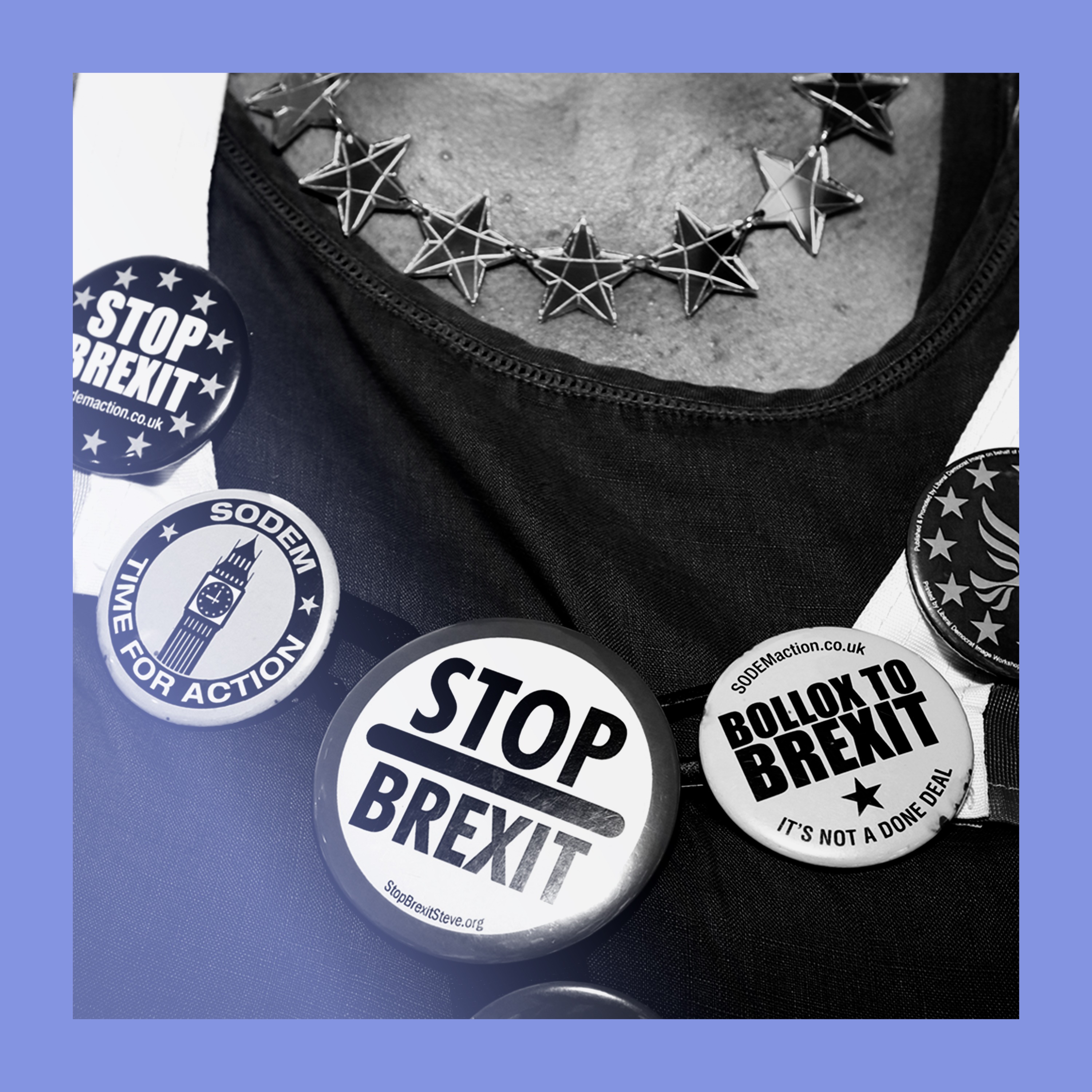
The Economist marks 10 years since the 2016 Brexit referendum and assesses economic, political, and social impacts, while debating what Britain should do next under a new Prime Minister.
Rosie Bloor hosts. Daniel Franklin is a senior editor at The Economist and a Brexit-focused commentator. Tom Carter is The Economist’s Britain economics correspondent. Georgia Banjo is The Economist’s Britain correspondent.
Brexit has destabilized governance (seven prime ministers in a decade) and created “frictions” that slowed growth; estimates of GDP loss vary (about 2.5% to 8%). Manufacturing exports to the EU fell sharply due to paperwork and rules of origin; services exports rose (up 47%). Immigration “take back control” did not deliver; net non-EU immigration exceeded one million in 2023. Brexit benefits cited include fishing rule flexibility (puffins) and farming reforms (hedgerows). AI is framed as a potential post-Brexit opportunity, with Britain’s pro-innovation “vibes” helping startups, but EU compliance may still be required.
the “350 million pounds” EU funding claim; Channel 4 criticism of Farage’s immigration poster; Boris Johnson joining the Leave campaign; 16,141,241 Remain vs 17,410,742 Leave votes; 16,000 fewer exporters to the EU; EU services vs goods export divergence; AI Act constraints; defence funding disputes under Keir Starmer.
Written by AI. May contain mistakes.
Exploration of the Brexit referendum results and initial reactions.
“TheSameMonday.com helping people worldwide getting work done faster and better.”
Exploration of the Brexit referendum results and initial reactions.
“Today we're devoting our show to the moment 10 years ago that changed Britain.”
Discussion on the long-term effects of the Brexit decision.
“And with the impact still very much being felt, and Britain about to get a new Prime Minister, where does the country go from here?”
Overview of the events leading to the Brexit referendum and key players.
“We will give the British people a referendum with a very simple in or out choice to stay in the European Union on these new terms or to come out altogether.”
Analysis of the economic impact and ongoing challenges post-Brexit.
“I think we should take the chance now, as a country, to take back control.”
Explore the varying studies on Brexit's effect on the UK's GDP growth.
“suggest that it has shaven about 8 % of GDP off.”
Understand how Brexit has exacerbated existing issues in UK manufacturing.
“And, you know, we should be clear that Brexit has not caused Britain's manufacturing decline.”
Learn about the strong performance of Britain's service sector despite Brexit.
“And that meant that we have now 16 ,000 fewer exporters to the EU than we did before the referendum.”
Discover the complexities affecting financial services in the post-Brexit landscape.
“So without Brexit, we could have done even better.”
Examine the political ramifications and ongoing negotiations stemming from Brexit.
“All those things are still in place in the UK because it turns out that it's not the EU that stopped us from having them.”
Analyze the shift in immigration patterns and political disillusionment post-Brexit.
“What about that broader malaise that it's brought over Britain, Daniel?”
Wrap-up of the discussion with guest Tom.
“With your first AG1 subscription, an$82 value.”
Discuss surprising positives of Brexit, such as environmental protections.
“Daniel, if we accept that Britain probably isn't going to rejoin the EU, then what next?”
Explore how Brexit may have created opportunities in the AI sector.
“We're joined now by Georgia Banjo, our Britain correspondent.”
Evaluate Britain's potential roles in AI, defense, and beyond after Brexit.
“there's now quite a lot of hurdles there to overcome.”
Exploring the lingering impact of Brexit on Britain's global role and challenges.
“It's not without its problems, not being an EU member, but it is an area where I think Britain can use its flexibility, its historical strength.”

Get the gist, explore an idea or ask about something said.
 Claude
On The Intelligence from The Economist, what are the key points of this episode?
Searching your listeningAutomatic transcript. May contain errors.
0:00This is a Monday.com ad. TheSameMonday.com helping people worldwide getting work done faster and better. TheSameMonday.com designed for every team and every industry. TheSameMonday.com with built-in AI, scaling your work from day one. TheSameMonday.com that your team will actually love using. TheSameMonday.com with an easy and intuitive setup. Go to Monday.com and try it for free. Yes, TheSameMonday.com. Most of us don't think much about how money actually moves, until something slows it down or makes it more expensive than expected. That friction is exactly what Bitcoin was designed to rethink.
0:40Bitcoin is often talked about as an investment, but it was built to be used. With Cash App, you can actually do that. Send Bitcoin instantly, pay at local Square businesses that accept it, or move it to your own wallet whenever you want. It works more like real money and less like something locked in an account. For a limited time, new customers can get$10 added to their balance. Just use code CASHAPP10 when you sign up. And don't forget this part. Send at least$5 to a friend in the first two weeks. Terms apply. Cash App is a financial services platform, not a bank. Banking service is provided by Cash App's bank partners.
1:16Bitcoin service is provided by Block, Inc. Brand. For additional information, see the Bitcoin disclosures at cash.app.legal.podcast.
1:31The Economist
1:37Rosie Blau: Hello and welcome to The Intelligence from The Economist. I'm Rosie Bloor. Today we're devoting our show to the moment 10 years ago that changed Britain.
1:53Rosie Blau: The total number of votes cast in favour of Remain was 16 ,141 ,241. The total number of votes cast in favour of Leave was 17 ,410 ,742. This means that the UK has voted to leave the European Union.
2:24Rosie Blau: In the referendum of June 23, 2016, Britons voted for Brexit by 52 % to 48%. Those who campaigned to leave the European Union promised a future free of external interference, ripe with opportunity. Those who wanted Britain to stay part of the EU, including us here at The Economist, warned of disastrous economic damage. Ten years on, how have those predictions fared? And with the impact still very much being felt, and Britain about to get a new Prime Minister, where does the country go from here? Helping me answer those questions is Daniel Franklin, one of our senior editors. Hello, Daniel. Hello, Rosie.
3:08Rosie Blau: Daniel, it's already been a tumultuous week in British politics. Does the fact that we're about to get our seventh prime minister in a decade have anything to do with how destabilising Brexit has been? Well, it's ironic, isn't it, that Britain is in a way becoming more European. Here we are with our seventh prime minister about to come into office and we're sort of becoming Italy. And meanwhile, Italy looks an oasis of stability. but seriously I think it has a lot to do with the specifics of Sir Keir Starmer but it doesn't help that the legacy that Britain has had from 10 years of Brexit has made governing Britain so much harder and so to some extent Brexit hasn't helped and does if you look at it collectively certainly account for the fact that we've had quite so many changes of leadership over the past 10 years.
3:57Rosie Blau: We'll come on to the impact in a minute but just tell me what you remember about that day 10 years ago and when the votes were then coming in? Well, I was actually out of the country. It wasn't in Britain. I was in France. And it was surreal. I remember very clearly when the results started to come in and it became, I think, quickly clear which way the vote was going. And then I remember that there was a sense of shock. Certainly it was not an outcome I had wanted. And the next day you had to carry on. I was chairing an event and you had to carry on as if nothing had happened except something extraordinary had happened.
4:33And at least one of my panellists on the panel I was moderating pulled out because there was no corporate line yet on Brexit.
4:40Rosie Blau: I too was out of the country. I was reporting in China at the time. And I remember just busily refreshing and refreshing that BBC page, hoping those votes would shift. But of course, they didn't. Now, The Economist, of course, voted to remain at the time. We wanted to stay as part of the European Union. Just explain that. I think we saw it and still see it as a great act of self-harm and monumental folly. It was a very strange moment in British politics, a sort of perfect storm of things that combined to make both in the political leaderships of the various parties, in the state of the economy and in the state of Europe, frankly, that meant that this was a very bad moment to have that referendum.
5:23The results which we'll talk about were not as immediately dramatic as perhaps many people predicted, but cumulatively it's been a painful process and one that's led to a lot of inward focus in Britain over a time when we really needed to be coping with what was happening in the real world beyond us.
5:43Rosie Blau: So we'll get to that cumulative effect in a minute, but in the meantime Jason has been looking at what led up to that seismic vote.
5:53The real starting gun for Brexit was a speech in January of 2013 by then Prime Minister David Cameron. We will give the British people a referendum with a very simple in or out choice to stay in the European Union on these new terms or to come out altogether. It will be an in out referendum. The Economist was generally in support of Mr Cameron's decision. We wrote a leader saying that Cameron was right to say, I will hold a referendum on the EU. Yes. Once we realized we needed one, John Peete became our Brexit correspondent. By the end of it all, I was referring to him as our long-suffering Brexit correspondent.
6:37We accepted that there was an argument put indeed by David Cameron, which was this issue has been rumbling along in the Conservative Party for years, and the best way to settle it will be to have a referendum, and that will settle the issue for a generation, and we'll stop arguing about it. Ha, stop arguing about it. To be clear, even Mr Cameron in that same speech said it was a bad idea. Because I believe something very deeply, that Britain's national interest is best served in a flexible, adaptable, and open European Union. And that such a European Union is best with Britain in it. At the time, Mr Cameron's Conservative Party was part of a coalition government with the Liberal Democrat Party.
7:21Their shared grasp on power felt precarious because of pressure from their right. In particular, from one man who groused about Britain's EU membership even as he sat as a member of the European Parliament. The EU budget isn't really the question. It's Britain's place in this union that is the real question. And increasingly, Britain looks like a square peg in a round hole. These days, Nigel Farage leads the Reform Party, once called the Brexit Party. But back then, he headed the UK Independence Party, or UKIP. He's been banging this drum for some time. We love Europe. We just hate the European Union.
7:59It's as simple as that. Fast forward to 2015. The Conservatives won a majority, and in early 2016, Mr Cameron made good on his promise and announced the date of a referendum. I will go to Parliament and propose that the British people decide our future in Europe through an in-out referendum on Thursday the 23rd of June. In-and-out campaigns revved up and immediately the out camp had an advantage. I think it was still true in 2015-2016 that most observers who knew about this subject thought that probably Remain would just edge it. I was always quite doubtful. I thought it looked as if it was going the other way.
8:44The Remain camp under the Stronger In campaign had to argue that things should remain the same. And let's together choose for stronger Britain in Europe. But Vote Leave could campaign on change, and they did so with some exceedingly misleading figures. Every week, the United Kingdom sends 350 million pounds of taxpayers' money to the EU. That's the cost of a fully staffed, brand new hospital. So, yes, Euroscepticism in a general sense was part of it. Arguments about who was bossing whom around. About the flow of money. But really, a lot of the sentiment was clearly about the flow of people. Take, for example, a vote-leave poster that Mr Farage was pictured in front of.
9:32A sea of people on the move, almost every one of them brown. Channel 4 heard the dog whistle and took him to task. The only white face has been obscured by text. Many people took that as deeply offensive. And I ask you again, do you want to take this opportunity to say sorry? Well, the Schengen zone is at breaking point. That's undeniable. The picture was true. It wasn't doctored. The irony in all this is that what then happened actually was that after the Leave vote, immigration actually increased. It didn't fall. The Remain camp, Mr Cameron, most business leaders, us, started out confident, complacent even, that their brand of good sense would win out.
10:15Then, ever sensitive to the benefits of a fair political wind, Boris Johnson hopped on the Leave bus. That Sunday afternoon, he came out and said, I'm going to make my announcement. I am going to campaign for leave. That was quite a big moment in the whole campaign. Mr Johnson had been London's mayor during the 2012 Olympics and brought his charismatic, erratic vibe back into Parliament in 2015 with an eye on higher office. I think we should take the chance now, as a country, to take back control. Take back control of huge sums of money. Given that the margin was only 50 to 48, I think it does suggest that Boris was quite an important factor in the outcome.
11:02Leave had momentum, a fiery message, a hard-charging floppy-haired new champion. The opposition Labour Party had Jeremy Corbyn. On a scale of 1 to 10, where 1 is couldn't really care less about the EU and 10 is I'm jumping on the couch like Tom Cruise on Oprah. How passionate are you about them staying in the EU? Oh, I'd put myself in the upper half of the 5 to 10, so we're looking at 7, 7.5. Ooh, not quite. Maybe 7, 7.5. You're more than welcome to jump on the couch if you want to. The electorate was fractured, fractious. Conservative against Conservative, Labour against, well, itself, mostly, at the time.
11:41Families split, friendships strained. Can you believe what that guy next door thinks? Honestly, it was all anyone seemed to be talking about. Certainly the politicians. The voters, though, did have an answer for the Remainers. The British people have spoken, and the answer is, we're out. Leavers rejoiced. Remainers couldn't pick their faces up off the floor. Nigel Farage crowed. Let June the 23rd go down in our history as our Independence Day. All this ferried in a new Prime Minister. I believe Theresa will provide strong and stable leadership, and I wish her well in negotiating the best possible terms for Britain's exit from the European Union.
12:25Leave had won, so clearly we were going to have to leave, but nobody knew what that meant. There was no clarity about what would happen next. Theresa May took the reins for years of figuring out what that really meant.
12:37Rosie Blau: Brexit means Brexit. Not much clearer, really. This was the time when I started calling John long-suffering Brexit correspondent. It's also when Britain's prime minister go-round started to speed up. Boris Johnson caught his fair wind and was in charge when Brexit formally, finally, came into effect in 2020. There was no chance of a soft Brexit. It was going to be a hard Brexit, and Boris Johnson got the deal he wanted. A hard Brexit is a good word for what came out. It was hard, has been hard, for Britain and for Britons, and of course, for long-suffering John Peet.
13:16Rosie Blau: To discuss what's happened since then after those moments of apparently taking back control, Daniel and I are joined by Tom Carter, who's our Britain economics correspondent. Hi, Tom, I know you weren't at The Economist at the time. Where were you? It was actually my last day at university when I found out about the result. And although we're about to talk about Brexit's damage, I do owe it a debt of gratitude because it did get me my first job out of university working in the civil service on Brexit preparations. So personally, it was a bit of a windfall. We'll try not to hold that against you.
13:47Rosie Blau: Tom, tell us what the impact on Britain has been from Brexit. When it comes to the economy, at least, the impact has been pretty negative. Exactly how negative is something that academics furiously debate over. Some studies suggest that it has shaven about 8 % of GDP off. Other studies only suggest it's 2.5%. A lot of that depends on the counterfactual that you use. But what we can say is that Britain has grown less quickly than most G7 countries. And if you look beneath these high level numbers, you see all sorts of new frictions and problems emerge as a result of Brexit. When I speak to people and businesses across the country about it, people find it harder to import parts for their businesses.
14:27Exporters have stopped exporting. For a long time, it stopped people from investing in their businesses. So it's been a whole series of little hurts and cuts.
14:35Rosie Blau: So Tom, it's sounding from what you're saying that the big impact then has been on manufacturing? Yes. And, you know, we should be clear that Brexit has not caused Britain's manufacturing decline. That's been happening for a long time because China basically does it quicker and more cheaply than we do. And also because we have very high energy prices. But Brexit has made it worse. So Britain's share of global goods exports has fallen by 17 % from the referendum to 2025. In the EU, it only declined by 6%. So we have been particularly affected. Now, why is that? Well, the Brexit deal actually didn't put up big tariff barriers with the EU.
15:10But what it did do is create a lot of paperwork and new customs forms and these things called rules of origin. And that basically was very hard for manufacturers, particularly small manufacturers to deal with. So if you're a big manufacturer, you just employ some policy person and they sort it out. But if you're just a one man in his shop, you don't have the time to look for all the regulations. And that meant that we have now 16 ,000 fewer exporters to the EU than we did before the referendum.
15:37Rosie Blau: And what about services, which Britain always likes to think it's very good at? How have they fared? Well, the good news there is that Britain's services continue to go from strength to strength. So exports of services have, in that same time period, risen by 47%. And if you think about Britain, we are butlers to the world. We have lawyers, engineers, architects, all of whom are providing their services to tech tycoons, to shakes in the Middle East. And that hasn't changed as a result of Brexit. And in fact, Britain has benefited from the fact that the whole global economy has become more services orientated than it was before.
16:10But that doesn't mean that Brexit's helped. Brexit has actually hindered because in some areas like financial services, like things where you have professional qualifications and you need to be able to show that professional qualification to be able to work in the EU, we have seen less growth than in those sectors like advertising where there are no such barriers. So without Brexit, we could have done even better.
16:30Rosie Blau: And what about financial services? Daniel, you've been looking at this. Financial services is a bit of a mixed picture. I mean, the city is still a force to be reckoned with. And we had a cover story actually not long ago saying the city was getting its mojo back. But as Tom says, I think the problem is that we haven't taken as much advantage of the Brexit potential flexibility that it gives us not being part of the EU regulatory regime to have more flexible regulations to have bolder policies so the strength of the city and financial services have carried us through to some extent but it has been hindered by the barriers for example passporting rules setting up offices being able to operate across frontiers that have made us less effective than we would otherwise have been and we haven't compensated as much as we might have done by being bolder on the nimble deregulation that would have made business easier.
17:22And just to add in on that, that goes beyond financial services, this failure to do all the deregulation that was promised. We were promised that Britain would become a deregulated Singapore on Thames. But all the things that those people who wanted a small state complained about in 2016 to the EU working time redirective, which sort of prevents or makes it harder for people to work above a certain number of hours a week, or the habitats regulation that makes it harder to build. All those things are still in place in the UK because it turns out that it's not the EU that stopped us from having them.
17:49It's the fact that there are powerful vested interests in the UK that politicians didn't want to cross. Yeah, we're pretty good at red tape ourselves. We talked about the narrow economic impact, but the opportunity cost of all this, the time it took, the civil service time, the political time, the debate across the country, businesses tied up with this, it's enormously sapping. And it meant that we were talking about what type of Brexit it should be first of all? And then after that, how do you mitigate the damage of it? And we're still talking about it. We're now facing endless negotiation with the EU.
18:21We'll have a summit next month, for example, for the latest round of this. And there's a cost to all that. It's meant that we haven't been able to lift our eyes as much as we perhaps should have been doing to cope with the world as it is now, the changed world that it is 10 years on from Brexit.
18:36Rosie Blau: We're talking in quite energetic terms here about Brexit, but we're really bored of it, aren't we? We talk about it endlessly. We talk about it in our politics. We talk about it in society. What about that broader malaise that it's brought over Britain, Daniel? Well, there was a time talking about Brexit when it was almost banned. Political parties didn't want to talk about Brexit anymore. And it's just coming back. The anniversary has brought it back even more. And now with the drama over the Labour leadership, it's come to the fore again. But I think there is a continuing question about Britain's place in the world.
19:09How do we, without a historical role of being a bit of a bridge between America and Europe being within Europe, where do we stand on all that? And that's a bit of a national question still that Brexit has not resolved.
19:22Rosie Blau: And we were hearing just now about those dog whistle posters that Nigel Farage and others put up. How has Britain stood on immigration since Brexit? Well, as we heard from the long-suffering John Peete in the Brexit package, the irony of this is that there was a huge surge in net immigration after Brexit under the leadership of Boris Johnson. So that's now ebbed, but certainly with people who were hoping to take back control in that sense, it just didn't happen. And that, I think, has contributed to the sense of political disillusionment in Britain that even after Brexit, this, which is a high priority for voters, it hasn't been dealt with satisfactorily.
20:04And just to give a sense of scale to that, in 2023, over a million non-EU people came to this country. That is an order of magnitude more than we had before Brexit. So if you're sitting in one of these cities or towns in the UK and you were voting to take back control of immigration, you really were given a bloody nose by Boris Johnson and his immigration policy. Now, as Daniel says, it has ebbed, but that will have really left a sore taste in the mouth for many Brexit voters.
20:28Rosie Blau: Tom, thank you so much for joining us. Oh, thank you very much for having me.
21:00Visit bill.com slash proven and get a$150 gift card as a thank you. That's bill.com slash proven. Terms and conditions apply. See offer page for details. Summer can throw off even the best routines, but AG1 makes it easy to keep one healthy habit consistent. AG1 is a daily health drink that combines a multivitamin, pre and probiotics, superfoods and antioxidants in one scoop mixed with eight ounces of water. From late nights to long weekends and everything in between, AG1 offers a simple way to add consistent nutritional support to your day, wherever the morning begins. Visit drinkag1.com slash theintelligence to get a free morning person hat and a free AG1 sampler in your welcome kit.
21:45With your first AG1 subscription, an$82 value. That's drinkag1.com slash theintelligence.
21:56Rosie Blau: Daniel, if we accept that Britain probably isn't going to rejoin the EU, then what next? And I'm wondering here, have there been any benefits from Brexit? Well, there have. They may surprise you. We've identified, for example, that puffins have done rather well out of Brexit. That's to do with fishing rules that Britain has been able to introduce independently of the EU regulations, which mean that puffins have been more protected because Danish fishermen haven't been able to catch as many sand eels in British waters as before, and puffins like sand eels. And octopuses have done rather well too.
22:33They've been deemed under British rules, not under EU rules, as sentient creatures. Actually, the farming reforms under Britain have been something of a success outside the common agricultural policy. And one manifestation of that is lots and lots of new hedgerow planted under the new incentives for British farming. So I think, yes, there are Brexit benefits, but the bigger perhaps silver lining is that in certain areas, the freedom to manoeuvre that Britain has might become even more important than it has been before.
23:07Rosie Blau: We're joined now by Georgia Banjo, our Britain correspondent. Georgia, I'm looking to you for something beyond puffins and octopuses here. What other opportunities might there be for Britain? Yeah, I mean, who doesn't love a puffin, hey? But as Daniel alluded to, beyond that, there is one particular sector that may have done rather well, and that is artificial intelligence. So if you have a look at British tech startups, for example, this year so far to date, they've already raised over 14 and a half billion pounds from venture capital. Now, just to put that in perspective, that is more than all the other major European markets combined.
23:47so we're doing really well in that area it's also true if you look at ai unicorns startups that are worth more than a billion and britain has 33 of those which is more than france germany and the netherlands combined so there are some areas where britain is doing surprisingly well and is that
24:07Rosie Blau: success because there's no red tape as we used to talk about the eu yeah so if you talk to tech entrepreneurs as I now do quite a bit they will tell you that the EU AI Act is stringent it's overly restrictive and it's certainly true that it places quite a lot of restrictions on firms and also customers when it comes to AI but I think it's a bit more than that I think a big part of the benefits of Brexit so far in AI are just the vibes it feels freer than it does in Brussels the government has been more pro-innovation than the EU and they've really lent on that as a way to sell Britain to many of the talented people around the world.
24:50That said, there are still some disadvantages when it comes to being outside the EU. If you're an ambitious firm, tech firms often scale very quickly, you're going to want to sell into the EU as soon as you can. Therefore, you're going to have to comply with the EU's AI Act anyway. And then beyond that, there are the obvious challenges which we've heard a little about before. So when it comes to hiring the best talent, for example, there's now quite a lot of hurdles there to overcome. There are the challenges of high visa fees if you're now trying to bring someone in from the rest of Europe. So one firm I spoke to recently explained that's one of the main reasons they're now opening an office in continental Europe.
25:31Georgia, can I jump in here? Perhaps nothing is going to matter more than AI in the world in the next few years, in the coming decade or two. but to put it into perspective, you were comparing Britain quite favourably with continental Europe, but when you look at Britain compared with America or China, we look very differently. We're a very small player in that context. So what is our role? It's a good point, Daniel. I mean, I've used a few flattering statistics there comparing us to mainland Europe, but yes, it's true that we're definitely a minnow compared to America. So one area where we're not quite sure yet is exactly where the biggest benefits of AI will be, lots of people have lots of different perspectives on that what does seem possible is that the application layer so that on top of the need to build data centers you have firms like nvidia that supply the chips but that application layer is somewhere that britain could be really well positioned to thrive in and so that does go back to being better on regulation creating an environment where firms can thrive and i think most importantly making sure that ai is useful to people and that people can see tangibly the benefits that AI can have in their lives.
26:41And there's a lot of fear at the moment about AI. And I think showing people that AI can improve their lives, improve their healthcare system, make their lives easier is really important.
26:52Rosie Blau: Daniel, it can't just be about AI. We don't quite know what will happen and we don't know quite what opportunities Britain will seize. What else is there for Britain to do to take advantage of the post-Brexit world? So if you look at the way that the world has changed over the past 10 years since the Brexit referendum, I think the two areas that really stand out, the other is defence. We're in a world where Britain's and Europe's indeed security looks very different than it did before. We have a much more assertive Russia. We've had a war in Ukraine that's lasted longer so far and counting than the Second World War.
27:30And we have an administration in America which has semi-detached from Europe and is wanting to focus much more on its great power rivalry with China, and that makes for a lot of uncertainty over the defence of Europe. So this is an area where Britain, in theory, have a role to play. It is also an area where, by the way, I think the British government has inserted itself at the high table again in Europe in a way that was very difficult in the immediate aftermath of Brexit. It's not without its problems, not being an EU member, but it is an area where I think Britain can use its flexibility, its historical strength.
28:09But as we've just seen in recent days, it's not simple either because we find it difficult to raise the money to match our strategic thinking on the issue. And we've had, under Keir Starmer's government, the Defence Secretary resigning because he didn't get the financial settlement that he was pushing for investment in defence. So defence and AI, I think, along with areas of traditional British strength like finance, are critical areas that will matter with Britain outside the EU and potential opportunities in all those areas in the years to come.
28:40Rosie Blau: And of course, we're about to have a new British Prime Minister. What should that person do? I think what we've seen in the whole Brexit saga is a tendency towards magical thinking, the idea that there's a simple solution. We just do this and then we start to solve our problems. You just leave and we take back control. You just rejoin and you undo the economic harm of Brexit. And there's a bit of a danger that on the Labour end of things now, you just change Prime Minister and your problems magically go away. The problem was Keir Starmer and you have a more charismatic, better politician in that role and you start to get on the path to growth and to national self-confidence again.
29:22I think that the main thing that any new prime minister coming in needs to do is have a bit of an honest reckoning with where Britain is and the challenges that it faces.
29:31Rosie Blau: Brexit has ended up posing a generational problem for Britain and for the whole of the European Union. What's the next generational question? Well, maybe I'm biased because I cover it, but I do think that how the world reckons and indeed makes the most of AI is going to define the coming decades. And I think a big question for a relatively small country like Britain is how does it find its way? Daniel spoke about Britain finding its role in the world, and I think that's more important than ever because if it doesn't do that, if it doesn't find ways to make itself strategically important. There is a risk that some of this mayhem continues as we struggle to find a place in this very quickly changing world.
30:17I think George is absolutely right. What's interesting about it is that it's also, as we discuss here, fascinating how little these questions depend on British membership of the European Union. So it's not to belittle the importance of Brexit, its aftermath, or indeed the question of what our ongoing relationship with Europe is. But it's not the biggest question facing Britain today.
30:44Rosie Blau: Georgia, Daniel, thank you so much. Thank you, Rosie. Thank you, Rosie.
31:05Rosie Blau: And that's all for this episode of The Intelligence. If you're listening and have any thoughts on Brexit or anything else you've heard on the show, please do email us at podcasts at economist.com. We'll see you back here tomorrow.
On June 23rd 2016, Britain voted to leave the European Union, triggering years of argument, lost economic opportunities and political malaise. Our correspondents look back on the seismic moment and its aftershocks. And, as Britain prepares to get its seventh prime minister in a decade, we ask how the government can look forward to new opportunities.
Guests and host:
Topics covered:
Listen to what matters most, from global politics and business to science and technology—Subscribe to Economist Podcasts+
For more information about how to access Economist Podcasts+, please visit our FAQs page or watch our video explaining how to link your account.
Hosted on Acast. See acast.com/privacy for more information.


